




Abstract
The goal of this study was to detect communicative sequences in mother–baby dyads according to the degree of prematurity, comparing them in three corrected ages (two, four and six months). The observational methodology was used from the mixed methods perspective, and the design is nomothetic/follow-up/multidimensional. Fifteen mother–baby dyads with extreme prematurity and 15 mother–baby dyads with moderate prematurity participated. An observation instrument was constructed combining an observation instrument and category systems to code the dyads’ behaviours. Fifteen minutes of free interaction were recorded and Type IV data were logged. The programs HOISAN and SDIS-GSEQ/GSEQ were used to analyse the results. The results detected different behavioural patterns related to the interaction in both the expression of communicative behaviours and in the time when they were deployed in the ages evaluated.
Studying mother–baby interaction is a field of interest among researchers (Fogel, 2011; Lavelli & Fogel, 2005). Interaction at early ages facilitates the infant’s socioemotional stability, behavioural and cognitive development, and physical and psychological health (Mäntymaa, 2006). Babies need reciprocal experiences of affection with their parents to achieve social interaction and develop a secure bond in subsequent relationships (Korja et al., 2012). Interaction is understood as a set of observable behaviours and a reciprocal reaction of two phenomena that evolve within a system (Glatigny-Dallay et al., 2005). Communicative interaction is described as a relationship of contingency between two (or more) people who share a meaningful experience of emotional quality (Mitjavila, 1990). In mother–baby communicative interaction, both may be considered emitter and receiver, and the baby is an active co-participant because their expressive behaviours prompt intense responses in their interlocutor (Mitjavila, 1990).
Episodes of mutual interaction are characterized by being an interactive sequence of social behaviours lasting different amounts of time and limited by break periods (Brazelton & Cramer, 1993; Lebovici, 1983; Stern, 1998). Crown et al. (2002) establish the existence of mother–baby coordination at age six weeks, when the infants can process the information and organize their responses with the adult’s behaviour.
Bowlby (according to Brazelton & Cramer, 1993) states that behaviours that favour interaction are found since birth. Looking at their mother’s face (Lebovici, 1983) is described as a privileged means of interaction between the dyad, as an interpersonal experience (Leeb & Rejskind, 2004). The mother experiences the sense that her baby is looking in her eyes and socially reacts (Stern, 1998).
Facial expressions of pleasure, displeasure, happiness and sorrow are revealed from birth and prompt different responses in the mother (Knapp, 1992). Emitting sounds by ‘babbling’ is reinforced by the mother’s response (Knapp, 1992).
The baby’s cry since birth is undifferentiated and reflection (Knapp, 1992), while later it shows differences according to the reason for crying (pain, anger, frustration), while a crying face expressing dislike or displeasure stands out (Stern, 1998).
Lebovici (1983) suggests that crying is one of the behaviours that receive the most attention, as the mother deploys multiple responses to soothe it. The mother’s actions are modulated in intensity and length depending on the response of pleasure or displeasure from the baby, regulating their interactive patterns.
Touch is considered a core communication channel within face-to-face mother–child interactions (Mantis et al., 2014). Ferber et al. (2007) examined the development of maternal contact and defined three categories during the baby’s first six months of life: affectionate, stimulating and instrumental. According to this author, these forms gradually diminish throughout the first year and more complex multimodal communication appears in both members of the dyad.
With the appearance of the social smile and the increase in mutual gazing (2–3 months in the baby), reciprocal interactions in the dyad begin (Jean et al., 2009) and the baby achieves closer, more fun and joyful interactions (Lavelli & Fogel, 2005). It has been posited that prior to this age, babies show longer gazing periods, maintaining attention to their mother’s stimuli, although it is unrelated to the emotional characteristics of the interaction. They appear more ‘serious’ and require greater attentional effort to continue the attentional pattern offered by their mother.
It is important to stress that although there are innate behaviours in babies that contribute to the interaction, a dialogue of primary and dyadic intersubjectivity is achieved in the mother–baby interpersonal adjustment (Terrace et al., 2022; Trevarthen, 1998). In this development of the interaction, there is an evolution from a dyadic to a triadic (subject-subject-object) intersubjectivity which is dynamically stable, with repetitive patterns of interactive action yet fostering the change in communication (Fogel, 2011).
Fogel (2011) emphasizes understanding the change by means of microgenetic research designs; however, these observations should be made weekly in order to record this change within the system observed.
Mother–baby interaction may be altered by different circumstances: prematurity, weight, morphological features and health in general (Stern, 1998).
Around 5% of premature babies are born before 28 weeks, and even though term pregnancies are in the majority, there are data which reveal a steady increase in premature births (World Health Organization, 2015). Interaction between parents and the premature baby is complex (Baldoni, 2010) because of the baby’s immaturity, early experiences of the baby being separated from their parents and/or emotional difficulties in the mother (Muller-Nix et al., 2004).
Research has focused on comparing the interaction of the dyad between full-term and preterm babies and found differences in the interaction (Korja et al., 2012; Neri et al., 2015; Spairani et al., 2018). These differences point to less spontaneous vocalization and less frequent responses to communication signals from the mother among premature babies (Salerni et al., 2007). Premature babies tend to look the other way when there are more complex stimuli (Harel et al., 2011). Regarding facial expressions, premature babies tend to cry more (Jaekel et al., 2012). Zuccarini et al. (2016) found evidence that premature babies keep visual contact with objects for less time than full-term babies.
When comparing babies with different degrees of prematurity, Eizirk et al. (1994) posit differences in the interaction from one month of life, as the mother uses compensatory behavioural mechanisms when the baby is facing adverse conditions. Neri et al. (2015) assert that dyads with moderately premature babies show high levels of maternal sensibility associated with satisfactory infantile communication, while dyads with extreme prematurity show interactions with strong maternal intrusiveness and distance in the communication (Neri et al., 2015).
The goal of this study was to detect communicative sequences in mother–baby dyads according to the degree of prematurity, comparing babies at two, four and six months of corrected age in babies born with moderate and extreme prematurity. The corrected age selection was made starting at two months, given that there is evidence of observable differences in the dyadic interactions starting at one month of life (Eizirk et al., 1994). Later, observation every two months was established for the sequential study.
Method
The observational methodology (Anguera, 2003; Anguera et al., 2018; Sánchez-Algarra & Anguera, 2013) was used to access the reality of interactive mother–baby behaviour.
The observational methodology is characterized by being both qualitative and quantitative. It is qualitative, in which an ad hoc observation instrument is constructed via a theoretical review and empirical information (Anguera, 2010), and it is also quantitative, by subjecting the records made to ‘quality control of the data and a quantitative analysis process’ (Anguera, 2010, p. 126). It thus takes a mixed methods approach (Anguera et al., 2018).
Design
Following the proposal of Anguera et al. (2018), the observational design of this study is: (i)
According to Bakeman’s (1978) proposal, this yields
Participants
Thirty mother–baby dyads were observed in their homes while playing at two, four and six months of corrected age.
They included: (i) 15 dyads with babies born with moderate prematurity (31–33 weeks of pregnancy), weight ⩾ 1,000 grs; and (ii) 15 dyads with babies born with extreme prematurity (25–29 weeks), weight < 1,000 grs.
Instruments
Observation instruments
An
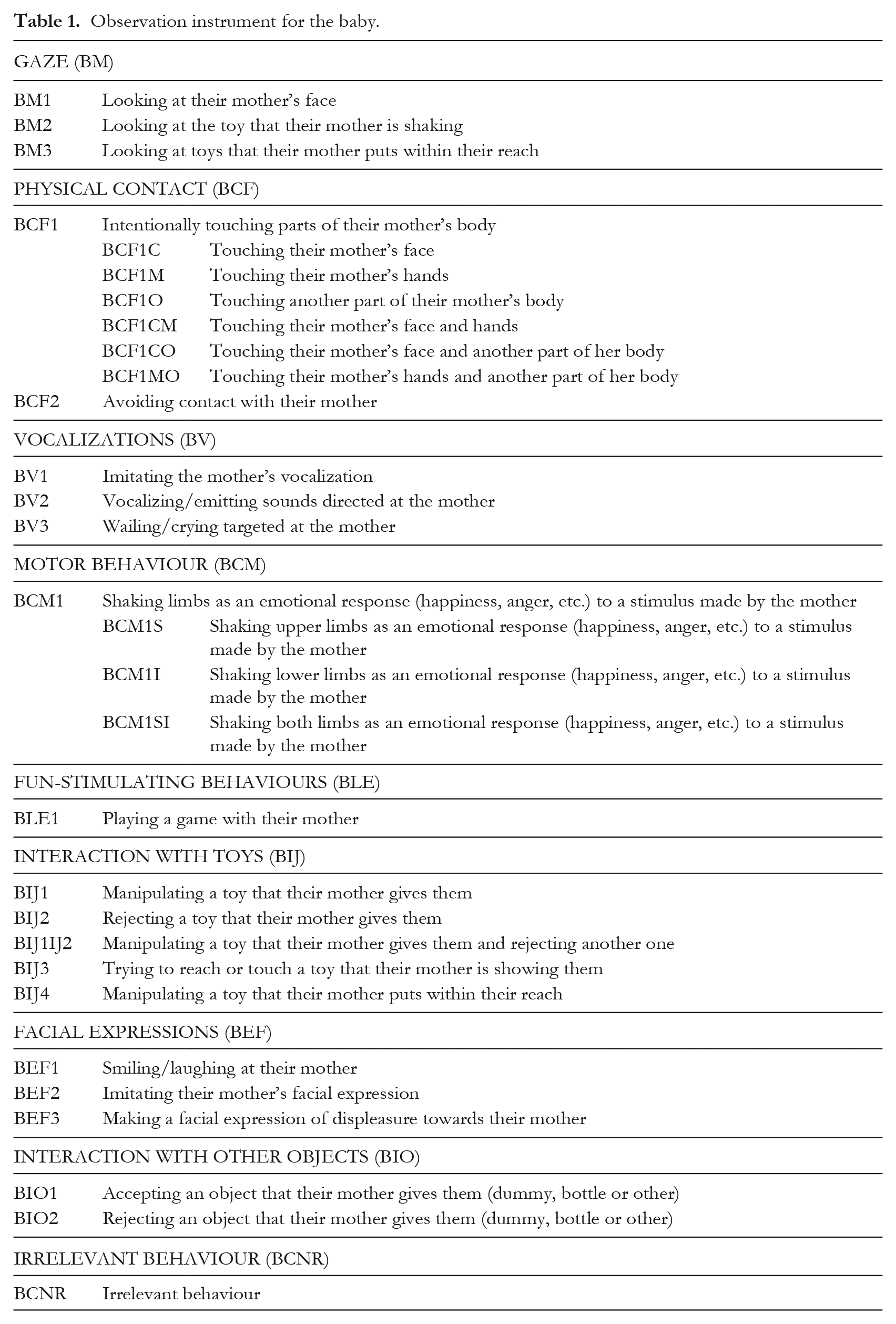
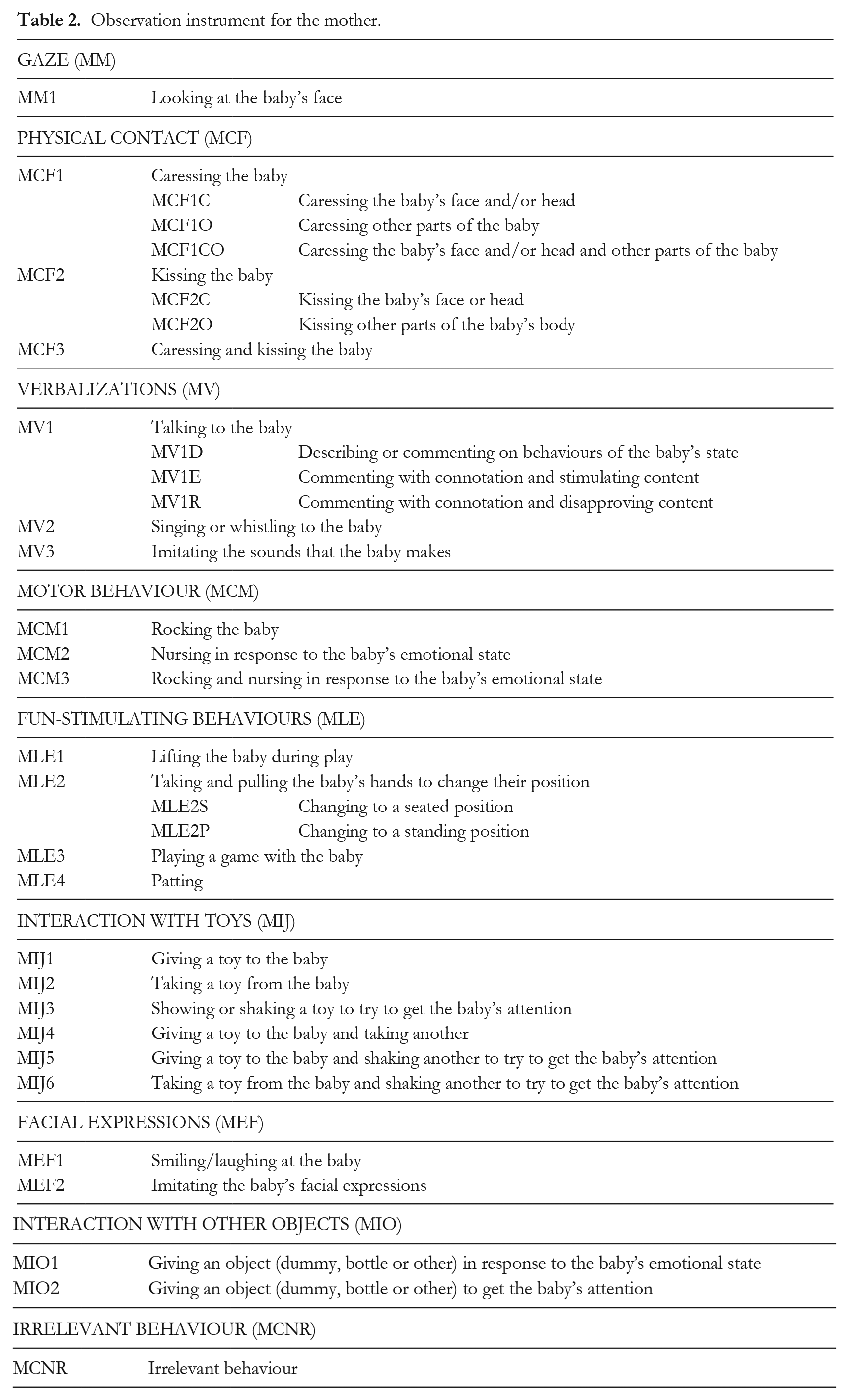
The instrument contains eight dimensions for the baby (Table 1) and nine dimensions for the mother (Table 2). Both instruments were constructed based on the evidence found in the literature on the interactive behaviours of babies and mothers (Ferber et al., 2007; Jean et al., 2009; Knapp, 1992; Lavelli & Fogel, 2005; Lebovici, 1983; Stern, 1998). Irrelevant behaviour was added to both instruments to identify the times when communicative behaviours towards the other did not occur.
Observation instrument for the baby.
Observation instrument for the mother.
Recording instruments
A camera was used to record a situation of mother and baby play for 15 minutes. We used version 1.6.3.3.6 of the open-access program Herramienta de Observación de las Interacciones Sociales en Ambientes Naturales (Observation Tool of Social Interactions in Natural Settings, HOISAN) [www.menpas.com] (Hernández-Mendo et al., 2012) to codify, record, describe and manipulate the recordings. The freeware program SDIS-GSEQ / GSEQ [http://bakeman.gsucreate.org/] (Bakeman & Quera, 2011) was used to detect regular behaviours through a sequential analysis of delays (Anguera et al., 2018).
Procedure
Mothers of premature newborns were contacted while they were in hospital. When the babies reached two months of corrected age, a home visit was arranged to prepare the recording site and install the materials to be used: a rug, a baby rocking hammock and a set of toys that were appropriate for the babies.
The mother was given the following instructions: ‘
Data quality
The quality of the data was controlled with version 1.6.3.3.6 of the program Herramienta de Observación de las Interacciones Sociales en Ambientes Naturales (HOISAN) (Hernández-Mendo et al., 2012), with 33 videos codified by independent observers yielding an average Cohen’s weighted kappa index of .85, revealing almost perfect interjudge reliability (Landis & Koch, 1977).
Ethical considerations
This study was approved by the Scientific-Ethics Committee of the Central Metropolitan Health Service (CEC-SSMC) via certificate no. 67/14 dated 15 October 2014.
Results
A sequential analysis of delays was conducted to detect regular behaviours based on a given previously established behaviour (given behaviour). This enabled us to ascertain whether the occurrence of a given event was related to others more than what would be expected by chance (García-Fariña et al., 2018; Roustan et al., 2013). The prospective perspective—positive delays—was used, considering delays from 0 to +5 (Del Giacco et al., 2020; García-Fariña et al., 2018).
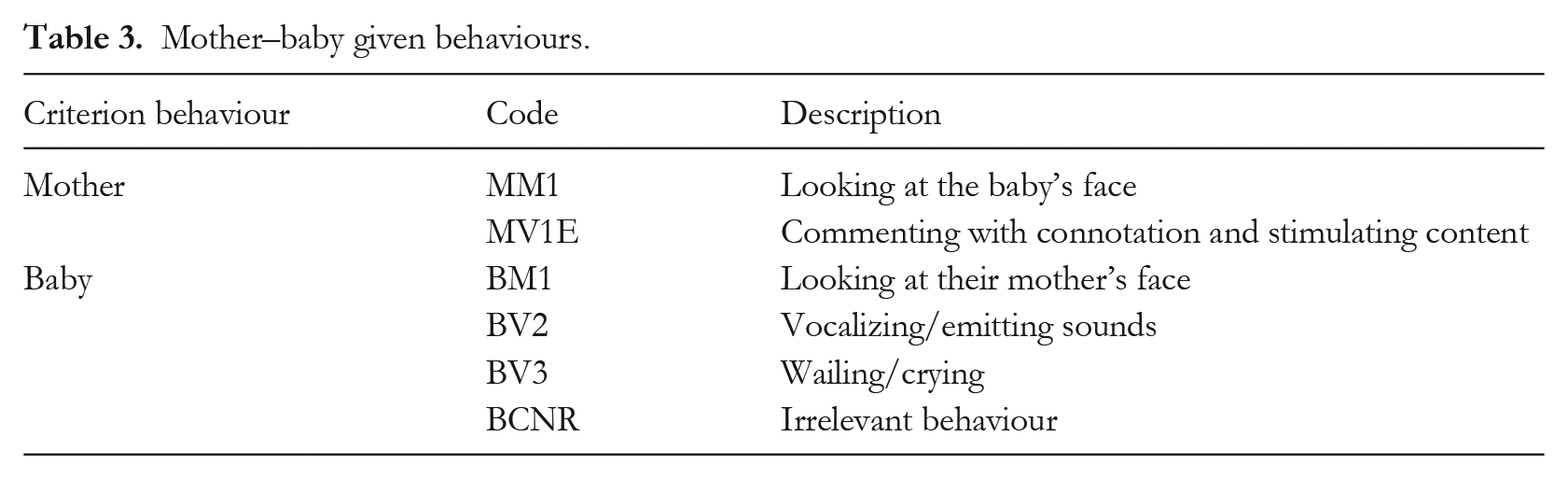
Behaviours noted as activators of communicative interaction in the mother–baby dyad were proposed as given behaviours (Brazelton & Cramer, 1993; Frascarolo et al., 2004; Hsu & Fogel, 2003) (Table 3). The number of interactions with the given behaviour was 7,389, with 3,731 corresponding to the dyads with extreme prematurity and 3,658 to the dyads with moderate prematurity.
Mother–baby given behaviours.
The adjusted residuals (AR) were found through a binomial test; the AR indicated the occurrence of activation (AR > 1.96, p < .05) or inhibition (AR < −1.96, p < .05) of the given behaviour with all the other codes from the observation instrument. After performing this analysis, the chains of the given behaviour with the subsequent behaviours were checked.
Moment 1. Two months of corrected age
Behaviours that activated and inhibited the given behaviours were identified at two months of corrected age, in both moderate and extreme cases of prematurity (Tables 4 and 5).
Given and conditioned behaviours in extremely premature babies at two months of corrected age (Lag 1 to 5).
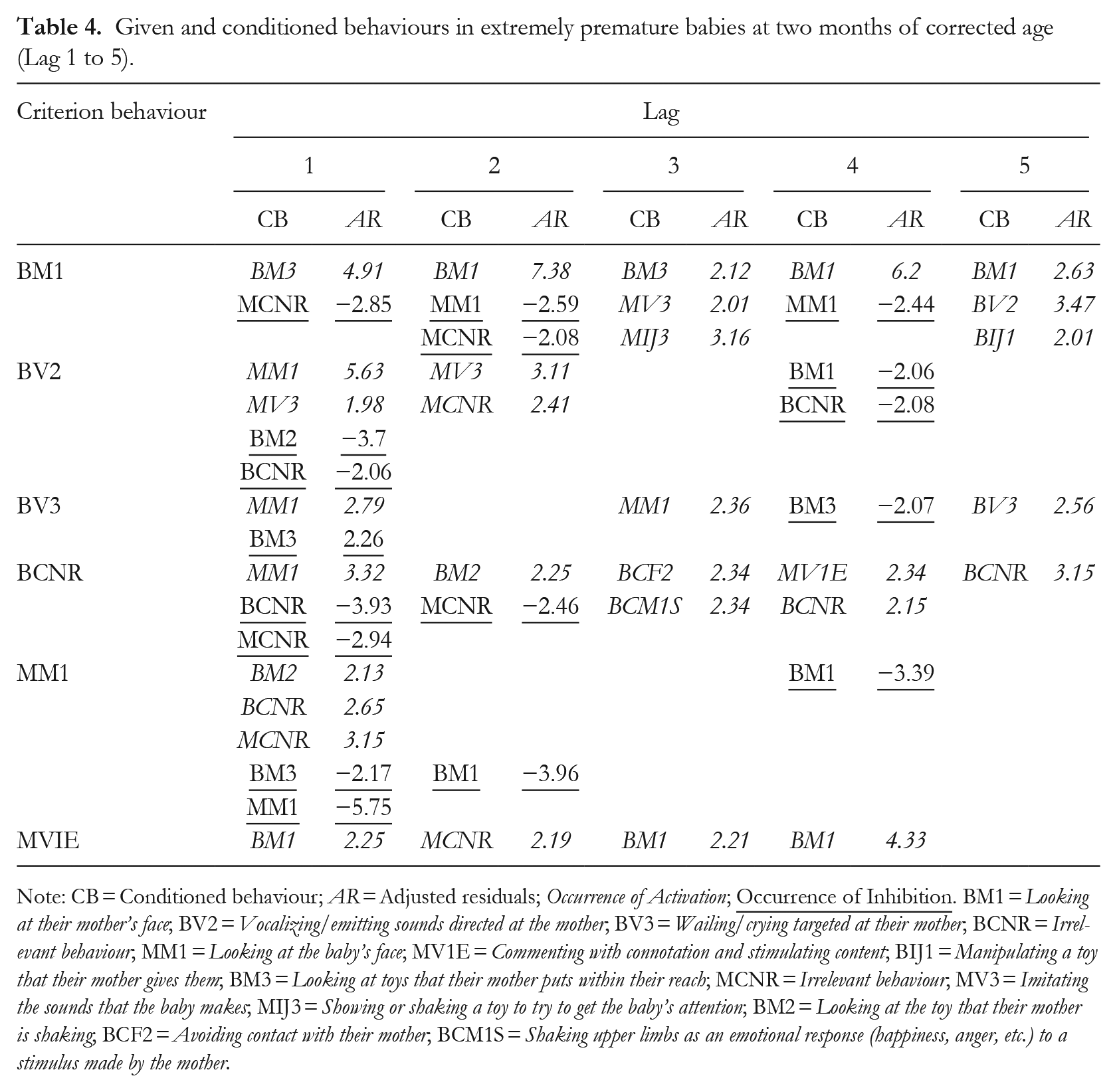
Note: CB = Conditioned behaviour; AR = Adjusted residuals; Occurrence of Activation;
Given and conditioned behaviours in moderately premature babies at two months of corrected age (Lag 1 to 5).
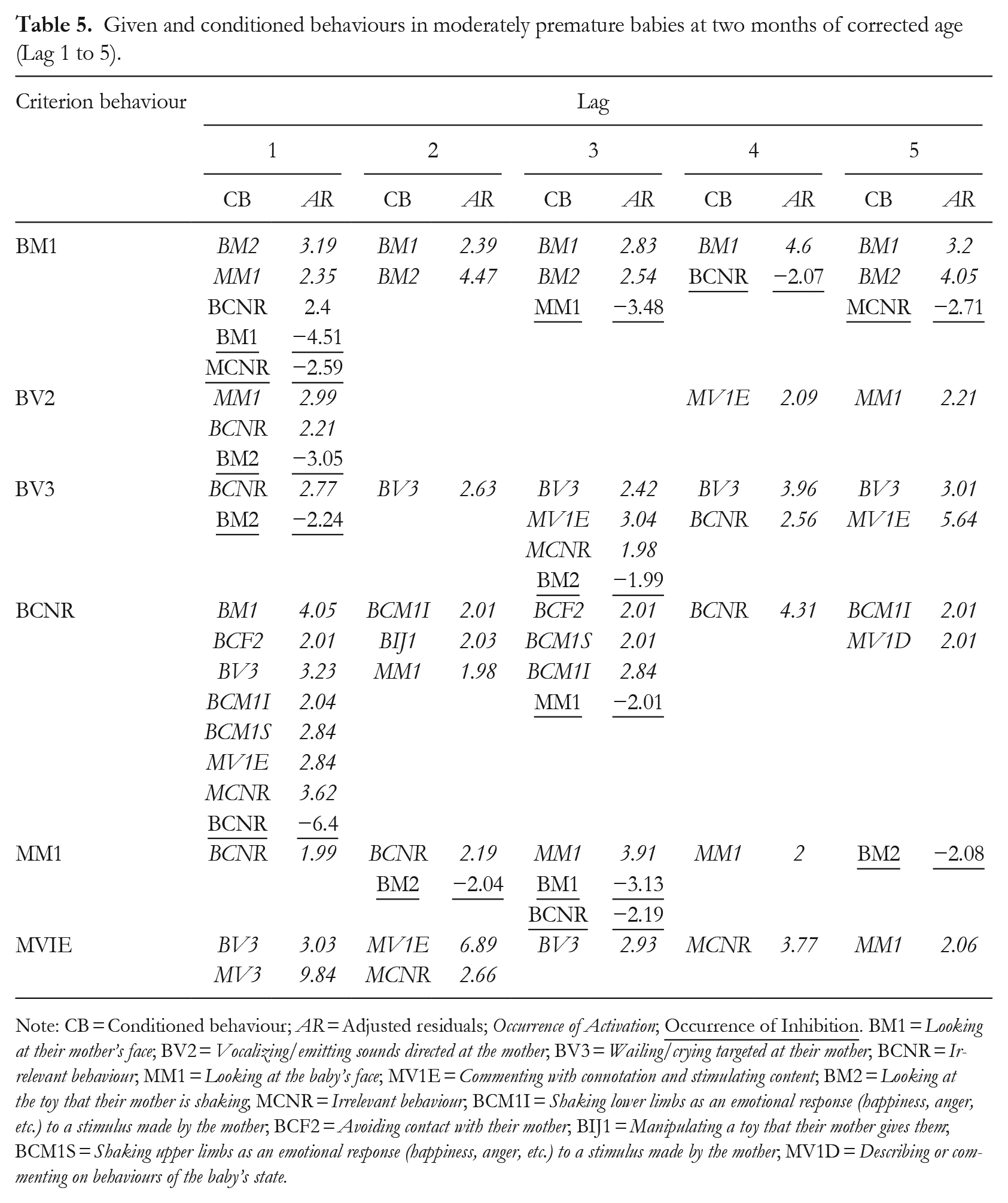
Note: CB = Conditioned behaviour; AR = Adjusted residuals; Occurrence of Activation;
In the interactive sequence initiated by the given behaviour of looking at their mother’s face (BM1), there were more behaviours in the moderate than in the extreme dyads, both activating and inhibiting behaviours. In the moderate dyads, the baby remained caught up in the interaction that the mother offered with the behaviour looking at the toy that their mother is shaking (BM2) and with the mother’s behaviour of looking at the baby’s face (MM1). Babies with extreme prematurity ranged between looking at toys that their mother puts within their reach (BM3) and looking at their mother’s face (BM1), throughout the sequences.
Vocalizing/emitting sounds directed at their mother (BV2) activated looking at the baby’s face (MM1) in both groups. The mothers with extremely premature babies responded with the behaviour imitating the sounds that the baby makes (MV3).
When faced with wailing/crying targeted at their mother (BV3), the mothers of extremely premature babies responded with looking at the baby’s face (MM1), a behaviour without significance in the other group, activating a disconnection with the baby in an irrelevant behaviour (BCNR). Wailing/crying targeted at their mother (BV3) remained in moderately premature babies in moments after the sequence, while in babies with extreme prematurity it was uninterrupted.
Irrelevant behaviour by the baby (BCNR) activated more behaviours in the dyads with moderate prematurity; however, some behaviours revealed the baby’s discomfort when presenting behaviours like avoiding contact with their mother (BCF2) and wailing/crying targeted at their mother (BV3), along with shaking upper limbs (BCM1S) and shaking lower limbs (BCM1I) as an emotional response (happiness, anger, etc.) to a stimulus made by the mother.
The behaviour looking at the baby’s face (MM1) activated more simultaneous behaviours in the dyads with extreme prematurity. In these dyads, looking at the baby’s face (MM1) activated looking at the toy that their mother is shaking (BM2) in the babies and later an irrelevant behaviour on the part of the mother (MCNR). In both groups it activated the irrelevant behaviour by the baby (BCNR).
Commenting with connotation and stimulating content (MV1E) revealed a clearly activating interactive sequence in extremely premature babies, activating looking at their mother’s face (BM1) in a relatively stable way throughout the sequence. In dyads with moderately premature babies, commenting with connotation and stimulating content (MV1E) activated wailing/crying targeted at their mother (BV3) in the baby and imitating the sounds that the baby makes (MV3) in the mother.
Moment 2. Four months of corrected age
Behaviours that activated or inhibited the given behaviours were identified at four months of corrected age (Tables 6 and 7).
Given and conditioned behaviours in extremely premature babies at four months of corrected age (Lag 1 to 5).
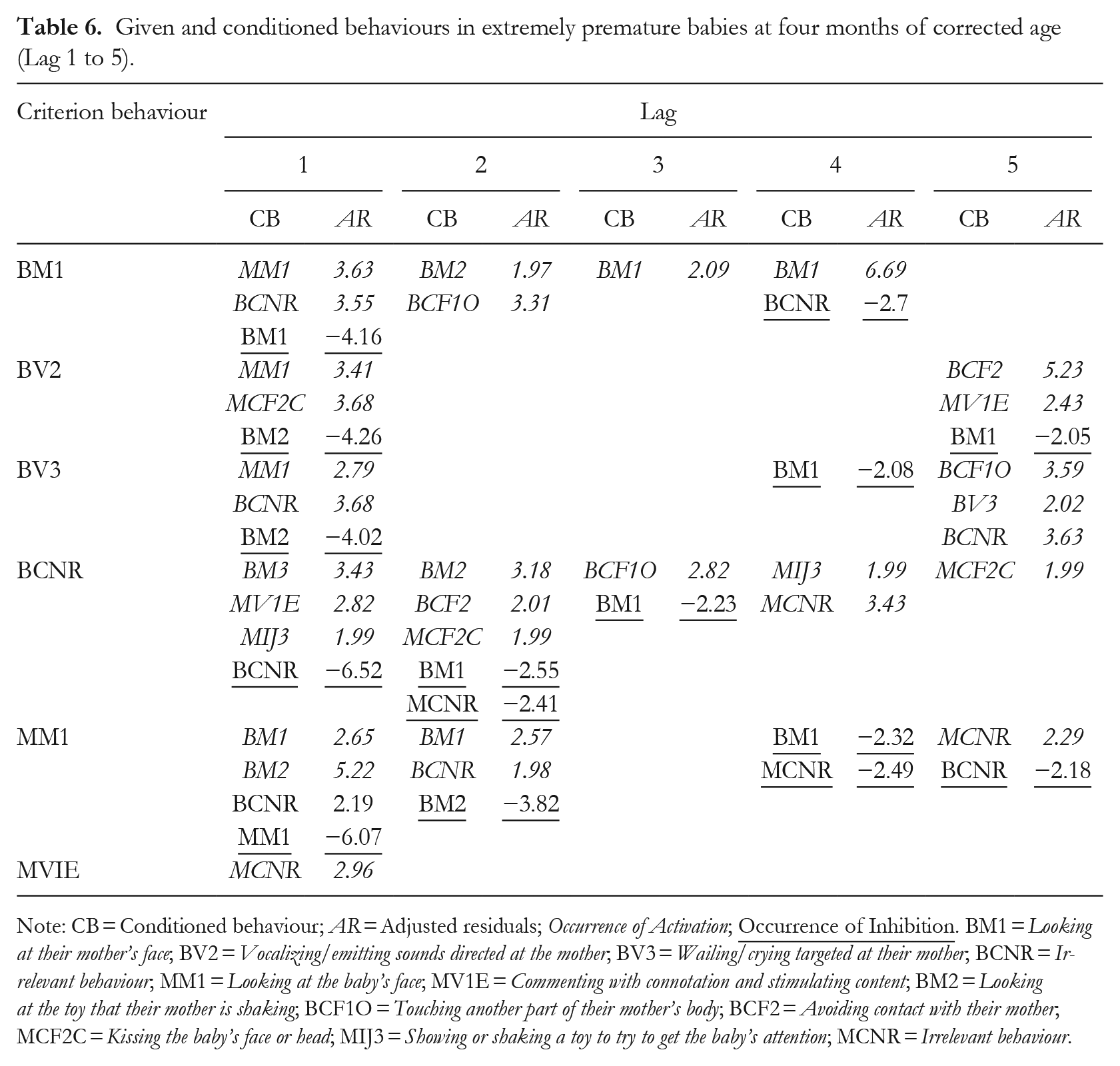
Note: CB = Conditioned behaviour; AR = Adjusted residuals; Occurrence of Activation;
Given and conditioned behaviours in moderately premature babies at four months of corrected age (Lag 1 to 5).
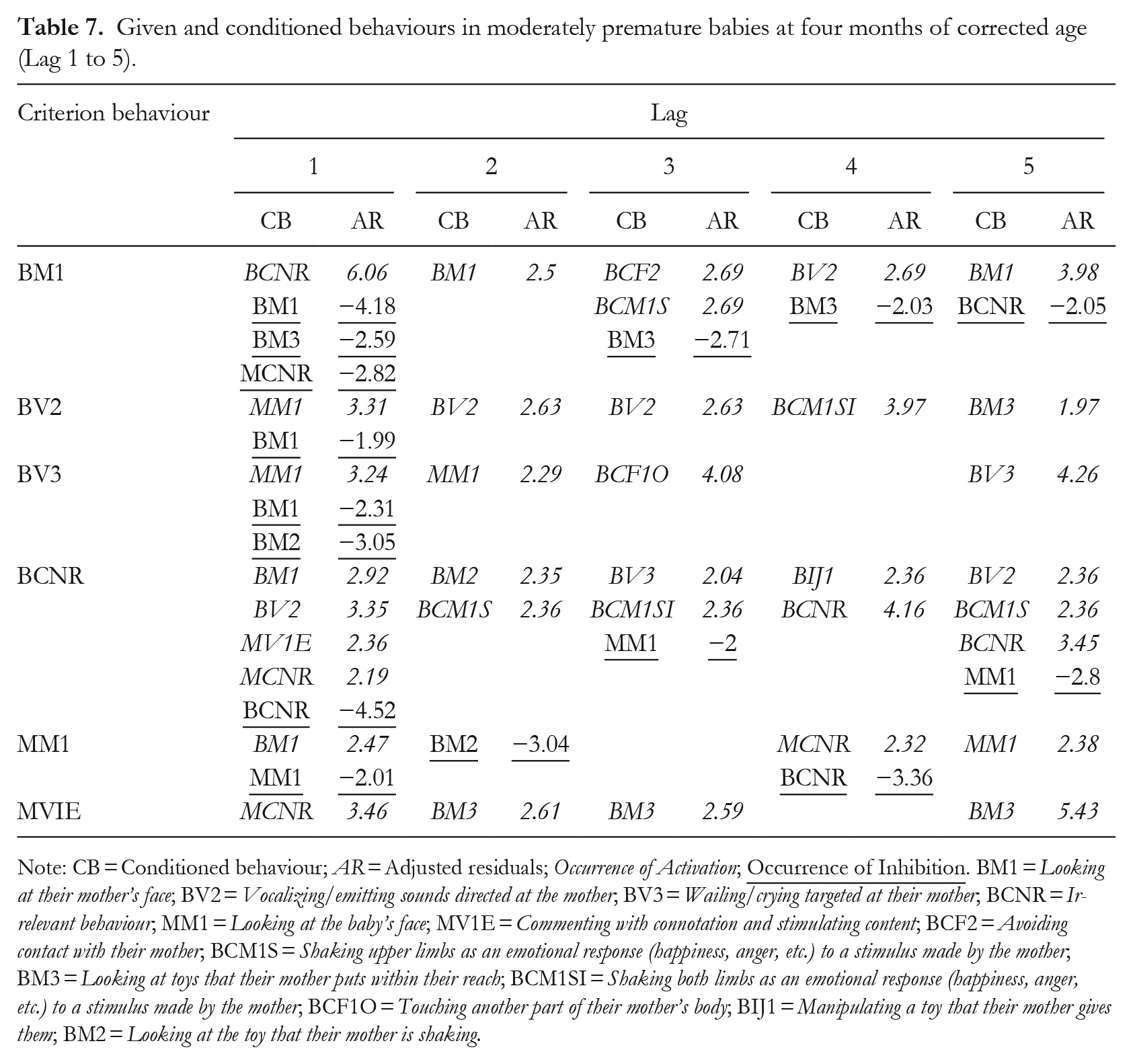
Note: CB = Conditioned behaviour; AR = Adjusted residuals; Occurrence of Activation;
In the interactive sequences, the given behaviour looking at their mother’s face (BM1) activated irrelevant behaviour by the baby (BCNR) in both groups. This behaviour (BM1) inhibited looking at their mother’s face (BM1). In the dyads with moderately premature babies, the baby’s behaviour (BM1) inhibited another type of behaviour (BM3 and MCNR), in addition to activating looking at their mother’s face (BM1) and shaking upper limbs (BCM1S) in a second and third moment as an emotional response to a stimulus offered by the mother, and avoiding contact with their mother (BCF2) at a third moment.
In vocalizing/emitting sounds directed at their mother (BV2), there is a more stable, continuous pattern in the interactive sequence in babies with moderate prematurity. In both groups, it activated looking at the baby’s face (MM1). The mothers of extremely premature babies responded to these vocalizations with kissing the baby’s face or head (MCF2C).
In wailing/crying targeted at their mother (BV3), there are differences in the stability and continuity of the interactive sequence, with a longer sequence in moderately premature babies. In both groups, this activated looking at the baby’s face (MM1) and inhibited looking at the toy that their mother is shaking (BM2).
Irrelevant behaviour by the baby (BCNR) prompted different behaviours in both groups, but with differences. In the group of extremely premature babies, it activated looking at toys that their mother puts within their reach (BM3), while in the moderately premature babies, it activated looking at their mother’s face (BM1) and vocalizing/emitting sounds directed at their mother (BV2). In both groups, it activated commenting with connotation and stimulating content (MV1E), and in extremely premature babies it activated the behaviour of showing or shaking a toy to try to get the baby’s attention (MIJ3).
Looking at the baby’s face (MM1) activated more behaviours in the extremely premature group, with looking at their mother’s face (BM1) dovetailing in both groups. In both groups, it inhibited the behaviour of looking at the baby’s face (MM1). In moderately premature babies, we observed a longer and stabler sequence until the fifth moment of evaluation.
Commenting with connotation and stimulating content (MV1E) generated a stabler and more continuous pattern in moderately premature babies, activating looking at toys that their mother puts within their reach (BM3) after the second moment. In both groups, the behaviour of commenting with connotation and stimulating content (MV1E) activated the mother’s irrelevant behaviour (MCNR).
Moment 3. Six months of corrected age
Behaviours that activated or inhibited the given behaviours were identified at six months of corrected age (Tables 8 and 9).
Given and conditioned behaviours in extremely premature babies at six months of corrected age (Lag 1 to 5).
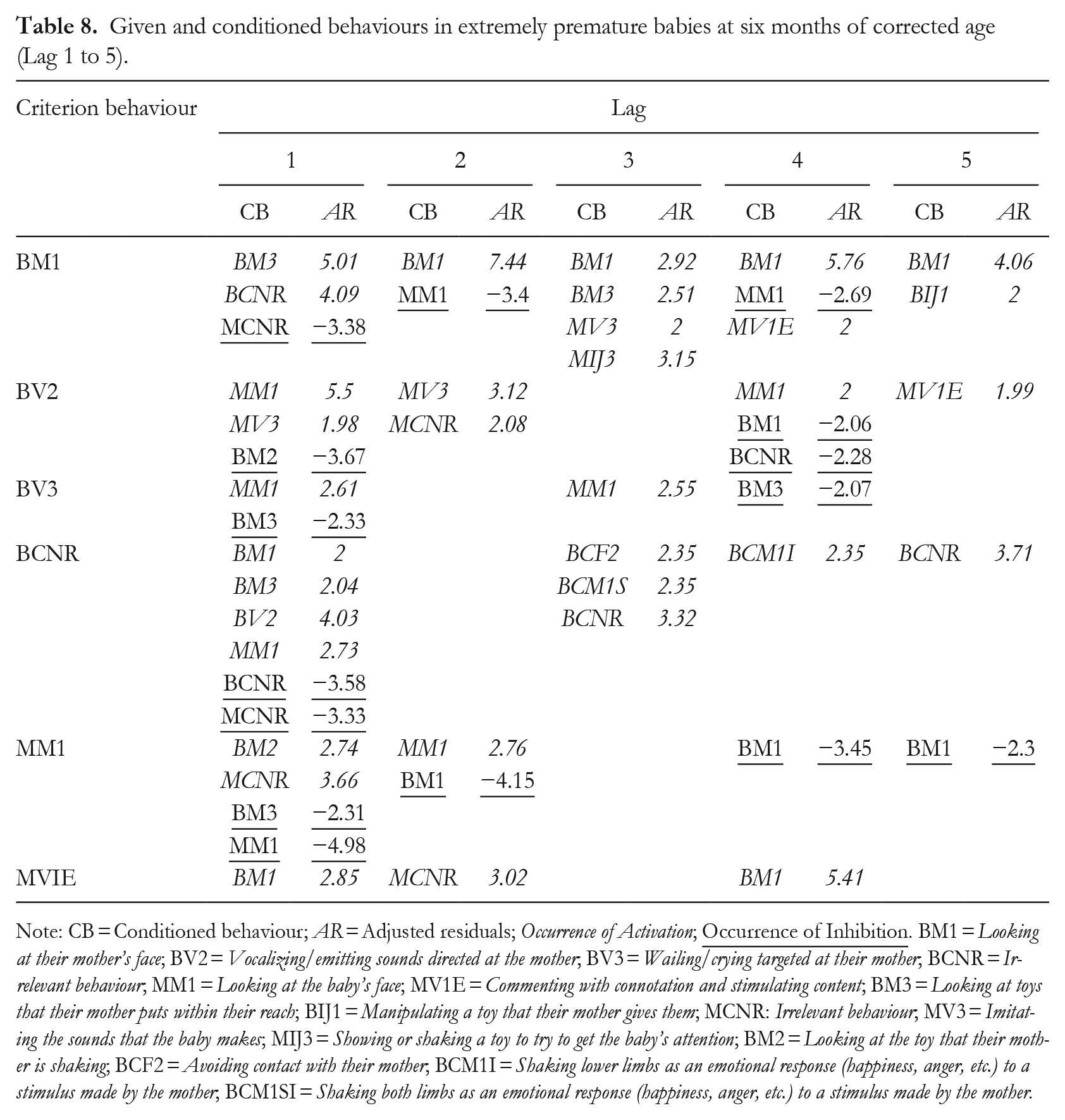
Note: CB = Conditioned behaviour; AR = Adjusted residuals; Occurrence of Activation;
Given and conditioned behaviours in moderately premature babies at six months of corrected age (Lag 1 to 5).
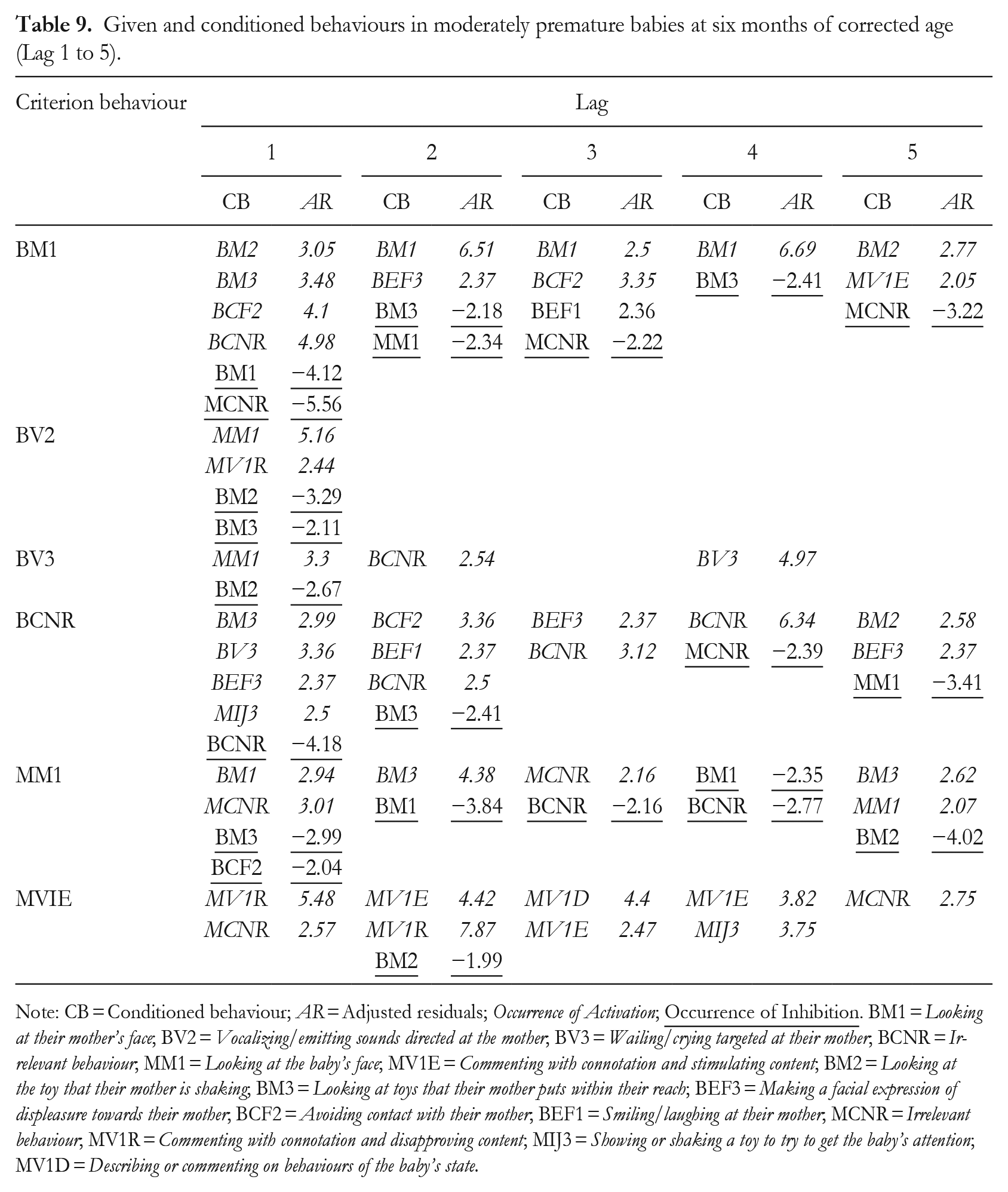
Note: CB = Conditioned behaviour; AR = Adjusted residuals; Occurrence of Activation;
The behaviour looking at their mother’s face (BM1) activated more consequent behaviours in moderately premature babies. In both groups, it significantly produced irrelevant behaviour by the baby (BCNR) and looking at toys that their mother puts within their reach (BM3). On the other hand, this same behaviour of looking at their mother’s face (BM1) inhibited irrelevant behaviour on the part of the mother (MCNR).
Vocalizing/emitting sounds directed at their mother (BV2) activated looking at the baby’s face (MM1) in both groups; however, the mothers of extremely premature babies responded to these vocalizations with the behaviour of imitating the sounds that the baby makes (MV3), while the mothers of moderately premature babies did so with commenting with connotation and disapproving content (MV1R). In both groups, the behaviour of vocalizing/emitting sounds directed at their mother (BV2) inhibited looking at the toy that their mother is shaking (BM2).
Wailing/crying targeted at their mother (BV3) activated looking at the baby’s face (MM1) in both groups.
Irrelevant behaviour by the baby (BCNR) led to looking at toys that their mother puts within their reach (BM3) in both groups; however, there was a difference in the types of babies’ vocalizations, with vocalizing/emitting sounds directed at their mother (BV2) in extremely premature babies, while in the moderately premature group we observed wailing/crying targeted at their mother (BV3) accompanied by making a facial expression of displeasure towards their mother (BEF3). The behaviours it prompts in the mothers of extremely premature babies include looking at the baby’s face (MM1) and in mothers of moderately premature babies showing or shaking a toy to try to get the baby’s attention (MIJ3).
Looking at the baby’s face (MM1) activated irrelevant behaviour in the mother (MCNR) in both groups and inhibited looking at toys that their mother puts within their reach (BM3). Regarding the babies’ looks, moderately premature babies responded to their mothers with looking at their mother’s face (BM1), while extremely premature babies did so with looking at the toy that their mother is shaking (BM2).
For the behaviour of commenting with connotation and stimulating content (MV1E), a stabler and more continuous patterns was found in mothers of extremely premature babies, with the response of looking at their mother’s face (BM1). In the dyads with moderately premature babies, commenting with connotation and stimulating content (MV1E) activated commenting with connotation and disapproving content (MV1R) as well as irrelevant behaviour in their mother (MCNR).
Discussion and conclusions
The results show that different behavioural patterns were detected in the dyads with extremely and moderately premature babies in the interactive sequences evaluated at the different months of corrected age. The babies evaluated in this study reveal that they are capable of responding to the stimuli they receive from their mother, to smile at toys, to vocalize sounds, to physically activate themselves by shaking their limbs, to reveal moods of annoyance or avoidance and even to establish interaction patterns simultaneously.
The participants deployed a variety of behaviours no matter how premature their birth and were capable of responding to stimuli and following their mother with their gaze even at two months of corrected age, revealing babies’ innate ability to coordinate with their mother (Stern, 1998; Trevarthen, 1998).
At the three moments evaluated, there was reciprocal interaction between mother and baby, creating a new system of interaction as two phenomena that evolve within the same system (Glatigny-Dallay et al., 2005). The babies mostly activated different behaviours in their mothers, and they are the ones who are considered to initiate the interactive sequences in the dyad (Brazelton & Cramer, 1993; Frascarolo et al., 2004; Hsu & Fogel, 2003), while the mother responded by talking to, caressing or looking at them or showing them some type of stimulus to keep their attention.
As the evaluation sessions went by, the babies showed a larger repertoire of behaviours, with longer and more complex sequences, while the mothers responded with simultaneous and longer behavioural sequences (Stern, 1998). These results reinforce previous research that asserts the evolutionary nature of mother–baby interactions, as the mother adapts her communicative behaviours to the interactive skill which the child is able to give in view of their maturity (Jean et al., 2009).
The communicative interaction gets more complex as the months go by, as both members of the dyad add a larger repertoire of interactive behaviours and respond to more complex and triadic multimodal communication (Ferber et al., 2007; Fogel, 2011).
The interactive patterns in the mother–baby dyads in this research reveal the differences in the interactions of babies with different degrees of prematurity, and it is interesting to note that at four months, the moderately premature babies deploy new interactive behaviours approximately two months prior to extremely premature babies and are able to regulate themselves by developing more synchronous, symmetrical and contingent patterns, fostering the development of autonomy.
Starting at two months of age, babies with moderate prematurity are capable of deploying greater emotional expression and greater behavioural activation than babies with extreme prematurity, and the former also achieve closer and happier interactions (Lavelli & Fogel, 2005).
The more direct, active and controlling interactive style in mothers with extremely premature babies observed in this study matches previous studies on interaction between mothers and premature babies (Korja et al, 2012). This interactive feature observed more clearly in mothers of extremely premature babies than in mothers of moderately premature babies may be explained by the fact that the former have a keener perception of their babies’ vulnerability (Eizirk et al., 1994; Neri et al., 2015). In this sense, maternal behaviour and the mother’s attempts to adjust the interaction to the developmental and individual needs of her baby opens up the possibility of accessing their mentalizing capacity (Shai & Belsky, 2017). The studies by Shai and Belsky (2017) enable us to operationalize parents’ capacity for mentalization in nonverbal and observable interactive behaviours, and mentalization is a significant factor to consider when analysing the interactive characteristics of the mothers of premature babies.
Limitations and future studies
Recordings without the presence of the examiner are exposed to a reactivity bias (Arnau et al., 1990). The changes in position throughout the recording may leave the mother’s or baby’s face and body outside the recording for several seconds, thus losing data recorded during the interaction. This could have been offset with the use of more than one video camera when recording.
The disconnection behaviours manifested through irrelevant behaviour in both members of the dyad are expressed via a variety of behaviours in both the mother and the baby, which the category system developed for this study did not distinguish. A study focused on this type of behaviour which accompanies dyadic interaction would be important as a way to further explore interactive mother–child patterns.
The volume of the recording should be louder in order to analyse the interactive sequences. Likewise, less time should elapse in order to more directly track the changes in the dyad’s communication.
The use of observation scales that evaluate the quality of the interaction would have been useful to study the relationship between more behaviours and interactive sequences and the mother’s sensitivity.
Future studies can complement the study of interactions with the detection of elements of the babies’ motor, psychological and social development starting at early ages to specifically identify the role they play in the interaction. Likewise, demographic factors like sex, mother’s age and parity could provide significant results that would help us to better understand interactive behaviours.
It is important to highlight the clinical relevance of knowledge of interactive patterns between caregiver and baby. This understanding would make it possible to contribute to early intervention plans that foster positive interactive development and promote both parties’ mental health.