




Abstract
Students with emotional-behavioral disorders (EBDs) often learn in alternative classroom settings to provide more intensive instruction that meets their educational needs. Although research has demonstrated promise for several behavior intervention practices in general education settings, the generalizability of these practices to more restricted environments is unknown. Thus, this meta-analysis aimed to examine the class-wide behavior interventions tested in self-contained learning environments for students with EBDs. Studies investigating behavioral interventions in alternative elementary settings were systematically screened. Fifteen studies with 20 effect sizes met inclusion criteria and results from each study were synthesized. An estimated average effect was calculated (g = 0.93, SE = 0.16), demonstrating that tested interventions are typically effective in self-contained learning environments to improve student behaviors. A thematic analysis and multi-level meta-regression were conducted to determine which elements are most beneficial to students in these unique learning environments. Results indicated that interventions that included relational supports, such as daily parent communication, differentially benefited students (B = 1.26, SE = 0.15). Limitations include the small number of studies meeting inclusion criteria that have investigated behavior interventions in self-contained settings and the need for improved research quality. Implications suggest support for adapting standardized practice elements, such as group contingencies, to improve student behaviors in multiple learning environments.
An estimated 353,000 students in the United States receive special education services for emotional-behavioral disorders (EBDs; U.S. Department of Education, 2019). Of those students, 118,255 (34%) spend at least half their day in a more restrictive learning environment outside the general education classroom. These placements, referred to as self-contained settings, provide a more individualized and adaptive learning environment for students with more intensive needs (Kurth et al., 2019; Maggin et al., 2011). Even with these adaptations, outcomes for students with disabilities in special education-specific settings are lower than those in the general education classroom (Oh-Young & Filler, 2015). For students with EBDs in self-contained settings, 65% experience out-of-school suspensions, 19% face expulsion, and 17% are arrested, compared with 14%, 3%, and 2%, respectively, of students in general education (Mitchell et al., 2019). Educational outcomes for students with EBDs are often poor, and research on students in these settings is scarce (Ennis et al., 2018). Thus, there is a growing need for high-quality, evidence-based interventions for students in their “last chance” educational environment (Flower et al., 2011).
The self-contained classroom serves as a unique learning environment compared with general education or discipline-based alternative education settings (Maggin et al., 2011). The primary role of the self-contained classroom for students with EBDs is to build self-management skills that improve social, emotional, and academic functioning (Lane et al., 2005; Maggin et al., 2011). These classrooms are designed to meet specific individualized education program (IEP) goals and allow for a flexible structure with fewer students per classroom (Lane et al., 2005). Although heterogeneous, many students in self-contained EBD placements demonstrate aggressive behaviors not found in typical classroom settings (Stoutjesdijk et al., 2012). Although many behavioral interventions are part of universal positive behavior interventions and supports, these usually do not address the severity of challenging behaviors that may occur in a self-contained EBD classroom (Lewis, 2016). In addition, students with EBD in self-contained learning environments represent a heterogeneous subpopulation of students with needs that range from increased rates of behavior-specific praise to continuous suicide prevention monitoring (Ennis et al., 2018). Therefore, examining classroom interventions for students in more restrictive settings is crucial to unpack for whom and under what conditions recommended behavioral interventions are effective.
Self-contained classrooms fall under a continuum of placements within the least restrictive environment (LRE), such as special education classrooms within neighborhood schools, alternative schools, day treatment centers, residential placements, and juvenile justice facilities that treat students in special education (Individuals With Disabilities Education Act, 2004). Of the more than 100,000 students with EBDs in self-contained settings, over half (52.5%) spend their time in self-contained classrooms, 37.5% in separate schools, 4% in residential placements, 3.5% in correctional facilities, and 2.5% in hospitals (U.S. Department of Education, 2019). Furthermore, self-contained classrooms for students with EBDs vary widely in terms of structure and implementation of EBPs (EBPs; Lane et al., 2005; Maggin et al., 2011). Although students’ IEPs mandate working on specific goals, like mathematics or social skills, there are no requirements or guidelines on how to organize a classroom for students with specific emotional and behavioral needs (Cipriano et al., 2018). Although individual behavior interventions have demonstrated efficacy in increasing specific desired behaviors for students, the necessity to develop class-wide systems, norms, and expectations has been documented (Witt et al., 2007). The classroom climate affects many individual behaviors students demonstrate (Wang et al., 2020). Thus, it is essential to proactively create an environment for students that is conducive to learning and where their emotional and behavioral needs can be met using established EBPs (Farmer et al., 2016).
As mandated by Individuals with Disabilities Education Act (IDEA), schools must provide students with safe and supportive classrooms that are conducive to learning (Individuals with Disabilities Education Improvement Act, 2004, U.S.C. § 1465). The unfortunate reality is that this often does not occur, as evidenced by most seclusions and restraints in schools occurring with students in self-contained settings (Gage et al., 2022). Given the academic and social outcomes reported for this population of students, it remains questionable if the goal of a safe and supportive learning environment has been achieved. Thus, this meta-analysis aims to review the current literature on class-wide behavioral interventions for students with EBD in self-contained settings.
Evidence-Based Practices for Improving Behavior Outcomes
To determine what practices are most efficacious for students with EBD in self-contained settings, it is important to examine what practices have benefited students in other educational settings. Of note, five studies have sought to unpack the black box of behavior interventions to determine what practices are frequently used for students with or at risk of EBD. Most recently, Sutherland et al. (2019) synthesized 103 articles that examined behavior interventions for young students with or at risk for EBD. Their analysis resulted in a list of 24 practice elements verified by a team of experts in the field that were considered useful or essential for working with students with EBDs. In addition, French (2019) identified essential components of school-based interventions for students with EBD based on various empirical articles to bridge the research-to-practice gap. His research resulted in 11 “essential strategies” to provide effective interventions for students with EBDs. Next, McLeod and colleagues (2017) examined practice elements within preschool interventions to bolster young students’ social, emotional, or behavioral outcomes. Authors identified 24 practice elements listed as content or delivery-focused strategies from 49 studies. Garland et al. (2008) also examined effective interventions for children with disruptive behavior but focused on psychosocial treatments often used in clinical settings. They identified 21 treatment elements common throughout multiple evidence-based treatment programs for children ages 4 to 13. Last, Tobin and Sprague (2000) examined practice elements for students with disabilities in alternative education settings. The authors determined eight strategies that benefited students in more restrictive classroom settings. Collectively, results from these studies demonstrate the complexity of establishing EBPs in behavior across multiple domains and with diverse student populations.
Assessing Study Quality
Developed as a way to provide concrete guidelines for evidence-based practices in special education, Cook et al. (2015) released an updated version of the Council for Exceptional Children’s (CEC) research standards to evaluate methodological rigor in special education research. The report outlines eight categories for group comparisons and single-subject studies and 28 total quality indicators (QIs). The QIs include the following categories: context and setting, participants, intervention agents, description of practice, implementation fidelity, internal validity, outcome measures, and data analysis. According to Cook et al. (2015), for a study to be classified as methodologically sound, a study should meet all QIs for that design type. Quality is important to examine when looking at the effects of studies on students with EBDs to understand the caliber to which the results can be assessed. Students with EBDs in self-contained settings are entitled to be involved in high-quality research practices, so the results can be further used, replicated, and disseminated to benefit more students and teachers. For more information regarding the specific QIs, see Cook et al.’s (2015) article in Remedial and Special Education.
Existing Meta-Analyses and Reviews on Behavior Interventions for Students with EBD
Flower and colleagues (2011) conducted a literature review to examine the behavioral interventions tested in alternative education settings. Their search yielded 39 studies published between 1970 and 2010 and included individual, small-group, and class-wide administered interventions. The authors examined the use of evidence-based behavioral practices and methodological rigor. Their findings indicated that the inclusion of effective practices in self-contained settings was “remarkably limited,” with 10 of 39 studies not using any noted effective practices. The authors implored researchers to expand the field of research for our most vulnerable children (Flower et al., 2011). Limiting the study’s impact, the authors did not collect quantitative data or examine the impact of the implementation of any of the included practices. The authors also did not include information related to the independent or dependent variables. Thus, it is difficult to ascertain the types of interventions utilized in self-contained settings and their benefit to students.
More recently, Maggin et al. (2017) conducted a meta-analysis of group contingencies for students with challenging behaviors primarily located within general education classrooms. The authors identified 40 studies from 1970 to 2016 using group contingencies, finding strong evidence for using dependent and interdependent group contingencies in general education classrooms. Researchers concluded, however, that little data describe information on whom group contingencies are most successful, and further research is needed on students with disabilities to determine their efficacy outside of the general population. Although a promising finding in support of the continued use of group contingencies, it is unclear how this impact would generalize to self-contained settings.
Similar to the present study, Chaffee and colleagues (2017) conducted a meta-analysis on class-wide interventions for student behavior. Contrastingly, their review examined practices that were specific to general education classrooms. After an initial search located 83 single-case design studies that met their inclusion criteria, their moderator analysis included 29 single-case designs that tested behavioral interventions in general education settings. Eight of the included studies used the good behavior game (GBG), and three used token economies. Their results suggested there are viable options for supporting behavior in general education classroom settings, like group contingencies. Presently, it is unknown how these practices may transfer to students with more significant needs learning within self-contained settings. Thus, an examination of practice elements exhibited in self-contained settings is essential to determine their generalizability and adaptability.
Other syntheses (Bowman-Perrott et al., 2016; Ennis et al., 2014; Losinski et al., 2016) have examined specific behavior interventions for students with EBDs, such as self-regulated strategy development and video-based modeling. Regardless of placement setting, students with EBDs benefited from effective classroom practices. Although these studies examined the impact on the behavior of students with EBDs, none specifically researched the class-wide effects for students with EBDs within each intervention nor looked at the moderating role classroom setting may have. The information from these studies demonstrates progress in the field but does not provide enough evidence to support what variance may occur in class-wide interventions for students with EBDs in self-contained learning settings to improve their behavioral outcomes. To our knowledge, the present study is the first meta-analysis examining class-wide behavioral interventions for students with EBDs in self-contained special education settings.
Study Purpose
Given both the unique and heterogeneous nature of self-contained settings for students with EBD, research is warranted to investigate to what extent current research practices benefit students in these settings. Thus, the present meta-analysis focuses on behavioral interventions that can be implemented in the entire class to improve self-contained students’ social, emotional, and interpersonal skills. This paper defines behavioral interventions as targeted programs that focus on changing a behavior affecting a student’s ability to learn. Class-wide behavioral interventions target decreasing unpreferred behavior or increasing preferred behaviors for all the students in a particular classroom environment. Self-contained settings are special education classrooms, separate schools, residential facilities, or hospital settings working specifically with students with EBDs, where students learn for 50% or more of their day. To unpack what approaches best serve the needs of students with EBD and to what caliber, the following research questions were addressed:
Method
Search Procedures
The systematic literature review began with an electronic database search using Academic Search Complete, Education Source, ERIC, ProQuest, and PsycINFO. The search used combinations of the following keywords: (a) emotional behavioral disability, emotional behavioral disorder, behavioral disorder, emotional disturbance, other health impairment, oppositional defiant disorder, conduct disorder, disruptive mood dysregulation disorder, emotional problems, behavioral problems, (b) alternative education/school/program/placement, self-contained, and (c) intervention, strategy, support, system. The initial search yielded 2,145 records, completed in October 2020. After deduplicating, 1,869 unique entries remained (see Figure 1). Title and abstract screening identified 205 studies that underwent a full-text review. The first author searched the table of contents of the following journals from 2015 to 2020 based on their appearance in the full-text eligible articles: Behavioral Disorders, Exceptional Children, Journal of Applied Behavior Analysis, Journal of Behavior Education, Journal of Emotional & Behavioral Disorders, and Journal of Positive Behavior Interventions. The first author conducted a forward and backward search on each article included in the full-text screening. Google Scholar was employed for the forward search to find referenced articles from the included studies. The backward search examined the reference lists of each included article to check for relevant articles. From the full-text screening, 13 articles met the inclusion criteria. The author found an additional study (Sutherland et al., 2003) in the forward search and another (Kern et al., 1994) in the backward search. Thus, 15 articles met study eligibility.
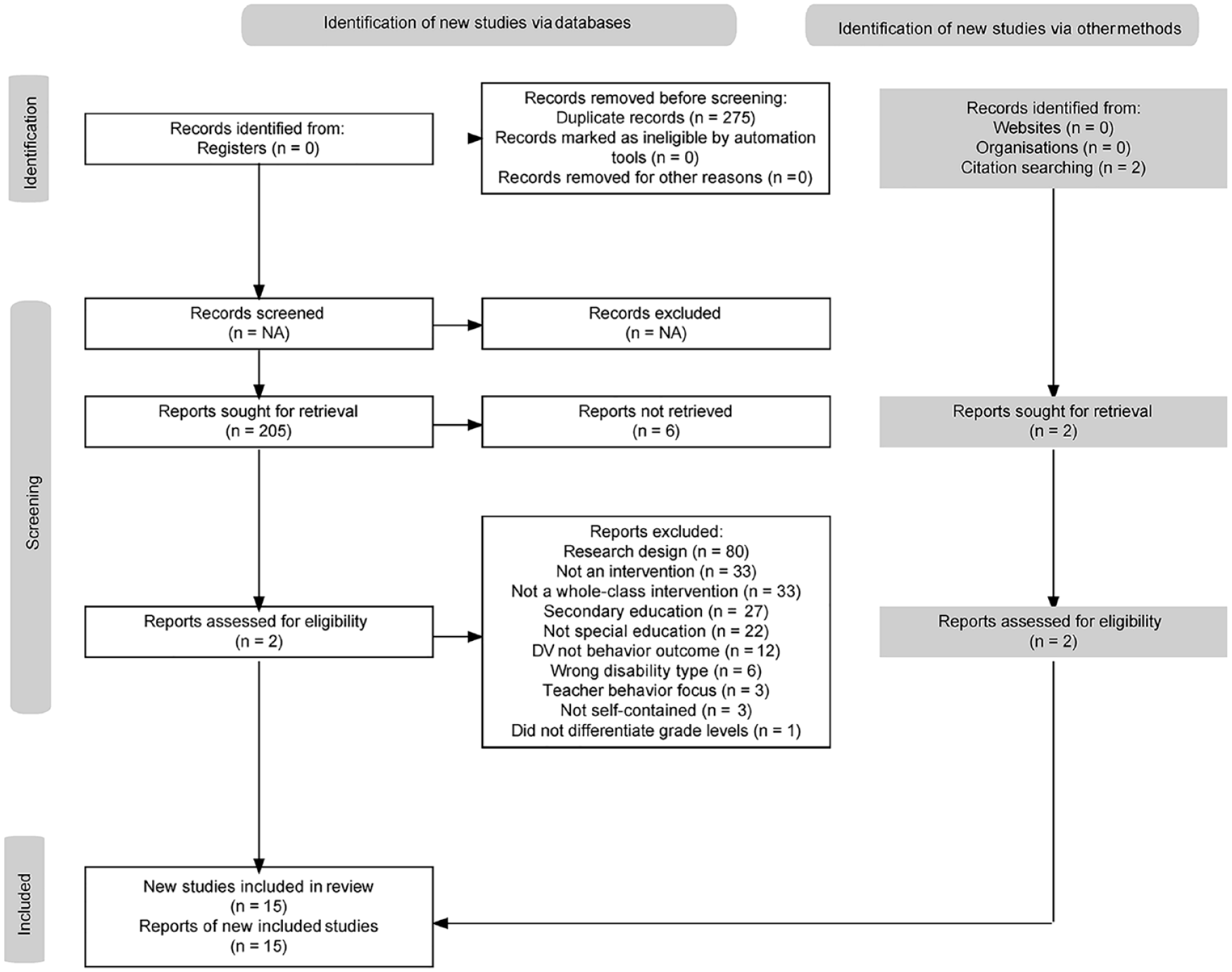
PRISMA Diagram of Systematic Search Procedures (Page et al., 2021).
Inclusion Criteria
Studies were included that met the following criteria: (a) Participants were students receiving special education services for emotional disturbance. (b) Participants were in elementary grades. As elementary can end at different grade levels, researchers conformed to definitions determined by the study authors. Middle and high school students were omitted, as behavior interventions often are implemented differently for secondary students. (c) The intervention took place in a self-contained classroom setting. (d) The study employed a whole-class behavioral intervention as the independent variable. (e) The study examined at least one behavioral outcome as a dependent variable. (f) The study was available in English. (g) An experimental design was used, including group designs (e.g., randomized controlled trials, quasi-experimental trials) and single-case designs (e.g., multiple baseline). (h) Published and unpublished studies were included to mitigate bias, as prior research has demonstrated exclusion of gray literature may positively skew results (Gate et al., 2017). The following exclusion criterion was also applied: Participants with a primary diagnosis other than ED. The interventions for other disabilities, such as intellectual disabilities or autism, often emphasize different student needs and therefore were not included as a part of this study.
Coding Procedures
Each study was coded and double-coded by both authors for study characteristics, participant information, methodological characteristics, outcome measures, features of interventions, and QIs. These categories were determined based on the research questions to examine the effectiveness of class-wide behavior interventions for students with EBD, explore what features moderate these outcomes, and assess the quality of the included studies. Interrater reliability ranged from 82.7% to 100.0%, with an average agreement of 93.15% (SD = 0.04) across included articles. The first and second authors discussed disagreements, and discrepancies were resolved for each paper, resulting in 100% agreement. The following categories were coded: (a) participant information (e.g., demographic data), (b) classroom information (e.g., setting, classroom staff, staff:student ratio), and (c) study information (e.g., publication type, name of intervention, design).
Features of intervention
The authors synthesized five publications on evidence-based practices for improving student behavioral outcomes to determine the effective practice domains outlined in this article (French, 2019; Garland et al., 2008; McLeod et al., 2017; Sutherland et al., 2019; Tobin & Sprague, 2000). Each article provides helpful information on effective interventions for students with EBDs in self-contained settings, but no single article directly examined the population of interest within the last 10 years. For instance, Sutherland et al. (2019) and McLeod et al. (2017) provide comprehensive lists of practice elements but do not examine self-contained settings or students beyond Grade 2. Tobin and Sprague (2000) focus on self-contained settings but are unable to encompass research findings that have occurred since the advent of IDEA. Garland et al. (2008) examined therapeutic inventions more explicitly but did not examine classroom-based interventions or internalizing disorders. French (2019) focused on students with EBD but did not use a systematic procedure to determine the practice elements. Thus, a thematic analysis (Xu & Zammit, 2020) was employed to determine the overarching themes of research-supported practices for students with EBD. Six themes emerged: (1) a highly structured classroom environment, (2) use of positive strategies, (3) explicit social-emotional learning (SEL) instruction, (4) applied behavior strategies, (5) classroom engagement, and (6) maintaining a relational focus. Each thematic domain is discussed.
Highly structured classroom environment
Clear classroom rules and expectations have consistently reduced severe behavior problems (Bradshaw et al., 2010; Sugai & Horner, 2006). In addition, Tobin and Sprague (2000) discuss the significance of a clear behavior management system that includes self-management skills, positive reinforcement, and the ability for students to gain access to less restrictive environments over time. It is necessary to demonstrate clear expectations and provide positive reinforcement when those behaviors are successfully displayed to increase the momentum of the behavior (French, 2019). Items encompassed within the overarching theme of “highly structured” included structure (French, 2019; Tobin & Sprague, 2000), predictability (French, 2019), established behavioral expectations (French, 2019), rules (McLeod et al., 2017), limit setting (Garland et al., 2008), response-cost (French, 2019; Sutherland et al., 2019), and time-out (French, 2019; McLeod et al., 2017; Sutherland et al., 2019).
Focus on positive strategies
The use of positive (e.g., praise), rather than punitive (e.g., taking away recess), supports are used in the classroom setting. Positive strategies promote an enhanced quality of life and work to prevent challenging behaviors (Sugai & Horner, 2005). Based on the effective practice articles, the following elements were included: positive, tangible, or differential reinforcers (French, 2019; Garland et al., 2008; McLeod et al., 2017; Sutherland et al., 2019), praise (McLeod et al., 2017; Sutherland et al., 2019; Tobin & Sprague, 2000), rewards, choice, and pre-correction (McLeod et al., 2017; Sutherland et al., 2019).
Explicit SEL instruction
A defining feature of students with EBD is difficulty regulating emotional experiences across many situations, described in the Diagnostic and Statistical Manual of Mental Disorders (5th ed.; DSM-5; American Psychiatric Association, 2013) and the IDEA definition of emotional disturbance (APA, 2013; U.S. Department of Education, 2019). Students may withdraw, shut down, rage, elope, cry, and become aggressive due to intense motivational activation or dysregulation (French, 2019). As a result, emotional regulation strategies are often explicitly taught and reinforced in classrooms to reduce responses to emotions that might interfere with learning or a student’s quality of life. The body of research is still growing in this field, but specific interventions have shown promising results (Harris et al., 2005; Reid et al., 2005). Within the theme of SEL instruction, the following practice domains were included: problem-solving (Garland et al., 2008; McLeod et al., 2017; Sutherland et al., 2019), emotional regulation (Garland et al., 2008; McLeod et al., 2017; Sutherland et al., 2019), social skills (French 2019; Sutherland et al., 2019; Tobin and Sprague, 2000), behavior rehearsal (Garland et al., 2008; McLeod et al., 2017), self and anger-management (Garland et al., 2008; Sutherland et al., 2019), psychoeducation, training for setbacks, review goals and progress, assigning and reviewing homework (Garland et al., 2008), and promote behavior competence (McLeod et al., 2017).
Applied behavior strategies
Applied behavior strategies are grounded in research on established applied behavior analysis principles to improve socially significant outcomes (Cooper et al., 2020). Applied behavior strategies focus on changing specific behaviors by determining the function of a behavior and using reinforcement to increase desired behaviors in the classroom (Pennington, 2022) Applied behavior strategies include modeling (Garland et al., 2008; McLeod et al., 2017; Sutherland et al., 2019), narrating behaviors, planned ignoring, instructive feedback, visual cueing (McLeod et al., 2017), error correction (McLeod et al., 2017; Sutherland et al., 2019), instructive feedback, Premack statements (McLeod et al., 2017), behavior momentum, instructional antecedent (Sutherland et al., 2019), and functional behavioral analyses (Tobin & Sprague, 2000).
Classroom engagement
Students with EBD may experience limited academic success, in part due to their emotional or behavioral difficulties. An effective strategy for improving classroom behaviors includes providing meaningful and engaging instruction for students (Heward & Wood, 2015). The following practices comprised the classroom engagement theme: opportunities to respond (McLeod et al., 2017; Sutherland et al., 2019), active supervision and monitoring (French 2019, McLeod et al., 2017; Sutherland et al., 2019), academic engagement (French, 2019), effective academic instruction (Tobin & Sprague, 2000), instructional feedback (Sutherland et al., 2019), and scaffolding instruction (McLeod et al., 2017).
Relational component
There is a noted link between parental involvement and children’s success (Henderson & Mapp, 2002). This link may be especially important for students with EBD, as parents in these settings often have had many negative experiences and interactions with teachers and school administrators due to problem behaviors in schools (French, 2019). In addition to connecting parents and their children, research has also spotlighted the benefits of healthy teacher–student relationships (Mihalas et al., 2009). Indeed, cultivating the teacher–student relationship can prevent aggressive behaviors by students with EBDs in the classroom (Hamre & Pianta, 2001). Relational components included the practices of parent collaboration and involvement (French, 2019; Garland et al., 2008; Sutherland et al., 2019; Tobin & Sprague, 2000), teacher–student relationship building (McLeod et al., 2017; Sutherland et al., 2019), adult mentors (Tobin & Sprague, 2000); peer tutoring (Sutherland et al., 2019), and supportive learning opportunities (McLeod et al., 2017).
Data analysis plan
To answer RQ1, an estimated average effect size was calculated using an intercept-only model. For single-case research designs that used a multiple-baseline or treatment reversal design with at least three cases, between-case standardized mean difference (BC-SMD) was employed. The BC-SMD uses the same metric as Hedges’ g, allowing for the comparison of single-case and group design effect sizes (Shadish et al., 2016). Raw data from single-case graphs were extracted using WebPlotDigitizer (Rohatgi, 2014). Following data extraction, BC-SMD was calculated using the scdhlm web application (Valentine et al., 2016). Hedges’ g was calculated for the two group designs following the procedures outlined by the What Works Clearinghouse (WWC; 2020).
Some single-case studies employed designs other than multiple-baseline and reversal designs. Thus, an additional technique, the nonoverlap of all pairs (NAP), was calculated for all single-case designs to include a comparable effect size calculation (Parker & Vannest, 2009). Nonoverlap of all pairs can be interpreted as an estimate of the probability that a randomly selected observation from the treatment phase improves upon a randomly selected observation in the baseline condition (Parker & Vannest, 2009). The authors chose NAP because it uses all data points and can be translated into matrices comparable with group designs (Rakap et al., 2014). To calculate the NAP percentage, raw data were extracted using WebPlotDigitizer and calculated using the Single Case Research NAP Calculator (Rohatgi, 2014; Vannest et al., 2016). Based on the BC-SMD requirements, studies that only calculated NAP data were not included in the statistical model.
The second research question sought to understand what features moderated the overall outcome. To accomplish this task, first, a thematic analysis (Xu & Zammit, 2020) approach was employed to determine the practice element domains to include in the current meta-analysis. For the thematic analysis, all practice elements were coded from each of the five articles investigated (French, 2019; Garland et al., 2008; McLeod et al., 2007; Sutherland et al., 2019; Tobin & Sprague, 2000), totaling 77 elements. Each element was sorted, collated, and combined into overarching themes (Nowell et al., 2017). Next, the features of intervention were included as covariates using the “clubSandwich” package for robust variance estimation (RVE) in R (Pustejovsky & Tipton, 2018; R Core Team, 2019). The RVE runs a meta-regression with all covariates simultaneously, holding each variable constant to control for the confounding effect of all other variables included within the model (Myers et al., 2021). Thus, the regression coefficients can be interpreted as the variable’s effect on treatment controlling for all other predictors in the model. The RVE also accounts for hierarchical dependencies of nested data by using a multivariate model. The model included two levels: studies and measures. Some reports included the reduction of challenging behaviors as a dependent variable that resulted in a negative effect size. To account for this, the authors included a column within the coding sheet to reverse-code effect sizes related to expected reductions in effect (e.g., disruptive behavior). Given the small number of included studies, small-sample adjustments to RVE were used to maintain near-nominal error rates for hypothesis tests and confidence intervals using the Wald Test (Tipton & Pustejovsky, 2015). The Wald Test uses multiple constraints of the coefficients to determine significance, even when the sample size is small. Publication bias was assessed using a modified version of Egger’s test with RVE (Pustejovsky & Rodgers, 2019). A significant Egger’s test demonstrates evidence of publication bias. Within our study, the Egger’s test resulted in a nonsignificant p-value (>.05), indicating a symmetric effect size distribution.
Regarding RQ3, QIs were coded following the CEC recommendations (Cook et al., 2015). Each QI was coded as either (a) met or (b) did not meet the standard. To calculate the overall quality, the obtained score was divided by the maximum score and multiplied by 100 to find the average percentage obtained. Thus, quality scores could range from 0% to 100%.
Results
A summary of each study is represented in Table 1. The synthesis included 15 total studies with 241 student participants. Twelve of the 15 studies were included in the meta-analysis, with 20 total effect sizes. Only 25 of the reported students (10.4%) were female (Murphy et al., 2019, did not report gender). Socioeconomic information was missing from ten studies. Sample sizes ranged from 6 to 46, averaging 16 students per study. Grade levels ranged from kindergarten to sixth grade, with nearly all studies including students from multiple grade levels. The classroom adult-to-student ratio ranged from 1:2 (Dalton, 2020) to 1:14 (White & Bailey, 1990) and averaged one teacher for every 4.72 students (three studies did not report). Thirteen of the 15 studies employed single-case designs. Of the remaining two studies, one had no control group (Cameron, 2011), and the other was a quasi-experimental design (Nakayama, 2008). Ten studies were published in peer-reviewed journals; the remaining five were dissertations. Nine studies examined self-contained classrooms for students with EBD in neighborhood schools, while six investigated self-contained schools.
Study and Participant Characteristics.
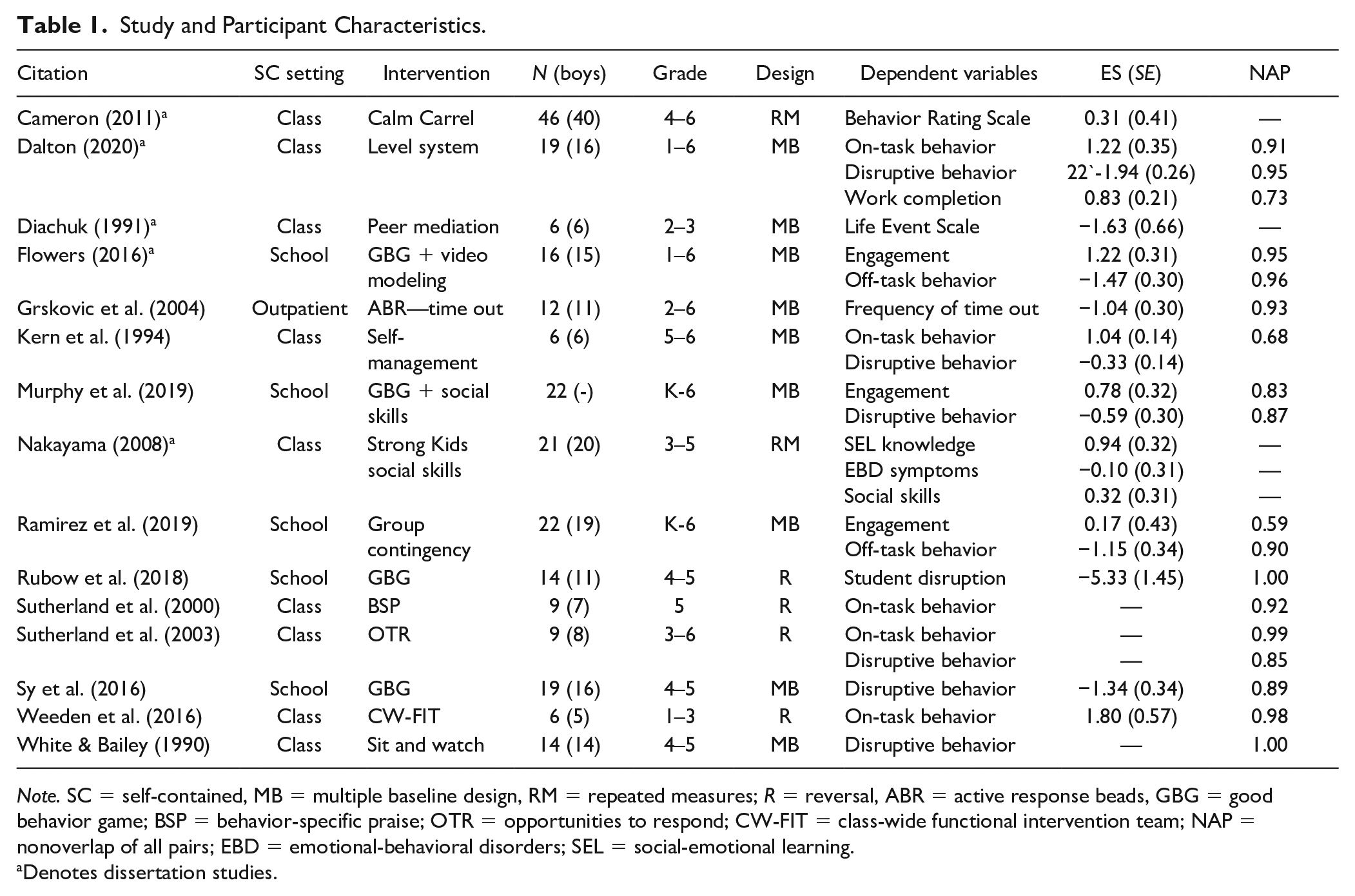
Note. SC = self-contained, MB = multiple baseline design, RM = repeated measures; R = reversal, ABR = active response beads, GBG = good behavior game; BSP = behavior-specific praise; OTR = opportunities to respond; CW-FIT = class-wide functional intervention team; NAP = nonoverlap of all pairs; EBD = emotional-behavioral disorders; SEL = social-emotional learning.
Denotes dissertation studies.
The class-wide interventions investigated generally fit into the following categories: group contingencies (k = 6), time-out techniques (k = 3), academic engagement (k = 2), self-management (k = 1), social skills curriculum (k = 1), point and level systems (k = 1), and peer-mediation (k = 1). Within group contingencies, four studies examined the effects of the GBG and additional component effects, such as the use of video modeling or adding a specific social skills component (Flowers, 2016; Murphy et al., 2019; Rubow et al., 2019; Sy et al., 2019). One study examined a class-wide functional intervention team (CW-FIT), a multilevel group contingency that combines self-management with functional assessment elements to reinforce appropriate behaviors in the classroom (Weeden et al., 2016). The other group contingency focused on the generalizability of explicitly teaching behavioral expectations from one class to another (Ramirez et al., 2019). The three studies examining time-out components used (a) a sit-and-watch technique where students were given a timer during physical education class to sit out when exhibiting inappropriate behaviors (White & Bailey, 1990) and (b) two alternatives to traditional time-out using active response beads and a calm carrel to practice counting and breathing following a rule violation (Cameron, 2011; Grskovic et al., 2004, respectively). Two studies included academic engagement; one examined the effects of behavior-specific praise (Sutherland et al., 2000), while the other examined the impact of additional opportunities to respond (Sutherland et al., 2003). The self-management study involved implementing a self-monitoring checklist with students where they marked their progress every 5 min (Kern et al., 1994). The social skill curriculum, Strong Kids, included 12 weekly lessons focusing on fostering emotional resilience (Nakayama, 2008). Dalton (2020) explored the utility of a level system, which allows students access to more freedom and choices after successfully demonstrating mastery in class levels. Finally, the technique explored by Diachuk (1991) used a peer-mediated strategy to encourage whole-class engagement.
Effects of Interventions
Table 2 displays the results of the RVE random-effect model with correlated effect weights. The average estimated effect across all studies was 0.93 (SE = 0.16), demonstrating an educationally meaningful and significant intervention effect (p < .001; WWC, 2020). Due to the small degrees of freedom caused by invariance in the sample characteristics and the small number of studies that met inclusion criteria, the Wald Test was used to determine the significance of each coefficient. Results from the Wald Test demonstrated that the covariates related to relationships and engagement were significant.
Estimated Average Effect.

Note. k = number of effect sizes; df = degrees of freedom; CI = confidence interval.
***p < .001.
Moderator Analysis
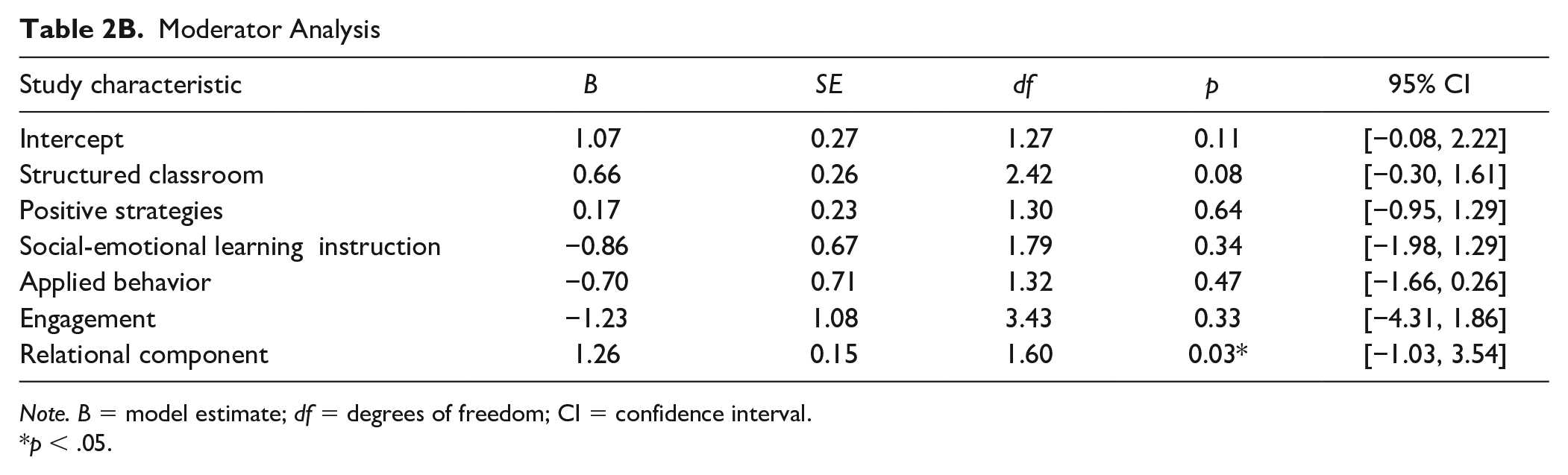
Note. B = model estimate; df = degrees of freedom; CI = confidence interval.
*p < .05.
The most frequently implemented feature was positive strategies (k = 13). Praise was the most common positive strategy implemented in the interventions (k = 11). Other positive strategies documented included the use of differential reinforcers and rewards. Although varied and non-significant, positive strategies contributed toward higher effect sizes overall (β = 0.17, SE = 0.23). Many studies (k = 13) also included procedures contributing toward a highly structured environment. Studies discussed examples of providing structure through clear rules and expectations and behavior management systems. Forms of behavior management systems included level systems (Dalton, 2020), the GBG (Flowers, 2016; Murphy et al., 2019; Rubow et al., 2018; Sy et al., 2016), structured self-monitoring (Kern et al., 1994), and CW-FIT (Weeden et al., 2016). Within the moderator analysis, 15 effect sizes were coded as highly structured, contributing to a nonsignificant yet positive impact (β = 0.66, SE = 0.26). Explicit SEL instruction was another common strategy documented in 10 studies and contributed to 16 total effect sizes. Six of these studies taught self-regulation and self-management strategies. Regulation strategies included incorporating break cards (Dalton, 2020) and a calm-down area (Cameron, 2011). Six studies included the direct teaching of self-management skills. Two studies employed self-monitoring, two included goal setting, and two included both self-monitoring and goal-setting components. The SEL instruction had a nonsignificant moderating role, though the model estimate was lower for studies that included SEL instructional components, yet demonstrated great variance (β = −0.86, SE = 0.67).
The use of applied behavior strategies, high-quality instructional strategies, and relational components of interventions were scarcely used, each contributing three or fewer studies to the model. Only two studies included a functional behavioral component (Kern et al., 1994, Weeden et al., 2016). In addition, only one study (Sutherland et al., 2003) described the quality of instruction as part of the intervention. Increased rates of opportunities to respond, an evidence-based approach to promoting classroom engagement for students with EBD, was implemented in their study. One study incorporated relational components (Diachuk, 1991). Their intervention included a peer-assisted strategy and a family component where daily student progress was communicated to parents each evening to update them on their child’s progress in school. Applied behavior practices negatively contributed to the overall effect size, although the difference was nonsignificant and contained considerable variance (β = −0.70, SE = 0.71). The only covariate in the model that demonstrated significance was the incorporation of a specific relational component (β = 1.26, SE = 0.15, p < .05). Specifically, the inclusion of a particular relational component involving peers or family members contributed to better classroom behavioral outcomes.
Quality Indicators
Quality scores were calculated to examine the methodological rigor, as reported in Table 3. Total quality scores ranged from 50% (Cameron, 2011) to 96% (Flowers, 2016; Nakayama, 2008). The average score for all studies was 83.6%. The most frequently unreported QI was pertinent demographic data, where 10 studies did not include information on some combination of ethnicity, SES, gender, or specific grade levels. Eight studies did not include information on the intervention agent, such as the role of the intervention agent, background knowledge, experience, or licensure. All studies included information regarding the inter-observer agreement, but three studies did not include details related to dosage. Six studies omitted information related to the frequency and timing of fidelity. All studies showed evidence of systematically manipulating the independent variable, and each study, as applicable, demonstrated graphs representing all data for single-case designs with baseline phases and designs that control for threats to internal validity. For the group design studies, attrition was reported and remained low across studies.
Overview of Quality Indicators.
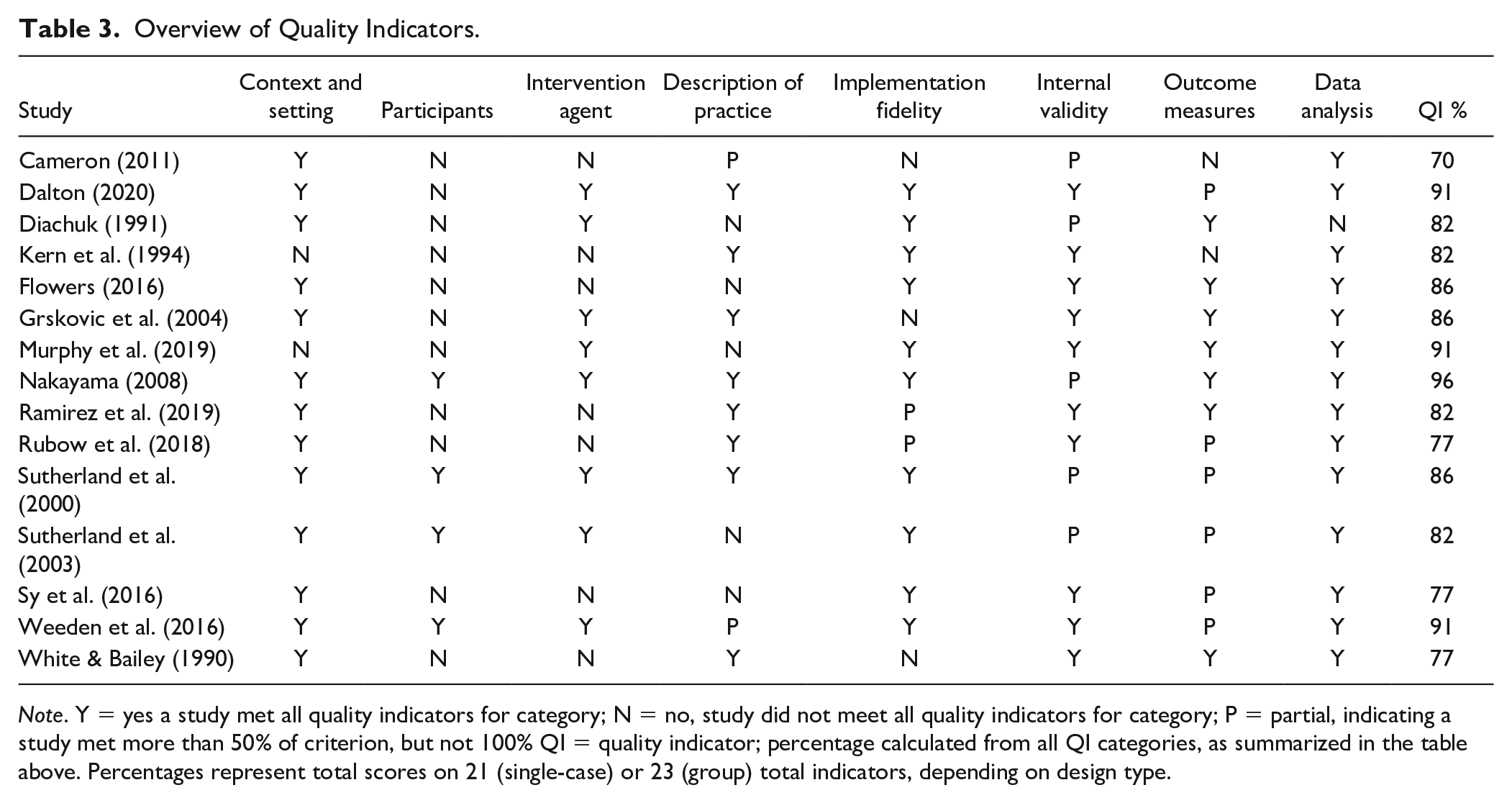
Note. Y = yes a study met all quality indicators for category; N = no, study did not meet all quality indicators for category; P = partial, indicating a study met more than 50% of criterion, but not 100% QI = quality indicator; percentage calculated from all QI categories, as summarized in the table above. Percentages represent total scores on 21 (single-case) or 23 (group) total indicators, depending on design type.
Six studies did not report on the clinical features, including content, criterion, or other forms of validity of their measures, and of those who did report, social validity was the most common form of validity measured. Three studies did not use sufficient reversal designs, with less than four repetitions of alternating sequences. Weeden et al. (2016) did not have sufficient data points for the reversal design as recommended by CEC, but the rationale was clearly stated within the paper, as the reversal negatively affected students in the classroom.
Discussion
A cornerstone of an effective and supportive self-contained classroom for students with EBDs is the use of evidence-based behavioral intervention practices. However, there has been a dearth of research exploring what specific class-wide behavioral interventions might be most effective at supporting the unique needs of students in self-contained settings. Although teachers may take some cues from the supporting evidence within universal behavioral supports, unpacking these interventions’ direct impact on students in self-contained settings is needed. Unfortunately, students with EBDs demonstrate the worst outcomes of any special education category (Mitchell et al., 2019). In addition, evidence suggests that students placed in self-contained settings have worse outcomes than students in general education settings (Oh-Young & Filler, 2015). Therefore, it is imperative to identify evidence-based practices for students with EBDs in self-contained settings. Thus, the purpose of this meta-analysis was to systematically analyze the current research on class-wide behavior interventions for elementary students with EBDs in self-contained settings. In a systematic search, 15 studies met the inclusion criteria. The average estimated effect size was 0.93 (SE = 0.16), and individually reported effect sizes were large, yielding moderate to large effects.
Although the average estimated effect shows promise for current practice domains in self-contained settings, it is worth noting that these results were more than a standard deviation lower than those found in a similar meta-analysis by Chaffee and colleagues (2017) that examined class-wide behavior interventions for students in general education settings. Two main points of interest arise. First, their study yielded 83 single-case studies that met their inclusion criteria to examine class-wide behavioral interventions in the general education setting, over five times greater than our search. Although only 15 of those studies were included within their meta-analysis based on their BC-SMD requirements, it is eye-opening to see the breadth of behavior intervention research in the general education setting compared with the sheer number of studies that have focused on the needs of students in self-contained settings. The second distinction between the present meta-analysis and the one conducted by Chaffee and colleagues (2017) is the estimated effect size. Their study, which included 19 total effect size calculations, yielded an estimated average effect of 2.04 (SE = 0.17). Although not a direct comparison, the difference in these results could suggest that students in general education settings are more responsive to class-wide behavioral interventions than students with EBDs in self-contained settings. As many of the intervention components were similar, it might not be surprising, given the placement of students in self-contained settings suggests the need these students have for more intensive interventions than what is typically found in Tier 1 universal supports (Smith et al., 2018).
Features of the Interventions
Six key features of intervention were investigated based on prior research examining evidence-based behavior practices. This meta-analysis aimed to unpack how these practice domains may moderate the behavioral outcomes of students in self-contained settings. Meta-regressions revealed that relational components, including peer interventions and home-based support, significantly improved student behavior outcomes. Due to the small number of studies that included a relational component, we were unable to disaggregate what specific relationship components seem to be most effective for students in self-contained settings. Other studies support the finding that positive relationships significantly improve student behaviors (Demaray & Malecki, 2002; Mihalas et al., 2009; Murray & Pianta, 2007). Future research should examine how cultivating positive relationships in self-contained classrooms for students with EBDs affects behavioral outcomes.
The other features of intervention, including a highly structured classroom, positive strategies, SEL instruction, and applied behavior strategies, did not significantly moderate the effectiveness of the class-wide interventions. It is worth noting that although nonsignificant, structure and positive strategies both resulted in positive estimates, while SEL, applied behavior techniques, and engagement resulted in negative estimates. Past meta-analyses have demonstrated that about 65% of students with EBDs make improvements from social skills interventions, with the smallest effect sizes from students with disruptive behavior disorders, a common diagnosis found within self-contained settings (Gresham, 2015). It could be that these strategies are less effective for students in self-contained settings, though future research is warranted to determine the effect SEL instruction and specific strategies, such as social skills, may have on students with EBDs in self-contained settings. Applied behavior techniques also resulted in nonsignificant yet lower effect size estimates. Again, there were not enough studies to disaggregate which components benefited students in self-contained settings, and future research is warranted on interventions such as CW-FIT to determine how realistic these approaches are for students in specialized settings.
Highly structured classroom settings and positive strategies resulted in nonsignificant yet positive outcomes. To rigorously test the impact of specific intervention practices, more studies need to be conducted. Group contingencies, such as the GBG, were the most frequently reported structured intervention component. The individual effect sizes for group contingencies in this meta-analysis were generally large and demonstrated benefits in self-contained classrooms. The promising results of group contingencies align with previous meta-analyses that have examined the role of group contingencies in improving classroom behaviors (Chaffee et al., 2017; Maggin et al., 2017). The long-term effect structured programs may have in self-contained settings is not understood. Thus, future research should consider the maintenance and generalization of these outcomes.
Quality
Evaluating methodological rigor helps determine the state of the field regarding class-wide interventions for special education students and understand the current evidence base of tested studies. Methodologically sound studies enable reviewers and researchers to determine whether sufficient evidence exists to establish a functional relationship or be considered an EBP (Kennedy, 2005). Using the CEC (Cook et al., 2015) criteria, no practice examined in this study can be declared an EBP. For single-case studies to be established as an EBP, the positive effects need to be found in at least five methodologically sound studies. This review evaluated the GBG in four studies and included a total of 71 students. The GBG could be potentially considered an EBP, but the methodological rigor of these studies was not 100%, as required by the CEC standards (Cook et al., 2015). The quality of these studies ranged from 77% (Rubow et al., 2018) to 91% (Murphy et al., 2019). Although none of the interventions yet meet the criteria for EBPs in special education, there is promise and potential for future replication of current studies with higher methodological adherence.
Limitations
As often seen in published single-case research, almost all the effects were positive and demonstrated a functional relationship between independent and dependent variables. Although this is promising for future studies using each specific behavioral intervention, these data should be interpreted cautiously. Single-case designs are more likely to show large effects and more likely to be published when displaying said large effects (Maggin et al., 2017; Rosenthal, 1979). Therefore, while it is encouraging to see significant effects on a frequently struggling population, these results must be interpreted with caution, and replication of the included studies is necessary to understand the effectiveness and generalizability of specific behavioral interventions fully.
Another limitation of this meta-analysis is that we could not calculate all effect sizes using the same statistic. Although BC-SMD is an effective and supported instrument to calculate effect sizes for single-case designs, it could not capture the effect size of some studies due to requirements within study designs (WWC, 2020). Therefore, the ability to examine the effects of moderator variables across studies was limited. Future research should (a) examine other ways to measure effects for multiple design types accurately and (b) adhere to the WWC guide for single-case research methodology (WWC, 2020).
A third limitation to consider and address in future research is the present studies were not evaluated for potential adverse effects on children’s attitudes and school experiences. This meta-analysis did not evaluate the impact of approaches such as time-out or level systems outside the measures stated in their report. When applying a class-wide behavioral intervention, researchers should always consider the long-term effects on students' mental and behavioral health. In addition, self-contained classrooms for students with challenging behaviors have mixed support (Dodge et al., 2006; Maggin et al., 2011; Sutherland et al., 2008). Due to the parameters of this analysis, the role peers within the classroom may have on the success of class-wide interventions was not addressed. Future examination of peer relationships’ role in creating a successful class-wide behavior program for self-contained classes is warranted.
Implications for Research and Practice
Researchers should use the current evidence base regarding effective practices to include and implement future experiments in the field. The body of research on class-wide interventions for students with EBDs in self-contained settings is thin, yet a strong base has been established in improving behavior outcomes overall, as demonstrated by the display of practice elements across settings for students with EBDs. Therefore, future researchers should consider adapting established practice elements when developing interventions for students with EBDs in specialized settings. In addition, to bolster the quality of research and programs students receive, future researchers should be mindful of performing rigorous research that aligns with the WWC and CEC guidance to ensure replicable and accurate results (Cook et al., 2015; WWC, 2020). Replication of current studies is needed to gain confidence for preliminarily researched interventions, such as CW-FIT. Future research should also examine long-term behavioral and academic outcomes and, when feasible, use group study designs for self-contained settings to allow for more generalizable results.
For educators in self-contained classrooms, the research suggests the support and use of established evidence-based practice domains, including the use of a highly structured class-wide behavior system, consistently emphasizing positive strategies, and focusing on building healthy relationships for students with EBDs between the student, teacher, and peers. Although the number of studies investigating class-wide behavior interventions is limited, educators should consider using data-based decision-making to test and support classroom practices that align with the established broad universal practices for managing behavior (Sutherland et al., 2019).
Conclusion
This review has highlighted that although there are over 100,000 students today in self-contained special education settings for EBD; findings for effective class-wide behavioral interventions for this population are minimal. Current research examining the effectiveness of these interventions is positive and demonstrates the need for the replication of studies. Practices such as group contingencies and incorporating positive reinforcement have demonstrated effectiveness across multiple studies for students with EBD. Increased research quality and attention to established evidence-based practices are needed to further the field in behavioral interventions for EBD and improve outcomes for students who have historically needed it most.
Footnotes
Declaration of Conflicting Interests
The author(s) declared no potential conflicts of interest with respect to the research, authorship, and/or publication of this article.
Funding
The author(s) received no financial support for the research, authorship, and/or publication of this article.
