




Abstract
The COVID-19 pandemic slowed down international migration around the world, with many countries closing their international borders for a prolonged period of time. Although there are studies emerging that analyse the impact of COVID-19 and border control measures, more detailed migration flow data have been largely absent. In this research note, we examine changes to the patterns of immigration and emigration in Australia during the pandemic to further our understanding of the differing impacts of the pandemic on population groups. Foreign-born populations with large shares of international students recorded the highest declines in immigration, especially those from China, Malaysia, and South America. Immigration of seasonal workers from the Pacific Islands, on the other hand, exhibited increased levels. There were also unexpected situations where residents who made temporary visits outside Australia were unable to return, or persons who were visiting on short-term visas prolonged their stay. Results reveal how responsive migration can be to policies in a time of a population health crisis. The nuance and complexity of these patterns underscore the importance of migration dynamics, adding to our knowledge of the changing international migration profiles during the recent pandemic.
Introduction
The COVID-19 pandemic resulted in national border restrictions and closures across the world. While these are likely to have had substantial, though perhaps time limited, impacts on migration and population change, data are currently lacking. Current estimates of the effects of the pandemic are largely reliant on residual methods for estimating net migration (UN 2020; McAuliffe et al. 2022) due to poor quality or the complete absence of migration flow statistics at the national level (Raymer et al. 2019, 2022; De Beer et al. 2010). For example, the United Nations (UN 2020) estimated that the pandemic slowed down the expected growth of the world's international migrant population by 2 million persons in the year to July 2020. However, this is based on the assumption of zero growth in migrants during the pandemic rather than any empirical data. Indeed, only a small number of developed countries provide international migration flow statistics to the world community for understanding how international migration responded to the pandemic (González-Leonardo et al. 2023).
In this research note, we examine changes in international migration flows to and from Australia during the COVID-19 pandemic. International migration is defined as a change in the country of usual residence, referring to the inflow (immigration) and outflow (emigration) of people across national borders regardless of their country of birth or citizenship. Australia is a major migrant destination country with a highly regulated migration system and reliable border control statistics (Raymer et al. 2022; González-Leonardo et al. 2023). Australia also implemented strict border control measures at the outset of the pandemic, closing international borders to all but returning residents and exempt travellers (Australian Bureau of Statistics (ABS) 2021a). Recent publications and statistics show declines in immigration flows to Australia during the pandemic with net international migration becoming negative for the first time in many decades (ABS 2023a; González-Leonardo et al. 2023). In this work, we investigate the dynamics underlying immigration decline and negative net international migration. Further, we examine the effects of the pandemic and border closure on the migration flows by age, sex, country or region of birth, and where possible, by broad visa type. Findings show that border controls during the pandemic affected population groups differently, including some unexpected situations where residents were unable to return to Australia from temporary visits overseas or, the opposite, international visitors remained in the country for more time than the intended period of stay.
The research contributes to the academic understanding of the complexity of migration and the effectiveness of border control regimes. COVID-19 border closures may appear as blunt and indiscriminate policy instruments for curtailing, if not eliminating, international migration. Evidence of complex and heterogeneous migration patterns in the face of border closures lends weight to the theorised importance of implicit policy goals, unintended outcomes and competing policy and political imperatives at government levels (Castles 2017). Thus, the detailed and disaggregated migration flows presented in this research note can aid in the scholarly understanding of the complex and intersecting forces that drive migration.
Background
The Impacts of COVID-19 on Migration
From March 2020 to December 2022, COVID-19 resulted in sharply increased restrictions on international movements. More than 90 per cent of the global population were living in countries with increased border restrictions by the end of March 2020 and almost 40 per cent lived in countries that had closed their borders to all but returning residents (Connor 2020). By 11 April 2020, 18 of 37 OECD+ 1 countries closed their borders, 16 had implemented moderate border controls, and only three had implemented no to weak controls (O’Brien and Eger 2021). According to Oxford University's COVID-19 Government Response Tracker, 154 of 185 countries imposed a complete travel ban or border closure at some point during the pandemic up until the end of December 2022 and all countries had imposed at least quarantine protocols or bans on arrivals from some regions (Hale et al. 2021). Based on Oxford University's data, international borders were closed for an average of 169 days between 1 March 2020 and 31 December 2022, with the longest border closures in Turkmenistan, Palestine, Tonga, New Zealand, Vanuatu, Kiribati, Australia, Israel, Japan and Canada – all of which had closed borders for more than 500 days. De-facto border closures were also likely in place in countries with relatively weak restrictions — given the extent of border closures around the world and the likelihood that would-be travellers had nowhere to go.
The impact of border closures on international migration is visible in existing data. The UN (2022b) World Population Prospects provides annual estimates of net migration for 237 countries and areas up to the end of 2021. According to these estimates, average annual net migration was 32 per cent lower in 2020 and 2021 than it was in the ten years before 2020. Many of the Gulf countries that hosted large temporary populations, including Saudi Arabia, Kuwait and Qatar, switched from exhibiting large positive net migration totals in the 2010s to negative net migration totals in 2020 and 2021 (UN 2022b). Net migration in the United States and Canada remained positive but substantially reduced, while negative net migration for China, Nepal, Bangladesh, India and Pakistan was substantially reduced.
Migration flow data are less commonly available yet suggest varied patterns across countries. González-Leonardo et al. (2023) estimated the impact of COVID-19 on immigration flows to 15 high-income countries in Europe, North America and Oceania and found that immigration declined in all countries, except Finland. Declines ranged from 5 per cent in Switzerland to 60 per cent in Australia. Italy, Canada, Denmark and Finland implemented relatively tight travel restrictions yet experienced only modest declines in migration (or no decline in the case of Finland), whilst Australia, Spain and Sweden experienced major declines. Studies quantifying the impact of COVID-19 immigration restrictions on future population size, growth, geographic distribution and age structure found that the aggregate long-term consequences of the pandemic depend largely on the extent to which migration (and fertility) recovers to pre-pandemic levels (e.g., Charles-Edwards et al. 2021; González-Leonardo and Spijker 2022; Wilson, Temple and Charles-Edwards 2022).
In many cases, return migration of citizens and permanent residents living abroad exhibited large increases at the outset of the pandemic. This included official repatriations, returns facilitated by international organizations, and also returns without support (Migration Data Portal 2022). For instance, Filipino citizens were amongst the largest groups of migrant workers who were repatriated to their home country. With support from the Filipino government, over 327,000 overseas Filipino workers (OFWs) were repatriated home from the Middle East, Asia, Oceania, Americas and Europe by the end of 2020 (Kang and Latoja 2022). By May 2022, over 3.2 million OFWs had returned to the Philippines during the pandemic (UN 2022a). However, repatriation could be impeded by a range of factors, including increased costs and reduced availability of international flights, lockdown restrictions, continued economic need for workers in host countries, and reluctance of governments to support repatriation (Khan and Arokkiaraj 2021; Rajan and Arokkiaraj 2022; McAuliffe et al. 2022; Suhardiman et al. 2021; Withers, Henderson and Shivakoti 2022).
Migration in Australia and Pandemic-Related Border Policy Changes
Australia has been one of the largest migrant-receiving countries in recent decades. Today, 30 per cent of Australia's population were born in another country, one of the highest shares in the world (UN 2020). The impact of the pandemic and its relevant border closure was enormous on Australia's international migration. Net international migration in Australia has been positive since the end of the Second World War, but it became negative in 2020 as a result of the COVID-19 pandemic (ABS 2022). As shown in Figure 1, Australia's negative net international migration in 2020 was largely driven by the substantial drop in immigration flows. There was a sharp decline in immigration from over 600 thousand in 2019 to less than 240 thousand in 2020, and a moderate drop in emigration from over 360 thousand in 2019 to just over 240 thousand in 2020. The visible impact of the pandemic on Australia's international migration was closely related to the country's border policy changes. As soon as the country reopened its border in late 2021, the immigration and net migration levels quickly recuperated in 2022 2 (Figure 1).
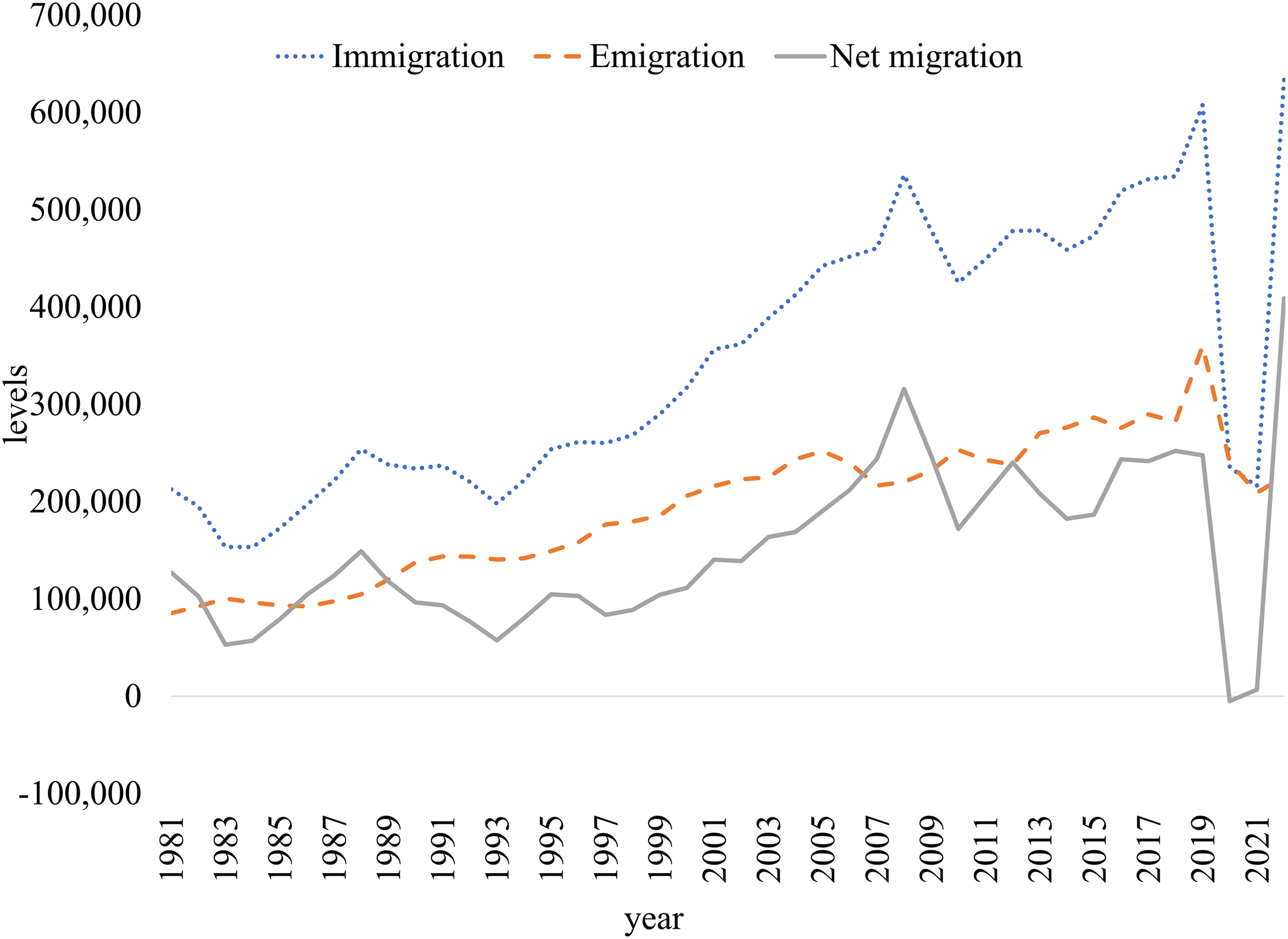
Immigration, emigration and net international migration, Australia, 1981–2022.
Since the beginning of the pandemic, Australia attempted to contain the spread of the virus at its international border (Stobart and Duckett 2022; Campbell and Vines 2021). The pandemic saw a dramatic closing of the country's international borders in early 2020. The border was first closed to direct entries from mainland China on 1 February 2020 (ABS 2021a). This was a time just before university teaching commenced. Many Chinese students who were enrolled in Australian universities went home during the summer break but were unable to return (Haugen and Lehmann 2020; Perpitch 2020). Thus, we expect immigration flows from China to be affected heavily during the pandemic and border closure – given the large share of students in past immigration flows from China (Department of Home Affairs 2023c; Guan 2023). Travel restrictions were soon extended to other countries with large-scale outbreaks, such as Iran, South Korea, and Italy (Stobart and Duckett 2022). By 20 March 2020, the border was closed to all international travellers (ABS 2021a). With some exemptions, only Australian citizens and permanent residents, including their immediate family members, 3 were allowed to enter the country after this time (Department of Home Affairs 2022b).
Border control measures may have led to an increase in the net migration of Australian citizens and permanent residents. Large numbers of Australian nationals living abroad returned to Australia at the outset of the pandemic (Payne 2020). However, limited flight capacity for economy-class travel left many other Australian citizens, migrants with permanent residence 4 and their families stranded overseas (Stobart and Duckett 2022). In the meantime, Australian citizens and permanent residents were advised not to leave the country unless granted an “exit-visa” (Stobart and Duckett 2022, 6). These factors resulted in continued immigration flows of people returning to the country at the outset of the pandemic, both of those born in Australia and those who are foreign-born and permanent residents or naturalised citizens of Australia. Emigration, meanwhile, was very low for Australian citizens and permanent residents.
Temporary migrants were affected differently. Due to its effective border control and absence of any land borders with other countries, Australia was able to implement restrictions in a swift and effective manner (Adekunle et al. 2020; Stobart and Duckett 2022). At the end of May 2020, over 115 thousand student visa holders, over 35 thousand temporary skilled or graduate visa holders, and over 75 thousand working holiday visa holders were outside the country and unable to return 5 (Department of Home Affairs 2020). Temporary residents who were in the country were discouraged from staying. In April 2020, the federal government told international students, tourists and other visitors to “go home” unless they have “critical skills” such as healthcare workers, emphasising that social welfare support will prioritise Australian citizens and permanent residents (The Canberra Times 2020; Coleman 2020). Temporary visa holders were advised to use their retirement savings to support themselves during “the dual health and economic crisis” (Coleman 2020) and were not eligible for the federal government's main employment subsidy scheme (known as “JobKeeper”) that was used to support businesses and employees during the pandemic (Segrave and Phitzner 2020; Nguyen and Balakrishnan 2020). This lack of institutional support may have contributed to high levels of emigration among foreign-born populations with large temporary populations, especially international students.
Historically, Australia has relied heavily on seasonal workers, international students, working holiday makers, and family migrants to fill jobs in low-skilled and labour-intensive sectors and highly educated and skilled migrants to fill jobs at the upper end of the labour market (National Skills Commission 2021). In the years before the pandemic, working holiday makers including those from the United Kingdom and seasonal workers from the Pacific Islands filled gaps in the domestic labour market (Tan and Lester 2012; Phillips 2016; Collins, Krivokapic-Skoko and Monani 2016). In the years leading up to the pandemic, the United Kingdom had been the top sending country for working holiday makers in Australia (Department of Home Affairs 2022a). However, a Free Trade Agreement between the United Kingdom and Australia in 2021 effectively ended the practice of British tourists extending their visas by working as farm labourers in Australia (Department of Home Affairs 2023b; Minister for Trade and Tourism 2023). The end of this practice compelled the Australian Government to increase its reliance on labourers from the Pacific Islands to address labour shortages in the agricultural and food processing sectors. As such, the government extended visas for onshore seasonal workers from the Pacific and Timor Leste and recruited new seasonal workers during the pandemic (Department of Foreign Affairs and Trade 2021). Since April 2020, a special Temporary Activity visa (subclass 408) was made available for temporary visa holders in these sectors to extend their stay in Australia. Similar policies were in place in New Zealand to retain and recruit essential health workers and low-skilled workers (primarily those from the Pacific Islands), or to extend visas for those who were unable to return to their home countries (Liu, Ran and Jia 2022).
There were 203 thousand visitors (international tourists) in Australia in April 2020, most of whom were on short-term visas with a maximum of a three-month stay in the country (Coleman 2020). Short-term visitors to Australia were expected to return to their countries of origin on the closing of international borders and the government also urged them to do so, particularly for “those without family support” (Coleman 2020). Australia's monthly Overseas Arrivals and Departures statistics (ABS 2023b) show that some remained and likely had their visa extended onshore. Paradoxically, border closures in these cases may have resulted in temporary visitors becoming usual residents because of the way Australia measures and defines international migrants (see the Data and Method section below).
Data and Method
Detailed international migration flow statistics are available and sourced from the Australian Bureau of Statistics (ABS), known as the Net Overseas Migration (NOM) statistics. For the analyses in this study, immigration and emigration flows are disaggregated by age, sex and birthplace for each calendar year from 2004 to 2021. This research also utilises a time series of corresponding flows that were gathered and estimated from 1981 to 2003 (Raymer et al. 2020).
NOM statistics adopt a “12/16 months rule” 6 to define an international migrant. A person is counted as an immigrant to Australia if they were not previously in the Australian resident population and have remained in the country for at least 12 months over a 16-month period. Similarly, a person is counted as an emigrant from Australia if they were previously in the Australian resident population but have remained outside the country for 12 months or more over 16 months. This definition differs from the UN's recommendation (1998, 2022) to measure migration in line with usual residence where persons are in or out of the country for most of the year (i.e., 6 months + 1 day) or at least 12 months. While not directly aligned with UN's usual residence concept used for measuring populations (i.e., most of the year), the NOM definition “takes account of those persons who may have left Australia briefly and returned [e.g., international students], while still being resident for 12 months out of 16” (ABS, 2022). Figure 2 presents the situations when a person is counted towards NOM statistics and when they are not. Short-term visitors are not included in the immigration or emigration flows, though it is possible for them to be counted towards NOM if they extend or change visas during their time in Australia. Because migration is defined by duration in or out of the country, an Australian-born person or an Australian citizen could also be an immigrant or an emigrant as long as they fit the criteria presented in Figure 2.
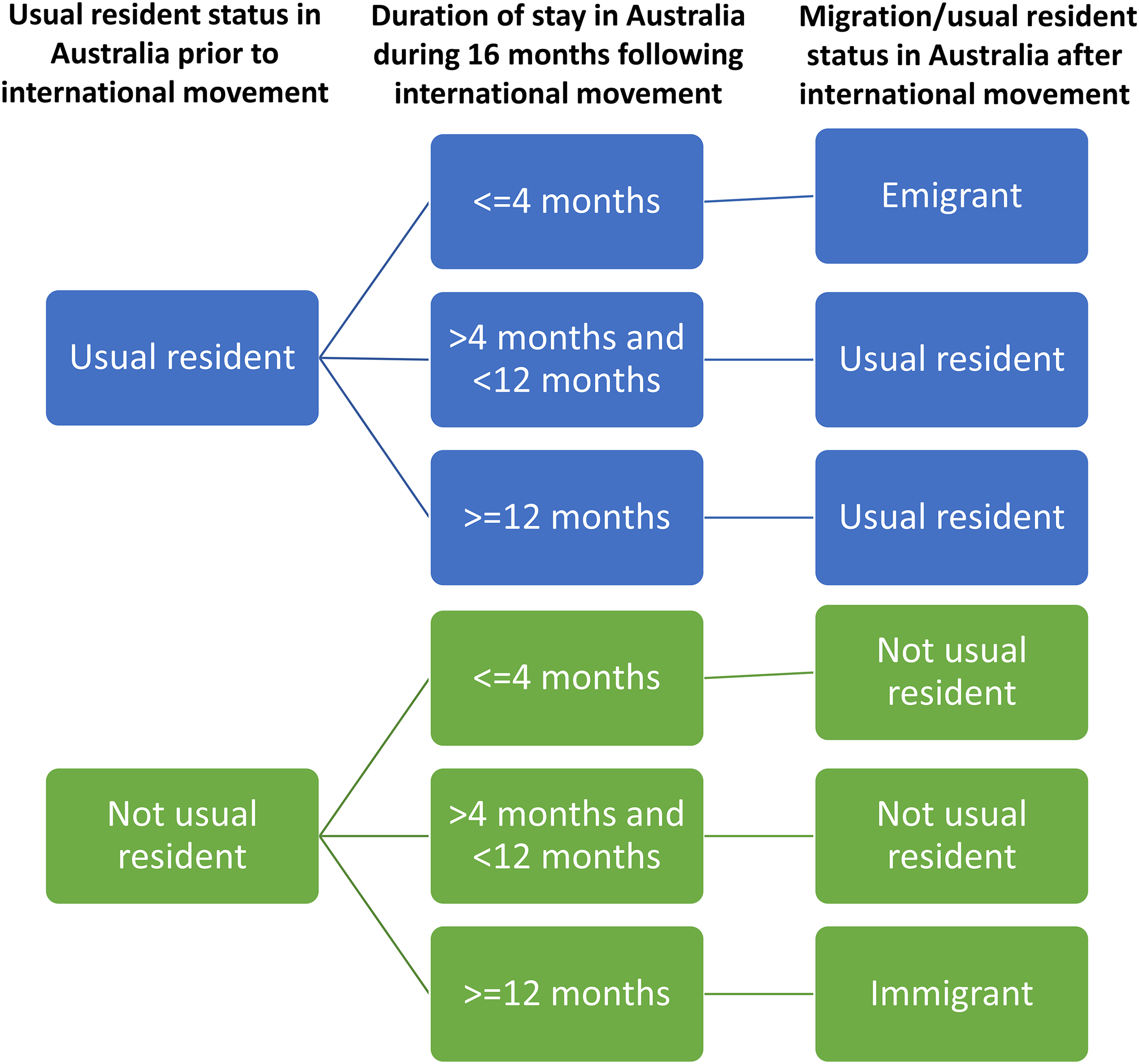
Flow chart showing when a person is counted towards Australia's immigration or emigration flows, in relation to their previous residency status. Adapted from ABS (2018).
We use 18 five-year age groups, for age 0–4 to age 85+, two sexes, and 19 birthplace groups to disaggregate migration flows. The 19 birthplace groups include 18 foreign-born populations and the Australian-born population, covering all regions of the world. These represent nine major sending countries (e.g., United Kingdom) and nine aggregated regions (e.g., Northern America) based on the Standard Australian Classification of Countries (ABS 2016). The population sizes of the 18 defined foreign-born groups and the Australian-born group as well as their shares in the resident population in the 2011 and 2021 Australian censuses are presented in Table 1. Comparing these populations ten years apart, there are visible changes in their population sizes and proportions of the total overseas-born population. We expect changes in the foreign-born populations to be indicative of the relative scales of immigration and emigration before and during the pandemic, noting that migrant population stock represents the accumulated effect of annual migration flows and mortality of migrant populations.
Australia Population by Country or Region of Birth, 2011 and 2021 Censuses.
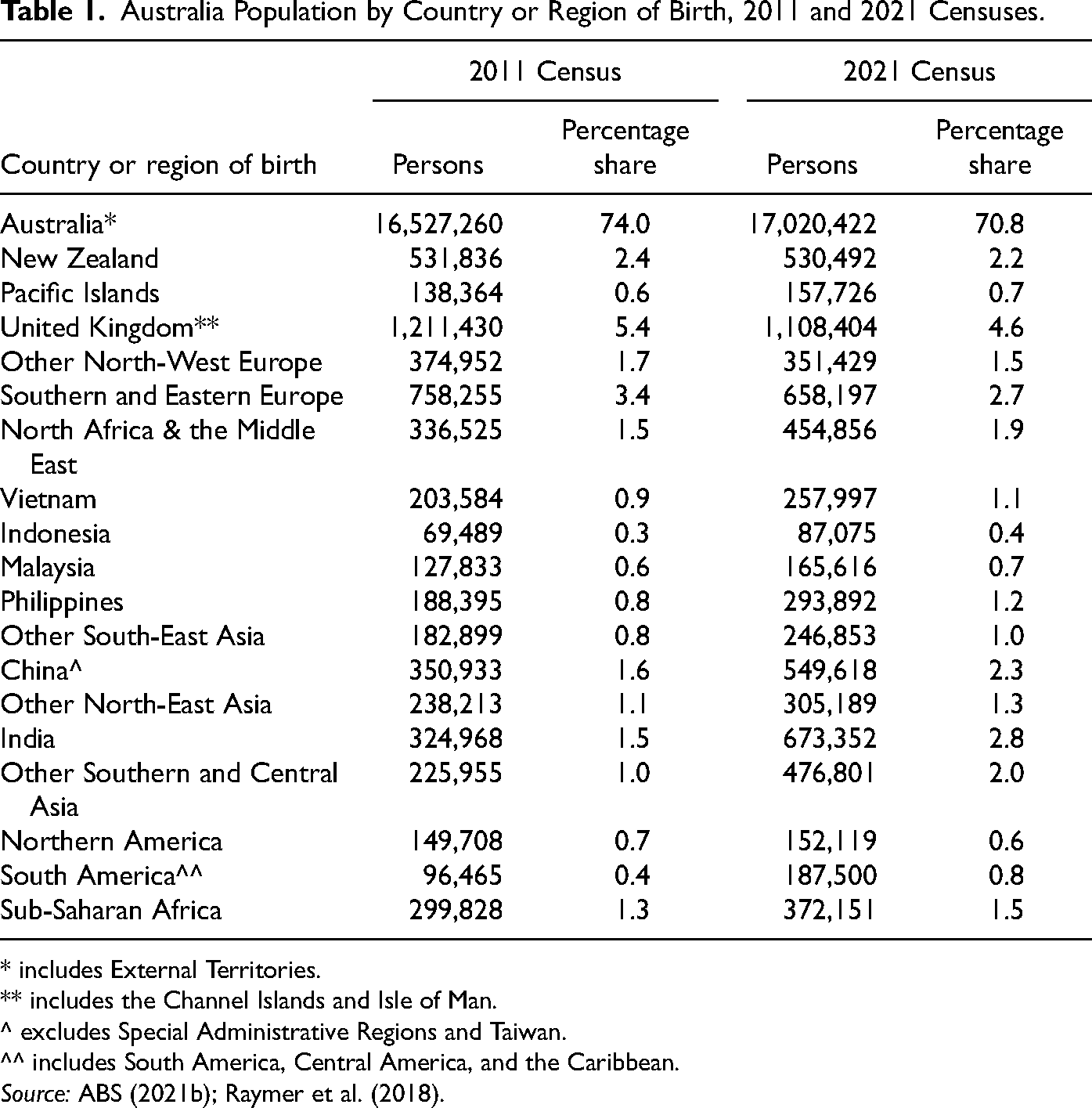
* includes External Territories.
** includes the Channel Islands and Isle of Man.
^ excludes Special Administrative Regions and Taiwan.
^^ includes South America, Central America, and the Caribbean.
Source: ABS (2021b); Raymer et al. (2018).
Annual NOM statistics for immigration and emigration by visa type are sourced from the ABS (2021a) from 2004 to 2021. We also source statistics on the number of temporary entrant visa holders present in Australia (regardless of length of stay) by country of citizenship from 2011 to 2023 from the Department of Home Affairs (2023e).
Results
In the three decades prior to the COVID-19 pandemic, international migration to Australia was steadily increasing and diversifying from nearly every region of the world. As shown in Figure 3, immigration flows from Asia, North Africa and the Middle East, and South America grew the most rapidly, driving the substantial growth of migrant stocks from these regions (Table 1). Such trends, however, were greatly interrupted by the closure of Australia's international border in 2020. From Figure 3, we can identify at least three key impacts of the pandemic and border closure on Australia's international migration. These impacts are discussed in turn in the following sub-sections.
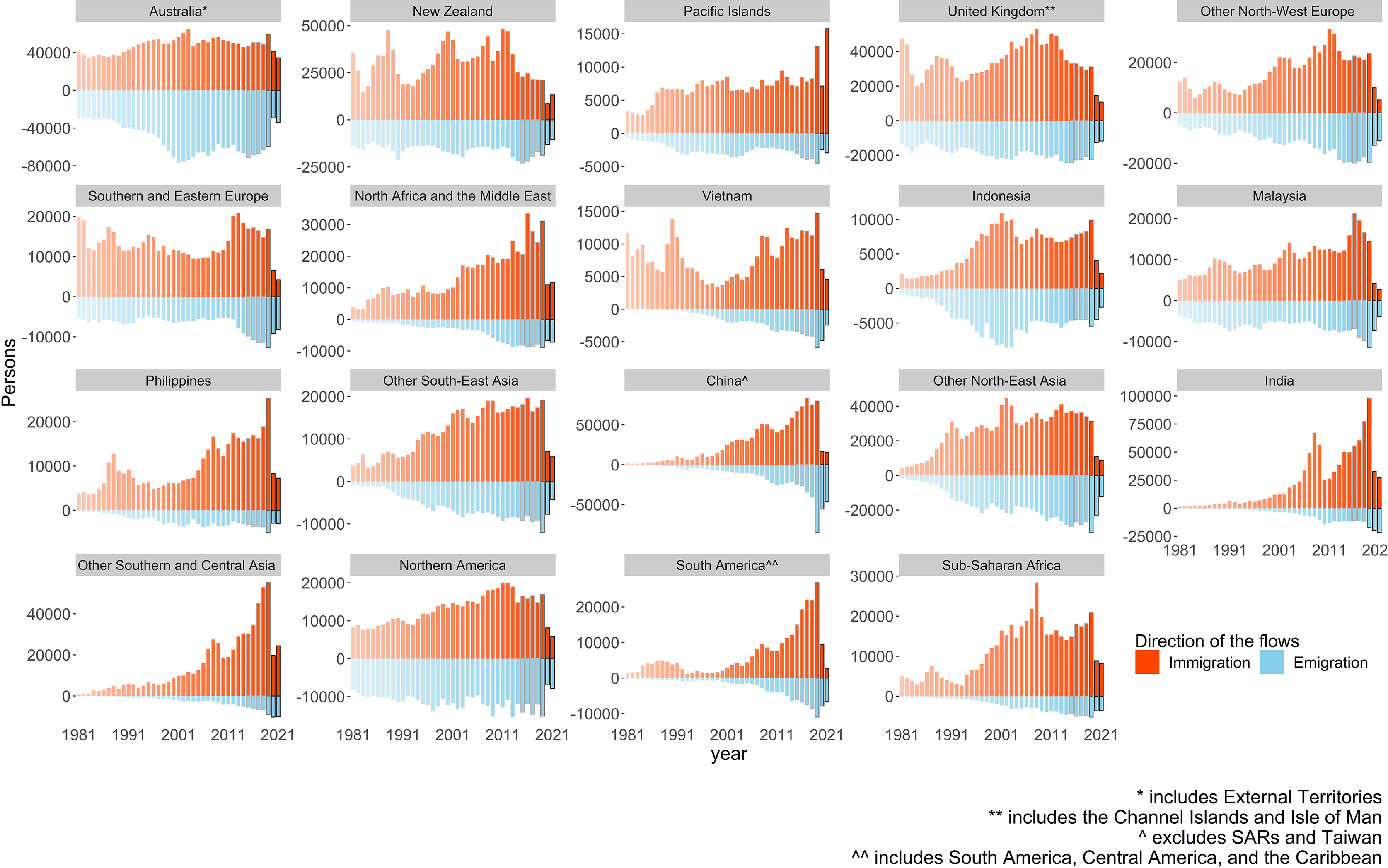
Annual immigration and emigration to and from Australia by country or region of birth, 1981–2021.
The largest declines in immigration were among students. Figure 4 shows that the inflow of international students (from all countries) dropped from 167 thousand in 2018 to 43 thousand in 2020. The decline in student arrivals had a substantial impact on the overall immigration flows from countries with large shares of international students. Comparing 2021 with 2018, immigrants born in South America, Malaysia and China recorded around an 80 per cent decline in immigration (Figure 3). This is not too surprising as China, India, Vietnam, Malaysia, Nepal, Brazil and Colombia were amongst the top source countries for international students before the pandemic (Department of Education and Training 2018, 2019). In the years before the pandemic, over 60 per cent of non-visitor visas granted to persons from China and Nepal were student visas (Department of Home Affairs, 2023c, 2023d). The overall inflow of international students (from all countries) dropped to less than 28 thousand in 2021 (Figure 4). Reflecting the drop, the proportion of the Malaysian-born population who were students declined from 24 per cent in the 2016 Census to 18 per cent in 2021, while the proportion of Chinese-born students declined from 34 per cent to 23 per cent (ABS 2021b).
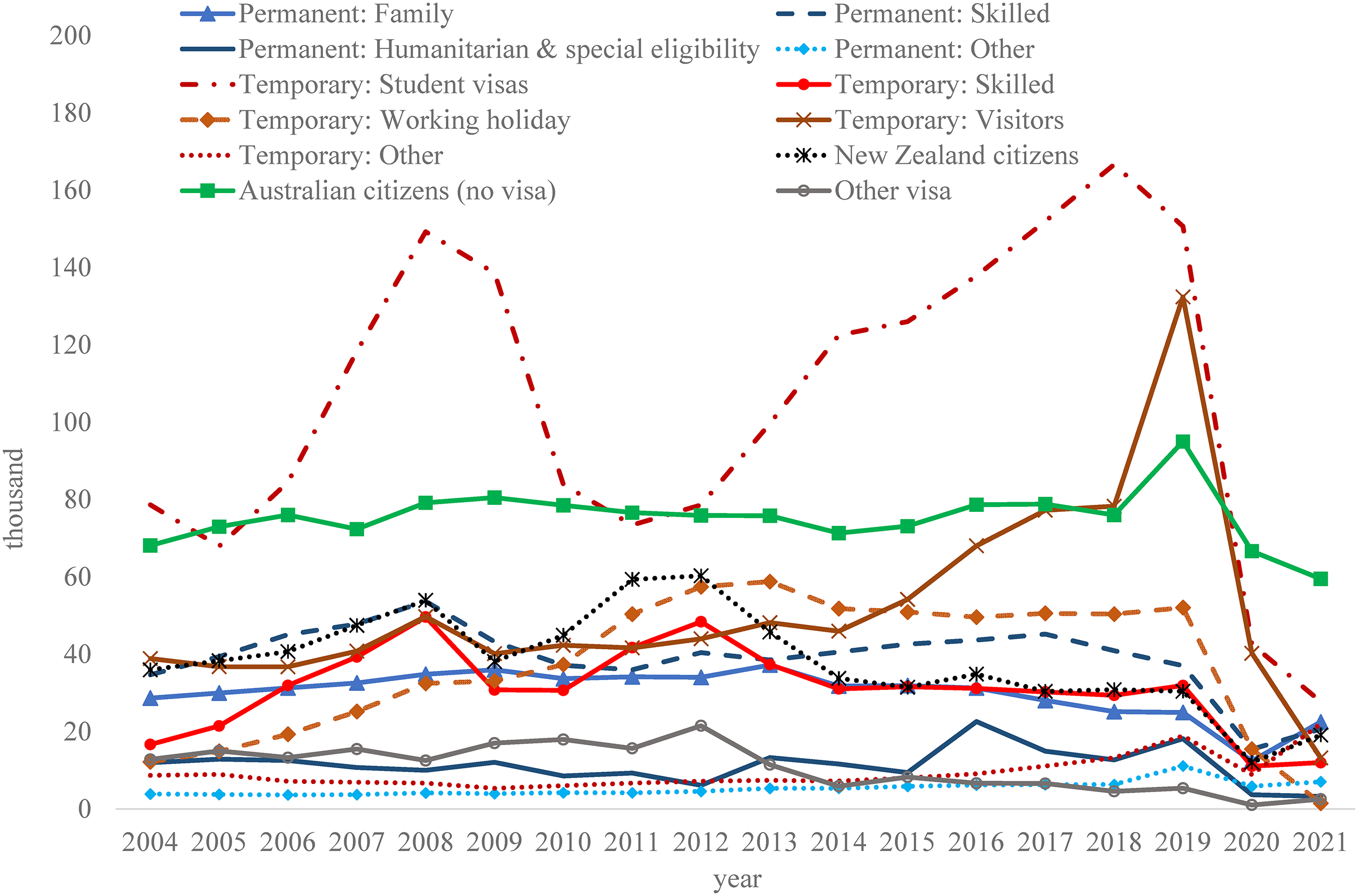
Annual immigration to Australia by visa type, 2004–2021.
As shown in Figure 3, emigration declined for most groups, except those with large numbers of international students. The exceptions were emigrants born in Vietnam, China, India and other Southern and Central Asia. Most international students return to their country of origin after completing their degrees. Between 2000 and 2014, only 16 per cent of international students transitioned to permanent residence. The remaining 84 per cent left Australia (Treasury and Department of Home Affairs 2018). During the pandemic, there were further barriers that discouraged temporary visa holders, including international students, to remain in Australia, such as the lack of access to “JobKeeper” and the federal government's unfavourable “go home” message (Segrave and Phitzner 2020; Nguyen and Balakrishnan 2020; The Canberra Times 2020; Coleman 2020). NOM statistics for emigration by visa type in Figure 5 show the high outflow of international students during the pandemic: 75 thousand international students left Australia in 2020, compared to less than 60 thousand in 2018.
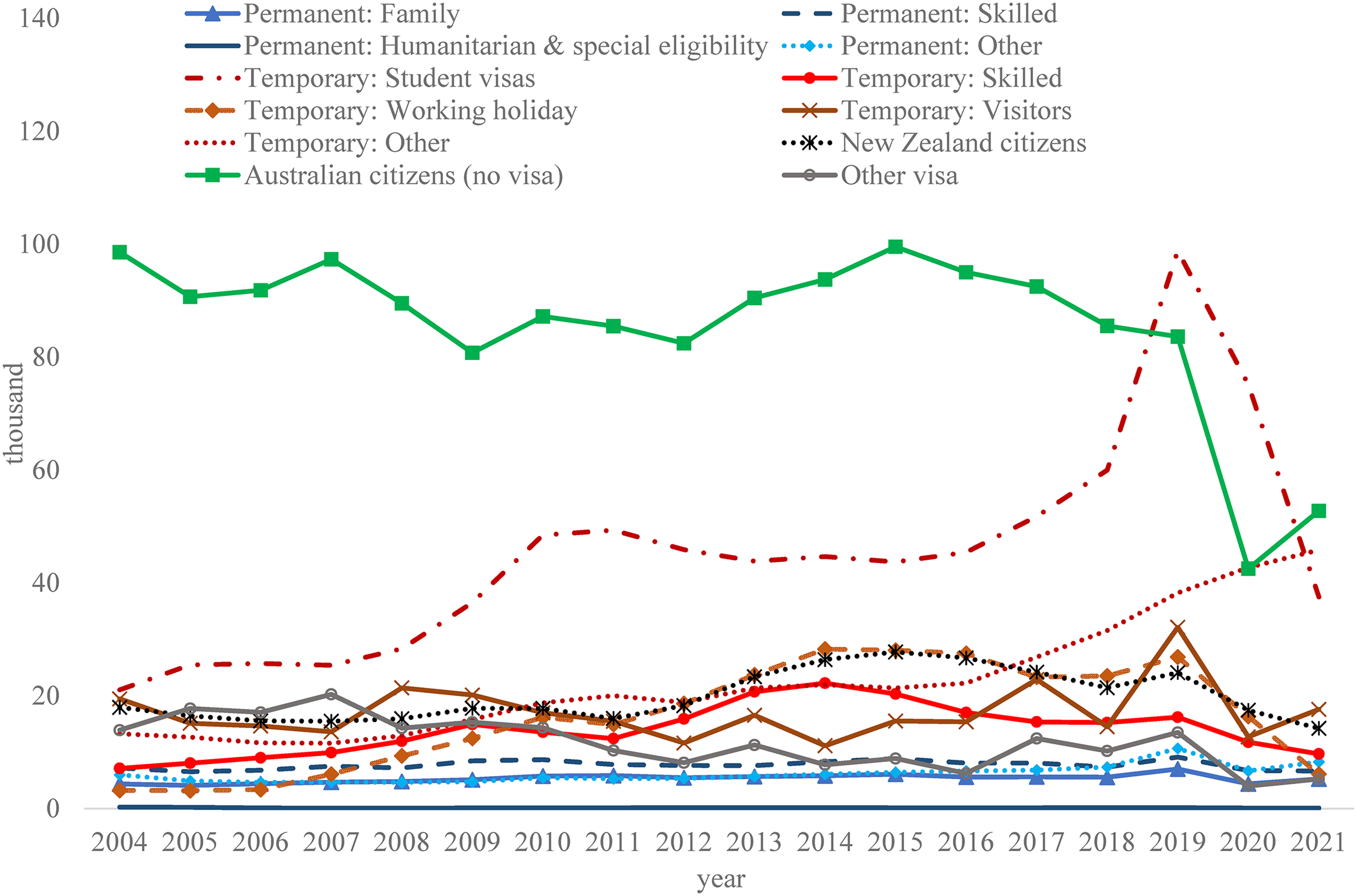
Annual emigration from Australia by visa type, 2004–2021.
As Figure 3 shows, high levels of immigration to Australia continued for Pacific Islanders and returning Australian-born populations during 2020 and 2021. This reflects the border policy towards returning Australian citizens, as well as the recruitment and retention of Pacific Islanders to fill gaps in the critical agricultural and food processing sectors (Department of Foreign Affairs and Trade 2021). As shown in Figure 4, immigration of people with other temporary visas (including Pacific seasonal workers) grew to a historically high level in 2021, contributing to a 92 per cent year-over-year increase in immigration from the Pacific Islands (Figure 3). These translate into higher shares of Australian-born and Pacific Islands-born immigrants in the total immigration flows. Australian-born immigrants accounted for 17.6 per cent of immigration in 2020 and 16.4 per cent in 2021, up from an average of 9.6 per cent between 2014 and 2018 (Figure 6). The impact of the returned Australian-born persons was enormous. In the 2021 Census, 15 per cent of the Australian-born population was recorded as living overseas one year earlier in August 2020 (ABS 2021b). The corresponding percentage was practically zero in the 2016 Census, where only 0.4 per cent of the Australian-born population were living overseas one year earlier (ABS 2021b).
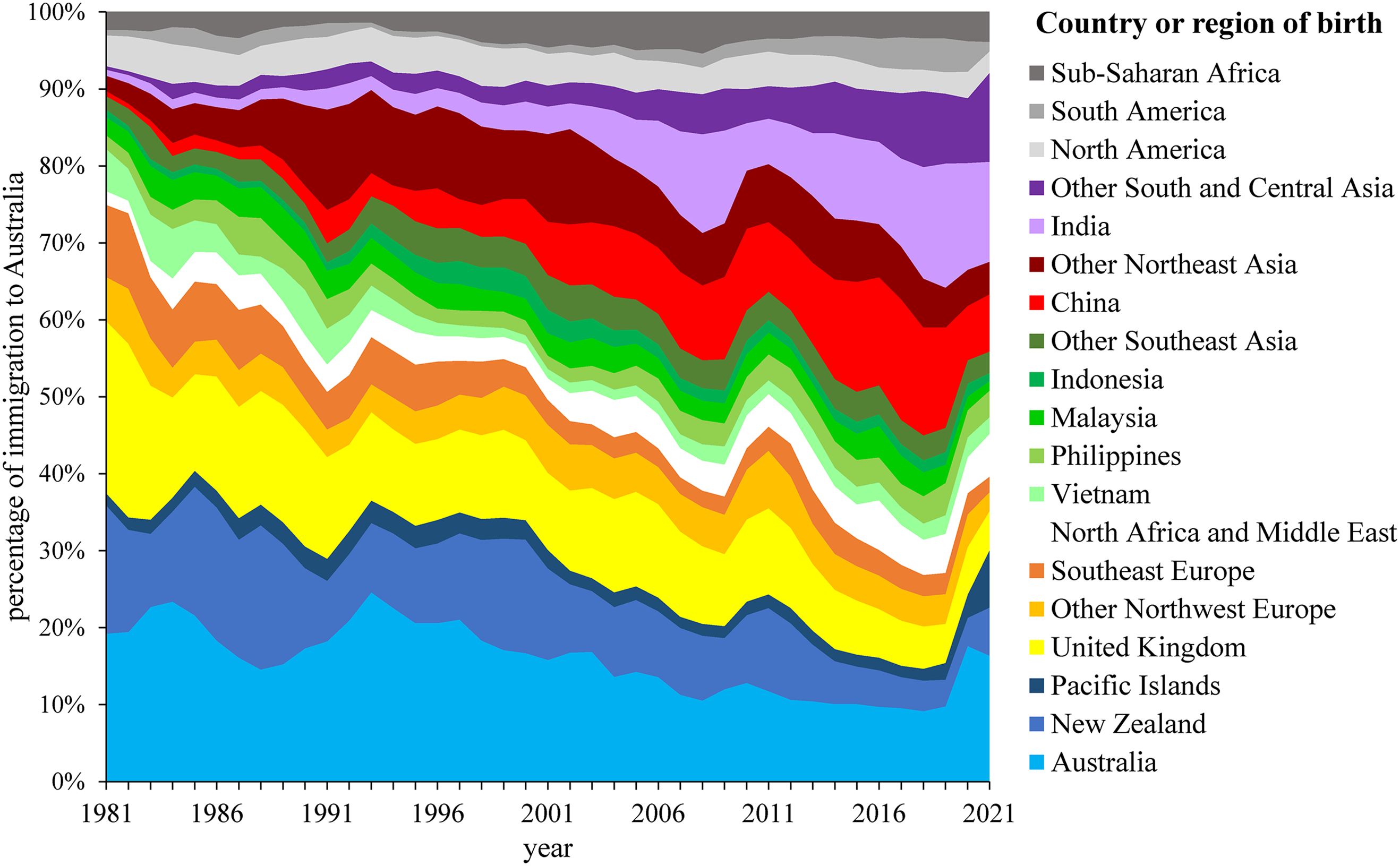
Percentage of annual immigration to Australia by country or region of birth, 1981–2021.
Pacific Islanders accounted for 3.0 per cent of all immigrants to Australia in 2020 and 7.5 per cent in 2021. These levels are up from an average of 1.5 per cent between 2014 and 2018 (Figure 6). Those Pacific Islanders who arrived in Australia during the pandemic and border closure were predominantly young male seasonal workers (Figure 7 and Figure 8). Figure 8 shows that the total number of Pacific Islands citizens on temporary visas in Australia increased in 2020 and 2021. The other temporary employment visas include Pacific Islanders who were on Pacific seasonal worker schemes 7 or extended their stay with the Temporary Activity visa (subclass 408). Pacific Islanders also recorded high levels of immigration in 2019 (Figure 3), as many who arrived in 2019 for the peak agricultural processing season became stranded in Australia at the time of the border closure. Their short-term visas were extended to help meet labour demand in the agricultural and food processing sectors (Department of Foreign Affairs and Trade 2021; Department of Home Affairs 2020, 2023a).
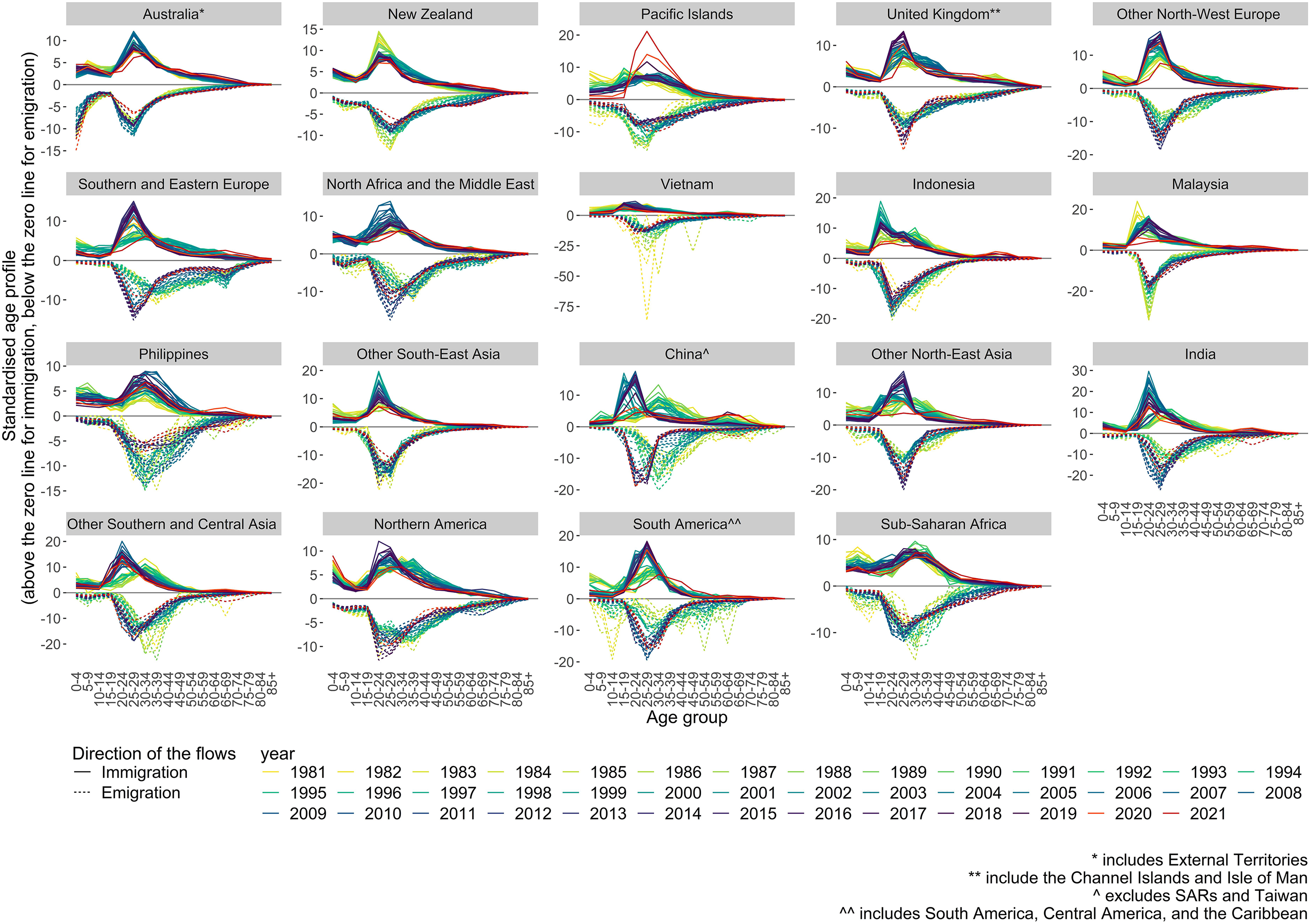
Age profile of male immigration and emigration to and from Australia by country or region of birth, 1981–2021.
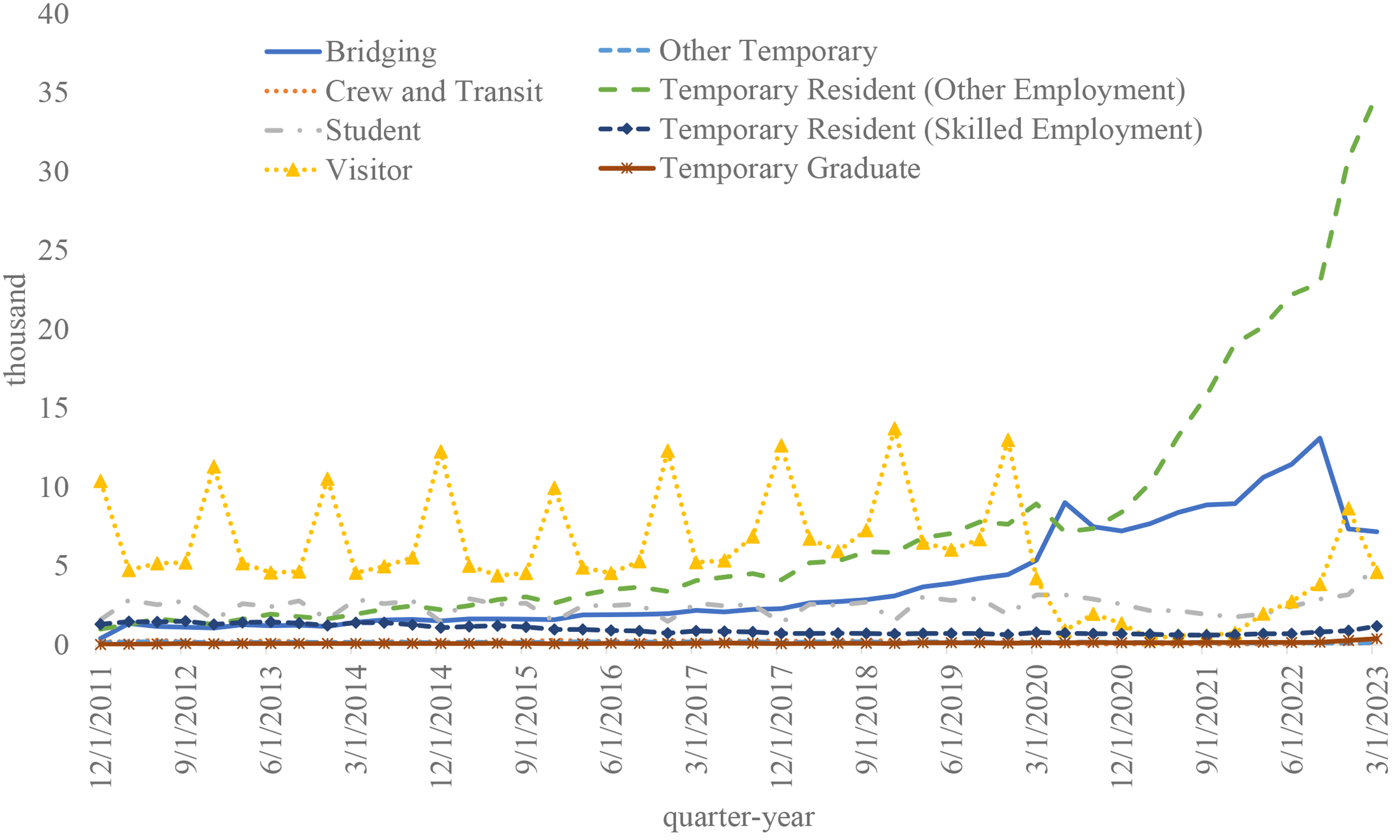
Total number of temporary visa holders presented in Australia who are citizens of Fiji, Kiribati, Nauru, Papua New Guinea, Samoa, Solomon Islands, Timor-Leste, Tonga, Tuvalu, and Vanuatu: by visa type, December 2011 to March 2023.
The second key pattern concerns changes to the age patterns of international migration to and from Australia during the COVID-19 pandemic. The age profiles of migration were older on average in 2020 and 2021 relative to previous years for almost all 19 populations examined (Figure 7 and Figure 9). This age-pattern shift was more evident for immigrant groups with large numbers of temporary visa holders, e.g., international students and working holiday makers, and included immigrants from Europe, Malaysia, Indonesia, other South-East Asia, China, and particularly other North-East Asia.
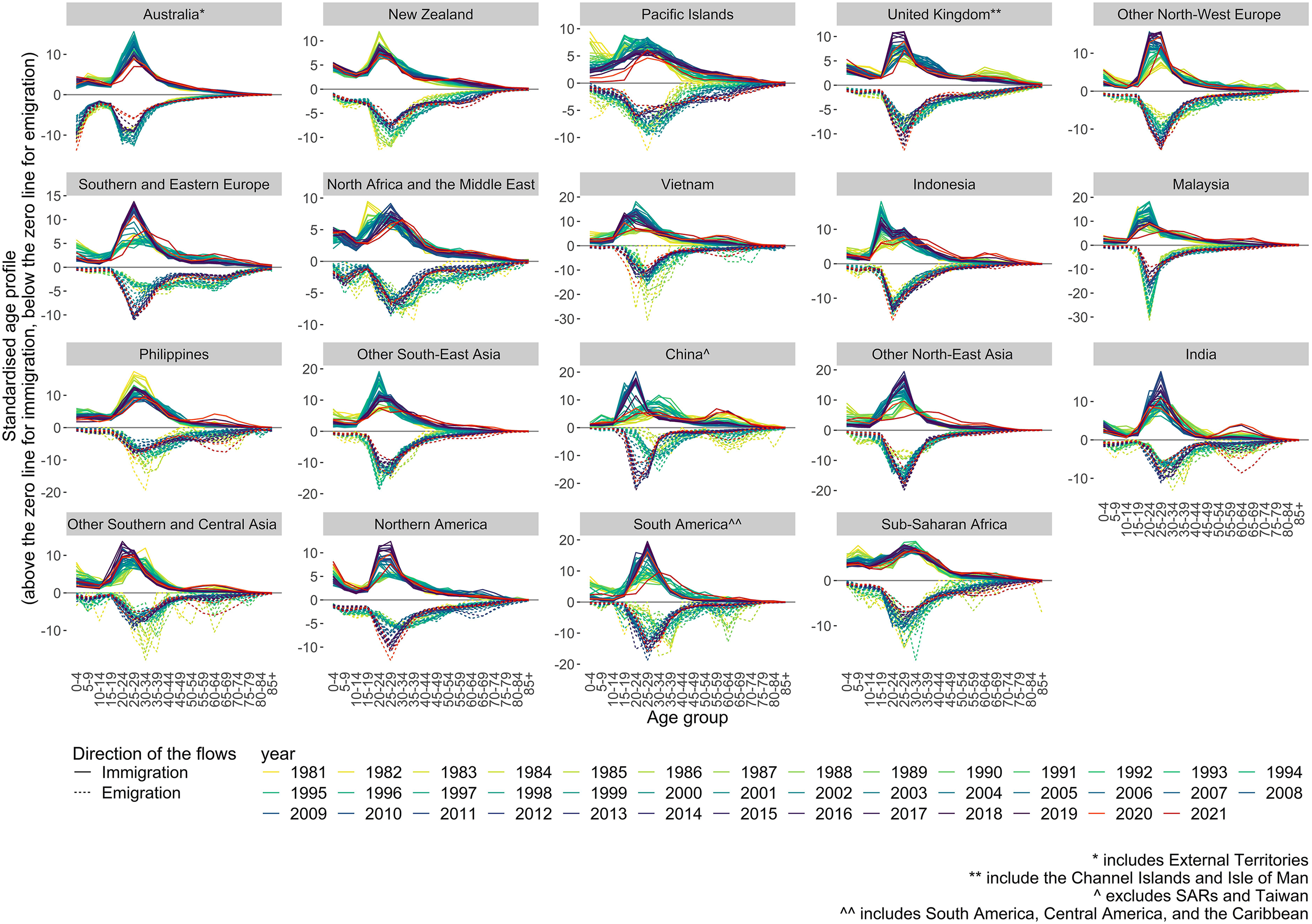
Age profile of female immigration and emigration to and from Australia by country or region of birth, 1981–2021.
Some migrant populations also recorded increased and unusual later-age immigration patterns in 2019, 2020 and 2021. The increases were particularly evident for female immigrants from Asia, including the Philippines, Malaysia, China, and India (Figure 9). The relatively high numbers of retirement-age immigrants are likely due to international movements of parents of foreign-born Australian residents who extended their visits in Australia during the pandemic. The 2021 numbers also include parents of Australian citizens and permanent residents who arrived as immediate family members after 1 November 2021 (Australian High Commission Singapore 2022). Correspondingly, there were unusual later-age emigration patterns in 2020 and 2021, suggesting the departure of parents who arrived in 2019 and 2020. 8
The third key pattern relates to higher-than-usual immigration and emigration flows recorded in 2019 for some population groups. Persons born in Pacific Islands, Vietnam, the Philippines, Indonesia, India, South America, and Australia recorded higher-than-usual immigration flows. Comparing the 2019 immigration level to the 2014–2018 average, all inflows increased in 2019 except for immigrants born in the United Kingdom, New Zealand, Malaysia, and other Northeast Asia. There were likely two factors underlying this increase. The first is Australia's growing attractiveness to immigrants over time. The second is the sudden closure of the international border in early 2020, which resulted in many short-term visitors (including short-term Australian citizen visitors) remaining in the country. With their stay in Australia prolonged, they consequently transitioned from temporary visitors to usual residents in the population following the “12/16 months rule” (ABS 2022; Figure 2). This is further indicated by immigration statistics in Figure 4 – immigration peaked at 132 thousand in 2019 for temporary visitors, which almost doubled their 2018 level, and peaked at 95 thousand in 2019 for Australian citizens. These suggest that the pandemic prolonged the stay of many short-term visitors who arrived in Australia just before the outbreak of the pandemic.
High emigration flows were also recorded in 2019 for all the 18 foreign-born populations examined. Except for the continued increases in emigration levels over time, higher-than-usual emigration flows were observed for those born in China and other North-East Asia, South-East Asia, and South America. The unexpected increase was likely due to Australian residents (temporary or permanent residents) and naturalised citizens who went overseas just before the border closure and were unable to return, especially those from China (Haugen and Lehmann 2020). The unusually high number of international students who left Australia in 2019 (Figure 5) is a further indicator of this unable-to-return situation.
Conclusion
In this research note, we have shown how international migration to and from Australia was affected by the COVID-19 pandemic by country or region of birth, age and sex, in relation to the main types of visas of these groups. Variations across the demographic characteristics of different migrant populations can be linked to Australia's visa system and its policy responses to the pandemic, and how these are used by migrants from around the world. As international students recorded the largest numbers of visa holders stranded overseas (Department of Home Affairs 2020), foreign-born populations with large international student populations had the greatest drop in immigration levels during the border closure. These groups also recorded higher emigration flows during the pandemic. Preliminary estimates from ABS (2023c) show that students were also the groups that recuperated the quickest after the border reopened.
During the pandemic, there were situations where international migrants were unable to return or prolonged their stay in the country. The drop of over 75 thousand working holiday visa holders (Department of Home Affairs 2020) created labour shortages in Australia's low-skilled labour-intensive sectors. To address shortages whilst maintaining a strictly controlled closed border, the government extended the visas for onshore seasonal workers and recruited new workers from the Pacific Islands and Timor Leste (Department of Foreign Affairs and Trade 2021). The substantial growth of Pacific seasonal workers during the pandemic reflects how an open economy like Australia which relied heavily on temporary workers to meet domestic labour demands in certain (critical) sectors was impacted. Other consequences include the unintended growth in immigration and emigration levels in 2019 prior to the pandemic, resulting from people who arrived or left Australia in 2019 becoming stranded inside and outside the borders – and thus, unexpectedly meeting the requirements to be classified as either an immigrant or emigrant.
The results from the analyses presented in this research note provide useful insights into the complex and often convoluted ways in which migration policy intersects with migration choices of different groups and labour demands, as well as issues of data and measurement. The pandemic and border restrictions, especially in Australia, is an extreme example and case study, though is nevertheless illuminating for migration theory in the twenty-first Century and the need for contingency plans during adverse events. Future research can look to build on this research note, gathering data and estimating migration flows for different countries, drawing lessons from their pandemic experiences, and using this once-in-a-generation event to understand more about people and policy in the migration process.
Footnotes
Acknowledgments
The Net Overseas Migration data by age, sex, and birthplace from 1981 to 2016 used in this paper were commissioned for the Australian Research Council Discovery Project on ‘the demographic consequences of migration to, from and within Australia’ (DP150104405).
Declaration of Conflicting Interests
The authors declared no potential conflicts of interest with respect to the research, authorship, and/or publication of this article.
Funding
The authors disclosed receipt of the following financial support for the research, authorship, and/or publication of this article: Dr James O’Donnell is the recipient of an Australian Research Council Discovery Early Career Researcher Award (project number DE240100232) funded by the Australian Government.
