




Abstract
This article, based on a collection of 53 interviews with people who migrated from Poland to Norway, discusses how transnational sentiments, nostalgia, and attachments to places and people materialize through the bodily experiences of the mobile subjects. It conceptualizes the notion of embodied transnational belonging, understood as a dynamic, bodily felt materialization of social, cultural, political, economic, and affective processes that assist the emplacement of mobile people in new localities, and that span the borders of nation-states. Theoretically, the article builds on the premises of the sensory turn in social sciences and utilizes the concepts from anthropology, health studies and migration and mobility studies interdisciplinarily. Methodologically, it employs photo elicitation interviews. It discusses how the concept of embodied transnational belonging can be used to extend the understanding of migrant persons’ transnationality. By doing so, it addresses a knowledge gap in transnational studies, attempting to theoretically open the conceptualization of transnational belonging to the bodily dimension. The article suggests that transnationalism is exercised on a level of a bodily experience of the migrant persons, and hence transnationality is not a solely mental/rational phenomenon, but also a bodily/physical one.
Keywords
Introduction
Despite a growing body of work that puts senses in the center of migration processes, unlike the spatial turn (Lefebvre 1991), which shaped the theoretical conceptualizations of migration processes, the claims of the sensory turn in social sciences (Howes 2022) have not significantly influenced the theoretical toolbox of migration scholars. This is surprising, as extensive ethnographic research confirmed that the senses are integrated differently in varying cultural settings (Stoller 1997; Howes and Classen 2014; Low 2023) and hence following the sensory receptions in migration-induced encounters can provide meaningful knowledge on migration processes. This article aims at addressing this omission and proposes a theoretical opening of the concept of transnational belonging to its embodied dimension, addressing the assumptions of the sensory turn (Howes 2022) and extending the developments of the spatial turn (Lefebvre 1991) by the recognition that the anchoring of social life in place is done through the bodies of the actors (see also Low and Kalekin-Fishman 2016, 6). By doing so, it seeks to answer the following questions: what does it mean to simultaneously identify with various places and communities on a bodily level, also from a transnational perspective? Can transnational belonging materialize in the bodies of people who perform it? Do bodily sensations and experiences support migrants’ belonging? Finally, can we approach transnationalism as simultaneously a bodily phenomenon and a rationalized one? To date, insufficient answers to these questions have been given. This article aims to address this gap by developing a theoretical concept of embodied transnational belonging in order to unpack the underlying bodily structure of belonging and the way it feels in the body.
Building on 53 interviews with Polish labor migrants settled in Norway, this article aims at contributing to the understanding of transnational belonging by discussing its embodied dimension. It addresses a need voiced by Bascuñan-Wiley (2021) to build theoretical bridges between transnational and sensory scholarship around “global sensibilities,” understood as the process in which “sensations become meaningful for migrants within transnational contexts shaped by the worldwide circulation of bodies, materials, and ideas” (p. 2). I employ a concept of embodied belonging understood as “feeling right” in a particular place through bodily experience (Morrison et al. 2020) to analyze belonging to the transnational social fields (Levitt and Glick Schiller 2004) of mobile Poles who settled in Norway. The notion of “feeling right” regards the recognition of local sensory stimuli and atmosphere by the body as familiar and welcoming (Ahmed 1999; Morrison et al. 2020; Nikielska-Sekuła 2021). Recognizing Probyn's (1996) remark on belonging as processual and interconnected with affect and Ahmed's (1999) conceptualization of home on the move as a matter of bodily sensations (see also Mata-Codesal 2023), this article proposes a concept of embodied transnational belonging defining it as a dynamic, bodily felt materialization of social, cultural, political, economic, and affective processes that assist the emplacement of people on the move in new localities, and that span the borders of nation-states. I employ this concept to empirically explore the emplacement processes of people who relocated from Poland to Norway performed through sensory work, with special attention to their local and transnational attachments. Emplacement is understood after Glick Schiller and Çağlar (2016, 21) “as the social processes through which a dispossessed individual builds or rebuilds networks of connection within the constraints and opportunities of a specific city,” or more broadly, a specific place. Theoretically, this article aims at extending the conceptualization of transnational belonging of the embodiment — to date largely omitted in analyses of migrants’ transnational belonging. By doing so, I call for a broader acknowledgement of the sensory turn (Howes 2022) in mainstream migration studies.
The argument in this article is organized as follows: I start with grounding the concept of embodied transnational belonging theoretically and presenting the context of the empirical research along with the methodology. Then I move to the analytical discussion of the findings throughout the three subsections. The first section focuses on embodying belonging through acquiring new sensuous experiences as home-like in a new destination. The second section is dedicated to embodying transnational belonging through rediscovering bodily sensations from past homes in new places. The third section discusses embodying transnational belonging through a conscious production of home-like sensory experiences. The paper ends with the discussion and conclusion section, where I critically assess the contribution of embodied transnational belonging to migration studies.
Embodiment as Part of the Transnational Belonging: Theoretical Framework
Since the transnational turn (Faist 2004), the concept of transnationalism has been utilized as one of the top perspectives for understanding international migrations. Transnationalism is understood by migration scholars as “pointing out that migrants are not necessarily oriented towards either origin or destination countries, but can identify with several places, communities and societies at the same time (Vertovec, 2001)” (De Bree, Davids, and De Haas 2010, 491). Transnationalism “describe[s] the ties and relationships that span across sending and receiving societies” (Somerville 2008). While the scholarship on transnationalism has contributed to a better understanding of migrant persons’ life words by breaking with the dichotomy between new and ancestral homeland and shedding light on multiple, noncontradictory attachments to groups, places, and everyday practices that span borders (e.g., Ehrkamp 2005; Somerville 2008; De Bree, Davids, and De Haas 2010; Naujoks 2010; Dahinden 2012; Boccagni 2022; Czerska-Shaw and Krzaklewska 2022), to date it has insufficiently explained whether and how transnational processes, practices and identifications are performed on a bodily level.
Similarly, the concept of belonging has made a great career in migration studies, being connected to the conceptualization of identity and group affiliation (Madsen and van Naerssen 2003; Jones and Krzyzanowski 2008; Binaisa 2011; van Liempt 2011), racialized identities (Berg 2017; Lundström 2017), the relationship between belonging and home (Ralph and Staeheli 2011; Boccagni 2014; Taylor 2015; Njwambe, Cocks, and Vetter 2019; O’Connor 2021), the politics of inclusion (Yuval-Davis 2006b; Brubaker 2010; Castles and Davidson 2020), and the link between belonging and integration (Crul and Schneider 2010; Bakewell and Landau 2017; Korteweg 2017; Errichiello 2021). Particular focus was placed on transnational belonging, defined as the will and ability of individuals to develop and negotiate identifications with places and communities that span the borders of nation-states (Somerville 2008; Dahinden 2012; Taylor 2015; Boccagni 2022). It was argued that acting within the transnational social field (Levitt and Glick Schiller 2004) does not always involve transnational belonging. Based on Levitt and Glick Schiller's (ibid.) distinction between “ways of being,” relating to mere actions of individuals within the transnational social field with no identity references, and “ways of belonging,” involving a conscious use of transnational practices, symbols, and values to mark belonging to certain groups and places, transnational belonging can be defined as the latter.
Several authors, in the aftermath of a spatial turn in social sciences (Lefebvre 1991), aimed at problematizing the spatial dimension of migrant persons’ transnationality, including their transnational belonging (Çağlar 2001; Ehrkamp 2005; Glick Schiller and Çağlar 2009; Nikielska-Sekuła 2018). The oft-cited concepts such as the transnational social field perspective (Levitt and Glick Schiller 2004), translocality (Greiner and Sakdapolrak 2013), and the multiscalar perspective (Çağlar and Glick Schiller 2015) have significantly contributed to the paradigm shift. They advanced migration studies through the acknowledgement of the anchoring of migration processes in actual places where they are performed. The recognition of a spatial dimension of migration prompts yet another question, namely that of the role which the physical, feeling body plays in the complex processes of mobility. This article addresses it, problematizing what it means to belong transnationally on a bodily level.
In the past decade, several scholars from the disciplines of archeology, art, and history have faintly announced the sensory turn to be a fact in their disciplines (Lauwrens 2012). On a more radical note, Howes (2022; see also Pink 2011) had recently declared an approaching maturity of the sensory turn in social sciences. Indeed, the sensuous scholarship has long been established in social sciences with now canonical works of Merleau-Ponty (1962), Pink (2009; 2013), Stoller (1997), Seremetakis (1996; 2019), and Howes (1991; 2003; 2005), who called for breaking with a Cartesian body–mind dichotomy. As a consequence of their critique of the Euro-centric textual orientation prevalent in the descriptions of Western societies, the mentioned authors invited us “to incorporate into ethnographic works the sensuous body — its smells, tastes, textures, and sensations” (Stoller 1997, xvi). In the past decade, researchers from around the globe have provided evidence of the fruitfulness of sensuous perspectives in the research, with a significant increase in works focusing on the migration–sensuous scholarship nexus (for an overview see Bascuñan-Wiley 2021). Ahmed's (1999, 343) classical conceptualizations of home on the move as a set of sensory experiences of belonging, Low's (2005) elaborations on sensibilities of diaspora, migration, and multiculturalism, and Dey (2021) and Bonfanti, Massa, and Mirada Nieto (2019) accounts on the role of senses in establishing group boundaries are only some examples. Moreover, there is a growing body of research discussing transnational sensibilities through food (Choo 2004; Abdullah 2010; Johnston and Longhurst 2012; Low and Lynn-Ee Ho 2018). Additionally, theoretical conceptualizations aimed at bridging migration and sensuous scholarship were introduced. Low and Kalekin-Fishman (2016) proposed a concept of “transnational sensescapes,” referring to how migrant persons respond to new sensory scripts after mobility based on their sensory memory from past homes. Low (2023, 14) defined sensory transnationalism as an encounter between two or more different sensory conducts and introduced four modes model (4R, ibid., 15, 88) predicting possible responses to the new sensations: reception, regulation, rejection, and reproduction. Alinejad (2011) established the connection between the transnational ties maintained virtually and the body anchored in the new homeland calling it “a transnational embodiment.” This article aims at contributing to this body of scholarship with a theorization of an embodied transnational belonging.
The extant literature shows that there is a theoretical possibility and promise in opening analyses of belonging to the embodied experiences. At the intersection of social, psychological, and health studies, Morrison et al. (2020) described the unbelonging in so-called disabled spaces providing a useful account of how (un)belonging can be felt through the body and drawing connections between the rationalized sense of belonging, the body, and the space. Mattes and Lang (2021) claimed that marginalization, exclusion, and displacement can influence the very bodily condition of a person experiencing them, while regaining belonging may restore bodily wellbeing, indicating a clear link between belonging on a sociostructural level and the bodily experience. In the same line, but with a clear focus on the experiences of mobility, Bendixsen (2020, 480) discussed the existential displacement of irregular migrant persons in Norway, claiming that irregularity becomes an “embodied disposition.” She conceptualized the notion of embodied unbelonging, presenting how the structural suffering of being undocumented in Norway is processed through the body and what marks on a person's health it leaves. These theorizations resonate with Willen's (2007) sophisticated conceptualization of the relationship between the macrostructures of institutionalized inequalities that affect migrant persons, and their bodily condition. Employing Merleau-Ponty's (1962) phenomenological perspective, Willen discussed migrant persons’ lived experiences of law and state power. The presented works opened up the theoretical possibility of exploring transnationalism and emplacement through the perspective of embodiment, and I wish to contribute to this discussion with an empirically grounded conceptualization of embodied transnational belonging.
Poles in Norway: Context and Research Methodology
Poles constitute the biggest immigrant group in Norway, amounting to 121 406 persons (SSB 2022), and with constant yearly growth in population since the 1970s. The migration from Poland to Norway intensified after 2004 with Poland's accession to the EU (Huang, Krzaklewska, and Pustulka 2016). The geographical proximity of the two countries, significant differences in wages, and labor shortages in Norway contributed to the popularity of Norway among Poles. Mobility from Poland to Norway has been mostly labor-oriented, with Poles working in most sectors of the Norwegian economy from highly skilled professionals, service workers, and state institution employees, to low-skilled job takers. Poles in Norway represent all types of Polish migration to Western Europe identified by Luthra, Platt, and Salamońska (2016), yet three categories prevail. The first group is “short-term accumulators,” who are settled in Norway, with or without their partners/families. They aim to earn money and return to Poland. The second group is “committed expats” who arrived not solely for work, but also lifestyle reasons and have limited intentions to return. The last group comprises “traditional circular” migrant persons, who keep their life centers in Poland and commute to Norway to work on a weekly or monthly basis. This group also includes seasonal workers. It can be assumed that committed expats will naturalize as a result of a double citizenship legislation issued by Norway in January 2020, which has prompted many Poles to apply for a Norwegian passport.
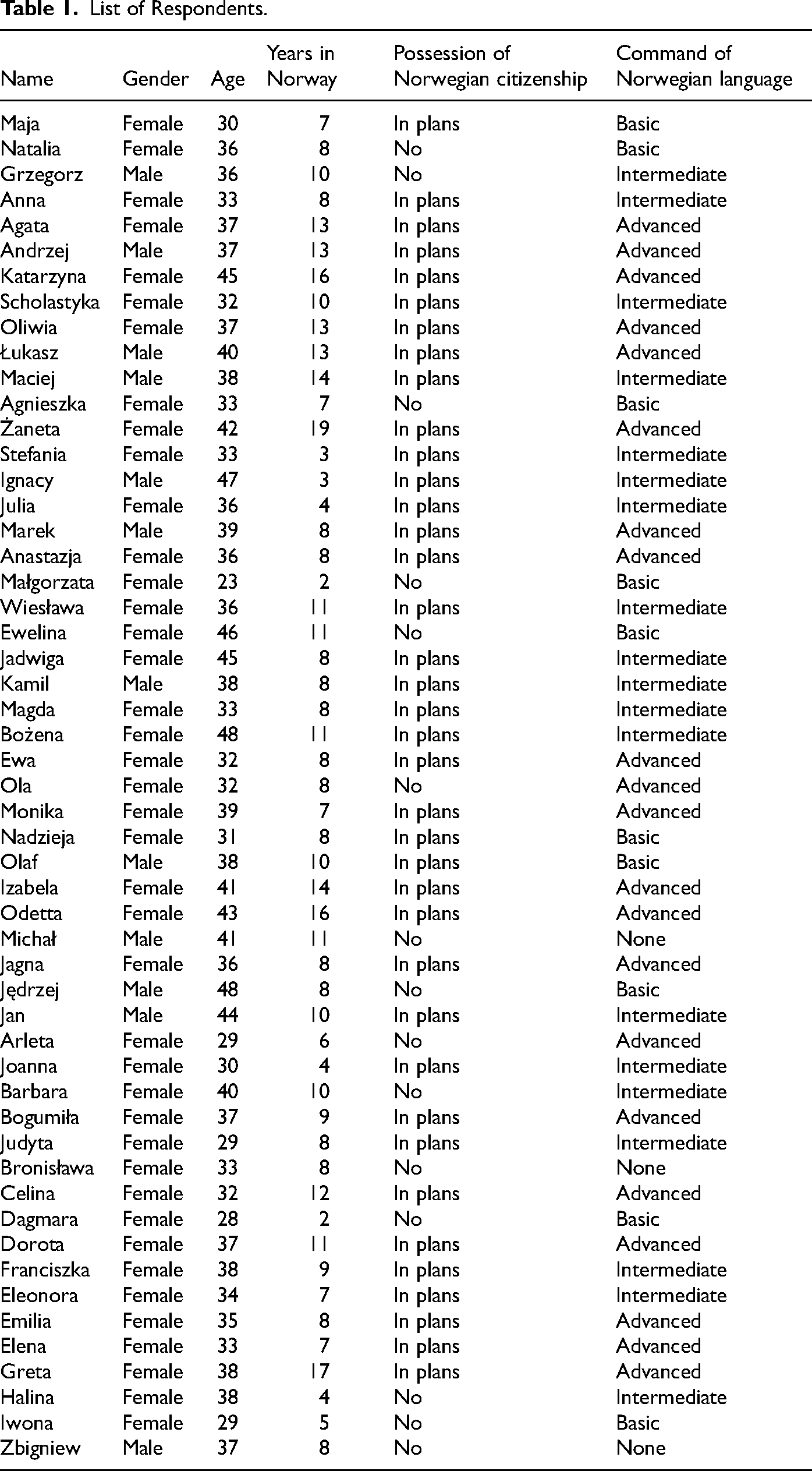
This article builds its argument on the findings from 53 interviews with mobile workers from Poland who settled in Norway. All respondents arrived in Norway after Poland's EU accession in 2004. They were aged between 23 and 48 years, with a majority of the respondents in their 30s. Respondents have been living in Norway for 2 to 19 years at the time of the interview, with the majority having lived in Norway for about 7 to 11 years. Forty-one respondents identified as female and twelve as male. The overwhelming majority of the respondents’ mobility patterns represented migration types of “short-term accumulators” and “committed expats,” having been settled permanently or temporarily in Norway with their partners and families or solo, but without partners left behind in Poland. A few stayed in Norway on a circular basis as commuters, with their life centers in Poland. Forty respondents spoke Norwegian at least on a communicative level or fluently, ten declared basic skills in Norwegian, and only three said they did not speak Norwegian at all. Thirty-eight respondents had plans to obtain Norwegian citizenship while keeping their Polish passports. Some had already applied. Interestingly, no one had Norwegian citizenship from before, despite fulfilling the criteria, which means that no one decided to renounce Polish citizenship before the 2020 double citizenship legislation. The sample consisted of highly skilled professionals, service workers and low-skilled job takers. Table 1 presents the list of the respondents along with their gender, age, time spent in Norway, citizenship plans, and command of Norwegian language.
List of Respondents.
Respondents were recruited with a snowball sampling method. My positionality as a highly skilled Polish-Norwegian professional working and living in Norway could have influenced the sample, as initially highly skilled professionals were overrepresented. To reduce the impact of my positionality on recruitment, research assistants were hired. They were responsible for recruiting and interviewing the respondents through social media platforms and their private access points to the Norwegian-Polish community. This helped balance the profile of the sample. The gender distribution in the initial recruitment was rather even, but further contacts provided by the participants (as per snowball sampling method) were given primarily to females resulting in outnumbering the males in the sample.
The presented findings are part of a bigger study focusing on migrant persons’ engagement with cultural heritage. Photo-elicited “autodriven” interviews (Clark-Ibáñez 2004) supported by pre-prepared questions were employed to collect data. The procedure was as follows: before the interview, the respondents were asked to photograph/record elements of their cultural heritage they wanted to share. Discussion of the prepared visuals guided the interviews. The narration of the interviewees was supported by my additional questions, including sensory questions (Guillemin and Harris 2014). The visuals helped stimulate respondents’ memory differently than asked questions did, and provided insight into their private homes and lives (Clark-Ibáñez 2004, 1512, 1517). The interviews were transcribed and coded with a thematic coding method along with the visuals. The threads of interest to this article relating to the sensory experiences and practices of the respondents regarding belonging were selected, analyzed, and presented.
Interviews were collected in two phases: between March 2020 and October 2020 and between January 2022 and April 2022. All but three interviews were collected online. This was imposed during the first phase of data collection by the sanitary regimes caused by the COVID-19 pandemic, and after being assessed as successful, continued during the second phase upon the preference of the respondents who chose it over the time-consuming face-to-face meetings. The interviews were conducted and analyzed in Polish, in which I, the research assistants and the respondents were fluent. The excerpts from the interviews presented in the article are my translation. The accuracy of the translation of the expressed multisensory experiences conveyed by the participants was supported by my positionality of an insider to the body language common among Poles, Norwegians, and Norwegian-Poles and of a fluent speaker of Polish, Norwegian, and English. Due to my regular participation in a similar transnational social field as the respondents, the online form of the interview did not diminish the insights into the sensory experiences of the actors. This was also supported by the visuals presented by the respondents: of cooked dishes, picked mushrooms, favorite landscapes, and more. Pink (2009; 2013) points out the multimodality of human sensory intake stating that the senses are interconnected, rather than separated. The visuals presented by the respondents helped evoke other senses such as smell, touch, and taste (Nikielska-Sekula and Desille 2021; Desille and Nikielska-Sekuła 2023).
The study obtained a positive opinion from the Norwegian Data Protection Agency. The respondents gave informed consent to participate and were granted anonymity. Their names, ages and other sensitive data were changed or hidden.
Embodiment of Belonging in a Transnational Setting
Building on empirical evidence, I discuss the embodiment of migrant persons’ belonging from a local and transnational perspective. Through three separate subsections, I portray the sensory experiences of the respondents that play a role in conceptualizing belonging and unbelonging to the places and communities they occupy and/or relate to locally and transnationally. The first subsection discusses the embodied belonging in situ to the local in Norway and links it to the respondents’ emplacement processes (Glick Schiller and Çağlar 2016). Subsections two and three add a transnational perspective to the discussion by portraying how transnational belonging is realized on a bodily level.
In their statements, the respondents tend to refer to Poland and Norway, which may give an impression that they reflect the reified idea of the nation (Wimmer and Glick Schiller 2002). Instead, these references should rather be interpreted as rhetorical figures synonymous with home, childhood, and past localities they inhabited and occupied (Poland), and new localities and impressions they encountered after relocation (Norway) that go beyond the essentialized idea of culture and identity. An explanatory of this is the fact that the majority of the respondents have experienced only various localities in Poland and Norway as an arena for experiencing belonging.
Embodying Belonging Through Acquiring New Sensuous Experiences as Home-Like in a New Destination
Participants in the study, after months and years spent in Norway, started acquiring the local smells, tastes, landscapes and bodily sensations as their own and associating them with home. These included the smells and tastes of food such as cinnamon rolls, local Christmas dishes, the smell of burnt wood, sea, mowed grass, and more. By doing so, they developed the embodied belonging to the places in the new localities they currently occupy. This confirms Ahmed's (1999) conceptualization of the home on the move, in which foreign sensory impressions are with time absorbed into a refined idea of home. This section exemplifies the local embodied belonging to new places of settlement in Norway, problematizes embodied unbelonging and discusses individual positionality of the actors as a factor that mediates sensory experiences.
Local Embodied Belonging
Respondents described how experiencing local sensory conducts in their new homeland makes them feel at home. Anna lives on an island in Norway, and she illustrates her embodied belonging to the local surroundings using references to visual and olfactory sensations:
The smell of the sea is very characteristic here. Our local walking trips usually end by the sea, and this is blissful. You look at this sea and feel this smell, yeah, it feels like home… really [it makes me] feel really at home. (Anna)
In a similar tone, other respondents described their sense of home and belonging with a focus on the feelings and sensory experiences:
[Home is where] I feel safe, I can rest. [Home] is my place, where I feel good. And this place for me now is Oslo. (Julia)
Here practically everyone has a fireplace at home (…) and the smell of this fireplace … we often use the fireplace because we like the warmth it gives. (…) It evokes such warmth of a home. (…) And this is also a fragrance [of a burnt wood] that I associate very well with Norway. (Anna)
The embodied belonging to the local in Norway was described through feeling good and sensory impressions and practices oriented on evoking particular sensory scripts — the smell of wood and the warmth of the fire. As is evident, the respondents had a very embodied idea of home (Ahmed 1999), where particular sensory experiences, including visual and olfactory impressions, as well as feelings of warmth, peace, and safety were important in making places into homes (see also Boccagni 2022).
Nature was often brought up as an arena for building belonging to the new localities in Norway. As the statements above already partly exemplified, nature was a source of sensory experiences that influenced respondents’ sense of belonging. Participants reported feeling and smelling nature, which further projected on their relationship with the place and their personal wellbeing:
I love the smell of wood and frost here, this is to me the smell of winter. It comforts me. (Ola)
For people who migrated to Norway from heavily urbanized areas in Poland, a regular, direct, and palpable contact with nature was to some extent new and brought alternative perspectives on their sensory experiences, for example, connected with enduring harsh weather conditions:
I realised only here that the rain is not painful. The rain does not hurt! You don’t have to stay inside when it's raining. (Jagna)
When partaking in outdoor activities popularized in Norway through a friluftsliv (outdoor life) philosophy, the respondents mobilized their senses to acquire embodied knowledge about their surroundings through seeing, smelling, touching, and feeling nature. For many, the cold and wet rain on the skin, the warmth of the sunlight on the face, and the frost hitting the lungs with a deeper whiff became sensory markers of not only belonging to the “Norwegian” nature but also of respondents’ new lifestyles. Ewelina, who arrived in Norway with her three children and husband 11 years ago, exemplified the change in family habits regarding outdoor life after the relocation, referring to these new practices as “Norwegianised”:
We went camping this autumn. It was already cold. The temperatures oscillated around 0 [Celsius degrees] at night. We slept in a tent. (…) In the morning, we drank coffee and went for a walk - 20 kilometres long. We couldn’t feel our legs after that. (…) Now, our children do not want to camp with us. They told us we have become too Norwegianised, we are too extreme. (Ewelina)
Ewelina's statement reveals the central role of the body in establishing the connection between the self and nature. Bodily-felt coldness and pain in the muscles after physical effort (expressed through a Polish phrase of “not feeling the legs”) were given here as proof of belonging to the dominant Norwegian society (“becoming Norwegianised”).
The attempts to connect with nature through bodily experiences were significant, as nature and friluftsliv play an important role in Norwegian social life being an arena for socialization, either through doing outdoor activities together or by constituting a topic of conversation over lunch at work. Moreover, nature is romanticized in Norwegian national nostalgia (Moses and Brigham 2007; Thorkildsen 2014), while outdoor activities (friluftsliv) are considered as partaking in the creation of contemporary national identity in Norway (Bigell 2021). The social and integrational role of nature was captured by Izabela:
Norwegian nature is so monumental, it takes up so much space and it unites people so much, because a lot of people go to the mountains, go for walks, and meet in nature (…). So there is a general idea that this nature is for everyone, absolutely for everyone, and for me too. I feel that, when I am in nature, I am a part of this little world of mine here. (Izabela)
It seems that building a connection with nature, through mobilizing the movement of the body across the surrounding landscapes and activating the sensory connections with it, strengthened the respondents’ sense of belonging to the local places in Norway, as Izabela exemplified.
Local Embodied Unbelonging
While in the cases presented above the respondents followed the reception mode of transnational sensory encounters (Low 2023) accepting the sensory conduct of the new homeland and making it into the idea of home on the embodied level, there were also the cases where people followed a trajectory of rejection (ibid.). For some, new sensory impressions, such as the smells of certain foods, the wooden architecture and dramatic landscapes of Norway, and the absence of the smell of fruits and vegetables in the shops, induced a feeling of unbelonging (Low 2005; Bonfanti, Massa, and Mirada Nieto 2019; Dey 2021). These foreign bodily impressions reminded the respondents of being out of place and away from home (Low 2005), making their bodies feel not right in place and reflecting the embodied unbelonging (Morrison et al. 2020):
I will never forget frying the reindeer meat. (…) It smelled awful (…). Norwegians came in and they associated this smell with something pleasant, but for me, it was a stench. (Magda)
Besides being illustrative of embodied unbelonging, Magda's statement confirms that smells are the cultural systems of meanings (Stoller 1997; Howes and Classen 2014; Low 2023) and that their interpretation is dependent on the positionality of the actors (Alcoff 1988; Anthias 2002), which in this case regards their sociocultural habitus. Julia captured it well in her statement:
In Poland, in general, if something smells like fish or some sea products, it has always been blah, [as] something stale, banned and so on, while the Norwegians, in turn, love this type of food and while at first I felt bad about it, now [these smells] have become assimilated. (Julia)
Julia's example of a fishy smell is illustrative of a trend I have observed: along the years spent in Norway and the gradual emplacement into the local structures and society, respondents, who initially rejected (Low 2023) the local sensory conducts, have changed their attitudes to the sensory impressions given off by the local destinations and the practices of the locals. Often the rejection was followed by regulation (ibid.) understood here not as changing the foreign conduct, but rather as gradually getting used to the new sensory impressions. In some cases, as in Julia's, this process was finalized with the reception (ibid.): acceptance of the foreign sensory conduct. Some others, like Agata, have learnt to tolerate new sensory conducts, without however liking them:
I had that at the beginning of my first Christmas party [in Norway], when I walked in and it smelled so bad, that mutton and those sausages, nothing tasted good at all. (…) It wasn't Christmas food at all for me (…). It was such a shock, a collision. (…) [And today] it doesn't disgust me anymore, I'm used to it. It has become so routine that I already know that this is the time [of the year] one can feel it everywhere and it is so normal. (Agata)
Agata, a highly skilled professional, at the time of the interview, admitted feeling well integrated into Norwegian society, spoke Norwegian fluently, had Norwegian friends, participated in Norwegian heritage, and was active in the job market in line with her professional education obtained in Poland. As shown in her statement, a rejection of local smells was with time replaced with a neutral and tolerating attitude (regulation). Agata's story shows a trajectory of gradually building belonging on a bodily level, along the lines of her structural, cultural, economic, and social emplacement in the new locality (Willen 2007; Glick Schiller and Çağlar 2016).
Changing attitudes to the sensescapes encountered in Norway, as per Julia and Agata's statements, demonstrate how particular aspects of individual positionalities mediate sensory expressions. Regarding the respondents who reported initial rejection of new sensory conducts encountered after relocation, I observed that the time spent in Norway and positive self-assessment of integration outcomes facilitated tolerating and sometimes accepting these foreign sensory impressions. As a matter of fact, quite a number of references to the unpleasant smells, tastes, foreign landscapes and bodily gestures were voiced by the respondents concerning their early years of residency in Norway. Some had not managed to regulate these foreign bodily sensations till the time of the interview, reflecting rejection. Those included the newcomers, still finding their place in Norway, and respondents who subjectively assessed that they did not feel “well integrated” into Norwegian society. It reflects Morrison et al. (2020) finding that “the struggles over belonging play out across the differences and intersections of embodied identities,” which mediate the reception of the new sensory conduct. It also points out at the relationship between the individual emplacement process and the embodied attitudes to the new sensory surroundings — accepting the local sensory conduct with time was more common for those who assessed their emplacement outcomes as positive.
Embodying Transnational Belonging Through Rediscovering Bodily Sensations from Past Homes in New Places
Rediscovering the sensory experiences associated with the past in the local nature and surroundings of the new destinations led to assessing them as home-like. The odors of flowers and grasses, cinnamon rolls, the landscapes of mountains, the sea and agriculture with grains, rape fields and meadows full of dandelions constituted part of the respondents’ transnational sensescapes (Low and Kalekin-Fishman 2016).
Kamil and Bożena showed me the pictures they brought to the interview (Figures 1 and 2) and stated:
I associate an agricultural landscape, grain, with the picture of my childhood and I find it here too. What else? Apple trees. (…) I have good associations with them. (…) Like a sunny summer, a childhood in Poland. (Kamil)
I heard about a beach mainly for surfers, and on the way to Stavanger we actually stopped there on that beach. I was travelling with my Polish family - with my sister, with my nephew and with my daughter who lives here - when we came to this beach and saw the sea and the beach, we all looked at each other and it was Gdynia, it was Gdańsk [to us]. It was something that surprised us, because here the beaches around Oslo are not the same. They are tiny, there is no beach sand. I went there and I said “gosh, I feel as if I was in Poland”. I took several photos. I sat on the beach for a long time, at some point my sister said: “Jesus, it's cold, maybe come to the car”, and I replied: “No, because you have it every day and I don't, I’m seeing such a beach for the first time here, like ‘our’ [Polish] beach”. And this smell of the sea was completely different, it was just ‘ours’. (Bożena)
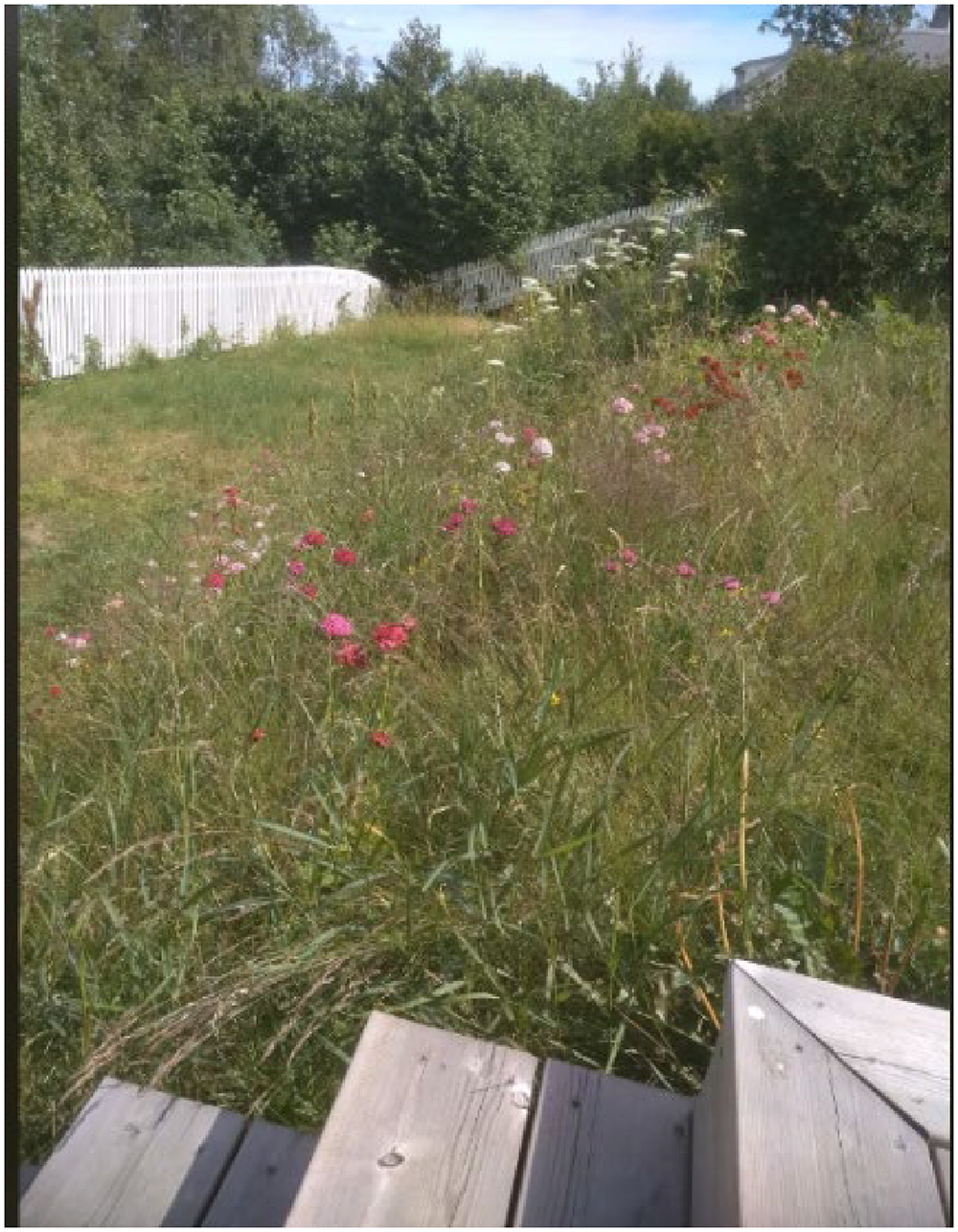
A meadow full of flowers. The photo was taken in Norway by Kamil.
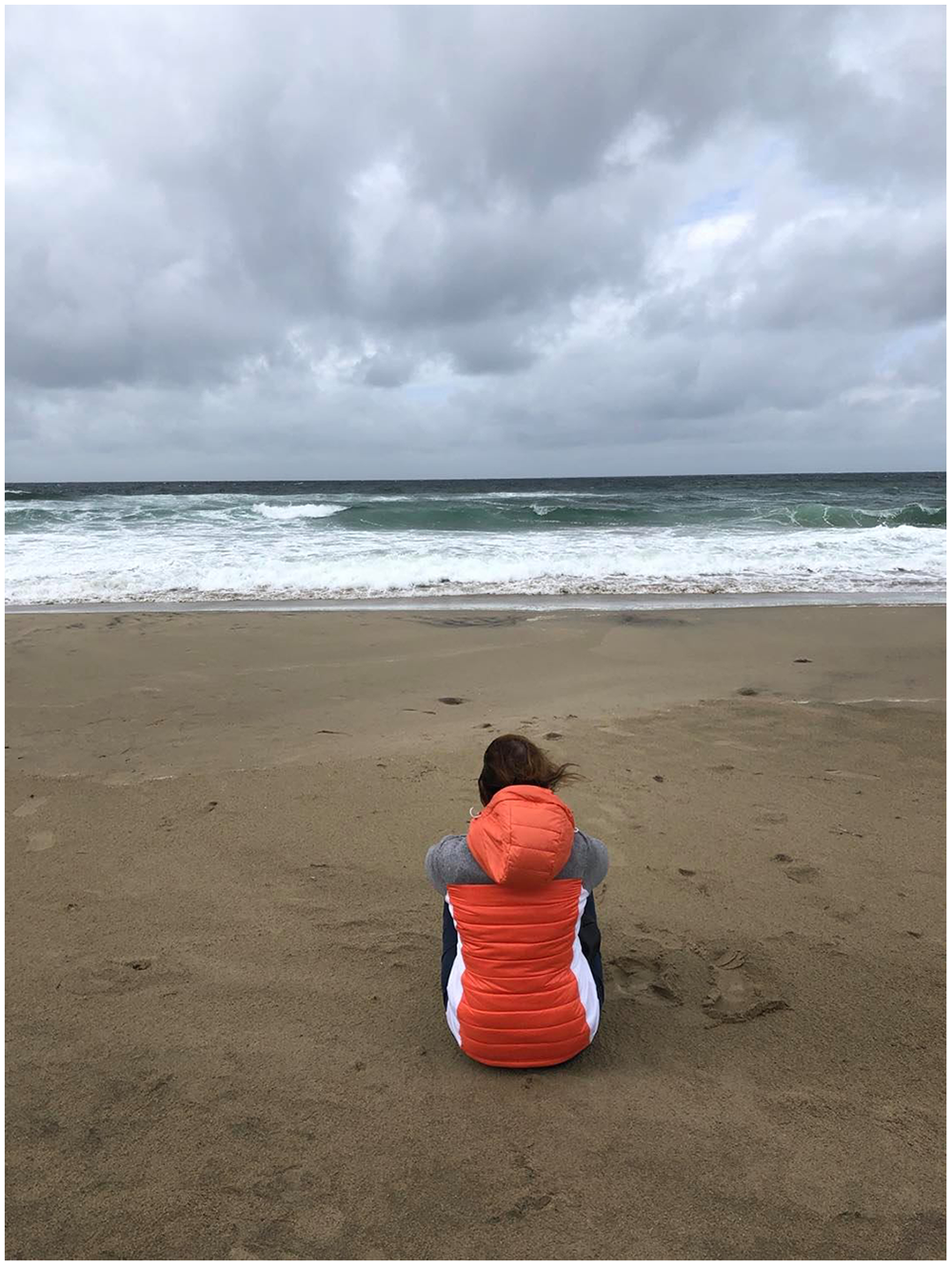
Sandy beach in Norway. The photo was taken by Bożena's sister.
The reception of the surrounding landscapes through vision and smell provoked in Kamil and Bożena an embodied familiarity (Ahmed 1999) and evoked memories of the past (Sutton 2001; Low 2023). Their transnational belonging to the localities they called home before the relocation materialized through the bodily sensations felt in Norway, giving the new homeland a familiar dimension and reflecting embodied transnational belonging. It was especially evident in Bożena's statement — the transnational belonging to the Polish coastal area materialized in her body as she was sitting on the beach, on her way to Stavanger, immersed in the experience of belonging to the (trans)locality that her sister, only visiting her from Poland, did not understand.
As several researchers indicated (Synnott 1991; Waskul, Vannini, and Wilson 2009), smells have a great capacity to work as carriers of memory, and that was confirmed in my research. Smells were often reported as a stimulus for childhood home memories. Interestingly, women were more prone than men to include smells, next to other sensory impressions, as part of their transnational sensescapes (Low and Kalekin-Fishman 2016), while males focused primarily on vision and taste.
I love the smell of lilac. And the smell of lilac in general reminds me of my childhood. It was because we lived on the ground floor and a lilac tree was growing right next to our windows. (…) And here, not far from us, there is a house. And there, a lady has three or four lilac trees. And every time I pass this place, I can smell that lilac and of course I am reminded of Poland and my childhood. (Magda)
I come from the countryside and I live in the countryside here too, so the smell of hay, mown grass - this is so normal to me. I am so used to it and therefore I feel very well here. It would be different if I lived in the city I suppose. But since I live in the countryside, all the picking of berries, apples, walking in the forest - it all is just like [my past] home for me. Just the landscape is different. (Małgorzata)
Similarly to Kamil and Bożena, the statements of Magda and Małgorzata revealed the transnational sensescapes (Low and Kalekin-Fishman 2016) encountered after relocation that made the respondents feel right in place through the bodily experience of (transnational) familiarity (Ahmed 1999; Morrison et al. 2020; Nikielska-Sekuła 2021). What is more, the presented utterances pointed at the fact that the belonging to the new places in Norway is often mediated by the past experiences of locality. In fact, the respondent's geographical origin, as in Małgorzata's and Bożena's statements, was presented in several narrations as an explanatory factor for why they did or did not feel at home in the localities in Norway. The comparisons included the familiarity between the dramatic mountainous landscape of Norway and the mountain origin in Poland (or a lack of it), coming from the coastal area in Poland, and the most common — coming from or having strong associations with the countryside. Since Norway was seen by the respondents as overall less urbanized than Poland, and this regarded also city-areas, rural origin often facilitated developing belonging to the local surroundings, as in the statement of Izabela. On the contrary, Iwona, who lived in a major Polish city before the relocation, contrasts her urban experiences with her current life in the countryside. She points out a lack of visual “big-city” landscape in her new surroundings, unrecognizing embodied experiences of belonging from her past home in her current location.
When I used to live in the city, I thought I didn’t like big cities at all. I thought I would rather live somewhere in the countryside, in the forest, with no contact with other people. Even better, without other people at all. But now, after 5 years of living in Norway, in such a wild environment, where deer come to the window and other animals, badgers and bats in general (…) I miss these metropolises and I think - now as far as the landscape is concerned - I miss this landscape of civilisation at the moment. And [I miss] city life, a city teeming with life. (Agnieszka)
The engagement with local sensory scripts that resembled the past home(s) is an excellent example of how transnationalism is exercised on a bodily level, confirming that transnationalism is both a mental and an embodied phenomenon. The transnational attachments to places and people in the transnational social fields (Levitt and Glick Schiller 2004) to which the belonging on a rationalized level was declared, materialized in the bodies of the respondents through experiencing the sensory familiarity in the new places. The transnational and the local blended together into a bodily translocality reflecting the phenomenon known in migration studies as living transnationally in a local setting (Greiner and Sakdapolrak 2013).
The individual positionalities of the actors, in the presented examples particularly involving their geographical (local) origin, influenced what exact bodily sensations composed the feelings of familiarity and wellbeing. These, combined with remarks regarding the relationship between the attitudes to the new sensory conducts and the self-assessment of emplacement outcomes and the length of stay in Norway discussed in Section "Embodying Belonging Through Acquiring New Sensuous Experiences as Home-like in a New Destination", indicates that individual positionalities (Anthias 2002; 2008; Yuval-Davis 2006b), next to the cultural habitus (Stoller 1997; Howes and Classen 2014), mediate the interpretation of the sensory stimuli found in the new locale and hence influences the embodied transnational belonging.
Apart from the landscapes and odors, the respondents actively sought to rediscover tastes they missed from their past. These tastes, however, were not found by them in the new localities. They rather must have imported them or produced them on their own, which I discuss in the next section.
Embodying Transnational Belonging Through a Conscious Production of Home-Like Sensory Experiences
An overwhelming majority of the respondents admitted longing for the tastes of cuisine they used to consume before relocation. For a few, recreating it was interpreted as a way to express their Polish ethnonational identity. However, this group was significantly outnumbered by the individuals who did not associate the recreation of particular tastes from childhood with identity but rather with a bodily craving to eat familiar food. Besides childhood memories, these foods were associated with meetings with relatives and friends from respondents’ transnational social fields (Levitt and Glick Schiller 2004) and eating them created a feeling of being close to loved ones despite the physical distance. This is illustrative of the fact that the need of the body to create transnational sensibilities through food (Choo 2004; Abdullah 2010) to feel right in place (Morrison et al. 2020) after the relocation may lack conscious references to ethnic identity, even if from the observer's point of view it might be interpreted as an ethnic practice.
The sensory experiences delivered by tasting familiar food were either produced by the respondents at home or imported — sometimes through the so-called “Polish shop”:
The ‘Polish shop’ is a substitute for my Poland. I open a tub of lard and feel that this is the taste of my childhood, as when I was at my grandma's place for vacation. (Bożena)
Other respondents also made the connection between tastes and their transnational social relations:
[After I moved out from] Poland, I learned to, for example, prepare pancakes the way my grandmother used to do it because I associated it with Poland, home and family. (Maja)
Why do I cook Polish dishes? Because I like them, I mean, I feel well when I eat chicken soup. It is like ‘a melting heart’[English phrase used in an original expression], so to speak, because sometimes you want to eat this warm chicken soup, it makes you feel warm in the soul. Now [because of the pandemic] flying is so terribly difficult … I miss my parents very much. (…) [Earlier] you could go to Poland for the weekend and eat this chicken soup with your parents. But now it is harder. (Agnieszka)
As shown, the act of recreating dishes that were once shared with close ones is meant to replace the longing not only for a mere taste but also for the social relationships that are missed (Johnston and Longhurst 2012). As such, the recreation of sensory impressions from past homes associated with social meetings reflects embodied transnational belonging.
Cooking familiar food known from the past and/or shared with the close ones from respondents’ transnational social fields (Levitt and Glick Schiller 2004), as well as practising family heritage in the form of recreating familial recipes were very common among women and single men. Men sharing households with female partners rarely referred to cooking (but eating — yes) as a way to support belonging. This is a subtle sign of a patriarchal gender dynamic, in which women are more prone to take care of cooking at home, even if the patriarchal model was not that visible in the interviews generally, which confirms that Polish couples in Norway rather sustain egalitarian models within the household (Żadkowska et al. 2022).
As shown, the transnational practice of cooking Polish food and benefitting from the transnational delivery chains oriented on the supply of Polish products in Norway add to the transnational sensescapes of the individuals (Low and Kalekin-Fishman 2016) and serve various purposes from embodying transnational social ties, creating an atmosphere of safety and familiarity, satisfying hunger cravings, and, to a lesser extent, maintaining ethnic identity.
Besides the cuisine, some respondents recreated other practices from their past to produce certain sensuous experiences, which remind them of the moments spent with family and friends before relocation. Among them was the practice of organizing social meetings around bonfires (Figure 3):
When we set a bonfire and cook a cauldron on it, or do not even cook a cauldron, we like the smoke, because it is a memory from our youth. We grew up with parties done outdoors and the fire was something cool, popular and pleasant as a way of spending time. So now, when we light the fire, and we do it often, (…), it is some form of spending time just to smell the smoke and there doesn't even have to be food. It is about sitting by the fire, warming up and reminiscing, and feeling good. (Ewa)
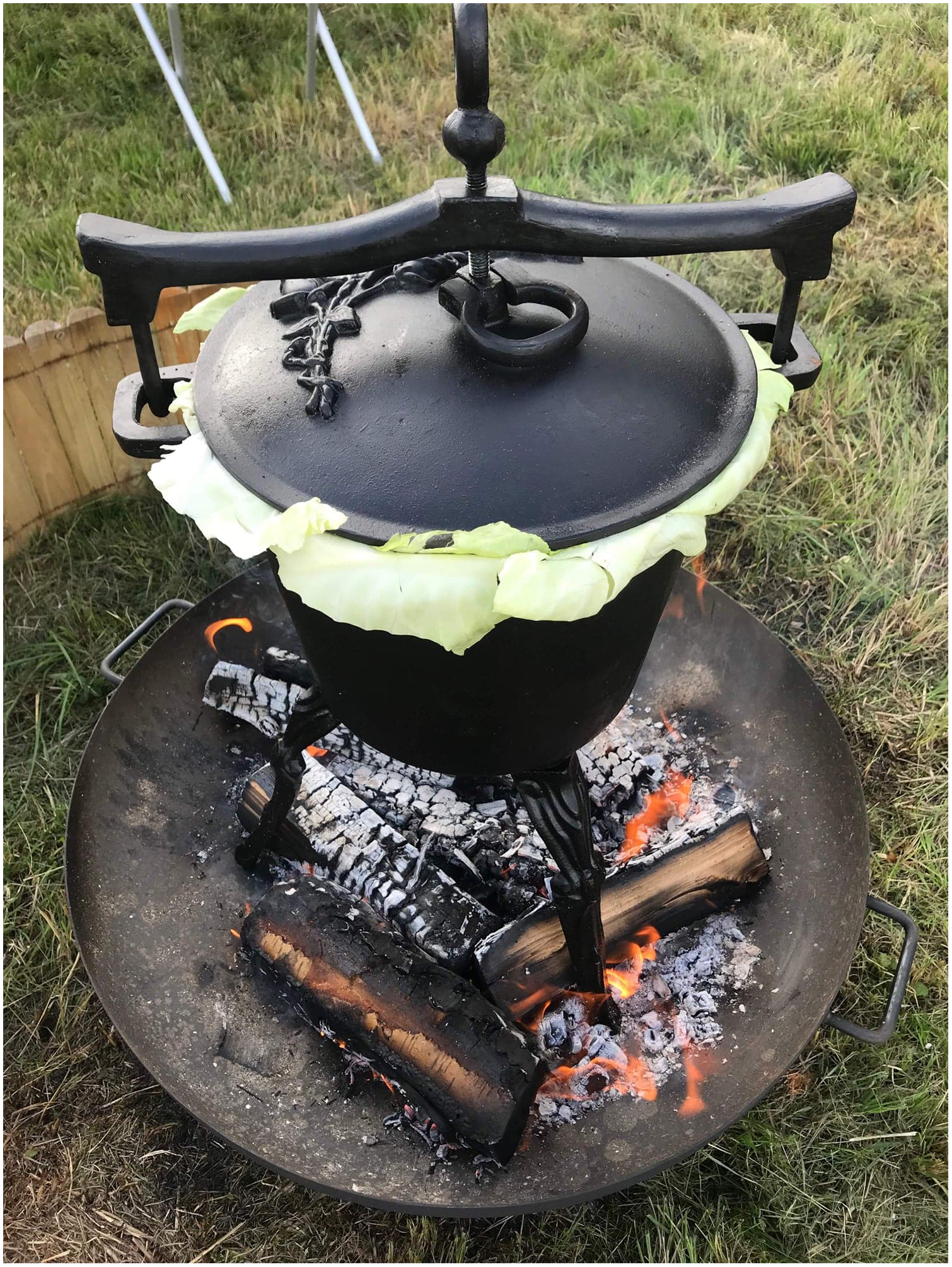
Cooking a cauldron. The photo was taken in Norway by Ewa.
Again the idea of feeling good through stimulating senses with familiar and pleasant smells bringing memories of the past is put forth by a respondent, establishing the link between the past experiences and the present day in the new locality through sensory practice (Synnott 1991; Waskul, Vannini, and Wilson 2009).
The respondents are conscious that what they do on a sensory level to feel at home in Norway are just the reproductions of what they know from the past. This, however, does not diminish their positive experience. Jan states:
You are shaped by your surroundings and most often by your parents. They bring you up and give you certain values, you learn certain patterns in your family home and if what you learned in your family home functions in the same way in the place where you are, you can call this place home. Because you have the same habits, the same patterns, you just feel good, you feel like at your mother's or at your parents’ if you repeat and duplicate these patterns in the place where you live. It's hard to name [these practices] specifically, but like here: this broth on Sundays, Saturday cleaning or washing windows for holidays. These are some schemes that functioned in the family home, so if a person makes them here, they maybe create appearances, but eventually they feel that they are simply at home. (Jan)
The presented examples of producing familiar sensory experiences from old places and spaces of belonging are illustrative of how transnational belonging is performed on a bodily level. The attachment to places and people that span borders, along with the identity formation for some respondents, have a bodily dimension of smelling, tasting, and feeling familiarity through the senses. These sensescapes (Low and Kalekin-Fishman 2016) support other transnational practices widely described by the scholars of transnationalism, such as maintaining contact with people located in other countries through social media, video conferencing and phone calls, consuming culture from the homeland, traveling to the homeland, and establishing friendships within the ethnic circle (for an overview see: Vertovec 1999). The embodied transnational belonging, as illustrated here, brings together both the local and the transnational attachments through bodily experiences, going beyond the dislocated view of migrant persons’ bodies and life-worlds, and showing instead how they can be both rooted in place and transnational at the same time. While the locating of transnationalism is not a new idea — there is a consensus that transnational practices of migrant persons have their local dimensions (Çağlar 2001; Ehrkamp 2005; Nikielska-Sekuła 2016a; 2016b; 2020), the concept of embodied transnational belonging extends this discussion of the bodily dimension that has not been given sufficient attention in migration studies to date.
Toward Embodied Transnational Belonging: Discussion and Conclusion
The contribution of this article is twofold. Firstly, through acknowledging the spatial (Lefebvre 1991) and sensory turn (Howes 2022) in social sciences, it conceptualizes an analytical notion of embodied transnational belonging, opening current scholarship on transnational belonging (Somerville 2008; van Liempt 2011; Dahinden 2012) to the bodily component. Secondly, it presents rich empirical data portraying how the belonging of migrant persons that span borders of nation states is performed on the level of the body. I portrayed the ways of belonging of the respondents within the transnational social fields (Levitt and Glick Schiller 2004) with close attention to the sensory work of the actors aimed at maintaining and recreating transnational attachments. Additionally, I identified the intersections of individual positionalities (Anthias 2002; 2008; Yuval-Davis 2006b) in embodied transnational belonging.
While it is widely comprehended how transnational social relations and practices are maintained by the actors (Levitt and Glick Schiller 2004), as well as how transnational belonging is conceptualized rationally (Yuval-Davis 2006a; Anthias 2008; 2016), to date the problematization of whether and how the embodied transnational experiences can be part of migrant persons’ experience of transnationality has been limited. Building on Ahmed's (1999) conceptualization of home on the move as a matter of bodily sensations and Probyn's (1996) understanding of belonging as interconnected with affect, the concept of embodied transnational belonging helps address this gap. Supported by the current literature on transnational belonging (Anthias 2002; 2008; Levitt and Glick Schiller 2004; Yuval-Davis 2006b; Somerville 2008; van Liempt 2011; Dahinden 2012) as well as the embodiment of (un)belonging (Willen 2007; Bendixsen 2020; Morrison et al. 2020; Mattes and Lang 2021), and based on the presented empirical data, I conceptualiz ed embodied transnational belonging as a place-anchored feeling of the body “being right in place,” that expands beyond the mere local surroundings, involving the materialization of the transnational attachments to people and places through bodily sensations. The concept refers to the processing (by the body) the transnational connections of the actor (Alinejad 2011) and provides a closer look at how they develop attachments to a new locality not only through a rationalization of belonging but through the actual bodily sensations that may be transnational. By doing so, the notion of embodied transnational belonging enables going beyond the contradiction between “feeling right” here (Ahmed 1999; Morrison et al. 2020; Nikielska-Sekuła 2021) while rationalizing belonging to there, bringing the here and the there together through the body of the individual and locating it (Çağlar 2001; Ehrkamp 2005, Glick Schiller and Çağlar 2009; Nikielska-Sekuła 2018). Since embodied transnational belonging covers the bodily sensations that relate to the transnational life-worlds of the individuals, I suggest that it constitutes a part of a transnational social field (Levitt and Glick Schiller 2004).
Regarding the contribution of this article to the broader transnational studies, it extended the common understandings of transnationalism defined as “the ties and relationships that span across sending and receiving societies” (Somerville 2008) adding a bodily dimension to it, and opening up the arena for theoretical conceptualisations of transnational processes on sensory approaches (Pink 2009; 2013). I discussed how transnational sentiments, aspirations, and connections can be realized on a bodily level, highlighting the relationship between the feeling body and the thinking mind. As mentioned, while this relationship is not new but rather well established in the canon of social science literature (Merleau-Ponty 1962; Howes 1991; 2003; Seremetakis 1996; 2019; Stoller 1997; Pink 2009; 2013), it has not been sufficiently theorized yet within the studies of transnationalism. Bringing the theoretical and empirical discussions on transnationalism down to a bodily level and examining closely the embodied dimensions of transnational processes can significantly add to the scholarly understanding of identities, practices, connections, and structures that span borders. On the contrary, ignoring the embodied dimension of migration obscures the processes of human mobility, providing an incomplete picture that excludes the experiences of the very body on the move.
The findings presented in this article exemplified that the embodied transnational belonging is prone to intersections of individual positionalities (Crenshaw 1993; Morrison et al. 2020), as are other migration processes involving individual experiences of the actors (Anthias 2002; 2008; Yuval-Davis 2006b; Nikielska-Sekuła 2018). I showed through empirical evidence that interpretations of embodied experiences, which were sometimes wrongly assumed as “natural/objective” before the sensory turn, and hence supposedly the same for everyone, vary among people with different positionalities. “While humans share the same basic sensory capacities, these are developed and understood in different ways” (Howes and Classen 2014, 9). The occurrence of this variation regarding cultural backgrounds of the actors was widely acknowledged in sensory studies according to a common understanding that the senses are integrated differently in different cultural settings (Stoller 1997; Howes and Classen 2014; Low 2023), and my empirical material confirmed that. The positionality perspective, however, nuanced the situated view on the senses even better, through indicating the differences in sensory reception between people whose experiences, even if gained within similar cultural scripts, differed due to their individual characteristics and life trajectories. The empirical data collected made it possible to identify how the following individual positionalities mediated sensory experiences of belonging by the actors’ gender, geographical origin, the length of stay in Norway and self-assessed perception of the outcomes of individual emplacement, but this list is certainly not exhaustive and further studies should extend it.
Footnotes
Acknowledgements
I thank the anonymous reviewers for their kind and valuable comments on earlier versions of this article. The research for this publication has been supported by a grant from the Priority Research Area Society of the Future under the Strategic Programme Excellence Initiative at Jagiellonian University. Translation / proofreading of this publication has been supported by a grant from the Priority Research Area Heritage (Critical Heritage Studies Hub) under the Strategic Programme Excellence Initiative at Jagiellonian University.
Declaration of Conflicting Interests
The author declared no potential conflicts of interest with respect to the research, authorship, and/or publication of this article.
Funding
The author disclosed receipt of the following financial support for the research, authorship, and/or publication of this article: This work was supported by the Jagiellonian University: Strategic Programme Excellence Initiative Priority Research Area Heritage — Critical Herititage Studies Hub, and Priority Research Area Society of the Future.
