




Abstract
Recent scholarship has claimed that countries across Latin America have been adopting an increasingly liberal and more advanced legal framework for the protection of refugees. Yet little systematic cross-country evidence beyond case studies exists to back up this claim. To address this gap in the literature, I develop a new methodology — called the Asylum Policies in Latin America (APLA) Database — to measure policy outputs on asylum across Latin America over time. Applying this new methodology, I present the results of the codification of 19 Latin American countries, over a 31-year period (1990–2020), using 65 indicators to track the development of policy measures on asylum. The findings from this new database confirm the claim from existing research that countries across Latin America have developed an increasingly complex and more liberal legal framework for the protection of refugees. This liberal trend in asylum legislation stands in contrast to findings of increased restrictiveness over the same period across OECD countries. The APLA Database represents a unique contribution to the fields of migration and refugee studies, as it provides systematic data on the nature and development of asylum policies in Latin America through highly disaggregated data on policy outputs. Additionally, APLA demonstrates the existence of intra-regional variation. It also allows scholars to develop and test hypotheses in the field of asylum studies and provides a reference database for comparative analyses of asylum policies in Latin America, as well as a framework for the comparative study of asylum policies across the globe.
Introduction
Forced displacement is a salient global issue. According to the Office of the United Nations High Commissioner for Refugees (UNHCR), by the end of 2019, there were 79.5 million forcibly displaced people in the world, 26 million of whom were refugees (UNHCR 2020). 1 Despite evidence that around 85 percent of refugees and people in need of international protection live in developing nations, most research on the legislative frameworks for the protection of refugees has focused on OECD countries (Bjerre et al. 2015; Helbling et al. 2017; Helbling and Kalkum 2018). Until the Venezuelan displacement crisis in 2015, Latin America was one of the least-researched regions in the field of refugee studies, likely because of its low refugee numbers, compared to other regions such as the Middle East or East Africa (Pugh 2018; International Crisis Group 2018; UNHCR 2018; Freier and Holloway 2019; Freier and Parent 2019; Selee et al. 2019). However, in Latin America, scholars have claimed, a new liberal turn in asylum policies has taken place as part of an overall liberalization of migration policies in the region (Ceriani 2011; Acosta and Freier 2015; Cantor, Freier, and Gauci 2015; Ceriani and Freier 2015; Freier 2015; Fernandez-Rodriguez, Freier, and Hammoud-Gallego 2020). Nonetheless, little systematic cross-country evidence, beyond case studies, has been produced to substantiate this claim. This article, therefore, asks: Have asylum policies in Latin America become more liberal, as scholars of the region suggest?
There are two additional reasons to focus on asylum policies in Latin America. First, Latin American countries historically have a long tradition of political asylum, which dates as far back as the 1889 Montevideo Treaty on International Penal Law (Harley 2014). This tradition has been concretely reinforced since 1984, when the informal process that kickstarted the development of a regional refugee protection framework in Latin America began (De Andrade 2014; Barichello 2016). Second, Latin America is currently experiencing its most significant displacement of people across the region since the Central American crisis of the 1980s (International Crisis Group 2018; Acosta, Blouin, and Freier 2019; Selee et al. 2019; Berganza, Blouin, and Freier 2020; Chavez Gonzales and Estrada 2020; Selee and Bolter 2020). Due to the deteriorating economic and political situation in Venezuela, the UNHCR estimates that in recent years, 4.5 million people have left the country (UNHCR 2020), a significant number for a country that until recently had a long history of attracting migrants from other parts of Latin America (International Crisis Group 2018; Bahar and Dooley 2019).
To confirm the existence of a liberal trend in asylum policies in Latin America, this article develops a new methodology — the Asylum Policies in Latin America (or APLA) Database — which allows scholars to thoroughly analyze how asylum policies have changed over time across all Spanish-speaking countries in Latin America, plus Brazil. Complementing the methodology upon which it is based — the International Migration Law and Policy Analysis (or IMPALA) methodology — this new approach takes a regional focus, allowing the in-depth analysis of asylum policies in Latin America (Gest et al. 2014; Beine et al. 2015, 2016). I present the results of the codification of asylum policies applying this new methodology in 19 Latin American countries between 1990 and 2020, using a series of 65 policy measure indicators to track how asylum policies evolved over time. This codification is the first of its kind produced for most countries in Latin America. Equally important, I also suggest a way to aggregate these data to study trends in regulatory complexity and liberalization over time.
The findings from the APLA’s data aggregation confirm claims from the literature that the legislative framework for refugee protection in Latin America became increasingly more complex and more liberal between 1990 and 2020 (Harley 2014; Acosta and Freier 2015; Ceriani and Freier 2015; de Menezes 2016; Fernandez-Rodriguez, Freier, and Hammoud-Gallego 2020; Freier and Gauci 2020; Hammoud-Gallego and Freier 2021). This liberal trend stands in contrast to more restrictive trends identified by the literature on OECD countries (de Haas, Natter, and Vezzoli 2018; Helbling and Kalkum 2018). More specifically, data from APLA show that most reforms in asylum policies took place in the first decade of the 2000s, which matches a period of high economic growth in Latin America driven by rising commodities prices and the pink tide — a period in which most Latin American governments, especially in South America, were led by left-wing governments, many of them populists (Reid 2017). Pink tide governments, such as those of Lula in Brazil, Correa in Ecuador, and Chavez in Venezuela, were characterized by personalistic approaches to politics and a focus on progressive economic and social policies (Panizza 2009; Panizza and Miorelli 2009). APLA data show a close-to-uniform rise across all Latin American countries, with the exceptions of Cuba, the Dominican Republic, and Honduras. Additionally, the overall trend toward increased regulatory complexity and liberalization seems to have been more marked in South America than in the rest of the region.
This article is organized as follows. I begin with a discussion of the literature on trends in migration and asylum policies in OECD and Latin American countries. Second, I review and compare existing migration and asylum indices to establish if any can be used to study the development of asylum legislation in Latin America. Third, I describe the principles behind the APLA Database. Fourth, I present the findings from APLA data, which confirm the claims from the literature on the liberalization of asylum policies in Latin America, and discuss trends, outliers, and the adoption of specific policy measures across the region. I conclude by summarizing the findings, clarifying this new methodology’s limits, and discussing the implications of this research for the wider study of international migration, as well as its repercussions beyond Latin America.
Theoretical Framework
A wide qualitative literature has dealt with trends in the development of migration policies, mostly within OECD countries (Hollifield 1992; Meyers 2000, 2002; Huysmans 2002; Boswell and Hough 2008; Geddes 2008). A common theme of this work has been the convergence of migration policies within traditional destination countries, which seem to adopt similar policies to deal with comparable migration flows (Hollifield 1992; Meyers 2002; Consterdine and Hampshire 2019). However, empirical studies seeking to quantify migration policies and plot their trends over time have, so far, not been unanimous in their conclusions about such trends in migration and asylum policies (Beine et al. 2015, 2016; Rayp, Ruyssen, and Standaert 2017; de Haas, Natter, and Vezzoli 2018; Helbling and Kalkum 2018). Using the DEMIG dataset, for example, de Haas, Natter, and Vezzoli (2018) found that since 1945, in the 45 countries included in their dataset, migration policies have generally become more liberal, with Helbling and Kalkum (2018) coming to similar conclusions for the 1980–2010 period. On the other hand, Beine et al. (2016) found that from the 1990s onward, migration policies have become increasingly more complex and restrictive. Rayp, Ruyssen, and Standaert (2017) reach a similar conclusion to that of Beine and collaborators.
Scholarship on asylum in European countries has also so far not been unanimous on their trends. Most discussion of trends in European asylum policies split between those supporting the “Fortress Europe” concept and those believing that the European Union (EU) acts as a liberal constraint on the more restrictive tendencies within individual countries, without consensus (Hatton 2009, 2017; Thielemann and El-Enany 2009; Thielemann 2012, 2018; Hatton and Moloney 2015; Hampshire 2016; Bonjour, Ripoll Servent, and Thielemann 2018). Only one study by Blair, Grossman, and Weinstein (2020) examines trends in asylum policies across the developing world, looking at African, Middle Eastern, and South Asian countries. Their codification suggests that asylum policies in those countries have become more liberal over time.
Concerning Latin America, largely qualitative scholars, such as Acosta, Freier, and Cantor, seem to agree that policy liberalization has taken place in the fields of both economic migration and asylum policy, beginning in the 1980s with the return to democracy of most Latin American countries and reaching its peak in the 2000s (Loescher 2001; Ceriani 2004, 2011; Martinez and Stang 2006; De Andrade 2014; Harley 2014; Acosta and Freier 2015; Cantor, Freier, and Gauci 2015; Cantor and Mora 2015; Ceriani and Freier 2015; Maldonado Castillo 2015; de Menezes 2016; Reed-Hurtado 2017; Acosta 2018; Hammoud-Gallego and Freier 2021).
The main issue with the current state of the literature on migration and asylum policies, then, is that no index has tried to estimate the actual changes in asylum legislation and, thus, confirm this liberalization trend across Latin American countries in a way that allows comparison both over time and across countries. To fill this gap, I develop a new methodology that seeks to address the main concerns of existing migration policy indices, as reviewed in more detail below, but also applied here, uniquely, to the Latin American context.
Current Migration Policy Indices
In recent years, a variety of migration policy-related indices have blossomed as part of an increased interest among scholars in this field. These migration policy indices attempt to measure migration and asylum policies, from levels of border openness to the effectiveness of integration policies (Coppedge et al. 2011; Gest et al. 2014; Bjerre et al. 2015; de Haas, Natter, and Vezzoli 2015; Goodman 2015; Beine et al. 2016; Scipioni and Urso 2017). Goodman (2015) counts 10 different migration-related indices, many overlapping in the policy measures they address and none building on the others, whereas Scipioni and Urso (2017) report that around 12 migration indices have been developed over the last 15 years, with more continuing to be added (Pedroza and Palop-García 2017; Blair, Grossman, and Weinstein 2020). 2
Most of these indices are developed by taking into account three core principles: conceptual validity, measurement, and transparency (Gest et al. 2014; Bjerre et al. 2015; Helbling et al. 2017). The first — conceptual validity — requires clear conceptual identification of the dependent variable so that no overlaps occur between closely linked, yet different, variables (e.g., between the law and its actual implementation), thus avoiding interpretation and causal inference difficulties. The second principle — measurement — is that the quantitative aggregation of the different policy aspects produces a variable that represents a valid concept for use in further analysis. Last, to allow for replicability and to follow the third principle, the whole process to construct such indices must be transparent, from the codification rules to the aggregation methodology, and the actual data must be easily accessible. Adherence to these three principles guarantees overall reliability, consistency, and replicability in findings (Coppedge et al. 2011; de Haas 2011; Gest et al. 2014; Bjerre et al. 2015; de Haas, Natter, and Vezzoli 2015; Goodman 2015; Rayp, Ruyssen, and Standaert 2017; Scipioni and Urso 2017).
Considering the three principles guiding the development of migration policy indices mentioned above, which index could be the best fit for analyzing asylum policies in Latin America? IMPALA is a comparative classification methodology for migration and asylum policies which captures the presence or absence of specific migration-related policies within a country’s legislation and focuses exclusively on border entry restrictions (i.e., it does not deal with integration policies). 3 Designed to study the development of migration policies and to compare them across countries and over time, IMPALA gathers its data using a set of coding frames, developed through an expert-driven inductive method in a pilot study of various OECD countries (Gest et al. 2014; Beine et al. 2015, 2016).
All IMPALA questions follow a binary coding logic that indicates either the presence or the absence of a specific policy measure. The arithmetic un-weighted sum of all restrictive policy measures summarizes the level of a migration policy’s restrictiveness or openness. 4 Provided that IMPALA investigates only de jure border policies, it guarantees conceptual clarity, as the policies measured do not overlap with others, such as integration policies, or with the actual implementation and effects of migration policies. Moreover, given that each question in IMPALA’s questionnaires is referenced with the source used for the codification, transparency and replicability are guaranteed (Scipioni and Urso 2017). Furthermore, unlike other indices that rely on secondary sources, IMPALA uses primary legislation — the laws, decrees, regulations, and constitutions of the various countries — for its codification, lessening the risk of relying on subjective coding by country experts.
However, IMPALA is not the only methodology that seeks to measure de jure migration policies across countries over time. Recently, similar migration policy indices have been developed, such as the DEMIG (Determinants of International Migration), the IMPIC (Immigration Policies in Comparison), and the DWRAP (Developing World Refugee and Asylum Policy) databases (de Haas, Natter, and Vezzoli 2014; Helbling et al. 2017; Blair, Grossman, and Weinstein 2020). DEMIG produced a comprehensive database, with the goal of investigating how migration policies affect migration processes and dealing exclusively with the direction of changes in migration policies (de Haas, Natter, and Vezzoli 2015; Goodman 2015). While representing a good example of a policy database, DEMIG can only study policy trends within a country, given its exclusive focus on changes in policies, without holding a baseline point of reference, and cannot be used to compare policies across different units. Thus, it is unfit as an index to study the cross-country development of asylum policies. 5
On the other hand, IMPIC is specifically developed to address this issue of comparison both over time and across countries. Like IMPALA, it uses primary legislation and regulations as sources for its codification, adopts a binary coding strategy, and avoids producing a weighted aggregation methodology (Helbling et al. 2017). Despite these clear strengths, IMPIC’s number of indicators for each migration category is quite limited, producing not only a very partial picture of the elements that comprise legislation on asylum in a specific country but also, as Scipioni and Urso (2017) note, very little variation within countries over time. Also, as is the case for most migration indices, IMPIC focuses on OECD countries and, thus, overlooks the possible idiosyncratic features of migration and asylum policies that might develop within other regions, especially non-OECD countries (Helbling, Simon, and Schmid 2020). As I discuss below, IMPALA suffers from the same “OECD bias” in the indicators it considers as well.
A more recent asylum policy index worth mentioning is the DRWAP index developed by Blair, Grossman, and Weinstein (2020), which codifies asylum policies in the Middle East, Africa, and South Asia, based on analysis of national legislation. Their approach draws on a series of questions on 54 indicators of policy measures and closely resembles the IMPALA approach, although using different categories. However, there is an important difference between the DRWAP and IMPALA approaches — namely, the way they develop their coding frames. The former does so deductively, following UNHCR policy reports, while the latter uses a more inductive approach, which leverages existing legislation and should give the advantage of capturing regional specificities.
Other migration policy indices include the EMIX policy index by Pedroza and Palop-García (2017), which focuses on “diaspora policies,” and Thielemann’s (2004) “deterrence index,” which quantifies countries’ asylum rules within five policy areas. Solano and Huddleston’s (2020) MIPEX (Migrant Integration Policy Index) focuses on the adoption of policies to integrate migrants in 52 countries, including four in Latin America (Argentina, Brazil, Chile, and Mexico). Lastly, Hatton (2009, 2017) and Hatton and Moloney (2015) have developed an index on asylum policies which includes 15 indicators divided in three groups. However, their codification is based on secondary reports written by country experts and is limited to changes in each country’s policy relative to the previous year, following a logic similar to that of DEMIG, rather than overall measures of liberalization or restrictiveness (de Haas, Natter, and Vezzoli 2015; DEMIG 2015).
While the above-mentioned migration policy indices are valuable contributions to the literature, to answer this article’s main question, IMPALA seems to be the most suitable, as it allows in-depth comparisons of policy measures over time and across countries. Additionally, the IMPALA approach offers several advantages. First, given its high level of disaggregation, it offers unlimited combination possibilities, allowing researchers to select sets of variables according to their research purposes. Second, the use of a simple binary codification strategy facilitates the data’s use by researchers. The DRWAP methodology comes the closest, but for this research, a coding frame produced using an inductive method — through analysis of existing legislation — is more suitable, as it allows us to capture policy measures specific to one region. 6
In the next section, I discuss the IMPALA methodology’s limitations and present the APLA as a complementary methodology in which I expand IMPALA to include some fundamental policy indicators prevalent at the regional level in Latin America. I conclude the section by clarifying some aspects of the methodology, presenting its possible uses, and discussing the codified data for Latin America.
The APLA: Asylum Policies in Latin America Database
Although IMPALA is a promising reference methodology to solve theoretical puzzles regarding the determinants and effects of asylum policies and their variation across countries, it has two main limitations. First, as de Haas, Natter, and Vezzoli remark (2015, 2), IMPALA is limited in its “data collection by a pre-determined set of policy variables, which means that idiosyncratic, country-specific migration policies are missed out.” Second, instead of convincingly addressing the conceptual question about how to measure restrictiveness, liberalization, or regulatory complexity, the developers of IMPALA, like those of IMPIC, simply suggested adding arithmetically the restrictive policy measures, with no weighting scale (Gest et al. 2014; Beine et al. 2015, 2016). 7
Regarding the first limitation, I suggest a possible solution through the development of the new APLA Database. Whereas it might be true that no pre-defined coding frames will ever fully capture all characteristics inherent in a country’s asylum policy, producing a set of questions for each country would not be useful for cross-country comparison, as minor differences and idiosyncratic features are surely present in many pieces of legislation. Instead, as this new APLA database aims to explain the development of asylum policies and to compare them across countries, an all-encompassing coding frame for each country would be of little explanatory use. The real challenge is to capture at least the core right-enhancing and right-denying aspects of migration and asylum policies, especially within a certain group of countries which we might expect to have more similarities among them, due to factors such as political membership in a regional or interest group or geographical clustering. Examples of such groups are not only EU countries but also other areas of the world, such as Latin America, Africa, or the Middle East (Maarouf Arnaout 1987; Milner 2009; Reed-Hurtado 2013).
An additional issue with IMPALA is that since its coding frames have been developed using a limited number of globally unrepresentative countries, many aspects of regional legislation are not captured by it. 8 This lack of representativity in the countries used to produce IMPALA’s coding frames translates into an “OECD bias” which ignores many policy measures present in other world regions. To address this issue, I suggest designing a coding frame on asylum policies for a specific region of interest — Latin America, in this case — where a set of region-specific policies on asylum have been developed. Certain policies might develop at the regional level, due to the common challenges that each country within the region faces, or through general efforts of regional integration. In the case of asylum policies, countries set shared standards through joint declarations, resolutions, action plans, policy diffusion, institutional learning, or directives and regulations (for the case of the EU) (Cornelius et al. 2004; Braun and Gilardi 2006; Meseguer and Gilardi 2009; Ghezelbash 2018; Gilardi and Wasserfallen 2019).
To develop a methodology capable of including regional policy measures of Latin American asylum policies, I have designed an APLA coding frame, using the same inductive method adopted by IMPALA: I have chosen a representative sample of Latin American countries (Argentina, Brazil, Colombia, Ecuador, Mexico, Peru, and Venezuela), analyzed their current asylum legislation, and for each policy measure not included in the humanitarian IMPALA coding frame, developed an indicator that accounts for presence or absence of that policy measure in a country’s legislation. This selection of countries is representative of asylum policies in Latin America for the following reasons: Argentina and Brazil are the countries that, according to Freier (2015) and Freier and Gauci (2020), have incorporated the highest number of best practices on asylum policies in the region, as identified by the UNHCR, while Peru has incorporated the lowest number of such best practices. 9 On the other hand, Ecuador and Venezuela have been included because they are the Latin American countries that have received the most asylum-seekers (before the beginning of the Venezuelan crisis) and people in need of international protection in the last two decades, due to the protracted civil war in neighboring Colombia (Gottwald 2004, 2016; UNHCR 2008; Pugh 2018; Acosta, Blouin, and Freier 2019; Selee et al. 2019). Lastly, I have included Mexico, due to its undisputable importance as a diplomatic and political actor within the region. 10
APLA comprises two binary indicators: one tracking the presence or absence of a policy measure in the legislation and a second tracking if, given that the first value is present or absent, the policy measure in question is restrictive or not toward asylum-seekers and refugees. 11 Also, I kept the original questions from the humanitarian IMPALA coding frame, as developed by Beine et al. (2015, 2016) and Gest et al. (2014), and added them to the APLA coding scheme. Thus, APLA does not substitute, but complements, what has already been done under IMPALA. APLA consists of 65 indicators, divided into seven categories: legal framework, qualification, reception and detention, exclusion and cessation, procedure, internal rights, and rights of children. 12 Eight indicators relate to the ratification of international agreements, while the other 57 concern national legislation. 34 indicators were already included in IMPALA, whereas 31 are new indicators developed specifically for Latin America.
IMPALA’s second main limitation is its understanding of “restrictiveness” as the number of restrictive policies measures in a legislation, or the number of “entry tracks” (i.e., how many different pathways for entry into a country exist). As Goodman (2015) points out, the challenge of proper aggregation is to make sure that the values aggregated “reflect the concepts they purport to represent” (1907). Policy indices, such as those measuring democracy, usually add the various policy indicators, using a variety of weighting schemes, whether based on factor analysis, item-response theory, or other weighting schemes (Munck and Verkuilen 2002; Treier and Jackman 2008; Jackman 2009; Coppedge et al. 2011; Helbling et al. 2017; Bjerre, Römer, and Zobel 2019; Blair, Grossman, and Weinstein 2020). In this article, I suggest two alternative aggregation strategies to IMPALA: one to measure the development of regulatory complexity over time and another to calculate liberalization. 13 I define regulatory complexity here as the gradual process whereby countries adopt increasingly dense asylum policies (i.e., broader and more detailed).
Liberalization, on the other hand, is conceptualized as the process whereby the proportion of right-enhancing policy measures increases over time, compared to the proportion of right-denying policy measures in a country’s asylum legislation. In theory, regulatory complexity and liberalization are two different concepts that do not necessarily overlap. However, as Zaun argues, in practice, these two concepts often go hand-in-hand, given that “the combination of weak regulation and high standards does not exist, as weak regulators face difficulties in enforcing refugee protection” (Zaun 2016, 138; 2017). Alternatively, it could be argued that increasingly complex policies represent the creation of a progressively wider legal framework for the protection of asylum-seekers and refugees, which did not exist before. In the next section, I provide empirical evidence to support the claim that regulatory complexity and liberalization of asylum policies in Latin America between 1990 and 2020 fundamentally overlapped.
To measure “regulatory complexity,” I use the proportion of measures incorporated in each legislation each year, drawing on the 57 national legislation indicators included in APLA and excluding the eight indicators that refer to the ratification of international treaties. I measure “liberalization” by taking those policies adopted in each country-year and selecting the proportion of restrictive to non-restrictive measures, as indicated by a simple binomial identification. 14 The simplicity of these aggregation methodologies reflects their conceptual clarity, elucidates the relation between different policy measures, while avoiding arbitrary weighting schemes, and allows scholars to easily replicate the findings of any study using APLA data (Munck and Verkuilen 2002; Helbling et al. 2017).
The APLA Database currently contains the codification of 19 Latin American countries for a 31-year period, starting in 1990, as shown in Figure 1. 15 I have codified all Spanish-speaking countries, plus Brazil, as these countries are considered to form the Latin American region. Other countries present in the region — mostly Caribbean islands — have not been codified, as they often constitute a regional group separate from Latin America (Reed-Hurtado 2013; Harley 2014). The APLA Database’s codification process took place as follows. I began by searching for references to national legislation in Refworld.org, the UNHCR repository of legal information on asylum policies. I then analyzed each Latin American country’s current asylum law, after codifying the text through an in-depth analysis using the APLA indicators, and searched the text for references to previous legislation, which I then codified. This information was complemented by analysis of scholarship on asylum in each country, where available.
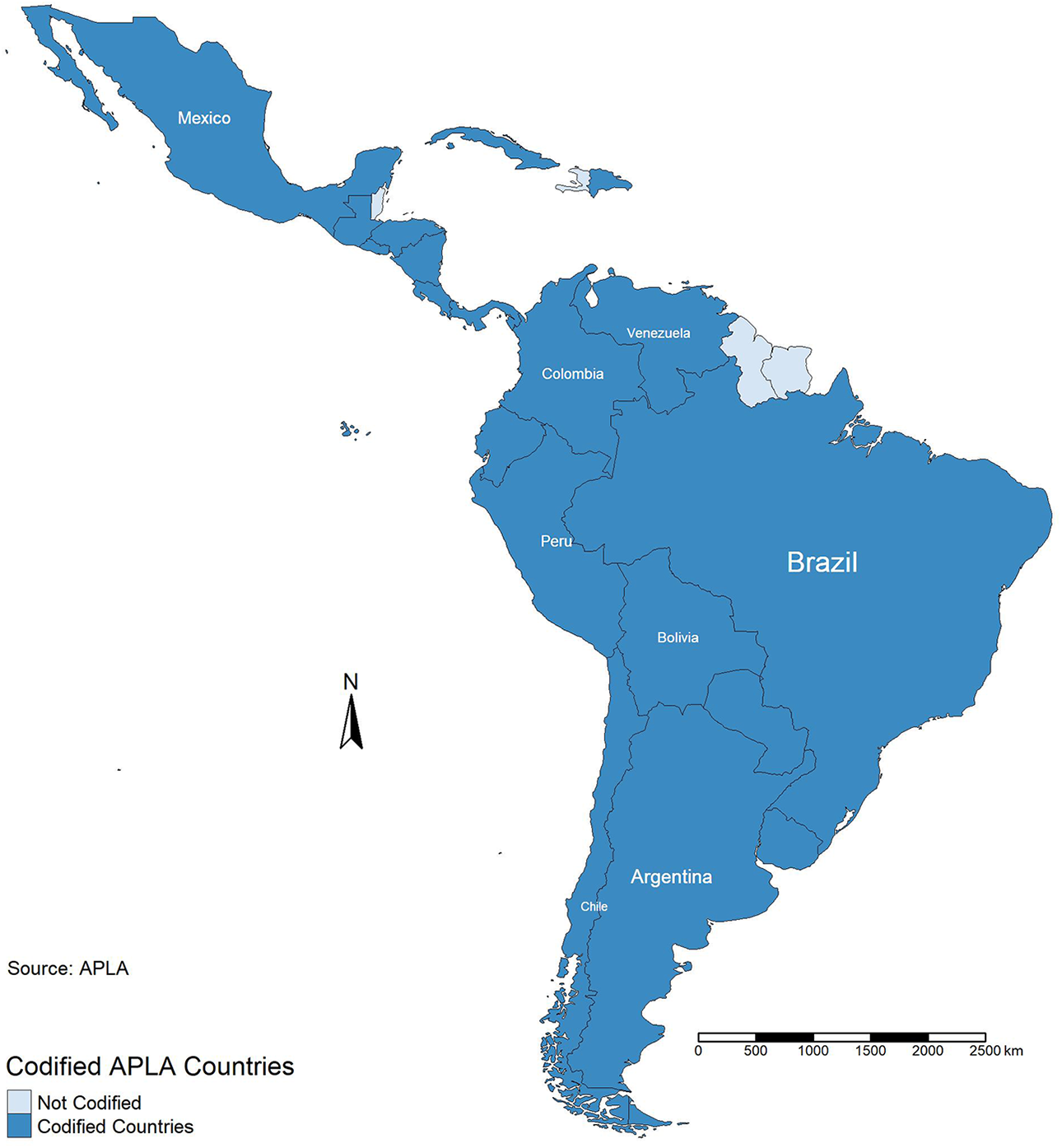
Countries codified with APLA, 1990–2020.
The choice of codifying from 1990 is explained by two factors. First, most Latin American countries re-democratized around this time, coming out of a series of Cold War-era dictatorships; thus, before this date, most Latin American countries produced considerably more refugees than they accepted (Loescher 2001; Chasteen 2011). Second, the regional process that kicked off the development of a common asylum framework began after the 1984 Cartagena declaration, the result of a meeting between academics, civil servants, and the UNHCR to find a common response to the forced displacement caused by the Central American civil wars of the 1980s (De Andrade 2014, 2019; Harley 2014; Barichello 2016). 16
In the following section, I present the main findings from the analysis of the APLA Database. I begin by presenting the context of forced displacement in Latin America and then discuss trends in asylum policies across the region. Later, I compare these trends to those of other migration policy indices across the globe, before discussing the inclusion or exclusion of policy measures in some legislation, pointing to outliers, and hypothesizing about the reasons behind the adoption of some unexpected policy measures.
Empirical Findings
According to UNHCR data, until 2018, refugee numbers in Latin America had been considerably low from an international perspective. As Figure 2 shows, Central American countries and Mexico recorded high refugee numbers in the early 1990s, before dropping substantially, as the region’s civil wars came to an end. Numbers increased again in the early 2000s, although mostly in Ecuador and Venezuela, both of which experienced an influx of refugees fleeing Colombia’s internal conflict (Brown 1996; Gottwald 2004, 2016; UNHCR 2008; Gleditsch 2016). These relatively low numbers of refugees, and their geographical clustering in either the Central American or Andean region, explain why, before the Venezuelan migration crisis that began in 2015, the salience of migration and asylum issues had been substantially limited in the region (Acosta and Freier 2015; Cantor, Freier, and Gauci 2015; Acosta, Blouin, and Freier 2019; Fernandez-Rodriguez, Freier, and Hammoud-Gallego 2020).
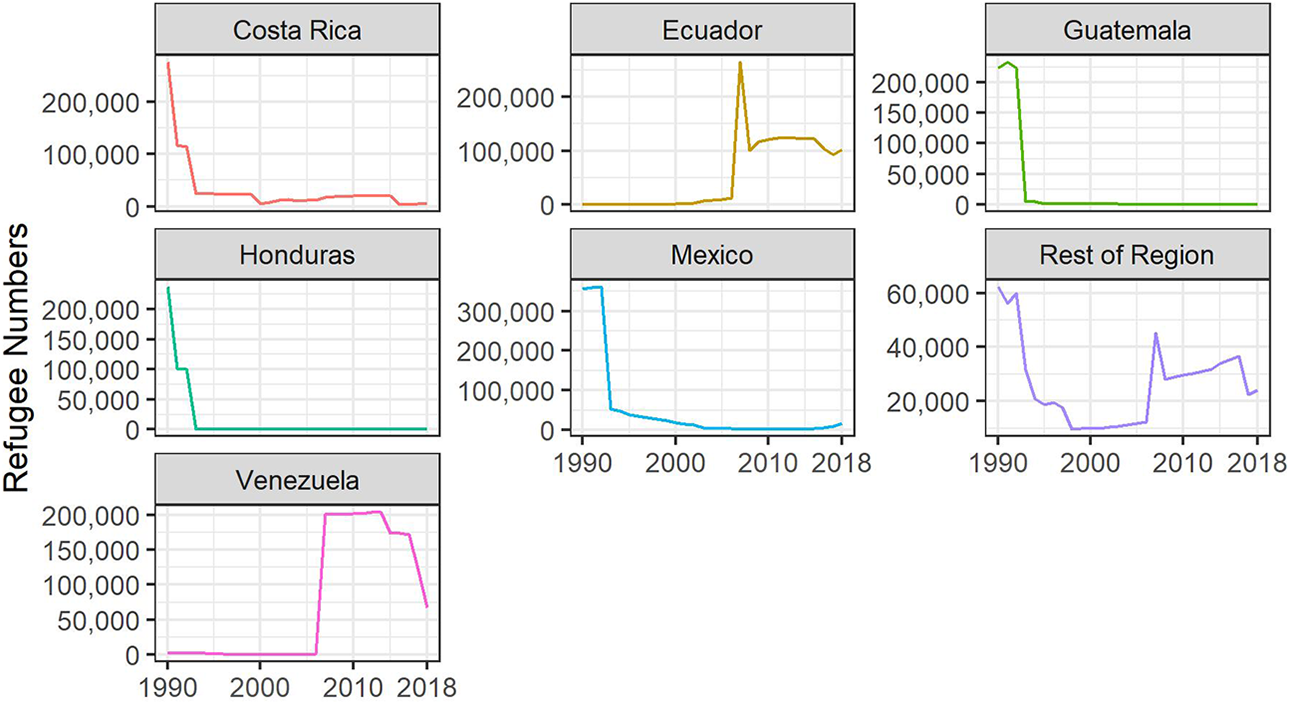
Refugees in Latin America.
Aggregating data from APLA, I develop two indicators to show trends in “regulatory complexity” and “liberalization” across countries. Regulatory complexity measures the numbers of policy measures included into each country’s asylum legislation, with a range from 0 (no asylum legislation) to 100 (inclusion of all policy measures on asylum identified by APLA). On the other hand, liberalization calculates the ratio of liberal to non-liberal policy measures included in a country’s legislation, where a liberalization score of 1 would represent a country with only liberal policies and 0 a country with only restrictive policies. The results of these aggregations are shown in Figures 3 and 4. Figure 5 shows the development of regulatory complexity at the country level over time.
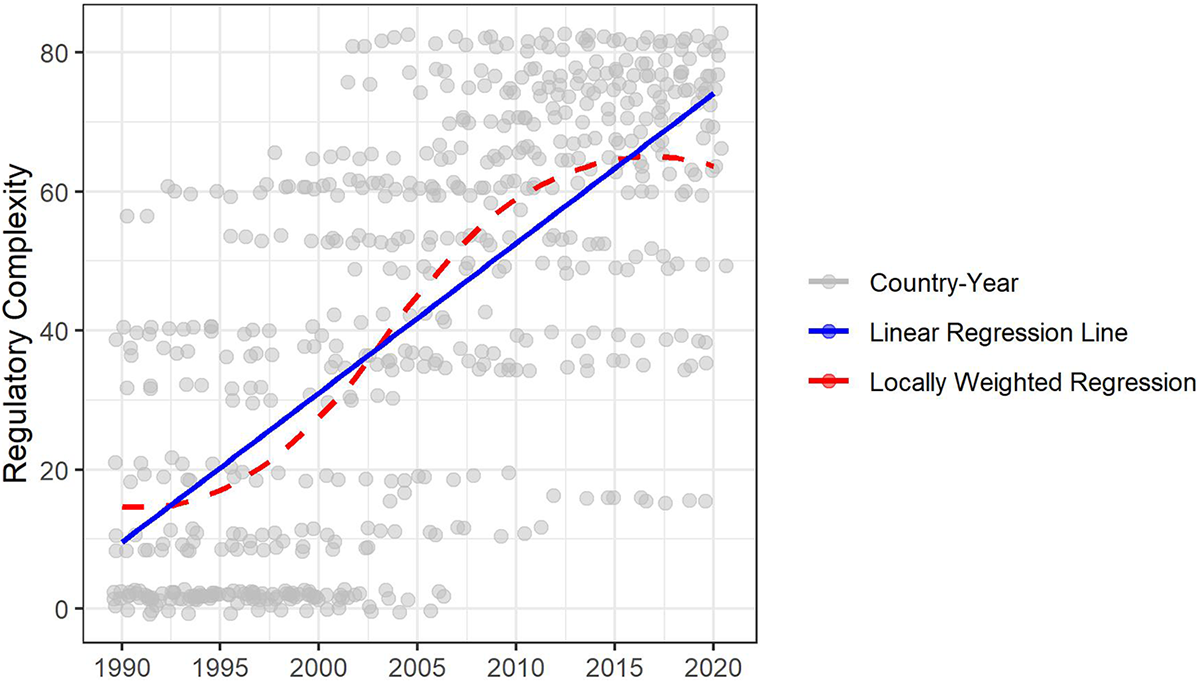
Regulatory complexity of asylum policies in Latin America.
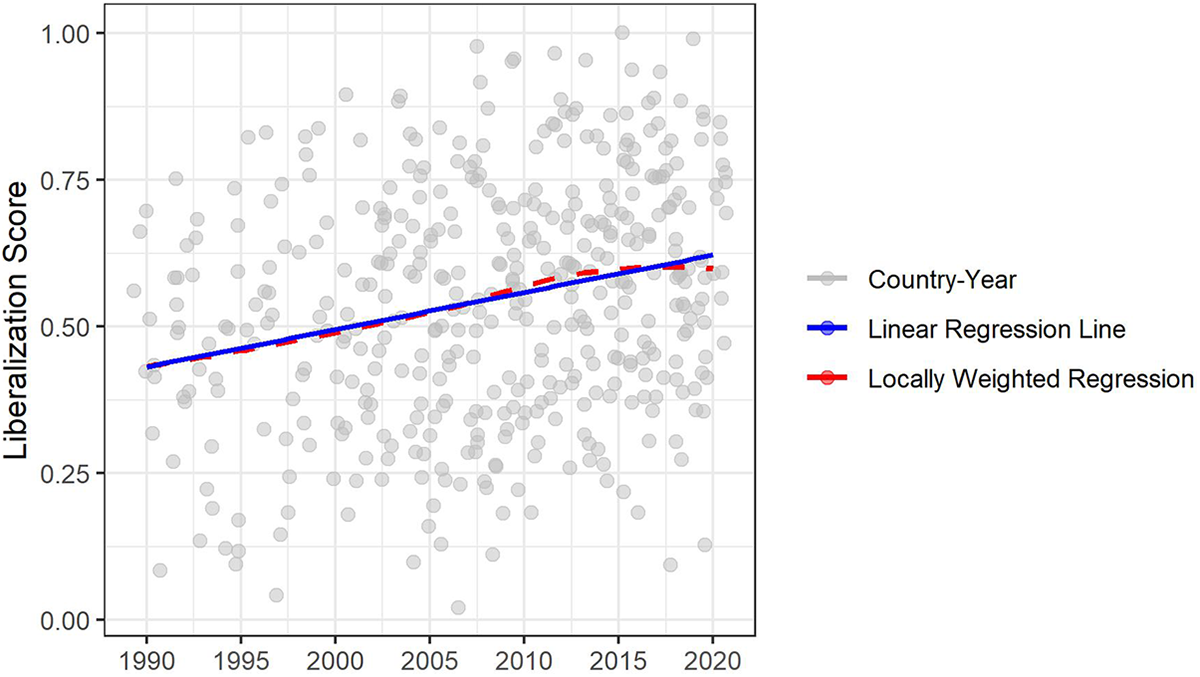
Liberalization of asylum policies in Latin America.
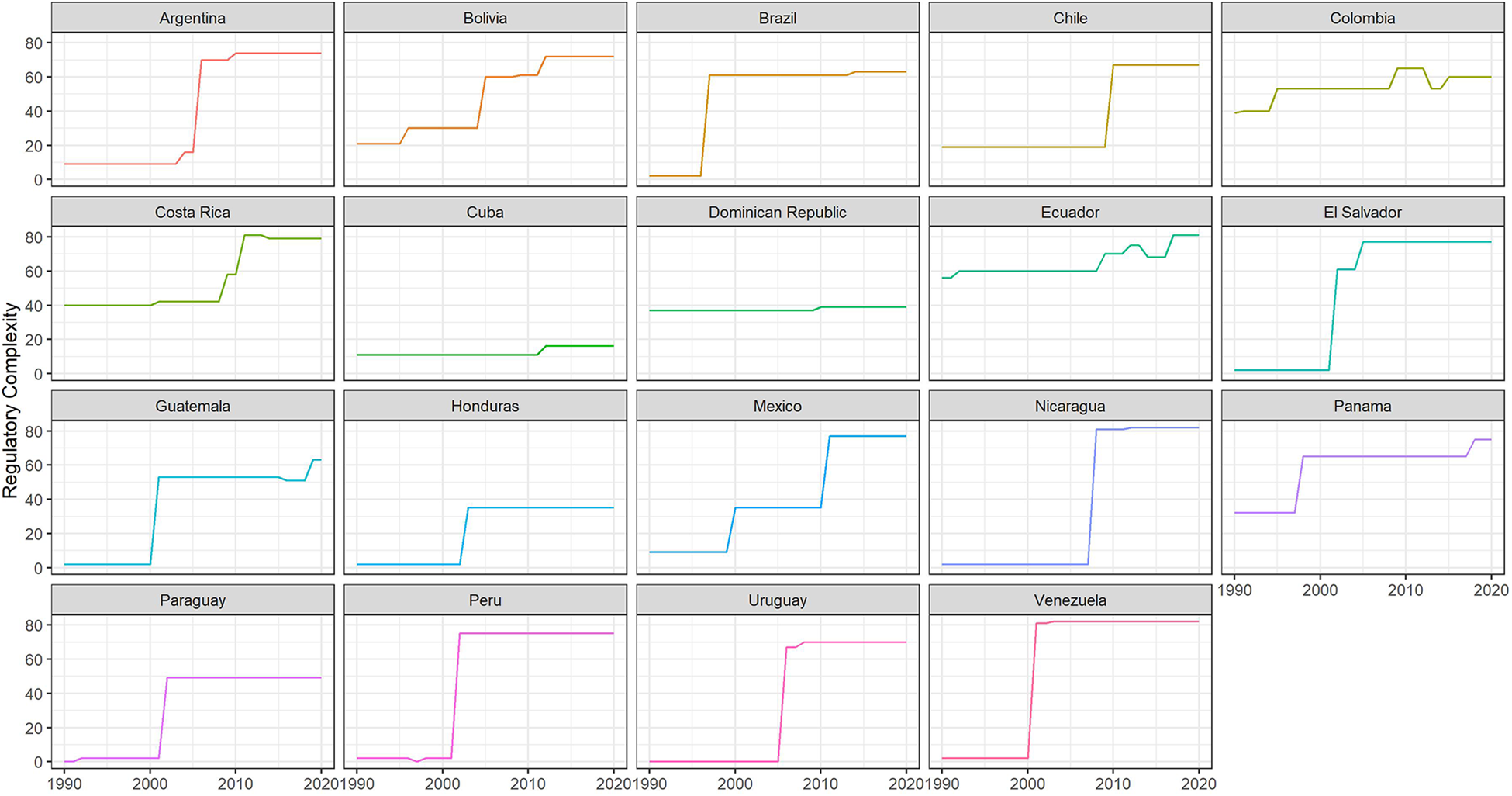
Regulatory complexity of asylum policies across Latin America, 1990–2020.
Figure 3 shows a clear process of increased regulatory complexity over the last 31 years, with a steep rise in the 2000s. Over the same period, those same policies have also become gradually more liberal — that is, right-enhancing policies for asylum-seekers and refugees have increased over time, compared to right-denying ones, as shown in Figures 4 and 6. These trends confirm findings from earlier studies about asylum legislation’s increasingly liberal character in Latin America (Acosta and Freier 2015; Cantor, Freier, and Gauci 2015; Ceriani and Freier 2015), with all countries adopting new, or reforming existing, legislation on asylum, with a few exceptions discussed below. This trend toward liberalization contrasts clearly with trends toward more restrictiveness identified by the IMPALA and Rayp, Ruyssen, and Standaert’s (2017) databases, while confirming trends identified by DEMIG and IMPIC for OECD countries and the DRWAP index on asylum policies across the developing world (Africa, Middle East, and South Asia) (Beine et al. 2015, 2016; de Haas, Natter, and Vezzoli 2018; Helbling and Kalkum 2018; Blair, Grossman, and Weinstein 2020).
There is other evidence to support the thesis that the increase in regulatory complexity mirrors a process of liberalization. For instance, by observing trends in Figure 5, we can clearly see how most Latin American countries did not have a developed legislative framework for refugee protection in the early 1990s, with few exceptions, such as Colombia, Ecuador, and Costa Rica. Since then, all countries in Latin America, except Cuba and the Dominican Republic, have adopted new legislation on asylum. However, as trends also clearly show, only Bolivia, Colombia, Ecuador, and Mexico seem to have substantially reformed their legislation over time, while in the rest of the region, once adopted, legislation was mostly left untouched. This one-off adoption of asylum policies suggests that Latin American countries in the first decade of the 2000s mostly adopted new frameworks for refugee protection that did not exist earlier, rather than reforming existing legislation. We can, thus, infer that for the period under study, regulatory complexity and liberalization have clearly overlapped, as most countries adopted asylum legislation for the first time. However, it is important to note that given that now, almost all Latin American countries have developed legal frameworks on asylum, any further changes in regulatory complexity are not likely to be associated automatically with liberalization in Latin America, if not elsewhere.
An important additional question to ask, given the results in these trends, is whether this increase in the liberal character of asylum policies happened uniformly or differentially across the region. As Figure 7 shows, there clearly is a gap concerning the liberal character of asylum policies between countries in South America and those in Central America and Mexico. South American countries seem to tend toward more regulatory complexity, and hence liberalization, than do Central American countries and Mexico. Notwithstanding the fact that Cuba represents a clear outlier, in 2020, out of the five countries with the lowest score in regulatory complexity, four were outside South America. The analysis of the determinants of this difference between subregions is clearly of interest, although beyond this article’s scope.
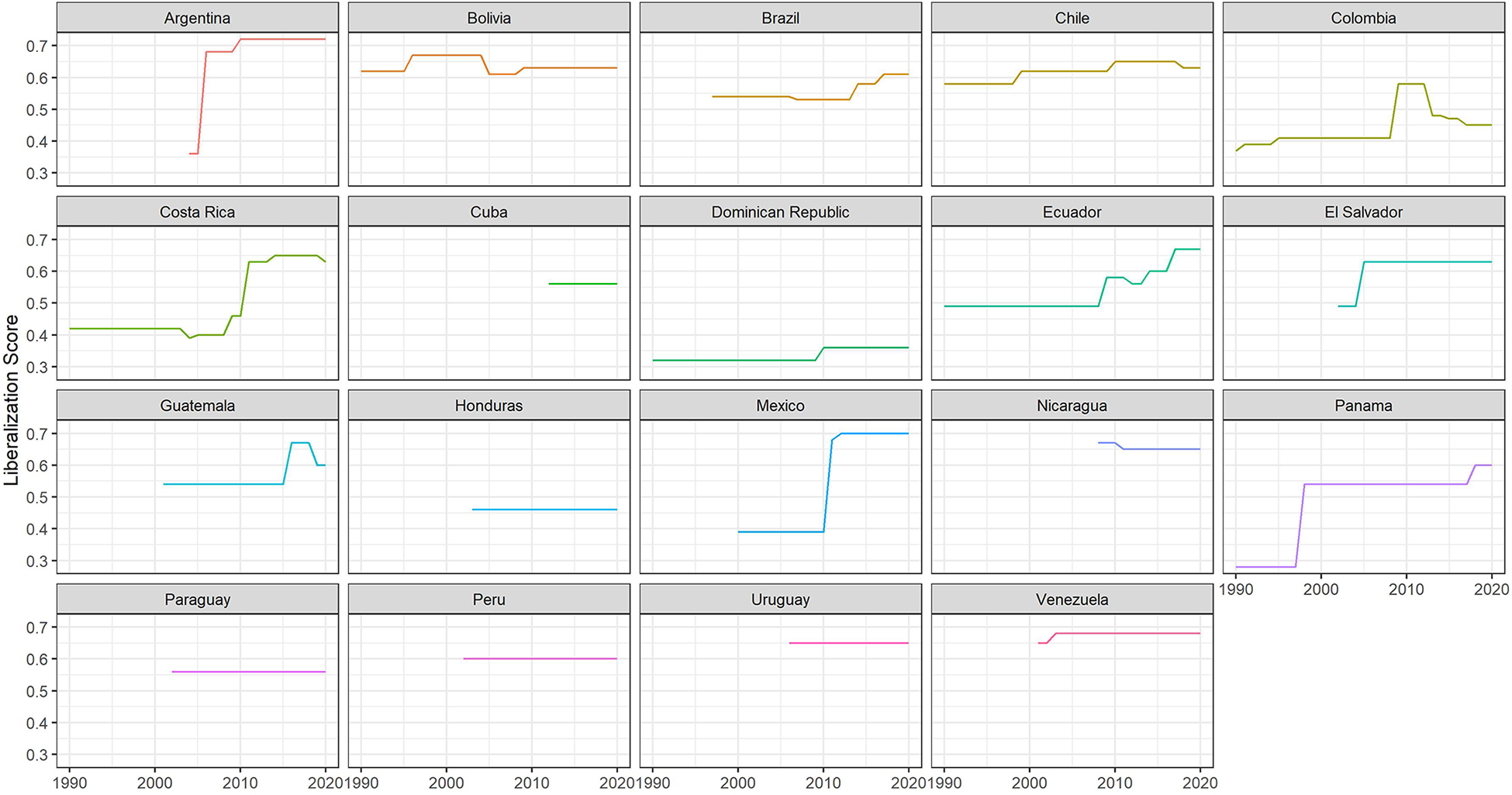
Liberalization in asylum policies across Latin America, 1990–2020.
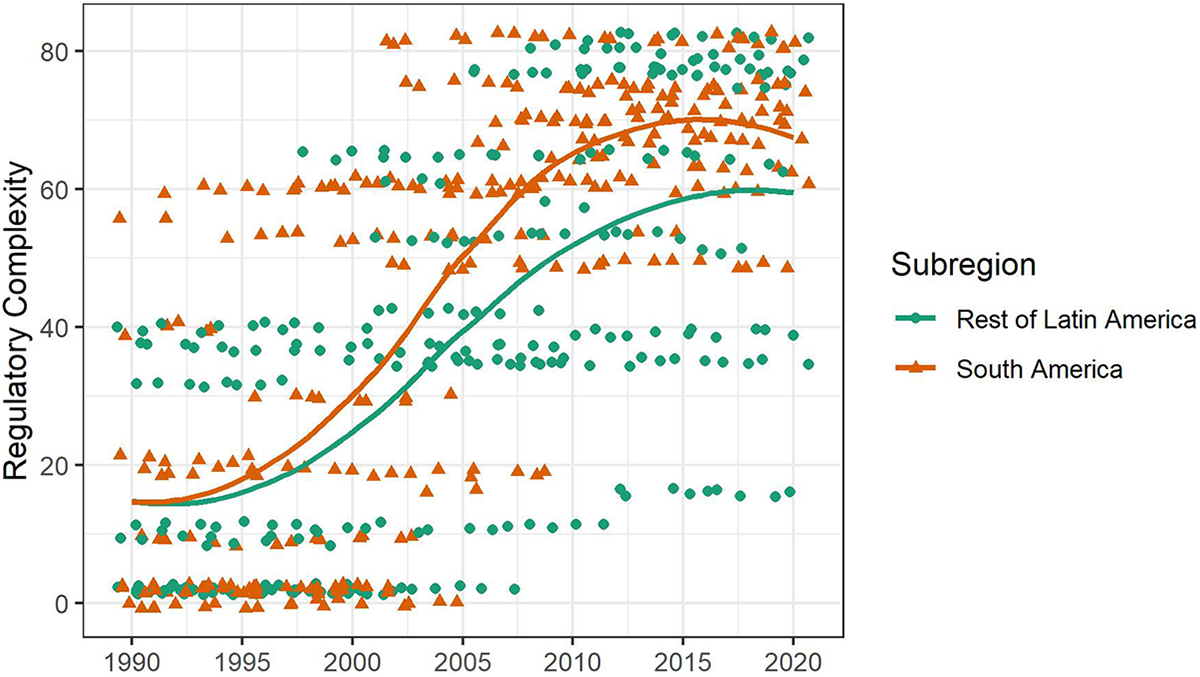
Regulatory complexity, Latin America by subregion.
Furthermore, looking at how different indicators have developed over time can provide additional evidence of how these two processes of increased regulatory complexity and liberalization overlap. For instance, Figure 8 shows the gradual incorporation between 1990 and 2020 of the right to asylum into the constitutions of all Latin American countries, apart from those of the southern cone (Argentina, Chile, and Uruguay), whereas Figure 9 shows the steady incorporation of the Cartagena refugee definition into most legislation in the region, with a few telling exceptions: Cuba, the Dominican Republic, Panama, and Venezuela. The fact that only these four countries did not include the generous regional refugee definition reveals much about the alleged process of liberalization in the region: apart from Cuba, which has historically produced many more refugees than it has received, the other three countries all have recent histories of immigration, the Dominican Republic from neighboring Haiti and Panama and Venezuela from Colombia (Gottwald 2004; UNHCR 2008, 2015; Young 2017). Even if these flows of migrants and refugees are relatively low as a percentage of total population, it is still not surprising that anti-immigrant sentiment in these countries, as shown by Meseguer and Kemmerling (2018), is among the highest in the region.
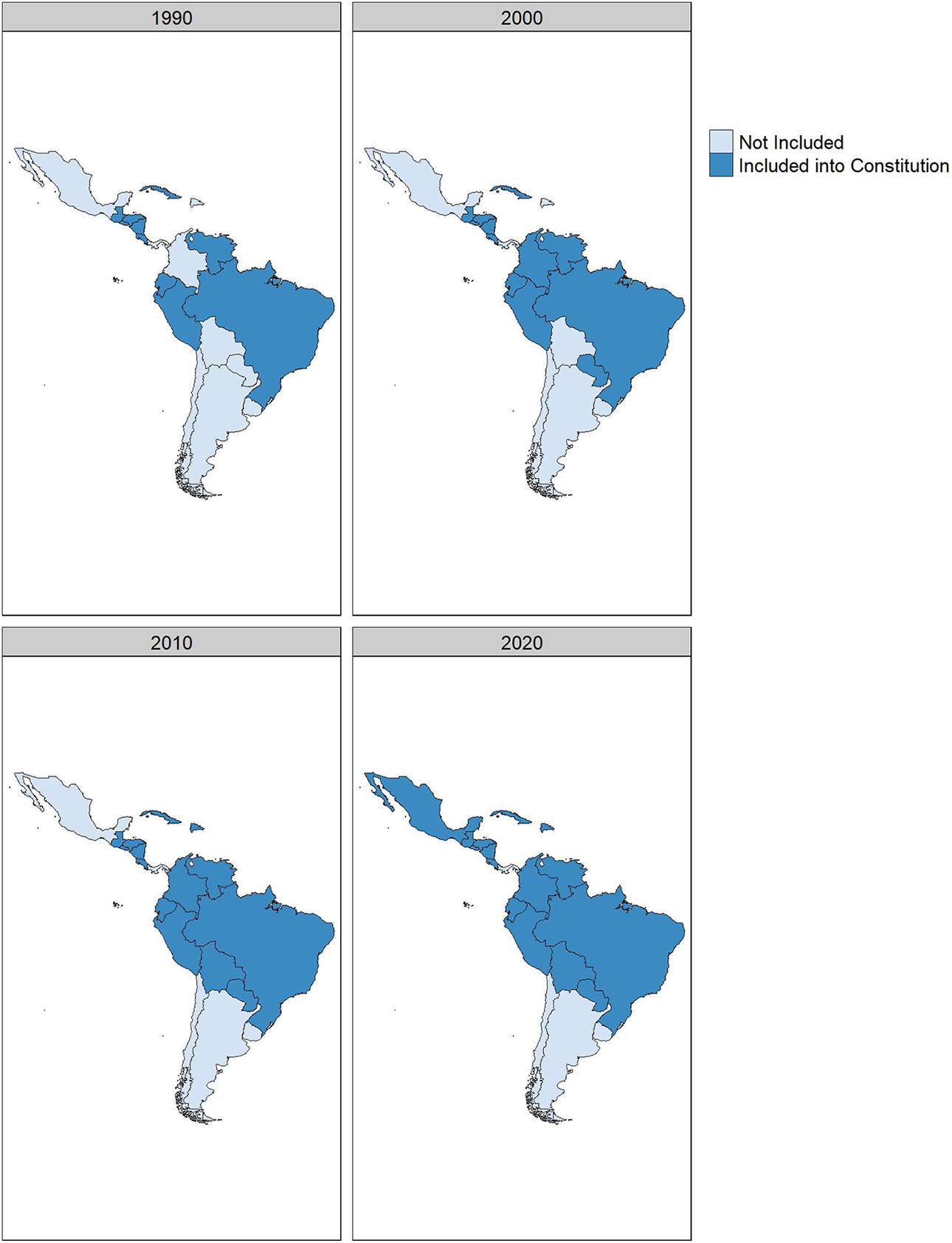
Asylum into constitution.
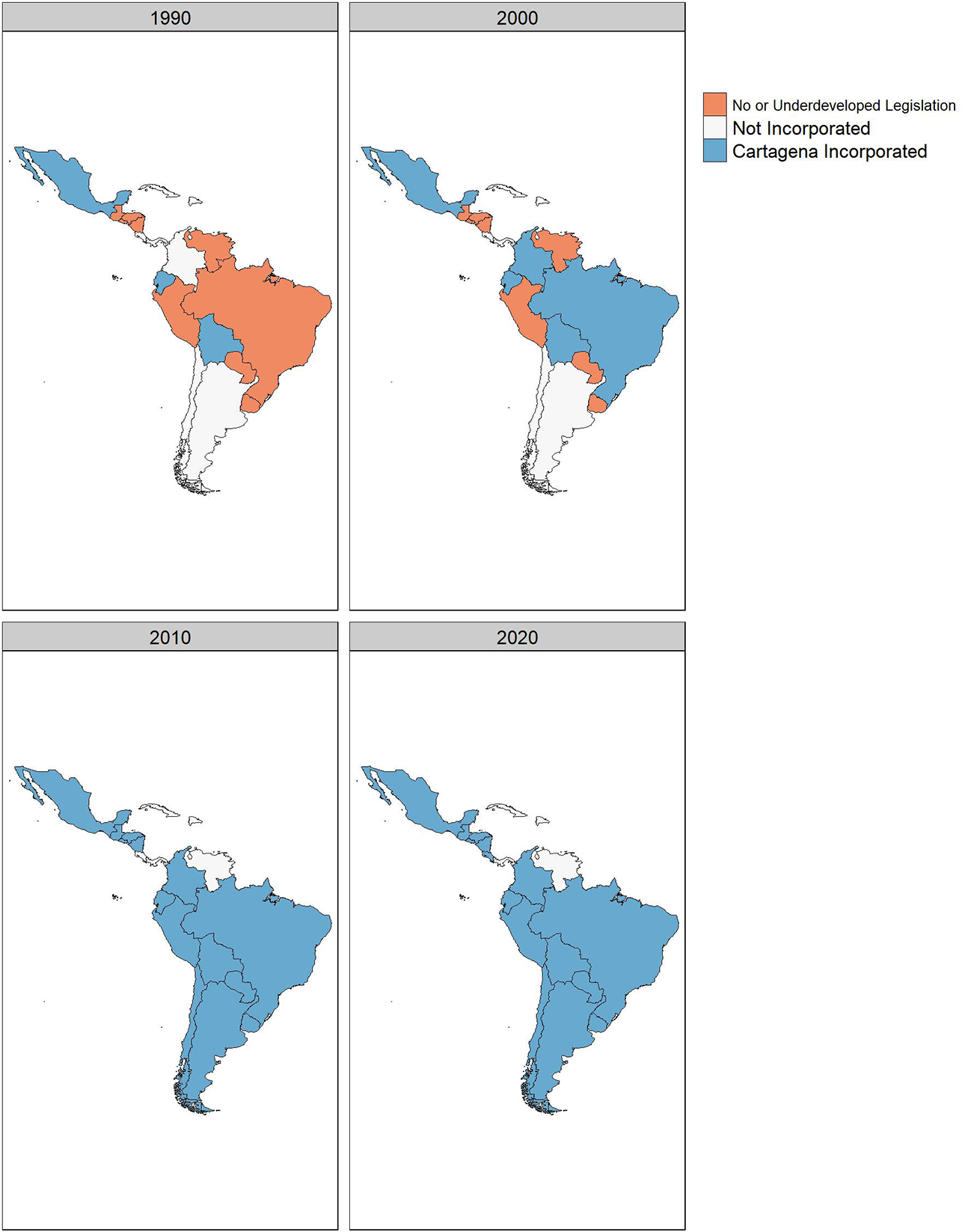
Cartagena refugee definition.
In the Online Appendix, I present a series of maps for 42 of the 57 policy measures included in the legislation of the Latin American countries that I measure through the APLA Database. These maps track the incorporation of the most relevant policy measures over time, such as the recognition of environmental refugees, the existence of special procedures for the mass influx of refugees, and the presence of a subsidiary protection status.
As Figure 5 shows, all Latin American countries in the database incorporated new policy measures on asylum between 1990 and 2020. However, as mentioned earlier, the development of legislation in the 1990s, as well the number of times their policies changed, varies substantially. Already in 1990, countries such as Ecuador, Colombia, and Costa Rica had substantial legislation on asylum, regardless of its actual application. On the other hand, in the same year, countries such as Brazil, El Salvador, Paraguay, Uruguay, and Venezuela did not have any legislative framework on asylum. As of 2020, though, most countries had a regulatory complexity score higher than 60, although only three countries scored higher than 80: Ecuador, Nicaragua, and Venezuela.
Ecuador’s score is not surprising, as the country had a developed framework for refugee protection already in 1990 and was welcoming of refugees, especially Colombians, during the 2000s, hosting Latin America’s largest recognized refugee community. Despite a small hiccup in 2012, when the then-president approved Decree 1182, which sought to remove the Cartagena refugee definition from its legislation (a measure overturned by the Constitutional Court in 2014), Ecuador has passed very open migration and asylum policies in recent years, 17 concluding in 2017 with the approval of the “Organic Law of Human Mobility,” an all-encompassing law with very generous provisions for asylum-seekers and refugees. This law includes, among other things, the right to refuge for people fleeing environmental disaster, recognition of applicants who might have already been recognized as refugees in a third country, and the availability of free legal advice during the asylum process. 18
The liberal character of Ecuador’s migration and asylum policies has drawn interest from scholars of the region, who have variously explained that liberal character through reference to the left-wing ideology of the country’s governments, diaspora politics, and open hostility toward the Colombian government deemed responsible for violence and displacement in the border area (Gottwald 2004; Walcott 2008; Margheritis 2011; SJR 2016; Freier and Holloway 2019). These observations suggest that the factors mentioned above, especially government ideology and foreign policy, played a key role in the adoption of asylum policies in Ecuador.
The stories behind the development of asylum legislation in Nicaragua and Venezuela seem very different. The former passed its first complete asylum law only in 2008 (Law 655), adopting a very high standard of protection and wording closely resembling official UNHCR guidelines. These very high protection standards and the legislation’s wording suggest strong UNHCR input in the development of the legislation, which guarantees not only free legal assistance to asylum-seekers but also priority to vulnerable individuals, while also explicitly recognizing refugee status for persecution due to gender. 19 Although the actual application of such legislation is beyond this article’s scope, these generous provisions seem to suggest that such policies were adopted more with a symbolic intent than an intent to implement.
Venezuela, by contrast, passed its first asylum law in 2001 (Official Gazette Number 37.296 of 03.10.2001) and implementation rules two years later (Decree 2.491 of 2003). The Venezuelan law and its rules address many of the issues common in asylum legislation across the region, especially progressive ones such as recognition of refugee status due to gender persecution, established procedures for mass influxes, and special rights for child asylum seekers. 20 On the other hand, Venezuela is the one of the few Latin American countries that have not incorporated the Cartagena refugee definition within its legislation, thus precluding refugee recognition for most people fleeing neighboring Colombia, who were not individually, but often collectively, persecuted or who fled widespread violence and human rights violations (Gottwald 2004, 2016; UNHCR 2008).
At the very bottom of the trends on regulatory complexity in Figure 5 is Cuba, with a score of 16 out of 100. In Cuba’s one-party regime, there is currently no law dedicated to asylum and very few mentions of refugees within different pieces of legislation. Cuba is the only Latin American country that, as of 2020, had not ratified the 1951 Geneva Convention on asylum,
21
yet the country also has a different understanding of what a refugee is than that of any other Latin American country, with reference to neither the Geneva nor the Cartagena refugee definitions. On article 80 of its Migration law (Decree 302 of 2012), Cuba’s refugee definition reads: Will be considered refugees those foreigners or stateless people whose entry will be authorized and who had to emigrate due to a social calamity, war, environmental disaster, or similar event. They will temporarily reside in Cuba while conditions in their country of origin return to normality. (Author’s own translation)
Nonetheless, this liberalization index also has clear limitations that should be recognized when using it. First, being a proportional measure, it inevitably considers all policies equally, which they are not. For example, Venezuela has a high score even though it has not adopted the Cartagena refugee definition, which severely limits the likelihood of refugee recognition in the country. Hence, a thorough review of the policy measures which compose a country’s asylum policy should be undertaken before making any decision about case study selection based on the liberalization score alone. I avoid using any weighting scheme to address this issue, however, as any weight attached to a certain policy measure would be arbitrary, and discourage the use of this index as a dependent variable in regression models. Second, liberalization can be defined differently, and the threshold of policy measures for inclusion in the index (nine, in this case) can be set at different levels. Contextual understanding of the case studies and clarity on the assumptions of the research being conducted are, thus, necessary before conducting further studies using this index.
As mentioned above, the liberalization score can help in the selection of case studies for further analysis. For instance, while Argentinean and Mexican legislation received the highest scores in 2020, the Dominican Republic achieved the lowest. In the case of Argentina, the country passed its first complete Refugee Law in 2006, the first since the Decree 464 of 1985 that created the committee in charge of the recognition of refugees, but without clear procedures about the process and applicants’ rights. The new 2006 legislation, however, includes such progressive rights as recognition of the declarative character of the refugee condition, acceptance of applications from refugees who had already been recognized in a third country but were not safe there, and easy recognition of asylum applicants’ academic and professional qualifications. 22 By contrast, Mexico reformed its asylum law between 2011 and 2012, which currently includes policy measures to ensure the safety of applicants vis-à-vis their origin country, grants asylum based on persecution due to gender, and gives priority to especially vulnerable people in the asylum recognition process. 23
At the bottom of the index on liberalization is the Dominican Republic, which updated its legislation on migration, including asylum, in 2004 (Law 285) but passed the rules regulating it only in 2011 (Decree 632). Still, the Dominican Republic’s legislation is ambiguous and offers little in terms of clear rights to asylum-seekers and refugees. The lack of a developed legislative framework for refugee protection is likely due to the historical inflow of Haitians into the country, which the Dominican Republic has always sought emphatically to disincentivize, going so far as to strip Dominicans of Haitian origin of their citizenship (UNHCR 2015; Young 2017).
In addition to these analyses based on trends of regulatory complexity and liberalization, the APLA Database allows scholars to monitor the development over time of specific policy measures. For instance, Figure 10 shows how Mexico, Panama, and Peru had included at some point in their legislation some measures requiring applicants to apply for asylum in any third country of transit, before being able to apply for it in their own countries. As of 2020, this measure, which closely resembles the principles from the Dublin Regulation, remained in only Peru’s legislation. Further research should investigate which processes led policy-makers to adopt such a measure in the first place and eventually to drop it in the case of Mexico and Panama.
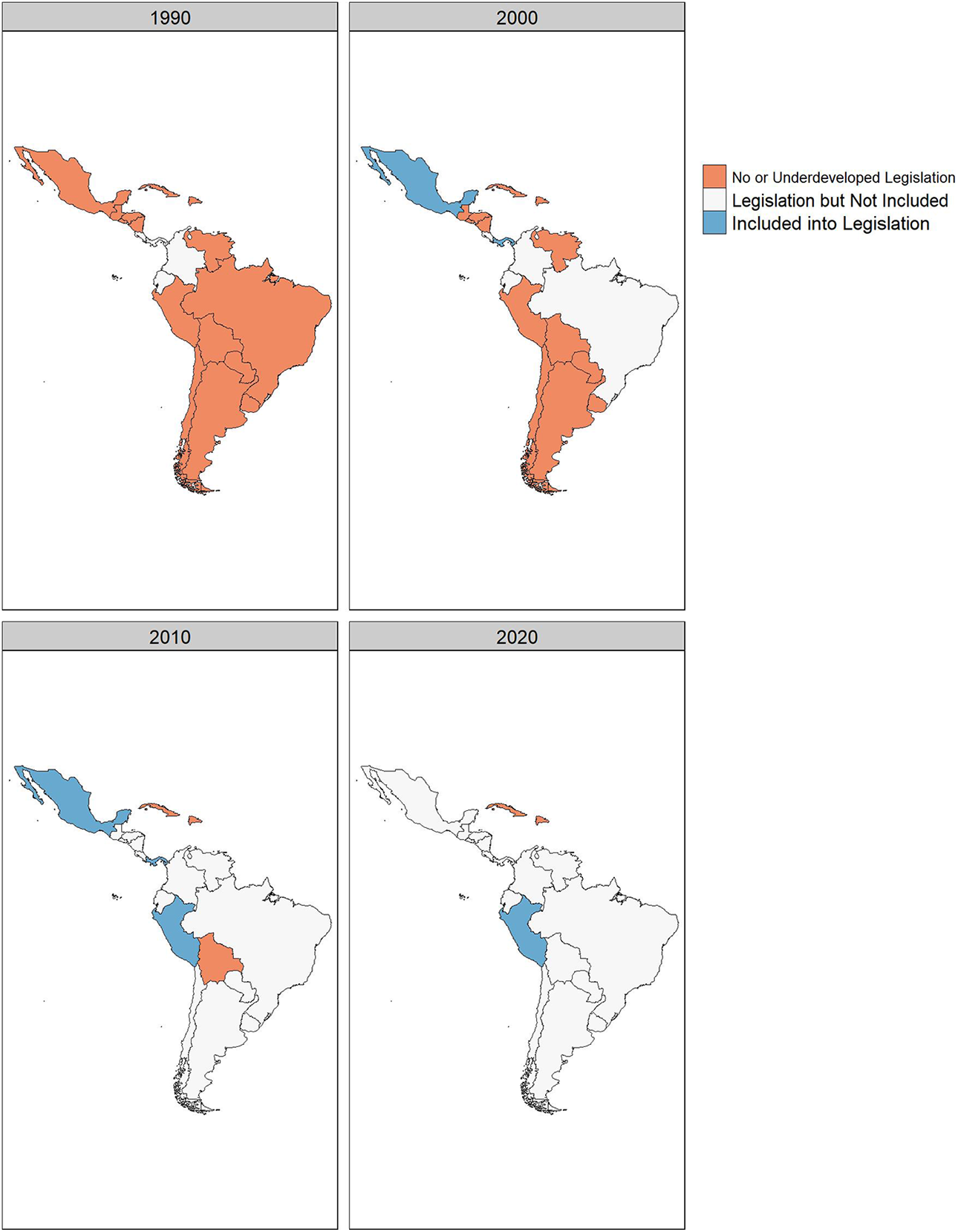
First country of asylum principle.
Similarly, as reported in Figure 11, some countries decided to offer free legal assistance to asylum applicants. Was this process similar in Nicaragua and in Brazil? What might explain the incorporation of such policy measures in these very different countries? The ability to comparatively analyze — and, thus, to develop research questions — on the adoption of policy measures in various countries in Latin America is one of the APLA Database’s advantages.
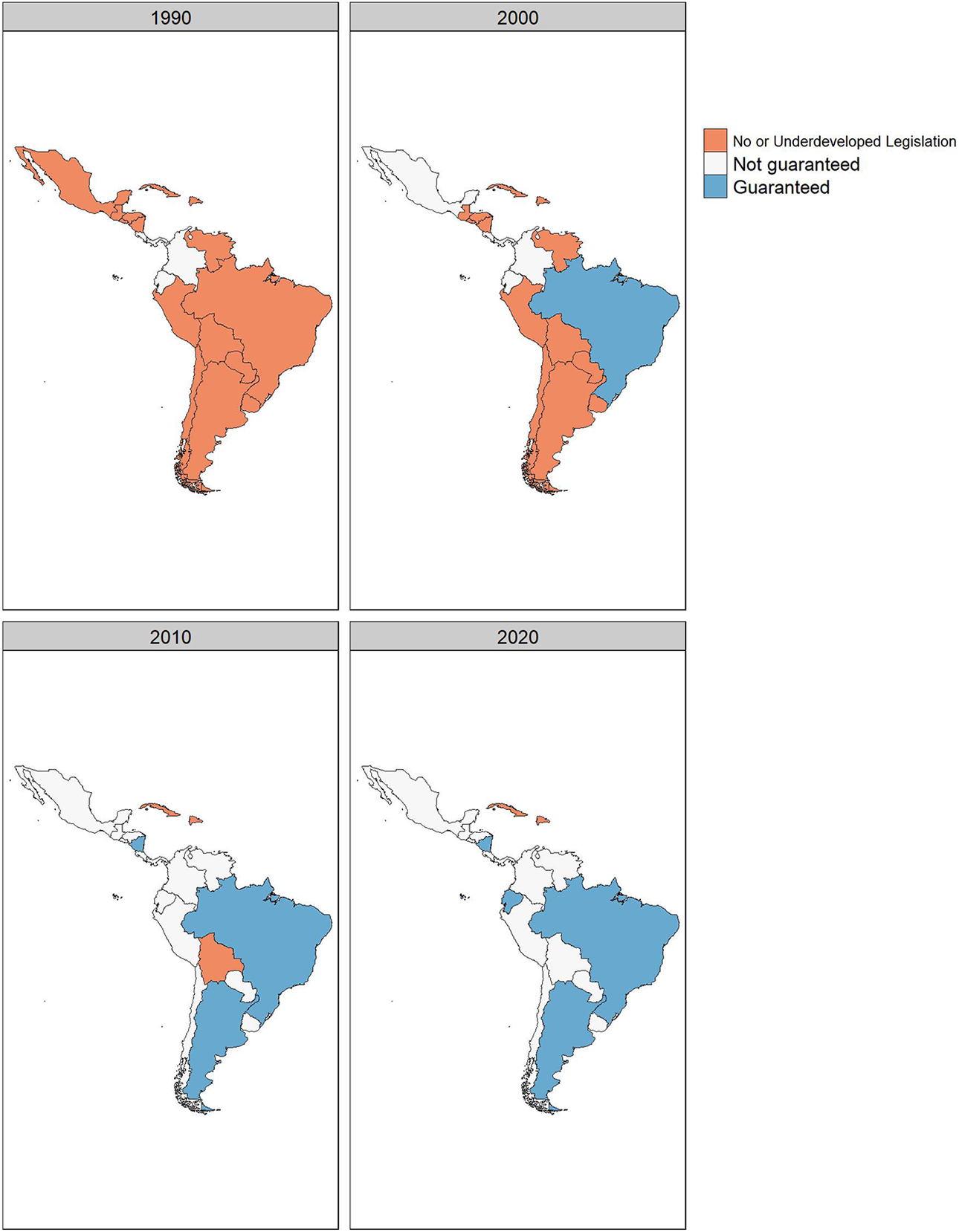
Free legal assistance.
Further research can also analyze the development of both overall trends and individual policy measures and seek to explain variation in policy measures across Latin American countries. While regulatory complexity can be used as a dependent variable in regression models, the use of individual policy measures included in the APLA Database is likely to be limited to two research areas: the selection of case studies and comparative analysis of the incorporation of specific policy measures in legislation across various countries over time.
Conclusion
Most scholarship on asylum in Latin America suggests that a liberal turn in asylum policies has taken place in the last decade (Acosta and Freier 2015; Cantor, Freier, and Gauci 2015; Fernandez-Rodriguez, Freier, and Hammoud-Gallego 2020; Freier and Gauci 2020). However, no study to date has sought to empirically substantiate this claim. To fill this gap, I developed APLA, a methodology to study asylum policies in Latin America, which complements the existing IMPALA methodology. The APLA Dataset seeks to address two main issues that IMPALA and most migration indices face: their “OECD bias” (i.e., the fact that most indicators are developed through an analysis of policy measures that exist mostly within OECD countries) and the lack of a clear aggregation strategy to conceptualize restrictiveness, liberalization, or regulatory complexity.
Additionally, I have applied this new codification methodology to the legislation of 19 Latin American countries for a total of 31 years, using 65 different indicators on policy measures, which I then aggregated to summarize trends in regulatory complexity and liberalization over time and to show trends in selected policy measures. This research confirms findings from the existing literature about the recent liberalization of asylum policies in Latin America (Cantor, Freier, and Gauci 2015; Ceriani and Freier 2015; Fernandez-Rodriguez, Freier, and Hammoud-Gallego 2020) and produces a database and methodological approach that scholars can use to study the evolution of asylum policies in Latin America and conduct similar research for other world regions. In doing so, such work can help highlight the geographic reach and limits of the trends, identified by scholarship on OECD countries (de Haas, Natter, and Vezzoli 2018; Helbling and Kalkum 2018), toward more restrictive policies.
Empirical findings from APLA also show how trends in regulatory complexity and liberalization have so far overlapped in the region. These trends, however, do not seem to have been homogeneous, with clear outliers, such as Cuba and the Dominican Republic, with low regulatory complexity scores or Venezuela and Panama being among the few countries that did not include the regional refugee definition in their laws. Similarly, my finding that some countries, such as Mexico and Peru, included a “first country of asylum” principle in their legislation raises many questions regarding the policy-making process in Latin America and the role of learning from policies abroad, such as the EU’s Dublin Regulation.
Additionally, the newly codified APLA Database allows researchers to formulate and test new hypotheses on the development of asylum policies in Latin America that until now, could only be researched through in-depth case studies or process-tracing historical research. APLA data can be used as well by policy-makers and practitioners as a reference database to investigate past policies, understand the development of asylum policy in the region, and compare the actual legislative status-quo across countries (Scipioni and Urso 2017). This codification of Latin American asylum policies for a 31-year time span, thus, widens the scope of future studies on asylum policies beyond indices mostly focused on OECD countries (Bjerre et al. 2015; Goodman 2015; Scipioni and Urso 2017). The APLA Database also facilitates work on the processes that led to the adoption of liberal policies in Latin America, as well as their actual implementation, yet the research presented in this article also has consequences for the study of asylum beyond Latin America. To start, the new codified data constitute a public good for the wider community of researchers and policy-makers, who can develop and further test hypotheses concerning asylum policy in a developing global region for which until now, no systematic data on asylum were available. Also, a similar approach to APLA might be developed to analyze economic migration policy as well.
Additionally, the APLA approach shows that there are many regional specificities in asylum legislation. These regional specificities likely reflect the fact that neighboring countries face similar challenges and, thus, seek to learn from one another how to deal with forced displacement. Future studies will need to confirm the possible mechanisms behind this process of policy diffusion (Braun and Gilardi 2006; Meseguer and Gilardi 2009; Gilardi and Wasserfallen 2019). Further research also might seek to emulate the APLA approach by producing policy indicators that are regionally specific to, for example, the Middle East or East Africa to compare policy responses to refugee inflows over time across regions. Furthermore, the new methodological approach associated with APLA provides evidence that regardless of the lack of reliable data to study refugee flows across countries in the developing world, scholars can still pursue highly informative in-depth cross-country studies of asylum policies. Such an approach will allow researchers to better understand what makes up individual asylum policies, to study which factors might influence their evolution, and to provide a useful tool for researchers and practitioners, given the number of indicators included in this new methodology and the possible combinations that this highly disaggregated database allows.
Nonetheless, this methodological approach has some limitations. The APLA Database, like most migration indices, focuses on de jure, not de facto, policies. According to Gest et al. (2014), the blending of migration policies and asylum “on paper” with their actual application “in practice” in much of the existing research makes many migration indices flawed. This blending of de jure and de facto is indeed a crucial difference. As an example, the former director of the Division of International Protection at UNHCR, Volker Türk, himself recognized that while many Latin American countries have developed generous regional policies to protect refugees, too often, Latin American governments do not implement those policies as laid out in the law (UNHCR 2010, 2013). It must be recognized, then, that the analysis of legal frameworks cannot provide the full picture in which researchers might be interested and that further in-depth case studies are needed to confirm the rationale behind these policies’ adoption and eventual applications. Still, having a good understanding of the policy measures that compose legislation can help policy-makers, researchers, and practitioners assess the implementation of protection policies in different countries and even support the former in holding governments accountable for their incomplete application of the law, thus benefiting the people who need it the most: refugees themselves.
Supplemental Material
Supplemental Material, sj-docx-1-mrx-10.1177_01979183211026202 - A Liberal Region in a World of Closed Borders? The Liberalization of Asylum Policies in Latin America, 1990–2020
Supplemental Material, sj-docx-1-mrx-10.1177_01979183211026202 for A Liberal Region in a World of Closed Borders? The Liberalization of Asylum Policies in Latin America, 1990–2020 by Omar Hammoud-Gallego in International Migration Review
Supplemental Material
Supplemental Material, sj-pdf-1-mrx-10.1177_01979183211026202 - A Liberal Region in a World of Closed Borders? The Liberalization of Asylum Policies in Latin America, 1990–2020
Supplemental Material, sj-pdf-1-mrx-10.1177_01979183211026202 for A Liberal Region in a World of Closed Borders? The Liberalization of Asylum Policies in Latin America, 1990–2020 by Omar Hammoud-Gallego in International Migration Review
Supplemental Material
Supplemental Material, sj-pdf-2-mrx-10.1177_01979183211026202 - A Liberal Region in a World of Closed Borders? The Liberalization of Asylum Policies in Latin America, 1990–2020
Supplemental Material, sj-pdf-2-mrx-10.1177_01979183211026202 for A Liberal Region in a World of Closed Borders? The Liberalization of Asylum Policies in Latin America, 1990–2020 by Omar Hammoud-Gallego in International Migration Review
Footnotes
Acknowledgments
The author would like to thank Covadonga Meseguer, Eiko Thielemann, Feline Freier, Maurice Dunaiski, Pierre Marion, and Edouard Legoupil as well as the editor and three anonymous reviewers for their helpful comments that considerably improved this article.
Declaration of Conflicting Interests
The author(s) declared no potential conflicts of interest with respect to the research, authorship, and/or publication of this article.
Funding
The author(s) disclosed receipt of the following financial support for the research, authorship, and/or publication of this article: This study was supported by Economic and Social Research Council (grant ID: 1927184).

Supplemental Material
Supplemental material for this article is available online.
Notes
References
Supplementary Material
Please find the following supplemental material available below.
For Open Access articles published under a Creative Commons License, all supplemental material carries the same license as the article it is associated with.
For non-Open Access articles published, all supplemental material carries a non-exclusive license, and permission requests for re-use of supplemental material or any part of supplemental material shall be sent directly to the copyright owner as specified in the copyright notice associated with the article.
