




Abstract
Lack of access to modern electrification limits educational progress, highlighting the critical role of energy interventions in advancing educational outcomes, particularly in developing countries. Despite increasing interest in this topic, the causal effects of energy interventions on educational outcomes in developing countries remain largely inconclusive. This paper consolidates existing evidence by conducting a meta-analysis of 33 studies using robust Bayesian model averaging methods, synthesizing 301 effect sizes. We evaluate the impact of modern energy interventions—including rural household electrification (RHE) and solar electrification—on nine distinct educational outcomes. Our findings indicate that these interventions substantially improve educational outcomes, particularly for children, with an average increase of 15.4 percentage points in key metrics such as educational attainment, school enrolment, and daily study hours. Specifically, RHE increases children’s daily study hours by 55 minutes and enhances lifetime earnings potential through additional schooling years, while solar electrification yields a 42-minute increase in study hours. However, effects on adult literacy and learning outcomes are weaker, suggesting that energy access must be complemented by targeted educational interventions. Heterogeneity in effect sizes underscores the importance of contextual factors, such as geography and demographics. Importantly, we detect no significant publication bias, and Hamiltonian Markov Chain meta-regressions reveal that household-level experimental designs yield more reliable estimates. These results highlight the transformative role of modern energy infrastructure in bridging educational gaps and fostering sustainable development. Policymakers are encouraged to prioritize investments in rural electrification and integrate energy access with broader educational and economic strategies, such as pairing electrification with enrolment and adult literacy programs to maximize impact.
1. Introduction
Modern energy access, characterized by the availability of reliable, affordable, and clean energy services, remains a critical challenge in many developing countries (Bazilian et al., 2012; Groh, Pachauri, and Rao, 2016; Mastrucci et al., 2019; Olang, Esteban, and Gasparatos, 2018). Inadequate access to electricity and continued reliance on rudimentary energy sources constrain households and communities, leading to adverse effects across multiple dimensions, including health, income, time allocation, labor productivity, and educational outcomes (Adom et al., 2021; Aigheyisi, 2020; Garba and Bellingham, 2021; Longe, 2021; Nguyen and Su, 2021; Njiru and Letema, 2018; Pereira et al., 2011; Sedai et al., 2021). These impacts are particularly pronounced in rural areas, where energy deprivation disproportionately affects vulnerable populations. To address this, many governments have implemented energy policies focused on rural electrification and expanding access to modern energy services. Consequently, scholarly interest in evaluating the impacts of these energy interventions on rural development outcomes has surged, underscoring the importance of modern energy access as a catalyst for sustainable development.
The predominant discourse highlights the positive effects of electrification on economic growth, income generation, and improvements in education and health outcomes within developing regions (Banerjee, Mishra, and Maruta, 2021; Irwin, Hoxha, and Grépin, 2020; Matinga and Annegarn, 2013). However, the magnitude and scope of these benefits vary considerably across different communities, largely due to their unique cultural, social, historical, political, and economic contexts. This variability underscores the importance of considering contextual factors when evaluating the benefits of modern energy interventions. For instance, Lee, Miguel, and Wolfram (2020) argue that access to modern energy alone is insufficient to mitigate welfare deprivations without the integration of complementary inputs. Consequently, the microeconomic effects of modern energy access remain largely inconclusive, particularly concerning educational outcomes in developing countries.
These studies report the benefits of rural household electrification (RHE) or rural household grid electrification on literacy rates and learning outcomes for rural populations, particularly women and girls in Ghana, India, and Bhutan (Adamba, 2017; Kanagawa and Nakata, 2008; Kumar and Rauniyar, 2018). However Njoh et al. (2016), found an insignificant effect of RHE on literacy levels, especially for women in Africa. Furthermore, RHE has been shown to increase children’s test scores and study hours in countries such as India, Rwanda, Kenya, and Bhutan (Aguirre, 2017; Bensch, Kluve, and Peters, 2011; Choudhuri and Desai, 2021; Karumba and Muchapondwa, 2017; Khandker, Barnes, and Samad, 2012; Khandker et al., 2014; Kumar and Rauniyar, 2018; Lenz et al., 2017). In contrast, other studies reported insignificant or even negative impacts of RHE on study hours in India, Tanzania, and Rwanda (Bensch, Kluve, and Peters, 2011; Choudhuri and Desai, 2021; Groth, 2019).
Moreover, studies by Khandker, Barnes, and Samad (2013), Khandker et al. (2014), Saing (2017), and Banerjee, Mishra, and Maruta (2021) showed significant positive effects of RHE on school enrolment in India, Cambodia, Vietnam, and across the Global South, with heterogeneous gender effects. Similarly Njoh et al. (2016) and Kulkarni and Barnes (2017) found only marginal positive effects for girls in Africa and Peru, while Dostie and Jayaraman (2006) reported that RHE significantly discourages school enrolment for boys in India. Additionally Banerjee, Mishra, and Maruta (2021), Kumar and Rauniyar (2018), and Lipscomb, Mobarak, and Barham (2013), recorded a significant positive impact of RHE on the educational attainment of children in developing countries. These authors have also documented a significant positive influence of RHE on school attendance and educational attainment for both boys and girls in rural India, Ghana, Bhutan, Brazil, Cambodia, Bangladesh, Vietnam, and Colombia (Acheampong, Erdiaw-Kwasie, and Abunyewah, 2021; da Silveira Bezerra et al., 2017; Han, Kimura, and Sandu, 2020; Khandker, Barnes, and Samad, 2012, 2013; Khandker et al., 2014; Lipscomb, Mobarak, and Barham, 2013; Litzow, Pattanayak, and Thinley, 2019; Phoumin and Kimura, 2019; Ribeiro, Souza, and Carraro, 2021; Saing, 2017; Van de Walle et al., 2015).
Furthermore, while RHE reduces student absenteeism in India, its effect on school attendance is negligible in Rwanda (Ahmad, Mathai, and Parayil, 2014; Lenz et al., 2017). And Choudhuri and Desai (2021), Phoumin and Kimura (2019), and Thomas et al. (2020), found that RHE increases education expenditure in Cambodia and India, although Thomas et al. (2020) recorded an insignificant effect.
The studies investigating the effects of solar electrification—solar photovoltaic (PV) interventions—on educational outcomes are meagre and primarily based on randomized control trials (RCTs). In Bangladesh Kudo, Shonchoy, and Takahashi (2017) found that the impact of solar PV on educational attainment and study hours is inconclusive, with largely insignificant and heterogeneous effects on test scores. Similarly, other RCTs in Uganda, and Rwanda demonstrated that solar PV interventions have a significant and positive impact on children’s study hours at home (Furukawa, 2013; Grimm et al., 2016).
This heterogeneity in these findings poses a significant challenge for development policy. To address this challenge, a meta-analysis of these studies is needed to synthesize their results into a unique effect size that can better inform policy in developing countries (Stanley and Doucouliagos, 2017). Thus, this paper conducts a meta-analysis of the existing literature to answer the following questions: (1) Does modern energy access in terms of grid and off-grid electrification improve educational outcomes in the Global South? (2) What are the sources of the heterogeneity in their effect sizes?
This study contributes to the literature on the educational impact of energy interventions in developing countries. We employ Robust Bayesian Model Averaging (RoBMA) methods to address the primary research question, by integrating prior knowledge from the literature, reflecting central tendencies while adjusting for publication bias. This approach models both the null and alternative hypotheses, accounts for publication bias and heterogeneity, and assigns equal prior probabilities to these models. Notably, this research represents the first application of RoBMA in meta-analysis within the field of economics.
This study concentrates on household grid and off-grid electrification and a broad range of educational outcomes. Previous meta-analyses and systematic reviews have been limited to certain educational outcomes—such as study hours, school enrolment, and educational attainment—which are often aggregated into a single measure of education (Ayana and Degaga, 2022; Mori et al., 2020). 1 Additionally, earlier meta-analyses in this field have conflated household grid and off-grid interventions with studies targeting different units of analysis, such as school electrification (see Ayana and Degaga, 2022; Mejdalani et al., 2018), potentially introducing bias in their results.
In contrast, this study exclusively focuses on developing countries and examines a comprehensive set of educational outcomes: study hours, school enrolment, educational attainment, test scores, learning outcomes, literacy rate, student absenteeism, and school attendance. We also conduct separate meta-analyses of literature that focus specifically on household grid and off-grid interventions. This approach provides a robust, specific, comprehensive, and unique estimate of the educational impact of modern energy access in the Global South.
The findings reveal that modern energy access significantly boosts educational outcomes, particularly for children. RHE stands out as a pivotal factor, increasing study hours by an average of 55 minutes per day, while also improving educational attainment and school enrolment rates. These effects underscore RHE’s potential to enhance intergenerational economic mobility, given the established link between additional schooling and higher lifetime earnings. Solar electrification, though slightly less impactful than grid-based electrification (increasing study hours by 42 minutes daily), remains essential for advancing education in areas with limited grid access.
The meta-regressions highlight key factors driving heterogeneity in the findings. Studies employing experimental designs, such as randomized control trials, and advanced causal inference methods, including instrumental variable regressions with robust identification strategies, yield more reliable and nuanced estimates of RHE’s impact on education. These methodologies effectively capture the local treatment effects and account for contextual variations in culture, socioeconomic conditions, and household characteristics among populations with grid electrification access, offering insights distinct from broader trends in the existing literature.
The remainder of the paper is structured as follows: Section 2 explains the data and methods, including the identification of relevant studies, inclusion and exclusion criteria. Sections 3 discusses the distribution of selected studies and literature beliefs. Section 4 addresses the primary research question, documenting the overall and subgroup impacts of modern energy access on education. Section 5 discusses the Bayesian model averaging method and Hamiltonian Markov Chain algorithms used for the meta-regressions, and their results identifying specific factors driving effect size heterogeneity. Finally, Section 6 concludes with policy implications.
2. Data and Methods
2.1. Identification of Relevant Studies
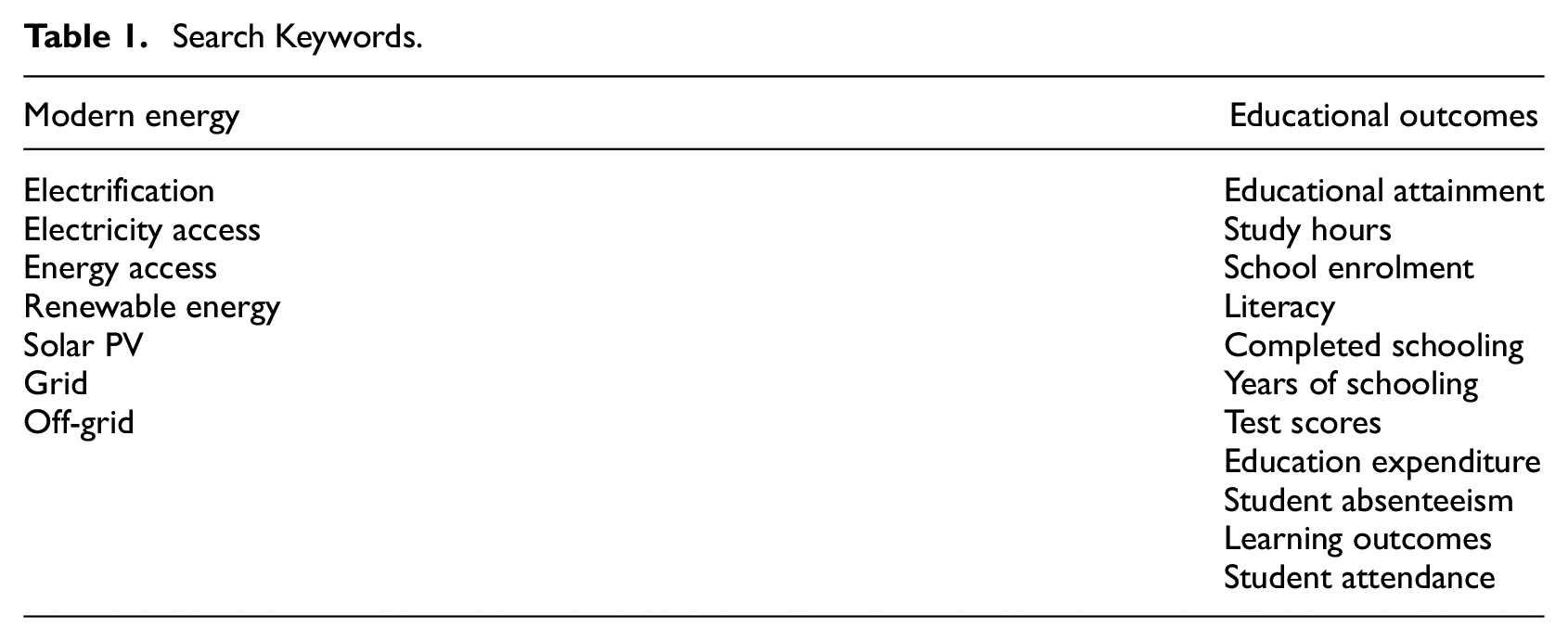
The identification and reporting of the meta-data used in this study were guided by the reporting guidelines of the Meta-Analysis of Economics Research Network (MAER-Net), as outlined by (Havránek et al., 2020). We collected data from a wide range of relevant literature sources (Borenstein et al., 2011; Hawcroft and Milfont, 2010; Pigott, 2012). A systematic, step-by-step approach was followed to combine the search keywords listed in Table 1. High-quality journal databases were used to identify pertinent literature, including Oxford Academic, American Economic Review, ScienceDirect, SAGE, Wiley & Sons, Routledge (Taylor & Francis), Springer, Emerald, and JSTOR (Ayana and Degaga, 2022; Dugoua and Urpelainen, 2014; Qurat-ul Ann and Mirza, 2020). Additional studies were identified through manual cross-referencing (da Silveira Bezerra et al., 2017; Esteban et al., 2018; Groth, 2019; Karumba and Muchapondwa, 2017; Kudo, Shonchoy, and Takahashi, 2017; Stojanovski et al., 2021; Van de Walle et al., 2015). This comprehensive search strategy resulted in a total of
Search Keywords.
2.2. Inclusion/Exclusion Criteria and Data Extraction
Following the methodology outlined by Greenwald, Hedges, and Laine (1996), we conducted a literature review of the
In addition to the initial selection criteria, we applied further exclusion criteria to the selected studies, leading to the exclusion of some studies that were initially considered relevant to the research questions. Consistent with the guidelines proposed by Qurat-ul Ann and Mirza (2020), these exclusion criteria are delineated as follows:
This review process yielded
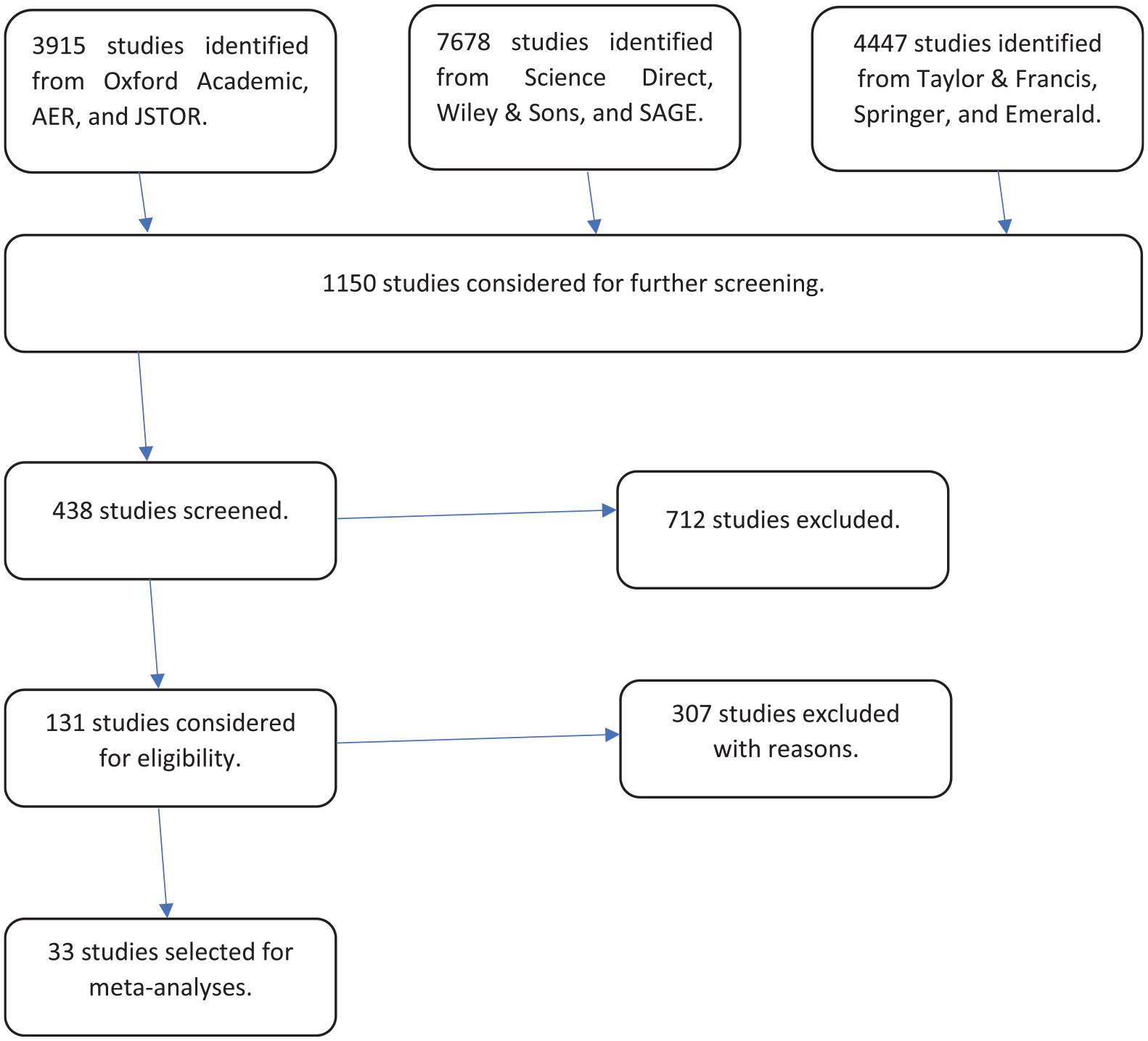
Flow chart of the search strategy and selected studies.
Furthermore, where the standard error is unreported, we approximate the standard errors (Se) using this formula
Number of Effect Sizes from Each Selected Study.
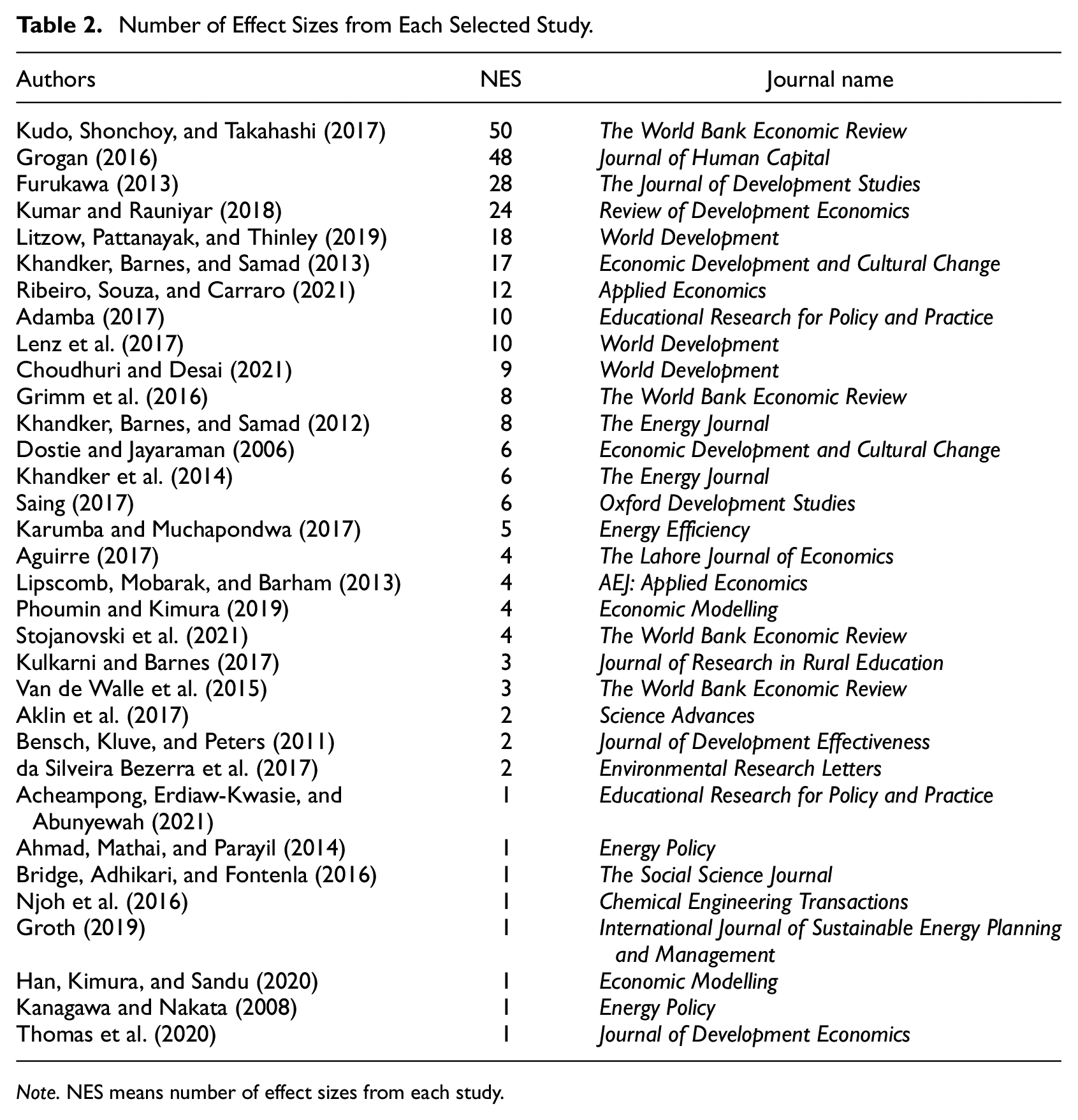
Note. NES means number of effect sizes from each study.
2.3. The RoBMA Model
The RoBMA method encapsulates several publication bias adjustment techniques, including two-sided weight functions (RoBMA-2W) and PET-PEESE (RoBMA-PP). 6 RoBMA-2W assumes equal publication probabilities for marginally significant or insignificant p-values, regardless of effect direction. However, this adjustment may be inadequate if publication bias correlates with small studies exhibiting inflated effect sizes and directionality contrary to theoretical expectations (Mathur and VanderWeele, 2019). In contrast, RoBMA-PP relies solely on PET-PEESE adjustments, which may be insufficient if publication bias primarily affects p-values. To address these limitations, the RoBMA method incorporates both types of publication bias adjustments and extends to one-sided significance selection, accounting for publication bias related to the direction of impact. This approach surpasses similar traditional Frequentists’ publication bias corrections such as the trim-and-fill method (Duval and Tweedie, 2000), PET-PEESE (Stanley and Doucouliagos, 2014), weighted least squares (WLS), and selection models (Copas, 1999; Copas and Li, 1997; Copas and Shi, 2001; Hedges, 1992; Iyengar and Greenhouse, 1988; McShane, Böckenholt, and Hansen, 2016; Vevea and Hedges, 1995), as applied in Ayana and Degaga (2022).
To our knowledge, this is the first study to comprehensively meta-analyse the educational impacts of modern energy interventions in rural developing countries. Following (Bartoš et al., 2021b, 2023; Maier, Bartoš, and Wagenmakers, 2022), we use the Bayesian Model Averaging (BMA) framework to specify the null (M0) and alternative (M1) meta-analytic model for the effect sizes,


Where
Assuming no publication bias,
Given the null model, we assume that
2.3.1. Publication Bias Adjustments
To adjust for publication bias, the RoBMA method combines the selection methods from the RoBMA-2W model (Maier, Bartoš, and Wagenmakers, 2022) and PET-PEESE methods from the RoBMA-PP model (Bartoš et al., 2021b, 2022). Whilst the selection method adjusts for the bias stemming from the probability values, the PET-PEESE method addresses small study bias by correcting the relationship between effect sizes and the standard errors. The RoBMA-2W model uses the weighted likelihood function to incorporate the publication probabilities,

where


where the weights
Furthermore, RoBMA incorporates the regression parameters PET-PEESE publication bias adjustments from the RoBMA-PP model (Bartoš et al., 2021b, 2022) into equation (3), specifying both the null and alternative model. The RoBMA-PP model is often superior to the RoBMA-2W models (Carter and McCullough, 2014; Kvarven, Strømland, and Johannesson, 2020; Moreno et al., 2009). Thus, given


Therefore, assuming either the presence and absence of the effect and heterogeneity, the RoBMA combines the RoBMA-2W and RoBMA-PP models to adjust for publication bias. Additionally, the prior probabilities of publication-bias-adjusted models are set to
2.3.2. Bayes Factors, BF10
The hypothesis testing and model comparisons are facilitated through Bayes Factors, which is the ratio of the marginal likelihood functions (Etz and Wagenmakers, 2017; Kass and Raftery, 1995; Rouder and Morey, 2019; Wrinch and Jeffreys, 1921).
8
Essentially,

Thus, a
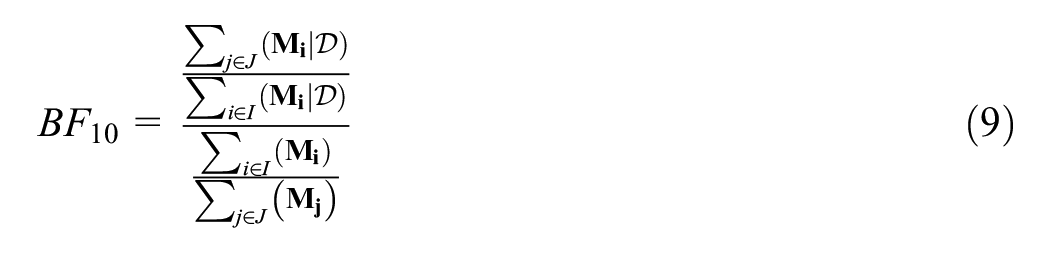
The nominator denotes the posterior inclusion model odds assuming the effect while the denominator denotes the prior inclusion model odds assuming the effect. In summary,
3. Distribution of Studies and Literature Beliefs
This section discusses the distribution of selected studies, and the summary statistics of the documented effects in the existing literature, the so called weakly informative prior beliefs incorporated into our RoBMA model.
3.1. Distribution of Studies
Figure 11 in Appendix IB shows that a total of
These studies predominantly focus on regions such as South Asia and Latin/South America, followed by Sub-Saharan African, and then South-East Asia, as shown in Figure 12 of Appendix IB. Specifically, in countries such as Bangladesh, Bhutan, Brazil, Cambodia, Colombia, Ghana, India, Kenya, Nepal, Peru, Rwanda, Tanzania, Uganda, Vietnam, and Zambia. Similarly, RHE studies are concentrated in all these regions, and countries, except for Uganda and Zambia, as shown in Figure 20 of Appendix IIB. Studies on solar electrification are conducted in South Asia and SSA countries, such as Bangladesh, India, Rwanda, Uganda, and Zambia, as shown in Figure 28 of Appendix IIIB.
Panel C of the Figure 12 shows that these studies utilize a range of research designs, including randomized controlled trials (RCTs), surveys, panel data and survey studies, and time series analyses. Panel D reveals that instrumental variable regressions (IV) and ordinary least squares (OLS) are the most common methodologies used in the meta-analysed effect sizes. Other used methods include a range of causal inference methods, such as RCTs, difference-in-differences (DiD), propensity score matching (PSM), fixed effects (FE), and negative binomial regressions, among others such as Heckman selection models, logit and probit regressions, random effects (RE), and three-stage least squares (3SLS). These research designs and methodologies are dominated in RHE studies, than in solar electrification studies, which employed mostly RCTs and various causal inference methods (including instrumental variables, fixed effects, OLS, and linear probability models).
3.2. Literature Beliefs
We present the plots and summary statistics of the relevant literature beliefs that were incorporated into our RoBMA model, the so called weakly informative priors.
Figure 5 shows that the beliefs on the impact of modern energy access on educational outcomes are negatively skewed, especially for adults. However, the beliefs on children’s educational outcomes resemble a right-tailed normal distribution. Additionally, Table 6 in Appendix I shows a positive effect on overall educational outcome in developing countries due to modern energy access in rural developing countries. This effect is entirely driven by its positive effect on children’s educational outcomes. However, I find a negative effect on adults’ educational outcomes. These evidences are suggestive in the significant t-statistics. Additionally, the literature also suggests divergence in the effect size given by the negative minimums and positive maximums.
In particular, Figure 21 of Appendix III shows that the negative skewness in the beliefs of modern energy access on educational outcomes is reflected in the solar electrification, especially for adults. The beliefs on children’s educational outcomes resemble a right-tailed normal distribution. Additionally, Table 12 of the same appendix shows that on average, the literature suggests that rural solar electrification significantly influences overall educational outcomes, as evidenced by a t-statistic of
Additionally, Figure 13 of Appendix II shows that the beliefs are largely right-tailed, particularly for both adults and children. This beliefs are further seen in Table 9 of the same appendix, which shows that on average, the literature indicates that RHE significantly influences overall educational outcomes, as evidenced by a t-statistic of
This polarization is primarily driven by studies that investigated study hours, test scores, school enrolment, school attendance, student absenteeism, and educational expenditure. In contrast, studies focusing on educational attainment, learning outcomes, and literacy rates generally report significant positive impacts on average. Additionally, the effect of RHE on educational outcomes are characterized by age, with distinct impacts on adults and children.
The summarized beliefs in Table 9 in Appendix II indicate that RHE increases daily study hours in the Global South by approximately
4. Does Modern Energy Access Improve Education?
In this section, we examine whether modern energy access enhances educational outcomes in rural developing countries.
10
Table 3 presents the RoBMA results, showing strong evidence that access to modern energy improves education outcomes by an estimated
RoBMA Results for Modern Energy Access on Education.
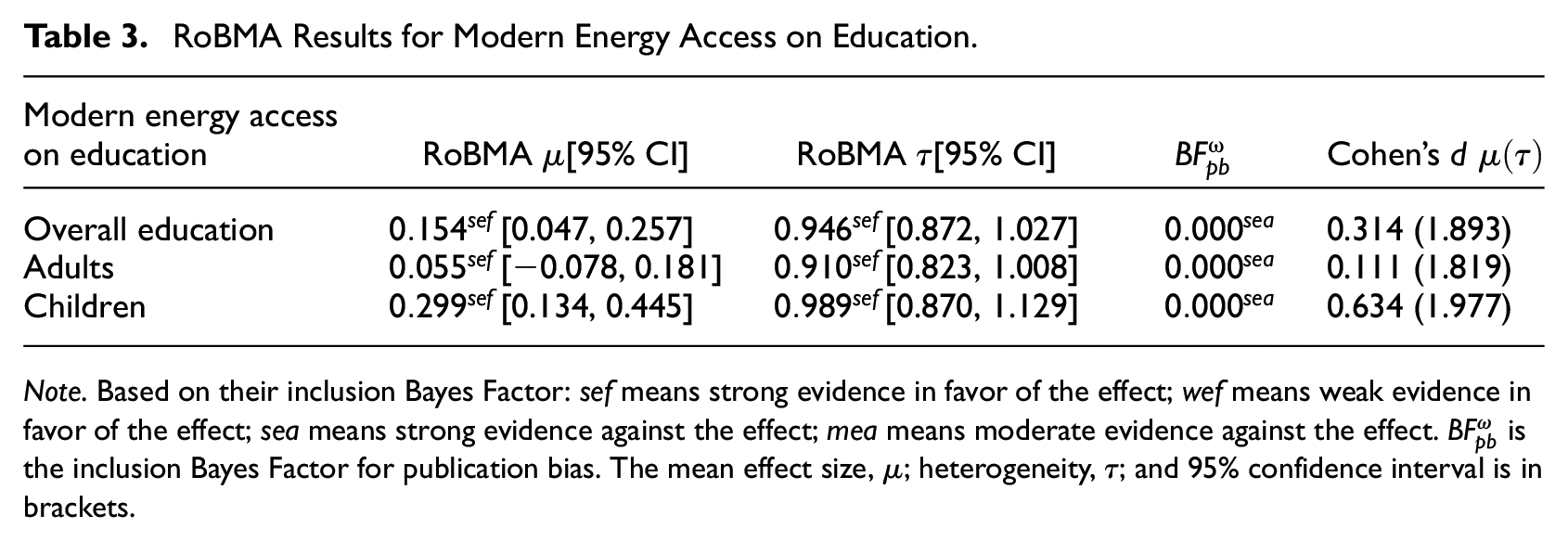
Note. Based on their inclusion Bayes Factor: sef means strong evidence in favor of the effect; wef means weak evidence in favor of the effect; sea means strong evidence against the effect; mea means moderate evidence against the effect.
Figure 6 in Appendix I presents the posterior model probabilities on the effect of modern energy access on overall educational outcomes. Panel A confirms the strong positive effect of modern energy access on educational outcomes, while panel B highlights significant heterogeneity. Panels C and D provide strong evidence against publication bias.
Figure 7 in Appendix II shows the diagnostics of the RoBMA model after
4.1. Effects of Rural Household Electrification on Education
Table 4 details the effects of RHE or rural household grid electrification, which emerges as a key driver of educational improvements. The strongest impact is observed among children, with RHE increasing educational outcomes by
RoBMA Results for RHE on Education.
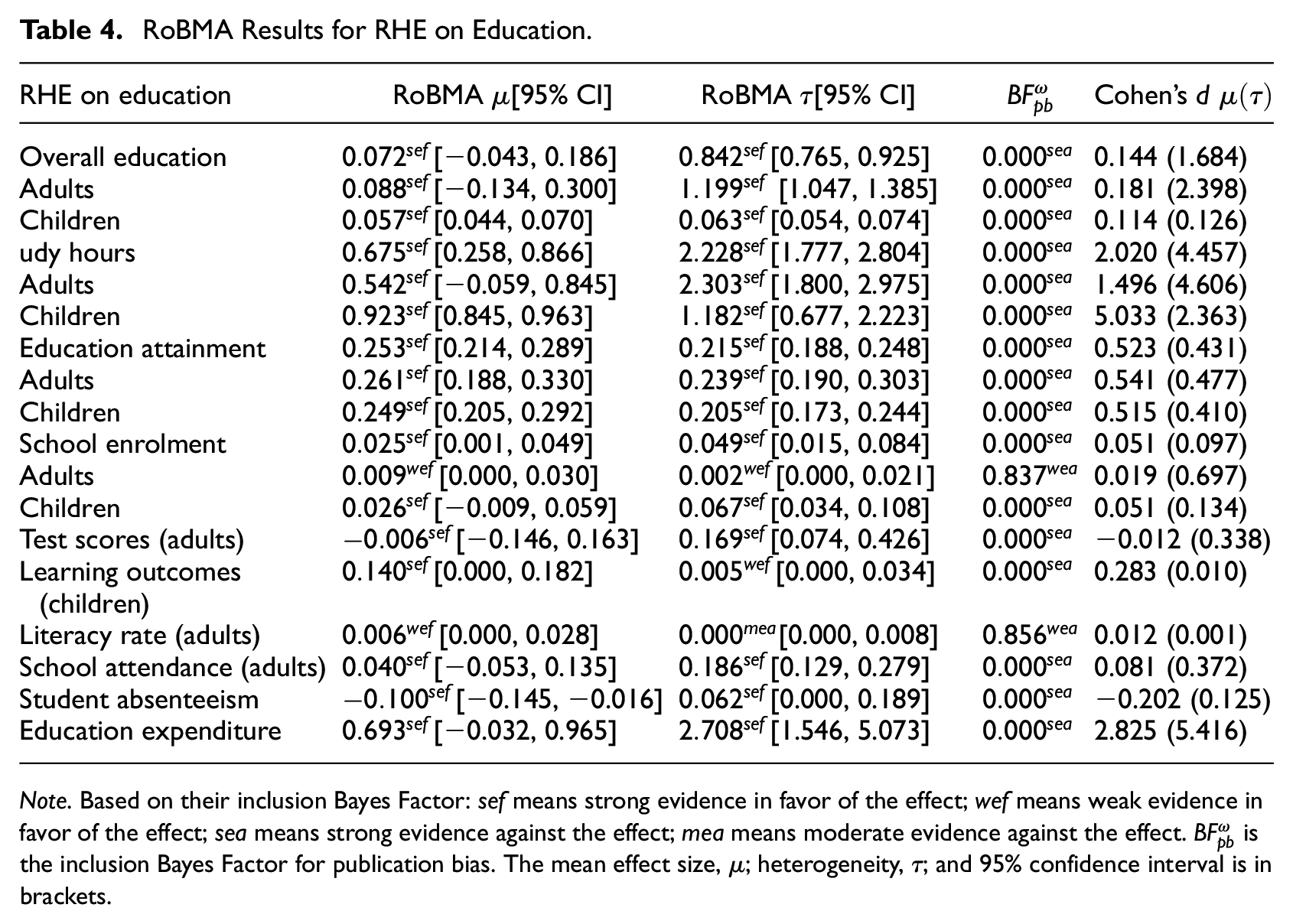
Note. Based on their inclusion Bayes Factor: sef means strong evidence in favor of the effect; wef means weak evidence in favor of the effect; sea means strong evidence against the effect; mea means moderate evidence against the effect.
Compared to prior estimates in the literature, which suggested an average increase of only
Regarding heterogeneity, we find strong evidence of variation in effect sizes on various educational outcomes, except for adult school enrolment and children’s learning outcomes. Crucially, there is strong evidence against publication bias, with the exception of adult school enrolment and literacy rates, where the evidence against publication bias is weaker.
Figure 14 in Appendix II presents the posterior model probabilities on the effect of RHE on overall educational outcomes. Panel A confirms the strong positive effect of RHE on educational outcomes, while panel B highlights significant heterogeneity. Panels C and D provide strong evidence against publication bias.
Figure 15 in Appendix II shows the diagnostics of the RoBMA model after
4.2. Effects of Solar Electrification on Education
Table 5 presents the RoBMA results for solar electrification, which also has a strong positive effect on overall educational outcomes, increasing them by
RoBMA Results for Solar on Education.
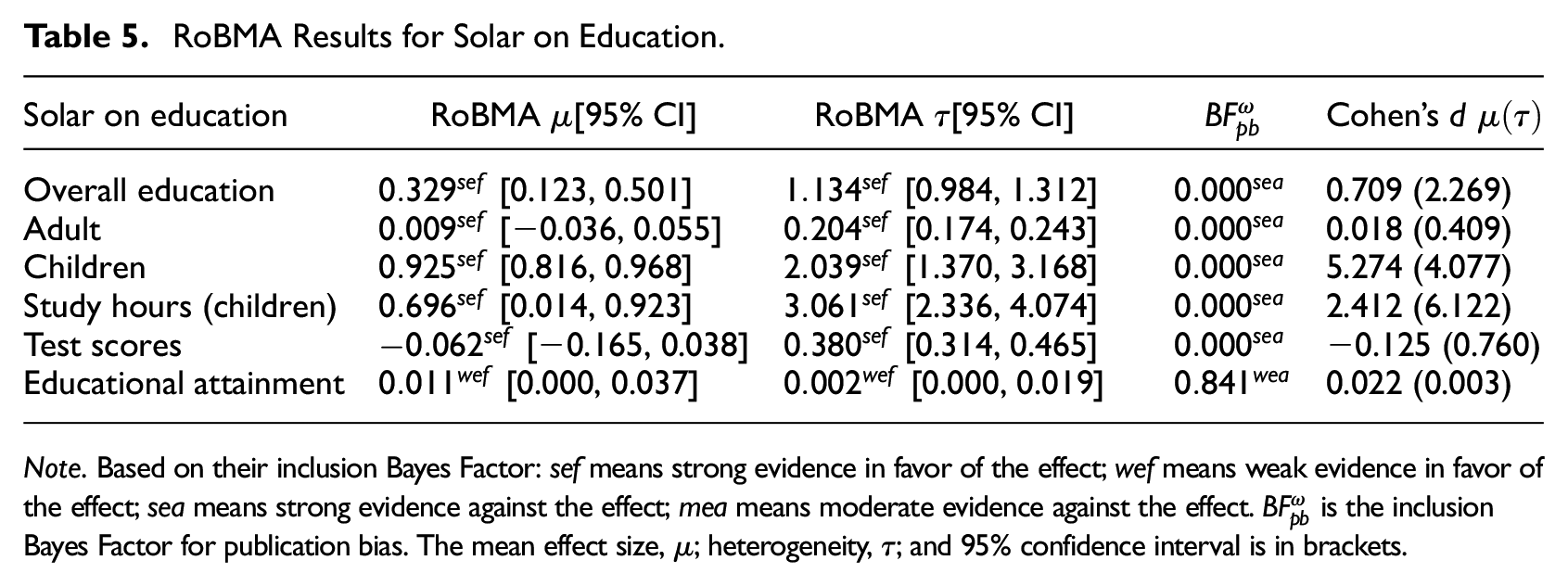
Note. Based on their inclusion Bayes Factor: sef means strong evidence in favor of the effect; wef means weak evidence in favor of the effect; sea means strong evidence against the effect; mea means moderate evidence against the effect.
The primary driver of this improvement is an increase in study hours, where solar electrification leads to an average increase of
As with RHE, we observe strong evidence of heterogeneity, particularly in studies assessing the effect of solar electrification on study hours and test scores. However, evidence against publication bias remains strong across most outcome variables, except for educational attainment. The robustness of these findings is further supported by posterior model probabilities and model diagnostics in Figures 22 and 23 in Appendix III, which confirm that study hour increases are consistent across grid-based and off-grid electrification solutions.
Figure 22 presents the posterior model probabilities on the effect of solar on overall educational outcomes. Panel A confirms the strong positive effect of solar on educational outcomes, while panel B highlights significant heterogeneity. Panels C and D provide strong evidence against publication bias.
Figure 23 displays the diagnostics of the RoBMA model after
4.3. Discussing Improved Education Drivers
Modern energy access (RHE, solar) catalyzes educational advancement through interconnected mechanisms that address socioeconomic barriers, enhance learning environments, and foster systemic change. These pathways operate synergistically, creating a virtuous cycle of human capital development. By replacing hazardous lighting sources such as kerosene lamps, electricity enables children to study safely after dark, reducing eye strain and improving concentration. This directly enhances the efficacy of study time. Additionally, electric appliances like water pumps and mills minimize time spent on labor-intensive chores such as fetching water or grinding grain. Girls, who often bear the brunt of domestic work, benefit disproportionately from these time savings, allowing them to dedicate more hours to schooling and narrowing gender disparities in education. Modernized household tools, including electric stoves and refrigerators, further reduce time spent on tasks like firewood collection or food preservation, freeing families—especially children—to prioritize education.
Beyond time savings, electrification enriches learning environments. Access to grid electric lighting, televisions, radios, and online platforms exposes children to supplementary educational content, such as tutorials or documentaries, broadening their knowledge beyond formal curricula. Extended evening hours also enable parents to engage more actively in their children’s education, whether by assisting with homework or fostering literacy skills. For adults, electrification opens avenues for night classes or vocational training, fostering intergenerational learning cultures within households. Health improvements further bolster educational outcomes. Electric refrigeration preserves vaccines and medicines, while cleaner cooking solutions like electric stoves reduce respiratory illnesses caused by indoor air pollution. Healthier children miss fewer school days, leading to higher attendance rates and improved academic performance.
Economically, RHE shifts household priorities toward education. Income-generating activities powered by electricity—such as tailoring, milling, or small-scale enterprises—alleviate financial pressures, reducing the need for child labor and increasing school enrolment. Exposure to technology and media through electrified devices also sparks aspirations for modern careers, motivating families to invest in education as a pathway to upward mobility. These shifts are often amplified by government policies that pair electrification with complementary interventions, such as school construction, stipend programs, or teacher training initiatives. For instance, India’s Saubhagya scheme integrates electrification with educational infrastructure development, creating a multiplier effect on enrolment and retention.
The mechanisms driving RHE’s educational benefits are mutually reinforcing. Increased study hours improve academic performance, which incentivizes families to keep children enrolled. Higher enrolment, in turn, creates peer networks that normalize education, fostering a community-wide culture of learning. Economic gains from electrified enterprises reduce financial barriers to schooling, enabling long-term investments in education. Simultaneously, improved health and reduced domestic burdens ensure consistent attendance and greater productivity in the classroom.
Ultimately, RHE transcends its role as a technical intervention by catalyzing holistic socioeconomic transformation. It addresses time poverty, enhances learning quality, and reshapes attitudes toward education, positioning electrification as a cornerstone of human capital development. However, maximizing these impacts requires complementary investments in gender-sensitive policies, school infrastructure, and teacher training to ensure equitable access. Empirical evidence underscores that RHE is not merely about providing energy—it is a catalyst for sustainable, inclusive educational progress, weaving infrastructure upgrades into the fabric of community development.
5. Bayesian Model Averaging Meta-Regressions
Conventional data analysis often relies on selecting a single-best model for inference, treating it as if it were the true model. While this approach is elegant, it is not entirely satisfactory because it ignores model uncertainty (Draper, 1995; Madigan, Gavrin, and Raftery, 1995; Raftery, 1993; Raftery, Hoeting, and Madigan, 1993). For example, the use of different models and methods to calculate various effect sizes across the
Bayesian Model Averaging (BMA) provides a solution to this problem by averaging across different relevant models and choosing the best one that supports the data. For our purpose, we apply BMA in a meta-regression to determine the sources of heterogeneity on the impacts of RHE and solar electrification on education, in developing countries.
To achieve this, we begin by considering a set of model

where

Thus,

where
5.1. Managing the Summation and Computing the Integral
To address the summation and integral in equation (11), we leverage the Markov Chain Monte Carlo (MCMC) simulation algorithms to approximate the posterior model probabilities, and solve the integral in equation (11). The marginal likelihood,
We employ the Hamiltonian Monte Carlo (HMC) algorithm to efficiently generate samples (Betancourt, 2017). By integrating over these samples, the posterior model probabilities are computed as:
The results of the MCMC-based Bayesian Model Averaging approach are presented in the following sections.
5.2. Meta-Regression Results: Effect of Modern Energy Access on Education
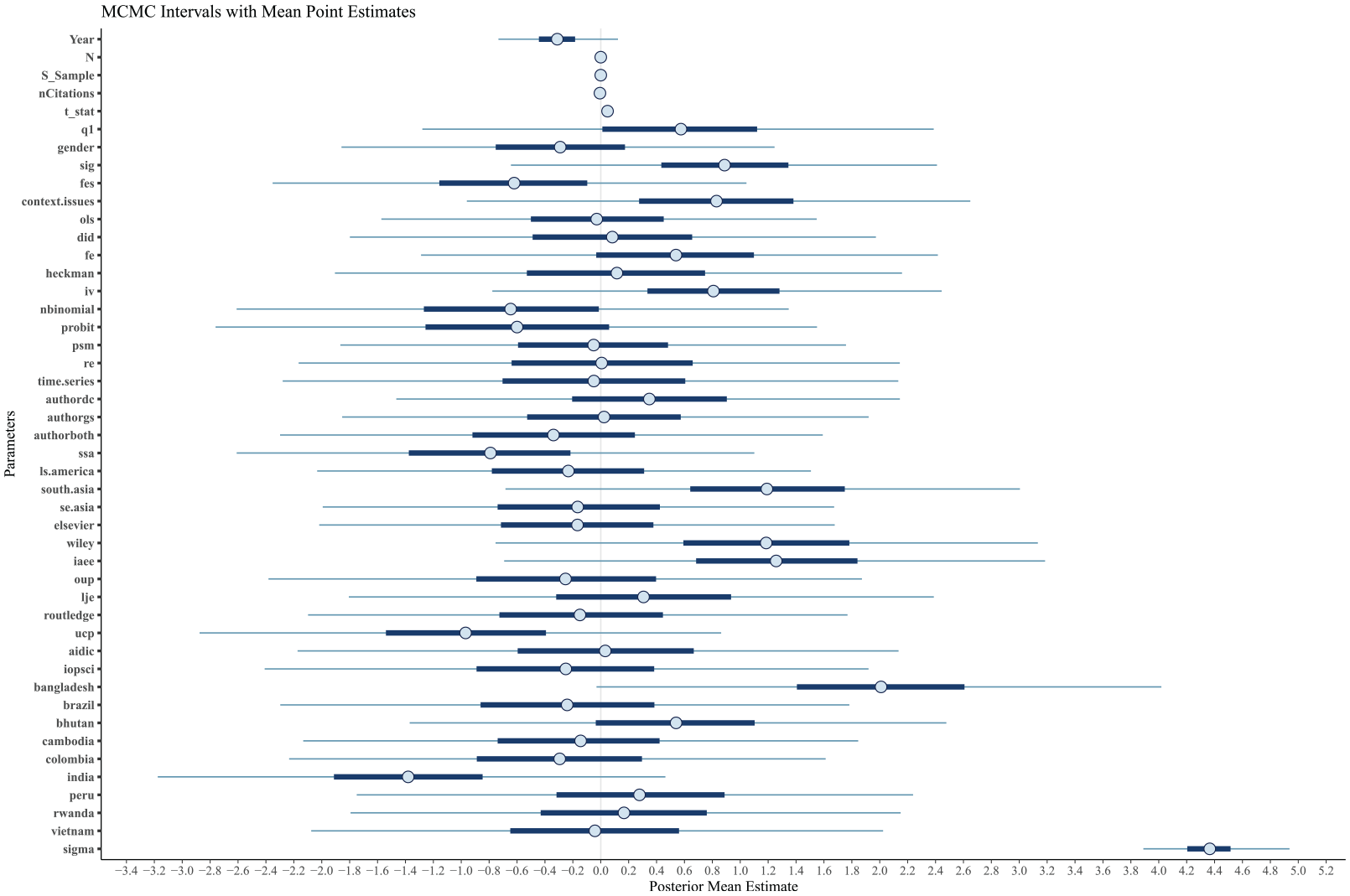
The meta-regression results are reported in Table 8, and Figure 2.
12
Table 8 shows that the residual variability in the outcome not explained by the predictors, measured by sigma is
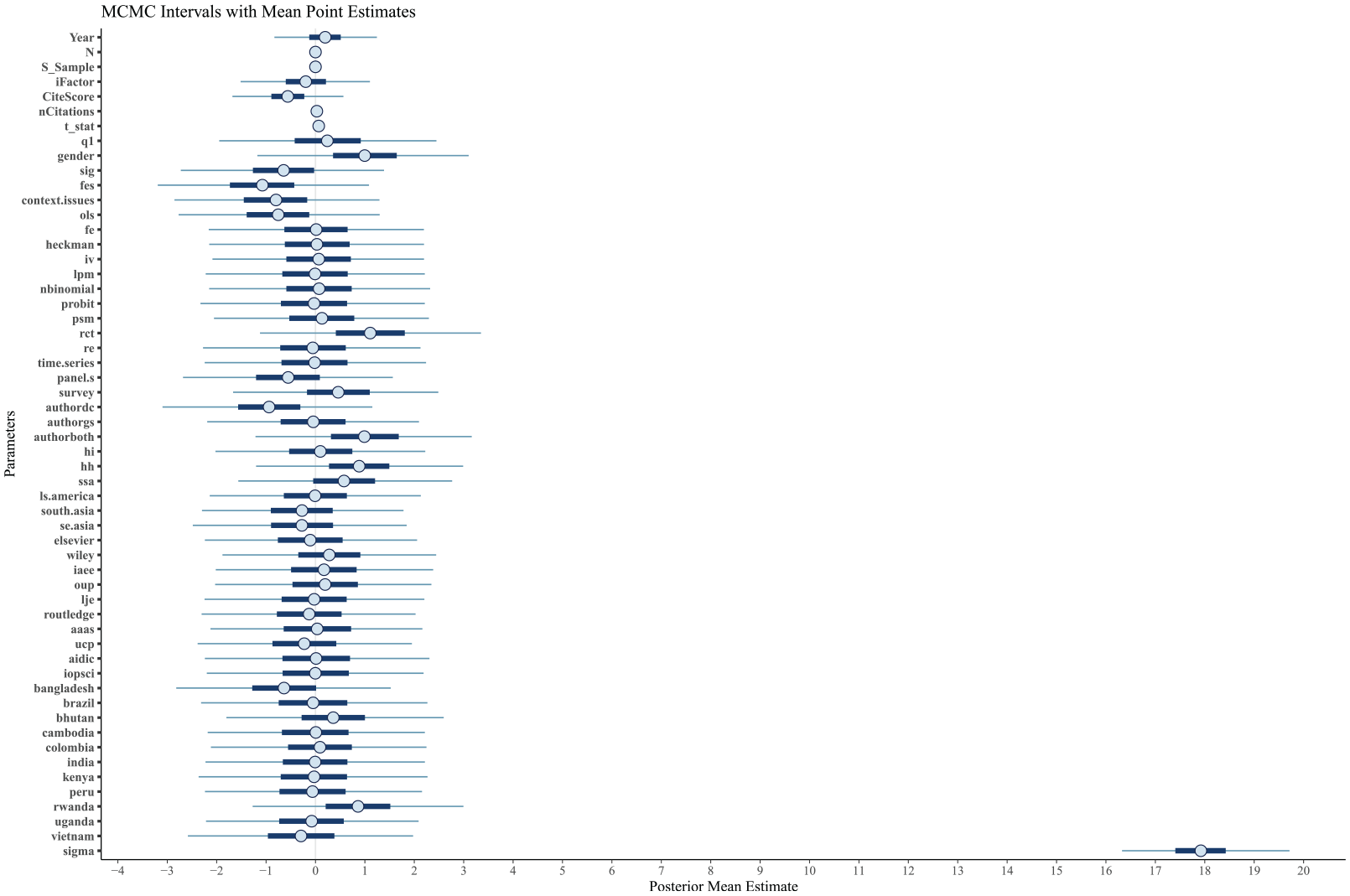
Posterior mean estimates between
Therefore, Figure 2 reveals that the impacts of all the predictors on the effect size heterogeneity, are statistically insignificant within
Particularly, studies conducted in Bangladesh, whose authors’ institution are located in developed countries, used OLS regressions, reported significant effect sizes, controlled for fixed effect, contextual issues, and high citation scores of the publishing journal have significant negative impacts on the effect size heterogeneity. These studies tend to report effect sizes similar to existing literature, possibly conditional on the social, economical, and political space of the geographical region.
Conversely, studies conducted in Rwanda, that used households as the unit of analysis, employed randomized control trials methods, investigated gender-related heterogeneous treatment effects, and whose authors’ institution are located in both developed and developing countries, have significant positive impacts on the effect sizes. This result implies that such studies report effects that are usually different from the literature. Hence, experimental studies tend to have different and superior point estimates on this relationship.
Furthermore, the following study characteristics are found to have statistically insignificant impact throughout the intervals of the posterior distribution. They include recently published studies, number of observations in each study, sample sizes in each study, impact factor of publishing journal, number of citations by each study, test statistic in the studies, studies published in Q1 journals; which used either fixed and random effect, instrument variables, propensity score matching, Heckman selection models, linear probability models, probit, and negative binomial regressions; studies using time series and panel survey data; whose authors’ institution is located only in the Global South, and used both households and individuals as their unit of analysis; focusing on all regions; published by all aforementioned publishers; particularly in Brazil, Bhutam, Cambodia, Colombia, India, Kenya, Peru, Uganda and Vietnam.
5.3. Meta-Regression Results: Effect of RHE on Education
We discuss below the meta-regression results reported in Figure 3, and Table 11 of Appendix IIA.
13
Table 11 shows that the residual variability in the outcome not explained by the predictors, measured by sigma is
Posterior mean estimates between
Thus, Figure 3 shows that studies with significant test statistic have an increasing effect on the effect size heterogeneity within
In contrast, there are significant decreasing effect on effect size heterogeneity in the following studies: recently published studies that controlled for fixed effects, used negative binomial regressions, focused on SSA region, conducted in India, and published the University of Chicago Press. These suggest that non-causal studies produce estimates that are not different from the current literature.
Furthermore, the effects of the following study characteristics are generally limited. They include studies with large number of observations, sample sizes, and citations; investigated gender-related heterogeneous treatment effects, employed OLS and difference-in-differences methods, Heckman selection models, random effects and probit regressions, propensity score matching, used time series data; authors’ institutions are located in either the Global South, or developed countries, or both; focused on Latin or South America, and South-East Asian regions, conducted in Brazil, Bhutan, Cambodia, Colombia, Peru, Rwanda, and Vietnam; and published by Elsevier, Oxford University Press, Taylor & Francis Group, the Italian Association of Chemical Engineering, and Institute of Physics Publishing.
5.4. Meta-Regression Results: Effects of Solar Electrification on Education
Finally, we discuss below the meta-regression results reported in Figure 4, and Table 14 of Appendix IIA).
14
Table 14 shows that the residual variability in the outcome not explained by the predictors, measured by sigma is
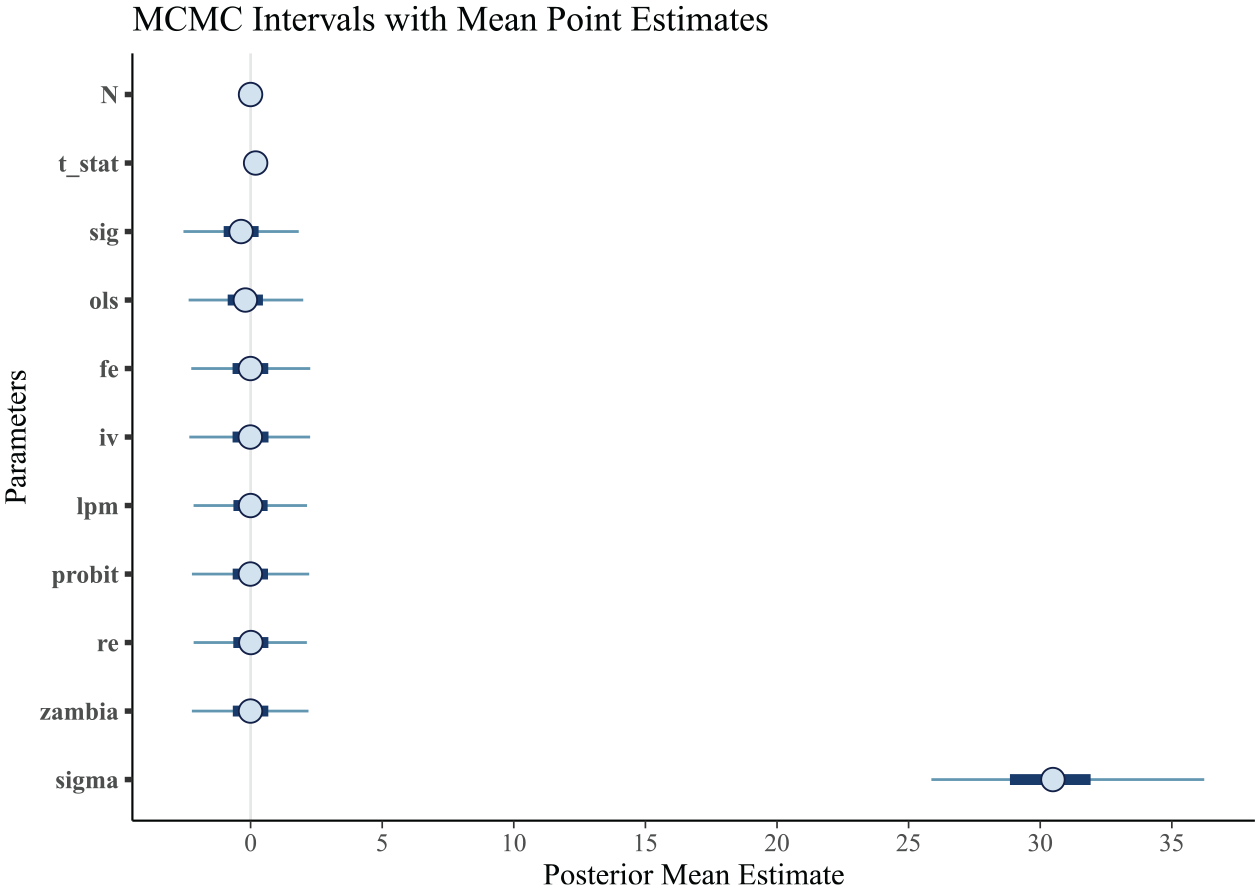
Posterior mean estimates between
6. Conclusions and Policy Discussions
In recent decades, meta-analytic literature reviews have become increasingly prominent in the field of economics, providing a quantifiable synthesis of divergent perspectives within the literature. This paper employs a meta-analytic approach to reconcile conflicting views on the impact of modern energy access on educational outcomes in rural areas of Global South, focusing on both grid and off-grid energy solutions. Our analyses utilize the RoBMA methods, and BMA meta-regressions using Hamiltonian Markov Chain algorithms to identify sources of heterogeneity in the effect sizes.
We demonstrate that modern energy access significantly enhances education, with particularly strong effects observed among children. RHE emerges as a key driver, positively influencing study hours, educational attainment, and school enrolment. The evidence suggests that RHE holds the potential to foster intergenerational economic mobility by leveraging the well-documented causal relationship between additional schooling and higher lifetime earnings. Solar electrification, while impactful, shows slightly weaker effects relative to grid-based electrification, but it remains a critical enabler of educational progress, especially in regions with limited grid connectivity. Specifically, children’s study hours increased by an average of
Despite the overwhelmingly positive impacts, significant heterogeneity in effect sizes underscores the context-specific nature of these outcomes, shaped by regional, demographic, and infrastructural factors. Additionally, our findings reveal strong evidence against publication bias, reinforcing the credibility of the observed results. However, the relatively weaker evidence for adults and limited impacts on certain educational metrics, such as literacy rates, learning outcomes, and school attendance, highlight the need for complementary interventions, such as quality education and targeted adult education programs, to maximize the benefits of energy access.
The meta-regressions identify several factors contributing to effect size heterogeneity. The results suggest that studies using experimental designs (randomized control trials), and causal inference methods such as instrumental variable regressions, with robust identification strategies to identify the local treatment effect of RHE on education, provide superior and more reliable estimates different from the existing literature. These studies tend to also account for within contextual differences in culture, social, political, and economic issues among households with grid electrification access.
To draw more definitive conclusions about the relationship between modern energy access and educational outcomes, future research should account for contextual factors, prioritize randomized control trials, and causal inference methods, particularly instrumental variable regressions at the household level. This recommendation is crucial for future investigations into the welfare effects of rural household grid electrification.
In sum, we emphasize that investments in modern energy infrastructure, particularly in rural household electrification and solar solutions, are pivotal for advancing education and long-term economic development in underprivileged regions. Policymakers should prioritize energy access alongside initiatives to improve school enrolment, and adult literacy programs, ensuring a holistic approach to sustainable development.
Footnotes
Appendices
Declaration of Conflicting Interests
The author(s) declared no potential conflicts of interest with respect to the research, authorship, and/or publication of this article.
Funding
The author(s) received no financial support for the research, authorship, and/or publication of this article.
1
These studies have meta-analyzed the effects of electrification on income, labor, education, and household welfare, encompassing both rural and urban areas in developed and developing countries (Ayana and Degaga, 2022; Mori et al., 2020).
2
3
This category encompasses working papers, organizational reports, and unpublished theses, among others Tenezakis and Tritah (2019), Adu, Dramani, and Oteng-Abayie (2018), Koima, Lopez-Cajiao (2018), Buyinza and Kapeller (2018), Aevarsdottir, Barton, and Bold (2017), Litzow (2017), Samad and Zhang (2017), Burlig and Preonas (2016), Kojima et al. (2016), Dasso Arana, Fernandez, and Ñopo (2015), Arraiz and Calero (2015), Barron and Torero (2014), Asaduzzaman et al. (2013), Kumar and Rauniyar (2011), and  .
.
4
N denotes sample size of the affected study, while
5
This formula is used to calculate
6
The PET-PEESE method corrects the relationship between effect sizes and standard errors, addressing and adjusting for small-study effects, akin to Egger’s test in the Frequentist framework (Bartoš et al., 2022). Typically, these small-study effects indicate publication bias, arising from sample size discrepancies between observational studies and experiments. Previous meta-analyses Ayana and Degaga (2022) have utilized this method to mitigate publication bias. However, PET-PEESE may underestimate the effect when a true effect exists (PET) or overestimate the effect when no true effect is present (PEESE) (Kvarven et al., 2020).
7
For a comprehensive framework of the Bayesian model Averaging (see Fragoso, Bertoli, and Louzada, 2018; Gronau et al., 2021; Hinne et al., 2020).
8
See Maier et al. (2022) and Bartoš et al. (2022, ) for an indepth discussion.
9
Additionally, it is possible to access relative predictive performance of individual models to the overall ensemble to gain specific insights into the DGP. Hence the inclusion Bayes Factor for each individual model can be expressed as
10
11
These predictors are the final selections that are less than ). Notice that they overlap across the summary statistics tables of the different study groups.
12
The summary statistics of the predictors are presented in . It reports that there are
13
The summary statistics for the predictors on the relationship between RHE and education is reported in Table 10 of . It shows that there are
14
The summary statistics for the predictors on the relationship between Solar electrification and education is reported in Table 13 of . It shows that there are