



Abstract
The global economies and international organizations are inclined towards sustainable growth, technological advancements and product innovations. China is the leading economy in information and communication technologies and among the major industrially expanded economies covering a substantial share of the global market in exports. The prime objective of this study is to explore the role of digitalization and Information and communication technologies (ICT) for product innovation (PIN). In doing so, the study also attempts to draw some novel implications regarding business, entrepreneurship, and product innovation in the lens of sustainability. This current study use the annual data of China from 1990–2020. The empirical analysis was conducted using the stationarity testing and the Johansen cointegration test. In addition, due to the data’s asymmetrical distribution, the non-parametric “quantile regression” is used. For robustness, this study employs the Fully Modified Ordinary Least Square, Canonical Cointegration, and Dynamic Ordinary Least Square methods. The empirical results reveal that economic progress and financial development are substantial factors of product innovation. The robust analysis reveals that medium and high-tech industries and information and communication technology adversely affect product innovation. Further, the presence of financial development transforms the negative influence of information and communication technology into a positive. The current study concludes more investments in the technological industry are required to encourage product innovation in China. The study discusses some policy-related implications in the context of business sustainability and product innovation.
Keywords
Introduction
Despite the global financial and health crises, technological innovation, digitization, and information and communication technology (ICT), including the Internet and software industries, have augmented their efforts and investments in the past decades (WIPO, 2021). Digitalization and technological innovation have several benefits that improve not only society but also environmental sustainability, empowering economies to achieve sustainable development goals (Mondejar et al., 2021). Consequently, digitalization and innovation are imperative for business expansion by boosting efficient production, improving management, and reducing costs. Product innovation (PIN) helps companies stay competitive in the market and inspires creative minds. Specifically, the product innovation enables firms to overcome economic and environmental challenges and establish sustainable futures by creating eco-friendly products that promote progression, structural development, new businesses, and environmental quality (OECD, 2019). Likewise, the increase in ICT substantially encourages a higher level of innovational activities, which facilitates sustainable development (Peñalba et al., 2015). Therefore, this study concentrates on determining the factors that influence product innovation and innovation productivity, which are essential for business sustainability. This study examines the role of digitalization, ICT, and economic and financial development on product innovation in the Chinese economy.
According to the Global Innovation Index Rankings (2021) for digitalization and technological innovation, China ranks 12th, while Switzerland, Sweden, and the United States rank 1st, 2nd, and 3rd, respectively, (WIPO, 2021). China is a diverse country that is rapidly transitioning towards an innovation-led economy owing to the presence of entrepreneurial and research-oriented individuals. Increasing innovation not only promotes productivity and output, which are imperative for financial growth, but also increases new businesses and market expansion and enhances environmental sustainability (Medvedev et al., 2021). Moreover, the country has erudite digital ecosystems and is known to generate more scientific and engineering individuals than developed Western nations. The domestic market in China offers significant opportunities to its people, which has led to rapid developments in digitalization and the technological revolution. Digital upheaval has transformed the economy by producing cost-effective and efficient technologies and substituting labor and client experience. Therefore, regardless of aggressive governmental measures, economic activities relatively stable during the COVID-19 crisis owing to big tech giants and financial advancement. The country has constructed an inclusive digital infrastructure that is presently the largest retail hub in the world, reaching $5.072 trillion in retail sales in 2020 (Zigurat, 2019; Cramer-Flood, 2020).
In general, very limited studies have explored the nexus among digitalization, emerging businesses, and Internet technologies and their combined impact on product innovation. According to the OECD (2005), product innovation refers to the enhancement of existing or new products/services for the purpose of providing people pragmatic assistance, such as improving functional characteristics and technical specifications and creating user-friendly software/hardware. Therefore, based on the research requirements, this study aims to observe the determinants of product innovation. The primary objective of this study is to examine the role of digitalization and technology in product innovation, and the second is to assess the impact of digitalization, new businesses, and technology on product innovation under financial development (Model 2). In doing so, the authors use medium and high-tech industries (MHTIs), information and communication technology (ICT), new business registration (NBR), and financial development (FD) as key policy variables.
Additionally, we use robust econometric techniques, which are frequently applied when the statistics are linear but non-normally distributed, for the empirical analysis. They provide reliable estimates with efficient findings for policy implications. The motivation for this research is based on the fact that digital technology and innovation have reformed the Chinese economy. In 2021, the China Academy of Information and Communication Technology (CAIC) ranked China second after the USA in the digital economy in 2021 (Wu, 2022). The Internet economy in China is a comprehensive sector known as the digital economy under ICT, which plays a crucial part in the innovative production process. In the extant literature, ICT and product innovation have redesigned the global development process. However, owing to the complex phenomenon of product innovation, only a few studies provide significant evidence on the role of product innovation and ICT and for economic development (Hall et al., 2013; Xiong et al., 2022). China’s exponential economic growth and development have attracted the attention of other nations. Specifically, digitalization and technological advancement have played a significant role in the long economic process, making the sector a dominant force at the national level in China (Wu, 2022). Therefore, this study is interested in analyzing a scarcely explored area in the prevalent academic literature on the economy of China. Additionally, the country is rising in terms of its innovative industry (Medvedev et al., 2021). Product innovation significantly reduces environmental damage by developing new technologies with fewer harmful impacts. Hence, we intend to examine the relationship between medium and high technologies and product innovation in China for future sustainability.
This study is important in that it addresses the gap in the extant literature by understanding the factors that impact product innovation. Specifically, it analyzes the situation in China, which it is becoming a new technology leader and innovative giant by investing in and adopting new digital technologies. The scientific research and innovative capacity of the Chinese people and economy have positioned China to become a global tech leader in the upcoming decades. In addition, technologically innovative systems have been successfully developed to compete with the world’s most developed economies. Although China is a higher-middle-income nation that lags far behind in innovational capacity compared to the United States, which is a high-income economy internationally (GII, 2021), in the last few years, we have seen the innovation “cold war” between the USA and China, and China has extended its technological advancement systems. Moreover, the future of the Chinese economy lies in innovative activities. Product innovation is essential to overcoming economic challenges for a sustainable future. Hence, this study is significant in scrutinizing the role of digitalization, new businesses startups and product innovation.
This study contributes to the literature in several ways. While several studies have investigated the different aspects that impact product innovation (Klein & Şener, 2022; Pan et al., 2022), the present study is the first to inspect the determinants of product innovation in the case of China using an updated data period from 1990 to 2020. As the world advances and globalization spreads, product innovation and technological advancement are becoming increasingly imperative. The empirical results of the present study demonstrate that the economy flourishes innovatively through the promotion of technological industries and digitalization (Figure 2). Moreover, China is known as an emerging economy for global innovation and a prominent driver of economic progression (Medvedev et al., 2021). Product innovation also helps empower businesses, expand markets, and enhance pre-existing products or innovate new products to solve customers' problems. Therefore, this study assesses the determinants of product innovation in China for a period of 30 years. Second, the roles of digitalization, new business, and information technology in Product innovation are debatable in terms of sustainable development. Digital technologies, such as artificial intelligence, limit resource use, reduce pollution, and promote green innovative companies that aid in tackling the pertinent issue of climate change. Thus, this study includes novel variables for research on product innovation, which has scarcely been done in the existing literature. The research findings may provide a unique way to gauge and guide businesses and policy frameworks to formulate economic and environmental sustainability plans. Therefore, the present study investigates the role of digitalization, businesses, and communication technologies on product innovation and significantly contributes to the academic literature on sustainability. Third, this study uses two econometric modifications for a deeper analysis: the first model uses economic growth per capita, and the second model observes the nexus between ICT and product innovation under financial development in China, which is pragmatically a valuable new input in the extant literature.
The rest of the paper is organized as follows. Section 2 provides a critical analysis of the prevalent literature. Section 3 describes the data, model, and methodology. Section 4 presents the results and their interpretations with a discussion. Finally, Section 5 provides conclusions and relevant policy implications.
Literature Review and Research Gap
This section elaborates on the aspects and relationships of the variables under study for research analysis to illuminate the factors that influence product innovation.
Information and Communication Technologies and Business Growth
ICT is an imperious concept in the literature because it plays a fundamental role in businesses’ innovational activities (Peñalba et al., 2015). The current study focuses on scrutinizing the nexus between product innovation and ICT, as it is less debatable in the extant literature yet are considered the stimulating factors of the innovation process, signifying the positive relationship between product innovation (Idota et al., 2020). ICT technologies and product innovation have redesigned the process of global development and exhibit considerable links between them (Xiong et al., 2022). Innovation, which is crucial for sustainable development, is a complex phenomenon categorized into four types: product, process, marketing, and organizational. In a prior novel study on information technologies and communication, Hall et al. (2013) indicated that investments in ICT are essential and strongly related to product innovation and productivity in a case study on South Asian nations.
In the same line, Higón (2012) concluded that ICT technologies have a substantial advantage in promoting small and medium businesses through product innovation. Likewise, Ueki and Tsuji (2018) observed a significant correlation between ICT and product innovation. Therefore, ICT enables firms to innovate products. Moreover, the association between ICT and product innovation encourages business performance because ICT is significantly associated with innovation (Cuevas-Vargas et al., 2021). Similarly, a recent productive analysis of the influence of ICT on a firm’s innovation demonstrated positive associations. In a more recent study, Alam et al. (2022) emphasized that strategies adopted for ICT enhancement are imperative for product innovation for firms as they ultimately enhance firms' performance, especially for small enterprises.
The current study also considered the medium and high-tech industrial development as key policy factor for product innovation. The difference between medium- and high-tech industries depends on the intensity of Research and development (R &D) development output (Pulse, 2021). Research and development (R &D) process is essential for businesses and economic expansion by increasing production activities and innovations (Lawrence, 1998). The significance of medium- and high-tech industries is a complex issue in the existing literature. However, research on the economic, industrial and manufacturing sectors has been forgotten. For instance, Lee et al. (2016) observed that technological exploration is essential for product innovation. In addition, small- and medium-tech industries are significant in promoting innovative products, and technology exploration plays a vital role in encouraging innovation. Trott and Simms (2017) assessed the innovation process in medium- and high-tech industries in the United Kingdom and found evidence that medium- and high-tech industries are essential for escalating the success of large product innovation of firms. For the case of Italy, Cozza et al. (2012) examined the association between product innovation and the performance of medium- and high-tech industries. The empirical findings depict a positive linkage as increasing product innovation benefits the performance of technology industries. Sandu and Ciocanel (2014) inspected the influence of product innovation in medium-high-tech export industries in European economies. The econometric results depict the causal relationship between the tech industries and innovations. In a recent study on high-tech industries, Pan et al. (2022) determined that high-tech accumulation industries positively influence product innovation and openness but have a heterogeneous influence on exported products.
Over the past decades, the new business registrations have enhanced industrial competition in China and other emerging economies. Consequently, the increased demand for better goods has escalated, which, in turn, increases industrialization to move toward the advancement and innovation of existing products to capture the market efficiently. Furthermore, it legalizes businesses as new authorized entities, which establishes customer trust so that people invest more, leading to profitable returns. In the case of developing countries, Avila et al. (2021) found a positive correlation between business registration and product innovation. Similarly, Garavito Hernández and Rueda Galvis (2021) investigated the association between innovation and new business registrations in Colombian firms and found a negative relationship between product innovation and business success, thereby indicating that patent registration might decreases the product innovation
Economic Progress, Financial Development and Product Innovation
The nexus between economic growth and product innovation is rarely discussed in the existing literature. Innovation is believed to promote economic development and to be a decisive element of sustainability. In addition, numerous studies have implied that innovational activities increase productivity, output, and goods and services in the economy, which eventually increases growth and is imperative for economic expansion, since innovation is the driver of economic development (Torun & Cicekci, 2007; Malecki, 2018; Maradana et al., 2019; Talebzadehhosseini & Garibay, 2022). However, to date, no study has assessed the influence of economic growth on product innovation. Fan et al. (2017) discovered that innovation contributes to economic growth in the Chinese economy. In a novel study, Klein and Şener (2022) state that economic growth depends on product innovation arrivals because they are significant for a country’s welfare and development. In addition, according to Mtar and Belazreg (2021), the relationship between innovation and economic growth is country specific.
More recently, Nandal et al. (2021) observe the determinants of product innovation and its influence on financial performance. The empirical results demonstrate that product innovation is positively associated with financial performance, which is beneficial to economic development. Ramadani et al. (2019) scrutinized the impact of product innovation on firm performance and showed that product innovation positively influences firm performance, which, in turn, significantly contributes to economic growth and development. Galindo and Méndez-Picazo (2013) and Galindo and Méndez (2014) investigate how economic growth promotes innovative product activities in developed countries. Further, Tunisia, Bakari et al. (2020) observed a positive but causal association between GDP and innovation.
Finally, financial development encourages innovation and significantly promotes economic progression by increasing investment opportunities and resource allocations. On the contrary, findings demonstrate that an increase in financial development negatively impacts innovation in developed economies because it lowers a firm’s capacity to innovate (Aristizabal-Ramirez et al., 2017). In the same line, Loukil (2020) employed a panel threshold model to estimate the relationship between financial development and innovation in which the threshold analysis showed that while financial development has no meaningful impact on product innovation below the economic development threshold level, it positively impacts innovation above the threshold level. Overall, the results demonstrate that economic prosperity is essential for progressive financial institutions to promote innovation. In a recent analysis of digital finance and innovation, Liu et al. (2022) found that digital economic development positively encourages green innovation in Chinese listed firms. Few of the recent studies on the scrutiny of the nexus disclosed that countries with high-tech industries have advanced financial systems that substantially and positive impact of product innovation activities.
Research Gap
Few studies have focused on the relationships that influence product innovation in the prevailing academic and practical literature on product innovation and digital economy. Nevertheless, several studies have emphasized the need for enhancements to create a productive economy. For instance, Lee et al. (2016) detected that technological exploration is important for product innovation and ultimately pertinent to the economic development and welfare of the country (Klein & Şener, 2022). In addition, ICT and business authorization enable product innovation (Cuevas-Vargas et al., 2021). Keeping in mind the research requirements, we observe that the topic of digitalization, new business startup’s, ICT, and product innovation requires further discussion. Thus, supplementary research and exploration could not only help academically but also provide evidence for implementing practical strategies. Additionally, the present study includes key policy factors (ICT, business startups and digitalization), which helps to design novel policies apropos product innovation, which has never been assessed. Thus, the present study contributes to the literature theoretically and empirically and report some interesting and novel implications regarding product innovation.
Data Specification and Methods
Data and Model Development
Following the research objectives and literature discussed above, this study explores the factors affecting product innovation in China. Numerous factors can influence product innovation; specifically, the extant literature suggests that economic, technological, and financial indicators have a substantial impact on product innovation (Klein & Şener, 2022; Xiong et al., 2022; Loukil, 2020).
In this context, it is critical to use technological innovation, economic performance, and financial development. Accordingly, the present literature suggests medium and high-tech industries (MHTI: current US$), new business registration (NBR: measured in number), and information and communication technology [ICT: Fixed telephone subscriptions (per 100 people)] as key policy variables. Generally, the terms digitalization and ICT are regarded as interchangeable; however, they differ significantly. Specifically, digitalization is the transition to a digital strategy, which refers to the application of digital technology to alter a corporate structure and offer additional money and valuation options. In contrast, ICT is described as a broad range of technical capabilities and techniques used to produce, share, save, transfer, and share content. The literature suggests that per capita income level (per capita gross domestic product (GDPPC: constant US$ 2015) and financial development (FD) could also influence product innovation in China. Hence, these variables are treated separately to avoid multicollinearity in time-series variables. Digitalization has recently dominated China in various fields, such as industry, agriculture and services. Nonetheless, China is among the leading exporting economies of products and services and regularly expands the production sector by promoting product innovation in this sector. Therefore, digitalization can also play a prominent role in product innovation. This is particularly true in China, which is essential for an empirical examination. Based on the objectives of this study, the following models are used


Estimation Strategy
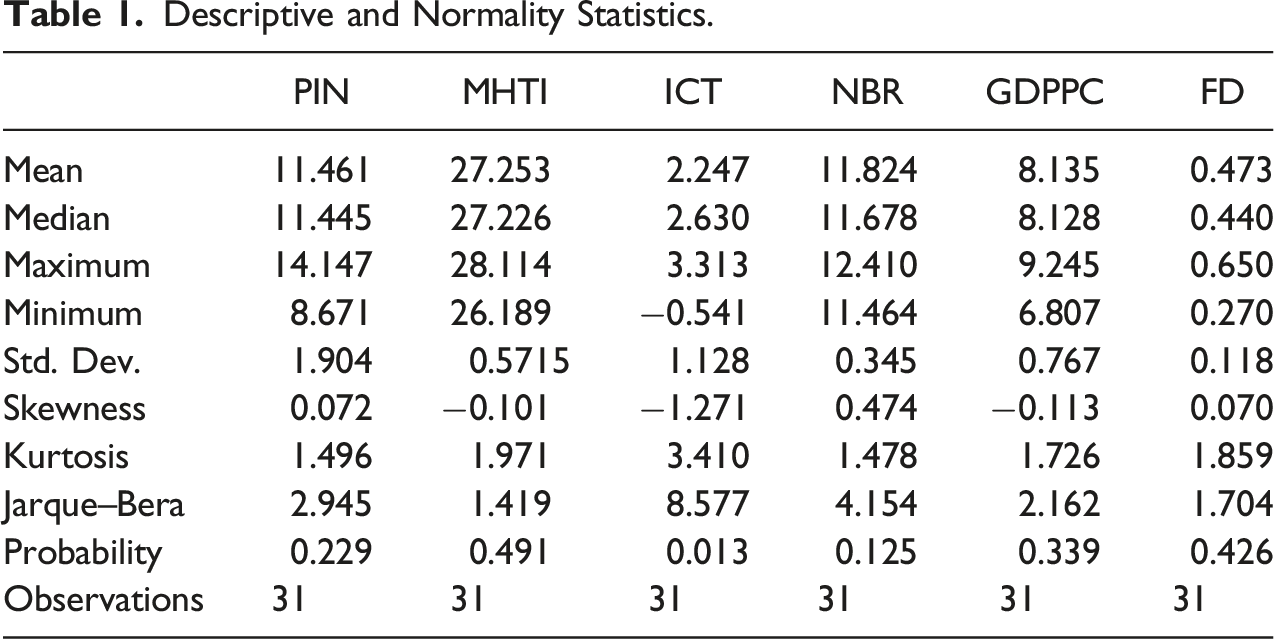
In order to give a complete description of panel data, this study explores descriptive statistics for each of the study variables. The descriptive stats consist of the mean, median, and range values. The latter contains the minimum and maximum observations of data. This study also looks at the standard deviation of variables, which illustrates the temporal variable’s instability by showing how much the data deviate from the variable’s mean value. Additionally, two normalcy measurements are utilized to examine the distributive characteristics of the data: skewness and Kurtosis, which are used to check if a variable’s distribution satisfies the normalcy requirements. Skewness and Kurtosis, meanwhile, provide precise figures on the variable’s spread. This research, however, more precisely addresses the question of normalcy. The Jarque and Bera (1987) normality test were utilized in this research, which determines both the skewness and excess Kurtosis and keeps them at zero as the null assumption for a normal distribution. The Jarque-Bera mathematical formula for normalcy statistics is as follows

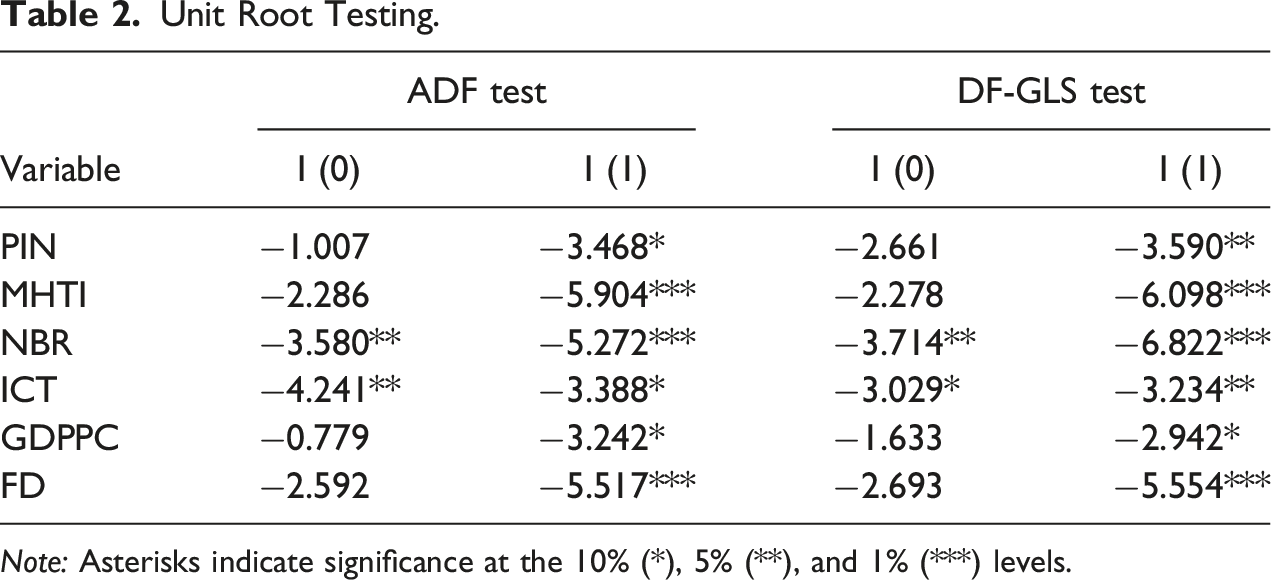
After the normality evaluation of the variables, the unit root estimations, nonetheless, the existence of a unit root in the time series may provide unexpected results. Therefore, the Augmented Dickey-Fuller (ADF) model developed by Dickey and Fuller (1979) was adopted. For the autocorrelation issue, the ADF test is suitable. Therefore, compared to the common Dickey-Fuller test, this test is more comprehensive and capable of handling more complicated models. It’s probable that not all the variables are level stationery. As a result, the data at the initial difference might also be utilized for this test. It has been normal practice in time series modeling to use the Dickey-Fuller test to evaluate if a series has a unit root; nevertheless, innovative tests with much better statistical features are already emerging. With a justification based on the generalized least square (GLS), Elliott et al. (1992) devised effective testing by changing the Dickey-Fuller test statistic. By comparing the sample size and statistical power of their modified test to the conventional Dickey-Fuller evaluation, they show that it is superior. When an uncertain mean or trend was introduced, Elliott et al. (1992) asserted that the “DF-GLS” test had considerably enhanced power.
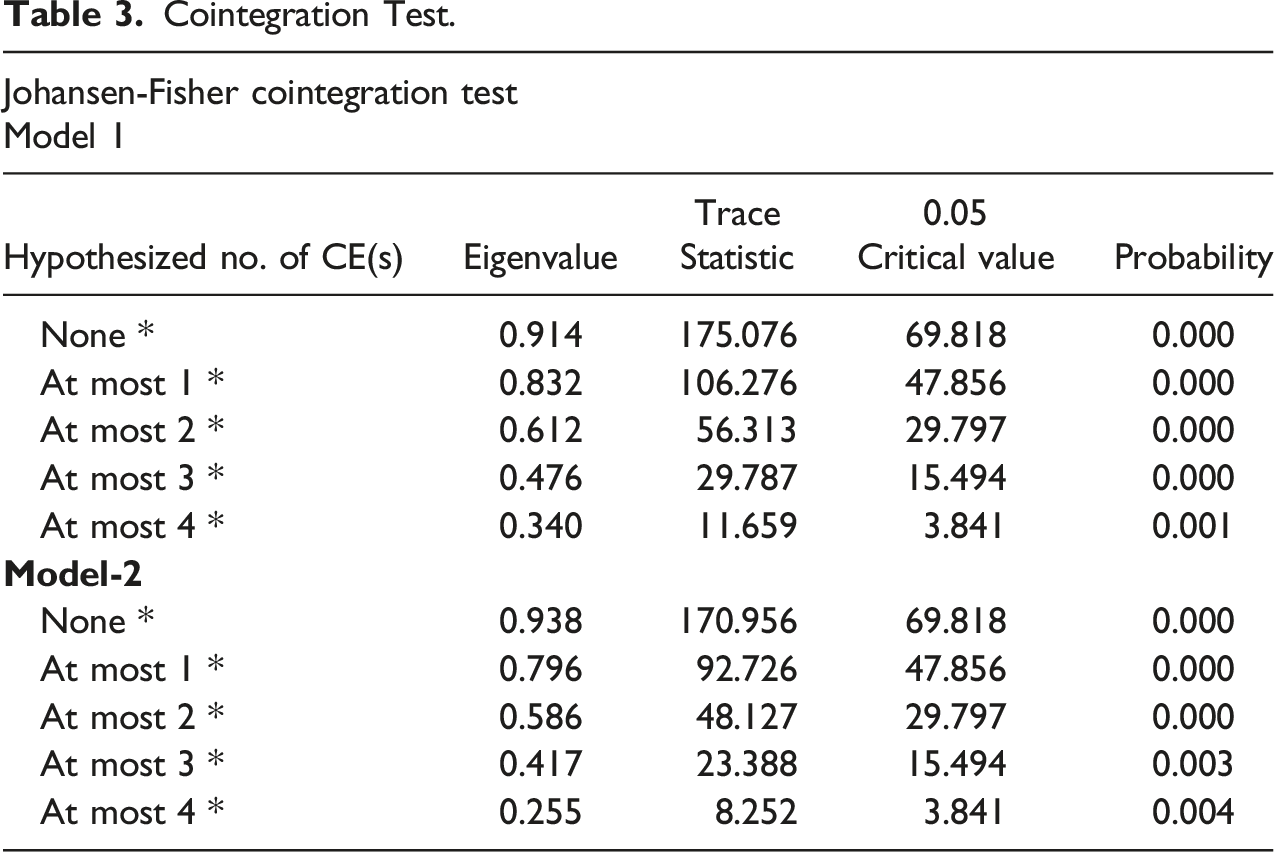
The ADF unit root test validates the stationarity of each variable under examination; this enables the analysis of the variables' long-run equilibrium connection. Further, we employ the Johansen and Fisher cointegration test to examine the cointegration. Notably, this test measures the authenticity of the cointegrating link while using the maximum probability assumptions. Such a test is often employed for linkage detection, and methods for examining such connections between variables are also prevalent (Poh & Tan, 1997).
This research uses the quantile regression method advocated by Koenker and Bassett (1978) to experimentally examine the long-run effects of regressors on product innovation after performing the time series analysis requirements, such as normality, the unit root, and the cointegration tests. The test estimations via Jarque and Bera, (1987) reveal an asymmetrical distribution, which precludes the adoption of conventional methodologies from providing reliable estimates. Therefore, the quantile regression method is applied. Additionally, the quantile regression specification, which offers predicted coefficients at each specified quantile, is employed in this study to avoid the overestimation and underestimating biases of the calculated coefficients in these conventional approaches. Since the quantile regression methodology addresses both redistributive and individualized variability, it is more successful than the traditional least squares method in providing detailed information concerning the relationship between the studied parameters (Cheng et al., 2019). Additionally, quantile regression is more reliable than conventional regression, which only provides the average contribution of regressors (Qin et al., 2021). The previously mentioned regression expressions, i.e., Eq. (1) and Eq. (2), may be converted into the quantile regression format as illustrated below by using the suggested methodology.


After assessing the long-run coefficients via quantile regression, the current research study tests the robustness of the models. In this regard, we must use an adequate and unbiased estimator(s). Therefore, following the empirical study of Khan et al. (2019), we used three long-run robust estimating approaches. These techniques include Park’s (1992) Canonical Cointegrating Regression (CCR), Fully Modified Ordinary Least Square (FMOLS), and Pedroni’s (2000) Dynamic Ordinary Least Square (DOLS). The two methods used in the aforementioned procedure are non-parametric (FMOLS) and parametric (DOLS). These approximations are robust gauges of long-run estimates because they are more adept at addressing the serial correlation issue. Additionally, the DOLS operator efficiently estimates time series as it takes non-stationarity into account. The equation form below is used to represent both FMOLS and DOLS, respectively


As previously mentioned, the CCR estimation method only relies on a regression-based strategy. Yet, this approach is cost-effective and crucial for addressing the linear regression element. As a consequence, the under-discussion technique’s most difficult problem is figuring out accurate lags and lead orders. The CCR estimators may often be written as the equation below

Granger (1969) asserted that causation in economics may be evaluated by calculating the means of forecasting values of a time series given previous values of another time series, the regression approach is often used to represent “simple” correlation. Although the long-run estimators yield significant empirical findings, these methods have several limitations in terms of illustrating the causal relationships between PIN and regressors. Consequently, the Granger causality test, which was developed by Granger (1969), was applied in the present investigation. Given that it may be used with either I (0) or I (1) data, this test is effective. Finding the appropriate lagged values of x to include in a univariate autoregressive model of x is important to evaluate the null hypothesis of the specified test, which claims that z does not Granger cause x.

Lagged values of z, as seen below, are included to broaden the autoregression

The lagged values of z, which are individually significant based on their t-statistics, are maintained in this method as they together provide the regression based on F-test with the predictive power. In this instance, the lagged value of z is significant in the previous regression augmentation because p is the lowest lag length and q is the longest. If the regression does not maintain any lagged z values, the null hypothesis that z does not Granger cause x will be accepted.
Results and Discussion
This section of the manuscript provides estimated outcomes from econometric analysis, as elaborated in sequence in the previous methodology section. Interpretations of the results are documented here, and discussions are elaborated at the end.
Preliminary Estimation
Descriptive and Normality Statistics.
Unit Root and Cointegration Analysis
Unit Root Testing.
Note: Asterisks indicate significance at the 10% (*), 5% (**), and 1% (***) levels.
Cointegration Test.
Non-parametric Tests (Quantile Regressions)
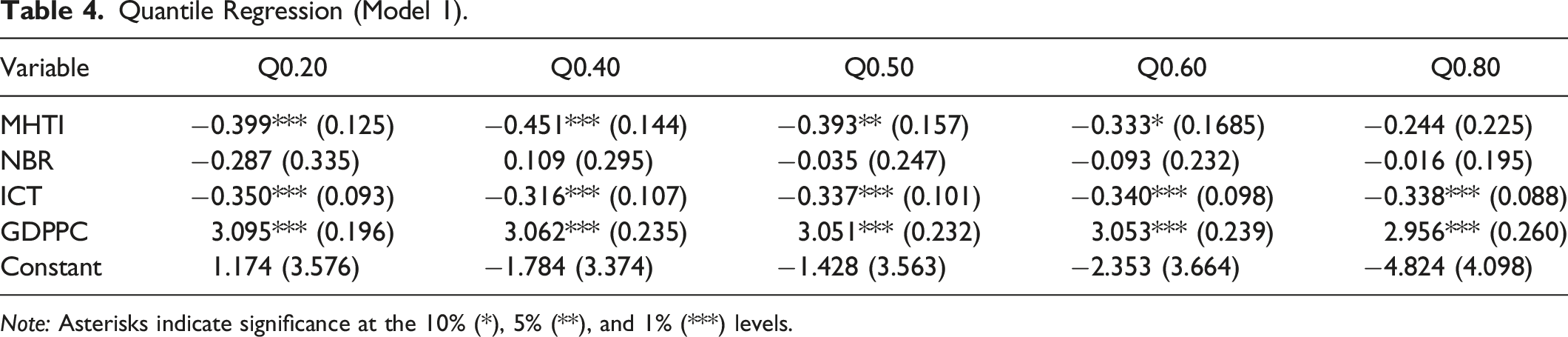
Quantile Regression (Model 1).
Note: Asterisks indicate significance at the 10% (*), 5% (**), and 1% (***) levels.
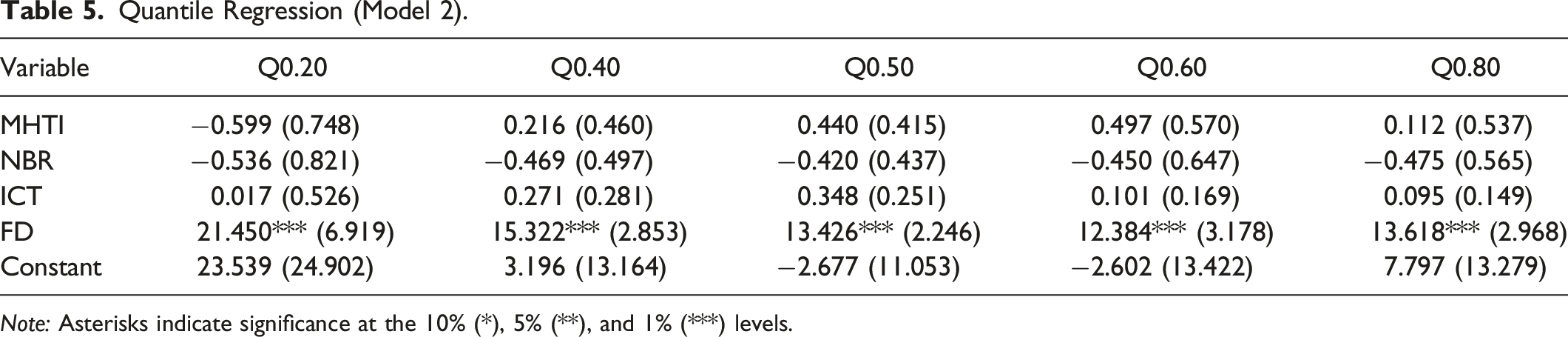
Quantile Regression (Model 2).
Note: Asterisks indicate significance at the 10% (*), 5% (**), and 1% (***) levels.
In Model 1, medium and high-tech industry show significant associations with product innovation. The coefficient values are negative, indicating that increasing high-tech industries in the country decreases product innovation. Similarly, ICT shows a statistically significant and negative relationship in all quantiles with the dependent variable of product innovation. The explanatory factor “new business registration” shows negative but insignificant associations with product innovation in all quantiles. However, GDP per capita is positively related to product innovation, indicating that increasing economic growth will escalate product innovation in the Chinese economy (Klein & Şener, 2022). The findings of quantile estimate Model 1 are illustrated in Table 4. Figure 1 offers a graphical presentation of the quantiles of all variables, which demonstrates the above regression findings. The figure shows that product innovation is positively associated with GDP, thereby indicating that economic activities increase it. Quantile estimates of model 1.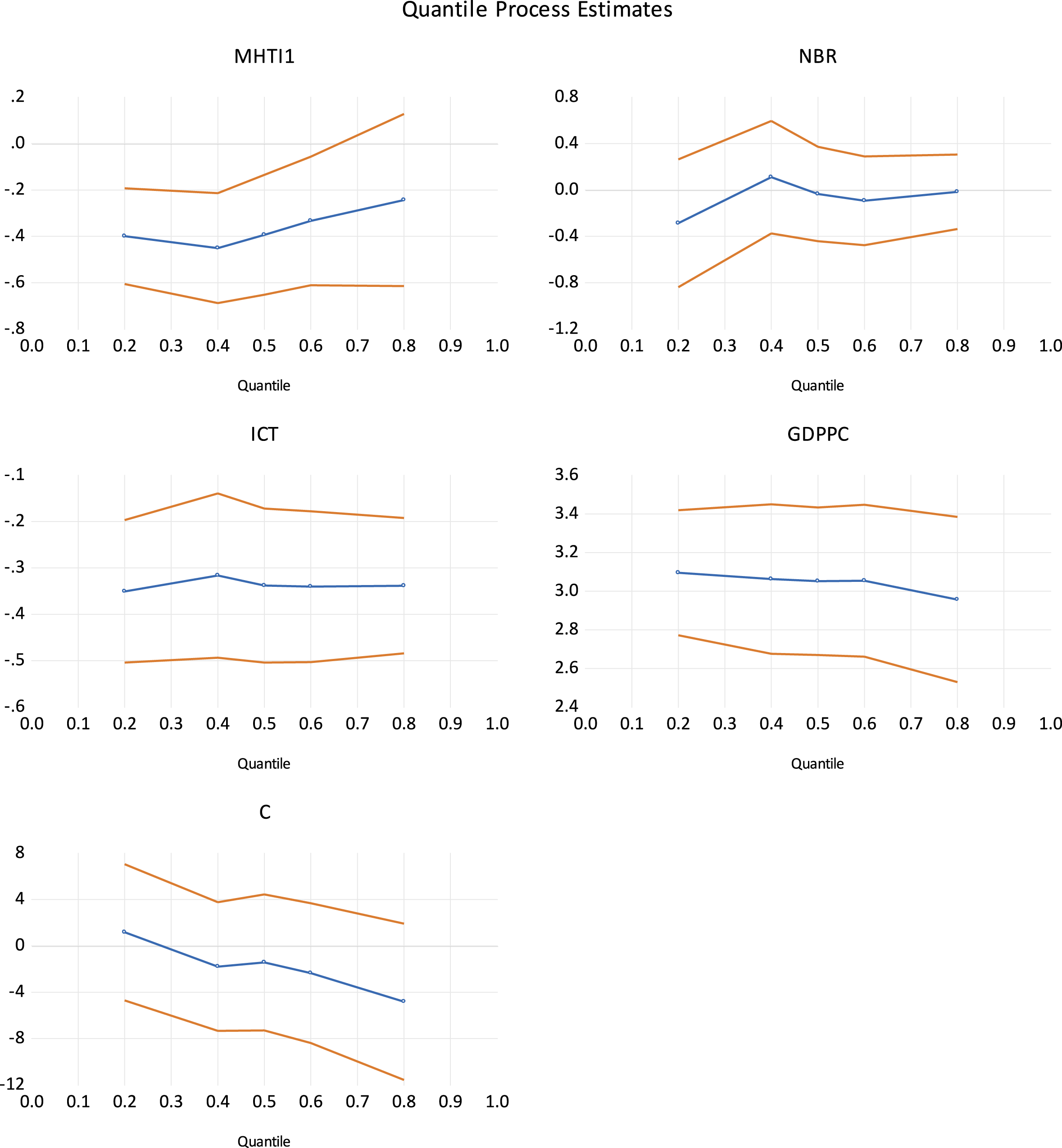
The graphical demonstration of Model 2 quantiles is illustrated in Figure 2 and indicates that all variables have a substantial relationship in promoting product innovation under the influence of financial expansion. The findings of the quantile estimate in Model 2 are exemplified in Table 5. In Model 2, the coefficients of almost all variables show positive associations with product innovation in the presence of financial development, except for new business registration. This indicates that medium and high-tech industry and ICT amplify under financial development, which augments China’s product innovation. However, the registration of new businesses shows a negative association with product innovation, indicating that an increase in registration will decrease product innovation. Additionally, only financial development has a statistically significant relationship with product innovation, while all other explanatory factors are statistically insignificant. Quantile estimates of Model 2.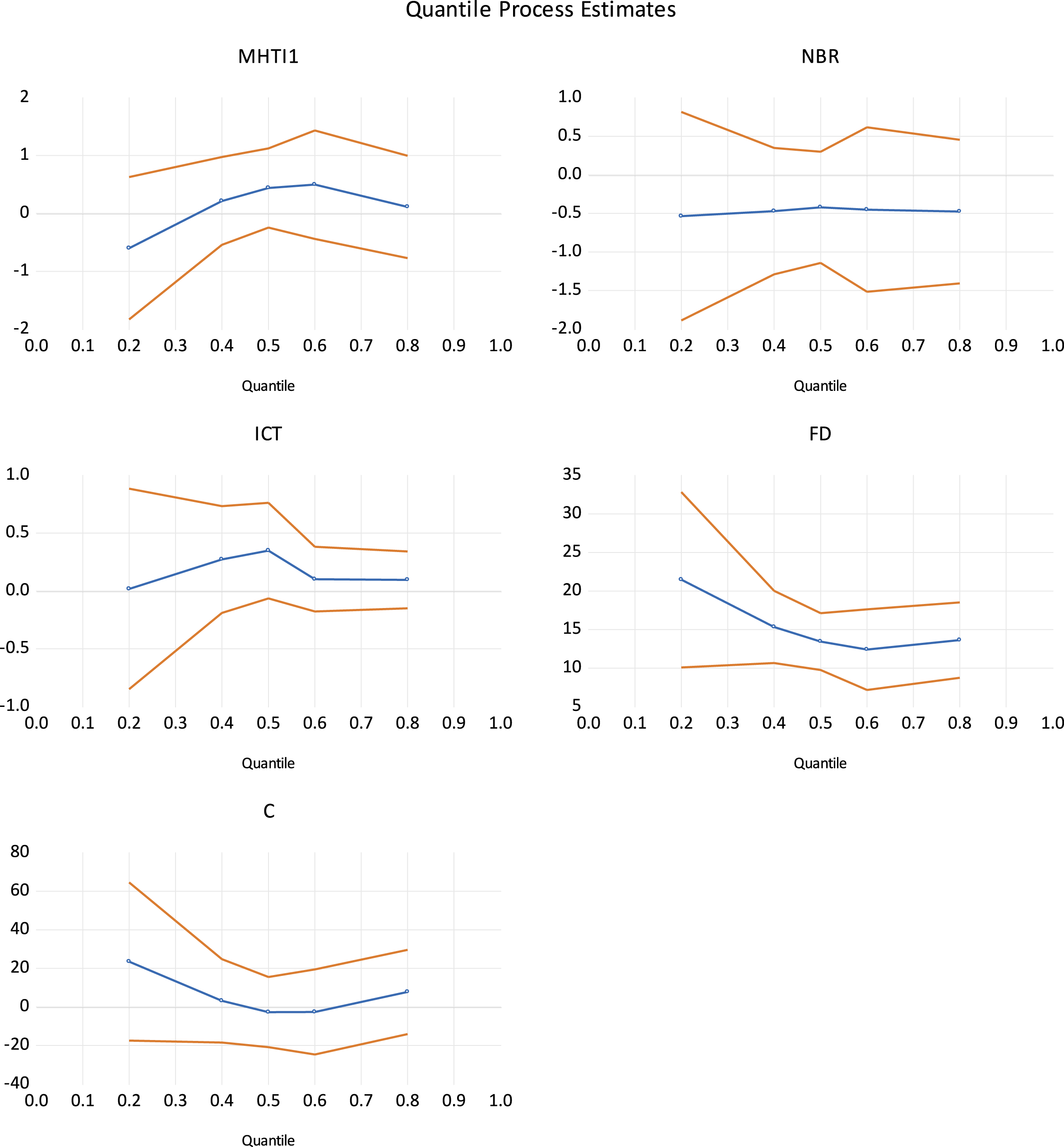
Robustness Check
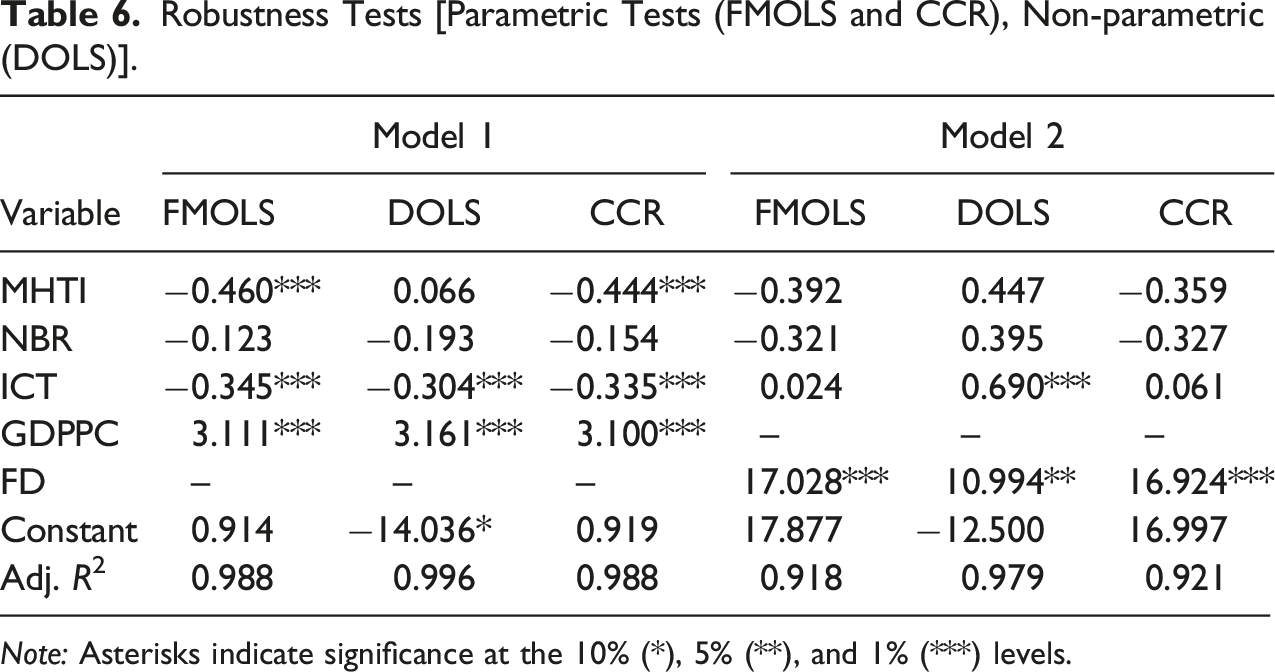
Robustness Tests [Parametric Tests (FMOLS and CCR), Non-parametric (DOLS)].
Note: Asterisks indicate significance at the 10% (*), 5% (**), and 1% (***) levels.
In Model 1, the robustness analysis shows statistically significant outcomes at the 1% and 5% levels of significance, except for business registrations. The signs of the coefficients of ICT, GDPPC, new business registrations, and medium and high-tech industry in Model 1 are almost identical to those in the above estimation process, indicating the reliability of the process. In Model 2, financial development and ICT show statistically robust findings, while the rest of the explanatory factors do not provide significant outcomes. The signs of all the variable coefficients illustrate the robustness of Model 2.
Causality Analysis
Causality Test.
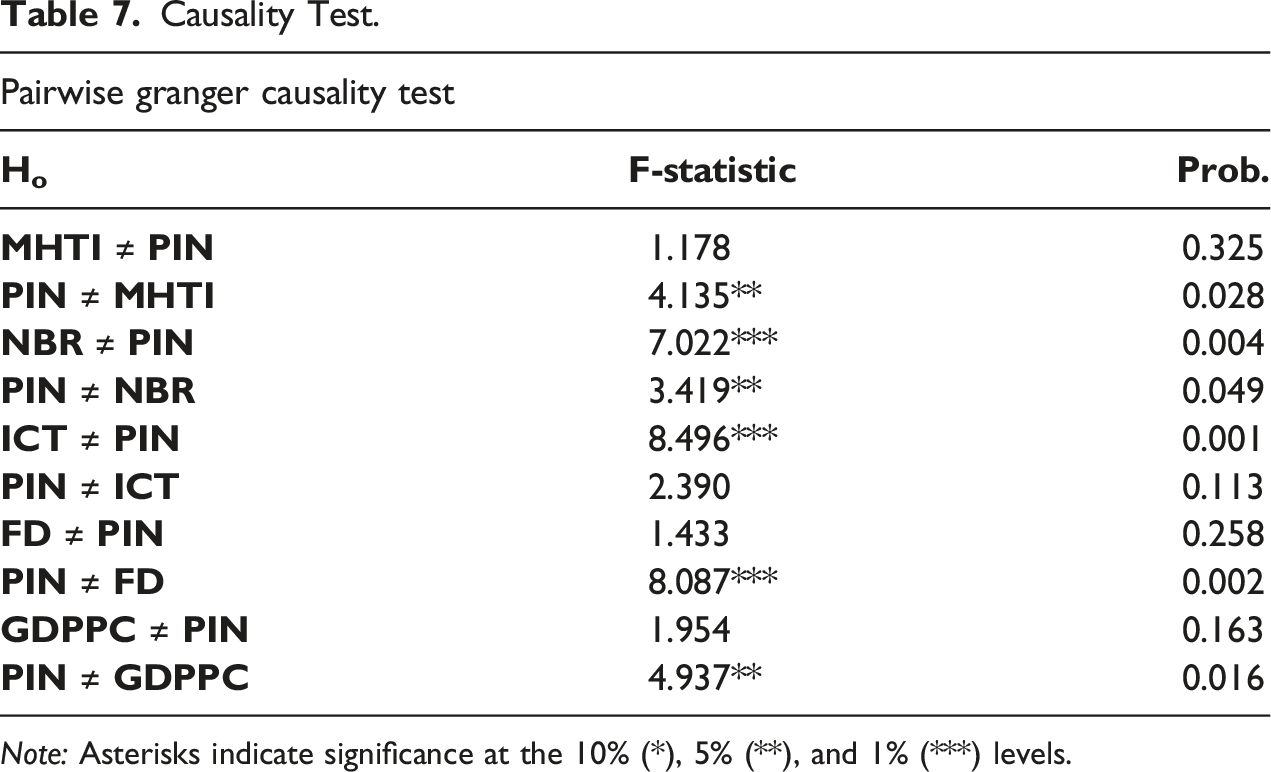
Note: Asterisks indicate significance at the 10% (*), 5% (**), and 1% (***) levels.
Discussion of Findings
The present study employed advanced methods for the valuation process and provided novel discoveries to the academic literature. The study outcomes are consistent with those of the available literature (Idota et al., 2020; Talebzadehhosseini & Garibay, 2022; Xiong et al., 2022). First, GDPPC is positively associated with product innovation in the regression analysis. The novel findings of current study demonstrate that economic growth is dependent on product innovation since innovations are essential for a country’s welfare and economic expansion (Bakari et al., 2020; Klein & Şener, 2022). However, the causality analysis shows one-way causality from innovation to GDP per capita because innovation stimulates economic growth. Modern economic growth is now dependent on product innovation and technological development (Maradana et al., 2019; OECD, 2019; Talebzadehhosseini & Garibay, 2022). Second, financial development is positively and statistically associated with product innovation with a unidirectional causal association, which is in line with the findings of Loukil (2020). From a logical point of view, product innovation is key factor for firm growth and productivity. The deep financial markets promote innovation by allocating capital to firms promising projects.
This finding indicates that financial systems can promote innovative activities since financial development increases capital flow in the economy, which is ultimately significant for increasing productivity. Similarly, financial development affects business growth, foreign investment, technological advancement, and market expansion in terms of product innovation. Third, in Model 1, medium and high technological sector are negatively associated with product innovation under economic development in China, which is a novel finding in the persistent and pragmatic body of knowledge. The medium and high-technology industry of China has witnessed massive growth over the past decades. Technological innovation strives to improve the existing product i.e., to provide new product and process with new technological features to make it unique in a competitive market. The new products introduction in market is regarded as innovation, which is benefiting for the broader public and the firms. It can be justified from the fact that China is investing huge funds on R&D activities for product diversification, while such product diversification somehow brings similar kinds of products and does not encourage the innovation activities and innovative products. However, in Model 2, in the presence of financial development, MHTIs are positively associated with product innovation, which is consistent with the outcomes of Trott and Simms (2017).
The results imply that improvements in financial systems increase innovation and technological advancement to serve people and enhance quality of life. Fourth, in the presence of economic growth per capita in Model 1, ICT technologies are negatively associated with product innovation and positively associated with innovation under the influence of financial development in Model 2. In addition, the causality results show a unidirectional association between ICT and product innovation. Hence, the results are consistent with the findings of Idota et al. (2020) and Xiong et al. (2022). Finally, new business registration is negatively associated with product innovation in both models, with a bidirectional causal association. New patent registrations are negatively associated with innovation (Garavito Hernández & Rueda Galvis, 2021).
In summary, technological innovations, communication technologies and financial development are both necessary for product innovation and for promoting innovation activities in China. They increase a country’s productive capacity and economic activities, which are both important for economic progression. Nonetheless, in the presence of economic growth, MHTIs and the information and communication sector are inversely related to product innovation, indicating that an increase in technologies reduces product innovation. Under the influence of financial development, they augment product innovation by demonstrating sustainable development through escalating product innovation. Overall, the results indicate that innovation is an essential source of economic growth and monetary expansion paves the way for promoting product innovation. Creating unique products saves excessive resource exploitation, generates revenue, inspires creativity, boosts R&D, and increases customer satisfaction and labor by improving lifestyles. The diffusion of environmental, social, and economic aspects in the process of transitioning toward a green economy is significant for sustainable development (OECD, 2019). According to the OECD, certain sectors have diffused innovative green transitions (e.g., natural resource exploitation, building construction, transportation systems, water supply, and waste management). However, scaling up is essential in some sectors to boost the economic and environmental quality. Specifically, adapting strategies concerning climate change (e.g., renewable energy, green technology, and digitalization) helps limit environmental pollution and improves innovation sustainability, which is positively associated with achieving economic growth and improving the environment. However, the role of new business registration under both factors inversely indicates that new business registrations shrink the innovative potential of the country. Further, the impact of digitalization, new businesses, and ICT differs under different circumstances. The developed economies recommend enhancing economic sustainability, while few under developing nations are struggling for basic economic others, due to a lack of technological advancement, it does not contribute to economic prosperity. Nevertheless, innovation is necessary to increase economic growth and development, business upgrading, and international globalization.
Conclusion and Policy Implications
Digitalization, new businesses, and ICT are essential areas of exploration and have significant potential in research and academia. However, these factors have not been extensively researched. Therefore, the present study addresses this gap by inspecting the role of the digital and technological sectors in product innovation in China from 1990 to 2020. Digitalization has become crucial globally because it significantly empowers the economy by escalating technology and innovations to achieve sustainable development goals through environmentally friendly innovations that limit pollution. In addition, the rise in digitalization and information technology has made significant progress in China’s long history of economic development and it is now a main sector and dominant force at the national level in the country (Wu, 2022). This study explicitly determines the factors of product innovation by understanding the aspects that influence product innovation, which is also a valuable input. This study is significant in analyzing this relationship in China as the nation is emerging as a new technology leader by investing in and adopting new digital technologies. The study’s findings imply that innovations are a modern way of achieving a sustainable economy under the influence of financial expansion.
These outcomes indicate that digitalization and information technologies play a substantial role in product innovation. For the research estimation, the authors determined the data’s pre-estimation diagnostic and validated the non-normal distribution of the information. Later, the unit root and cointegration analyses illustrated the presence of unit root and long-run relationships among the study variables. Owing to non-normal data, the authors applied a non-parametric technique known as quantile regression to investigate the relationships among the variables under consideration. The findings of quantile regression depicted momentous discoveries. In Model 1, information technologies, medium and high technologies, and economic growth per capita showed statistically significant results, while in Model 2, only financial development was substantial associated with product innovation. All variables, including the remaining ones, also indicate consistent findings regarding their direction of influence. Our results are relevant to current research outcomes (Ueki & Tsuji, 2018; Xiong et al., 2022) and allow us to conclude that, under the influence of supportable financial development, the medium and high technology industry and digital sectors positively contribute to product innovation. In general, we can imply that the promotion of product innovation is significant. Hence, product innovation plays a vital role in enhancing people’s lifestyles by creating enough value for customers to make use of products and potentially help individuals perform their day-to-day chores. Additionally, the diffusion of environmental aspects in innovation is imperative for the technology industry to endorse environmentally friendly products and attract new businesses and investments for innovation for sustainable economic expansion.
Based on the research outcomes, this study suggests the following policy implications. First, it is important to note that digitalization is a game changer offering a new dimension for expansion and is productive in strengthening institutional structures, which are beneficial in promoting regulations for an advanced sustainable economy. Encouraging green energy, innovative green production, green productivity, globalization, and investments is also helpful for environmental sustainability.
Second, efficient allocation of resources can intensify green product innovation in a sustainable environment and development. Additionally, restructuring innovation policy to obtain innovative ideas in the market is a prerequisite for sustainability. It will promote R&D, encourage economic activity, and attract foreign direct investments in the country because high-tech industries provide high-value production and are directly associated with innovational activities. This, in turn, aids in improving the standard of living for sustainable living. Finally, an efficient and effective ICT approach is required to properly align technological advancement and business goal for better public-private relationships and innovation.
In summary, the current study is relevant in terms of the SDG of product innovation for a clean environment and progressive economy. The medium and high technology industry of China and communication technologies have witnessed surprising development and innovations, which has helped the industry to completely re-design the business and products. The technological advancements have helped the industrial sector to introduce new products, and introduction of new technological features in the existing products, making them unique from competition. Additionally, the research findings may provide an exceptional way to devise and guide businesses and strategy frameworks to chart plans for better economic and environmental sustainability.
Footnotes
Declaration of Conflicting Interests
The author(s) declared no potential conflicts of interest with respect to the research, authorship, and/or publication of this article.
Funding
The author(s) received no financial support for the research, authorship, and/or publication of this article.
Data Availability
Data are available upon request from the first or corresponding author.
