




Abstract
Increasing industrial activities trigger the intense use of fossil fuels and increase the number of carbon emissions in the atmosphere. Countries with a high share in current carbon emissions need to expand their use of renewable energy sources. Canada is an important energy producer and consumer globally. In this regard, its decisions are important for the future development of global emissions. This study examines the asymmetric effects of economic growth, renewable energy, and non-renewable energy consumption on carbon emissions in Canada from 1965 to 2017. In the first stage of the analysis, unit root testing was performed for the variables. For this, Lee-Strazicich (2003), ADF and PP unit root tests were used. The nonlinear ARDL method was used to analyze the relationship between variables. and Measures: In order to analyze the relationship between the variables in the established model, renewable energy consumption (%), non-renewable energy consumption (%), and carbon emissions (per capita-Mt). In addition, the economic growth (constant price 2010- US$) parameter was added to the model as a control variable. The findings support that energy consumption, economic growth, and renewable energy have an asymmetric effect on carbon emissions in the long run. The positive shock in renewable energy reduces carbon emissions, and a unit increase in renewable energy reduces carbon emissions by 1.29%. Besides, the negative shock in economic growth greatly deteriorates the quality of the environment; that is, a 1% reduction in economic growth causes emissions to increase by 0.74% in the long run. On the other hand, positive shocks in energy consumption have a positive and significant effect on carbon emissions. A 1% increase in energy consumption causes 1.69% carbon emissions. There are important policy implications for Canada to eliminate carbon emissions, increase the share of renewable energy sources and achieve its economic growth targets. In addition, Canada needs to reduce its consumption of non-renewable energy (such as gasoline coal, diesel, and natural gas).
JEL Classifications
C33, E23, O10, Q20
Introduction
With the Industrial Revolution, the acceleration of production, technological advances, rapid population growth, and urbanization have increased the use of energy resources and pressure on natural resources. In this period, the fact that nature continuously meets the needs of production and consumption has revealed that natural resources are not unlimited and that non-renewable energy (fossil energy) resources are the basis of environmental problems. In the Human Development Report (published by the United Nations Development Program in 1996), economic growth resulting from the unconscious destruction of nature and the environment (which will be left as a legacy to future generations) is called futureless growth and is expressed in the category of growth to be recommended (UNDP, 1996). Renewable energy is defined as energy obtained from continuous and natural energy flows occurring in the environment (Twidell & Weir, 2006). Renewable energy sources include solar energy, hydraulic energy (water power), geothermal energy, wind energy, biomass, and waste energy. The use of renewable energy sources is considered one of the key factors in solving many of the problems facing the world. Indeed, renewable energy will sustain economic growth without the danger of resource depletion and without causing climate change. It is also argued that it can reduce economic and political risk by reducing energy dependence, securing the energy supply in the long run and reducing energy poverty (Menegaki, 2011).
In the 21st century, climate change and greening are still among the most important environmental problems of the globalizing world. As a result, on the one hand, policies to combat climate change are gaining momentum in the world, while on the other hand, the economic effects of climate change and solutions are coming to the fore. Especially in recent years, the goal of ensuring economic growth in a sustainable manner has been supported by almost all actors in the world economy. Countries aiming for economic growth must also give importance to the environment while achieving these goals. For this reason, the concept of “low carbon and green growth” is more prominent (Hwang & Yoo, 2014). Due to the environmental impacts of emissions from fossil fuels, renewable energy sources have become a substitute energy source used to reduce carbon dioxide (CO2) emissions and control climate change (Lorente et al., 2018). The main source of greenhouse gas emissions, which attracts attention to the threat of global warming and climate change, is the abundant release of CO2 during the combustion of fossil fuels. As a matter of fact, the relationship between economic growth and carbon emissions with the global warming experienced today is among the issues that are examined due to their environmental effects. The environmental effects of the relationship between economic growth and carbon emissions are explained by the Kuznets curve, which shows an inverted U-shaped relationship (Mirza & Kanwal, 2017). The Environmental Kuznets Curve (EKC) is explained by Kuznets (1955) that income inequality initially increases as per capita income increases and starts to decrease after a turning point. In short, it describes an inverted U relationship between income inequality and per capita income. In the 1990s, the Environmental Kuznets Curve concept was applied with the hypothesis that per capita income and environmental degradation follow the same inverted U-shaped relationship. This relationship is called the Environmental Kuznets Curve approach because of its similarity with the relationship between income inequality and per capita income proposed by Simon Kuznets in his 1955 study. The Environmental Kuznets Curve explains the hypothetical relationship between the deterioration of environmental conditions and per capita income level. In the relationship between environmental pollution and per capita income, the quality of life deteriorates initially due to environmental pollution and then improves. According to the Environmental Kuznets Curve hypothesis, environmental pollution first increases and then decreases in the process of economic development.
Graph 1 illustrates the Environmental Kuznets Curve in its simplest and most basic form. When economic growth increases, environmental pollution initially increases, the trend reverses after a certain threshold value, and as the level of economic development increases, environmental pollution decreases with the increase in environmental awareness. National income per capita and economic growth rates are utilized to explain the Environmental Kuznets Curve. Economic growth is closely related to the increasing use of electricity and energy in general. In addition, it is known that CO2 emissions may also increase (Salahuddin et al., 2015). Growing economies often have large energy demands and energy requirements for electricity generation. Increases in energy demand lead to an increase in the demand for electrical energy and environmental concerns such as CO2 emissions. Environmental Kuznets Curve. Source: Shahbaz & Sinha, 2017, p. 109.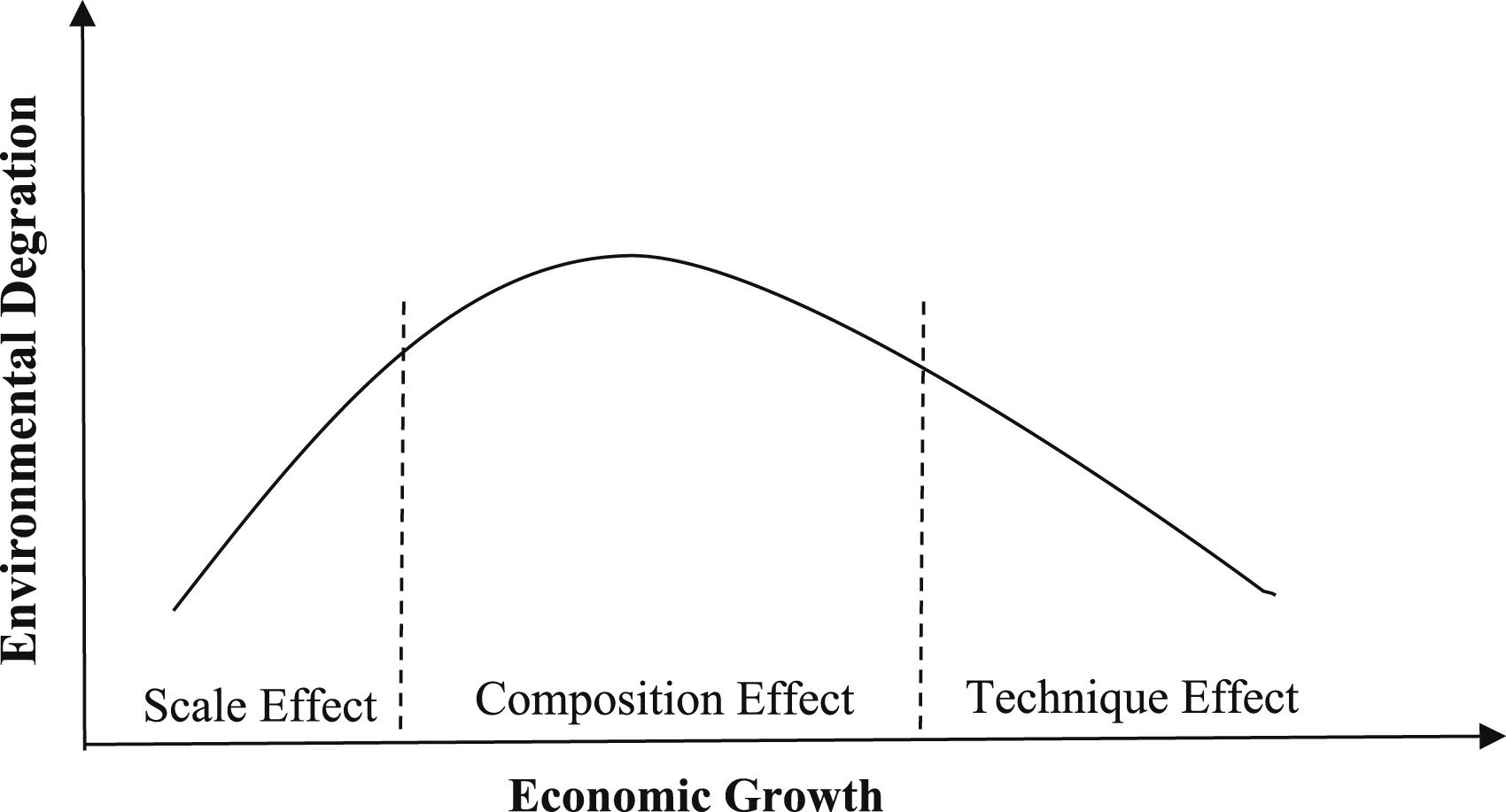
According to the 2021 report of the International Energy Agency (IEA), after the coronavirus pandemic, it was emphasized that global energy-related carbon dioxide emissions reached their highest levels with the increase in coal use. The report suggests that the demand for renewable energy resources will increase, while the demand for non-renewable energy resources will decrease significantly due to the COVID-19 pandemic. According to the IEA analysis, in 2021, global energy-related emissions increased by 6%, reaching 36.3 billion tonnes. According to the report, coal accounted for more than 40% of the total increase in global CO2 emissions, reaching an all-time high of 15.3 billion tonnes. CO2 emissions from natural gas exceeded the 2019 data and reached 7.5 billion tonnes. Therefore, while energy is a vital input for production and economic growth, the fact that it is directly related to carbon emissions cannot be ignored. In order to prevent global warming and environmental disasters, energy use should be done by considering CO2 emissions. For this purpose, renewable energy and resources appear as suitable options to increase the energy supply by reducing CO2 emissions. According to the World Bank report, the share of renewable energy consumption (in total final energy consumption) was 18.05% in 2015. This share should be increased to reduce carbon dioxide emissions and protect environmental quality (Rahman & Vu, 2020).
The low-carbon economy is the future of sustainable development, and reducing carbon emissions has become a common goal. The development of a low-carbon economy requires a transition to a green and sustainable growth model and the reduction of ongoing threats to natural ecosystems and energy security, adjustment of industrial, energy, and consumption structures, and policy support. Climate change is caused by an increase in the release of greenhouse gases in the atmosphere. These changing climatic conditions have significant impacts on the environment, human health, and the economy. Greenhouse gases can be emitted by both natural processes and human activities. According to the International Panel on Climate Change, the impact of anthropogenic greenhouse gas emissions on natural processes occurring in the atmosphere is the main cause of current global warming. Globally, almost 80% of greenhouse gas emissions from human sources come from burning fossil fuels and industrial processes (vehicle use, heating and cooling of buildings, manufacturing and transport processes, etc.). Canada signed the Kyoto Protocol in 1990. In 2015, with the signing of the Paris Agreement, Canada adopted 2005 as the base year for its reduction target of greenhouse gas emission. According to 2020 data, approximately 24% of Canada’s total greenhouse gas emissions come from the oil and gas sector, 22% from transport, 12% from buildings, and 10% from heavy industry. In 2021, Canada committed to reducing greenhouse gas emissions by 40–45% below 2005 levels by 2030 (Graphs 2 and 3).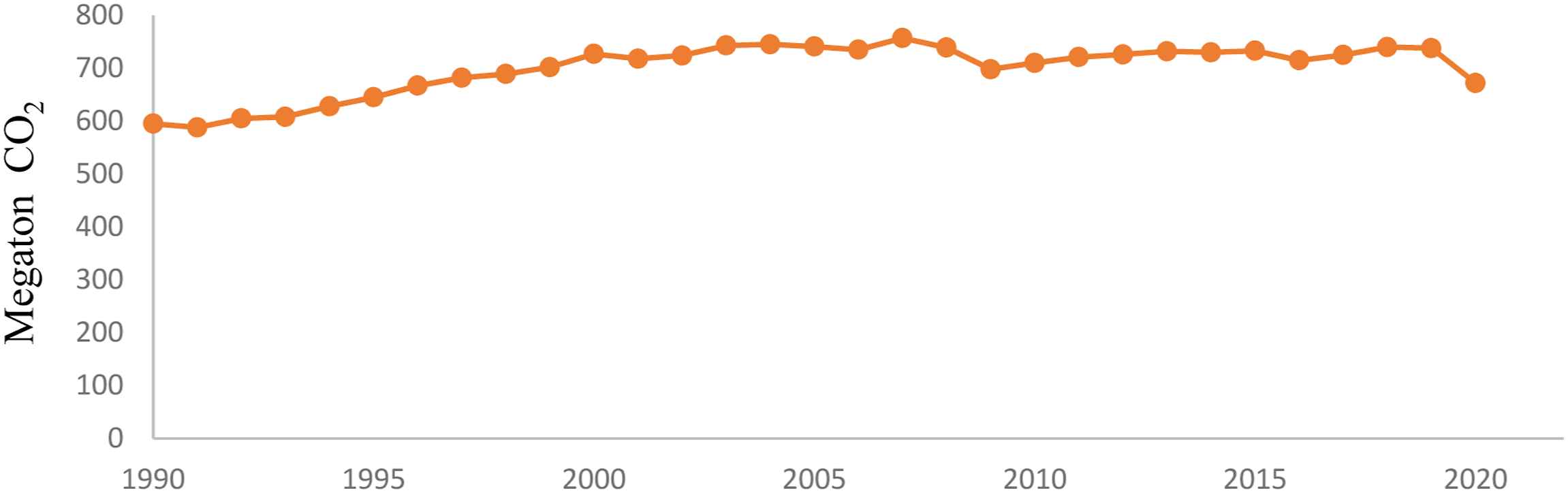
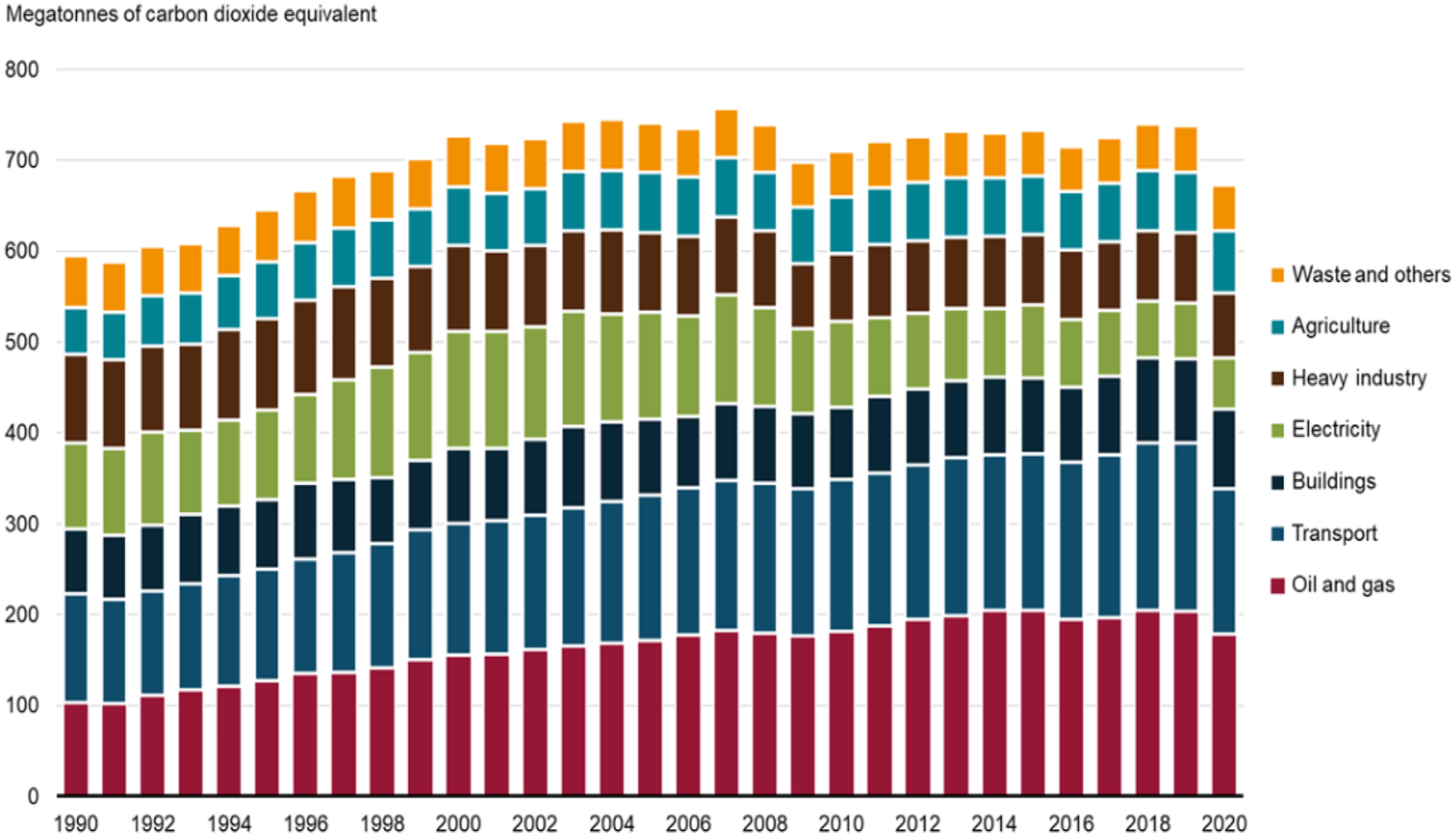
It is seen that Canada’s greenhouse gas emissions in 2020 decreased by 8.9% compared to 2019. From 2005 to 2020, Canada’s greenhouse gas emissions decreased by 9.3%. This was mainly a result of emission reductions from measures in the electricity and heavy industry sectors. It is observed that Canada’s greenhouse gas emission rate increased by 13.1% between 1990 and 2020 due to increased emissions from transport, oil and gas extraction, and the increase in economic growth and production in general. In addition, the quarantine measures introduced in 2020 due to the pandemic led to an industrial slowdown, resulting in significant reductions in air and land trade and travel. Between 2019 and 2020, the transport sector in Canada experienced a 14% decline, which positively impacted the reduction of greenhouse gas emissions (IEA, 2021).
In Canada, most of the increase in total greenhouse gas emissions observed between 1900 and 2020 was attributed to a 74% increase in emissions from the oil and gas sector and a 32% increase from transport (IEA, 2021).
Even though numerous studies investigate asymmetric effects of energy consumption, renewable energy, and economic growth regarding carbon emissions in terms of countries or country groups, the relationship between these three variables has not been sufficiently tested for Canada. From this perspective, this piece of research yields some contribution to this rather important topic. The aim of the study is thus to analyze whether there is a reciprocal relationship between CO2 emissions, energy consumption, and economic growth variables for Canada using annual data for the period 1965–2017 with the nonlinear ARDL method. In the second part of the study, following the introduction, studies investigating the relationship between CO2 emissions, energy consumption, and economic growth in the literature are analyzed. The third section analyses the methodology used in the study, the fourth section presents the empirical findings, and the fifth section provides a general evaluation of the study’s empirical findings.
Literature Summary
There are many studies on the impact of non-renewable energy consumption, renewable energy consumption, and economic growth on carbon emissions. However, since the issues such as environmental pollution, non-renewable energy use, and the trend toward renewable energy use remain topical, the relationship between the above variables continues to be studied within new methods and country samples. Findings on the relationship between economic growth, energy consumption, and carbon emissions are essential in many aspects, such as economic policies, total and sectoral energy consumption, and environmental planning on a national and global scale (Waheed et al., 2019). The literature summary is given under two headings to clarify the difference between the studies on carbon emissions, economic growth, energy consumption, and renewable energy in the existing literature. The relationship between economic growth, energy consumption, and carbon emissions is closely interconnected. Therefore, it is given under a single heading in the first section. The relationship between renewable energy consumption and carbon emissions, which has recently been presented as an important solution strategy for reducing carbon emissions, is presented separately in the second section under a separate heading.
Carbon Emissions, Economic Growth, and Non-RenewableEnergy Consumption
The relationship between energy consumption and economic growth and between economic growth and environmental pollution has been the subject of intensive research. However, the empirical evidence remains controversial and uncertain to date. The existing literature reveals that empirical studies vary considerably and are not conclusive in providing policy recommendations that can be applied across countries (Acaravci and Ozturk, 2010). Studies on the relationship between economic growth, carbon emissions, and energy consumption can be categorized under three areas of research (Zhang & Cheng, 2009).
The first group of studies directly addresses the relationship between economic growth and carbon emissions within the framework of Grossman and Krueger (1991). In this study, the relationship between carbon emissions and economic growth is analyzed within the Environmental Kuznets Hypothesis (EKC) framework. The EKC hypothesis is derived from the inverted-U-shaped relationship between income inequality and economic growth expressed by Kuznets (1955). The hypothesis suggesting a relationship between environmental degradation and economic growth has also been described in studies such as Grossman and Krueger (1991) and Shafik and Bandyopadhyay (1992). According to the EKC hypothesis, in the first phase of economic growth, environmental degradation increases due to the increase in income level, while environmental degradation decreases due to the increase in income after a certain threshold (Dinda, 2004, p. 431). Grossman and Krueger (1991) classify the impact of economic activity on environmental deterioration into three categories: size effect, composition effect, and technology effect. The scale effect is an effect that explains the increase in the destruction of environmental quality caused by economic activities, especially by utilizing fossil fuels, due to the increase in commercial activities during the period when the economies of countries start to grow. Due to changes in trade policies of countries in which economic growth continues, specialization in certain areas with lower pollution levels takes place; environmental damage decreases (composition effect); and improvement in technology is observed (technological impact) (Grossman & Krueger, 1991, pp. 3–4).
In one of the studies that tested the relationship between economic growth and carbon emissions within the framework of the EKC hypothesis, Arouri et al. (2012) concluded that the EKC hypothesis is valid in selected countries by utilizing carbon emissions, energy consumption and economic growth variables in MENA countries between 1981 and 2005. Chow (2014) concluded that the EKC hypothesis is valid in 132 selected countries between 1999 and –2004 with the help of a t-test. Al-mulali et al. (2015) estimated the validity of the EKC hypothesis with Kao cointegration, FMOLS, VECM, and Granger causality test for Latin America and Caribbean Countries between 1980 and 2010. In Sirag et al. (2018) study, which aims to test the EKC hypothesis in 143 developed and developing countries in the period 1992–2011, it is estimated that the EKC hypothesis is valid for developed countries but not for developing countries with Dynamic Panel Threshold, System-GMM, and LSDVC methods. Usman et al. (2019) found that the EKC hypothesis is valid in the Indian economy using ARDL and VECM methods with data for the period 1971–2014. Similar results were obtained by Ahmad et al. (2016) for India, Ahmed and Long (2013) for Pakistan, Rana and Sharma (2019) for India, and Bah et al. (2020) for Sub-Saharan African countries, and Mujtaba and Jena (2021) for the period 1986–2014 in India.
Contrary to the studies where the EKC hypothesis is valid, Nigeria for the period 1970–2008 in Akpan and Akpan (2012). A similar finding was obtained by Jebli and Youssef (2015), concluding that the EKC hypothesis is not valid for Tunisia with the ARDL bounds test, VECM, and Granger Causality for the period 1980–2009. Saidi and Mbarek (2017) analyzed the EKC hypothesis in 19 transition countries from 1990 to 2013 with System-GMM and Pedroni Cointegration tests and concluded that the hypothesis is invalid. Moghadam and Dehbashi (2018) concluded that the EKC hypothesis is not valid in Iran between 1970 and 2011 with the help of ARDL and ECM tests. A similar finding was obtained for 46 Sub-Saharan African countries from 1980 to 2015 by Adams and Acheampong (2019). A similar finding was estimated by Pata and Aydın (2020) with Panel AMG and MG methods for the six countries that consume the most hydropower energy and by Ng et al. (2020) with CCEMG estimator method for 76 countries for the years 1971–2014. In the study of Massagony and Budiono (2022), it was concluded that the EKC hypothesis was valid for Indonesia in the 1965–2020 period.
The second group of literature studies, inspired by Kraft and Kraft (1978), focuses on the relationship between energy use and output generation in economic growth (Zhang & Cheng, 2009). Some studies argue for a reciprocal relationship between both variables (“feedback hypothesis”; Al-mulali et al., 2014; Asafu-Adjaye, 2000; Islam et al., 2013; Mahadevan & Asafu-Adjaye, 2007; Murry & Nan, 1993; Tang, 2009).Some argue that there is a direction from economic growth to energy consumption (“conservation hypothesis”; Canh, 2011; Ishida, 2013; Kwakwa, 2012; Yoo, 2006);some argue that there is a direction from energy consumption to economic growth (“growth hypothesis”; Chandran et al., 2010; Fatai, et al., 2004; Lee & Chang, 2008), while a small number of empirical studies focusing on the relationship between the two variables find that there is no relationship between economic growth and energy consumption (“neutrality hypothesis”; Chontanawat et al., 2008; Marques et al., 2014; Masih & Masih, 1996).
The third group of research areas in the related literature is an approach that combines these two methods to investigate the dynamic relationships between economic growth, environmental pollutants, and fossil energy consumption (Acaravcı & Ozturk, 2010). There is a strong relationship between the amount of energy consumed and environmental pollution, as it leads to higher levels of pollutant gases (Farhani & Ozturk, 2015). Following the year 2000, different research studies have added energy consumption to investigate the relationship between air pollution, measured as an important source of greenhouse gas emissions, and economic development. Among energy sources, fossil fuel consumption has emerged as the primary cause of air pollution (Ali et al., 2020).
Among the studies conducted in this framework, Ang (2007) examined the relationship between carbon emissions, energy consumption, and economic growth in France from 1960 to 2000. The findings show that there is a strong long-run relationship between these variables. In terms of causality, the findings show that in the long run, economic growth is the cause of energy use and carbon emissions, while in the short run, there is unidirectional causality from energy use to economic growth. Hossain (2011) concludes that there is a positive relationship between energy consumption and carbon emissions in the short and long run for the period 1971–2007 for Brazil, India, Malaysia, Mexico, Philippines, South Africa, Thailand, and Turkey. Shahbaz et al. (2016) analyzed the relationship between energy consumption, economic growth, and carbon emissions for 1972–2013 for the next 11 countries. According to the findings of the time-varying Granger causality test, economic growth is the cause of carbon emissions in Bangladesh and Egypt, while economic growth is the cause of energy consumption in the Philippines, Turkey, and Vietnam. In South Korea, there is a feedback effect between energy consumption and economic growth. Moreover, Indonesia and Turkey have unidirectional time-varying Granger causality from economic growth to CO2 emissions. Alola et al. (2019) concluded that non-renewable energy use positively affected carbon emissions for 16 European Union countries in the period 1997–2014.
Awodumi and Adewuyi (2020) showed that oil and natural gas consumption per capita asymmetric affects economic growth and carbon emissions per capita in all selected countries except for oil-producing countries in Africa from 1980 to 2015. In the analysis conducted between 1971 and 2014, using the ARDL model, the increase in energy use positively affects carbon emissions. Similar results were obtained for Pakistan for the period 1965–2015 in Khan et al. (2020), for 54 African countries for the period 1996–2019 in Hussain et al. (2021), and for 26 African countries for the period 1990–2018 in Mensah et al. (2021), and BRICS countries for the period 1990–2019 in Chen et al. (2022). A similar finding was obtained for China by Zhang et al. (2021). Massagony and Budiono (2022) used the ARDL method for Andalusia for 1965–2020 and found that the increase in fossil energy use leads to increased carbon emissions. When the effect of non-renewable energy consumption or total energy consumption on carbon emissions is analyzed, it is generally found that the increase in energy consumption increases carbon emissions in most studies.
Renewable Energy Consumption and Carbon Emissions
The role of renewable energy in rebalancing environmental and economic conditions has led to renewable energy becoming an important environmental issue, responding to the need for energy sources that are both secure and inexhaustible. This reality has necessitated the production of different forms of “clean” energy, with no harm to the environment and no greenhouse gas (GHG) emissions (Saidi & Omri, 2020). The finding that renewable energy negatively affects carbon emissions is obtained by Adams and Acheampong (2019) for 46 Sub-Saharan African countries from 1980 to 2015. Danish et al. (2021), who argue that the use of renewable energy sources should be encouraged to reduce carbon emissions, concludes that the use of nuclear energy, one of the renewable energy types, negatively affected carbon emissions from 1971 to 2018 in India.
In addition, it is seen that most of the studies conducted to more clearly reveal the impact of renewable energy use on carbon emissions divide energy use into renewable and non-renewable energy use. Among these studies, Inglesi-Lotz and Dogan (2018) analyze the impact of renewable and non-renewable energy consumption on carbon emissions for 10 major electricity-producing countries in Sub-Saharan Africa from 1980 to 2011. Accordingly, while non-renewable energy use increases carbon emissions, renewable energy use decreases them. A similar finding was also obtained in Anwar et al. (2022), Mahalik et al. (2021), Pata (2021), and Adedoyin et al. (2021).
In some studies testing the relationship between renewable energy and carbon emissions, the relationship between renewable energy consumption and carbon emissions is analyzed by specifying energy types instead of the total consumption of renewable energy. For example, Nathaniel et al. (2021) conclude that using nuclear energy reduced carbon emissions in G7 countries from 1993 to 2017. A similar finding was obtained by Azam et al. (2021) for the countries with the highest energy consumption for the period 1990–2014, and Usman and Radulescu (2022) by analyzing the period 1990–2019 for Canada, China, France, Japan, South Korea, Russian Federation, Spain, the United Kingdom, and the United States. The mitigating effect of solar renewable energy use on carbon emissions was obtained for India and the United Kingdom for the period 1990–2017 in Sharif et al. (2021), for Australia, Germany, Japan, Spain, Italy, USA, South Korea, UK, France, China for the period 1991–2018 Yu et al. (2022), OECD countries for the period the 1970–2016 Mujtaba et al. (2022), and Jena et al. (2022) for the period 1980–2016 in China, India and Japan.
When the studies in the literature are examined in general, it is seen that the effect of economic growth and non-renewable energy use on carbon emissions is positive. In contrast, the use of renewable energy is negative. The most important contribution of this study to the literature is to consider the positive and negative effects of each independent variable on the dependent variable separately for Canada: (i) Giving information about renewable and non-renewable energy use in Canada, (ii) Analyzing the effect of negative and positive shocks in economic growth, renewable and non-renewable energy use on carbon emissions, and (iii) negative and positive carbon emissions. It is planned to present a policy proposal specifically by revealing the change in the face of shock.
Data and Methodology
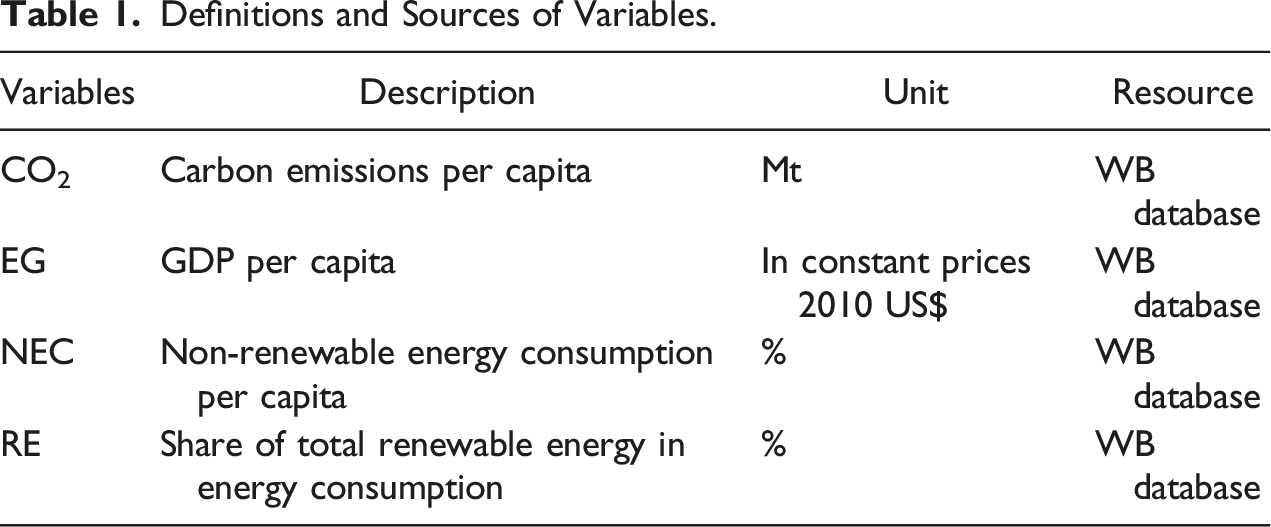
This study aims to examine the asymmetric effects of non-renewable energy consumption, renewable energy and economic growth on carbon emissions in Canada. The study covers data from 1965 to 2017. The link between the variables is expressed in the following equation


Definitions and Sources of Variables.
Equation (2) is converted to the symmetric ARDL model as follows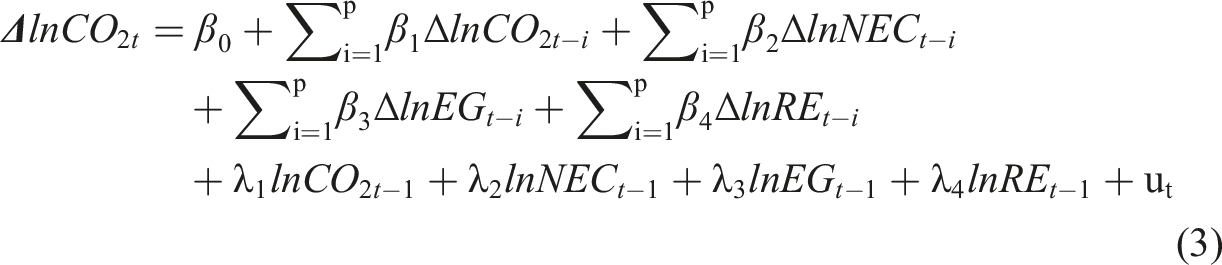
To examine the positive and negative effects of non-renewable energy consumption, renewable energy, and economic growth on carbon emissions, the nonlinear ARDL model is defined in






The nonlinear ARDL model is extended as follows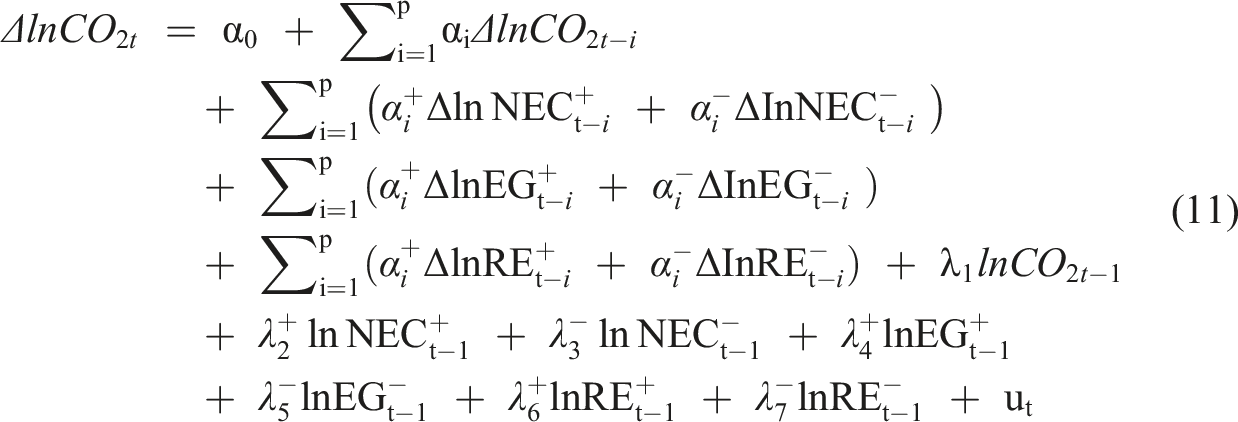
The short-term positive and negative effects of non-renewable energy consumption, renewable energy and economic growth on carbon emissions are expressed as 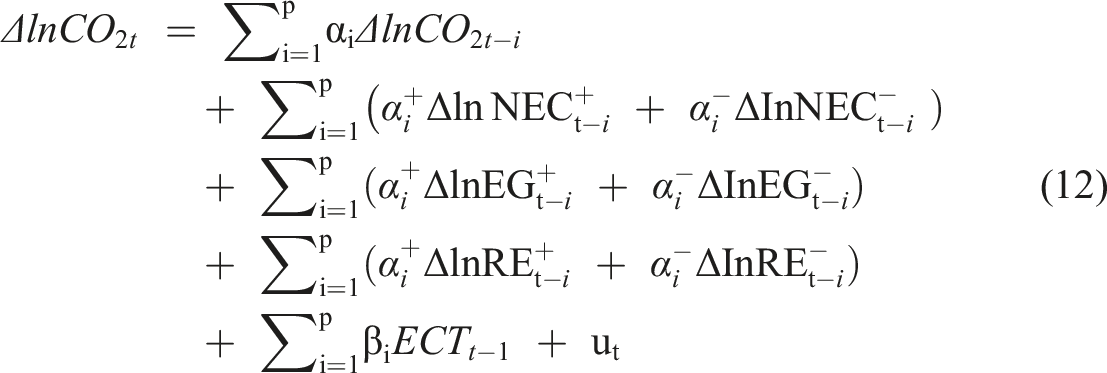
Empirical Findings
To apply the nonlinear ARDL method, the variables used in the model must be stationary at zero or first order. For this reason, firstly, the unit root test is applied with Augmented Dickey–Fuller (ADF) and Phillips–Perron (PP) methods to examine the degree of integration of the variables.
Unit Root Test Without Structural Break.
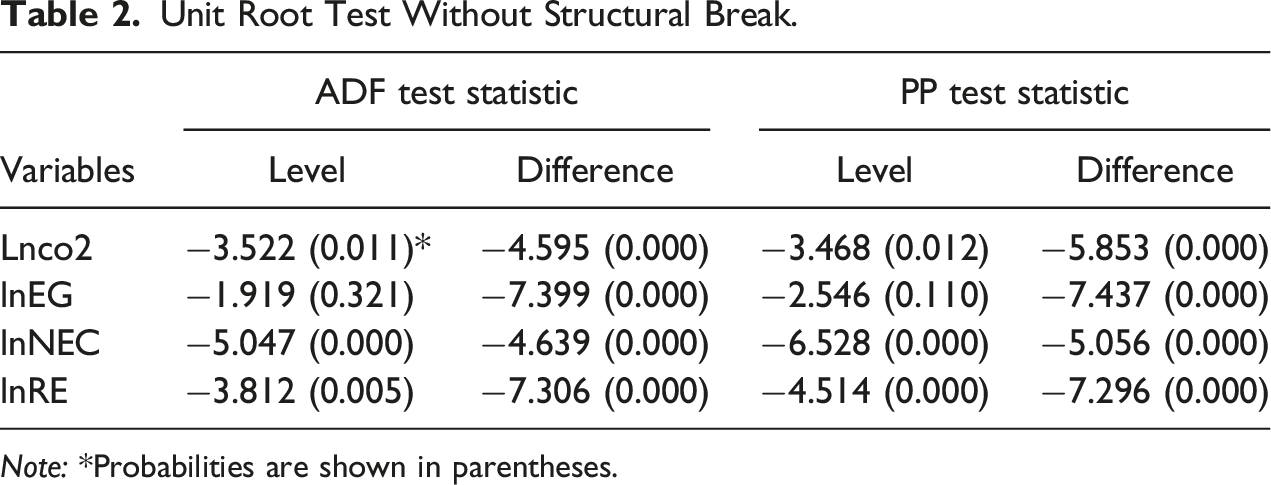
Note: *Probabilities are shown in parentheses.
Lee and Strazicich (2003) Unit Root Test With two Structural Break.
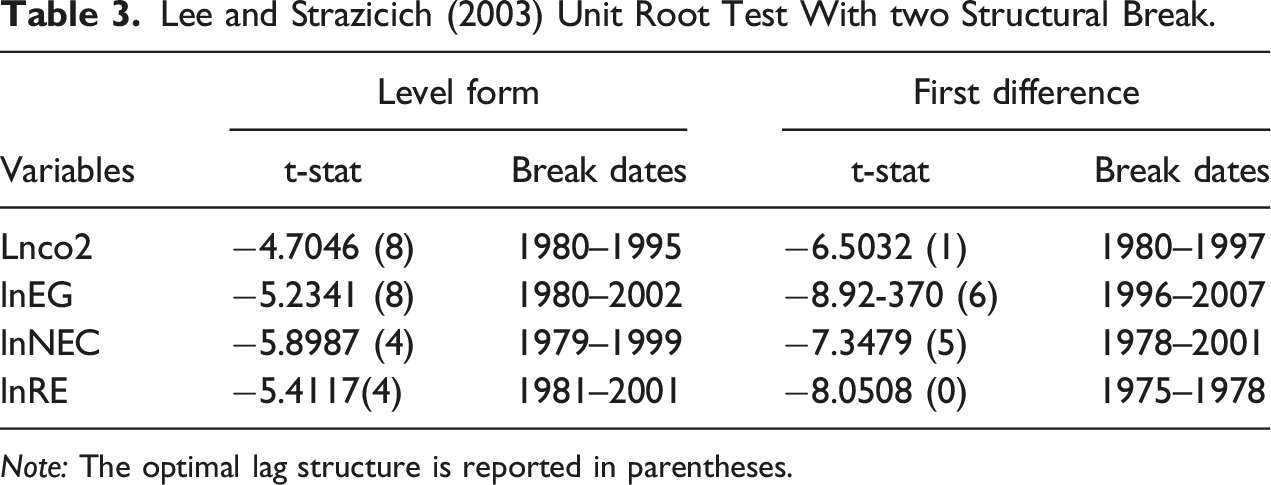
Note: The optimal lag structure is reported in parentheses.
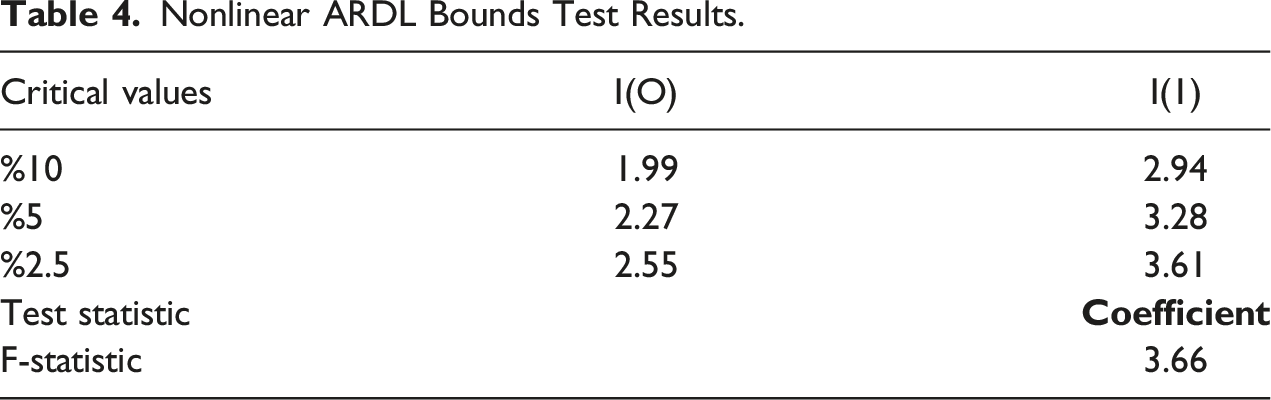
Nonlinear ARDL Bounds Test Results.
Nonlinear ARDL Results.
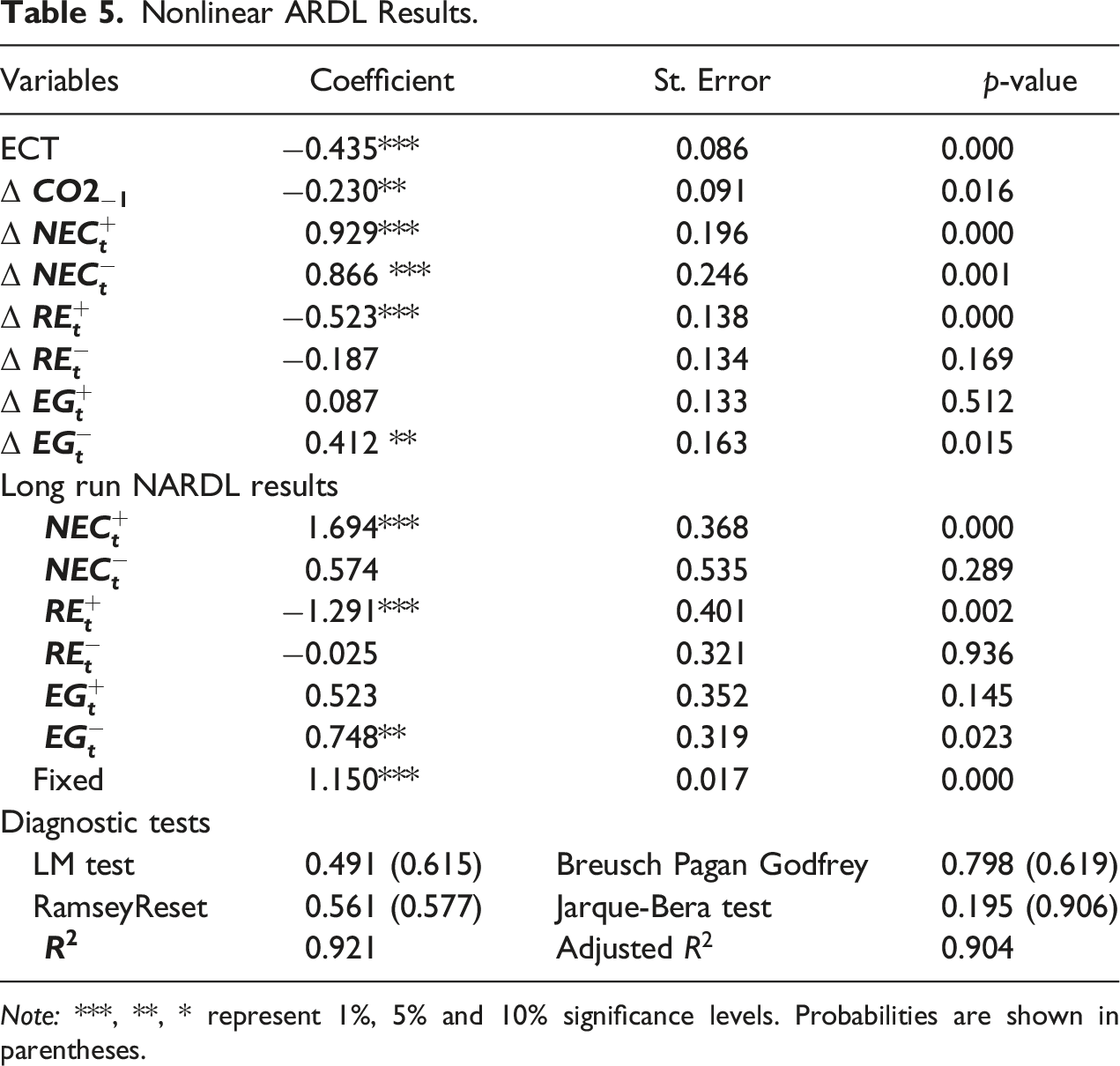
Note: ***, **, * represent 1%, 5% and 10% significance levels. Probabilities are shown in parentheses.
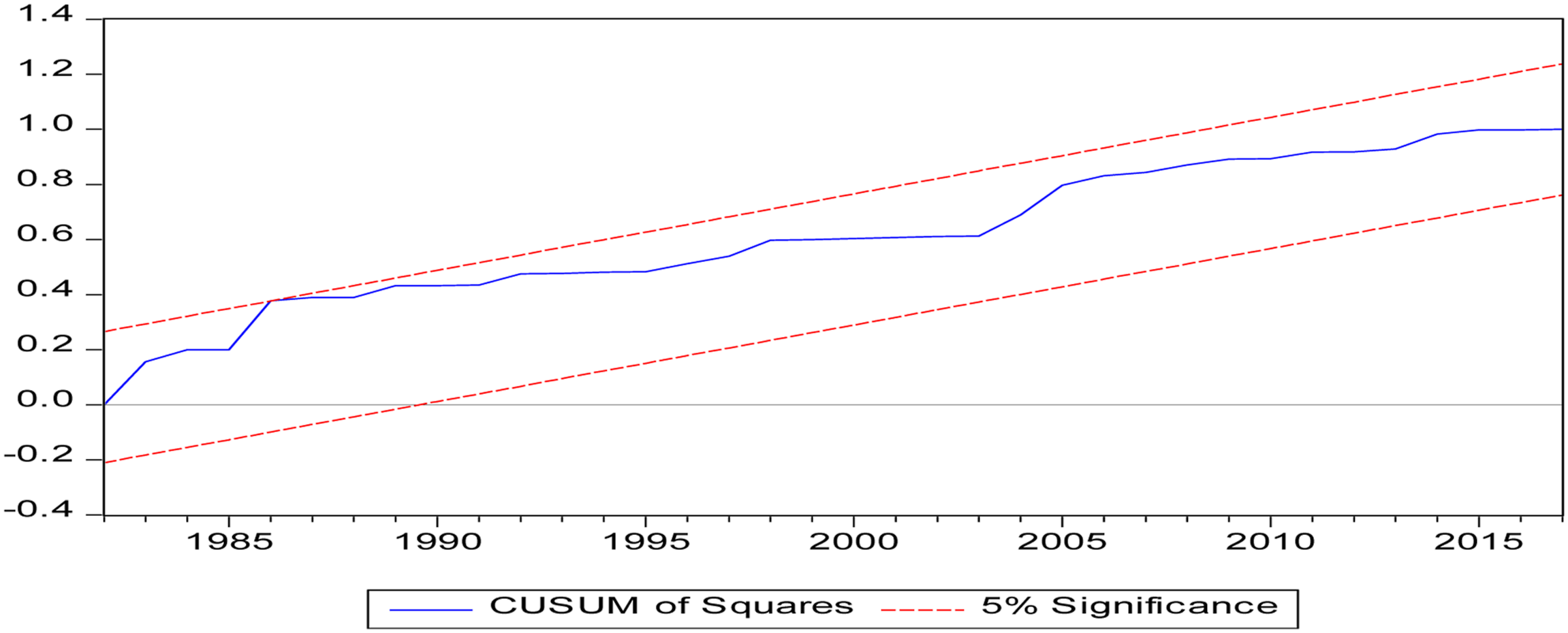
When the results are evaluated in general, it is seen that the negative shock in economic growth has a significant positive effect on carbon emissions, while the positive shock in economic growth has an insignificant effect on carbon emissions. Regarding non-renewable energy consumption, in the long run, a positive shock in energy consumption has a significant effect on Canada, while a negative shock has no significant effect. The findings on renewable energy suggest that a positive shock in renewable energy consumption reduces carbon emissions in the long run. The CUSUM test and CUSUMSQ test result graphs applied to support the validity of the analysis results are presented in Graphs 4 and 5. Graphical results indicate that the estimated model is significant and the parameters in the model are structurally stable. Moreover, the diagnostic test results indicate that the estimated model does not suffer from autocorrelation and heteroscedasticity, and the error terms are normally distributed, and the coefficients are stable. CUSUM test. CUSUMSQ test.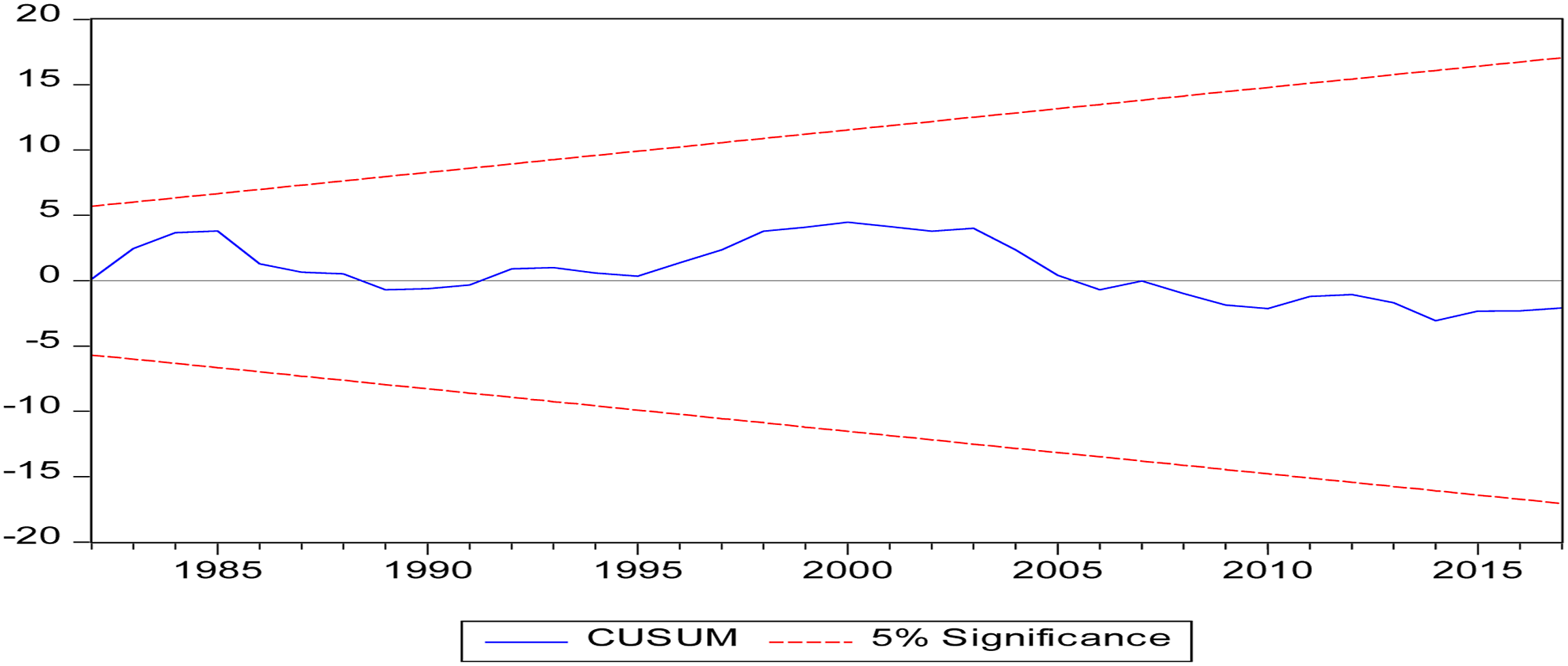
Discussions
Recently, it has become very important to examine the relationship between energy consumption, especially renewable energy consumption, economic growth and carbon emissions. This is because energy use is considered the most important tool in achieving sustainable development. In this context, although there are various studies on the relationship between energy consumption, economic growth and carbon emissions, few studies take into account the asymmetrical relationships between macroeconomic variables. Therefore, the most important feature of the study is to determine the nonlinear asymmetric relationship between macroeconomic variables. The determination of asymmetric features in the study provides more understandable findings among macroeconomic variables and provides important implications for Canada’s carbon emission reduction.
According to the findings obtained from the study, the negative shock in economic growth has a significant positive effect on carbon emissions in the long run. Namely, each 1% decrease in economic growth leads to a 0.74% increase in carbon emissions. This implies that negative shocks in economic growth negatively affect environmental quality. Therefore, the negative shock in economic growth leads policymakers to struggle to improve the economy. Accordingly, it forces to encourage production by reducing the pollution tax, which causes an increase in carbon emissions. In this context, Canada needs to implement policies for the sustainability of environmental quality during periods of reduced economic growth. In contrast, positive shocks to economic growth have a positive but insignificant effect on Canada. Similarly, in the short run, negative shocks in economic growth have a positive effect on carbon emissions, but the effect of positive shocks is not significant. These findings are consistent with Mujtaba and Jena (2021), Zhang et al. (2022). Regarding non-renewable energy consumption, in the long run, a positive shock in energy consumption has a significant effect on Canada, while a negative shock has no significant effect. Accordingly, it is stated that an increase in non-renewable energy consumption significantly increases carbon emissions, and a 1% increase in energy consumption increases carbon emissions by approximately 1.69%. In addition, positive and negative shocks in non-renewable energy consumption significantly affect carbon emissions in the short run. This situation expresses the importance of limiting the use of technology that adversely affects the environmental quality of Canada. In this context, it is important to increase the share of renewable energy sources that reduce carbon emissions. In this context, the results indicate that the increase in non-renewable energy consumption is one of the factors limiting the reduction target of carbon emissions. In the literature, there is a common consensus on the negative impact of energy sources based on non-renewable energy consumption on the environment. This situation leads policymakers to policies that reduce non-renewable energy consumption, which contributes to achieving sustainable economic growth. Finally, the findings on renewable energy indicate that a positive shock in renewable energy consumption reduces carbon emissions in the long run. Namely, a 1% increase in renewable energy consumption reduces carbon emissions by 1.29%. Renewable energy consumption contributes to the sustainability of environmental quality, which technological innovations and favorable governmental policies can explain. These findings are consistent with Mujtaba and Jena (2021), Akram et al. (2022), Jena et al. (2022), Dogan and Seker (2016). However, it is stated that the negative shock in renewable energy does not significantly affect carbon emissions. Accordingly, the findings support that negative shocks in renewable energy consumption have an asymmetric effect on carbon emissions in the long run. Therefore, improving the energy consumption structure to reduce carbon emissions and increase energy efficiency constitutes the key point of future economic development.
Concluding Remark
Efforts to mitigate the negative effects of environmental pollution and global warming have brought the problem of using energy resources that cause carbon emissions to the agenda. The fact that countries meet their increasing energy needs by using non-renewable energy resources in parallel with rapid population growth and economic growth has brought many problems to the agenda. The fact that non-renewable energy resources will run out and that the damage they cause to the environment with carbon dioxide emissions cannot be prevented has led countries to turn to alternative energy sources. Especially the increase in energy demand in recent years has started to be met with renewable energy sources. The environmental friendliness of these resources supports sustainable development and ecological concepts and significantly affects countries’ economic growth.
This study analyzed the relationship between energy consumption, renewable energy, economic growth, and carbon emissions for Canada using the nonlinear ARDL method for the period 1965–2017. The findings indicate that the variables examined affect carbon emissions asymmetrically. Namely, positive shocks to energy consumption have a positive and significant impact on carbon emissions. A 1% increase in energy consumption leads to a 1.69% increase in carbon emissions. However, the findings also support the asymmetric effects of economic growth on carbon emissions. The results show that negative shocks to economic growth significantly deteriorate environmental quality in the long run. Moreover, while the positive shock of renewable energy has a negative and significant effect on carbon emissions in the short and long run, the negative shock of renewable energy has no significant effect. Therefore, it is determined that positive shocks to renewable energy contribute to the reduction of carbon emissions in the long run.
In this context, Canada needs to expand the use of renewable energy sources to maintain environmental quality. Because Canada is an important energy producer and consumer, since it ranks high in the world in per capita energy use, its targets and decisions are decisive in the future of carbon emissions. Therefore, Canada must focus on sustainable development goals through a green growth strategy. In this context, Canada prioritizes phasing out coal energy to reduce carbon emissions by 2030. In addition, Canada has one of the cleanest energy profiles among IEA countries thanks to its renewable energy sources and a significant share of nuclear energy (IEA, 2021). The most important reason for this is Canada’s ability to achieve energy efficiency due to expanding renewable energy resources for energy consumption and linking these resources to economic activities. In addition, hydroelectric energy constitutes the most important share of Canada’s renewable energy sources and has the necessary infrastructure put in place.
However, there are important policy implications for Canada to eliminate carbon emissions, increase the share of renewable energy sources and achieve its economic growth targets. In addition to eliminating the use of coal, Canada needs to reduce its consumption of petroleum-like resources (such as gasoline and diesel) and natural gas. At the same time, technological innovation has a major impact on energy sources. Technological advances have important implications for reducing carbon emissions. Thanks to technological innovations, it is important to promote new renewable energy sources and the share of hydroelectric energy. Although introducing and disseminating new energy sources and prioritizing green policies require time and cost, they can provide significant production and growth advantages for countries like Canada that produce more than they consume. It is also very important to expand the implementation of projects that reduce carbon emissions, provide subsidies in these areas, and inform producers and consumers about the importance of environmentally friendly activities.
Footnotes
Author’s Note
This paper was presented as an abstract at ECONEFE'22 Congress.
Declaration of Conflicting Interests
The author(s) declared no potential conflicts of interest with respect to the research, authorship, and/or publication of this article.
Funding
The author(s) received no financial support for the research, authorship, and/or publication of this article.
