




Abstract
This study explored the experiences of exclusion and inclusion as reported by low-income families whose children participate in competitive sport. Using a multiple-case study approach, semistructured interviews were conducted with six mothers. Both a deductive, within-case analysis using the process–person–context–time model and an inductive between-case analysis were conducted. The results showed situations specific to competitive sport, notably by demonstrating that sport participation is a complex phenomenon that is difficult to adequately describe using sociodemographic attributes. This study demonstrates that even for families considered included we can observe large-scale sacrifices and notable levels of poverty, including living in low-income housing, receiving food bank assistance, and facing cyclical debt issues. The gradual increase in participation costs as a function of sport progression could lead to significant financial hardship.
Keywords
Introduction
The range of leisure activities available to children and teenagers has never been so diverse. From outdoor activities to artistic activities and technological leisure, the choice of recreational activities available for parents to enroll their children are numerous. In this regard, organized sports are one of the most popular activities for children and adolescents in Canada (ParticipACTION, 2020). This practice is at the heart of many public policies around the world aimed at getting people active (Nicholson et al., 2011).
However, several studies on the effects of socioeconomic status (SES) on sport participation indicate that a significant proportion of Canadian parents cannot afford to enroll their children in organized sport activities due to several factors including cost. Parental income, level of education, and social status have a significant influence on the ability to participate (Bengoechea et al., 2010; Canadian Heritage, 2013; Clark, 2008; Hardy et al., 2010; Trussell & McTeer, 2007). Moreover, when an activity can be “afforded,” it can represent a significant financial stress. As a result, one in three Canadian households chose to go into debt to pay for such activities (Ipsos Reid, 2018).
In recent decades, several social phenomena may have contributed to exacerbating processes of socioeconomic exclusion in sport. These include the professionalization of human resources (e.g., coaches and managers) and the specialization of practices (e.g., training technique and equipment), which have had significant effects on participation fees (Donnelly, 2013; Gruneau, 2016; Horne, 2006; Hyman, 2012). The disengagement of the state from sport participation for all in favor of funding high performance sport may have contributed to the weakening of local, accessible, and low-cost sport provision (Donnelly & Kidd, 2015; Green, 2007; Gruneau, 2016). Moreover, this disengagement could be part of broad ideological movement observed over the past few decades that aims to promote sport as an individual rather than a collective right (Coakley, 2011; Enjolras, 2002; Gruneau, 2016).
That said, three observations can be made about the research on the link between SES and sport participation. First, the studies mentioned above make little or no distinction between the different contexts of sport practice, such as competitive, recreational, or discovery practice. Yet, in reality, practices are multiple in context (Thibault & Harvey, 2013), with some exhibiting specific exclusion mechanisms (Patel, 2015). Addressing the specific issues of each context would potentially provide insight into better addressing them. Second, these studies appear to isolate financial and temporal resources to explain the prevalence of participation. However, the phenomena of exclusion and inclusion are complex and multidimensional (Levitas et al., 2007). It is, therefore, difficult to limit them to a few factors such as availability of time and money. Kingsley et al. (2017) suggested that such a view may help promote the idea that sport is a neutral environment wherein, once accessed, one is included. In reality, sport is a rarely challenged contributory domain of inequality, where simply reducing financial and temporal barriers is not enough for all to participate. Finally, ensuring that a voice is given to people so that they can share their experiences and perspectives seems central. In this respect, literature in the context of sport advocates this approach because of the richness it adds to the understanding of the phenomenon. It also implies better understanding of the different mechanisms of exclusion and inclusion from those who experience them, in order to engage people in self-emancipatory processes while bringing forward systemic solutions to the different issues (Bailey, 2008; Dagkas & Armour, 2012; Spaaij et al., 2014).
Competitive Sport and Site-Specific Exclusion
Organized sport is not a monolithic block. Among the myriad of contexts, competitive sport appears to be the most popular among youth populations. Competitive sport is defined as an activity where expectations are based on the level of performance achieved (Coakley, 1983). Furthermore, this context is intended to determine the best and has inherent mechanisms of social exclusion and social inclusion (Patel, 2015). A broad understanding of sport accessibility fails to capture the specificity of the context. The costs of competitive sport associated with state-of-the-art equipment, trained coaches, and access to standard sports venues have been shown to be costly (Allison-Abaunza & Woodburn, 2022; Todd & Edwards, 2020). Moreover, sport systems are strongly organized around the premises of competitive sport development. Many public policies, programs, and guidelines have been adopted to identify and develop talent (Dowling & Washington, 2021; Green, 2007; Kikulis, 2013). As a result, the existing continuum implies that, depending on the progression of skills, practitioners will inevitably find themselves in the context of competitive sport practice at some point. This may be more so as sports clubs are less inclined to offer low-cost recreational programs due to their low profitability. The adoption of such policies combined with the costs of participation could contribute to discrimination based on family resources.
Regarding access to competitive sport, it has been shown that Canadian athletes who are members of provincial and national sports teams are more likely to come from the most affluent socioeconomic backgrounds in society (Beamish, 1990; Gruneau, 1976; Laberge & Hallé, 1998). These findings have also been observed in England (Collins & Buller, 2003; Rowley & Graham, 1999). However, the data specific to this context are becoming older and scarce. This is an observation shared by Wattie and Baker (2018) who reported that the relationship between SES and sport participation of various types is well documented, but that little data related to participation in high performance sport exist to specifically inform us of this relationship.
Complexity of the Phenomenon of Social Exclusion From Organized Sport
It is important to recognize that social exclusion and inclusion, poverty, and other social phenomena at play within sport contexts are complex (Dagkas, 2018; Giulianotti, 2015; Hay, 2013; Macphail, 2012). Social exclusion is a multidimensional phenomenon that takes shape in the absence or denial of resources, rights, goods, and services or the inability to participate in normal relationships and activities that are available to the majority of the population in a society (Levitas et al., 2007). In the context of sport, the study of exclusion from sport reveals a multitude of conditions that may exacerbate the ability to engage in sport practices in a single or combined manner. For example, these conditions include the case of gender (Demers et al., 2014), ethnicity (Joseph et al., 2012), and age (Jin & Harvey, 2020). That said, without completely rejecting the principles of intersectionality (Bilge, 2009) and the importance of the previously mentioned conditions, poverty remains at the heart of exclusionary processes (Collins & Haudenhuyse, 2015; Collins & Kay, 2014). Like exclusion, poverty is a situated and relative phenomenon defined as a “lack of resources of an individual or group when compared to other members of the society in which they operate” (Scott & Marshall, 2009, pp. 586–587). This implies that for both social exclusion and poverty, these two phenomena must be considered both multifactorial and contextual.
Consequently, strictly adopting statistical approaches that propose to link certain SES indicators (e.g., education and household income) with sports participation may be considered a limitation. While these studies provide a comprehensive picture of a population situation, they fail to do justice to the complexity of sport participation phenomena. If these indicators were the only issue, fixing them would be enough to increase sport participation; however, the root of the problem is more complex (Kingsley et al., 2017). To better understand sport participation, one of the avenues to focus on is to give a voice to people experiencing poverty and exclusion, especially since their voices remain relatively unheard (Vandermeerschen et al., 2017).
Giving a Voice to People Experiencing Exclusion Processes
Several researchers have attempted to give a voice to families (parents or children) on issues related to accessibility and participation in sport. By taking this approach, it has been possible to add important nuances that expose not only the burden of time and financial resources but also other factors. For example, various environmental factors (e.g., proximity to training sites and quality of infrastructure), intrapersonal factors (e.g., perceived skill level and enjoyment), and social factors (e.g., presence of adults and friends) have been identified (Humbert et al., 2006). This is in addition to the progression of children's sport skills, which may become a financial issue given the increased demand for associated goods and services (Holt et al., 2011).
Similarly, parents and adolescents were interviewed to understand their involvement in sports participation (Kingsley & Spencer-Cavaliere, 2015). Using Bourdieusian sociology, it was possible to demonstrate the importance of not only economic capital endowment but also cultural capital (e.g., being endowed with athletic skills to access certain programs). A dozen adolescents from low-income families were also interviewed to explore the meanings and experiences they associate with sport participation, exposing the heterogeneity of meanings given to sport participation and the intersectionality of processes based on gender and social class (Kingsley et al., 2017).
By conversing with adolescents from different socioeconomic backgrounds, it was also possible to compare the social factors influencing sport participation (Dagkas & Stathi, 2007). Differences are noticeable according to the social class, family environment, and SES of the participants. Moreover, the effects of SES can be addressed. By focusing on the different contexts of adolescent socialization (families, school, and peers), Pot et al. (2016) shed some light on the effects of SES. Although it is suggested that SES influences practice, if parents are successful in engaging their child in sports activities, they may accumulate enough sporting capital to mitigate the effects of SES. Sporting capital can be defined as “the stock of physiological, social, and psychological attributes and competencies that support and motivate an individual to participate in sport and to sustain that participation over time” (Rowe, 2017, p. 38). Therefore, sporting capital can be considered an umbrella term that encompasses both sporting skills and sociocultural aspects.
Specific to the context of competitive practice, some researchers have also examined the various sacrifices that are made by parents to allow their child to participate in organized sport (Sutcliffe et al., 2021). Several sacrifices are identified such as not traveling, postponing home renovations, and even adjusting grocery bills in favor of the sports budget (Todd & Edwards, 2020). Sport participation can then be considered a source of significant financial stress for parents who must, in some cases, go into debt or remortgage the home (Harwood & Knight, 2009). In summary, questioning individuals to better understand their reality allows us to highlight the plurality of the phenomena experienced. Such a strategy would then be relevant to examine the experiences of exclusion and inclusion from competitive sport. Therefore, this study aims to explore the experiences of exclusion and inclusion as reported by families whose children are involved in competitive sport.
Process–Person–Context–Time Model (PPCT; Bronfenbrenner & Morris 2007)
Among the theoretical insight for understanding the phenomenon of socioeconomic accessibility to organized sport, the PPCT model (Bronfenbrenner & Morris, 2007) has been shown to be relevant for studying and exploring participation patterns associated with sport specialization contexts (DiSanti & Erickson, 2021). Although initially aimed at the study of individual development, this model has already been applied to study sport participation in children and adolescents (Holt et al., 2011). The model has also been used to understand bilateral processes between the individual and their environment in contexts of talent development (Duchesneau, 2018) and to identify components related to prevalence in sport participation (Hoekman et al., 2017). Moreover, the model is considered relevant to understanding parental socialization processes in sport contexts (Dorsch et al., 2015).
The PPCT model suggests that human development occurs through the mutual interaction of four components. (a) Proximal and distal processes are generated by the individual's various relationships with the environment. The process concept will allow for the identification the interactions of the household with other systems and agents as well as the nature of these interactions (e.g., between the sport organization and the household). (2) The person identifies the demand, resource, and force characteristics of the individual. The person concept will allow for the different characteristics of the household to expose certain attributes that play a role in the participation phenomenon (e.g., sports characteristics of the children in the household). (3) The context incorporates four, interconnected systems that describe the individual's environment. The microsystem includes the individual's direct environment and the relationships that operate within it. The mesosystem includes all the different microsystems and the relationship between at least two of them. The exosystem includes the different relationships between two systems. The macrosystem includes broader considerations such as the political, economic, and cultural contexts. The concept of context will allow us to situate the barriers and facilitators surrounding access to sport for the children in the household while exposing the budgetary adaptations of the families. (4) Finally, the various processes cannot be studied without positioning them in light of temporal trajectories (Bronfenbrenner & Morris, 2007). Time then allows us to situate the previous three components on a chronological axis and to observe their effects over time (micro-, meso- , and macrochronology).
Methods
Epistemological Positioning and Research Approach
This research is embedded in a socioconstructivist paradigm, and the results must be interpreted in light of the context studied and the multiple realities that are shared among individuals (Patton, 2014). A multiple-case study approach was chosen (Yin, 2014). This type of approach allows the revealing of the specifics of each case while also allowing for the identification of divergences and convergences. Moreover, the latter is considered effective when the cases studied are circumscribed to a particular phenomenon (Creswell & Poth, 2018). This approach, coupled with semistructured interviews with various families, revealed their realities regarding the financial issues associated with their child's participation in competitive sports programs.
Study Context
The parents of the families interviewed were selected based on the participation of at least one child in a Sport-études soccer program in the province of Quebec. These programs are aimed at 12–17 year olds and aim to reconcile study time and sport training time by dividing the school day into two parts (i.e., sports practice in the morning and school hours in the afternoon or vice versa). In this respect, Sport-études programs are considered one marker of the beginnings of organized competitive sports. In recent years, these programs have received special attention with respect to their accessibility. Some data indicate that these programs are not easily accessible to the general population, despite their presence in the public education system (Allison-Abaunza & Woodburn, 2022). It should be noted that we deliberately chose families from the soccer community, as this sport has traditionally been associated with a certain level of financial accessibility while being one of the most practiced activities in the province.
Recruitment Process and Participants
This research was approved by the research ethics board (CÉRUL 2021-002 A-1/12-10-2021). Written consent from participants was obtained prior to the start of the interview. Participant recruitment was done using purposeful sampling (Patton, 2015). Six families whose children participate in a Sport-études program, while experiencing financial difficulties, were identified. This sampling choice is based on the importance of selecting cases that have experienced the phenomena being studied and will be able to provide rich information (Yin, 2014). This sample size was in alignment with the proposed sample size of between three and four participants in the piloting of multiple-case studies (Schoch, 2019). It was also considered appropriate due to the exploratory nature of this study and the involvement of six relatively homogeneous participants in order to generate main themes for further investigation in future studies (Guest et al., 2006).
A manager of several Sport-études soccer programs was then contacted. The manager sent a recruitment email to all parents in the regional association whose children were enrolled in a Sport-études program. Parents were targeted as they know their family budget and may not choose to make their children aware of their financial situation. Subsequently, parents who were interested in participating contacted the authors directly by email. In order to be eligible, parents had to self-report that they were facing financial challenges in order for their child to participate in the Sport-études program. Some examples of financial challenges that were presented in the recruitment email included: cutting back on certain items in the family budget, stressing over expenses, or not having the funds to pay for all the expenses that should ideally be incurred in the Sport-études program. In this regard, the concepts of subjective poverty and subjective well-being can be self-assessed by individuals and is a relevant measure to expose economic issues and hardships (Kuivalainen, 2014).
Data Collection and Interview Guide
A semistructured interview was conducted with one parent from each family, as this method allows for open-ended responses, encourages discussion between the participants and researcher, and provides an opportunity for the participant to elaborate (Longhurst, 2003; Rubin & Rubin, 2011). Interviews lasted an average of 64 min (ranging from 45 to 77 min). Interviews were conducted via the Zoom video conferencing platform given the COVID-19 sanitary measures at the time the study was conducted.
The PPCT model was employed to inform the development of the interview guide. In some studies, the PPCT model has been applied in a fragmented manner to examine inclusion and exclusion in sport contexts (Holt et al., 2011). In response to the call of Tudge et al. (2016) to apply the model in its entirety, all of the PPCT model's components were used. Some studies have demonstrated the effectiveness of adopting the PPCT model, from the formulation of objectives through the development of interview guides, that specifically identify each component, to the analysis (Masters, 2017). Consequently, this strategy was chosen. The questions are presented in Table 1. The questions were submitted to two external researchers experienced in this type of protocol to ensure their relevance and potential.
Semistructured Interview Questions With Parents Based on the PPCT Model.
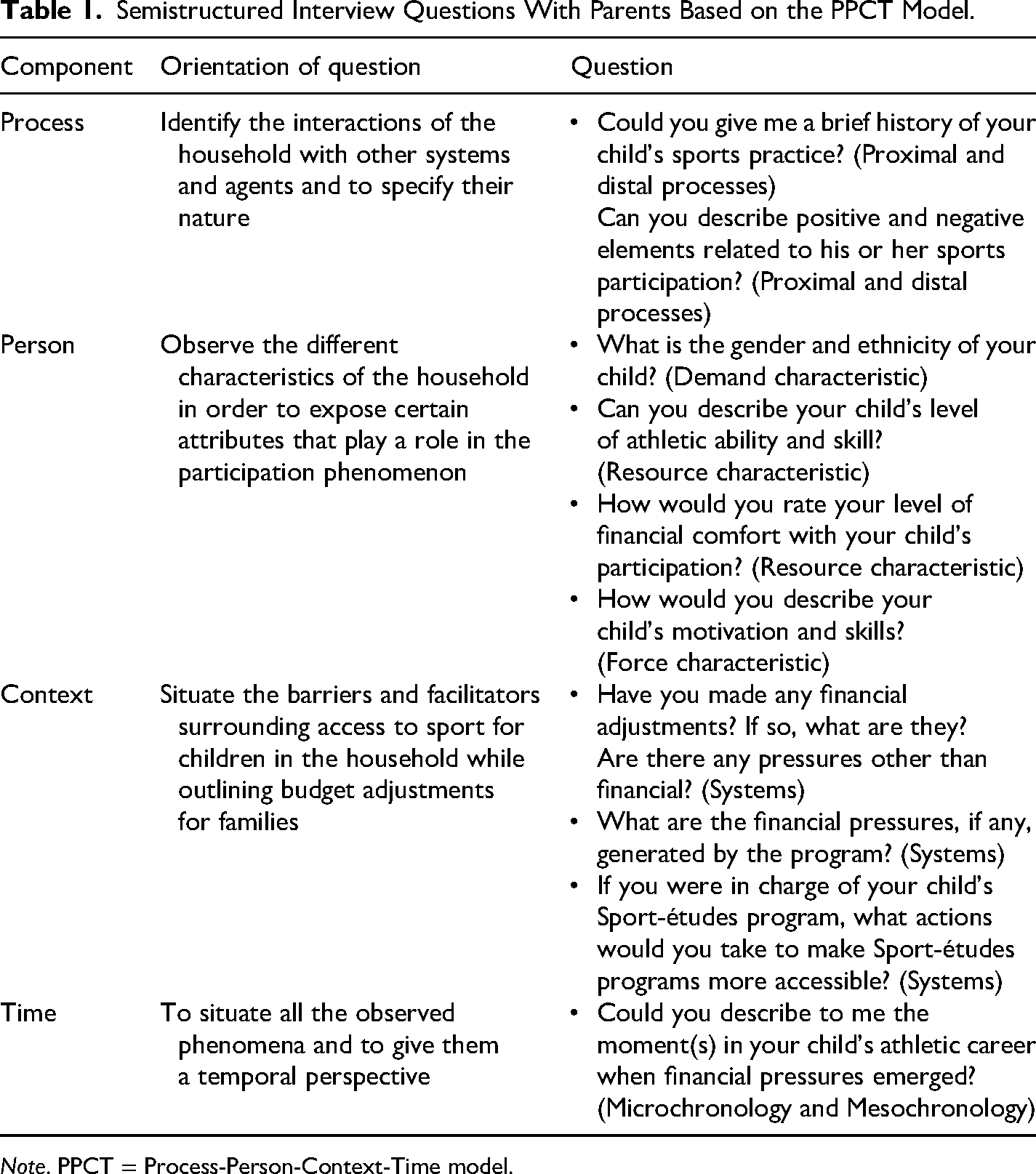
Note. PPCT = Process-Person-Context-Time model.
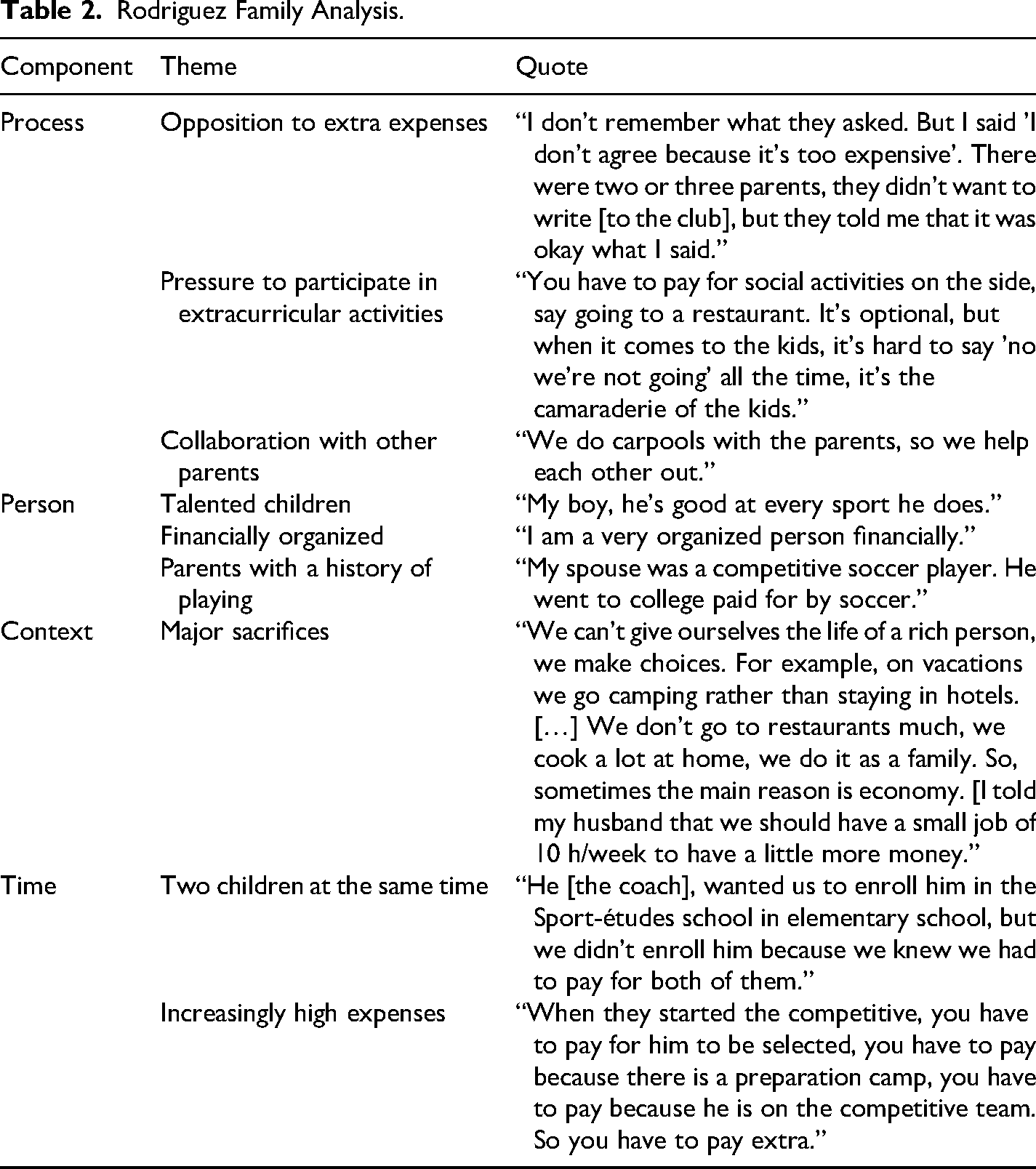
Rodriguez Family Analysis.
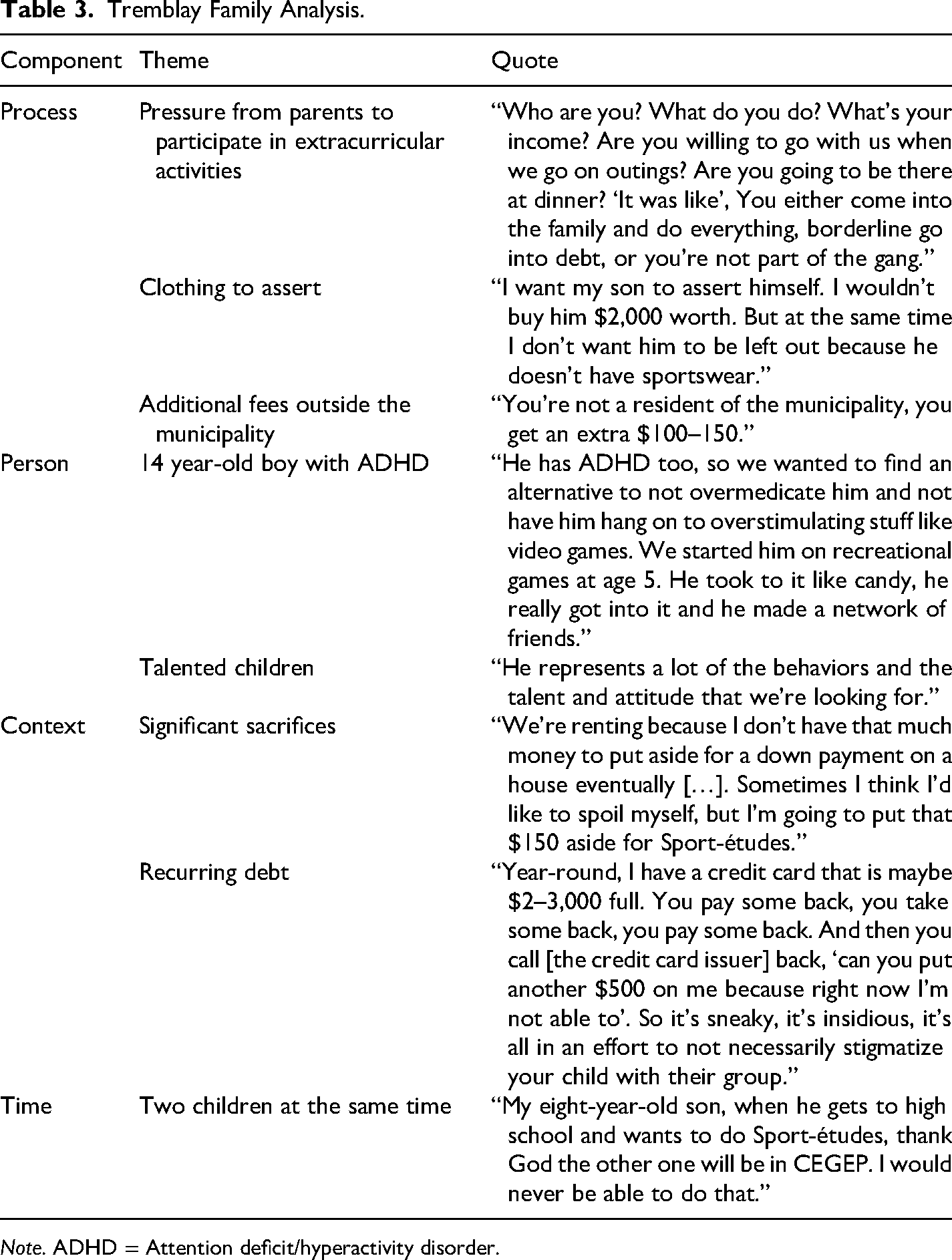
Tremblay Family Analysis.
Note. ADHD = Attention deficit/hyperactivity disorder.
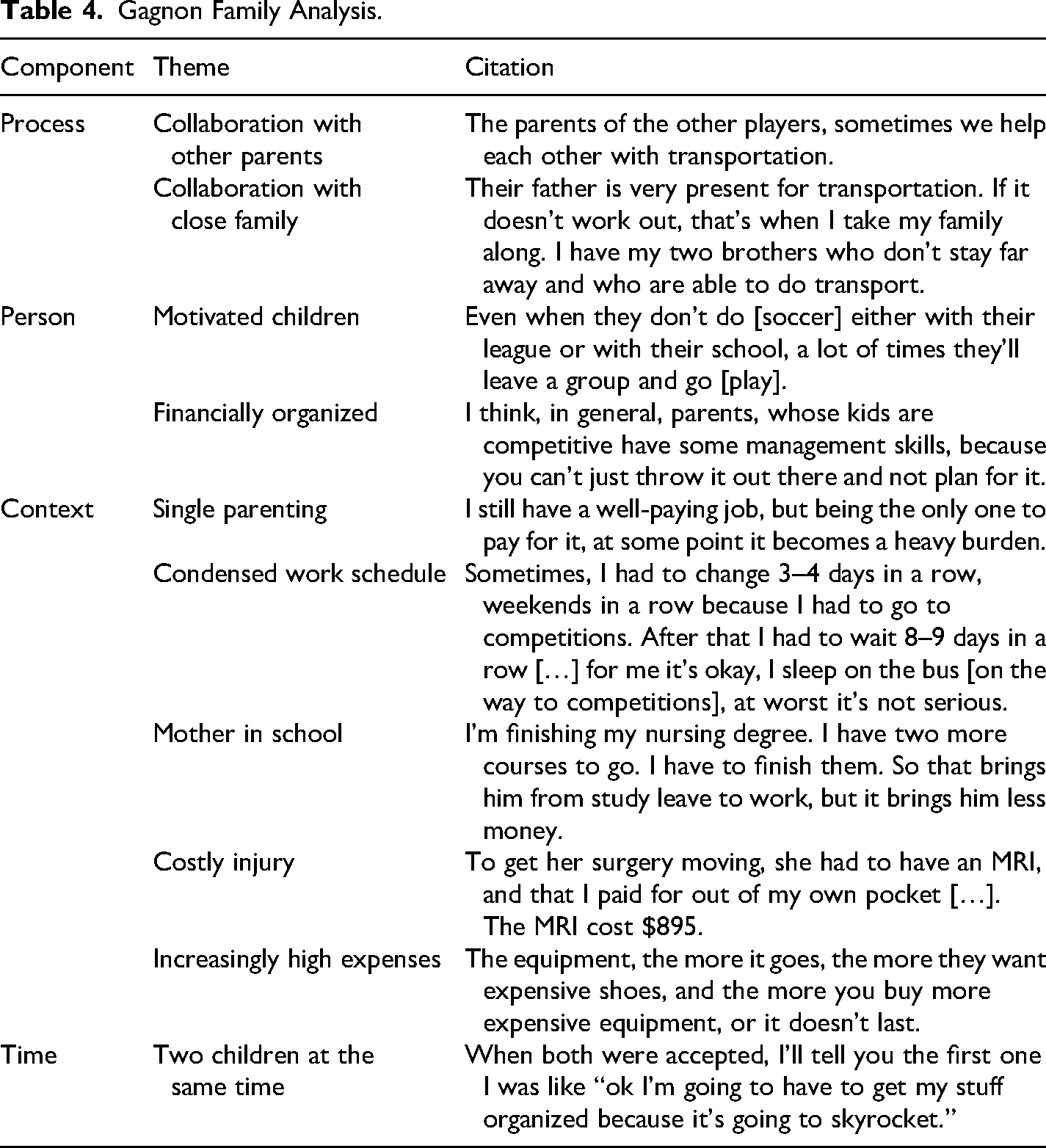
Gagnon Family Analysis.
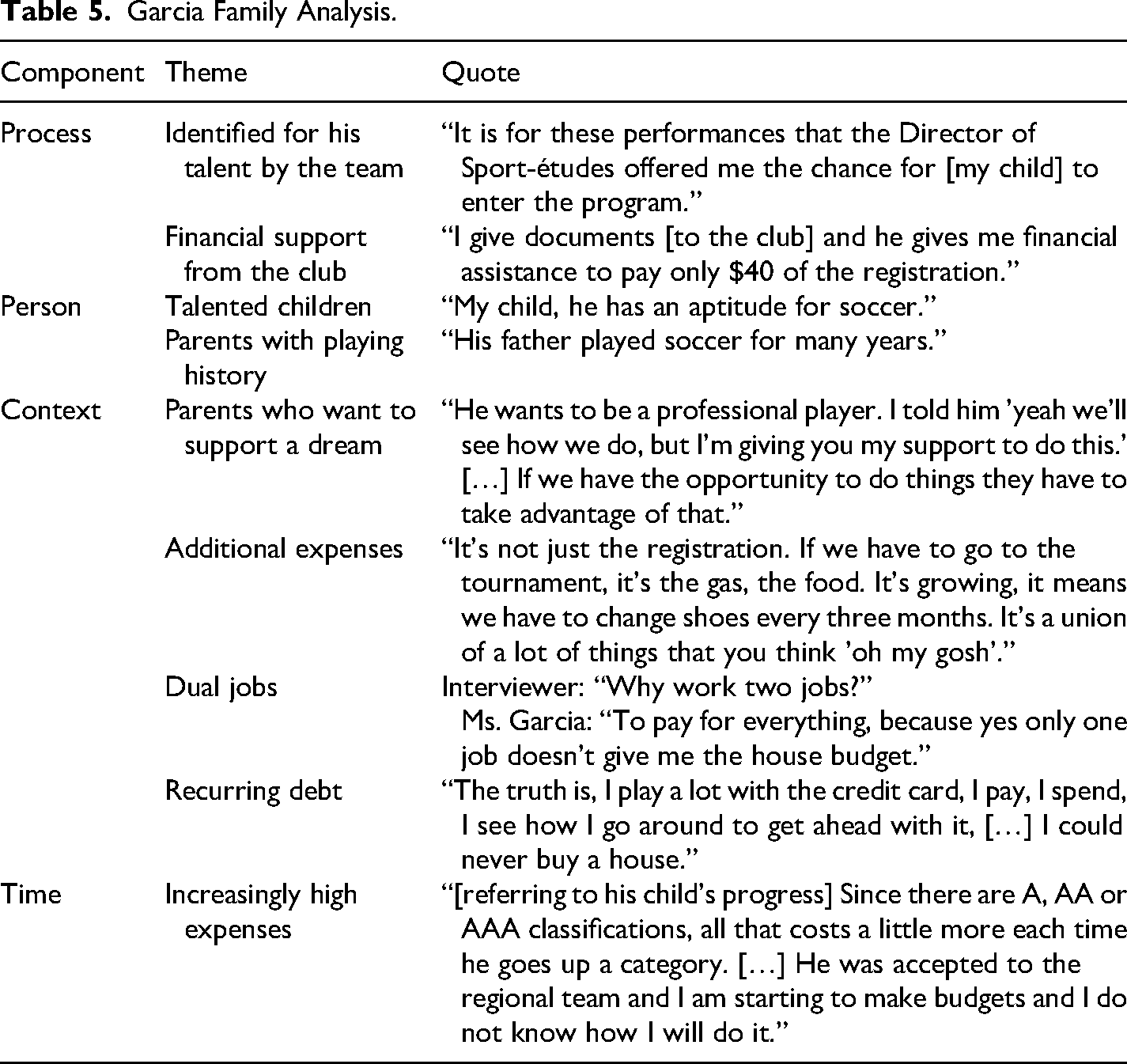
Garcia Family Analysis.
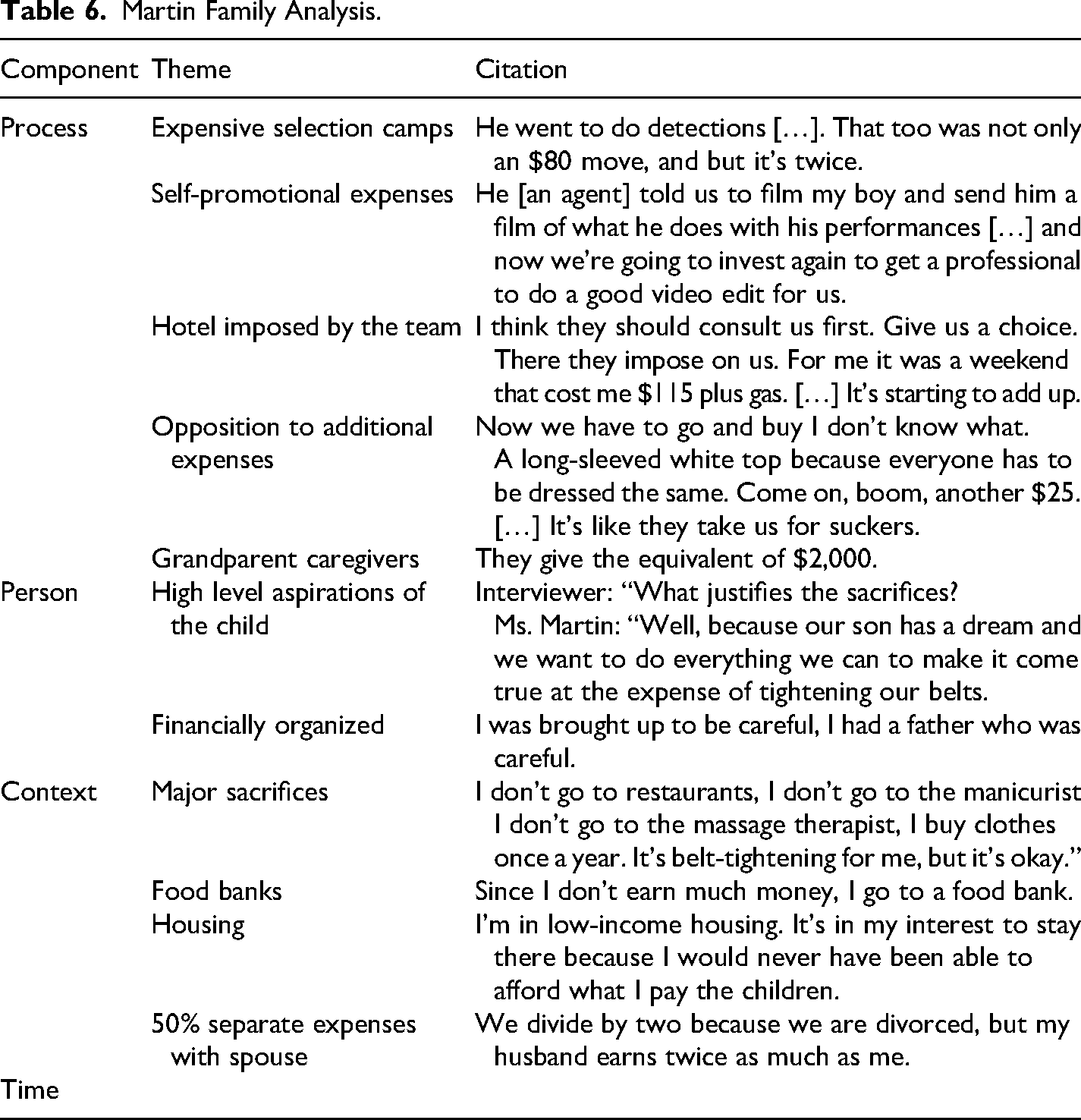
Martin Family Analysis.
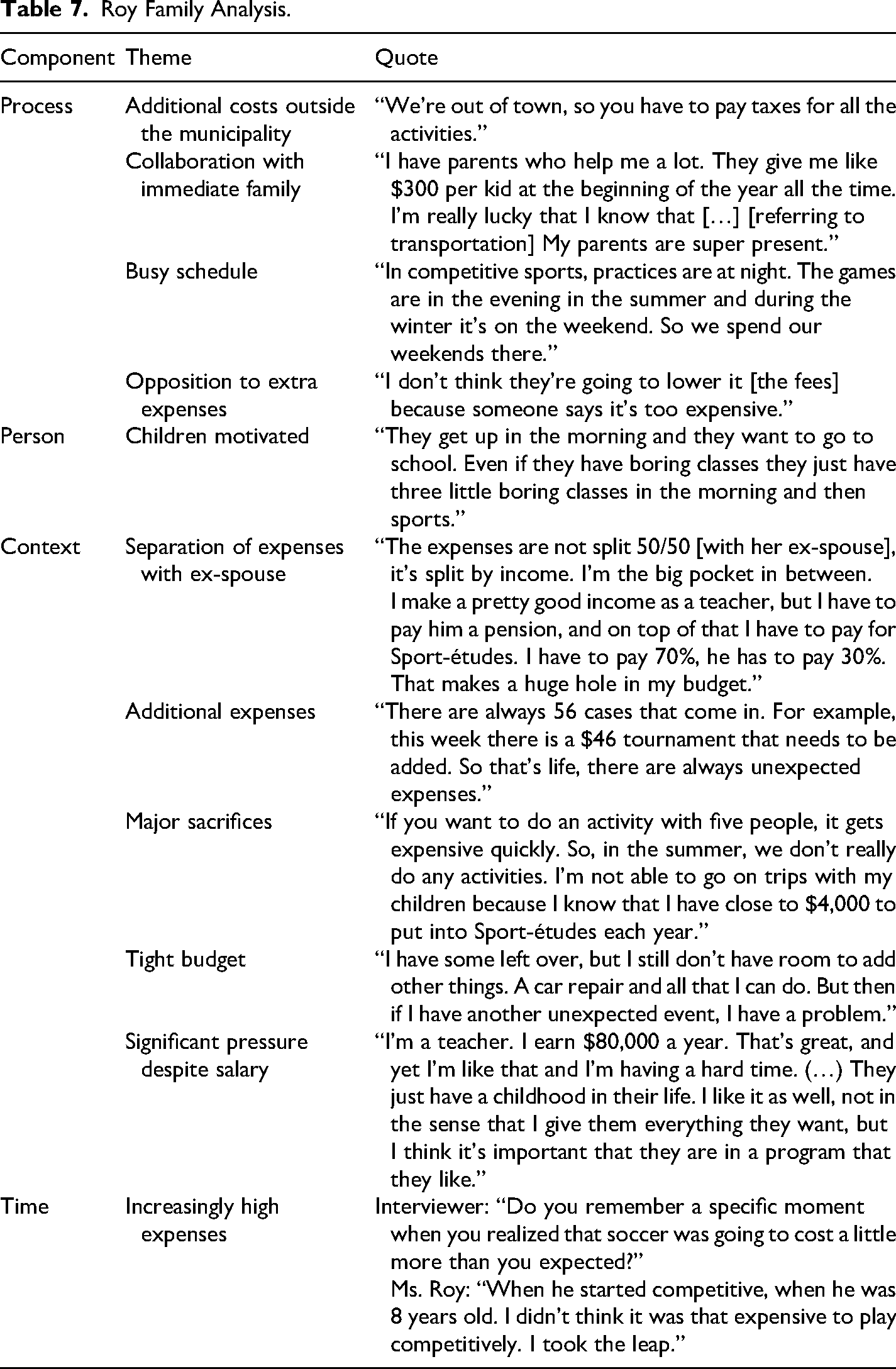
Roy Family Analysis.
The first interview validated the effectiveness of the procedure in answering the research questions. It was found that two questions that were worded differently about the timing of financial problems generated duplicate responses. Only one was retained in the time component for subsequent interviews. The first interview also validated that the objectives of the study could potentially be met through the interview, targeted participants, and theories employed (Majid et al., 2017).
During the interview, participants were first asked to introduce themselves and describe their household. Subsequently, the person component was explored, followed by the process, context, and time components. However, the order of the questions varied depending on the flow of the interview.
Qualitative Analyses
The verbatim of the interviews were transcribed in Word format for a total of 70 pages (Times New Roman 12, single spaced). They were then analyzed using the NVivo 12 qualitative analysis software. Following the repeated reading of the verbatim, an analysis was carried out in two stages, namely, a deductive intracase analysis based on the PPCT model and an inductive intercase analysis (Yin, 2014).
The first stage of analysis allowed for the coding and description of each unit of analysis according to the phenomenon under study and using each component of the model. This appears essential “to learn about their self-centering, complexity, and situational uniqueness” (Stake, 2006, p. 6). In addition, an important clarification on the distinction between the process and context components must be made. The process component was used when a one-way or two-way relationship was discernible between the family and its environment, and the context component was used to describe the household's conditions with respect to accessibility issues.
The second stage of analysis generated trends and clusters that identified the profile of households, their experiences of socioeconomic exclusion and inclusion, their adaptations and strategies and sacrifices for their children's participation, and the solutions they proposed. At this stage, the process and context components were used in a complementary manner.
Furthermore, because qualitative data analysis is not a linear process (Braun & Clarke, 2006), iterations were conducted between the two stages of analysis. To ensure the rigor of the coding procedures, the Alexandro Allison-Abaunza conversed with Andrea Woodburn on several occasions. Andrea Woodburn assumed the role of critical friend, allowing for the challenging of certain ideas and analyses toward improving interpretations of the data (Smith & McGannon, 2018) while ensuring the fit between the objectives, analyses procedures, and interpretations.
Results and Discussion
This section is divided into two parts. The first part will present the results of the within-case analysis by presenting the specific features of the six families interviewed. For each family, a brief description of the household will be presented followed by a table of codes by components of the PPCT model as shown in Tables 2–6. The second part will present the intercase analysis by identifying certain congruities and gray areas in relation to the literature on the subject. For each family, a fictitious name has been assigned.
Intracase Analysis
Case 1—Rodriguez Family
Ms. Rodriguez is the mother of a two-parent family. She has a 10-year-old son and a 13-year-old daughter. Their daughter participates in a Sport-études soccer program and their son plays recreational soccer. The parents are first-generation immigrants and have been in Quebec for 15 years. They have jobs that they describe as stable. It costs them $6,000 per year for their daughter, not including competition expenses (e.g., hotel and meals).
Case 2—Tremblay Family
Ms. Tremblay is the mother of an 8-year-old son and a 14-year-old son from two different relationships. Her 14-year-old son plays soccer in the Sport-études program and the younger one plays in a recreational league. She is currently living with a partner who has one child, also living with them. She works as a school-based community life facilitator at an hourly rate of $37/hour (annual salary for this position ranges from ∼$48,000 to $80,000). She receives child support for one of the boys. The older boy's annual sports expenses are $6,000.
Case 3—Gagnon Family
Ms. Gagnon is a single mother of two daughters aged 13 and 14 years. One of them plays soccer in a sports program offered in a private school and the other one practices soccer in a Sport-études program. Ms. Gagnon works as a nurse (in Quebec, the salary for this position ranges from ∼$50,000 to $75,000 before overtime calculation). She assumes 100% of the financial burden of the household. The annual cost for her two daughters is approximately $10,000.
Case 4—Garcia Family
Ms. Garcia is a single parent. She has two sons and two daughters. Two of the children are in postsecondary education. The 12-year-old son plays soccer in a Sport-études program. This family immigrated to Quebec 10 years ago. To support the family, Ms. Garcia works two jobs, one as a daytime accounting assistant and the other as a maintenance worker. Mrs. Garcia was unable to estimate the annual bill for her son's sports practice.
Case 5—Martin Family
Ms. Martin is a single mother. She originally immigrated to Quebec with her former spouse 20 years ago. She has two sons aged 14 and 17. The older one plays soccer at the college level and the younger one is in a Sport-études program. Ms. Martin stays in a low-income housing unit and earns $28,000 per year. Expenses are split 50:50 with her former spouse. For the 14-year-old son, they represent $4,200 excluding transportation.
Case 6—Roy Family
Ms. Roy is a single parent of two elementary school daughters and two 13-year-old twins. Both boys are in a Sport-études soccer program. She is employed as a teacher and earns approximately $80,000 per year. Family expenses are split on a 70/30 income basis with her former spouse. The expenses for these two boys for the Sport-études program alone are $4,000 per year for both of them.
Intercase Analysis
Interactions Between the Household and Other Systems
The use of the PPCT model has made it possible to highlight certain interactions of the household with other systems and agents. Moreover, since the processes must be considered as situated in their context, it appears essential that these two concepts be used in a complementary way (Bronfenbrenner & Morris, 2007). At the microsystem level, it was reported that most children exhibit sport skills and various desirable behaviors (e.g., good attitude and motivation). It should be noted that for some, these attributes were developed through the presence of a parent with a sport background or early exposure to the activity. Thus, as Pot et al. (2016) suggested, parents may have limited the effects of SES by equipping their child with the necessary sporting capital to be included. This would, therefore, help explain why, despite the significant financial difficulties of some families, their children are still part of the included group of practitioners. At the mesosystem level, the sports program and the various players involved in it contribute to generating certain strained bilateral relations between families and sports organizations. When questioning some parents, it was noted that some of them do not hesitate to report their opposition to various expenses to the managers. The parents questioned were particularly opposed to additional expenses that they considered unnecessary. They criticized the choice of expensive hotels and transportation and disagreed with the imposition of many mandatory clothing requirements. In their opinion, sports teams should show a little more consideration for their financial situation. However, it was found that they did not feel their concerns were being heard.
Among the reasons identified, several parents interviewed pointed out that the other parents on the team (who are more affluent) contribute to the illegitimacy of their complaints to the sports organization. Some parents do not care about paying additional fees and attach significant importance to extra-sport activities (e.g., team dinners or parties between the players’ parents). These actions lead to the creation of communities of parents within the sports teams. It took me two months before I was admitted to the Facebook group by a mom who said “ah, don't you know our stuff?” so I was even excluded a little bit. […] I'm the one with the least amount of money. There are a lot of sons and daughters of business owners, a lot of wealthy people. (Ms Tremblay)
It appears unlikely that more affluent parents would take conscious action to exclude individuals. Nevertheless, by agreeing to pay the various additional costs, they implicitly contribute to the legitimization of such expenditures and increase the glass ceiling for some families. Therefore, although low-income families have been successful in getting their children into competitive sport, they may experience processes of exclusion. This is the nature of the inclusion processes. Inclusion is not a linear process (Frisby & Ponic, 2013), and an individual can feel included and excluded at the same time for the same given situation (Elling & Claringbould, 2005). This makes it difficult for sport program managers to assess whether their sport program and ancillary services are adequately priced for all parents, given that the majority pay. One would assume that the financial assistance offered to families and the payment adjustments offered by sports clubs would help families who are experiencing financial difficulties. However, Kingsley and Spencer-Cavaliere (2015) pointed out that such aid could, on the contrary, neutralize initiatives aimed at questioning the roots of exclusion processes by limiting their challenge.
Characteristics and Attributes of Families
In light of the information collected from these six families, it was possible to identify characteristics and attributes that would not normally indicate apparent exclusions. Moreover, it was found that the exclusive use of sociodemographic data might have limited the ability to expose their situations. Indeed, assuming that the average after-tax disposable income for the vast majority of the Quebec population, for a two-parent and single-parent household, is between $50,000 and $100,000 and between $25,000 and $50,000, respectively (St-Cerny et al., 2018), it is possible that some families in this study may have fallen under the radar of any survey or census on the sport participation of the children in the household. It is important to note that these statistical approaches circumscribe income, parental education, and children's sports participation. The following families revealed atypical contexts: the Tremblay family (blended family with two parents contributing to the household and situated in the upper range of average two-parent families), the Gagnon family (single mother with a salary that places her in the upper range of average single-parent families), and the Roy family (single mother earning $80,000 per year, whose income places her in the average range of two-parent households despite her context). In terms of educational attainment, the parents of these families have a postsecondary degree, a university degree in progress, and a bachelor's degree, respectively. In summary, these households do not exhibit sociodemographic characteristics and attributes that, a priori, would indicate apparent socioeconomic difficulties. In fact, they are in recurring debt situations with tight budgets to balance.
Heads of Households and Important Sacrifices
Some barriers and facilitators to accessing sport, as well as some budget adjustments, were identified. It should be noted that all respondents who chose to participate in this study were mothers. Of these, four were single parents. Therefore, while this may seem anecdotal, it raises the question of whether access to sport is a responsibility that is more often attributed to the mother in the context of the study and whether the economic burden is more pronounced than for fathers. It has been observed that in single-parent households, the way in which expenses are divided up with ex-spouses who revolve around the family unit generates significant pressure on mothers. In this regard, it was noted that in single-parent households, some heads of household (Ms. Gagnon, Ms. Garcia, and Ms. Martin) contribute to paying all or a larger proportion of sports expenses, despite having a lower income than their former spouse. As a result, these mothers pay a proportionally larger share of their salary for their children's sports. For another mother (Ms. Roy), the fact that her income is higher has forced her to pay a greater proportion of the sport expenses. This leads some mothers to take on a second job, work overtime, or go into debt in order to generate the capital needed for the activity. In the context of this study, these observations are one of the most important barriers and a potential catalyst for exclusion.
Furthermore, as observed in other contexts, competitive sport may place significant pressure on the informal workload that a mother must take on in order to provide for her family (Bean et al., 2014). Among the invisible work forms, mental labor may be an additional burden assumed more often by mothers. The mental labor of mothers has been the subject of particular attention. Robertson et al. (2019) observed six forms of mental labor, five of which are applicable to this study the exception being metaparenting, which refers to the development of a parenting philosophy. Mental labor includes: (1) planning and strategizing (e.g., managing the children's schedule), (2) monitoring and anticipating needs (e.g., monitoring financial resources and possible additional expenses), (3) knowing (e.g., remembering practice and competition schedules), (4) managerial thinking (e.g., making decisions related to participation, managing finances, and managing credit cards), and (5) self-regulating (e.g., coping with financial stresses and determining what is best for their children). When the concept of mental labor is considered, the concern for accessibility extends beyond the children's participation in competitive sport. The additional mental burden assumed by a mother of a participating child may also limit her ability to participate in her own leisure activities.
Fortunately, for some families, there is also the presence of various facilitating agents. Among these, the presence of close family provides financial or temporal support by helping to pay for certain expenses or by helping to transport children to training or competition venues. For immigrant families, it has also been observed that a network of close friends replaces the family by assuming similar roles. Such relationships are not well documented, despite the influence they may have on the ability of families to provide the missing economic and time capital. It was also noted that to free up sufficient capital for the practice of sports, several budgetary adaptations must be made. These adaptations take the form of sacrifices. Among the most notable are that families take few to no vacations, adjust grocery expenditures, forego home ownership by staying in rental or low-income housing, make less use of various services (e.g., restaurant and personal care), and sometimes use food banks.
Similar to other studies, the notion of sacrifice by parents appears to be a recurring theme. It has been observed how mothers experience a variety of induced pressures including sacrificing their personal and social lives for the sake of their child's sports participation (Bean et al., 2019). The results of this study are also consistent with observations by Todd and Edwards (2020) who found that parents were willing to sacrifice family travel and adjust the grocery budget downward in favor of the sport budget expense item. However, this study is one of the first to demonstrate large-scale sacrifices and notable levels of poverty, including identifying families living in low-income housing, receiving food bank assistance, and facing cyclical credit card debt issues in order to keep the family budget afloat.
Gradual Increase in Participation Costs and Several Children Involved Simultaneously
The use of the concept of time has made it possible to situate certain phenomena by giving them a temporal perspective. These processes refer to punctual events (microchronology) or to processes that last over time (mesochronology). Among the latter, it has been observed that the financial stakes linked to the practice of sports by the children of a household must be situated in time. The Rodriguez, Garcia, and Roy families reported that economic challenges emerged gradually as their child's sport participation evolved. This confirms observations made in other studies that identified children's retention in practice as a function of their athletic progression as an important constraint (Holt et al., 2011).
That said, this study does expose pivotal moments where one can observe how the competitive nature of children's sports participation can become a financial burden that was not initially anticipated. Most of the children in the households interviewed began their sports activities in local and municipal clubs whose fees were marginal and allowed access without too many problems. Consequently, seeing that their children were discovering a passion and that this passion generated extra-sporting benefits (e.g., motivation and socialization), parents quickly encouraged such practices. Then, the children progressed from a local club, to a regional or more competitive club, and then into the Sport-études programs. Evidently, each transition increased the resources needed to provide a quality sport program that meets the standards. I see it that they are fulfilled in there and I like that. When I was telling you about motivation, that's what motivates them. He comes home and talks about soccer. They come to support the choice to do this. That makes it easier to get over the financial aspect. (Mrs. Roy)
Therefore, what may have initially cost $300 or $400 per year is now costing $3,000 to $4,000. This insidious increase puts a huge strain on the financial resources of parents who were either unaware of the gradual increase in costs related to their children's skill development or who only realized it when the bills started to weigh on the total budget. Therefore, it becomes difficult for parents to refuse, especially when they have nurtured their children's passion and supported them in making this commitment. [Upon admission to the competitive program] When I looked at the bill, I asked my child “Are you sure? Because the bill is expensive - I don't want you to say yes, and in a year no”. He said “yes mom I want to continue”. I don't know how we're going to do it, but we're going to do it. (Mrs. Garcia)
The cost of these programs leads parents to realize that “Sport-études programs are like having a child in private school [referring to bills similar to those incurred in private schools]” (Mrs. Rodriguez). The Sport-études programs have resulted in a “user pay” component operating within a public education system resulting in financial strain for families with participating children. In other words, the program is in effect “privatizing” an aspect of an otherwise publicly accessible education system.
As previously stated, once engaged in the talent development continuum, there are few, if any, facilities available for practitioners who wish to continue with a more recreational and/or low-cost practice (Green, 2007; Kikulis, 2013). Admittedly, competitive sports practice does not meet what could be considered an essential good or service in the strict sense of its definition. As such, it might appear easy to judge or blame parents for enrolling their children in such sports programs at the expense of their quality of life. However, the process of increasing the cost of the fees is so gradual that the structuring effect on the budget is observed later and could generate significant stress on household finances. Also, children potentially develop a social network, so removing them from these environments could have negative consequences in their development, and this is a calculation that parents have to make.
One may wonder if the processes of exclusion occurred earlier for some families who simply found themselves excluded de facto. In short, while some data on the socioeconomic profile of athletes on national teams had previously exposed the prohibitive nature of competitive sport (Beamish, 1990; Gruneau, 1976), this study reaffirms this issue by demonstrating that exclusion processes begin as soon as sport becomes more organized and structured for performance purposes. Furthermore, these findings fill a data gap with respect to pathways and trajectories in the study of participation patterns observed by DiSanti and Erickson (2021). The SES may then be one of the biggest biases related to talent identification and development in our sport systems (Wattie & Baker, 2018).
On the other hand, parents may face the additional challenge of having to pay for the program for more than one child at a time. This could have a significant impact on the family budget, which would include total fees of $8,000 to $12,000. These amounts could then represent ¼ or ½ of the family budget. Moreover, it has also been observed that in some cases, the budget does not allow for the recreation of several children. A larger proportion of the budget may then be directed to the child involved in competitive sports at the expense of the others. “I cut what we could give to others to be with the older one who has an obligation to perform” (Mrs. Tremblay).
It therefore appears imperative to give prominence to studies that adopt approaches that distinguish between different family compositions, children's main occupations and situate these compositions over time. Otherwise, once again, the picture of the effects of SES on sport participation may be inaccurate and incomplete.
Limitations
There were a few limitations in this study. First, the PPCT model proved to be more of a tool to describe the conditions of the people interviewed than a tool for understanding the observed phenomena. The analysis identified a myriad of difficulties and issues experienced by the families. However, this type of approach also positioned families as being dependent on a system in which their agency was not given much prominence. The adoption of a neoclassical economic stance could have supported the argument that families make rational consumption choices to maximize their utility (Downward, 2007). As a result, they would make an informed choice to enroll their children in sports programs, despite the potential hardships they will experience. However, the results tend to support a post-Keynesian view in which the rationality of choices is constrained by the information that the agent possesses (e.g., knowing the progressive evolution of practice costs) and the rules and conventions that he or she imposes on him or herself to manage the information (e.g., the value she places on her children's participation in sports; Lavoie, 1994).
Second, the families interviewed are all families that are technically included in Sport-études programs. The absence of voices from potentially excluded families or those not experiencing financial hardship makes it difficult to situate on a continuum of inclusion to exclusion the type of material conditions that may lead to an inability to access competitive sport programs. However, participants speculated that families that were not experiencing financial hardship were better off for reasons such as job status or two-income households. For example, Ms. Tremblay emphasized that participants in the program are, for the most part, “sons and daughters of business owners, a lot of wealthy people.” This is also the case of Ms. Garcia who pointed out that “the majority are with both parents, and a couple is easier to move forward.” This suggests that the participants of this study see themselves as more tenuously connected to the Sport-etudes program than wealthier families. Moreover, by considering the median cost of the program relative to disposable income and the leisure budget of representative single- and two-parent households in Quebec, it is reasonable to speculate the Sport-études programs are inaccessible to some families (Allison-Abaunza & Woodburn, 2022).
Third, the homogeneity of the participants (mothers whose children play soccer) may have hindered the emergence of distinctions. Differences in perspectives could be rooted in the gender of the parent questioned or in the type of sport practiced by the children in the household. Finally, the interviews provide a single moment of conversation about the issues that families are experiencing. Families may have experienced financial issues shortly before recruitment, thus stimulating their desire to participate in the study, but their difficulties may not be recurring. In summary, work that considers other sports, that involves both included and excluded families, and that collects data at different points in time may be relevant to build upon the findings of this study.
Conclusion
The objective of this study was to explore the experiences of exclusion and inclusion as reported by families whose children are involved in competitive sport. These results shed light on situations of exclusion that are specific to competitive sport, demonstrate that sport participation is a complex phenomenon, and confirm the relevance of giving voice to individuals experiencing exclusion and inclusion in sport toward better understanding it. The adoption of the PPCT model (Bronfenbrenner & Morris, 2007) has proven to be relevant in identifying certain agents, such as other parents who may tacitly contribute to less affluent families finding themselves included and excluded. In other words, they participate in programs but experience processes of exclusion. The model also identified characteristics of the families surveyed that would normally predict inclusion (e.g., above-average income and education), when in fact they are experiencing significant financial hardship related to their children's participation. It was also possible to locate single parenthood as a considerable barrier and the presence of family and close friends as a potentially important facilitator. Moreover, many sacrifices are made by parents to be able to balance the household budgets. Furthermore, situating the phenomena in time has made it possible to expose how financial difficulties can appear in an implicit way according to the progression of the children in the continuum of competitive development, in what can be considered a gradual subtle price hike.
These findings support the idea that participation phenomena are complex (Dagkas & Armour, 2012; Macphail, 2012). They also justify the adoption of the study approach, which allowed for a focus on the specific realities of families and to demonstrate the multiple realities they experience.
The practical implications are twofold. First, given the popularity of large-scale censuses to measure the effects of SES on sport participation, it is essential to recognize that some of the issues and challenges may be obscured behind a simplification of reality represented by the sole use of sociodemographic data. It is imperative to value assessment modalities that will consider subjective measures of exclusion and inclusion. The same degree of precision with respect to the different contexts of sport participation must be adopted to ensure that sport participation is no longer viewed as a monolithic block. Second, it is necessary to increase the awareness of sports program managers such that their managerial decisions are made with concern for less affluent families. This would reduce the influence that other parents may have on the fees by putting pressure on clubs to get better service. Third, it would also be necessary to ensure that parents’ consumption choices are better informed. It would then be appropriate to require the various sports organizations to disclose the costs incurred in each program, as well as their evolution. This would prevent parents from having to choose one day between sacrificing their child's sport practice or sacrificing part of their quality of life.
Footnotes
Acknowledgments
We thank the parents for their openness and trust, hoping that we were able to be a meaningful voice in reporting their issues.
Declaration of Conflicting Interests
The author(s) declared the following potential conflicts of interest with respect to the research, authorship, and/or publication of this article: The first author is also employed by the Ministry of Education, Government of Quebec.
Funding
The authors received no financial support for the research, authorship, and/or publication of this article.
