




Abstract
From the archives of the National Toxicology Program, National Institutes of Health, kidney sections from twenty-four carcinogenicity studies (representing twenty-three chemicals) in male and female F344 rats were histopathologically re-evaluated to grade the severity of chronic progressive nephropathy (CPN) on an expanded scale of 0–8, and to record the presence of renal tubule tumors (RTT) and their precursor, atypical tubule hyperplasia (ATH). The data were statistically analyzed using SAS software for logistic regression analysis. This histopathological survey of 2,436 F344 rats showed clear evidence of a qualitative and statistically significant association between advanced stages of CPN severity and the development of low-grade RTT and ATH. Advanced CPN severity therefore represents a risk factor for the development of RTT and appears to be an underlying basis for spontaneous occurrence of RTT in the F344 rat. The difference in incidence and severity of CPN between the sexes also explains the 9:1 male-to-female sex difference in the spontaneous occurrence of ATH and RTT observed here. The regulatory significance of this finding is that chemicals exacerbating CPN as their only renal effect are likely to show a numerical increase in RTT with dose, which does not represent a direct tumorigenic effect of the chemical.
Keywords
Introduction
Chronic progressive nephropathy (CPN) is a common spontaneous kidney disease of laboratory rat strains (Gray 1977) that is both a degenerative and regenerative entity exhibiting a high rate of tubule cell proliferative activity throughout its progression (Hard and Khan 2004; Short et al. 1989). Because of its frequency, CPN is a significant confounding factor for histopathologic interpretation in both subchronic toxicity and two-year carcinogenicity studies (Hard and Khan 2004; Wolf and Mann 2005).
Long believed to be a result of glomerular hyperfiltration and functional overload (Brenner 1985), CPN has more recently been shown not to have an underlying hemodynamic basis (Baylis 1994). The precise cause of CPN remains unknown, but it appears to be primarily under the control of physiological factors. These factors are mainly dietary (increasing protein exacerbates CPN and decreasing caloric intake protects), and hormonal, particularly involving androgens (Barthold 1979; Baylis 1994; Gray 1977; Hard and Khan 2004; Keenan et al. 2000). Despite the introduction of NTP-2000 during the 1990s (Rao 1996), a diet with reduced protein content (∼14%) compared to NIH-07 (∼23%), the incidence of CPN in toxicity studies remains unaltered, although severity is reduced (Haseman et al. 2003; Travlos et al. 2011). A recent histopathological survey of forty-three ninety-day toxicity studies conducted in the F344 rat has shown the incidence of the earliest stages of CPN in young, mature male rats (four or five months of age) to be 100%, regardless of diet (NTP-2000 or NIH-07) or route of administration (Travlos et al. 2011). Furthermore, a reduction in dietary protein did not appear to suppress any exacerbating effects of specific chemicals, because chemically induced enhancement of CPN severity occurred as commonly with an NTP-2000 diet as with NIH-07 (Travlos et al. 2011).
In several studies to date, evidence has been accumulating to suggest that CPN of advanced severity is a risk factor for development of renal tubule tumors (RTT). This becomes a hazard assessment issue because many chemicals exacerbate the severity of CPN and therefore raise the potential for inaccurate designation of those chemicals as renal carcinogens because of a marginally increased incidence of RTT with increasing dose. To date, a link between advanced CPN and RTT development has been demonstrated with hydroquinone (Hard et al. 1997), ethyl benzene (Hard 2002), quercetin (Hard et al. 2007), and tetrahydrofuran (Bruner et al. 2010). In addition, Seely et al. (2002) explored the relationship between CPN severity (using a four-grade scale of “minimal” to “marked”), as recorded for control groups of male F344 rats in reports of carcinogenicity bioassays conducted by the National Toxicology Program (NTP), National Institute of Environmental Health Sciences, National Institutes of Health (NIH). They found a slight but statistically significant increase in CPN severity in rats with RTT compared to age-matched control males without tumors. This result was considered by the authors to be only suggestive of a positive correlation between CPN and RTT.
The present investigation takes the work of Seely et al. (2002) to a more detailed and definitive level by (1) re-examining the kidneys of all control rats in twenty-four chronic studies conducted by the NTP and re-grading the severity of CPN using an expanded scale that increases the sensitivity of statistical analysis of the resultant data; (2) including the obligate precursor of RTT, atypical tubule hyperplasia (ATH), in the analysis; and (3) including female rats (which are less predisposed to CPN) in the re-evaluation. Over the years, diagnosis of ATH has been fraught with uncertainty, and there has been difficulty in discriminating the true preneoplastic lesion from exuberant (but non-neoplastic) proliferative lesions that accompany advanced CPN. Also, there has been arbitrary distinction between ATH and small adenomas based on size. The work of Hard and Seely (2005), using special staining methodology and serial sectioning of rat kidney (Hard and Seely 2006), has provided a rational basis for more precise discrimination between the various types of proliferative lesions, and these recommendations have been followed in the present investigation. Statistical analysis of both ATH and RTT versus CPN severity grades in male and female control rats provides a critical step in determining whether advanced CPN is an independent risk factor for renal tumor development in this species.
Materials and Methods
Studies Evaluated
The twenty-four long-term studies selected from the NTP database (NTP 2007; NTP 2008) were mainly those in which an NTP diagnosis of marked CPN was prominent in control groups. Very low incidences of kidney tubule adenomas and/or hyperplasia were also recorded by NTP in control animals in most of these studies, but the sample included six studies with neither of these latter two diagnostic entities. The twenty-four studies selected for control group review represented twenty-three chemicals with two-year exposures, and ozone, for which there was both a two-year and a lifetime study (see Table 1 for a listing of the chemicals). For most of these studies, there were fifty animals per group, and two kidney sections per animal (usually a sagittal and a transverse section) stained with hematoxylin and eosin (H&E). Each study included both males and females, except for wollastonite calcium silicate (males only). In total, this investigation involved 2,436 animals of the F344 strain. In 22/24 studies the diet was NIH-07, but for styrene, it was WL-B diet, and for wollastonite calcium silicate, NIH-31.
Two-year or lifetime sacrifice groups of control F344 rats: Distribution of chronic progressive nephropathy (CPN) according to grade of severity, plus mean grade of severity, for each chemical.
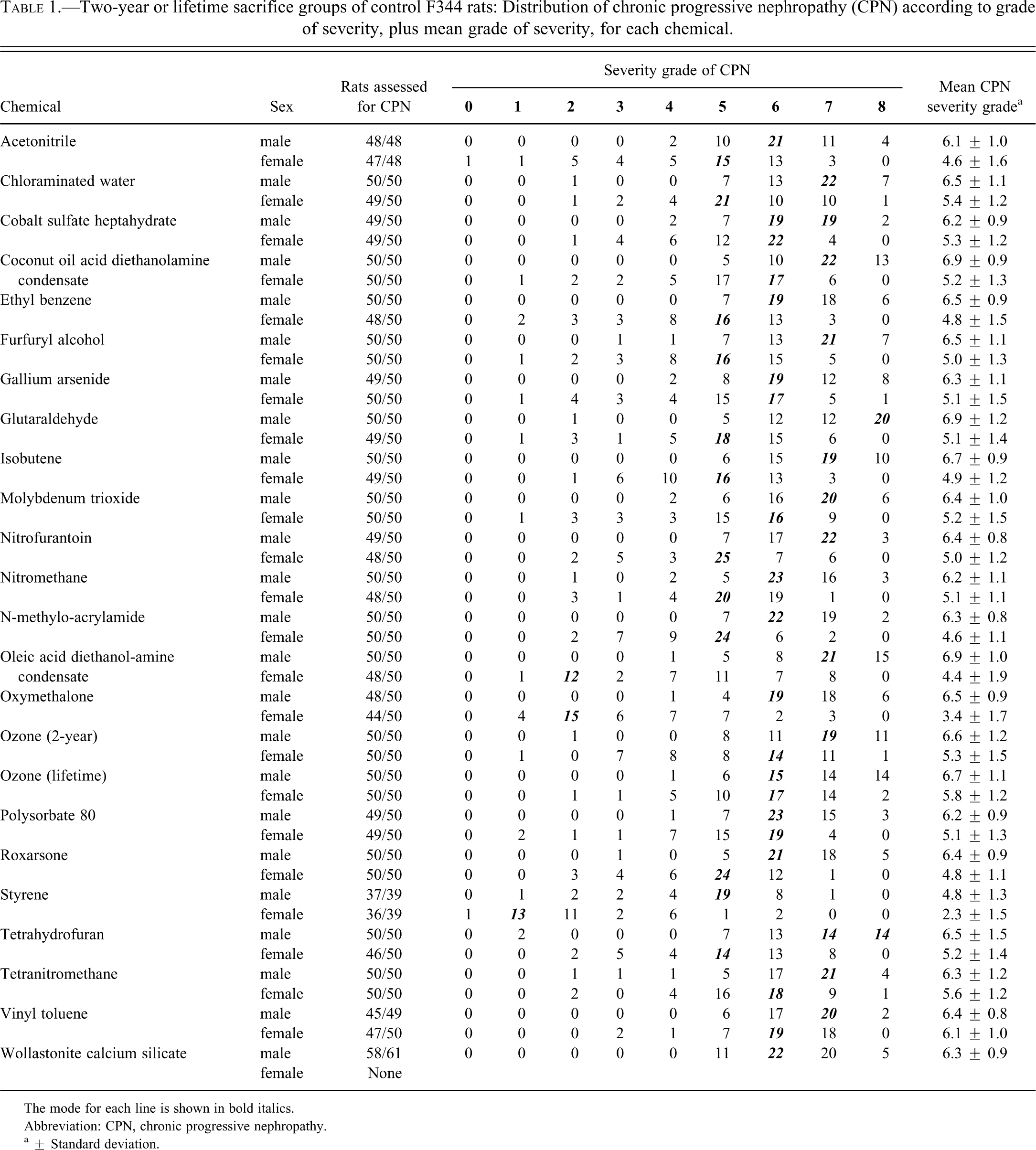
The mode for each line is shown in bold italics.
Abbreviation: CPN, chronic progressive nephropathy.
a ± Standard deviation.
The kidneys from control animals of six studies (coconut oil acid diethanolamine condensate, ethyl benzene, furfuryl alcohol, nitrofurantoin, nitromethane, and oxymethalone) had also been step-sectioned by NTP to provide an additional five to eight sections per kidney. Evaluation of the lesions marked by the NTP pathologists was included in the present study to verify whether there was a concurrence of proliferative kidney lesions with advanced grades of CPN.
Histopathological Evaluation
For each study, the standard H&E-stained sections of kidney for every control animal were microscopically re-examined, specifically grading for severity of CPN and recording any significant renal tubule proliferative lesions present. Severity of CPN was graded using an expanded scale of 0–8, where 0 represented no CPN lesions, and 8 an end-stage kidney. This specialized grading scheme has proved critical for demonstrating statistically significant associations at both the high and low ends of the CPN severity range (Hard et al. 2007; Travlos et al. 2011). The criteria for each grade are described in detail in Table 2. Chronic progressive nephropathy–affected tubules were characterized by basophilia, crowded nuclei, conspicuously thickened basement membrane, and with time, a hyaline cast downstream in the outer medulla. The lower grades (grades 1–4) involved focal lesions that could be counted, whereas in the higher grades (grades 6–8), the renal involvement spread from focal to an expanding network of diseased tissue. The various severity grades represented identifiable stages of CPN progression, from the commencement of the disease to end-stage kidney with impending death from renal failure.
Specialized system for grading severity of rat chronic progressive nephropathy.
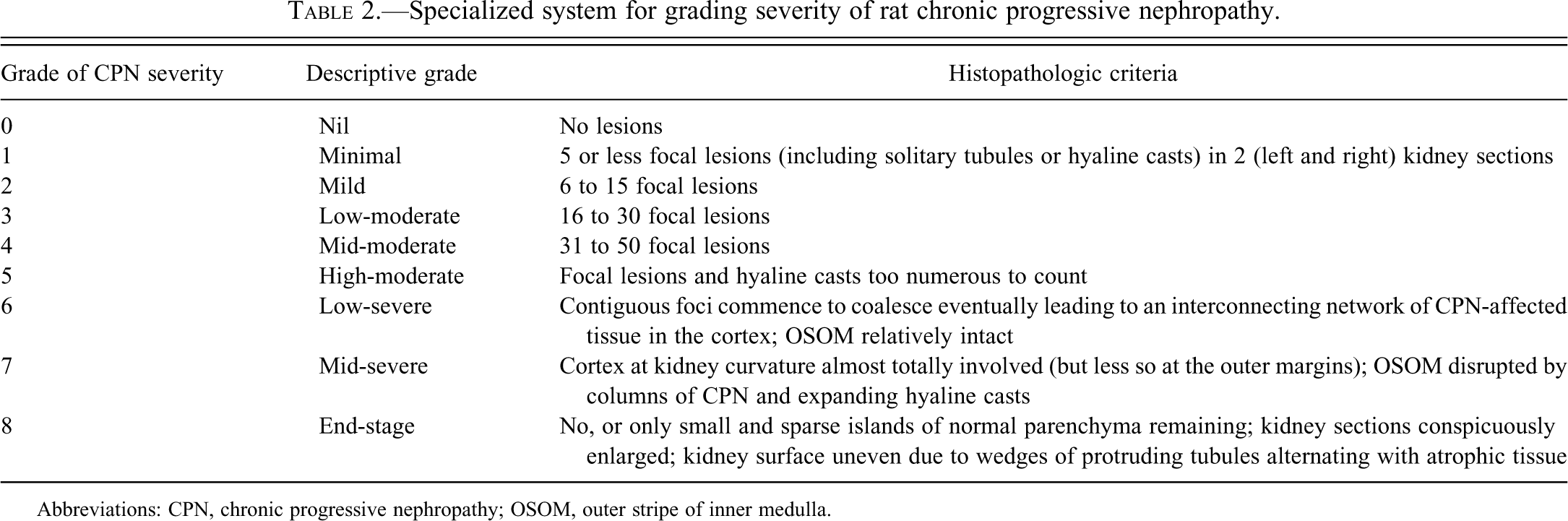
Abbreviations: CPN, chronic progressive nephropathy; OSOM, outer stripe of inner medulla.
Criteria for diagnosing ATH, adenomas, and carcinomas were those described by Hard and Seely (2005, 2006) and the Society of Toxicologic Pathology (Hard et al. 1995). Atypical tubule hyperplasia is a preneoplastic lesion and widely accepted as being on a developmental continuum with adenomas and carcinomas of the rat kidney (Dietrich and Swenberg 1991; Hard 1987; Lipsky and Trump 1988; Nogueira et al. 1993). Particular care was therefore taken to discriminate ATH from exuberant, non-neoplastic tubule proliferations typical of advanced CPN, and to distinguish ATH from incipient adenomas. This investigation dealt specifically with ATH and RTT of basophilic type, which constitute the vast majority of preneoplastic/neoplastic tubule lesions associated with chemical treatment, as well as those occurring spontaneously in the control groups of the NTP carcinogenicity studies. Atypical tubule hyperplasia was a complex proliferation, either a single, solid tubule profile or several contiguous profiles involving convolutions of the same tubule (Figure 1). In contrast to exuberant CPN tubule profiles, ATH cells tended to be larger, with well-defined cell borders and prominent nucleoli. Additionally, ATH were usually not associated with a surround of overtly thickened basement membrane. Instead, these preneoplastic lesions were partially encircled by flattened connective tissue cells, indicative of outward expansion of the lesion. Adenoma (Figure 2) was distinguished from ATH based on a complexity that exceeded the integrity of a single tubule or its convolutions (Hard and Seely 2005).
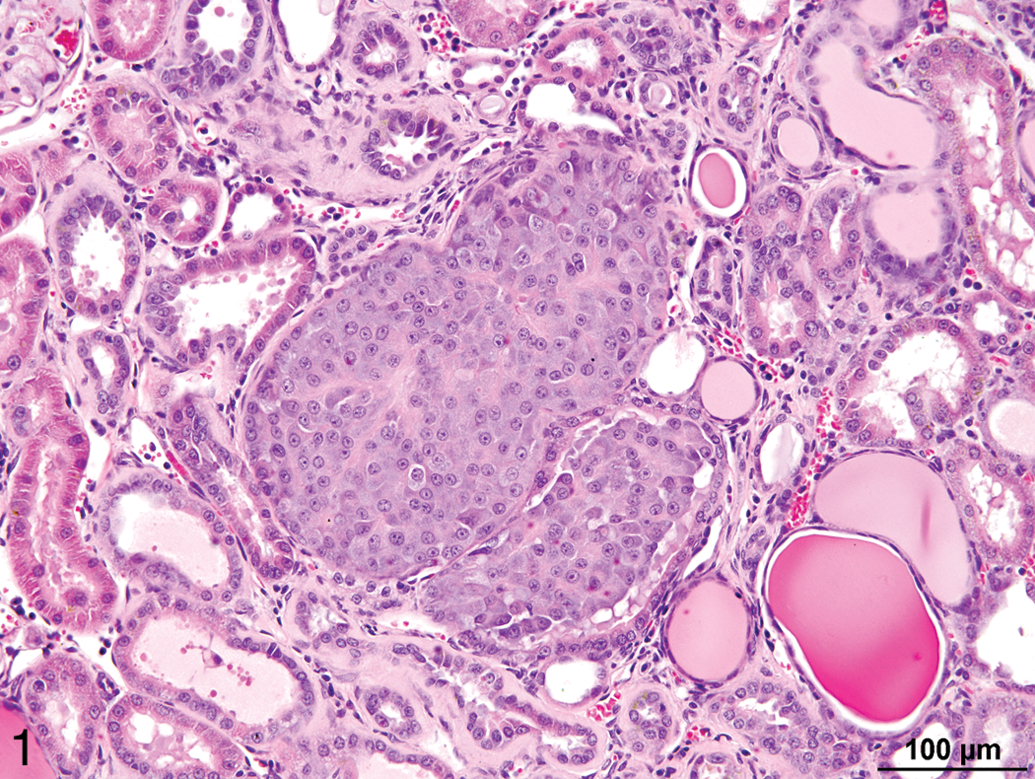
Atypical tubule hyperplasia. The lesion is located within an area of chronic progressive nephropathy and consists of several contiguous, solid tubule profiles, the epithelial cells of which have well-developed cytoplasm and prominent nucleoli. The lesion is partially encircled by flattened fibrocytes, which indicate that it is expanding in size. Hematoxylin and eosin.
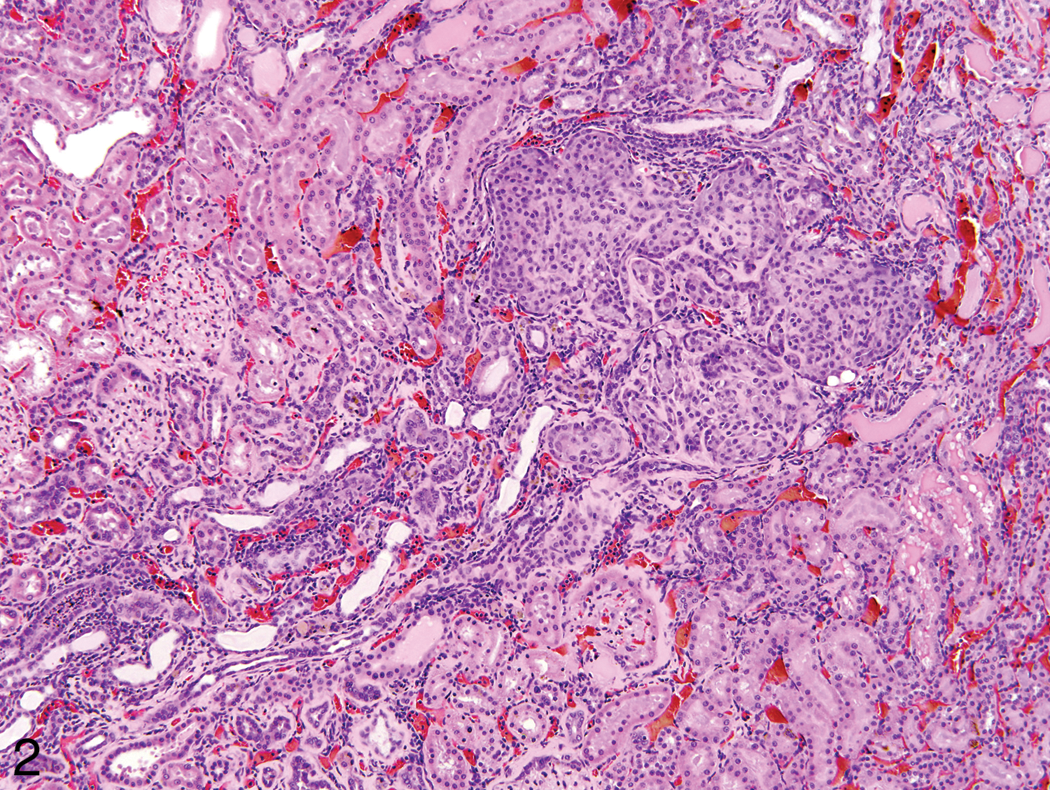
Adenoma. This is the only adenoma recorded in a kidney graded as having chronic progressive nephropathy severity grade 6. Note that it is situated within a distinct tract of chronic progressive nephropathy–affected parenchyma. Hematoxylin and eosin. (This image was digitally repaired to remove a line caused by tissue folding.)
Statistical Analysis
The statistical relationship between different grades of CPN severity and the occurrence of basophilic ATH or adenoma was analyzed by logistic regression using SAS proc logistic (Kleinbaum and Klein 2002). Survival time was included in the mode as a covariate. All sacrifice types were used in the analysis, that is, interim sacrifices (for three studies), found deads, moribund sacrifices, and terminal sacrifices. As ATH is the precursor of adenoma, statistical analysis was also performed on ATH and adenoma lesions combined. Because of relatively low sample numbers in the lower CPN severity groups (and the absence of any lesion of interest), severity grades 0–4 were combined for statistical comparison, with the higher individual CPN severity grades in males. In females, severity grades 0–3 were combined, as were grades 7 and 8, because of small sample sizes. For all tests, a p value of .05 was used as the limit of significance. To address the possibility of false positive results due to the multiple tests performed, a Bonferroni multiple-comparisons correction was also carried out, resulting in a p value significance limit of .005. SAS proc lifetest (Cantor 2003) was used to assess the difference in survival times among animals with an ATH only and animals with an adenoma only.
Results
Severity of CPN between Studies
The distribution of CPN according to grade of severity in control rats for each chemical/study, including mean grades of CPN severity for each study, is shown in Table 1. Chronic progressive nephropathy distribution according to severity grade in the interim sacrifice groups for three chemicals—acetonitrile, oxymethalone, and wollastonite calcium silicate—is presented in Table 3.
Interim sacrifice groups: Distribution of chronic progressive nephropathy in control rats according to grade of severity.
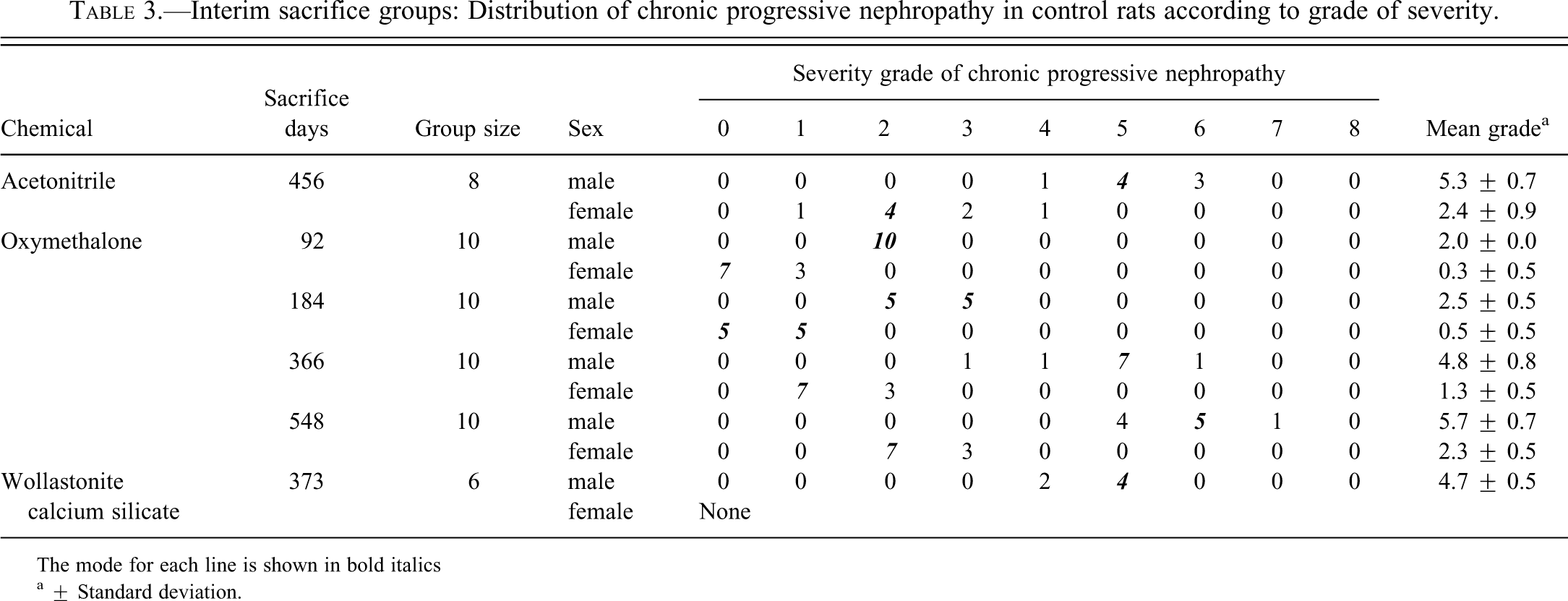
The mode for each line is shown in bold italics
a ± Standard deviation.
As is well reported in the literature, the severity of CPN for all studies was typically higher in males than in females by one or two grades, and the sex difference ranged from 0.3 grades for vinyl toluene to 3.1 grades for oxymethalone (derived from Table 1). The mean severity grades for all studies was 6.4 (standard deviation 1.08) in males, and 5.0 (standard deviation 1.52) in females. This sex difference was highlighted by the fact that in the total study, only six females had developed end-stage (grade 8) CPN, whereas the number of males with end-stage CPN was 170 (Table 4). With one exception (controls for styrene), the mean grades of CPN severity (Table 1) were tightly clustered in male rats, ranging from 6.1 to 6.9 on the 0–8 grading scale. The mean grades in female rats were more widely spread, ranging from 3.4 to 6.1. For styrene, the mean grade in males was 4.8 and in females 2.3. This difference from the majority of studies was probably related to an effect of the different diet (WL-B diet vs. NIH-07). In the interim sacrifice examples with sacrifice periods ranging from ninety-two to 548 days (Table 3), the mean severity grade across three studies was 4.1 for males and 1.3 for females.
Summary of distribution of atypical hyperplastic lesions and renal tubule tumors according to grade of severity of chronic progressive nephropathy: Numbers and lesion percentage per severity grade.
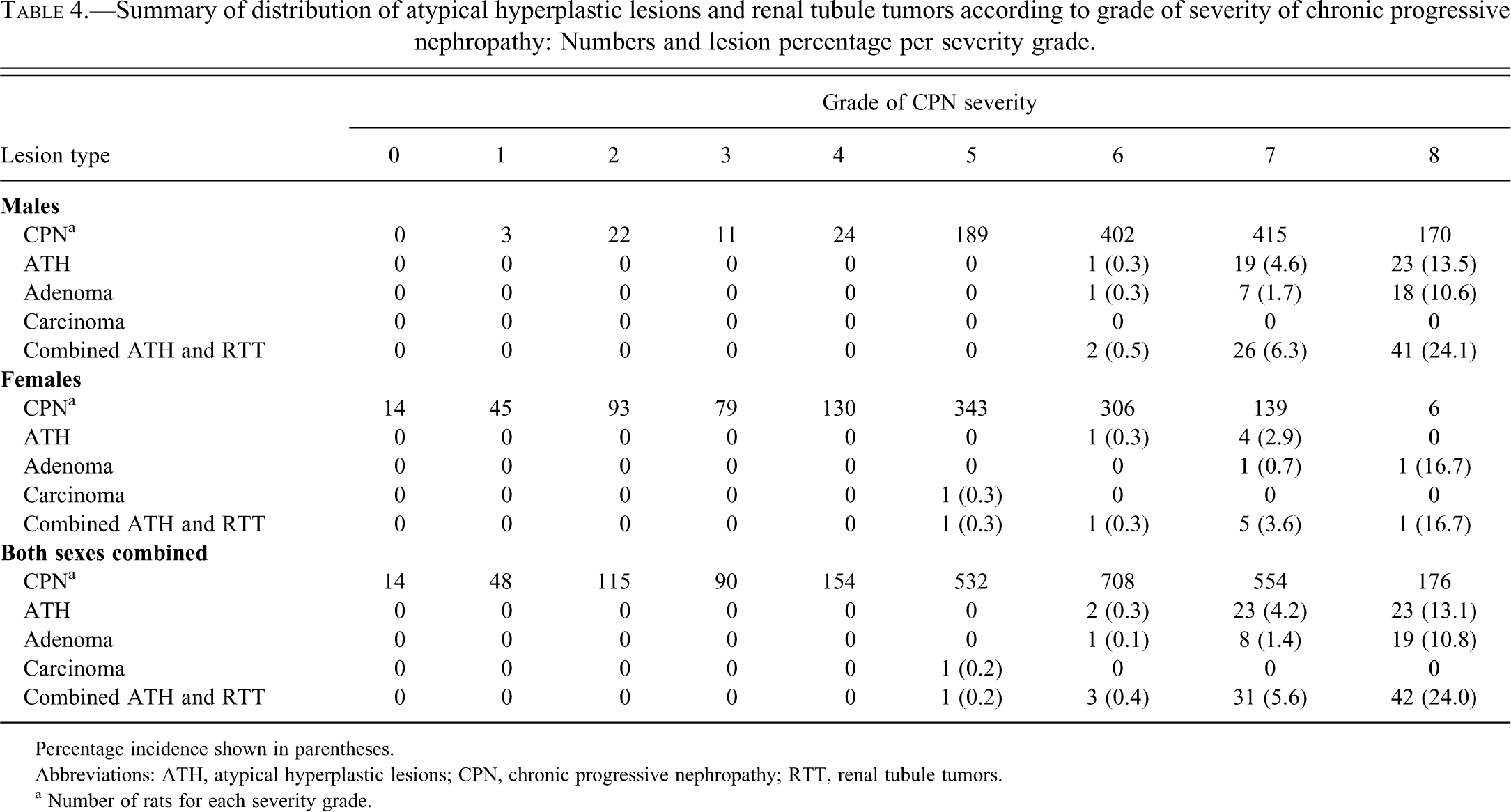
Percentage incidence shown in parentheses.
Abbreviations: ATH, atypical hyperplastic lesions; CPN, chronic progressive nephropathy; RTT, renal tubule tumors.
a Number of rats for each severity grade.
Occurrence of Basophilic ATH and RTT and Relationship to CPN
The incidences (both numerical and percent incidences) of basophilic preneoplastic and neoplastic lesions observed in the single standard sections of control rat kidney, and their distribution according to grade of CPN severity, are summarized in Table 4. A strong indication for a sex association of proliferative kidney lesions was identified. In total, there were forty-three ATH in male rats and five in female rats, representing a sex ratio of approximately 9:1. For RTT, the numbers were twenty-six in males and three in females—again, a sex ratio of close to 9:1. All of the RTT were adenomas, except for one of the three female tumors, which was a carcinoma.
As shown in Table 4, the vast majority of ATH and RTT occurred in rats with advanced CPN (grades 7 or 8). Only one male rat adenoma occurred in a grade 6 kidney, and only the single (female) carcinoma occurred in a grade lower than 6. In general (comparing data in Table 1 with Table 4), the studies with the highest number of male rats with end-stage CPN (e.g., ten or more rats) also had three to seven foci of ATH and/or adenomas combined, for example, glutaraldehyde, isobutene, oleic acid diethanolamine condensate, ozone, and tetrahydrofuran. In contrast, the male rat studies with the fewest cases of end-stage kidney (fewer than five rats) had no foci of ATH or adenomas, for example, polysorbate 80, styrene, tetranitromethane, and vinyl chloride. Furthermore, there was a topographical relationship between the lesions and CPN, because foci of ATH (Figure 1) and small adenomas were located clearly within CPN-affected tissue. Even the single adenoma occurring in a kidney with grade 6 CPN (styrene) appeared to arise from within a tract of CPN (Figure 2).
The total incidence for ATH and RTT combined in male rats at grade 8 (end-stage CPN) was 24% (41/170), whereas in females the equivalent percent incidence was 16.7% (1/6). The female rats provided a more complete perspective for lower grades of CPN than the males because of the higher numbers of animals represented. Excluding the lone female carcinoma at grade 5, which was probably a genuine spontaneous lesion unrelated to CPN, the remarkably similar percentage incidences for each CPN grade in males and females indicated that the sex difference in susceptibility to CPN can explain the difference in ATH and RTT incidence between the sexes in control rats.
Statistical Analysis of Association between CPN Severity and Basophilic ATH/Adenoma
For male rats, there was an overall statistically significant association between CPN severity and incidences of basophilic ATH, adenoma, and ATH/adenoma combined (p < .001 in all three lesion groups). Significant pairwise comparisons are shown in Table 5. In particular, animals with CPN severity grade 8 were statistically more likely to have an ATH, an adenoma, or an ATH/adenoma combined as compared to animals with CPN severity grades 5 (p = .015, .025, .004, respectively), 6 (p < .001 across all lesion groups), or 7 (p< .001 across all lesion groups). Animals with CPN severity grade 7 were statistically more likely to have an ATH or ATH/adenoma combined as compared to animals with CPN severity grade 6 (p = .005 and .001, respectively). All of the above associations remained significant applying the multiple test corrections significance threshold except for CPN severity grade 8 versus 5 for ATH and for adenoma, which could probably be attributed to lower survival times in animals with CPN grade 5.
Summary of statistically significant comparisons of chronic progressive nephropathy severity and atypical tubule hyperplasia/adenoma across the studies.
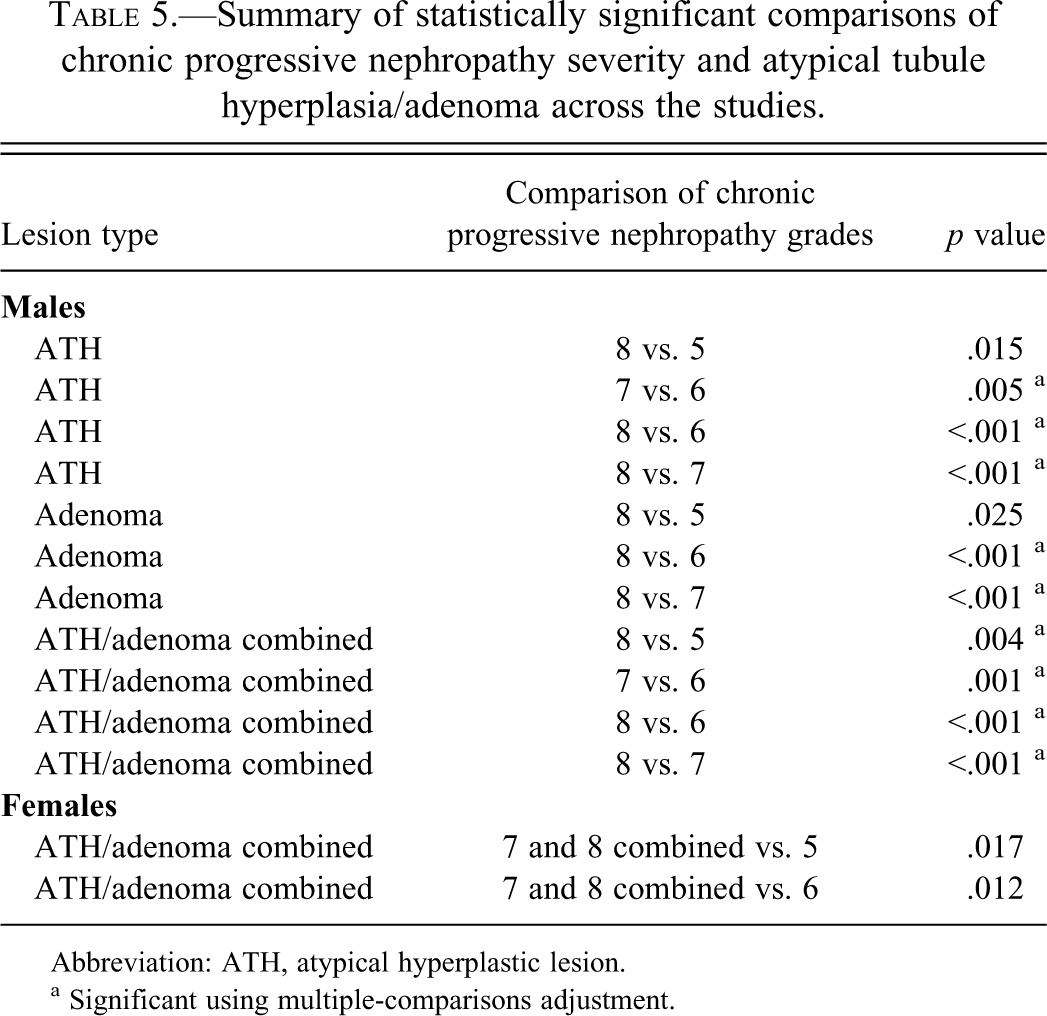
Abbreviation: ATH, atypical hyperplastic lesion.
a Significant using multiple-comparisons adjustment.
For female rats, there was an overall statistically significant association between CPN severity and incidences of ATH/adenoma combined (p < .006). For the pairwise comparisons, animals with severity grades 7 and 8 combined were statistically more likely to have an ATH/adenoma combined than animals with CPN severity grades 5 (p = .017) or 6 (p =.012). These pairwise comparisons, however, were no longer significant after using the multiple corrections adjustment, most likely because of the low overall incidence rate of adenomas and ATH in female rats.
There was no statistically significant difference in survival time between animals with only an ATH versus animals with an adenoma (p = .52).
Step Section Results
The incidences of ATH and RTT in the step sections according to grade of CPN severity are summarized in Table 6. An additional thirty-one ATH and eight adenomas were confirmed in the males, and three ATH but no RTT in the female rats. As with the main study, the vast majority of these lesions (31/34 ATH and 4/4 RTT) were observed in rats with advanced (grade 7 or 8) CPN. The remaining three ATH occurred in rats with grade 6 CPN.
Step-section data: Incidence of basophilic atypical tubule hyperplasia and renal tubule tumors in kidney step-sections from national toxicology program extended histopathological evaluations.
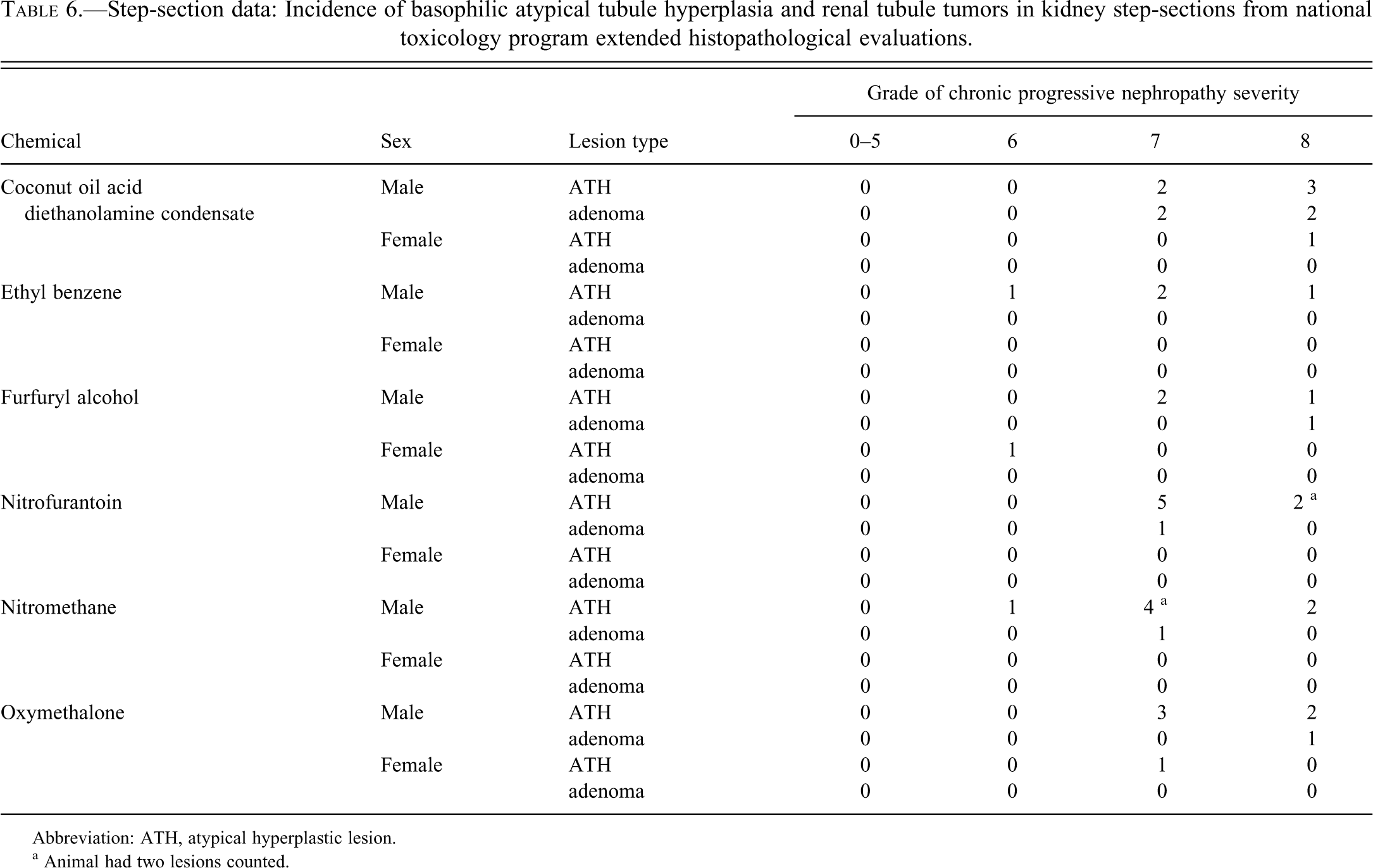
Abbreviation: ATH, atypical hyperplastic lesion.
a Animal had two lesions counted.
Discussion
This study was a histopathological evaluation and statistical analysis of CPN severity grade of a substantial sample of control F344 rats from twenty-four NTP carcinogenicity studies involving twenty-three chemicals. It has provided definitive evidence that advanced stages of CPN represent a risk for development of a low incidence of basophilic renal tubule adenomas and their precursor form of hyperplasia in both male and female F344 rats. The occurrence of foci of atypical hyperplasia and adenoma was substantially associated with the two most severe grades of CPN, and especially with end-stage disease (grade 8). In contrast, the percentage of these lesions in rats with CPN severity grades of 0–5 in males and 0–4 in females was zero. The statistical confirmation of this association was particularly robust in male rats, but the data for female rats followed the same trend as in the males. The combined results indicate that the incidence of adenomas in end-stage CPN was around 10%, in striking contrast to an overall spontaneous incidence of approximately 1% in the present and other (Haseman et al. 1996) surveys involving NTP F344 rats. Furthermore, the data show that the chance of observing either a focus of ATH or an adenoma in rats with end-stage CPN is almost 25% (Table 4). The relationship between advanced CPN and ATH/adenoma is possibly stronger than these new data suggest, given that step-sectioning of the kidneys in six of the studies increased the numbers of ATH and adenomas observed beyond the number found in single sections for each of those particular chemicals.
The most likely explanation for an association between advanced CPN and RTT development is that CPN is both a degenerative and regenerative disease. Throughout the course of its progression, CPN is characterized by tubules exhibiting a high rate of cell turnover (Hard and Seely 2006; Konishi and Ward 1989; Short et al. 1989). This character makes CPN somewhat analogous to the situation of chemically related renal tumor development through a mode of action of sustained, chemically induced degeneration and regeneration. However, with CPN, the sustained degeneration and regeneration represents a spontaneous condition.
Although there was no statistically significant difference in survival times between animals with ATH only and animals with adenoma only (p = .52), from the numerical data it appears that CPN-associated preneoplastic and neoplastic tubule lesions commence growth at a late stage of CPN progression, probably mainly during grade 7. The size of these lesions also emphasizes that they have a slow growth rate and do not progress to carcinomas in the remaining life of the progressively uremic animal. Furthermore, the study shows that the well-known difference in RTT incidence between males and female rats can be explained by the greater predisposition of male rats to develop CPN, with its relentless progression to advanced stages of severity.
In the entire study, only one tumor was diagnosed as renal tubule carcinoma, indicating that basophilic carcinomas of spontaneous occurrence in control F344 rats are extremely rare. This exceptionally low background should signal an important alert in assessing studies in which tumors of high grade (carcinomas) are found in association with chemical exposure. For chemicals unequivocally carcinogenic in the rat kidney—for example, ochratoxin A (Dietrich and Swenberg 1991), fumonisin B1 (Hard et al. 2001), and dimethylnitrosamine (Hard and Butler 1971)—a significant proportion of the induced RTT are carcinomas.
The importance of establishing a link between advanced CPN and RTT increase lies in the fact that many chemicals exacerbate the severity of this spontaneous disease process, and in so doing, they have the potential to produce a dose-related, sometimes statistically significant increase in RTT. Such results can be misinterpreted as indicating a direct causal relationship between the tumors and the test chemical. Step-sectioning of kidney to increase the chances of finding renal tumors in cases of marginal incidence (Eustis et al. 1994) can augment the problem. A number of chemicals tested in the NTP series that have been placed in the equivocal category are probably involved in this CPN exacerbation pathway (Lock and Hard, 2004). Not only is it important to avoid inaccurate designation of chemicals as renal carcinogens, but also this work adds to the weight of evidence that chemical exacerbation of CPN represents a secondary mode of action for tumor development. Such a mode of action has unlikely relevance for species extrapolation in risk assessment because biologically and histopathologically there is no counterpart of rat CPN in humans. Whereas proteinaceous casts are a striking characteristic of rat CPN but not of the dominant types of human nephropathy, CPN lacks vascular changes typical of hypertensive nephropathy, lacks the various glomerular changes typifying diabetic and IgA nephropathies, and has no immunological or autoimmune components that are the basis for post-infection glomerulonephritis or lupus glomerulonephritis (Hard et al. 2009).
In summary, a retrospective histopathological survey of the kidneys of a substantial number of control male and female F344 rats from chronic studies has shown clear evidence of a quantitative and statistically significant association between advanced stages of CPN severity (particularly end-stage kidney) and the development of low-grade RTT and its precursor hyperplasia, ATH. These results indicate that advanced CPN is a risk factor for RTT development and an underlying basis for RTT occurring spontaneously in F344 rats. The regulatory significance of this finding is that chemicals exacerbating CPN as their only renal effect are likely to show a numerical increase in RTT and ATH with dose, which does not represent a direct tumorigenic effect of the chemical. Such cases would represent an indirect effect through exacerbation of CPN, which has no counterpart in humans and therefore is not of relevance for risk assessment.
Footnotes
Acknowledgments
The NTP is gratefully acknowledged for providing access to the histological archive material. In addition, the authors are grateful to Experimental Pathology Laboratories (EPL), Inc., Research Triangle Park, NC, the custodian and manager of the NTP archives, for facilitating all logistical aspects of the review. The authors wish to especially acknowledge Keith Connolly of EPL for his important role in the accessing of all histology slides.
The authors declared no potential conflicts of interest with respect to the research, authorship, and/or publication of this article.
This work was funded by the European Industry Chemical Council (CEFIC) and Plastics Europe, both of Brussels, Belgium, and the Tetrahydrofuran Task Force, Chemical Industries Council, Washington, DC, USA. One of the authors (G. C. H.) received personal support from these sources for conduct of the research and preparation of this manuscript, and another author (L. J. B.) received compensation from the same grant for performing the statistical analyses.