



Abstract
Co-parenting is linked to parental involvement in children’s learning activities, yet the mechanisms and interdependence between mother-father dyads remain unclear. Drawing on 251 Chinese mother-father dyads of preschoolers, this study examined the direct effects of mother- and father-reported co-parenting quality on parental involvement in children’s learning and the indirect effects via perceived parenting competence. Actor-partner interdependence modeling suggested that mothers’ and fathers’ perceived competence was related to their own perceptions of co-parenting but not their spouses’. Mother-perceived competence was positively associated with parental involvement in all learning activities except formal math learning. Moreover, mother-perceived competence fully mediated the effect of mother-reported co-parenting on parental involvement in children’s literacy learning but not math learning. No indirect effect of father-reported co-parenting via father-perceived competence was found. The study highlights Chinese mothers’ central role in organizing the home learning environment and the importance of fathers’ co-parenting support to mothers within the family systems.
Keywords
Ample evidence has suggested that preschool children’s antecedent learning experiences and access to learning resources at home lead to the variation in their learning abilities and performance in later years (e.g., Cheung et al., 2022; Skwarchuk et al., 2014). For young children, parents play a crucial role in organizing learning activities for them outside of school settings, which makes parental involvement particularly essential to children’s learning experiences during early childhood (for a review, see Pomerantz et al., 2012). The current study was guided by the family systems theory, which posits interconnected subsystems within the family and interdependent influences between family members (Cox & Paley, 1997). We focused on the relation between two subsystems: co-parenting which is a component of the mother–father subsystem and parental involvement in children’s learning experiences which takes place in the parent–child subsystem. Although spillover effects from the mother–father subsystem to the parent-child subsystem have been widely found (e.g., Ren et al., 2020; Sherrill et al., 2017), only recently have a few studies demonstrated that co-parenting quality could significantly contribute to parental involvement (Berryhill, 2017; Zhang et al., 2024; Çetin & Demircan, 2023). However, little is known about the underlying psychological mechanism accounting for this spillover effect.
Moreover, although researchers have increasingly recognized the dyadic nature of the co-parenting relationship, existing investigations often either collected data from only one side of the couple (mothers or fathers) (e.g., Çetin & Demircan, 2023), or combined dyadic data into a latent factor (e.g., Berryhill, 2017), or treated dyadic data in separate analytical models (e.g., Zhang et al., 2024). Therefore, those studies were not able to control for the effect of spouses’ perceptions while examining how mothers’ or fathers’ perceptions of co-parenting quality related to other variables of interest.
In addition, previous studies were mainly conducted in the WEIRD (Western, Educated, Industrialized, Rich, and Democratic) context (for an exception, see Zhang et al., 2024). Traditionally, Chinese fathers were often not actively involved in childrearing such as daily educational and caregiving practices (Li, 2020). Nonetheless, recent years have witnessed changes to the traditional division of labor and a rising emphasis on the collaboration between mothers and fathers in childrearing (Li, 2020). Against this backdrop, the current study aims to examine the association between co-parenting quality and parental involvement in home-based learning activities, as well as the mediating role of parents’ self-perceived parenting competence, among Chinese families with 3–4-year-old children. We collected both mothers’ and fathers’ perceptions of co-parenting quality and parenting competence to examine their dyadic interdependence.
Co-Parenting and Parental Involvement
The research on co-parenting has been situated under the family systems theory which accounts for the connections and the transmission of positive or negative effects between interdependent subsystems such as the father-mother subsystem and parent-child subsystem (Kerig, 2019; McHale et al., 2004). The co-parenting relationship is defined as the way parents coordinate their parental roles and responsibilities (Feinberg, 2003). It constitutes an important component of the father–mother subsystem, which to some extent sets the foundation for the quality of overall family systems (Campbell, 2023). The effect of co-parenting quality within the mother–father subsystem can be transferred to the parent–child subsystem and affects their functions, such as influencing parenting behaviors and parent-child interactions (e.g., Holland & McElwain, 2013; Pudasainee-Kapri & Razza, 2015), which is referred to as spillover effect (Minuchin, 1985).
A few studies have suggested a specific spillover effect: when parents perceive adequate support, recognition, and understanding from spouses, they devote more time and effort to engaging in everyday learning activities with children (Berryhill, 2017; Zhang et al., 2024), which strongly predicts children’s later school success (e.g., Lehrl et al., 2020). There may be psychological mechanisms that drive this transfer of the positive effect from the father–mother subsystem to the parent–child subsystem. For example, parents who receive more co-parenting support presumably have certain characteristics such as higher levels of psychological well-being that help them more successfully accomplish parenting tasks (Yang et al., 2023). However, few studies have tried to unveil the potential psychological mechanism.
Parenting Competence as a Potential Mediator Between Co-Parenting and Parental Involvement
Parenting behaviors are shaped by a wide array of environmental and personality characteristics of the parent, among which parents’ belief in their competence to positively influence child development has been considered a major determinant (for a review, see Glatz et al., 2024). Many studies have revealed that parents holding a positive view of their parenting competence are more likely to adopt positive parenting strategies such as showing parental warmth and responsiveness and playing an active part in daily childcare and children’s education (e.g., Giallo et al., 2013; Glatz & Buchanan, 2015). For instance, drawing on data from 982 Australian parents of 0–4-year-olds, Giallo et al. (2013) discovered a positive association between parental self-perceived parenting competence and the frequency of parents getting involved in children’s learning activities for both mothers and fathers. Within the father–mother subsystem, respect, recognition, and support from partners may cultivate parents’ positive thoughts regarding their own parental roles and enhance parents’ beliefs in their own parenting competence and efficacy (Merrifield & Gamble, 2013; Minuchin, 1985). For example, a series of studies focusing on Asian mothers showed that when mothers received adequate spouses’ support, they could have a higher sense of parenting self-efficacy (e.g., Roh et al., 2017; Song et al., 2022).
This body of research suggests that parenting self-efficacy may serve as the psychological mechanism through which co-parenting quality positively contributes to parental involvement. A recent study utilizing a sample of Turkish parents (one parent from each household) preliminarily demonstrated that parents’ beliefs in their role in getting involved in children’s education and in their efficacy at helping children succeed at school could account for the association between co-parenting and parental involvement in school-based and home-based activities (Çetin & Demircan, 2023). Building on this investigation, the current study aims to examine whether parenting competence indicated by parents’ satisfaction and confidence in their parental roles in general could explain the relation between co-parenting quality and parental involvement in children’s home-based literacy and math learning within a Chinese sample.
Interdependent Mother-Father Dyads in Contemporary China
As mentioned previously, one noticeable gap in existing research on the relation between co-parenting and parental involvement is the lack of consideration for mother–father dyadic interdependence. The current study included both mothers’ and fathers’ reports of co-parenting and parenting competence and controlled for the effect on each other in analysis for the following reasons. Primarily, mothers and fathers are in a closely interdependent dyadic relationship, so one parent’s perception of parenting competence might be influenced not only by their own perceptions of co-parenting quality but also by their partners’ perceptions (Campbell, 2023). Some existing studies have already shown that parents’ satisfaction with the co-parenting relationship could affect their own as well as their partners’ psychological well-being and parenting stress (Park et al., 2023; Yang et al., 2023).
Moreover, it is widely acknowledged that mothers and fathers often take on differential roles in caring for children (Jeynes, 2016), so their perception of co-parenting and parenting competence might contribute to parental involvement in children’s learning differently. This gendered division of labor in caregiving is particularly pronounced in the Chinese context, due to the profound influence of Confucian patriarchal ideas (e.g., Chuang & Su, 2009). Traditionally, the expectation for fathers to provide support and recognition for their spouses was much lower than that for them to be family breadwinners (Li, 2020). Nonetheless, propelled by rapid social changes, contemporary China has witnessed emerging new features of the co-parenting relationship. For instance, it is suggested that Chinese mothers nowadays often make the overall planning for childcare and education (Yang, 2018) and fathers take more active roles in providing support for mothers (Li, 2020). Thus, it is worth investigating the pattern and effect of the co-parenting relationship in contemporary China using mother-father dyadic data and an appropriate analytical approach treating mothers and fathers as interdependent dyads rather than independent individuals. To this end, the current study utilized the actor-partner interdependence model (APIM) for data analysis.
The APIM is recommended for dyadic data, as it considers interdependence within a pair (e.g., mother and father) and simultaneously estimates actor effects (the extent to which a person’s behavior is influenced by their own characteristics) and partner effects (the extent to which a person’s behavior is influenced by their partners’ characteristics) (Cook & Kenny, 2005). Using the APIM, researchers can determine the specific dyadic pattern, which can be (i) the actor-only pattern: a significant actor effect but non-significant partner effect, (ii) the partner-only pattern: a significant partner effect but non-significant actor effect; (iii) the couple pattern: equally significant actor and partner effects, and (iv) the contrast pattern: the actor and partner effects are of the same size but opposite directions.
The Current Study
The current study aims to address the above gaps by examining the potential mediating role of parents’ self-perceived parenting competence in accounting for the association between co-parenting quality and parental involvement in children’s home-based literacy and numeracy learning in a Chinese sample. The APIM model was used to account for the interdependence within dyadic data. It was expected that mother- and father-perceived co-parenting would be directly linked to their own perceptions of parenting competence as well as their partners’ perceptions, which would in turn positively relate to parental involvement. We hypothesized that mother-perceived parenting competence would make a larger contribution to children’s learning activities since evidence suggested that mothers generally played a primary role in childcare and children’s education in China (Yang, 2018). We also expected a direct link between co-parenting and parental involvement because there might be other mechanisms beyond parenting competence.
Methods
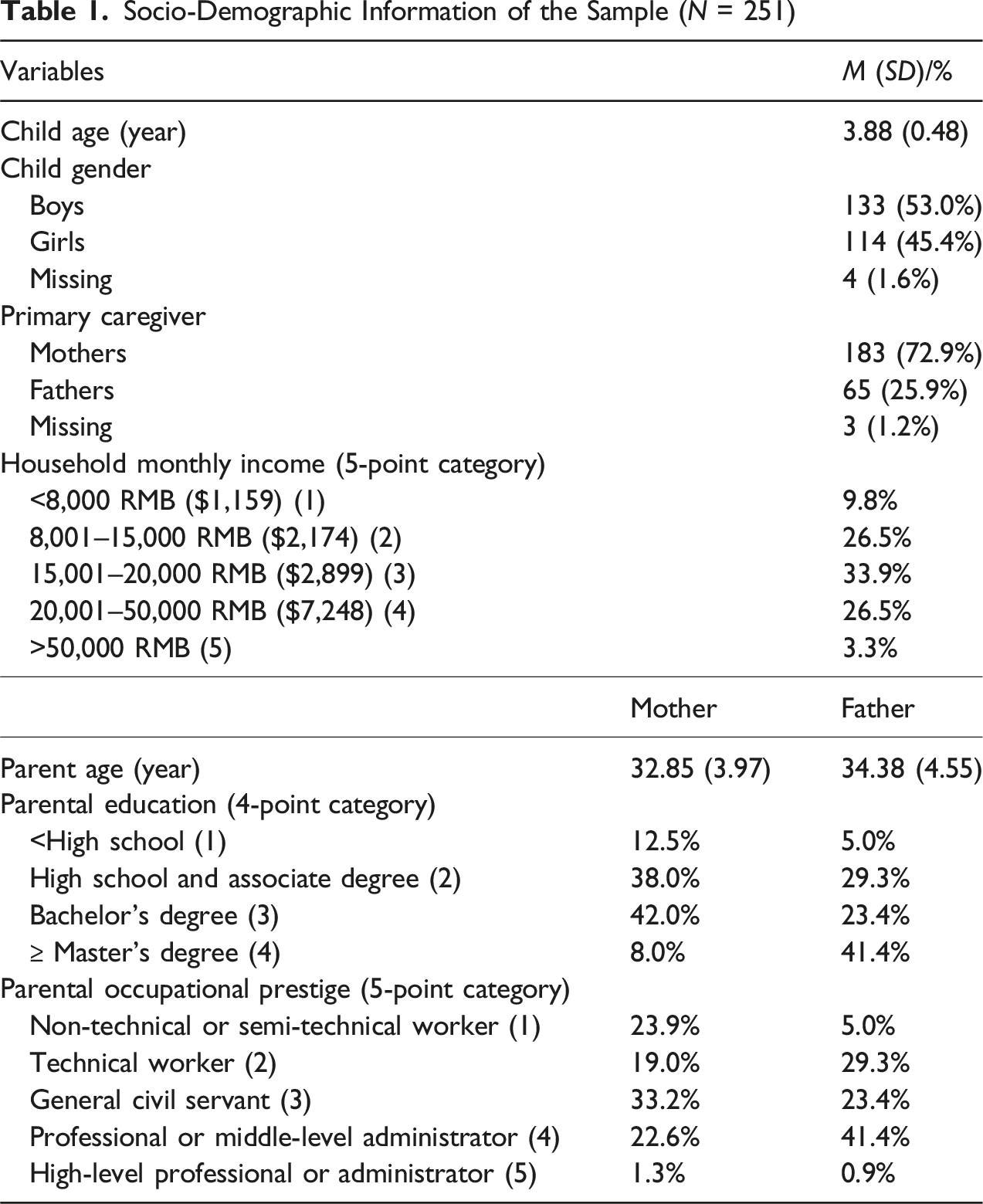
Participants
Socio-Demographic Information of the Sample (N = 251)
Procedures
Study procedures were approved by the ethics review committee at East China Normal University (HR 269-2019). Parent consent forms and questionnaires were distributed to selected families with the help of classroom teachers. Mothers and fathers, respectively, reported their perceptions of co-parenting quality and sense of competence in parenting. Primary caregivers (72.9% mothers, 25.9% fathers) reported parent and child demographic information as well as the overall parental involvement at the family level in children’s learning activities in various aspects. Parents returned the completed questionnaires sealed in an envelope to teachers. Researchers collected the questionnaires during school visits.
Measures
Co-Parenting Quality
Mothers and fathers, respectively, reported their perceptions of co-parenting quality (i.e., how well the partner provided support to co-parenting) using the Coparenting Relationship Quality (CRQ; Stright & Bales, 2003). The original scale consists of seven items measuring supportive co-parenting (e.g., “When I tell my partner something about our child, he/she listens”) and seven items measuring undermining co-parenting (e.g., “When I tell our child to do something, my partner contradicts”). All items were rated on a five-point Likert scale ranging from 1 (never) to 5 (always). As the supportive dimension and the undermining dimension were significantly correlated (mothers’ reports: r = −.51, p < .001; fathers’ reports: r = −.46, p < .001) in this study, the seven undermining co-parenting items were reverse-coded and averaged together with the remaining supportive co-parenting items to index the quality of co-parenting (e.g., Ren et al., 2020). Cronbach’s α for the full scale was .83 for mothers’ reports, and .84 for fathers’ reports, suggesting high internal consistency.
Parental Sense of Competence in Parenting
Mothers and fathers, respectively, reported how competent they perceived themselves as in parenting using the Parenting Sense of Competence scale (PSOC; Johnston & Mash, 1989). This scale has been validated and used in Chinese samples of young children’s parents and demonstrated good reliability and validity (e.g., Ngai et al., 2007). The PSOC consists of 17 items capturing parents’ satisfaction with their parenting (e.g., “My talents and interests are in other areas, not in being a parent”) and their self-efficacy in the parenting role (e.g., “I honestly believe I have all the skills necessary to be a good parent to my child”). Nine negatively worded items were reverse-coded and averaged together with the remaining items to indicate perceived parenting competence. Cronbach’s α for the full scale was .72 for mothers’ reports, and .63 for fathers’ reports.
Parental Involvement in Children’s Learning Activities
Primary caregivers reported the frequency that all caregivers (referring to parents in the current sample) in the household got involved in children’s learning activities at home using a battery of 5-point scales ranging from 1 = never to 5 = every day. Therefore, this measure captures a child’s overall exposure to different types of learning activities at home, rather than the level of an individual parent’s involvement. Parental involvement in children’s home literacy activities was measured using 17 items which were mainly adopted from previous studies (Deng et al., 2015; Farver et al., 2006). This measure includes two subscales capturing informal home literacy activities: the Parents’ Literacy Habits subscale (3 items) measures parents’ reading habits; and the Opportunities for General Book Reading subscale (5 items) measures children’s general exposure to books or reading. The measure also comprises two subscales assessing formal home literacy activities: the Formal Teaching of Literacy subscale (4 items) measures parents’ adoption of formal literacy teaching; and the Guided Teaching in Book Reading subscale (3 items) measures parents’ intentional literacy teaching during book reading. Cronbach’s α of these four subscales ranged from .67 to .84, suggesting acceptable to high internal consistency.
Parental involvement in children’s home numeracy activities was measured using 24 items which were adopted from previous studies (Huang et al., 2017; LeFevre et al., 2009). Both informal and formal home numeracy activities were captured. Informal numeracy activities were measured via two subscales: the Math Games subscale (5 items) measures parents’ adoption of math games to teach math skills; the Applications subscale (5 items) measures parents’ efforts in facilitating children to apply math skills in informal scenarios. Formal numeracy activities were assessed using two subscales: the Number Books subscale (5 items) measures parents’ use of number books; and the Number Skills subscale (9 items) measures parents’ formal teaching of number skills. Except for the Math Games subscale, the rest three subscales yielded Cronbach’s α ranging from .67 to .80, suggesting acceptable to high internal consistency. Cronbach’s α was .58 for the Math Games subscale, which was relatively low. We further conducted a confirmatory factor analysis on this subscale. In the measurement model, all five items were significantly loaded onto one latent factor, with loadings ranging from .32 to .75. The value of factor determinacy reached .83, suggesting high internal consistency (Brown, 2015). Thus, we decided to keep this subscale in subsequent analyses. The whole battery has been validated and used in Chinese samples before and yielded similar subscale reliabilities (e.g., Ren et al., 2023).
Family SES
Primary caregivers provided information on five indicators of family socioeconomic status (SES): maternal and paternal educational attainment, maternal and paternal occupational prestige, and household monthly income. A family SES composite score was created by averaging the standardized scores of the five indicators (for the detailed scoring method of family SES, see Ren et al., 2023).
Analytical Strategy
The primary analysis was conducted in Mplus Version 8 (Muthén & Muthén, 2017). We employed the APIM, which enabled us to treat fathers’ and mothers’ perceptions of co-parenting quality and parenting competence as inter-correlated rather than independent from each other as in the common regression models (Cook & Kenny, 2005). We first estimated the basic APIM model to examine the relations between co-parenting quality and parenting competence perceived by mothers and fathers. With the effect of family SES being controlled for, we tested the statistical significance of two actor effects (the effects of mother- and father-reported co-parenting quality on their own perceptions of parenting competence) and two partner effects (the effects of mother- and father-reported co-parenting quality on their partners’ perceptions of parenting competence). To determine the dyadic pattern of the APIM model, we examined the parameter k (the ratio of the partner effect to the actor effect). As recommended, we used 5,000 bootstrap sampling and the bias-corrected bootstrap 95% confidence interval (CI) for the k parameter (Cook & Kenny, 2005). A CI including 1, 0, and −1, respectively, indicates the couple pattern, actor-only pattern, and contrast pattern in the APIM analysis.
Then, we extended this basic APIM model by including the variables indicating parental involvement in children’s learning activities as final outcomes to examine the direct and indirect effects (via mother- and father-reported parenting competence) of mother- and father-reported co-parenting quality. Informed by previous studies (e.g., Ren et al., 2023; Skwarchuk et al., 2014), we specified four latent factors representing four types of children’s learning activities, namely formal literacy (indicated by formal teaching of literacy and guided teaching in book reading), informal literacy (indicated by parents’ literacy habit and opportunities for general book reading), formal numeracy (indicated by number books and number skills), and informal numeracy (indicated by math games and applications). We regressed these four variables onto mother- and father-reported parenting competence and co-parenting quality. Mother- and father-reported co-parenting was allowed to co-vary, and so were mother- and father-reported parenting competence. In this way, actor effects could be estimated while controlling for partner effects, and vice versa (Cook & Kenny, 2005). In addition, we controlled for the effects of family SES on all the study variables. Given the significant correlation between child age and number skills, we also controlled for the effects of child age on parental involvement. Child gender and reporter of parental involvement (1 = mother; 2 = father) were not included as control variables since they were not correlated with key study variables. Again, we used the bootstrap method to examine the statistical significance of indirect effects. We adopted Brown’s (2015) criteria for acceptable model fit: a non-significant χ2 test of model fit, Comparative Fit Index (CFI) ≥ 0.90, Tucker Lewis index (TLI) ≥ 0.90, Root Mean Square Error of Approximation (RMSEA) ≤ 0.08, and Standardized Root Mean Square Residual (SRMR) ≤ 0.06. The data and analytical codes used for the current study are available upon request. The study was not pre-registered.
Results
Descriptive Statistics and Zero-Order Correlations of Key Study Variables
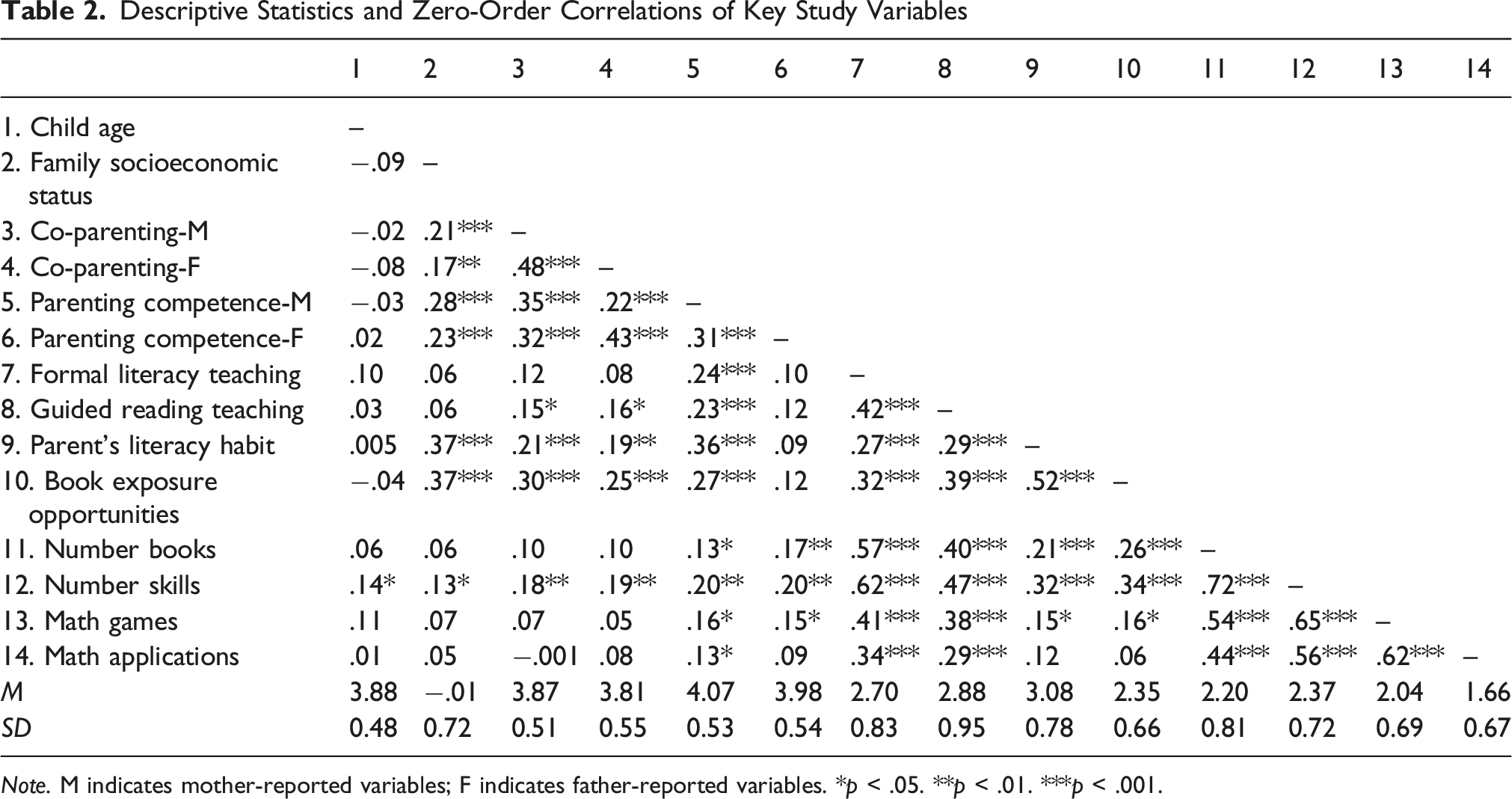
Note. M indicates mother-reported variables; F indicates father-reported variables. *p < .05. **p < .01. ***p < .001.
The basic APIM model revealed significant actor effects, but non-significant partner effects (see Figure 1), indicating that mothers’ and fathers’ perceptions of parenting competence were only associated with their own perceptions of co-parenting quality, but not with their partners’ perceptions. For both father- and mother-perceived parenting competence, the CI of k parameter included 0 (95% CIfather [–0.02, 0.24]; 95% CImother [–0.07, 0.19]), demonstrating the actor-only pattern. Basic APIM model of the associations between mother- and father-perceived co-parenting quality and parenting competence.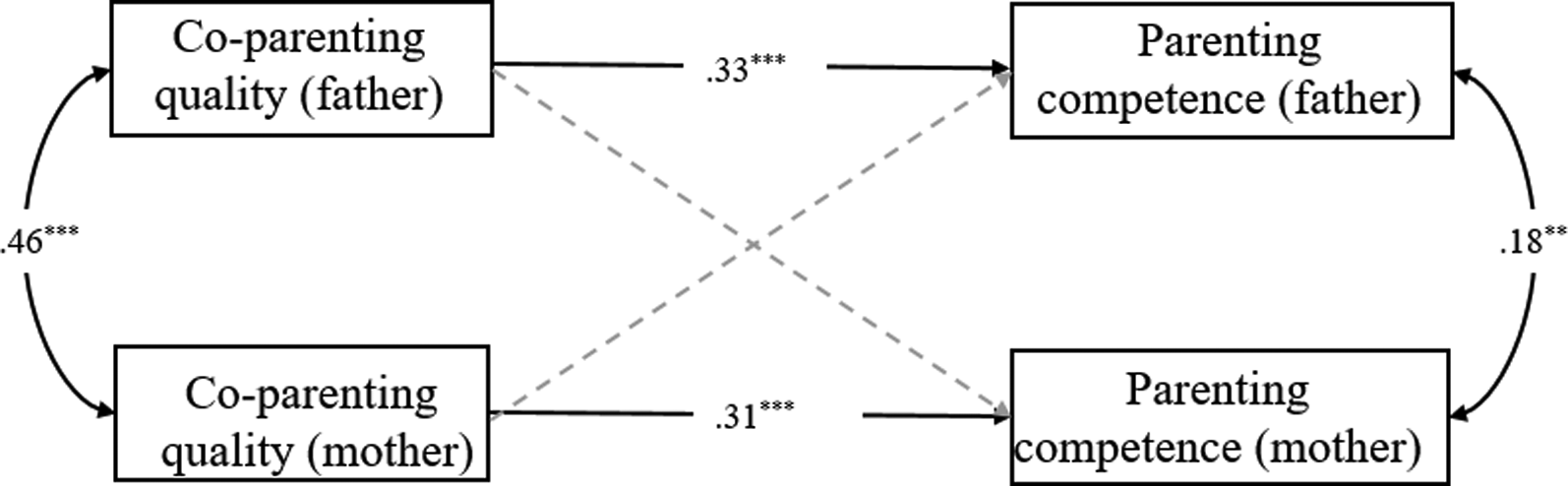
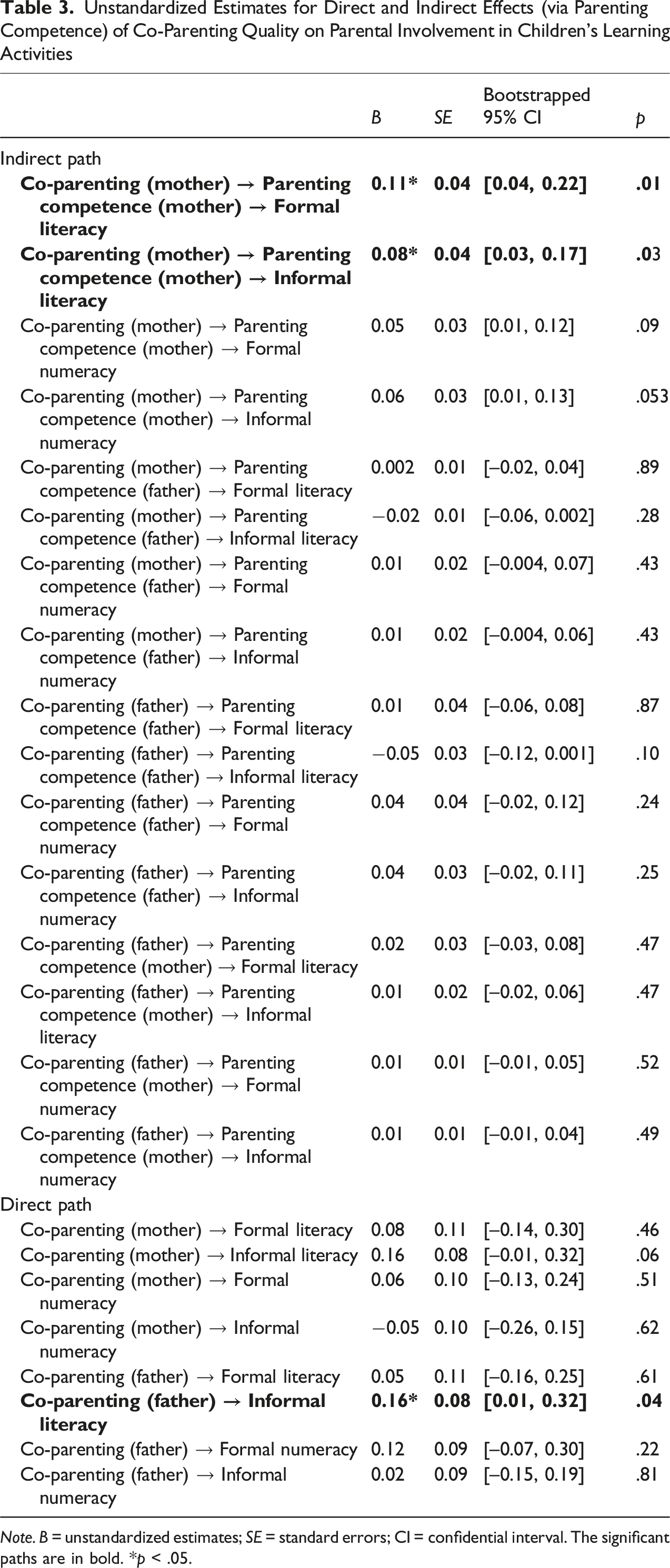
The full APIM model (see Figure 2) with distal outcomes (i.e., various aspects of parental involvement) provided an adequate fit to the data, χ2(42) = 46.978, p = .28, RMSEA = .02, 90% CI [.00, .05], CFI = .995, TLI = .990, and SRMR = .03. The model accounted for 6%–42% of the variance in parental involvement in different types of children’s learning activities. Unstandardized coefficients, standard errors, 95% CIs, and p-values of indirect and direct paths are presented in Table 3. Direct and indirect effects (via parenting competence) of co-parenting quality on parental involvement in children’s learning activities. Unstandardized Estimates for Direct and Indirect Effects (via Parenting Competence) of Co-Parenting Quality on Parental Involvement in Children’s Learning Activities Note. B = unstandardized estimates; SE = standard errors; CI = confidential interval. The significant paths are in bold. *p < .05. 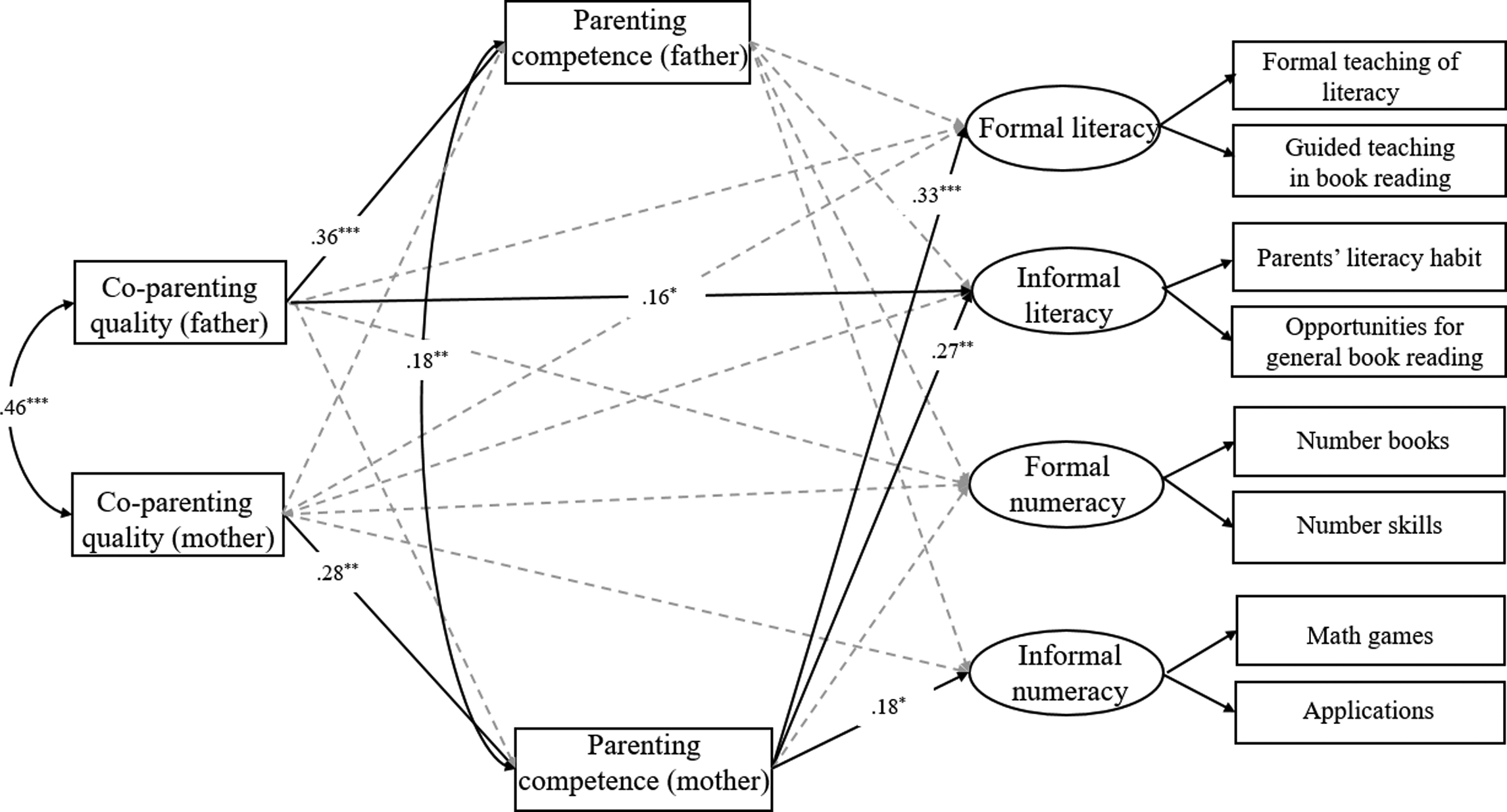
Mother-reported parenting competence was significantly associated with parental involvement in formal literacy (β = .33, 95% CI [.15, .49], p < .001), informal literacy (β = .27, 95% CI [.11, .42], p = .001), and informal numeracy (β = .18, 95% CI [.03, .31], p = .01). The effect of mother-reported parenting competence on parental involvement in formal numeracy was only marginally significant (β = .14, 95% CI [–.01, .27], p = .051). By contrast, father-reported parenting competence was not associated with any aspect of parental involvement in learning activities.
Statistical tests of indirect effects showed that mother-reported parenting competence significantly mediated the effects of mother-reported co-parenting quality on parental involvement in formal literacy (B = 0.11, 95% CI [0.04, 0.22], p = .01) and informal literacy (B = 0.08, 95% CI [0.03, 0.17], p = .03). The indirect effect of mother-reported co-parenting quality via mother-reported parenting competence on parental involvement in informal numeracy was marginally significant (B = 0.06, 95% CI [0.01, 0.13], p = .053). Accounting for these mediation effects, the direct effects of mother-reported co-parenting quality on parental involvement in formal literacy, informal literacy, and informal numeracy were all non-significant. On the contrary, no significant indirect effect of co-parenting quality was found via father-reported parenting competence. A significant direct effect of father-reported co-parenting quality was found on parental involvement in informal literacy (β = .16, 95% CI [.01, .32], p = .04).
Discussion
Guided by family systems theory (Cox & Paley, 1997) and utilizing the APIM modeling, the current study investigated the effects of Chinese mothers’ and fathers’ perceptions of co-parenting quality on parental involvement in young children’s home-based learning and the underlying pathway via their perceptions of parenting competence. The basic APIM model revealed an actor-only pattern in the association between mothers’ and fathers’ perceptions of co-parenting quality and parenting competence. The final APIM model demonstrated that mothers’ but not fathers’ parenting competence was positively associated with certain aspects of parental involvement. Furthermore, mothers’ parenting competence fully accounted for the association between mother-perceived co-parenting quality and parental involvement in children’s literacy learning. Father-perceived co-parenting quality did not have any indirect effects on parental involvement via fathers’ parenting competence, but it was directly linked to parental involvement in children’s informal literacy learning.
Actor-Only Pattern of Mother-Father Dyadic Relations
In the current sample, mothers and fathers perceived a similar level of co-parenting support from their spouses. Nonetheless, mothers perceived themselves as more competent in their parental role than fathers, which aligns with previous findings in the WEIRD context (e.g., Junttila et al., 2015; Salo et al., 2022). This cross-cultural consistency might be attributed to mothers’ primary role in childrearing across many cultures. Thus, mothers tend to have more chance to practice and enhance their parenting skills in daily life, and they generally hold a belief in the essentiality of their parental role and a high identification with this role (e.g., Donithen & Schoppe-Sullivan, 2022; Lippold et al., 2021). Our APIM model demonstrated that co-parenting quality was a robust correlate of self-perceived parenting competence, whereas parents’ perceptions of their parenting competence were only associated with their own perceptions of co-parenting quality, but not with those of their spouses. This result echoed a previous investigation showing mothers’ and fathers’ reports of co-parenting experiences were generally not related to their spouses’ reports of parenting self-efficacy (Merrifield & Gamble, 2013). With APIM modeling, we were able to control for the partner effect while estimating this actor effect, resulting in more robust findings than those reported in Merrifield and Gamble (2013) which estimated separate regression models for mother- and father-reported parenting self-efficacy.
Because parents’ perceptions of co-parenting quality reflected support and recognition received from their spouses (Ren et al., 2020), our findings indicate that when parents perceived greater support and fewer contradictions from spouses, they would perceive higher levels of satisfaction and efficacy in their own parental role. As stressed by family systems theory, parents’ own functioning is closely related to other family members’ behaviors, and it is especially so in the highly interdependent mother-father dyads (Campbell, 2023). Therefore, although parents’ self-perceived parenting competence could be influenced by other factors such as parenting stress and child temperament that were not measured in the current study (Fang et al., 2021), the significance of spouses’ support as a particular source of social support should be highlighted (Feinberg, 2003). Moreover, we found this effect of spouses’ support for both mothers and fathers. The finding suggests that in contemporary China, it is necessary to emphasize the importance of co-parenting quality to both parents rather than focusing on mothers only as commonly seen in previous studies (e.g., Roh et al., 2017; Shorey et al., 2015; Song et al., 2022).
Mediating Role of Mothers’ Parenting Competence
Our findings further demonstrated that the effect of co-parenting quality could spill over to parental involvement in children’s home-based learning activities, which reflects a type of education-focused parenting behavior, via mother-perceived parenting competence. The benefit of a high-quality co-parenting relationship to positive parenting behaviors in general has long been established, suggesting the transfer of positive effects from the mother-father subsystem to the parent-child subsystem (e.g., Ren et al., 2020). For instance, supportive co-parenting is generally associated positively with parental warmth and negatively with parental hostility (Schulz et al., 2023). Interventional efforts targeting the co-parenting relationship have also demonstrated effectiveness in improving parental positivity and lowering parental control as well (Feinberg et al., 2009). Similar to these broad measures of positive parenting behaviors, active involvement in children’s home-based learning activities could be enhanced by spouses’ support, which is consistent with previous findings (Irace, 2011; Pudasainee-Kapri & Razza, 2015).
Importantly, our findings should be interpreted within the unique sociocultural context of China. Our analyses suggested a possible pathway by which co-parenting quality related to parental involvement in children’s home-based learning activities through mothers’ parenting competence. In other words, fathers’ support for mothers in co-parenting might help foster mothers’ positive feelings and beliefs in themselves as caregivers, which could in turn increase parents’ willingness to provide rich learning activities at home. It is worth noting that we measured involvement at the family level rather than at the individual parent level. However, the level of involvement captured by the measure might largely reflect mothers’ rather than fathers’ efforts in organizing home learning environment for young children, as mothers tend to take on a primary role in childrearing during early childhood, including providing a stimulating home learning environment (Cheung et al., 2021).
Recent sociological research also revealed the leadership role of Chinese mothers in children’s education, such that many Chinese mothers act as the “education manager” who is responsible for effectively managing the family’s financial and human capital resources to create more learning opportunities for their children (e.g., Yang, 2018; Zhang, 2021). As such, mothers also to some extent decide the type as well as the level of educational involvement by fathers. Therefore, it is possible that mothers with high self-perceived parenting competence would not only actively engage in children’s education on their own but also plan for children’s education on behalf of the whole family and determine fathers’ involvement to some extent. In contrast, mothers perceiving low parenting competence might not take an active part in children’s learning themselves, and more importantly, they might not take charge of the overall organization of a high-quality home learning environment, closing the gate for the whole family’s involvement in children’s education. This gatekeeping role of Chinese mothers in the family systems echoed a recent China-based study demonstrating that mother-perceived rather than father-perceived parenting competence mediated the effect of co-parenting quality on children’s problem behaviors (Pan et al., 2024). Therefore, mothers’ parenting competence could influence children by potentially navigating the overall parenting process of both parents.
The different patterns of associations regarding parental involvement in children’s literacy and math learning activities are worth noting. Parenting competence was able to explain the variance in children’s literacy learning and informal math learning, but not formal math learning. A possible explanation for this difference is that formal math learning for the current 3–4-year-olds was very basic and straightforward. Therefore, regardless of parents’ parenting competence, they were able to engage in simple learning activities such as number recognition and basic counting. In addition, Chinese parents tend to hold a positive attitude towards formal math learning regardless of parent characteristics (e.g., Cheung et al., 2021; Huang et al., 2017). In contrast, informal math learning relies on parents’ practices of integrating math knowledge in games and daily activities, which may require parents to consciously notice and infuse math teaching opportunities in everyday life and can thus be more demanding for parenting competence compared to formal math learning. In other words, parents’ involvement in informal math learning is more closely tied to their parenting competence, which explains the significant association observed between the two. In terms of parental involvement in literacy activities, children’s literacy learning requires parents to not only have a good reading habit themselves but also create a quality literacy environment for children, such as preparing books and setting up a time for shared reading. This may put a demand on parenting competence and skills (e.g., Bojczyk et al., 2018), resulting in a significant link between parenting competence and parental involvement in literacy activities.
Effects of Fathers’ Perceived Co-Parenting and Parenting Competence
Noticeably, unlike that of mothers, the self-perceived parenting competence of fathers had no significant relation to parental involvement in children’s home learning activities. It is worth mentioning that the reporter of parental involvement (mothers or fathers) was not significantly correlated with the levels of parental involvement, therefore excluding the potential explanation that the lack of effects of fathers’ parenting competence was due to the reporters being primarily mothers. Instead, this finding may further reflect the fact that many Chinese mothers play the role of “education manager” who orchestrates both parents’ involvement in children’s education. As fathers often play a subordinate role in this process, the important role of their perceived parenting competence may not surface in terms of involvement in children’s home-based learning activities.
Nonetheless, we found a direct link between father-perceived co-parenting and parental involvement in informal literacy, suggesting that as fathers perceived more co-parenting support, parental involvement increased, which might reflect an increase in fathers’ involvement in particular. The association between co-parenting quality and paternal involvement in children’s cognitively stimulating activities such as reading and playing have been repeatedly found (e.g., Fagan & Palkovitz, 2019; Wang et al., 2023). However, the lack of indirect effect via fathers’ parental self-efficacy in the current study might suggest other mechanisms beyond our investigation. For instance, Chinese fathers’ belief in their parental role in actively engaging in parenting practice has been suggested to be positively associated with paternal involvement (e.g., Liu et al., 2022), which might alternatively account for the effect of father-perceived co-parenting quality. However, as we tested overall parental involvement rather than specifically paternal involvement, the above explanation requires future verification using father-reported data on involvement in learning activities.
Limitations and Future Directions
The current study has a few limitations, which helps inform the direction for future studies. Firstly, the utilization of cross-sectional data precluded any inferences about the directions of relations among study variables. Future research should adopt longitudinal designs with multiple waves of data collection or involve interventions targeting co-parenting to validate the directions of the pathway from co-parenting to parental involvement via parenting competence. Secondly, the current study examined the overall parental involvement in children’s learning, thus could not fully test the actor-partner interdependent effects. Future studies should measure maternal and paternal involvement separately. Thirdly, the current study was centered on home-based parental involvement at a broad level. Future studies could expand the scope by including other aspects of parental involvement (e.g., parents’ involvement in school-based activities) as well as momentary parental involvement at the microlevel (e.g., scaffolding behaviors during learning tasks) (Hoover-Dempsey & Sandler, 1997). Fourthly, as many grandparents are involved in caregiving in Chinese households with young children, future studies can extend the investigation of mother-father co-parenting to the co-parenting dynamics between parents and grandparents.
Conclusions and Implications
The current study unveiled parenting competence as a potential underlying process by which mothers’ and fathers’ perceptions of co-parenting quality might relate to parental involvement in preschool children’s learning activities. Our findings first highlight the importance of spouses’ support in co-parenting relationship to parenting competence for both fathers and mothers. Furthermore, the findings suggest that fathers’ co-parenting support to mothers (i.e., co-parenting relationship reported by mothers) could contribute to parental involvement by bolstering mothers’ parenting competence. Therefore, parenting programs that aim to increase parental involvement may simultaneously target co-parenting relationships and parenting self-efficacy. In particular, urging fathers to provide recognition, support, and love for mothers may be an effective means to increase mothers’ parenting competence and subsequently parental involvement in the family.
Footnotes

Ethical Considerations
Study procedures were approved by the ethics review committee at East China Normal University (HR 269-2019) under a larger project titled “The association between young children’s extracurricular participation and their social-emotional development.”
Consent to Participate
Written consents were obtained from the participants.
Author Contributions
Funding
The authors disclosed receipt of the following financial support for the research, authorship, and/or publication of this article: This work was supported by the [Jiangsu Provincial Social Science Fund] under Grant [25SHD002].
Declaration of Conflicting Interests
The authors declared no potential conflicts of interest with respect to the research, authorship, and/or publication of this article.
Data Availability Statement
The data and analytic code are available upon reasonable request.