




Abstract
The family stress model posits that external stressors such as paternal incarceration—an experience endured by more than one-third of children born in urban areas—can substantially shape caregiving arrangements, yet little is known about how this occurs. This paper uses in-depth interview data from the Jail and Family Life Study. We draw on 154 interviews with mothers and grandmothers of children enduring paternal incarceration to understand how caregiving arrangements for children shift in the aftermath of paternal incarceration and the implications of these changes for those navigating them. Our analysis reveals a continuum of caregiving patterns following paternal incarceration, ranging from concentrated caregiving, wherein one individual (typically the child’s biological mother) absorbs most caregiving responsibilities, to redistributed caregiving, wherein care is spread across multiple family members. We also find these caregiving arrangements have distinct consequences: concentrated caregiving tends to heighten caregiver distress, while redistributed caregiving often generates interpersonal conflict and strain within families. These caregiving dynamics offer insights to enhance our understanding of the specific challenges faced by families enduring paternal incarceration.
Caring for children is an important and multifaceted responsibility that demands time, energy, and financial resources. This responsibility includes the provision of necessities (such as food, shelter, and clothing), navigating educational and other institutions, and providing consistent emotional support. For many caregivers, these demands are compounded by the need to simultaneously manage employment, household obligations, and other personal responsibilities. In the United States, the burdens of caregiving are further intensified by the limited availability of structural supports and social policies that facilitate caregiving roles (Glenn, 2010; Nomaguchi & Milkie, 2020). Nonetheless, the presence of safe, stable, and engaged caregivers remains critical to children’s physical, emotional, and social development (World Health Organization, 2004).
The family stress model emphasizes both the consequential role of external stressors on family functioning and the interdependence of family members, offering a useful framework for understanding how caregiving arrangements evolve in response to adversity (Conger & Elder, 1994; Hill, 1958; see also Conger et al., 1992, 2002; McCubbin et al., 1980; McCubbin & Patterson, 1983). This framework posits that external stressors such as paternal incarceration can substantially shape caregiving arrangements (Arditti, 2016; Turney & Haskins, 2019). Paternal incarceration, and the mechanical removal of fathers from households, produces widespread disruptions in family life, with profound implications for the emotional, relational, and logistical dimensions of caregiving (Arditti, 2016; Comfort, 2008). Paternal incarceration necessitates a reconfiguration of caregiving arrangements (e.g., Turanovic et al., 2012), often requiring one or more individuals to assume the incarcerated father’s prior caregiving responsibilities while simultaneously addressing new demands that emerge in the wake of incarceration (such as facilitating parent–child contact during confinement and supporting children’s emotional well-being as they cope with their father’s absence).
Relatively little research investigates how paternal incarceration structures caregiving arrangements for children or the consequences of these reconfigurations, despite broader research highlighting the deleterious consequences of incarceration for families (Wildeman & Western, 2010). This is an unfortunate oversight for three reasons. First, incarcerated individuals are deeply embedded in family and caregiving networks prior to their incarceration. Most incarcerated men are fathers (Mumola, 2000), and many were actively involved in caregiving prior to confinement (Geller et al., 2012; Maruschak et al., 2021), leaving a void that must be filled during their absence. Second, caregiving responsibilities often shift to female relatives, reinforcing gendered divisions of labor and placing disproportionate burdens on women (Jardine, 2018; Western, 2018). These caregiving shifts frequently occur within informal or under-resourced networks that lack institutional recognition or support, exacerbating caregiver strain as they navigate the multifaceted complexities of paternal incarceration (Wakefield & Wildeman, 2013). Understanding how paternal incarceration disrupts caregiving arrangements can also provide critical insight into the broader mechanisms through which this criminal legal contact affects families. Finally, given the centrality of caregiving to children’s well-being, these altered arrangements may have cascading repercussions for children’s emotional health and development (Nomaguchi & Milkie, 2020; Pearlin et al., 1990).
This paper draws on in-depth interviews from the Jail and Family Life Study, a study designed to investigate the consequences of incarceration for children and families, to provide a systematic accounting of how caregiving arrangements for children shift in the aftermath of paternal incarceration and the implications of these changes for those navigating them. We focus on paternal incarceration, rather than maternal incarceration, given its greater prevalence and the expectation that families respond distinctly to paternal and maternal incarceration (Turney & Goodsell, 2018). Through analysis of interviews with mothers and grandmothers of children enduring paternal incarceration, we examine how caregiving responsibilities are negotiated within families, how these arrangements vary across family contexts, and how they influence broader family well-being. First, our analysis reveals a continuum of caregiving patterns following paternal incarceration, ranging from concentrated caregiving, wherein one individual (typically the child’s biological mother) absorbs most caregiving responsibilities, to redistributed caregiving, wherein care is spread across multiple family members. Second, we find these caregiving arrangements have distinct consequences: concentrated caregiving tends to heighten caregiver distress, while redistributed caregiving often generates interpersonal conflict and strain within families. Although paternal incarceration is a unique experience, these caregiving dynamics offer insights into how other forms of caregiver absence—such as divorce or separation, military deployment, or deportation—may disrupt familial caregiving arrangements and broader family well-being.
Background
Paternal Incarceration as a Family Stressor
The family stress model posits that external stressors generate cascading consequences for family functioning, which manifest in heightened parental conflict and emotional distress. Originally developed to explain the deleterious consequences of economic hardship for family processes (Conger & Elder, 1994), this framework has been expanded to encompass other stressors that impair family functioning (Cuzzocrea et al., 2016; Turney & Sugie, 2021). Paternal incarceration is an example of an external stressor, as it facilitates feelings of distress and worry as caregivers endeavor to support children in their fathers’ absence (Wildeman et al., 2012). Stressors, and the corresponding emotional strains, can also hinder caregivers’ ability to effectively communicate, manage the challenges of parenting, and maintain a stable home environment for children (Nomaguchi & Milkie, 2017). Although the family stress model has been widely applied to understand family dynamics in low-income and economically disadvantaged populations (Conger & Elder, 1994), its application to the context of paternal incarceration is comparatively rare (though see Arditti, 2016; Obus et al., 2024; Turney & Sugie, 2021). Indeed, paternal incarceration is a stressor that fundamentally reshapes family dynamics by disrupting established roles and routines, redistributing caregiving responsibilities, and reshaping relationships among children, primary caregivers, and extended kin.
The profound disruptions that paternal incarceration inflicts on families become even more apparent when considered alongside the widespread and deeply entrenched nature of paternal incarceration in the United States. More than two million U.S. children currently have a father incarcerated in jail or prison (Sykes & Pettit, 2019), a number that excludes the many additional children enduring paternal incarceration at some point (Muller & Wildeman, 2016). Nearly one in five (18%) U.S. adults—and nearly one in three (32%) adults without a high school diploma—have experienced paternal incarceration (Enns et al., 2019). More than one-third of adolescents born in urban areas have endured paternal incarceration (Turney & Haskins, 2019). Therefore, the removal of fathers from children’s households via incarceration, often in a temporary and cyclical fashion (Turney & Conner, 2019), leaves children and families navigating life in the shadow of the carceral state.
Children’s Caregiving Arrangements Following Paternal Incarceration
Aligned with the family stress model, paternal incarceration can trigger cascading family disruptions by reshaping children’s caregiving arrangements. The removal of a father from the household creates a structural void that alters family functioning (Arditti & McGregor, 2019; Braman, 2007; Comfort, 2008). Family members left behind—typically mothers, grandmothers, and extended kin—assume increased caregiving responsibilities, which may include transporting children to school, preparing meals, managing health care appointments, and providing emotional support. These family members absorb father’s caregiving responsibilities and simultaneously undertake additional responsibilities that emerge from paternal incarceration (Arditti, 2016; Turanovic et al., 2012). These added responsibilities often entail maintaining contact between the child and their incarcerated father (via visitation, phone calls, and mail), helping the child make sense of the criminal legal system, and supporting the child’s emotional responses to their father’s absence (Geller et al., 2012; Tasca, 2016). Consequently, caregivers must manage both the reorganization of preexisting caregiving arrangements and the new caregiving demands triggered by incarceration. This caregiving work must be completed while navigating other demands of incarceration such as financially supporting the incarcerated person (Page et al., 2019; Schwartz-Soicher et al., 2011), managing courtesy stigma (Braman, 2007), navigating the complexities of the criminal legal system (Umamaheswar, 2024), and assisting with reintegration after release (Miller, 2021).
Despite the caregiving void created by paternal incarceration and the critical importance of children’s caregiving arrangements (Bratsch-Hines, Carr, Zgourou, Vernon-Feagans, & Willoughby, 2020), specific processes through which families reorganize care in the wake of paternal incarceration remain underexplored. In many cases, children’s mothers likely assume primary—or even sole—responsibility for caregiving, absorbing increased household and parenting duties in the father’s absence (Amato, 2000; Cano & Gracia, 2022; Fallesen & Gähler, 2020). Given that most children of incarcerated fathers reside with their mothers prior to paternal incarceration (Mumola, 2000), mothers’ roles as primary caregivers may reflect an extension of their preexisting responsibilities. However, mothers may not have the capacity to fully absorb these additional caregiving demands, particularly given the broader social and economic challenges disproportionately endured by this vulnerable population (Glenn, 2010; Wakefield & Uggen, 2010). Therefore, caregiving responsibilities may be redistributed, with informal networks (e.g., extended family) and formal institutions (e.g., child care centers) stepping in to alleviate caregiving burdens. Extended family members may incur caregiving roles, or even become primary caregivers, when mothers are unable to do so. Less commonly, when children’s mothers or other family members are unable or unwilling to provide caregiving support to their children, children may enter the foster care system (Andersen & Wildeman, 2014).
Although caregiving dynamics inevitably shift when navigating paternal incarceration, jail incarceration may pose distinct challenges for caregiving roles compared to prison incarceration. Jail stays often begin abruptly, sometimes without warning, and are accompanied by considerable uncertainty regarding both the timing and conditions of release (Kohler-Hausmann, 2018; Walker, 2022). Moreover, jail incarceration is typically short in duration, with confinement lasting weeks or months (Zeng, 2025), whereas prison incarceration follows a formal conviction and is characterized by fixed sentences of at least 1 year (Mueller, 2024). Therefore, families navigating jail incarceration may need to make rapid caregiving decisions under uncertain conditions, without a clear understanding of when the father will return. Understanding how caregiving responsibilities adapt in response to jail incarceration is incredibly important given the prevalence of this form of confinement. Jail incarceration is about six times more common than prison incarceration each year, and nearly all individuals who serve time in prison are first detained in jail (Sawyer & Wagner, 2025).
Consequences of Changing Caregiving Arrangements
Consistent with the family stress model, the caregiving disruptions emerging from paternal incarceration are likely to generate broader consequences for family functioning (Conger & Elder, 1994). This framework highlights how stressors—such as the removal of a father due to incarceration—can generate additional stressors, with both initial and additional stressors contributing to impairments in family functioning (Pearlin, 1989; Pearlin, Menaghan, Lieberman, & Mullen, 1981). The stressor of paternal incarceration necessarily gives rise to additional stressors of altered caregiving arrangements, as described above. These altered caregiving arrangements can introduce emotional strain, increase interpersonal tension, and heighten the overall burden on family members, potentially leading to emotional distress and relationship strain. These cascading effects underscore how incarceration can reverberate throughout the family system, compounding vulnerabilities and intensifying the challenges families face. Alternatively, the experience of paternal incarceration may bring about a certain degree of relief for caregivers who, prior to their partners’ confinement, were burdened with child care responsibilities and the stress of dealing with their partners’ substance use, criminal activity, or involvement in risky social networks (Turney et al., 2023). In this sense, while paternal incarceration may deprive caregivers of fathers’ support in meeting child care responsibilities, it can also remove stressors that previously strained the caregiving environment (Wheaton, 1990).
First, family members who absorb caregiving arrangements following paternal incarceration may experience considerable emotional distress. The sudden reallocation of caregiving responsibilities can overwhelm the resources of the mothers, grandmothers, or extended family members doing this work, potentially exceeding their available resources. This intensification of caregiving demands can generate interrole conflict, as caregivers struggle to balance parenting obligations with competing responsibilities (Pearlin, 1989). Similarly, redistributing caregiving tasks to other family members may similarly overwhelm those family members as they balance caregiving with competing obligations. For example, grandmothers who absorb care for children may endure strain associated with these new responsibilities, particularly when these new responsibilities conflict with pre-existing obligations such as paid employment, caregiving for other grandchildren, or supporting a partner with health needs. Therefore, the altered caregiving arrangements stemming from the initial stressor of paternal incarceration can contribute to emotional distress among caregivers.
Second, families who incur additional caregiving responsibilities stemming from the stressor of paternal incarceration—particularly those who redistribute these responsibilities across multiple family members—may encounter elevated relationship conflict. Redistribution alleviates burdens on any single caregiver but can introduce new sources of tension. Instrumental support can have interpersonal costs, as it generates expectations of reciprocity (Antonucci & Jackson, 1990), may expose caregivers to judgment and scrutiny from others (Braman, 2007; Kotova, 2020), and can spark disagreement over childrearing practices and caregiving approaches (Choi & Marks, 2006). Therefore, redistributing caregiving across multiple people may alleviate individual strain but simultaneously generate relationship conflict. Indeed, shifts in caregiving can create new family dynamics and change relationships within families.
The Current Study
The processes and consequences of changing caregiving arrangements after paternal incarceration are relatively unknown, despite the family stress model’s suggestion that paternal incarceration reshapes children’s caregiving arrangements in ways that foster both emotional distress and relationship conflict. Quantitative research shows paternal incarceration increases child care instability (Turney & Kaiser, 2025), which is consequential given the importance of child care stability for adult and child well-being (Bratsch-Hines, Carr, Zgourou, Vernon-Feagans, & Willoughby, 2020; Chaudry, 2004; Pilarz & Hill, 2017; Sandstrom & Huerta, 2013). Qualitative research documents how kin networks mobilize to care for children following paternal incarceration (Arditti et al., 2003; Christian, 2005; Turanovic et al., 2012), yet these accounts generally focus on broad disruptions to family life rather than provide a detailed focus on caregiving. Similarly, though there is considerable evidence of emotional distress and relationship conflict following familial incarceration (Goldman, 2019; Lowenstein, 1984; Wildeman et al., 2012), the role of shifting caregiving responsibilities as a pathway for these adverse outcomes has received comparatively little attention.
In this paper, we draw on interviews with children’s mothers and grandmothers from the Jail and Family Life Study to trace both the processes by which paternal incarceration prompts shifts in caregiving arrangements and the repercussions of those shifts for family well-being. Our analysis makes three key contributions. First, we position changing caregiving arrangements as a critical consequence of the carceral state, illuminating how paternal incarceration reshapes families. Second, by focusing on the consequences of jail incarceration—characterized by abrupt, short, and uncertain stays—we provide evidence of how this form of criminal legal contact shapes family life. Third, we advance research on caregiving by linking role transitions to emotional distress and relationship conflict.
Methods
Data
To understand how families reorganize caregiving for children following paternal incarceration, we use data from the Jail and Family Life Study, an in-depth and longitudinal study of incarcerated fathers and their family members. We recruited incarcerated fathers by making announcements about the project in three Southern California jails between 2015 and 2017. Fathers were eligible for participation if they had (1) been incarcerated for at least 2 months (as we were less interested in very short incarceration spells), (2) at least one minor child, and (3) contact with their child the month prior to incarceration. We asked fathers to provide us with names and contact information for their family members (most commonly children’s mothers and their own mothers). The overall sample includes 123 families.
We recruited and interviewed family members as soon as possible after the father’s interview, to minimize time differences between interviews with fathers and their family members and maximize the probability family members were interviewed during their loved one’s incarceration. We also conducted follow-up interviews with family members after the father’s release from jail, allowing us to build rapport with participants over time, collect additional information, and examine how family life unfolds over time. The nature of incarceration means that some fathers were not released from jail (and were either awaiting adjudication of their case or serving a sentence), some were sentenced to prison, and others were released and reincarcerated, which further underscores the relevance of the follow-up interviews. In these instances, we interviewed fathers and their family members about 1 year after their baseline interview. Although we attempted to interview everyone 2 months after release, it sometimes took longer to locate and/or schedule interviews with participants.
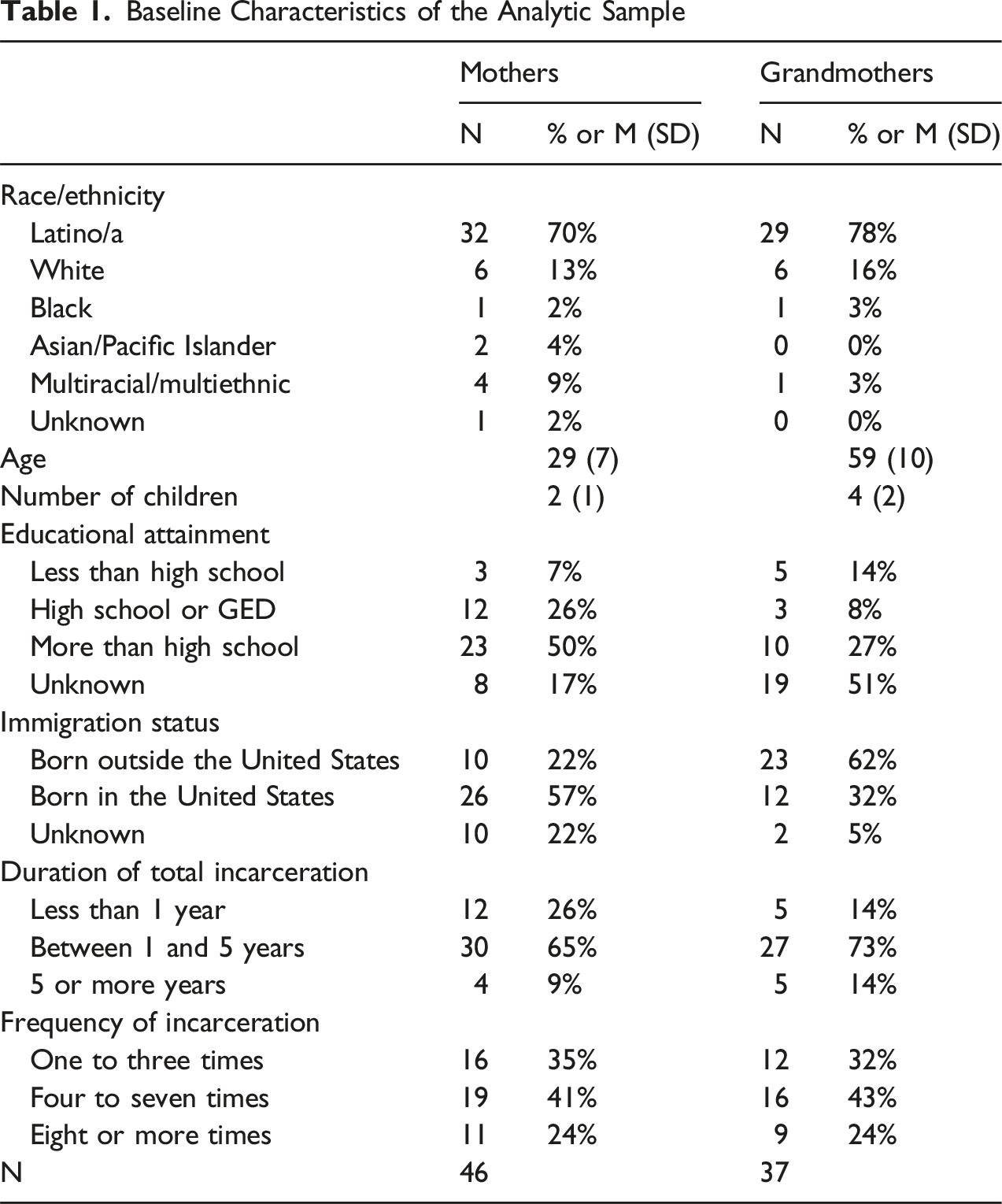
Our analytic sample comprises 52 families. We excluded families without a family member interview (n = 15) and then excluded families wherein the father did not have any caregiving role prior to his incarceration (n = 56). We considered fathers to have engaged in caregiving if they provided some task-oriented behavior with their child (e.g., feeding, playing, and taking to doctor’s appointments). Some of these fathers resided with their children prior to their incarceration and others did not. We used data from 46 mothers of children (46 baseline and 39 follow-up interviews) and 37 grandmothers of children (37 baseline and 32 follow-up interviews). The 46 mother interviews represented 41 families, as five fathers had children with two different mothers who participated in the study. The 37 grandmothers represented 38 families, as one grandmother had two children in the study. Most grandmothers were fathers’ mothers, but our analytic sample also included two grandmothers of fathers and one mother of children’s mothers (e.g., maternal grandmothers). Our analysis relied on interviews from mothers, grandmothers, and great grandmothers of children. Mothers were commonly children’s primary caregivers following paternal incarceration, and therefore often had the most information about children’s caregiving arrangements, but grandmother interviews were also helpful for triangulating and supplementing the information provided by mothers.
We conducted interviews in English and Spanish, depending on the participant’s preference. We conducted interviews with five mothers (11% of the analytic sample) and 19 grandmothers (51% of the analytic sample) in Spanish. We audio-recorded and transcribed interviews with family members verbatim and translated Spanish interviews into English. One participant declined being recorded at baseline, and we took detailed notes during this interview. Mothers and grandmothers were paid $50 per interview. Interviews with family members addressed topics including the father’s incarceration, household dynamics and relationships, economic well-being and hardship, and mental health. Interviews focused on distinguishing between family life prior to and during the father’s incarceration, facilitating an analysis of how incarceration changed family dynamics. Interviewers wrote detailed field notes after each interview, summarizing the context of the interview (e.g., participant’s demeanor and location), the domains of the interview guide (e.g., consequences of incarceration, family economic well-being, and health), and other important details (e.g., noteworthy information, inconsistencies between family members, and topics to revisit during follow-up interview).
Analysis
We engaged in four primary analytic stages to understand how families navigate caring for children following paternal incarceration, engaging in an abductive approach that allowed for both theoretically informed themes and inductive themes to emerge (Timmermans & Tavory, 2012). We also used a flexible, iterative, and transparent approach ideal for large samples and team-based coding (Deterding & Waters, 2021; Goldberg & Allen, 2024).
The first analytic stage, and one that we engaged in for the larger Jail and Family Life Study, included conducting deductive coding of all interview transcripts. This deductive coding, led by the study PI, was conducted by a team of graduate students. This coding involved reading through entire transcripts and coding these transcripts based on large themes that were mostly derived from the interview guides. The team collaboratively coded the initial transcripts to establish consensus on code application. Each transcript was then coded by one team member and reviewed by another team member (most commonly the study PI). Coders brought instances of disagreement to the larger group to resolve (and we revised the codebook as necessary). The team first conducted deductive coding of grandmothers’ baseline interviews and then turned to mothers’ baseline interviews, mothers’ follow-up interviews, and grandmothers’ follow-up interviews. Deductive codes relevant to this analysis include “Incarceration Effects,” which included discussions of how the father’s incarceration affected anyone in the family; “Child Welfare,” which included discussions of the child welfare system; and “Relationship with Child” or “Relationship with Grandchild,” which included discussions of the family member’s relationship with the father’s children.
The second analytic stage involved extensive memo-writing about caregiving arrangements for the full sample of 123 families. The second and third authors of this paper wrote qualitative memos based on extensive field notes, summarizing each family’s living arrangements, child care arrangements (e.g., who provides care and how care is distributed among family members), custody, and contact with the child welfare system before, during, and after (if applicable) the father’s incarceration. We also quantitatively coded some of these dimensions to easily summarize the presence or absence of themes. We then used these memos to refine our analytic sample and write synthesis memos on caregiving arrangements, highlighting the most prominent themes documented among families. These synthesis memos facilitated an understanding of common patterns and informed the next round of coding.
The third analytic stage involved inductive coding of relevant deductive codes (i.e., portions of interview transcripts most relevant to our research questions) for our analytic sample. The second and third authors, in conversation with the study PI, conducted this inductive coding. These codes emerged from the memos and interview transcripts. Examples include “Caring by Primary Caregiver,” which included discussions of caregiving tasks performed by primary caregivers following paternal incarceration; “Relationship between Father and Child,” which included discussions of how fathers care for children prior to and during incarceration; and “Relationship Consequences of Changing Care Arrangements,” which included discussions of how relationships between caregivers changed following shifts in child care arrangements precipitated by fathers’ incarceration. The second and third authors applied these inductive codes to interview transcripts, initially reviewing each other’s coding until they achieved consistency (Halpin, 2024). All authors met weekly to discuss coding and resolve discrepancies.
The fourth and final analytic stage involved additional memo-writing based on the inductive coding. We again wrote memos for each family, this time only for families in our analytic sample, summarizing the central emergent themes and identifying key quotes. We then used these family memos to write thematic memos, outlining key cross-family patterns, exploring heterogeneity, and identifying disconfirming patterns. These memos form the basis of our results.
Given the inherent power differentials within the researcher–participant relationship (Reich, 2021), the research team was attentive to how our positionalities may have influenced multiple stages of the study, including the formulation of interview questions, interactions with participants, and the interpretation of data. We worked to mitigate these dynamics by establishing trust and rapport with participants, engaging in regular team discussions to reflect on the interview process, and examining how our assumptions and interpretive lenses shaped analytic decisions and emergent themes (Goldberg & Allen, 2024).
Sample Description
Baseline Characteristics of the Analytic Sample
Findings
Changes in Caregiving Responsibilities After Paternal Incarceration
Paternal incarceration changes the dynamics of child care arrangements, aligned with the family stress model. Incarceration, and the corresponding inability of confined fathers to provide child care, simultaneously necessitates his child care responsibilities be absorbed by other caregivers and creates new child care responsibilities such as taking children to visitation and supporting children as they grapple with their fathers’ absence, both of which lead to changes in caregiving responsibilities. Our analysis of interview transcripts identifies two primary—and often complementary—strategies through which families navigate child care following paternal incarceration: (1) the concentration of caregiving responsibilities on the existing primary caregiver, typically the child’s biological mother, and (2) the redistribution of caregiving responsibilities, most often among extended family members but occasionally among non-family sources of care such as child care centers, paid babysitters, and friends (see Figure 1). Conceptual framework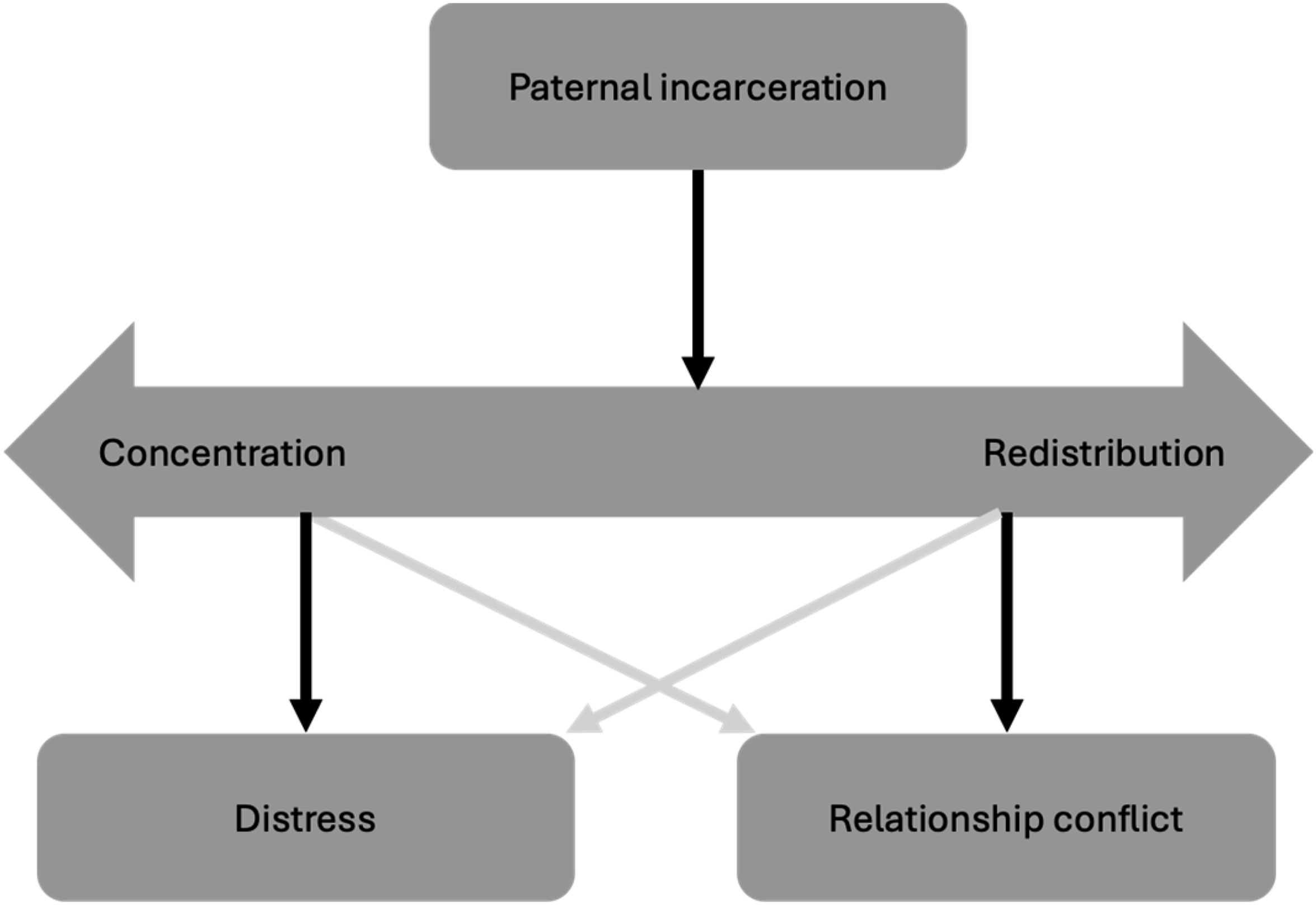
We conceptualize concentration and redistribution of caregiving strategies as existing along a continuum, with most families navigating a dynamic blend of both rather than relying exclusively on one. Familial responses to paternal incarceration, shaped by specific characteristics of the family environment, typically fall between sole concentration and sole redistribution. Sole concentration commonly arises when extended family members are either unavailable or unwilling to assist with child care. Sole redistribution often arises when mothers face demands from paid employment or are themselves entangled in the criminal legal or child welfare systems. The combination approach—wherein families use both concentration and redistribution strategies—emerges as the most available path for families. Incarceration often creates a substantial caregiving void that is too large to be addressed by concentration or redistribution alone, particularly when fathers took on a substantial share of caregiving duties prior to their incarceration. We first detail the distinct concentration and redistribution strategies and then examine how families frequently integrate both in response to caregiving needs.
Concentration of Caregiving Responsibilities: “Doing it all”
We find that families enduring paternal incarceration commonly experience a concentration of child care responsibilities, as existing primary caregivers—usually children’s mothers—incur expanded caregiving responsibilities upon fathers’ incarceration. These expanded caregiving responsibilities emerge because children’s fathers are no longer available for caregiving support while mothers engage in paid employment, manage other household responsibilities, or run errands. They also emerge because of the additional burdens placed on families due to paternal incarceration (e.g., maintaining contact with incarcerated fathers). Concentration of caregiving responsibilities often arises when extended family members are unavailable or unwilling to assist with caregiving (commonly because of geographic distance, other caregiving responsibilities, or growing worn down by their loved one’s cyclical incarceration). About half of families experienced some degree of concentration of child care responsibilities, ranging from sole concentration to both concentration and redistribution, which increases role overload and role strain (Pearlin et al., 1990).
Karen, a 21-year-old mother of two (ages 1 and 2), experienced concentration of caregiving responsibilities because her extended family members were unable to provide child care support when her partner and co-parent went to jail. Karen became the sole primary caregiver after her partner was removed from their shared household. Karen had little support from her family of origin during this time, as her single father worked long hours. Karen was also not allowed to have contact with her partner’s family given her restraining order against him. These circumstances left Karen struggling to care for her two children alone. She shared the difficulty of grocery shopping with her two children: “You can’t even get groceries [with two kids]... I had to go walking [to the grocery store] with the stroller. And then I can’t get groceries with that stroller. So, I had to fold it and get a cart. My kid was sleeping, so I had to put a blanket in the cart, lay down my kid. That’s my grocery right there, my kid. He takes the whole cart. My daughter is sitting down, so I had to get another cart... That’s the hardest thing. Having two kids when you can’t go shopping at all.” For mothers like Karen, the lack of family support after their partner’s incarceration necessitated absorbing all additional child care responsibilities.
Julia, a 25-year-old mother of one (age 6), also experienced concentration of caregiving responsibilities. Her partner played a substantial caregiving role in their son’s life before his incarceration. He cared for their son 3 days a week, giving Julia time to run errands, do chores, and rest. However, after his incarceration, Julia suddenly found herself solely responsible for her son’s care. She said, “[My son is] with me a hundred percent all the time. Very rarely do I ask for a babysitter… My amount of time that I spend with him is a lot more [than before his father’s incarceration].” Julia tells us her family was rarely able to ease this burden due to their own obligations. She said, “My mom is a business owner. She’s a busy lady… she’s not really available all the time. Rarely to be honest.” Therefore, Julia’s changing caregiving responsibilities are substantial, as her partner played a meaningful caregiving role prior to his incarceration, and concentrated, given her family’s inability to fully replace her partner’s role.
Redistribution of Caregiving Responsibilities: “It Takes a Village”
We find that families enduring paternal incarceration also commonly redistribute caregiving tasks, as previously non-primary caregivers—such as extended family members, friends, or paid child care providers—incur child care responsibilities during paternal incarceration. More than three quarters of families experienced redistribution of child care responsibilities, ranging from partial shifts in responsibilities to complete changes in caregiving arrangements (with the latter occurring when mothers face demands from paid employment or have their own contact with the criminal legal or child welfare systems). Families described three common patterns of redistribution including greater involvement of extended family members, increased reliance on non-family caregivers, and a full transition to a new primary caregiver.
The most common form of child care redistribution involves extended family members stepping in to help manage responsibilities during paternal incarceration. This caregiving is typically voluntary, unpaid, and incurred by children’s grandparents (although aunts, uncles, cousins, and/or older siblings sometimes provided care). These arrangements require cooperation between children’s mothers and extended family members. Nearly all families who experienced redistribution shifted at least some child care responsibilities to extended family (about half the time to maternal relatives, one quarter of the time to paternal relatives, and one quarter of the time to both maternal and paternal relatives). Consider 77-year-old Amy, whose son was incarcerated. Before his incarceration, Amy and her son shared custody of her 13-year-old granddaughter, who lived with them part of the week and attended a nearby school. After his imprisonment, Amy became the primary caregiver during weekdays and alternate weekends, incurring the financial and practical burdens of this new role. Because of her age and physical limitations, Amy’s daughter also stepped in to help. “Now, either Saturday or Sunday [my daughter will] take [my granddaughter] and do whatever,” Amy explained. “So that helps me, and it’s good for [my granddaughter].” This example—where both the child’s grandmother and aunt assumed caregiving roles—illustrates how extended family often collectively takes on parenting responsibilities in the father’s absence.
The redistribution of child care responsibilities following paternal incarceration occasionally involved non-family sources of care such as child care centers, paid babysitters, or friends. Take Cindy, a 29-year-old mother who lived with her two children (ages 1 and 7) and her mother. Though Cindy’s partner did not live with them prior to his incarceration, he engaged in considerable caregiving responsibilities. Cindy said, “If I needed help cleaning up, he’d help me clean up… Because he was there to witness me needing the help.” Her partner’s incarceration generated considerable child care gaps for Cindy, whose mother could not assist due to her recent cancer diagnosis, and Cindy asked a friend for caregiving assistance. Cindy described how her older child got to school after his father’s incarceration: “I walk [my child]. Or my friend that lives one block away, he’ll come and pick him up, which is good because then I don’t have to take the baby out when it’s cold. But, when it’s summer it’s easy, we just go out there and walk with a stroller if the baby’s up. If he’s not, then my friend picks him up.” Cindy’s experience illustrates the challenges mothers face when caring for children—especially children with different schedules and needs—alone. While family members typically stepped in to support, friends or paid daycare sometimes played an essential role for mothers.
In about one-fifth of families in our sample, the redistribution of child care responsibilities occurred via a change in primary caregiver, as children went to live with an extended family member after the father’s incarceration. This redistribution most commonly resulted from the mother’s contact with the criminal legal or child welfare systems, though occasionally occurred voluntarily, as the mother decided she was unable to care for her children. Claire, a 23-year-old mother of four (ages 1, 4, 5, and 7), provides an example of a mother who experienced a temporary loss of custody due to Child Protective Services (CPS) involvement. Claire was shot and wounded by her boyfriend, which led to his incarceration. Claire’s mother called CPS due to concerns about violence. Claire said: “My mom called CPS, and [CPS] interviewed my daughter, and they asked her if we fight. And she said, yeah. And so, they just took them for that.” After completing a year of parenting classes and securing an apartment, Claire’s custody was reinstated. Therefore, Claire illustrates how paternal incarceration can destabilize child care arrangements via the involvement of state agencies, contributing to a change in custody.
Concentration and Redistribution of Caregiving Responsibilities: “Doing It All” Together
Almost half of families deployed both concentration and redistribution simultaneously to manage child care responsibilities after incarceration. Families typically used these strategies simultaneously when they endured a high caregiving burden, usually when fathers were substantially involved in caregiving before their incarceration. In these families, it was often infeasible or impossible for families to engage in sole concentration (as one primary caregiver could not absorb all caregiving needs) or sole redistribution (as primary caregivers wanted to and were able to incur at least some additional caregiving responsibilities).
Take Teresa, a 35-year-old woman who engaged in both concentration and redistribution. Prior to her partner’s incarceration, she lived with him, their shared child (age 2), and two older children from her previous relationship (ages 12 and 9). Teresa shared that her partner engaged in substantial child care prior to his incarceration: “On the days that [he] was off [of work], it actually worked for our schedule, because obviously, you know, our daily schedule has always been busy. He’s able to pick up the kids and take them to wherever they’re at. I don’t have to rush back or do anything. So, he actually took a lot of that load off of me.” Her partner’s incarceration left Teresa with a large caregiving gap to fill, both logistically and financially, and Teresa utilized both redistribution and concentration strategies to fill the gap. At Teresa’s request, her mother—who lived far away—took in Teresa’s youngest child full time, enabling the redistribution of some child care responsibilities despite the geographic distance between them. Teresa also enrolled her two older children in additional days at a paid daycare center. However, despite redistributing some child care to family and paid daycare, Teresa also experienced a concentration of caregiving responsibilities, as her relatives did not live nearby to assist regularly. Reflecting on the challenges of picking her children up from school, Teresa said, “I did it on my own. I had to change [my work] schedule.” Teresa’s experiences exemplify how families simultaneously engage in concentration and redistribution strategies. Teresa was one of only two mothers who voluntarily had their child live full-time with an extended family member, without CPS involvement. However, her experience is emblematic of how families could employ different strategies for different children based on mothers’ capacities and children’s care needs.
Families also used concentration and redistribution strategies simultaneously when needing to balance the work schedules of mothers and extended family members to ensure caregiving coverage. Consider Susie, a 21-year-old mother of one (age 2). Susie’s co-resident partner engaged in considerable care for their shared child prior to his incarceration. He cared for their son while Susie worked, and he and their son would “play together a lot ... go out to the park and stuff.” However, after his incarceration, Susie was left to coordinate care for their son while she worked. Reflecting on how her child care responsibilities changed after her partner’s incarceration, Susie said, “I had to do everything for my baby.” She added, “[Parenting by myself] was actually kind of tough on me because my sister was working as well. She couldn’t babysit him. So I had to find a babysitter. Or sometimes I would be late to work because I didn’t have a babysitter.” Her sister’s schedule eventually changed, though, and then Susie redistributed some child care responsibilities to her sister. Therefore, Susie simultaneously engaged in both concentrated and redistributed child care, depending on her sister’s and babysitter’s availability. Like Teresa, Susie experienced both concentration and redistribution because, despite receiving some support from family members, she became solely responsible for her child’s needs whenever that support was unavailable.
Consequences of Changing Caregiving Arrangements
Our analysis reveals that the concentration and redistribution of caregiving responsibilities following paternal incarceration has important consequences for family dynamics and caregiver well-being, aligned with the family stress model (see Figure 1). We find two primary emergent consequences: (1) heightened distress, observed primarily among caregivers enduring concentrated caregiving responsibilities (alone or in conjunction with redistribution), and (2) increased conflict between caregivers, observed primarily among families experiencing redistributed caregiving responsibilities (alone or in conjunction with concentration).
Heightened Distress
Family members described the concentration of caregiving responsibilities following paternal incarceration as a distressing and overwhelming experience. This concentration, which occurs alongside other strains stemming from family member incarceration, exacerbated caregivers’ feelings of distress in two primary ways. First, caregivers reported experiencing strain as they took on a greater share of child care responsibilities, which were made more difficult without emotional support previously provided by fathers. Second, caregivers reported experiencing strain in response to the new responsibilities directly emerging from the father’s confinement. About one fourth of caregivers in our sample reported experiencing heightened distress directly in response to caregiving burdens.
The distress stemming from the concentration of caregiving obligations was described by caregivers as especially acute given their inability to receive emotional support from their child’s fathers, support that commonly helped them navigate caregiving stress. Consider Emily, a 21-year-old mother of two children (ages 1 and 4). Prior to his incarceration, Emily’s partner contributed to her children’s care by running errands, cleaning, and providing emotional support. Emily engaged in both concentration and redistribution of care after his incarceration, absorbing more child care herself and relying on Head Start. She tells us that his incarceration simultaneously increased her caregiving responsibilities and deprived her of needed emotional support for these responsibilities. She says, “I don’t have support. Mental support. Someone to tell me it was gonna be okay, or let me get that for you… He was just like, ‘here, let me help.’ Because he was there to witness me needing the help.” Therefore, the concentration of caregiving responsibilities, coupled with reduced emotional support due to confinement, led to deteriorating mental health among caregivers.
Moreover, caregivers reported that the fathers’ confinement brought about new caregiving tasks that contributed to distress. For example, caregivers described emotional repercussions of paternal incarceration for children, thereby increasing their distress. Consider Paulie, a 26-year-old mother who lived with her two children (ages 6 and 7) and their father prior to his incarceration. Paulie engaged in both concentration and redistribution after her partner’s incarceration, as she increased her caregiving and received some time-limited support from their paternal grandmother. Paulie reported her distress about concentrated caregiving was exacerbated by her children’s reactions to the incarceration. She said: “You have to do everything yourself. It’s so exhausting. And maybe if there’s two people, you guys can split the tasks… but I just have to deal with everything. And it’s really stressful. Especially when they don’t listen to me. I found ever since he’s been in there they’ve been acting out. I feel like they’ve been more little trouble makers. They’ve been … more sassy and think they can have their way.” This excerpt illustrates the distress and strain stemming from new caregiving responsibilities.
Similarly, some caregivers responded to their children’s emotional reactions to paternal incarceration by spending more time with them, contributing to distress. Consider Jessica, a 24-year-old mother of two (ages 2 and 5), who incurred increased caregiving obligations following her child’s father’s incarceration. She says, “It was just hard to not have help anymore … having to juggle so many things and being used to having someone there just to kind of do the stupidest, simplest little things that you never even think about.” Jessica also reported wanting to compensate for the father’s absence in their child’s life. “I tried to do more with them just because I felt like I had to… make up for the lack of another parent being here… I was constantly trying to buy things all the time, crazy expensive things for [my son]. Because I was just trying to fill a void that was there… I would really just try to get his mind off of things, try to keep him busy or try to make up for the fact that [his father] wasn’t there anymore.” Jessica, like other mothers, describes how the concentration of caregiving responsibilities following paternal incarceration, coupled with their efforts to mitigate the detrimental repercussions of incarceration, strains their emotional well-being.
Distress also emerged as the demands of concentrated caregiving limited caregivers’ ability to spend “quality time” with their children. Paulina, a 31-year-old mother of two (ages 3 and 6), illustrates these concerns. Paulina lived with her partner prior to his incarceration; her partner cared for their children while Paulina was at work. Paulina engaged in both concentration and redistribution after his incarceration, as she took on most caregiving responsibilities and also relied on a babysitter and occasional help from family members. Paulina said: “I come home tired from work, cook, see [my kids]... They’re like, ‘Mommy, let’s go to the park. You don’t play with us anymore. Mommy, mommy you don’t sing to me.’… My daughter says, ‘Why don’t you read books to us anymore mommy? You don’t pay attention to me anymore mommy, listen to me.’” Paulina illustrates the experiences of caregivers who struggle reconciling their increased caregiving responsibilities with the quality of care they can give to their children.
Increased Conflict Between Caregivers
The redistribution of caregiving tasks after paternal incarceration contributes to the emergence of conflict between caregivers, especially but not exclusively between children’s maternal and paternal families. Conflict arises over issues including the children’s living arrangements and custody, the division of child care expenses, access to the children (especially by the father’s family), and concerns about the children’s relationships and habits. About one-fifth of caregivers report conflict with other caregivers.
Caregivers sometimes engage in disputes around the children’s living arrangements and custody following paternal incarceration. Consider Amy (introduced above), who became her granddaughter’s primary caregiver after her son’s incarceration. Amy expressed frustration because her grandchild’s mother refused to pay for caregiving expenses, including gas to drive her to school; in response, she required her grandchild’s mother to transport her to school each morning. Moreover, Amy’s granddaughter wanted to live with her full-time, but the child’s mother refused, leading to conflict between the two women. Amy said, “Yesterday when [my granddaughter] got here, she says, I finally told my mom that I want to move to your place to start my high school... And then her mom said, well, I don’t know because I don’t trust her, meaning me. How can she not trust me?” The conflict between Amy and her granddaughter’s mother stems from the redistributed child care arrangements following paternal incarceration.
Disagreements over the children’s living arrangements sometimes resulted in custody disputes. Consider Crucecita, age 74. Following her son’s incarceration, his children went to live with Crucecita’s daughter, while the children’s maternal grandmother, maternal aunt, and Crucecita’s daughter sought custody. Custody was granted to the children’s maternal grandmother. CPS approved visitation rights for Crucecita, but her daughter’s attempts to secure a similar arrangement were unsuccessful. Reflecting on this dispute, Crucecita said: “They live in a tight place. They don’t have enough room to live. They have a lot of kids and they all live together. It’s horrible… Why don’t they give my daughter custody or the kids? She’s better off financially, has a decent lifestyle, and her and her husband are both professionals. They went to go see their house and saw that she has a good living situation. You can say she’s been blessed by God and she has money. They live pretty good.” As illustrated by Crucecita’s case, disagreements over children’s living arrangements are a source of conflict in the wake of paternal incarceration, as caregivers sometimes hold competing views about where—and with whom—the children should reside.
The redistribution of child care following paternal incarceration sometimes prompted disputes about the children’s habits and routines. Consider Kaylee, age 49, who incurred additional caregiving responsibilities following her son’s incarceration. Kaylee reports that disagreements between her and her grandchildren’ mother increased alongside her involvement with her grandchildren’s routine. She told us: “When she takes them for food, it’s only pizza, hamburgers, fries… she doesn’t buy them anything else. It worries me so much because there is a diabetes history…. She doesn’t understand that fruits and veggies are good for them. When I cook for them, they don’t want to eat it because they are used to junk food. I used to give them a lot of fruits and vegetables when they were younger but now they won’t eat them. He loves candy.” This excerpt illustrates that following paternal incarceration, as caregivers take on greater responsibilities and coordinate care with one another, differing views about appropriate child-rearing practices can give rise to conflict.
Another source of disagreement between caregivers revolved around the children’s contact with their incarcerated father. Consider Marsha, a 48-year-old woman whose son lived with his partner and child (age 3) prior to being incarcerated. After her son’s incarceration, his partner could no longer afford rent; this led to the child intermittently staying in motels with her mother and with her maternal and paternal grandmothers. The child’s mother was later incarcerated, and the child began to split her time between her maternal and paternal grandmother’s houses. While both the child’s father and mother were incarcerated, the maternal grandmother took the child to visit them. This decision met with disapproval from Marsha, who told us: “Imagine how tiresome it is for a little girl. I mean, I don’t care if it’s two or three hours, but you’re talking at least four or five hours in there. I mean, you can’t bring food, you can’t bring drinks, and there’s no restroom and you’re in this little cube and the seat is this round. And you don’t need - I don’t know, to me it’s not a place for kids at all. And you have all these people cussing, all these bad words.” Marsha’s example shows that as caregivers split and share child care responsibilities, conflicts may arise over how children should maintain contact with their incarcerated father, reflecting differing beliefs about issues such as the potential ramification of jail visits on young children.
Discussion
Grounded in the family stress model, which highlights the interdependency and interconnectedness of family members (Arditti & McGregor, 2019; Conger & Elder, 1994; Hill, 1958), we describe and explain how families respond to caregiving burdens that emerge from paternal incarceration. We use in-depth interview data from 54 families—primarily interviews with children’s mothers and grandmothers—enduring incarceration to systematically account for changes in caregiving following this stressor. Paternal incarceration changes caregiving arrangements, as incarceration renders fathers unable to engage in many caregiving tasks, necessitates their previous caregiving tasks be absorbed by others, and creates new caregiving tasks (such as facilitating communication between incarcerated fathers and their children). Accordingly, we examine how caregiving arrangements change following paternal incarceration and the consequences of these changing arrangements for caregivers.
First, we find caregiving arrangements following paternal incarceration range from concentration, wherein caregiving responsibilities are entirely absorbed by the child’s existing primary caregiver, to redistribution, wherein these responsibilities are spread among others including extended family members, friends, and child care centers. This is aligned with prior research that highlights how incarceration alters family dynamics (Braman, 2007; Comfort, 2016; Turanovic et al., 2012). We complement this research—much of which focuses specifically on romantic relationships (Emory, 2022; Turney et al., 2023; Widdowson et al., 2020)—by systematically examining caregiving, a demanding responsibility that requires time, energy, and financial resources from caregivers (Urwin et al., 2023) and a fundamental driver of children’s well-being (World Health Organization, 2004). Our findings about the continuum of caregiving arrangements—with some families solely concentrating caregiving, other families solely redistributing caregiving, and most families doing some combination of concentration and redistribution—are aligned with research documenting heterogeneous responses to paternal incarceration (Sampson, 2011; Venema et al., 2024). These heterogeneous responses, which show how mothers and other family members navigate caregiving in response to paternal incarceration, may shed light on the mechanisms linking paternal incarceration to child care instability (Turney & Kaiser, 2025).
Second, we find that these caregiving responses to paternal incarceration are consequential for mothers and grandmothers, generating distress and relationship conflict. The concentration of caregiving commonly heightens distress, while the redistribution of caregiving commonly generates relationship conflict. These consequences are aligned with family stress theory, which highlights both the interdependency of family members and how stressors can lead to distress and conflict (Conger & Elder, 1994). These consequences are also aligned with research documenting distress and conflict emerging from incarceration more generally (Goldman, 2019; Lowenstein, 1984; Wildeman et al., 2012). Changing caregiving arrangements—in the form of concentration, redistribution, and some combination of both—may be mechanisms that explain the deleterious consequences of paternal incarceration for mental health (Goldman, 2019; Sirois, 2020; Wildeman et al., 2012) and relationship conflict (Braman, 2007). Future research may consider using population-based survey data to examine caregiving arrangements as a mediator linking paternal incarceration to stress and relationship conflict or considering familial moderators (e.g., socioeconomic status, proximity of extended family) of the relationship between paternal incarceration and these outcomes. Future research may also consider examining the consequences of changing caregiving arrangements for children’s well-being, an important area of investigation that is outside the scope of this paper.
Taken together, our findings highlight how paternal incarceration—a stressor that typically involves a temporary absence of a father from the household—restructures family life. Though paternal incarceration is a unique stressor, these findings may be instructive for how families respond to other stressors, particularly those that involve the absence of a family member—such as parental death, military deployment, or deportation—and those that shape caregiving dynamics (e.g., a parent enters the paid labor force after a period of unemployment). The processes of concentration and redistribution of child care responsibilities, which we observe in our data, may likely exist among families enduring these other stressors (Dreby, 2012). Future research should identify how these other stressors shape caregiving arrangements in ways that are similar to and different from paternal incarceration.
Limitations
These findings should be interpreted in the context of several factors, mostly about the composition of our sample. First, we conducted interviews with mothers and grandmothers of children enduring paternal incarceration and not the entire universe of people caring for children during their fathers’ absence. Other family members—such as siblings of incarcerated fathers, maternal grandparents, and older children—engage in caregiving, as we learned from the family members we interviewed. Interviews with these other caregivers may yield additional findings. Future research—on caregiving following paternal incarceration but also on the consequences of paternal incarceration more generally—would benefit from interviewing these other family members (Umamaheswar, 2024). That said, our interviews with both mothers and grandmothers of children enduring paternal incarceration are aligned with a family systems approach (Minuchin, 1974). Second, we restricted our sample to families in which the father was involved in caregiving prior to his incarceration. Theoretically, this is the group we expect to be most affected by paternal incarceration, but this decision precludes an examination of changing caregiving dynamics among other families. Fathers not providing care to children before their incarceration may contribute economic resources, the lack of which could alter caregiving arrangements. Third, our sample includes families enduring a loved one’s jail incarceration (though some men receive prison sentences during the study and/or have been imprisoned previously). Caregiving arrangements following jail incarceration, which is usually shorter in duration than prison incarceration and involves considerable uncertainty about one’s release date (Walker, 2022), may unfold in different ways than caregiving arrangements following prison incarceration. Alternatively, children’s caregiving needs change quite rapidly even absent paternal incarceration and families do not talk about their changing caregiving arrangements as uniquely short-term, suggesting facility type may not meaningfully shape caregiving arrangements and their consequences. This, as well as the long-term consequences of jail incarceration for caregiving arrangements, remains a question for future research. Finally, findings may diverge if our sample had more racial and ethnic diversity, as most of our participants identify as Latinx. Latinx families espouse the value of familism, which underscores the importance of close family relationships (Campos et al., 2014), and this may shape caregiving arrangements (and may partly explain, alongside economic constraints, why few of our participants relied on child care centers). Further, the undocumented status among some of these families may facilitate system avoidance that shapes caregiving arrangements (Desai, Su, & Adelman, 2020).
Conclusions
This study, using in-depth interviews from mothers and grandmothers of children enduring paternal incarceration, provides a nuanced accounting of how families navigate caregiving burdens following paternal incarceration. We highlight the mostly interconnected processes of caregiving concentration and redistribution, explaining how some families concentrate caregiving responsibilities, others redistribute caregiving responsibilities, and most engage in some form of concentration and redistribution. Grounded in the family stress model, our findings reveal the diverse strategies families employ to meet children’s caregiving needs, the family characteristics that shape these strategies, and the substantial consequences these arrangements have for caregivers’ stress and relationship conflict. By systematically examining caregiving following paternal incarceration, and the implications of this caregiving, we shed light on the mechanisms through which paternal incarceration disrupts family life and contributes to broader familial stress. These insights enhance our understanding of the specific challenges faced by families enduring paternal incarceration and simultaneously offer a framework for studying caregiving responses to other family stressors. Future research should continue to explore how families manage family stress, including paternal incarceration, while expanding the scope to include other caregivers, incarceration contexts, and diverse family systems. Such work can inform interventions that mitigate the adverse consequences of paternal incarceration and promote family resilience amidst challenges.
Footnotes
Acknowledgements
Britni Adams, Maryanne Alderson, Nadine Alsaadi, Natalie Averruz, Belen Barocio, Elisabet Barrios, Isha Bhallamudi, Jaymesha Carter, MacKenzie Christensen, Emma Conner, Adrienne Credo, Patricia Delacruz, Ann Fefferman, Nicholas Freeman, Jesse Garcia, Marilyn Garcia, Gabriela Gonzalez, Rebecca Goodsell, Arevik Gyurjyan, Christopher Hoffman, Payton Huse, Jessica Kizer, Alma Leon-Oseguera, Amy Gong Liu, Crysbelle Lopez, Setarah Mahmoudi, Katelyn Malae, Estéfani Marin, Analicia Mejia Mesinas, Carmel Mitchell, Angie Belen Monreal, Jasmine Morales, Janet Muñiz, Katherine Navarro, Hannah Neatherlin, Tiffany Park, Elizabeth Partida, Alexandra Russo, Juan Sandoval, Steven Schmidt, Archibaldo Silva, Desirae Sotto, Breauna Spencer, Luis Vaca-Corona, Ashley Torres, Alexis Velez, Cara Vermaak, Kanoelani Villanueva, Lacey Wood, and Jessica Zhu all provided excellent research assistance.

Ethical Considerations
This research was approved by the Institutional Review Board at the University of California, Irvine.
Funding
The authors disclosed receipt of the following financial support for the research, authorship, and/or publication of this article: Funding for the Jail and Family Life Study was provided by the National Science Foundation and the William T. Grant Foundation.
Declaration of Conflicting Interests
The authors declared no potential conflicts of interest with respect to the research, authorship, and/or publication of this article.
Data Availability Statement
These data are identifiable and are not available.