



Abstract
The transition to middle school presents new challenges to adolescents’ mental health. Two of the strongest protective factors against depressive symptoms are emotional competence and optimism. Parents contribute to these factors through emotion socialization practices during conversations about adolescent challenges. However, research on the effects of parental emotional vulnerability during those conversations is limited. We investigated direct and indirect relations between parental vulnerability in conversations and adolescent depressive symptoms. 302 adolescents reported on emotional competence, emotional self-regulation, optimism, depressive symptoms, parent-adolescent communication quality, and parental vulnerability. Multivariate regression and serial mediation models revealed that, controlling for parent-adolescent communication quality, parental emotional vulnerability was positively related to adolescent emotional competence. Further, relations between parental vulnerability and adolescent depressive symptoms were mediated by adolescent emotional competence, emotional regulation, and optimism. Findings suggest that parents may positively affect their adolescents’ emotional well-being when they disclose emotional vulnerability in conversations about difficult topics.
Keywords
Introduction
Adolescent reports of depressive episodes in the United States have increased over the last decade, especially since COVID-19 (SAMHSA, 2022). A key protective factor against depression is supportive parental communication that includes parents’ non-judgmental listening and validation (Ioffe et al., 2020; Yu et al., 2006). According to parental emotion socialization theory, parents contribute to their children’s emotional competence by reacting to, validating, and discussing their children’s experiences and emotions (Eisenberg et al., 1998; Lukenheimer et al., 2020). In those conversations, parents may share their own experiences and emotions with their children, sometimes displaying emotional vulnerability, such as uncertainty and regret (Morris et al., 2007). However, little is known about how parental emotional vulnerability may affect children’ emotional competence and emotional intelligence as well as their ability to regulate their emotions. Further, the limited research on relations between emotional competence and adolescent depressive symptoms suggests that emotional competence and regulation may serve as a protective factors (Gardner & Lambert, 2019; Mavroveli et al., 2007). In this study, we investigated whether relations between parental vulnerability in conversations and adolescent depressive symptoms were mediated by adolescents’ understanding of their emotions (emotional competence) and ability to cognitively re-appraise their emotions (emotional regulation).
A recent meta-analysis on relations between optimism and adolescent mental health found that optimism negatively predicts depressive symptoms and buffers the negative impact of stress and risky behaviors on adolescents (Rincon Uribe et al., 2022). However, research on whether and how parent-adolescent conversations may contribute to changes in adolescent optimism is limited (Smokowski et al., 2015). In our study, we hypothesized that adolescent optimism would mediate relations between parental vulnerability, adolescent emotional competence, and depressive symptoms.
Adolescent Depressive Symptoms and Parental Support
The transition from elementary to middle school, often accompanied by physiological and emotional changes associated with puberty, is a critical period in adolescent development (Eccles & Roeser, 2011). Encountering new school environments, new assessment methods, and teachers’ expectations for increased autonomy can lead to academic disengagement, stress, and depressive symptoms (Rudolph et al., 2001). Their social environments are also shifting as adolescents navigate new peer groups and build intimate relationships with peers and romantic partners. At home, adolescents are navigating relationships with family members while managing their growing need for independence (Laible, 2007). Their relationships with their parents may become more distant and communication less frequent (Fulkerson et al., 2010). Parent-adolescent conflict intensity and expression of negative affect may also increase (De Goede et al., 2009). Adolescents become less willing to disclose their experiences and emotions to their parents, which can exacerbate psychological problems (Ackard et al., 2006).
Despite decreased or eroded communication with their parents, many adolescents perceive their parents as more helpful than their peers and teachers during their transition to middle school (Akos & Galassi, 2004) and value their parents’ opinions over their peers’ when facing decisions (Ackard et al., 2006). Parental support is negatively associated with emotional symptoms such as nervousness or irritability (Damsgaard et al., 2014) and positively associated with optimism (Smokowski et al., 2015; Thomson et al., 2015). Parental monitoring and adolescent self-disclosure serve as protective factors against the development of internalizing problems such as depressive symptoms (Hamza & Willoughby, 2011; Van Loon et al., 2015). Inversely, low parental support such as inattentiveness, reduced autonomy granting, low levels of affection, and incongruent parent-child communication styles are positively related to depressive symptoms (Chapman et al., 2016). Parent-adolescent communication, in particular, appears to have a strong impact on adolescent mental health. In a systematic review of research on relations between parent-child communication and adolescent mental health, Zapf et al. (2024) concluded that parent-adolescent communication quality negatively predicts depressive symptoms with small to medium effect sizes. Research has shown that emotional competence and regulation mediate relations between parent-adolescent communication and depressive symptoms (Castilho et al., 2017), as parents engage in emotion socialization during those conversations.
Parental Emotion Socialization and Adolescent Emotional Development
Eisenberg et al. (1998) proposed a model of parental emotion socialization to explain the processes through which children develop social and emotional competence. Emotional competence refers to the ability to identify, interpret, and respond constructively to one’s emotions and to those of others (Saarni, 1999). Emotion regulation is defined as the “processes responsible for monitoring, evaluating and modifying emotional reactions, especially their intensive and temporal features, to accomplish one’s goals” (Thompson, 1994, pp. 27-28). Importantly, emotional competence and emotion regulation are reciprocally related and parents contribute to the development of each process through socialization. Emotion regulation include strategies such as rumination, distraction, expressive suppression, and cognitive re-appraisal (Fombouchet et al., 2024). During their conversations, parents engage in emotion socialization behaviors (ESBs) that teach and model these strategies and influence children’s development of emotional competence (Eisenberg et al., 1998). These ESBs include reacting to children’s emotions, expressing emotions, and “coaching,” which consists of elaborating on children’s statements and explaining emotion labels (Gottman et al., 1997; Hernandez et al., 2020).
While there is abundant research on parental emotion socialization and child emotional competence during childhood, research on adolescents is limited. Manczak et al. (2015) examined the physiological effects (e.g., heart rate, blood pressure) of parents’ scaffolding behaviors during conversations about a challenge faced by their adolescent. The authors found positive relations between parental scaffolding, such as reiterating a child’s statement and offering a different interpretation, and decreased reactivity in adolescents. They conclude that parents’ favorable responses to adolescents’ emotional disclosures during conversations have positive effects, however, research on potential mediators of those relations is needed. Adolescent emotional competence mediates relations between parental nurturance during conversations and adolescent prosocial behaviors (Gallitto & Leth-Steensen, 2019), and may mediate relations between parental emotional socialization and adolescent depressive symptoms.
Parental expressions of negative emotion have been linked to externalizing and internalizing in adolescents (Stocker et al., 2007). However, Morris et al. (2007) suggests that parental expressions of some negative emotions (such as sadness) may support children in developing emotional regulation skills when those expressions are mild and moderate. Parents may also contribute to children’s emotional regulation by modeling and scaffolding the reappraisal process (Fassot et al., 2022). Cognitive reappraisal is an emotional regulation strategy in which individuals reframe stressful situations thereby reducing their negative emotional impact (Gross & John, 2003). Yet research on the potential effects of expressing sadness or regret or modeling reappraisal during parents’ conversations with their adolescents is limited.
Emotional Vulnerability and Self-Disclosure
Emotional vulnerability is a cognitive state in which individuals allow themselves to focus their awareness on past or present emotional pain and negative primary emotions (Wiesel et al., 2021). These primary emotions generally include feelings of shame, loneliness, disappointment, fear, and sadness (Borelli et al., 2019). When parents share past experiences and stories during conversations with their children, they are conveying messages about their values and contributing to children’s identity development (McAdams, 2001). The degree to which those message impact and carry meaning for children is related to the extent to which parents are willing to share their emotions and the nature of those emotions (Zaman & Fivush, 2011). Thus parental vulnerability may also increase the positive impact of parent-adolescent communication on adolescent well-being. Hajal and Paley (2020) argue that, despite our knowledge that parents’ emotions shape the way they interact with their children, parental emotion socialization research rarely considers the role of parents’ own emotions and their influence on children. They call for more research on parental emotional expression during conversations with their children.
In one of the only studies of parental vulnerability to date, McLean and Morrison-Cohen (2013) observed 63 mother-adolescent pairs discussing two maternal emotional memories and coded conversations for vulnerability defined as “expression of negative emotions, being in a lower position of authority, uncertainty, weakness, passivity, or feeling helpless or alone” (p. 125) The authors found that maternal vulnerability increased with adolescent age as relationships become more egalitarian and reciprocal and mothers reported that those conversations contributed to their self-understanding. In our study of adolescents, we hypothesized that conversations about difficult topics for adolescents in which parents express emotional vulnerability may also provide opportunities for adolescents to understand emotions and develop emotional competence.
A construct related to emotional vulnerability is personal self-disclosure, the revealing of an individual’s thoughts and feelings (Li et al., 2023). Child self-disclosure to parents has been studied extensively and is more likely to predict positive outcomes in children than are parental monitoring or control (Kerr et al., 2010; Liu et al., 2020). However, there is much less research on parental self-disclosure to their children (Donovan et al., 2017). Additionally, the limited research on parental self-disclosure has yielded equivocal findings. Parental self-disclosure has been shown to be harmful when the disclosures put the child in the middle of their parents’ problems or when disclosures about sexual issues are expressed to younger children (Afifi et al., 2009; Kang et al., 2017). However some research has suggested that parental self-disclosure may be related to positive outcomes in adolescents. For example, a retrospective study of emerging adults found that parental disclosures in which adolescents felt that their parents were treating them as peers increased the overall quality of disclosure and contributed to greater relational closeness (Donovan et al., 2017).
The Current Study
In this study, we examined relations between parental vulnerability in conversations about adolescents’ concerns and adolescents’ emotional competence, emotion regulation, and depressive symptoms. We conceptualized parental vulnerability as the willingness of parents to express emotional empathy for their children by disclosing feelings of uncertainty, self-doubt, and worry as well as admitting to having made mistakes in their past. Because we know that the quality of parent-adolescent communication is related to lower depressive symptoms in children (Zapf et al., 2024), we inquired whether parental vulnerability would predict adolescent emotional competence even controlling for communication quality. The limited research on the development of optimism suggests that parents contribute to this process indirectly (Orejudo et al., 2012). We therefore examined whether optimism would also mediate relations between parental vulnerability and depressive symptoms. Finally, we were interested in whether emotional competence in adolescents would positively predict their emotional regulation abilities, specifically, cognitive reappraisal, which has been linked to decreased depressive symptoms in adolescents (Ogbaselase et al., 2022). Our study was guided by four hypotheses: (1) Controlling for parent-adolescent communication quality, parental emotional vulnerability is positively related to adolescents’ emotional competence. (2) Adolescents’ emotional competence is positively related to both their emotional regulation and optimism. (3) Adolescents’ emotional competence and (4) Adolescents’ emotional competence and
Method
Participants
Our sample of participants included 302 middle-school students (M = 12.73 yrs.; 142 males, 153 females, 7 other) from a suburban school district in a town located north of a major southwestern US city with nearly one million residents. Students self-identified with the following ethnic groups: 143 European American, 27 African American, 34 Mexican American, 48 Latine/Hispanic other, 34 East Asian, 63 South Asian, 7 Middle Eastern/North African, 3 American Indian/Alaskan Native, and 3 who identified as “other.”
Procedures
Ethical approval for this study was obtained from a university Institutional Review Board. We obtained approval from a school district in a mid-size southwestern city to recruit participants at six middle schools in that district. After obtaining approval from school principals at four of those schools, we were given a list of all middle school students’ parents/guardians with their email addresses. We contacted all parents with a link to an informed consent form that described the study and requested their child’s email should they agree to permit their child to participate. We then contacted the students whose parents had consented and invited them to complete the questionnaires online using the web software Qualtrics. At the beginning of the survey, students were directed to read and approve the assent form if they wished to participate. We included one attention-check item approximately halfway through the full set of questionnaires to identify potential cases where students may not have been reading each item. Each student who completed a survey received a $20 e-gift card.
Measures
Depressive Symptoms
The CES-D (Center for Epidemiologic Studies Depression Scale; Radloff, 1977) is used widely to measure both the presence of depressive symptoms as well as their severity. The scale contains 10 items that assess different aspects of depression including feeling of guilt, lack of interest, and depressed mood. Sample items include: “I felt that everything I did was an effort,” and “I was bothered by things that don’t usually bother me.” Respondents answer the ten items by reporting the frequency of symptoms they have experienced over the past two weeks using a 4-point Likert scale (1 = Never or rarely (0–1 day), 2 = A little (1-2 days), 3 = Some (3-4 days), 4 = A lot (5–7 days)). To create the variable, we summed all item scores to calculate a composite score (α = .78).
Parent-Adolescent Communication Quality
To measure adolescents’ perceived quality communication with their parents, we used the openness scale of the Parent-Child Communication Questionnaire (Barnes & Olson, 1982), which includes 10 questions about the degree to which parents are perceived as open to their child’s views and emotions during conversations. Each participant responded twice–one time focusing on their mother (or first parent/guardian, if applicable) and another time focusing on their father (or second parent/guardian, if applicable). Two sample items are: “I can discuss my beliefs with my mother/father without feeling restrained or embarrassed” and “I find it easy to discuss problems with my mother/father.” Answers ranged on a five-point Likert scale from 1 (“Strongly disagree”) to 5 (“Strongly Agree”). This measure’s reliability for this study was α = .89 for mothers/first parents and α = .91 for fathers/second parents. We used the mean of participants’ responses on both scales as our measure of overall quality in our analyses.
Parental Emotional Vulnerability
The Parent-Adolescent Conversation Dimensions Questionnaire (PACDQ) was developed for this study by adapting (the Parent-Adolescent Communication Inventory (PACI; Noller & Bagi, 1985), a measure designed to assess multiple dimensions of parent-adolescent conversations. Respondents were asked to select from a list of difficult topics (e.g., dating, bullying, substance use, academic achievement) and think about a recent conversation that they had with one of their parents on this topic. Then they responded to questions about six conversation dimensions related to that conversation. For this study, we report on the 8-item, parental vulnerability scale which measures how vulnerable adolescents perceived their parents were in those conversations. Two sample items are: “They share their worries with me,” and “They tell me they do not always know the right answer.” Answers to each item ranged on a scale from “Not at all true” to “Very true.” To create this variable, we calculated the mean of participants’ responses to the scale’s items (α = .78).
Optimism
The Youth Life Orientation Test (YLOT; Ey et al., 2005) is a measure designed to assess the general outlook of children in addition to their expectations for positive or negative outcomes from life (optimism and pessimism). For this study, we used the 8 items measuring youth optimism. Sample items include: “Each day I look forward to having a lot of fun,” and “I usually expect to have a good day.” Respondents rated each item using a 4-point Likert scale (1 = Not true, 2 = Sort of not true, 3 = Sort of true, 4 = True). To create this variable, we calculated the sum of all items in the scale (α = .83).
Adolescent Emotional Competence
We used the Short Profile of Emotional Competence (S-PEC; Mikolajczak et al., 2014) to measure adolescent emotional competence. The full scale contains 20 items and measures various domains of emotional competence including the identification, understanding, expression, and use of emotions in one’s self and in others. For the current study, we used a shortened, 16-item version of the scale. Sample items include: “I am good at describing my feelings,” and “Quite often, I am not aware of people’s emotional state.” Participants responded using a 5-point Likert scale from “Strongly Disagree” to “Strongly Agree.” To create this variable, we calculated the mean of participants’ responses to the 16 items (α = .77).
Emotional Regulation, Cognitive Reappraisal
Emotional regulation was measured using the Emotional Regulation Questionnaire (ERQ; Gross & John, 2003). This measure assesses emotional regulation through two distinct processes, cognitive reappraisal and suppression. For the purposes of this study, we used only the reappraisal subscale, which contains 10 items. Sample items from this measure are: “When I want to feel happier, I think about something different,” and “I control my feelings about things by changing the way I think about them.” Respondents answered each item using a 5-point Likert scale from “Strongly Disagree” to “Strongly Agree.” To create this variable, we calculated the mean of participants’ responses to the 10 items in the scale (α = .84.).
Analytic Strategy
We conducted preliminary analyses to assess missingness and normality of data and determine whether transformations were necessary to meet assumptions. Data missing ranged from 0.7% to 1.0% across all study variables. Results of the Little’s test (Little, 1988) showed that all data for the variables in our study were missing completely at random (MCAR). Consequently, we replaced the few missing values by imputing the scale means. To assess normality of distributions, we tested the skewness and kurtosis of all variables. Skewness statistics above an absolute value of 3.0 and kurtosis values above an absolute value of 8.0 are considered problematic (Kline, 2005). In our study, skewness statistics were acceptable, ranging from −.666 to .845 for all variables. Kurtosis statistics were within an acceptable range between .245 and .925 across all study variables.
To test hypotheses 1 and 2, we conducted multivariate regression analyses. To test hypothesis 3 and 4, we tested two serial mediation models. In Model 1, parental vulnerability predicted adolescents’ depressive symptoms through adolescents’ emotional competence and adolescents’ emotional self-regulation. In Model 2, parental vulnerability predicted adolescents’ depressive symptoms through adolescents’ emotional competence and optimism. We used the PROCESS macro (version 4.1; Hayes, 2022) in SPSS with bootstrap samples and mean centering to run these serial mediation models. In this analysis, ordinary-least-squares path analysis was run including all possible paths between variables with bias-corrected, 10,000 sample bootstrap confidence intervals generated for indirect paths.
Results
Univariate and Bivariate Analyses
Means, Standard Deviations, and Correlations (N = 302).
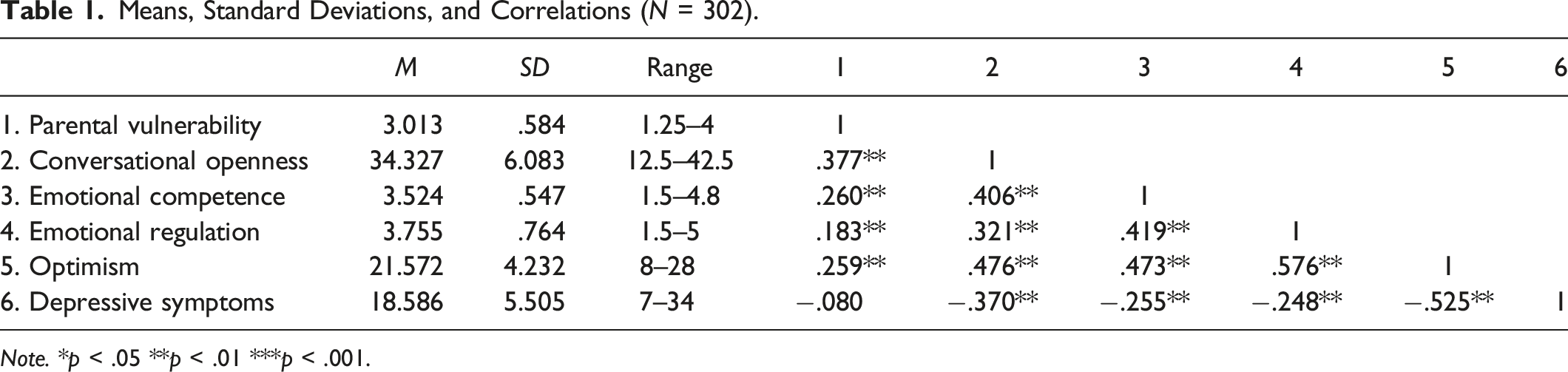
Note. *p < .05 **p < .01 ***p < .001.
Multivariate Regression Models
To test hypothesis 1, that parental emotional vulnerability would be positively related to adolescent emotional competence, controlling for parent-adolescent communication quality, we conducted a multivariate regression analysis. This model was significant (change in F1,327 = 4.788, p < .001) and the residuals were normally distributed. Parental vulnerability significantly predicted adolescent emotional competence, controlling for parent-adolescent communication quality (b = .124, p = .029). With an R2 of .178, this model confirmed that parental emotional vulnerability accounted for a small amount of the variance (1.3%) in adolescent emotional competence, over and above the contribution of communication quality.
To test our second hypothesis that adolescents’ emotional competence would be positively related to both their emotional regulation and optimism, we conducted two multivariate regression analyses with adolescent emotional competence as the predictor. For the first model, emotional regulation was the outcome and for the second model, optimism was the outcome. In the first model, adolescent emotional competence significantly predicted emotional regulation (b = .532, p < .001) and the model was significant (change in F1,327 = 63.951, p < .001). With an R2 of .161, this model indicated that adolescent emotional competence explained about 16% of the variance in emotional self-regulation. In the second model, adolescent emotional competence significantly predicted optimism (b = 3.385, p < .001) and the model was significant (change in F1,327 = 88.987, p < .001). With an R2 of .214, this model indicated that adolescent emotional competence explained about 21% of the variance in their optimism.
Serial Mediation Models
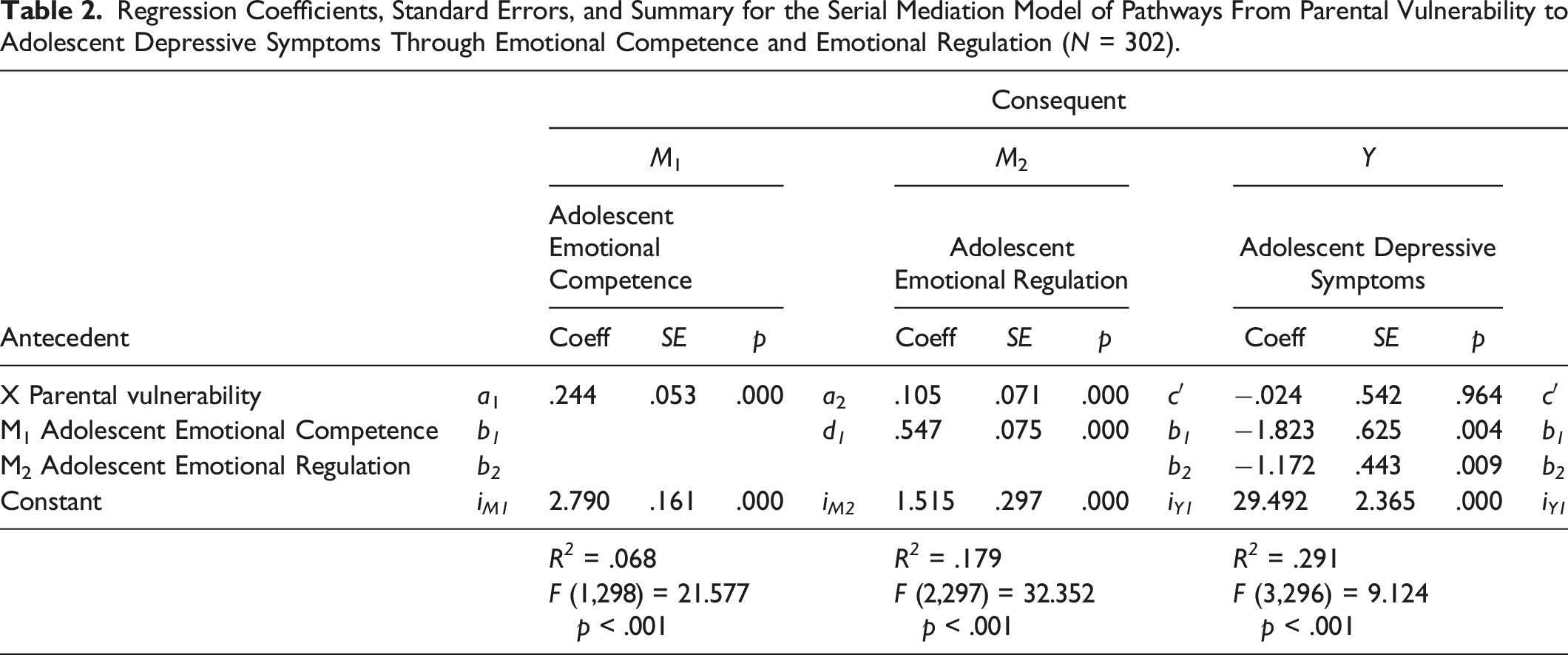
Regression Coefficients, Standard Errors, and Summary for the Serial Mediation Model of Pathways From Parental Vulnerability to Adolescent Depressive Symptoms Through Emotional Competence and Emotional Regulation (N = 302).
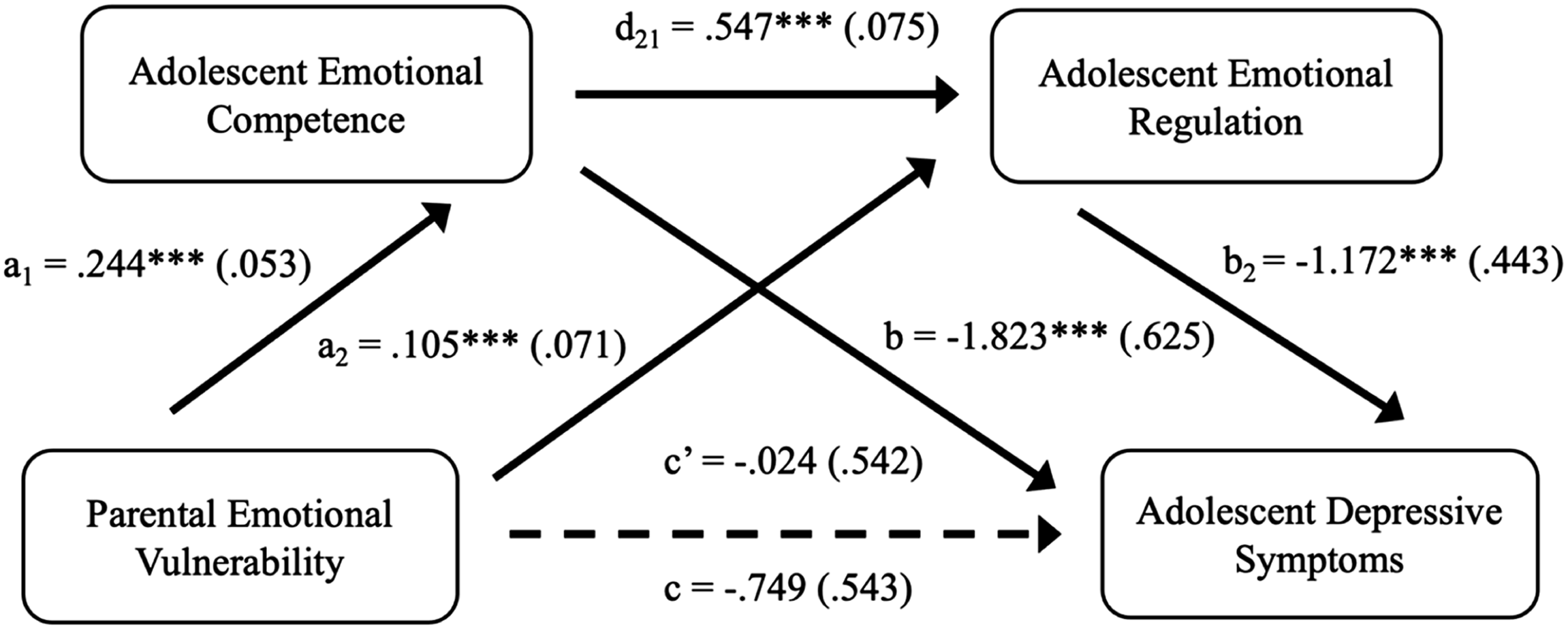
Serial mediation model of parental emotional vulnerability on adolescent depressive symptoms with adolescent emotional competence and emotional regulation as mediators. Notes. N = 302; *p < .05, **p < .01, ***p < .001; a1, a2, b1, b2, d21, c, and c’ are unstandardized regression weights with standard errors. c’ is the direct effect. c is the total effect.
Regression Coefficients, Standard Errors, and Summary for the Serial Mediation Model of Pathways From Parental Vulnerability to Adolescent Depressive Symptoms Through Emotional Competence and Optimism (N = 302).
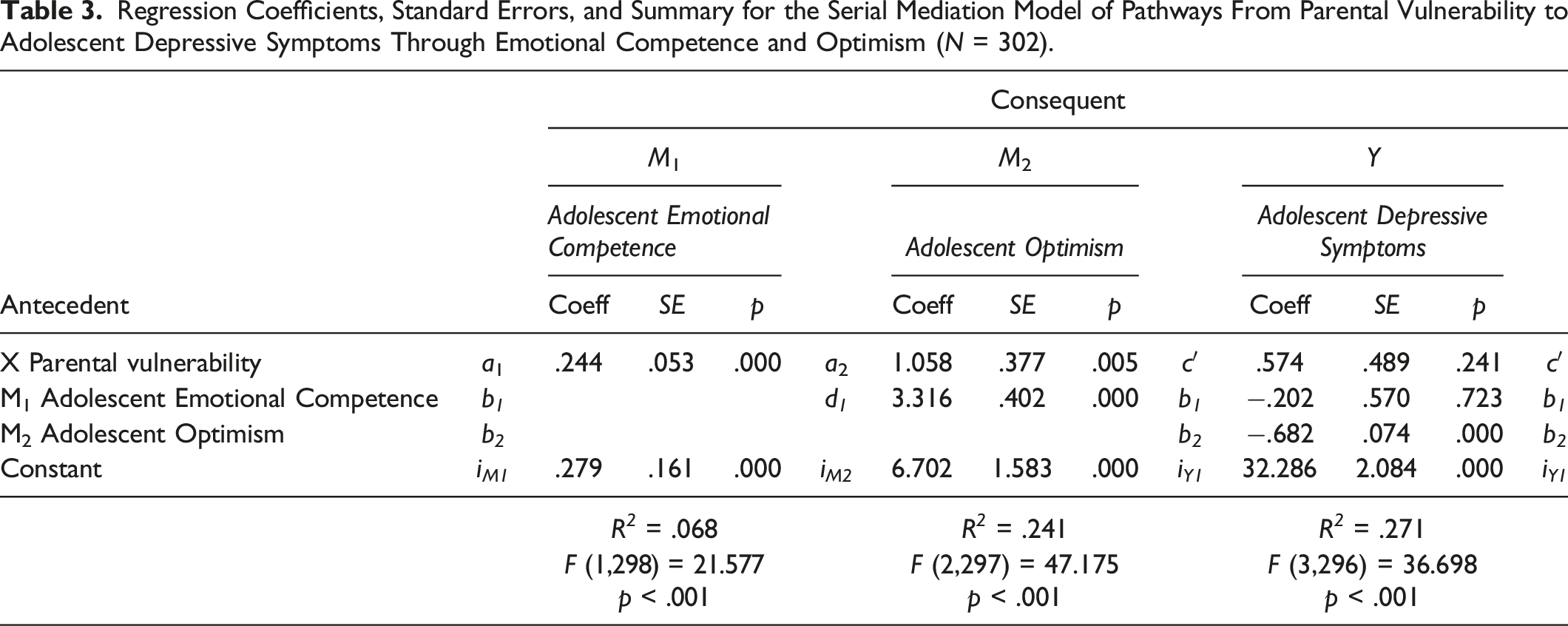
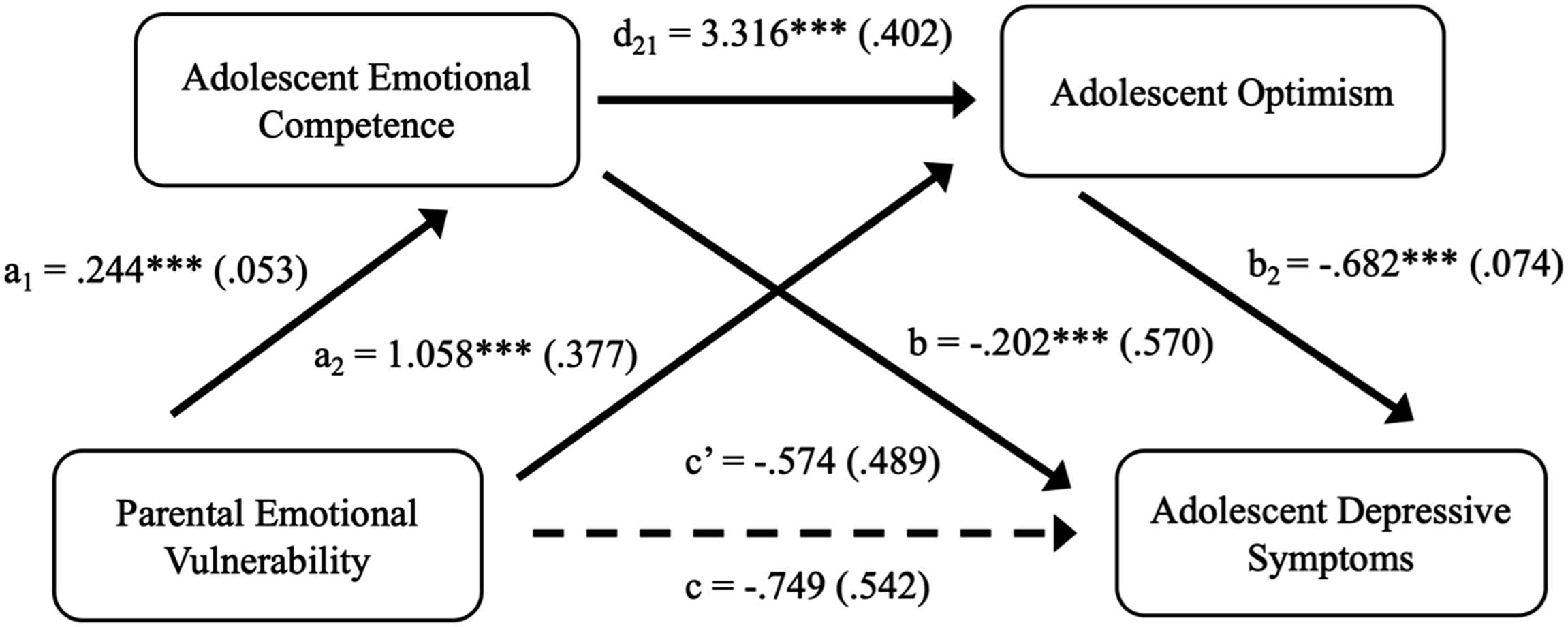
Serial mediation model of parental emotional vulnerability on adolescent depressive symptoms with adolescent emotional competence and optimism as mediators. Notes. N = 302; *p < .05, **p < .01, ***p < .001; a1, a2, b1, b2, d21, c, and c’ are unstandardized regression weights with standard errors. c’ is the direct effect. c is the total effect.
Discussion
The aims of this study were to investigate whether parental vulnerability during conversations with their adolescents about difficult topics would be associated with lower depressive symptoms in adolescents and to identify potential mediators of these relations. We found that parental vulnerability was a significant predictor of depressive symptoms through the mediators of adolescent emotional competence, emotional regulation, and optimism. This study has several strengths and contributes new knowledge to the field of parent-adolescent relationships and emotion socialization. First, our study examined a little-investigated construct within parent-adolescent communication, parental vulnerability, defined as parents’ willingness to share their personal feelings of uncertainty, self-doubt, and worry with their children. Second, we asked adolescents to select topics that were of concern to them rather than restrict their responses to a single topic. This enabled us to learn about parental communication dimensions that cut across the diverse topics that parents discuss with their adolescents. Third, we found an indirect relation between parental behavior during conversations and adolescents’ mental health, providing new evidence for the protective effects of parental communication.
Positive Effects of Parental Vulnerability on Adolescent Emotional Development
Our first hypothesis, that controlling for parent-adolescent communication quality, parental emotional vulnerability in conversations about difficult topics would be positively related to adolescent emotional competence, was confirmed. Prior research has demonstrated the positive effects of parent-adolescent conversations on adolescents’ self-concept clarity or understanding of themselves (van Dijk et al., 2014). Our study extends this research by showing that parental vulnerability in parent-adolescent conversations is related to adolescents’ understanding of their emotions. When parents share their worries, doubts, or regrets about past choices in response to their adolescents’ concerns, they are modeling self-reflection and the willingness to admit weaknesses. Watching their parents demonstrate these behaviors, children may gain confidence in understanding and describing their own emotions. Further, observing their parents’ openness and vulnerability may help children realize that like their parents, they too can overcome academic, emotional, and social challenges, which may help them cultivate a more resilient and optimistic outlook on life.
When parents talk about their own past memories and challenges that they overcame, they are providing perspectives and lessons that adolescents may not receive in interactions with their peers. Increasing research on peers’ influence on adolescent self-regulation has shown that peers and parents contribute in distinct ways (Hale et al., 2023). Parents’ longer and likely more diverse life experiences enable them to share stories of past mistakes or self-doubt that they have worked through, making them unique resources for children during their transition to middle school (Akos & Galassi, 2004). Parents who choose not to be vulnerable in their conversations about difficult topis may be depriving their children of the opportunity to learn from their experiences and deepen their own understanding of emotions.
Pathways from Parental Vulnerability to Adolescents’ Well-Being
Our study found two distinct pathways from parental vulnerability in conversations to adolescent depressive symptoms. Although parental vulnerability was not directly associated with depressive symptoms, the results of our first model showed that parental vulnerability was related to adolescent depressive symptoms through the mediators of adolescent emotional competence and emotional regulation. This finding corroborates the results of one of the only other studies of children’s and parents’ perceptions of emotional vulnerability (Borelli et al., 2019). These authors asked parents and their 8- to 12-year-old children to respond to vignettes depicting children expressing vulnerability and report their emotional reactions to those vignettes. They found that children who perceived vulnerability as a weakness reported more depressive symptoms. However, parents with positive views of vulnerability reported better emotional regulation skills in their children. While this study examined responses to children’s vulnerability rather than parents’ vulnerability, the finding that parents’ perceptions of vulnerability were related to poor mental health outcomes in children suggest the need for further research on the potential positive effects of parental vulnerability on adolescent well-being.
In our second model, parental vulnerability was related to depressive symptoms through the mediators of emotional competence and optimism. This finding corroborates previous research showing the positive effects of parental support and warmth on adolescent optimism (Thomson et al., 2015; Yu et al., 2019). Our study extends this research to the parental behavior of expressing openness and vulnerability in their communications. This finding suggests an important mechanism through which parents may be able to reduce or alleviate their adolescents’ depressive symptoms thereby increasing their overall well-being. Prior research has found that parent-adolescent communication during the transition to middle school is associated with decreased emotional symptoms (Damsgaard et al., 2014). However, our study points to a specific communicative behavior or dimension that may help explain this process.
Parental Emotional Vulnerability as an Emotion Socialization Behavior
Parental emotion socialization theory proposes that parents socialize their children about emotions by engaging in Emotion Socialization Behaviors (ESBs) including responding to and discussing their children’s emotions (Eisenberg et al., 1998). These ESBs scaffold the development of adolescents’ emotional competence and regulation skills. Research on the extent to which parents’ own expressions of emotions may contribute to this process, especially during adolescence, is limited (Hajal & Paley, 2020). Our findings provide additional support for this model and suggest a potential extension of the category of ESBs to include parental vulnerability. Parents who choose to express their own emotions in relation to an adolescent-initiated concern may be contributing to their emotional competence if their sharing is moderated and developmentally appropriate.
Recent research on the development of emotional regulation and emotional competence during adolescence has shown that while emotional competence grows over the adolescent years, the ability to regulate emotions lags behind (Rueth et al., 2023). Our study findings suggest that parents may be able to contribute to their adolescents’ ability to regulate their emotions through cognitive reappraisal by sharing their own experiences of utilizing this skill to process past challenges in their lives. Through conversations with their parents, adolescents may gain knowledge about how individuals can modify their emotional responses to specific situations by reflecting on those situations (Fassot et al., 2022). In a recent longitudinal study of mother-adolescent conversations about a past conflict, Dewhirst et al. (2023) found that conversations characterized by “balanced emotion management” by both partners, defined as acknowledging emotions without allowing them to overtake the conversation, moderated changes in adolescent anxiety over time. They conclude that during these conversations, “adolescents may be adopting adaptive strategies that were once scaffolded by their caregivers in reminiscing conversations” (p. 777). Our findings offer further support for the possibility that using the knowledge they gain from hearing about their parents’ experiences may help adolescents rethink or think differently about difficult challenges in their own lives.
Limitations, Future Research, and Implications
This study is a first step in the investigation of parental vulnerability in parent-adolescent conversations and has several limitations. The data were obtained from adolescents through self-report measures and may therefore be subject to the social desirability of the respondents in attempting to represent their views in a positive light. Future studies utilizing observational data of parent-adolescent conversations are needed to replicate and possibly provide further support for our findings. In addition, this study was cross-sectional which limits our capacity to evaluate the directionality of relations between parental vulnerability and adolescent social-emotional development. It is possible that children who are higher in emotional competence or emotional regulation may be more open to their parents’ emotional vulnerability and may convey this willingness to hear their parents’ emotional expressions, which may then increase their likelihood. Future studies utilizing longitudinal designs would help to clarify these complex interactions. Lastly, this study examined adolescents’ perspectives of their parents’ vulnerability in conversations about difficult topics, but did not obtain parents’ perspectives. Research that utilizes both parent and adolescent measures would provide multiple perspectives on parental vulnerability and investigate possible discrepancies in perspectives.
The transition to middle school can be a tumultuous adjustment for adolescents who are acclimating to new academic, social, and parental expectations. Our findings suggest that in addition to being open and warm in their conversations, parents who show personal vulnerability may provide an additional level of emotional coaching and socialization that will benefit their adolescents’ development. Parents sometimes want to protect their children from negative emotions or preserve their image as authority figures and role models for their children. However, this study suggests that allowing adolescents to see them as real people may in fact be beneficial. When parents engage their children in vulnerable conversations, they can model emotional regulation by showing how they work through a variety of situations and emotions. They convey the message to their children that prospective challenges and difficult situations may be overcome. Hearing about these “success” stories from their parents may give adolescents a model from which they can build optimism and increase their emotional competence for working through their own difficulties during the transition to middle school.
Footnotes
Acknowledgments
We thank the schools and parents who granted us permission to conduct this study and the adolescents who participated in the study.
Declaration of Conflicting Interests
The author(s) declared no potential conflicts of interest with respect to the research, authorship, and/or publication of this article.
Funding
The author(s) disclosed receipt of the following financial support for the research, authorship, and/or publication of this article: This study was funded by a grant from the College of Education at the University of Texas at Austin.
Ethical Statement

Data Availability Statement
The data that support the findings of this study are available on request from the corresponding author.