



Abstract
New parents must decide how to divide household, childcare, and financial responsibilities. These divisions can be difficult, especially when couples’ wants do not align. Interviewing ethnically and racially diverse new parents (n = 198 couples), we explore how parents’ desired allocation of childcare, household, and financial tasks differ from perceived distribution and whether discrepancies relate to coparenting relationship quality. All parents perceived mothers doing more housework and childcare and fathers contributing more financially. When women reported doing more housework and childcare than wanted, coparenting relationship quality was lower. For women, discrepancies between what they and their partners report was associated with lower coparenting relationship quality. Findings reflect traditional gender roles among new parents and women’s desire for their partners to take on more household and childcare work. Such findings can help inform parenting interventions for new parents, encouraging communication between partners about the division of tasks to support their coparenting relationship.
Keywords
Introduction
For couples, navigating the division of parenting duties along with household and financial tasks can be difficult. This division of work can be especially stressful when allocation of tasks differs from what individuals want or when members of the dyad differ in their impression of how things are split (Khazan et al., 2008). Dividing labor may be especially challenging for new parents who are adjusting to their newfound roles (Van Egeren, 2004) and may default into gender stereotyped roles (Newkirk et al., 2017). Unequal allocation of childcare, household, and financial tasks can cause conflict for couples (Van Egeren, 2004) and parenting stress (Höge, 2009). However, contemporary research is lacking on the allocation of tasks for new parents, especially parents from diverse, low-to-moderate income families. Further, little is known about how partners agree or not on how tasks are divided or how such division relates to their relationship as coparents.
This study explores new fathers’ and mothers’ perceptions of the division of household, childcare, and financial tasks and how discrepancies between their perceived and ideal allocation of tasks relate to the quality of their coparenting relationship. The current study includes low-to-moderate income, racially and ethnically diverse parents with 9-month-old infants and builds on older research by providing a more contemporary sample, providing insights into how tasks are shared between parents in the 21st century.
Background
Division of Labor in the U.S
Traditional gender roles identify mothers as caregivers and fathers as financial supporters (Barstad et al., 2014). Even in relationships where couples intend to have an equal division of labor, both mothers and fathers in the U.S. report that mothers do more housework and childcare than fathers post childbirth (Katz-Wise et al., 2010). Many expectant parents have expectations of the division of labor in their home post-birth. However, oftentimes parents’ expectations are not met, which can affect their feelings about their partner postpartum (Holmes et al., 2013; Khazan et al., 2008). Studies have found that when fathers were not meeting mothers’ expectations in childcare (e.g., diaper changing), interactions between the dyad were less positive and more hostile (Khazan et al., 2008). These types of interactions could ultimately affect the relationship quality for both parents and their harmony in parenting together.
Transition to Parenthood
The transition to parenthood is an exciting period and research finds that many couples anticipate relatively equitable division of household labor and caregiving once the child is born (Biehle & Mickelson, 2012; Newkirk et al., 2017). Though much of the research on the transition to parenthood has focused on new motherhood, with far less on new fatherhood or how couples perceive the transition (Mickelson & Biehle, 2017), extant research suggests that the experience can differ for mothers and fathers (Eggebeen et al., 2013). In considering first-time parents’ adjustment to new childcare and household demands, how one’s experience matches one’s expectations is important (Harwood et al., 2007). For example, when women expect more contribution from men than they experience, they are more dissatisfied with their relationship (Biehle & Mickelson, 2012; Harwood et al., 2007). Further, the relationship between expectation discrepancy and relationship quality appears to be stronger for birth mothers than their partners (Ascigil et al., 2021).
Father Involvement and Relationship Satisfaction
Father involvement is important for relationship quality satisfaction in cohabitating couples (McClain & Brown, 2017). Studies have shown that when fathers are more involved in parenting tasks and work together with their partner, parents tend to experience greater satisfaction within their relationship (McClain & Brown, 2017). Although fathers today report wanting to be more involved with their children and are increasingly more involved than before (Yogman et al., 2016), studies show that mothers continue to report less father involvement than what fathers report for their own participation in parenting tasks (Shapiro et al., 2020). Though father involvement in caregiving is important, there appear to be discrepancies between mothers’ and fathers’ reporting of the division of parenting tasks.
In addition to parenting tasks, women report spending more hours a week on housework than men (Martucci, 2021), though research finds a smaller gender gap in housework over the past several decades (Barstad et al., 2014). For women who are employed, studies robustly find that working mothers often manage a “second shift,” in which they must attend to daily household and childcare activities such as cooking and cleaning as well as paid work (Dugan & Barnes-Farrell, 2020; Hochschild & Machung, 1989). This second shift might be more stressful in households in which women want their partners to do more of these forms of labor. Research has found that unequal distribution of household tasks is associated with poor mental and physical health for mothers (Höge, 2009; Shockley & Allen, 2018). However, limited research has considered how distribution of work might impact couples’ coparenting relationship (Calarco et al., 2021; Van Egeren, 2004).
Coparenting and Division of Labor
Coparenting is the collaboration between two or more caregivers sharing responsibilities related to childrearing (Feinberg & Kan, 2008). Research consistently finds that the quality of the coparenting relationship is related to child outcomes as well as maternal and parental wellbeing (Teubert & Pinquart, 2010). Parents who experience supportive coparenting relationships tend to engage in higher quality interactions with their children (Van Egeren, 2004). A recent study found that when fathers had highly engaging interactions with their children as toddlers, they tended to work better with their partners when interacting with their children at older ages (Bernier et al., 2021). This suggests that high quality interactions with children and positive coparenting relationships are interlinked.
The unequal division of household tasks can affect couples’ relationship quality (Adamsons, 2013). For instance, when mothers experience a discrepancy between their perceived and ideal division of tasks, they report increased relationship conflict and lower marital satisfaction (Khazan et al., 2008; Van Egeren, 2004). Though coparenting relationships are different than romantic relationships, they tend to be strongly related over time (Le et al., 2016), suggesting that discrepancies in task allocations might also be related to coparenting relationship quality. To date, little research has explored how task allocation relates to coparenting specifically and what has been done has predominantly focused on mothers in well-resourced white families (Shockley & Allen, 2018; Van Egeren, 2004), leaving questions about fathers’ perceptions and the experiences of parents in racially, ethnically, and economically diverse families.
Thus, this study explores: (1) how mothers’ and fathers’ perceptions of financial, household, and childcare task allocations align, (2) how discrepancies between parents’ perceived task allocations relate to their coparenting relationship, and (3) how the discrepancy between one’s ideal and perceived task allocations relates to coparenting relationship quality. Though research consistently finds that women take on more of the childcare and household care responsibilities (Carlson et al., 2016), little work has considered how this division of responsibility connects to what couples want and how discrepancies may impact their relationship as coparents.
Method
Participants and Procedures
Sample Characteristics.
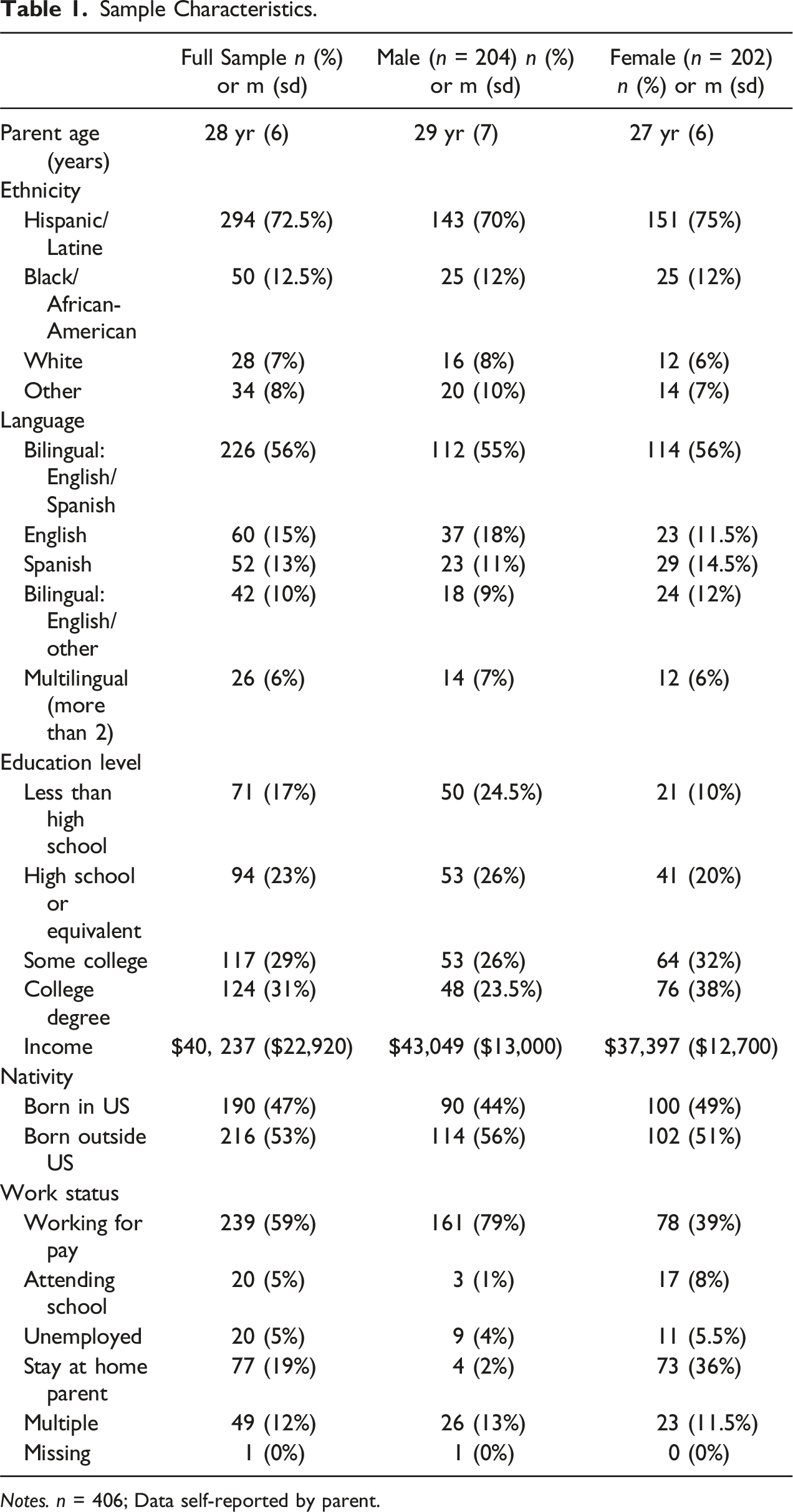
Notes. n = 406; Data self-reported by parent.
Measures
Gender Allocation Procedure
To measure the allocation of tasks, we developed a Task Allocation Procedure (TAP), in which each parent used an abacus with 12 beads to indicate how the couple divided their labor between three tasks—household, childcare, and financial contributions. Participants were asked to divide the beads based on how things were divided currently (i.e., perceived) and how they wished the labor was split (i.e., ideal). The abacus was used to offer a concrete representation of how tasks are divided, providing visual cues of the degree of equal or unequal distributions. It also provided a range from 0–12 without the burden of abstract or varied interpretations of response options denoting amounts from none to all. Each parent participated in the TAP, though separately to ensure that responses were not influenced by the presence of the other parent. While TAP was conducted with one parent, the other parent was engaged in a parent–child observation task.
As part of the procedure, the researcher told the parent, “This abacus is going to represent the total amount of work you and your partner do at home. There is a total of 12 pieces on the abacus and you need to use them all. For example, if I ask about housework and you feel you do all of that type of work in your home, then you put 12 on your side and none on your partner’s side. If you feel the work is divided evenly between the two of you, then you put 6 on your side and 6 on your partner’s side.” Thus, an even allocation of the task was centered at 6 on the abacus. Numbers greater than 6 indicated that they did/wished they did more than half of the work, while numbers under 6 indicated less than half. (Figure 1) Abacus used in TAP.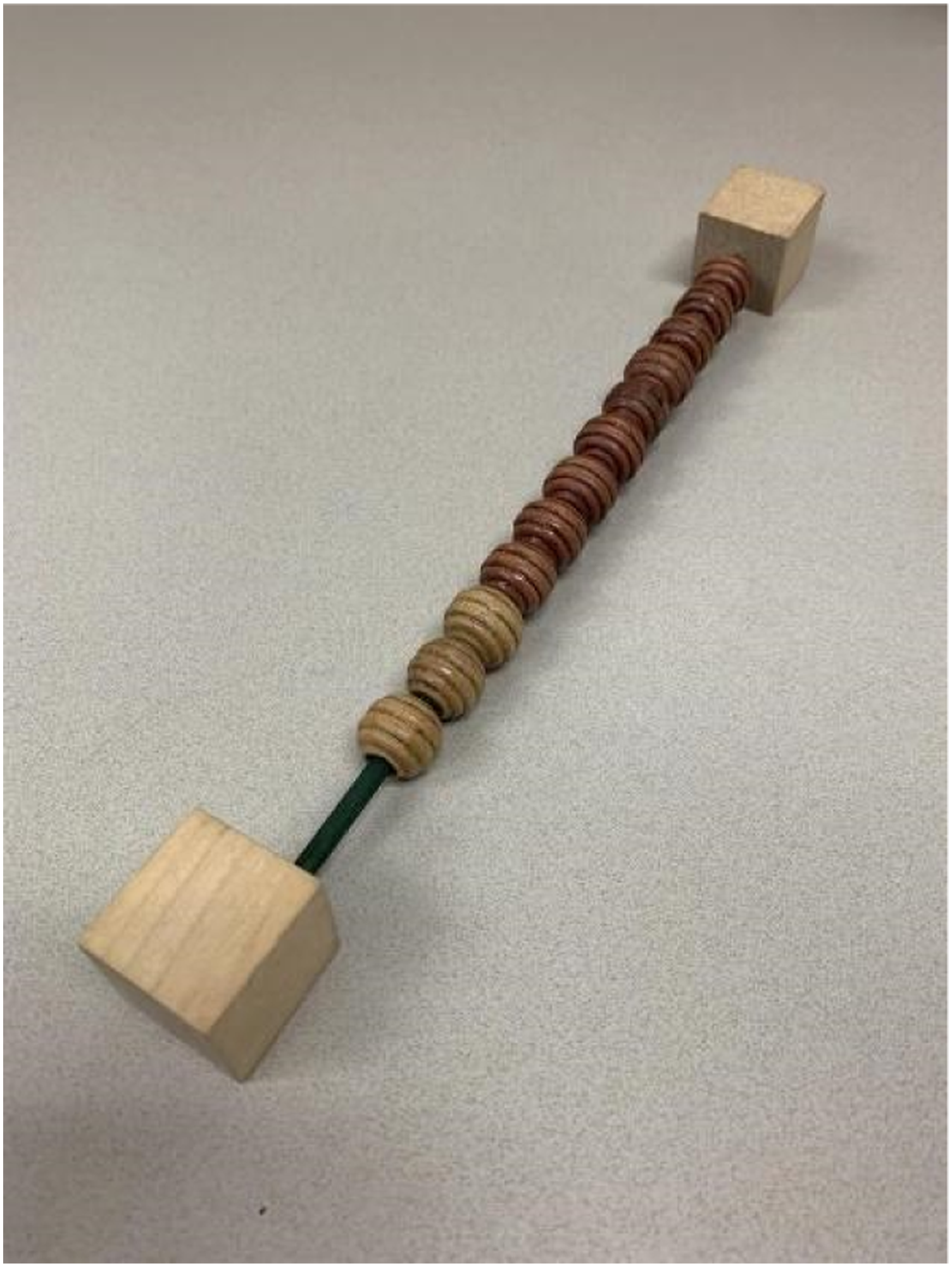
To assess discrepancies between couples, fathers’ self-reported perceived allocation was subtracted from mothers’ perceived allocation of their partner. Values of zero indicated no discrepancy in perceived task allocation between parents. A negative value indicated that fathers perceived themselves as doing more of the work than women perceived. A positive value indicated that fathers perceived themselves as doing less work than women perceived them doing. Such discrepancies were calculated for financial tasks, household tasks, and childcare tasks. To assess discrepancies between perceived and ideal, self-reported ideal was subtracted from perceived. A zero indicated a match between ideal and perceived. A negative value indicated doing less than wanted, while a positive value indicated doing more than wanted. This was done for financial tasks, household tasks, and childcare tasks.
Coparenting Relationship
The Coparenting Relationship Scale (CRS) (Feinberg et al., 2012) was used to measure each dyad’s coparenting relationship quality. The CRS consists of 14-items rated from 0 (not true of us at all) to 6 (very true of us). The measure includes items related to the relationship between partners (e.g., “My relationship with my partner is stronger now than before we had a child.”), alignment in parenting (e.g., “My partner and I have the same goals for our child.”), and perceptions of the partner’s parenting (e.g., “I believe my partner is a good parent.”). For this analysis, we use the average of the 14 CRS items as our outcome variable of interest (Cronbach’s α: .74).
Controls
Demographic controls included education level (less than high school; high school or equivalent; some college; college degree (2- or 4-year degree) or higher), race/ethnicity (African-American/Black, Hispanic/Latine, White, Other), work status (work for pay, attending school, unemployed, stay at home parent, or multiple (i.e., engaged in 2 or more of these activities)), a dichotomous variable for nativity (1 = born in US; 0 = not born in US), and a continuous variable for household income. Approximately 11% of participants were missing household income data. We imputed values from the other member of the household, and if not available, used gender-specific means for the missing scores.
Analytic Approach
Using STATA 15.1, descriptive statistics were first calculated for mothers and fathers and then compared using Chi-square tests (RQ1). To answer research question 2, an OLS regression tested how discrepancies between partners’ perceptions of tasks predicted coparenting relationship quality, controlling for education, income, race/ethnicity, nativity, and employment status. Given that mothers and fathers are nested within couples, we ran analyses by gender (i.e., mothers, fathers) and compared results. To answer research question 3, OLS regressions tested if the discrepancy between individuals’ perceived and ideal task allocation predicted their coparenting relationship quality score, controlling for the same covariates as the previous analysis. We ran analyses for the full sample as well as by gender (i.e., mothers, fathers).
Results
RQ1a: Comparing Perceived and Ideal Task Allocation
Summary of Respondents Self-Report of Perceived and Ideal Task Allocation.
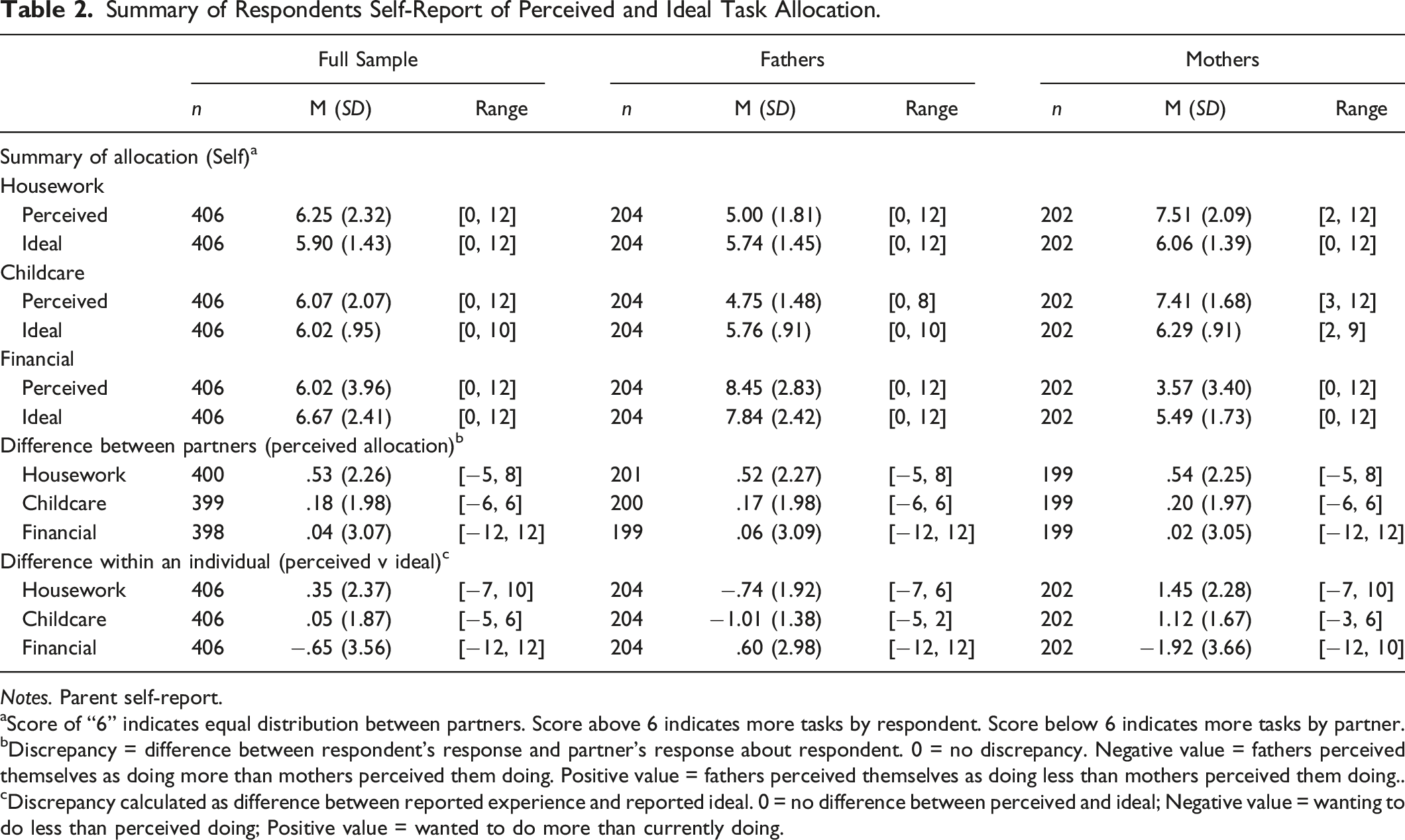
Notes. Parent self-report.
aScore of “6” indicates equal distribution between partners. Score above 6 indicates more tasks by respondent. Score below 6 indicates more tasks by partner.
bDiscrepancy = difference between respondent’s response and partner’s response about respondent. 0 = no discrepancy. Negative value = fathers perceived themselves as doing more than mothers perceived them doing. Positive value = fathers perceived themselves as doing less than mothers perceived them doing..
cDiscrepancy calculated as difference between reported experience and reported ideal. 0 = no difference between perceived and ideal; Negative value = wanting to do less than perceived doing; Positive value = wanted to do more than currently doing.
In comparing discrepancies in how dyads described their workload and what they would like it to be, there was a significant difference between mothers and fathers in the magnitude of discrepancy in what they wanted and reported doing for housework (χ2 (15, N = 406) = 110.35, p < .001), childcare (χ2 (11, N = 406) = 163.00, p < .001), and financial contribution (χ2 (18, N = 406) = 97.46, p < .001).
RQ1b: Mothers’ and Fathers’ Perceived Task Allocation
Mothers and fathers largely agreed on how tasks were allocated in their family. That is, discrepancies between what an individual reported doing and what their partner reported them doing were close to 0 for housework (M = .53), childcare (M = .18), and financial contribution (M = .04). For housework and childcare, mothers had slightly higher discrepancies between what they did and what their partner thought they did (i.e., mothers perceived doing more of the labor) whereas for financial contribution, fathers were perceived by their partners as doing more than they perceived doing (see Table 2). Chi-square tests showed no statistically significant differences by gender on each type of task.
RQ2: Discrepancies in Couples’ Perceived Task Allocation and Coparenting Relationship
OLS Regression—Discrepancy Between Self and Partner’s Perception of Task Allocation Predicting Coparenting Relationship Quality.
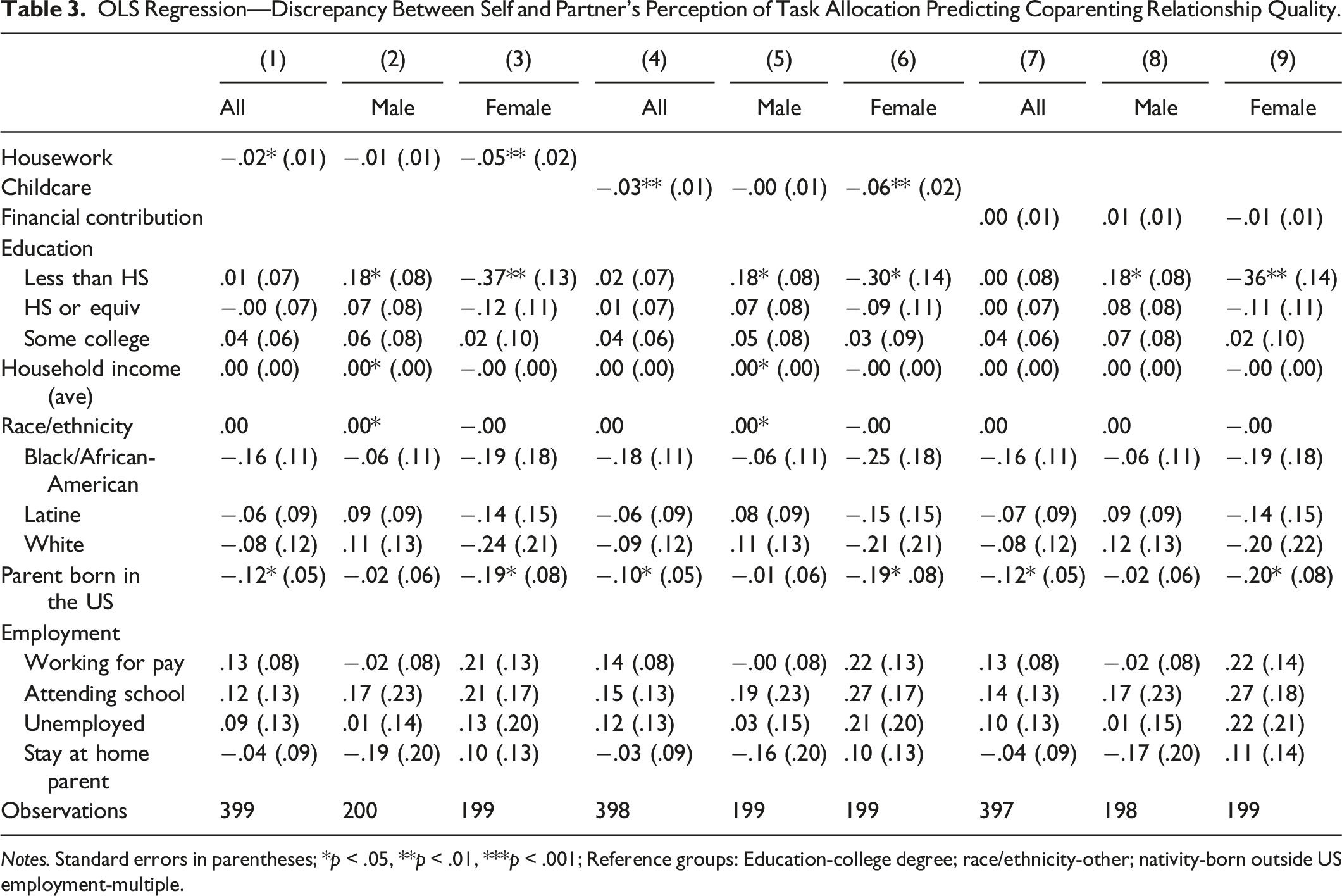
Notes. Standard errors in parentheses; *p < .05, **p < .01, ***p < .001; Reference groups: Education-college degree; race/ethnicity-other; nativity-born outside US employment-multiple.
RQ3: Discrepancy Between Ideal and Perceived Task Allocation and Coparenting Relationship
OLS Regression—Within Person Discrepancy Between Perceived and Ideal Task Allocation Predicting Coparenting Relationship.
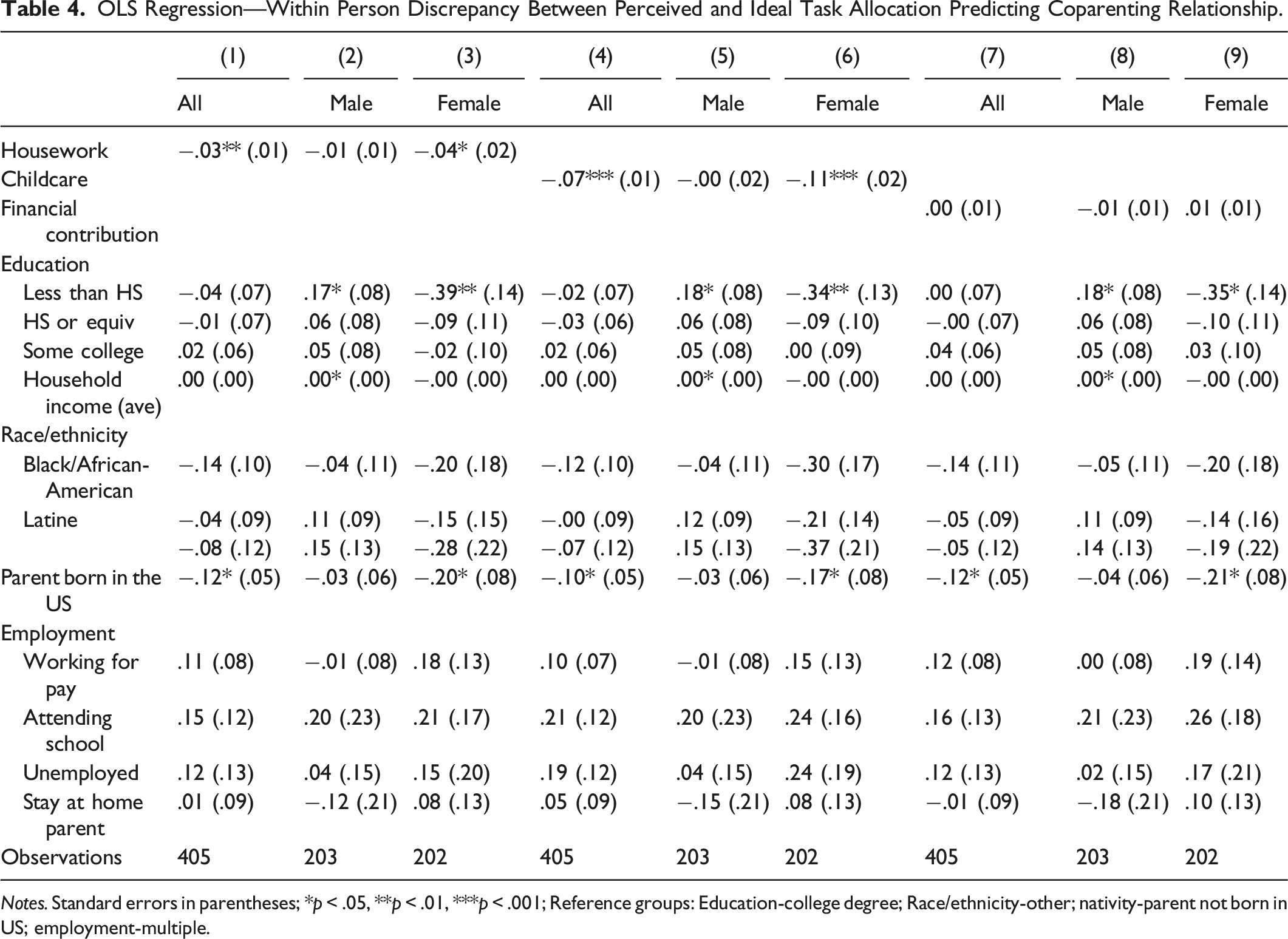
Notes. Standard errors in parentheses; *p < .05, **p < .01, ***p < .001; Reference groups: Education-college degree; Race/ethnicity-other; nativity-parent not born in US; employment-multiple.
Discussion
Despite claims of a societal shift towards more equitable distribution of tasks (Barstad et al., 2014), new parents appear to still divide tasks along traditional gender roles (e.g., both mothers and fathers agreed males should have more responsibility for financial tasks). Consistent with previous studies with white, middle-class heterosexual parents, mothers do the majority of the childcare and household work (Ascigil et al., 2021; Van Egeren, 2004). However, women in our study wanted a more equitable distribution of such tasks.
Both mothers and fathers perceived women as doing more of the housework and childcare, though men perceived themselves as doing a greater amount than their partner perceived them doing. Both genders agreed that males did and should contribute more financially. When mothers reported doing more housework and childcare than their ideal, it was significantly related to lower coparenting relationship quality, however, discrepancies were not significant for fathers. These results align with previous research suggesting that mothers, especially working mothers, are disproportionately affected by unequal distribution of household tasks and childcare (Dugan & Barnes-Farrell, 2020; Khazan et al., 2008). When mothers’ feel a sense of unfairness due to an unequal distribution of household tasks, it can lead to marital dissatisfaction and distress (Claffey & Mickelson, 2009). This can ultimately affect mothers’ wellbeing and strain the coparenting relationship (Dugan & Barnes-Farrell, 2020; Khazan et al., 2008). Studies have shown that when the gap begins to close between the expected distribution of tasks and the actual distribution, it improves the coparenting experience for parents (Khazan et al., 2008; Newkirk et al., 2017; Van Egeren, 2004). Our findings are meaningful given the importance of coparenting relationship quality on both parents’ and their young children’s wellbeing and psychological adjustment (Teubert & Pinquart, 2010; Van Egeren, 2004) as well as their interaction quality with their children (Cabrera et al., 2009). Ample evidence supports the importance of coparenting relationships (Carlson et al., 2016; Teubert & Pinquart, 2010) and these data provide insights into a possible contributor to that relationship quality.
Most research on coparenting has found that parents’ educational attainment can possibly influence the coparenting relationship quality, with parents with a higher education level reporting higher coparenting quality (Stright & Bales, 2003). However, in our data, women with less than a high school degree tended to report lower coparenting relationship quality, whereas fathers with less than a high school degree reported higher coparenting relationship quality. Although there is some evidence that mothers’ higher education is related to higher quality coparenting, there is little research on fathers. Our findings suggest that men and women’s education and its correlates (knowledge, income, employment) should be further explored.
Interestingly, our data suggest that for women, the allocation of household and childcare tasks are connected to feelings about their coparenting relationship, however, this was not true for their partners. Several things might contribute to this finding. First, men appear to experience less discrepancy than women between what they want to do and what they see themselves doing. This alignment between desired and perceived may buffer against negative feelings as coparents. Another possible explanation is that women nowadays would like fathers to take on more of the household and childcare responsibilities than previous generations and unequal allocation could result in more couple conflict (Newkirk et al., 2017) and feelings of burn-out as a parent (Mikolajczak et al., 2018) than previously. Such patterns may be especially important following pandemic restrictions, as research consistently finds that women have taken on more household and childcare responsibilities compared to their partners (Calarco et al., 2021).
Across models, women born in the US reported lower coparenting relationships quality than foreign-born mothers. This suggests possible cultural differences of parents’ expectations for working for pay and paying for expenses (e.g., housing, utilities). Decades of research have documented variations in gender roles across cultures (Naz et al., 2022), with many immigrants holding more traditional gender roles than US-born adults (Chuang & Tamis-LeMonda, 2013; van de Vijver, 2007). Half of the parents in our study were immigrants and it is feasible that these foreign-born parents supported more traditional allocations of tasks and thus, had less conflict with and felt more supported by their coparent.
Our study focused on new parents with a 9-month-old infant. These couples were caring for only 1 child, at an age with high caregiving demands that could largely be provided by either parent (e.g., feeding, diapering, playing). Additionally, 9 months is beyond typical US family leave allocations, thus potentially capturing women who had returned to work. Importantly, parents had likely established patterns of household, financial, and childcare responsibility, making 9 months after birth a useful time to assess how task allocation related to coparenting relationship quality.
Limitations
There are several limitations that need consideration. First, this sample of low-to-moderate income, first-time parents from two geographic areas (Southern California and Washington DC area) may not generalize to parents with more financial resources, parenting experience, or residence in other regions. Second, parents self-reported their allocation of tasks and actual division of labor was not observed. Third, although this sample was diverse, the majority were Latine parents. Fourth, the study sample was limited to heterosexual cis-gender parental dyads. Future research should consider different types of coparents such as same-gender couples and multigenerational caregiving.
Implications
The influence of coparenting quality on child outcomes (Feinberg & Kan, 2008) underscores the importance of understanding possible contributors to coparenting relationship quality. The study finds that the ways in which tasks are divided between new parents relates to mothers’, but not fathers’, feelings about their coparenting relationship. One recommendation for practitioners working with new parents is to provide opportunities for couples to explicitly decide how they want to divide tasks and communicate when allocations differ from what they want. This can serve as a step towards fostering more positive coparenting relationships. It is important for parenting interventions and supports to include both mothers and fathers and consider targeting communication between partners regarding the allocation of household and childcare tasks. Such interventions might be especially important following the COVID-19 pandemic, when other forms of childcare and support have been lessened or are missing.
Footnotes
Declaration of conflicting interests
The authors declared no potential conflicts of interest with respect to the research, authorship, and/or publication of this article.
Funding
The authors disclosed receipt of the following financial support for the research, authorship, and/or publication of this article: Research reported in this publication was supported by the Eunice Kennedy Shriver National Institute of Child Health & Human Development of the National Institutes of Health under Award Number R01HD078547. The content is solely the responsibility of the authors and does not necessarily represent the official views of the National Institutes of Health.
