




Abstract
During the COVID-19 pandemic, social inequities have compounded hardships among justice-involved families, who are more likely to be marginalized by systemic disadvantage. Little is known about the experience of the pandemic for justice-involved families, particularly those with an incarcerated family member. We examined the concerns and resource barriers of women in justice-involved families, including the unique challenges faced by those with a currently incarcerated family member. Results revealed bimodal concern for, and impact of the pandemic on, their incarcerated family member; however, economic concerns largely superseded concern for their incarcerated family members. Additional analyses highlighted the financial precarity of families with an incarcerated family member, who reported more housing instability, less access to transportation, greater food insecurity, and more discrimination. These findings highlight the need to support marginalized families during a national crisis; justice-involved families are more likely to face systemic barriers that may be exacerbated by the pandemic.
Introduction
Families around the world have been affected by mounting economic, social, and physical hardships due to the global coronavirus pandemic (COVID-19). While the impacts of COVID-19 have been far-reaching, social inequities have compounded hardships among justice-involved families, who are more likely to be marginalized by systemic disadvantage (Allen, Julian, Coyne-Beasley, Erwin, & Fletcher, 2020; Blundell, Costa Dias, Joyce, & Xu, 2020). Little is known about the experience of the pandemic for these families in the United States, particularly those with a currently incarcerated family member. It is critically important to identify and address the needs of this population; justice-involved families are generally more likely to face systemic barriers that may be exacerbated by the pandemic. Furthermore, concerns over the threat and implications of COVID-19 in prisons may be more acute among families with a currently incarcerated family member. The present study examines the concerns and resource barriers of women in justice-involved families, with explicit attention to the unique challenges faced by those with a currently incarcerated family member.
COVID-19 and Systemic Inequalities
Public health officials have observed a socioeconomic gradient related to the physical and economic impact of COVID-19, likely caused by a host of physical and social determinants (Blundell et al., 2020). Those living in poverty are more likely to have pre-existing health conditions (e.g., hypertension, diabetes; Gaskin et al., 2014; Kershaw et al., 2011) which increase the likelihood of COVID-19 related complications (Ssentongo, Ssentongo, Heilbrunn, Ba, & Chinchilli, 2020). Unaffordable and inaccessible healthcare creates barriers to prompt testing, diagnosis, and treatment, leading to higher rates of infection and transmission in low income communities (Blundell et al., 2020; Patel et al., 2020). Additionally, low-wage workers were among those most immediately affected by lay-offs at the beginning of the economic shutdown (Blundell et al., 2020). Other low-wage workers in essential occupations, including security, transportation, and some retail, may not have the opportunity to work remotely, placing them at higher risk for contracting COVID-19 on the job (Blundell et al., 2020).
Justice-involved families are likely overrepresented within populations most severely harmed by COVID-19. The criminalization of poverty in the United States has sustained significant resource barriers for justice-involved families before the onset of the pandemic (Allen et al., 2020; Herring, Yarbrough, & Marie Alatorre, 2020). Now, the heightened risk of infection and complications coupled with collateral financial instability has likely widened resource gaps for justice-involved families (Patel et al., 2020; Ssentongo et al., 2020). It is critically important to identify and address their needs in order to minimize additional harm to this demographic, which is often societally overlooked.
Familial Incarceration
Justice-involved families with an incarcerated family member may be vulnerable to additional hardships in light of COVID-19. COVID-19 poses a significant threat to the health and safety of incarcerated people (Akiyama, Spaulding, & Rich, 2020; Saloner, Parish, Ward, DiLaura, & Dolovich, 2020). Highly contagious pathogens are easily spread within confined areas, and limitations in space create challenges for recommended social distancing (Akiyama et al., 2020). Restricted access to medical care and personal protective equipment (PPE) additionally limits the capacity of prisons to halt the spread of the infection once cases are introduced (Akiyama et al., 2020). The subsequent impact of COVID-19 in prisons has been staggering: in June 2020, the rate of positive cases in prisons exceeded the U.S. national rate by 5.5 times (Saloner et al., 2020). Adjusting for differences in age and sex distributions, COVID-19 positive adults are three times more likely to die from complications if they are incarcerated (Saloner et al., 2020). The elevated risk of infection, complications, and death in prisons likely increases stress and anxiety for the families of incarcerated people.
In effort to reduce the harm of COVID-19 in prisons, experts have called for “decarceration,” or the release of as many people from prison as possible (Akiyama et al., 2020). Lowering the volume of prisons is an important and necessary step towards controlling the spread of COVID-19. However, unanticipated or expedited reunification may create or increase tensions for families. Successful community re-entry for formerly incarcerated people depends upon tangible support (i.e., housing, transportation, and financial assistance) from family members (Naser & Visher, 2006). Research suggests that family often fills the gaps in the safety net of formal social services when incarcerated individuals return to the community (Miller & Stuart, 2017). Other markers of successful re-entry, including securing employment and reestablishing social ties, are likely more challenging in the wake of COVID-19, which may prolong or increase reliance on family (Comfort et al., 2016; Seiter & Kadela, 2003; Visher & Travis, 2003). During a time of economic upheaval and uncertainty (Altig et al., 2020), families may not have the bandwidth to financially support their formerly incarcerated family member. Furthermore, the prospect of abruptly shifting household norms and expectations may increase stress and anxiety. Family conflict is frequently observed during the period immediately following re-entry (Mowen & Visher, 2015); some family members may enable further criminal involvement and substance use. Others may struggle to accept and forgive their formerly incarcerated family member, particularly if they had been previously victimized (Visher & Travis, 2003). Indeed, family life and incarceration mutually and indelibly impact one another, even after re-entry (Miller & Stuart, 2017). Given these challenges, it is critically important to understand the unique experience of COVID-19 for families with incarcerated family members, in comparison to justice-involved families broadly defined.
Women in Justice-Involved Families
Women in economically disadvantaged families are often responsible for fulfilling both the financial and the emotional needs of their household (Harris, 1993). Given the well-defined link between poverty and criminalization, the host of challenges resulting from COVID-19 likely adds to a long list of existing concerns for women in justice-involved families at a time when resources are increasingly scarce (Blundell et al., 2020; Patel et al., 2020).
It is well established that under-resourced families are more likely to become justice-involved in the first place (Wakefield & Uggen, 2010). However, deeper penetration into the criminal justice system is associated with cumulative disadvantage (Kurlychek & Johnson, 2019). The present sample distinguishes between levels of justice system involvement, to explore the extent to which the pandemic accelerates cumulative disadvantage for justice-involved families. Specifically, the present study surveys a sample of women in justice-involved families, all of whom are mother to a child who was arrested and some of whom report having a currently incarcerated family member at the time of data collection. The sample at large likely has shared lived experiences and may face many of the same barriers and sources of inequity because all participants have experienced the arrest of a child. However, it is important to parse apart the unique differences of women with an incarcerated family member, given the additional challenges that COVID-19 creates for individuals who are incarcerated and their families.
The Present Study
It is critical to better understand how justice-involved families are faring in the pandemic, with explicit attention to the experience of those with incarcerated family members. Findings illustrate both how existing inequalities may be exacerbated by the pandemic, and how to support individuals who are incarcerated as they return home (long or short term). The present study investigates the concerns and markers of systemic disadvantage faced by women with an incarcerated family member during the COVID-19 pandemic. Importantly, we examine these questions in a population of women whose sons were arrested, so all participants are justice-involved mothers. To address our aims, women were interviewed in the early months of the pandemic (March–August 2020). Specifically, we investigated two exploratory research questions. First, Do women with an incarcerated family member express concerns regarding the COVID-19 pandemic on their incarcerated family member? Second, What markers of systemic disadvantage exist for women with an incarcerated family member? Are these disadvantages different for justice-involved women without an incarcerated family member?
Methods
Sample
The present study draws its sample from the Crossroads Mothers Study, an ongoing longitudinal study of the mothers of male adolescents who were arrested for the first time/The primary goal of the Crossroads Mothers Study is to clarify the role of parents in youths’ probationary success during the transition to adulthood. Women were eligible to participate if they were the primary female guardians of adolescent males who had been arrested for the first time in California, Louisiana, and Pennsylvania (see Cauffman, Beardslee, Fine, Frick, & Steinberg, 2021). Biennial interviews are conducted with 397 women.
The COVID-19 pandemic presented an opportunity to gather information specific to justice-involved families’ experiences during the pandemic, given that these families likely face challenges above and beyond those of non-justice system involved families. In order to mobilize quickly to collect data from the relevant sample, women participating in the Crossroads Mothers Study were contacted outside of the typical biennial interview schedule to participate in the COVID-19 specific study. Thus, the present study is a stand-alone investigation of familial incarceration, leveraging a sample of women who already have experience with the justice system as a result of their child’s arrest. All interviews took place between March 30, 2020 and August 26, 2020. A total of 221 women completed this interview and are included in the present sample.
Procedures
The present study was designed to describe the challenges faced by justice system-involved families, with explicit attention to the unique challenges of those who have an incarcerated family member during the COVID-19 pandemic. Women completed a 20-minute structured interview over the telephone, administered using computer-assisted software, and responses were entered into a secured online database. Interviews were conducted in English or Spanish by a native speaker of the participant’s preferred language. All interview materials were translated through an iterative, collaborative process. A team of native Spanish speakers translated and back-translated all study materials in English and Spanish to ensure that the materials were standard in both languages. This translation method increases conceptual equivalence and cultural sensitivity (Douglas & Craig, 2007; Khosravani & Dastjerdi, 2013). Most women (67.42%) elected to complete the interview in English.
At the time of their interview, each participant was informed of the nature of the study, told that participation was voluntary, and informed that there was no penalty for declining to participate. Participants could continue to be part of the longitudinal Crossroads Mothers Study if they declined to participate in the COVID-19 study. All participant responses were protected by a Privacy Certificate issued by the Department of Justice. This protects participants’ privacy by exempting their responses and identity from subpoenas, court orders, or other types of involuntary disclosures. Participants were provided with a detailed explanation of the Privacy Certificate at the beginning of the questionnaire. All study procedures were approved by the Institutional Review Board (IRB).
Measures
Household Income
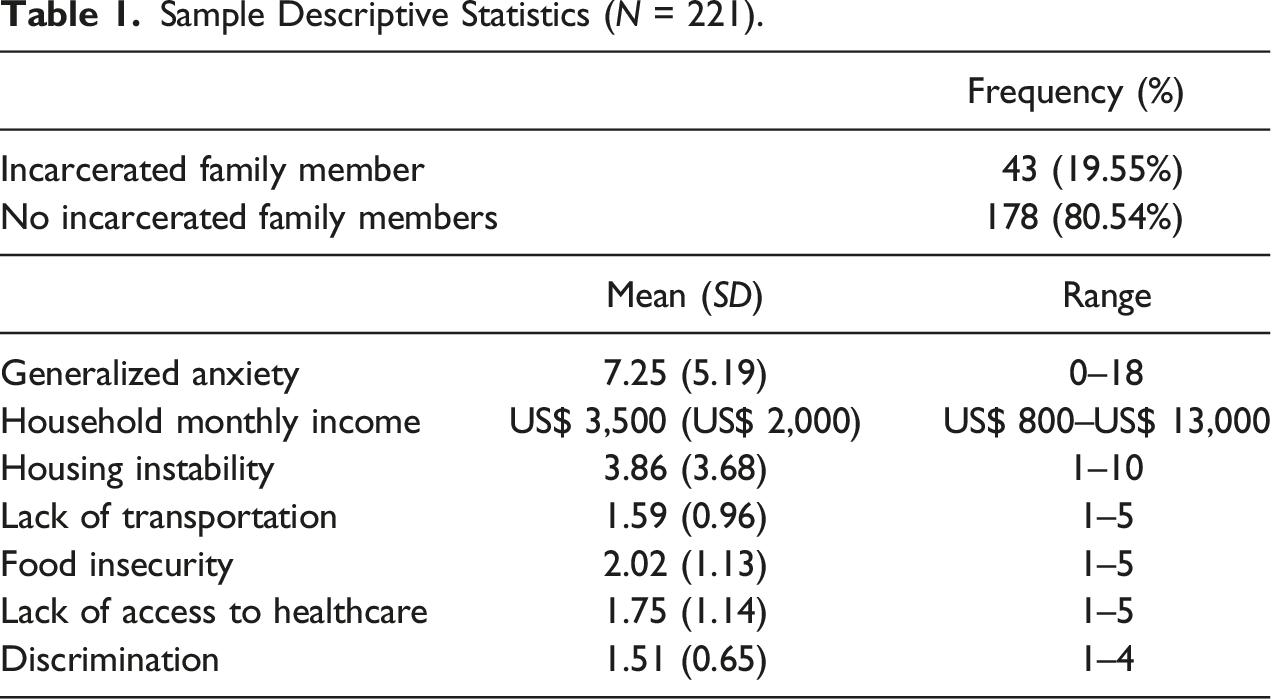
Sample Descriptive Statistics (N = 221).
Generalized Anxiety
The Revised Child Anxiety and Depression Scale (RCADS; Chorpita, Yim, Moffitt, Umemoto, & Francis, 2000) is a self-report measure of anxiety and depression in the COVID-19 structured interview. In the present study, we used the Generalized Anxiety Disorder (GAD) subscale, which is comprised of seven items assessing perseverative worries about catastrophic events befalling loved ones, as well as general worries (e.g., “I worry about what is going to happen.”). Items are scored on a scale from 0 to 3, where response choices range from “never” to “always”; responses are summed such that higher scores indicate more anxiety. Previous research has shown that the GAD subscale is psychometrically sound (αGAD = 0.84; Chorpita, Moffitt, & Gray, 2005), and alpha was excellent in the present sample (αGAD = 0.91). CFA analyses confirmed an adequate fit for the model as well as significant convergent validity with other self-report measures (RCMAS and CDI; see Chorpita et al., 2005). Generalized anxiety was used as a covariate in the present analyses, to account for individual differences in anxiety that may have driven concern over COVID-19.
Incarcerated Family Member
The purpose of the present study is to describe the pandemic-related challenges faced by justice system-involved families, with explicit attention to those with incarcerated family members. All participants belonged to a justice-involved family, as they are the primary female guardian of a youth who had been arrested. Of the 221 total participants, 43 (19.55%) reported having an incarcerated family member at the time of the COVID-19 interview. Within this sub-sample, 15 (34.88%) had an incarcerated son, 12 (27.91%) had an incarcerated biological brother, and 4 (9.30%) had in incarcerated male cousin. The type of relationship likely informs participants’ experiences of the pandemic; however, all 43 women who reported having an incarcerated family member were aggregated into one sub-sample regardless of their relationship to the incarcerated individual due to lack of variability and small sample size.
Markers of Systemic Disadvantages
Participants were asked to report the extent that they experience a series of five markers of systemic disadvantage. These markers were housing instability, lack of access to transportation, food insecurity, access to healthcare, and discrimination. Each item was scored individually, using a Likert-type scale where a higher number indicated more commonly experiencing this marker of systemic disadvantage. Items were then analyzed individually.
COVID-19-Specific Concerns
Participants were asked to rank their top three concerns because of the COVID-19 pandemic across 13 domains. These domains were: losing your job; losing your housing; not having enough food; not having enough non-food supplies; not have access to basic utilities or the Internet; not having access to needed services; your usual childcare; getting sick from COVID-19; dying from COVID-19; someone you care about getting sick from COVID-19; someone you care about dying from COVID-19; availability of medical care; the incarcerated family member. Participants were also asked to report their level of concern for their incarcerated family member because of the pandemic on a scale of (1) “Not at all” to (10) “Extremely.” Finally, participants reported the level of impact the COVID-19 pandemic had had on their incarcerated family member on a scale of (1) “Not at all” to (10) “Extremely.”
Analytic Plan
In order to better understand the experience of justice-involved families with an incarcerated family member during the COVID-19 pandemic, a series of descriptive analyses and five multivariate OLS regression models were conducted. Each regression model adjusted for household income and generalized anxiety. All analyses were performed using Stata version 14.0 (StataCorp, College Station, TX, USA).
Results
Concern and Impact of COVID-19 on the Incarcerated Family Member
First, the sub-sample of participants with an incarcerated family member (N = 43) rated their level of concern for their incarcerated family member during the COVID-19 pandemic. Responses ranged from 1 (not at all concerned) to 10 (extremely concerned). Mean level of concern was 6.77 (SD = 3.58). However, responses were bimodally distributed (see Figure 1): 8 (18.60%) women reported no concern for their incarcerated family member, while 17 (39.53%) reported extreme concern. Similar results were observed when participants were asked to rank the estimated impact of COVID-19 on their incarcerated family member from 1 (not at all impacted to 10 (extremely impacted): 11 (25.58%) reported no impact on their incarcerated family member, while 16 (37.21%) reported extreme impact. Histogram displaying: (1) participants’ level of concern over their incarcerated family member; and (2) participants’ estimated impact of COVID-19 on incarcerated family member. Higher values correspond to greater levels of concern and impact.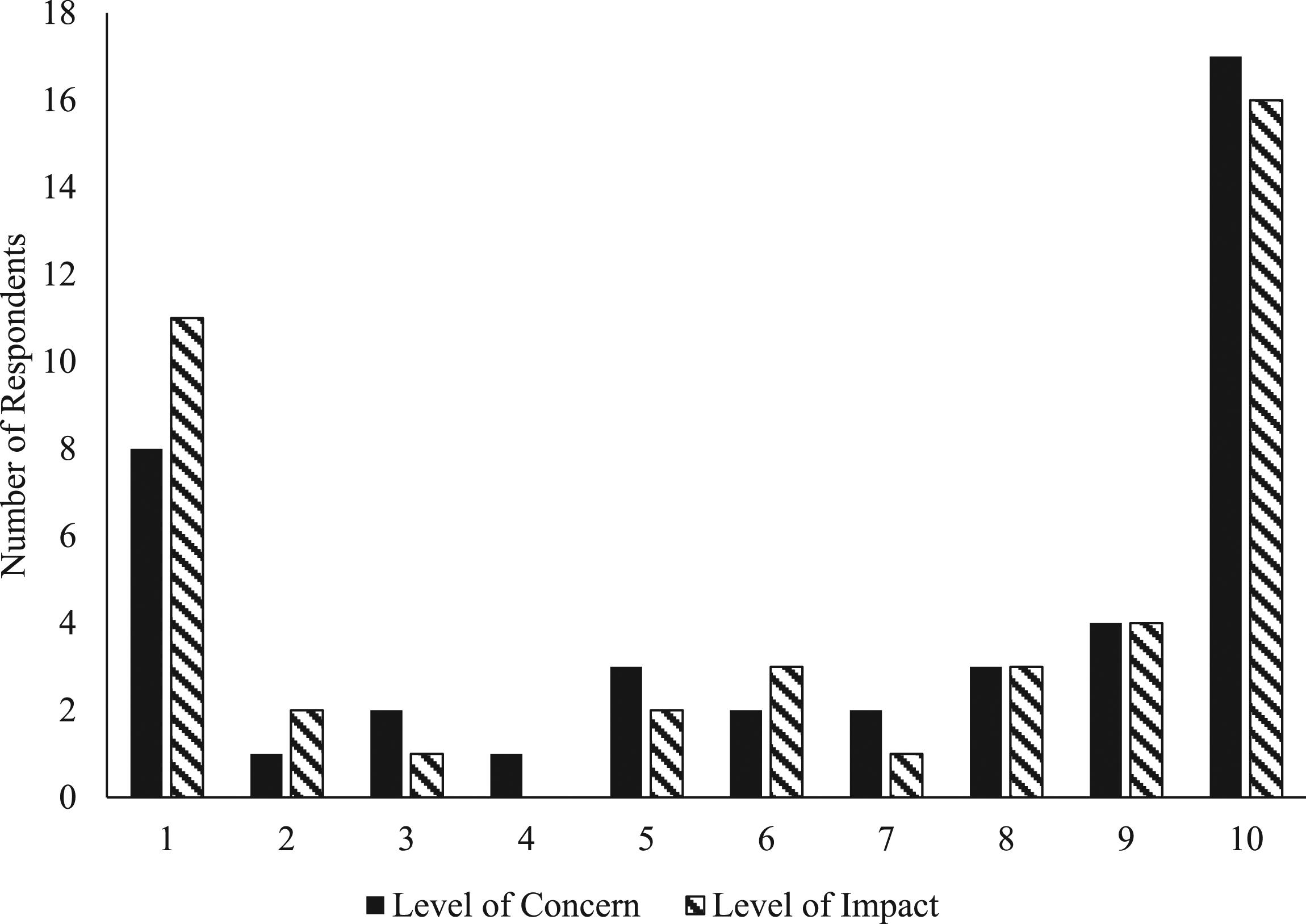
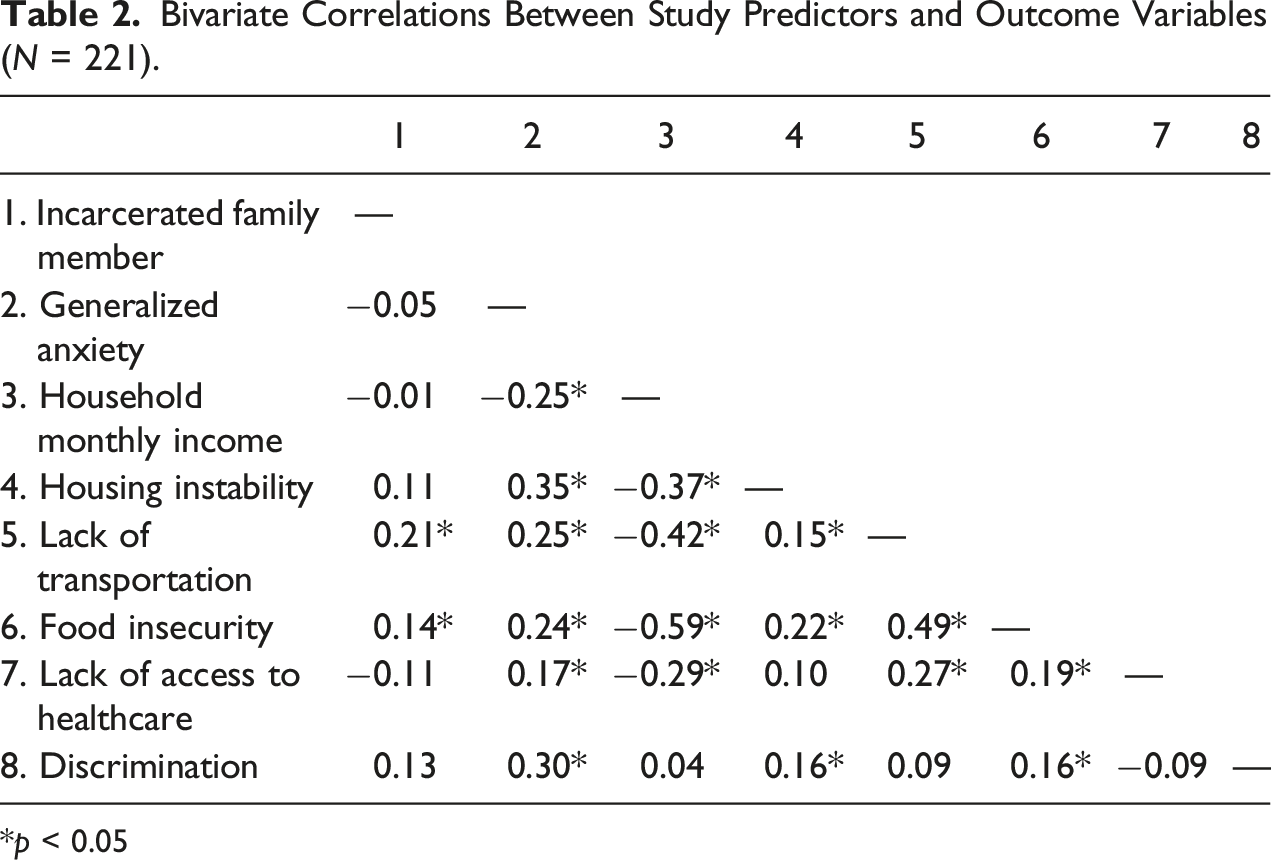
Bivariate Correlations Between Study Predictors and Outcome Variables (N = 221).
*p < 0.05
Markers of Systemic Disadvantages for Families with an Incarcerated Family Member
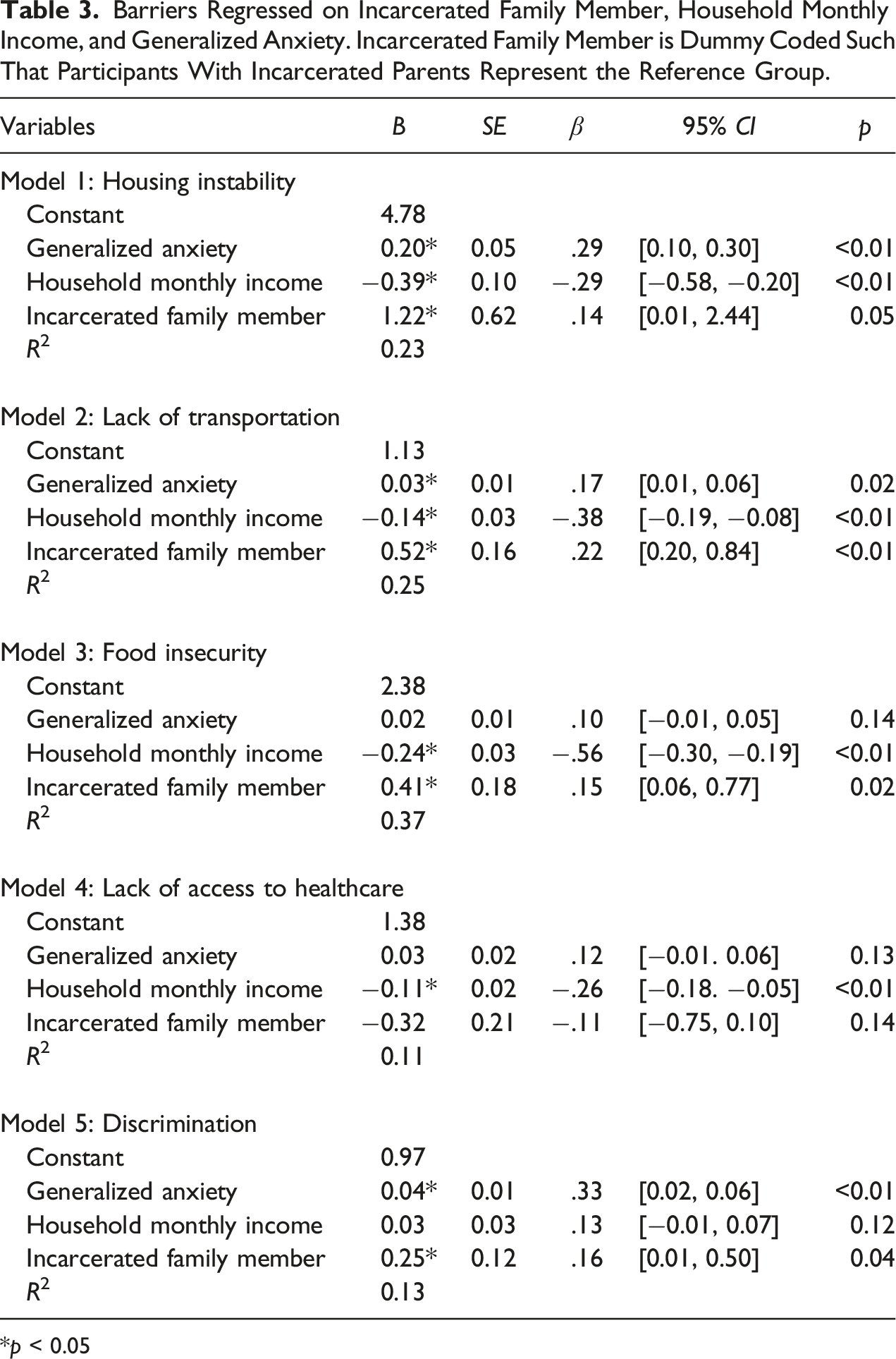
Barriers Regressed on Incarcerated Family Member, Household Monthly Income, and Generalized Anxiety. Incarcerated Family Member is Dummy Coded Such That Participants With Incarcerated Parents Represent the Reference Group.
*p < 0.05
Discussion
Our results indicate that women with an incarcerated family member reported experiencing the COVID-19 pandemic differently than women in justice-involved families broadly defined. A plurality ranked their concern for the incarcerated family member as extreme although this distribution was largely bimodal with women expressing little concern for the incarcerated family member. However, most women rated economic concerns above concern over their incarcerated family members. This financial precarity of families with an incarcerated family member was also reflected in the analysis of the markers of systemic disadvantage: women with an incarcerated family member reported more housing instability, less access to transportation, greater food insecurity, and more discrimination than women without a currently incarcerated family member.
Concern and Impact of COVID-19
Given that all women in the present sample are from justice-involved families, all participants faced vulnerability to COVID-19, due to elevated rates of pre-existing conditions and greater likelihood of living in poverty relative to non-justice-involved families (Gaskin et al., 2014; Kershaw et al., 2011). Thus, it is no surprise that participants faced similar concerns centered on financial insecurity in the wake of the COVID-19 pandemic.
Women with a currently incarcerated family member face the additional stress of the possibility that their incarcerated family member is in a situation with the high transmission rates and low levels of risk mitigation, as has been reported in many US prisons and jails (Akiyama et al., 2020). In the present sample, it seems that a plurality of women (39.53%) were very concerned about their incarcerated family member and felt that the pandemic had strongly impacted that family member (37.21%). However, the distribution was bimodal; many women with an incarcerated family member noted no concern for their incarcerated family member as a result of the pandemic, and that the pandemic had no impact on their family member.
While our results cannot speak to the factors responsible for the variation in level of concern, findings do highlight the complex and diverse impact of incarceration on families. Incarceration creates significant barriers to maintaining familial relationships; communication is often censored and restricted, which can in turn lessen family support and increase interpersonal conflict (Turney, 2013). If the quality of the familial relationship was tenuous prior to incarceration, the potential for severance may be even greater. While many are successful in maintaining relationships with their incarcerated family members, this clearly is not possible or desired in all circumstances (Beckmeyer & Arditti, 2014). It is therefore unsurprising that the level of concern towards incarcerated family members varied greatly in our sample.
One alternative explanation involves the variation in health and safety standards within carceral facilities. Prisons are required to maintain environmental conditions that ensure an adequate standard of living (Clements, 1979; Rubino, 2001). However, health promotion practices, including access to hygiene resources, implementing sanitary regulations, and early screenings and inoculations for disease, vary greatly between institutions (Guo et al., 2019). It is possible that this variation is reflected in participants’ level of concern: women who reported little or no concern for their incarcerated family member may view prisons as more sheltered from COVID-19 than the outside world. On the other hand, those who reported high levels of concern may fear that the environmental risk factors in prisons increase the potential for infection and complications (Akiyama et al., 2020).
Markers of Systemic Disadvantages for Women with an Incarcerated Family Member
Women with incarcerated family members described more markers of systemic disadvantages than those without, including more housing instability, less access to transportation, greater food insecurity, and more discrimination. This aligns with literature examining systemic disadvantages faced by justice-involved families outside of the COVID-19 pandemic. For example, among families with children, familial incarceration is associated with food insecurity (Cox & Wallace, 2013) and homelessness (Harris et al., 2015). Although all women in the present study have some history of family justice system involvement, the finding that those with a currently incarcerated family member experience more disadvantages suggests the possibility of a dosage (i.e., amount or penetration of justice system contact) or timing (i.e., during the pandemic) effect of familial incarceration on these barriers. Specifically, it could be that families who are more deeply involved in the justice system (i.e., prolonged contact via incarceration) more frequently experience markers of systemic disadvantage, when compared to justice-involved families in general, reflecting cumulative disadvantage (Kurlychek & Johnson, 2019). These issues are compounded by race; the majority of women in the present sample were non-White, reflecting the disproportionate minority contact with the justice system in the carceral demographics in the study site locations.
Perhaps unexpectedly, most women did not rank their incarcerated family member as their primary concern, instead citing economic concerns as their chief anxiety. This, taken together with the markers of systemic disadvantage faced by families with an incarcerated family member, highlights the need for economic resources in these families. A re-entry plan for individuals who are incarcerated that does not include economic support may be unsuccessful (see Solomon, Visher, La Vigne, Osborne, 2006), particularly for Black and Hispanic/Latinx people who tend to under-earn similarly situated white people seeking employment after incarceration (Western & Sirois, 2019). Likewise, as federal and local support dollars become increasingly limited, solutions aimed at reducing the economic impact of the pandemic may be most needed among justice-involved families.
Strengths and Limitations
There are a number of strengths in the study. It is the first to examine the impact of, and vulnerabilities exposed by, the COVID-19 pandemic among a sample of justice-involved families. All of the women who participated in the present study had experience in the juvenile justice system via their child’s arrest, and many additionally had family members who were incarcerated at the time of the interview. Crime reduction literature often focuses on the justice-involved individual to the exclusion of his or her family. However, research suggests that family support and contact can greatly improve re-entry outcomes of individuals who are incarcerated (Visher & Travis, 2011), particularly when combined with mental health and substance-abuse treatment (Lattimore & Visher, 2013). As many of these outside services may be harder to access in a pandemic, direct family support becomes increasingly crucial. Additionally, this study illuminated the particular vulnerabilities of women with an incarcerated family member during the COVID-19 pandemic. Data from the Crossroads study allowed mothers who have faced similar markers of systemic disadvantage to be compared with those that had incarcerated family members.
These strengths are tempered by a number of weaknesses. First, the study did not assess other types of justice system contact, such as number of family members currently on probation, nor did it assess families who have never had justice system contact as a control group. Second, given the lack of federal response to the pandemic and the patchwork nature of the state and local response, it was not possible to determine the impact of localized policy (e.g., food assistance, rent assistance) on participants hailing from numerous cities across 16 states. Third, although we did ask participants with an incarcerated family member to report the nature of their relationship to that person, we were underpowered to detect any differences by relationship (i.e., there were no significant correlations observed between relationship type and the variables of interest). Future research may take a more qualitative approach towards the collected data to extract the specific nature of participants listed concerns. For some women, economic concerns may include a host of familial responsibilities, perhaps including their incarcerated family member. Finally, the data were collected in the first 5 months of the pandemic; it is unknown what the experiences of the participants have been like as the health, social, and economic impacts of the pandemic continue through another year. However, the results from the present study represent a step forward in our understanding of the precarious situation in which justice-involved families find themselves—and will likely continue to find themselves as the pandemic wears on.
Implications and Conclusion
These findings highlight the need to support marginalized families, such as those with incarcerated family members, during a national crisis. Of course, markers of systemic disadvantage such as housing instability, transportation and food insecurity, and heightened experiences of discrimination predate the COVID-19 pandemic for vulnerable families. Western and Harding (2022) argue that truly successful community re-entry must be buttressed by systemic “off-ramps” that allow formerly incarcerated individuals to shed the stigma and surveillance of the criminal justice system; doing so should be a goal regardless of a global pandemic. However, the onset and spread of COVID-19 illuminated these existing hardships, as reflected in both the prominent anxieties and also the mounting cumulative systemic disadvantages for the women with incarcerated family members.
Particularly in the context of individuals who are incarcerated returning to the community, whether due to expedited reunification in response to COVID or otherwise, targeted supports must be put into place to provide for their concerns. Emerging research touts the public health benefits of early release due to the pandemic (Franco-Paredes et al., 2020). However, our research suggests that efforts to aid the re-entry process must acknowledge that previously incarcerated individuals will already be returning home to families that experience higher rates of poverty, housing and food instability, and unique health challenges. The onset of COVID-19 further complicates these home environments, putting recently returned incarcerated individuals more in harm’s way of negative social integration. Services that aid with re-entry, such as substance-abuse treatment or mental health services, may be less accessible or less funded (Lattimore & Visher, 2013) at the very time when those services are needed most. Indeed, according recommendations by the National Academies of Sciences, Engineering, and Medicine (2021, p. 87) “Reducing COVID-19 transmission will require new partnerships across systems (housing, health care, social service, and correctional systems) and the removal of institutional and legal barriers that prevent incarcerated people from accessing food, health care, housing, and income supports following release.”
Beyond re-entry, it is clear that families with an incarcerated member are in need of support. Family-focused intervention is critical to the rehabilitative process, and the broader relational and contextual influences in individuals’ and families’ ecologies must be considered. As before a pandemic, women with incarcerated family members face markers of systemic disadvantage from many directions. COVID-19 not only highlighted existing hardships, but also generated new anxieties and inequalities.
Footnotes
Acknowledgments
We are grateful to the many individuals responsible for the data collection and preparation.
Author Contributions
CC conceptualized the study, analyzed the data, and wrote the manuscript. MK aided in writing the manuscript. MH led data collection efforts and aided in writing the manuscript. EC aided in study conceptualization and writing the manuscript.
Declaration of Conflicting Interests
The author(s) declared no potential conflicts of interest with respect to the research, authorship, and/or publication of this article.
Funding
The author(s) disclosed receipt of the following financial support for the research, authorship, and/or publication of this article: The Crossroads Mothers Study is supported by funding from American Psychology-Law Society and Michigan State University College of Social Science.
Informed Consent
All study participants provided informed consent, via processes approved by the IRB.
