



Abstract
This study examines factors underlying single mothers’ stress in an African slum. Using survey data from 1,221 mothers in a Kenyan informal settlement, this study examines 1) whether single mothers experience more stress due to their demographic and socioeconomic characteristics; 2) whether financial and child care support from kin offsets limited support from fathers; and 3) whether variation in the type and source of support explains stress differentials across marital status. The results suggest that lower socioeconomic status does not explain single mothers’ elevated stress. Rather, despite receiving greater assistance with child care and financial support from kin, single mothers receive substantially less support of either kind from the child’s father. These differences in support, particularly financial assistance, account for single mothers’ elevated stress. These findings highlight the comparatively weak social support available for single mothers residing in precarious urban environments and its importance for their psychological well-being.
Keywords
Introduction
Across sub-Saharan Africa, over 200 million people reside in informal settlements, colloquially referred to as slums (UNICEF, 2012). Estimates suggest that as many as one-third to one-half of these residents are children (Emina et al., 2011; UNFPA, 2007). These children grow up in a context characterized by pervasive poverty, food insecurity, overcrowding, inadequate housing, and widespread violence and crime (UNFPA, 2007; UNICEF, 2012). Numerous studies document the detrimental effects of informal settlements on children’s health, education, and overall well-being (Clark, Madhavan, et al., 2018; Ernst et al., 2013; Olack et al., 2011). Curiously, less attention is given to the stress and psychological strain mothers likely experience as they endeavor to protect, nurture, and care for their young children in this challenging setting.
Raising children under these conditions may be especially taxing for single mothers, although single motherhood is common. Roughly half of African women will become single mothers due to high levels of both union dissolution and premarital births (Clark & Hamplová, 2013). Emerging evidence from non-slum areas in sub-Saharan Africa indicates that single mothers experience poorer overall mental health and lower life satisfaction levels than married mothers (Adeyemi, 2017; Clark et al., 2020; Coleman et al., 2006; Husain et al., 2016). Many of these studies implicitly or explicitly contend that single mothers face greater psychological stress because of their age or lower socioeconomic status (Stewart et al., 2010; Uzobo et al., 2017). However, most studies in both Africa and elsewhere find that mental health disparities by marital status persist even after controlling for demographic and socioeconomic characteristics (Deyessa et al., 2008; Manuel et al., 2012).
These findings suggest that other factors or processes may compromise single mothers’ psychological wellbeing. In particular, lower levels of instrumental assistance with child care and financial help may place considerable strain on single mothers who have to juggle dual roles as both the primary caregiver and economic provider (Clark, De Almada, et al., 2018). Prior studies suggest that single mothers in sub-Saharan Africa receive little, if any, financial support or child care assistance from the child's father (Mjwara and Maharaj 2018; Ntinda, Thwala, and Dlamini 2016; Richter and Morrell 2008; Weinreb 2002). However, in sub-Saharan Africa, other kin may step in to assist single mothers with both their financial needs and child care responsibilities to offset these losses. Traditionally, kin, including the child’s grandparents, aunts, uncles, and even older siblings, play an active role in helping mothers raise children in sub-Saharan Africa (Clark et al., 2017; Sear & Mace, 2008). This support may come from both maternal and paternal sides of the family. Paternal kin are often involved in patrilineal societies where children belong to the fathers’ kin (Madhavan, 2010). In some cases, however, maternal kin may act as “gatekeepers” to children and deter fathers from establishing relationships with their children and providing support (Madhavan et al., 2014; Richter & Morrell, 2008). Whether kin give more support to single mothers than married mothers and if such support helps alleviate their stress is largely unknown. A lack of kin support may be a particularly salient issue for mothers residing in slums, where high rates of mobility weaken the family support systems single mothers need to raise their children (Beguy et al., 2010; Clark et al. 2017).
In order to better understand the factors that contribute to unmarried mothers’ elevated stress, this study addresses three main questions: 1) whether single mothers experience more stress than married mothers due to their demographic and socioeconomic characteristics; 2) whether kin offer single mothers more financial and child care support to compensate for limited support from fathers; and 3) whether variation in the type (child care or financial) and source (fathers or other kin) of support explains differences in maternal stress by marital status. We find that formerly married mothers experience the highest levels of stress mainly because of the limited financial support they receive from the child’s father rather than their lower levels of education and household wealth. Never-married single mothers are partly protected from stress by their younger ages. However, despite receiving substantial child care support from kin, they also experience elevated stress because of lower financial and child care assistance from fathers. By highlighting the strain African single mothers face raising children in poor urban environments, these findings call attention to the need to better enforce fathers’ obligations to support their children and implement programs that offer more assistance to single mothers.
Background
Maternal Stress and Marital Status
A large body of research from Western countries finds that marriage confers psychological benefits for women (for a review, see Umberson et al. 2013). Research on psychological well-being by marital status in sub-Saharan Africa is more limited, even though single motherhood is common in many parts of sub-Saharan Africa. In Kenya, for example, about 60 percent of women experience at least one episode of single motherhood by age 45 (Clark & Hamplová, 2013). Roughly half of these women give birth before they are married, while the other half of single mothers become divorcées or widows with young children. A handful of studies conducted in non-slum areas of Africa typically find that single mothers report more psychological distress than their married counterparts (Coleman et al., 2006; Husain et al., 2016; Uriyo et al., 2013). For example, a hospital-based survey of Kenyan mothers with children under age five finds that single mothers are almost twice as likely to be at risk of a common mental disorder than married mothers (Husain et al., 2016). Studies from both high- and low-income settings generally find that psychological wellbeing is worse for formerly married (either widowed or divorced) than never-married mothers of reproductive age.
Demographic and economic disparities between single and married mothers may partially explain why single mothers, particularly formerly married mothers, experience heightened distress. In general, single mothers tend to be poorer than married mothers. Married couples have, on average, more economic resources than households headed by single mothers (Burstrom et al. 2010; Leopold 2018), and single-mother homes are more likely to experience poverty (Adeyemi, 2017; Rousou et al., 2013). However, compared to formerly married mothers, never-married single mothers are typically younger and better educated (Afifi et al., 2006; Colton et al., 2015; Sarkisian & Gerstel, 2008). Further, formerly married mothers often experience the highest levels of poverty as never-married mothers may remain in or return to their natal homes (Clark et al., 2017; van de Walle, 2017). Last, poorer psychological wellbeing among formerly married mothers relative to never-married mothers could reflect the psychological costs of union disruption and, particularly in the case of widowhood, feelings of grief and bereavement (Umberson et al., 2013). In some studies, controlling for these demographic and economic factors explains disparities in psychological well-being between married and unmarried mothers (Cooper et al., 2009; Dziak et al., 2010). In most, however, disparities are attenuated but persist, even after controlling for socioeconomic conditions (Colton et al., 2015; Deyessa et al., 2008).
Social Support from Fathers and Kin
Beyond differences in demographic characteristics and socioeconomic status, social support may play a vital role in reducing maternal stress and, thus, explaining differences in stress by marital status. Mounting evidence from high-income countries demonstrates the importance of social support for maternal psychological well-being (Berkman & Glass, 2000; Meadows, 2009; Rousou et al., 2013; Widan & Greeff, 2019). This research finds that fathers play a primary role in providing financial support and child care irrespective of their marital status, and that their support to mothers mitigates maternal stress (Edin & Nelson, 2013; Mallette et al., 2020). Kin generally plays a more tertiary role in supporting mothers in high-income countries (Bronfenbrenner, 1986), which may explain why their support has a less conclusive relationship with maternal well-being (Baxter & Alexander, 2008; Radey, 2018). Nonetheless, social support from kin appears to be higher and potentially more critical for low-income, single mothers in the United States (Mazelis & Mykyta, 2011).
Research on social support and maternal well-being in sub-Saharan Africa is comparatively sparse. Still, there are important reasons why findings from Western contexts may not be generalizable to informal settlements in sub-Saharan Africa. First, against a backdrop of rapid urbanization and struggling economies, governments in Africa are often incapable or unwilling to provide basic health, education, and social services for residents of informal settlements (Bah et al., 2018). Extreme poverty coupled with a very limited public safety net may make African mothers’ mental psychological well-being particularly dependent on the social support they receive from fathers and other kin.
Second, there are notably different familial configurations and expectations of support from both fathers and other kin. Studies suggest that father involvement in sub-Saharan Africa is generally limited to financial support, with minimal contributions to child care, even within marriage (Richter & Morrell, 2008). Further, despite their designated role as financial provider, some research finds that they provide little or even no economic support when they are not in a union with the child’s mother (Mjwara & Maharaj, 2018; Ntinda et al., 2016; Richter & Morrell, 2008). Kin, in contrast, have historically played a more active role in helping both single and married mothers raise children, including providing a substantial amount of economic assistance and child care (Mjwara & Maharaj, 2018; Ntinda et al., 2016; Sear & Mace, 2008). As in the United States, it is likely that African kin offer greater support to single mothers, particularly never-married mothers, although evidence substantiating this expectation is limited.
Despite these traditional practices, research suggests that fatherhood roles are changing and that even fathers who are not in a union with their child’s mother are becoming more engaged (Richter & Morrell, 2008). For example, some studies from South Africa find that fathers regularly see and care for their children even if they are not married to the mother (Clark et al., 2015; Madhavan et al., 2016; Richter & Morrell, 2008; Swartz & Bhana, 2009). Further, as child maintenance laws proliferate in several sub-Saharan African countries, fathers are increasingly expected to take financial responsibility for their children, including lodging, food, clothing, and medical care, regardless of their marital status (Laird, 2011). For example, the Constitution of Kenya, art. 53 (1) (e) asserts the rights of children “to parental care and protection, which includes equal responsibility of the mother and father to provide for the child, whether they are married to each other or not.” Research from South Africa correspondingly shows that many children continue to receive some financial support from their fathers after marital dissolution (Madhavan et al., 2014).
Roles of kin may also be changing. Much of the prior research on the importance of kin support for child well-being was conducted in rural areas (Gibson & Mace, 2005; Sear et al., 2002; Sear & Mace, 2008). Kin support systems for women residing in poor urban centers may be more fragile (Clark et al., 2017). For example, one recent study from a Kenyan slum finds that although kin do help single mothers, one-fifth of single mothers do not receive any financial or instrumental help from family members (Clark et al., 2017).
Furthermore, kin may be more likely to provide help to younger, single mothers who may even co-reside with the child’s maternal grandparents (Mjwara & Maharaj, 2018), than to older mothers who are divorced or widowed. Paternal kin, especially grandparents, may also be more likely to provide financial or childcare support to never-married mothers. Young unmarried mothers in South Africa, for example, deliberately establish relationships with the child’s paternal kin both to secure recognition and legitimacy within the patrilineal lineage and to obtain financial support (Madhavan, 2010). In contrast, formerly married mothers may have acrimonious relationships with their former in-laws and are often victims of property and land-grabs from the child’s paternal kin (van de Walle, 2017).
Based on these prior findings, this current study expects that single mothers will experience elevated stress relative to married mothers and that stress levels will be especially high among formerly married mothers. Further, lower socioeconomic status among single mothers will partially, but not fully, explain their higher levels of stress. We also predict that single mothers receive substantially less financial or child care assistance from fathers than married mothers, but potentially more support from kin to compensate. These differences in both the level and source of support will largely explain why single mothers are under greater psychological strain than married mothers. Specifically, we anticipate that while greater support from kin partially alleviates stress among single mothers, the marginal contributions of fathers to their children’s care account for much of the stress single mothers’ experience.
Data and Methods
Analytic Sample
More than half of Nairobi’s residents live in informal settlement areas (UN Habitat, 2014). Compared to Nairobi as a whole, a greater proportion of residents in most informal settlements are men. In part, the sex difference stems from higher migration of males to informal settlements in search of employment. Women living in informal settlements have, on average, lower education levels than women living elsewhere in Nairobi. Further, those residing in informal settlements are more likely to be married and have more children (African Population and Health Research Center (APHRC), 2014).
We conducted our study in the informal settlement, Korogocho, where the Nairobi Urban Health and Demographic Surveillance System (NUHDSS) regularly collects demographic information on all residents. Korogocho is a densely populated informal settlement located just over 10 kilometers from the Nairobi central business district. It is characterized by temporary housing structures, extensive environmental pollution, and pervasive poverty. Most working adults are engaged in small-scale businesses or informal employment that offer limited job security. The informal nature of the settlement means that the area is poorly served by the public sector and has few public health facilities and schools. Korogocho has been an established informal settlement longer than many other settlement areas in Nairobi and, consequently it has a more balanced sex ratio and a higher proportion of both children (below the age of 15) and older adults (above the age of 65) (Beguy et al., 2015; Wamukoya et al., 2015).
For our sampling frame, we used NUHDSS data collected between April and May 2015 to identify all mothers with at least one child aged 1 to 4 years (inclusive) at the time of enumeration (n = 1,928). When we conducted our survey between September and October 2015, we were unable to locate 521 of these mothers, primarily because they had moved. An additional 182 mothers were excluded because the mother refused to be interviewed (n = 27) or the child was no longer in the eligible age range (n = 105), no longer lived in the household (n = 10) or had died (n = 40). Consequently, our sample consists of 1,222 mothers with at least one child under the age of five. Because we restrict our sample to mothers with a young child, our sample of women are more likely to be married, more likely to be unemployed, and less likely to have completed secondary school than the general population of women in Korogocho (Wamukoya et al., 2015). For more details of this study, see Clark et al. (2019).
Mothers were surveyed about their demographic, social, and economic conditions and their experiences of symptoms of stress. One woman was omitted from the final analysis as she did not provide information on her marital status. The resulting analytic sample includes 1,221 women. In addition, mothers provided information about both economic support and child care assistance they received for each child under age five. We randomly selected one child for the analyses if the mother had two or more children under age five.
Variables
Dependent Variable
Our dependent variable is a measure of maternal stress created from four survey items aimed to assess mothers’ emotional and psychological well-being. On a four-point scale ranging from “never” to “often,” participants were asked to indicate how frequently they had recently 1) lost sleep over worry, 2) felt under strain, 3) felt unhappy or depressed, or 4) lost confidence in themselves. These survey items come from the General Health Question 12 (GHQ-12) (Goldberg & Hillier, 1979). After pilot testing the GHQ-12, these questions were selected and adapted to improve their suitability and comprehension when translated into local languages. Globally, the GHQ-12 is one of the most extensively used self-report instruments for assessing mental health and has been validated in several different populations (Werneke et al., 2000).
Correlations between these four items were positive and ranged from 0.46 to 0.82. Given that these are typical symptoms of generalized psychological stress, we refer to our summary measure as stress. This summary measure was created by first taking the average response score across all four indices with scores ranging from 1 (no stress) to 4 (high stress). We then standardized these scores to reflect deviation around the mean reported level of stress. No observations were missing from any of the four survey items. In addition, we executed a polychoric principal component analysis to assess the data’s internal structure for the four survey items used for our summary measure. The data from all items load onto a single component (based on an eigenvalue greater than one), accounting for about 82% of the data’s total variation. The principal component analysis results support our decision to combine the four survey items into a single measure representing maternal stress, which collectively yield an alpha score of 0.88. We also extracted a component score from the analysis and compared the coefficients from the multivariate models using the standardized mean. There were no marked differences between the two measures for maternal stress. For ease of interpretation, we present the models with standard means in the main text. Although they yield similar results, tables using the component score are shown in the Appendices.
Main Independent Variables
Women’s marital status is classified as currently married, never-married, and formerly married. Women’s current marital status does not necessarily reflect their relationship with the child’s biological father. However, most currently married women (99%) were in a union with the biological father at the time of the survey.
Measures of child care and financial support were generated separately for fathers and other kin. With respect to assistance with child care, respondents were queried about who acted as a primary or secondary caregiver over four periods of the day (morning, daytime, evening, and night). For our measure of fathers’ child care assistance, biological fathers listed as the primary or secondary caregiver at any point of the day were coded as “1.” In contrast, fathers who were not caregivers at any time of day were coded “0.” The majority of fathers who provided any child care did so as secondary caregivers (93%). We created a similar variable for kin support, which included grandmothers, grandfathers, aunts, uncles, or older siblings. Having any of these family members as a primary or secondary caregiver at any time of day received a value of “1” and were coded as “0” otherwise. Note that all questions about support from fathers specifically refer to the child’s biological father, regardless of the mother’s current marital status. Step-fathers were also included as kin, but only two children (0.15%) were cared for by their step-fathers. Among kin, older siblings were the most common source of child care assistance (11.1%), followed closely by grandmothers (9.8%).
Similar measures were created to capture financial support from fathers or kin. A separate question was asked for whether the biological father regularly gives money specifically for the child’s care. Additional questions probed whether anyone else living inside or outside the household regularly provides money for the child’s care and, if so, who. Respondents who received money from the child’s grandmothers, grandfathers, aunts, uncles, older siblings, or step-fathers were coded as receiving financial support from kin.
Control Variables
In addition, our models control for demographic characteristics known to be correlated with psychological well-being. Demographic factors include the mother’s age, number of children under age five, ethnicity, and village. Village names have been suppressed to maintain confidentiality. To capture the mother’s socioeconomic status, we rely on several indicators. Following Filmer & Pritchett (2001), we used principal component analysis to create a household wealth index based on household amenities and ownership of 21 common household assets. For the 6% of households (n = 73) that were missing information on at least one of these items, we imputed the mean wealth asset score. We also include women’s educational attainment measured as no education, some primary education, completed primary education, and some secondary or higher. Mothers’ work and earnings are measured by a composite indicator of a mother’s employment status and monthly income. Women who engaged in no paid work (and hence had no monthly income) were grouped into a single category. Mothers engaged in paid work are categorized as earning less than 6,000 KSH (roughly $60 USD), 6,000 to less than 12,000 KSH, 12,000 to less than 18,000 KSH, and 18,000 or more KSH per month.
Analysis Plan
Our first analysis focuses on differences in maternal stress levels experienced by married, never-married, and formerly married women. Bivariate analyses rely on t-tests and chi-squared tests to identify differences in mothers’ demographic and socioeconomic characteristics by marital status. We then employed ordinary least squares (OLS) regressions to determine whether differences in demographic and socioeconomic characteristics account for variation in stress by marital status. Specifically, we regress maternal stress on marital status (currently, formerly, and never married). Subsequent models include controls for demographic characteristics and socioeconomic status, respectively.
Our second set of analyses explores the role of social support in alleviating maternal stress and explaining elevated stress among single mothers. We first explore how child care and financial support from fathers and kin differ for married, never-married, and formerly married mothers. Linear regressions next examine the relationship between the source and type of social support and maternal stress. In addition, we assess whether controlling for social support helps explain variation in maternal stress by marital status. Sensitivity analyses, which included information on support for all children under the age of five and were clustered at the mother level, yielded similar findings (results available in the Appendices). Data and programming files in Stata 16.0 are provided for all the analyses presented in this study as online supplemental materials.
Results
Differences in Demographic and Socioeconomic Status by Marital Status
Maternal stress and demographic and socioeconomic characteristics of mothers by marital status.
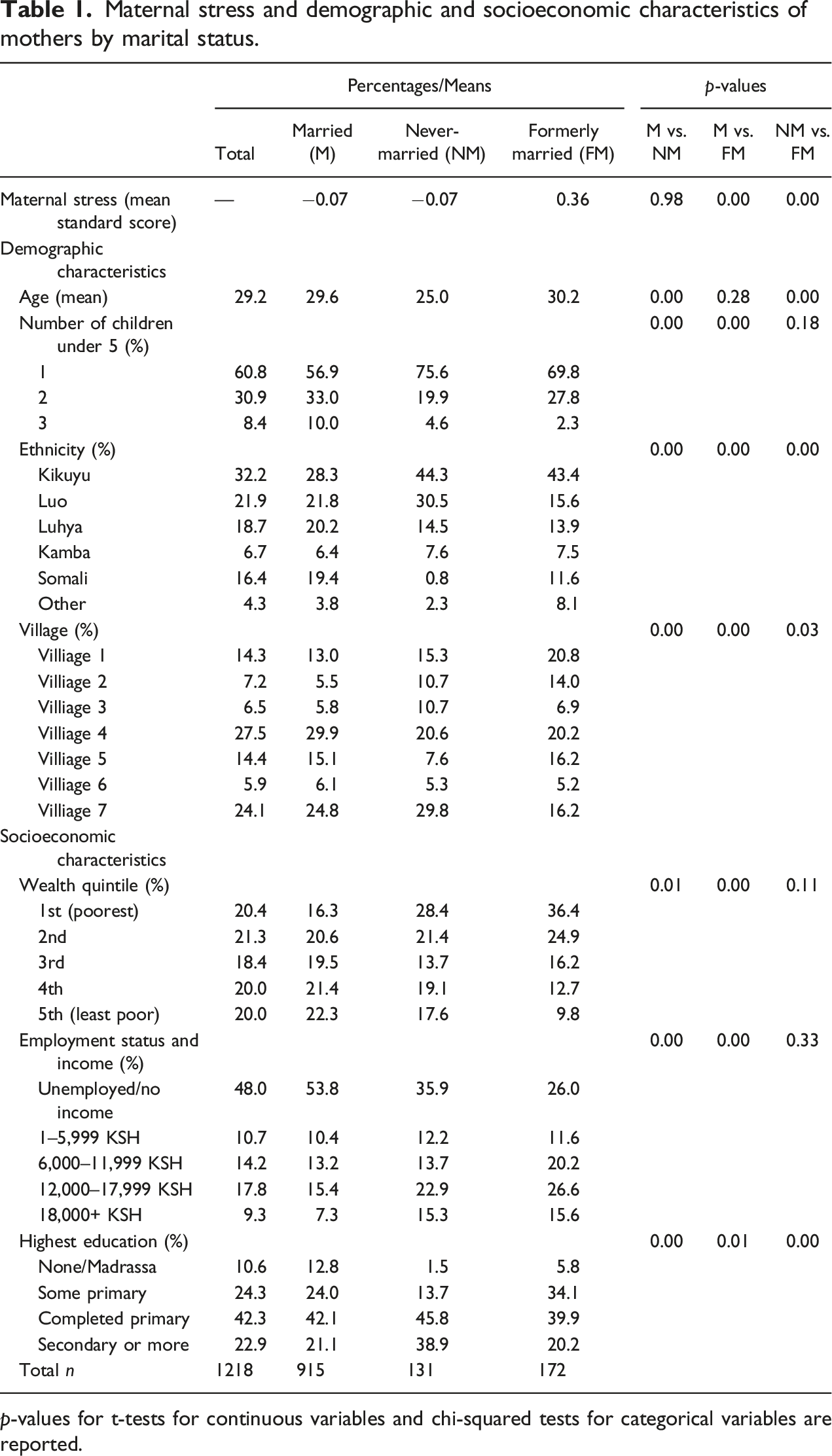
p-values for t-tests for continuous variables and chi-squared tests for categorical variables are reported.
Marital Status and Maternal Stress
OLS regression of maternal stress on marital status, adjusting for demographic and socioeconomic factors.
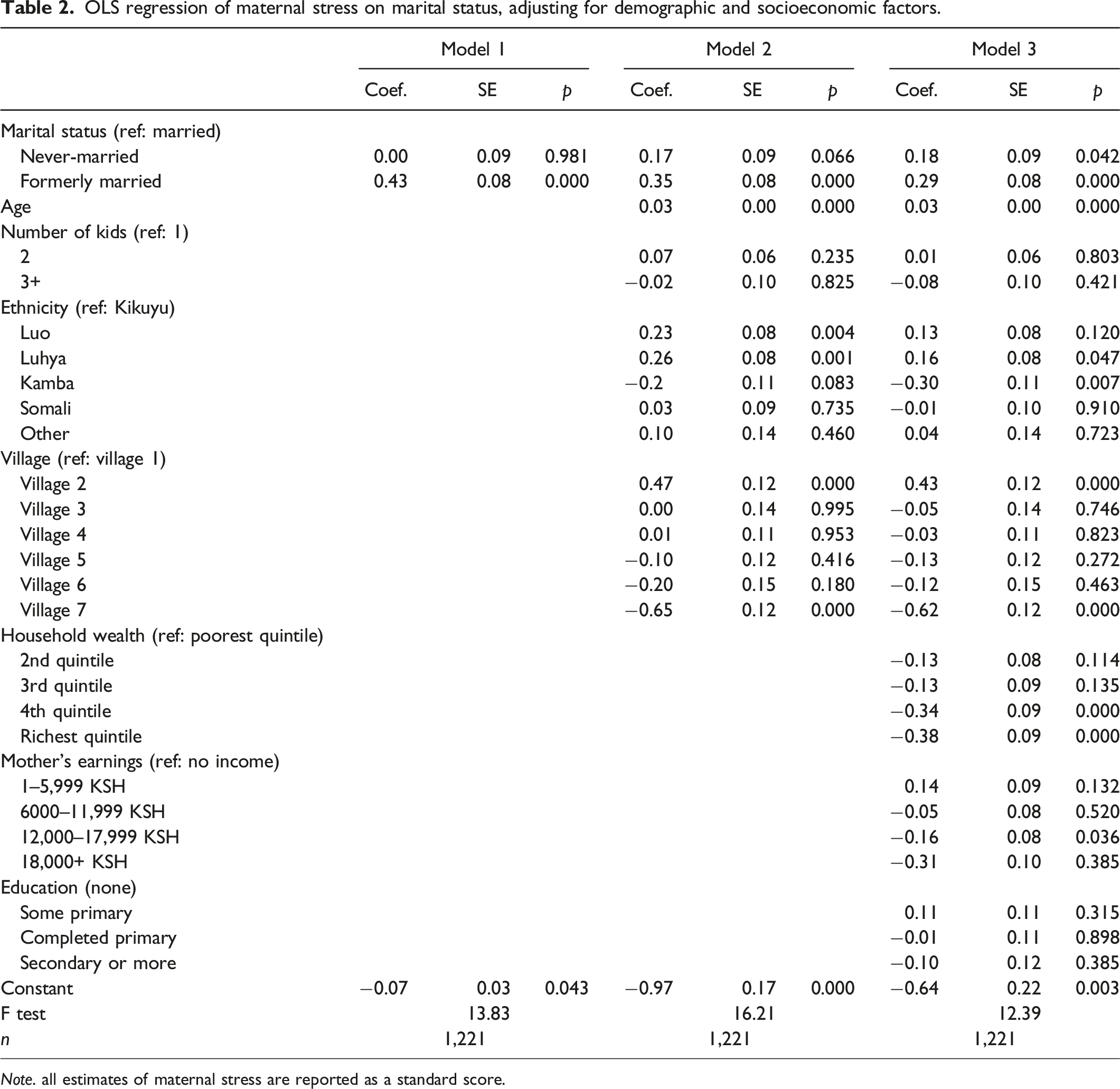
Note. all estimates of maternal stress are reported as a standard score.
Model 3 shows that adjusting for differences in socioeconomic status further lowers the coefficient for formerly married mothers, but formerly married mothers still report more stress than married women by approximately 0.29 standard deviations. Moreover, socioeconomic status does not help explain elevated stress among never-married mothers. In fact, while never-married mothers report less stress than formerly married mothers in Model 1, these differences disappear after controlling for socioeconomic factors in Model 3. Turning attention to the coefficients on the socioeconomic variables, as may be expected, mothers who live in wealthier households report less stress than mothers in poorer ones. However, differences are only observed between the lowest quintile and the two highest quintiles. Similarly, compared to unemployed women, maternal stress is lowest among women who earn at least 12,000 KSH per month (approximately $112 USD). However, mothers earning less than 6,000 KSH report somewhat higher stress levels relative to mothers who are not engaged in paid work, potentially suggesting that low-paid work itself may be a source of stress.
Marital Status and Social Support
The findings from Table 2 suggest that factors beyond single mothers’ demographic and socioeconomic characteristics may contribute to their elevated stress. Here, we turn our attention to the role of social support. In Figures 1 and 2, we first examine whether single mothers receive less assistance with child care or financial support and how the source of support (fathers or other kin) differs by marital status. Interestingly, never-married mothers (54.2%) are more likely than either married (41.4%, p = 0.005) or formerly married (38.2%, p = 0.007) mothers to receive any help with child care. Married and formerly married are equally likely to receive child care support (p = 0.647). Nonetheless, the source of support differs by marital status. Kin alone provide child care assistance for 54.2% of never-married mothers and 37.0% of formerly married mothers (p = 0.002), but to only 16.9% of married mothers (p < 0.001 compared to both never- and formerly married mothers). Conversely, a fifth of married mothers (20.5%) receive child care support from the fathers compared to less than 2% for either never-married (p = 0.000) or formerly married mothers (p=0.000), who report similar levels of paternal support (p = 0.217). Percentage of mothers receiving child care assistance by marital status. Percentage of mothers receiving financial support by marital status.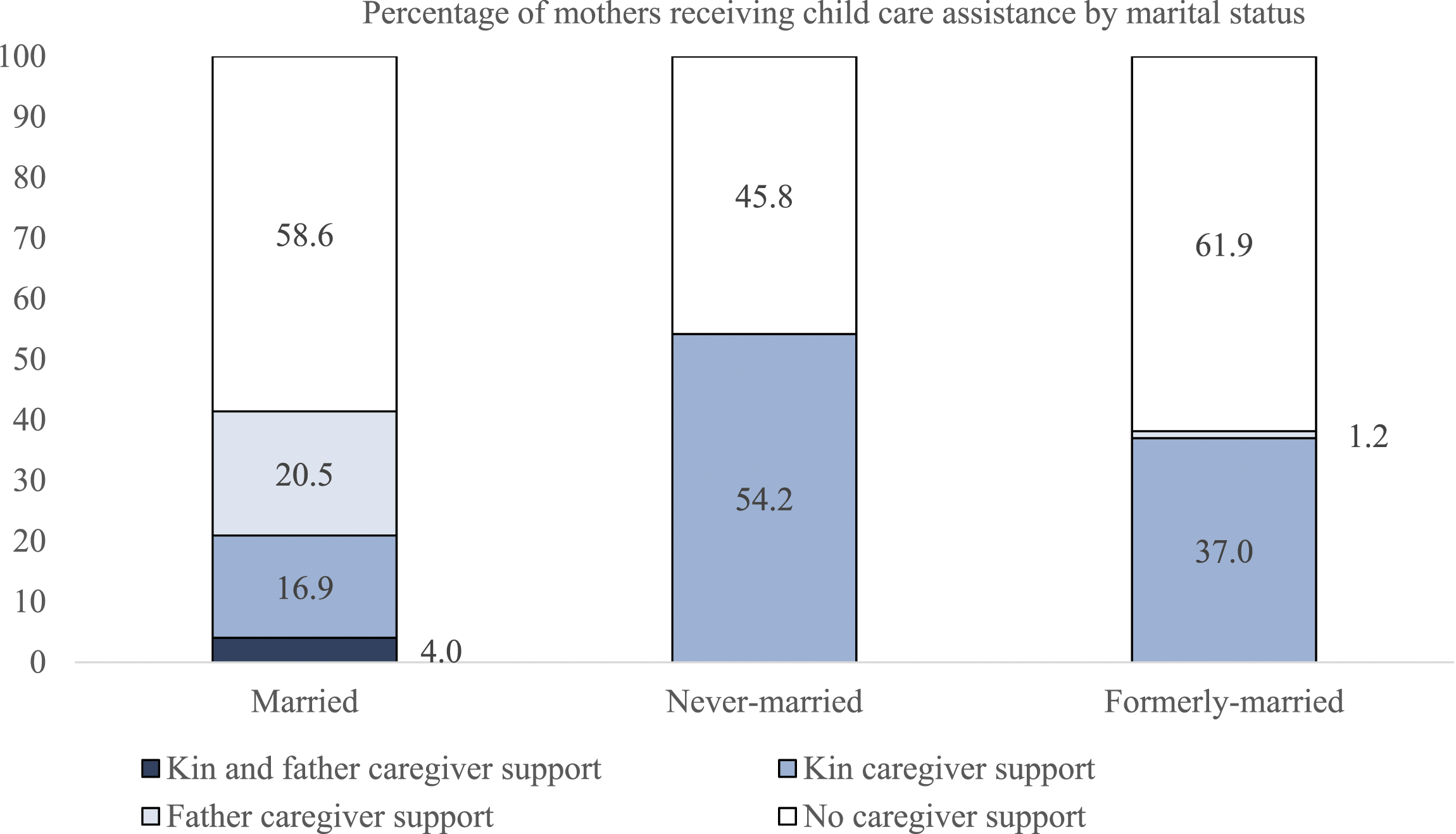
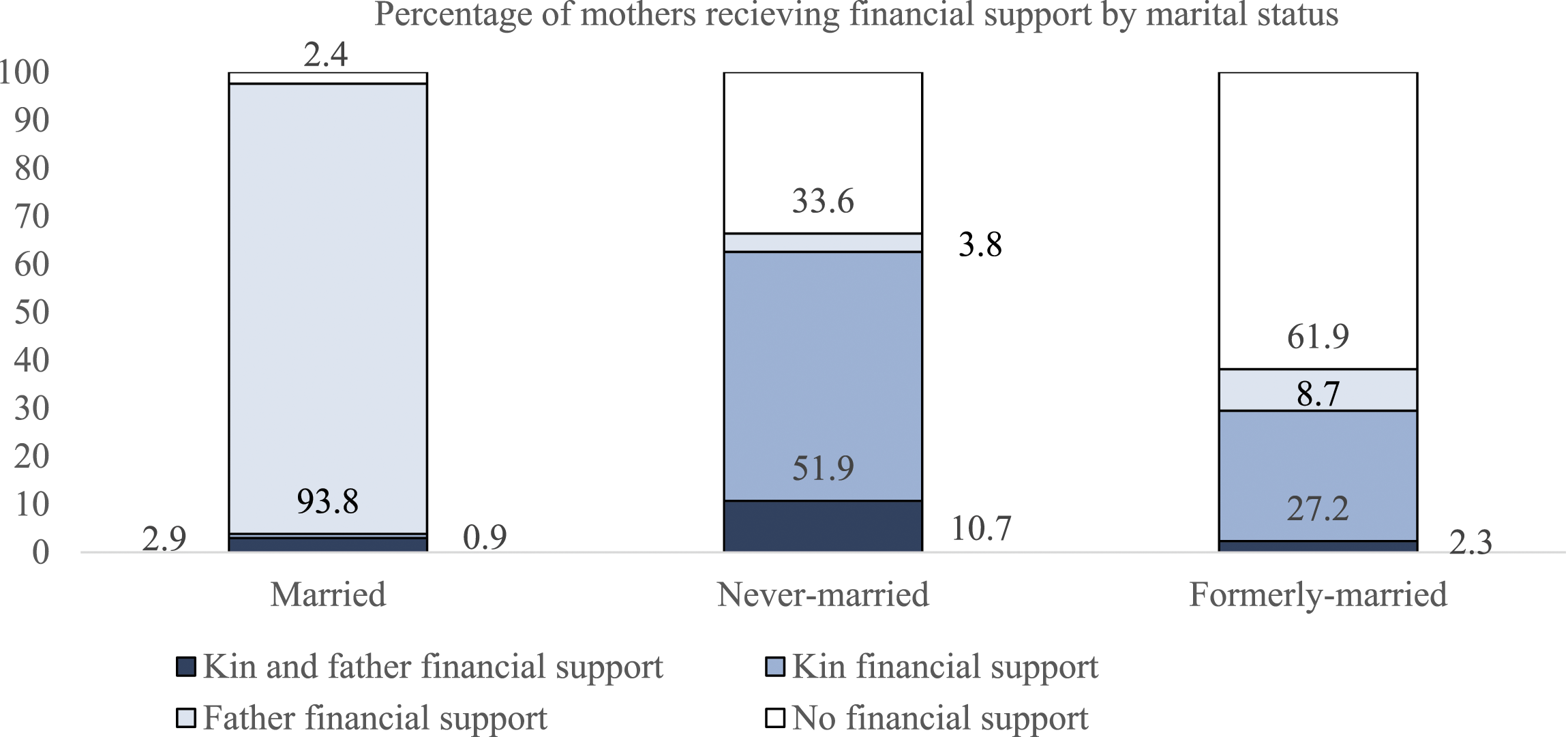
Financial support by marital status exhibits a strikingly different pattern (Figure 2). Virtually all married mothers (93.8%) report receiving financial support from the child’s father. In contrast, never-married (3.8%) and formerly married (8.7%) are equally unlikely to receive financial assistance from the child’s father (p = 0.358). As with child care, kin are more likely to provide financial support to never-married mothers (51.9%) or formerly married mothers (27.2%) than married mothers (0.9%, p < 0.001). Yet, despite the increased financial assistance from kin, single mothers are more likely than married mothers to bear the economic burden of raising children alone. This deficit in financial support is especially pronounced among formerly married mothers; nearly two-thirds of formerly married mothers (61.9%) do not receive economic support from either the child’s father or their kin, whereas two-thirds of never-married mothers (66.4%) report some source of financial support (p = 0.000).
Social Support and Maternal Stress
OLS regression of maternal stress on marital status, adjusting for caregiving and financial support.
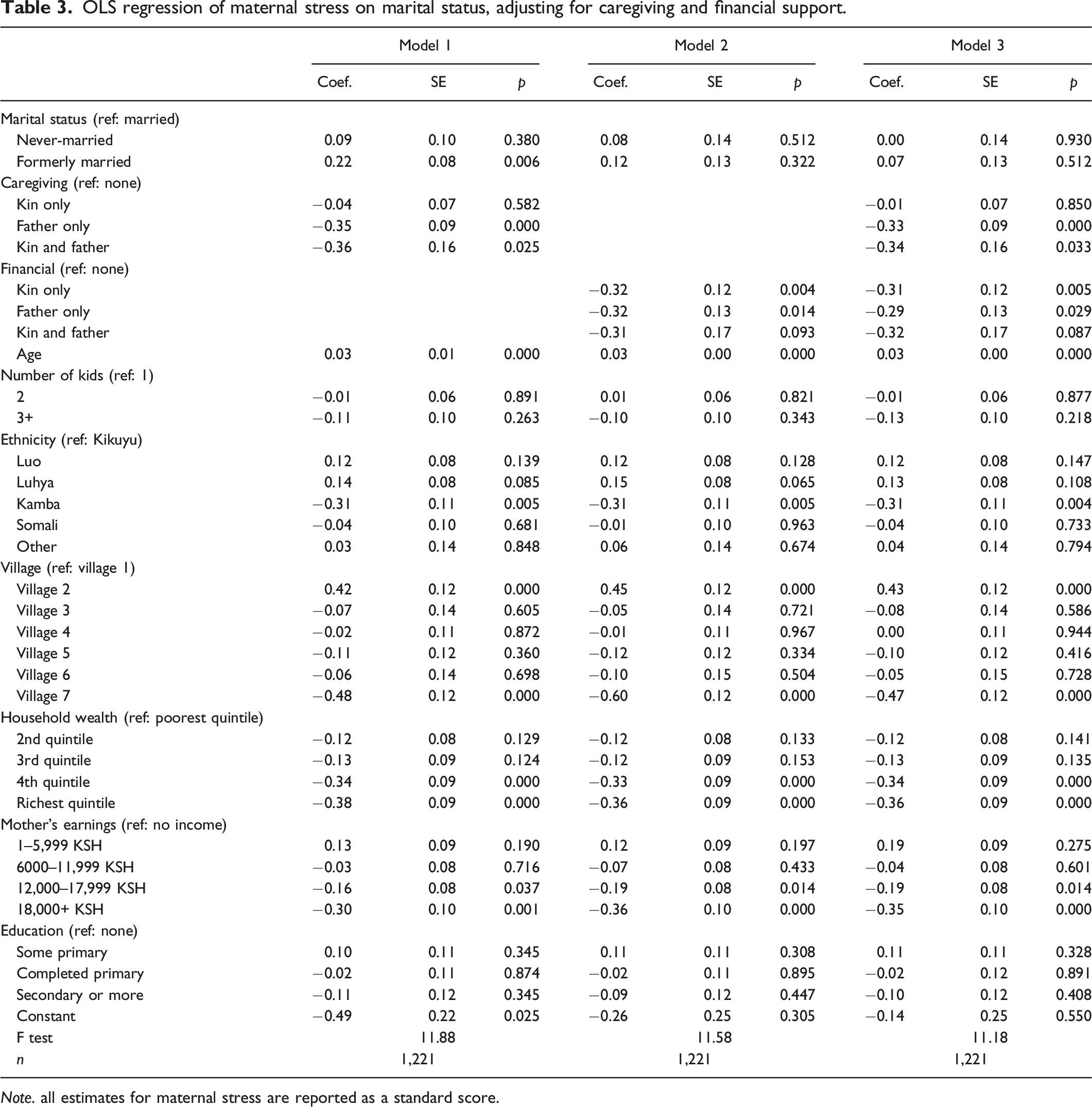
Note. all estimates for maternal stress are reported as a standard score.
Model 2 shows that irrespective of where it comes from, financial support is associated with lower levels of maternal stress. Controlling for financial support substantially diminishes stress differentials across marital status. In other words, for both never-married and formerly married mothers, lower levels of financial support appear to largely explain their higher levels of stress. In the final model (Model 3), we control for both child care and financial support. Interestingly, controlling for both has little impact on the magnitude of their respective coefficients, suggesting that the beneficial effects of both child care and financial support operate independently of one another. After controlling for differences in both the level and source of child care and financial support, there are no appreciable differences in maternal stress by marital status.
Discussion and Conclusions
This paper examines factors that may alleviate or exacerbate the stress experienced by mothers raising young children in informal settlements in sub-Saharan Africa. We pay particular attention to differences in maternal stress by marital status as previous studies suggest that single mothers often experience elevated risks of psychological strain but offer few insights into the factors that contribute to their stress (Clark et al., 2020; Husain et al., 2016; Uriyo et al., 2013). In so doing, this study makes three main contributions.
First, our study is the first to highlight the elevated strain single mothers, particularly those who are formerly married, face raising children in informal settlements in Africa. Further, consistent with research in the West and a handful of studies in non-slum areas of Africa (Colton et al., 2015; Deyessa et al., 2008; Umberson et al., 2013), our results suggest that single mothers’ higher stress is not primarily driven by their lower socioeconomic status. In fact, never-married single mothers are partially protected from stress by their younger age and potentially by their higher education level.
Second, this study expands prior research conducted primarily in Western contexts by examining the relationship between social support and stress by marital status (Berkman & Glass, 2000; Meadows, 2009; Rousou et al., 2016; Widan & Greeff, 2019). Perhaps nowhere is this inquiry more critical than in the burgeoning slum areas, where many mothers leave behind close kin networks in search of work and have virtually no compensatory institutional support. Yet, to our knowledge there are no prior studies which examine differences in social support by marital status in this context. We show that, in contrast to Western societies (Mallette et al., 2020; Mazelis & Mykyta, 2011), kin rather than fathers are most likely to provide assistant to mothers. Kin assistance with child care is particularly high for never-married mothers, resulting in never-married mothers being the most likely to have help with child care. In contrast, fathers essentially only provide child care if they are in a union with the child’s mother. A different pattern emerges with respect to financial support. Married mothers are 1.6 times as likely as never-married mothers and 2.6 times as likely as formerly married mothers to receive financial support. While married mothers depend almost exclusively on fathers for financial support, only about 15% of never-married and 11% of formerly married mothers receive economic support from the child’s father (alone or with kin). These findings highlight the economic precarity of single motherhood even when kin assist with child care.
Third, previous research has not investigated whether the level or source of support matters in alleviating stress among single mothers. Receiving financial support from either fathers or kin lowers maternal stress by about a third of a standard deviation. Lower levels of financial assistance from fathers are largely responsible for the greater stress found among single mothers. Further, although receiving child care assistance from fathers reduces maternal stress, child care from kin does not.
This finding may reflect a potential limitation of this study. While our study generally finds that support mitigates mothers’ stress, it is also possible that fathers and kin are responding to mothers’ distress by providing more help, which would result in a positive association. These potential countervailing effects may explain why we failed to find an association between kin child care support and maternal stress. If the relationships between maternal stress and support are bidirectional, our estimates of the beneficial effects of social support are likely conservative. A second limitation of this study is that it relies on self-reported indices of stress derived from the GHQ-12. As with all self-reported measures of mental well-being, our measure of stress reflects self-perceptions and may be biased.
Another limitation is the sizeable proportion of women we were unable to locate at the time of our survey. Although the NUDHSS serves as a valuable sampling framework to identify potentially eligible respondents, many of these women (n = 521) had moved in the five-month interval between enumeration in the NUDHSS and our survey. This is likely driven by the high levels of circular migration common to informal settlements. Previous studies estimate that about a third of slum residents between the ages of 15 and 30 leave annually and this pattern of circular migration is more intense for women than for men (Beguy et al., 2010). Other women likely moved within Korogocho, but we were unable locate their new residence. Outmigration is not random. For example, Kikuyus are less likely than members of other ethnic groups to leave and those with more education have higher levels of mobility (Beguy et al., 2010). How psychological stress may be related to mobility is not known. On the one hand, women experiencing considerable psychological strain may move to reduce their stress. On the other hand, women with poor psychological wellbeing may have diminished capacity to move. Hence, it is uncertain how the exclusion of these mothers may influence our findings.
Limitations notwithstanding, our findings offer novel insights into how policies and programs could benefit single mothers by compensating for mothers’ weaker support in urban slums. Policies aimed at strengthening institutional safety nets for single mothers in slum settings, principally those that improve single mothers’ financial security, would be most valuable. Offsetting the cost of living through targeted subsidies, such as those for housing, has been a central focus in slum policy, but few of these policies specifically target single mothers who are overrepresented in the most inadequate shelter (Bah et al., 2018; UN Habitat, 2010). Providing affordable child care in slums is a newer and potentially promising policy direction. One recent study found a high demand among slum-dwelling mothers for center-based child care, but that costs of formal care were a deterrent for their use (Clark, De Almada, et al., 2018). Several mothers noted that having access to safe and reliable child care substantially reduced their daily experiences of worry and anxiety.
The study also points to the importance of enforcing laws requiring fathers to financially support their children, regardless of their relationship status with their children’s mother. Although many African countries, including Kenya, have family maintenance policies and laws, the programs have had limited success due to weak institutional implementation structures and paternal poverty (Abdullah et al. 2020; Laird 2011). Enforcing paternal support would require a focus on these structural stumbling blocks. Another promising avenue may be to put money directly into mothers’ hands through child care grants. South Africa’s child support grants are a promising example of how social assistance alleviates poverty and protects households from economic shocks, and have been especially beneficial for single mothers (CASE 2000; Triegaardt 2005). Improving single mothers’ financial security through grants or family maintenance, or by indirectly offsetting their housing or child care costs could be essential in reducing the psychological burden of raising young children in challenging urban environments.
Footnotes
Appendix
OLS regression of maternal stress on marital status, adjusting for demographic and socioeconomic factors (all children under age 5). Note. Model 2 controls for demographic factors; Model 3 controls for demographic and socioeconomic factors. All models are clustered at the mother level.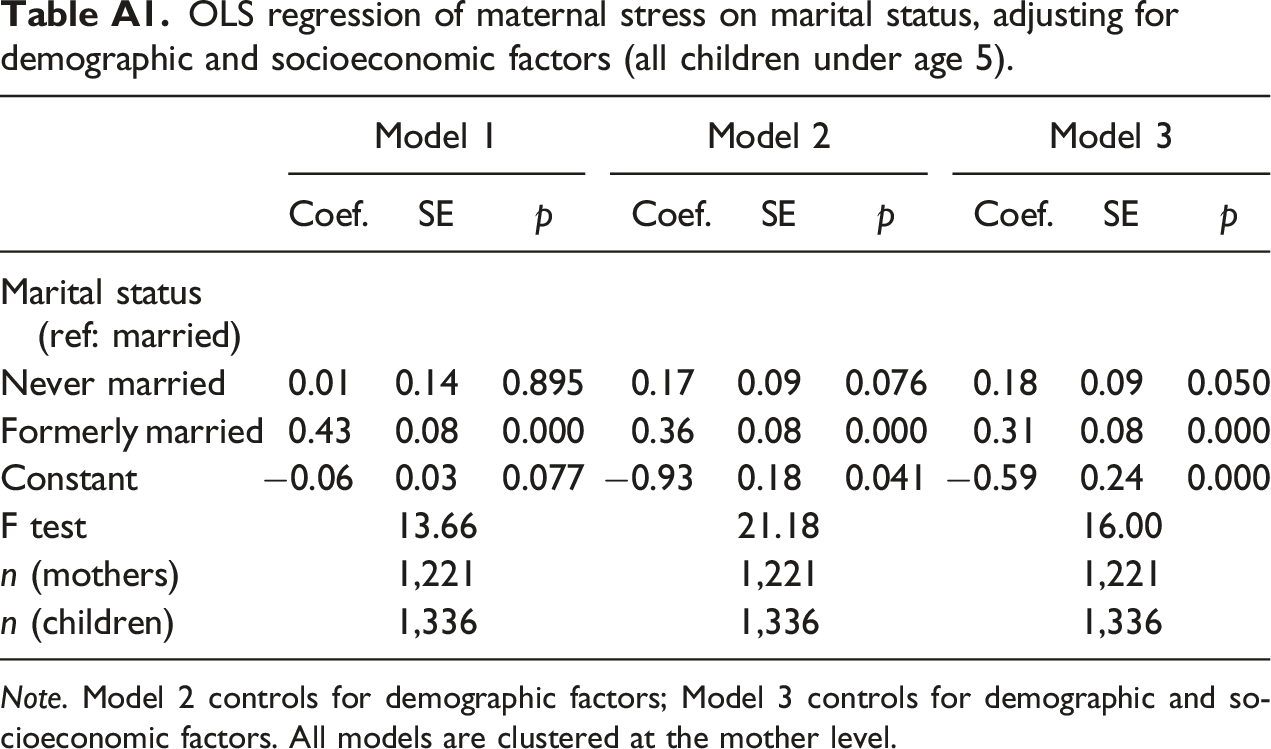
Model 1
Model 2
Model 3
Coef.
SE
p
Coef.
SE
p
Coef.
SE
p
Marital status (ref: married)
Never married
0.01
0.14
0.895
0.17
0.09
0.076
0.18
0.09
0.050
Formerly married
0.43
0.08
0.000
0.36
0.08
0.000
0.31
0.08
0.000
Constant
−0.06
0.03
0.077
−0.93
0.18
0.041
−0.59
0.24
0.000
F test
13.66
21.18
16.00
n (mothers)
1,221
1,221
1,221
n (children)
1,336
1,336
1,336
OLS regression of maternal stress on marital status, adjusting for caregiving and financial support (all children under age 5). Note. Models control for demographic and socioeconomic factors and are clustered at the mother level.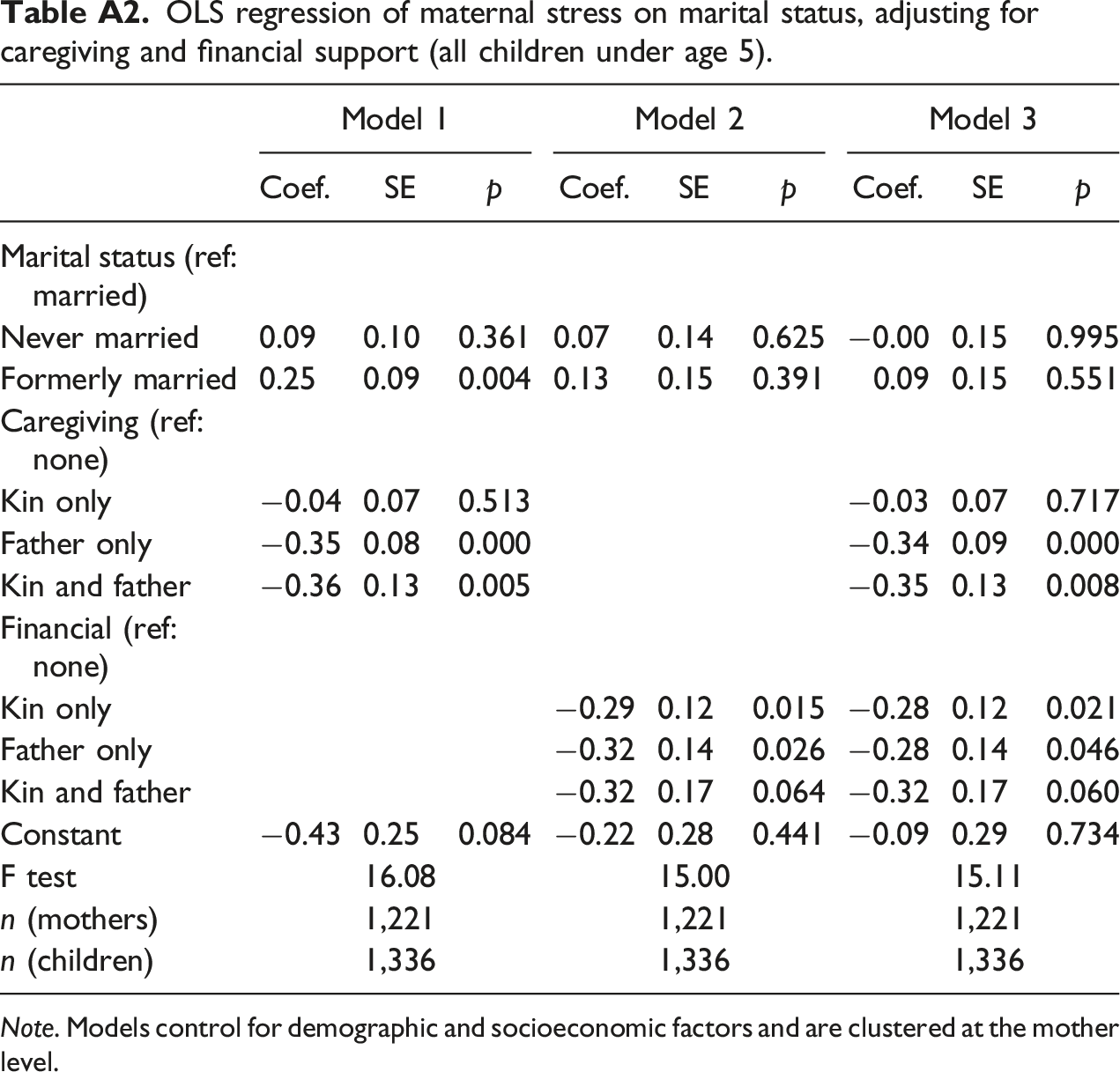
Model 1
Model 2
Model 3
Coef.
SE
p
Coef.
SE
p
Coef.
SE
p
Marital status (ref: married)
Never married
0.09
0.10
0.361
0.07
0.14
0.625
−0.00
0.15
0.995
Formerly married
0.25
0.09
0.004
0.13
0.15
0.391
0.09
0.15
0.551
Caregiving (ref: none)
Kin only
−0.04
0.07
0.513
−0.03
0.07
0.717
Father only
−0.35
0.08
0.000
−0.34
0.09
0.000
Kin and father
−0.36
0.13
0.005
−0.35
0.13
0.008
Financial (ref: none)
Kin only
−0.29
0.12
0.015
−0.28
0.12
0.021
Father only
−0.32
0.14
0.026
−0.28
0.14
0.046
Kin and father
−0.32
0.17
0.064
−0.32
0.17
0.060
Constant
−0.43
0.25
0.084
−0.22
0.28
0.441
−0.09
0.29
0.734
F test
16.08
15.00
15.11
n (mothers)
1,221
1,221
1,221
n (children)
1,336
1,336
1,336
OLS regression of principal components score of maternal stress on marital status, adjusting for demographic and socioeconomic factors. Note. Model 2 controls for demographic factors; Model 3 controls for demographic and socioeconomic factors.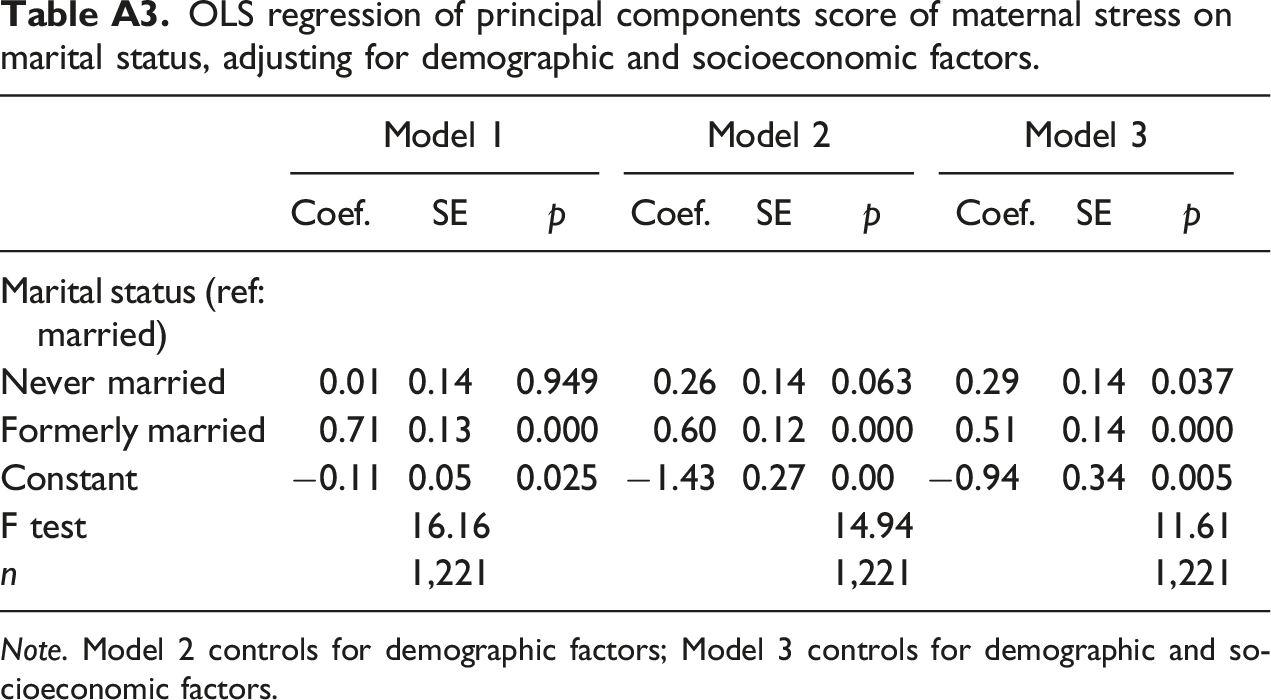
Model 1
Model 2
Model 3
Coef.
SE
p
Coef.
SE
p
Coef.
SE
p
Marital status (ref: married)
Never married
0.01
0.14
0.949
0.26
0.14
0.063
0.29
0.14
0.037
Formerly married
0.71
0.13
0.000
0.60
0.12
0.000
0.51
0.14
0.000
Constant
−0.11
0.05
0.025
−1.43
0.27
0.00
−0.94
0.34
0.005
F test
16.16
14.94
11.61
n
1,221
1,221
1,221
OLS regression of principal components score of maternal stress on marital status, adjusting for caregiving and financial support. Note. All models control for demographic and socioeconomic factors.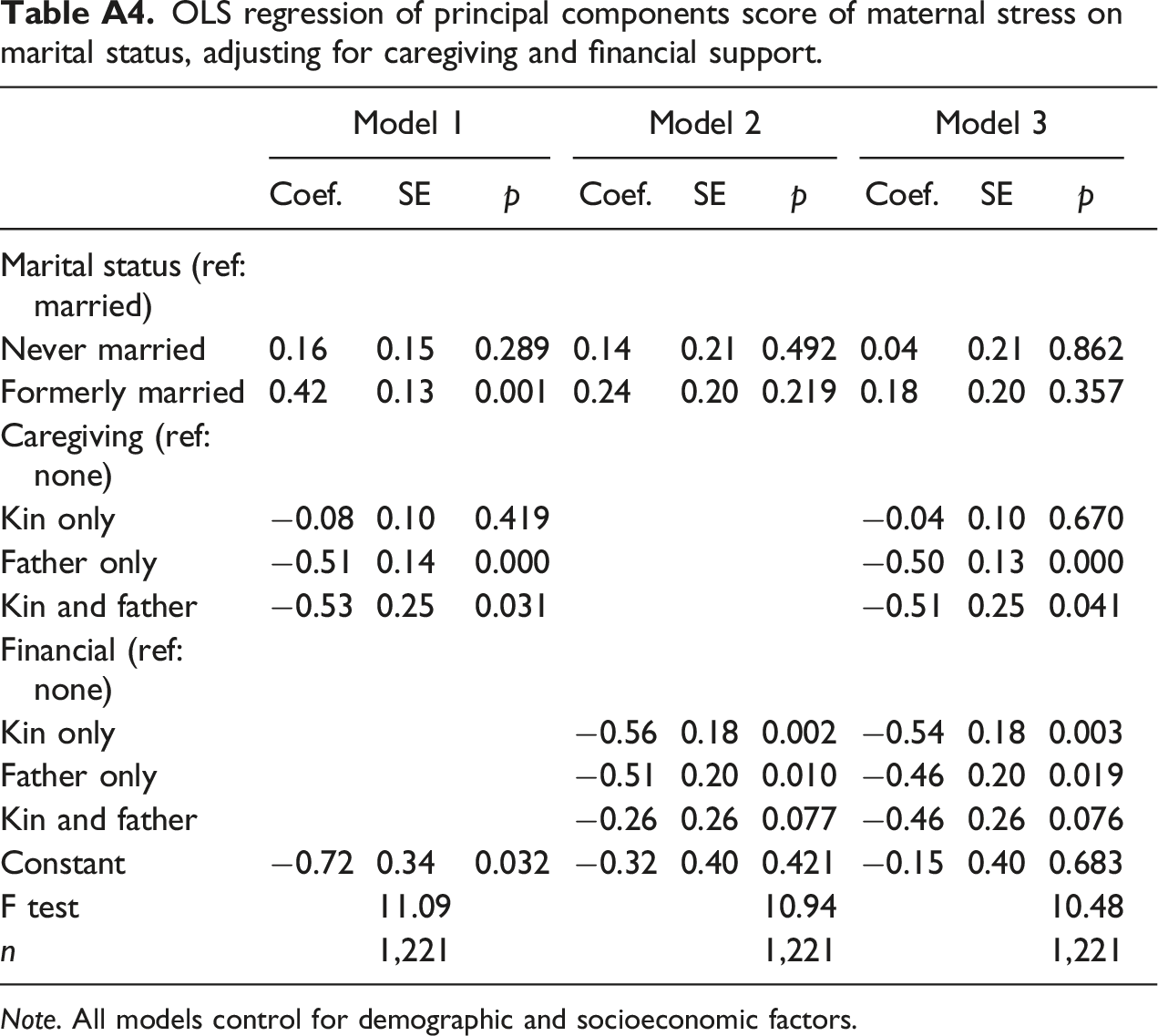
Model 1
Model 2
Model 3
Coef.
SE
p
Coef.
SE
p
Coef.
SE
p
Marital status (ref: married)
Never married
0.16
0.15
0.289
0.14
0.21
0.492
0.04
0.21
0.862
Formerly married
0.42
0.13
0.001
0.24
0.20
0.219
0.18
0.20
0.357
Caregiving (ref: none)
Kin only
−0.08
0.10
0.419
−0.04
0.10
0.670
Father only
−0.51
0.14
0.000
−0.50
0.13
0.000
Kin and father
−0.53
0.25
0.031
−0.51
0.25
0.041
Financial (ref: none)
Kin only
−0.56
0.18
0.002
−0.54
0.18
0.003
Father only
−0.51
0.20
0.010
−0.46
0.20
0.019
Kin and father
−0.26
0.26
0.077
−0.46
0.26
0.076
Constant
−0.72
0.34
0.032
−0.32
0.40
0.421
−0.15
0.40
0.683
F test
11.09
10.94
10.48
n
1,221
1,221
1,221
Declaration of Conflicting Interests
The author(s) declared no potential conflicts of interest with respect to the research, authorship, and/or publication of this article.
Funding
The author(s) disclosed receipt of the following financial support for the research, authorship, and/or publication of this article: This work was supported by the Growth and Economic Opportunities for Women (GrOW) initiative. GrOW is a multi-funder partnership with the UK Government Department for International Development, the William and Flora Hewlett Foundation, and the International Development Research Centre, Canada.
