



Abstract
Early Life Family Care (ELFC) has so far neglected the needs of migrant families, partly due to professionals’ lack of transcultural knowledge required to address these specific needs. Simultaneously, migrants face employment barriers, including the non-recognition of qualifications and competences. The EU-funded project addressed both these issues by developing an ELFC mentoring training scheme for migrants, who can use their existing and acquired competences to co-operate with parents in challenging transition phases (e.g. becoming new parents). The article discusses one key pillar of the project: the development of a ‘competence profile’. This involved identifying both, ELFC needs of families, which can be addressed by mentoring, as well as the corresponding competences required by mentors. For this purpose, 25 semi-structured interviews with ELFC professionals and migrant parents were conducted. The results show migrant families’ need for skilled support in the management of administrative, interface, relationship, participation and boundary issues.
Keywords
Introduction
Article 25 of the Universal Declaration of Human Rights recognises health as a fundamental right of every human being, regardless of race, religion, political belief, economic or social condition (UN, 1948). The World Health Organization (WHO) has defined health ‘as a state of complete physical, mental and social well-being, and not merely the absence of disease or infirmity’ (WHO, 1946, p. 2). However, the rights and definitions outlined by these international organisations bear little relationship with the reality international migrants in general, and migrant families in particular, face today. The situation of migrant populations across the globe highlights the fact that health risks and negative outcomes affect disproportionately this socially and economically vulnerable group. Migrants and refugees are particularly disadvantaged as they suffer from intersectional discrimination due to prolonged phases of uncertain asylum status in the country of arrival, the associated lack of financial means, barriers to acquiring language competences and cultural misunderstandings. In addition, they are often affected by traumatic experiences, which occurred in their country of origin, as well as en route to their destination (European Parliament, 2019; Kühner & Paulus, 2017).
Within the heterogeneous group of migrants, it is children and mothers who are especially exposed to risks. Although ‘giving all children a healthy start in life’ continues to be a key topic in the public health discourse of European countries, migrant and refugee children often remain neglected and face unsurmountable barriers to healthcare (WHO, 2018). Concerning migrant mothers, evidence demonstrates that this group is disproportionately affected by maternal morbidity and mortality (European Parliament, 2019). In fact, barriers to health care are particularly apparent in two main transition stages in migrants’ life course:
a) at the stage from living as a couple to becoming parents. Migrants, who have newly or recently arrived in their host country, tend to experience this important change in life in a cultural context largely unfamiliar to them, thus undergoing a double transition (Kühner & Paulus, 2017; Malebranche, Nerenberg, Metcalfeb, & Fabreaua, 2017; Heslehurst, Brown, Pemu, Coleman, & Rankin, 2018)
b) at the stage from economic inactivity (or underemployment) to labour market participation, in which migrants’ knowledge and skills remain often unrecognised (OECD, 2020).
The EU–funded project ‘Transcultural Open Badge Platform for Migrants’ transition mentoring in Early Life Family Care’ (TOBP) aims to address these two broad transition challenges in an integrated way. It does so first, by developing training modules for migrants in order to strengthen their skills in ‘transition mentoring’ newly arrived migrant families with young children, who are in need of Early Life Family Care (ELFC)’s health and social services. And, second, by contributing to the provision of accessible, high quality ELFC for migrant families through the training of the ‘transition mentors’ referred to above, who distinguish themselves by their transcultural action competences, and their approach of working with parents in a culturally sensitive partnership towards shared ELFC goals (Urban, Vandenbroeck, Lazzari, Van Laere, & Peeters, 2012). Third, in this process, TOBP aims to promote the recognition (i.e. the acknowledgement and validation) of prior knowledge of minority cultures.
As illustrated in Figure 1, there are five distinct steps to the project to arrive at these goals: first, a literature review on the key transition challenges, which migrant families face on arrival in the new country. Second, the development of a transcultural transition mentoring competence profile (TTMCP), on which subsequent training modules are based. These modules are to ensure that training participants acquire the key competences relevant for supporting migrant families when they face the challenges identified in the first step. Once this training has been completed, the resulting and formally assessed competences will be recognised through Open Badges – that is, portable, digital certifications, which will be explained in more detail below. Participants can then take on the role of an Transcultural open badge platform for migrant’s five steps towards facilitating transcultural transition mentoring.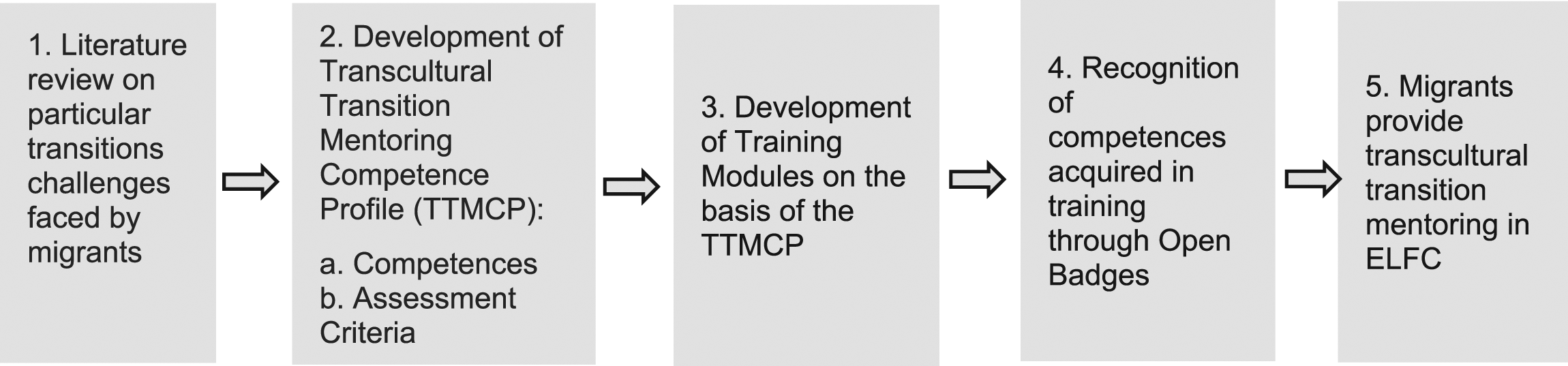
This article explains the development of the TTMCP, as well as the principles on which this process has rested. The article, first, provides the key findings of the literature review on migrants’ particular transition challenges, which require adequate support (Step 1 referred to above). The paper turns, second, to the development of the TTMCP, its aims and recognitional base, as well as the methods employed (Step 2 referred to above). Third and finally, the article provides an overview of the key components of the TTMCP, and illustrates the profile with examples of competences and assessment criteria.
Migrants’ Particular Transition Challenges
The Double Transition From Coupledom to Parenthood in a New Country
Literature on migrant mothers often refers to this group’s vulnerability in the transition to parenthood. For example, migrant women face more risk factors in pregnancy than non-migrant women, including previous miscarriages or preterm births, obesity, hypertension, smoking, low levels of education, low occupational status, single mother status and depression. The cumulative effect of these risk factors appears to contribute to differences in pregnancy and birth outcomes between migrants and non-migrants. Migrants’ maternal, perinatal and neo-natal mortality rates are higher in comparison to non-migrants. The highly vulnerable group of refugees is particularly affected by these problems (Shortall, Taylor, Traianou, & Murwill, 2015; Trovato et al., 2016; Malebranche, Nerenberg, Metcalfeb, & Fabreaua, 2017; Heslehurst et al., 2018).
As concerns young children, they may have experienced in their families’ migration process significant trauma, stress and hardship (Park, Katsiaficas, & McHugh, 2018). Being in a critical life stage of their cognitive and socio-emotional development, such factors can severely affect these children’s future trajectories, including prospects for successful integration into a new society. Research shows that investing in early years provides the greatest potential for reducing health and social inequities, and has significant benefits for wellbeing at the individual, as well as societal level. The effects of these investments are noticeable well into adulthood, providing better outcomes in education, employability and social cohesion (Park et al., 2018; WHO 2014). It has been well-documented that such investments pay off economically as well as socially (World Bank Group, 2015). Hence, it is important to ensure that ELFC provisions are available and accessible also to the migrant and refugee populations, and that these services are sensitive to migrants’ and refugees’ needs and wishes, which are partly defined by their cultural backgrounds (European Parliament, 2019).
However, many European countries have been relatively unprepared to provide for the growing number of migrants, and few have formulated policies to make immigration a healthy and socially productive process. Although ELFC measures, such as health promotion and preventative services, often reach at least partially the group of long-established migrants, they tend to fail the increasing number of new arrivals, in particular refugees. Most programmes are tailored to the needs and wishes of families from the majority culture, and have a Eurocentric focus (Lebano et al., 2020; WHO, 2014). In general, migrants are less likely to use health promotion and disease prevention programmes than to seek medical care in emergency cases. Migrants often postpone care-seeking until a situation becomes critical, with the effect that problems are difficult to remediate. Documented as well as undocumented migrants face serious barriers to acquiring or exercising basic social rights, including access to health care (Lebano et al., 2020). Although language barriers also prevent newly arrived migrants from taking up services, another key challenge consists of professionals lacking the transcultural and culturally sensitive knowledge to meet those needs (Schuster, Desiderio, & Urso, 2013; UN, 2016).
In other words, migrants and especially the vulnerable group of refugees face significant challenges in trying to achieve a smooth transition from coupledom to parenthood. Families with experiences of migration and flight, who have small children or newborn babies, still remain under-addressed and underserviced. A double-transition presents itself, as such new parents also have to grapple with the transition from a well-known culture left behind to a new, largely unfamiliar host culture. They now have to navigate co-existing cultural value systems and norms of the minority and majority society, which are not always compatible, and which extend to the area of parenting (Jentsch, 2020; Pantuček, 2001).
The Transition From Economic Inactivity to Adequate Employment
At the same time, migrants and refugees face significant barriers to employment. In 2019, the EU unemployment rate for people aged 20–64 years was 12.3% for those born outside the EU, 7.3% for those born in another EU Member State and 6.0% for the native-born population (Eurostat, 2020). Moreover, a substantial body of research shows that migrants with foreign qualifications face significant barriers to accessing employment commensurate with their skills (Martín et al., 2016; OECD, 2020). On OECD average, 27% of highly educated immigrants are not in employment, and a further 26% are formally overqualified for their job, meaning that they work in jobs that require a lower level of formal education than what they were educated for (OECD, 2020). This can partly be explained with the fact that migrants’ knowledge, skills and competences are rarely recognised in their host countries. Highly educated immigrants with foreign qualifications have lower returns to their education in terms of employment prospects and salaries than the native-born population with domestic qualifications, regardless of age, gender and field of study (Martín et al., 2016; OECD, 2020).
In other words, migrants are unable to gain access to adequate jobs. Within the European Bologna Process of lifelong and lifewide learning, and the support of national policies and funding in Europe, a wide range of recognition of prior learning (RPL) approaches have been developed. RPL is a process by which formal learning for recognised awards, informal learning from experience and non-formal learning for uncertified but planned learning (e.g. workshops/seminars that are uncertificated) are given academic recognition (Garnett & Cavaye, 2015; Sutherland & Martin, 2008). The RPL process can help discriminated individuals acquire a formal qualification that matches their knowledge and skills, and thereby contribute to improving their employability, mobility, lifelong learning, social inclusion and self-esteem. Therefore RPL and, above all, the extent to which credentials, qualifications, competences, knowledge and skills are valued in different contexts, is an important aspect of the integration process for migrants (Anderson, 2020; Garnett & Gavaye, 2015). The existing RPL Programmes notwithstanding, working towards the recognition of foreign qualifications and prior learning attained in the countries of origin remains the central migration issue in all post-industrial societies (ILO, 2020; Wanner, 2001).
The fact that this problem is slow to be resolved is partly rooted in a Western centric deficit model of cultural difference, in which knowledge, especially of people from less economically developed countries, is considered inferior and even invalid (Klein, 2018b). Certified skill-sets, for which it is difficult to find clear equivalents in the system of the country of arrival, are often lumped together in an ‘other’ unspecified category and are thereby devalued or rendered invisible (Klein, 2018a). The recognition and validation of knowledge and foreign credentials is thus highly racialised and discriminatory (Schuster, Desiderio, & Urso, 2013). This constitutes a main barrier to migrants’ access to the labour market, despite a demand for their labour (King & Lulle, 2016; Englmann & Müller, 2007). Recent studies provide clear evidence that where migrants are employed, they contribute substantially to the economic and social development in their host societies and to global wealth creation. They can help to respond to demographic challenges, labour shortages and other challenges in host societies, and add fresh skills, cultural knowledge and dynamism to economies (King & Lulle, 2016). Changing our deficit-orientated perspective, migrants and refugees are above all potential ‘knowledge carriers’ and ‘intermediaries’ to close those transcultural gaps, which cause transition barriers to employability and societal demarcations. (Liebig & Huddleston, 2014; Klein, 2021; OECD, 2017)
The TOBP Project: Meeting Families’ ELFC Needs and Recognizing the Prior Knowledge of Migrants
The TOBP project is based on the recognition that two key transition challenges for migrants occur in the phases from living as a couple to parenthood, and from economic inactivity to employment. These transitions place particular demands on migrants, as their cultural knowledge is widely viewed as different and less valuable. As explained above, this non-recognition, or even devaluation of knowledge, constitutes a significant barrier to accessing the labour market. At the same time, it prevents young migrant parents from availing themselves to ELFC services, or leads to them finding these health and social services inadequate for their needs. Parents’ values and wishes may be incompatible with service providers’ expectations, and may not build on parental strengths and resources. Hence, there exists a clear need for transcultural knowledge in ELFC in order to reach the neglected group of migrants and refugees. This skills gap in ELFC could be closed more easily if migrants were seen as potential knowledge carriers.
This is where the TOBP project departs from. The project’s multilayered recognition process aims to unpack existing but marginalised knowledge. The project comprises an integrated approach to addressing both, ELFC-needs of migrant families and the (certified) recognition of migrants’ cultural knowledge in an employment context. The latter occurs through a digital Open Badge platform. Open Badges are portable, digital certifications with embedded metadata, which display the badge holder’s competences, skills and achievements through transparent assessment criteria (Ehrenreich, Mazar, Rampelt, Schünemann, & Sood, 2020). The transnational recognition, validation and portability of these badges aim to promote social equity in a globalised world by extending recognition policies to all people, without mechanisms of power. Open Badges, therefore, recognise and certify prior learning, and the Open Badge Platform facilitates easily accessible, cross-border training. In the case of the TOBP project, this training will lead to a newly developed job-profile: the Transcultural Transition Mentor. Such mentors can assist people in their various transitions from one stage of life to another throughout their entire life-cycle – importantly also in migrants’ double transition from life as a couple to parenthood, and from a settled life in one country to a new life elsewhere (Klein, 2018a, 2021).
TOBP’s Aims and Recognitional Base
As such, the project pursues three goals. First, it aims to contribute to the provision of high quality ELFC for migrant families through transition mentors, who distinguish themselves by their transcultural action competences, and their approach of working with parents in a culturally sensitive partnership towards shared ELFC goals (Urban et al., 2012).
Second, the project aims to promote the employability of migrants through easily accessible training in transcultural mentoring in the field of transcultural ELFC. The contents and format of this training is based on a TTMCP developed by the project. Through the training provided in additional project modules, participants acquire key competences relevant for supporting recently arrived migrant families in different transition phases. Once the training has been completed, and the resulting competences have been recognised and certified through Open Badges, participants can take on the role of an
Thirdly, in this process, TOBP aims to promote the recognition (i.e. the acknowledgement and validation) of prior knowledge of minority cultures: • prior learning (formal, non-formal and informal knowledge achievements) in cultural contexts different from the host society’s majority culture to boost migrants’ employability and active citizenship • other/foreign cultural concepts, values and images of human life and human development (e.g. family structures, parenting roles and childhood concepts) to foster social cohesion in post-industrial societies.
The key focus of the transcultural open badge platform for migrants is thus on giving recognition to prior learning, which has taken place in other cultural contexts. This idea is not enacted in formal, institutionalised assessment systems – prolonging postcolonial power mechanisms and at risk of devaluing foreign knowledge – but in more non-formal and informal processes, where prior learning is made visible and gains recognition with an Open Badge as recognitional outcome. Recognition, as a vital human need and anthropological constant, is a multilayered process, which also focuses on the subjects of recognition, for example, the discriminated migrants and refugees. Departing from the individual and their cultural experiences and competences implies different processes and results than starting from professional regulations and institutional requirements (Anderson, 2020). Recognition empowers the subject whose competences have been recognised, strengthens mutuality, equality and the emancipatory idea of a respectful and appreciative regard of the other in all inter-personal situations (Honneth, 2018).
The TTMCP outlined in this article aims to draw out and make visible prior learning and knowledge, which is largely unfamiliar to the majority culture of the receiving country. It rests on the understanding that qualified transition mentoring can contribute to closing the skills and opportunity gaps in ELFC. Such mentoring guides can assist people, for example, in the ‘double transition’ from life as a couple to parenthood, and from a settled life in one country to a new life elsewhere (Klein, 2018a, 2021). Moreover, migrants can be empowered through transition mentoring training and the certified recognition of their skills through the Open Badge system. Migrants can thus experience support in their transition to employability in their host country.
Methods Used to Develop the TTMCP
A main challenge in the development of the competence profile consisted of unlocking migrants’ frequently hidden, marginalised or devalued knowledge of minority cultures. Addressing these issues required a paradigm shift. The project thus adopted a Participatory Action Research (PAR) approach, which has collaboratively included the target group of migrant parents and ELFC-professionals as ‘experts of their own cases’. For PAR, the primary underlying assumption comprises that the participation of those, whose work or life are the subject of the study, fundamentally affects all aspects of the research and design. The engagement of all people involved is the hallmark of PAR, recognizing the value of each person’s contribution in co-creation processes (Bergold & Thomas, 2012; ICPHR, 2013).
The Case Study-Approach (Klein, 2019; Yin, 2014) was employed for data collection and analysis. Its story-telling frame captures marginalised people’s (life)stories about health and social care, as well as their culturally different perspectives on enriching predominant knowledge and practice. Based on this approach, 25 semi-structured interviews were conducted, five in each of the countries included in the study (Austria, Finland, Germany, Kosovo and Switzerland). In the data analysis process, important lessons could be identified concerning the key transition phases of migrant families, in which mentors require particular competences to assist them. These competences were taken up in the TTMCP. The following section provides an overview of the profile.
An Overview of the TTMCP
In participatory recognition practice, it is important to achieve a comprehensive view of competences, containing formal, non-formal and informal learning aspects, and which includes the subject of recognition: in our case migrants, who carry important knowledge, and who will become Transition Mentors. So, the
The Structure of the Profile: Three Domains of (Action) Competence
The concept of ‘competence’ needs to be unpacked. According to the European Qualification Framework ‘competence means the proven ability to use knowledge, skills and personal, social and/or methodological abilities, in work or study situations and in professional and personal development’ (ESCO, 2018). Other frequently referred to definitions of competence (including personal and social competence) also rest on the key pillars of knowledge, skills and attitudes (Downing et al., 2011; NZFH, 2014; Tippelt, 2018), as represented in Figure 2, which also chimes with learning journeys of cultural competence (AGOV, 2010; Slimbach, 2005). Domains of action competence. Source: own construction.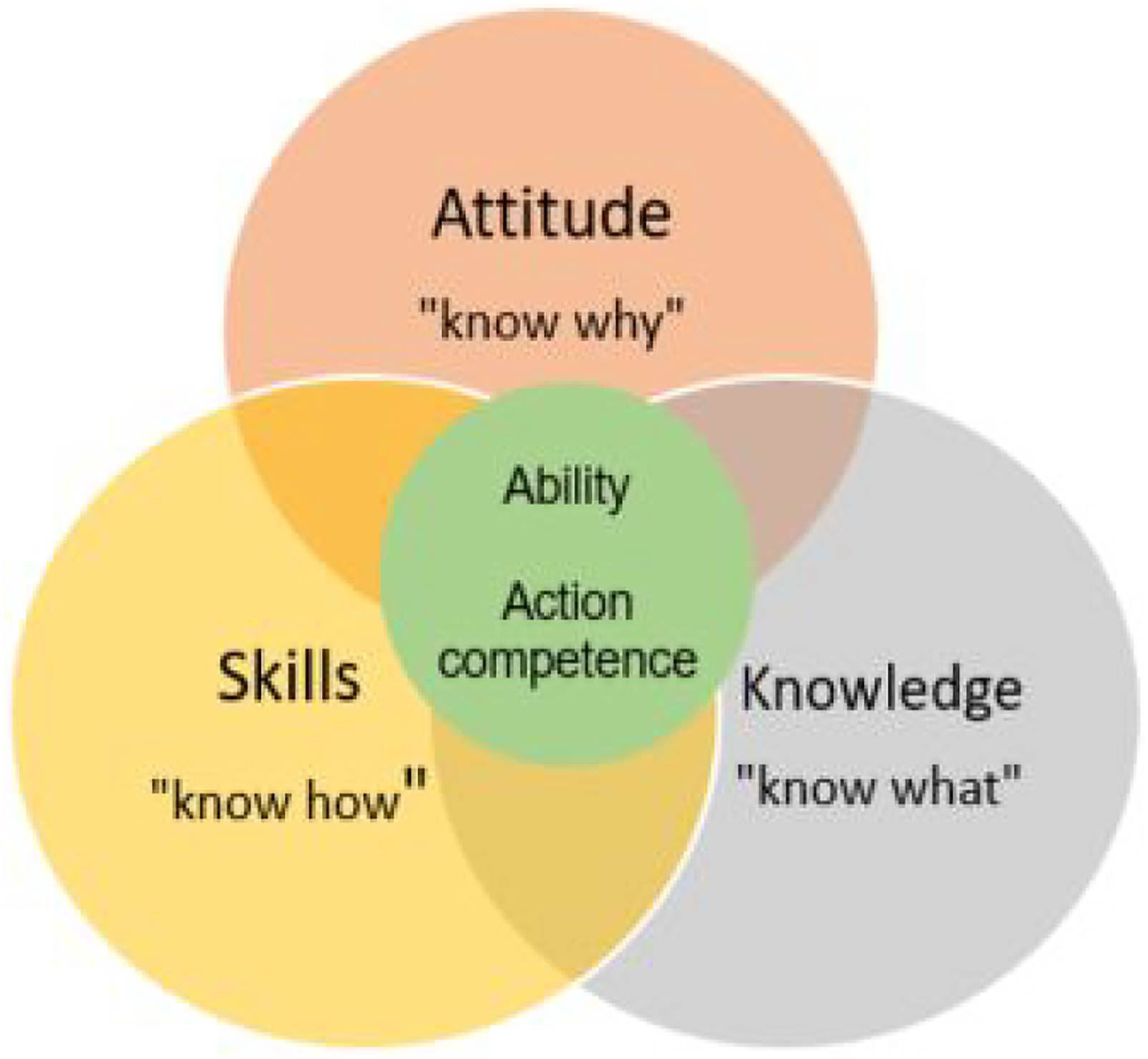
‘Action competence’, or ‘ability’, can be defined as the intersection between knowledge, skills and attitudes. The domain ‘knowledge’ refers to theoretical and factual knowledge about an area of concern, that is, knowing what needs to be done. The domain ‘skills’ relates to the use of knowledge, that is, knowing how to perform a required activity. Finally, the domain ‘attitude’ refers to the values, beliefs and emotions underpinning personal habits and dispositions, that is, knowing why particular activities are to be undertaken. The model is dynamic as ‘ability’ requires a flexible and open processes of reflexively considering, reconsidering and exploring the scope of action as appropriate in different cases (Baartman & de Bruijn, 2011). As such, ‘ability’ reflects not only certain knowledge, skills and attitudes, but also the demonstrated ability to reflexively apply the three domains, so that ability equates with action competence.
Transcultural Transition Mentoring: Examples of Competences and Assessment Criteria
The research analysis (of which some findings have been published in more depth elsewhere (2020 source withheld for anonymous review)) revealed four transition phases, which are essential to bridging service gaps and cultural division. These phases occur at migrant families’ arrival: • in the receiving country, when their immediate material and practical needs must be met • at an unfamiliar set-up of social and health care services, which need to be navigated • in a ‘new’ society as parents with newborn and/or young children • in a ‘new’ social and political citizenship setting, when membership of and active engagement with the collectivity become relevant.
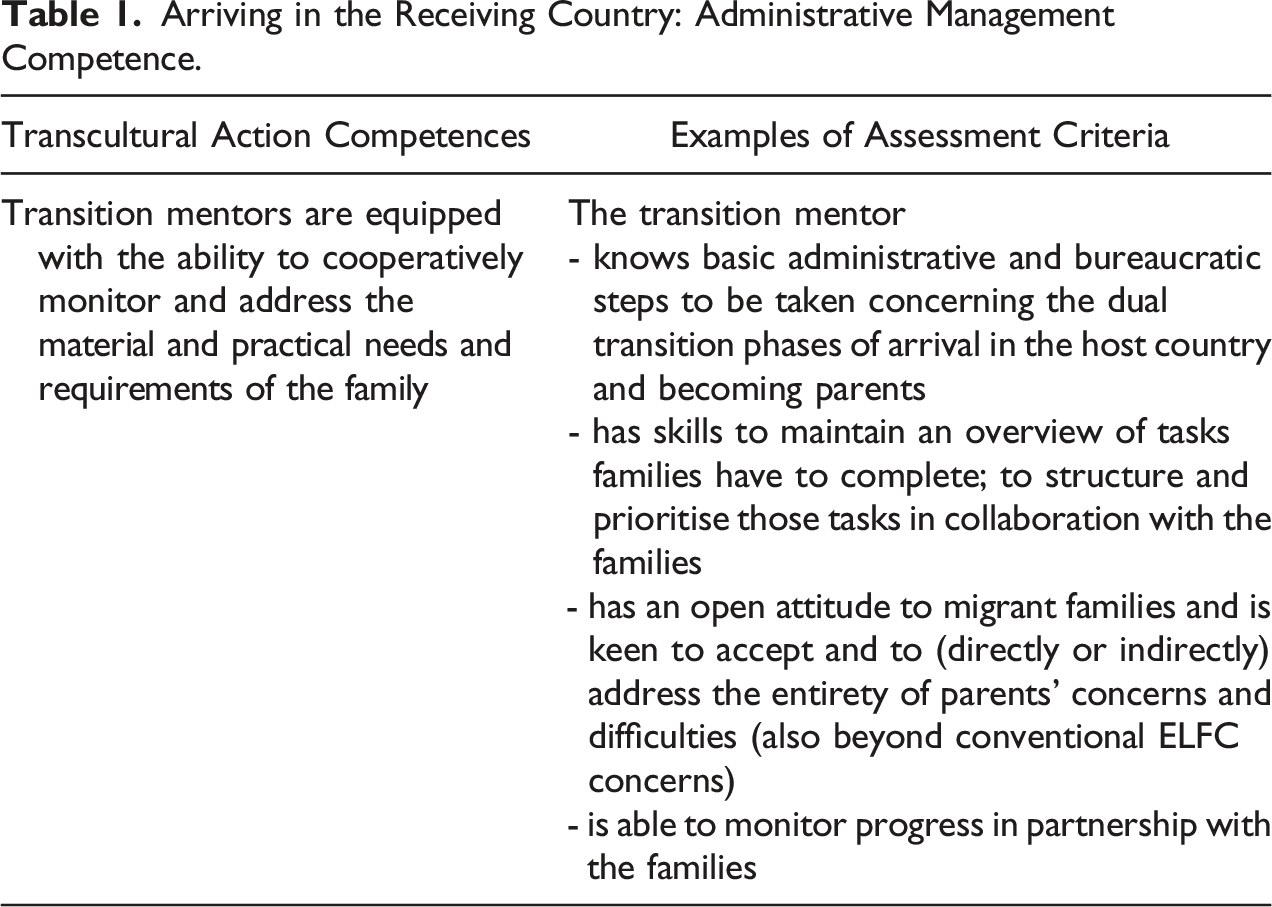
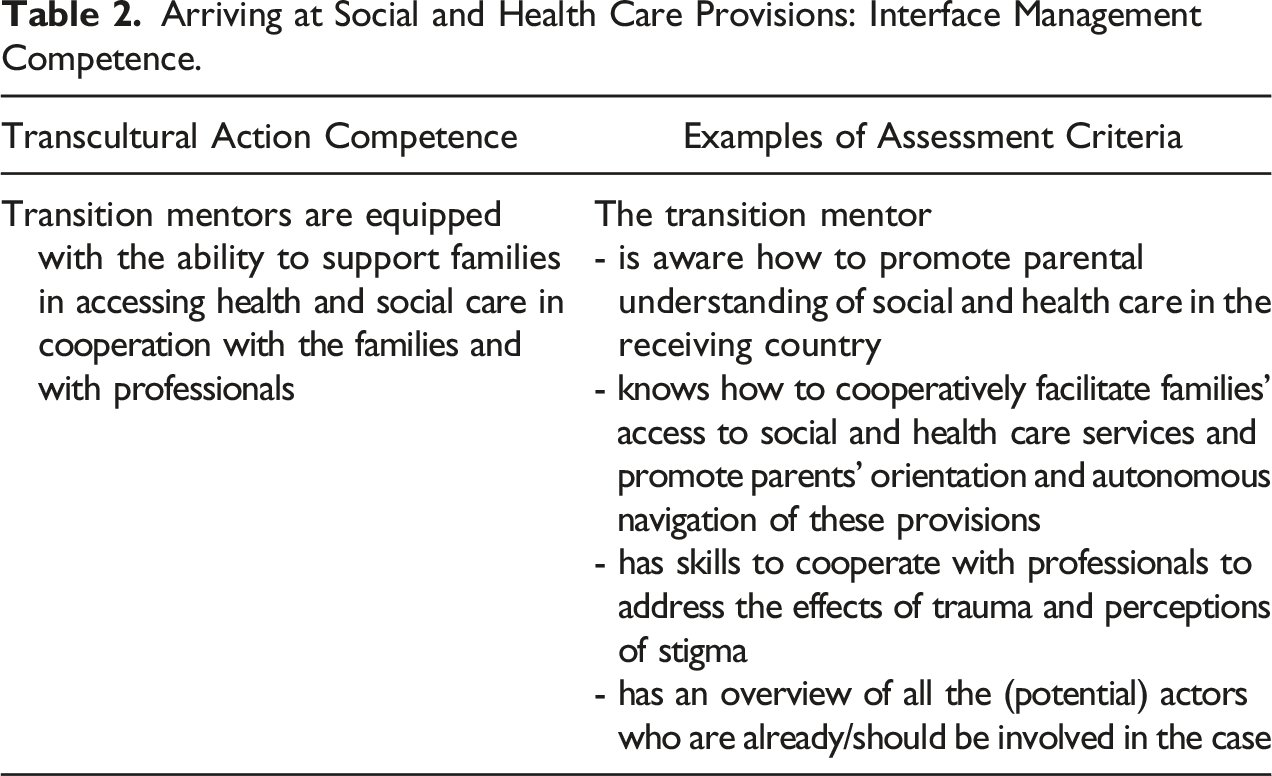
In each of the phases, a particular set of competences is required for transition mentors working with families. These transcultural action competences are outlined in the first column of the tables below. In addition, examples of ‘assessment criteria’ are listed in the second column. Such criteria are embedded in the Open Badges as metadata to guarantee and make transparent the recognition process and its validation. They indicate details of the contents of transcultural action competences and can be used in training contexts to describe the skills of transition mentors.
Arriving in the Receiving Country
Arriving in the Receiving Country: Administrative Management Competence.
Arriving at Social and Health Care Provisions: Interface Management Competence.
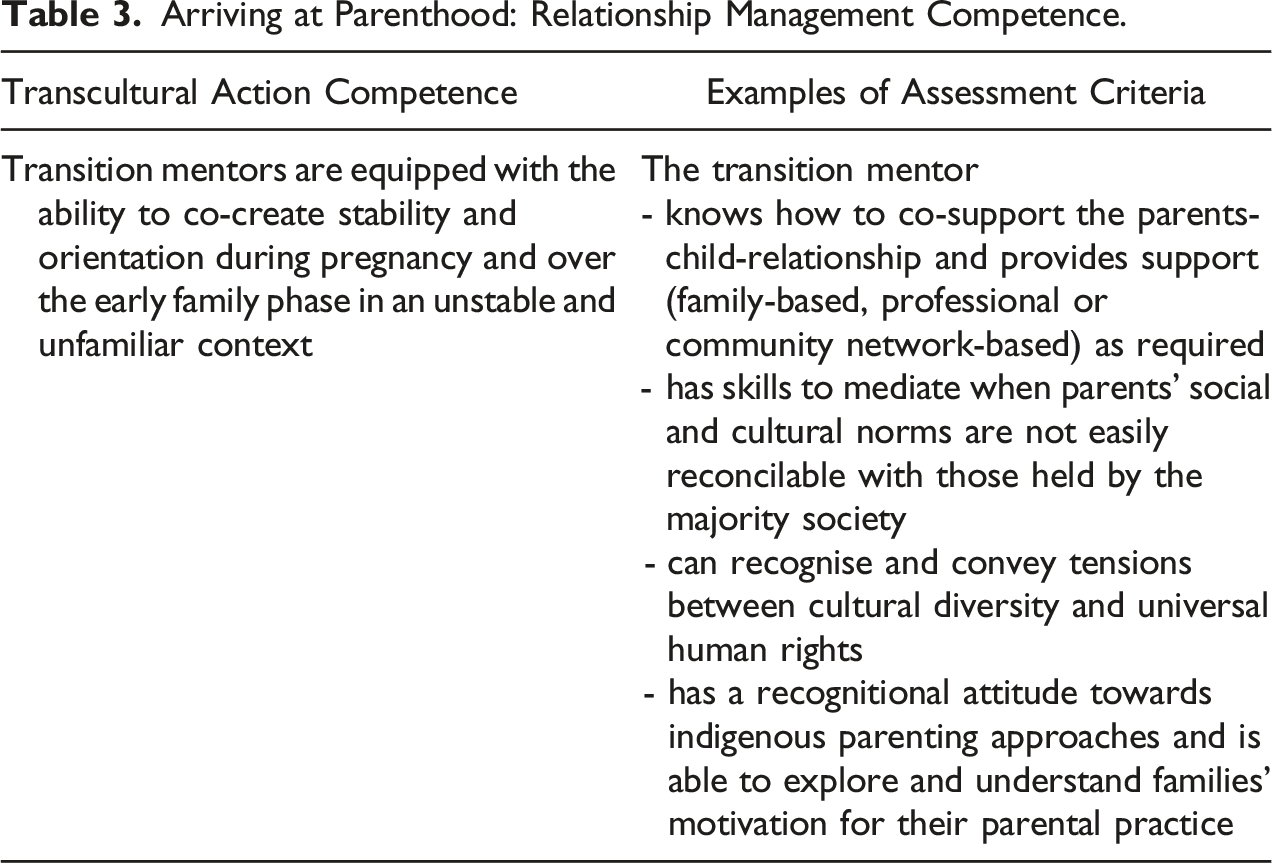
Arriving at Parenthood: Relationship Management Competence.
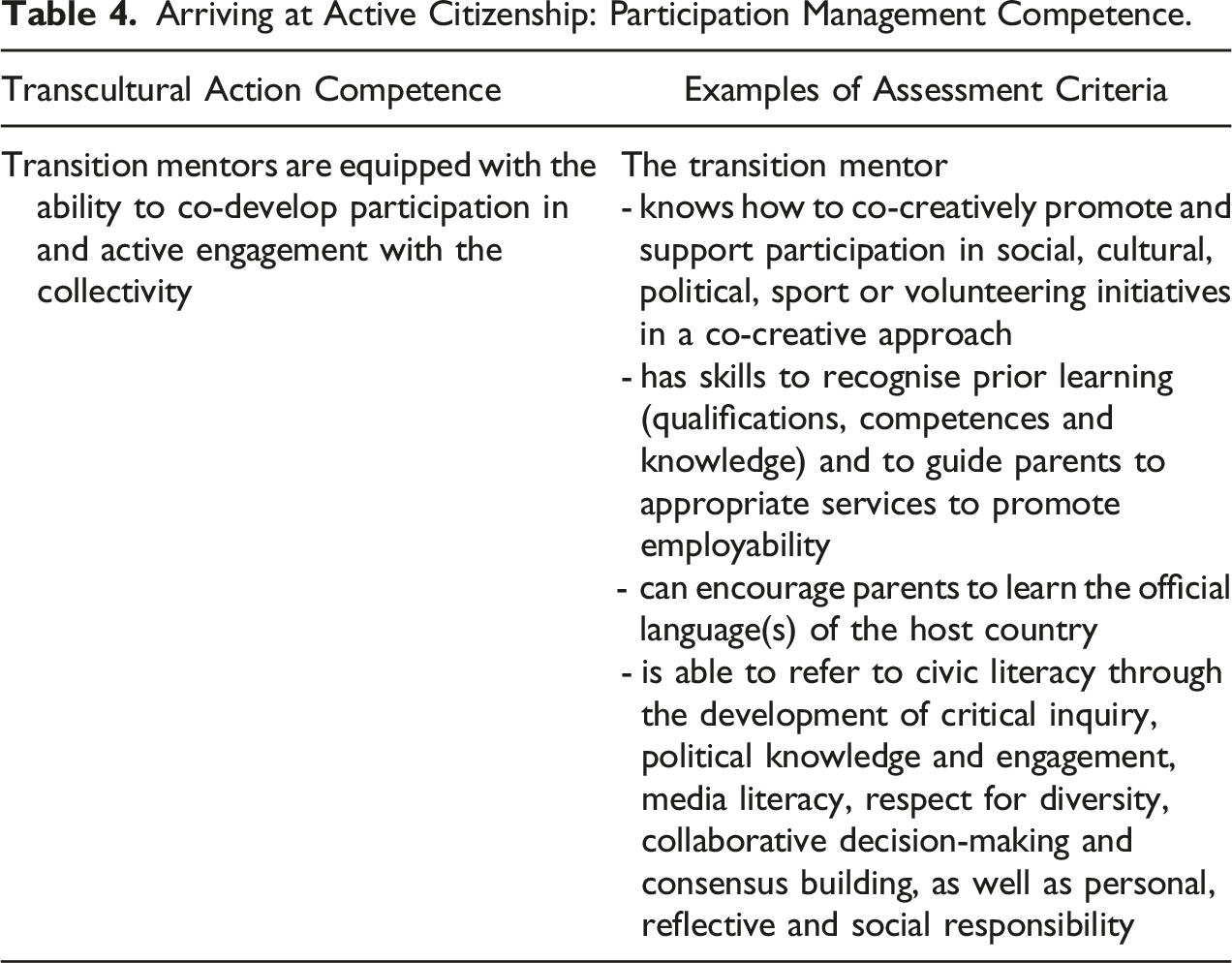
Arriving at Active Citizenship: Participation Management Competence.
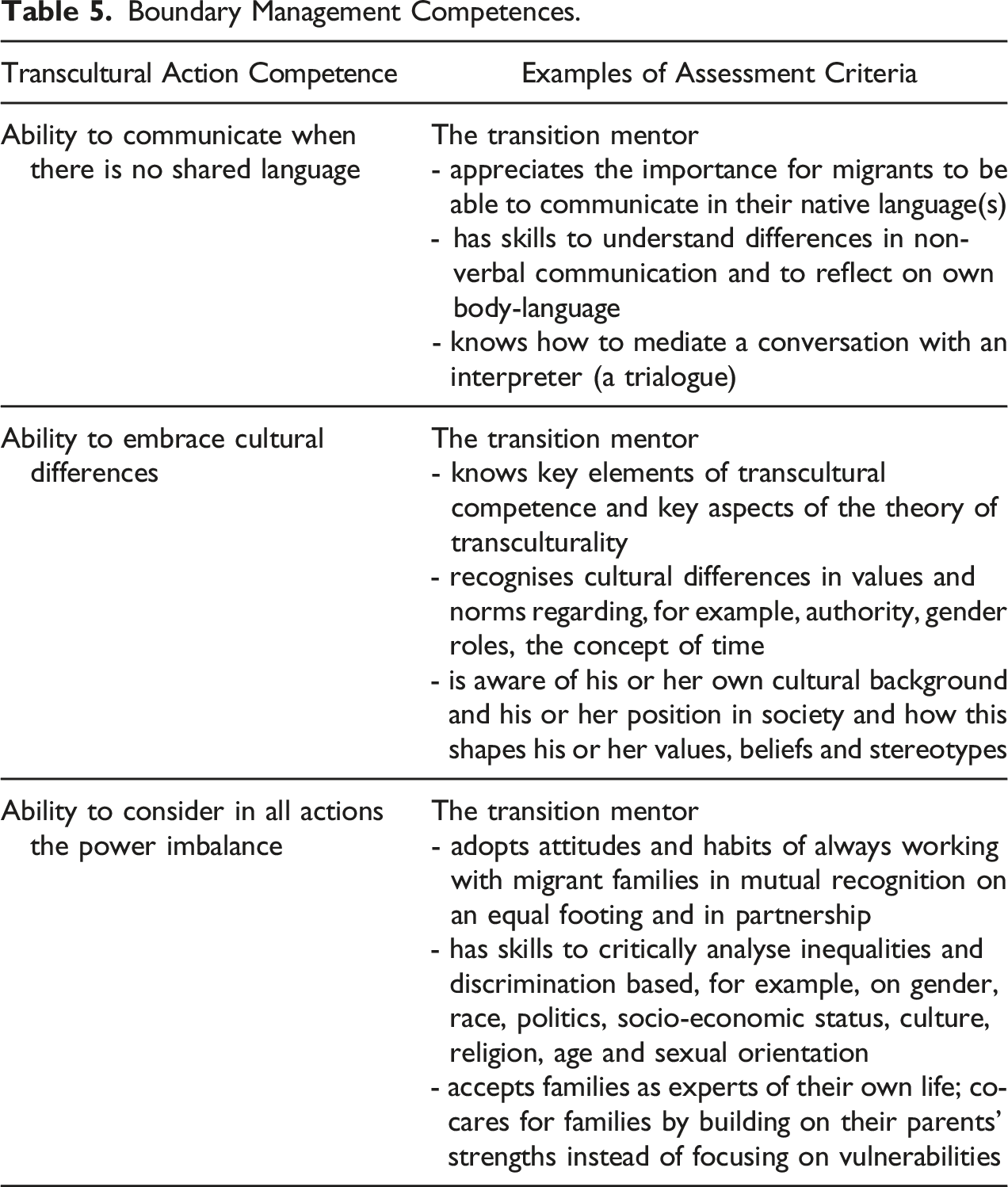
Boundary Management Competences.
Arriving at Social and Health Care Provisions
In the transition phase of families’ arrival at social and health care provisions, transition mentors and parents are particularly concerned with interface management: transition mentors, families and professionals cooperate with the view of making health and social services available to the family. The involved partners co-identify relevant ELFC services, such as extra support for families through baby and parent groups (Tables 2).
Arriving at Parenthood
The transition phase of arriving at parenthood requires relationship management by families and transition mentors. Becoming and being a parent in a society that may have different norms of ‘good parenthood’ and different attitudes towards ‘appropriate infant care’ when compared to the families’ own cultural background, can place a serious strain on families. One focus of parents and transition mentors in this transition phase may be on the special significance of parent-child bonding, especially when families live in an unstable context (e.g. shared accommodation; legal status pending) (Tables 3).
Arriving at Active Citizenship
The transition phase when migrant families can become active citizens requires parents and transition mentors to manage and enable participation. In the absence of a locally accessible family network, members of a social network may bridge the gap of support for parents. Moreover, participation, specifically in ELFC, includes the active involvement of migrant parents in the development, day-to-day running and management of ELFC services. In other words, parents are not only recipients of services but can also adopt roles, which shape these services (Tables 4).
During all Transition Phases: Boundary Management Competences
In all the transition phases outlined above, parents and transition mentors will face overarching boundary management vis-à-vis the use of different languages by the partners, different cultural norms and unequal status. The challenge is for parents and transition mentors to progress jointly when differences in cultural norms emerge in the sensitive area of infant care and in the context of a power imbalance (Tables 5).
Concluding Comments
The newly created Transcultural Mentoring Competence Profile outlines the competences required by mentors to guide migrant families, who have newly arrived in their host country, from one transition phase to another. The competence profile thereby focuses on the double transitions from life as a couple to parenthood, and from a settled life in one country to a new life elsewhere; as well as on the transition from economic inactivity to participation in the labour market. Importantly, the competences and assessment criteria included in the profile may have wider relevance, and can also give orientation to non-migrant professionals working with migrant families. Indeed, the profile can be regarded as generally relevant for health and social care service providers, who endeavour to provide culturally sensitive services, which meet the needs of the minority society. For example, these practitioners can reflect on the extent to which the competencies and assessment criteria are relevant to their work with families and young children. Providers of training in ELFC for migrant families can use the TTMCP to align their seminars and learning objectives with it. Further research could validate the assessment criteria and contribute to developing a tested tool for staff selection.
Moreover, the competence profile can be adapted to a variety of settings, empowering different target groups, who are facing and coping with new situations. Such empowerment includes legal, political, social, economic and employment dimensions and results in the recognition of migrants by peer citizens as full members of a collectivity (Bignami & Soares Carvalho, 2020).
In short, the main goal of transition mentors is to support smooth transition processes, preventing newly arrived fellow residents from falling through the cracks that are often found in health and social care provisions of ELFC (Klein, 2018a). Simultaneously, as the competences of transition mentors are recognised, these migrants are more likely to be able to access the labour market in their host country, providing culturally sensitive care, which can render provisions more accessible and can better meet the needs of migrant families. This can enhance equal social and health opportunities, as well as justice in these fields.
Footnotes
Acknowledgments
The project design and methodology was developed by Regina Klein, the grant holder, who coordinated and implemented the project until 2019. The project consortium connects Higher Education and research institutions in five European countries, which are cooperating with social enterprise institutions, either in the field of ELFC, IT-Technology or Social Welfare Networking in order to develop new standards in the field of Transition Mentoring for Migrant Families. TOBP’s strategic partners are: Cacttus, Pristina, Kosovo; DJI German Youth Institute, Munich, Germany (2018–2020) ENSIS European Network for Social Innonvation and Solidarity, Lüneburg, Germany; Gloria Multicultural Center, Jyväskylä, Finland; ISEE-HSP South-East Europe for Health and Social Policy, Pristina Kosovo; Impuls Familienberatung, Spittal, Austria; JAMK University of Applied Sciences, School of Health and Social Studies, Jyväskylä, Finland; Kolegji Heimerer, Pristina, Kosovo. NZFH National Centre for Early Prevention in the BZgA Federal Centre for Health Education, Cologne, Germany (2018–2019); SUPSI Scuola universitaria professionale della Svizzera italana, Manno, Switzerland. More information is available at: 
Declaration of Conflicting Interests
The author(s) declared no potential conflicts of interest with respect to the research, authorship, and/or publication of this article.
Funding
The author(s) disclosed receipt of the following financial support for the research, authorship, and/or publication of this article: TOBP has been funded by the Erasmus+ Higher Education Programme from 2018 to 2021 (Grant Agreement No. 2018-1-AT01-KA203-03933) and National Centre for Early Prevention (NZFH), Germany.