



Abstract
This investigation concentrates on value similarity between parents and their children during adulthood. The interplay between gender, age, relationship quality, and frequency of contact on value similarity was analyzed. A total of 600 adult German children (53.8% women) and their parents took part in a questionnaire study. Value orientation was measured with a short version of Schwartz’s Portrait Values Questionnaire, and relationship quality with the Network of Relationships Inventory (Furman & Buhrmeister, 1992).Value similarity was higher in mother–daughter dyads compared to mother–son dyads, but in the other dyads, no significant differences were found. Regarding relationship quality, verbal intimacy was not related to value similarity. Parental satisfaction was associated with value similarity in the father–child dyads. Satisfaction, as perceived by adult children, was linked to value similarity in mother–child and father–son dyads. Furthermore, the frequency of contact related to value similarity between mothers and sons.
Keywords
Introduction
Individuals are interested in transmitting their values to family members or friends. Parents’ goal is to especially transmit their characteristics, including their own values, to their children (e.g., Kuczynski et al., 1997), although parents differentiate between what is good for themselves and what is good for their children (Tam & Lee, 2010).
In general, parental values play a special role for children because parental values are the first values they are exposed to. Thus, parental values can be seen as the fundament for children’s development (Taris & Semin, 1997). The topic of this article is intergenerational value similarity in adulthood. Several investigations have focused on intergenerational value similarity, but most of the research investigated value similarity in adolescence or emerging adulthood (e.g., Albert & Ferring, 2012; Barni et al., 2013). However, less is known about the linkage between the value orientation of children in young and middle adulthood and of their parents. In this phase of life, the relationship is known as interdependent, and it is characterized by two separate and self-dependent lives within children and parents, who nonetheless still feel connected (Baltes & Silverberg, 1994). In Germany and other Western societies, the interdependence between young and middle-age adults and their parents is primarily a psychological interdependence (Kagitcibasi, 2005). Because of the continuing relationship, it is important to analyze this phase of life and to consider the important process of value similarity.
This investigation addresses three questions regarding the relationship between children and their parents during young and middle adulthood. First, is the general value orientation of adult children linked to their parents’ value orientation, or does the individuation process in adolescence and adulthood lead to an independent value orientation? Second, do gender differences exist in the value similarity between adult children and their parents? Third, which roles play relationship quality and frequency of contact between adult children and their parents concerning value similarity?
Values
In several definitions, values have be seen as guiding principles in human lives (e.g., Rokeach, 1973), and they are involved in important human processes. They are integrated in the selection and evaluation process of behavior and situations (Schwartz, 1992). The approach of the present research is to consider that there are different kinds of values: family values (e.g., Padilla et al., 2016), religious values, gender role attitudes (e.g., Min et al., 2012), or the general value orientations (Schwartz, 1992). The general value orientation is a higher-ordered value system, so this value system is observed in this study. Schwartz’ (1992) theory indicates that individual general value orientation consists of 10 value types, and the importance of the different value types varies individually. The 10 different value types, displayed with the corresponding characteristics in Table 1, and every value type relates to each other in a circular structure (Schwartz, 1992).
Schwartz’ Values.
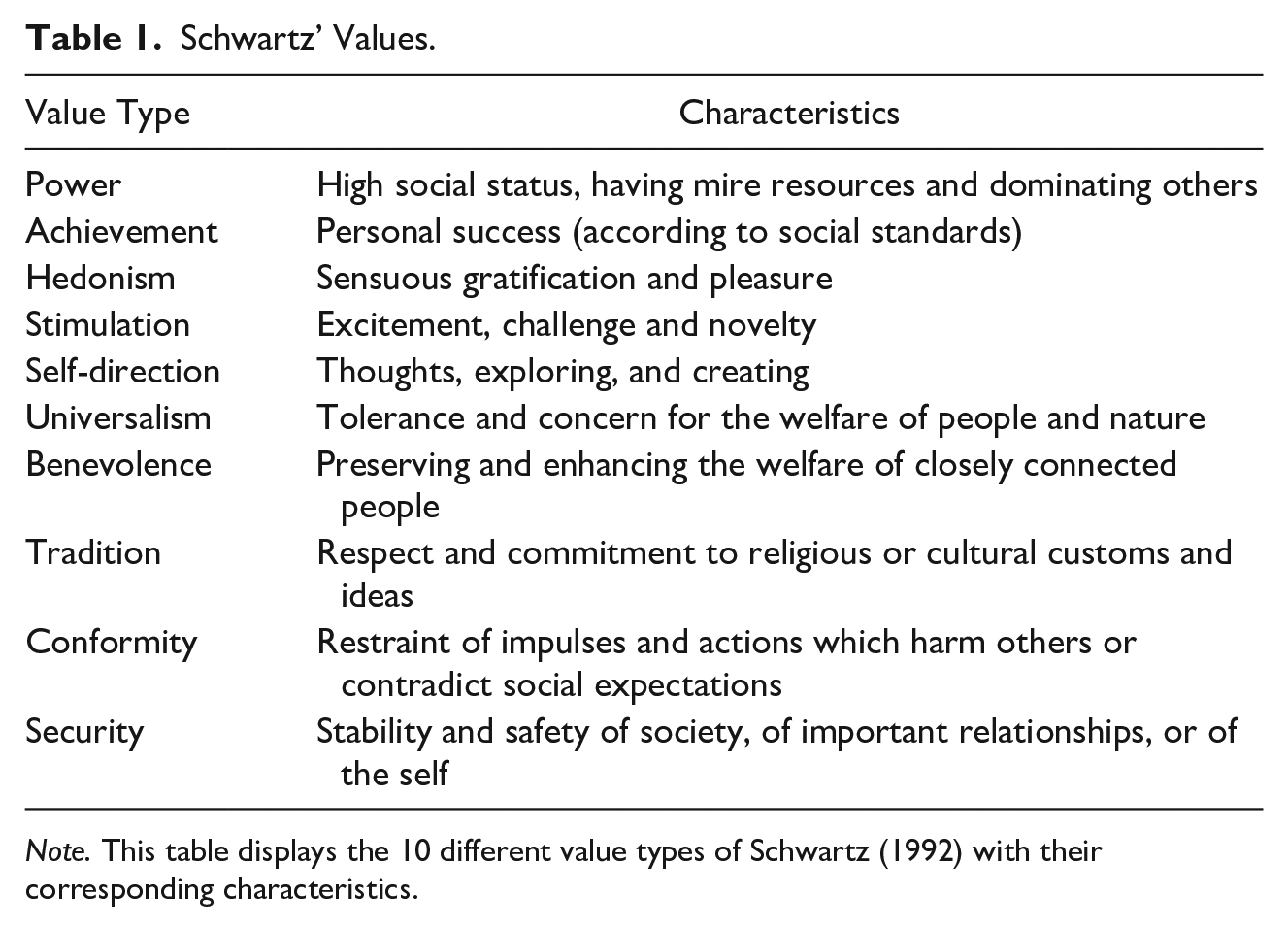
Note. This table displays the 10 different value types of Schwartz (1992) with their corresponding characteristics.
Value Similarity and Value Transmission
In the context of value similarity, it is important to understand the value transmission process because both concepts are closely linked. The value acquisition model (Grusec & Goodnow, 1994) proposes that value transmission consists of two steps of internalization. The first step is the correct perception of the other person’s values that should be transmitted. The second step is to accept or reject the perceived values. In conclusion, for a successful value transmission, an exact perception of the values and the motivation to accept these values are necessary. Regarding the first step (perception of the person’s values), having contact can be seen as a precondition. However, not only the value receiver, or transmittee, influences value transmission, but also the transmitter. The motivation of both is an important aspect as well (Schönpflug & Bilz, 2009). For example, mothers can differentiate between favorable values for themselves and favorable values for their children (Tam & Lee, 2010). Besides, if the parental values are anchored to a specific context (e.g. sport), the parental value message could be clearer for the children (Danioni et al., 2017).
The degree of similarity in the value profiles can be seen as a result of value transmission (Barni et al., 2013). Therefore, value transmission is often operationalized as value similarity between adult children and their parents (Albert & Ferring, 2012; Roest et al., 2009). There is a high correlation between parents’ value orientation and the values parents want to transmit, (e.g., Knafo & Schwartz, 2001). It is assumed that the degree of value similarity between children and their parents varies across the developmental stages of the children (Barni et al., 2013). Values are involved in the parent–child relationship, although the influence changes over one’s life course (Glass et al., 1986). Some investigations (e.g., Barni et al., 2013) have dealt with value similarity in adolescence and emerging adulthood, and have shown that value similarity was higher in emerging adult parent–child dyads compared to adolescent parent–child dyads, although during adolescence children are particularly vulnerable to other value messages (Barni et al., 2014). The transition from adolescence to emerging adulthood is an important phase in life (e.g., Padilla-Walker, 2007), and children are highly sensitive to their parental values during this time of life, even more than in childhood (Barni, 2011). Regarding the general value orientation, adolescents have a small degree of value similarity to their parents. The value similarity between emerging adults and their parents is significantly higher. Regarding the value transmission process, the acceptance of parental values is higher in emerging adulthood than in adolescence (Knafo & Schwartz, 2009). In addition, value orientations can change over one’s lifespan (Vecchione et al., 2016). Therefore, it is important to examine value similarity as a result of value transmission in adulthood.
Adulthood is an important developmental phase, because individuals are confronted with many crucial situations or developmental transitions like moving out, marriage, and others (Buhl, 2000), which influence persistent relationships, especially the parent–child relationship. On the one hand, in young and middle adulthood, individuals individuate, and on the other hand, the relationship is determined by a high extent of closeness and communication (Buhl, 2007; Smollar & Youniss, 1989). Furthermore, because of the greater experience of several crucial transitions, adult children can be seen more as experts, which is positively linked to the parents’ acceptance of their children’s values (Pinquart & Silbereisen, 2004). Therefore, it is important to analyze the seldom tested value similarity during adulthood. A longitudinal study (Min et al., 2012) examined value similarity in adulthood, but this study focused on religious beliefs and gender role attitudes. Min et al. (2012) reported moderate value similarity concerning these values. However, less is known about transmitting or the similarity of general value orientation during young and middle adulthood.
Value transmission is one aspect of the socialization process (e.g., Grusec et al., 2000). The family can be seen as the first context in which value socialization occurs (Sabatier & Lannegrand-Willems, 2005), therefore it is the primary socialization agent (Trommsdorff, 2009). Thus, the interaction of family members provides the main situation for socialization (Roest et al., 2009). Socialization is seen as a lifelong process (Roest et al., 2009), that also takes place in adulthood. Consequently, adult children, as well as the parents of adult children, could change their values. Therefore, it is also important to analyze socialization in the parent–child relationship in adulthood.
In addition, value transmission is not a unidirectional process, but rather a bi-directional process, so that parents transmit their values to their children—and the other way around, children transmit values to their parents (e.g., Pinquart & Silbereisen, 2004; Roest et al., 2009). Parents reported that they feel influenced of their adolescent children. Half of the parents reported about perceiving themselves highly influenced by their children (Knafo & Galansky, 2005). If parents view their children as experts for one thing, they tend to be more accepting of their children’s values (Pinquart & Silbereisen, 2004). To view their own children as experts should be an aspect that increases over the parent(s)’s life course, and could play a greater role when children are in young adulthood, and especially middle adulthood, compared to children in emerging adulthood.
Gender Effects in Value Similarity
The extent of value similarity depends on the gender composition of the dyad. Greater value similarity was found in mother–child dyads compared to father–child dyads (Döring et al., 2017). In general, more similar value orientations were reported in parent–daughter dyads (Döring et al., 2017). Furthermore, a greater acceptance regarding the socialization values the parents want to transmit was found in the mother–daughter dyads (Barni et al., 2011). Females tend to take the point of view of others more than males, and tend to conform to parents’ expectation more so than males (Zentner & Renaud, 2007). In addition, parents tend to follow their daughters’ behavior more than the behavior of their sons (e.g., Pomerantz, Saxon, & Kenney, 2001). As a consequence, females tend to spend more time close to their family compared to males. By contrast, males are more interested in exploring nonfamilial environments. Therefore, females could have a stronger orientation toward family during the development of ideal self-representations (Zentner & Renaud, 2007). Furthermore, parents tend to transmit their expectations more emphatically to their daughters (Pomerantz et al., 2001). Another aspect is that mothers spend more time with their children than fathers, so that maternal values have a greater chance than do paternal values to be perceived by children (Zentner & Renaud, 2007). In other words, maternal value orientations have a greater chance of being transmitted than do paternal orientations.
In addition, the sex role model of socialization provides an explanation of a higher parent-to-child value similarity in within same-gender dyads (Acock & Bengtson, 1978). In line with this, males identify more with their fathers and girls more with their mothers (Raley & Binachi, 2006). However, these are older research findings, and it could be that gender roles have changed over the years. Otherwise, a combined view of the older sex role model, and the tendency of females to conform more to parents’ expectations and to take the point of view of others more so than compared with males, could explain differences in gender.
Influence of Relationship on Value Similarity
Besides gender, several aspects exert influence on value similarity. The quality of the parent–child relationship from children to their parents influences value similarity (Albert & Ferring, 2012; Barni et al., 2011). A better quality in the relationship between adolescent children and their parents leads to a more successful value similarity, or in other words, to a greater similarity in the value orientations between children and their parents.
Closeness is one aspect of relationship quality that relates positively to value similarity. The quality of the relationship is a significant predictor of acceptance of the transmitting values (Barni et al., 2011). Adolescents in close and supportive family contexts show a greater acceptance of the values their parents want to transmit. Another influencing factor is adolescents’ reported intimacy and self-disclosure toward their mothers. In addition, maternal appreciation relates to value similarity in group-oriented and individualistic values (e.g., Albert, 2007). Following the social learning theory of Bandura and Huston (1961), individuals want to be similar to nurturing and rewarding models. This is an explanation for relationship quality as an influencing factor.
Regarding the value transmission process, the interaction between transmittee and transmitter seems to be important. The value acquisition model (Grusec & Goodnow, 1994) points out that the first step of value similarity is the correct perception of the values a person wants to transmit. It is obvious that a correct perception should be linked to a higher frequency of contact between the transmittee and transmitter. Having contact to a person whose values should be transmitted is the precondition to perceive the values. Spending more time with somebody leads to more chances of experiencing the values of that person. In addition, value transmission underlies not only correct perception but also personal interpretation (Lawrence & Valsiner, 1993). Spending more time could also reduce the chances of misleading interpretations.
Interestingly, these are seldom tested aspects, especially in adulthood. Furthermore, the interaction between family members is seen as the main context of socialization (Roest et al., 2009), which underlines the importance of the frequency of contact for the value similarity process.
Purpose of the Study
Previous studies focused on value similarity in emerging adulthood. In these studies, gender differences were found. Because of the lack of data concerning intergenerational value similarity in young and middle adulthood, the present study focuses on value similarity between parents and their children in adulthood. We also assume that value similarity depends on gender. In addition, this investigation considers the influence of relationship quality and the frequency of contact on value similarity. Because of the expected gender differences, the influences will be tested separately for the different dyads.
The aims of this study are to examine the following hypotheses:
H1) The value similarity between adult children and their parents is moderate.
H2) We expect differences in the extent of the value similarity, depending on children’s and parents’ gender:
H2.1) Daughters are more similar in their value orientation to their mothers compared to sons.
H2.2) Sons are more similar in their value orientation to their fathers compared to daughters.
H.2.3) The value similarity in father–daughter dyads and mother–son dyads are equal.
H 2.4) The value similarity in mother–daughter dyads are higher than in father–son dyads.
H3) The association of relationship quality and frequency of contact on value similarity will be analyzed for each dyad, and for the described relationship quality from each perspective:
H 3.1) Frequency of contact is associated positively with value similarity.
H 3.2) Verbal intimacy is associated positively with value similarity.
H 3.3) Satisfaction with the relationship is associated positively with value similarity.
Method
Participants
The sample included 1,647 participants from Germany. A total of 600 adult children with 542 of their mothers and 505 of their fathers were participating as well. For analyzing value similarity, dyads are of focus. Overall, the sample included 1,047 dyads. The adult children (53.8% female, 46.2% male) aged between 25 years and 49 years (M = 33.86; SD = 6.06), the fathers between 40 years and 90 years (M = 62.87; SD = 8.43), and the mothers between 40 years and 87 years (M = 61.06; SD = 7.29). Adult children were instructed to take part with their “parents”. The decision with whom children took part with (if biological parent or stepparent) was up to the adult children. A total of 98.2% of mothers and 92.1% of fathers were biological parents. The others were stepparents, foster parents, others, or no answer was given. In all, 33.5% of the adult children reported having some kind of contact (face to face, phone call, WhatsApp, or in another way) with their mothers daily, and an additional 40.5% reported this to occur several times per week. In comparison a daily frequency of contact between adult children and fathers was reported by 18.5%, and 30.3% answered having contact several times per week.
Most of the participants (90.5% of the adult children, 79.3% of the mothers, and 76.8% of the fathers) reported that they were born in Germany. These results are more or less in line with the percentage of people with a migration background in Germany for 2017 (23.6%, Federal Agency for Civic Education, 2018). A total of 442 of the adult children (74%) lived in a partnership, and 241 (40.8%) already had their own children. During participation, 475 of the fathers (94.6%) and 479 of the mothers (88.9%) reported having a partner. Also, 83.2% of the mothers and 85.9% of the fathers reported that they were married. Regarding education level, 76.3% of the participating adult children, 32.3% of the mothers, and 40.0% of the fathers had attended school for 12 years or more.
Procedure
The items from this study were part of the research project “Interdependence in the relationship between adults and their parents,” which was supported by a grant from the German Research Foundation (DFG). Participants were recruited in 2016 and 2017, with advertisements such as newspapers, online platforms, and posters in supermarkets, sport clubs, and other areas. Participation in the study was provided in different online communities for all parts of Germany. Many participants were also recruited thanks to a pyramid scheme. If an adult child took part with both parents, the complete triad received 40€. Otherwise, every participant received 10€ for their participation. All questionnaires were given in paper–pencil format. The questionnaires were sent via post to the participants, and after finishing the questionnaires, they were mailed back via post. Answering the whole questionnaires took approximately 30 to 45 minutes in process. All participants were informed that all the data collected would be confidential and anonymous. A personal code was used to relate the data of the adult children, the mothers, and the fathers.
Instruments
Participants answered for each parent separately, and both parents answered a questionnaire separately for the participating child. All items were in the German language.
Values
Value orientation, in the form of 10 value types, was measured with 10 items of the German World Value Survey (WVS 2006). It is short version of the Schwartz’s Portrait Values Questionnaire (Held et al., 2009). The original value types postulated by Schwartz (1992), self-direction, stimulation, hedonism, achievement, power, security, conformity, tradition, benevolence, and universalism were included. Consequently, every value was assessed by one item (e.g., Sandy et al., 2017). The items were answered on a six-point Likert-type scale (from 1 = not resembling at all to 6 = completely resembling) and instructed by: “Following a person with certain values is described. Please indicate to what extent this person is similar to you.” The items were formulated in the way like the following example (power): “Important to be rich, have money and expensive things”. No internal reliability was tested because these items relates to each other in a circular structure (Schwartz, 1992). Consequently, the whole value profile is not unidimensional.
Relationship quality
The Network of Relationships Inventory (NRI, Furman & Buhrmester, 1992) measured the quality of the relationship concerning verbal intimacy and satisfaction with the relationship, with three items each. For this study, a German adaption was used, which was proofed by several studies (e.g., Buhl 2009; Noack & Buhl, 2004). The NRI was instructed by the sentences: “Please evaluate the following questions and statements in relation to your mother and your father”. Each item was answered on a five-point Likert-type scale from 1 (little or none) to 5 (the most). The adult children answered separate questions for their mothers and their fathers. The parents also answered these questions. In conclusion, the relationship quality was measured in the adult children and in their parents’ view.
The scale intimacy (e.g., “How much do you talk to this person about everything?”) addressed disclosure, and its internal consistency was satisfying (Cronbach’s as α > .70). The internal consistencies of the scales of satisfaction (e.g., “How satisfied are you with the relationship to your mother/ father/ child?”) were very high (Cronbach’s as α > .93).
Frequency of contact
Contact was defined as personal contact (visiting), contact via post, emails, phone calls, SMS, or WhatsApp messages. The frequency of contact was reported by the adult children and measured with one item (“How often are you in contact with your parents—visits, letters, mails, telephone calls, SMS, and WhatsApp? Please answer this question in relation to you and your mother, or father”). The frequency ranged from 8 = every day to 1= never.
Data Analysis
Value similarity
Dyadic correlations were constructed to measure the degree of the similarity of two value profiles (see Bernieri et al., 1994). Dyadic correlation is also known as q-correlation, and can be defined as the Pearson product–moment correlation between two scores’ sets within each dyad (Kenny & Winquist, 2001). For using the dyadic correlation indicators in further analyses (ANOVAs and regressions analyses), the Fisher’s z-transformation was conducted. The dyadic correlations were calculated separately for mother–daughter, mother–son, father–daughter, and father–son dyads.
Gender effects in value similarity
To test whether the intensity of the dyadic correlation depends on adult children’s or parents’ gender, a mixed-design ANOVA was used. The parents’ gender represented a within-subjects factor (mother and father) and the gender of the children was a between-subjects factor (daughter and sons). In addition, two ANOVAs effect analyses were conducted to determine the interaction effect.
Influence of the relationship quality and frequency of contact on value similarity
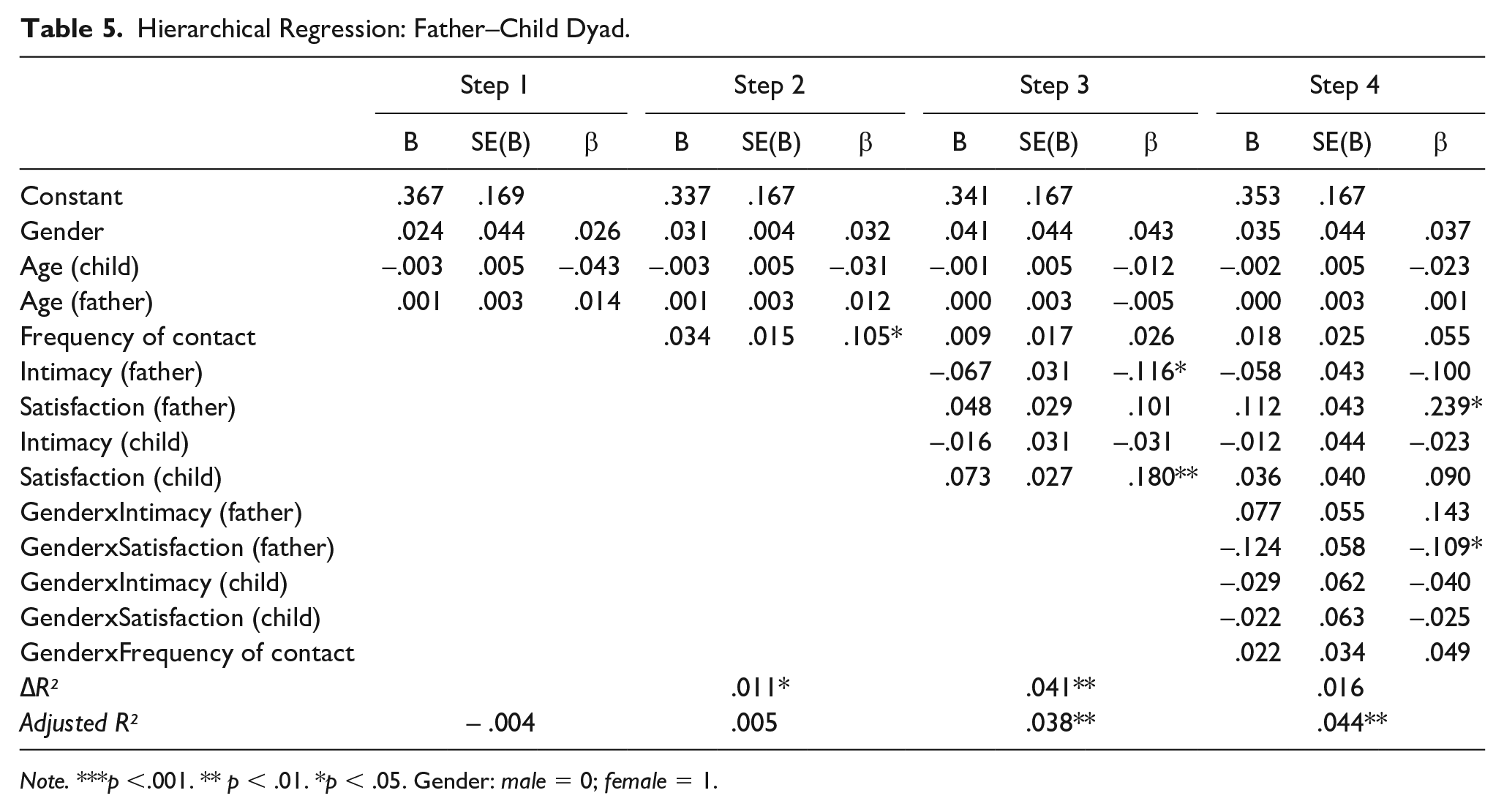
Two separate hierarchical regressions (one for the father–child dyad and one for the mother–child dyad) were calculated to predict value similarity based on gender, age, frequency of contact, verbal intimacy, and satisfaction with the relationship. In the first step, age and gender were analyzed. In the second step, we analyzed if the frequency of contact, and in the third step, if verbal intimacy and satisfaction predict value similarity. Verbal intimacy and satisfaction were tested in parents’ and adult children’s view. In the last step, gender effects were investigated via interaction terms (gender x frequency of contact/verbal intimacy/satisfaction). Because of the interaction terms these analyses were conducted with the corresponding mean centered variables.
Results
H1: Value Similarity in Parent–Child Dyads
To analyze if the adult children’s values relate to their parent’s value orientation, dyadic correlations were calculated. The dyadic correlation coefficients were Fischer’s z-transformed for every dyad. Next, means of the z-values were calculated and subsequently the coefficients of the z-means were transformed back in correlation coefficients. As Table 2 shows, there were small to moderate correlations between the value orientations of adult children and their parents. The mean dyadic correlation ranged between rmean = .40 in the mother–daughter dyad and rmean = .22 in the mother–son dyad.
Value Similarity Separated for Each Dyad.
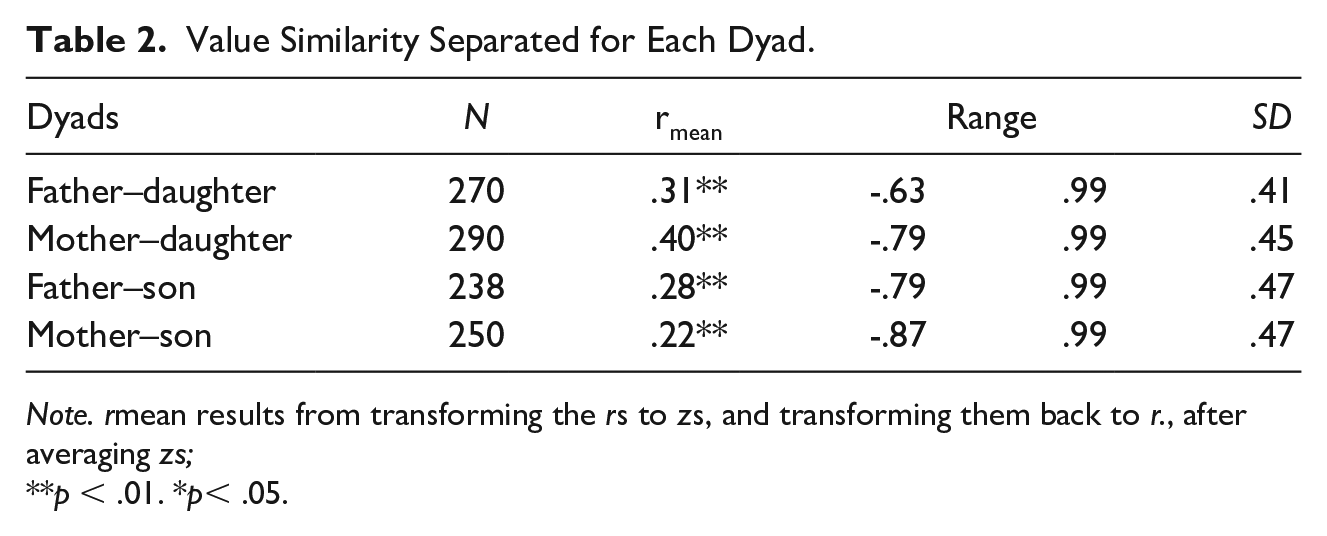
Note. rmean results from transforming the rs to zs, and transforming them back to r., after averaging zs;
p < .01. *p< .05.
H2: Gender Effects in Value Similarity
The mixed-design ANOVA demonstrated that there was no main effect concerning the parent’s gender (F(1,494) = .93, p= .335, η² < .01). But a main effect in the adult children’s gender was found, although with a small effect size (F(1, 494) = 8.16, p < .01, η² = .02). Furthermore there was an interaction effect (F(1, 494) = 10.44, p = .001, η² = .02). To demonstrate the interaction, two separate ANOVAs were added. These analyses showed that there was a significant gender difference in the mother–child dyad (F(1, 539) = 20.21, p < .001). Daughters had greater value similarity to their mothers than did sons. Furthermore these analyses demonstrated, there was no significant difference in the father–child dyad (F(1, 507) = .46, p =.497).
H3: Influence of Relationship Quality and Frequency of Contact on Value Similarity
For analyzing the influence of relationship quality and frequency of contact on value similarity, hierarchical regressions were used. In Table 3, the corresponding intercorrelations are presented. Table 4 displays the results for the mother–child dyad. The hierarchical regression demonstrated that adult children’s age and gender were predictors of value similarity. A younger age of adult children predicted a higher value similarity. In addition, it was demonstrated that a higher frequency of contact predicted a better value similarity (β = .122).
Intercorrelations for Mother–Child and Father–Child Dyads.
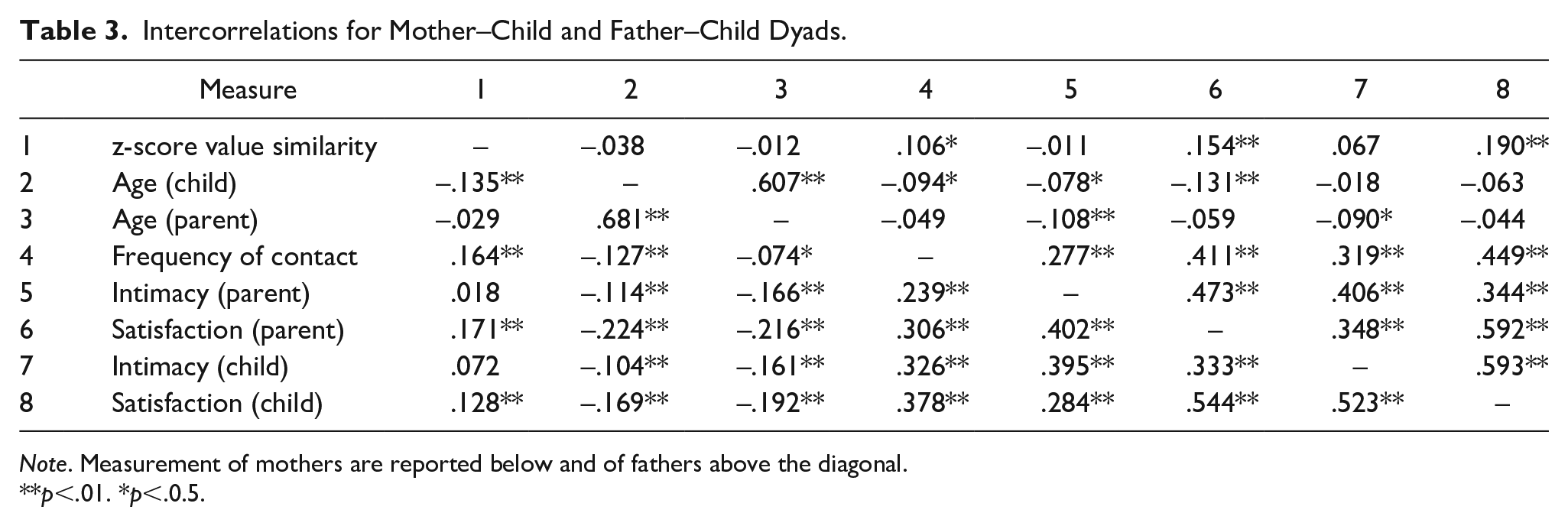
Note. Measurement of mothers are reported below and of fathers above the diagonal.
p<.01. *p<.0.5.
Hierarchical Regression: Mother–Child Dyad.
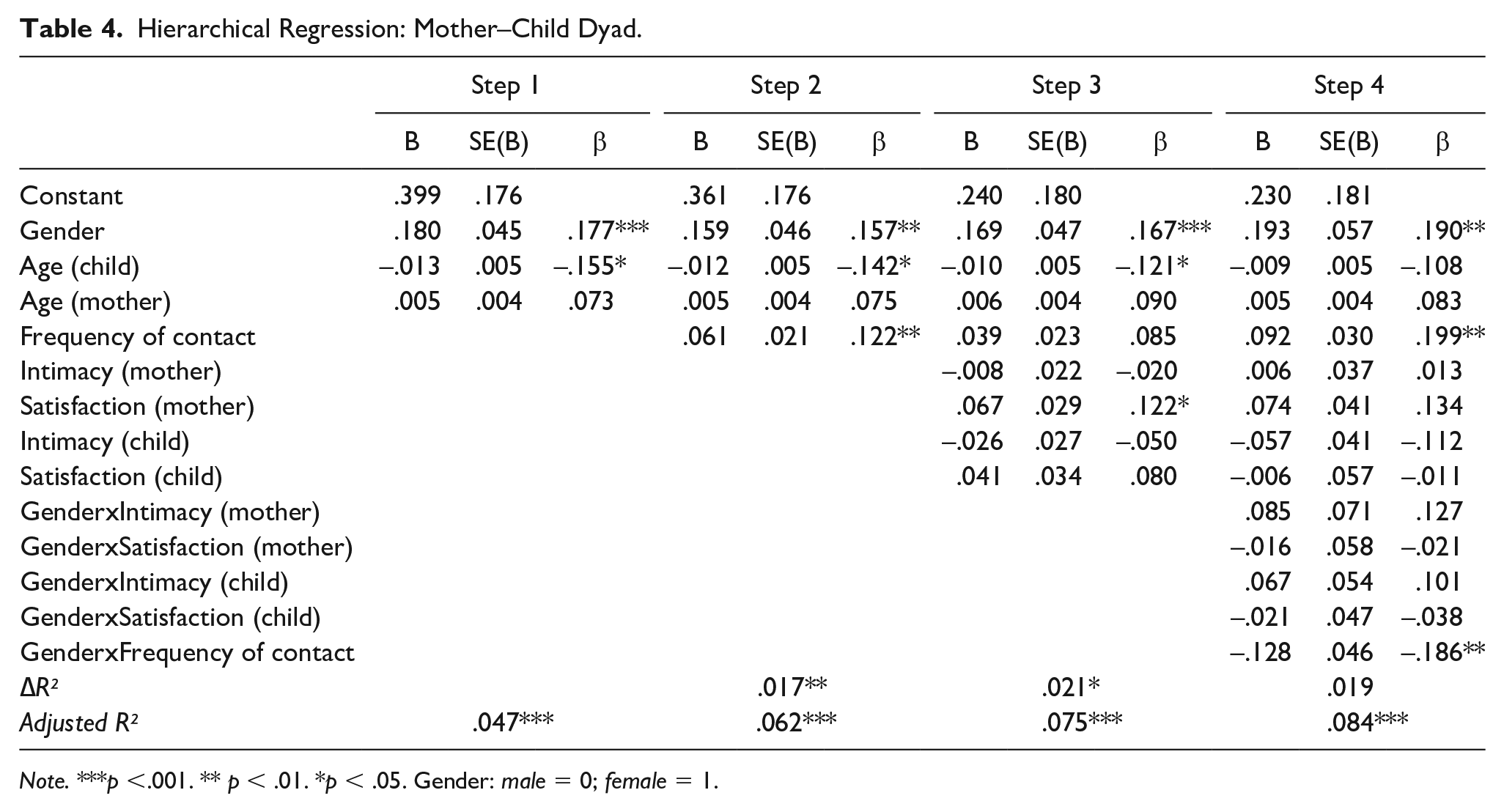
Note. ***p <.001. ** p < .01. *p < .05. Gender: male = 0; female = 1.
Regarding relationship quality, only satisfaction on the part of the mother was a significant predictor for value similarity. For analyzing if effects depend on gender, interaction terms were constructed. Only one interaction term was significant. Table 4 shows that the frequency of contact was a predictor of value similarity, which depends on the adult children’s gender. Only in the mother–son dyads was frequency of contact related positively to value similarity.
Table 5 presents the results for the father–child dyad, and shows that a higher frequency of contact predicted a higher value similarity. The regression analysis identified intimacy—in the fathers’ point of view (β= -.116)—as a negative predictor. By contrast, the adult children’s satisfaction with the relationship was a positive predictor for value similarity.
Hierarchical Regression: Father–Child Dyad.
Note. ***p <.001. ** p < .01. *p < .05. Gender: male = 0; female = 1.
Furthermore, the analysis identified satisfaction in the fathers view as an adult children’s gender dependent predictor. Only in the father–son dyad did the fathers’ satisfaction with the relationship work as a predictor for value similarity.
Discussion
Because of the lack of data in intergenerational value similarity in young and middle adulthood, our study focused on this period. The results of our study underline that the value orientation of adult children is linked to the value orientation of their parents. Although the importance of some value types changes for young adults, their value orientations are still linked to the value orientation of their parents. There are significant correlations in all four dyads. The correlations are small to moderate. However, this imperfect similarity does not mean an inaccurate transmission because there is no perfect accordance between values that parents want to transmit to their children and parents’ own value orientation (e.g., Knafo & Schwartz, 2001). Mothers can differentiate between favorable values for themselves and favorable for their children (Tam & Lee, 2010). In conclusion, mothers do not want that their children’s value profile is a copy of their own value profile. However, this result is in line with Hypothesis H1, which expects that there is a small to moderate value similarity between young and middle-aged adult children and their parents. The extent of the value similarity is in line with previous research. In this investigation, a dyadic correlation between rmean = .22 and rmean = .40 was found between parents and their children during young and middle adulthood. Albert and Ferring (2012) measured a dyadic correlation of rmean =.41 for adolescents/emerging adult children and their mothers. Most of the participating children were females. In conclusion, this is in line with our findings because the highest dyadic correlation (rmean =.40) was measured in the mother–daughter dyad. Otherwise, the lowest score (rmean =.22) was in the mother–son dyad, which provides a decreasing factor for the extent of value similarity. In addition, the dyadic correlations in another study (Barni et al., 2013) ranked between rmean = .25 (mother–adolescent child) and .27 (father–adolescent child), and between rmean = .45 (father–child) and .49 (mother–child) for emerging adults and their parents. The extent of the value similarity of parents and children in young and middle adulthood seems to be more similar to the extent of value similarity between parents and children in adolescents. Indeed, these findings are not exactly comparable. Both previous studies did not differentiate between daughter and son dyads. Besides, the majority of the participating children were females. In combination with the findings of this investigation that daughters have a greater extent of similarity to their children than do sons, it is hard to compare this study with previous ones. The gender effects on the extent of value similarity was the topic of our second hypothesis.
The second hypothesis (H2) indicates that the extent of the correlation depends on the adult children’s and the parents’ gender. In line with the hypothesis, adult daughters have greater value similarity to their parents than adult sons. Furthermore, as expected, significant differences between the mother–daughter dyads and mother–son dyads were found. In conclusion, sons’ value orientation is less similar to their mothers’ value orientation compared to the value orientation of the daughters to their mothers. The other dyads (father–son vs. father–daughter; father–son vs. mother–daughter; and father–daughter vs. mother–son) do not differ significantly. The results are similar to previous studies that deal with intergenerational value similarity in childhood, adolescence, or emerging adulthood (e.g., Döring et al., 2017). The fact that females tend to take on other’s perspectives more than males do (Zentner & Renaud, 2007), in combination with the sex role model of socialization, could provide reason for these results. Because of the increase of the shifting perspective of women, females could tend to adopt values from others more strongly. The sex role models (Acock & Bengtson, 1978) explain the tendency for the value similarity in same gender dyads to be higher than in opposite gender dyads. In addition, the gender differences could also be associated with different motivation of transmitting values. Previous research (Barni et al., 2017) showed that fathers are higher external motivated than mothers. Differences in the motivation were associated with differences in the values the parents wanted to transmit. The motivation plays an important role by transmitting values (Schönpflug & Bilz, 2009). So that could be an additional factor for the gender differences. However, this study did not focused on the transmitting motivations, but this could be an aspect for further research.
Our next hypothesis (H3), concerning the influence of the frequency of contact and the relationship quality on value similarity, was analyzed by hierarchical regressions. The results show the influence of the frequency of contact on value similarity. The results of the hierarchical regressions show that the frequency of contact plays a more important role in mother–son than in the mother–daughter dyads. In the mother–son dyads, frequency of contact goes along with a higher value similarity, but not in the mother–daughter dyads. Consequently, the hypothesis that frequency of contact is associated with value similarity can be accepted in the mother–son and rejected in the mother–daughter dyads. One point could be that daughters have rather close contact to mothers in general, so maybe for them it is less important to be in line with maternal values. By contrast, for sons, it is more important to be in line with their mothers’ values in order to have closer contact. In the father–child dyads, a positive association between frequency of contact and value similarity was found. Although this effect was marginal, the result was significant. Regarding the positive association of frequency of contact and value similarity in the father–child dyads, no gender effect was found. Interestingly, in the dyad in which the lowest value similarity was measured (mother–son dyad), the frequency of contact is associated with value similarity. There are two possible explanations for this result. First, more contact increases the chance of a correct perception of the other’s values. Second, and otherwise, a higher value similarity could lead to a higher frequency of contact in the mother–son dyad because they could feel more similar.
Regarding verbal intimacy, no influence on value similarity was detected. However, this finding is in contrast to our hypothesis and previous studies (e.g., Albert & Ferring, 2012, Schwarz et al. 2005). Indeed, in the father–child dyads, the regression analysis declared intimacy—in the fathers’ point of view—as a negative predictor, which can be interpreted as a result of a suppressor effect because no significant correlations were found (see Table 3). There is for example a significant correlation between intimacy and the significant predictor satisfaction with the relationship in the children’s point of view. By analyzing both these variables, it can be assumed that the variable satisfaction withdrew the positive aspects of the association of the variable of intimacy. It should be noticed, that intimacy does not include only positive relationship aspects. If only the negative aspects of intimacy were considered for this analysis, a negative linkage between value similarity and intimacy is obvious. In conclusion, intimacy in total is not associated negatively with the value similarity, but without the positive aspects of the satisfaction with the relationship, there could be a negative linkage in the father-child dyad. It seems to be surprising, that intimacy is not associated positively to value similarity, but one aspect could be that in this phase of life, a greater acceptance and confidence in relatives independent of their general value orientation may exist. This is in line with the theoretical concept of individuation: On the one hand, the parent–child relationship during adulthood is characterized by the individuation of the children from their parents, and on the other hand, children feel connected to their parents (Buhl et al., 2003; Youniss & Smollar, 1985).
The association of satisfaction and value similarity varies in the dyads, and depends on the perspectives. In the mother–child dyads, satisfaction in mothers’ view was associated positively with value similarity. In this regard, no significant gender effect was found. In the father–child dyads, satisfaction in the adult children’s and the fathers’ view relates to value similarity. However, in the fathers’ view, a significant gender effect was identified. In this context, only in the father–son dyad is satisfaction a significant predictor, and not in the father–daughter dyad. In conclusion, the findings for the mothers’ point of view were as we expected, but not the influence of children’s satisfaction with the relationship. In the father–child dyad, the hypothesis that satisfaction with the relationship is associated with value similarity can be accepted as relating to the children’s satisfaction (with the relationship to their fathers) and as relating to the father’s satisfaction with the relationship to the sons. Against our hypothesis, this effect does not exist in the father–daughter dyads. These results are partially in line with research studies dealing with value similarity in child- or adulthood (e.g., Albert & Ferring, 2012; Schwarz et al., 2005). In general, children and parents differ regarding their aims for the relationship. For parents, it is important to have a good relationship to their children and that their children develop consistent to their parental values. By contrast, it is important for children to individuate (Bengtson & Kuypers, 1971). Consequently, parents asses the relationship more positively, and are more satisfied, if children have more similar values. Another explanation could be that parents adapt the values of their adult children in order to be more similar and have a more positive relationship.
Regarding gender effects, for adult children, it seems to be more important to be equal to their fathers than to their mothers because the satisfaction with the relationship in father–child dyads —and not in mother–child dyad—was associated with value similarity. In other words, children are more satisfied with the relationship to their father when they are more equal. For mothers, it seems to be important to be equal to their children, independent of gender. Fathers seem to be more interested in being equal to their sons.
Limitation and Proposed Future Research
This study provides an important step, but there are also some limitations. Value transmission is operationalized as value similarity. Of course, it is more than value similarity because the process of value transmission consists of different aspects. The value acquisition model (Grusec & Goodnow, 1994) describes that the process of value similarity consists of the accurate perception of the transmitted values and the acceptance of these values. These two steps of internalization were not examined explicitly in this study. Further research should focus in depth on different ways of contact or on the intensities of contact. In addition, it should be noted, that the frequency of contact was reported by the adult children. To consider, a reported frequency of contact by the parents could lead to other results. Furthermore, the transmitter’s motivation for transmitting several values were not analyzed. Such as reported before, the motivation of value transmission go along with different preferred values of transmitting. Therefore, it probably have an impact on the value similarity.
Future research studies should involve the value transmission process in their analyses, and not just as a part of the results, such as value similarity. In addition, a longitudinal study—instead of a cross-sectional one—would be preferable for analyzing the changes in every value orientation and for examining changes in value similarities. This is necessary for a better understanding of the value similarity process, and allows for the integration of further variables.
Another proposal for future research is to analyze the dyads as part of the same family because value similarity between mother and child is not isolated from value similarity between father and child. In other words, the father–child value similarity is usually influenced by mother–child value similarity, and vice versa. Future research should analyze value similarity in adulthood by the examination of triads. In addition, future studies could deal with biographical or demographical influencing factors. A comparison of value similarity in childhood, in adolescence, and in adulthood would be another interesting aspect that could be examined because not all of our results are in line with previous studies that analyzed value similarity in an earlier phase. The comparison of value similarity in different phases could give some new and interesting insight into the value similarity process. It would be also interesting if parents’ and their adult children’s value similarity differ depending on the different value types. This could provide a depth insight in the value transmission process of adult children and their parents. Nevertheless, it was initially important to focus on the whole value profiles as part of the socialization process.
Conclusion
This study provides a first step for intergenerational value similarity between adult children and their parents when children are interdependent with their parents. We were able to provide an overview of the characteristics of value similarity in adulthood in a very important phase of life, in which less is known about value similarity. We offered insights about an important part of the socialization process during a phase in which the relationship does not underlie any beneficial motivation. To sum up, value transmission occurs throughout life, as a part of socialization.
Footnotes
Declaration of Conflicting Interests
The author(s) declared no potential conflicts of interest with respect to the research, authorship, and/or publication of this article.
Funding
The author(s) disclosed receipt of the following financial support for the research, authorship, and/or publication of this article: Part of the project “Interdependence in the relationship between adults and their parents” and funded by the German Research Foundation (DFG)
