



Abstract
Existing research and popular culture suggest that women are more approving of gossip. But are they? This research note uses two studies to ask whether gender stereotypes about gossip and other key responses to norm violations are wrong. The first study (N = 133) confirms that people stereotype women as more approving of gossip and that they hold gender stereotypes about other key responses to those who violate social norms, namely, ostracism and direct confrontation of norm violators. We then assess the accuracy of these stereotypes using a unique data set of 17,268 participants from 57 societies. In contrast to the stereotypes, these cross-cultural data show that men are more approving of gossip and ostracism in response to norm violations, and this holds across most societies. We also do not find any evidence for the stereotype that men are more approving of direct confrontation of norm violators.
Gender stereotypes are critical features of social life, affecting how we interpret and recall others’ and our own actions, how we act, and our opportunities (Ellemers 2018). As one example, research shows that men are stereotyped as more agentic and women as more communal (Eagly and Wood 1999), and this has important consequences for an array of other beliefs about gender differences. But meta-analyses of actual gender differences are more in line with the gender similarities hypothesis (Zell, Krizan, and Teeter 2015), the contention that “women and men are similar on most, though not all,” social and psychological variables (Hyde 2005:581).
Yet stereotypes are often domain dependent (Ellemers 2018), and a key limitation of most existing work is that gender stereotypes and actual gender differences (or similarities) are rarely measured in the same way in the same domain. To illustrate, consider an issue we take up here, the accuracy of stereotypes about gender differences in approval of gossip. The stereotype that women gossip more and are more approving of gossip is so prevalent that as Eckhaus and Ben-Hador (2019) note, many studies have looked only at women participants. Of those studies that include both men and women, the literature has yielded inconsistent findings (see Eckhaus and Ben-Hador 2019). As one example, in apparent contrast to the stereotype, some research on workplace gossip finds no gender differences (Grosser, Kidwell, and Labianca 2012). But this finding cannot tell us that the stereotype that women gossip more and are more approving of gossip is wrong. This is because we do not know if women are, in fact, stereotyped as being more likely to—or more approving of—gossip in the workplace; to our knowledge, this domain-dependent stereotype has never been measured.
What is needed is a study that measures stereotypes and actual gender differences in the same, well-specified domain. Here, we investigate gender stereotypes and actual gender differences in attitudes about norm violations and the most common responses to norm violators (Eriksson et al. 2021; Molho et al. 2020): gossip, ostracism, and direct confrontation. 1 The violation of social norms is arguably the primary reason people engage in and support the use of gossip (Beersma and Van Kleef 2012). Furthermore, gossip is one of the most effective mechanisms for the maintenance of social norms (Feinberg, Willer, and Schultz 2014). Thus, gossip in response to norm violations is a critical domain in which to study stereotypes about gender.
But norm violations also often trigger other responses, namely, ostracism (i.e., avoidance or exclusion) or direct confrontation of the norm violator (Eriksson et al. 2021; Molho et al. 2020). Although a large literature explicitly points to gender stereotypes about approval of gossip, research on indirect sanctioning (i.e., ostracism and gossip) and indirect versus direct sanctioning (e.g., directly confronting norm violators) suggests we may also observe gender stereotypes about approval of these other responses. For instance, evidence of actual gender differences in relational or indirect sanctioning is mixed (Martins and Weaver 2019). But popular culture portrayals of “mean girls” (Behm-Morawitz and Mastro 2008; Martins and Weaver 2019) may lead to cultural stereotypes that women are more likely to engage in—and be more approving of—ostracism. Of course, given these cultural reference points, if gender stereotypes about ostracism exist, they may be more conditional. For instance, they may be particularly strong for adolescent girls and younger women gossiping about or ostracizing other adolescent girls or younger women. Although we do not explore these specific nuances, this underscores our earlier point: the need for convergence between measures of gender stereotypes and actual gender differences or similarities.
Although women may be stereotyped as more approving of indirect sanctioning, there are reasons to expect that men will be stereotyped as more approving of direct sanctions. For instance, men’s greater tendency to engage in aggression (Zell et al. 2015) may result in them being stereotyped as more willing to directly confront norm violators or more approving of those who do (as for ostracism, these stereotypes may hold more strongly for some situations, e.g., whether the interaction involves same vs. different gender interactions). The more general gender stereotypes mentioned earlier that view men as more agentic and women as more communal may also lead to gender stereotypes about approval of direct confrontation of norm violators. For instance, directly confronting someone who violates a norm is likely seen as highly agentic but not very communal. Thus, we might expect men will be stereotyped as more approving of directly confronting norm violators.
Finally, stereotypes of women as more communal and men as more agentic may also lead to gender stereotypes of approval of norm violators themselves. Generally speaking, violating a norm is likely to be seen as more agentic than communal. We might therefore expect men to be stereotyped as more approving of norm violations.
To investigate these issues, we study gender stereotypes and actual gender differences in approval of norm violations and gender stereotypes and actual gender differences in approval of three responses to norm violations: direct confrontation, ostracism, and gossip. We do so via two studies, one that measures actual gender differences in approval of various behaviors and another that measures gender stereotypes in approval of the same set of behaviors in the same context.
A second limitation of prior work is that it has tended to be conducted with WEIRD (Western, educated, industrialized, rich, and democratic) samples (Apicella, Norenzayan, and Henrich 2020), most often U.S. university students. Thus, even if we observed stereotype-confirming or -disconfirming evidence in a specific study, it may tell us very little about whether we would find the same pattern in other cultures. We would not know, for example, whether a finding that women are more approving of gossip is limited to university students in a WEIRD context, an instance of a more universal gender difference, or something in between. We address this limitation in our study of actual gender differences in approval, which uses data from 57 societies around the world.
Study 1: Measuring Gender Stereotypes
We begin by establishing whether there are, in fact, gender stereotypes about the issues we investigate. 2 Thereafter, we present the cross-cultural data set (Study 2) that allows us to test the accuracy of these stereotypes.
We recruited a total of 140 participants from the United States from prolific.com. We excluded 6 participants (4 percent) for failing the attention checks and 1 participant for selecting “other” as their gender, leaving 133 participants. Recent work shows that Prolific samples tend to be higher quality on a range of measures compared to other data collection platforms (Douglas, Ewell, and Brauer 2023). Participants were told, accurately, that we were interested in their predictions about the outcomes of a study researchers had recently conducted. Thus, we modeled the lay prediction study explicitly on the 57-society study presented and described in detail later, including giving participants the exact same text for one of the five norm violations included in the 57-society study, specifically, the cooperative norm violation.
Participants first watched the norm violation scenario, used in prior work (Eriksson et al. 2021). The scenario involves an animation involving four characters sharing a common pool of resources, a typical cooperation problem (Kollock 1998). 3 After several rounds of the characters cooperating, one (the purple triangle) takes all the resources for itself, violating the cooperation norm. The simplicity of the animation makes it ideal for cross-cultural research.
Participants were told that respondents in our 57-society study saw the exact same animation. They then predicted, in randomized order, the extent to which men and women in our 57-society study (dis)approved of the norm violator’s behavior on 5-point scales (from 0 = extremely inappropriate to 5 = extremely appropriate).
Thereafter, participants read about four different reactions to the norm violator. Specifically, participants were told: “Respondents were then asked to imagine situations where one person observed another person acting in the way the purple triangle did (i.e., violating some social norm).” We then presented, in randomized order, four different persons, each of whom responded in a different way to the person who violated the cooperative norm: (1) “does nothing about it” (i.e., no response); (2) “makes an angry remark to the person who violates the norm” (direct confrontation); (3) “makes a point of avoiding the person who violated the norm in the future, even when that person is no longer violating the norm” (ostracism); and (4) “talks to someone else about the person who violated the norm” (gossip).
It is important to note that we did not specifically ask participants to rate the extent to which women or men approved of “gossip” or “ostracism.” Rather, they were given the same operational definition respondents in the 57-society study were given. These operationalizations of gossip, ostracism, and direct confrontation are based on how these concepts are defined in the literature. For instance, Dores Cruz et al. (2021) reviewed more than 6,000 scientific articles on gossip, 324 of which defined the term. They found high levels of agreement in the literature on the following definition: “a sender communicating to a receiver about a target who is absent or unaware of the content.” Although we are not aware of any such systematic review of definitions of ostracism or direct confrontation, our operationalizations are highly consistent with prior work (see e.g., Feinberg et al. 2014; Molho et al. 2020).
These operationalizations have other advantages over using more loaded terms like “gossip,” which vary in their meanings and cultural connotations (thereby introducing unobserved error). Indeed, the terms themselves may be linked to gender stereotypes, especially in the case of gossip (Rysman 1977). The less loaded operationalizations we use provide both a clearer and a more conservative test of whether gender stereotypes about them are accurate.
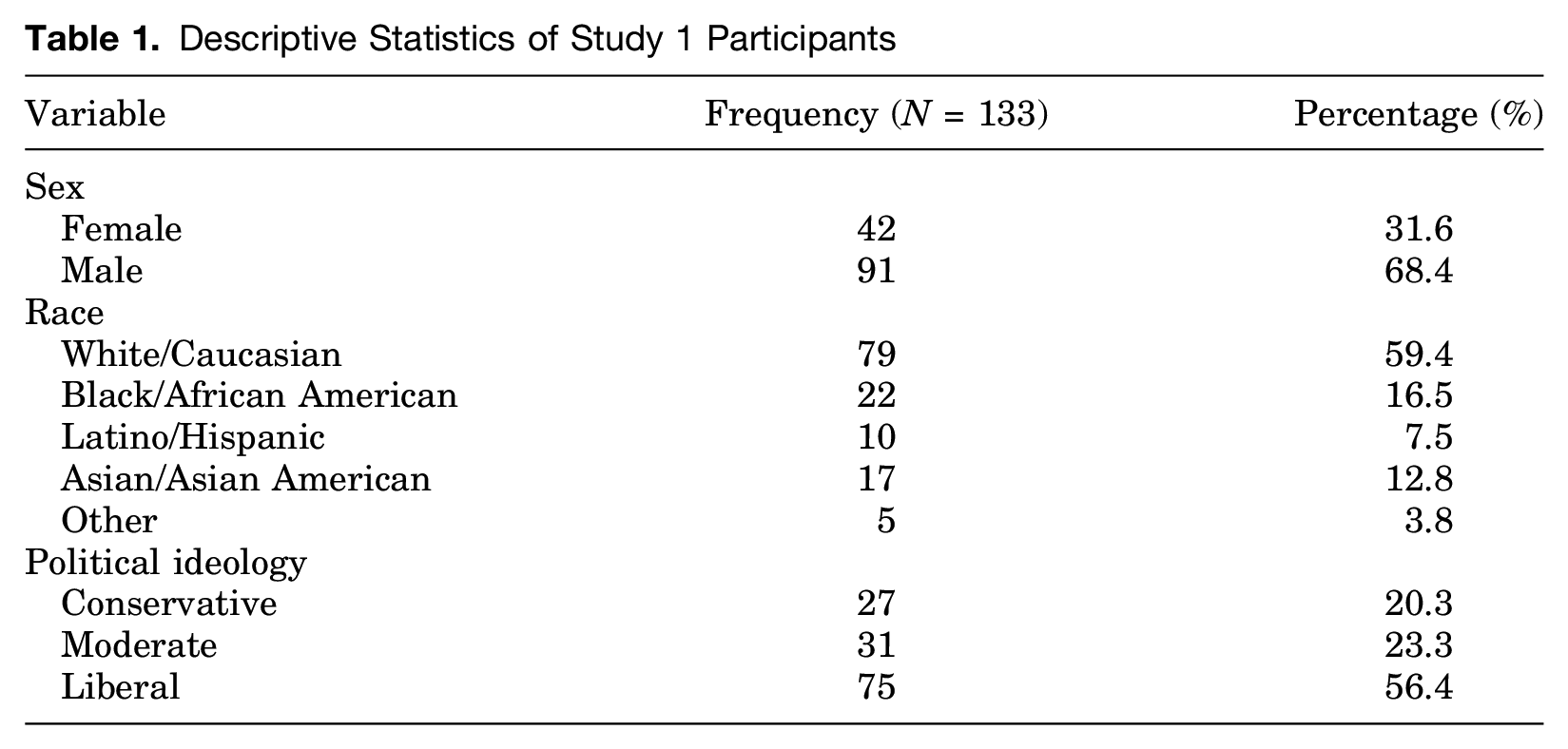
Participants were asked to predict the extent to which men and women (dis)approved of each of these four responses to the norm violation using the same 6-point scale described earlier. Although the norm violation scenario always appeared first, the order of questions about the four responses to the norm violation was randomized, as was whether participants first predicted men or women’s approval. Following these measures, participants indicated their gender and political ideology, which may be relevant to gender stereotypes. We also include controls for age (average ≈ 40, SD = 13) and race (see Table 1 for descriptive statistics). They were then paid and debriefed.
Descriptive Statistics of Study 1 Participants
Results
Figure 1 gives lay predictions for the extent to which women and men (dis)approve of the norm violation (Figure 1a) and the four responses to the norm violator (Figure 1b). Lay predictors expected that men would be less disapproving of the norm violator than women and of the person who witnessed a social norm violation and did nothing. They also predicted that men would be more approving of the person who directly confronted the norm violator. On the other hand, participants predicted that women would be more approving of someone who ostracized the norm violator and someone who gossiped about the norm violator.
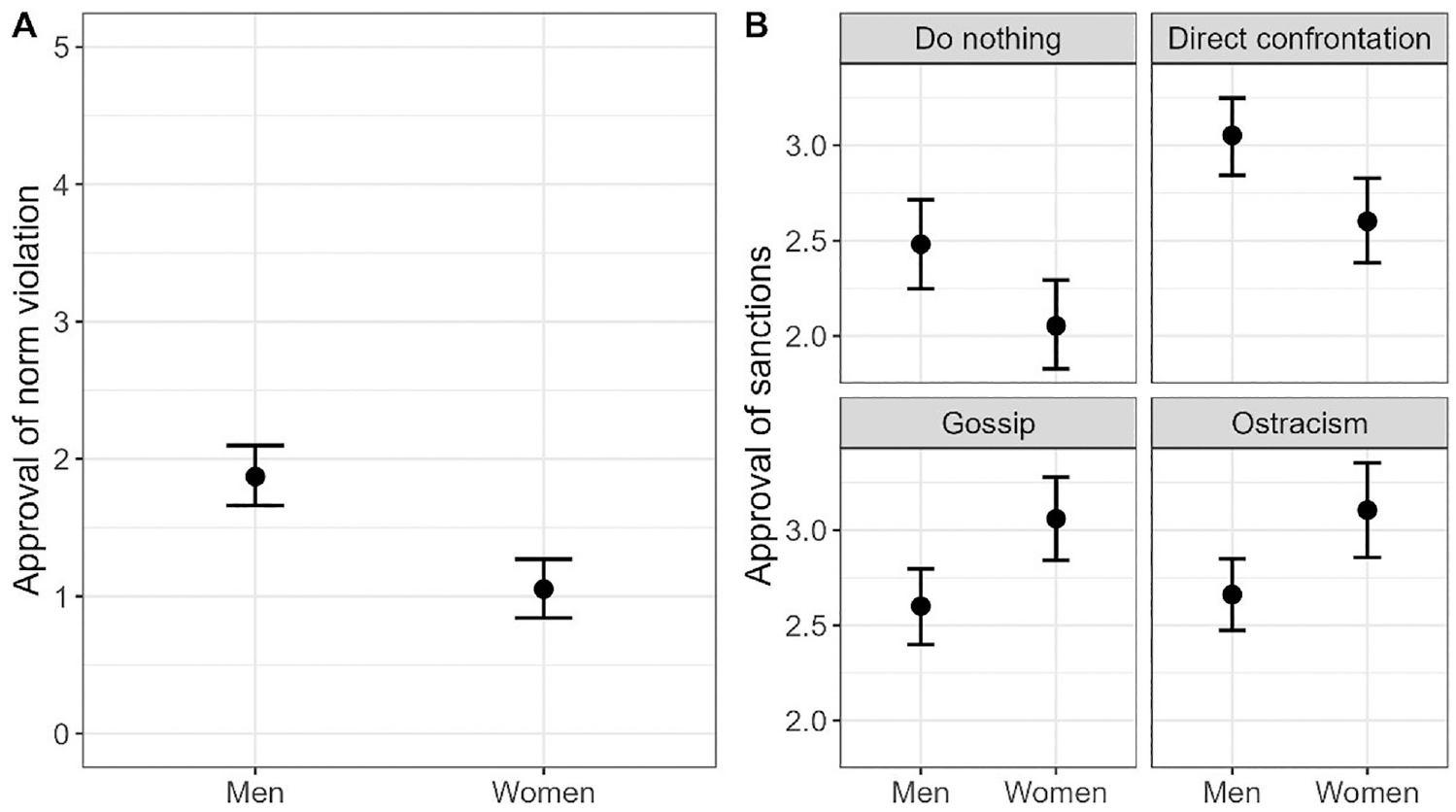
Lay Predictions from Study 1 of Gender Differences in (a) Approval of Norm Violators and (b) Response to Norm Violators
To assess whether these differences are statistically significant, we ran a series of mixed-effects linear models, incorporating random intercepts for participants to address the nonindependence of observations. Table 2 gives models for stereotypes of the norm violator. Model 1 examines differences between the extent to which men and women are predicted to approve of the norm violation. Model 2 controls for respondent’s gender, age, race, and political orientation (with men, White respondents and conservatives are reference categories). The models for responses to the norm violator are given in Table 3. Models 1, 3, 5, and 7 examine differences between men and women’s predicted approval of each of the four responses to the violation: do nothing, direct confrontation, gossip, and ostracism. Models 2, 4, 6, and 8 include the demographic controls.
Lay Predictions of Gender Differences in Approval of Norm Violators (Study 1)
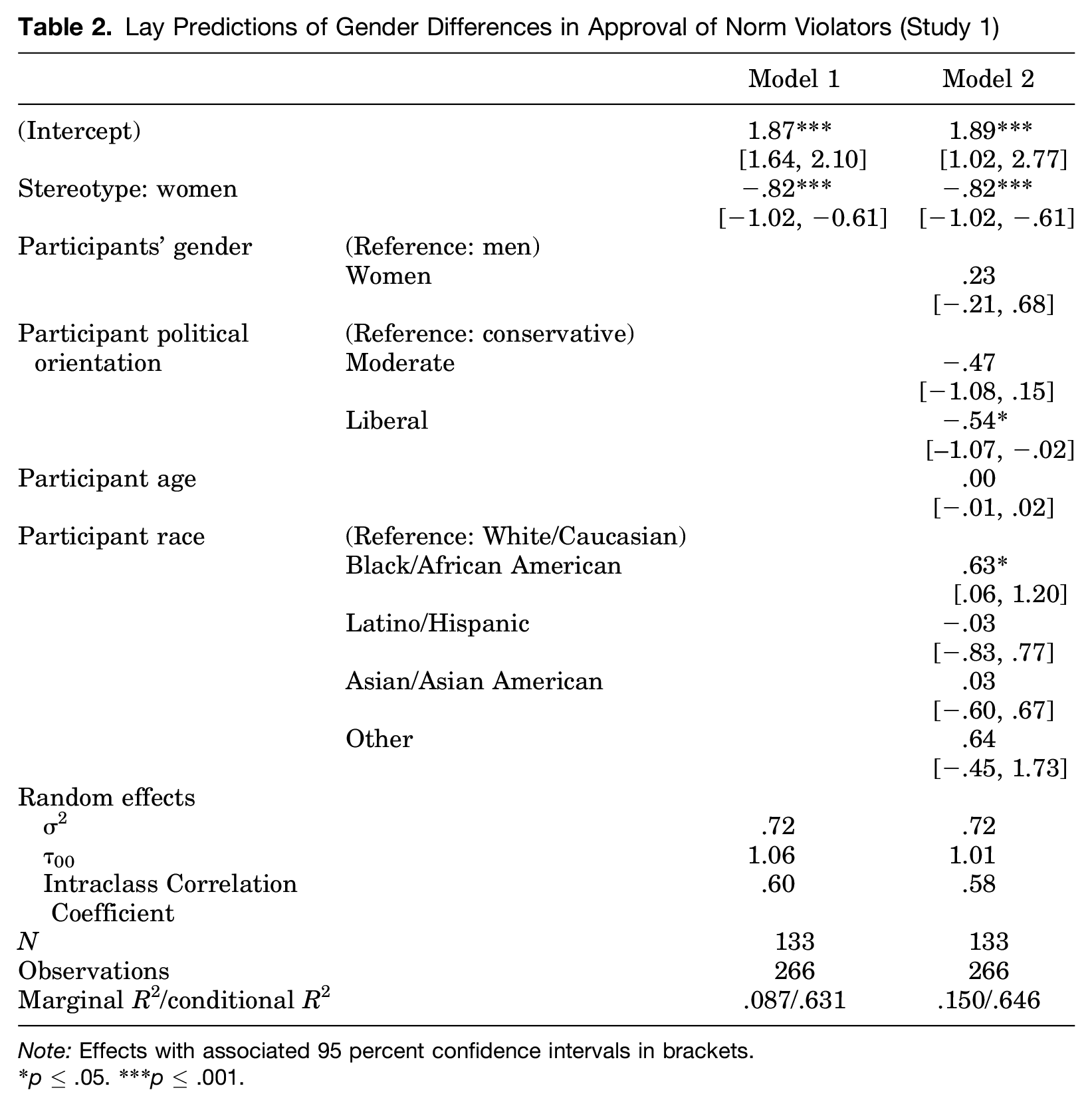
Note: Effects with associated 95 percent confidence intervals in brackets.
p ≤ .05. ***p ≤ .001.
Lay Predictions of Gender Differences in Approval of Reactions to Norm Violators (Study 1)
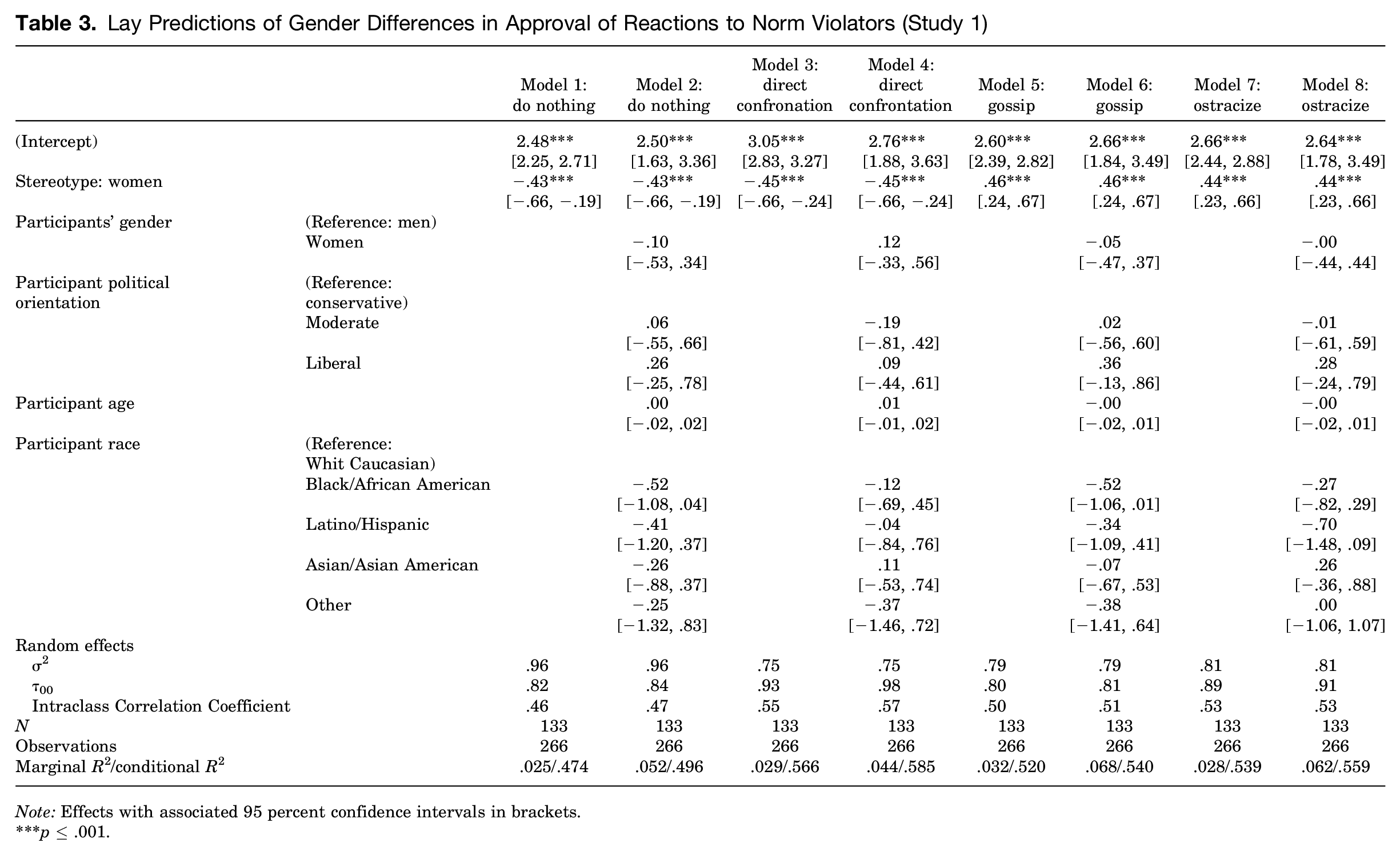
Note: Effects with associated 95 percent confidence intervals in brackets.
p ≤ .001.
The models show that all the differences observed in Figure 1 are statistically significant (all ps < .001), and they remain so after controlling for respondents’ gender, age, race, and political orientation. These results thus clearly support the existence of stereotypes of women as more approving of gossip and ostracism and men as less disapproving of norm violations and more approving of direct confrontation of norm violators.
Study 2: Assessing The Stereotypes Observed In Study 1
To what extent do these gender stereotypes map on to actual gender differences in approval of norm violations and responses to norm violations? To answer this, we turn to data from the global study of norms (Eriksson et al. 2021). These data were collected by researchers in 57 societies using samples of students and nonstudents (N = 22,393; students = 18,091; nonstudents = 4,472) from 7 countries in Africa, 18 in Asia, 21 in Europe, 10 in the Americas, and Australia. The study compared the appropriateness of norm violations and responses to norm violations across these societies. In addition to rating the appropriateness of a violation of a cooperative norm (i.e., the purple triangle animation from Study 1), participants rated four other norm violations taken from prior research (Gelfand et al. 2011): listening to music on headphones at a funeral, sleeping in a restaurant, singing in a library, and reading a newspaper at the movies. Subsequently, participants rated the appropriateness of the four different responses (i.e., gossip, ostracism, direct confrontation, and doing nothing) to each norm violation they read about. Thus, each participant provided a total of 25 appropriateness ratings. Each rating was given on a 6-point scale ranging from extremely inappropriate (0) to extremely appropriate (5). 4
Excluding those who failed the attention check embedded in the survey, did not indicate their gender, or answered “other/don’t want to say” in response to the gender measure leaves a sample of 17,268 participants (students = 14,566; nonstudents = 2,702), 66% of whom are women, with an average age of 24.5 years (SD = 8.49).
Results
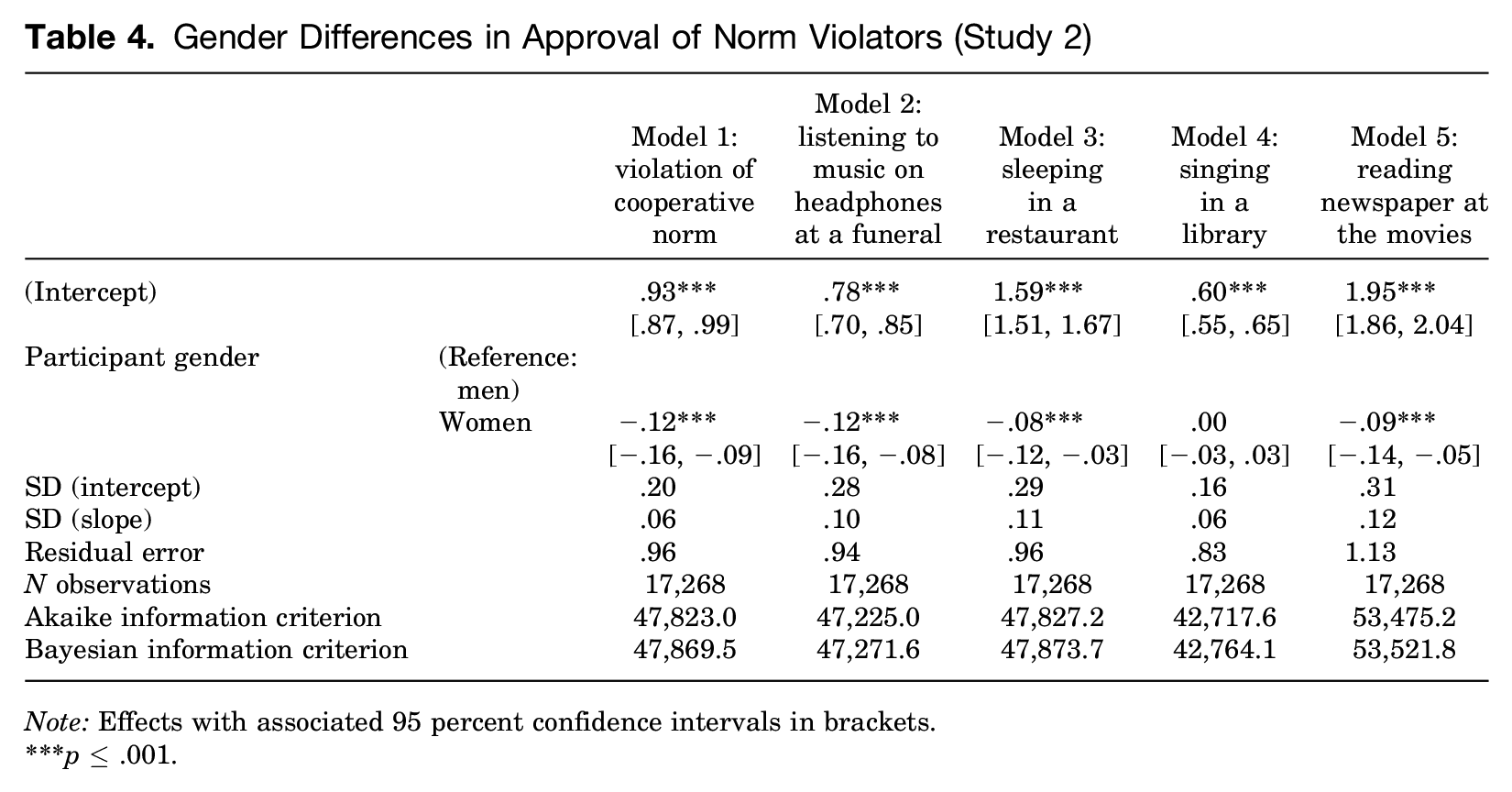
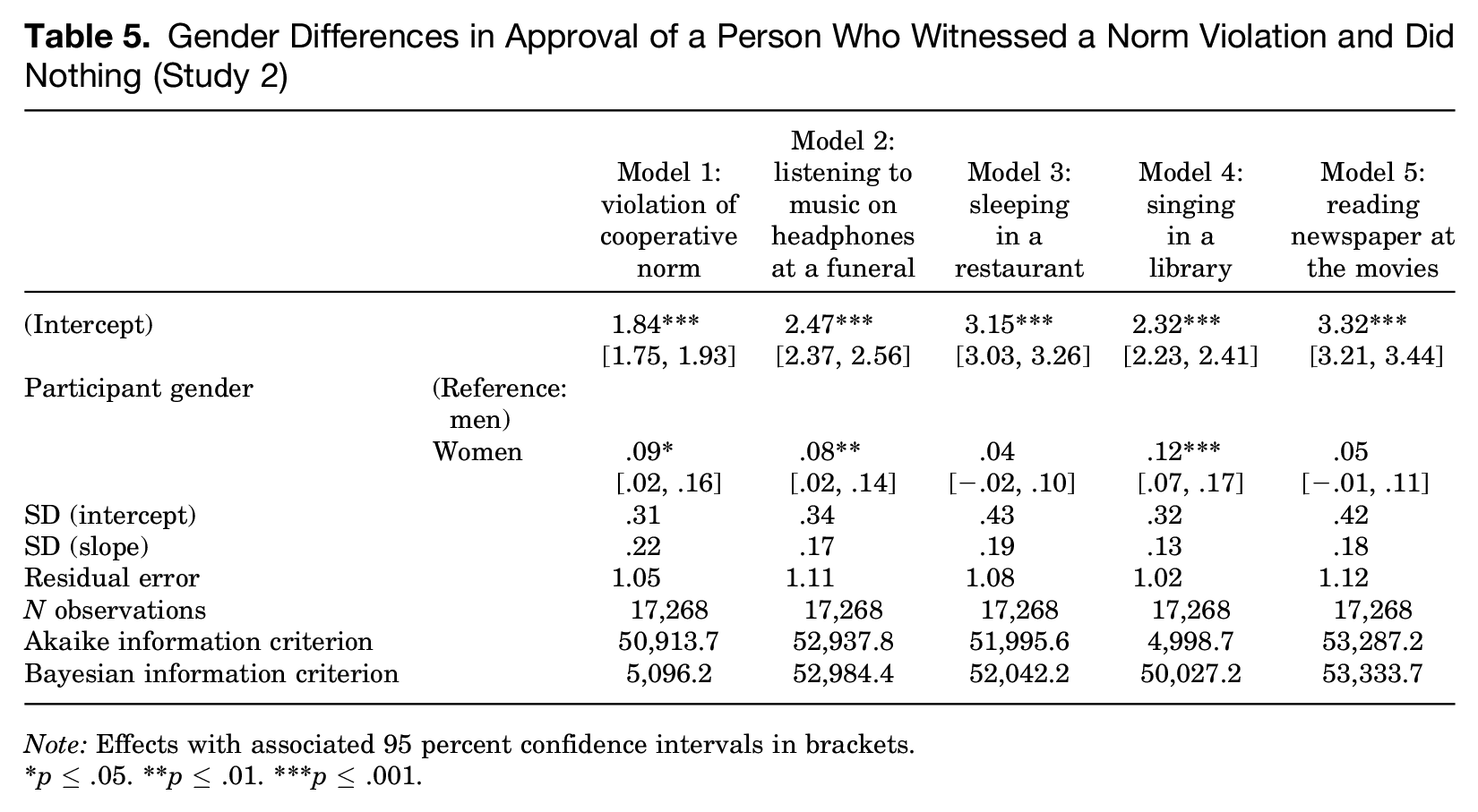
Here, we focus on differences in men and women’s (dis)approval. 5 We analyzed responses from participants in these 57 societies with mixed models with a fixed effect for gender and random intercept and slope at the country level. In our analyses, a positive coefficient for women means that women were more approving (or less disapproving) of the actor (norm violator, person who ostracizes the norm violator, etc.). Model 1 in Tables 4 to 8 present results corresponding to the norm violation scenario we presented to respondents in the lay prediction study, involving the animated figure who violates a cooperation norm. Consistent with the stereotype, men expressed less disapproval of the norm violator than women (Table 4; p < .001). Interestingly, despite expressing greater disapproval of the norm violator, women, on average, expressed less disapproval than men of the person who witnessed the norm violation and did nothing (Table 5; p = .01). This latter result is inconsistent with the lay prediction that men would be less disapproving of the person who did nothing in response to observing the norm violation.
Gender Differences in Approval of Norm Violators (Study 2)
Note: Effects with associated 95 percent confidence intervals in brackets.
p ≤ .001.
Gender Differences in Approval of a Person Who Witnessed a Norm Violation and Did Nothing (Study 2)
Note: Effects with associated 95 percent confidence intervals in brackets.
p ≤ .05. **p ≤ .01. ***p ≤ .001.
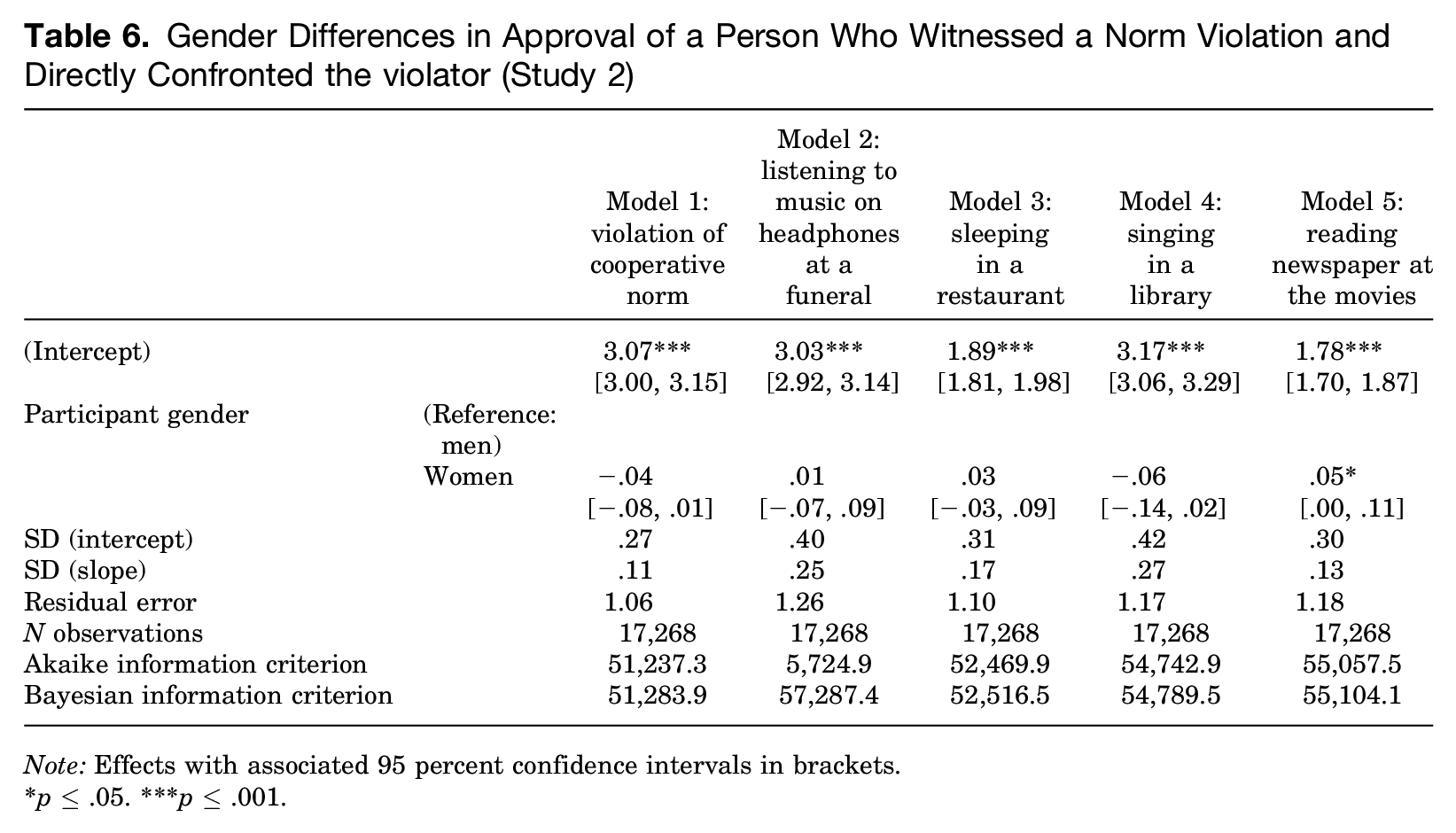
Gender Differences in Approval of a Person Who Witnessed a Norm Violation and Directly Confronted the violator (Study 2)
Note: Effects with associated 95 percent confidence intervals in brackets.
p ≤ .05. ***p ≤ .001.
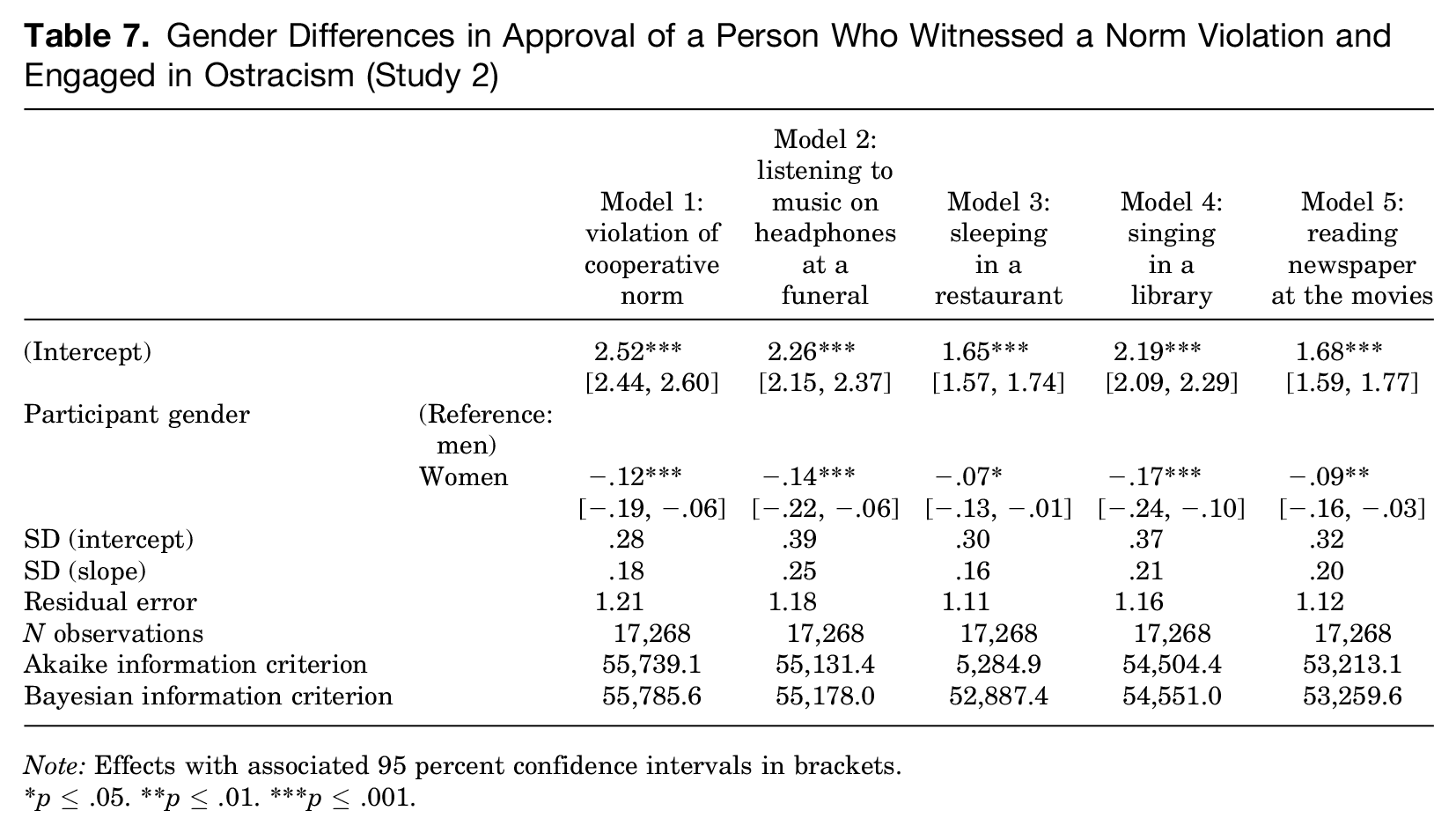
Gender Differences in Approval of a Person Who Witnessed a Norm Violation and Engaged in Ostracism (Study 2)
Note: Effects with associated 95 percent confidence intervals in brackets.
p ≤ .05. **p ≤ .01. ***p ≤ .001.
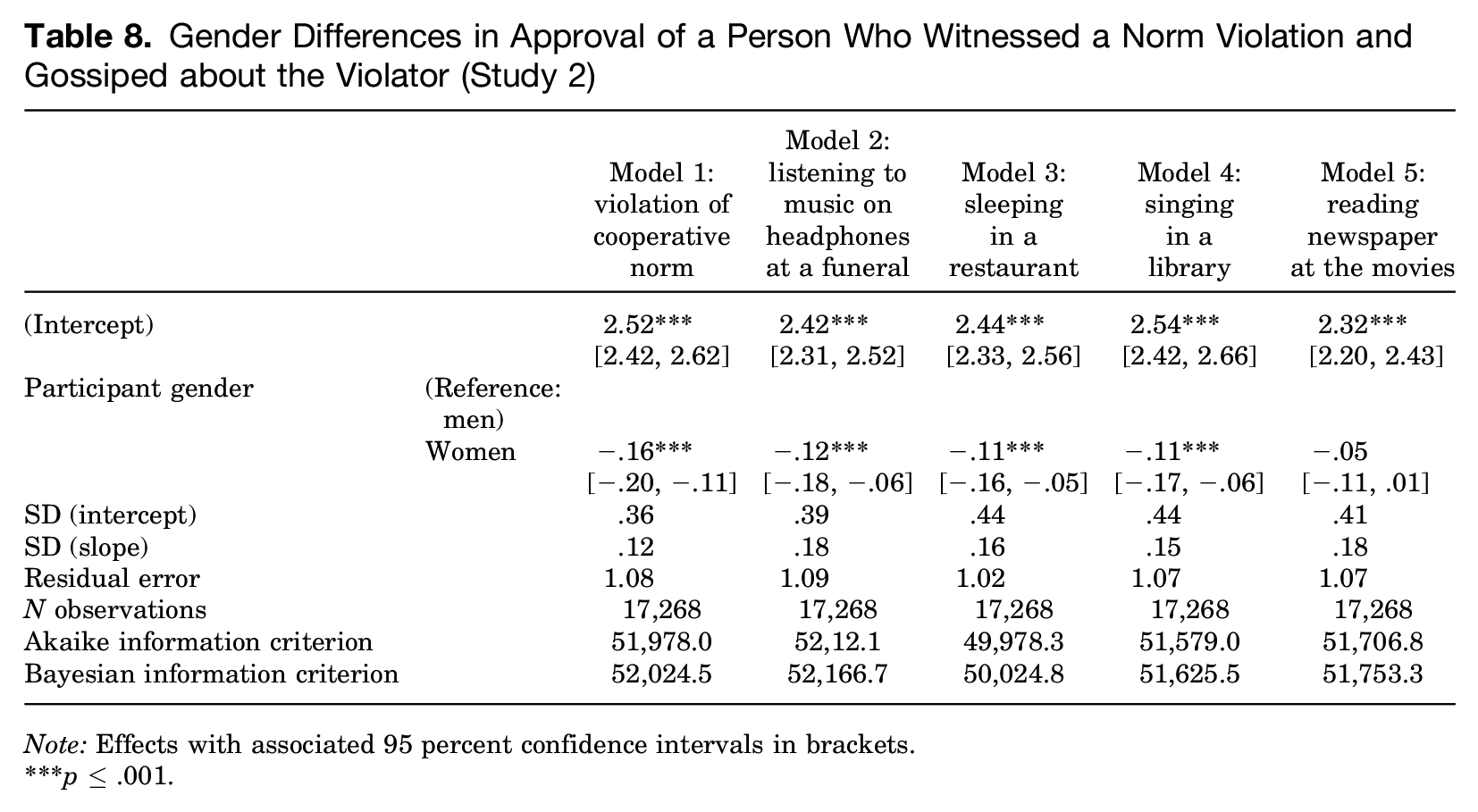
Gender Differences in Approval of a Person Who Witnessed a Norm Violation and Gossiped about the Violator (Study 2)
Note: Effects with associated 95 percent confidence intervals in brackets.
p ≤ .001.
Although men were stereotyped as more approving of a person who directly confronts the norm violator, we do not find significant gender differences in the 57-society data (Table 6; p = .09). Study 1 participants expected that women would be more approving of the two indirect responses. But men in the 57-society data were more approving of the person who engaged in ostracism (Table 7; p < .001) and of the person who gossiped about the norm violator (Table 8; p < .001). Both these findings on indirect sanctions run directly counter to the stereotypes observed in Study 1.
Responses to Everyday Norm Violations
Thus far, following much of the research on norms and responses to norm violations (Horne 2009), we have focused on the violation of cooperation norms. We now assess the robustness of our findings across a wider array of norms. For instance, are women more approving of ostracism and gossip in response to other types of norm violations? Or is there something special about cooperative norms that do not conform to these stereotypes?
To address this, we analyzed data on the four other norm violations included in the 57-societies data, all of which were taken from prior research on norms and norm violations (Gelfand et al. 2011): listening to music on headphones at a funeral, sleeping in a restaurant, singing in a library, and reading a newspaper at the movies. Models 2 through 5 in Tables 4 to 8 give results for these norm violations (Table 4). The results are highly consistent with those from the cooperative norm violation (Model 1). For all but one norm violation (singing in a library), men are less disapproving of the norm violator (Table 4; ps < .001).
The four responses to these additional norm violations are given in Tables 5 to 8. As shown in Table 5, women tend to be less disapproving of someone who does nothing in response to a norm violator, although this difference is not statistically significant for sleeping in a restaurant (Model 3; p = .232) or reading a newspaper at the movies (Model 5; p = .129; all other ps ≤ .001). Consistent with the nonsignificant effect we observed for verbal confrontation of someone who violated a cooperation norm, Table 6 shows that there are no consistent gender differences in approval of someone who verbally confronts a norm violator.
Finally, gender differences in approval of gossip and ostracism are highly consistent across different norm violations. Men were consistently more approving (or less disapproving) of a person who ostracizes a norm violator (Table 7; all ps ≤ .014). Likewise, as shown in Table 8, men were more approving (or less disapproving) of gossip for all norm violations, although this difference is not statistically significant for one norm violation, reading a newspaper at the movies (Model 5; p = .115; all other ps < .001). These results suggest that gender differences (and similarities) in approval of norm violations and responses to those norm violations, especially ostracism and gossip, are robust across different domains.
Exploring Global Variation in Gendered Responses to Norm Violators
How much consistency do we observe in gender differences across the 57 societies? Given the high level of consistency across different scenarios just reported, we composited responses for the five different norm violation scenarios. We can then ask, for example, the extent to which men’s greater approval of gossip and ostracism holds across societies. Figure 2 gives results for (dis)approval of the norm violator across all five scenarios across societies. Although this figure shows that overall levels of disapproval vary across societies, there is a remarkably strong tendency for men to be less disapproving of the norm violator. Descriptively, in only 12 of the 57 societies do women show more approval of the norm violator compared to men.
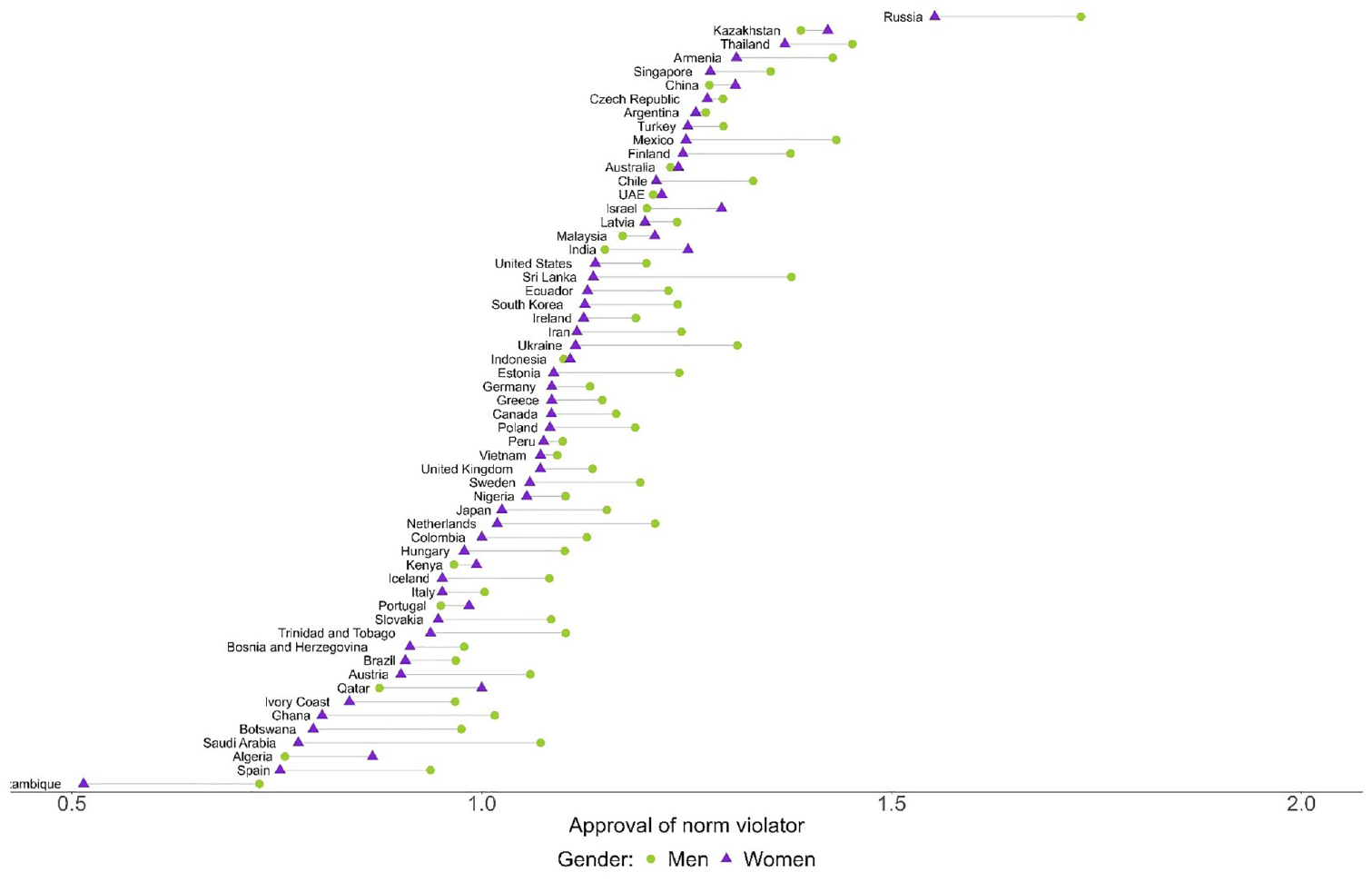
Gender Differences in (Dis)Approval of the Norm Violator across All Societies (All Five Scenarios, Study 2)
Cross-national gender differences are even more consistent for gossip, with men in 49 of the 57 societies being more approving of gossip than women, as shown in Figure 3. Figures 4 to 6 show society-level data for ostracism (where women are more approving of ostracism in only 11 of the 57 societies), direct confrontation (where, consistent with our main analyses, there is no cross-cultural tendency for men or women to be more approving of the sanction), and doing nothing (where, again, we do not observe consistent gender differences across societies). In short, our data show that contrary to our lay prediction study, not only are women less approving than men of gossip and ostracism, but these gender differences are quite consistent across the globe.
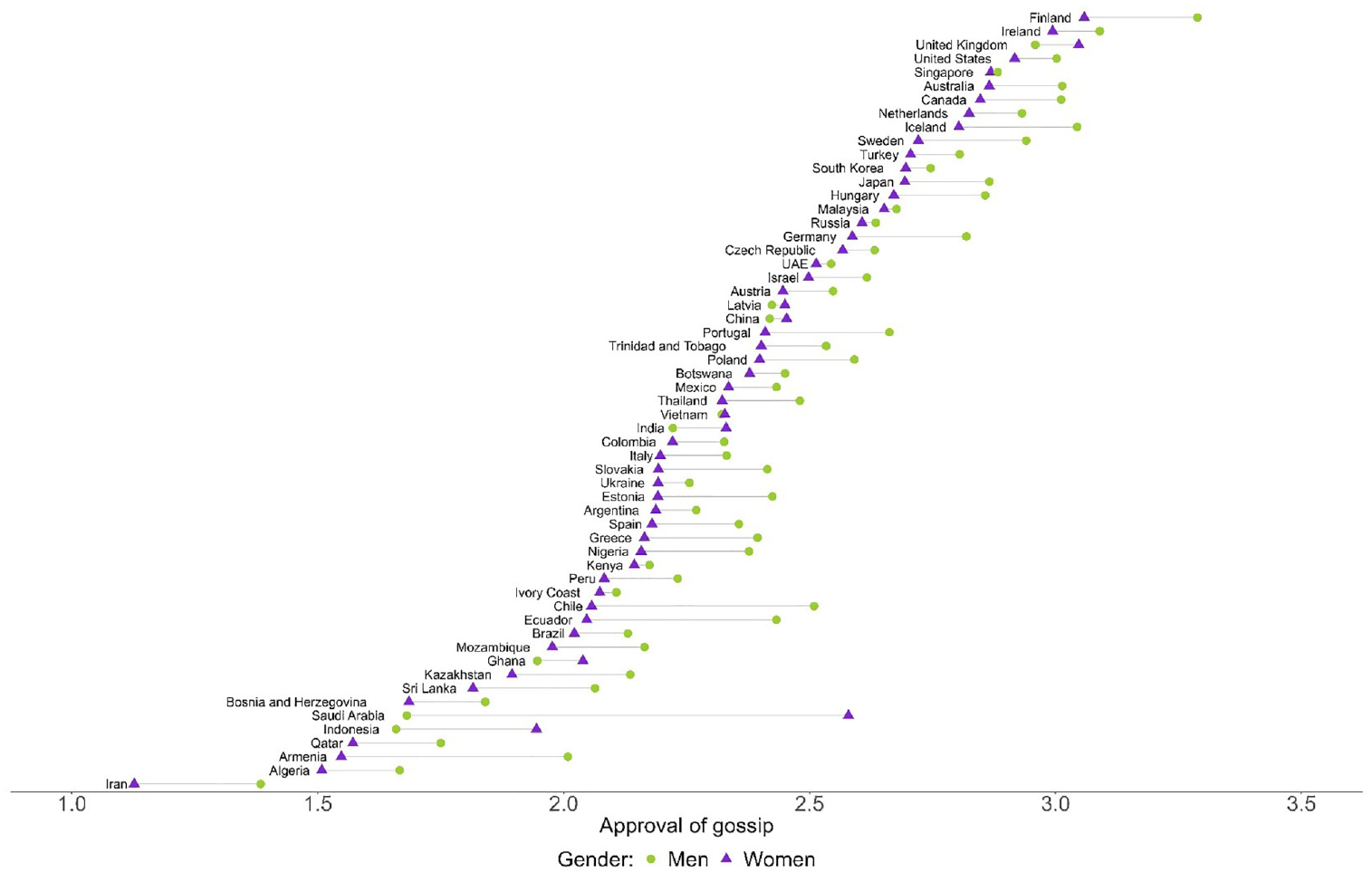
Gender Differences in (Dis)Approval of Gossip across All Societies (All Five Scenarios, Study 2)
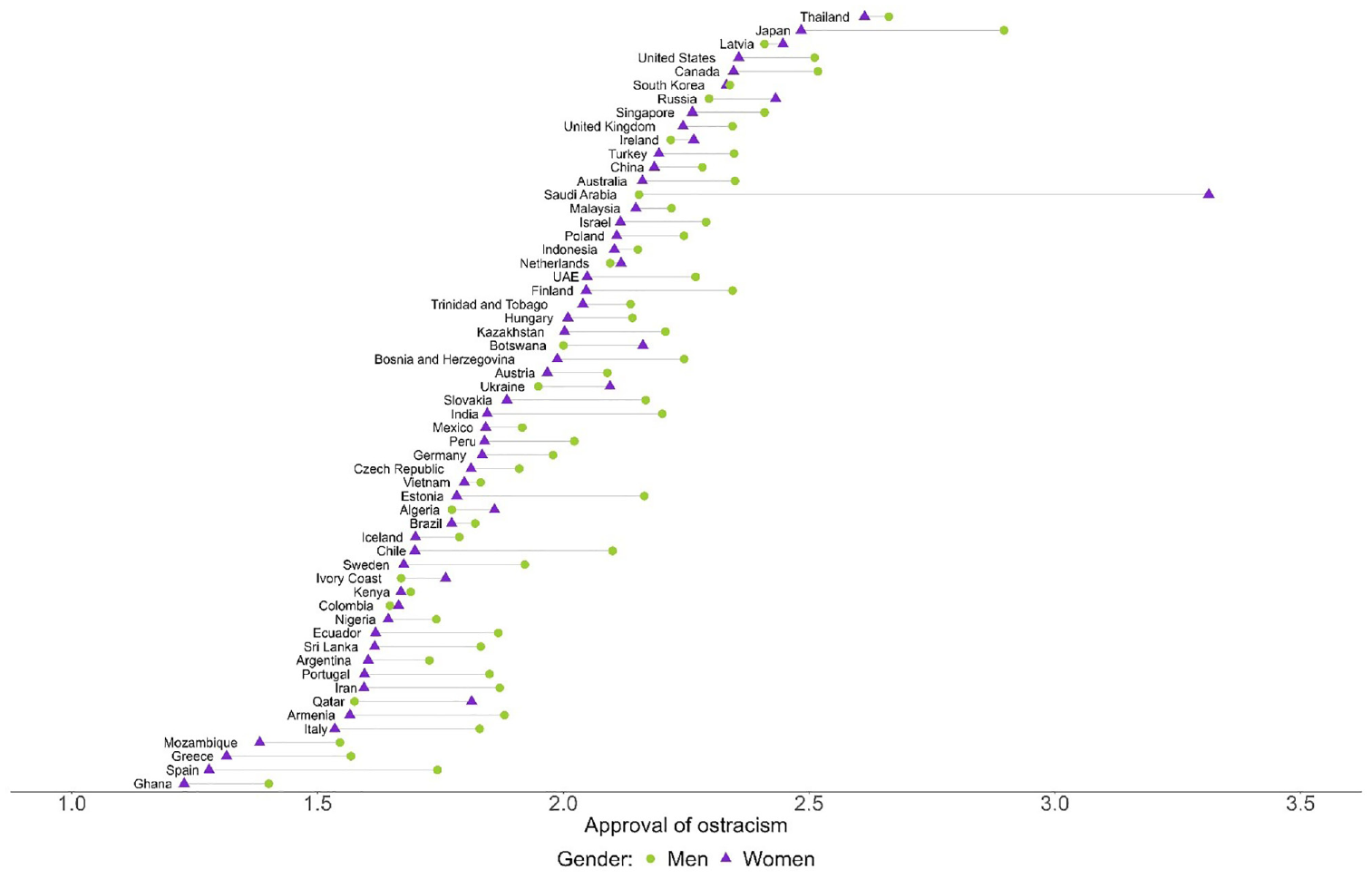
Gender Differences in (Dis)Approval of Ostracism across All Societies (All Five Scenarios, Study 2)
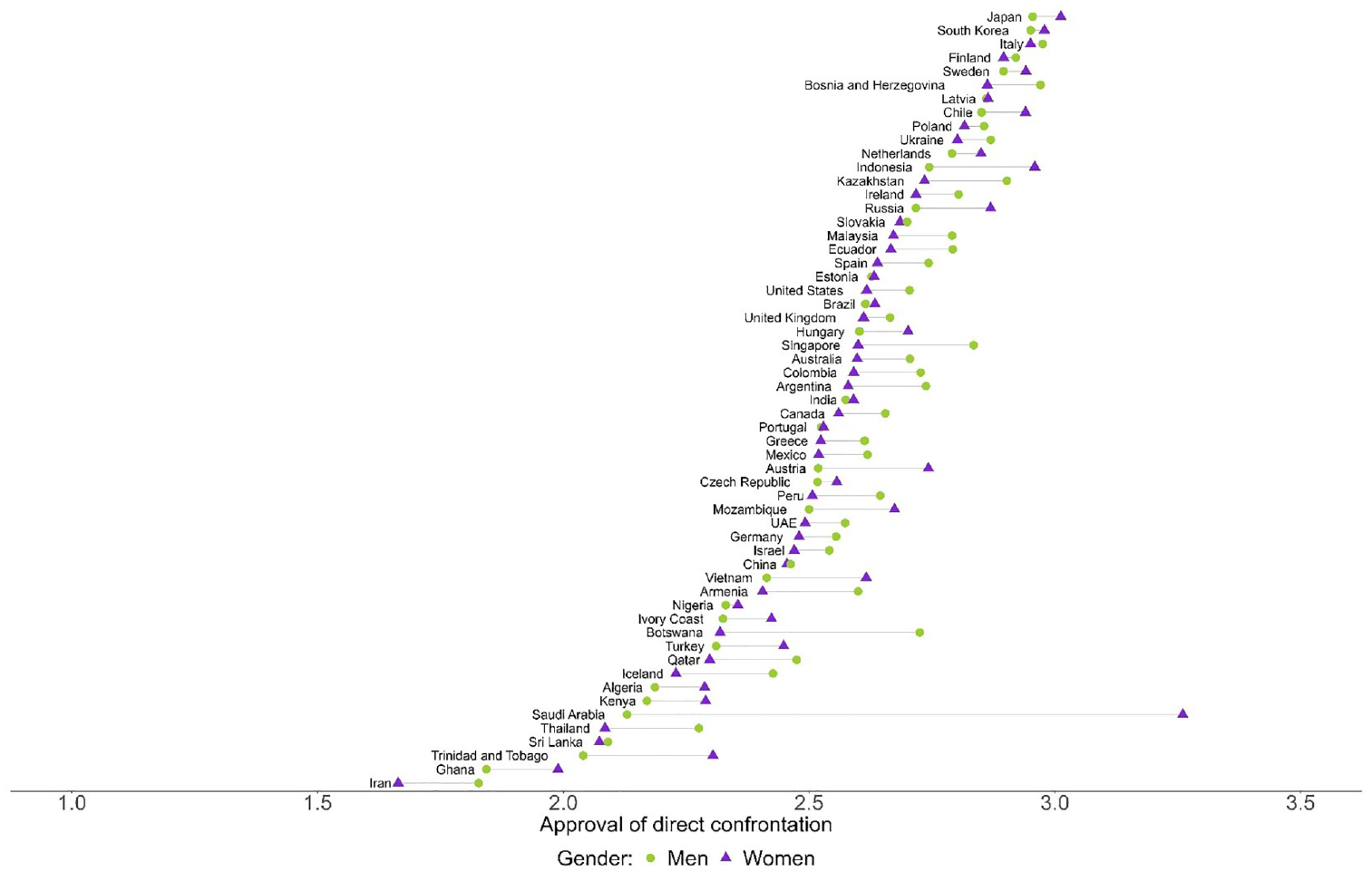
Gender Differences in (Dis)Approval of Direct Confrontation across All Societies (All Five Scenarios, Study 2)
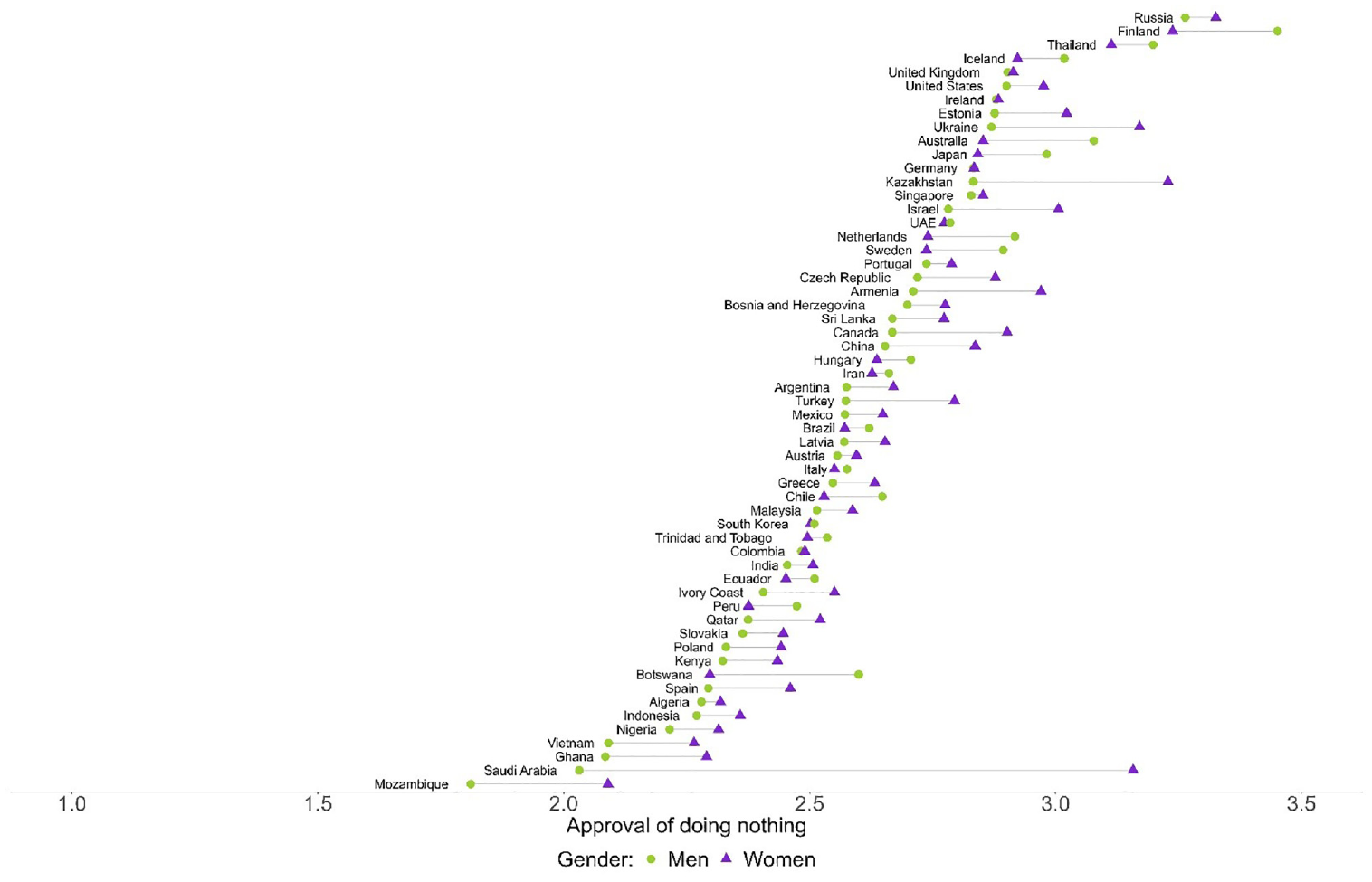
Gender Differences in (Dis)Approval of Doing Nothing across All Societies (All Five Scenarios, Study 2)
An Alternative Explanation
We wanted to rule out a potential alternative explanation for the mismatches we observed between the results of Studies 1 and 2. In particular, Study 1 asked participants to predict the behaviors of “thousands of people around the world.” Perhaps participants, all of whom were in the United States, did not have any clear sense of the attitudes of women and men “around the world.” Would their stereotypes of American women and men be different compared to when they are asked to make more global predictions? To assess this, we replicated Study 1 but told participants that we were interested in getting their predictions about women and men from the United States. The results of this study are highly consistent with those of Study 1. 6 Thus, the mismatches we observed between stereotypes in Study 1 and actual gender differences in Study 2 are not a consequence of participants being asked to predict the responses of men and women across the globe.
Discussion
We studied the accuracy of gender stereotypes in the context of norm violations. We found that althoughj women are stereotyped as more approving of gossip and ostracism in response to norm violations, it is actually men who are more approving of gossip and ostracism in these contexts. And although men are stereotyped as more approving of directly confronting norm violators, we do not find any consistent gender differences in approval of confronting norm violators. The only instance in which we found a correspondence between gender stereotypes and actual gender differences was in approval of norm violators themselves—men are stereotyped as being more approving and are, in fact, more approving.
Two features of our research merit underscoring. First, the majority of prior related work (e.g., on gender stereotypes and gossip) has been conducted in WEIRD populations. And any given WEIRD population has been shown to differ along a variety of dimensions compared to not only various non-WEIRD populations but also other WEIRD populations (Apicella et al. 2020). Thus, it is important to question whether a finding that, for instance, women are more approving of gossip in a given domain is unique to American college students or occurs more broadly, in both WEIRD and non-WEIRD contexts.
Second, it is not clear from prior work whether a given finding—for example, that women are not more approving of gossip in a given domain—contradicts stereotypes because previous studies have not measured both stereotypes and actual gender differences (or similarities) in the same domain. Here, we first measured whether gender stereotypes exist in an important domain—namely, in response to norm violations—and related those stereotypes to actual gender differences in the exact same domain.
That said, only our study of actual gender differences in approval of various responses to norm violations used a non-WEIRD sample. Our study of stereotypes (Study 1) used a convenience sample of Americans. An important question for future research is the extent to which gender stereotypes about these issues vary cross-culturally.
Given that it is men in our data who are more approving of gossip and ostracism in response to norm violations, why do we observe the exact opposite stereotype? One possibility is suggested by research on the etymology of the term “gossip” (Rysman 1977). This research suggests that the types of interactions and talk women tended to engage in came to be known as “gossip,” initially in a nonpejorative sense. Over time, “gossip” took on a more pejorative meaning and came to be redefined as the type of talk more typical of women. In line with this, recent work (Kakarika, Taghavi, and Gonzalez 2021) shows that observers have more negative perceptions of women than men who engage in gossip. If gossip comes to be defined as something (negative) that “women do,” it is perhaps less surprising that stereotypes can run counter to objective reality. More specifically, existing research points to how gender stereotypes affect how we code and recall behaviors and how we describe others’ behaviors (Ellemers 2018). Thus, talk about another person may be perceived as gossip when women do it but not when men do. A similar case could be made for ostracism given cultural stereotypes of “mean girls,” as discussed earlier. This suggests a process, testable in future research, through which women may be stereotyped as being more apt to engage in gossip or ostracism even when they are less so.
Our findings may have important implications for how the gender composition of groups impacts norm violations. For instance, research shows that the mere possibility of gossip or ostracism is sufficient to promote cooperation norms (Wu, Balliet, and Van Lange 2016). If people expect, for instance, that women will be more likely to engage in gossip or ostracize norm violators (even if they are not), cooperation may be higher in the presence of women who can gossip about or ostracize noncooperators. Several studies have asked whether and why the gender composition of groups affect cooperation (Anthony and Horne 2003; Sell and Kuipers 2009). Our findings suggest that the gender composition of groups may impact cooperation via (incorrect) stereotypes about women’s versus men’s tendencies to engage in gossip, ostracism, or confrontation following norm violations. These questions could be addressed in future research.
But perhaps the most important direction for future research is applying the general approach we used here—namely, measuring gender stereotypes and then checking those stereotypes against actual data in the same context—to assess other stereotypes. Likewise, as noted earlier, cultural stereotypes are often domain specific and are likely conditional on factors such as the gender of the person being ostracized or whether gossip is about relationships or achievement, just to name a few examples. Future research could extend the basic methods presented here to investigate these issues. Given the powerful effects of gender stereotypes on a range of outcomes, it is important to gain a better understanding of their accuracy. By extension, future research should also explore interventions to correct stereotypes. The effectiveness of such interventions would undoubtedly be bolstered by data clearly demonstrating that a given stereotype is wrong or identifying the conditions under which it is wrong.
Supplemental Material
sj-docx-1-spq-10.1177_01902725241268455 – Supplemental material for Who Approves of Gossip, Ostracism, and Confrontation Following Norm Violations? A Cross-Cultural Test of Gender Stereotypes
Supplemental material, sj-docx-1-spq-10.1177_01902725241268455 for Who Approves of Gossip, Ostracism, and Confrontation Following Norm Violations? A Cross-Cultural Test of Gender Stereotypes by Brent Simpson, Isabela Hazin and Kimmo Eriksson in Social Psychology Quarterly
Footnotes
Funding
The author(s) disclosed receipt of the following financial support for the research, authorship, and/or publication of this article: Simpson’s work on this article was supported by a sabbatical from the College of Arts and Sciences, University of South Carolina. Hazin’s work was supported by the Swedish Research Council (Grant No. 2018-03365). Eriksson’s contributions were supported by the Knut and Alice Wallenberg Foundation (Grant No. 2022.0191).

Supplemental Material
Supplemental material for this article is available online.
Notes
Bios
References
Supplementary Material
Please find the following supplemental material available below.
For Open Access articles published under a Creative Commons License, all supplemental material carries the same license as the article it is associated with.
For non-Open Access articles published, all supplemental material carries a non-exclusive license, and permission requests for re-use of supplemental material or any part of supplemental material shall be sent directly to the copyright owner as specified in the copyright notice associated with the article.
