




Abstract
American media coverage of the “Great Resignation” may have contributed to a belief that job dissatisfaction is widespread in the United States, even though surveys show relatively high and stable levels of job satisfaction among American workers. Using data from the 2023 Quality of Employment Survey, we investigate whether individuals’ beliefs about job dissatisfaction mirror empirical evidence or align more with media portrayals of widespread discontent. While most study participants expressed personal job satisfaction, over half believed that the majority of Americans were not at all satisfied, indicative of pluralistic ignorance—a phenomenon involving a collective misperception about a group’s norms or beliefs. Dissatisfaction beliefs were more common among remote workers and those with fewer work friendships. Moreover, believing in widespread job dissatisfaction was associated with lower organizational commitment, controlling for personal job satisfaction. We discuss the role of pluralistic ignorance in reconciling personal experiences with contrasting media representations of work and the economy.
Keywords
For months, economists have debated the kind of recession the U.S. would slide into after the Federal Reserve began raising interest rates. But what they missed is that the country is already in a recession—not an economic recession, but an emotional one. (Clifton 2023)
American media coverage of the unprecedented wave of resignations during the pandemic, known as the “Great Resignation,” may have fueled a narrative that suggests worker unhappiness and disengagement are widespread in the United States (Thompson 2022, 2023; Weinstein and Hirsch 2023). Paradoxically, worker surveys suggest a counternarrative: a majority of American workers express job satisfaction—a number that rose throughout the pandemic (Churchville 2023). Our study addresses this apparent paradox by investigating Americans’ perceptions of job dissatisfaction within the broader workforce. We aim to discern whether these perceptions accurately mirror the actual patterns of job satisfaction reported in empirical research or if they align more with media portrayals of widespread worker discontent during and after the pandemic.
Research suggests that U.S. media coverage of economic issues has become increasingly negative over the past decade, a trend that intensified during the COVID-19 pandemic (Harris and Sojourner 2024). We propose that this coverage may have helped shape a collective belief that widespread job dissatisfaction is the norm, despite most workers expressing personal job satisfaction. To explore this possibility, we utilize the concept of pluralistic ignorance to describe the potential disconnect between workers’ personal and public job satisfaction perceptions. We also explore the workplace mechanisms that could be perpetuating or amplifying this disconnect.
Pluralistic ignorance occurs when there is a widespread misinterpretation within a group concerning the norms or beliefs held by its members (Miller and McFarland 1991). This misperception can arise from individuals erroneously believing their private views or actions are more unique than they truly are. Amid the Great Resignation and the media’s coverage of its causes, we propose the possible presence of pluralistic ignorance, characterized by workers inaccurately believing job dissatisfaction to be more widespread than it actually is, even as the majority voice personal satisfaction. We look for evidence of this possibility using a national survey of American workers, conducted in February 2023, that contains novel measures to gauge workers’ perceptions of their peers’ job satisfaction in the broader working population. Building on prior research that suggests social isolation increases reliance on generalized or public beliefs, our analysis also examines how remote work behaviors and social connectivity among colleagues might contribute to these perceptions (Centola, Willer, and Macy 2005).
In the following section, we contrast empirical evidence on job satisfaction trends with pandemic-based American media coverage of worker discontent. We then turn to the social psychological concept of pluralistic ignorance to consider the workplace determinants of a possible disjunction between personal and public perceptions of job satisfaction.
Literature Review
Job Satisfaction Trends and Media Narratives
Job satisfaction represents an individual’s emotional and cognitive evaluation of their work, encompassing their overall sense of contentment and positive attitudes toward aspects such as compensation, job nature, interactions with colleagues, and the overall work environment (Judge and Kammeyer-Mueller 2012). Extensive research has established the link between job satisfaction and key organizational outcomes, including employee retention, productivity, and mental health (Judge et al. 2001). The determinants of job satisfaction vary, ranging from extrinsic factors, like pay, work hours, and promotion opportunities, to intrinsic elements, such as the meaningfulness of work and job autonomy (Cornelißen 2009). The influence of these determinants, however, is not uniform across all individuals and groups; it varies considerably, reflecting diverse employment preferences and expectations across the workforce (Judge and Kammeyer-Mueller 2012).
In the American context, data from the General Social Survey (GSS) reveal relative stability in Americans’ job satisfaction over the past two decades (Figure 1), with the percentage of those reporting being “somewhat” or “very” satisfied with their job never falling below 80 percent since 2002 (for details about methodology, the QOWL module, and data access, see https://gss.norc.org). Intriguingly, despite the social and economic upheaval of the COVID-19 pandemic, there is evidence that job satisfaction increased during the first three years of the pandemic. According to surveys conducted by the Conference Board, which has tracked worker satisfaction over three decades, this increase is attributed to perceived improvements in work-life balance and enhanced working conditions in the initial stages of the pandemic (Churchville 2023).
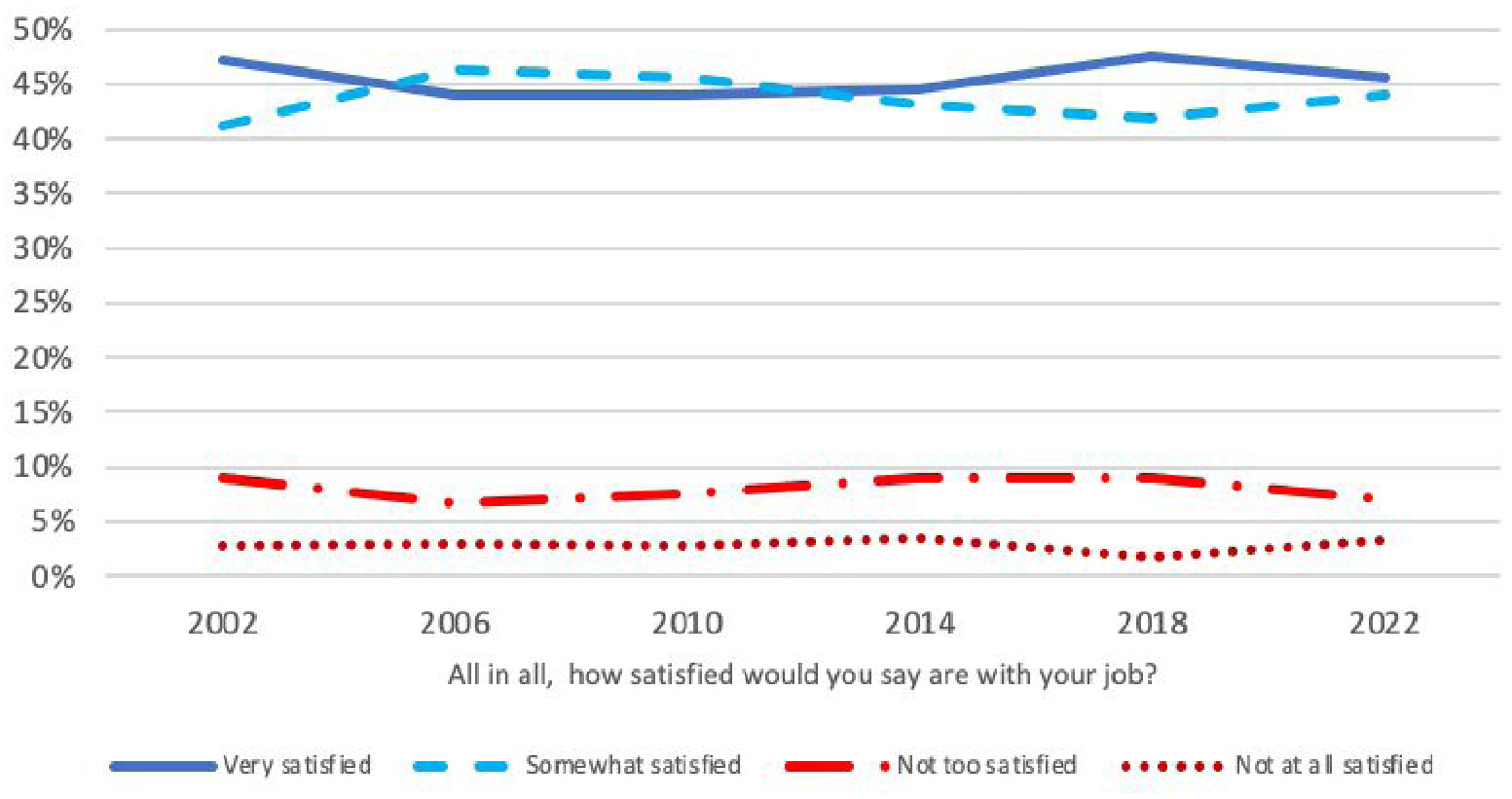
General Social Survey Trends in Job Satisfaction
Despite surveys indicating rising job satisfaction levels throughout the pandemic, American media coverage of work during this period painted an arguably more pessimistic picture of American workers’ job sentiments (Collins 2022; Schieman et al. 2023). Initially, this coverage focused on highlighting pandemic-related challenges for specific worker groups, such as those of frontline workers and lockdown parents juggling remote work and caregiving (Creech and Maddox 2022; Ember 2021; Miller 2021). However, several commentators have argued that as the pandemic progressed, a broader narrative of widespread worker dissatisfaction emerged in news coverage (Schieman 2024; Thompson, 2022, 2023). Thompson (2023) of the Atlantic points out that the surge in job resignations in 2021, known as the Great Resignation, was often interpreted by the American media as a sign of increasing worker dissatisfaction, despite later labor market data challenging this assumption (Birinci and Ngân 2022). Opinion pieces in the New York Times and the Wall Street Journal, for example, suggested that the pandemic had exposed vulnerabilities in work-life balance and employee well-being, thereby setting the stage for a broader reevaluation of workers’ career priorities and the role of work in life (Krugman 2021; Mitchell and Dill 2021; Whang 2022). Illustrating this view, Wolfe’s (2021) article “The Big Quit” (New York Times, October 22, 2021) depicted a workforce experiencing “existential burnout,” with many workers apparently feeling “languished” and “rudderless,” and considering 2021 as a pivotal year for new beginnings.
There is a notable absence of systematic media analyses to substantiate the claim that American media coverage grew increasingly pessimistic regarding worker issues throughout the pandemic; however, there is evidence that the tone of media coverage about the overall American economy became more negative during the pandemic. On the basis of analyses of the San Francisco Federal Reserve’s Economic News Sentiment Index, Harris and Sojourner (2024) reveal a growing disconnect between the sentiment of economic news stories and a range of economic indicators, including economic growth, unemployment, inflation, and equity prices. This divergence, which began in 2017, accelerated from 2021 onward, indicating a shift toward more negative reporting compared with actual economic conditions. Given this evidence, we contend that it is reasonable to suggest that this trend may reflect, at least in part, a growth in negative news coverage focused on the general state of work for Americans.
As such, we argue that the discrepancy between empirical trends of rising worker satisfaction and media narratives about worker discontent merits further inquiry. Beyond the efforts of Harris and Sojourner (2024), research on media narratives about work during the pandemic are rare, with the issue primarily confined to media and social commentary discussions (Thompson 2022, 2023). The present study does not attempt to empirically identify these narratives or establish causative links between them and workers’ beliefs—a complex task with significant methodological obstacles (Hopkins, Kim, and Kim 2017). Instead, our focus is on exploring whether American workers’ perceptions of other workers’ job satisfaction align with media narratives of worker discontent. Should an alignment exist, the robust evidence of rising personal job satisfaction during the same period raises the possibility that pluralistic ignorance is at play. In this scenario, satisfied workers might perceive discontent as widespread, believing themselves to be in the minority (Prentice and Miller 1996). As we discuss, this phenomenon may explain the persistence and resonance of negative media narratives about work, even when they contradict the personal experiences of many individuals.
In the following section, we review existing pluralistic ignorance research and discuss its descriptive and predictive role for understanding a potential disconnect between workers’ personal job satisfaction levels and their beliefs about dissatisfaction in the wider workforce. As part of this review, we consider the workplace factors that may contribute to these beliefs.
Pluralistic Ignorance and Job Dissatisfaction Beliefs
Pluralistic ignorance involves a collective misperception about a group’s norms or beliefs (Allport 1924; Prentice and Miller 1996). At the individual level, the phenomenon may manifest as false uniqueness, where individuals erroneously believe their own views, attitudes, or behaviors are more uncommon within the group than they actually are (Miller 2023; Wojcieszak and Price 2009). Various factors contribute to false uniqueness. Social norms and the fear of social repercussions often deter individuals from expressing their true beliefs, thereby reinforcing the false perception of group consensus, while in other circumstances, it may result from the absence of relevant social cues or other sources of information (Gross and Miller 1997; Noelle-Neumann and Petersen 2004). As a result, these misunderstandings can maintain or even amplify group or societal myths and misconceptions (Eveland and Glynn 2008).
Research on pluralistic ignorance spans various domains, demonstrating how individuals often misjudge the attitudes of their peers compared with their own views. Prentice and Miller’s (1993) foundational study found that college students significantly overestimated their peers’ comfort with alcohol consumption, contrasting with their own personal comfort levels. Building on this, Munsch, Ridgeway, and Williams (2014) similarly found a gap in perceptions regarding the use of flexible work arrangements, where individuals assumed a more negative viewpoint among others than they held themselves. Extending beyond workplace and behavioral norms, Sokoloski, Markowitz, and Bidwell (2018) identified a parallel misperception about climate change policies, revealing that while a majority of Americans are in favor of these policies, many underestimated the level of support among their peers.
We contend that a similar discrepancy may exist between workers’ personal and public job satisfaction perceptions. In the face of media narratives framing the record job quitting of the Great Resignation as a sign of widespread worker dissatisfaction, Americans who are personally satisfied with their job may erroneously perceive their positive experiences as atypical, exhibiting a false uniqueness effect. While the causal impact of the media on economic perceptions is contested (Hopkins et al. 2017), some research suggests that media narratives become particularly potent when they tap into collective memory or align with culturally impactful events, such as the pandemic, amplifying their resonance and impact on public opinion (Akerlof and Kranton 2010; Shiller 2020). Thus, while questions remain regarding the extent that the media reflects or shapes individuals’ economic views, we contend that the pandemic, with its social and economic upheaval, provides a fertile ground for these narratives to have impacted workers’ perceptions of the overall work environment and labor market. While we cannot directly identify this dynamic, we assess its potential footprint through the existence of a widespread belief in a general state of workplace discontent—despite most workers expressing personal satisfaction. This leads to the following hypotheses:
Hypothesis 1: A minority of workers will report job dissatisfaction.
Hypothesis 2: A majority of workers will believe that most other workers are not at all satisfied with their job.
If a minority of workers express job dissatisfaction, yet the majority perceive most others as extremely dissatisfied, it suggests the potential presence of pluralistic ignorance. To investigate this further, we conduct tests for false uniqueness: when individuals, despite aligning with the actual majority belief (in this case, reporting job satisfaction), mistakenly perceive themselves as part of a minority (i.e., believing that most others are dissatisfied).
Hypothesis 3: A majority of satisfied workers will believe that most other workers are not at all satisfied with their job.
Workplace Determinants of Job Dissatisfaction Beliefs
While negative media coverage might have influenced perceptions of widespread job dissatisfaction, the endurance of such beliefs in a labor market where the majority of workers’ experiences contradict these narratives raises questions about the mechanisms sustaining these beliefs. Research on pluralistic ignorance suggests that misperceptions of group norms are more likely in contexts with limited interpersonal interactions (Wojcieszak and Price 2009). As such, we examine whether individuals’ remote work behaviors and ties to coworkers influence their perceptions of job dissatisfaction in the workforce. Here, we contend that the misconceptions about widespread job dissatisfaction may be less a result of individuals suppressing their own feelings and more a consequence of socially isolated workers confronting an emerging narrative and lacking access to counternarratives and alternative experiences that challenge its validity. Research indicates that pluralistic ignorance is especially prevalent around new issues because individuals are more likely to lack established reference points for assessing others’ opinions on novel topics (Eisner, Spini, and Sommet 2020; Noelle-Neumann and Petersen 2004). Thus, faced with a novel issue and diminished opportunities for social interactions, people are prone to rely on broad societal narratives as a default measure of group sentiment (Mullen and Hu 1988).
To test this possibility, we explore how work friendships—an important source of information about others’ work experiences and feelings—might impact beliefs in widespread job dissatisfaction. Relatedly, we also consider whether one’s working location might influence one’s access to opportunities to gauge how other workers feel about their job and that could counter job dissatisfaction narratives. As of 2023, although many Americans have transitioned back to conventional work environments, remote and hybrid work models continue to be prevalent (Hansen et al. 2023). This enduring change provides a unique context for examining whether these work arrangements and the level of social interaction with peers continue to influence beliefs about job dissatisfaction. With these considerations in mind, we explore the interplay between remote work arrangements, social connectivity among peers, and perceptions of job dissatisfaction. To this end, we formulate the following hypotheses:
Hypothesis 4: Remote workers will be more likely to believe that most other workers are not at all satisfied with their job.
Hypothesis 5: Individuals with fewer work friends will be more likely to believe that most other workers are not at all satisfied with their job.
Method
Sample
We analyze survey data collected as part of the 2023 Quality of Employment Survey–Updated (QES-UP 2023). The QES-UP is an online survey that was fielded from February 24 to March 10 of 2023 and successfully interviewed 2,307 American adults ages 18 and older engaged in paid work (response rate = 45 percent). We partnered with the Angus Reid Group, a survey research firm that maintains a national panel of American respondents that contains enough people in each major demographic group to draw randomized samples representing the American working population as a whole. Selection started with creating balanced sample matrices of the American working population based on the 2019 Current Population Survey and 2019 American Community Survey. Study participants were then selected to match each matrix to ensure a representative sample. Subsequent to this step, final sample data were analyzed and weighted to key sociodemographic variables (gender, race, age, education, and region) to ensure balanced representativity of all working Americans. For the main analyses, we use a random subsample of respondents (n = 1,101) who were asked about their estimates of job dissatisfaction in the working population. After excluding the self-employed (123 cases) and participants with missing responses (52 cases), the analytical sample size was 926.
Measures
Personal job satisfaction
Participants were asked, “All in all, how satisfied would you say you are with your job?” Response options were as follows: very satisfied = 1, somewhat satisfied = 2, not too satisfied = 3, and not at all satisfied = 4. We created dummy variables for each response option and used not at all satisfied as the reference group in multivariate analyses. This question has been asked in numerous previous studies, including the American General Social Survey (see https://gss.norc.org).
Job satisfaction beliefs
We asked a random half of the sample the following question: “If you had to guess, what percentage of the total American working population do you think is not at all satisfied with their job?” Participants were provided with a set of response options in 10 percent intervals, ranging from 0 to 9 percent to 90 to 100 percent. We are unaware of previous research examining individuals’ perceptions of other workers’ job satisfaction. In the current analyses, we focused on perceptions of the prevalence of the most dissatisfied workers, given our interest in examining the extent that workers’ views about job satisfaction align with polemical media narratives about worker discontent.
Organizational commitment
Participants were asked the extent that they agreed with the following statements: “I am willing to work harder than I have to in order to help the firm or organization I work for succeed,” “I am proud to be working for my firm or organization,” and “I would turn down another job that offered quite a bit more pay in order to stay with this organization.” Response choices ranged from 1 = strongly disagree to 5 = strongly agree. Organizational commitment was measured as the mean of responses to these three questions (Cronbach’s α = .77). These items have been repeatedly used in the “Work Orientations” module fielded by the International Social Survey Programme survey of work orientations (Volk and Hadler 2018).
Work at home
Using an item from the GSS, we asked participants, “How often do you work at home as part of your job?” We created dummy variables (coded 1 or 0) to capture those indicating that they worked once a month or less, once a week, or more than once a week and those who said they worked mainly at home. The dummy variable for once a month or less was used as the reference group in analyses.
Work friends
Participants were asked two questions: “How many of the people you get together with outside of work do you know from places where you have ever worked?” and “Among the people you feel are your best friends, about how many did you first meet at places where you’ve ever worked?” Response options were all of them = 1, a lot of them = 2, some of them = 3, a few of them = 4, and none of them = 5. We reverse coded and summed responses to create an index of work friends, with higher values indicating more work friends. These two items first appeared in the original 1972–73 Quality of Employment survey (Quinn and Shepard 1974).
Control measures
Participants’ household income for the year prior to the interview was modeled with a series of dummy categories: from $25,000 or less (the reference category) to $150,000 and higher. Education was coded with dummy variables representing the following groups: high school or less (the reference group), some college, associate’s degree, college degree, and graduate degree. Occupational class was measured using a seven-category classification: higher administrative, clerical, sales, service, skilled manual, semiskilled/unskilled manual, and professional (the reference group). Weekly work hours was measured with the four dummy variables: 1 to 19 hours, 20 to 29 hours, 30 to 39 hours, 40 to 49 hours (the reference group), and 50+ hours. Union member was a dummy variable coded (1) for those who said they were a member of a union or collective bargaining unit versus all others (0). Age was modeled as a continuous variable in years. Gender was coded (1) for women versus men (0). For race, dummy variables were created to reflect the following groups: white (the reference group), Black, Hispanic, and other. Marital status was indicated by a dummy variable for common-law and married individuals (1) versus all other respondents (0). Presence of children was measured by the number of children in the household (zero children to three or more). Feeling hopeful for the future was measured by asking participants, “In the past month, how often have you felt hopeful for the future?” Response options were all of the time = 1, most of the time = 2, some of the time = 3, a little of the time = 4, and none of the time = 5. We created a dummy variable for each response and omitted “none of the time” responses as the reference category.
Plan of Analysis
Our analyses proceeds in two stages. We first establish whether study participants overestimated job dissatisfaction in the working population. To do this, we compare participants’ estimates of the working population that they believed were not at all satisfied with their job with the prevalence of participants personally reporting this in the sample (Hypotheses 1 and 2). We also examine whether the subgroup of participants who expressed that they were either somewhat or very satisfied believed that their experiences were atypical. If a majority of these workers believed that most Americans were not at all satisfied with their job, this would indicate false uniqueness and support for Hypothesis 3. In the second stage, we conduct a logistic regression analysis to examine the individual-level determinants of job dissatisfaction beliefs. Here, the belief that a majority of American workers are not at all satisfied is regressed as a binary variable on participants’ remote work behaviors and reports of work friendships (Hypotheses 4 and 5).
As part of our tests of Hypotheses 4 and 5, we adjust for the following controls. We control for occupation given the different propensities for remote work by occupation. We include a measure of weekly work hours to adjust for its potential impact on both the quantity and quality of workplace social interactions as well as its possible influence on job burnout and overall satisfaction. A measure of union membership is included given the potential for unionized work environments to shape collective sentiments about employee-employer relations and job dissatisfaction beliefs. Furthermore, we incorporate a measure of participants’ hopefulness about the future, serving as an indicator of individual optimism or pessimism. A pessimistic outlook could predispose individuals to perceive and overestimate job dissatisfaction. Such outlooks could also influence individuals’ perceptions of, and engagement with, their workplace social networks. Controlling for these outlooks therefore helps to rule out the possibility that any identified association between workplace social ties and beliefs about dissatisfaction beliefs is an artifact of individual personality traits. In addition to these controls, we also adjust for standard sociodemographic characteristics to ensure a robust analysis that accounts for a wide range of potential confounders. As a reminder, all analyses are based on the random subgroup asked about job dissatisfaction beliefs.
Results
Personal and Public Perceptions of Job Satisfaction
Table 1 presents the descriptive statistics for the study subsample asked about other Americans’ job dissatisfaction. A majority of study participants reported being either very or somewhat satisfied with their job (82 percent). Very few participants reported being not at all satisfied with their job (5.9 percent). Since a minority reported job dissatisfaction (i.e., not too or not at all satisfied), Hypothesis 1 is supported. Figure 2 displays the distribution of participants’ estimates of the percentage of Americans who were not at all satisfied with their job. Estimates ranged from 0 to 9 percent to 90 to 100 percent. More than half of study participants (54 percent) estimated that 50 percent or more of American workers were not at all satisfied with their job. Only 2 percent of participants correctly estimated the 0-to-9 percent interval that contained the actual percentage of the study sample that were not at all satisfied with their job (5.9 percent).
Descriptive Statistics (unweighted, n = 926)
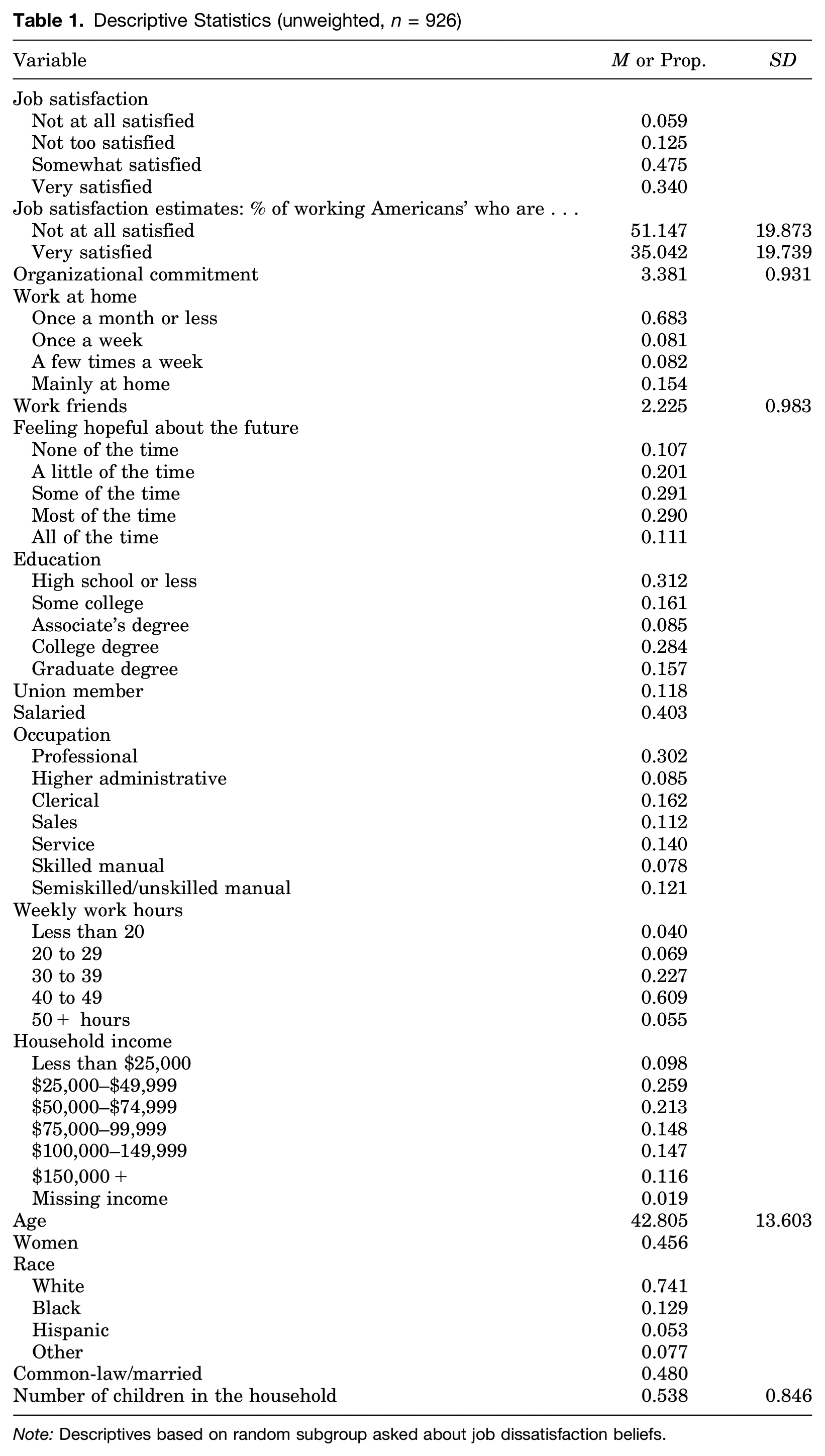
Note: Descriptives based on random subgroup asked about job dissatisfaction beliefs.
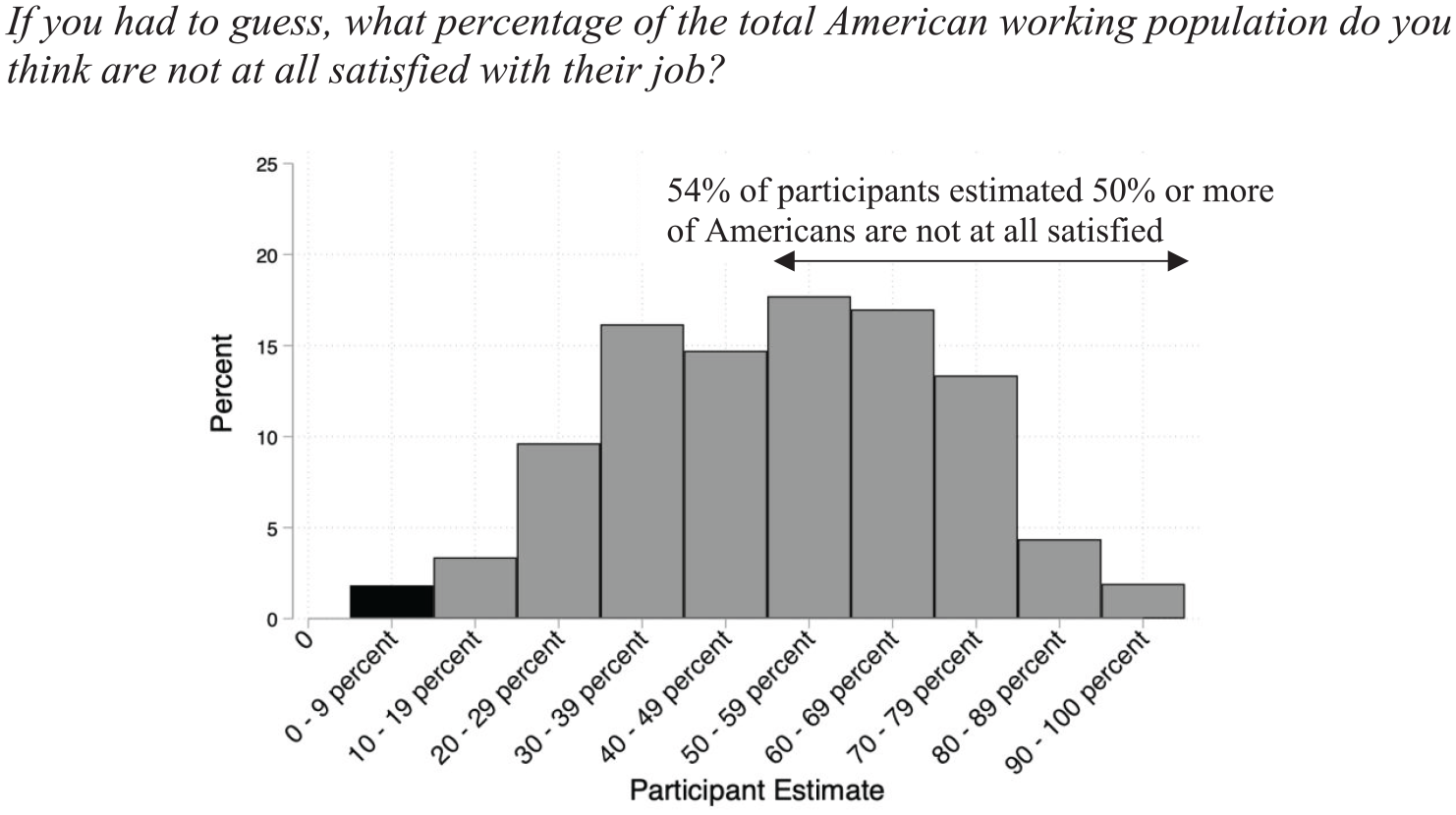
Study Participants’ Estimates of Americans’ Job Dissatisfaction
To facilitate tests of statistical significance, we transformed participants’ interval estimates into a continuous measure by taking the midpoint of each interval (e.g., a 0-to-9 interval estimate was transformed into a score of 4.5). Results from a one-sample t test, presented in Table 2, revealed a statistically significant difference between the mean participant estimate (51.1 percent) and the observed 5.9 percent of workers in the study sample reporting that they were not at all satisfied, t(924) = 69.28, p < .0001. Hypothesis 2 is therefore supported.
Univariate and Bivariate Analyses of Workers’ Job Dissatisfaction Estimates (n = 926)
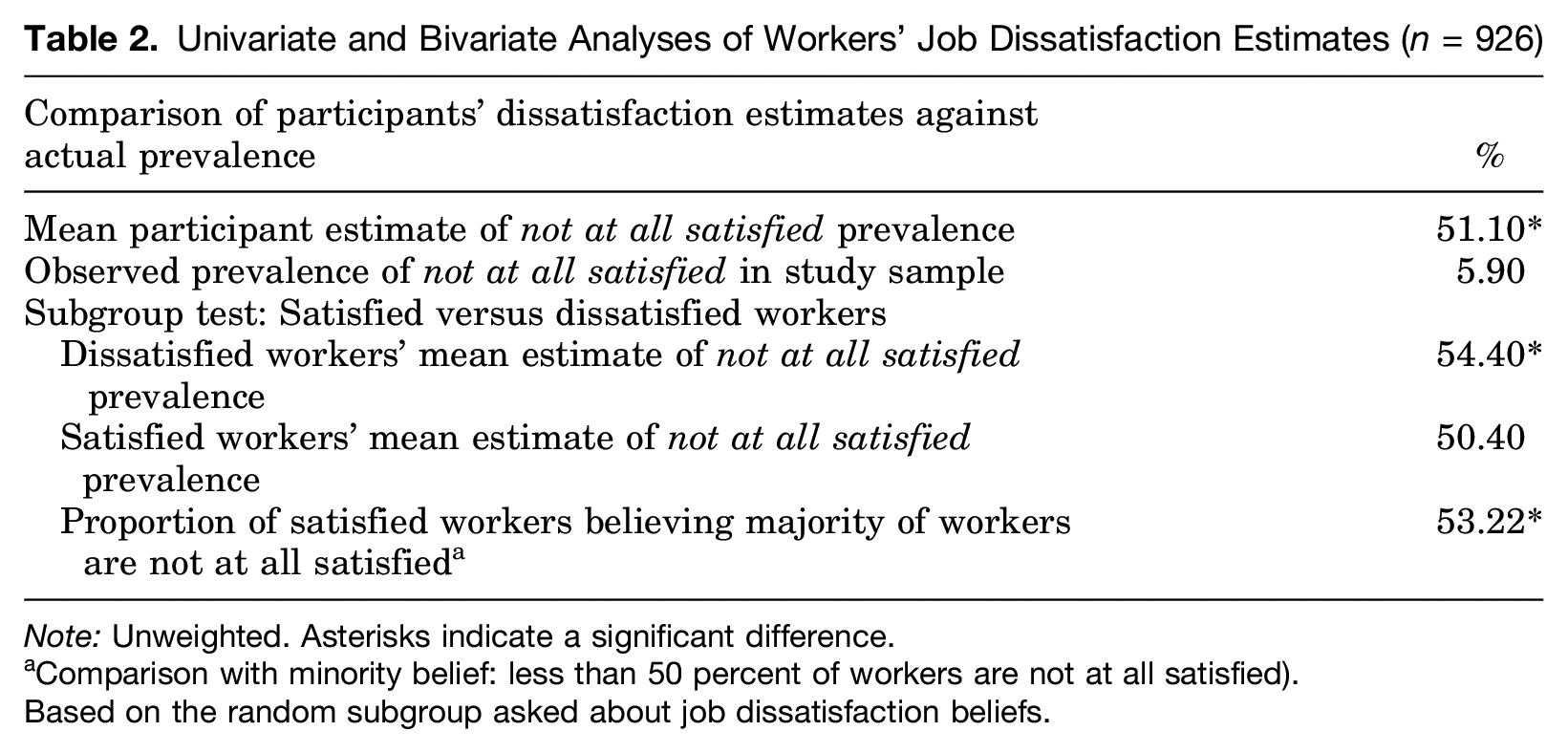
Note: Unweighted. Asterisks indicate a significant difference.
Comparison with minority belief: less than 50 percent of workers are not at all satisfied).
Based on the random subgroup asked about job dissatisfaction beliefs.
To examine subgroup differences in job dissatisfaction beliefs, we compared the mean estimates of satisfied workers—those who reported being somewhat or very satisfied with their job—with those of dissatisfied workers, who reported being not too satisfied or not at all satisfied. An independent-samples t test, presented in Table 2, revealed a small but statistically significant difference between these groups, t(924) = 2.38, p = .018. Specifically, dissatisfied workers estimated that a slightly higher percentage of American workers were not at all satisfied with their job (54.4 percent) in comparison to satisfied workers (50.4 percent). To test Hypothesis 3, which predicted that a majority of satisfied workers would believe that most other workers are not at all satisfied with their job, we dichotomized participants’ job dissatisfaction estimates to reflect whether they believed that a majority of American workers (i.e., 50 percent or more) were dissatisfied. Supporting Hypothesis 3, we find that 53 percent of satisfied workers believed that the majority of other workers were not at all satisfied with their job (95 percent confidence interval: [50.12, 56.32]). Thus, satisfied workers, despite being the majority group, were inclined to believe that their experiences were atypical, indicating support for a false uniqueness effect.
Determinants of the Belief in Widespread Job Dissatisfaction
Turning to the determinants of job dissatisfaction beliefs, Table 3 presents results from a logistic regression in which the belief that a majority of American workers are not at all satisfied with their job is regressed on participants’ work conditions and sociodemographic statuses. In these analyses, the dependent variable is a binary measure of whether participants predicted that a majority (50 percent or more) of American workers were not at all satisfied with their job (coded 1), as opposed to predicting that a minority were this dissatisfied (coded 0).
Logistic Regression of the Belief That Majority of Workers Are Not at All Satisfied Regressed on Work Conditions, Personal Job Satisfaction, and Controls (odds ratios presented)
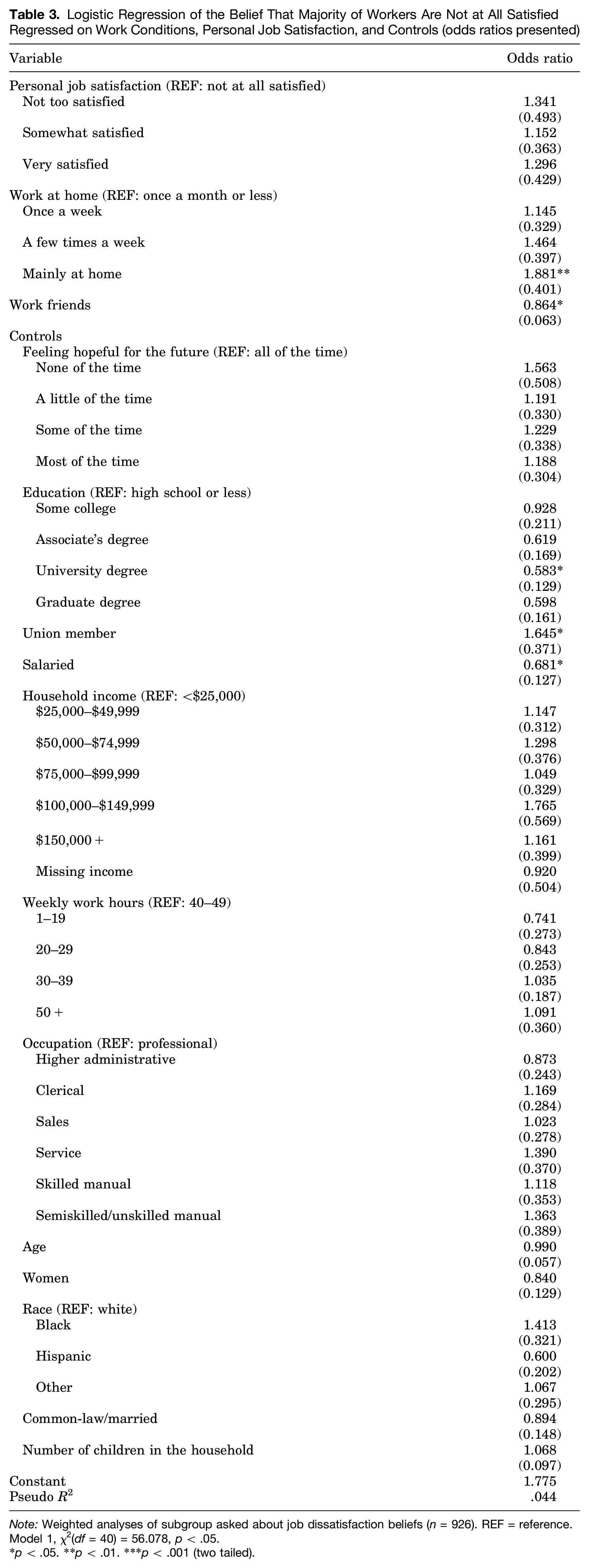
Note: Weighted analyses of subgroup asked about job dissatisfaction beliefs (n = 926). REF = reference. Model 1, χ2(df = 40) = 56.078, p < .05.
p < .05. **p < .01. ***p < .001 (two tailed).
As noted previously, more than half of the sample (54 percent) estimated that 50 percent or more of Americans were not at all satisfied with their job. On the basis of the logistic regression model presented in Table 3, we observed that this belief was more common among those who worked mainly from home in comparison to those who worked from home once a month or less. Based on the model, the average predicted probability of believing in widespread job dissatisfaction was 66 percent for home-based workers, compared with 51 percent for those working mainly outside of the home—a difference that was statistically significant (p < .01). Additionally, we observed that having fewer work friends was associated with an increased likelihood of holding this belief (p < .05). Hypotheses 4 and 5 are therefore supported. Among the control variables, we observed no evidence that personal job satisfaction was associated with job dissatisfaction beliefs. However, union members, nonsalaried workers, and those with a high school degree or less were more likely to believe that job dissatisfaction was widespread. Additionally, in the appendix (Table A1) we present the results from alternative analyses based on an ordinary least squares (OLS) regression in which a continuous measure of participants’ dissatisfaction estimates is regressed on focal variables and controls. Results from these analyses were consistent with the focal results of the logistic models presented in the main analyses.
To look for evidence of whether remote work and having fewer work friends were associated with a false uniqueness effect, we reestimated Model 1 of Table 3 for the subgroup of participants reporting personal job satisfaction (i.e., those reporting somewhat or very satisfied responses). This analysis aimed to determine if, within the majority group of satisfied workers, these work factors contributed to an increased likelihood of mistakenly perceiving oneself as part of a minority (i.e., believing most other workers to be not at all satisfied). These additional results, available in the appendix (Table A2), revealed that home-based work increased the likelihood of false uniqueness, while no significant association between work friends and the likelihood of false uniqueness was observed. Since our measure capturing participants’ job dissatisfaction perceptions is based on their estimate of American workers who were not at all satisfied with their job—the most extreme response for job dissatisfaction—readers are cautioned when interpreting these results. Since we lack information on participants’ estimates of their peers who were not too satisfied with their job—a lesser degree of job dissatisfaction—this may obscure a possible association between work friendships and false uniqueness based on the belief that most other workers express some level of dissatisfaction. These false-uniqueness analyses should therefore be interpreted as exploratory, with further inquiry recommended using more refined job satisfaction measures.
Additional Analyses: Job Dissatisfaction Beliefs and Organizational Commitment
Since pluralistic ignorance has been demonstrated to shape behaviors, guiding individuals to act in accordance with what they perceive to be the prevailing public opinion (Prentice and Miller 1993), we present additional exploratory analysis results examining the association between job dissatisfaction beliefs and organizational commitment. Here we contend that individuals who view job dissatisfaction as prevalent may shift their allegiance away from their employers, aligning with what they consider a widespread, albeit mistaken, perception of workplace discontent and disengagement. This realignment may occur irrespective of their personal satisfaction at work. To explore this possibility, we examine the relationship between beliefs about job dissatisfaction and employee commitment levels.
Table 4 presents the results from an OLS regression with the belief in widespread job dissatisfaction predicting organizational commitment. Supporting our expectations, we observed lower levels of organizational commitment among those who believed in widespread job dissatisfaction. This association was observed after adjusting for personal job satisfaction, which was strongly associated with higher levels of organizational commitment. We also tested an interaction between personal job satisfaction and job dissatisfaction beliefs; however, these analyses (not shown) revealed no evidence of a contingency between personal job satisfaction and job dissatisfaction beliefs in predicting organizational commitment. Finally, we reran these analyses with a continuous measure of job dissatisfaction estimates; results from these analyses were consistent with the present analyses using a binary indicator of widespread dissatisfaction (see Appendix Table A3).
Ordinary Least Squares Regression Analyses of Organizational Commitment
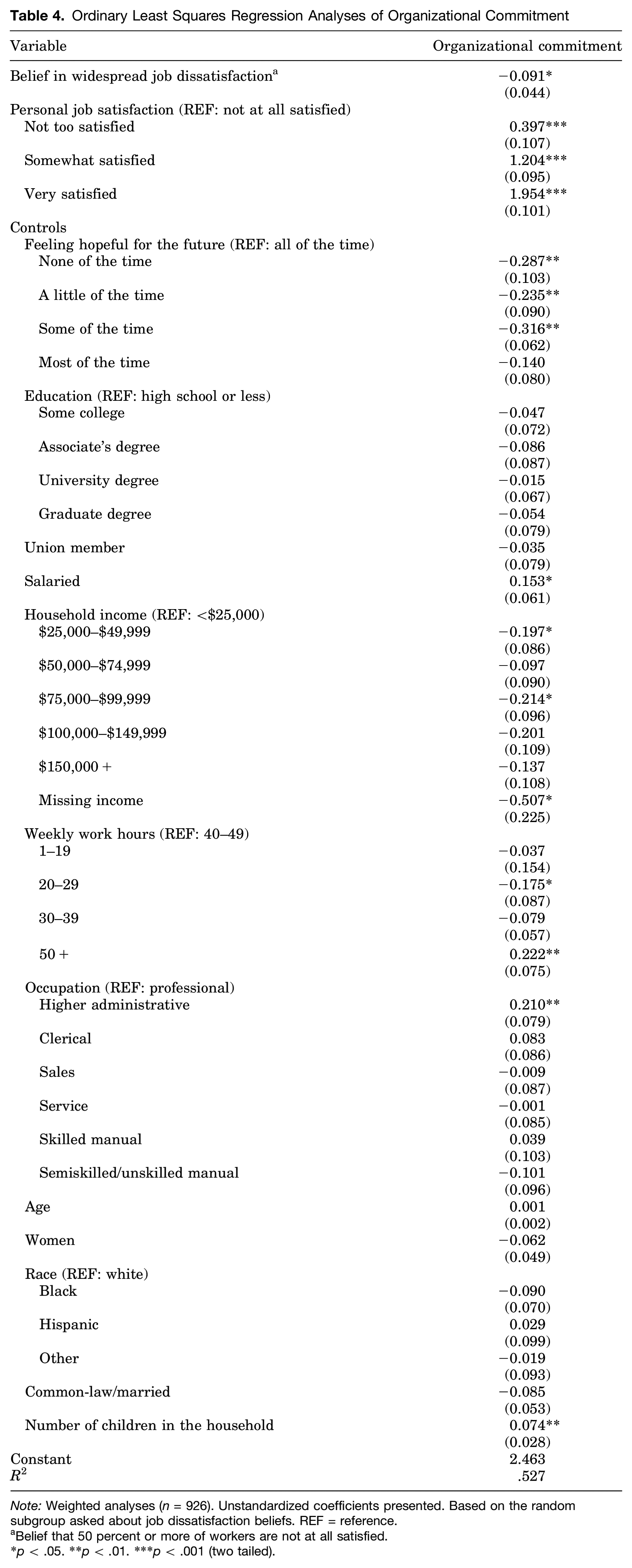
Note: Weighted analyses (n = 926). Unstandardized coefficients presented. Based on the random subgroup asked about job dissatisfaction beliefs. REF = reference.
Belief that 50 percent or more of workers are not at all satisfied.
p < .05. **p < .01. ***p < .001 (two tailed).
Discussion
Our findings show that American workers’ perceptions of widespread job dissatisfaction diverge from empirical evidence about job satisfaction, suggesting American media coverage may have, to some extent, influenced public opinion on work conditions. Yet, the persistence of these beliefs, despite many workers reporting personal satisfaction, demands further explanation. We explored this paradox through the lens of pluralistic ignorance, examining how unpopular norms might emerge from limited information exchange about workers’ experiences. Our research therefore contributes to an understanding of how individuals collectively construct perceptions of the economy that are at odds with their own experiences.
Although the scope of media influence on public opinion is debated, it is widely recognized among media scholars that media outlets often present narratives that offer simplified interpretations of complex issues (Gavin 2018; Gentzkow and Shapiro 2010). In some situations, these narratives mirror and are fueled by public opinion and experience; however, they also have the potential to influence public sentiment, particularly during times of uncertainty and turmoil. During the 2009 financial crisis, for example, a narrative framing “greedy Wall Street bankers” as the architects of economic collapse gained considerable prominence. This portrayal not only resonated widely but arguably swayed public opinion and influenced policymaking decisions (Sorkin 2010).
We argue that American workers’ considerable overestimation of job dissatisfaction in our study is consistent with the American media’s focus on worker discontent and disengagement throughout the pandemic (Thompson 2022, 2023). We propose that this focus largely stemmed from misunderstandings of the dynamics behind the unprecedented job turnover rates, known as the Great Resignation. It is perhaps unsurprising that the pandemic period, marked by widespread uncertainty and upheaval, made narratives of workers’ “quiet quitting” resonate broadly (Marden 2022; Telford 2022). However, we believe that media representations of worker issues during this period were disproportionately negative, overshadowing findings from studies that indicated an increase in job satisfaction among American workers. This kind of coverage may have contributed to the impression that worker dissatisfaction was at an all-time high (Collins 2022).
We propose these arguments speculatively, acknowledging our inability to confirm a causal relationship between media narratives about work and workers’ beliefs regarding job dissatisfaction. These beliefs may predate the media’s coverage of worker issues during the pandemic. Individuals’ pessimistic perceptions of their peers’ job satisfaction may instead stem from a cognitive bias where negative information about others is more prominently acknowledged, reflecting a tendency toward individual optimism yet social pessimism (Roser and Ritchie 2018). Another possibility is that our findings represent a psychological “focus effect,” which occurs when individuals emphasize what is immediately salient or emotionally impactful (Pahl and Esier 2006). In this scenario, job dissatisfaction, often accompanied by strong emotional cues, including stress or unhappiness, may become more salient when directly questioned in a survey.
To explore these alternative explanations, we examined a second subsample of participants who were asked to estimate the percentage of American workers reporting being very satisfied with their job. As presented in Figure A1 in the appendix, the distribution of participants’ estimates reveals that most participants accurately predicted the true percentage of very satisfied workers. The average participant estimate of the prevalence of very satisfied workers was 35 percent, compared with the actual 34 percent observed in the sample, revealing no evidence of a generalized social pessimism, which would predict a tendency to underestimate the prevalence of very satisfied workers. On the other hand, if a focus effect was at play, we would expect it to operate for all emotionally charged questions about job satisfaction, leading to inflated estimates of very satisfied workers, which was not the case. These additional results therefore suggest that the overestimation of job dissatisfaction is likely not due to a generalized social pessimism or a focus effect that selectively amplifies emotionally salient aspects of societal conditions.
Pluralistic Ignorance and Workplace Ties
While we contend that media coverage during the pandemic might have influenced public opinion of the American work experience, this argument does not account for the persistence of job dissatisfaction beliefs in the face of empirical evidence that most workers express relatively high personal job satisfaction. Instead, we suggest that workers’ overestimation of job dissatisfaction may be facilitated through a false-uniqueness effect, where individuals erroneously believe that their views or experiences are atypical. Reflecting this possibility, satisfied workers in our study, who formed the majority of the sample, tended to see their positive job assessments as exceptions, believing that most other American workers were not at all satisfied with their job. This phenomenon of false uniqueness typically arises from inadequate opportunities for gauging the sentiments of others, particularly on emerging issues. Supporting this, we find that beliefs of widespread job dissatisfaction were more likely among remote workers and individuals with fewer workplace friendships. The growth of remote work and hybrid work arrangements during the pandemic may therefore have contributed to erroneous views about job dissatisfaction. In postpandemic workplaces, where flexible arrangements persist, cultivating workplace norms that accurately reflect the values and opinions of workers may be challenging, requiring innovative approaches to ensure all workers remain connected and actively interacting with their peers, regardless of their work location.
The significance of workplace sociability and location for shaping beliefs about job dissatisfaction, in contrast to the relatively minor role played by individual attributes, such as personal job satisfaction and optimism, underscores the relevance of a pluralistic ignorance framework for understanding labor market sentiments. This framework suggests that workers’ perceptions of job dissatisfaction may be more heavily influenced by their social environment and interactions at work rather than their own job satisfaction levels or individual dispositions. The findings from additional analyses (not shown), which showed no significant associations between job dissatisfaction beliefs and individual factors, like personal mastery, further support the importance of workplace social connections as key determinants of perceived group norms regarding job satisfaction.
In this context, the observed tendency of unionized workers to believe more strongly in widespread job dissatisfaction becomes particularly illuminative. Union membership, by its nature, engenders a collective consciousness focused on advocating for labor rights and better work conditions. This collective orientation may heighten unionized workers’ sensitivity to workplace issues, leading them to perceive, and perhaps overestimate, job dissatisfaction among the broader workforce. Unions often highlight and mobilize around workplace grievances, thereby cultivating a narrative of solidarity in the face of perceived injustices. Such dynamics can foster a collective belief system wherein dissatisfaction is seen as more widespread than it might actually be, reflecting the role of unions not just in addressing specific workplace issues but in shaping broader perceptions of job satisfaction. This scenario illustrates how workplace environments, particularly those characterized by active union engagement and advocacy, can influence workers’ perceptions, suggesting that the social context of work plays a crucial role in shaping how job satisfaction and dissatisfaction are perceived and understood among the workforce.
Our exploratory analyses of organizational commitment also highlight the potential risks associated with individuals harboring misconceptions about others’ work experiences. While we suggest caution in interpreting the causal basis for the cross-sectional association between job dissatisfaction beliefs and reduced worker commitment, the pattern is consistent with the predictions of pluralistic ignorance theories. Misperceptions of group norms, such as widespread dissatisfaction, can influence people so that they realign their behaviors and attitudes in ways that are consistent with the perceived group norm. For organizations, tackling this challenge could involve implementing initiatives to minimize instances where employees refrain from sharing their opinions, concerns, or feedback on critical organizational matters. Integrating mechanisms for regular feedback and fostering open forums for dialogue can therefore amplify employee voice and prevent the spread of pluralistic ignorance.
We briefly discuss limitations associated with our study. First, the operationalization of job dissatisfaction beliefs, which centers on an individual’s estimate of the prevalence of the most dissatisfied worker (i.e., those not at all satisfied with their job), might limit the extent that we can detect pluralistic ignorance. This focus stemmed from our intent to examine the congruence between workers’ perceptions and the polarizing narratives of worker discontent often portrayed in the media. Nonetheless, a measure of dissatisfaction beliefs incorporating the full spectrum of job satisfaction responses would afford a more comprehensive assessment of pluralistic ignorance and the false-uniqueness effect, since it would allow for the identification of satisfied workers who believe most other workers are either not at all or not too satisfied. Considering the innovative nature of our research inquiry, we advocate for subsequent research to explore our hypotheses using a broader array of job satisfaction belief measures. Additionally, as previously noted, we are unable to directly assess the impact of the media narrative about work on individuals’ job dissatisfaction beliefs. This limitation points to the need for future research, particularly longitudinal studies, to further unravel the complexities of how collective beliefs about job satisfaction are formed and perpetuated.
Finally, while our focal hypotheses regarding the influence of work friendships and work location on beliefs about job dissatisfaction were supported, the modest model fit, as indicated by the low pseudo R2 values, merits consideration. It is possible that the low model fit reflects the inherent variability in individuals’ estimates of job dissatisfaction and the subjective nature of these perceptions. However, it is also likely there are additional, unmeasured determinants of job dissatisfaction beliefs yet to identified. Further empirical investigation is therefore necessary to explore these nuances and identify other potential determinants that contribute to the formation of job dissatisfaction beliefs.
Conclusion
Our findings illuminate a growing disconnect between Americans’ lived experiences and their perceptions of the economic environment (Krugman 2023). This divergence, while complex in its origins, may be partially attributed to pluralistic ignorance, as our study suggests. Future research should investigate the ramifications of pluralistic ignorance concerning worker attitudes, particularly how it might impact labor market participation, economic decision-making, and advocacy for workplace reforms. The belief in widespread worker discontent could influence both job retention and turnover decisions as well as impact wage negotiation outcomes. Moreover, such misconceptions could contribute to a normalization of worker discontent, thereby weakening efforts toward improving workplace conditions. Further research is therefore warranted to explore these possibilities.
Supplemental Material
sj-docx-1-spq-10.1177_01902725241253252 – Supplemental material for The Job Satisfaction Paradox: Pluralistic Ignorance and the Myth of the “Unhappy Worker”
Supplemental material, sj-docx-1-spq-10.1177_01902725241253252 for The Job Satisfaction Paradox: Pluralistic Ignorance and the Myth of the “Unhappy Worker” by Paul Glavin and Scott Schieman in Social Psychology Quarterly
Supplemental Material
sj-pptx-2-spq-10.1177_01902725241253252 – Supplemental material for The Job Satisfaction Paradox: Pluralistic Ignorance and the Myth of the “Unhappy Worker”
Supplemental material, sj-pptx-2-spq-10.1177_01902725241253252 for The Job Satisfaction Paradox: Pluralistic Ignorance and the Myth of the “Unhappy Worker” by Paul Glavin and Scott Schieman in Social Psychology Quarterly
Footnotes
Funding
The author(s) disclosed receipt of the following financial support for the research, authorship, and/or publication of this article: This research is funded by the Social Science and Humanities Research Council (435-2020-1125) (Scott Schieman, principal investigator).

Supplemental Material
Supplemental material for this article is available online.
Bios
References
Supplementary Material
Please find the following supplemental material available below.
For Open Access articles published under a Creative Commons License, all supplemental material carries the same license as the article it is associated with.
For non-Open Access articles published, all supplemental material carries a non-exclusive license, and permission requests for re-use of supplemental material or any part of supplemental material shall be sent directly to the copyright owner as specified in the copyright notice associated with the article.
