




Abstract
Originality is widely regarded as a determinant of an artist’s canonization, yet its long-term impact on cultural valuation remains underexplored. In this study, we address this gap by using advanced deep learning methods to gain new theoretical insights into the relationship between artists’ visual originality and their art historical significance. We conceptualize visual originality as the extent to which novelty—expressed solely in the visual features of artworks—affects the overall value of a focal artist, as determined by expert, peer, and market-based evaluative regimes. To empirically examine this relationship, we analyze 60,011 paintings spanning six centuries of fine art using computer vision methods. We also construct a comprehensive dataset and utilize text analysis to quantify the canonical importance of the 942 artists who created these paintings. Additionally, we develop a peer influence metric that gauges the importance of artistic novelty on subsequent artists. Our findings show that visual originality is a significant determinant of artists’ long-term standing in the art canon across all evaluative regimes. Moreover, there is a strong, positive relationship between artists’ visual originality within a stylistic movement and artists’ canonical rankings, particularly for expert and market regimes. Finally, we show that early innovators within a stylistic movement are significantly more likely to attain enduring art historical esteem, underscoring the importance of visual originality at the forefront of emerging artistic trends. Our findings are robust and validated across different contexts and time periods, while our methods extend the use of computational image and text analysis in organization studies research.
Keywords
Introduction
Originality can be understood as “the extent to which an idea is novel in the context of previously known ideas” (Leung et al., 2012, p. 503), and it is often mentioned as a constituent part of creativity (e.g., Acar et al., 2017; Erwin et al., 2022; Guetzkow et al., 2004) and innovation (e.g., Caves, 2000; C. Jones et al., 2015, 2016). For cultural goods, such as fine art paintings, originality is a widely taken-for-granted assumption as a conditio sine qua non for inclusion in the art canon. Through acts of retrospective consecration, which separate “the great from the merely good” (Allen & Lincoln, 2004, p. 874) in terms of institutional recognition (Bourdieu, 1993), the art canon—expressed in, for instance, museum collections and art history textbooks—is recognized to be a reliable record of the most important artists and their artworks in the history of art (Iskin, 2016; Jensen et al., 2007). Consider, for instance, The Starry Night (1889) by Vincent van Gogh. Through expressive brushwork, bold color contrasts, and emotional intensity, Van Gogh broke with many artistic conventions of 19th-century European painting (Thomson, 2008). Although underappreciated during his lifetime, Van Gogh’s posthumous consecration reflects how an artist’s visual originality can be reinterpreted as a defining feature of cultural value represented in the art canon (Iskin, 2016; Jensen et al., 2007).
Artists and artworks included in the canon are exemplars of cultural producers and products that have survived the “test of time” (Becker, 1982, p. 365) as they have passed through the many layers of gatekeepers, selectors, and other institutional structures that function as evaluators (e.g., Hirsch, 1972, 2000; Sharkey et al., 2023; Wijnberg, 2004; Wijnberg & Gemser, 2000). It is, however, important to acknowledge that originality rewarded by canonization is not arbitrary or without boundaries. Isomorphic pressures, stemming from the conventions and norms that guide the art field within a particular time and place, shape and restrict the directions in which originality can manifest (DiMaggio & Powell, 1983). Consequently, the originality exhibited by canonized artists, such as Van Gogh, is not just about the artworks being novel compared to other artists’ work, but being novel in ways that have, at least retrospectively, found stable favor with evaluative regimes throughout history.
Prior studies using computational methods to examine artistic and cultural production, such as research on the popular music industry (Askin & Mauskapf, 2017) or modern art (Banerjee et al., 2023), have primarily focused on distinctiveness—measuring how much a given work differs from others—to determine its concurrent impact within a focal domain. Distinctiveness is typically quantified as a distance in feature space, assessing how far a creative work deviates from contemporaneous productions (Askin & Mauskapf, 2017; Banerjee et al., 2023). However, mere distinctiveness does not necessarily lead to historical importance, as not all deviations or differences are perceived as being valuable. Banerjee et al. (2023), for instance, compare an artist’s work to three reference groups—past artists, peers, and the artist’s own prior work—treating distinctiveness as a function of artistic deviation. While this approach identifies difference, it does not distinguish between artists’ novelty at the time of creation and the broader contributions that shaped their respective long-term recognition. Unlike distinctiveness, which considers any form of difference and in any direction regardless of the prevailing norms, visual originality is anchored in time, assessing the novelty of an artwork compared to its most similar predecessors, which may even be ones from the distant past. By focusing on an artist’s most significant breakthrough, visual originality provides a clear framework for understanding how novelty translates into long-term historical recognition. Taken together, we propose that the visual originality of artists, expressed at their peak moment of creative output, constitutes their most impactful contribution to the narrative of art history.
In contrast to distinctiveness, visual originality reflects an artist’s most significant creative breakthrough—the point in their career when their work exhibits the highest degree of novelty. Prior research (e.g., Galenson, 2006; Simonton, 1980, 1999, 2007) shows that cultural producers tend to produce their most impactful work at a distinct moment in their careers—a peak that can be both observed and measured quantitatively. Empirical studies further support this pattern, showing that widely recognized artistic contributions often emerge from singular breakthroughs rather than steady accumulation across careers (Accominotti, 2009; L. Liu et al., 2018, 2021).
Building on this theoretical foundation, we develop a computational approach that systematically assesses visual originality and measures artists’ creative impact. First, leveraging advances in automatic fine art analysis (Cetinic & She, 2022; Efthymiou et al., 2021; Elgammal & Saleh, 2015; Strezoski & Worring, 2018), we apply deep learning methods to analyze and compare the visual composition of artworks based on their digital reproductions. We then determine the artists’ maximum visual originality by identifying the point in their career when their work reaches its peak novelty. This approach enables a structured, computational assessment of visual originality allowing us to evaluate artists’ creative impact based solely on the surface-level features of their artworks.
To understand visual originality in terms of artists’ cultural value, we draw on selection system theory, which provides a useful framework to understand the determination of value by “ideal” kinds of evaluative regimes—expert, peer, and market (Priem, 2007; Wijnberg & Gemser, 2000). We use the selection system framework to focus on the long-term value attributed to artists vis-a-vis the novelty of their artworks at the time of creation, rather than how they were contemporaneously assessed. Based on these insights, we present the following research question: To what extent does the visual originality of an artist, at the time of creation of their artworks, affect their long-term evaluations and canonical standing?
Our study contributes to the management and organization studies literature by bridging a few critical gaps. First, we examine the relationship between two fundamentally opposite aspects of the multi-level evaluation process of canonization. On one end, we analyze the visual features of artists’ paintings, without incorporating any sensemaking processes or institutional structures. On the other end, we consider the long-term evaluation of artists, which is deeply shaped by these very processes and structures, thereby extending prior research on the role of institutions, art world actors, and evolving perspectives in shaping the art canon (e.g., Iskin, 2016; Langfeld, 2018).
Second, we frame visual originality as a temporally bounded phenomenon (Galenson, 2006; Simonton, 1980, 1999) and explore the timing not only within an artist’s developmental trajectory but also within the context of the life cycle of the stylistic movement with which the artist is most associated. Our approach moves beyond focusing on a certain subset of artworks or adopting an oeuvre-based perspective. Rather, we pinpoint the moment in an artist’s trajectory marked by the highest expression of novelty in their work. This enables a fine-grained understanding of the extent to which visual originality influences their long-term valuation, across both the full temporal scope of our study and within specific stylistic movements.
Third, the selection system framework (Priem, 2007; Wijnberg & Gemser, 2000) allows us to systematically analyze the impact of novelty of artists’ artworks on long-term evaluative regime differentials. Additionally, this framework serves to introduce a new method to compute peer evaluations by measuring the extent to which an artist’s paintings influence the artworks of future generations of artists. Our novel metric allows us to operationalize peer influence in a new way that is recognizably different from prior studies that use a network-based approach to capture peer influence through proxies, such as co-exhibition relationships (e.g., Banerjee et al., 2023; Fraiberger et al., 2018).
Fourth, building on recent advances in automatic fine art analysis (e.g., Achlioptas et al., 2021; Efthymiou et al., 2021; Elgammal et al., 2018), we employ state-of-the-art deep learning methods to learn the visual appearance of artworks at the pixel level of their digital representation. This approach enables us to examine artists’ visual originality—solely at the pixel level—without considering cultural, social, or institutional contexts.
Finally, whereas prior studies have examined distinctiveness within relatively narrow temporal windows, such as specific artists in modern art (1905–1916) (Banerjee et al., 2023), our study systematically analyzes over 600 years of fine art history, ranging from the Early Renaissance to contemporary art. This broader scope provides a more comprehensive understanding of the extent to which visual originality shapes long-term historical significance, in contrast to studies that examine short-term valuation (e.g., Askin & Mauskapf, 2017).
In the next sections, we discuss our theoretical constructs, present our hypotheses, detail our multimodal approach and deep learning methods, and operationalize our outcome and predictor variables. Then, we outline our empirical strategy and regression models across various settings, concluding with a summary of our findings and a reflection on the limitations.
Theoretical Framework
Materiality and visual originality
A growing body of research in management and organization studies has explored the relationship between the material aspects of physical objects and their interaction with cultural or organizational processes. For instance, earlier studies have focused on objective or tangible features of objects, such as size, shape, weight, and form (Hicks & Beaudry, 2010) as well as subjective or intangible ones, such as aesthetics of products (Krabbe & Grodal, 2023), identity construction and market positioning through color (Sgourev et al., 2023) or practices in creative collaborations (e.g., Slavich et al., 2020; Stigliani & Ravasi, 2012). Building on this work, we argue that all such experiences of materiality are fundamentally mediated. Even the seemingly direct act of observing an artwork involves tacit cultural codes, institutional routines, and perceptual predispositions. For instance, the lighting design of a museum or the curatorial choices about display and signage actively shape how viewers engage with artworks, reinforcing the notion that artistic experiences are never purely unmediated.
Within this context, the medium we employ to analyze artworks provides a unique advantage. By focusing on digital representations, we are able to computationally measure the effects of visual features—solely at the pixel level—on evaluative regime differentials, and ultimately on artists’ inclusion in the art canon. In other words, by focusing on an object’s decontextualized form—the features of which might not even be consciously perceived by either producers or audiences—we are able to quantify the surface-level visual features of artworks, in isolation from the socially constructed meanings artists accrue after being filtered through layers of cultural processing.
Originality in the visual arts is not simply about novelty but about the ability of these artistic breakthroughs to gain institutional recognition and historical significance (Becker, 1982; Bourdieu, 1993). Earlier studies have argued that originality is relationally defined and constructed through contrast with prevailing norms (Cattani & Ferriani, 2008; Lampel et al., 2000). Its recognition depends, among other things, on judgments made by different kinds of evaluative regimes over time (Sharkey et al., 2023; Wijnberg & Gemser, 2000) and the market conditions that either amplify or suppress its diffusion (Sgourev, 2013).
These contextual forces, however, are not the only determinants. Rather, empirical research has consistently found that artistic and creative careers often follow a trajectory in which an artist produces their most influential work at a distinct point in time. Simonton (1980, 1999, 2007) has demonstrated that creative output is not evenly distributed over an artist’s career but tends to cluster around specific peak moments. Similarly, Galenson (2006) distinguishes between conceptual innovators, who produce their most significant work early in their careers, and experimental innovators, who reach their peak later through incremental developments. Studies of artistic influence further reinforce this pattern, showing that an artist’s most widely recognized works often emerge from a singular breakthrough moment rather than from a steady accumulation of output (Accominotti, 2009). More recent computational analyses (L. Liu et al., 2018, 2021) identify distinct peak periods in careers of artists and other creative professionals where their works achieve the highest level of long-term recognition.
Building on this, we argue that conventional assessments that fixate on particular sets of artworks or oeuvres fail to capture the defining point in time of an artist’s visual originality. Rather, it is the artist’s peak visual originality that captures the impact of their contribution, by restructuring the competitive landscape of the market in terms of, for instance, fragmentation or ambiguity (Sgourev, 2013). In this sense, an artist’s impact on art history is less about immediate acceptance (Sgourev, 2013) and more about how peak visual originality influences long-term evaluations of different kinds of selectors active in different kinds of evaluative regimes (Priem, 2007; Wijnberg & Gemser, 2000).
Selection system framework
The selection system framework provides a foundational structure for studying competitive processes by focusing on different kinds of evaluative regimes—or types of selectors—whose judgments determine the value of objects or entities in competitive processes (Priem, 2007; Wijnberg & Gemser, 2000). There are three ideal kinds of regimes, namely: expert, peer, and market. In expert selection, third parties that are neither producers nor the end consumers determine competitive outcomes; in peer selection, other producers are the evaluators; and in market selection, consumers determine competitive outcomes.
This framework allows for the exploration of the extent to which different kinds of selectors, representing different kinds of audiences, apply particular criteria to evaluate products and producers in different categories (e.g., Boutinot et al., 2017; Cattani et al., 2014; Gemser et al., 2008; Sharkey et al., 2023; Wijnberg & Gemser, 2000). Rather than acting independently, selectors operating in close temporal proximity often influence one another’s judgments (Sharkey et al., 2023). Banerjee et al. (2023) estimate this empirically, showing how supply-side (e.g., peers) and demand-side (e.g., critics) evaluations shaped artists’ recognition in modern art during the period 1905–1916.
Central to this framework is that “something new is presented in such a way that its value will be determined by selectors” (Wijnberg, 2004, p. 1416). Thus, value is not an intrinsic property but rather determined within the specific preferences of the different kinds of selectors (Wijnberg, 2004), which is essential to our conceptualization of visual originality. While expert, peer, and market selection systems represent ideal types of selectors, in practice, competitive processes usually involve a combination of these selection systems, with one typically being dominant at a particular time. Over extended periods, these selection systems interact, and we propose that canonization represents a state of equilibrium among the various evaluative regimes—or, in other words:
Stylistic movements
Stylistic movements are not merely groups of artists working in a similar style; they are, as noted by DiMaggio (1987), categories that function as complex social structures, replete with their own distinct norms, hierarchies, and networks. Categories, in general, can be understood within classification systems as socially constructed frameworks that group together agents or objects based on characteristics perceived to be similar (Bowker & Star, 2000). As socially constructed entities, categories shape how members are evaluated relative to others within the same group. This classification dynamic has been explored extensively in organizational studies, where category-based evaluation influences not only organizational performance (e.g., Zuckerman, 1999, 2000) but also industry dynamics and market entry (e.g., Durand & Vergne, 2015; Grodal et al., 2015; Hsu, 2006; C. Jones et al., 2012). Additionally, research has shown how categories evolve, through contestation and institutionalization, revealing the interplay of innovation and legitimacy in shaping evaluative criteria (Kennedy, 2008; Navis & Glynn, 2010). These processes are especially salient in emerging market categories, where meaning and value are co-constructed through the interpretive actions of evaluators (Khaire & Wadhwani, 2010).
In the arts, stylistic movements function as highly visible and culturally salient categories. Recent periods of Western art are exemplified in a history of movements (Sgourev, 2013; Wijnberg & Gemser, 2000), where the artists at the forefront are often recognized as the most valuable innovators. These movements not only provide a shared framework for interpreting originality but also shape the evaluative processes of selectors (Cattani et al., 2014; Khaire & Wadhwani, 2010). This centrality of stylistic movements highlights the role of categorical coherence and intra-category comparisons in determining performance and recognition (e.g., Hsu, 2006; Hsu et al., 2009).
Given the preponderant role of stylistic movements in the evaluative structures of art, we examine whether the relationship between visual originality and long-term performance is evident within these categories. In doing so, we contribute to theory by situating originality within artists’ career and structured stylistic movements—advancing prior work (e.g., Banerjee et al., 2023) by linking innovation to both temporal context and field-level classification systems. Unlike broader comparisons across art history (see H1), our second hypothesis isolates visual originality within a stylistic movement, evaluating an artist’s novelty compared to contemporaneous peers who may share similar aesthetic and historical contexts. Based on the arguments presented and our understanding of the role of stylistic movements in art history, we hypothesize that visual originality, compared to other members of the same stylistic movement, should be a strong determinant of artists’ eventual standing in the canon—or, in other words:
Stage of stylistic movements
Stylistic movements are not static categories, as some may dominate for a while and then fade—such as Art Deco that emerged in the 1920s but lost popularity in the 1940s when newer movements gained prominence. The determinants of these dynamics can vary from one case to another, but the value put on recognizable innovation is a prime driver (Sgourev, 2013). Art history is often framed as a sequential progression of stylistic movements and, as argued, a new stylistic movement makes it possible to recognize—or at the very least, suspect—an underlying innovation that gave rise to it. Expert selectors, for instance, may benefit by being the first to recognize and endorse a new movement, or alternatively, peer selectors may be advantaged in reinforcing their own artistic perspectives and stylistic preferences, while market selectors may simply align with commercial demand. In turn, this means that certain producers will benefit, especially where a particular selection system dominates (Wijnberg, 2004; Wijnberg & Gemser, 2000). In domains where expert critics and curators hold substantial influence over determining consecration—such as the modern art world—artists have a strong incentive to profile themselves as members of a new stylistic movement to be perceived as important innovators in the eyes of these powerful selectors (Wijnberg & Gemser, 2000).
Additionally, the timing of artists’ engagement with a stylistic movement—whether as an early innovator or a later entrant—can significantly impact their long-term career trajectory and recognition. This aligns with research into artists’ creativity in relation to their age, which has shown an inverse relationship. One reason for this could be selection processes that favor artists who make their mark early in their career as opposed to those who earn their place in the art canon later in life (Galenson, 2006). An alternative explanation—directly challenging this approach—was proposed by Accominotti (2009) who provided a stylistic movement-centric explanation for artistic creativity. In this study, Accominotti (2009) found no substantial evidence supporting the idea of a selection process favoring young artists over time but rather argued that the movement itself is a critical factor shaping when artists achieve their creative high points as well as the duration and stability of artistic careers. In other words, artists who engage early in a stylistic movement tend to have more stable and long-lasting creative trajectories. In contrast, artists who joined a movement later, once it had matured, experienced a decline in creative longevity and impact (Accominotti, 2009).
On the one hand, a key factor in this trend is the perception that founders of movements are considered to be more creative. On the other hand, the accelerated turnover of movements over time has lowered the peak age of creativity for the involved artists. Building on this important insight, we hypothesize that the stage of the stylistic movement the artist is most associated with will impact the relation between visual originality and the artist’s eventual standing in the canon—or, in other words:
Methodology
Computational methods for visual analysis of fine art
Deep learning
Advances in deep learning and the emergence of convolutional neural networks (CNNs) have enabled researchers to achieve state-of-the-art performance on many tasks relying on visual content, ranging from image classification to object detection (Girshick, 2015; Z. Liu et al., 2022) among many others. Recently, researchers in management science, sociology, and related disciplines have employed computational methods that rely on deep learning models ranging from using word embeddings for analyzing cultural categories and associations (Kozlowski et al., 2019) and representing multi-dimensional conceptual spaces of communicated concepts in organizational contexts (Aceves & Evans, 2024), to measuring distinctiveness in music (Askin & Mauskapf, 2017; Kim & Askin, 2024) and the fine art industry (Banerjee et al., 2023). In this paper, similar to Banerjee et al. (2023), we utilize CNNs to obtain feature vectors to represent the digital renderings of the paintings in our collection, although we explicitly chose to use ResNet-152, a CNN architecture that has been proven to be superior for fine art analysis tasks (Cetinic et al., 2018; Efthymiou et al., 2021; Garcia et al., 2020).
Tag prediction
The ResNet-152 architecture we use is pretrained on ImageNet (Deng et al., 2009) and fine-tuned on a fine art tag prediction task, which we adopted from Efthymiou et al. (2021). Following Efthymiou et al. (2021), we fine-tune only the final bottleneck and classifier layer, while keeping all earlier layers frozen. It is worth mentioning that we do not use implementations for other tasks, such as style classification, artist attribution, or creation period estimation. This is because the network should be agnostic to secondary information and focus entirely on the paintings’ visual surface. The tag prediction task that we consider involves associating the painting’s digital rendering with the correct tag. In this paper, we adopt the dataset as provided by Efthymiou et al. (2021) and make use of 54 unique tags that appear in at least 1,000 paintings in the WikiArt dataset (WikiArt, n.d.). These tags range from body parts (e.g., forehead), to natural elements (e.g., plants), to urban motifs (e.g., vehicles), and to thematic categories (e.g., female portraits). Figure 1 provides the full list of the tags and their respective frequencies. It is important to note that the tags are used only during supervised fine-tuning as a training mechanism to help the model learn representations of visual content in art. The analysis of visual originality relies exclusively on these learned representations, not on the tags themselves.
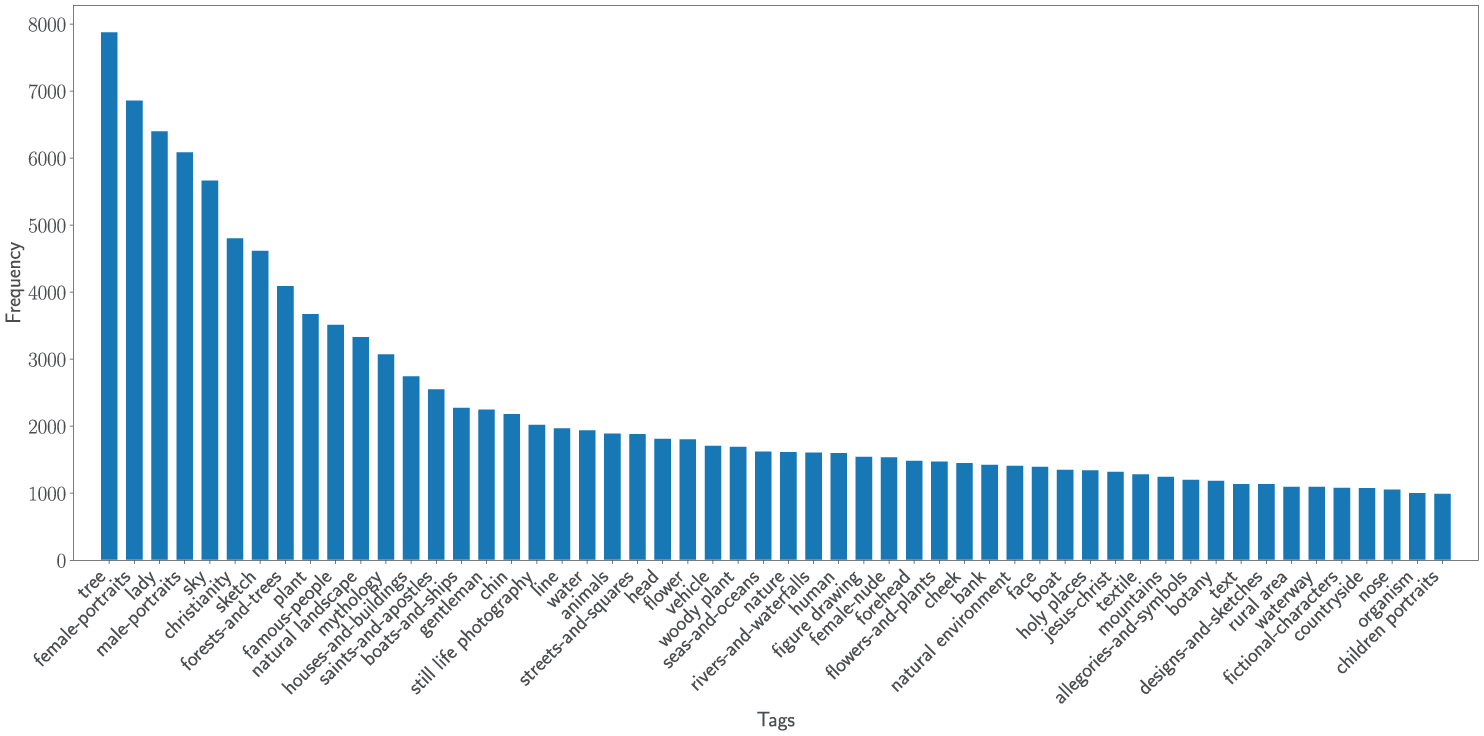
Frequency bar graph for the 54 unique tags considered.
Figure 2 depicts the ResNet-152 model for tag prediction, adapted from Efthymiou et al. (2021). Following standard preprocessing protocols for fine-tuning CNNs pretrained on ImageNet (He et al., 2016; Krizhevsky et al., 2012; Simonyan & Zisserman, 2015), each image is first resized so that the shorter side is 256 pixels, then center-cropped to 224 × 224 pixels, converted to RGB, and normalized using the ImageNet channel-wise mean and standard deviation. This creates the final input representation of a 224 × 224 × 3-dimension matrix. The input is passed through the network, which, in turn, uses several convolutional operations to transform the input into increasingly informative feature vectors. The final feature vector is fed forward to a binary classifier, which indicates the presence or absence of each tag in the image. Finally, the model’s parameters are optimized using back-propagation (Rumelhart et al., 1986).
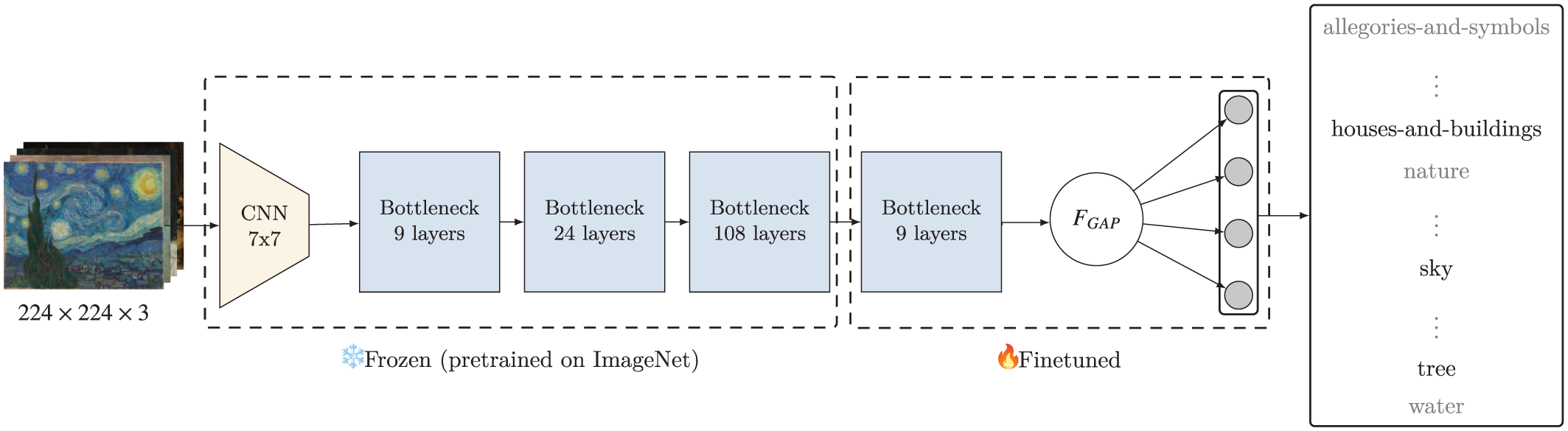
Tag prediction. This figure depicts the ResNet-152 architecture for tag prediction. The network is trained to associate the correct tag(s) with the input painting, e.g., to predict that Vincent van Gogh’s The Starry Night (1889) painting is associated with the tags houses-and-buildings, sky, and tree. First, the painting’s digital rendering is fed forward to the network. Second, the painting’s feature vector representation is obtained from the penultimate layer and fed forward to a multi-label classifier. Finally, the network’s parameters are updated via back-propagation.
Adapting the notation from Efthymiou et al. (2021), we obtain the feature vector

where
Cosine distance
We compute the cosine similarity

where

Computational methods for textual analysis of unstructured text
Named entity recognition
An artist’s presence in art-related narratives, such as art history books, is an important indicator of artistic success (Banerjee & Ingram, 2018; Galenson, 2006). Recently developed state-of-the-art computational approaches for textual analysis (Y. Liu et al., 2019) allow us to analyze large corpora and extract meaningful information that relates to artists in the data. We collected several art-related textual corpora, ranging from art history books and critical art reviews to online encyclopedic artifacts. More specifically, we collected approximately 1,000 art history books from various museum-centric publishing sources, such as art-related books belonging to the Met Collection and Guggenheim, more than 4,000 art reviews from The New York Times, and artists’ pages in the English section of Wikipedia. The above-mentioned corpora are largely unstructured; therefore, we use deep learning models that are extremely efficient in analyzing unstructured or semi-structured text. To that end, we employ a RoBERTa-based pipeline (Y. Liu et al., 2019) for named entity recognition (NER). The task of NER is to locate and label predefined real-world entities, such as persons, locations, organizations, and dates. Figure 3(a) illustrates an NER application in unstructured text.
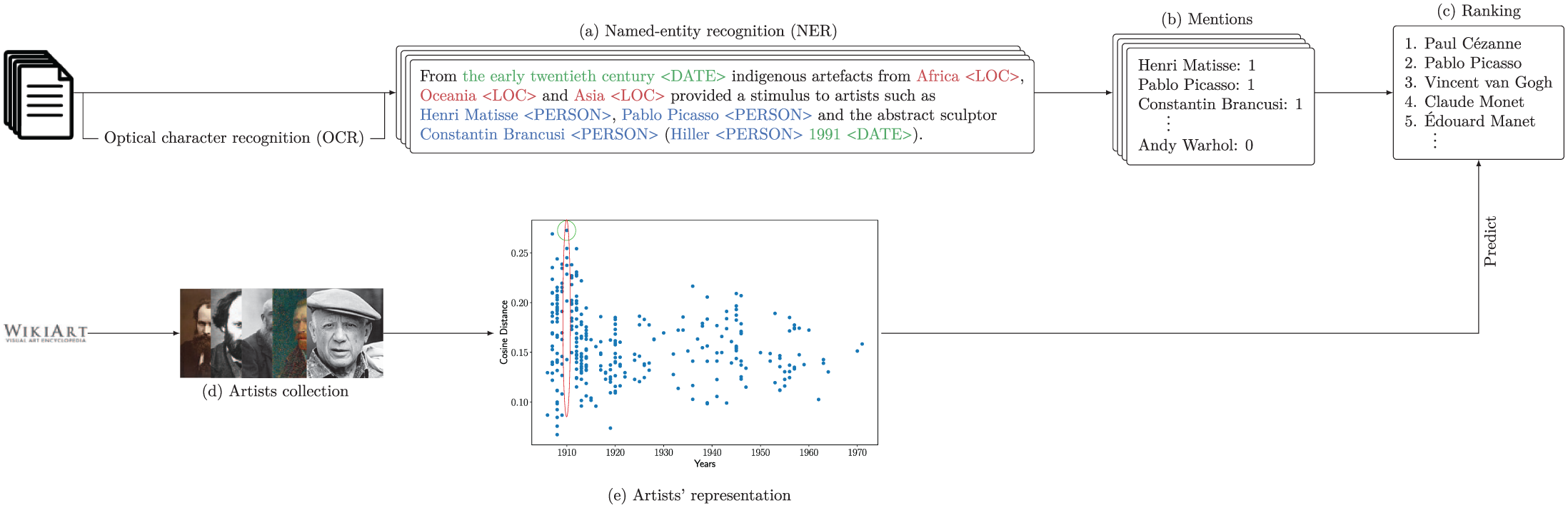
Proposed pipeline. This figure illustrates the pipeline for both visual and textual analysis. First, we collect several textual sources based on different corpora: (a) After digitizing each source through optical character recognition (if needed), we utilize a RoBERTa-based model (Y. Liu et al., 2019) to extract named entities. Thereafter, we keep only entities of type <person> and (b) count the number of times an artist appearing in our corpus is mentioned in a document to (c) obtain a ranking for each corpus. (d) Denotes the process of gathering the relevant artists and their respective artworks from the WikiArt dataset, and (e) illustrates an example of the proposed method for representing an artist in our collection by measuring each of their artworks’ visual similarity to the respective nearest neighbors. Each blue point in the scatter plot shows the cosine distance of a painting to its first nearest neighbor. We pick the year with the highest average cosine distance highlighted with the red ellipse shape. Thereafter, we pick the highest point for that year highlighted with the green circle shape. We use this point’s respective cosine distance to predict the artist’s ranking.
Ranking construction
After extracting the named entities from each text source, e.g., an art-related book, we retain only entities of the type “person” and their related attributes. Consequently, we count the number of times an artist in our corpus is mentioned in each source and labeled as an entity of the type “person”. Let

where

where
Dependent variables
Earlier research has used several open sources available on the Internet, such as Google Trends and exhibition history to assess artist performance (Ertug et al., 2016; Kackovic et al., 2022), Wikipedia to study social action in social science research (Poschmann & Goldenstein, 2022), or Google Ngram to analyze different dimensions of social class to study culture and its evolution through large-scale text analysis (Kozlowski et al., 2019). Following this line of research, we collected publicly available information from various sources to evaluate—in the form of rankings—artists’ canonical standings vis-a-vis their maximum visual originality. Furthermore, we differentiate among different kinds of evaluative regimes using the selection system framework (Wijnberg & Gemser, 2000). For instance, eBooks, The New York Times critical reviews, Google Ngram, Wikipedia mentions, and artists’ exhibition history at museums and art galleries are examples of expert selection, while the influence one artist has on other artists, i.e., high similarity between paintings, is unequivocally an example of peer selection. Art auction sales and popularity metrics from Wikipedia Pageviews and Google Trends are examples of market selection. 1 Next, we present our outcome variables per selection system.
Expert selection system
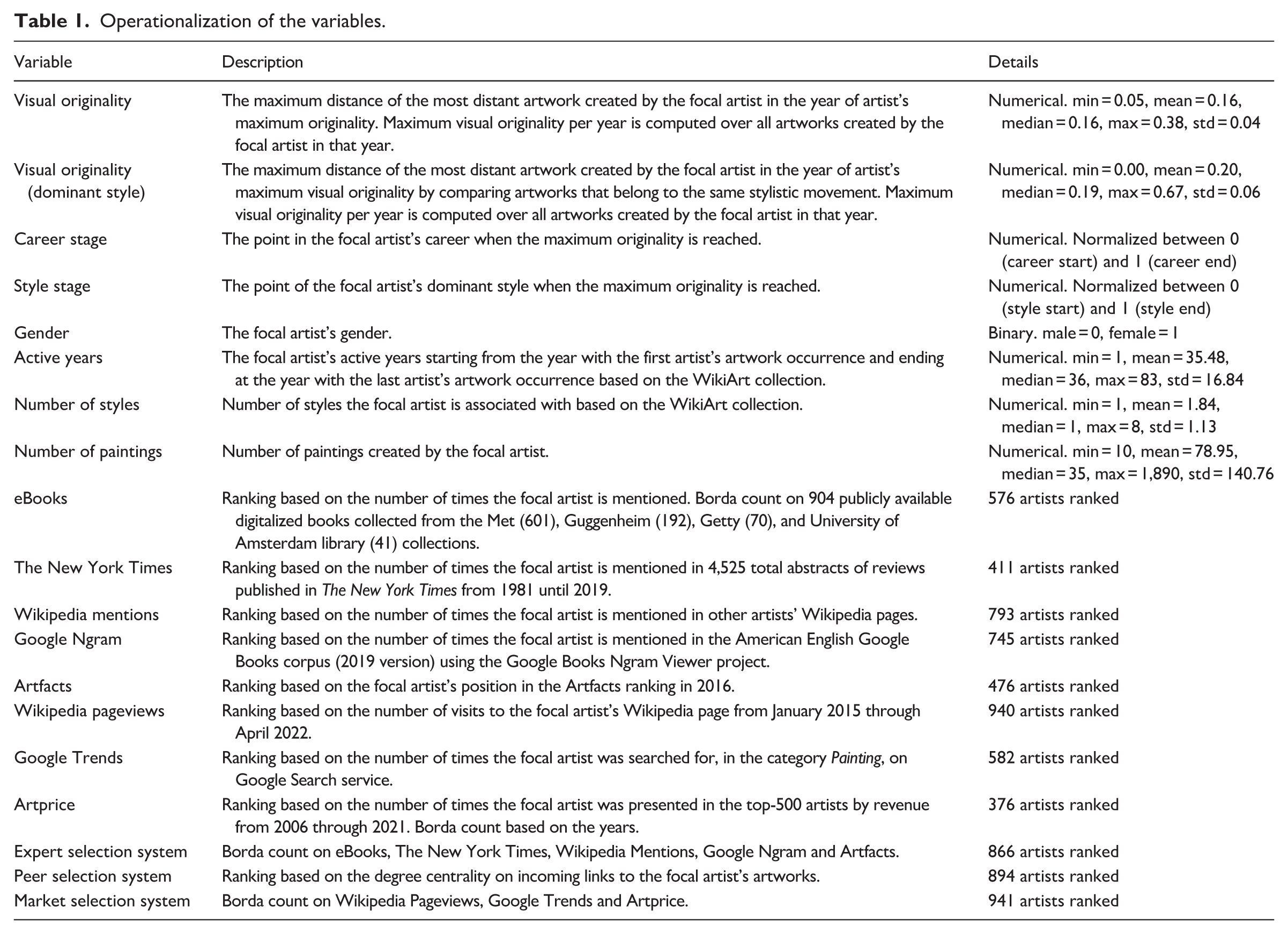
Extending the methodology used in previous work (Banerjee & Ingram, 2018; Galenson, 2006) that considers the number of times artists are mentioned in art history books as indications of the extent they are appreciated, we create individual rankings using Eq. (4) based on the number of times an artist was mentioned in 904 art-related eBooks, 4,525 total abstracts of reviews published in The New York Times art reviews, other artists’ Wikipedia pages, and, in any book in the American English Google Ngram corpus provided by Google. Additionally, we gather an individual artist-specific ranking through Artfacts, a web service (Artfacts, n.d.), based on artists’ exhibitions at museums and art galleries, co-exhibitions, and the number of countries where an artist was exhibited. Further to our individual rankings, we create an expert selection system aggregate ranking using the Borda count system (de Borda, 1781). 2 Table 1 provides a description of each ranking considered.
Operationalization of the variables.
Peer selection system
We create our peer selection system-related ranking by looking at the influence level of an artist within our dataset. We quantify the influence level for each artist as follows. Let
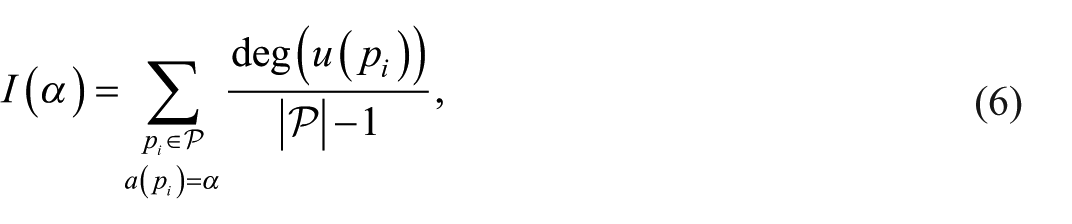
where
Market selection system
We collected publicly available information through various online sources to create our individual market selection system rankings. First, we use the pageviews statistics as provided by Wikipedia to create a popularity-based ranking for artistic performance by collecting artists’ English Wikipedia pages that were accessed by the public between 2015 and 2022. In addition, we construct a ranking based on the Google Trends service that provides the number of times a focal artist was searched on the Google Search service for the specific category painting. We also collect publicly available reports from Artprice, a web service that provides information on art auction sales (Artprice, n.d.), and construct an individual ranking based on information about the top 500 artists by revenue on a yearly basis from 2006 until 2021. Finally, we use the Borda count system to aggregate the individual rankings constructing a market selection aggregate ranking. 2 Table 1 provides a description of each ranking considered. See Online Appendix Table A1 for a list of the top 10 artists per individual ranking.
Independent variable
We compute the visual originality

where
Additionally, we discard paintings with score

where

We determine the year

where

From Eq. (11) it is obvious that we compute the visual originality
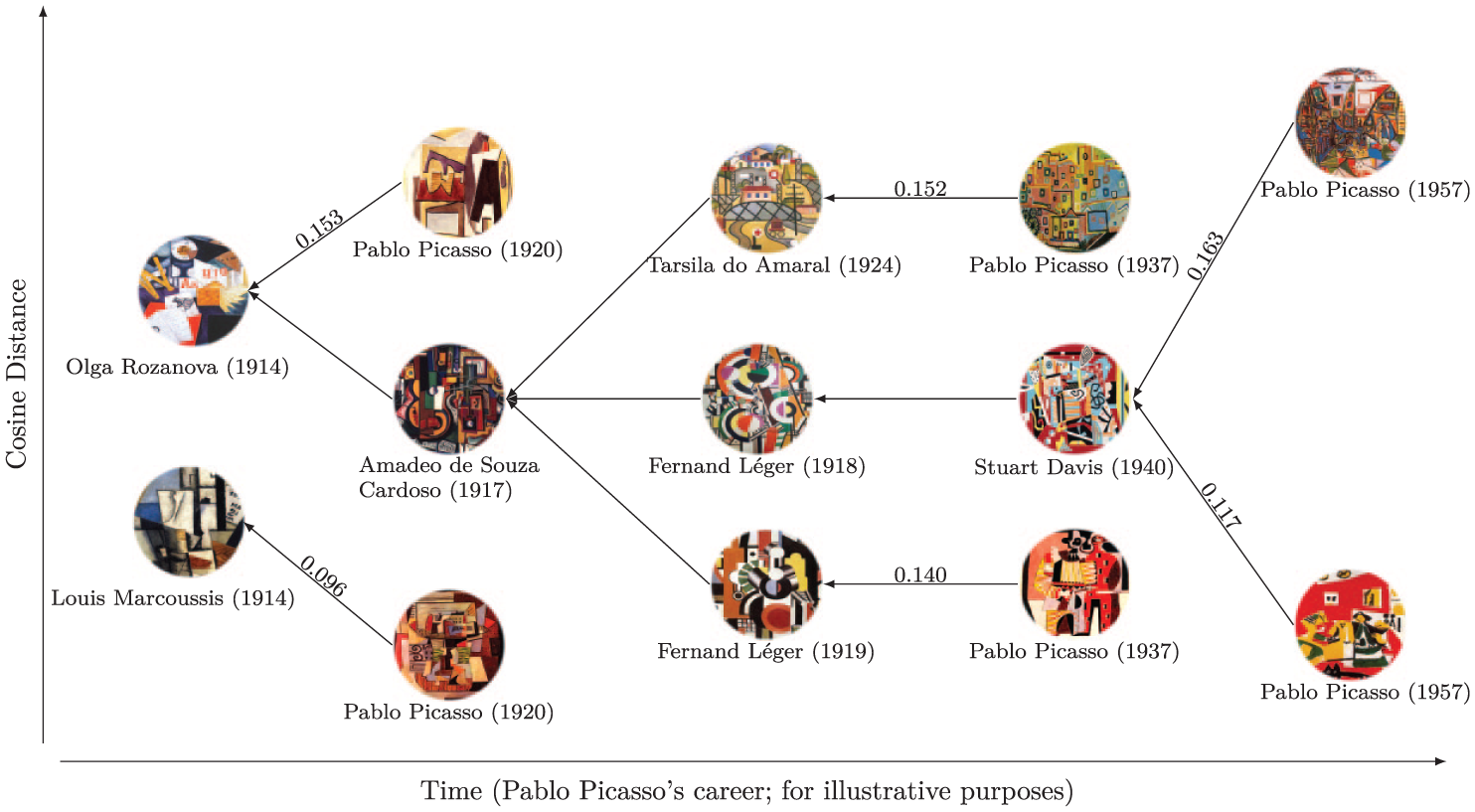
Measuring visual originality. This figure illustrates our method for measuring visual originality based on the computed cosine distance between an artist’s artwork and prior artworks created by artists other than the focal artist. As an illustration, two artworks based in three different years (1920, 1937, and 1957) of Pablo Picasso’s career are chosen. The actual cosine distances to their respective first neighbors are calculated for each artwork and given above the respective arrows. By using Eq. (10) we pick the year 1937 (average equal to 0.146) as it has the highest average score compared to years 1920 (average equal to 0.125) and 1957 (average equal to 0.140). Finally, by using Eq. (11) we represent the artist with the maximum score
In the following sections, we refer to our prime independent variable V as obtained from Eq. (11) as visual originality. To test hypothesis H2, we additionally considered an independent variable visual originality (dominant style) that is constrained on distances between paintings that belong to the same stylistic movement, by introducing the constraint
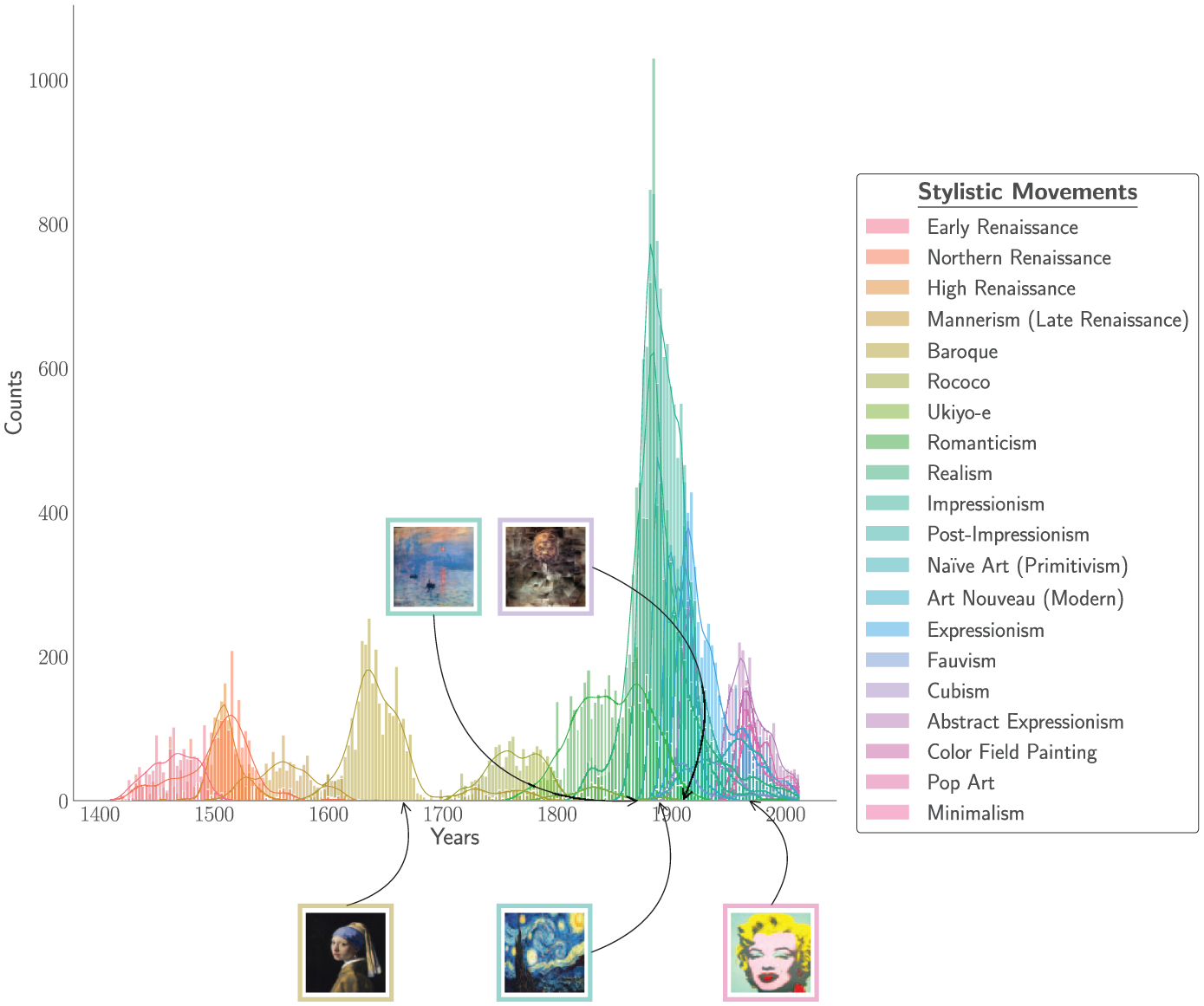
Distribution of the stylistic movements in the WikiArt dataset. This figure shows the frequency distribution of the twenty stylistic movements in the dataset. Five representative artworks are annotated: Johannes Vermeer’s Girl with a Pearl Earring (1665), attributed to Baroque; Claude Monet’s Impression, Sunrise (1872), attributed to Impressionism; Vincent van Gogh’s The Starry Night (1889), attributed to Post-Impressionism; Pablo Picasso’s Portrait of Ambroise Vollard (1910), attributed to Cubism; and Andy Warhol’s Marilyn (1967), attributed to Pop Art.
Control variables
We consider several control variables. First, to test hypothesis H3, we create a variable that encodes the dominant stylistic movement stage when the focal artist reached the maximum visual originality. Additionally, inspired by previous research (e.g., Accominotti, 2009), we create a variable that encodes the career stage of the focal artist at the time the maximum visual originality was reached. Both variables are normalized between 0 and 1—with 0 denoting the start and 1 denoting the end of the stylistic movement or career stage. Second, we include a demographic binary variable for the focal artist’s gender where male is coded as 0 and female as 1. Third, we control for an artist’s career age, the number of years an artist is active. Fourth, we include a variable that encodes the total number of styles the focal artist is involved with, as category spanning has been considered a key variable for assessing artistic performance (Hsu, 2006). Fifth, we control for the total number of paintings an artist has produced. Finally, it is worth noting that all variables are normalized between 0 and 1. Since our ranking measure is reverse-coded, higher values indicate better performance. Accordingly, negative coefficients on control variables such as the stylistic movement stage or career stage indicate that earlier stages are associated with better artistic performance. Table 1 provides a detailed description of the operationalization of all variables considered.
Summary statistics
Of the almost 61,000 artworks with a known creation year in WikiArt, we include only those artists that have at least 10 paintings in the collection. This resulted in a dataset that consists of 60,011 artworks created by 942 artists. Table 2 presents the summary statistics for these artists. The average number of paintings produced by an artist during their career is approximately 79, while the average number of styles attributed to artists is around 1.8. The vast majority of the artists are male, and the average number of active years is approximately 34.5.
Correlation matrix (independent and control variables).
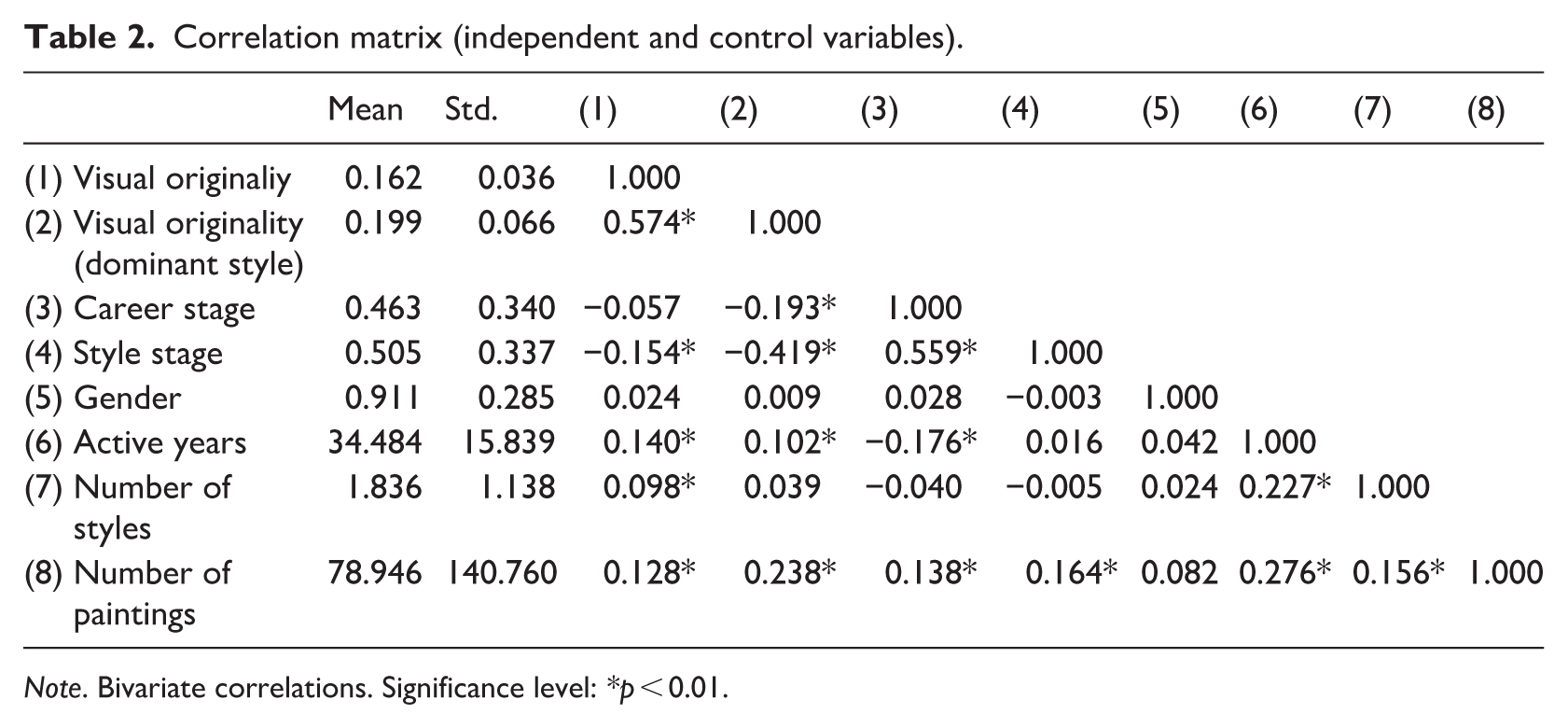
Note. Bivariate correlations. Significance level: *p < 0.01.
Results
In this section, we present our analysis and results detailing the relation between visual originality and artistic performance. 3 Table 2 presents the descriptive statistics and correlation analysis among the independent and control variables. Although the Pearson correlation matrix indicates r = 0.56 for career stage and style stage variables, and r = −0.42 for visual originality (dominant style) and career stage variables, the variance inflation factor (VIF) for the above-mentioned variables is lower than 1.8. Taking all variables into consideration, the average VIF is less than 1.4, indicating no strong effect of multicollinearity. 4
Estimation strategy
Models 1 and 4 in Tables 3, 4, and 5 estimate the explanatory variables visual originality and visual originality (dominant style), respectively. In models 2 and 5, the variables career stage and style stage are added; models 3 and 6 include all control variables, namely, the focal artist’s career stage and the style’s stage when maximum visual originality was achieved, a dummy variable for the focal artist’s gender, and continuous variables indicating artists’ active years, number of styles associated with a focal artist and the number of paintings created by the artist. As can be seen, adding the control variables is beneficial. Specifically, across all Tables 3, 4, and 5, models 3 and 6 have superior (lower) values of both the Akaike Information Criterion (AIC) and the Bayesian Information Criterion (BIC), which are tests for comparing the explanatory power of nested models. It is worth noting that we observe the same effect, i.e., models 3 and 6 resulting in better values for all AIC and BIC measures also when compared to alternative models that do not include our explanatory variables.
Ordinary least squares (OLS) regression analysis on visual originality and visual originality (dominant style) for the expert selection system.
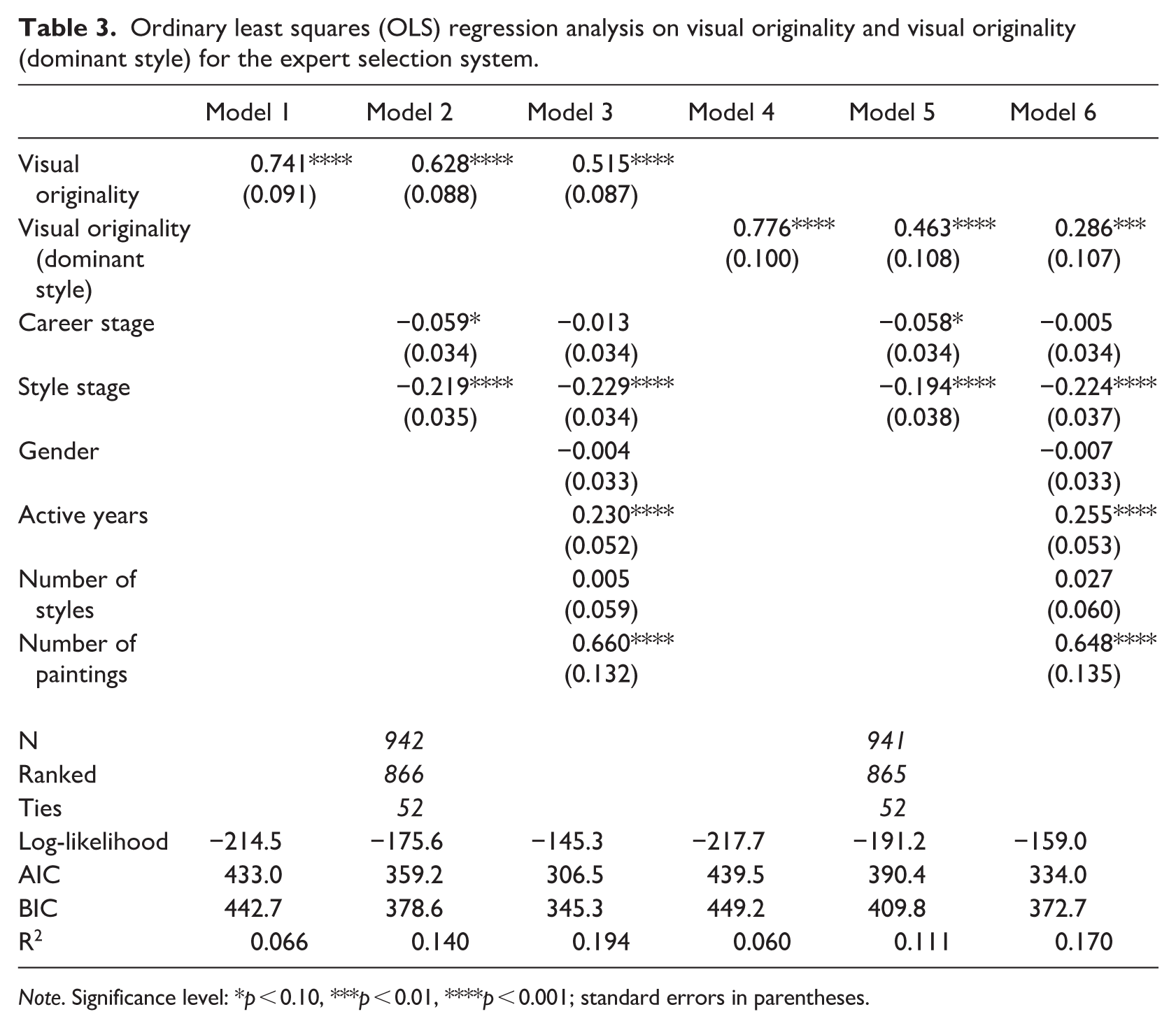
Note. Significance level: *p < 0.10, ***p < 0.01, ****p < 0.001; standard errors in parentheses.
Ordinary least squares (OLS) regression analysis on visual originality and visual originality (dominant style) for the peer selection system.
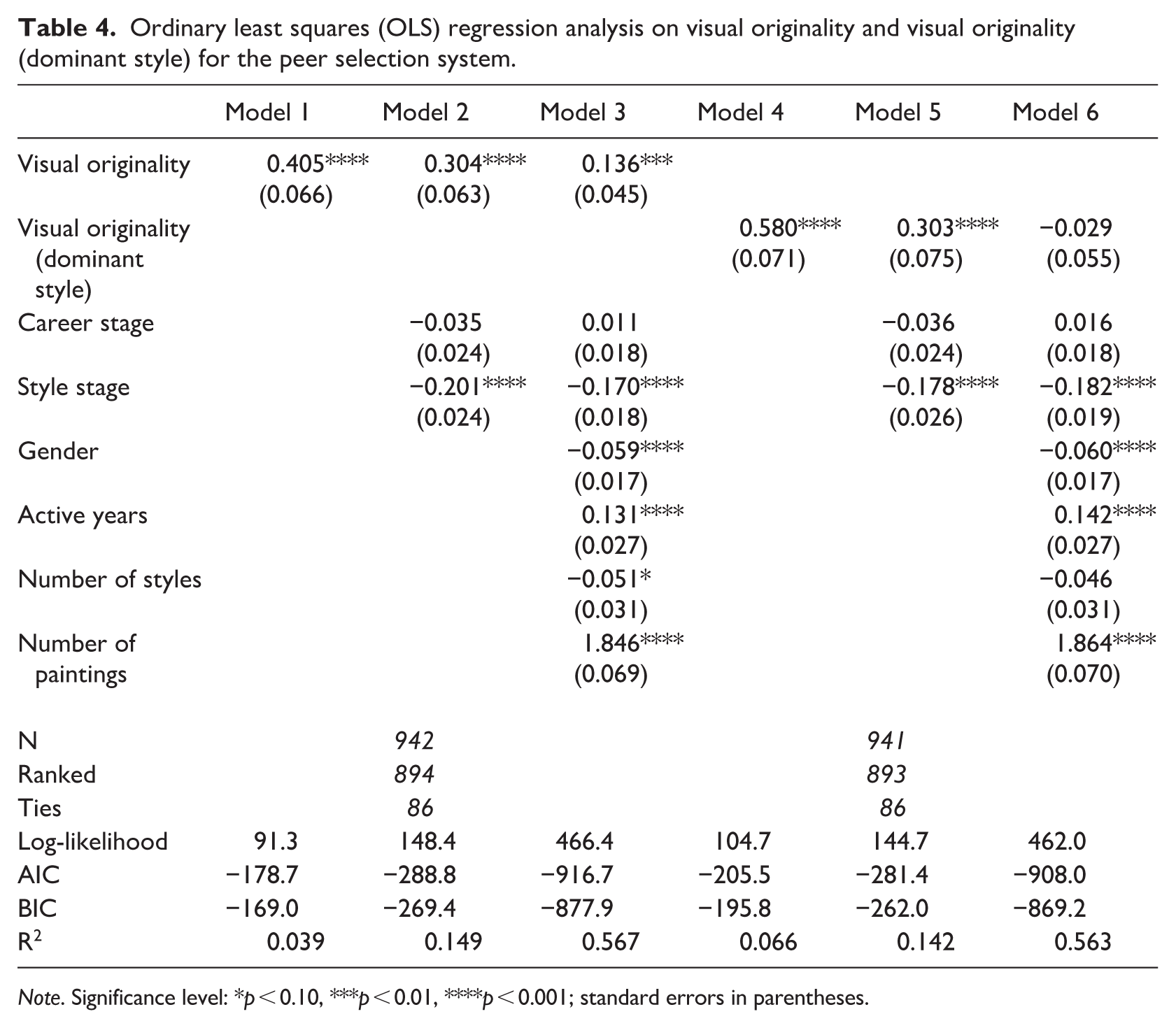
Note. Significance level: *p < 0.10, ***p < 0.01, ****p < 0.001; standard errors in parentheses.
Ordinary Least squares (OLS) regression analysis on visual originality and visual originality (dominant style) for the market selection system.
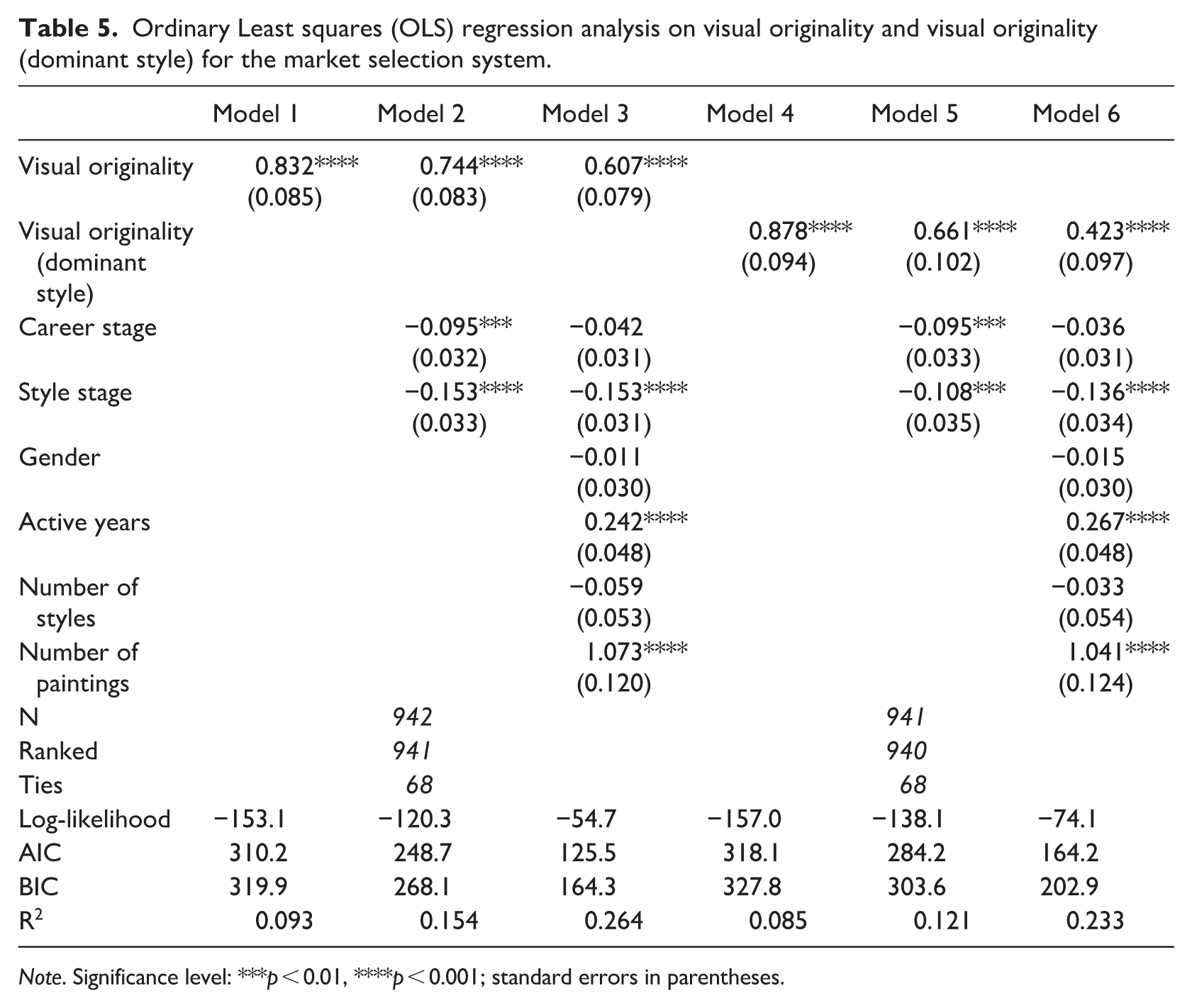
Note. Significance level: ***p < 0.01, ****p < 0.001; standard errors in parentheses.
Visual originality and its relation to long-term evaluations
Tables 3, 4, and 5 present the ordinary least squares (OLS) regression estimates of the variable visual originality across expert, peer, and market selection systems. Models 1, 2, and 3 estimate the computational measure of visual originality when considering all available prior artworks. It can be clearly seen that visual originality has a significant effect across expert, peer, and market selection systems. Across all models, the coefficients of visual originality are positive and significant (p < 0.001), suggesting that the higher the visual originality of a focal artist, the higher (better) the artist’s canonical standing would be for each expert, peer, and market selection system, supporting hypothesis H1.
Visual originality within stylistic movements
In Tables 3, 4, and 5, models 4, 5, and 6 present the ordinary least squares (OLS) regression estimates of the variable visual originality (dominant style) across expert, peer, and market selection systems. Specifically, models 4, 5, and 6 estimate visual originality only for artworks that belong to the same stylistic movement. It is clear that our explanatory variable visual originality (dominant style) has a significant effect on nearly every selection system (p < 0.001). Nevertheless, it is worth noting that, as can be seen in model 6 in Table 4, visual originality seems to have no significant effect (p > 0.1) on the peer selection system compared to the expert and market selection systems when considering the artists’ dominant styles, denoting partial support for hypothesis H2. This finding suggests that peers may be more influenced by artists who conform to established standards within their dominant style, rather than those who exhibit high levels of originality. Across the three selection systems, we observe slight variation in the effects of both overall visual originality and visual originality within dominant styles. As shown in models 1–3 (Tables 3–5), overall visual originality has a positive and significant effect across expert, peer, and market selection systems (p < 0.001), supporting hypothesis H1. However, the magnitude of these associations varies: coefficients are substantially larger for expert and market evaluations, while peer selection shows a weaker association overall. For instance, when originality is assessed within the artist’s dominant stylistic movement in model 6, the effect in the peer system becomes negative and not statistically significant (p > 0.1). These results suggest that expert and market evaluations are more sensitive to stylistic innovation both broadly and within movements, while peer evaluations may place greater emphasis on conformity to prevailing stylistic norms (Banerjee et al., 2023). This pattern highlights the distinct evaluative logics shaping recognition across the selection systems.
Impact of stylistic movement and artist career stage
In Tables 3, 4, and 5, models 2, 3, 5, and 6 summarize the OLS results, including the stylistic movement and artist career stage as control variables. The estimates show that the stage of the style when the maximum visual originality from the focal artist was reached has a significant impact on the focal artist’s performance (p < 0.001) supporting hypothesis H3 across expert, peer, and market selection systems. The statistically significant negative coefficient indicates that the earlier in the stylistic movement stage that maximum visual originality is reached, the higher (better) the ranking position of the focal artist. Finally, it is worth noting that the artist career stage has no significant effect on the long-term evaluations.
Impact of other control variables
In Tables 3, 4, and 5, models 3 and 6 summarize the OLS results using all the control variables across the expert, peer, and market selection systems. It should be noted that the effect of both the artists’ active years and the number of paintings created by the focal artists have significant effects across all selection systems. Specifically, the positive coefficients for both variables suggest that the longer the artist’s career and the number of paintings created, the better (higher) the focal artist’s canonical standing, as measured by expert, peer, and market selection. In contrast, we can observe that the number of stylistic movements attributed to an artist and the artist’s gender have no significant effect on any selection system aggregate. A notable exception is the artist’s gender in the peer selection system (p < 0.001), suggesting that male artists are more likely to have a better (higher) ranked position.
Performance across different rankings
Table 6 presents ordinary least squares (OLS) regression estimates of our explanatory variable visual originality across the individual rankings using model 3. The empirical evidence shows that visual originality has a positive and significant effect (p < 0.001) on most rankings. This shows that high visual originality has a significant effect on an artist having better (higher) rankings in each individual ranking. There are two exceptions, The New York Times and Artfacts rankings, in which visual originality has a positive but not significant effect.
Ordinary least squares (OLS) regression analysis on visual originality per individual ranking.
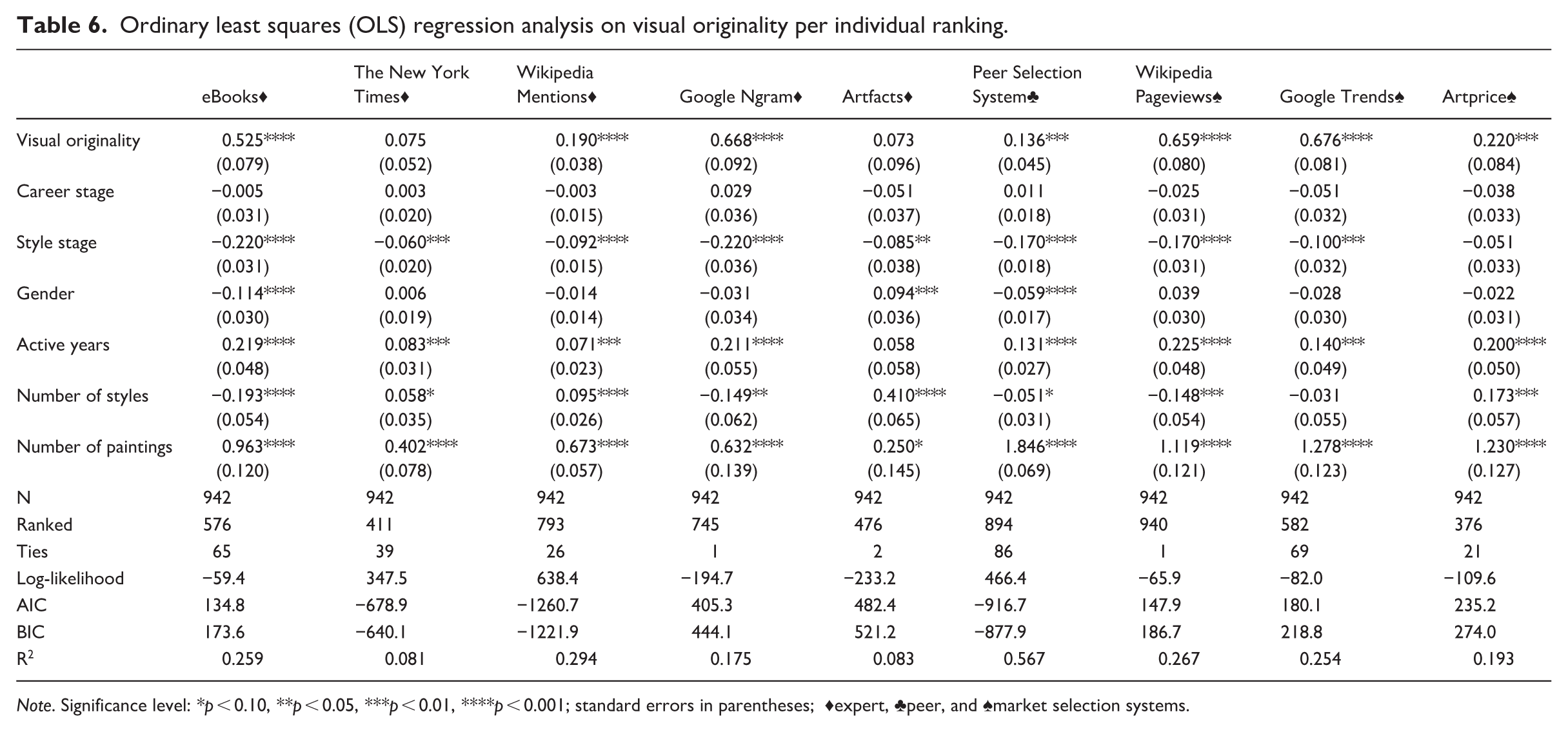
Note. Significance level: *p < 0.10, **p < 0.05, ***p < 0.01, ****p < 0.001; standard errors in parentheses; ♦expert, ♣peer, and ♠market selection systems.
Robustness checks and additional validation
As robustness checks, we consider several different settings. In order to further validate our methods, we constrain the visual distances between artworks within specified time periods. More specifically, we compute the artworks’ visual distances with other artworks that were created within the following five timeframes, namely a ten-year window, ten to twenty-year window, twenty to fifty-year window, fifty to a hundred-year window, and more than a hundred-year timeframe. In the results presented in the Online Appendix, high visual originality has a consistent and significant effect on artists’ canonical standings for virtually all settings considered. These highly robust findings provide further validation of our method for measuring an artist’s visual originality across different settings. Furthermore, we consider various methods for computing the respective artists’ visual originality; for instance, in addition to using the maximum visual originality as reached in a specific year, we computed the 95th percentile and the average of the respective year. Across the board, these estimations are robust to our main models.
Discussion
At the core of our research, we study the relationship between artists’ visual originality, as expressed solely in the surface features of their artworks, and their enduring prestige in the art canon. Following previous studies (e.g., Askin & Mauskapf, 2017; Banerjee et al., 2023; Kim & Askin, 2024), we use advanced computational methods to investigate this nexus. Our unique approach integrates both visual and textual analysis within a multimodal framework, enabling the systematic examination of a large and comprehensive dataset.
Our study extends the management and organization studies literature both theoretically and methodologically in a few complementary ways. To start off with, we propose a new definition and operationalization of visual originality, which is anchored in time and reflects an artist’s peak moment of creative output (e.g., Galenson, 2006; Simonton, 1980, 1999, 2007) rather than presuming visual originality to be a consistent quality in an oeuvre or an enduring attribute in a subset of artworks. Moreover, by taking a materiality perspective and using advanced deep learning techniques, we systematically measure artists’ visual originality at the pixel level of the artworks’ digital representations without including external interpretive frameworks. We apply this approach to all artists in our dataset and compare the focal artist’s work to all prior artworks created by other artists—regardless of stylistic movement—as well as predecessors within the same movement. Inspired by previous research (e.g., Accominotti, 2009), we also investigate the stage of the stylistic movement when the artist peaks. Then, we estimate the effect of visual originality on different kinds of evaluative regimes representing the art canon. Moreover, by integrating computer vision and textual analysis methods, we extend the use of computational techniques in organization studies research, offering a scalable and systematic approach to quantifying and estimating artistic value in cultural production.
Our approach offers a novel empirical bridge between the most basic level of an artwork’s materiality and the institutional recognition of the artist. By grounding originality in pixel-level data, we capture core visual properties through which artistic contributions take shape. These properties are not merely surface features but encode the building blocks through which cultural meaning emerges. Deep learning models trained on these pixels distill such information into embeddings that encode latent visual structures, enabling us to measure visual originality as a relational construct. This has two important implications. First, it demonstrates the significance of visual originality, by detecting it empirically, before any form of institutional legitimacy takes place. Second, it provides a new way of understanding why certain artists remain influential over time, as originality increases the likelihood of institutional recognition and subsequent cultural endurance, as reflected in the art canon.
The results of our study show that visual originality alone—devoid of external interpretive scaffolding—has long-term consequences across different kinds of evaluative regimes. This challenges the assumption that cultural value necessarily originates within an institutional or sensemaking context alone and instead suggests, as mentioned earlier, that artists’ visual originality in artworks can exert influence even before it is perceived as being legitimate by different kinds of evaluative regimes. Specifically, we empirically demonstrate that visual originality functions as a proxy of the focal artist’s quality and helps shape perceived cultural value prior to any institutional legitimation. Our perspective extends meaning-making accounts (e.g., Khaire & Wadhwani, 2010) by suggesting that part of an artist’s cultural value is embedded in the material surfaces of their artworks and is only subsequently recognized as different kinds of evaluative regimes evolve and gradually converge on their judgments.
To better understand how visual originality impacts artists’ long-term recognition, we draw on the selection system framework (Wijnberg & Gemser, 2000). This framework provides a useful lens to better understand this dynamic across expert, peer, and market-based evaluative regimes. In addition, we develop a new metric for peer evaluations based solely on the surface-level visual aspects of the artworks, expanding beyond existing proxy-based methods, like co-exhibition networks (e.g., Banerjee et al., 2023; Fraiberger et al., 2018). Our findings extend the selection system framework by showing that in the absence of explicit interpretive framing or sensemaking, the novelty embedded in an artwork’s visual features retrospectively aligns with evaluative logics. We find, for instance, that visual originality is consistently linked to long-term recognition, and this relationship is particularly salient within stylistic movements, especially for expert and market evaluations. Furthermore, artists who reach their maximum visual originality early in a stylistic movement’s life cycle gain a strategic advantage for lasting recognition. However, we stress that visual originality is not solely about an artwork being different from others, but rather about its novelty aligning—at least retrospectively—with the preferences of evaluative regimes over time. This retrospective alignment is possible because, as Khaire and Wadhwani (2010) argue, value judgments depend on socially constructed frames that enable different evaluators to perceive and compare artworks as commensurate.
Our results offer support to suggest that selection systems do not operate in isolation (Sharkey et al., 2023; Wijnberg & Gemser, 2000) but rather recursively reinforce one another over time, leading to a gradual consensus around particular artists and their artworks. The convergence between the effect of visual originality on different kinds of selectors is not surprising in itself; it could even be considered as a further confirmation of the canonized status of the artworks in our dataset. At the same time, distinguishing between the three kinds of evaluative regimes allows us to construct a generalizable new measure of canonization that captures how initially divergent logics of evaluation (Wijnberg & Gemser, 2000) converge over time to form the art canon.
While originality attributed to artists is widely regarded as a determinant of their long-term success, most earlier studies have approached this relationship indirectly, namely focusing less on the visual features of the artworks themselves and more on the social and institutional mechanisms. For instance, by taking an institutional perspective (e.g., Peterson & Anand, 2004; White & White, 1965), concentrating on artists’ network positions (e.g., Cattani & Ferriani, 2008; Ertug et al., 2016; Fraiberger et al., 2018) or other social boundaries, such as relationships (e.g., Giuffre, 1999; G. Jones, 2010). However, in our study, we focus on the most basic level of the artwork’s materiality without considering the subject matter—literal and metaphorical perspectives—or anything else an evaluator could focus on when searching for arguments supporting their evaluation. While Wijnberg (2004) defined stylistic innovation in terms of the differences evaluators could perceive between the focal product and earlier objects in the same category, our study does not require that the evaluators consciously perceive the distances we measure. Thus, it is not trivial to find that visual originality at the most basic level of mediated materiality at the time of the creation of the artwork has such an unambiguous effect on future evaluations by all kinds of audiences. As such, our findings also bear on the cultural development of societies more broadly. We empirically demonstrate that the visual originality of artists is a determinant of individual recognition and, through its role in the canon formation, contributes to shaping collective cultural memory. By affecting which artistic trajectories are preserved, circulated, and canonized, visual originality influences what is remembered. This perspective opens promising avenues for future research on the temporal dynamics of repeated selection. Such work could clarify how convergence across evaluative regimes elevates certain artistic trajectories while marginalizing others, thereby shaping—and potentially narrowing—the diversity of perspectives represented in the art canon.
Generalization and further implications
As already mentioned, we analyze the relationship between visual originality and long-term evaluations, and while the empirical context is very well suited to this purpose, our methodology—both the methods and the results—can be generalized to other domains. To start with the methodology, our study leverages a fine-tuned deep learning architecture for fine art analysis tasks that we use to extract visual features representing each artwork in our dataset as real-numbered vectors. By comparing these feature vectors, we can calculate pairwise cosine distance between paintings, thereby creating a measure of visual originality. While works of visual art are ideal for this method because the image is essentially the product, this approach directly applies to any industry where the primary product partly consists of, or can be represented by, a static image, for example in photography, design, and architecture. Moreover, the same method can also be applied to domains in which other modalities dominate. The intermediate step of quantifying originality based on the cosine distance between feature vectors can be adapted to visual, sonic, or textual signals. For instance, recently developed transformer-based architectures for music genre classification in the music industry can extract high-level feature vectors capturing meaningful semantics (Niizumi et al., 2023). Similarly, state-of-the-art language models can be used to extract feature vectors that efficiently represent products mainly consisting of text (e.g., books, scientific papers) or textual descriptions (OpenAI, 2023).
Furthermore, our method of utilizing cosine distance among feature vectors can be directly expanded to measure other constructs, such as conformity or influence. Specifically, we can measure conformity by reversing our computation of visual originality, identifying the point in time when an artist’s work shows the minimum distance from prior works. Similarly, just as we operationalized peer evaluations based on the extent to which an artist has influenced their peers, we can use the same approach to measure how closely a focal artist’s work aligns with that of earlier artists. This alignment can indicate the artist’s conformity or the extent to which they remain within the influence of previous artists. This approach builds on and complements recent similarity frameworks in organizational research (Aceves & Evans, 2024; Poschmann et al., 2024). Whereas these frameworks focus on conceptual and semantic forms of similarity, our method extends distance-based measures into the visual domain by leveraging embeddings derived from pixel-level representations. In doing so, we contribute a modality of similarity that captures the material distinctiveness of images and thereby broadens the scope of computational approaches to meaning and culture. In short, our approach opens opportunities for further studies exploring the relationships between originality, conformity, and influence and their impact on artistic success.
The results of our study add to a broad stream of research on the relations between differentiation or innovativeness and competitive performance along various dimensions, from profit to reputation, as well as the extent to which different audiences or selectors are influenced. The extent to which studies of competitors in other industries will produce similar results as ours will strongly depend on the relative importance of originality as a constituent of the value of the good. This importance is generally very high in highbrow arts as well as science and still quite crucial in lowbrow arts, design, and fashion with an ever-increasing assortment of upper-segment consumer goods—ranging from cars to mobile phones—with which consumers want to distinguish themselves from others. The extent to which originality affects competitive performance in industries where being different has at least some value will also vary strongly with the homogeneity or heterogeneity of the domain, that is, the domain’s dominant classification systems. This implies that the dynamics of categorization will be related to the dynamics among selectors (Wijnberg, 2011) and will influence the association between originality and performance. Overall, while the specific results of this study cannot be immediately generalized to industries where originality is not as essential, there is a distinct contribution to understanding its premium in high- and lowbrow industries and upper segment goods. Our approach links measurable originality to performance by using deep learning methods that are independent of artistic context to generate vector spaces. By applying the selection system framework, we gain deeper insights into how different audiences evaluate originality. This method offers a scalable and adaptable framework that can be applied beyond the arts to study originality and performance in other domains.
Limitations and future research
This study also has limitations that highlight avenues for future research. First, while we look at the influence of originality on long-term evaluations, most studies, including those employing deep learning methods to study the correlation between originality and performance, often focus on the assessments immediately after market introduction (e.g., Askin & Mauskapf, 2017; Banerjee et al., 2023). For instance, in the context of the Billboard’s Hot 100 chart, Askin and Mauskapf (2017) find an inverted U-shaped relationship indicating that moderately original songs—neither too novel nor too familiar—achieve the highest chart positions, which are of course evaluations immediately following the song’s release. Our study, however, does not focus on immediate but rather on long-term performance. We do not find an inverted U-shaped relationship, which aligns with Zhao et al. (2017), who suggest that such a relationship is more likely to appear over shorter timeframes.
In the context of our empirical domain, while studying the effects of visual originality on performance shortly after the creation of an artwork is highly interesting, a dataset of different magnitudes is needed. Nevertheless, the set-up of our research points the way to how such studies could be executed, which, in turn, would allow further exploration of whether the monotonic relationship we find in this study could have an inverted U-shaped relationship that others have shown when restricting the timeframe to short-term performance. Precisely by taking into full account the categorical landscape and its dynamics, it should be possible to propose particular minima and steepness of the inverted U-shape, as Haans (2019) suggested.
Second, our selection of artworks from the WikiArt dataset, like in most datasets, introduces biases towards certain characteristics. To start with the obvious, since WikiArt includes paintings in museum collections, it also consists of the upper echelon of artworks, precisely the ones that can be considered canonized. Of course, most studies of competition in the creative industries deal with these upper layers exclusively, for instance, focusing on music that reaches the Billboard charts. One reason for this is that in each creative industry, there is an oversupply of producers and products (Caves, 2000), and most never have a serious competitive impact. The focus on the top layers, combined with a long-term perspective, evidently strengthens the directionality of the observed effects. For instance, painters creating artworks in the opposite direction of art history will be very distinctive, but not likely to appear in our rankings, mainly because most of them were not considered by an evaluative regime at any time. In connection with the previous limitation, extending the dataset will make it more likely for nonlinearities to appear, just like focusing on the short-term effects of originality. Additionally, the WikiArt dataset comes with the usual biases, overrepresenting the works of Western male artists who are often considered the archetypes of Western art’s development. Finally, some records, such as the number of critical reviews or auction sales per artist, are missing or irretrievably lost across our 600-year timeline. This limits our ability to control for all of the possible differences in evaluative exposure, reflecting the inherent constraint of a historical dataset.
Third, our focus on visual originality through the lens of mediated materiality narrows our examination to the similarity or dissimilarity among the artworks included in our dataset. Consequently, we do not account for external factors that could impact artistic performance, such as influential network effects (Cattani & Ferriani, 2008; Ertug et al., 2016; Fraiberger et al., 2018) or quality signals that influence expert-agent buyers (Kackovic et al., 2020) observed in previous research within the creative industries. To comprehensively explore the potential interactions between artists and their artworks, future research should integrate, in addition to the products’ visual characteristics, features such as the producers’ networks and quality signals.
Finally, generalizing this last issue, it is important to note that our current study solely focuses on the retrospective impact of visual originality on artistic performance. Consequently, we do not capture other significant aspects of creativity, such as the extent to which artists explore different directions after reaching their peak visual originality, the evolution and differentiation within an artist’s career (Galenson, 2006), or the social processes that occur between the creation of the artwork and its long-term evaluation. These processes need further investigation to gain a more nuanced understanding of the dynamic relationship between artists and audiences. Our study lays the groundwork by demonstrating the robust relationships between the initial creation—color pixels on a flat visual surface—and long-term evaluations. Differentiating audiences in terms of selection systems provides a useful and coherent framework to theorize these processes. This sets the stage for future studies to explore the multiple, possibly interacting, processes between these two points, contributing to a better understanding of the dynamics of competition in the creative industries.
Conclusion
In this paper, we propose a new definition and operationalization of visual originality and empirically demonstrate the extent to which it affects artists’ long-term recognition and art historical esteem. Unlike prior studies relying on institutional perspectives or network methods, we examine visual originality at the most fundamental level of mediated materiality of artworks and independent of any explanatory contexts. By leveraging state-of-the-art deep learning methods on large visual and text corpora, we introduce a scalable way to quantify the extent to which artists’ maximum visual originality affects their overall value as determined by different kinds of evaluative regimes. More broadly, we demonstrate that computer vision and text analysis provide organization studies researchers with powerful tools for investigating constructs, such as originality and valuation. Especially in domains where originality in producers or products is held at a premium and subject to varied evaluative regimes over time, these multimodal methods offer a systematic approach to laying the foundation for a deeper understanding of complex canonization processes.
Supplemental Material
sj-pdf-1-oss-10.1177_01708406251397720 – Supplemental material for Being Ranked in a Material World: The visual originality of an artwork and its effects on the artist’s canonization
Supplemental material, sj-pdf-1-oss-10.1177_01708406251397720 for Being Ranked in a Material World: The visual originality of an artwork and its effects on the artist’s canonization by Athanasios Efthymiou, Monika Kackovic, Stevan Rudinac and Nachoem Wijnberg in Organization Studies
Footnotes
Acknowledgements
We thank the Special Issue Guest Editors, the Editor-in-Chief, and the three anonymous reviewers for their constructive feedback, which has significantly improved this paper. We are also grateful for the valuable comments and suggestions received after presentations at the 2022 Creative Industries Conference at the Amsterdam Business School, and the 2022 Art and Data Conference at New York University organized in collaboration with New York University Abu Dhabi.

Funding
The authors received no financial support for the research, authorship, and/or publication of this article.
Declaration of conflicting interests
The authors declared no potential conflicts of interest with respect to the research, authorship, and/or publication of this article.
Supplemental material
Supplemental material for this article is available online.
Notes
Author biographies
References
Supplementary Material
Please find the following supplemental material available below.
For Open Access articles published under a Creative Commons License, all supplemental material carries the same license as the article it is associated with.
For non-Open Access articles published, all supplemental material carries a non-exclusive license, and permission requests for re-use of supplemental material or any part of supplemental material shall be sent directly to the copyright owner as specified in the copyright notice associated with the article.
