




Abstract
In the face of both increasing climate risks and growing market opportunities, numerous firms are rushing to trumpet their environmental and social achievements. Many firms are, however, seemingly paradoxically, choosing to minimize or withhold their sustainability accomplishments, an increasingly prominent phenomenon known as brownwashing or greenhushing. We draw on an in-depth qualitative study with over 50 firms in the North American wine industry to offer in situ insights on why and how firms engage in brownwashing. Our findings are a significant departure from prior research that has focused on brownwashing to mitigate negative stakeholder judgments. First, our findings reveal firms frequently engage in brownwashing driven by their own judgments of sustainability, specifically its constraints, branding, and community. Second, our analysis reveals the complex interaction between brownwashing and greenwashing and highlights how rampant greenwashing can cause sustainable firms to withdraw green claims, thus considerably advancing the literature on environmental communications. In short, firms are brownwashing because of rampant greenwashing by others. We then develop a foundational model to integrate previously established mechanisms (avoidance brownwashing) with our newly identified mechanisms (rejection brownwashing). As society seeks to engage firms in transparent reporting of sustainability to address grand challenges, our study offers timely theoretical and practical insights.
Keywords
That’s the way wine should be made. . .It’s like buying a car that drives. That’s what it’s supposed to do. Buying organically made wine, that’s how it’s supposed to be made. So, they don’t want to use it as marketing.
Introduction
Firms’ impacts on the natural environment are being scrutinized more than ever; increased public and stakeholder pressure incentivizes firms to communicate positive environmental performance (e.g., Durand, Hawn, & Ioannou, 2019), with many overstating their performance through greenwashing (e.g., Delmas & Burbano, 2011; Lyon & Montgomery, 2015). Surprisingly, many firms that legitimately engage in sustainability practices are choosing to downplay their efforts. These actions, known as brownwashing and frequently termed greenhushing by practitioner audiences, include minimizing environmental achievements (e.g., Kim & Lyon, 2015) or withholding sustainability communication altogether (e.g., Carlos & Lewis, 2018).
Although brownwashing may seem to be a lesser evil than greenwashing, recent research has revealed negative effects on firms and society. Brownwashing has, for example, been shown to negatively and significantly affect firms’ financial performance (Hawn & Ioannou, 2016; Testa, Miroshnychenko, Barontini, & Frey, 2018) and may be detrimental to environmental progress more broadly (Huang, Francoeur, & Brammer, 2022), with the potential to “adversely affect the diffusion of socially and environmentally responsible practices” (Carlos & Lewis, 2018, p. 30). Brownwashing is also prevalent; a recent Corporate Transparency Index report (Connected Impact, 2024) indicates that 58% of companies underpromote environmental, social, and governance (ESG) progress. Thus, concerns over brownwashing are not unwarranted.
Since most brownwashing research is based on macro-level data, scholars tend to view brownwashing as a tactic to manage perceptions and avoid negative consequences such as accusations of inefficiency (Kim & Lyon, 2015) or hypocrisy (Carlos & Lewis, 2018) from key stakeholder audiences. Recently, researchers have begun to acknowledge that firms navigate varied contextual dynamics in crafting their environmental communications, including growing mistrust of green claims (Chen & Chang, 2013; Robertson, Montgomery, & Ozbilir, 2023) and the politicization of sustainability and ESG (Padfield, 2022). This suggests that brownwashing is a complex strategy that requires a deeper consideration of firm-level motivations, strategies of rivals and peers, and the broader societal context (Barney, 2002). Because cross-level and contextual aspects have not been captured in prior brownwashing research, it is difficult to generalize from prior work, leading authors (e.g., Montgomery, Lyon, & Barg, 2024; Wang, Jia, & Zhang, 2021) to call for a more nuanced and integrated examination.
Responding to these calls, we ask: Why and how do firms engage in brownwashing? To answer this question, we analyze data from an in-depth qualitative study of the North American wine industry. Our novel, in situ insights reveal why and how firms in an industry facing rapid changes and numerous pressures around sustainability choose to downplay their environmental practices. Our qualitative data include 48 formal interviews with key organizational decision-makers, 29 informal interviews, and extensive observational and archival data. Our findings show that brownwashing is a response not only to stakeholder evaluations, but also to firms’ evaluations and judgments of aspects of sustainability. Firms may downplay their sustainability practices as a way to reject sustainability claims, branding, and communities. We find a frequent reason for this downplaying of sustainability is greenwashing by others, not by the firm itself.
Our study makes several novel contributions to the growing literatures on brownwashing, greenwashing, and firms’ environmental communications, more broadly. First, we identify an entirely new type of brownwashing, rejection brownwashing, by showing that brownwashing can be driven by firms’ own judgments of relevant contexts and constructs. Backlash against sustainability is therefore not limited to anti-sustainability actors; our study is among the first to highlight that even green firms struggle with and ultimately reject aspects of sustainability and that this may lead to downplaying the firm’s environmental activities. Second, we model the little-understood interconnections between brownwashing and its deeply studied opposite, greenwashing. We show that greenwashing directly influences and fuels brownwashing by reducing the value of sustainability, which subsequently reduces the rational, reputational, and normative value of environmental communications. Our theorization of the interplay of brownwashing and greenwashing establishes an important conceptual link between these concepts and provides a base for future research. Third, we build a foundational model of brownwashing by integrating new mechanisms with previously established ones to identify and differentiate what we term avoidance brownwashing and rejection brownwashing mechanisms. Our findings unveil several mechanisms that have not been identified in prior theorization and data (deviance avoidance, constraint rejection, co-optation rejection, and identity rejection). That is, our study both replicates established mechanisms and reveals several new ones, uniting and integrating them by identifying three parallel theoretical underpinnings of brownwashing.
Theoretical Background
As environmental issues such as climate change, biodiversity loss, and resource depletion become increasingly salient, organizations that fail to act sustainably are subjected to increased scrutiny. Whereas concerns about greenwashing abound, scholars (e.g., Carlos & Lewis, 2018; Kim & Lyon, 2015; Montgomery et al., 2024) also have articulated concerns about the practical and moral harms of brownwashing, i.e., minimizing or withholding information about environmental actions and achievements (Kim & Lyon, 2015). Brownwashing may normalize information asymmetry and stakeholder deception (Huang et al., 2022), hindering progress toward a sustainable economy by diminishing the collective capacity to develop solutions to address the world’s most pressing environmental issues (Falchi, Grolleau, & Mzoughi, 2022).
Brownwashing also has negative direct and indirect impacts on firms. Analyzing data from companies in 58 countries and 19 industries, Testa et al. (2018) found that although greenwashing does not impact firms’ financial performance, brownwashing impedes potential financial gains and decreases organizations’ market value. Building on Delmas and Grant (2014), they speculated that brownwashing undermines financial performance because firms bear the negative consequences of being perceived as unsustainable. Brownwashing may also harm firms indirectly by eroding stakeholder trust and tarnishing firms’ reputations (Chen & Chang, 2013), leading to negative financial consequences (Carlos & Lewis, 2018). Additional research suggests that brownwashing harms a variety of stakeholders, with broad implications for strategy and markets. For example, creditors require high-quality information about firms’ environmental practices to decrease debt interest (Luo, Guo, Zhong, & Wang, 2019), investors need accurate and up-to-date information to assess risk (Vasi & King, 2012), and consumers seek informative communication to align purchases with their values (Topal, Nart, Akar, & Erkollar, 2020).
Despite the negative consequences of minimizing or withholding communication about sustainable behavior, the nascent literature on brownwashing provides limited insights into its mechanisms. In contrast, the mechanisms of greenwashing have been researched and explored in depth to understand why and how firms undertake such deceptive behaviors, as well as to address them (for reviews, see Montgomery et al., 2024; Nemes et al., 2022). Findings from the few studies that have explored brownwashing mechanisms have identified stakeholder pressure as a main driver. Specifically, scholars have suggested that companies engage in brownwashing to hide behaviors that stakeholders may judge as inefficient, in line with economic approaches such as rational choice theory (e.g., Kim & Lyon, 2015), or to prevent branding from being perceived as hypocritical, in line with impression management theory (e.g., Carlos & Lewis, 2018).
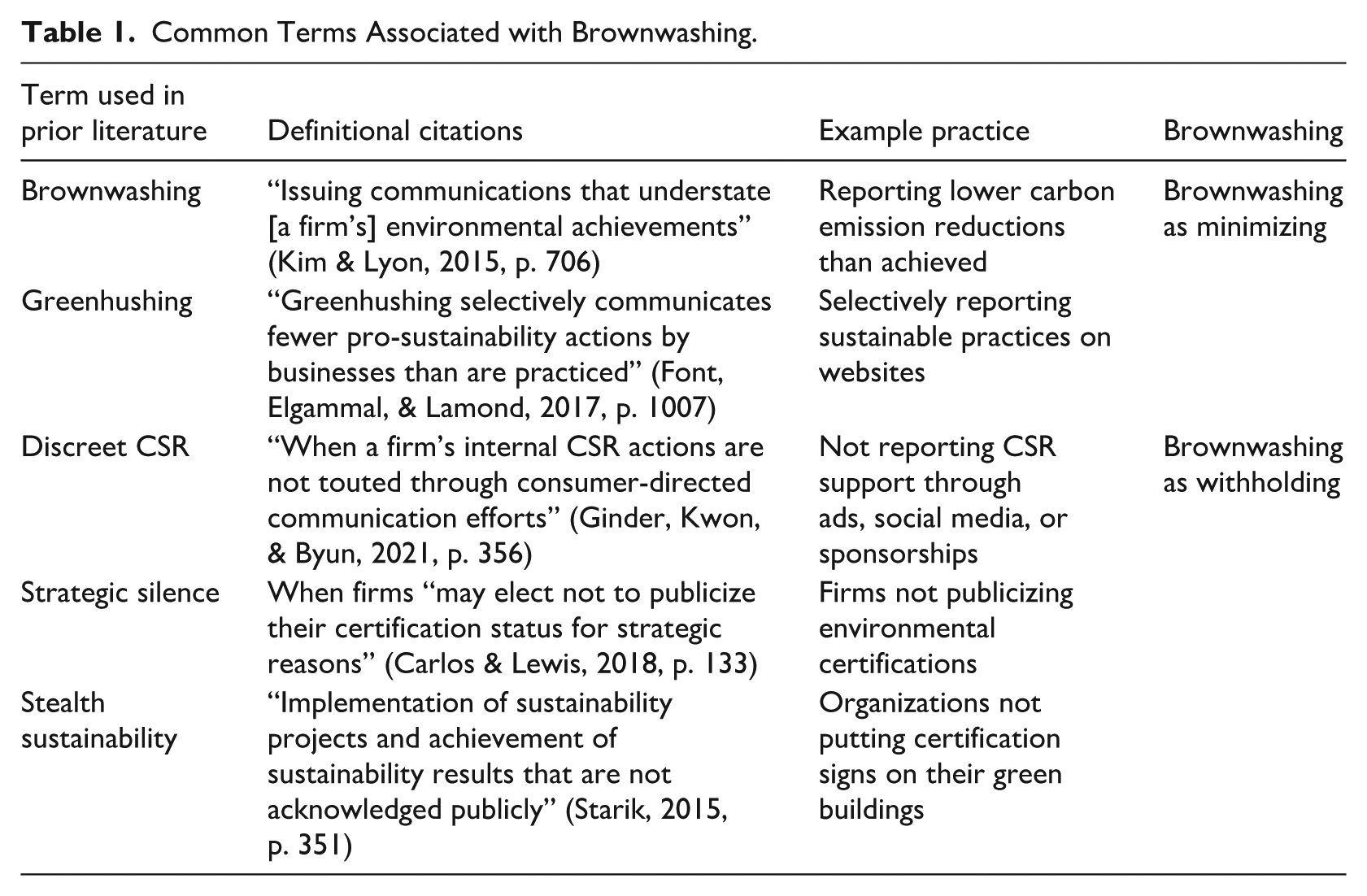
Kim and Lyon (2015) were the first to empirically identify the phenomenon and coin the term “brownwashing,” which we view as encompassing a range of terms in the literature (see Table 1). They found that although electric utility firms engaged in greenwashing by exaggerating their greenhouse gas reductions, a significant number engaged in brownwashing by substantially underreporting reductions. They argued that firms engaged in brownwashing to appease stakeholders concerned about the costs of environmental initiatives, a mechanism also noted by Falchi et al. (2022) which we term scrutiny avoidance. This mechanism captures how organizations engage in brownwashing to avoid being seen as inefficient by stakeholders who have deemed pro-environmental behaviors too expensive or risky. Numerous studies show that sustainability initiatives are profitable (e.g., King & Lenox, 2002), and other, albeit fewer (Testa et al., 2018), studies show the opposite (e.g., Link & Naveh, 2006). Presented with both sides of the argument, or facing psychological and contextual barriers, risk-sensitive stakeholders may over-emphasize evidence that sustainability threatens business (Hoffman & Henn, 2008), leading some firms to engage in brownwashing to mitigate stakeholders’ concerns while continuing to engage in pro-environmental practices. In such cases, brownwashing is driven by cost-benefit analyses of firms’ sustainability actions, in line with rational choice theory (see Alsharif, Peters, & Dixon, 2020), rather than evaluations of sustainability communications.
Common Terms Associated with Brownwashing.
Other work on mechanisms of brownwashing has focused on reactions to the firm’s environmental communications, rather than on sustainability actions. Specifically, prior research has focused on the fear of environmental communications being judged as hypocritical by external activist stakeholders (Carlos & Lewis, 2018) or “cynical consumers” (Font et al., 2017, p. 1007). Carlos and Lewis (2018) found that firms with strong, domain-relevant reputations do not publicize their environmental certifications, thereby engaging in hypocrisy avoidance. Drawing on impression management theory, they argued that firms with strong reputations attract more attention from the public and thus have both a great deal to lose and a high risk of being targeted by activist stakeholders. To mitigate perceptions of hypocrisy, firms strategically hide their sustainability certifications to prevent stakeholders from examining how certifications were achieved, particularly well-known certifications with high standards (Carlos & Lewis, 2018). In non-environmental contexts, researchers have identified similar phenomena. For example, firms downplay communicating their shareholder value orientation when they face pressure from labor unions (Snellman, 2012), hide investments in research and development to lower investor performance expectations (Koh, Reeb, & Zhao, 2018), and remain quiet about philanthropic activities to balance stakeholder tensions (Wang et al., 2021). Thus, research converges around the idea that firms minimize communications to avoid reprisals from key stakeholders.
Building on the insights above, we sought to more clearly define brownwashing, identifying that it encompasses both minimizing and withholding behaviors (Table 1). Research on scrutiny avoidance has primarily focused on brownwashing as minimizing environmental performance (e.g., underreporting carbon emission reductions) and research on hypocrisy avoidance has primarily examined brownwashing as withholding environmental performance (e.g., not publicizing sustainability certifications). We do not, however, consider these behaviors to be unique to each stream. For example, a firm may withhold a certification from internal shareholder reports to avoid being seen as inefficient, or minimize communication about environmental actions if exceeding a certain threshold increases the risk of reputational damage.
We identified two prominent gaps in the extant understanding of brownwashing. First, although prior studies have yielded empirical evidence for two primary mechanisms of brownwashing, details in these papers and others suggest additional potential mechanisms, particularly when considering an organization-level lens. Although scholars have emphasized brownwashing as a tactic to avoid potential penalties imposed by stakeholders, they have largely overlooked firms’ agency—firms not only react out of fear, but are actively strategizing. Indeed, research shows that firms only promote their sustainability certifications if doing so provides a competitive advantage (Gehman & Grimes, 2017), but this does not directly address brownwashing. Although Falchi et al. (2022) suggested that firms may withhold announcements about sustainability certifications that they deem unimportant, this argument has not been tested empirically. Additionally, Font et al. (2017, p. 1020) showed that the tourism industry engages in brownwashing to “realign business practices to our social norms,” suggesting that brownwashing may have an identity-based or normative element, like sustainability more broadly (Lee, Hiatt, & Lounsbury, 2017), that scholars have yet to develop theoretically. Finally, Ginder et al. (2021) showed that consumers may view brownwashing positively, attributing it to intrinsic sustainability motivations, which can have a positive effect on consumers’ purchasing decisions and a firm’s employees and reputation (Carlos & Lewis, 2018; Robertson et al., 2023). However, it is unknown whether firms consider these potential benefits in developing their environmental communication strategies.
Second, extant mechanisms of brownwashing were identified in macro-level studies of firm communication strategy by examining a single mechanism at a time, with little or no attention to the strategic decisions of other firms or the full suite of brownwashing mechanisms. These choices have limited research, particularly in contexts where managers are motivated to engage in brownwashing, resulting in relatively weak combined insights. For example, Kim and Lyon (2015) showed that brownwashing is driven by scrutiny avoidance when shareholders are most at risk (e.g., weak regulations and low profits) and salient, i.e., when there are few external stakeholders to critically examine environmental performance. However, Carlos and Lewis (2018) showed that when activists are present, hypocrisy avoidance may drive brownwashing. By independently studying these mechanisms, scholars have found that brownwashing may occur when activists are present and when they are not, without considering potential influences of the underlying mechanisms. Moreover, scholars have identified a need for more research exploring the contexts in which firms pursue brownwashing (Neumann, 2021). For example, after Lyon, Lu, Shi, and Yin (2013) found that firms in China lost shareholder value after announcing that they had won green awards, some scholars argued that brownwashing may be beneficial in contexts where “the typical benefits of green management strategies are not relevant” (Testa et al., 2018, p. 1106).
In sum, the oversights captured above—organization-level agency and contextual breadth—have led scholars to conclude that “recent studies are only the first steps toward an improved understanding of this important phenomenon. Additional mechanisms leading to similar behaviors still need exploration” (Wang et al., 2021, p. 649). Clearly, there is a need to “clarify the mechanisms at play” (Montgomery et al., 2024, p. 234).
Methodology
Research context: sustainable wine
Wine has been produced without chemicals for most of its 7,000-year history (Carpenter & Humphreys, 2019). Post-war growth in the use of agricultural chemicals, however, led to a newfound reliance on herbicides, pesticides, and fertilizers. In response, the industry has seen growth in sustainably produced wine, with expected annual growth rates of roughly 11% over the next decade (Domaine Bousquet, 2021). The wine industry is an ideal context for our study of brownwashing for several reasons. First, communications are essential in the industry, as many consumers rely heavily on marketing and label information. Second, the wine industry has short value chains wherein producers exercise tight control over their own inputs. Third, many wineries are in frequent contact with a variety of stakeholders. Finally, rapidly growing sales of sustainably produced wines increase expectations for firms to publicize environmental achievements, making the decision to engage in brownwashing more unexpected.
Data sampling, sources, and collection
After considering several agricultural industries, we narrowed our study to the wine industry, in line with a field analytic approach (e.g., Ansari, Wijen, & Gray, 2013). In the absence of strong theoretical guidance from the received literature, we conducted an inductive qualitative study focused on firms’ environmental communication. We began by collecting archival data, followed by interviews in four wine regions: the Niagara Peninsula (Ontario, Canada); the Central Coast (near Santa Barbara, California); the North Bay (Napa and Sonoma, California); and Southern Oregon and the Willamette Valley (Oregon). We selected these regions because they were leaders in sustainable wine production and offered the opportunity to develop and generalize our theory across norms, cultures, and regulatory boundaries. Participating firms were distributed roughly equally across regions and varied in terms of their production volumes (small: 24%, medium: 38%, large: 38%). Only two firms in our sample had no certifications; many had multiple (certified organic 56%, certified biodynamic 34%, additional sustainability certifications 65%). We conducted an in-depth qualitative study from 2017 through 2022, collecting data from several sources (see Table 2).
Qualitative Data Inventory.
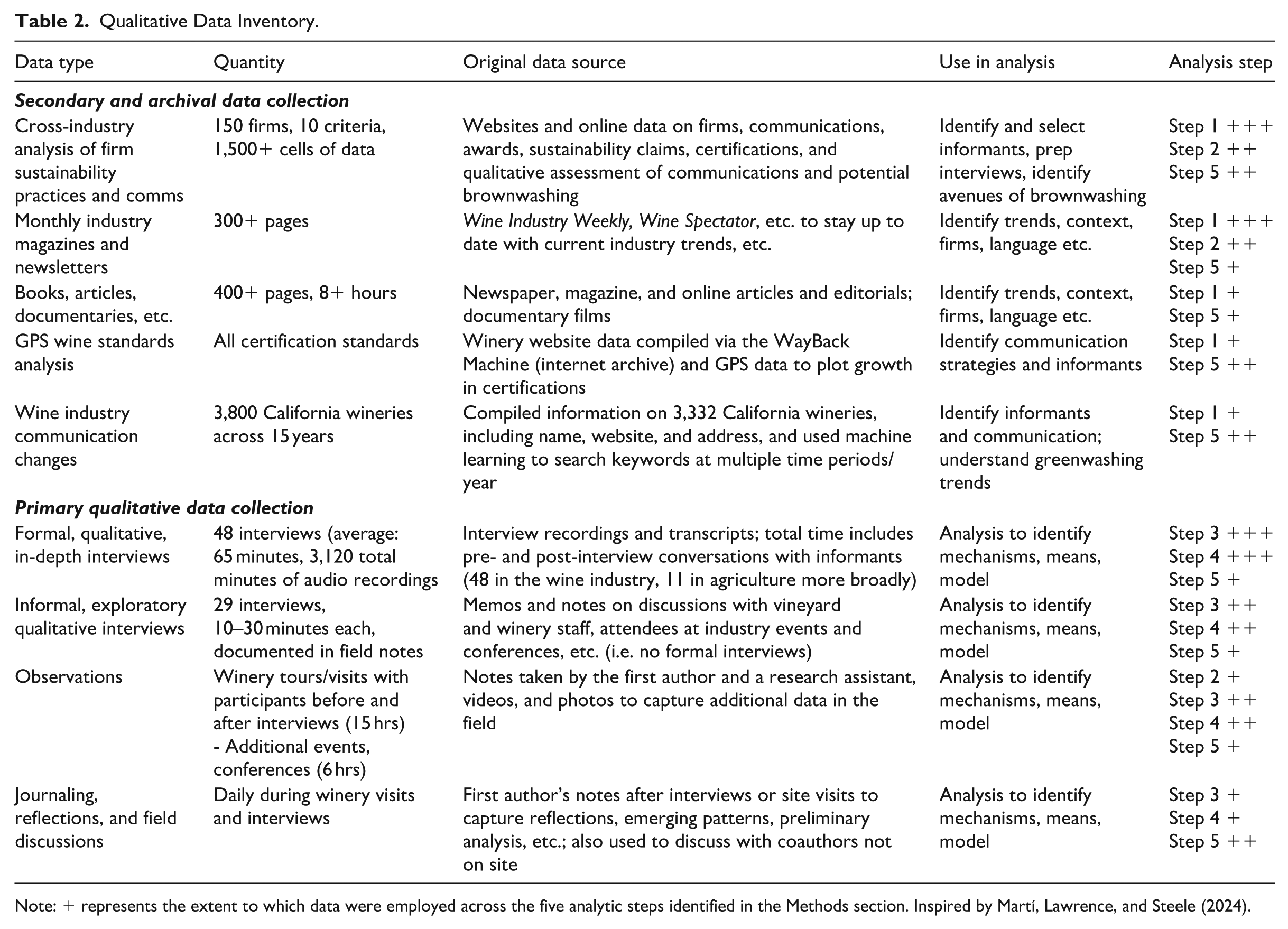
Note: + represents the extent to which data were employed across the five analytic steps identified in the Methods section. Inspired by Martí, Lawrence, and Steele (2024).
Secondary and archival data collection
We began by collecting detailed data on firms engaged in sustainable wine growing. We did so by searching certification membership lists, other relevant organizational memberships, ratings, industry publications, and awards. With the help of research assistants, we then manually checked their public-facing communications such as marketing materials, websites, and wine labels. Through this process, we built a database of hundreds of wineries practicing some degree of sustainable winemaking, along with their demographics, certifications, and communications across channels and stakeholders. Because our goal was to study brownwashing, we searched this database for wineries with inconsistencies between internal and external practices. Namely, we sought indications that firms were (a) genuinely integrating sustainable practices (i.e., award-winning, certified, recognized by peers or retailers, etc.) and (b) downplaying, minimizing, or hiding these practices in all or some channels. We referred to, updated, and revised the database throughout the data collection phase.
Primary qualitative data collection
Next, we conducted 48 formal interviews with key informants in the wine industry who appeared to be brownwashing some or all of their practices. Initially, we engaged in purposeful sampling (Eisenhardt, 1989) based on the criteria above. Once we were in the field, we also used snowball sampling to identify additional participants who were not captured in our database. These in-depth, semi-structured interviews lasted one hour or more. Due to the nature of our research questions, all informants held senior positions and were generally owners or head winemakers with extensive knowledge of and control over organizational strategy, communications, and decisions. We interviewed only one leader in each firm except in two cases, where we interviewed two leaders to reflect the organizational structure. To better inform our data collection and analysis, we also interviewed five individuals with key insider knowledge of the wine industry who were not attached to a specific winery. These included a prominent distributor of sustainably produced wine, a national wine buyer, a vineyard management consultant, and two individuals who worked with certification bodies. In addition, we conducted 29 informal interviews with wine industry insiders, including winery staff and industry representatives. These discussions lasted between 10 and 30 minutes and contributed to our contextual understanding.
We also collected extensive observational data. We took detailed notes at wineries, retail outlets, and events, as well as before, during, and after interviews, focusing on when, where, and how sustainability practices were communicated (or not), and the extent to which they were promoted in marketing materials and on site. We also attended several sustainable wine industry conferences to develop a better understanding of the context. The first author journaled throughout the study to capture and track emerging patterns that were distinct from our interview and event notes and regularly shared these insights with the research team.
Data analysis
As described in Table 2 and below, our multi-step data analysis process began during data collection and continued throughout the study (Ansari et al., 2013; Dacin, Munir, & Tracey, 2010; Gioia, Corley, & Hamilton, 2013) as we verified emerging insights with informants.
Step 1: Identifying brownwashing firms
As described above, due to the unique and challenging nature of identifying our sample based on characteristics that were not readily apparent, our sample selection entailed in-depth preliminary analysis of firms’ practices and communications. We include this preliminary step in Table 2 to ensure transparency and clarity.
Step 2: Grouping firms based on brownwashing drivers and practices
As we began our formal interviews in the field, we engaged in open coding, using informants’ own words and terminology (Locke, 2001; Strauss & Corbin, 1990, p. 270). In doing so, we continually asked who, what, when, why, and how (Purdy & Gray, 2009), seeking to identify underlying drivers, motivations, and approaches to brownwashing. We then moved to second-order coding, looking for commonalities across our first-order codes to identify emerging themes and categories (Purdy & Gray, 2009). In the first iteration, we identified many unique drivers of brownwashing; however, after receiving advice from reviewers, consulting extant research, and engaging in deeper analysis, we shifted our focus to higher-level aggregate mechanisms. This initial stage of analysis also helped us recognize variations in firm governance structures, ownership structures, and relative size that we applied in later stages of analysis. We do not include our comparative regional analysis or analysis of governance impacts in this paper, as we did not detect any theoretically important variations in the mechanisms of brownwashing in our sample. We do, however, highlight opportunities for future research in our discussion.
Step 3. Identifying key mechanisms of brownwashing
As aggregate analytical themes that linked our second-order codes began to emerge, we focused on mechanisms of change from one state to another (Hedstrom & Swedberg, 1998). We conceived of mechanisms as “bits of theory about entities at a different level than the main entities being theorized about” to make “theory more supple, more accurate, or more general” (Stinchcombe, 1991, p. 367). Applying Hedstrom and Swedberg’s (1998, pp. 22–23) typology, we recognized that we had identified primarily “situational mechanisms” whereby an “individual actor is exposed to a specific social situation, and this situation will affect him or her in a particular way,” in our case, by prompting a decision to engage in brownwashing.
At this stage, we also recognized that our emerging mechanisms could be assigned to two broad categories. The first category of mechanisms aligned well with prior work: firms were engaging in avoidance brownwashing to avoid pushback from investors, policymakers, and activists. The first two mechanisms we identified—scrutiny avoidance and hypocrisy avoidance—confirmed prior insights from quantitative data. We also identified a third novel avoidance mechanism, deviance avoidance. Our analysis of qualitative, firm-level data also surfaced an important and surprising insight, as three additional rejection brownwashing mechanisms emerged (i.e., constraint rejection, cooptation rejection, and identity rejection) that reflected firms’ own evaluations and judgments of sustainability. Finally, we realized that the three mechanisms of both avoidance brownwashing and rejection brownwashing are undergirded by three distinct theoretical perspectives, enabling us to develop a model that integrates our new mechanisms with extant research. Although similar perspectives are also addressed in broader theories such as institutional theory (e.g., Lounsbury, 2008; Wijen & Ansari, 2007), we choose to draw on micro-level theories due to our individual-level data, to align our mechanisms and model with extant findings, and author expertise.
Step 4. Integrating the operationalization of brownwashing
Our emerging findings also surfaced an additional insight: brownwashing is not simple and firms were engaging in several novel activities. At this stage, we returned to our data for each identified mechanism to examine differences in approaches, iterating with our archival data and observations to understand how firms were executing brownwashing activities. We then integrated these activities with each mechanism to explain why and how firms engage in brownwashing.
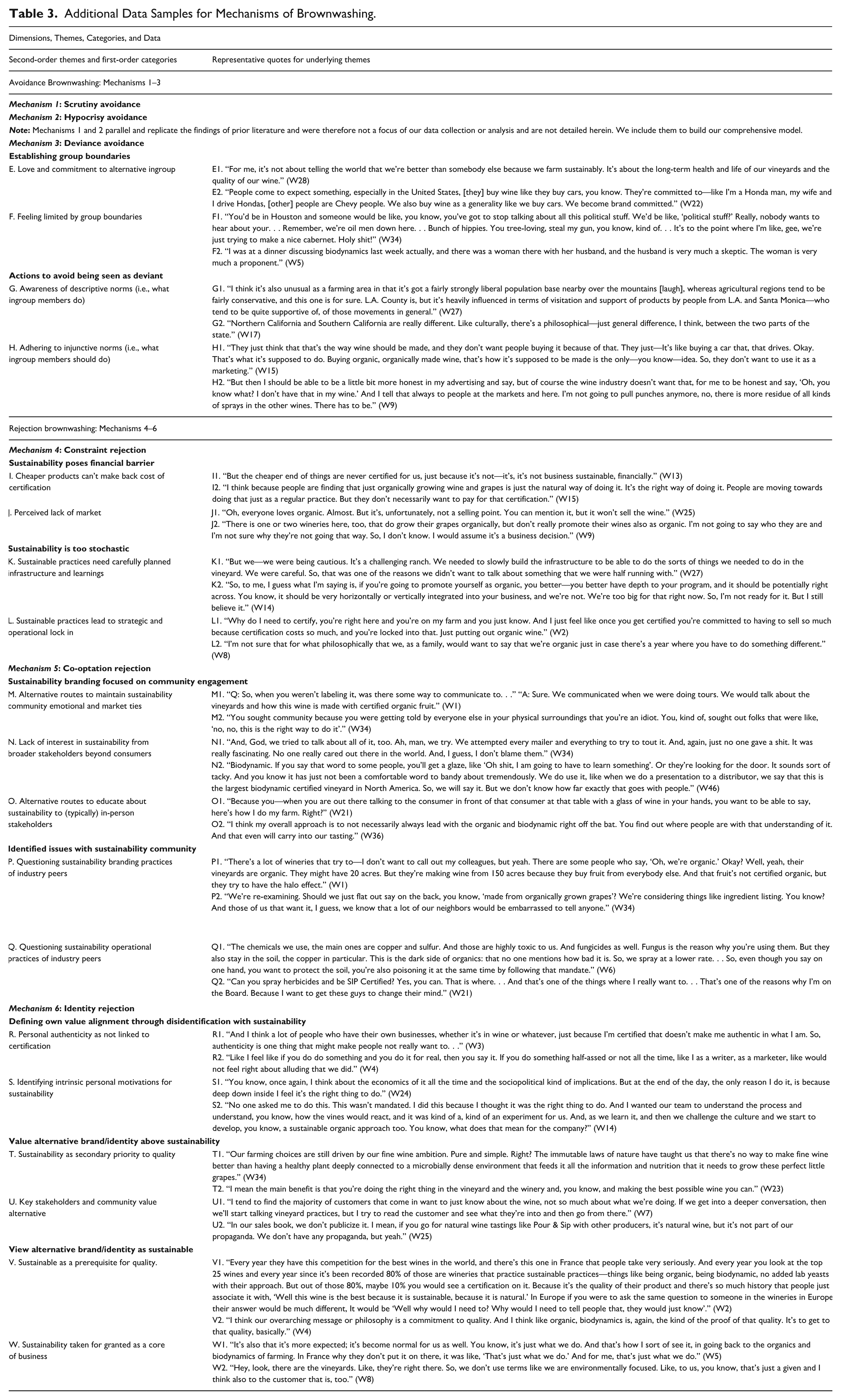
Throughout steps 1–4, we triangulated our emerging findings with archival data, performed member checks, and verified coding consistency across the research team. Details about our coding, data structure, and additional data samples, are provided in Table 3 in the Appendix.
Step 5: Exploring the interplay of greenwashing and brownwashing
We performed the final step in our analysis at later stages in response to unexpected insights regarding the explanatory role of greenwashing. Although an initial aim of our broader research program was to better integrate greenwashing and brownwashing and understand their interactions, we anticipated addressing this in a later study. As we iteratively developed our theory and with the encouragement of reviewers, however, a key insight from our firm-level qualitative data was how firms were reacting strongly to, judging, and often rejecting aspects of sustainability such as the costs or the behavior of sustainability actors. In almost all cases, these instances of rejection brownwashing were partly related to greenwashing, as informants sought to distance themselves from the current state of sustainability branding, terminology, and discourses. This finding enabled us to integrate both greenwashing and brownwashing into our model and offer additional novel theoretical insights.
Findings: The Mechanisms of Brownwashing
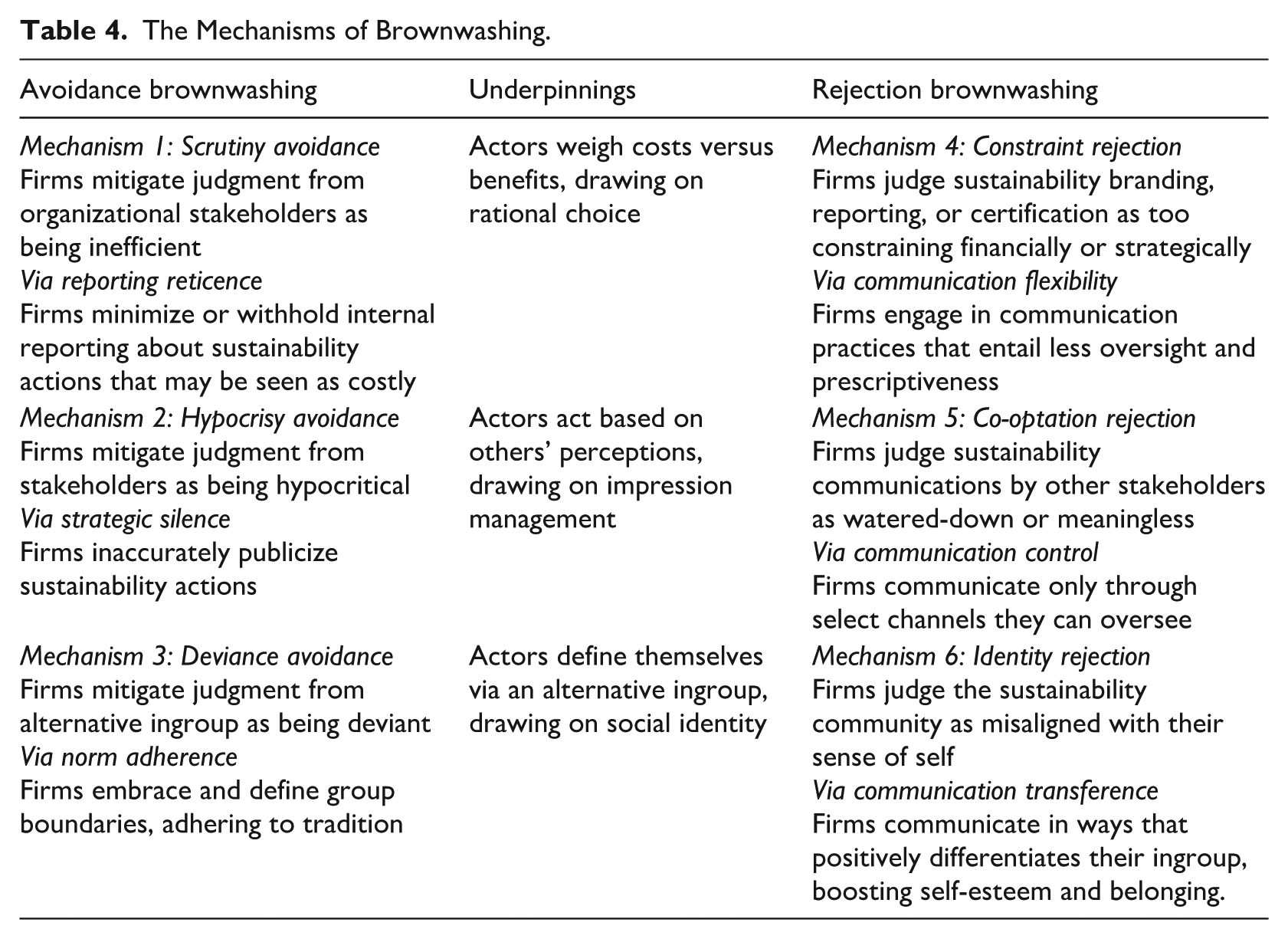
To explain why firms downplay their sustainability practices, we developed an empirically grounded model of brownwashing. Notably, our analysis distinguishes between two distinct types of mechanisms: (a) avoidance brownwashing, rooted in firms avoiding the consequences of judgments from stakeholders and (b) rejection brownwashing, rooted in firms’ evaluations and judgments of aspects of sustainability (see Figure 1 and Table 4). Our analysis reveals three mechanisms of brownwashing in each category. The inward-facing arrows in Figure 1 highlight the interactions between avoidance brownwashing and rejection brownwashing mechanisms. Avoidance brownwashing mechanisms include scrutiny avoidance and hypocrisy avoidance, which confirm prior quantitative findings, and the novel mechanism of deviance avoidance. In Figure 1, these are depicted on the left side; the rings illustrate that the mechanisms are grounded in rational, reputational, or normative reasons, respectively. All three rejection brownwashing mechanisms—constraint rejection, co-optation rejection, and identity rejection—are novel (right side of Figure 1). Importantly, our analysis also reveals that greenwashing contributes to each of these new rejection brownwashing mechanisms, by creating operational barriers to sustainable communication, damaging the reputability and reliability of communications, or making sustainability an increasingly challenging identity marker for winemakers to embrace. In turn, brownwashing inhibits honest green firms from engaging with or communicating about sustainability, thus engendering more potential for greenwashing. We illustrate these interactions at the bottom of Figure 1.
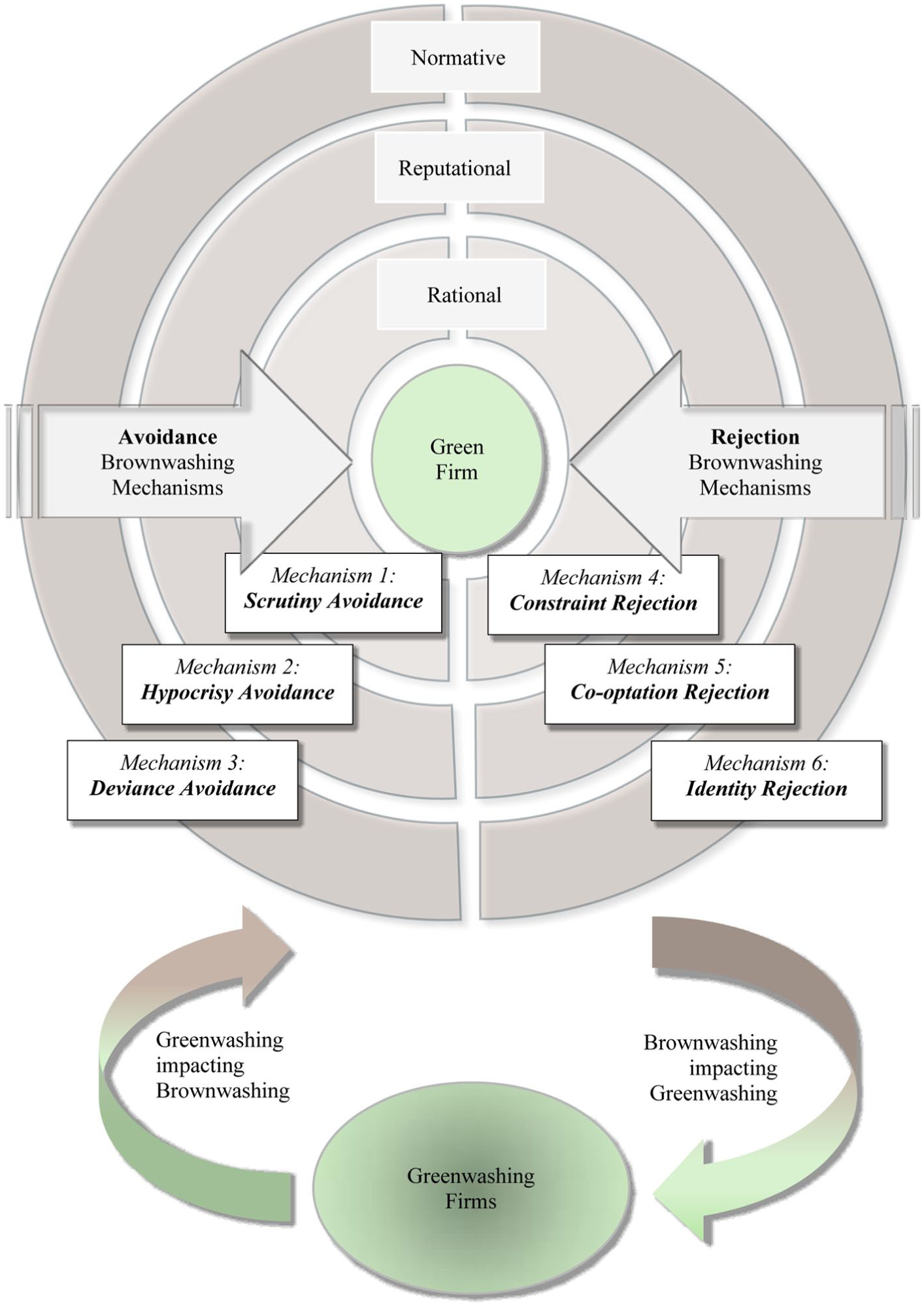
A model of the mechanisms of brownwashing.
The Mechanisms of Brownwashing.
Avoidance brownwashing mechanisms
Our first two identified mechanisms replicate findings of prior quantitative research and thus are not a focus of our study or analysis. We briefly summarize them here.
Scrutiny avoidance
Our data show that brownwashing is driven by a desire to prevent perceptions of inefficiency (scrutiny avoidance) by withholding internal reporting about sustainability actions that may be seen as costly (reporting reticence). Many winemakers in our sample, for example, engaged in conversions that required considerable time and resources as they tried, experimented with, and expanded their sustainable practices. This meant their communication was also controlled over time to avoid excess scrutiny. A head winemaker at a large winery described how he cautiously approached communications, and what would happen if he disclosed his sustainable practices, even internally, beyond the employees directly involved in the winemaking process: For me to rush out in the large organization and say, “We’re organic,” and they say, “Well . . . we didn’t know that. We can leverage that.” . . . then my boss calls me, and the accountants call me and say, “What? What are you doing? You’re organic now?” It costs thousands, you know. So, I’m very cautious internally how I position it. (W14)
Hypocrisy avoidance
Brownwashing also is driven by a desire to avoid perceptions of hypocrisy among industry-level, often external stakeholders (hypocrisy avoidance) by not publicizing sustainability actions that would increase the risk of reputational damage (strategic silence). Informants mentioned the importance of stakeholders actively calling out greenwashing and their fear of receiving similar treatment. Because we sought to sample genuinely sustainable firms, these fears were not as common or pressing in our data, but the threat of reprisals from consumers, investors, and activist groups and the desire to avoid such exposure was noted multiple times (interview notes, various). Others mentioned growing backlash against the industry that surfaced concerns among all wineries about being perceived as hypocritical: “California is at the point where they look at vineyards and wineries with significant suspicion” (W46, full quote in Table 3 in the Appendix). These critiques sometimes even came from the local community or industry colleagues, as one winemaker recounted: It’s funny, because we all—we try to be very pure on what we do but, you know, then when the marketing stuff comes into it, some people really shy away. Like . . . you’re just being a shill, right, to try to, you know, sell wine. (W48)
Some participants also actively mentioned fear, such as “I don’t see any downside to putting that stuff on the label unless you’re afraid” (W22, full quote in Table 3 in the Appendix). Surprisingly, another participant recounted their past experiences publicizing sustainable practices in one of the most significant wine regions in the world: “There was a lot of physical threats . . . against [owner and winery]. And a lot of abuse and bullying from growers.” 1 Faced with direct and indirect threats over hypocrisy, and fear of punishment from powerful stakeholders, our analysis shows that wineries may be most likely to turn to strategic silence, and not publicize their sustainable growing practices at all.
Deviance avoidance
Brownwashing also is driven by a desire to prevent ingroup members (in this case, “high quality” or “traditional” winemakers) from perceiving firms as deviant (deviance avoidance) by embracing and stewarding group boundaries and adhering to tradition (norm adherence). This mechanism specifically captures the fear of deviating from group expectations that may not include sustainability, rather than the fear of being called hypocritical by environmentalist stakeholders or inefficient by stakeholders concerned about costs.
Vineyard practices such as the use of chemical sprays are quickly apparent to observers, neighbors, and many stakeholders, making it easy to identify which wineries adhere to ingroup norms. Wineries’ reputations also can be highly interdependent, as they are affected by the popularity of certain varietals (e.g., Pinot Noir) or regions (e.g., Sonoma). Informants often pointed to the importance of the local community, region, competitors, and industry when considering whether to pursue certifications or communicate about their environmental activities. One informant explained deviance avoidance as stemming from a mix of competitive pressures and a desire to not “stir the pot” locally: One of the major big wineries at the time was actually behind trying to keep it that there will be no “organic” on the label, because what they saw from their marketing point of view was people have the assumption wine is somewhat organic anyway. So, if there is somebody coming now with a wine that he calls organic and says it is different, people will ask. And there was no real interest to disturb that peace that was there, you know? So, there was a little bit of pressure from some wineries to not let that grow too far. (W11)
Informants enacted this mechanism in two distinct ways, both of which were prominent in our data. First, they identified and tracked descriptive norms (i.e., what ingroup members were doing) with regard to sustainability in the traditional wine industry. For example, we heard: “Ten years ago, it was not ‘fancy’ to talk about biodynamics. It’s a different story today. It’s changing. People are getting more interested” (W21).
Maybe it’s a more intellectual, more educated ownership that is pursuing this biodynamic thing. And, you know, for the most part, it reached our valley here, which is extremely conservative. But a lot of the money that comes in is very liberal. And I think there’s maybe an inclination towards trying new things, that maybe doesn’t exist in other growing regions. (W24)
Second, they followed injunctive norms (i.e., perceptions of what ingroup members should do) by assessing the extent to which ingroup members disapproved of engaging in sustainability practices and communications, and acting accordingly. The owner of a sustainability-branded winery recalled: When I first started, my first biodynamic consultant said . . . “You can run into opposition when you’re out in the world and off the ranch.” And I said, “You know, I'm a big girl . . . I can handle it.” (W20)
Given some industry-wide opposition to sustainability, some winemakers who engaged in brownwashing sought to abide by traditional norms. Additional pressures stemmed from efforts to associate themselves with a broad array of stakeholders, particularly in US regions. Participants also suggested brownwashing to avoid political backlash and maintain alignment with crucial stakeholders. For them, expressing care for the environment was best avoided to maintain ingroup status with those who opposed sustainability. The head winemaker of a top California winery that did not publicly list its certifications explained his concerns over deviance as well as the tendency to adhere to industry norms: The game that we play in, meaning the price point and quality levels that we play in, that is largely inhabited by wealthy people, and those wealthy people skew both directions in terms of political philosophy. So, you’re as likely to piss off people. (W27)
Another executive at a top winery targeting a lower (but still high) price point also highlighted social identity group dynamics and how little they aligned with the financial reality of sustainable winemaking: At the beginning it was at the height of like, you were a hippie, you were a tree lover, you’re anti-capitalism. Now, here’s the shit of it, here’s the thing that really blows me away—we actually have lower than industry standard costs per acre for farming than everyone else. We have longer-lived vines that give us a return on our investment that is something on the order of magnitude of like, 40 times, because our vines will live now 50 years instead of an average of 13. And yet we’re sitting here going, “Hey, you’re right. Those hippies should go back to their tree-loving, hemp-toting ways.” But us capitalist pigs do this because it makes us more money. (W34)
Rejection brownwashing mechanisms
Constraint rejection
Our data show that brownwashing is driven by firms’ perceptions of sustainability branding, reporting, and certification as too constraining, either financially or strategically (constraint rejection). Instead, they choose to communicate in ways that can be more readily adapted to changing business conditions (communication flexibility).
Many winemakers, both small and large, described the financial constraints of engaging in sustainable winemaking and/or branding in extensive detail. Certifications are operational barriers for many wineries because they are “very expensive” (W15). One informant explained: “[It] costs money to come forward because you have to back your statement with a certification or whatever. So, they’re like, ‘Fuck that’” (W2). High volumes of certified-organic wine must be sold to recoup the costs of certification, creating structural barriers for smaller winemakers. Even larger wineries or wineries seeking to expand their operations explained that maintaining certification while scaling is extremely challenging: So, the moment that we use sourced grapes, we can’t certify the wine. It’s usually the bigger batch wines like some of the entry-level restaurant wines or the wines that go to the Liquor Control Board of Ontario where you need to make 20,000 bottles. We need to source grapes to make that volume. (W20)
Greenwashing by competitors (i.e., promoting sustainable claims without sustainable behaviors) also creates operational barriers to sustainable communications, thereby increasing brownwashing. For example, many local sustainability standards for winemaking were seen as weak or greenwashed (interview notes, various). Weak rules and obfuscation meant sustainable firms had to compete with greenwashing firms that were not incurring sustainability and certification expenses, thereby limiting competitive advantage for sustainable firms. Greenwashing devalued standards, which ultimately led some wineries to perceive a “lack of need for certifications at all” (W44). This interplay of financial constraints and greenwashing often led to brownwashing: So, that is one of the problems with the organic, is that it’s not as strict as it should be in my mind. And that’s probably because there’s some lobbyists that go on around it. . . . I have respect for people that say, “We do organic farming. We just don’t want to pay for it.” (W21)
Deeming these constraints unacceptable, some informants engaged in sustainable practices without sustainable certifications or branding, seeking more flexible ways to communicate their sustainability practices (communication flexibility). Some chose to use their websites or other easily modified communications such as targeted marketing materials and promotion opportunities, whereas others created both transparent brands and “brownwashed” brands for specific audiences. A winemaker at an award-winning winery explained: You know, so, we have the two winery brands. We’ve not put organics on [A Brand], even though the wines could be certified. But we haven’t labeled them that way . . . we’ve got it as a statement here on [B Brand] . . . So, it’s sort of a bit of hedging your bets. (W6)
Constraint rejection, as a brownwashing mechanism, is primarily characterized by rational economic assessments of costs versus benefits: I also know of some larger producers that opt not to put organic or biodynamic on their label at all. If you go to their website, some of them mention that. . . . So, they have decided to forego [the organic label] and to farm in ways that are either certified or uncertified for both of those and just see how it goes. (W36)
Co-optation rejection
Brownwashing also is driven by co-optation rejection, when firms perceive others’ sustainability communications as watered down and meaningless. Despite their attachment to and identification as a sustainable brand, they decide to communicate only through select channels where they can better oversee messaging (communication control).
Winemakers in various contexts spoke in depth about their commitment to and disenchantment with sustainability communications. In articulating their perceptions of the sustainable wine industry, one winemaker referred to the proliferation and co-optation of the sustainability label as “ridiculous” and a “game” which the certified organic and biodynamic winery refused to “play” (W7, full quote in Table 3 in the Appendix). Despite a strong desire to be viewed as sustainable, these firms avoided using the term “sustainability”: I’m a little dubious about what sustainable means. I know what organic means and I know what biodynamic means, but I don’t really know what’s sustainable, because that’s a really big category. That could mean a lot of different things to every winery. (W9)
As with the prior mechanism, many winemakers explicitly linked their disenchantment with sustainability and desire to control their reputations to other firms’ rampant greenwashing. They expressed anger and disappointment as they identified specific issues with ostensibly sustainable industry practices and certification standards: To make it, you know, possible for basically every winery to carry that green leaf [designation], it got pretty watered down. That is what my thing is. I used to have that leaf—like I said, I’m actually on the committee who decided that whole thing—and I have not pursued it anymore. I don’t have anything within the guide list. No, that green leaf is not on my wine. (W11)
Several participants complained that organic certification in Canada and the US allowed for the use of copper and sulfites which, when sprayed on grape vines, can seep into groundwater with toxic effects. One informant acknowledged this “dark side of organics” (W6, full quote in Table 3 in the Appendix) when explaining why they do not publicize their certification. Many winemakers also explained that they try to adhere to more stringent application standards than what is permitted under the certification, leading them to opt out of sustainable communication: The last time was four years ago. We checked the organic certification and there was a lot of things you could still add to it [the land] which we would never ever do. And so, we decided not to even be a part of it. . . . there are a lot of things, not good things, you can still add [to the land] and still be called organic. (W25)
Thus, witnessing greenwashing changed how informants evaluated and judged the reputational value of sustainability communications. Unlike constraint rejection, which is rooted in the increased operational cost of sustainable communications, co-optation rejection is rooted in tainted sustainable branding, triggering a desire to control others’ perceptions.
Nevertheless, winemakers maintained and prioritized sustainability values and behaviors and engaged in controlled communications about their sustainability activities to shape how others perceived them. They highlighted that terms such as sustainability, natural, and environmentally friendly have become overused and even co-opted, rendering them almost meaningless in some spheres. Controlling communications, sometimes even by reverting to “word-of-mouth,” enabled winemakers to interweave their sustainability and quality narratives and address their co-optation concerns: “I don’t even need to have it on the bottle” (W9). Rather than broadly publicizing their environmental practices, wineries often chose to communicate them to select stakeholders at the “cellar door” during in-person visits: So, people who come, we can tell them what we do. It’s illegal for us to say we’re organic because we aren’t certified. But people who come to the door, we can really tell them what we’re about and they’ll understand it. (W2)
Identity rejection
Brownwashing also is driven by identity rejection, i.e., embracing an alternative ingroup or branding and positively differentiating it from sustainability (communication transference). Greenwashing, co-optation, and general dilution of claims and terms in the broader sustainability community increased the attractiveness of high-quality, traditional branding based on more tangible and agreed-upon measures (journal notes and interview notes, various). Thus, greenwashing drove some informants to disassociate entirely from the sustainability community, and identify themselves first and foremost as high-quality, traditional winemakers, catering their communications to those groups even though they engaged in sustainable practices. One owner and regional leader in sustainability admitted that he had engaged in brownwashing when he was afraid of criticism, but that the source of criticism was actually “internal. It would be me. . . . I’ve seen too much greenwashing, and greenwashing pisses me off. So, that’s really why” (W5). Greenwashing not only increases the likelihood of reputational impacts associated with the co-optation rejection mechanism, but also influences firms’ identification, leading to brownwashing driven by the identity rejection mechanism.
Rather than focusing on the aspects of sustainability that led them to engage in brownwashing, many informants focused on their alternative identities as “traditional” or “high-quality” winemakers that provided a sense of self-esteem and belonging. Drawing contrasts with their ingroup, they described organic winemakers as “more artists than they are science people” (W1) or as belonging in an entirely different category: “Oh, organic wine? That’s together with the tofu over in the corner in the grocery” (W21). The most commonly cited differentiator between the two groups was quality: There were a lot of people that had good intentions, that might have been good at farming, but didn’t have the background in the winemaking. And so, there were some wines out there that were really not all that nice to drink. (W10)
I think that there are some players that are very good at organic farming, and it’s given them a point of difference, but I think that there are others that . . . try to use organic to justify the fact that it tastes awful. (W14)
A very frequent refrain we heard from winemakers who engaged in brownwashing driven by this mechanism was that quality was their primary concern, and sustainability was either secondary, or a means to an end (i.e., higher quality wine). We call this communication transference. Advertising and communicating about sustainability seemed to be an unnecessary distraction, simply because it was not part of these winemakers’ central narrative. “I think our overarching message or philosophy is a commitment to quality. . . . organic, biodynamics is, again, the kind of the proof of that quality. It’s to get to that quality, basically” (W4).
Informants whose brownwashing activities were driven by identity rejection internalized the notion that traditional winemaking is inherently sustainable, which aligned with their values. This enabled them to focus on wine quality in their communications, “because the wines out there in Kroger labeled organic are going to be dog shit. So, the mass market then believes that [organic wine is bad]. . . . they know, because they’ve tried it” (W16). Focusing on quality helped them overcome negative perceptions of organic wine. Indeed, winemakers frequently heard comments such as, “Oh, I don’t drink organic wines because they’re no good” (W9). By engaging in brownwashing, wineries benefited from perceptions of high quality. When the identity rejection mechanism was at play, brownwashing was not driven by a desire to abide by group norms (deviance avoidance) but by winemakers’ evaluations of the alternative group as more appealing and self-relevant. Sustainability became so ingrained and taken for granted that firms did not feel a need to draw attention to it: “When you’re doing things the right way . . . you forget to tell people” (W5).
A Model of the Mechanisms of Brownwashing
Our foundational model of brownwashing, illustrated in Figure 1 and described in Table 4, captures two types of mechanisms: avoidance brownwashing and rejection brownwashing. The first type explains brownwashing to avoid negative judgments from stakeholders; the second describes brownwashing as an outcome of firms’ own evaluations of sustainability. Although the two types of mechanisms are theoretically distinct, they draw on parallel theoretical underpinnings: rational cost-benefit analysis, impression management, and social identity.
Scrutiny avoidance and constraint rejection are both rooted primarily in rational choice theory from economics and political science, which explains that actors make decisions based on evaluations of expected costs or risks versus benefits. While some management scholars have shifted away from this “narrow” view of rationality (Lounsbury, 2008, p.350), cost-benefit analyses are still a large consideration in many sustainable behaviors (see Alsharif et al., 2020; King & Lenox, 2018). Although these two mechanisms share an emphasis on rational cost-benefit analysis, scrutiny avoidance is rooted in avoiding consequences of stakeholders’ judgments (Kim & Lyon, 2015), whereas constraint rejection is rooted in a firm’s evaluations of sustainability communications as too costly.
Hypocrisy avoidance and co-optation rejection are rooted in impression management, which explains that actors behave in ways to intentionally shape how they are perceived (Goffman, 1956). For example, firms may strategically present themselves in public announcements (Elsbach, 1994) or use certifications (Carlos & Lewis, 2018) to influence others’ perceptions. In both mechanisms, firms engage in brownwashing to control others’ perceptions, but they differ in that hypocrisy avoidance is rooted in avoiding perceptions of hypocrisy by environmentalist stakeholders (Carlos & Lewis, 2018), whereas co-optation rejection is rooted in a firm’s perceptions that sustainability branding is problematic.
Finally, deviance avoidance and identity rejection are grounded in social identity (Tajfal & Turner, 2000), which explains that actors define themselves by engaging with a social ingroup that provides self-enhancement and self-definition (Hogg & Terry, 2000). That is, social groups provide a sense of identity, belonging, and normative expectations. In both mechanisms, brownwashing is driven by social identity group boundaries and norms, however, deviance avoidance is rooted in a fear of deviating from group norms, whereas identity rejection is rooted in a desire to connect with an alternative ingroup.
Notably, there are interactions between avoidance brownwashing mechanisms, which pertain to how others judge the focal firm, and rejection brownwashing mechanisms rooted in how the firm judges others and their practices. That is, in addition to primarily triggering avoidance brownwashing, others’ judgments may also modify a firms’ judgments of themselves, other firms, and their context, thus influencing rejection brownwashing. For instance, environmentalists’ allegations of hypocrisy may lead firms to engage in avoidance brownwashing (Carlos & Lewis, 2018). Firms may also view the broader field-level trend of increasing hypocrisy allegations as a symptom of co-optation and greenwashing and subsequently reject aspects of sustainability (i.e., rejection brownwashing).
Likewise, in the process of rejection brownwashing, a firm’s subjective construal (i.e., perception and judgment) of and reaction to the sustainability context may also influence external actors in ways that elicit judgments the firm seeks to avoid through avoidance brownwashing. For example, in firms with open channels of communication across internal stakeholders and shareholders, managers who engage in rejection brownwashing may be able to convince skeptical shareholders about the value of sustainability, despite its constraints and other issues, thereby eliminating the potential to activate the scrutiny avoidance mechanism.
A final important aspect of our model is that it shows novel interactions between brownwashing and its opposite, greenwashing. Our findings (and the left-hand semicircular arrow at the bottom of Figure 1) show that each new rejection brownwashing mechanism is partly rooted in greenwashing by other firms. Firms that engage in brownwashing driven by constraint rejection calculate the costs and value of sustainability communications, and conclude that greenwashing increases costs and decreases value. Firms that engage in brownwashing driven by co-optation rejection actively reject labels, terms, and branding that they believe to be tainted by extensive greenwashing. Last, for firms that engage in brownwashing driven by identity rejection, being a member of and identifying with the sustainability community may be less appealing due to mass greenwashing. In each of these ways, greenwashing (of process, products, certifications, brands, meanings, etc.) leads to brownwashing, as credible green businesses pull back from these labels. As credible sustainable businesses withdraw from environmental communications by brownwashing and cease to actively engage in sustainability discussions, certifications, and communities, standards appear to weaken. Thus, as “honest” or credible green firms give up the ground, their brownwashing can lead to further greenwashing.
Discussion
The objective of our qualitative study was to understand why and how firms engage in brownwashing. Brownwashing is an extremely pertinent phenomenon to scholars seeking to more deeply understand how businesses impact the planet (e.g., Carlos & Lewis, 2018; Kim & Lyon, 2015). Collecting firm-level data in the winemaking industry, which is rife with environmental communications, enabled us to capture a complex range of strategic choices around environmental communications. Gaining an in-depth understanding of the key mechanisms can substantially expand the existing management framework on environmental communications, which is also relatively new (see Montgomery et al., 2024). Below, we discuss three key contributions to the literatures on brownwashing and environmental communications.
Brownwashing as a response to firms’ evaluation and rejection of sustainability
In one of the first organization-level studies of brownwashing, we have shown that firms minimize and withhold environmental communications not only to avoid stakeholders’ negative judgments, as prior brownwashing literature has so far assumed, but also their own judgments of sustainability. We have identified four new mechanisms, three of which go beyond the narrow focus in prior studies on mechanisms rooted in avoiding negative stakeholder judgments (e.g., Carlos & Lewis, 2018; Huang et al., 2022; Kim & Lyon, 2015). Employing qualitative methods in situ enabled us to extend well beyond these previously established boundaries and identify an entirely new type of mechanism rooted in firms rejecting aspects of sustainability, thereby shining a spotlight on the role of agency in organizations’ brownwashing. In doing so, our findings reconceptualize brownwashing as a complex organizational strategy rather than solely a protective response.
Our insights regarding firms’ agency can help scholars begin to identify the multitude of internal and external contextual factors that motivate firms to engage in brownwashing, an issue that has been a challenge to date because mechanisms have been studied in isolation (e.g., Montgomery et al., 2024; Wang et al., 2021). Our three rejection brownwashing mechanisms address this oversight because they pinpoint the issues that are most salient to firms when developing their environmental communications. For example, brownwashing driven by constraint rejection may benefit organizations in contexts where engaging in sustainability practices is largely desirable and accessible, whereas environmental communications impose financial or strategic constraints (e.g., in the form of weak or greenwashed regulations). Brownwashing driven by co-optation rejection may yield benefits in contexts where there is a base of consumers who do not (yet) identify as environmentalists, but would find sustainability discourse appealing. Finally, brownwashing driven by identity rejection may yield organizational benefits in contexts where sustainability is stigmatized. We thus have begun to address the issue of context that prior scholars have identified. In future research, scholars might examine how contexts and organizational factors, such as ownership and firm size, influence the likelihood of brownwashing driven by specific mechanisms.
Unveiling the agency in brownwashing and how firms reject much of present-day sustainability communication also has implications for the broader sustainability literature. We have uncovered backlash against sustainability not only from anti-sustainability actors, such as skeptical shareholders (e.g., Kim & Lyon, 2015), but also from actors that engage in pro-environmental behaviors. Firms that are the most dedicated to and derive the most value from sustainability initiatives also are rejecting aspects of the movement, raising monumental questions about its future. Whereas prior influential studies in sustainability have focused on external, structural factors that encourage, regulate, and monitor sustainability to ensure firms perform well (e.g., Delmas & Grant, 2014; Kim & Lyon, 2015), we have identified cultural and values-based impediments that limit sustainability behaviors, even among good actors. Our study highlights complex reasons why even the most sustainable firms may push back against transparency, demanding that we reconsider how we engage with and support firms facing challenges that limit their capacity to act sustainably. Examining brownwashing firms might be the easiest place to begin to make progress. In future studies, researchers could examine how brownwashing firms can establish cohesive ingroups that enable them to develop positive sustainability related identities. Our findings also highlight the damage done by co-optation; scholars may find it fruitful to study the need to protect and/or mitigate reputation over time.
The interplay and impacts of brownwashing and greenwashing
Although it may seem obvious that brownwashing and greenwashing are interlinked phenomena, evidence and empirical foundations for their interconnections have been scant until now. We therefore contribute to both the relatively more established greenwashing literature and the emerging brownwashing literature. For example, Arouri, El Ghoul, and Gomes (2021) examined how firms’ environmental communication choices are influenced by other firms’ choices and field-level dynamics, finding a disciplinary effect on greenwashing for firms in industries with greater competition. However, they did not address brownwashing. In studies that have considered both greenwashing and brownwashing, Kim and Lyon (2015) and Delmas and Burbano (2011) modeled which firms chose which strategies, but left unaddressed how greenwashing and brownwashing interact. Considering our findings, greenwashing and brownwashing should be studied as activities that influence and likely exacerbate each other.
Our second contribution breaks new ground by establishing that brownwashing is often a reaction to firms’ perceptions of rampant greenwashing. In contrast to prior work, our analysis and model illustrate that although brownwashing firms are not always concerned about others accusing them of greenwashing (e.g., Carlos & Lewis, 2018), they are actively evaluating the extent to which other firms are greenwashing. In light of our findings, brownwashing must be reconceptualized as a broader strategy that green firms may use to distance themselves from a discourse (e.g., sustainability, ESG, net zero) that has been tainted by rampant greenwashing, thus impacting firms’ rational, reputational, and identity-based valuations. This strategy, while offering some firm-level benefits, may have important societal implications.
An important new direction for future research along these lines lies in recognizing greenwashing’s impact on “honest” green firms. With recent estimates suggesting that roughly 50% of green claims are greenwashing (European Commission, 2024), our findings indicate that brownwashing is frequently a reaction by the green firms to—and even a form of backlash against—a failure to stem the tide of greenwashing. When it is increasingly difficult for green firms to differentiate themselves from greenwashing firms and signal their attributes, they may be driven to engage in brownwashing, disengage from their environmental activities, or even exit the sustainable market. This withdrawal and exit may in turn leave sustainability markets to the greenwashers, potentially exacerbating the practice. Surprisingly, researchers have not yet explored these important competitive implications and the effects of greenwashing on sustainable firms. Our findings point to important avenues for future research on the negative impacts of other firms’ greenwashing activities on green firms, efficient competition, and the viability of sustainable markets. Researchers also could examine whether the retrenchment of green firms from the “high ground” of sustainability through brownwashing has further exacerbated greenwashing, leading to a broader devaluation of sustainable markets.
Our study’s insights into the unexplored impacts of greenwashing on green firms also has important implications beyond the environmental communications literature. First, except for Arouri et al. (2021), to the best of our knowledge, strategy, management, and economics scholars have yet to address the impacts of misinformation by competitors on authentic firms and on competition more broadly. At a time when many global leaders (e.g., WEF, 2025) are pointing to misinformation as a major economic risk, understanding the competitive and market repercussions of firms’ obfuscation more broadly is essential for scholars, managers, and policymakers. Second, our research also shows that firms are carefully watching, learning from, and judging competitors’ sustainability activities. We show that honest or authentic green firms learn from and choose to distance themselves from greenwashing firms, suggesting important new avenues for future research at the intersection of literature on learning from failures (e.g., Dahlin, Chuang, & Roulet, 2018) and greenwashing. Overall, we see an impactful opening for researchers to investigate the competitive impacts of greenwashing and brownwashing, the results of which will offer important insights for theory as well as practice.
Uniting prior and new mechanisms in a foundational model of brownwashing
Whereas prior macro-level, quantitative research (e.g., Carlos & Lewis, 2018; Kim & Lyon, 2015) generated important early insights about the phenomenon, it imprinted a conceptualization of brownwashing as exclusively a reactionary, rational, or reputation-based response. Our model challenges this understanding, which we argue is incomplete. Because our study both confirms and reveals mechanisms, we have linked our research with prior findings, capturing the complex nuances of communicating about environmental performance in a foundational model of brownwashing. By identifying six specific brownwashing mechanisms, we provide novel opportunities for scholars and practitioners to explore solutions to mitigate brownwashing. Our more elaborated and interdisciplinary explanation for the phenomenon includes identity-based motivations, thereby showcasing social groups as a powerful force in driving and uniting environmental communications and sustainable behaviors.
Our study provides a bridge between theory and solutions-oriented empirical studies by explicating six detailed mechanisms of brownwashing. Our findings provide the first empirical support for ideas that previously had only been theorized, such as by confirming that firms engage in brownwashing when they view sustainability certifications as unimportant, stakeholders as isolated, or communications as secondary to environmental actions (Falchi et al., 2022; Montgomery et al., 2024). In future research, scholars may empirically examine the interactions between our established mechanisms of brownwashing. For example, in the case of constraint rejection, when do a manager’s pro-sustainability action arguments trickle down to skeptical shareholders, minimizing scrutiny avoidance? It may be fruitful to explore how stakeholder conversations occur, and whether arguments are shaped by sustainability credentials like certifications. Additionally, because shareholders are most risk-averse in deregulated environments (Kim & Lyon, 2015), it may be interesting to examine whether seeking to strengthen the regulatory environment to decrease communication-related constraints subsequently weakens the scrutiny avoidance mechanism. Scholars also could explore how brownwashing driven by co-optation rejection changes the context of environmental activism such that the risk of greenwashing accusations (hypocrisy avoidance; Carlos & Lewis, 2018) is minimized. In sum, our foundational model integrates new findings with prior research, and addresses prior mixed (e.g., Testa et al., 2018) or inconclusive studies (e.g., Neumann, 2021), clarifying why and how firms engage in brownwashing and identifying avenues for more in-depth quantitative or qualitative research focused on novel solutions.
Additionally, by integrating insights from multiple academic disciplines, including economics, organization theory, and organizational behavior, our definition of brownwashing as organizations minimizing or withholding information about their environmental actions and achievements reconciles a vast number of concepts that are often used interchangeably to the detriment of a cohesive scholarly discourse (see Table 1). Whereas prior studies focused on different phenomena (e.g., environmental emissions, certifications, CSR), we believe this basic definition unites prior work without sacrificing nuance.
Finally, our work integrates and complicates the understanding of why individuals communicate their sustainable behaviors by identifying three parallel theoretical underpinnings of brownwashing. In addition to qualitatively confirming and expanding on rational or reputational motivations (Carlos & Lewis, 2018; Kim & Lyon, 2015), we have identified social identity theory as a theoretical underpinning of brownwashing and found empirical support for how brownwashing is linked to social norms (Font et al., 2017), highlighting the importance of identity in sustainability, which is arguably understudied. Our findings also challenge prior research by revealing the role of emotions and identity-based values in driving brownwashing. Whereas extant research shows the motivations driving environmental action and communication tend to be distinct (e.g., Delmas & Grant, 2014; Gehman & Grimes, 2017), our data shows that these two strategies can be motivated by the same factor. Specifically, actors may not compartmentalize or rationalize away strong emotions or identity-based values such as rational motivations. In some cases, emotions and values motivate both actions and communications, driving a complex brownwashing strategy. In future research, scholars may examine how myriad values and values trade-offs or conflicts grounded in these theoretical bases may influence environmental communications, and sustainability more broadly. For example, scholars may examine whether firms abiding by brownwashing group norms become less afraid of reputational damage or lose interest in sustainable values over time.
Limitations
Whereas we posit that our findings are generalizable to other industries struggling with transparency around environmental progress in which firms are engaging in sustainability practices to different extents and some firms are over-communicating or greenwashing, our study also has limitations. First, focusing on a single industry case limited our ability to define the boundaries of our theory. For instance, wine is particularly susceptible to public and stakeholder pressures as a consumer-facing good and has many potential substitutes, thus making brownwashing somewhat expected. However, growing interest in sustainable wine may make brownwashing by green wine producers extremely unlikely. In future research, scholars might examine whether our findings hold in various industries and locales, and across different sustainability certifications, and legal and cultural contexts. Furthermore, we studied wineries in North America, which has fewer regulations on environmental labeling and marketing claims than other wine jurisdictions, such as the European Union. Comparison studies on whether brownwashing is less common in regions or industries with less regulation would be highly valuable.
Second, we used qualitative techniques, yet uncovered several concepts and phenomena that should be more deeply explored with alternative research methods. For example, our mechanisms intersect with psychology, organizational behavior, and marketing constructs. We are unaware of any research to date that has applied survey and experimental techniques to explore firm brownwashing strategies and their impacts at the micro level. Such research could build on very nascent but important insights on greenwashing and employees (Robertson et al., 2023) as well as on the role of cognition in how environmental communications are both received and processed by audiences (Chen & Chang, 2013).
Conclusion
Findings from our analysis of qualitative, firm-level data show that brownwashing is not only an avoidance response, but also a rejection of some recent aspects of and developments in contemporary sustainability. That is, authentically green firms may engage in brownwashing by downplaying their sustainability activities as a way to reject constraints, distinguish themselves from firms that engage in greenwashing, and benefit from an alternative ingroup. Drawing on our findings, we have developed a model of brownwashing that unites mechanisms identified in previous research with those revealed in our analysis and specifies their underlying theoretical foundations. Our model establishes that brownwashing is much more complex than previously thought and interacts with greenwashing.
Although under-studied relative to greenwashing, brownwashing is also harmful, as it delays systemic change on environmental practices. Establishing conditions that allow firms to be transparent about their sustainability practices by mitigating the barriers identified in this study will be vitally important for academics and practitioners who are struggling to address grand challenges such as environmental degradation, biodiversity loss, and climate change. We hope our findings and model provide a strong foundation for future research to identify factors that support such conditions.
Footnotes
Appendix
Additional Data Samples for Mechanisms of Brownwashing.
| Dimensions, Themes, Categories, and Data | |
| Second-order themes and first-order categories | Representative quotes for underlying themes |
| Avoidance Brownwashing: Mechanisms 1–3 | |
|
|
|
|
|
|
|
|
|
|
|
|
| E. Love and commitment to alternative ingroup | E1. “For me, it’s not about telling the world that we’re better than somebody else because we farm sustainably. It’s about the long-term health and life of our vineyards and the quality of our wine.” (W28) E2. “People come to expect something, especially in the United States, [they] buy wine like they buy cars, you know. They’re committed to—like I’m a Honda man, my wife and I drive Hondas, [other] people are Chevy people. We also buy wine as a generality like we buy cars. We become brand committed.” (W22) |
| F. Feeling limited by group boundaries | F1. “You’d be in Houston and someone would be like, you know, you’ve got to stop talking about all this political stuff. We’d be like, ‘political stuff?’ Really, nobody wants to hear about your. . . Remember, we’re oil men down here. . . Bunch of hippies. You tree-loving, steal my gun, you know, kind of. . . It’s to the point where I’m like, gee, we’re just trying to make a nice cabernet. Holy shit!” (W34) F2. “I was at a dinner discussing biodynamics last week actually, and there was a woman there with her husband, and the husband is very much a skeptic. The woman is very much a proponent.” (W5) |
|
|
|
| G. Awareness of descriptive norms (i.e., what ingroup members do) | G1. “I think it’s also unusual as a farming area in that it’s got a fairly strongly liberal population base nearby over the mountains [laugh], whereas agricultural regions tend to be fairly conservative, and this one is for sure. L.A. County is, but it’s heavily influenced in terms of visitation and support of products by people from L.A. and Santa Monica—who tend to be quite supportive of, of those movements in general.” (W27) G2. “Northern California and Southern California are really different. Like culturally, there’s a philosophical—just general difference, I think, between the two parts of the state.” (W17) |
| H. Adhering to injunctive norms (i.e., what ingroup members should do) | H1. “They just think that that’s the way wine should be made, and they don’t want people buying it because of that. They just—It’s like buying a car that, that drives. Okay. That’s what it’s supposed to do. Buying organic, organically made wine, that’s how it’s supposed to be made is the only—you know—idea. So, they don’t want to use it as a marketing.” (W15) H2. “But then I should be able to be a little bit more honest in my advertising and say, but of course the wine industry doesn’t want that, for me to be honest and say, ‘Oh, you know what? I don’t have that in my wine.’ And I tell that always to people at the markets and here. I’m not going to pull punches anymore, no, there is more residue of all kinds of sprays in the other wines. There has to be.” (W9) |
| Rejection brownwashing: Mechanisms 4–6 | |
|
|
|
|
|
|
| I. Cheaper products can’t make back cost of certification | I1. “But the cheaper end of things are never certified for us, just because it’s not—it’s, it’s not business sustainable, financially.” (W13) I2. “I think because people are finding that just organically growing wine and grapes is just the natural way of doing it. It’s the right way of doing it. People are moving towards doing that just as a regular practice. But they don’t necessarily want to pay for that certification.” (W15) |
| Rejection brownwashing: Mechanisms 4–6 | |
| J. Perceived lack of market | J1. “Oh, everyone loves organic. Almost. But it’s, unfortunately, not a selling point. You can mention it, but it won’t sell the wine.” (W25) J2. “There is one or two wineries here, too, that do grow their grapes organically, but don’t really promote their wines also as organic. I’m not going to say who they are and I’m not sure why they’re not going that way. So, I don’t know. I would assume it’s a business decision.” (W9) |
|
|
|
| K. Sustainable practices need carefully planned infrastructure and learnings | K1. “But we—we were being cautious. It’s a challenging ranch. We needed to slowly build the infrastructure to be able to do the sorts of things we needed to do in the vineyard. We were careful. So, that was one of the reasons we didn’t want to talk about something that we were half running with.” (W27) K2. “So, to me, I guess what I’m saying is, if you’re going to promote yourself as organic, you better—you better have depth to your program, and it should be potentially right across. You know, it should be very horizontally or vertically integrated into your business, and we’re not. We’re too big for that right now. So, I’m not ready for it. But I still believe it.” (W14) |
| L. Sustainable practices lead to strategic and operational lock in | L1. “Why do I need to certify, you’re right here and you’re on my farm and you just know. And I just feel like once you get certified you’re committed to having to sell so much because certification costs so much, and you’re locked into that. Just putting out organic wine.” (W2) L2. “I’m not sure that for what philosophically that we, as a family, would want to say that we’re organic just in case there’s a year where you have to do something different.” (W8) |
|
|
|
|
|
|
| M. Alternative routes to maintain sustainability community emotional and market ties | M1. “Q: So, when you weren’t labeling it, was there some way to communicate to. . .” “A: Sure. We communicated when we were doing tours. We would talk about the vineyards and how this wine is made with certified organic fruit.” (W1) M2. “You sought community because you were getting told by everyone else in your physical surroundings that you’re an idiot. You, kind of, sought out folks that were like, ‘no, no, this is the right way to do it’.” (W34) |
| N. Lack of interest in sustainability from broader stakeholders beyond consumers | N1. “And, God, we tried to talk about all of it, too. Ah, man, we try. We attempted every mailer and everything to try to tout it. And, again, just no one gave a shit. It was really fascinating. No one really cared out there in the world. And, I guess, I don’t blame them.” (W34) N2. “Biodynamic. If you say that word to some people, you’ll get a glaze, like ‘Oh shit, I am going to have to learn something’. Or they’re looking for the door. It sounds sort of tacky. And you know it has just not been a comfortable word to bandy about tremendously. We do use it, like when we do a presentation to a distributor, we say that this is the largest biodynamic certified vineyard in North America. So, we will say it. But we don’t know how far exactly that goes with people.” (W46) |
| O. Alternative routes to educate about sustainability to (typically) in-person stakeholders | O1. “Because you—when you are out there talking to the consumer in front of that consumer at that table with a glass of wine in your hands, you want to be able to say, here’s how I do my farm. Right?” (W21) O2. “I think my overall approach is to not necessarily always lead with the organic and biodynamic right off the bat. You find out where people are with that understanding of it. And that even will carry into our tasting.” (W36) |
|
|
|
| P. Questioning sustainability branding practices of industry peers | P1. “There’s a lot of wineries that try to—I don’t want to call out my colleagues, but yeah. There are some people who say, ‘Oh, we’re organic.’ Okay? Well, yeah, their vineyards are organic. They might have 20 acres. But they’re making wine from 150 acres because they buy fruit from everybody else. And that fruit’s not certified organic, but they try to have the halo effect.” (W1) P2. “We’re re-examining. Should we just flat out say on the back, you know, ‘made from organically grown grapes’? We’re considering things like ingredient listing. You know? And those of us that want it, I guess, we know that a lot of our neighbors would be embarrassed to tell anyone.” (W34) |
| Q. Questioning sustainability operational practices of industry peers | Q1. “The chemicals we use, the main ones are copper and sulfur. And those are highly toxic to us. And fungicides as well. Fungus is the reason why you’re using them. But they also stay in the soil, the copper in particular. This is the dark side of organics: that no one mentions how bad it is. So, we spray at a lower rate. . . So, even though you say on one hand, you want to protect the soil, you’re also poisoning it at the same time by following that mandate.” (W6) |
| Rejection brownwashing: Mechanisms 4–6 | |
|
|
|
|
|
|
| R. Personal authenticity as not linked to certification | R1. “And I think a lot of people who have their own businesses, whether it’s in wine or whatever, just because I’m certified that doesn’t make me authentic in what I am. So, authenticity is one thing that might make people not really want to. . .” (W3) |
| S. Identifying intrinsic personal motivations for sustainability | S1. “You know, once again, I think about the economics of it all the time and the sociopolitical kind of implications. But at the end of the day, the only reason I do it, is because deep down inside I feel it’s the right thing to do.” (W24) |
|
|
|
| T. Sustainability as secondary priority to quality | T1. “Our farming choices are still driven by our fine wine ambition. Pure and simple. Right? The immutable laws of nature have taught us that there’s no way to make fine wine better than having a healthy plant deeply connected to a microbially dense environment that feeds it all the information and nutrition that it needs to grow these perfect little grapes.” (W34) |
| U. Key stakeholders and community value alternative | U1. “I tend to find the majority of customers that come in want to just know about the wine, not so much about what we’re doing. If we get into a deeper conversation, then we’ll start talking vineyard practices, but I try to read the customer and see what they’re into and then go from there.” (W7) |
|
|
|
| V. Sustainable as a prerequisite for quality. | V1. “Every year they have this competition for the best wines in the world, and there’s this one in France that people take very seriously. And every year you look at the top 25 wines and every year since it’s been recorded 80% of those are wineries that practice sustainable practices—things like being organic, being biodynamic, no added lab yeasts with their approach. But out of those 80%, maybe 10% you would see a certification on it. Because it’s the quality of their product and there’s so much history that people just associate it with, ‘Well this wine is the best because it is sustainable, because it is natural.’ In Europe if you were to ask the same question to someone in the wineries in Europe their answer would be much different, It would be ‘Well why would I need to? Why would I need to tell people that, they would just know’.” (W2) |
| W. Sustainability taken for granted as a core of business | W1. “It’s also that it’s more expected; it’s become normal for us as well. You know, it’s just what we do. And that’s how I sort of see it, in going back to the organics and biodynamics of farming. In France why they don’t put it on there, it was like, ‘That’s just what we do.’ And for me, that’s just what we do.” (W5) |
Acknowledgements
We are deeply grateful to our editor, Frank Wijen, and three anonymous reviewers for their insightful and constructive support as we developed and fleshed out our ideas in an exemplary review process. We are also indebted to input from attendees and reviewers at the ONE Division of the Academy of Management, the Alliance for Research on Corporate Sustainability, the Ivey Business School, and the Center for Advanced Study in the Behavioral Sciences at Stanford University. This research was made possible by the generosity of the Social Sciences and Humanities Research Council of Canada and by our participants who so kindly shared their time, passions, vineyards, and insights with us. Thank you. The authors contributed equally and are listed alphabetically.

Funding
The authors disclosed receipt of the following financial supports for the research, authorship, and/or publication of this article: This research was supported by Social Sciences and Humanities Research Council of Canada grants (SSHRC).
Declaration of Conflicting Interests
The authors declared no potential conflicts of interest with respect to the research, authorship, and/or publication of this article.