




Abstract
Facing increasing demands for transparency, more and more organizations have embraced managed forms of information disclosure that rely on digital technologies. However, when doing so, they tend to create an idealized self-presentation for their audiences. Aggravated by these attempts to undermine ‘true openness’, calls for a ‘hands-off’ approach to information disclosure – also known as unmanaged transparency – have grown louder. Following this development, the paper conceptualizes organizations as sites of managed and unmanaged transparency practices and asks how these practices shape audience support and are affected by audiences. Empirically, we study a German political party from 2011 to 2017. Audiences initially supported the party’s commitment to unmanaged transparency but soon withdrew their support. Members in executive positions reacted by enacting multiple managed transparency practices to change the party’s negative public image. These efforts, however, were futile, and the party could not regain audience support. We theorize this dynamic in a framework that draws attention to the impact of (un)managed transparency and the organizational environment on audience support. Overall, our study suggests that unmanaged transparency in a digital society is more like a double-edged sword rather than a Swiss army knife: organizations might profit from its positive effects on the audience’s support, but they also make themselves vulnerable by the high level of dissonance they put on display.
Keywords
Introduction
Over the past decades, transparency has become the proverbial Swiss army knife of ‘good organizations’ (Christensen & Cornelissen, 2015; Garsten & de Montoya, 2008; Schnackenberg & Tomlinson, 2016). Organizations that face demands for more transparency, however, often release information in a way that does not damage the image they wish to project. That is, they are skilful practitioners of managed transparency (Christensen & Cheney, 2015; Whittington & Yakis-Douglas, 2020). Examples are blackened (instead of unvarnished) documents, streamlined (instead of matter-of-fact) transparency reports, well-orchestrated press conferences (instead of honest dialogue), or ‘gamed’ (instead of validated) numbers; these and other types of managed transparency are made possible by shrewd public relations personnel, formal regulations such as mandatory non-disclosure agreements, or informal pressure (Fombrun & Rindova, 2000; Roberts, 2005). All things considered, organizations are certainly willing to commit to the ‘transparency ideal’ (Ananny & Crawford, 2018, p. 974), yet in practice their commitments often turn out to be little more than lip service as they continue to ‘carefully select, simplify and summarize data before they are revealed’ (Christensen & Cornelissen, 2015, p. 141).
Because conventional transparency-generating mechanisms such as freedom of information laws (Roberts, 2005) or voluntary transparency reports (Ananny & Crawford, 2018) lack teeth, calls for alternatives have grown louder, and a great deal of hope is placed on unmanaged transparency. Measures that fall under this rubric essentially empower individual members of organizations to practise disclosure at their own discretion and uninhibited by others – including their superiors (Whittington & Yakis-Douglas, 2020). Demands for implementing unmanaged transparency are further fuelled by the widespread availability of digital technologies. Especially, social media tools such as microblogging websites (e.g. Twitter) and wikis 1 are said to reduce barriers to the unmanaged disclosure of information (Glozer, Caruana, & Hibbert, 2019; Leonardi & Treem, 2020; Leonardi & Vaast, 2017; Ringel, 2019; Thorén, Ågerfalk, & Rolandsson, 2018). However, studies show mixed results: some indicate that unmanaged transparency can have a positive impact an organization’s audience support (Hautz, Seidl, & Whittington, 2017), whereas others draw attention to the risks involved in revealing confidential information to potentially critical audiences (Albu, 2019; Albu & Ringel, 2018; Costas & Grey, 2014; Power, Scheytt, Soin, & Sahlin, 2009).
Our knowledge of how organizations try to implement (or circumvent) different forms of unmanaged transparency still remains limited. First, we know too little about how their members put unmanaged transparency into practice (Albu & Flyverbom, 2019; Heimstaedt & Dobusch, 2020; Ringel, 2019). Second, considering that unmanaged transparency likely increases tensions within an organization (Albu, 2019; Ringel, 2019), it is vital to further our understanding of the coping strategies that members might (or might not) develop (Hautz et al., 2017). Third, we require more information on how unmanaged transparency relates to audience support, particularly the conditions under which audience support is likely to be low, which is a theme that previous studies have only touched on (Albu, 2019; Hautz, 2017; Ringel, 2019). Connecting these three gaps, we ask the following question: How do managed transparency practices, unmanaged transparency practices, and audience support relate to and affect each other?
Drawing from practice theory (Balogun, Best, & Lê, 2015; Jarzabkowski, Burke, & Spee, 2015; Jarzabkowski, Kaplan, Seidl, & Whittington, 2016; Schatzki, 1996, 2005; Whittington, 2006), we decided to study the Pirate Party Germany (hereafter ‘Pirate Party’ or ‘Pirates’). This political party is arguably an exceptional case that provides many opportunities to study unmanaged transparency (Dobusch & Gollatz, 2012; Ringel, 2019). We triangulated four data sources (31 interviews, 543 newspaper articles, 6.782 internal documents and 35 hours of videos) to trace the enactment of managed transparency, unmanaged transparency, and changes of audience support over time. Our findings revealed two phases. Initially, the Pirates rallied around the ideal of unmanaged transparency by practising broadcasting, which gave the organization a unique aura of authenticity vis-a-vis its competitors. Enjoying high levels of support from the media and voters during what one of our informants called ‘the honeymoon period’, the party’s rise eventually came to a grinding halt. This decrease in audience support marked the beginning of the second phase. A number of elected officials were unhappy with what they feared had become a downward spiral and attempted to turn the tide by engaging in managed transparency (i.e. reflecting audiences, limiting information disclosure, emphasizing publicity). However, their pursuit of a managed approach to information disclosure failed: a considerable number of Pirates remained devoted to unmanaged transparency and perpetuated a situation in which they could always become the target of unfavourable public commentary. We theorize this dynamic with a framework on the impact of (un)managed transparency and the organizational environment on audience support.
Theory
Openness has become a guiding principle of ‘good’ organizations (Armbrüster & Gebert, 2002; Dobusch, Dobusch, & Müller-Seitz, 2019; Hautz et al., 2017), with transparency – generally defined as the disclosure of information to audiences – as a key element thereof (Garsten & de Montoya, 2008; Kjær & Sahlin, 2007; Mehrpouya & Salles-Djelic, 2019; Nolin, 2018). In this section, we distinguish between two different types of information disclosure, managed transparency and unmanaged transparency, which we suggest to study with a practice lens.
Managed and unmanaged transparency
Organizations navigate environments inhabited not only by individuals (e.g. consumers, patients, fans, voters) but also by organized ‘monitors and reporters’ (Kjær & Sahlin, 2007, p. 293) such as regulatory agencies, NGOs, media outlets, activist groups, communities of practice, or associations. We might expect that these observers become even more intrusive when they ‘are competing for resources, attention and legitimacy’ (Kjær & Sahlin, 2007, p. 294). Transparency-seeking, -promoting, and -generating authorities can even act in a penalizing capacity (e.g. by drawing attention to ‘misconduct’) without being subject to scrutiny themselves (Hesselmann & Reinhart, 2021).
In response to this ‘culture of mistrust’ (Garsten & de Montoya, 2008, p. 7), organizations are inclined to convey a self-presentation that signals appropriateness by enacting a kind of transparency that is orderly, coordinated, and, in short, managed (Christensen & Cheney, 2015; Heimstaedt & Dobusch, 2020; Whittington & Yakis-Douglas, 2020). Studies found evidence of the spread of ‘formal managerial initiatives’ (Whittington & Yakis-Douglas, 2020, p. 3) designed to alleviate the risks of information disclosure: financial disclosure statements are tweaked so that they walk the fine line between optimism and deception; the redaction of documents has become a common practice; audits are transformed into rituals; and self-issued reports tend to reveal little more than the idealized frontstage of an organization (Christensen & Cheney, 2015; Fenster, 2015; Fombrun & Rindova, 2000; Power et al., 2009). These and other responses reveal high levels of reflexivity and skill put on display by organizations that face demands for transparency (Hood, 2007; Neyland, 2007; Roberts, 2005). It seems that even when there is a certain level of commitment to transparency, organizations retain some control over the disclosure of information to audiences (Levay & Waks, 2009).
Lacklustre attempts at implementing organizational transparency have fuelled discontent, followed by calls for more extensive measures. Thus, in spite of growing evidence that transparency might not be the universal panacea it is imagined to be, a vocal ‘transparency movement’ (Nolin, 2018; see also Mehrpouya & Salles-Djelic, 2019) – politicians (committed to public sector reform), experts (working in the public sector), activist scholars, NGOs, think tanks, standard-setting bodies, journalists, consultants, and voluntary associations – continues to ‘spread the gospel’.
Recent advances in information and communication technologies (ICTs), especially platforms (Gegenhuber, Schuessler, Reischauer, & Thaeter, 2022), further encourage this movement’s push for ‘true’ transparency. Frequently invoked are social media tools such as microblogging websites (e.g. Twitter), social networking sites (e.g. Facebook), personal blogs, web streams, and publicly accessible wikis. These tools, transparency proponents hope, will ‘make it possible for anyone’ (Leonardi & Vaast, 2017, p. 150) ‘to share unprecedented amounts of data’ (Heimstaedt & Dobusch, 2020, p. 2) and ultimately facilitate the uninhibited creation, free circulation, and democratic exchange of information (Glozer et al., 2019; Leonardi & Treem, 2020; Leonardi & Vaast, 2017; Thorén et al., 2018). While most organizations continue to provide the formal means to exert some sort of top-down control (hereafter, ‘formal control’), digital technologies have made it more challenging to simply ‘rein in’ the communicative activities of employees (Dobusch & Gollatz, 2012; Fenster, 2015; Hansen & Flyverbom, 2015; Leonardi & Vaast, 2017; Ringel, 2019; Weiskopf & Tobias-Miersch, 2016). Individual members do not depend on their employer to provide a technological infrastructure (anyone can register a Twitter account), nor can they be forced to limit their social media activities to ‘spread the gospel’ (i.e. it is always possible to register as an anonymous user and to then ‘blow off steam’). For this reason, social media tools are considered paramount to the success of this new vision of unmanaged transparency: the unregulated disclosure of information by members of an organization regardless of their position in the formal hierarchy (Whittington & Yakis-Douglas, 2020).
A handful of studies on unmanaged transparency has been published thus far. Their main focus lies on audience support, highlighting both positive and negative effects. Among the positive effects is, first, an expansion of the range of potential audiences; if organizations enact unmanaged transparency, they can gain the support of more people and, by extension, increase their public recognition (Christensen & Cornelissen, 2015; Hautz et al., 2017). Second, unmanaged transparency denotes ‘authenticity’. This allows organizations to connect with their audiences in ways that curated documents such as glittering reports, press releases, or carefully crafted tweets cannot (Barnett, Henriques, & Husted, 2020). Especially, when events are disclosed ‘as they occur in real time’ (Thompson, 2005, p. 35) through social media tools such as Twitter or as livestreams on YouTube, organizations foster the impression of immediate and unfiltered access.
Studies have also found negative effects. First, unmanaged transparency affords audiences the possibility to examine organizations with their proverbial pants down and to use it for their own purposes (Albu & Ringel, 2018). Albu (2019) showed that audiences appear to be aware of this and are more likely to use published information to their advantage. Clearly then, any organization that intends to implement unmanaged transparency faces a situation in which ‘disclosures are always capable of disrupting the most well-laid plans’ (Thompson, 2020, p. 27). Second, unmanaged transparency may involve the disclosure of information that has been kept secret, either for strategic or other reasons (Costas & Grey, 2014). Lifting the veil of secrecy not only puts organizations at a serious disadvantage and damages their reputation, but it even makes them liable to criminal charges, as illustrated by the practice of whistleblowing – the disclosure of information on organizational wrongdoing by a member of the organization (Hansen & Weiskopf, 2021; Weiskopf & Tobias-Miersch, 2016; Whittington & Yakis-Douglas, 2020).
Overall, it seems that unmanaged transparency has the potential to provide audiences a more direct, ‘authentic’ access, but, by the same token, it also creates reputational risks for organizations that choose to adopt this type of disclosure (Power et al., 2009). Taking these findings into consideration, we have identified three gaps in the literature. First, our understanding of how members enact unmanaged transparency in their daily work is still limited (Albu & Flyverbom, 2019; Heimstaedt & Dobusch, 2020; Ringel, 2019). Specifically, we need to explore ‘what actually happens when people try to come to terms with the concepts of transparency and accountability in their everyday work’ (Heimstaedt & Dobusch, 2020, p. 6) and how social media tools ‘are deployed to make objects, subjects, and processes visible through visual, verbal, and numerical representations’ (Hansen & Flyverbom, 2015, p. 878).
Second, given that unmanaged transparency challenges an organization’s dominant ways of seeing (Albu & Flyverbom, 2019; Costas & Grey, 2014; Ohlson & Yakis-Douglas, 2019; Weiskopf & Tobias-Miersch, 2016), it is paramount to get a better sense of how its members deal with the tensions that are either caused or exacerbated by unmanaged transparency. We consider it of particular relevance to study both types of members: those who practise unmanaged transparency, as well as their colleagues who do not share that commitment.
Third, even though previous research has established that ‘transparency has potentially negative consequences, as it involves active processes of translation, mediation, and mutation’ (Albu & Flyverbom, 2019, p. 280), the conditions under which unmanaged transparency is likely to have negative effects on audience support remain unclear (Parsons, 2019). There is some evidence suggesting that audience support will eventually drop, which could be related to the disclosure of a wide range of internal information (Albu, 2019; Ringel, 2019). In addition, we might suspect that a high density of ‘monitors and reporters’ (Kjær & Sahlin, 2007, p. 293) in an organization’s environment makes it more likely that published information will be subject to critical scrutiny. Yet these assumptions have not been studied systematically in relation to unmanaged transparency. In total, our review suggests that these three gaps – the enactment of unmanaged transparency, engagements between its proponents and opponents, and the impact on audience support – are closely linked and should be studied simultaneously. We therefore ask: How do managed transparency practices, unmanaged transparency practices, and audience support relate to and affect each other?
A practice lens on unmanaged transparency
To address our question, we draw from practice theory (Schatzki, 1996) and its adaption to the study of (open) organizations (Jarzabkowski et al., 2016; Heimstaedt & Reischauer, 2018; Whittington, 2006). A practice, the unit of analysis, is a ‘temporally unfolding and spatially dispersed nexus of doings and sayings’ (Schatzki, 1996, p. 89). Organizations are conceptualized as social and physical spaces, constituted in and through ‘shared routines of behaviour, including traditions, norms, and procedures for thinking, acting, and using “things”’ (Whittington, 2006, p. 619). Practice theory allows studying recurring patterns of behaviour while remaining attentive to ‘improvisations and workarounds’ that might be ‘important for achieving desired outcomes’ (Jarzabkowski et al., 2016, p. 250). These core premises invite us to take the full set of practices into account when studying unmanaged transparency, including ‘regular actions, responses to unusual events, [and] how people interact’ (Schatzki, 2005, p. 476).
We should also note that practice theory extends the analytical scope beyond human action: ‘things’ too are treated as constitutive features of the social world. In other words, to understand practices, we must account for the ‘orchestration of bodily, material and discursive resources’ (Jarzabkowski et al., 2015, p. S27). From this perspective, transparency is not just a matter of communication; rather, disclosure practices are also shaped by the affordances and constraints of (digital) technologies (Hansen & Flyverbom, 2015).
Another important feature is that instead of treating organizations as isolated phenomena, practice theory sensitizes for linkages and overlaps between organizations and their environments, including audiences. Because the degree to which organizations are bounded entities should be treated as an empirical question, we need to study if, and how, practices extend beyond their confines (Balogun et al., 2015; Jarzabkowski et al., 2016; Schatzki, 2005; Splitter, Seidl, & Whittington, 2019; Whittington, 2006). This too has implications for the study of transparency. Most importantly, rather than making axiomatic claims, we are called to study variations of the linkages between organizations and their audiences (Ringel, Hiller & Zietsma, 2018).
Methods
Case
The gaps identified in the previous section warrant a case study design (Yin, 2009). Following calls to trace open organizing as it unfolds (Dobusch et al., 2019), we decided to study an exceptional case of unmanaged transparency: the Pirate Party Germany. Founded in 2006, the party recruited its members for the most part from new social movements that focus on issues such as public sector transparency, copyright law, the internet, and civic engagement (Dobusch & Gollatz, 2012). After gaining some momentum in the European elections in 2009, the membership base of the party increased (see Figure 1 for membership development), as did its presence at the grassroots level, with new regional associations cropping up. In 2011, the Pirates passed an important legal and symbolic threshold by gaining formal representation in a legislative body at the state level. This also marks the beginning of our observation period. After a surprising string of three more successful elections in 2012, a downward spiral began. Our observation period ends in 2017, when all the party’s parliamentary seats were lost.
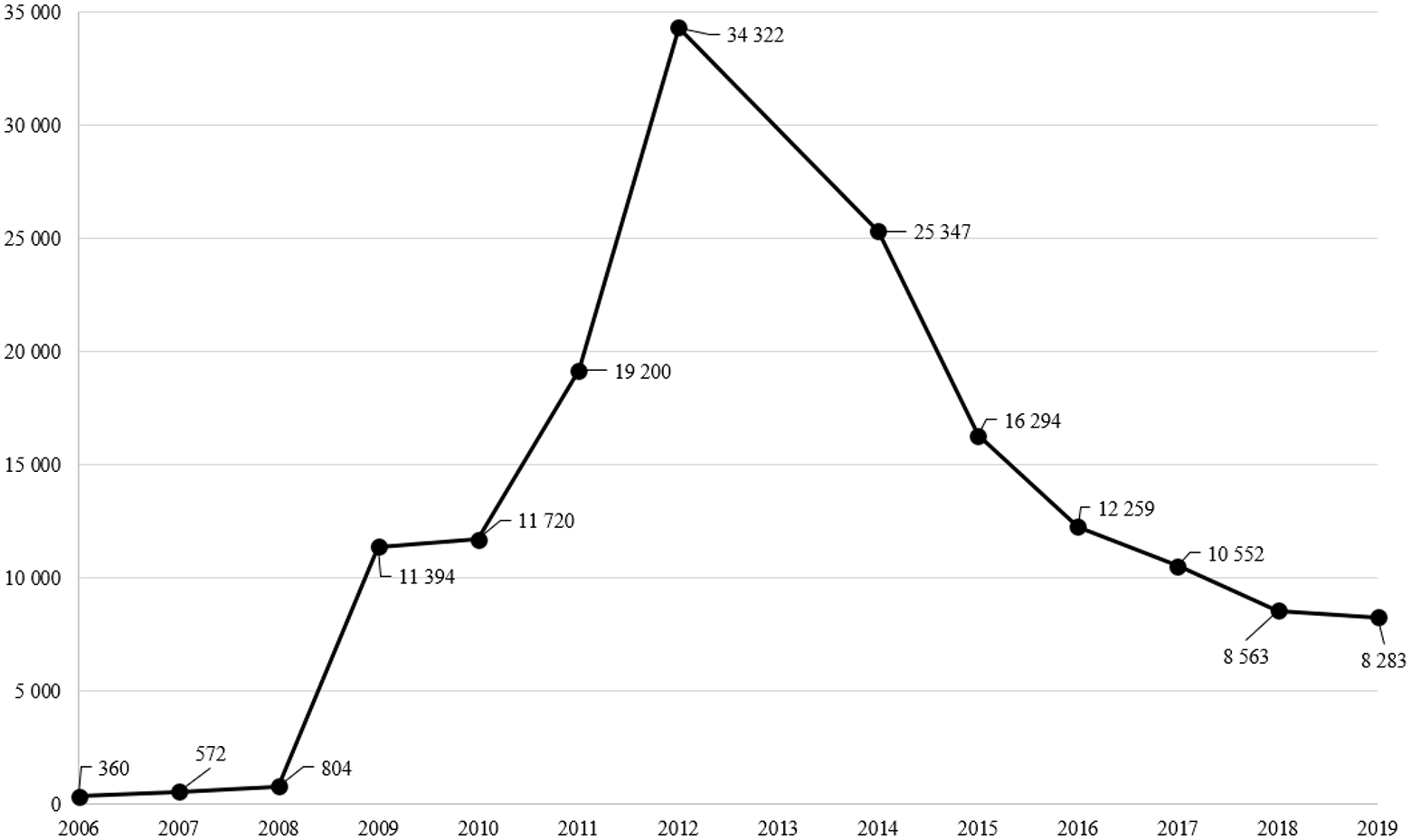
Development of the party membership of the Pirates, 2006–2019 (Statista, 2019)*.
This is an exceptional case for two reasons. First, unmanaged transparency is not an external demand but the party’s official doctrine (Dobusch & Gollatz, 2012; Ringel, 2019). Since, as a rule of thumb, ‘members of political parties are expected to articulate only the official voice of the party’ (Christensen & Cheney, 2015, p. 81), the Pirates certainly stand out in their commitment to let ‘the many’ speak in public. Second, between the Fall of 2011 and the Summer of 2012, the party’s audience approval rose to high levels only to then fade almost as quickly. A case study on one of the parliamentary groups revealed that in reaction to these ruptures, some of the elected representatives began to question the merits of unmanaged transparency and pursued a more managed approach (Ringel, 2019).
Data sources
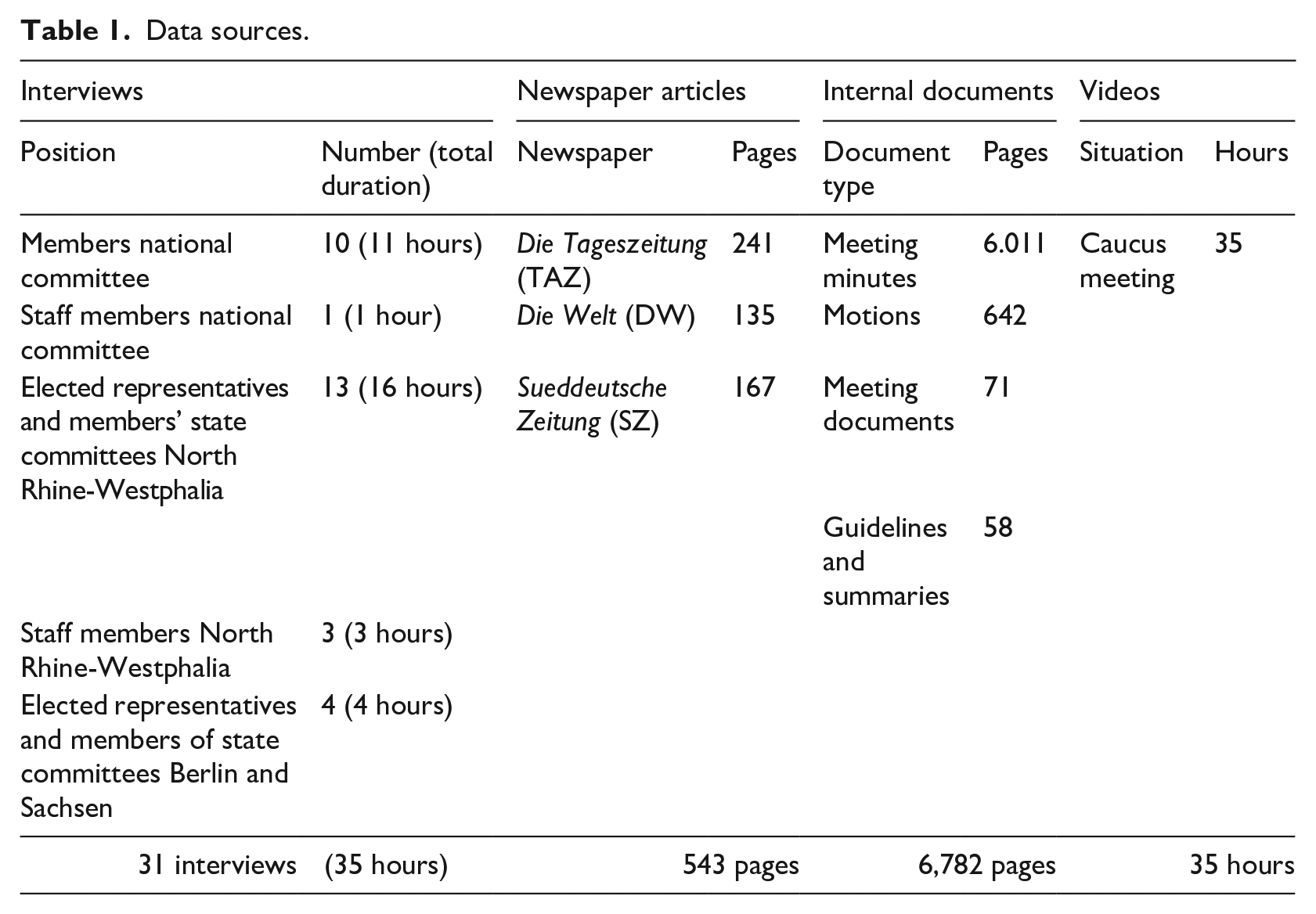
Building on and expanding prior research by one of the authors (Ringel, 2019), we aimed to take a more comprehensive view on the Pirates by triangulating data on one of their regional associations as well as the national committee. From among several regional associations, we chose North Rhine-Westphalia (NRW) because (1) the Pirates gained the largest number of representatives in the state (making it a potential site for a broad range of practices) and (2) the parliamentary group consistently disclosed information about its daily work throughout the legislative term. To increase the validity of our interpretations (Yin, 2009), we triangulated multiple data sources (Jarzabkowski et al., 2015; Splitter et al., 2019) – four in total – which are summarized in Table 1. All data are in German; the quotes that we use to present our findings were translated into English.
Data sources.
Interviews
Our main source were 31 semi-structured interviews with two categories of party members: holders of executive positions (i.e. party officials and elected representatives) and – following methodological advice to also include insights from personnel close to executives (Whittington, 2006) – staffers. Semi-structured interviews grant unexpected insights and access to organizational life (Kornberger, Meyer, Brandtner, & Höllerer, 2017). In our case, they provided a bird’s-eye view, allowing us to understand how our informants experienced their new tasks (representing the party) and/or workplace (the parliament), navigated the difficulties of holding leadership positions, enacted transparency, engaged with other members of the party, and reacted to shifting media stories. Following Corbin and Strauss (2008), we set out to triangulate perspectives from multiple positions, which resulted in interviews with members of NRW and the national committee as well as with members of the regional associations in Berlin and Saxony. The interviews were transcribed verbatim.
Newspaper articles
We collected 543 pages of newspaper articles on the national committee and the committee in NRW through Factiva. These articles provided us with a bird’s-eye view of the audience’s perspective. We chose three national German newspapers – Die Tageszeitung (TAZ), Die Welt (DW), Süddeutsche Zeitung (SZ) – that are generally considered to maintain a certain standard of quality, have a large circulation, and represent different positions on the left–right political spectrum.
Internal documents
Our third source were 6,782 pages of internal documents collected from the party’s wiki. Providing us with a bug’s-eye view, these kinds of documents are pivotal in the study of open organizing because they are both the medium and outcome of members’ enacting transparency in their everyday work (Dobusch et al., 2019). The vast amount of information available on the wiki required us to build a selection. We proceeded to select documents in two steps. First, we used keywords related to openness and transparency, 2 downloaded the documents, and deleted duplicates. In the second step, we searched the remaining files using keywords related to digital tools. 3 The 6,782 document pages in our case database had six or more mentions of these keywords.
Videos
We collected 35 hours of videos to study practices and their bodily enactment (Jarzabkowski et al., 2015), which provided another kind of bug’s-eye view. We mainly used recordings of caucus meetings held by the parliamentary group in the state parliament of NRW. The reason for this is that unlike the national committee, the parliamentary group of NRW consistently live-streamed and uploaded its video files to YouTube. Moreover, executive meetings constitute important sites of decision-making, thus granting valuable insight into core episodes of organizational life (Jarzabkowski et al., 2015). After downloading all available videos, we built a selection in three steps. First, we eliminated videos that either malfunctioned or had only audio files. Second, we screened the remaining videos to identify typical interactional behaviours, such as laughter, gestures of (dis-)agreement, or atypical behaviour (e.g. standing up/walking around in the room). As previous studies have shown (Jarzabkowski et al., 2015), getting a rudimentary sense of your data’s complexity is essential in choosing practices for closer study. Third, and finally, we selected videos with a high density of the practices that had been identified in step two.
Data analysis
We followed an iterative logic in our analysis, going back and forth between data and emerging theory during three phases (Corbin & Strauss, 2008). In the first phase, we identified the key properties of the Pirate Party and its environment. Moreover, following recent practice studies in the public domain (Heimstaedt & Reischauer, 2019), we coded how the Pirates enacted unmanaged disclosure and how party members responded to these practices. Interviews, newspaper articles, and internal documents were coded directly, while videos were prepared as follows. We identified episodes characterized by frequent interactions and coded these episodes by describing the overall atmosphere (i.e. ‘contested’, ‘non-contested’, or ‘neutral’). We then analysed each episode following the distinction by Jarzabkowski and colleagues (2015) between verbal resources (e.g. long silences), material resources (e.g. use of laptops), and bodily resources (e.g. gestures). After determining the frequency of occurrence of these three categories, we related the numbers to the overall nature of an episode, which provided us with an overview of the interaction per episode. We took notes while watching these episodes closely and included them in our analysis.
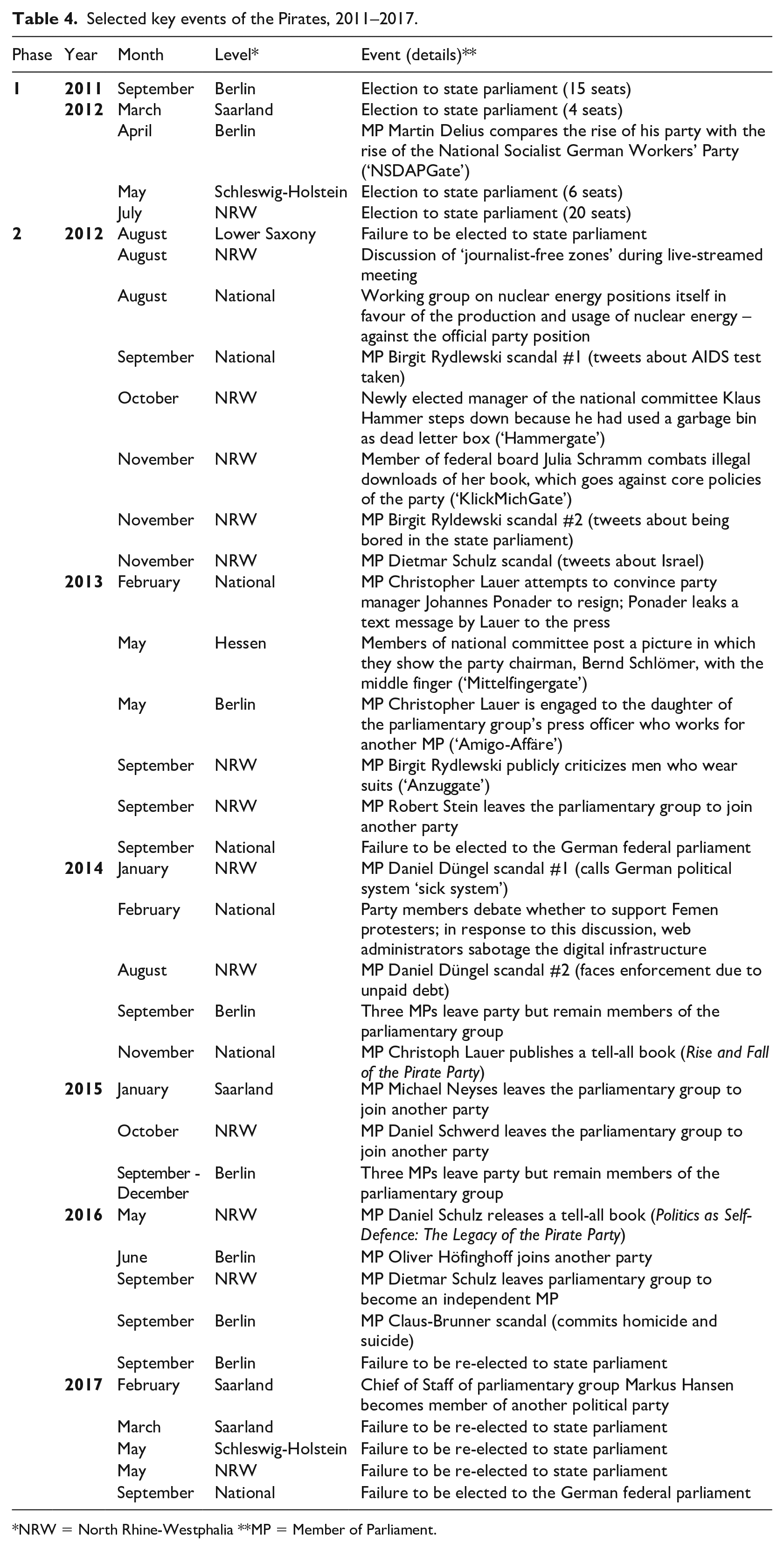
In the second phase, we traced the development of the Pirates and its audience support over time in four parallel steps. (1) Applying the temporal bracketing logic (Langley, 1999), we identified key events and collected data on changes in party membership (see Table 4 in Appendix for selected key events). (2) We mapped the occurrence of practices and their trajectories over time. (3) To obtain evidence for changes in audience support over time, we collected data on political polls (as a proxy for popularity) and analysed how news articles portrayed the Pirate Party. (4) We compared all data sources to speculate about mutual effects between unmanaged disclosure as practised by some party members, their colleagues’ reactions, and the audience’s support.
In the third phase, we aimed to generalize the case-specific concepts in two steps. (1) We revisited the literature to create stronger linkages between our findings and theory. We found the distinction between unmanaged and managed transparency to be most fitting to categorize the identified practices. When enacting unmanaged transparency practices, members of an organization participate in unrestrained and uncoordinated acts of disclosure (Flyverbom, Christensen, & Hansen, 2015; Whittington & Yakis-Douglas, 2020). When enacting managed transparency practices, members engage in a kind of disclosure that falls under the organization’s regulatory purview and is thus coordinated (Flyverbom et al., 2015; Whittington & Yakis-Douglas, 2020). (2) We then developed empirically grounded propositions on how managed transparency practices, unmanaged transparency practices, and audience support affect each other. In doing so we combined the goal of creating ‘contextually sensitive theories about the enactment and impact of practices’ (Jarzabkowski et al., 2016, p. 256) with calls for a strong programme of practice theory to both describe and – in our case, tentatively – explain outcomes (Splitter et al., 2019).
Findings
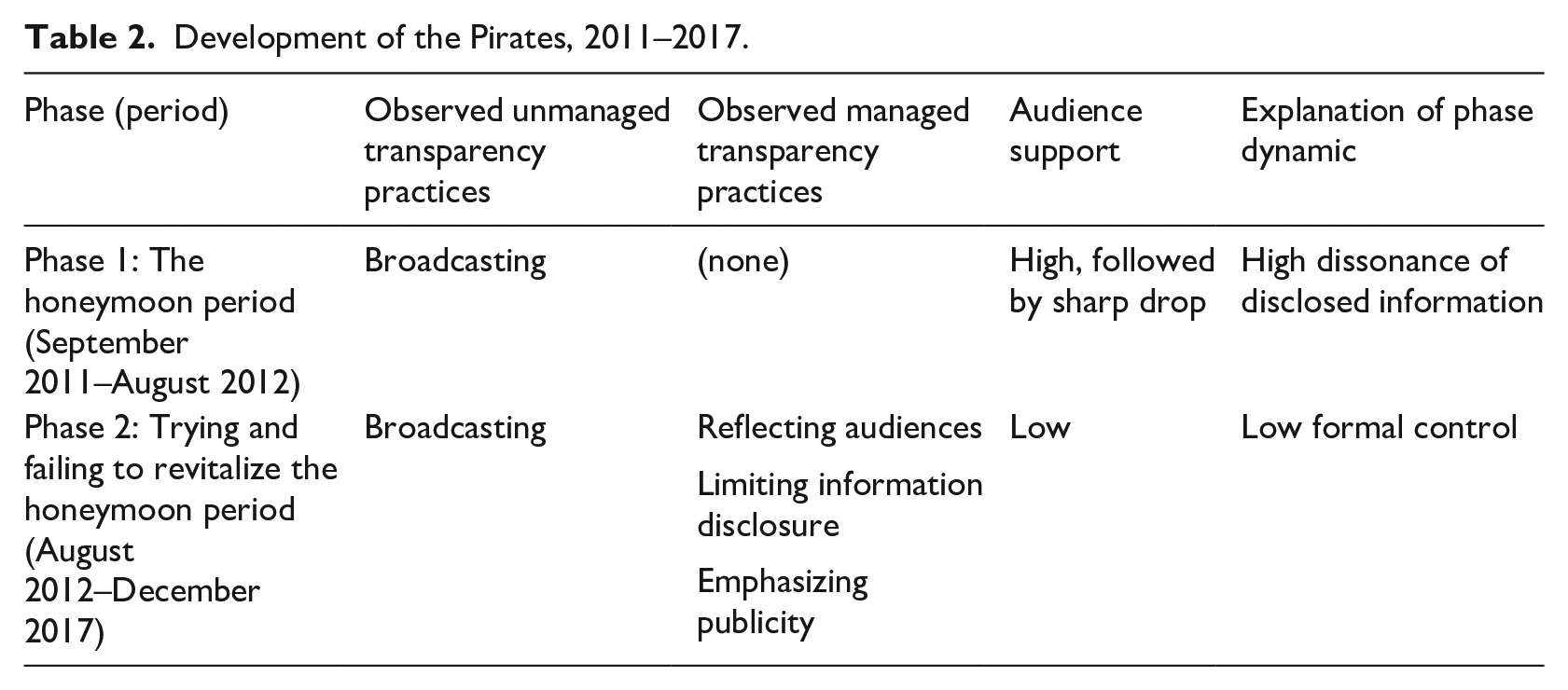
We found that the relationship between the Pirate Party and its audiences unfolded in two phases (see Table 2 for a summary). After high levels of support in the first phase, the beginning of the second phase was marked by a sudden decline, from which the party could not recover. For each phase, we provide a summary, followed by an account of unmanaged transparency practices, managed transparency practices, audience support, and an explanation of phase dynamic.
Development of the Pirates, 2011–2017.
Phase 1: The honeymoon period
Summary
Seemingly out of nowhere, the Pirate Party rushed to the public stage in September 2011 by gaining legislative representation in the state parliament of Berlin and scoring approximately 7% approval rate in national political polls in the subsequent months, which is a remarkable success for a political newcomer in the German political system (see Figure 2). In addition, party membership increased by 64 percent in 2011. These developments indicated that the Pirates enjoyed an intense period of strong support by both voters and the media.
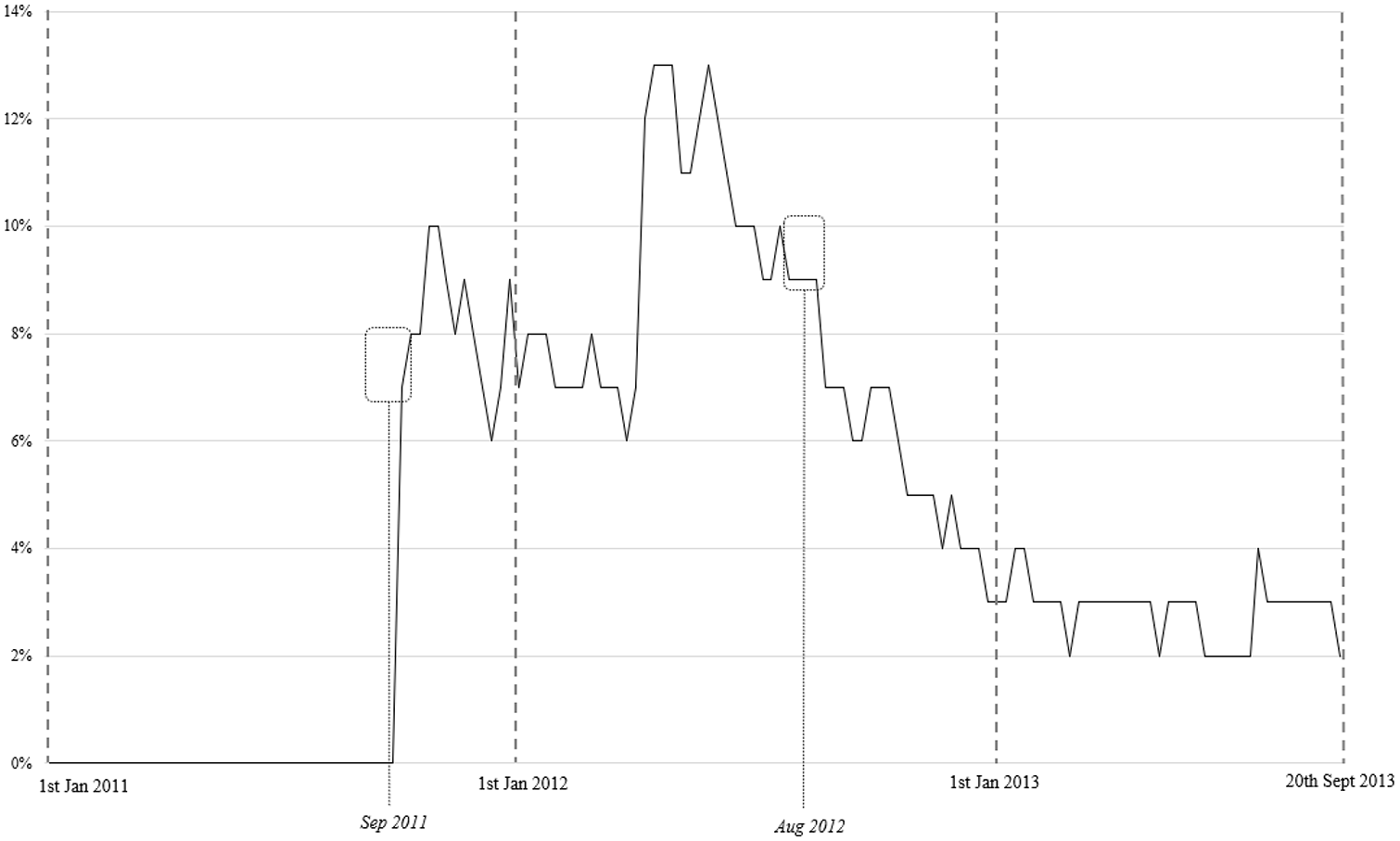
National popularity ratings* of the Pirates, 2011–2013**.
Reminiscing about this early stage, several informants suggested that the voters’ ‘curiosity’ might have been a major factor in the party’s electoral successes. The media, on the other hand, appeared to have granted the party – in the words of two of our informants – a Dilettantenbonus or Welpenschutz, which both loosely translate to ‘honeymoon period’. All things considered, there is reason to believe that the Pirates’ attraction was related to the unprecedented levels of unmanaged transparency granted to their audiences. In our discussion of the different kinds of disclosure practices applied by members of the party, we provide a definition, a goal and an account of the things mobilized in each case. Table 3 provides a summary of all practices.
Managed and unmanaged transparency practices.
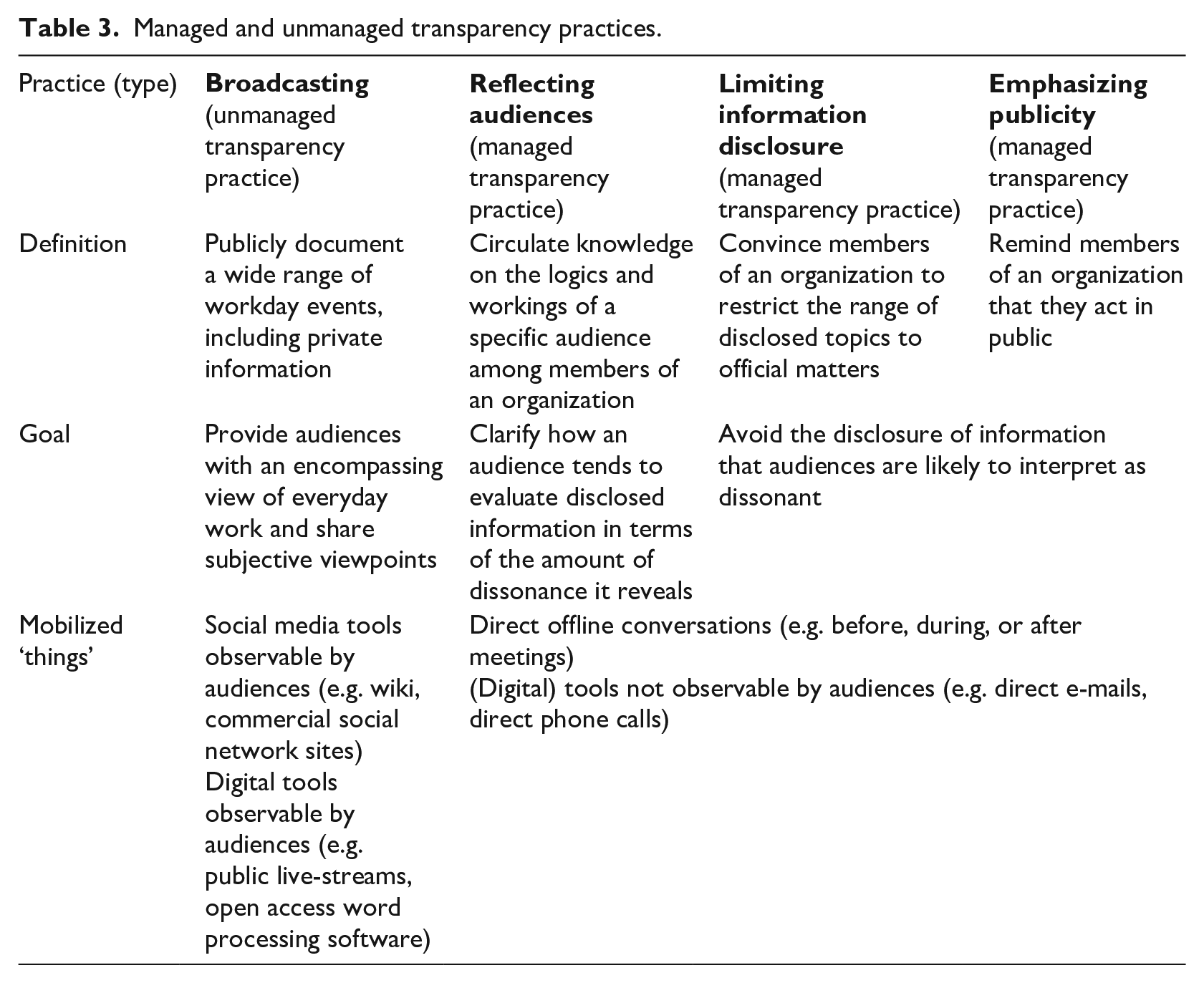
Unmanaged transparency practice: Broadcasting
The Pirates publicly documented a wide range of workday events, including private information – a practice that we term broadcasting. The goal of broadcasting is to provide audiences with an encompassing view of everyday work and to share subjective viewpoints. All levels of the party organization engaged in broadcasting. Beyond party conferences or election campaigns, the Pirates disclosed much information on committee sessions, deliberations, and ongoing discussions via internal mailing lists, documents (e.g. transcripts, minutes and financial statements), video and audio recordings, and social media tools. Besides sharing information on official matters, members were entitled to express their personal opinions and feelings in public. As an elected representative of NRW put it, ‘we are transparent and everybody should be able to observe what we are doing whenever they want’. Mirroring this sentiment, a representative of Berlin emphasized that ‘we document everything’.
The Pirates mobilized several things when broadcasting. They used social media tools such as Twitter, Facebook, and personal blogs to provide accounts of subjective viewpoints and to express personal feelings in public. Other digital tools were also important. For instance, video recordings – both in real time (as live-streams) and in retrospect (as videos posted to YouTube) – made it possible to foster direct links with audiences by giving the impression of unfettered access: to mundane discussions at the regional level as well as to executive meetings. In the words of a staff member of NRW: ‘It’s more honest, better. This is why I support live-streaming.’ An exchange during a meeting of the federal party committee provided further illustration: to the suggestion of one participant that ‘we should update our website to include live-streaming’, another person immediately responded ‘yes, the live-stream is a key for creating trust’. In contrast to live-streams, which granted audiences the ability to act in the capacity of observers, other tools were designed to facilitate grassroots participation. Frequently used were pads (a software for collaborative work), the party’s wiki (Piratenwiki; a platform where members discussed and fleshed out policy positions), and public mailing lists, which provided opportunities for extensive and ongoing discussions.
Managed transparency practice: None
There were no indications of organized efforts to orchestrate, regulate, or withhold internal information during this phase. It seems that members of the party – from the grassroots and the regional to the executive level – shared the conviction that whoever engages in broadcasting sustains the kind of transparency they are known for. We cannot rule out that some individuals might have managed, or at least attempted to manage, how their colleagues shared information. Yet such acts, if occurring at all, were presumably exceptions and did not amount to shared practices.
Audience support: High, followed by a sharp drop
From November 2011 until July 2012, the Pirate Party enjoyed high levels of support from the electorate, scoring between 6% and 9% (in March 2012, even 13%) in national political polls (see Figure 2) and passing the 5% threshold in three regional elections (see Table 4 in Appendix for details). 4
Enchanted by the Pirates’ unusual style, coverage in the media was mainly positive (see Figure 3 for the number of positive (black) and negative (grey) mentions over time). Irrespective of their political leaning, newspapers were impressed by this new way of practising politics as evidenced by headlines such as ‘the Pirates stand for transparency in politics instead of secrecy and partisanship’ (SZ 09.11), ‘the Pirates want to make politics accessible: their goal is to make the political system transparent, not citizens’ (DW 09.11), or ‘with its demands for more transparency, the Pirate Party clearly stands out’ (DW 03.12). Some also praised how the Pirates openly admitted to being amateurs, as they clearly lacked the insider knowledge of seasoned politicians: ‘Remarkably, the Pirates are even transparent about not knowing things’ (TAZ 10.11); ‘In their refreshingly transparent way, the Pirates assert that they still have much to learn’ (SZ 09.11).
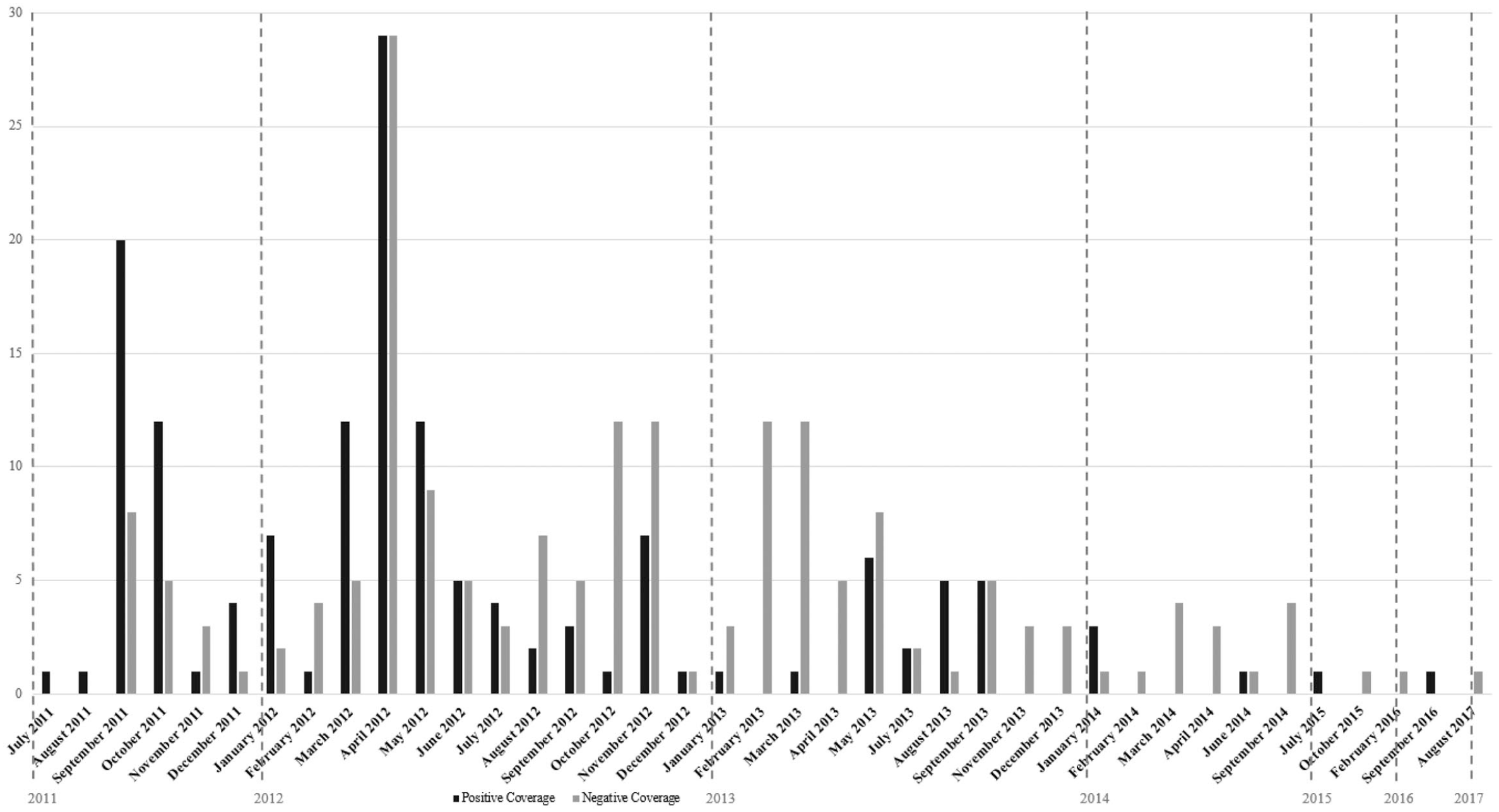
Positive (black) and negative (grey) newspaper articles on the Pirates (national committee and committee in NRW), 2011–2017*.
This approach to unmanaged transparency was even pondered as a viable option for other parties: ‘The party is seen as a game changer in the political system’ (TAZ 04.12); ‘The Pirates are admired: they get elected and become harbingers of a new age’ (SZ 04.12); ‘The Pirates’ new style of politics should give the establishment pause’ (SZ 05.12). Our informants took notice of these high levels of media support. According to a representative of NRW, ‘it looked like a big success story, with the media hype and all’, and another representative of NRW admitted that ‘there was such a big media hype, it was almost scary’.
Yet in August 2012 the tide changed. The Pirates failed to pass the 5 percent threshold in a regional election (see Table 4), fell below double digits in national popularity ratings (see Figure 2), and, for the first time since the hype had started, faced more negative than positive coverage in the media (see Figure 3; see also Media Tenor, 2012). Some news articles were critical, but maintained a sober tone: ‘Initially, the Pirates were fresh reformers, now many consider them self-absorbed and disorganised’ (SZ 09.12); ‘Pirates in crisis-mode: unclear positions’ (SZ 09.12). Others showed less restrain and called for attention to ‘highly inconsistent and bloodcurdling behaviour’ (DW 10.12) or made the case that ‘over the last months, the Pirates were like a self-help group in a never-ending therapy session’ (SZ 10.12).
Explanation of phase dynamic: High dissonance of disclosed information
Audiences withdrew their support for several reasons, which are too complex to discuss in detail. Hereafter, we focus more specifically on the role of unmanaged transparency in this process. The quotes from news articles in the previous paragraph indicate that by August 2012, the public perception of broadcasting had changed. As a result, the Pirate Party ceased to be ‘real’, ‘honest’, and ‘exciting’.
To make sense of this transformation, we turn briefly to Erving Goffman and his studies on the social order of public performances. Goffman claims that public self-presentations are usually (intended to be) polished or staged, for they can very easily be interpreted as ‘dissonant’. Even ‘very minor mishaps’ (Goffman, 1990 [1959], p. 55) such as ‘unmeant gestures, inopportune intrusions, and faux pas’ (p. 210) are opportunities for audiences to cast aspersions. Hence, the more ‘mishaps’ there are in a public performance, the easier it is to frame that performance as ‘dissonant’.
As we found, the Pirates exhibited a particularly high dissonance of disclosed information. This was because the party granted every member the right to disclose information as they saw fit (regardless of how poorly their revelations might reflect on the party which left ample room to be construed as ‘dissonant’ by audiences. We found two types of ‘dissonance’. The first type concerns policy positions: members frequently, and with great confidence, embraced positions in a way that caused problems for the party, either because they deviated from political common sense, directly opposed what elected officials said publicly, or contradicted the party platform. Second, when they engaged each other in public, Pirates often put on display a kind of behaviour that, if benchmarked against common norms of decorum, clearly left something to be desired: they relished contentious discussions on social media platforms, in video-streamed meetings, or via blogposts. An important property of broadcasting was the language used during these encounters, which those who were in favour of that practice took as evidence of the party’s ‘authenticity’. Denoting informality and often voiced ad hoc, public statements contained such expressions as ‘bullshit’ (during a working group meeting in NRW) or ‘Fu** you!’ (at a national party conference, directed at the chairperson who had just made the announcement that a ‘proposal is accepted’; for more examples, see Table 4).
Towards the end of this first phase, some party members began to reassess their affirmation of unmanaged transparency. For instance, a member of the national committee conceded that ‘contradictions are inevitable as long as we continue to be transparent’, a representative of Berlin complained that some members of the party were ‘spitfires’, and another representative of Berlin worried about ‘infighting, inconsistent messaging, irrational decision-making, and defiance’. These internal observations resonate with a quantitative study by a media analysis firm that identified ‘internal quarrels’ as the main reason for the negative press coverage of the Pirates (Media Tenor, 2012).
Phase 2: The honeymoon is over for good
Summary
After the initial shock caused by the sudden loss of audience support in August 2012, some Pirates attempted to stop what they felt had become a downward spiral. They identified unmanaged transparency as a major problem and experimented with different strategies to restrict broadcasting, but ultimately failed. Audience support remained low throughout phase 2, and the Pirate Party steadily faded from the public stage.
Unmanaged transparency practice: Broadcasting
A majority of party members showed little concern for the loss of audience support and remained dedicated to broadcasting. Most of these unapologetic ‘broadcasters’ were grassroots activists, although a few of the elected officials remained in, or on occasion joined, their ranks. For instance, a representative of NRW, when asked about his opinion of unmanaged transparency, asserted that ‘you have to accept that is part of the game. People make mistakes, do stupid things – while being in public. It is what it is. This is transparency’. For party members such as this representative, lost elections or public scandals were no reason to stop broadcasting.
Others, however, took the losses in audience support more serious. They began to question the merits of broadcasting and pushed for a more careful, managed approach to transparency. This group, though relatively small in numbers when compared with the ‘broadcasters’, was well represented at the executive level, having committee members (and chairs), representatives in parliaments, professional staff, and aides in its ranks. Our findings suggest the emergence of three distinct managed transparency practices.
Managed transparency practice (1): Reflecting audiences
The first practice, reflecting audiences, involves the circulation of knowledge on the logics and workings of a specific audience among members of an organization. A main audience of the Pirates was the media. We found that the goal of this practice is to clarify how an audience tends to evaluate disclosed information in terms of the amount of dissonance it reveals. For the Pirates, this meant to diffuse expertise about the workings of the media across different party levels. Party members, especially those in favour of broadcasting, were called upon to acknowledge that the media ‘scandalizes everything’ (member of the national committee). Journalistic demands for more information had thus better be treated with caution: ‘Transparency, especially when demanded by [a German tabloid], is often limited to the sleazy stuff. But that has nothing to do with transparency’ (representative of NRW). ‘Awareness-builders’ further explained that once the media has established a narrative, it tends to be ‘sticky’, meaning any new information is interpreted as a confirmation of that narrative: ‘Journalists pick a random incident and then say: Business as a usual in the Pirate Party – it’s all a big chaos’ (representative of NRW).
Different things were mobilized in the enactment of reflecting audiences. As a rule of thumb, other members were engaged directly and in dialogical formats that also ensured a certain level of privacy (e.g. in-person, via telephone, or through e-mail). Notably the usage of social media tools was kept to a minimum because ‘there are issues that better not be addressed through software’ (member of the national committee). Reflecting audiences was nonetheless occasionally practised in public, on social media platforms, or at larger events, in which case the recipient was not anyone in particular.
Managed transparency practice (2): Limiting information disclosure
Based on the first practice, reflecting audiences, the second practice, limiting information disclosure, is about convincing members of an organization to restrict the range of disclosed topics to official matters. The goal of this practice is to avoid the disclosure of information that audiences are likely to interpret as dissonant. Typical examples were personal opinions, political strategies, or extreme political views. The more topics unmanaged transparency pertained to, the ‘limiters’ worried, the higher the risks, which is why they suggested to their fellow party members that it might be time to reconsider their encompassing view of transparency: ‘What’s all this transparency good for? If the purpose is not to document official matters and not to inform people, then it’s voyeurism’ (member of the national committee). With ‘voyeurism’ looming large, the sensible thing to do was to be more cognizant of what to talk about in public. Limiting information disclosure further intended to sensitize party members for the properties of the tools they use when enacting transparency. Social media tools in particular were seen as carrying high risks because of their inherently public nature and interactive features. For this reason, information platforms such as ‘Twitter should only be used to communicate about official party business’ (member of the national committee).
Enacting limiting information disclosure entailed a very careful approach to the usage of digital things, particularly social media tools. While public statements could involve references to the merits of a narrow understanding of transparency (e.g. in blog posts, tweets, or interviews), limiting information disclosure was mainly practised in non-public and dialogical encounters. Examples included in-person conversations (e.g. before and after official meetings in the hallway, the cafeteria, or behind closed doors in the office), over the phone, and occasionally in e-mails. Clearly then, this practice depended on the mobilization of things that afforded the possibility of face-to-face or mediated interactions in private (Thompson, 2020). Social media tools that automatically disclosed (potentially dissonant) information, on the other hand, were not deemed suitable to spread information about this new understanding of ‘limited’ transparency.
Managed transparency practice (3): Emphasizing publicity
The third practice, emphasizing publicity, is about reminding members of an organization that they act in public. Similar to limiting information disclosure, the goal of emphasizing publicity is to avoid the disclosure of information that audiences are likely to interpret as dissonant. What makes emphasizing publicity a distinct managed transparency practice is that it refers to individual acts of party members, who had practised disclosure in a way that damaged the organization’s image. In other words, whereas the first two practices concern the dissemination of general knowledge and models of behaviour, this third practice targets specific events and situations. Such interventions had proven to be necessary because no matter how well-versed a person might be in the art of managed transparency, ‘people forget that they are under constant observation [in situations such as streamed caucus meetings] and begin to talk as if they are in private’ (staff member of NRW).
Emphasizing publicity could be practised in retrospect, after a ‘mishap’ had occurred, or in-real time, during the disclosure of damaging information. When emphasizing publicity in retrospect, a person essentially appealed to the ‘culprits’ and explained what could have been done differently. A telling example is a controversial tweet sent by a representative in one of the state parliaments. Some of her/his colleagues approached this person so that they could deal with the fallout together. They analysed what had happened and then made suggestions as to how to act in the future. Emphasizing publicity in real time was more complex for several reasons. First, the intention of intervening had to be concealed – from both the target of the intervention and the audiences. For instance, the beginning of video-streamed caucus meetings in state parliaments had increasingly become a ritual, which, according to an informant, should remind everybody that ‘starting now’, the situation ‘is’ different because the group just entered the public stage (see also Ringel, 2019). When the target was not a group but an individual, the situation proved to be even more delicate, for it is difficult to anticipate how a person reacts to being singled out. And yet it had become an important strategy for dealing with the pitfalls of more intrusive transparency devices such as live-streams: Being totally unadorned, totally authentic, totally transparent: this is what we want. But there’s also the ‘Big Brother’ effect of being totally naked. In these situations, it is my responsibility to say, ‘Watch out, there’s a camera!’ (staff member, NRW)
Again, the Pirates were very careful in their usage of things. When emphasizing publicity in retrospect, they preferred sequestered face-to-face settings and tools that neither mandated nor facilitated disclosure, such as e-mails or telephone calls. ‘Even in a transparent organization, safe spaces are important’ (elected representative, Berlin), we were told multiple times, because interventions always carried the risk of contentious debate. Our informants felt that it was necessary to tolerate these fights and to provide the antagonists with sufficient levels of privacy: ‘We can argue and fight until we’re dead – but only if the doors are closed and we made sure that the media is not watching’ (representative, NRW); ‘If there are any issues, if people do not get along, I try to help. These conversations are of course not streamed’ (representative, NRW). Emphasizing publicity in real time was often applied ad hoc and wherever it occurred because the ‘culprit’ or antagonists could not be ushered into a private setting. These circumstances required navigating highly complex and occasionally explosive situations.
Audience support: Low
In spite of efforts to spread a managed approach to transparency across different levels of the organization, the Pirate Party was unable to deliver a less dissonant self-presentation after August 2012, which made it easy for the media to maintain its new narrative. Examples for headlines in 2012 and 2013 are ‘The Pirates are sinking’ (DW 11.12); ‘The Pirates have fallen’ (TAZ 01.13); ‘Pirate Party: The digital rebellion is cancelled’ (DW 04.13); ‘Pirates think only they are authentic’ (TAZ 07.13); and ‘The Pirate Party: A ghost ship’ (DW 09.13). Time and time again, we found characterizations of the Pirates as ‘unprofessional’ (TAZ 10.13), ‘aimless’ (TAZ 05.13), and even ‘digital nutjobs’ (SZ 09.13). After it missed the 5 percent threshold in the federal election in September 2013, the media turned its focus almost completely away from the party. The remaining coverage was negative for the most part (see grey bars in Figure 3).
In a similar vein, the voters also turned their backs on the Pirates, who consistently scored 4 percent or lower in national polls from December 2012 to September 2013 (see Figure 2). After the federal elections in September 2013, the party was listed under the rubric ‘others’ in national polls, a label used to designate (insignificant) fringe parties. A growing number of elected officials jumped ship and either joined other parties or left politics altogether in the following years (see Table 4). As of 2017, the party was no longer represented in any German legislative body and had retained less than one-third of its members from 2012 (see Figure 1).
Explanation of phase dynamic: Low formal control
Our findings revealed that unmanaged transparency (broadcasting) and managed transparency (reflecting audiences, limiting information disclosure, emphasizing publicity) were enacted simultaneously. This potentially played a major role in the downward spiral of the party, which found itself preoccupied with constant struggles between rival groups often carried out in front of the public. A representative of NRW recalled: ‘Our whole approach was incredibly destructive and negative. All these vicious attacks, not to even mention that some are actively silenced on Twitter’. In an interview with a newspaper, a former staffer gave a similar account: ‘Whoever made substantive arguments immediately became a target online’ (SZ 08.12). Why was the implementation of a more managed approach to transparency contested and ultimately failed?
To answer this question, we must consider the organizational structure of political parties in general and the Pirate Party in particular. Parties have limited capabilities to sanction their members because they typically exert low levels of formal control (Husted, Moufahim, & Fredriksson, 2021; Ringel, Schank, Krichewsky, & Brichzin, 2019). The Pirate Party took this feature even further by rejecting any formal control: ‘A critical view of hierarchies and power is in our DNA’ (representative, NRW). Thus, rather than seeing the formal structure as a source of influence, binding rules, and strict guidelines, party members preferred to think of it – in the words of a member of the national committee – as merely giving ‘general recommendations’ because, in the end, ‘it is the responsibility of each individual to behave responsibly’ (representative of NRW). This belief was firmly established and widely held within the party. Even members who pursued a managed approach to transparency had to concede: ‘It is impossible to make this party work’ (representative, NRW); ‘Control is necessary, but we just can’t do it’ (member, national committee); ‘Our structure was a bug in the system’ (DW 09.14). However zealous the efforts to implement managed transparency might have been, they were framed as suggestions, never as directives, and could therefore be ignored, rejected, or scandalized by the recipients.
Theorizing the impact of (un)managed transparency and the organizational environment on audience support
After an account of the Pirate Party’s rise and demise, we now tentatively generalize our findings by presenting propositions on how managed transparency, unmanaged transparency, and the organizational environment impact audience support (see Figure 4 for a summary).
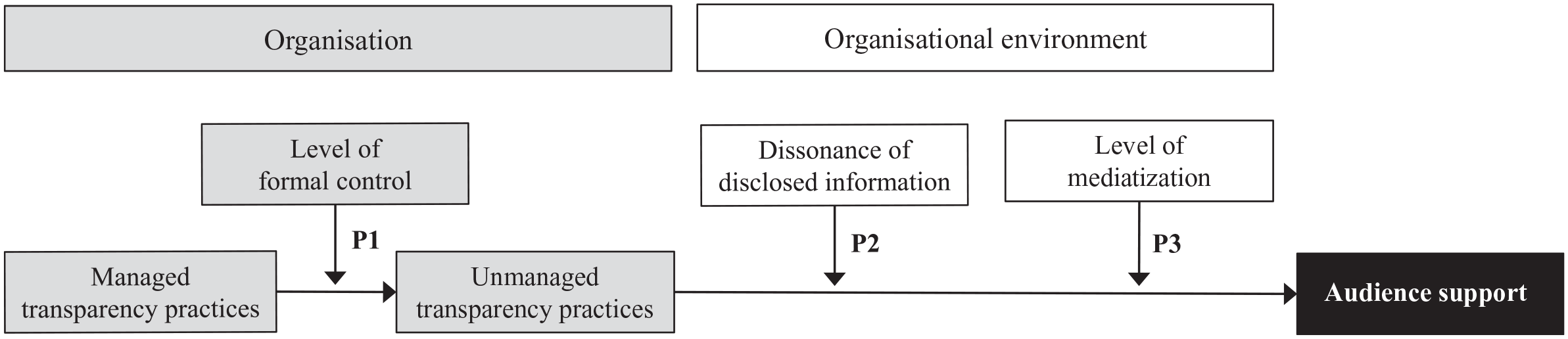
Impact of (un)managed transparency and the organizational environment on audience support.
Level of formal control and (un)managed transparency practices
Current discussions of managed transparency often assume that executives can leverage sufficient amounts of formal control to exert influence (Christensen & Cheney, 2015; Costas & Grey, 2014; Toegel, Levy, & Jonsen, 2021). While this might often be true, we should not forget that some organizations (e.g. political parties) fashion themselves as ‘democratic’ and only allow for low levels of formal control (de Vaujany, Leclercq-Vandelannoitte, Munro, Nama, & Holt, 2021; Husted et al., 2021). The ability of (top and middle) management to enforce rules, direct, sanction, or centralize public communication is very limited in these cases (Whittington & Yakis-Douglas, 2020). There is reason to believe that the Pirate Party’s all-out rejection of formal authority seriously impeded the ability of executives to restrict or manage broadcasting by means of reflecting audiences, limiting information disclosure, and emphasizing publicity because they were unable to engage in anything other than communicative action (Burrell, 1994) that was not followed by formal sanctions. We thus propose the following:
Proposition 1 (P1): Organizations with low levels of formal control are liable to the proliferation of unmanaged transparency practices.
Dissonance of disclosed information and audience support
The assumption that organizations gain audience support if they disclose unfiltered (i.e. ‘authentic’) information is often taken at face value in current debates (Schnackenberg & Tomlinson, 2016; see Fenster, 2015 for a critical account). Our study suggests that this is probably conjecture rather than established fact. The Pirate Party is an extreme example: in its pursuit of unmanaged transparency, it embraced a ‘form of ordering’ (Flyverbom, 2015) that rejected any kind of filtering or streamlining of the information released to the public. The results were exceptionally high levels of what Goffman (1990 [1959]) calls dissonance in the party’s self-presentation, which audiences found charming at first but then used to paint an unfavourable picture. We might speculate that the media’s emerging narrative of an organization in disarray had a profound impact on the voters, as indicated by the more or less simultaneous change in tone of news articles and the party’s decline in national political polls in phase 2. We thus propose the following:
Proposition 2 (P2): Unmanaged transparency practices are liable to erode audience support for organizations when their members disclose highly dissonant information.
Level of mediatization and audience support
Christensen and Cheney (2015, p. 82) remind us that ‘transparency is not a property of messages or organizations per se, but a result of sense-making that involves active, productive, and creative audiences’. The plural is of essence here: corporations, hospitals, or political parties for that matter, have more than one audience (e.g. consumers, patients, or voters). Important for our purposes is the broad range of heedful ‘monitors and reporters’ (Kjær & Sahlin 2007, p. 293) that establish observational regimes by collecting, interpreting, and proliferating information. Lay audiences such as voters often depend on one type of monitor and reporter in particular, the media, from whom they ‘learn about organizational aspects that are difficult to experience or observe directly’ (Christensen & Cheney, 2015, p. 78; see also Brankovic, 2021). Recent studies have put the media and its unique modes of observation centre stage, showing how organizations are impacted by the level of mediatization to which they are exposed (Albu & Wehmeier, 2014; Hjarvard, 2017; Thompson, 2020). When facing high levels of mediatization, organizations reflect their media ecosystem and attempt to reduce the risk of becoming the object of sensationalist reporting (Hjarvard, 2017; Power et al., 2009; Thompson, 2020). This is all the more important given that in mediatized environments, the narratives created by journalists are likely to reach multiple audiences such as customers, shareholders, or voters (Thompson, 2005, 2020). Politics has been described as a highly mediatized ‘battlefield in which actors are using whatever media channels they have at their disposal – newspapers, TV, Twitter, etc. – to intervene [. . .], tarnish the reputation of others and to protect and defend their own’ (Thompson, 2020, p. 27). We thus propose the following:
Proposition 3 (P3): Unmanaged transparency practices are liable to erode audience support for organizations when these organizations navigate a highly mediatized environment.
Discussion
Our study contributes to research on transparency in two ways. First, we expand the current understanding of managed and unmanaged transparency. Second, we add to research on the conditions of unmanaged transparency.
Contributions to research on managed and unmanaged transparency
We add to research on managed and unmanaged transparency and the relationship between approaches to information disclosure in two ways (Costas & Grey, 2014; Toegel et al., 2021; Whittington & Yakis-Douglas, 2020). First, by identifying the unmanaged practice broadcasting, we follow recent calls (Albu & Flyverbom, 2019; Christensen & Cornelissen, 2015; Heimstaedt & Dobusch, 2020) to examine how the members of an organization enact unmanaged transparency in their everyday work and the utilization of ‘things’. Invoking the ideal of democratic organizing, broadcasting empowers individuals to disclose information as they see fit, independently of others. Since those involved are ‘both free and forced to develop their own understanding [. . .] of what “open” should mean in their particular empirical context’ (Dobusch et al., 2019, p. 344), we can expect more variation, which needs to be accounted for in order gain a comprehensive view of unmanaged transparency.
Multiple practices fall under the rubric of unmanaged transparency, and broadcasting is a distinct type thereof. For instance, unlike whistleblowing (Hansen & Weiskopf, 2021; Weiskopf & Tobias-Miersch, 2016), it has a much broader scope. Whistle-blowers usually reveal information on specific (possibly unlawful) incidents and take the position of ‘heroic seekers of the truth’, whereas ‘broadcasters’ might best be described as ‘chatterboxes’, airing (or dumping) lots of unedited and unprioritized information that interested observers then have to comb through. Broadcasting also differs from gossiping (Costas & Grey, 2014; Fan, Grey, & Kärreman, 2021) because the recipients of disclosed information are anonymous audiences, not specific others (as is often the case when people gossip). Finally, broadcasting can be enacted across organizational levels from top to bottom, as also suggested by Whittington and Yakis-Douglas (2020). At least in the case at hand – the Pirate Party – some members in executive positions were just as passionate about it as grassroots activists.
Second, we offer insights on how actors navigate managed transparency ‘on the ground’, and how these practices relate to current insights on how to disclose information in a managed way (Whittington & Yakis-Douglas, 2020). Specifically, we have identified three managed transparency practices. (1) Reflecting audiences facilitates the intra-organizational circulation of knowledge about different kinds of audiences – in our case, the media and how it might leverage unmanaged transparency to create unfavourable narratives. This practice is a prime example for ‘new forms of reflexivity’ (Hautz et al., 2017, p. 306), devised by organizations in order to deal with extensive visibility regimes (Power et al., 2009). We should note that, in a way, reflecting audiences functions as a foundation for the other two managed transparency practices. (2) Limiting information disclosure intends to convince others to restrict the range of disclosed information to official (i.e. organizational) matters only; personal opinions, private conversations, or strategizing, on the other hand, are best kept out of public sight. In a sense, limiting information disclosure illustrates how ‘outsiders’ (here: to the political system) are transformed into ‘insiders’ who are well aware of the dangers that are involved in the disclosure of sensitive information ‘off the cuff’. Such transformations of how to handle internal information not only happen in politics but increasingly also in business (Whittington & Yakis-Douglas, 2020) and (higher) education (Neyland 2007; Ringel, Reischauer, & Suchy, 2014). (3) Emphasizing publicity bears resemblance to what Foucault (1988) calls ‘technologies of the self’ – modes of shaping how individuals see, conduct, and control themselves. In the case of the Pirate Party, the intention was to make others aware of public transgressions they were about to commit or had already committed. To paraphrase the Miranda warning, 5 the core message was that ‘anything you disclose can be used against us by our audiences’, which made it an ad hoc and time-sensitive practice, addressing the potential risks of media-driven scandalizations (Thompson, 2005, 2020).
Contributions to research on conditions of managed and unmanaged transparency
Our study also contributes insights on the conditions of managed and unmanaged transparency (Hautz, 2017; Hautz et al., 2017) – specifically, on how these practices and the organizational environment impact audience support (Parsons, 2019). We developed three propositions that specify the conditions that ‘affect the emergence, use, bundling and effects of open practices’ (Hautz et al., 2017, p. 306).
According to the first proposition, organizations with low levels of formal control are vulnerable to the (rampant) proliferation of unmanaged transparency practices. Given that organizations are the sites ‘where transparency policies, practices, and images are ultimately manifested and tested’ (Christensen & Cheney, 2015, p. 72), the degree of formal control exerted by (top and/or middle) management is a key factor that helps us understand how unmanaged transparency practices unfold. For instance, if new forms of organizing that delegate control to individuals (de Vaujany et al., 2021) are combined with unmanaged transparency, we might expect increasing levels of tension and ongoing struggles between members that practise competing visions of information disclosure.
With our second proposition, we suggest that unmanaged transparency practices risk the erosion of audience support because they facilitate the disclosure of dissonant information. To fully understand this process, we should consider that even though acts of unmanaged disclosure are essentially individual choices, audiences usually classify them as organizational decisions. If individual members disclose information as they see fit, there is thus a significant chance that the organization – and not the individual – will be perceived as dissonant. This is an important specification of how ‘transparency enactment creates unintended consequences’ (Albu & Flyverbom, 2019, p. 289) that organizations then have to deal with. It further resonates with the findings of Gegenhuber and Dobusch (2017), who studied an organization that also engaged in broadcasting but, unlike the Pirate Party, was able to create a favourable self-presentation because its members disclosed only relevant information that was not interpreted as dissonant.
Our third proposition asserts that high levels of mediatization exacerbate the risk of unmanaged transparency practices eroding audience support. We thereby argue that taking degrees of mediatization into account allows for a better understanding of how audiences react to organizational ‘forms of ordering’ (Flyverbom, 2015; Hansen & Flyverbom, 2015). It might be true that mediatization is a general trend that cuts across contexts, which is why ‘business consultants urge organizations in dealing with the call for transparency to be proactive’ (Christensen & Cornelissen, 2015, p. 142). However, we should not forget that there is variation too, meaning in some cases the level of mediatization is considerably higher than in others. While we base our argument on a case that is part of a specific context (politics), we believe that our theorizing can be extended to other mediatized areas, such as professional sports (Wade, Harrison, Dobbs, & Zhao, 2018), science (Hesselmann & Reinhart, 2021), high-tech markets (Reischauer, Guettel, & Schuessler, 2021), or transnational politics (Brankovic, 2021; Mehrpouya & Salles-Djelic, 2019).
Conclusion
Over the past decades, ‘transparency has imposed itself as a world society norm’ (Mehrpouya & Salles-Djelic, 2019, p. 12), promising to be the proverbial Swiss army knife that allows organizations to portray themselves as ‘good’. But because the implementation of transparency often leaves something to be desired, a transnational ‘transparency movement’ (Nolin, 2018) has started to voice its discontent and appears quite adamant in its calls for an unmanaged approach to transparency where individual members of organizations should be able to disclose information at their own discretion. Taking a view that conceptualizes managed transparency, unmanaged transparency, and audience support as interrelated, we studied the Pirate Party Germany, a political party dedicated to unmanaged transparency by means of various digital tools. Our findings reveal that the party’s ‘hands-off’ approach to disclosure might have some benefits but can also be tremendously challenging. Full-blown unmanaged transparency has therefore proven to be a double-edged sword rather than a Swiss army knife. All things considered, organizations in digital societies are well advised to remain sceptical of the transparency movement’s gospel of ‘direct observation, pure insight or full clarity’ and instead strive for ‘refractions and manifold visibilities’ (Flyverbom, 2019, p. 18). In other words, a promising way to navigate increasing demands for transparency is to practise ‘openness with care’.
Footnotes
Appendix
Selected key events of the Pirates, 2011–2017.
| Phase | Year | Month | Level* | Event (details)** |
|---|---|---|---|---|
|
|
|
September | Berlin | Election to state parliament (15 seats) |
|
|
March | Saarland | Election to state parliament (4 seats) | |
| April | Berlin | MP Martin Delius compares the rise of his party with the rise of the National Socialist German Workers’ Party (‘NSDAPGate’) | ||
| May | Schleswig-Holstein | Election to state parliament (6 seats) | ||
| July | NRW | Election to state parliament (20 seats) | ||
|
|
|
August | Lower Saxony | Failure to be elected to state parliament |
| August | NRW | Discussion of ‘journalist-free zones’ during live-streamed meeting | ||
| August | National | Working group on nuclear energy positions itself in favour of the production and usage of nuclear energy – against the official party position | ||
| September | National | MP Birgit Rydlewski scandal #1 (tweets about AIDS test taken) | ||
| October | NRW | Newly elected manager of the national committee Klaus Hammer steps down because he had used a garbage bin as dead letter box (‘Hammergate’) | ||
| November | NRW | Member of federal board Julia Schramm combats illegal downloads of her book, which goes against core policies of the party (‘KlickMichGate’) | ||
| November | NRW | MP Birgit Ryldewski scandal #2 (tweets about being bored in the state parliament) | ||
| November | NRW | MP Dietmar Schulz scandal (tweets about Israel) | ||
|
|
February | National | MP Christopher Lauer attempts to convince party manager Johannes Ponader to resign; Ponader leaks a text message by Lauer to the press | |
| May | Hessen | Members of national committee post a picture in which they show the party chairman, Bernd Schlömer, with the middle finger (‘Mittelfingergate’) | ||
| May | Berlin | MP Christopher Lauer is engaged to the daughter of the parliamentary group’s press officer who works for another MP (‘Amigo-Affäre’) | ||
| September | NRW | MP Birgit Rydlewski publicly criticizes men who wear suits (‘Anzuggate’) | ||
| September | NRW | MP Robert Stein leaves the parliamentary group to join another party | ||
| September | National | Failure to be elected to the German federal parliament | ||
|
|
January | NRW | MP Daniel Düngel scandal #1 (calls German political system ‘sick system’) | |
| February | National | Party members debate whether to support Femen protesters; in response to this discussion, web administrators sabotage the digital infrastructure | ||
| August | NRW | MP Daniel Düngel scandal #2 (faces enforcement due to unpaid debt) | ||
| September | Berlin | Three MPs leave party but remain members of the parliamentary group | ||
| November | National | MP Christoph Lauer publishes a tell-all book (Rise and Fall of the Pirate Party) | ||
|
|
January | Saarland | MP Michael Neyses leaves the parliamentary group to join another party | |
| October | NRW | MP Daniel Schwerd leaves the parliamentary group to join another party | ||
| September - December | Berlin | Three MPs leave party but remain members of the parliamentary group | ||
|
|
May | NRW | MP Daniel Schulz releases a tell-all book (Politics as Self-Defence: The Legacy of the Pirate Party) | |
| June | Berlin | MP Oliver Höfinghoff joins another party | ||
| September | NRW | MP Dietmar Schulz leaves parliamentary group to become an independent MP | ||
| September | Berlin | MP Claus-Brunner scandal (commits homicide and suicide) | ||
| September | Berlin | Failure to be re-elected to state parliament | ||
|
|
February | Saarland | Chief of Staff of parliamentary group Markus Hansen becomes member of another political party | |
| March | Saarland | Failure to be re-elected to state parliament | ||
| May | Schleswig-Holstein | Failure to be re-elected to state parliament | ||
| May | NRW | Failure to be re-elected to state parliament | ||
| September | National | Failure to be elected to the German federal parliament |
NRW = North Rhine-Westphalia **MP = Member of Parliament.
Acknowledgements
We wish to express our deepest gratitude the Guest Editors Leonhard Dobusch, Georg von Krogh, Violetta Splitter, Peter Walgenbach, and Richard Whittington for their support and guidance throughout the review process. We also want to thank the Editor in Chief Renate Meyer for her valuable comments. Finally, we want to thank the three anonymous reviewers for their constructive criticism and the ideas they shared with us.
Funding
The author(s) received no financial support for the research, authorship, and/or publication of this article.
