




Abstract
Bribery and corruption take diverse forms worldwide yet share common drivers. This study examines the persistence of petty bribery in Ghana across six electoral cycles from 1999 to 2022, drawing on nationally representative Afrobarometer survey data. It integrates insights from neo-patrimonialism, structural inequality, rational choice, and relative deprivation theories to explain how political transitions, economic disparities, and perceptions of unfairness contribute to the normalization of bribery in public service delivery. Using logistic regression models and longitudinal trend analysis, the article shows that bribery surges during democratic transitions, particularly when ruling parties change. The findings also reveal that structurally marginalized populations—especially rural, low-income, and less-educated groups—face disproportionately high exposure to bribery, though this pattern has shifted over time. The study argues that democratic institutions alone cannot curb corruption when underlying structural inequalities and informal governance networks remain intact. By combining institutional analysis with sociological theories of inequality, this article contributes to current debates on governance failure, political accountability, and corruption in lower-middle income countries. The Ghanaian case offers broader implications for understanding why anti-corruption reforms often stall in electorally competitive but structurally unequal societies.
Keywords
Introduction
Corruption—and bribery in particular—is a global phenomenon with both universal and context-specific dynamics (Cockcroft, 2014; Johnston, 2005; Justesen & Bjørnskov, 2014; Underkuffler, 2013). This study focuses on “petty or low-level bribery,” referring to informal payments made by ordinary citizens to frontline public officials—such as police officers, health-care workers, educators, or local administrators—to access basic services or avoid sanctions. While high-level political corruption (e.g., embezzlement and procurement fraud) is a significant concern in Ghana and elsewhere, this article concentrates on everyday bribery interactions, which are more prevalent and directly experienced by the population (Justesen & Bjørnskov, 2014; Transparency International, 2022; UNODC, 2022). Nevertheless, it situates petty bribery within a broader political and institutional context, including how electoral transitions and regime changes can reshape informal governance structures and affect the prevalence of these transactions (Bratton & van de Walle, 1997; Chabal & Daloz, 1999). Cross-national surveys and World Bank analyses document peaks in corrupt exchanges around elections and leadership changes, as firms and citizens alike navigate opaque regulations and slow public services (Fisman & Gatti, 2002; Kaufmann, 2005).
In Ghana, over three decades of multiparty democracy have not curbed endemic bribery, which continues to undermine governance, erode public trust, and entrench systemic inequalities (Asomah, 2023a, 2023b; Gyimah-Boadi, 2004; Transparency International, 2022). Despite numerous anti-corruption reforms and democratic transitions, bribery continues to adapt and persist, raising critical questions about its deeper structural and political roots (Amundsen, 2001; Lindberg, 2003). Traditional explanations often focus either on institutional weakness or individual deviance, but such accounts overlook the complex, multilayered forces that shape corrupt practices over time (Rothstein & Torsello, 2013). Traditional explanations emphasize institutional weakness or individual deviance, yet these perspectives overlook the complex, multilayered forces that sustain corrupt practices over time (Rothstein & Torsello, 2013).
This study incorporates insights from neo-patrimonialism (i.e., informal patronage alongside formal institutions) (Bratton & van de Walle, 1997), rational choice theory (i.e., bribery as a calculated decision) (Becker, 1968), structural inequality theory (i.e., systemic disparities in power and resources) (Piketty, 2014), and relative deprivation theory (i.e., perceived unfair disadvantage) (Gurr, 1970) to offer a comprehensive analysis of the trends of bribery in Ghana between 1999 and 2022. Drawing on these perspectives, the study argues that bribery is not merely a response to weak institutions but a rational adaptation to enduring political, social, and economic inequalities, further intensified by perceptions of injustice. Put differently, the article argues that democratic institutions alone cannot curb corruption when underlying structural inequalities and informal governance networks remain intact. Political transitions frequently reorganize patronage networks without dismantling the informal systems that facilitate corruption (Chabal & Daloz, 1999), while structural inequalities condition who is most vulnerable to bribery demands (Acemoglu & Robinson, 2012). In this environment, individuals make pragmatic calculations to navigate dysfunctional systems and feelings of deprivation sustain participation in bribery across different social groups (Uslaner, 2008).
This research advances our understanding of bribery and corruption. It uses decades of nationally representative Afrobarometer survey data from 1999 to 2022 to provide empirical evidence of how bribery trends evolve across time, political regimes, and social groups, with particular attention to rural–urban disparities and the role of deprivation. The study also uniquely combines neo-patrimonialism, rational choice theory, structural inequality theory, and relative deprivation theory to explain both the systemic and individual factors that fuel bribery. Moving beyond studies that focus solely on weak institutions or individual ethics, the current work shows how political shifts, calculated choices, deep-seated inequalities, and feelings of unfairness work together to perpetuate corruption.
Ghana’s Socioeconomic and Political Context
Ghana, a lower-middle-income country and the first sub-Saharan African nation to achieve independence in 1957, has a population of approximately 30.8 million, with over half the workforce employed in agriculture—reflecting a largely informal and rural-based economy (Ghana Statistical Service, 2021; World Bank, 2021). Since independence, both civilian and military regimes have grappled with widespread corruption, which has historically motivated military interventions, such as the 1981 coup led by the late Flight Lieutenant Jerry John Rawlings (Chazan, 1983; Gyimah-Boadi, 2004). Although Ghana returned to democratic rule in 1992, corruption remains a persistent challenge across all levels of government and sectors. Transparency International’s Corruption Perceptions Index consistently ranks Ghana below 50, with scores of 33 in 2003 and 43 in 2021, signaling entrenched public concern over corruption. Both major political scandals, such as the $317 million Ghana Youth Employment and Entrepreneurial Development Agency case (Asomah, 2019) and widespread administrative (day-to-day) bribery, which accounted for over GHS 17.4 million in bribes in 2021 (UNODC, 2022), underscore the presence of both elite corruption and everyday corruption.
Despite these governance challenges, Ghana is often hailed for its relative political stability and democratic resilience. Since 1992, the country has held regular elections and experienced peaceful transfers of power between its two main political parties—the New Patriotic Party (NPP) and the National Democratic Congress (NDC)—solidifying its reputation as a democratic success story in the region (Asomah, 2023a; Gyimah-Boadi, 2004). However, beneath this democratic surface lie entrenched structural inequalities and informal political systems that continue to shape everyday governance. Reforms inspired by liberalization and democratization have not substantially altered the inequitable distribution of public resources, nor have they dismantled the networks of patronage and clientelism that mediate access to state services (Bratton & van de Walle, 1997; Chabal & Daloz, 1999; UNODC, 2022).
Ghana remains highly stratified along lines of income, education, geography, and ethnicity. Rural communities and low-income households face persistent barriers to health care, education, and administrative services, making them particularly vulnerable to petty bribery and extortion (Gould, 2003; Justesen & Bjørnskov, 2014). Income inequality has widened in recent years, as shown by disparities in employment and access to services (Acemoglu & Robinson, 2012; Piketty, 2014). These challenges have been further compounded by periodic economic crises—such as the 2012–2014 inflation and energy crisis and the post-2018 national debt burden—which have strained public services (Energy for Growth Hub, 2020 & IMF, 2012).
Ethnic and linguistic divisions further complicate this socioeconomic landscape. These divisions often map onto political allegiances—for example, the NPP draws strong support from Akan-speaking regions such as Ashanti, while the NDC is rooted in the Ewe-speaking Volta Region (Lindberg & Morrison, 2008; Nugent, 2001). Such ethno-regional favoritism can fuel feelings of exclusion or entitlement, particularly during political transitions. In this setting, bribery arises not only from institutional inefficiencies but also from emotional and psychological responses to perceived injustice.
Informal governance structures—especially patron–client networks and political favoritism—remain central to how many citizens access services and opportunities. These networks reinforce perceptions that advancement depends more on personal connections than merit (Bratton & van de Walle, 1997; Chabal & Daloz, 1999). As a result, bribery is often seen as a necessary survival strategy, particularly for those who are socioeconomically marginalized or excluded from the full benefits of citizenship (Uslaner, 2008; Rothstein & Torsello, 2013).
Literature Context
Corruption—the abuse of entrusted power for private gain—remains a global problem (Transparency International, 2022). It encompasses a range of illicit behaviors—including embezzlement, nepotism, fraud, and patronage—that subvert the integrity of public or private institutions by diverting resources, privileging insiders, or undermining fair decision-making processes (Transparency International, 2022). Bribery, a specific form of corruption, involves the “offering, giving, receiving or soliciting, directly or indirectly, of any undue advantage” to influence a person’s actions in a position of public or private trust (OECD, 2016). In practice, bribery can take different forms such as cash payments, gifts, favors, or services exchanged to expedite or secure favorable decisions—whether in awarding contracts, obtaining licenses, or influencing regulatory outcomes.
In Ghana, corruption remains a pervasive feature of governance (Amundsen, 2001; Asomah, 2019, 2023a, 2023b; Gyimah-Boadi, 2004). Bribery, a key manifestation of corruption, undermines public trust, weakens institutional legitimacy, and exacerbates inequality (United Nations Office on Drugs and Crime, 2022). Afrobarometer surveys reveal persistent petty and bureaucratic payments in sectors such as health, education, and licensing (Amundsen, 2001; Gyimah-Boadi, 2004; United Nations Office on Drugs and Crime, 2022). Although Ghana has maintained a relatively stable democratic system since 1992, the persistence of bribery suggests that formal institutional reforms are insufficient to combat corruption and bribery without addressing deeper structural and societal factors (Transparency International, 2022). Studies have shown that political changes often do little to dismantle entrenched patronage networks, allowing corrupt practices to adapt and persist (Chabal & Daloz, 1999; Lindberg, 2003).
Political transitions, especially regime changes, often intensify corruption by disrupting existing patronage structures and prompting the reorganization of resource flows (Bratton & van de Walle, 1997; Lindberg, 2003). In Ghana, alternations of power between major political parties—such as the NPP and the NDC—have historically been accompanied by shifts in access to public resources, creating periods of instability and uncertainty that incentivize rent-seeking and bribery. Such transitions provide fertile ground for the reestablishment of clientelist systems, as new elites seek to consolidate power through informal exchanges (Chabal & Daloz, 1999).
Structural inequality has been increasingly recognized as a major driver of corruption vulnerability (Acemoglu & Robinson, 2012; Johnston, 2005; Piketty, 2014). In Ghana, rural residents and the economically marginalized report higher extortion rates by petty bureaucrats, reflecting limited access to formal grievance mechanisms (Justesen & Bjørnskov, 2014). Globally, Piketty’s (2014) data demonstrate that countries with wider income gaps also exhibit higher levels of both perceived and actual corruption, while studies in Uganda and Eastern Europe confirm that poorer households pay more as a proportion of their income in small-scale bribes to secure basic services (Fisman & Svensson, 2007; Treisman, 2000). Acemoglu and Robinson’s (2012) work further argues that entrenched elites exploit institutional weaknesses to perpetuate inequality—and thus corruption.
In contexts where wealth and political power are concentrated among elites, opportunities for corruption increase because institutions lack both the independence and strength to enforce accountability (Johnston, 2005). In Ghana, for example, colonial legacies and post-independence governance structures have historically privileged political elites, creating systemic barriers to fair access to resources and services among marginalized populations (Amundsen, 2001). As a result, weak public institutions, insufficient enforcement mechanisms, and lack of transparency further entrench bribery as a necessary tool for navigating everyday life.
From a rational choice perspective, bribery can be understood as a strategic decision made under conditions of institutional failure (Becker, 1968; Rose-Ackerman, 1999). When public services are inefficient, inaccessible, or politicized, individuals may perceive bribery as a rational and necessary strategy to secure essential goods and services. In Ghana, low salaries for public most officials—particularly in sectors such as education, health care, and licensing—combined with ineffective corruption control measures and weak enforcement mechanisms, contribute to a public perception that bribery is an unavoidable part of everyday transactions (Abdulai & Hickey, 2016; Ampratwum, 2008).
The role of perceived inequality and relative deprivation has gained prominence in explaining the persistence of corruption (Gurr, 1970; Uslaner, 2008). Feelings of injustice and resentment, rather than objective poverty alone, drive individuals to engage in or tolerate corrupt practices. In Ghana, individuals who perceive themselves as unfairly disadvantaged—regardless of their absolute economic status—are more likely to justify bribery as a means of survival or advancement. Moreover, emotional perceptions of exclusion can intensify during times of economic or political crisis, strengthening the link between deprivation and corrupt behaviors (Rothstein & Torsello, 2013).
While prior studies have richly documented the institutional, economic, and cultural aspects of corruption in Ghana and beyond, there is still a need for integrative analyses that combine structural, rational, and psychological explanations. Few studies have traced how bribery dynamics fluctuate across political transitions, or how emotional perceptions of deprivation interact with systemic inequalities to shape corrupt behaviors over time. This study seeks to fill these gaps by offering a multi-theoretical, longitudinal examination of bribery in Ghana between 1999 and 2022.
Theoretical Background
This study draws on neo-patrimonialism, rational choice, structural inequality, and relative deprivation theories to explain bribery trends in Ghana. Neo-patrimonialism describes a hybrid system in which formal bureaucratic institutions coexist with—and are often undermined by—institutionally entrenched informal networks of patronage, clientelism, and personal rule. In this system, access to public resources and positions is often mediated through loyalty to political elites rather than adherence to impersonal legal-rational principles (Bratton & van de Walle, 1997). Based on neo-patrimonialism, political transitions do not merely signal a shift in party governance but represent a reorganization of patronage networks. In Ghana, incoming administrations often replace not only top-level officials but also mid- and lower-level bureaucrats, security personnel, and civil servants with loyalists, reconfiguring access to rents and state resources (Abdulai & Hickey, 2016; Asomah, 2019, 2023a; Ayee, 2013). While anti-corruption institutions may be maintained in form, their operational independence is severely undermined by political interference and elite bargaining, limiting their effectiveness in practice (Asomah, 2021, 2023b; Ayee, 2013).
Structural inequality theory argues that sociopolitical and economic systems are organized in ways that systematically advantage certain groups while disadvantaging others (Feagin, 2006; Johnston, 2005; Young, 1990). These inequalities are institutionalized, meaning they are embedded in the laws, norms, and everyday practices of society. Inequality is not just about individual income or education—it is about how access to resources and institutions is distributed across lines such as class, educational status, ethnicity, or gender. Corruption, including bribery, is often a symptom of structural inequalities—especially when public goods (like health care, justice, or permits) are rationed or gatekept. Structural inequality theory provides a critical macrolevel lens, emphasizing how systemic disparities in power, income, education, and geographic access shape opportunities and vulnerabilities. Structural inequality creates fertile ground for corruption by limiting marginalized communities’ access to formal avenues for redress or service delivery (Gould, 2003). These inequalities ensure that bribery is not only a rational choice for individuals but also a survival strategy for those systematically locked out of the benefits of statehood.
While structural inequality explains the systemic conditions that make bribery possible, relative deprivation theory explains the emotional and psychological responses that sustain it. Runciman (1966) defines relative deprivation as the experience of discontent arising from the comparison between one’s situation and that of others perceived to be better off. In Ghana, the widespread visibility of elite wealth—often perceived to be obtained through corrupt means—fuels feelings of injustice among ordinary citizens. This emotional dissatisfaction can lead individuals to rationalize their participation in bribery as a way to “level the playing field” (Gambetta, 2002).
The rational choice theory focuses attention on individual agency within these structurally constrained environments, as in Ghana, by explaining why ordinary citizens and officials engage in bribery despite reforms. According to Becker (1968), individuals engage in bribery when the expected benefits outweigh the perceived costs. When bureaucratic processes are slow, inconsistent, or manipulated by political influence, informal payments become a rational means to expedite services or gain favor. This logic is particularly relevant during political transitions when institutions are in flux and oversight mechanisms may be weakened.
Bribery trends, especially during political transitions, in Ghana can be best understood through the combined lens of informal political structures, individual rationality, entrenched structural inequality, and relative deprivation. Political transitions, such as the 2000 shift from NDC to NPP or the 2016 return of the NPP under Nana Akufo-Addo, have frequently been accompanied by promises of transparency and anti-corruption reform. While these efforts have produced short-term gains—such as the establishment of the Office of the Special Prosecutor—their long-term efficacy has often been undermined by the re-entrenchment of patron–client networks and selective enforcement (Afrobarometer, 2023; Asomah, 2019, 2021, 2023b). At the micro level, individuals—both public officials and citizens—often resort to bribery as a pragmatic response to institutional weakness. Consistent with the rational choice theory, when legal channels are slow, unclear, or subject to manipulation, informal payments become a practical means for individuals to access services, safeguard their livelihoods, or preserve their influence.
However, structural inequality explains why certain groups are more vulnerable to these dynamics. Marginalized populations—particularly rural communities, low-income households, and those with limited education—often lack access to quality public services. Their exclusion from formal systems means they are more likely to encounter or be compelled to offer bribes to access health care, education, policing, or legal protection (Gould, 2003). These vulnerabilities are not spread equally. They often align with
While systemic inequality fosters an environment where bribery becomes a virtually anticipated avenue for obtaining resources, the feeling of relative deprivation—particularly on the part of citizens who perceive themselves as excluded or disadvantaged—clarifies the emotional response to perceived injustice. For the giver, this sense of unfairness can rationalize the decision to offer a bribe as a means of overcoming systemic barriers. For the recipient, especially low-paid officials operating within under-resourced institutions, relative deprivation can justify accepting bribes as a necessary supplement to inadequate income or as compensation for their marginal position within the state hierarchy.
While theories of neo-patrimonialism, structural inequality, rational choice, and relative deprivation help explain the persistence and distribution of bribery in Ghana, they also challenge classical modernization assumptions and highlight the limitations of assuming that institutional modernization (such as democratization and expanded education) alone will produce cleaner governance. According to Max Weber’s theory of rational-legal authority, modern bureaucratic systems should replace personalistic and arbitrary rule with rule-bound, meritocratic governance, thereby reducing opportunities for corruption (Weber, 1978). However, the Ghanaian context demonstrates that modern institutions often coexist with informal norms and networks that subvert formal procedures (Bratton & van de Walle, 1997; Lindberg & Morrison, 2008; Nugent, 2001).
This reality demands a multi-theoretical framework to explain how structural limitations, individual agency, and perceptions of unfairness together influence bribery. Essentially, political patronage, strategic decision-making, widespread inequality, and feelings of being deprived all feed into a loop in which bribery is tolerated and institutionalized. Taken together, these theories offer a comprehensive explanation: Political transitions shift informal power structures (neo-patrimonialism), actors navigate these shifts based on incentives (rational choice), and the effects of these behaviors are amplified by deep-rooted disparities (structural inequality), along with the widespread perception of injustice among ordinary Ghanaians, as described by relative deprivation theory, further entrenches corrupt practices. In this sense, the link between socioeconomic deprivation and bribery often varies over time, with periods of political instability and economic stress amplifying the effect of deprivation on bribery. While neo-patrimonialism and structural inequality have often been theorized in broader African contexts, this study provides rigorous empirical evidence from Ghana, tracing bribery trends across multiple political transitions (1999–2022) and linking them to measurable social factors such as deprivation, education, and urban–rural residence. The current study focuses on testing the following hypotheses:
H1: Political transitions are associated with increased bribery rates due to the restructuring of patronage networks and weakened institutional oversight. H2: Individuals from structurally disadvantaged groups are more likely to experience bribery demands than those from more advantaged groups. This informs several sub-hypotheses: H2a: Rural residents are more likely to experience bribery demands than urban residents. H2b: Less H2c: Socioeconomically deprived Ghanaians are more likely to experience bribery demands than Ghanaians who do not suffer socioeconomic deprivation.
Methodology
To examine the trends of bribery in Ghana, we combined nine rounds of the Ghanaian Afrobarometer datasets, which span from 1999 to 2022. The final sample for this integrated data consisted of 17,460 Ghanaian men and women above the age of 18. The datasets used a stratified and multistage sampling design to select the respondents. We gathered all nine rounds of datasets on the Afrobarometer website. Each respondent was selected at the household level. The study population for this article involved Ghanaians who contacted public officials for documents or services. Only these Ghanaians were asked about their experiences of giving bribes. Among the total respondents, 15,334 responded to questions on bribery in the past year.
Variables
Outcome Variable: Bribery
We measured bribery based on the respondent’s contacts with public officials. With this contact, respondents were asked if they paid bribes to access school placement, medical treatment, police assistance, and public documents and avoid encountering issues with the police. Different components of these questions were asked in different rounds (tabulation of these questions can be provided on request). In each round, responses on bribery from different sources were coded as “1” (Yes) and “0” (No). Also, in each round, everyone who gave a bribe to access at least one service was coded as “1” (Yes), while those who paid no bribe were coded as “0” (No).
Focal Independent Variable: Social Inequality
We examined social inequality in three dimensions: educational attainment, place of residence, and deprivation status. Educational attainment was coded as “0” (None), “1” (Primary), “2” (Secondary), and “3” (University). Place of residence was coded as “0” (Rural) and “1” (Urban). For deprivation status, respondents were asked a series of questions to capture their level of deprivation of water, food, and health services. We undertook a principal component analysis using a tetrachoric inter-item correlation to examine the latent construct from the three items. The analysis revealed that the three items tapped into an underlying variable. From the three items, an additive index was created that ranged from 0 to 9, and the scores were categorized into three groups: 0–2 (low deprivation), 3–5 (moderate deprivation), and 6–9 (high deprivation). This categorization enabled us to run an interaction analysis between the deprivation index and the round of the survey, which is imperative for understanding the trends of bribery.
Control Variables
The control variables for this study include gender, coded as “0” (Female) and “1” (Male), being affiliated with a political party (i.e., partisanship), coded as “0” (Non-Partisan) and “1” (Partisan), age (measured as a count variable), the government’s handling of corruption, coded as “0” (Very Bad), “1” (Quite Bad), “2” (Fairly Well), and “3” (Very Well), support for democracy, coded as “0” (Yes) and “1” (No), and trust in the state and public institutions. Trust in state and public institutions was created from questions about respondents’ trust in public and state officials. Trust state institutions were based on legislators, electoral officials, the President, and the ruling party. Responses to these questions were coded as “0” (None), “1” (Little Trust), “2” (Some Trust), and “3” (A lot of Trust). Trust in public institutions was based on traditional chiefs, police officers, court officials, and the army. Each of these items was combined in an additive index that ranged from 0 to 12.
Data Analysis
We undertook univariate and multivariate analyses to describe and highlight the impact of social inequality on the trends of bribery in Ghana. In the univariate analysis, we described the mean and modal scores of the variables for this study. The multivariate analysis involved a temporal analysis of the repeated cross-sectional data (Gayle & Lambert. 2018). To examine the impact of social inequality on bribery, the time trends were calculated by creating dummy variables for the data rounds (i.e., 1999, 2002, 2005, 2008, 2012, 2014, 2017, 2019, and 2022). The creation of data rounds as a dummy variable assumes that each year has a unique impact on the trends of bribery. We interacted the data rounds with the social inequality variables. The year 1999 is the reference category for the data round variable.
Four models were created in the multivariate analysis. The first model examined the trends of bribery based on the data rounds (i.e., from 1999 to 2022), when every control variable is accounted for. The second to fourth models interacted with the data rounds and social inequality variables: place of residence (second model), deprivation status (third model), and education (fourth model). Margin plots of significant associations were presented to visualize the interaction between each dimension of social inequality and the trend of bribery.
Furthermore, we tested the group comparisons of the changes in the gaps in bribery from 1999 to 2022. This enabled one to point out periods in which there were opposing trends for two categories of social inequality from 1999 to 2022, that is, trends in which the experiences of bribery either swapped or significantly narrowed between two time periods. For instance, using place of residence (i.e., rural vs urban residence), the test of group comparisons can show us periods (i.e., between 1999 and 2002) where the rate of bribery for urban dwellers went giving more bribes than rural dwellers to having a lower rate of bribery than rural dwellers between 1999 and 2002. For these tests, we examined changes that could have occurred between two time periods, such as 1999 and 2002, 2002 and 2005, 2005 and 2008, 2008 and 2012, 2012 and 2014, 2014 and 2017, 2017 and 2019, and 2019 and 2022.
Findings
Table 1 shows that male and female respondents were similarly represented in the dataset. 61% of the respondents were affiliated with a political party. The mean age of the respondents was 38.3 years, while trust in public and state institutions was relatively low, at 5.7 and 5.8, respectively. Seventy-five percent of Ghanaians support democracy in the country. In terms of the handling of corruption, about 57% of the respondents felt the government was doing a bad job.
Frequency Distribution for the Sociodemographic Variables and Bribery.
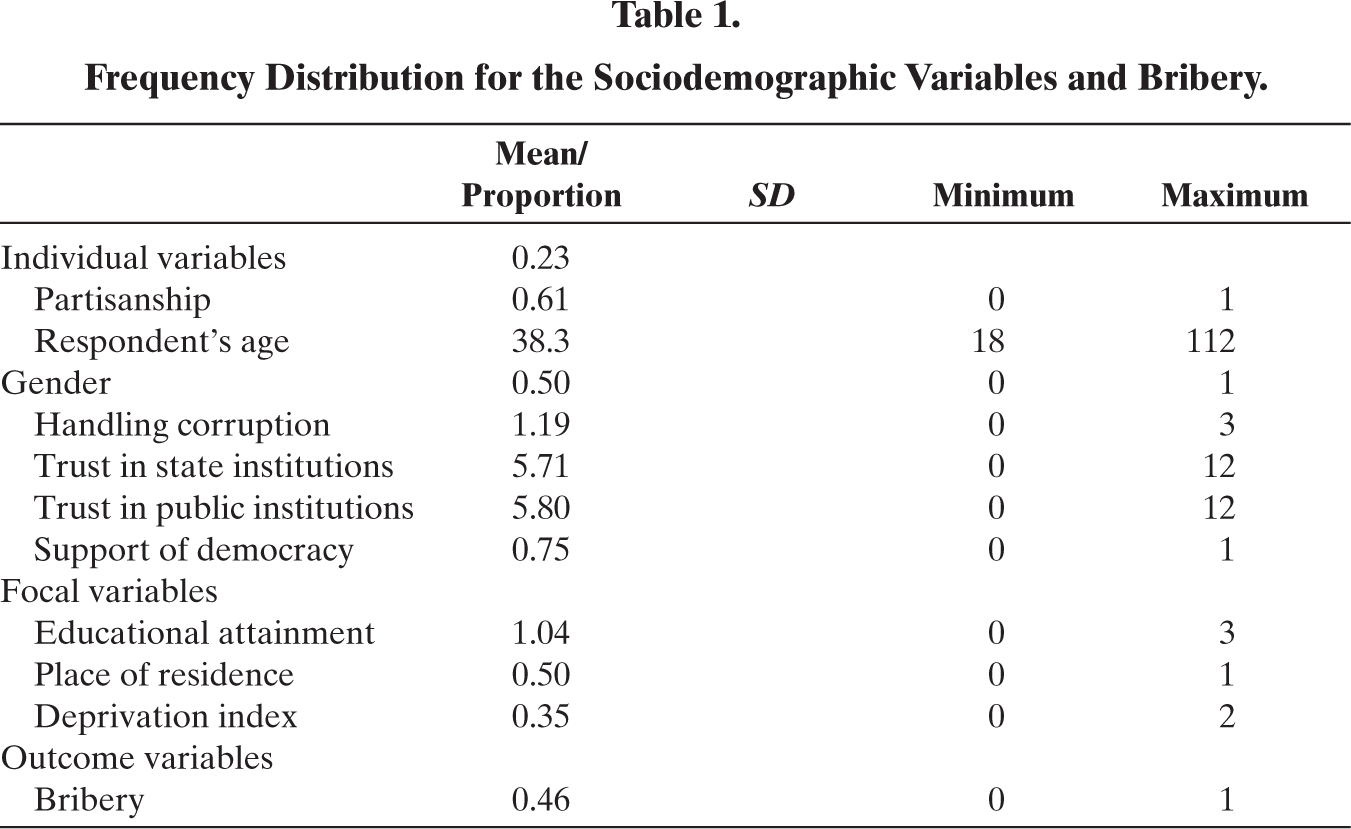
For the social inequality variables, about 32% of the respondents had no or informal education, 37% of the respondents had primary education, 25% of the respondents had secondary education, and 6% had a university education. The respondents were similarly represented in terms of their place of residence. For the deprivation status, about 70% experienced a low level of deprivation, while 4% experienced a high level of deprivation.
Trends of Bribery
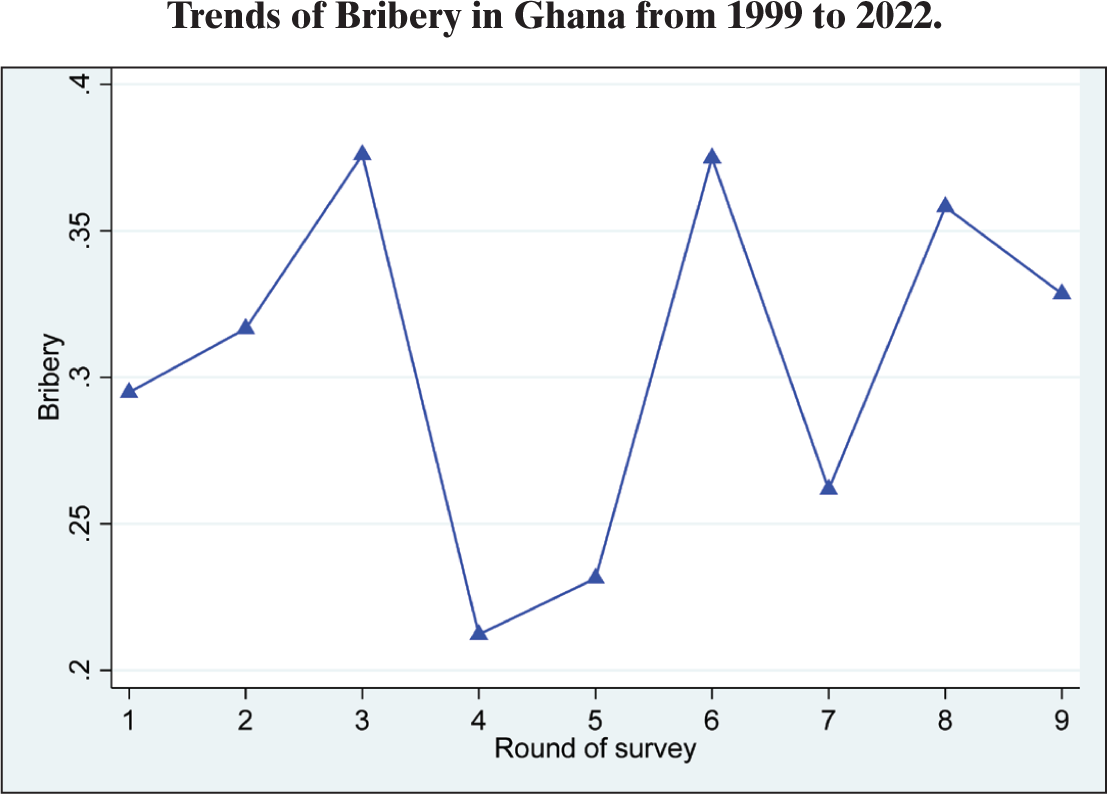
Table 2 shows that the time period variable is significantly associated with bribery after controlling for gender, partisanship, age, the government’s handling of corruption, support for democracy, and trust in state and public institutions. This model explains 5% of the variation in bribery. As shown in Figure 1, when compared to 1999, bribery increased in 2002, 2014, 2019, and 2022. However, the rate of bribery decreased in 2008, 2012, and 2014.
Regressions Models Predicting Bribery from 1999 to 2022.
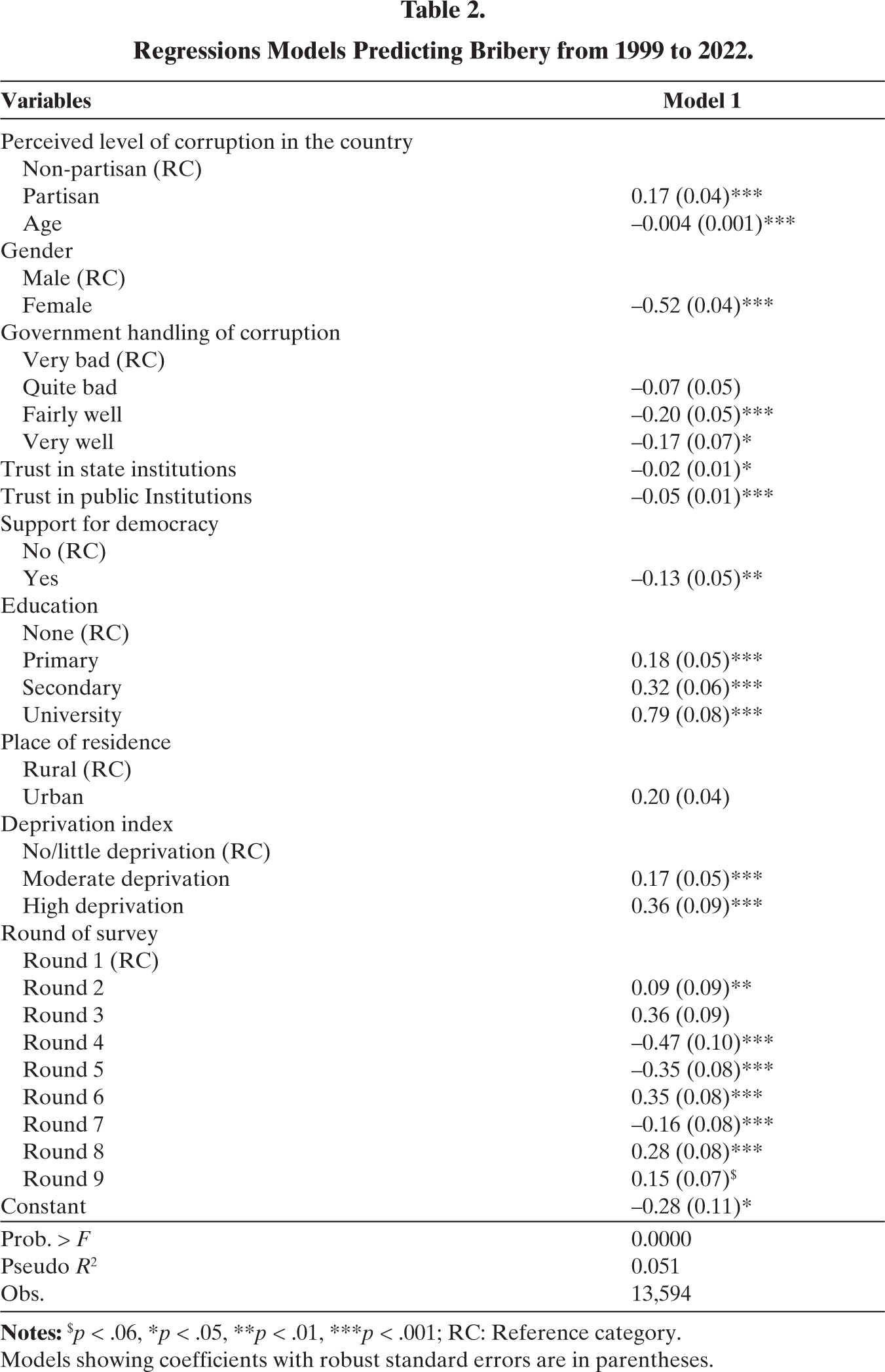
Models showing coefficients with robust standard errors are in parentheses.
Trends of Bribery in Ghana from 1999 to 2022.
Social Inequality and Trends of Bribery
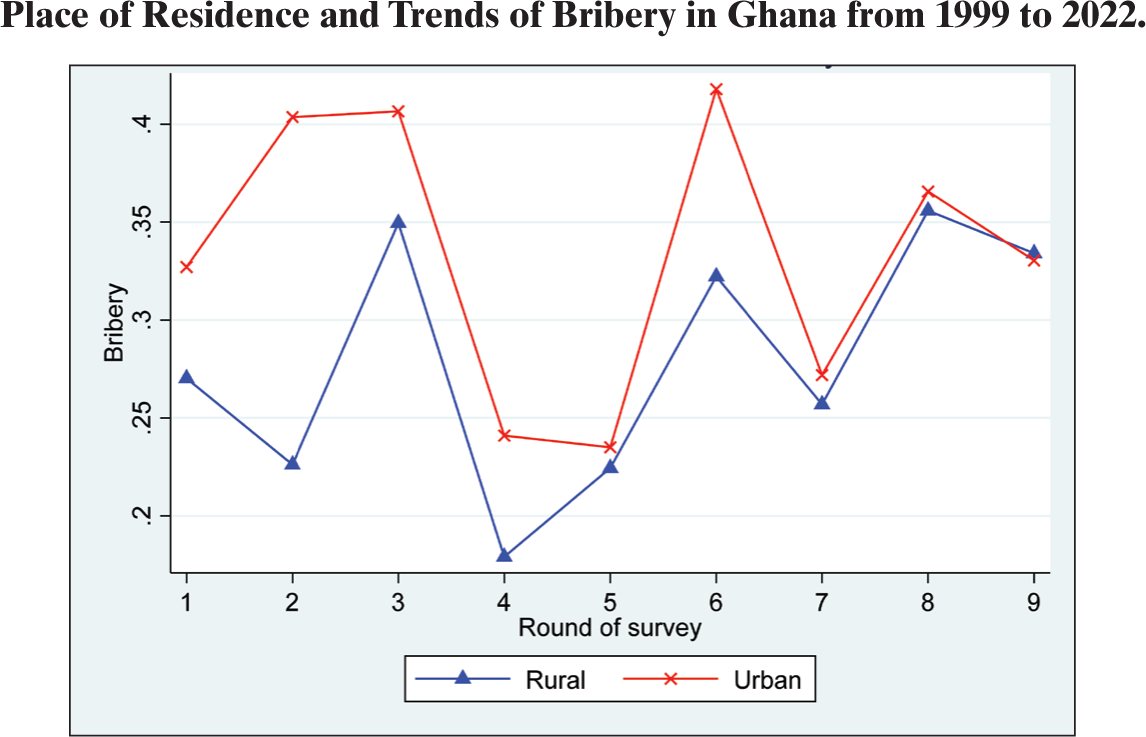
Tables 3, 5, and 7 capture the impact of the interaction between social inequality and the time periods of bribery. Table 3 shows the interaction between place of residence and time periods on bribery. In Table 3, urban dwellers significantly gave more bribes than rural dwellers in 2002. Also, the gap in bribery in 2022 significantly narrowed more than what was observed in 1999. Using the test of group comparisons in Table 4 (and shown in Figure 2), we found important shifts in the dynamics of place of residence, time periods and bribery. This is also evident in Figure 2. In 1999, rural dwellers gave more bribes than urban dwellers, and this gap significantly widened in 2002. However, between 2002 and 2005, the gaps in bribery between urban and rural dwellers significantly narrowed. Moreover, between 2012 and 2014, the gaps in bribery between urban and rural dwellers significantly widened. However, between 2014 and 2017, the gaps in bribery between urban and rural dwellers significantly narrowed. Finally, between 1999 and 2022, the gaps in bribery between urban and rural dwellers significantly narrowed.
Regressions Models of Place of Residence and Bribery from 1999 to 2022.
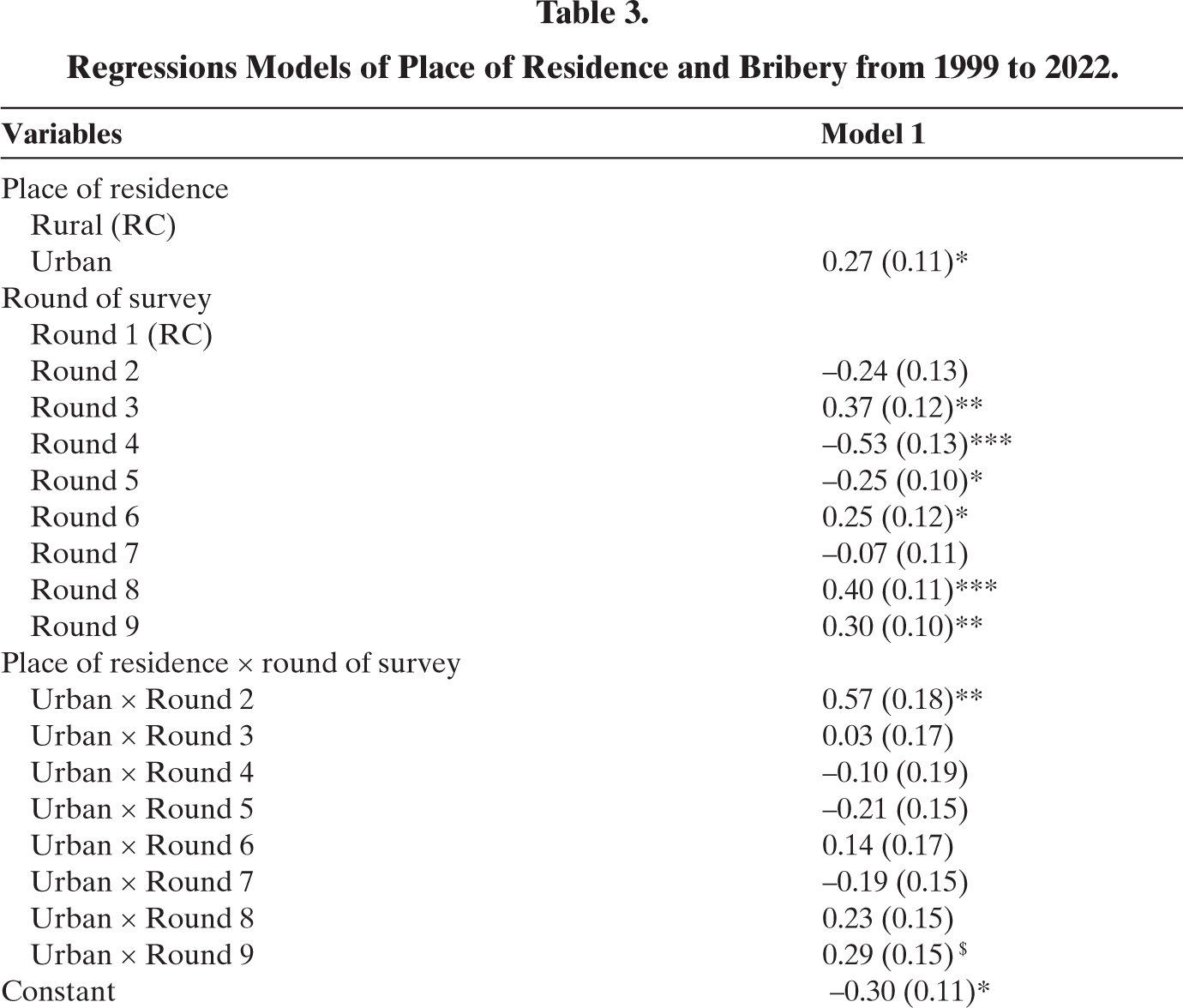
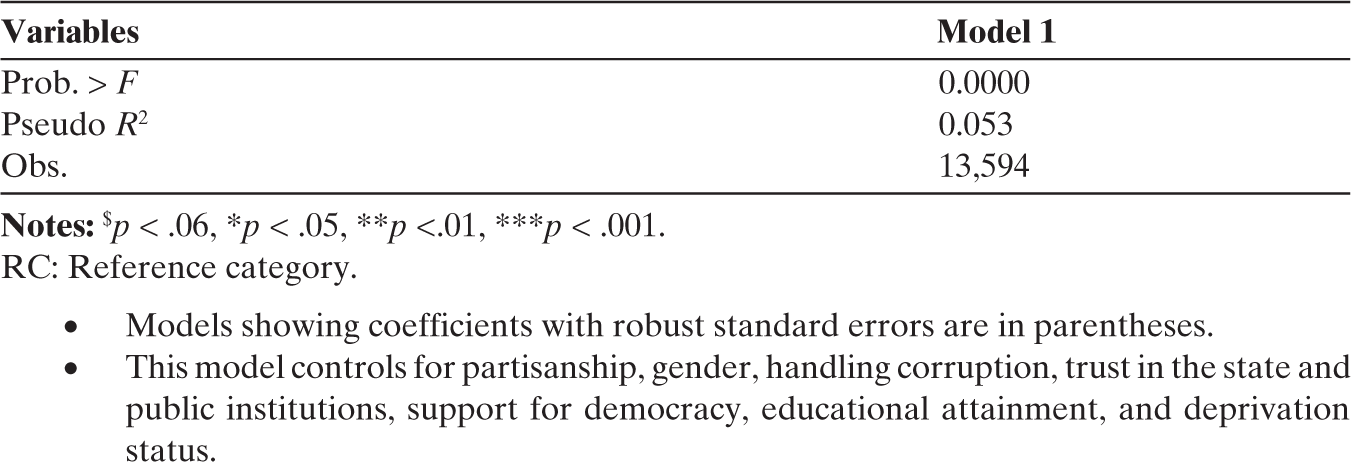
RC: Reference category.
Models showing coefficients with robust standard errors are in parentheses. This model controls for partisanship, gender, handling corruption, trust in the state and public institutions, support for democracy, educational attainment, and deprivation status.
Test of Difference in the Yearly Changes in Place of Residence and Trends of Bribery.
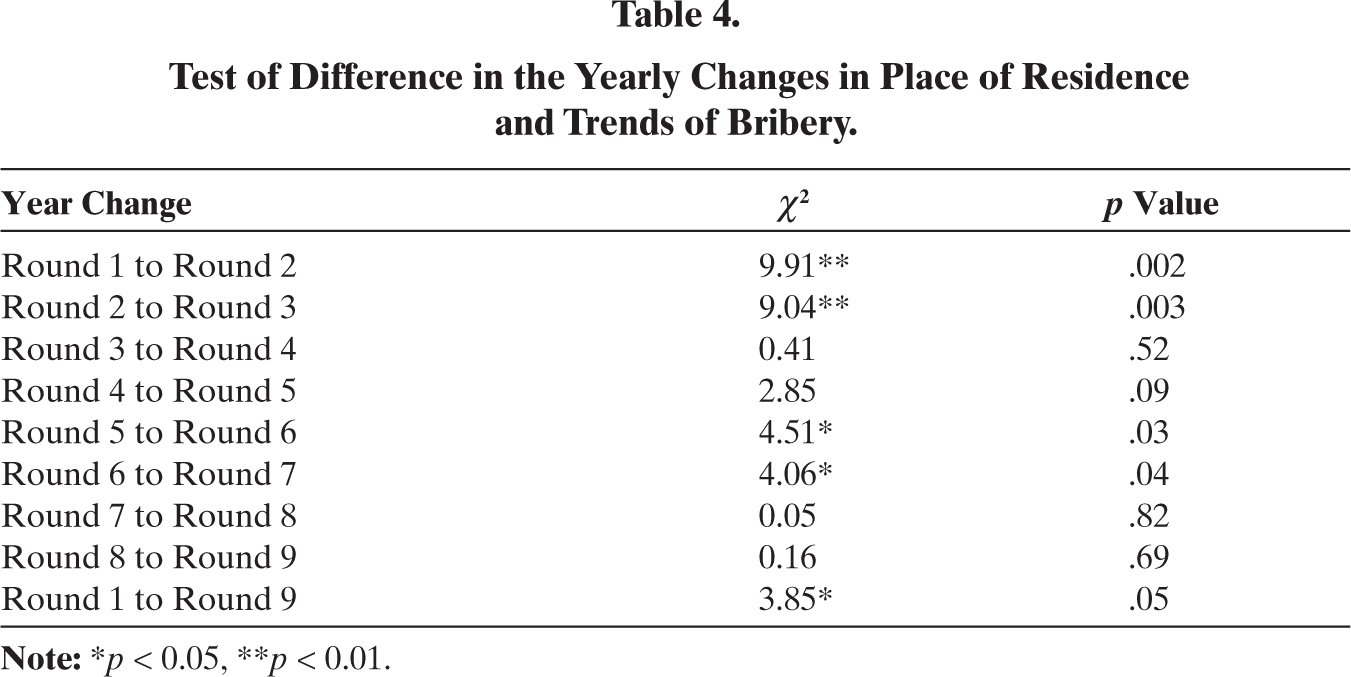
Place of Residence and Trends of Bribery in Ghana from 1999 to 2022.
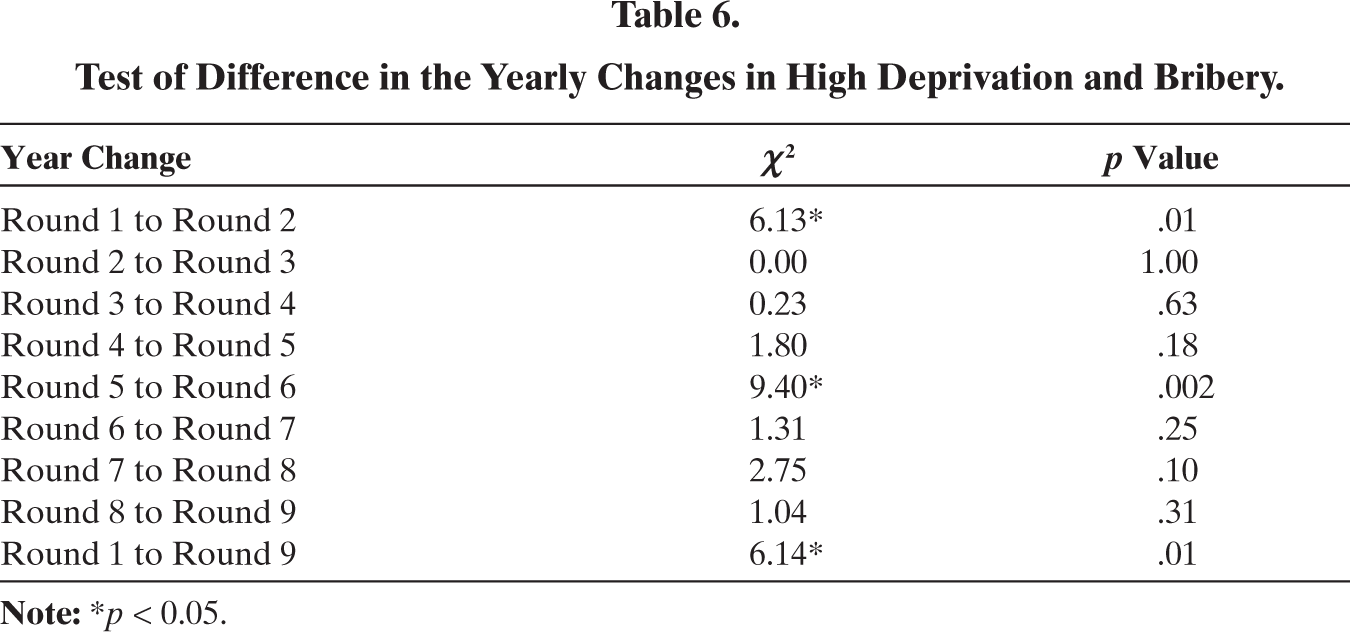
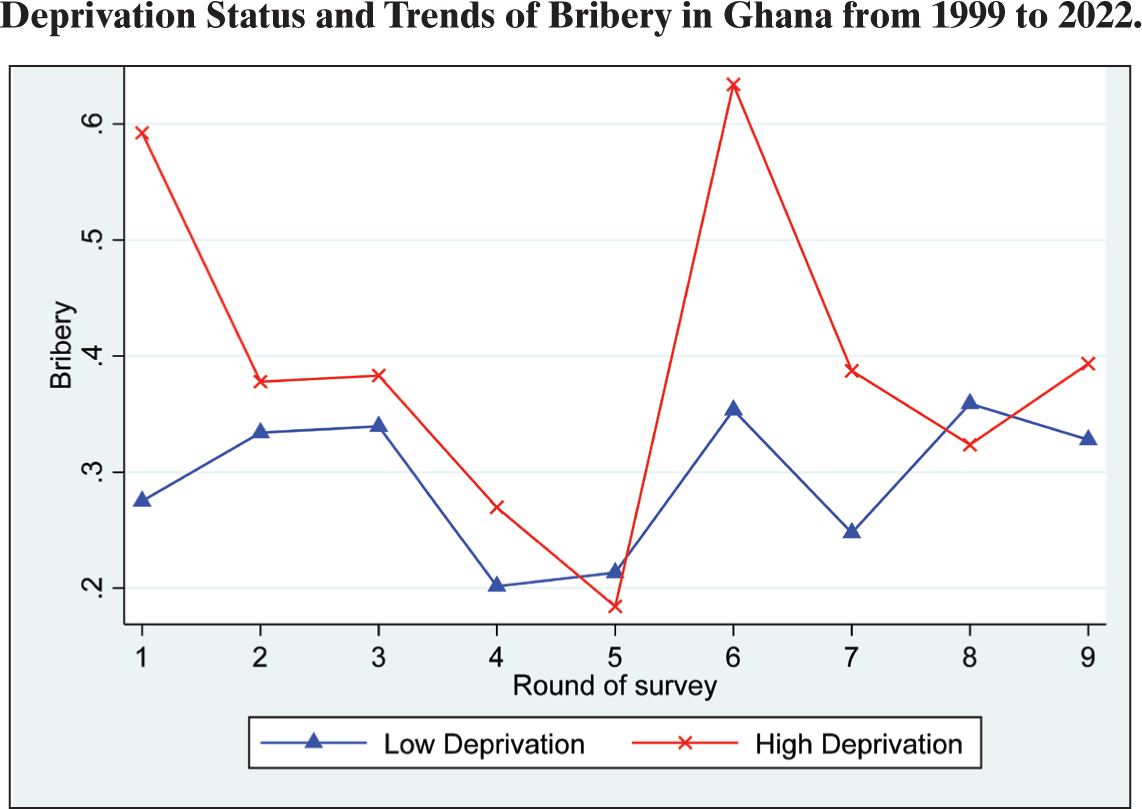
For deprivation status, Table 5 showed that most of the significant effects were found between low and high deprivation. The significant effects were found in 1999, 2002, 2005, 2008, 2012, 2019 and 2022. As shown in Figure 3, the results found that gaps in bribery narrowed between 1999 and 2002, 2005, 2008, 2012, 2019, and 2022, as respondents in high deprivation status gave more bribes in 1999. The test of group comparisons in Table 6 also showed that the gaps in bribery significantly narrowed for respondents who had low and high deprivation statuses between 1999 and 2002. Second, the prevalence of bribery was lower for respondents at high levels of deprivation than those at low levels of deprivation in 2012. However, in 2014, the rate of bribery for respondents with high deprivation was higher than for respondents with low levels of deprivation. Finally, the gaps in bribery between respondents at low and high deprivation statuses significantly narrowed down between 1999 and 2002.
Regressions Models of Deprivation Status and Bribery from 1999 to 2022.
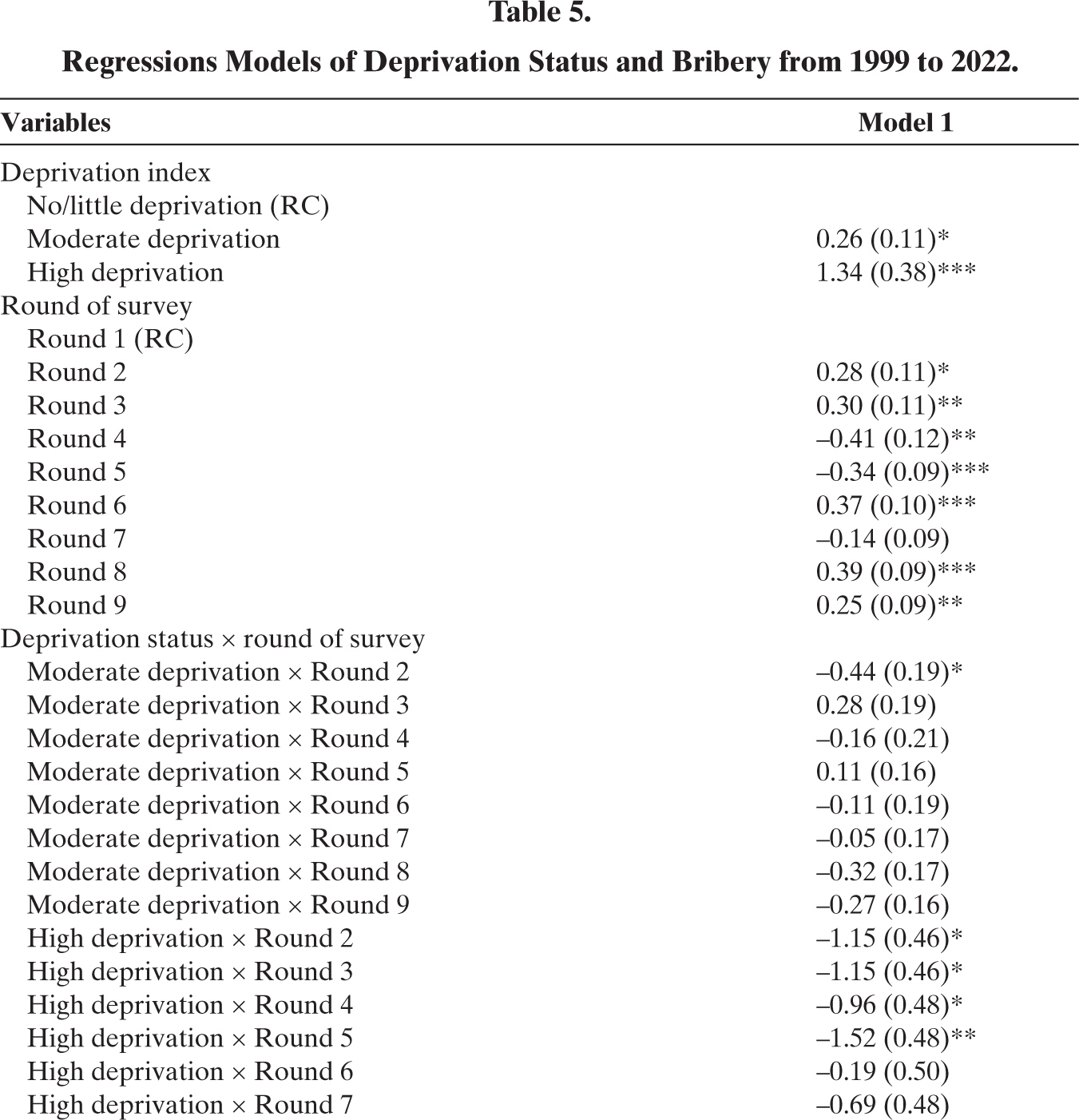
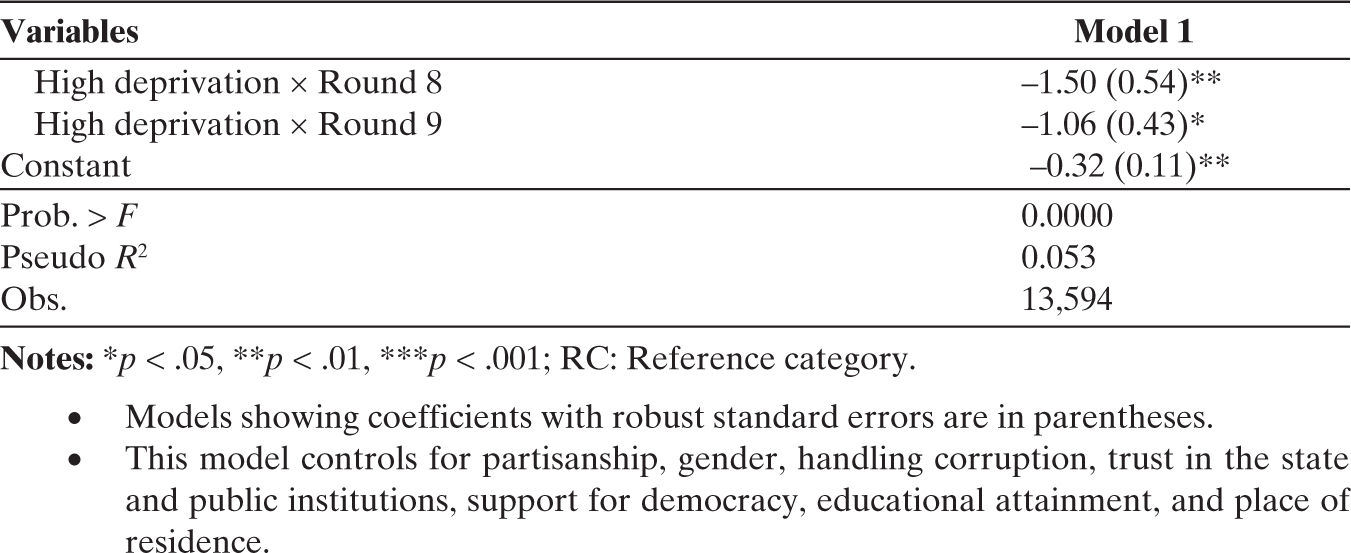
Models showing coefficients with robust standard errors are in parentheses. This model controls for partisanship, gender, handling corruption, trust in the state and public institutions, support for democracy, educational attainment, and place of residence.
Test of Difference in the Yearly Changes in High Deprivation and Bribery.
Deprivation Status and Trends of Bribery in Ghana from 1999 to 2022.
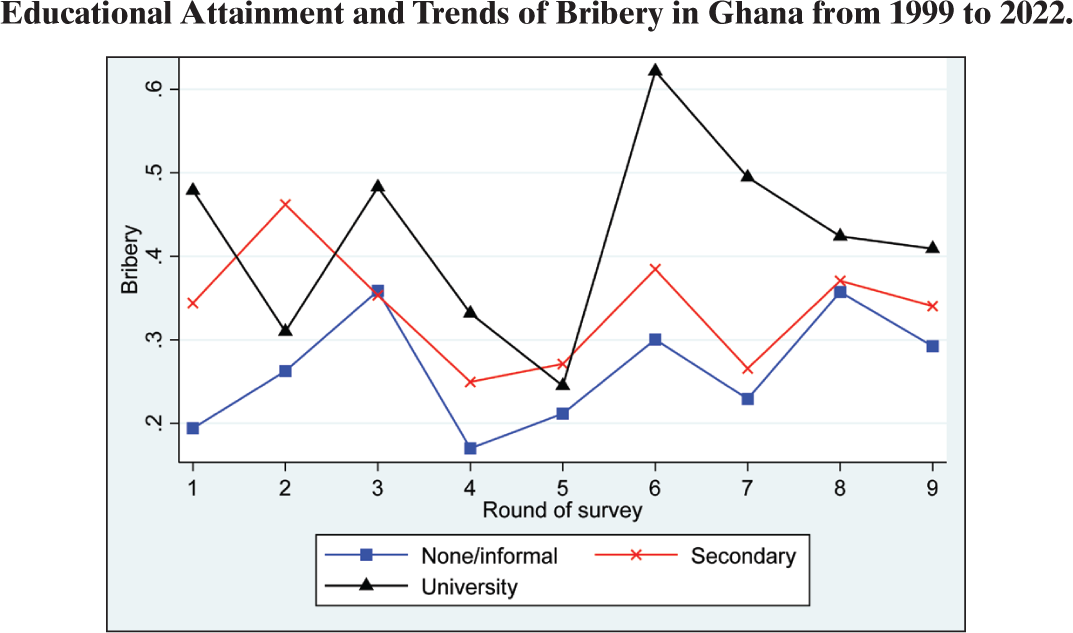
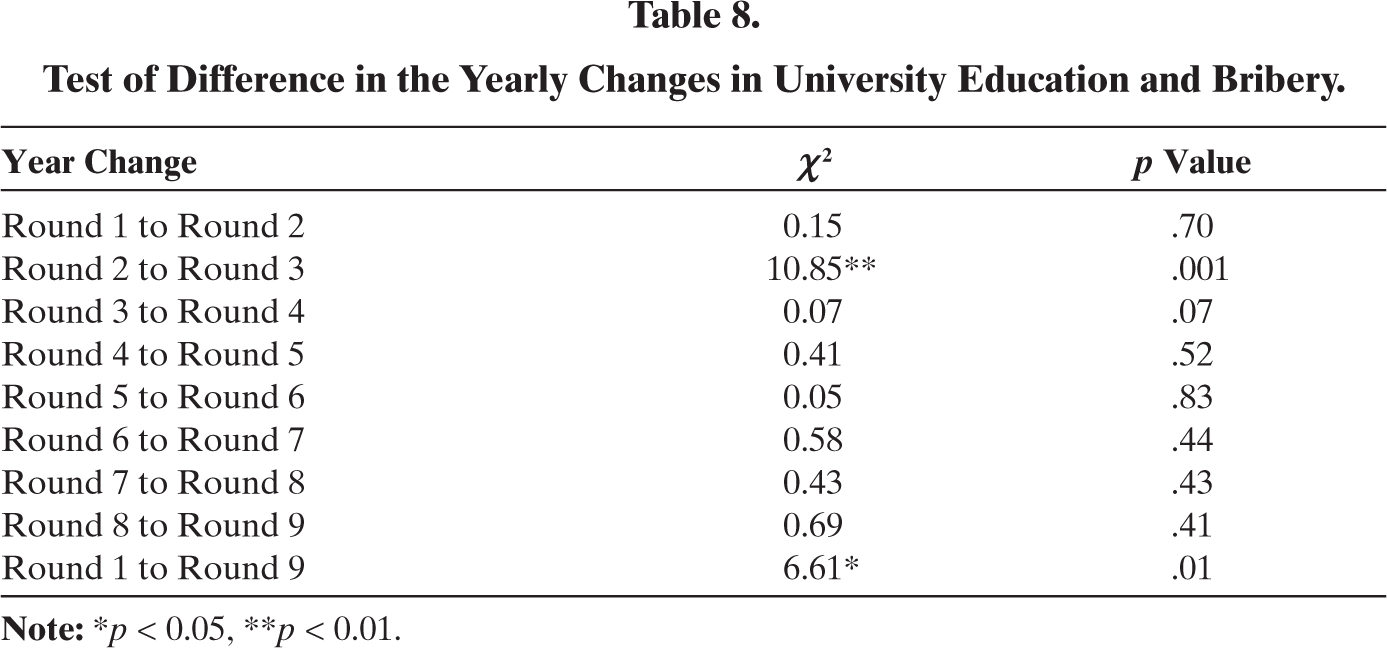
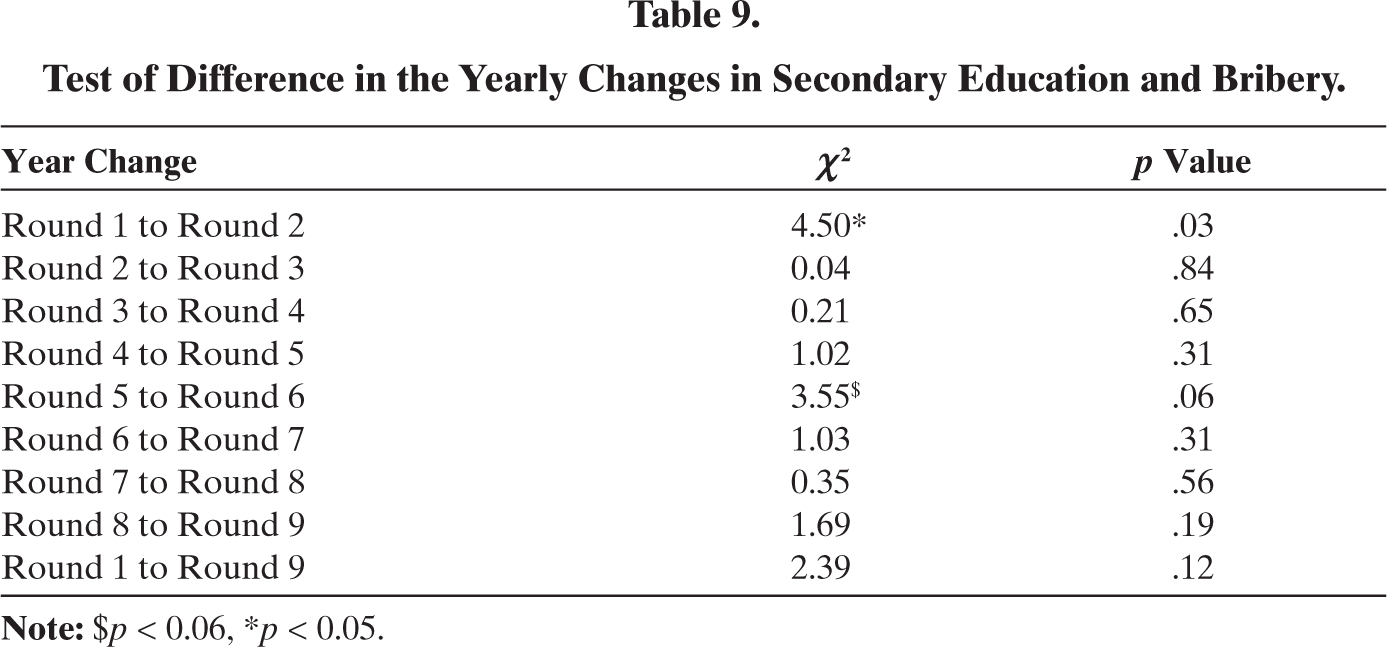
For educational status, Table 7 found that education informed the relationship between time period and bribery. As shown in Figure 4, in 2005, 2012, 2017, 2019, and 2022, the gaps in bribery between respondents with secondary education and no or informal education narrowed, compared to 1999. Similarly, in 2002, 2012, 2019, and 2022, the gaps in bribery between respondents with university education and no or informal education narrowed, compared to 1999. The test of group comparison found that between 1999 and 2022 (as shown in Table 8), the gaps in bribery between respondents with university education and those with no or informal education significantly narrowed. Table 9 also shows the test of difference in the yearly changes for Secondary education.
Regressions Models of Deprivation Status and Bribery from 1999 to 2022.
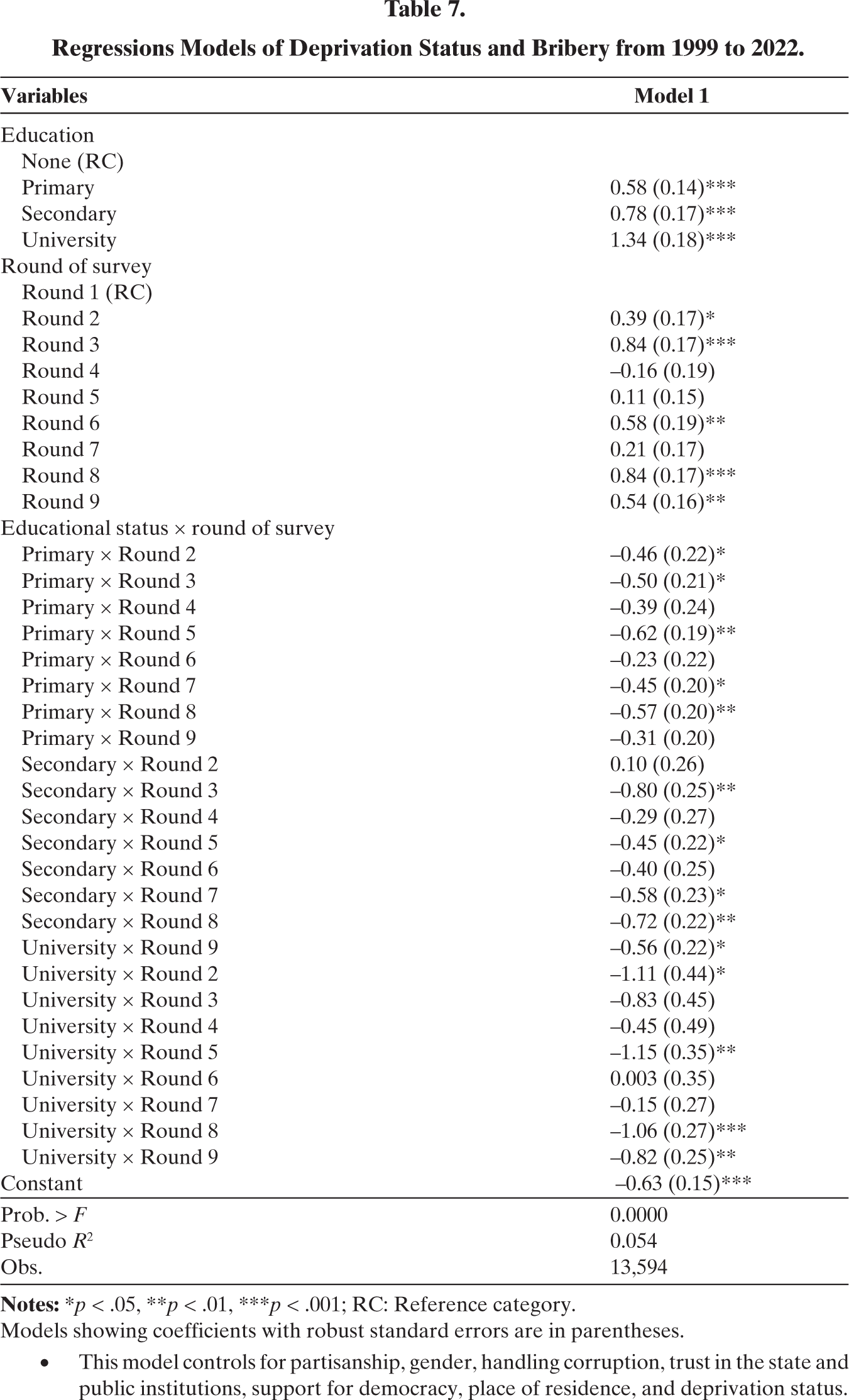
Models showing coefficients with robust standard errors are in parentheses.
This model controls for partisanship, gender, handling corruption, trust in the state and public institutions, support for democracy, place of residence, and deprivation status.
Educational Attainment and Trends of Bribery in Ghana from 1999 to 2022.
Test of Difference in the Yearly Changes in University Education and Bribery.
Test of Difference in the Yearly Changes in Secondary Education and Bribery.
Discussions
Using nationally representative survey data spanning two decades, this study examined how political/democratic transitions, structural inequality, and perceptions of deprivation influence bribery trends in Ghana. First, our results show that political transitions coincide with spikes in bribery, supporting H1 and reinforcing the neo-patrimonial argument that regime change often reconfigures patronage networks without dismantling them. During these moments, weakened institutional oversight creates fertile ground for informal practices like bribery, particularly as new elites seek to consolidate influence. The observed increase in bribery during political transitions supports the neo-patrimonialism framework proposed by Bratton and van de Walle (1997). Their argument that political change often involves merely a reshuffling of patronage networks rather than substantive institutional reform is borne out by the Ghanaian case: Bribery rates surged during key transition periods (e.g., 2000, 2016). These findings echo Chabal and Daloz (1999), who emphasized that informal networks often continue to dominate African bureaucracies even under nominally democratic regimes.
Second, the results show that traditional social inequalities—such as those based on education, place of residence, and deprivation—still matter, but their effects have transformed over time. In the early rounds of the survey (1999–2002), individuals from rural areas, those with little or no education, and the socioeconomically deprived were disproportionately burdened by bribery. These findings initially support H2a, H2b, and H2c, corroborating the structural inequality theory. Like Feagin’s (2006) and Young’s (1990) analyses, individuals from structurally marginalized backgrounds, such as rural residents, faced significantly higher risks of encountering bribery demands. In modern societies, vulnerability to corruption is increasingly attributed to underlying structural inequalities (Acemoglu & Robinson, 2012; Johnston, 2005; Piketty, 2014).
However, the interaction effects between time and these social indicators reveal a consistent narrowing of bribery disparities across these groups from 1999 to 2022. Although we expected less-educated Ghanaians to engage in bribery than their relatively more educated counterparts, the gaps in bribery between those with no formal education and others with higher levels of education narrowed significantly over time. This implies that education, while a marker of socioeconomic status, does not necessarily shield individuals from these structural barriers. Instead, educated individuals may have greater knowledge of how to navigate corrupt systems and may be more willing or able to pay bribes when necessary. The results challenge the linear assumption that increased education universally leads to less corruption tolerance (cf. Rose & Mishler, 2007). Instead, they support more nuanced interpretations (e.g., Bauhr & Grimes, 2014) that greater awareness of rights does not always correspond to reduced bribery, especially when institutional pathways remain obstructed by structural inequities. Similarly, the most deprived and rural populations initially faced the highest bribery rates, but by 2022, these gaps had narrowed as bribery became more widespread across all social groups—likely due to increasing strain on public services and more complex urban bureaucracies.
These findings suggest a redistribution of vulnerability rather than a straightforward decline in bribery or inequality. The narrowing gaps do not indicate that corruption has been effectively reduced; instead, the burden of bribery may have become more evenly spread across social groups, driven by rising expectations, greater service interactions, and system-wide inefficiencies. This situation challenges the classic Weberian assumption that modernization—through urbanization, formal education, and bureaucratic rationalization—naturally leads to more impersonal, rule-bound governance and lower levels of corruption (Weber, 1978). In the Ghanaian case, modern institutions often coexist with informal practices, undermining the ideals of rational-legal authority and enabling the normalization of bribery across both elite and non-elite populations.
Our results also reinforce relative deprivation theory, particularly in explaining the behaviors of urban and educated populations. Even after controlling for education, gender, and trust in institutions, individuals with higher deprivation scores were more likely to pay bribes. This implies that relative perceptions of injustice—not merely absolute poverty—fuel participation in bribery. Relative deprivation theory also offers critical insights into why better-educated and urban-based individuals are highly engaged in bribery. Echoing Runciman’s (1966) foundational theory, the findings suggest that when expectations for efficient services or meritocratic access are unmet, individuals experience acute frustration and are driven to engage in corrupt practices to secure outcomes. Gambetta’s (2002) notion of corruption as a “second-best” response in unjust systems similarly explains why those with greater social awareness or higher expectations may still participate in bribery. While our results do not directly measure bribe amounts, they suggest that urban and better-educated individuals—who may not be the poorest in absolute terms—are more likely to engage in bribery due to unmet expectations rather than economic necessity. This supports the logic of relative deprivation theory: Perceived unfairness, rather than absolute need, drives corrupt exchanges. Whether bribes are larger in monetary terms remain an open question, though it is plausible—especially in informal systems like Ghana’s—that bribe amounts are negotiable and shaped by context, urgency, and bargaining power.
The interaction effects between deprivation and survey years reveal that the strength of deprivation as a predictor of bribery varied over time. For instance, while high deprivation was consistently associated with greater bribery exposure, its effect was notably stronger during rounds characterized by economic stress or political instability (e.g., 2012–2014, 2018–2022). This pattern demonstrates that broader contextual shifts modulate the deprivation-bribery link, particularly for bribe givers whose perceived need to circumvent failing systems intensifies under unstable conditions. The temporal variations in the deprivation-bribery relationship resonate with Bayart’s (1993) idea of the “politics of the belly,” in which systemic crises—such as economic downturns or electoral transitions—exacerbate corruption by weakening formal constraints and increasing individual vulnerabilities.
Moments of economic and political crisis in Ghana (e.g., 2012–2014, 2018–2022) saw particularly strong linkages between deprivation and bribery. For instance, between 2012 and 2014, Ghana experienced severe economic turbulence, including high inflation and a rapid depreciation of the cedi, amid rising public debt (International Monetary Fund, 2012). These challenges coincided with a prolonged and debilitating energy crisis—commonly referred to as dumsor—marked by frequent, unpredictable power outages (Energy for Growth Hub, 2020). During this period, many citizens reported paying bribes to access essential services such as health care, electricity reconnection, and school admissions (Ghana Integrity Initiative, 2014; IMANI Africa, 2015). Public services were strained, and delays in salary payments for public sector workers were widely reported (Transparency International Defence, n.d.), creating conditions in which officials were incentivized to solicit bribes, and citizens, particularly those already disadvantaged, were forced to pay to access basic services. Concurrently, the disputed 2012 presidential election, legally challenged by the opposition, resulted in extended political tension and potentially weakened government oversight (Kpodo, 2013).
Drawing on neo-patrimonialism, rational choice theory, structural inequality theory, and relative deprivation theory, the findings show that political transitions reshape patronage networks, structural disparities entrench vulnerability, individuals make pragmatic calculations in the face of institutional inefficiencies, and feelings of deprivation sustain corrupt practices. Bribery is not merely a result of moral failure or isolated opportunity; it is embedded in broader systems of power, inequality, and expectation. Policy interventions aimed at reducing corruption must, therefore, move beyond surface-level reforms to confront the deep-rooted social and institutional structures that make bribery both rational and emotionally justified for ordinary citizens. Future research should further explore how shifts in governance, economic development, and public expectations continue to reshape the landscape of corruption over time.
Footnotes
Declaration of Conflicting Interests
The authors declared no potential conflicts of interest with respect to the research, authorship and/or publication of this article.
Funding
The authors received no financial support for the research, authorship, and/or publication of this article.