



Abstract
Education for Sustainable Development (ESD) provides a viable framework for integrating sustainability into higher education curriculum design. This article proposes the CRAFTS (Co-Designing Reflective Approaches for the Teaching of Sustainability) methodology, leveraging Design Thinking principles to seamlessly incorporate ESD into curricula. The stages of CRAFTS—Co-Design, Theoretical Alignment, Learning Design, Curriculum Planning, Curriculum Testing and Empathize Further—offer a structured yet flexible approach to curriculum development through stakeholder collaboration, alignment with ESD theory and the United Nations Sustainable Development Goals and the use of transformative pedagogy and active learning strategies, consolidated into actionable curriculum plans and supported by continuous evaluation and iterative improvement. This methodology not only prepares students to address complex sustainability issues but also ensures higher education institutions fulfil their ethical and moral responsibilities. By embedding ESD principles authentically and dynamically, CRAFTS can cultivate future-ready graduates who are passionate advocates for a sustainable world.
Keywords
Introduction
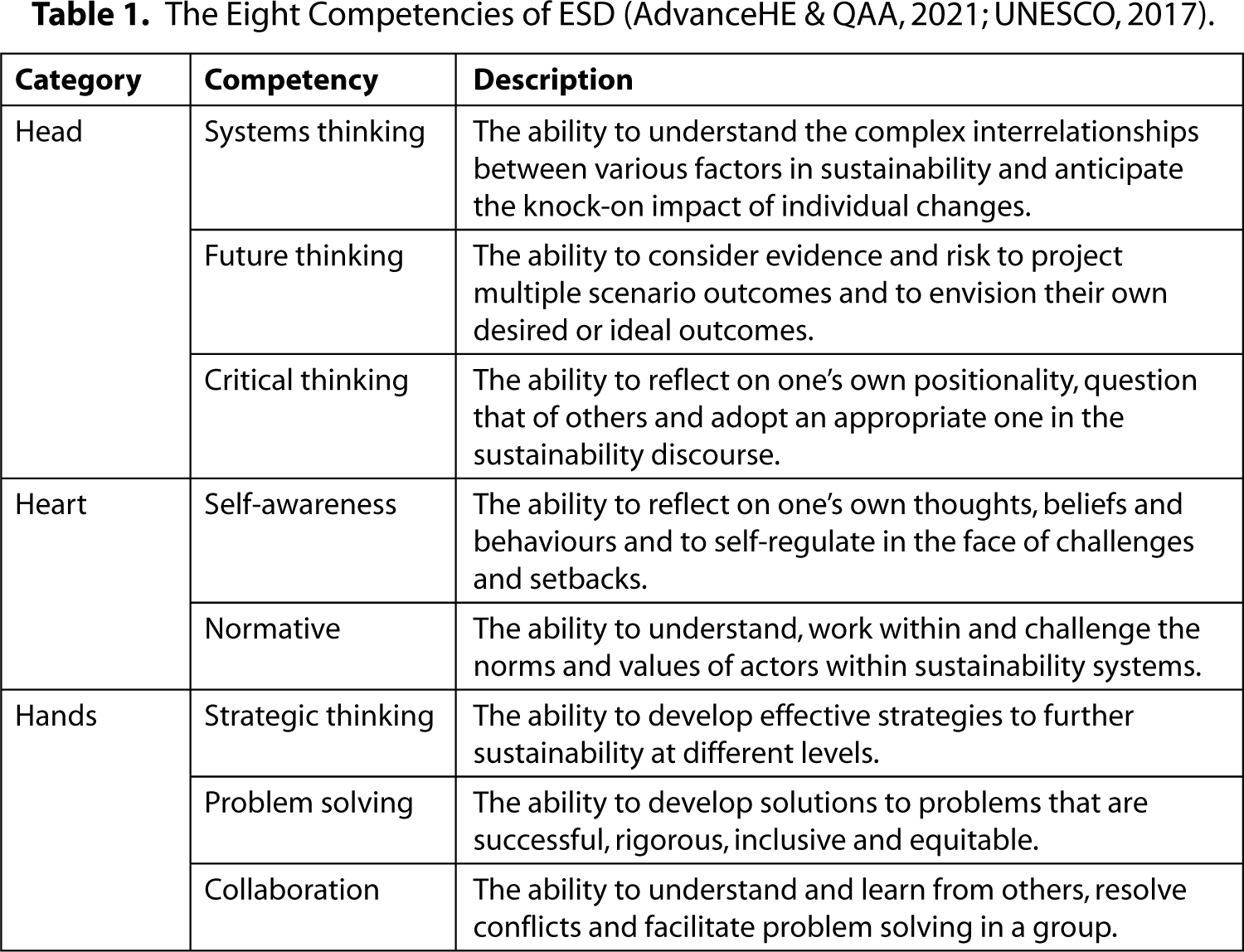
Integrating sustainability in curriculum design is essential to address the urgent global challenges posed by climate change, resource depletion and societal disparities (Winter & Cotton, 2012) with employers increasingly demanding that sustainability feature within higher education to better equip graduates in tackling the sustainability issues faced in employment. Education for Sustainable Development (ESD) presents a viable theoretical orientation for doing so (Boeve-de Pauw et al., 2015). As stated by UNESCO (2024), ‘ESD gives learners of all ages the knowledge, skills, values and agency to address interconnected global challenges… It empowers learners of all ages to make informed decisions and take individual and collective action to change society and care for the planet’. Although ESD goes beyond the Sustainable Development Goals (SDGs), ESD is a key driver of the SDGs, and therefore, due attention to them is required (Griffiths, 2020). ESD also endeavours to cultivate competencies that enable individuals to reflect on their role in current and future social, economic and environmental issues, locally and globally (UNESCO, 2017). There are a variety of competency frameworks available; however, those published by UNESCO (2017) and AdvanceHE and QAA (2021) are the most widely accepted and are discussed here (Table 1). These competencies span cognitive, socio-emotional and behavioural domains, which is commonly conceptualized as the head, heart and hands (Orr, 1992). ESD also encompasses ‘learning content and outcomes, pedagogy and the learning environment itself’ (UNESCO, 2024). Like many theoretical orientations in pedagogy, operationalizing ESD in practice for educators can be difficult. There are many examples of successful work, but few frameworks for generalization, especially in ways that are discipline agnostic, accessible for non-experts and applicable in a range of settings (Vogel et al., 2023). Therefore, we propose the CRAFTS (Co-Designing Reflective Approaches for the Teaching of Sustainability) methodology as outlined in this article, which enables understanding, mapping, evaluating and enhancing, through the framework of Design Thinking, the extent to which a module or programme provides opportunities for students to develop ESD knowledge and competencies, by incorporation of authentic and transformational learning experiences.
The Eight Competencies of ESD (AdvanceHE & QAA, 2021; UNESCO, 2017).
Design Thinking in Curriculum Design
Design Thinking is a human-centred, iterative approach that places a strong emphasis on empathy, collaboration and experimentation in ideation (Henriksen et al., 2020). When conceptualized through the ubiquitous Stanford model, it typically involves a series of stages, often expressed as Empathize, Define, Ideate, Prototype and Test (Tu et al., 2018). It begins by understanding the wants and needs of the end-users for what is being designed (Empathize), using these insights to clearly articulate the problem or opportunity faced by stakeholders (Define). Creative thinking, problem-solving and judgement-free ideation strategies are used to generate a wide array of potential solutions (Ideate). Solutions are then evaluated for applicability and feasibility, and those selected are made tangible (Prototype) before being deployed and evaluated (Test). These stages loop round again to give an iterative approach focussed on continuous improvement (Henriksen et al., 2020).
Originally rooted in the field of product design, this methodology has been applied across various fields, including education. It has an intuitive appeal for educators as it is a familiar process—identifying a problem or need in teaching, proposing an intervention and evaluating the impact. Design Thinking has been increasingly applied to curriculum design in higher education, offering innovative approaches to enhance the learning experience for students, staff and other stakeholders (Adewumi, 2023) across a range of disciplines (Beligatamulla et al., 2019). By integrating Design Thinking principles, we can create innovative, student-centred curricula that enhance student engagement, foster problem-solving skills and prepare students for the complexities of their respective fields (McLaughlin et al., 2019). As such, CRAFTS uses Design Thinking as a scaffold for integrating the key aspects of ESD in logical alignment with existing curriculum design approaches. We have largely focussed this approach at the module 1 level, but this is equally applicable at a broader programme level or the level of more focussed learning experiences such as individual class sessions.
Stage 0: Co-Design (empathize)
To empathize best with all stakeholders, curriculum co-design provides the most effective framework. This is a collaborative and participatory approach that empowers and involves all stakeholders (educators, students, employers and more) in shaping learning experiences (Money et al., 2016; Simanjuntak & Sukresna, 2023), increasing student engagement (Dacre et al., 2018; Nguyen & Laws, 2019) and providing a way for all stakeholders to meaningfully address and advocate for their own needs (Luckner et al., 2019) which can vary from disciplinary experiences of teachers, student desires and the wants of outside stakeholders such as employers. For employers particularly, the graduate skills, personal qualities and values that enable an individual to thrive in any workplace are often prized above subject knowledge (Jack, 2022). These skills align closely with the ESD competencies (AdvanceHE, 2024), and genuine, authentic opportunities to develop these should be intentionally designed into educational programmes rather than being ‘added-on’ or extra-curricular (Connolly et al., 2023).
Co-design methods, especially in curriculum design, vary in practice and depth, from focus groups, interviews or questionnaires with stakeholders to extremely participatory methods of having stakeholders at Design Sprint sessions. The latter is preferred in the spirit of true co-design, but may not be feasible, and not all stakeholders will be able to contribute effectively without a working knowledge of higher education. Regardless of approach, it is essential to capture wants and needs that will inform curricula, and it is crucial to avoid a ‘one and done’ approach to co-design, engaging with stakeholders regularly.
Stage 1: Theoretical Alignment (Define)
In Stage 1, data are synthesized from Stage 0 to articulate the core needs of the educational stakeholders that should be incorporated into the learning experience. These needs are then aligned with theoretical concepts of ESD, primarily through the SDGs and the ESD competencies, being then translated into learning outcomes. Many programmes have been aligned with the SDGs in a tokenistic fashion, but it is not enough to just include a picture of SDGs in course materials; there is a need for meaningful engagement. While the SDGs were not specifically envisaged as a curriculum, there is indicative content that ensures learners are conversant in the issues that goal presents. Some of these may be obvious, for example, SDG7: Affordable and Clean Energy, but others maybe more difficult to unravel, for example, SDG17: Partnership for the Goals. Familiarity with that SDG’s accompanying targets and indicators is a good starting point, as well as reviewing the UNESCO (2017) guidance.
This stage requires careful consideration to ensure that the correct SDG is identified. A common mistake is to assume that SDG4: Quality Education is a substantive part of any module. Target 7 of this goal does highlight ESD as a method of creating global citizens and change agents valuing equality, diversity and sustainability (Corres et al., 2020), positioning education as a driver to achieve the other goals. While educators may be achieving these outcomes through their delivery, a module in any discipline will likely relate to a broader subset of the SDGs as thematically, SDG4 itself largely relates to literacy, numeracy and digital skills of primary and post-primary school children, which is unlikely to be touched on outside programmes such as education or international development.
A further mistake often made is the attempt to cover all SDGs. Within CRAFTS, a selection of three to five SDGs is usually sufficient and is recommended. Not all 17 SDGs will be relevant to all modules, and it is important to approach this design at a holistic programme level so that, while all are touched on at least once, no module encompasses them all inauthentically. Given particular disciplines, some goals will be more apparent and regularly engaged with, and the method of engagement with the goals might be different. For example, with regards to SDG6: Clean Water & Sanitation, a chemistry programme might consider the underlying science behind methods of seawater desalinization, while an English Literature programme might touch more abstractly on the topic, such as discussing the importance of water to the human experience via the study of a specific text.
The stakeholder needs articulate the issues which must be met, and it is the responsibility of the educator to translate that information and identify which competencies are required to resolve those issues. Competencies are not specific to sustainability-based subjects, in fact, they already exist in most educational programmes in some form. However, Vogel et al. (2023) identified that their failure to convey urgency tied to sustainability challenges necessitates a strong focus on sustainability content and action. Competencies should not be explicitly formalized as learning outcomes but should be broken down to their related behaviours and knowledge and applied to the specific subject. Well-written learning outcomes should be measurable and student-centred which engage the cognitive, emotional and behavioural domains (UNESCO, 2024).
From the stakeholder needs and module content aligned with SDGs and the competencies, as described earlier, the learning outcomes are then generated in a way that teachers are most institutionally familiar with. Some modules will have pre-existing learning outcomes which may be adapted by or aligned more overtly with ESD, while others may be written specifically with these embedded from the start. Throughout, this should be informed by the output of the co-design activities within the previous phase. It is not strictly necessary, though it could be helpful, to generate learning outcomes at the individual session level, the focus here at this stage should be on the module or programme level.
Stage 2: Learning Design (Ideate)
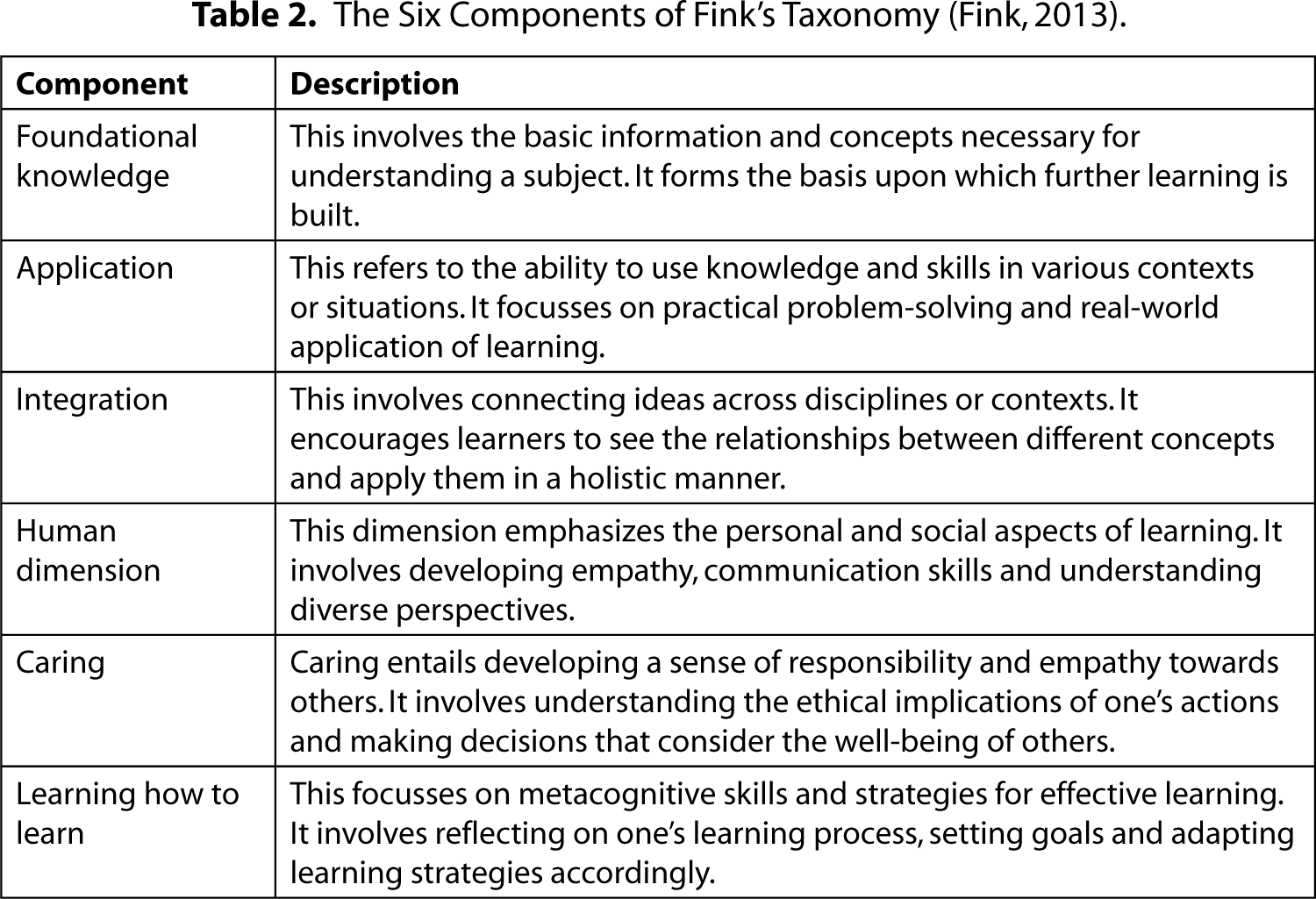
In Stage 2, teaching strategies are decided upon to guide students towards meeting the learning outcomes identified in Stage 1 to meet the educational needs of stakeholders identified during the co-design phase and to best deliver the content associated with the aligned SDGs, in a way that nurtures the accompanying competencies. This is best achieved through transformative pedagogy. Transformative pedagogy aims to facilitate deep, meaningful learning experiences that lead to personal and societal transformation (Ukpokodu, 2009). It emphasizes critical reflection, dialogue and action to challenge existing beliefs, attitudes and structures, ultimately fostering empowerment and social change (Khedkar & Nair, 2016). This is essential to ESD because both seek to promote learning that enables individuals to understand and address complex social, economic and environmental challenges facing the world today (Eichberg & Charles, 2024). However, to many educators, transformative pedagogy presents an obtuse theoretical orientation that can be difficult to operationalize. Transformative learning is also a form of significant learning, and Fink’s taxonomy (Fink, 2013) offers a comprehensive framework for designing and assessing significant learning experiences, which aligns with this fundamental requirement for transformative pedagogy in ESD. It consists of six major components which are essential to deliver a transformative learning experience (Table 2).
The Six Components of Fink’s Taxonomy (Fink, 2013).
Active learning strategies are identified as the best approach to deliver a transformative and significant learning experience. Active learning emphasizes student participation and engagement through activities which encourage critical thinking and concept application, leading to deeper understanding and knowledge retention, which clearly aligns with the practical and empowering nature of ESD (Rieckman, 2018; Wiek et al., 2015). It is beyond the scope of this article to discuss the myriad active learning approaches available; however, recent systematic reviews (Doolittle et al., 2023; Nguyen et al., 2021) provide a good starting point for readers.
It is essential to assess students’ understanding to ensure they have grasped the material. The assessment itself can also serve as a learning experience, and to appropriately develop and test ESD competencies, it is argued that assessment should be authentic (Nicholson & Vargas, 2021), in that it mirrors real-world tasks and challenges, enabling students to demonstrate their learning in a way that is more motivating and meaningful (Villarroel et al., 2018) and to better demonstrate competence in preparation for employment. Constructive alignment (Loughlin et al., 2020) serves as a guiding principle during this phase, ensuring that teaching strategies and assessment methods together create a coherent and purposeful learning experience that supports students in achieving the intended competencies and outcomes.
Inclusion should be a further guiding principle. Global challenges affect all individuals, present and future generations. By involving everyone, diverse perspectives can be leveraged to develop holistic solutions that consider the needs and concerns of all stakeholders, particularly marginalized communities, who often bear the brunt of unsustainable impacts. To equip our students as champions of this inclusive future, we must make sure all students are included and have a chance to be successful. Therefore, it is necessary to consider if the identified topics, approaches and assessments exclude certain students or present unnecessary barriers to their success. This will be very contextual to the discipline being taught, and often the identities of those involved, but a good starting point is Universal Design for Learning (UDL). UDL is a teaching approach that works to accommodate the needs and abilities of all learners and eliminates unnecessary hurdles in the learning process. This means developing a flexible learning environment in which information is presented in multiple ways, students engage in learning in a variety of ways and students are provided options when demonstrating their learning (Capp, 2017).
Stage 3: Curriculum Planning (Prototype)
Before reaching Stage 3, several iterations of the previous stages may take place. Prototyping in the context of curriculum planning represents a bringing together of viable ideas in a structure that is actionable and forms a definitive record or plan for the institution, programme and module team. This varies across institutions, but typically would take the form of a syllabus, scheme of work or module proforma and would be completed in the method of planning most familiar to the teacher in question. Most essentially, it is the initial form of what will eventually be delivered to the students in question.
Stage 4: Curriculum Testing (Pilot)
The pilot stage is the most relatively straightforward stage within CRAFTS Here, the theoretical is taken to the practical, and the curriculum design is deployed in the classroom. This may be in the form of low-stakes trial classes for colleagues or volunteer students, or the module may proceed for actual delivery. This will be dictated by the context in which CRAFTS is being used and the institutional and personal preferences for experimentation of the users.
Stage 5: Empathize Further (Evaluate)
Following Stage 4, it is necessary to identify if the curriculum design has delivered on its co-designed and planned aims, outcomes and objectives, in a way that was feasible and enjoyable. Evaluation can take many forms depending on the context of the curriculum, and consideration must be given to the stakeholder needs identified in the empathize stage of CRAFTS. Evaluations could include quantitative data such as student grades, to more qualitative data gathered in polls, surveys, interviews and focus groups, and can be both formal and informal. Evaluation should not be feared or avoided until the end of the module, but instead be integrated throughout the module lifecycle, with due consideration from Stage 3 onwards. This approach allows for continuous improvement and course correction, alongside enabling the outputs to feed back into this Empathize Further stage, thus creating an iterative and circular design process.
Modules should be regularly reviewed to ensure learning outcomes are fit for purpose to meet the needs of all key stakeholders. However, in practice, this is not always the case and all too often, learning outcomes are carried forward from one academic year to the next without an informed critical review. This reduces the opportunity to truly embed ESD into programmes and subsequent opportunities for transformative learning experiences unless a structured framework is adopted.
Conclusion
Higher education has an ethical and moral responsibility to ensure students become ‘future-ready’ graduates, skilled and equipped to deal with local and global challenges. Modules and programmes which are designed with ESD principles truly embedded and delivered can be expected to make a significant contribution to that skill development and create a transformative learning experience. While there has been an almost universal call on higher education teachers to embed ESD in their practice, there is no standardized formula for this, especially as flexibility and ambiguity are almost a requirement, since it is educators’ integrated knowledge and experience of the subject and their students that are essential to determining the optimal pedagogical approach for their context (Vogel et al., 2023). In its use of Design Thinking, CRAFTS provides structure and form for this process that is authentic to the discipline and to the context of the teaching, while being suitably freeing and not expecting perfection immediately. We see CRAFTS as a flexible framework that can be functionalized through different mediums such as continuing professional development opportunities for teachers, asynchronous toolkits or through more active Design Sprints, which we advocate to be highly tactile per Beetham (2014, p. 48) that ‘sharing physical resources that could be selected, handled, annotated and (re)situated by users allowed a collective solution to emerge in real-time/space’. CRAFTS has a range of applications in the curriculum lifecycle, from the design of new offerings to the ongoing review and enhancement of existing provision, scalable across the size of provision (unit, module, course) and up levels (undergraduate, postgraduate, even doctoral studies). Ultimately though, there is still a need for CRAFTS to be validated beyond the authors’ immediate experiences. Additionally, just like students are transformed with new outlooks and skills, educators must be given the opportunity to undergo a similar transformation to become skilled and confident with ESD, requiring institutions to properly fund development opportunities and to provide staff with time and physical resources to engage fully with this process.
Integrating ESD into curriculum design through the proposed CRAFTS methodology equips students with the essential skills and competencies to tackle global sustainability challenges. By embedding these principles in education, we can foster transformative learning experiences that prepare graduates to make informed decisions and take meaningful actions for sustainability. This structured yet flexible approach ensures that higher education institutions can meet their ethical and moral responsibilities, creating future-ready leaders capable of driving societal change and promoting a sustainable world. Through continued commitment and innovation, we can ensure that education remains a powerful catalyst for global sustainability.
Footnotes
Acknowledgements
We would like to express our sincere gratitude to Tracy Galvin and Alysha Thompson for their invaluable assistance in the initial stages of developing this model, their insights and contributions were instrumental in shaping its early foundation and their support and guidance have been truly appreciated.
Declaration of Conflicting Interests
The authors declared no potential conflicts of interest with respect to the research, authorship and/or publication of this article.
Funding
The authors received no financial support for the research, authorship and/or publication of this article