




Abstract
This article presents a case study of the application of human-centered design (HCD) as a codesign approach to address complex problems in slum communities in Jakarta, Indonesia. Through a review of relevant literature, we examine how the HCD methodology embraces a participatory framework but retains a certain degree of control not found in pure participatory approaches. We explain why HCD was selected for this study and describe the methods used, including sort cards, solution cards, in-depth interviews, focus group discussions, and product usability interviews. These methods were employed to generate a solution that addressed the issue of sourcing clean water in Jakarta’s slums, which was then prototyped, tested, and implemented. The study contributes to the development of a cohesive and applicable methodology by integrating codesign and HCD in designing solutions for people at the Base of the Pyramid.
Keywords
Introduction
The informal settlements in Jakarta are primarily located along waterways and reservoirs, leading to an increased risk of flooding during rainy seasons (Baker, 2012; Haryono, 2013). Unfortunately, this exacerbates the burden on the poorest neighborhoods who cannot afford the cost of relocating to less flood-prone areas (van Voorst, 2016). This situation highlights how the urban poor lack access to critical city infrastructure and services (Meilasari-Sugiana et al., 2018). Previously, rivers were the primary sources of clean water for these settlements, but their contamination with various pollutants, including toxic industrial waste and household organic waste, renders them unsuitable today. The groundwater pumped from underground is also classified as unsafe for human consumption due to septic tank seepage and pollution from surface water. Consequently, the polluted water sources contribute to the spread of diseases such as cholera, typhus, dysentery, worm disease, and diarrhea, among other symptoms.
In most Indonesian slums, a regulated garbage collection system is nonexistent, leading many residents to dispose of their waste in the waterways that run through their neighborhoods (van Voorst, 2016). Unfortunately, Jakarta lacks a citywide solid waste management plan, which has resulted in waste collection being primarily handled by private companies (Baker, 2012). This lack of proper waste management exacerbates the problem of recurrent floods in Jakarta. Furthermore, human exposure to these floods can lead to severe injuries and fatalities due to strong currents and the risk of electrocution.
The link between health and academic success is a well-established concept that cannot be overlooked. Optimal health promotes good attendance and academic performance, in addition to reducing medical expenses (Cain, 2007). However, for slum dwellers in Jakarta, this ideal situation is far from reality. A study by Arfines et al. (2017) highlighted that these residents are consistently exposed to environmental hazards such as cramped living conditions, poor quality drinking water, and inadequate sanitation, all of which lead to an insufficient understanding of health and hygiene practices. As such, the negative impact of the living conditions in slums is not limited to physical health but also extends to academic and economic prosperity.
Designers and researchers are beginning to shift their attention towards social issues and exploring the implications of design for the “other 90%” or the base of the pyramid (Castillo et al., 2012; Ceschin & Gaziulusoy, 2017). This approach is characterized by a focus on individuals who lack the means to access basic services and satisfy their basic needs (London, 2008; Smith, 2007) and is also known as “design for the base of the pyramid.” While this approach emphasizes market-based solutions, rather than government-driven policies, it offers a promising avenue for addressing social and economic inequality as well as environmental sustainability.
In recent years, human-centered design (HCD) has emerged as a promising approach to address social issues affecting low-income communities. However, there is a need to examine the unique characteristics of HCD compared to other design methodologies before applying it to solve problems experienced by the urban poor living in Jakarta slums. The focus of this study was directed towards water, sanitation, and hygiene (WASH) subjects because improving these areas has a significant impact on overall health (WHO, 2018). The study yielded noteworthy findings on the application of HCD in low-income communities and developing nations, which could inform designers on how to generate solutions that cater to these specific demographics.
The use of the HCD toolkit, developed by IDEO, has gained popularity as a way of creating market-based solutions to social problems while promoting social innovation. According to IDEO.org (2015), many international development projects have failed due to a lack of empathy and understanding of the people they intend to serve. HCD addresses these issues by starting with the people it is designing for. It is a comprehensive process that involves empathizing, defining, ideating, prototyping, and testing. Solutions developed through HCD can take many forms, including products, services, environments, organizations, and modes of interaction (IDEO.org, 2011). The toolkit’s focus on empathy and the end-users’ experiences highlight the importance of designing solutions that align with their needs, values, and aspirations.
Positioning HCD
The essence of HCD lies in its participatory nature, which sets it apart from a purely user-centered design approach. According to Iivari (2004), user-centered design entails conducting research and work on behalf of users while participatory design (PD) requires working with the users. HCD goes beyond user-centered design, prioritizing methodologies and techniques that facilitate the identification of people’s desires, needs, and meanings through verbal or nonverbal means (Giacomin, 2014). HCD emphasizes collaboration and co-creation between designers and the people they are designing for, promoting a holistic approach to problem-solving that puts people at the center of the design process.
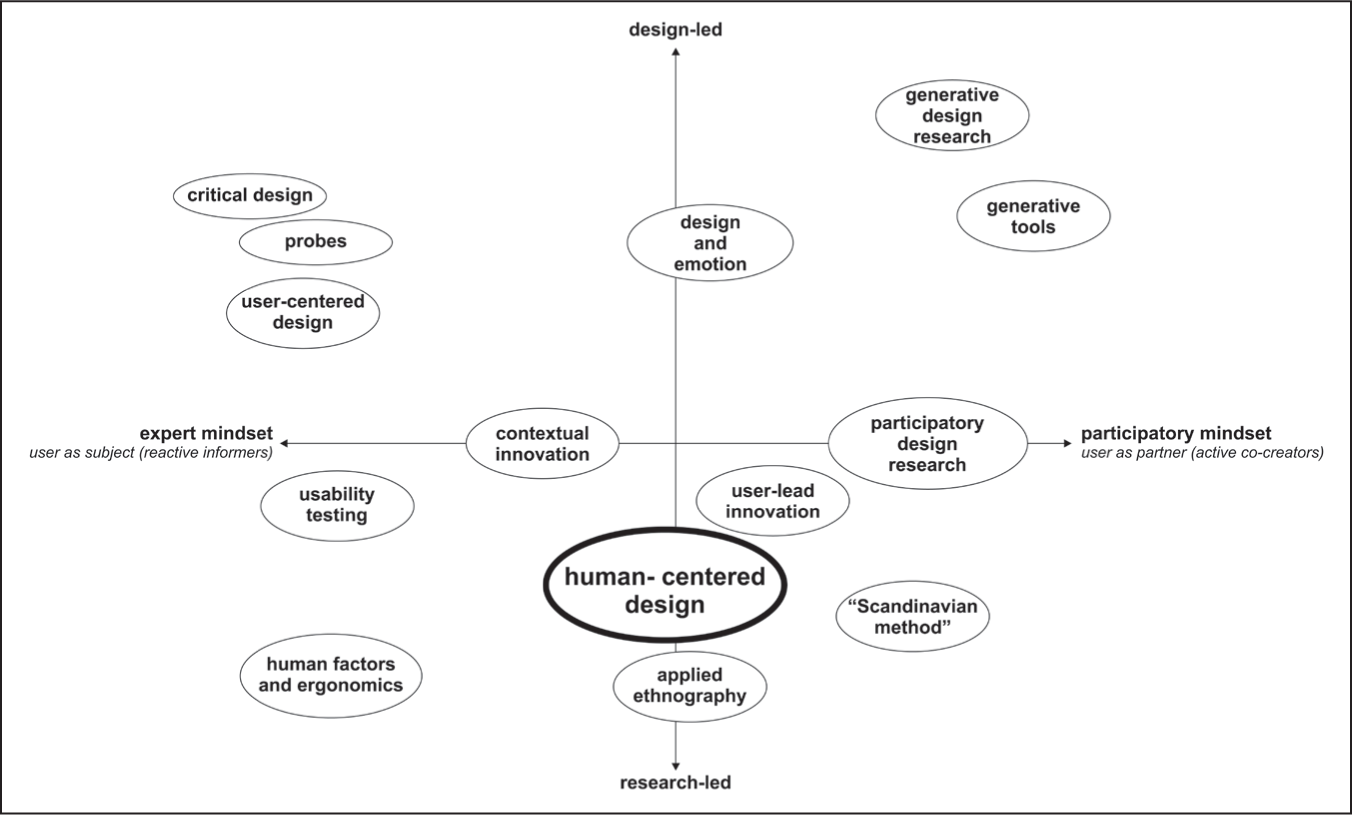
The proper positioning of HCD among various design approaches is illustrated in an adaptation of a map of design research proposed by Sanders and Stappers (2008). On the horizontal axis, HCD is positioned around the center but still leaning to the left, towards an expert mindset rather than a participatory mindset. This is because even though HCD can utilize a great number of PD methods in its methodology, it still relatively maintains a sense of direction from the designer or expert to guide the process along and move the research forward. In the vertical axis, HCD is still vastly research-led rather than design-led, because it is not heavily driven by experts that offer their design expertise to the whole process.
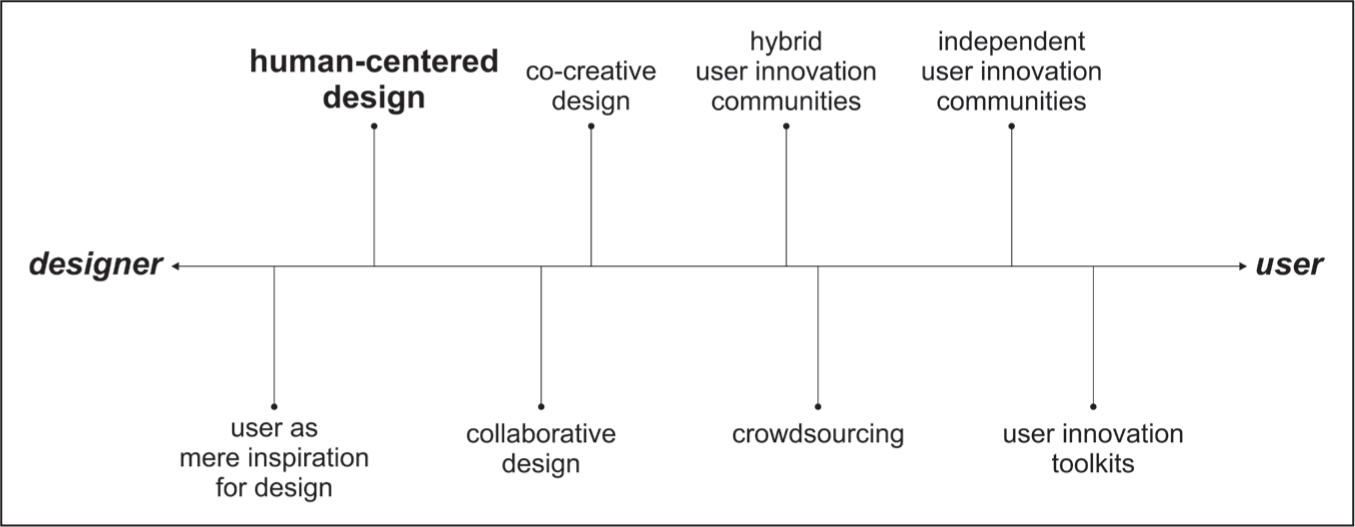
Hyysalo’s (2015) insightful analysis situates HCD within a spectrum of design paradigms that encompasses design for, with, and by the user (Figure 2). At one end of this spectrum, designers wield absolute control and users serve as mere sources of inspiration, while at the other, users create designs entirely on their own. This spectrum serves as a valuable framework for assessing the extent of stakeholders’ involvement in the design process and the degree of responsibility shared by designers and other participants. Notably, HCD falls towards the designer-controlled end of the spectrum, where designers exercise significant influence over most design decisions. In contrast, co-creative design and codesign occupy the middle of the spectrum, indicating a more equitable distribution of control between designers and stakeholders.
The spectrum of design for, with, and by the user finds resonance in Biggs’ (1989) framework of modes of farmer participation, as illustrated in Figure 3. Biggs’ (1989) framework offers a lens for understanding the intricate dynamics between researchers and farmers and the varying levels of control and participation that define their relationship. At one end of this spectrum lies a contractual relationship where farmers provide land or services under a researcher’s contract. On the opposite extreme, a collegial relationship embodies a partnership between researchers and farmers, where researchers work hand -in -hand with farmers to augment their informal research and development systems. This type of relationship represents an egalitarian approach where hierarchical structures are dismantled, and researchers and farmers are perceived as equals. Sandwiched between these extremes, the consultative mode of farmer participation entails researchers consulting farmers about their challenges and developing solutions. Meanwhile, the collaborative mode sees scientists and farmers working together as partners in the research process, sharing responsibilities and knowledge in a co-creative manner.
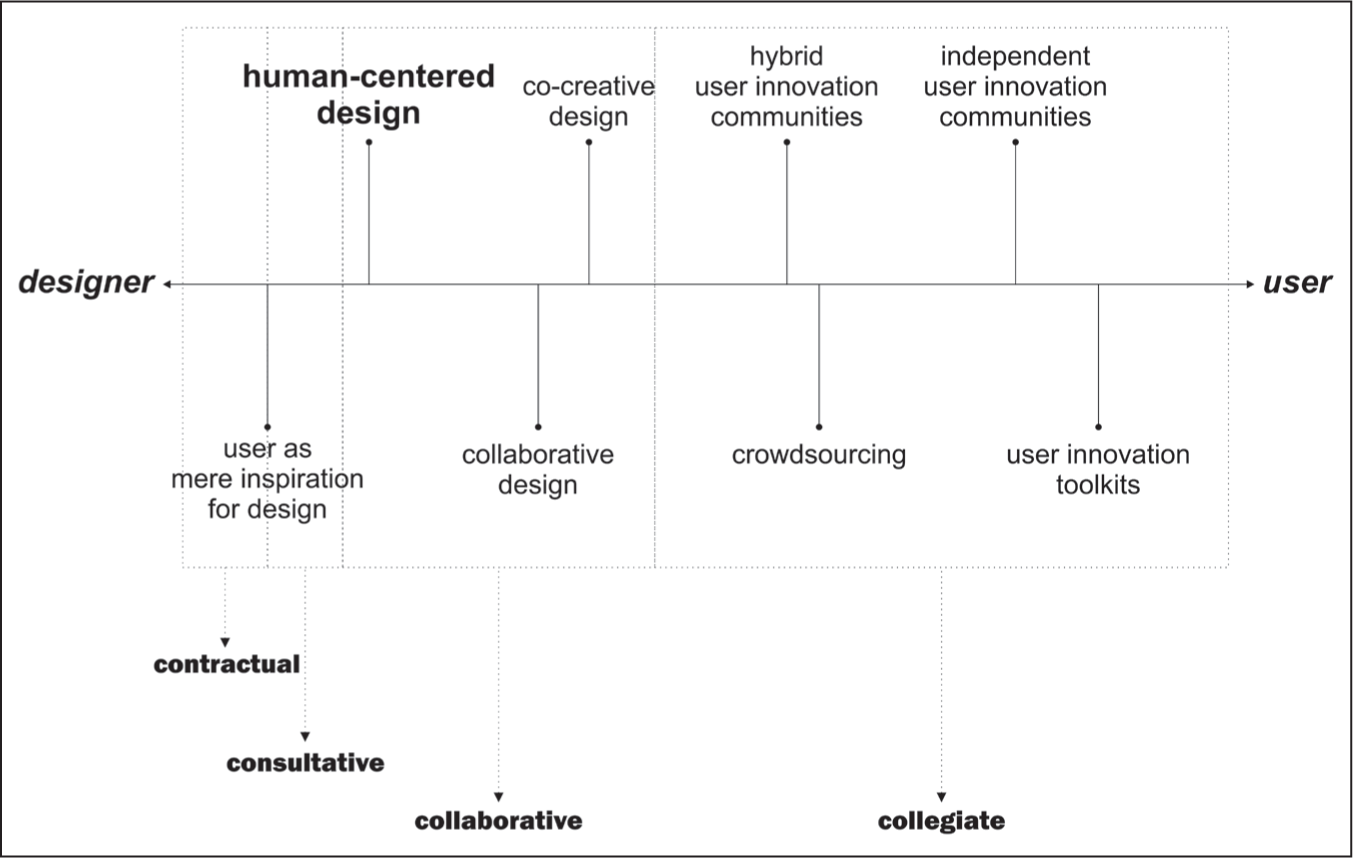
Drawing on Biggs’ (1989) framework, we can extend the analysis of the relationship between designers and users in the context of a design process. When users serve solely as sources of inspiration, their participation can be classified as contractual to consultative, depending on the level of user involvement. Examining this relationship more broadly, HCD falls within the collaborative mode of user participation, albeit towards the lower end of the spectrum. This implies that HCD involves some level of stakeholder participation in collaboration with expert designers. HCD methods, such as brainstorming, co-creation, and live prototyping sessions, reflect this partnership between designers and stakeholders. In these sessions, designers work alongside stakeholders to craft a solution that meets their needs. In terms of control, stakeholders have some agency and can guide the research, but ultimately, designers must make the final decision and steer the research towards a practical and feasible outcome.
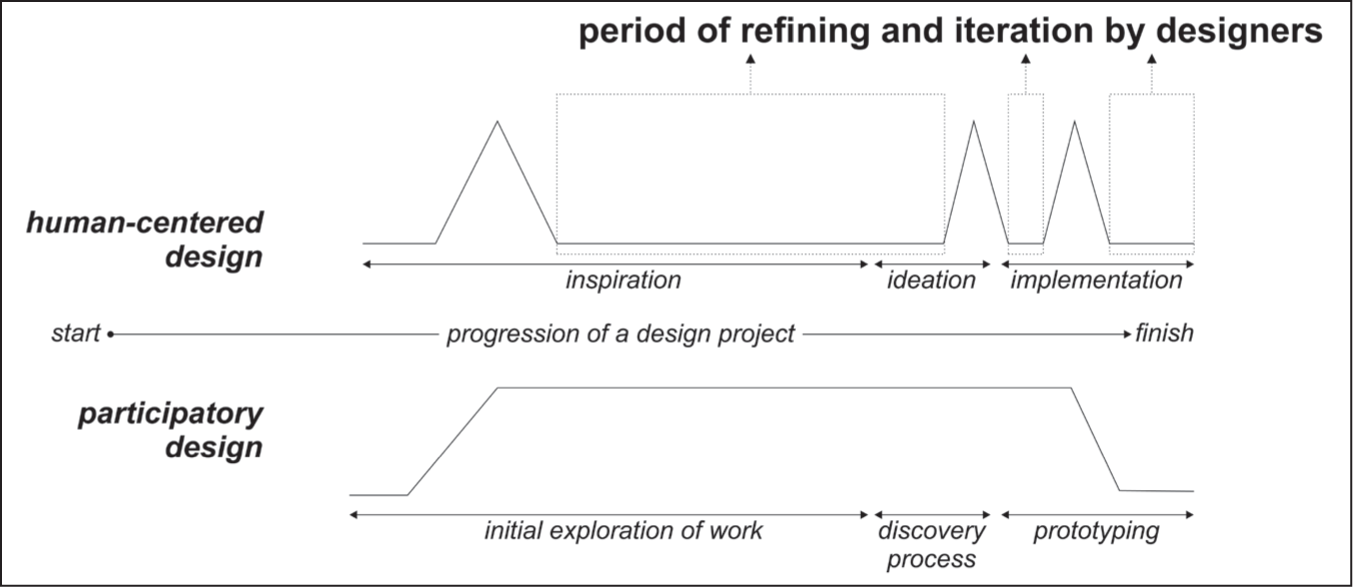
Figure 4 demonstrates how the methodology of HCD distinguishes itself from PD, as expounded by Spinuzzi (2005), in the various stages of a design project.
Both IDEO.org’s HCD and Spinuzzi’s (2005) PD, while sharing similarities, present a distinct approach to the design process by dividing it into three stages: The inspiration stage (HCD) or initial exploration of work (PD), the ideation stage (HCD) or discovery process (PD), and the implementation stage (HCD) or prototyping (PD). In PD methodology, stakeholder participation intensifies with each stage, whereas HCD methodology welcomes stakeholder involvement throughout all the three stages but gradually reduces it towards the end of each stage. The dotted areas in Figure 4 signify a period in which the designer resumes control, which does not exist in the PD approach. Instead, the refinement and iteration process is a collective effort between the designer and stakeholders. According to Biggs’ (1989) framework, PD maintains a collegial relationship between designers and stakeholders. However, one of the drawbacks of PD is the consumption of time and resources, because stakeholders lack the technical expertise of designers. In contrast, HCD allows the designer to maintain a degree of control over the design process while still enabling stakeholder participation. Therefore, HCD is a suitable approach for this study.
Methodology
The data collection phase was a rigorous and extensive process, spanning approximately seven months from September 2021 to March 2022. The focal point of this study was the slum community residing in Kebun Melati, Tanah Abang, West Jakarta, Indonesia. The chosen location provided a unique and rich setting for gathering insights and perspectives from the community members. This extended duration of data collection allowed for a thorough exploration of the challenges faced by the community and provided ample time for the researchers to engage with the community and build trust, which was crucial for gathering authentic and reliable data. The length of the study also enabled the researchers to conduct multiple rounds of data collection, including observation, interviews, and focus group discussions, ensuring a holistic and comprehensive understanding of the community’s needs and aspirations.
Methods
This study was intentionally designed to adopt the HCD methodology, as espoused by IDEO.org, to ensure a robust and reliable research outcome. HCD methodology, characterized by an emphasis on ethnography during the early stages, advocates for an in-depth, comprehensive, and systematic study of the people being studied, along with PD, which encourages the people being studied to guide the course of the research. In order to achieve this, the research employed an array of data collection methods, including interviews, sort cards, solution cards, brainstorming, co-creation, feedback solicitation, live prototyping, focus group discussions, and product usability interviews. These methods were carefully selected to guarantee the collection of comprehensive and nuanced data and to enable the co-creation of viable solutions alongside the stakeholders.
In line with the HCD methodology advocated by IDEO.org, the data collection process for this study is meticulously divided into three main sessions, each corresponding to the different stages of the HCD process: inspiration, ideation, and implementation. The first stage or Inspiration stage involves in-depth ethnography and observation to gather insights and ideas from the community. The second stage, Ideation stage, centers on refining and iterating these ideas into viable solutions. The third or last stage or the Implementation stage focuses on prototyping and testing these solutions to create a final product. To provide a better understanding of the data collection process, Figure 5 presents a flowchart detailing the entire process, from start to finish, in one continuous flow. This approach ensures that the research is conducted systematically and efficiently, while also adhering to the principles of HCD.
Stages of Data Collection.
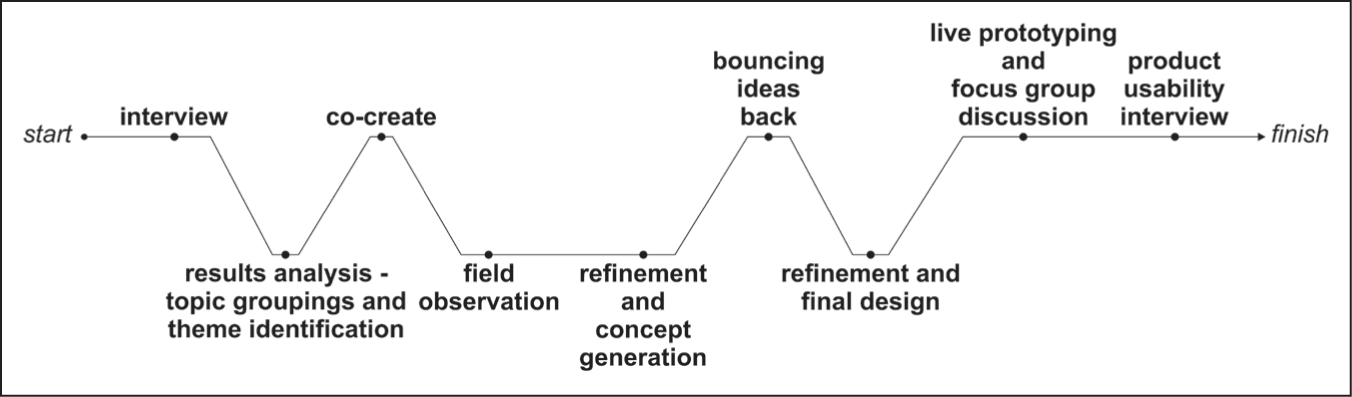
The data collection process for this study involved a careful balancing act between involving the slum community participants and maintaining control over the research direction. Interview, co-create, bouncing ideas back, live prototyping and focus group discussion, and product usability interview sessions were conducted collaboratively with the participants, while the other stages were carried out by the design researchers alone. During these stages, the researchers analyzed the data, refined ideas, and iterated on solutions, ultimately leading to the final design. The researchers then presented the final design to the participants for feedback and conducted a focus group discussion and product usability interview to further improve the solution. By strategically stepping in at key moments, the researchers were able to guide the direction of the research while still prioritizing the input and needs of the slum community.
Project Partner
In order to gain access to the slum communities and support this research, a partnership was established with a local nongovernmental organization (NGO) called the ISCO Foundation (Indonesian Street Children Organization). After thorough consultation with the ISCO Foundation, the slum community of Kebun Melati was selected as the location for this project. This community is situated in the bustling urban region of western Jakarta and was chosen due to the availability of NGO staff and resources to support the study. The Kebun Melati community is located in a dynamic setting near bustling trading hubs and towering skyscrapers, where many residents make their livelihoods by scavenging for discarded materials.
In the context of this research, stakeholders play a crucial role in the development of effective solutions. They are comprised of diverse groups, including slum inhabitants and local community workers, who interact with each other frequently and share common spaces and activities. Their collective interest is in improving the well-being of the community, and as such, their participation is vital to ensure the success of the research. The involvement of these stakeholders brings their lived experiences and unique perspectives to the forefront, which is essential for designing solutions that cater to the needs and preferences of the community. Therefore, understanding and involving these stakeholders is an integral aspect of the research process.
ISCO Foundation played a vital role in the selection of participants for this study, given their vast experience working with the local community. The selection process involved a thorough assessment of the participants’ commitment to the study, and the local ISCO staff played a significant role in identifying potential participants. The participants were categorized into four groups: Adolescents, parents or legal guardians, community workers, and servicepersons. The selection of adolescents aged between 13 years and 17 years was based on the assumption that they possess a fundamental understanding of health and hygiene, making them valuable contributors to the research. The involvement of parents or legal guardians provided a more comprehensive perspective on the study, given their crucial role in supervising children and adolescents. The input of community workers was particularly insightful since they interact with slum inhabitants daily and have an in-depth knowledge of the community’s inner workings. Servicepersons, who typically work as coolies at the nearby traditional market, were chosen to operate the prototype of the solution and provide feedback on its technical and operational aspects. Their participation was particularly useful, given their extensive experience in the slum community.
The research was conducted with a diverse group of participants, consisting of seventeen individuals in total, as detailed in Table 1. The group was thoughtfully selected to include six adolescents, six parents or legal guardians, two community workers, and three servicepersons, ensuring a broad range of perspectives and experiences. The participation of each group varied throughout the different stages of the research, with interview, co-create, bouncing ideas back, and live prototyping and focus group discussion sessions involving a combination of adolescents, parents or legal guardians, and community workers. Meanwhile, the product usability interview session solely included community workers and servicepersons who provided insightful feedback on the technical and operational aspects of the solution since they were the ones that interacted directly with the prototype and ran testing.
Distribution of Participants According to Their Respective Groups.
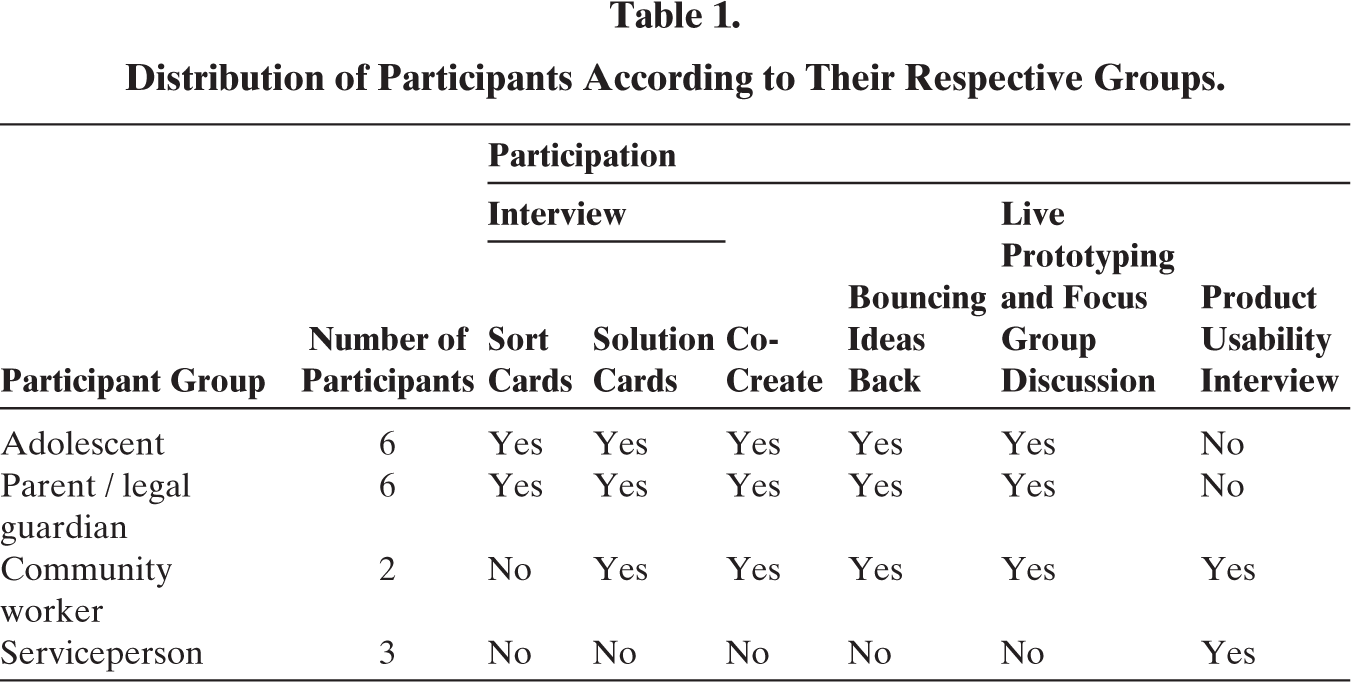
In order to gain a comprehensive understanding of the slum community and its needs, two visual research tools were integrated into the interviews during the inspiration stage: sort cards and solution cards. The sort cards method involved a series of cards featuring daily activities and objects, aimed at eliciting genuine values from the slum inhabitants. Community workers who do not live within the Kebun Melati community were excluded from this activity to ensure that the responses gathered were from those who truly experience the daily realities of living in the slum. Conversely, the solution cards contained examples of various solutions aimed at addressing poverty-related issues, with community worker participants taking part in this activity. Given their expertise and experience, the viewpoints of community workers were considered vital in identifying practical solutions applicable to the community.
As part of the HCD methodology, it is essential to consider the interconnectedness of different groups within a community. This requires a system thinking approach, which was emphasized throughout the study. The involvement of all groups in the slum community was highly encouraged to ensure that the proposed solution would be acceptable and effective for everyone. By engaging each group intensively, the solution is more likely to achieve a higher rate of success and acceptance, ultimately leading to a better quality of life for the entire community.
Results
As the backbone of the data collection and design process, each session is crucial in revealing insights and perspectives on the community’s water and hygiene-related issues. It is through the various sessions that the research team was able to gain a deeper understanding of the participants’ experiences and perceptions, which in turn paved the way for a more informed and tailored solution to address their water and hygiene-related challenges.
Inspiration Stage: Interview
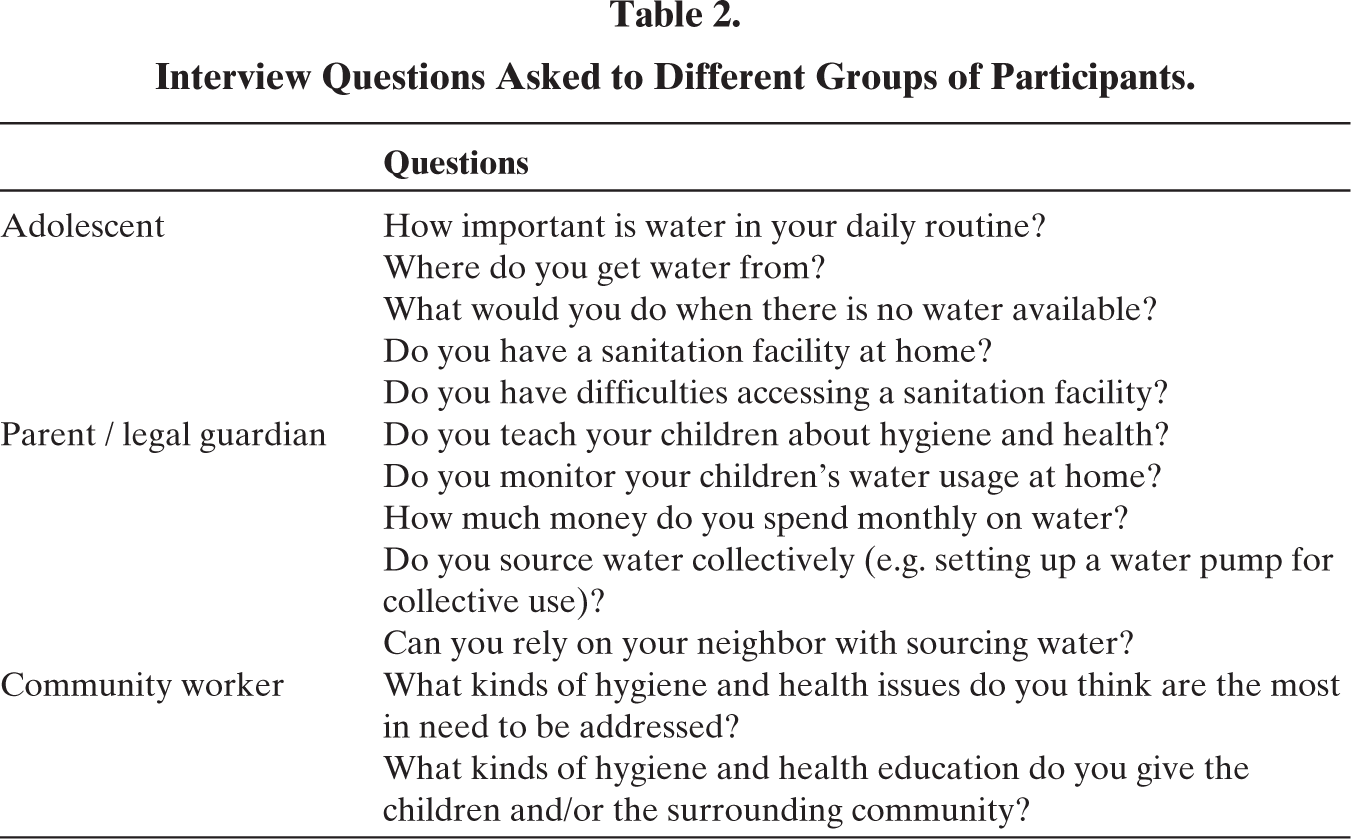
The first session of the study employed a semi-structured in-depth interview technique with the support of visual research tools such as sort cards and solution cards. The use of such tools serves as a catalyst to break down the barriers between the interviewer and the interviewee, facilitating a more fluid and productive conversation, and keeping the discussion on track. These cards create a relaxed and convivial atmosphere that encourages participants to share their thoughts in a more informal manner (Muratovski, 2016). The questions varied depending on the participant group. Adolescents were questioned about their views on the importance of clean water in their daily routine, whereas parents were asked about water usage, spending, and hygiene education within the household. Community workers, on the other hand, were asked about health, hygiene, and education-related matters. Examples of the questions posed to the participants are shown in Table 2 for further clarification.
Interview Questions Asked to Different Groups of Participants.
Through thematic analysis, the results of the study were organized into various categories without the participation of the respondents. The identified themes included the challenges faced in sourcing clean water and the high cost of accessing toilets, the inaccessibility of public toilets during night hours, the inadequate dissemination of information about the dangers of littering, the lack of proper garbage management, the absence of safe and adequate play areas for children, and the distant and difficult access to healthcare (Lubis et al., 2021). The study revealed that adolescents expressed the most concern about littering in the nearby river, with many highlighting the lack of education and awareness in the community. Among the parent participants, financial constraints were frequently mentioned as a significant challenge. In contrast, community workers pointed out that slum dwellers have very short-term plans due to the daily struggle of putting food on the table, and long-term planning is not a priority.
Ideation Stage: Co-Create and Bouncing Ideas Back
The data collection and design process of this study involved several sessions aimed at obtaining a deeper understanding of the issues faced by the community. The interview session revealed various concerns, including the difficulty of sourcing clean water, inaccessible public toilets, and lack of proper garbage management. These insights were used to inform the ideation stage, which was divided into two stages to facilitate co-creation and ideation among the participants.
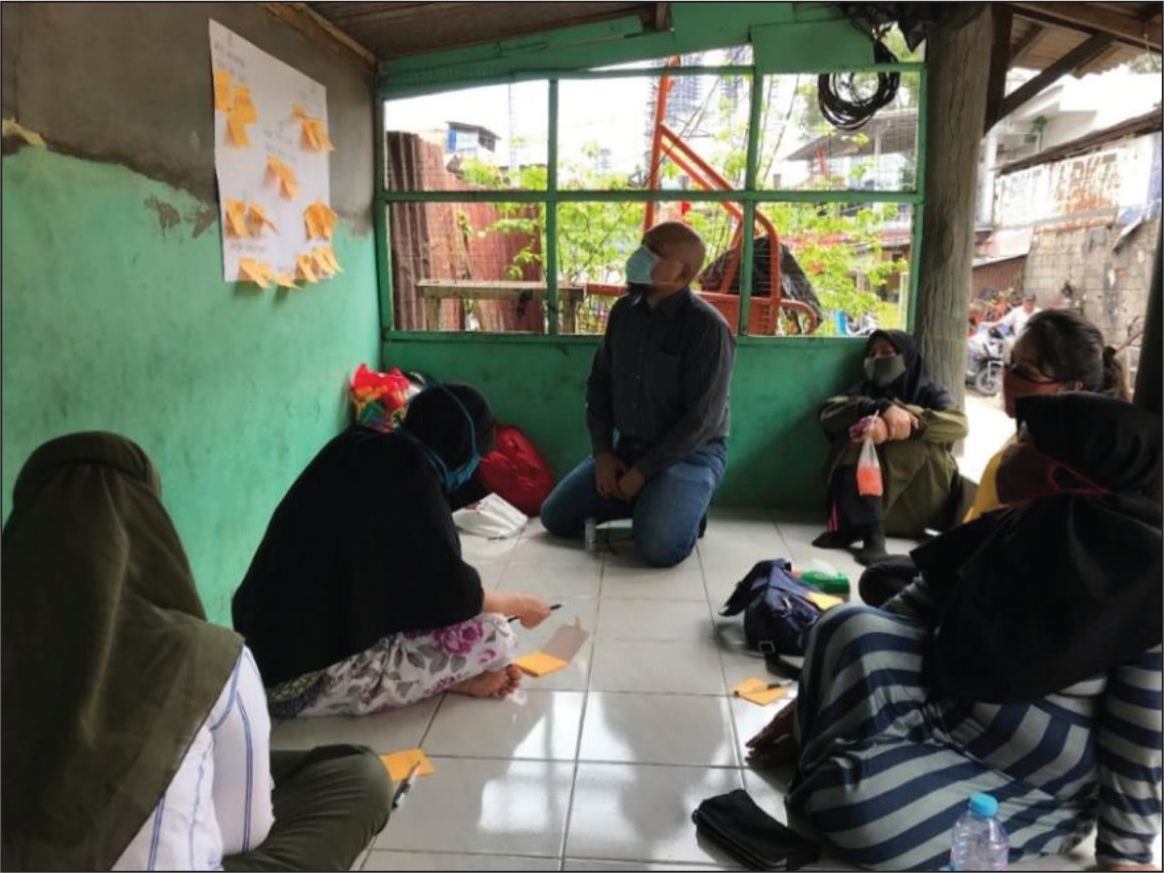
During the co-create session, all participants were encouraged to suggest remedies for the issues identified in the interview session. The participants shared their ideas on sticky notes and attached them to the relevant themes, resulting in a group discussion that led to the refinement and iteration of the proposed solutions (Figure 6). Field observation was then conducted to gain a better understanding of the community’s resources and existing solutions. The design research team used this data to refine the solutions and generate four different ideations or concepts.
Participants from Each Group Gathered Together to Discuss and Pitch Ideas in the Co-Create Session.
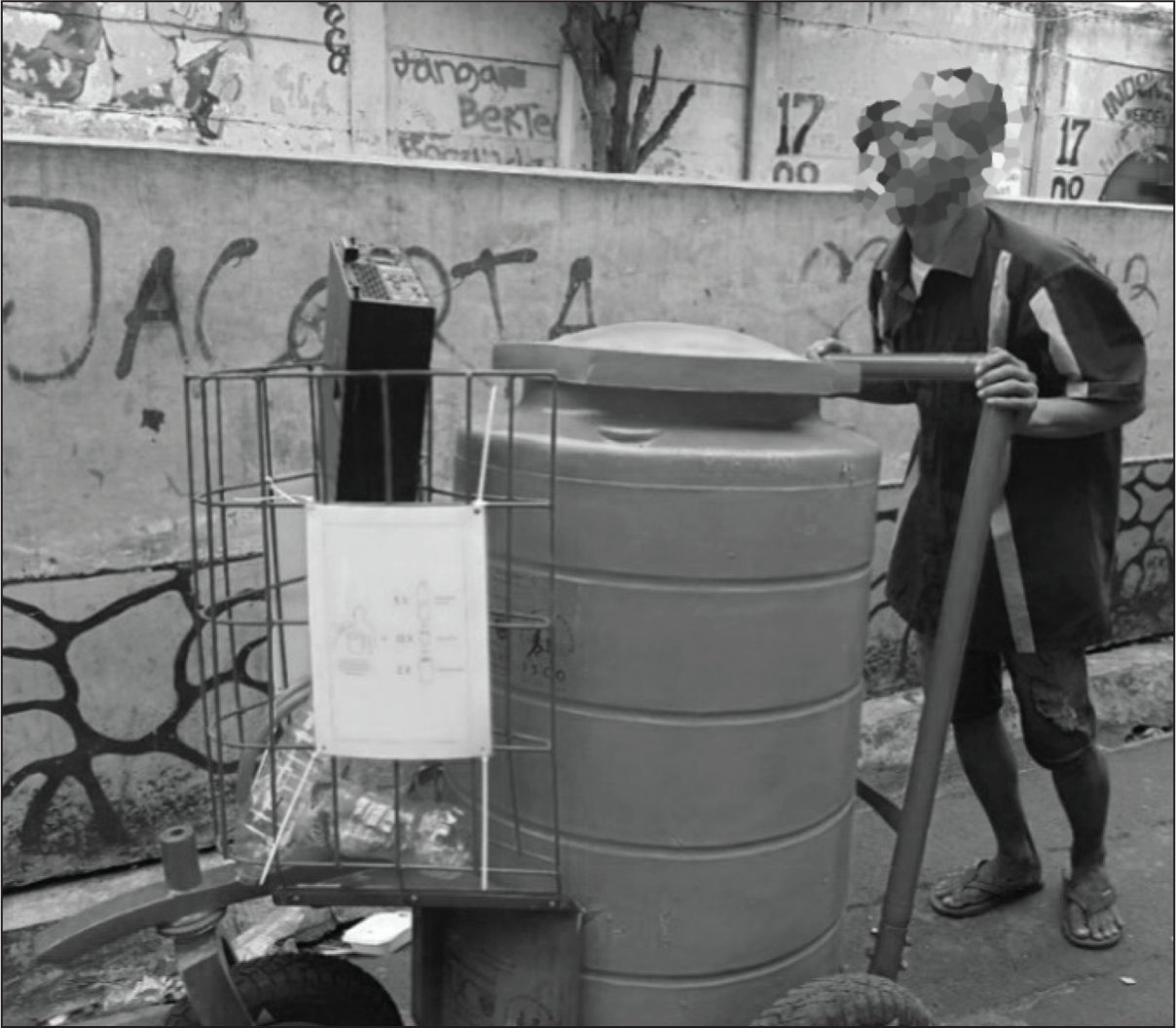
In the bouncing ideas back session, the concepts were presented back to the participants and visualized tangibly to facilitate feedback and iteration. The participants’ feedback was then used to prototype and test the most feasible idea. The tested solution involved a service that delivers clean water to households without access to a running water supply. The prototype was tested in the community for ten days (Figure 7) and was proven to be successful in its design, which involved a scenario where slum inhabitants traded recyclables for clean water.
A Serviceperson Operating the Prototype of the Water Service Solution During the Testing Period of 7 Days.
Overall, this study highlights the importance of a community-centered design approach in addressing complex social issues. The iterative process of data collection, ideation, and prototyping allowed for a more effective and context-specific solution to be developed.
Implementation Stage: Live Prototyping and Focus Group Discussion and Product Usability Interview
The final session of the study marked the culmination of an extensive co-creation process that aimed to develop a viable solution for the water crisis in the slum community. The session was divided into two parts, each focusing on a specific aspect of the solution. In the first part, the finished prototype was unveiled to the participants, and a focus group discussion ensued, where participants shared their feedback on the solution’s performance during the testing period and suggested ways to improve it. The session’s insights were then grouped into several themes, including the benefits to the community, alternative business models, prototype shortcomings, and situational issues.
The second part of the session involved interviews with servicepersons and local community workers to gather feedback on the prototype’s usability and effectiveness. The interviews yielded several themes, including recruitment issues, positive impacts and success rates, efficacy issues, and future recruitment. The feedback gathered from both sessions was instrumental in refining the solution and making it more responsive to the community’s needs.
In conclusion, the water service solution was widely embraced by the slum community, and the study demonstrated the power of co-creation and community involvement in finding effective solutions to complex challenges. Through constant feedback and iteration, the solution has been shown to be beneficial to the community’s improvement and has inspired the slum inhabitants to take an active role in addressing their problems.
Discussion
The interviews were a productive session as the HCD methodology proved to be a fruitful tool in identifying the issues experienced by the community. The use of visual research tools, which are common in HCD, was particularly effective in assisting the data collection process. The sort cards activity was successful in identifying values that were highly regarded by the slum community, while the solution cards activity assisted in presenting more concrete ideas to participants. In line with previous studies (Wentzel et al., 2014; Wentzel et al., 2016), the card assortment highlighted the difference between groups. By observing examples of solutions in a different context, participants were quickly encouraged to imagine whether such solutions could apply to their circumstances. This highlights the effectiveness of visual research tools and their importance in the ideation process, as demonstrated in previous studies (Tseng, 2020).
During the bouncing back ideas session, feedback on the more concrete ideas generated by participants in the co-create session was collected. Four ideations were presented visually to the participants, which were devised by the design researcher but based on the participants’ ideas. While all four ideas were welcomed by the participants, there were instances where more than half of all participants were no longer interested in the ideas that they supported in the previous session and critiqued those ideas instead. Concept visualization provided a more concrete and tangible representation of the ideas generated in the early session, and the participants were able to comprehend the ideas better with the help of visual tools. These findings further underscore the importance of visual tools in facilitating the ideation process.
In the implementation stage, various themes were identified from both parts of the session. In the live prototyping and focus group discussion session, participants were able to see the benefits that the water service had brought and expressed a desire for it to continue well into the future. While the “recyclables for clean water” scheme was welcomed, most participants preferred the cash payment system instead, which was in contrast with our earlier assumptions. Community workers suspected that this is because residents did not see the worth of spending so much energy picking trash and then trading it just for clean water. The participants explored other possible scenarios or business models that could be utilized so that the water service can be sustained well into the future. Suggestions and recommendations were given by the participants regarding the prototype and the service, such as the technical underpinnings of the prototype or the proper operating hours of the water service. Most of the themes discussed in the live prototyping and focus group discussion session were also provoked in the product usability interview session, although the latter was focused more on product usability and gathering feedback from the side of the servicepersons or operators.
The partnership with the ISCO Foundation played a crucial role in facilitating the data collection process, from individual interviews and co-creation sessions to prototype testing and product usability sessions. The partner’s courtesy helped build a good rapport and developed a sense of trust with slum inhabitants.
WASH have long been critical areas for global development efforts. To tackle these challenges, various approaches have been adopted in the design of solutions, as evidenced by recent studies. One such approach is the Integrated Behavioral Model for WASH, which has been used to guide the selection of handwashing stations and data analysis. The model has revealed that market availability, low-cost materials, and ease of use are dominant factors behind the user’s selection process, leading to more practical solutions.
Similarly, the Behavior-Centered Design approach has been successfully used to address sanitation issues in WASH. Other innovative approaches, such as social and feminist perspectives as well as translational research techniques, have also been explored to address WASH-related issues. Participatory approaches have proven successful in addressing WASH-related themes in the past, with the integration of participatory aspects into the HCD methodology providing a significant way to inform the design process.
One advantage of the participatory approach is that it enables stakeholders to direct and guide the direction of the research, avoiding situations where designers offer solutions that are not desirable to the community. However, the researcher or designer may need to step in to summarize findings and adjust the course of research to remain focused and save time. HCD and the codesign approach delegate a large portion of research direction to the community, ensuring that solutions are desirable, feasible, and viable for slum dwellers.
The most compelling reason to choose the HCD methodology is its efficacy and efficiency in guiding a design process in the best direction, ultimately bringing appropriate solutions for all stakeholders. Therefore, WASH initiatives can benefit significantly from using a participatory approach in combination with HCD, leading to more practical and effective solutions that meet the needs of the communities they serve.
Conclusion
Designing solutions that address the needs of marginalized communities has long been a challenge for researchers and designers. In this study, we sought to overcome this challenge by adapting existing design methodologies to make them more suitable for designing for the poor. By exploring the principles of HCD and incorporating a codesign approach, we were able to develop a solution that met the unique needs of slum communities in Jakarta.
With a deep understanding of HCD and codesign methodologies, our team worked closely with stakeholders to create a solution that was not only feasible and viable but also desirable. Through a process of constant feedback and iterations, we empowered users and stakeholders to take an active role in generating ideas and contributing to the design process. This not only ensured that the solution was tailored to their specific needs but also increased their sense of ownership and investment in the project.
The success of our approach can be seen in the implementation of our solution, which was met with great enthusiasm and positive feedback from the slum communities. By prioritizing the needs and perspectives of the users, we were able to create a solution that truly made a difference in their lives. Our study highlights the importance of adapting design methodologies to suit the needs of marginalized communities and demonstrates the effectiveness of HCD with a codesign approach in addressing complex social challenges.
Footnotes
Declaration of Conflicting Interests
The authors declared no potential conflicts of interest with respect to the research, authorship, and/or publication of this article.
Funding
The authors received no financial support for the research, authorship, and/or publication of this article.