




Abstract
A major international donor conference for sustained support for the Rohingya refugees was convened on October 22, 2021. It was a virtual conference organized and co-hosted by the Secretary of State of the United States of America, the High Representative of Foreign Affairs and Security Policy of the European Union and the Vice-President of the European Commission, the Minister of State for South Asia and the Commonwealth of the United Kingdom of Great Britain and Northern Ireland and the United Nations High Commissioner for Refugees. This article critically evaluates this important event and explores the extent to which this international aid donor conference was consistent with the main principles of international aid effectiveness. It provides a critical analysis of a large-scale donor conference which reveals gaps in the theories, promises and practices of international aid. The focus is on the ownership of aid policies and who determines the aid agenda in this case of the large number of Rohingya refugees who have fled persecution in Myanmar and sought refuge in Bangladesh.
Introduction
The Rohingya people are a stateless Indo-Aryan ethnic group who are predominantly Muslims. Before what has been called the “Rohingya genocide” in 2017, some 1.4 million Rohingyas were living in Myanmar (see Figure 1–3), where the majority of the population are Buddhists (O’Brien & Hoffstaedter, 2020). In 2017, over 740,000 members of this ethnic group fled to neighboring Bangladesh, where most of the population are Muslims. Since Myanmar’s independence from British colonial rule in 1948, the Rohingya have been persistently persecuted and denied Myanmar citizenship (Alam, 2019; Haacke, 2016; Holliday, 2014).
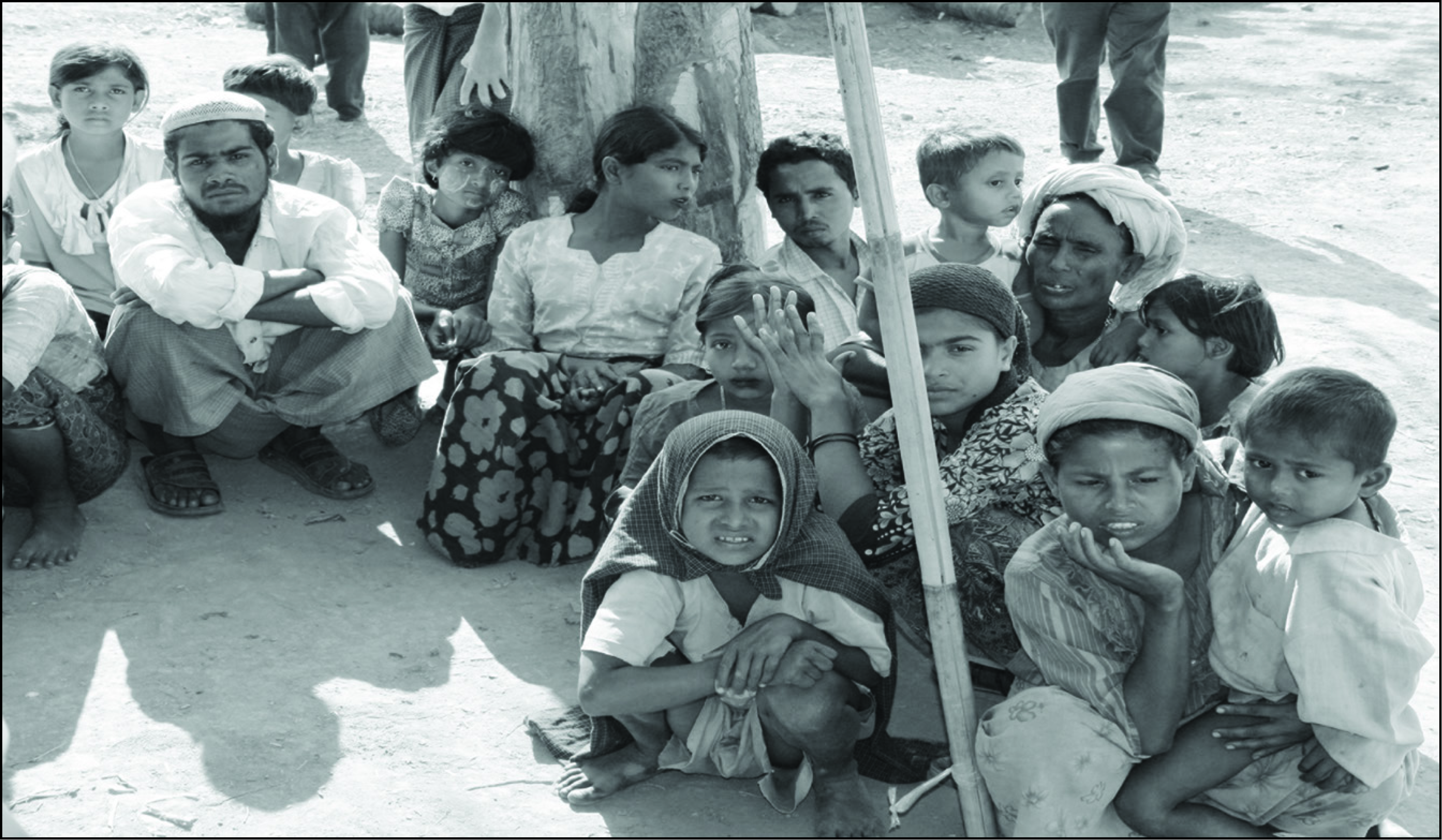
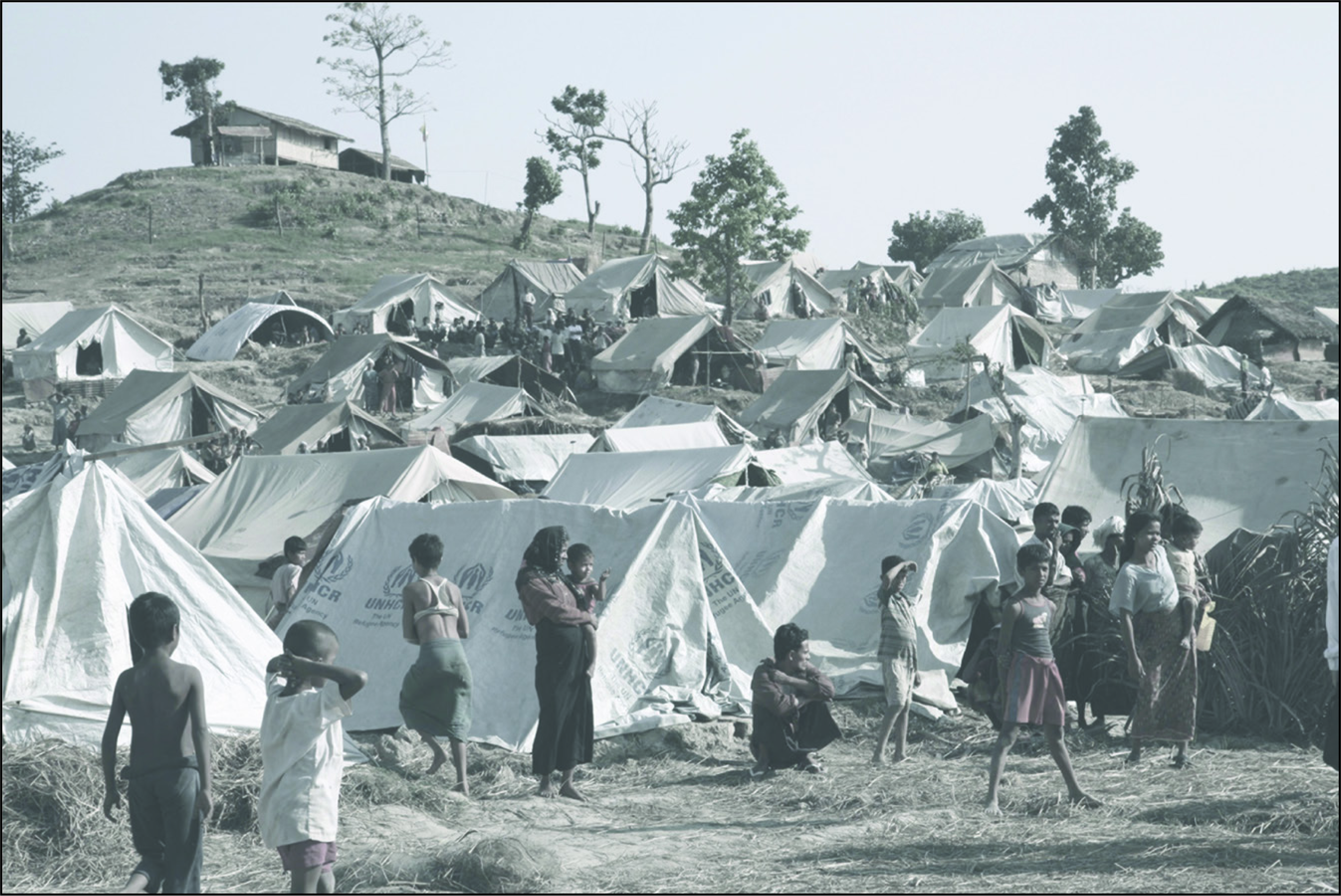
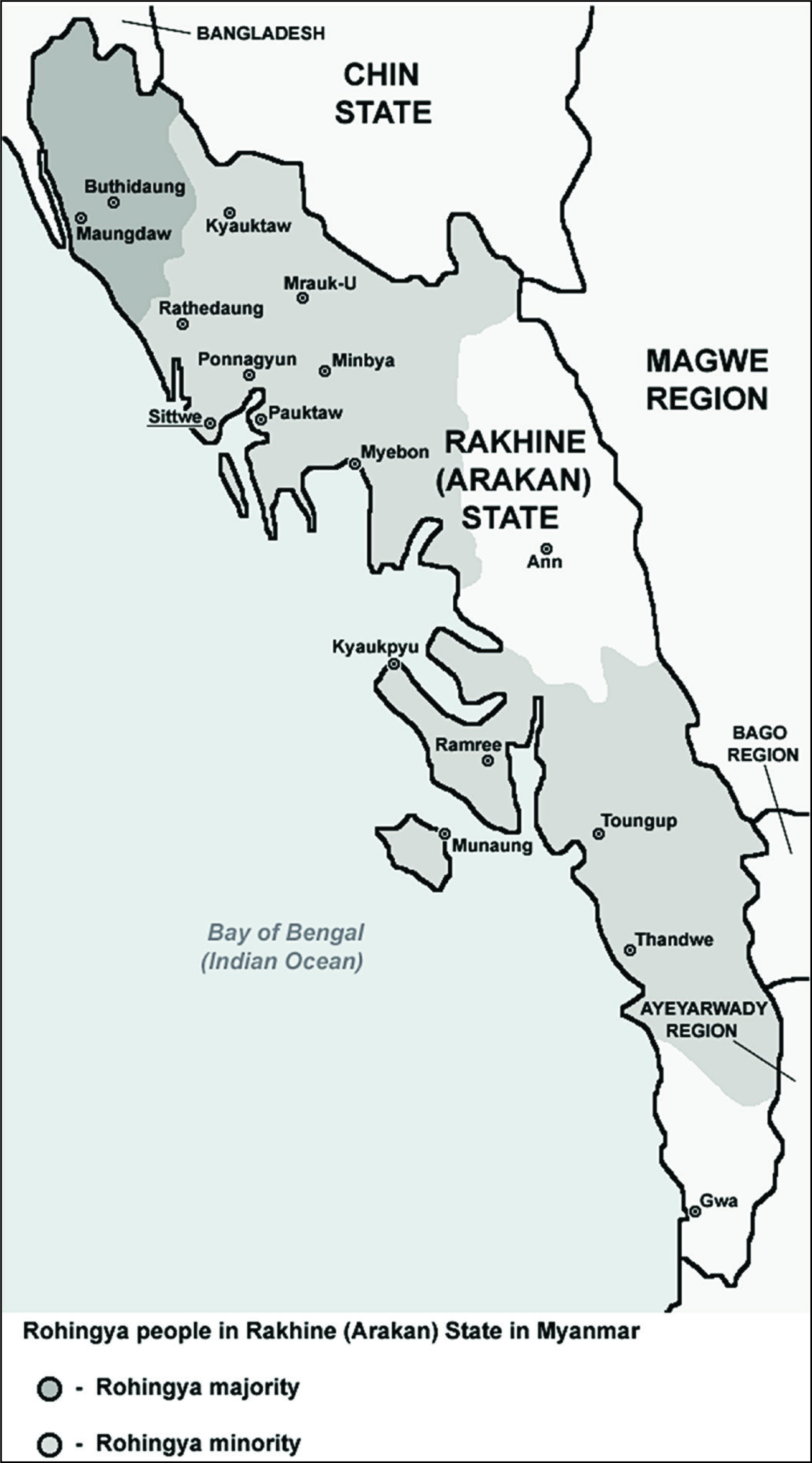
In 1962, the military-backed Ne Win regime eliminated the Rohingya’s right to national citizenship, which left them officially as illegal foreign inhabitants of Myanmar (Alam, 2019; Jones, 2017). Since then, repeated military crackdowns have forced millions of Rohingya to flee neighboring countries, including Bangladesh, India, Thailand and Malaysia (Ullah, 2016). Although the international community is aware of the systematic brutality, exclusion, and humiliation they have suffered it has failed to prevent the ongoing human rights violations committed against the Rohingya. (Ullah, 2011). This situation has been described as state-supported violence, a slow-burning genocide and ethnic cleansing (Beyrer & Kamarulzaman, 2017; Zarni & Cowley, 2014). The Office of the United Nations High Commissioner for Human Rights (OHCHR, 2017, p. 1) insists there is clear evidence that attacks on the Rohingya have been executed in a well-organized, coordinated, and systematic manner and serious human rights violations have been committed against them. The UN Human Rights Council’s fact-finding mission found the attacks against them have been “widespread and systematic” (UNHRC, 2018, p. 3). The UN High Commissioner for Human Rights has described the situation as a “textbook example of ethnic cleansing”, but the Myanmar government and military deny the scale, scope, and nature of their suffering (Crouch, 2021).
While previous violent episodes were horrific, the 2017 episode that began with a “clearance operation” undertaken by Myanmar security forces has been the worst. As a result, nearly one million Rohingya (860,494 as of October 15, 2020) have fled from Myanmar to save their lives and are now living in refugee camps in Bangladesh (UNHCR, 2020), which has the largest refugee settlement in the world (see Figure 4) (ActionAid, 2021). This situation is now in its fifth year and there is no sign of a sustainable solution to this crisis, much to the growing distress of the Government of Bangladesh (GoB).
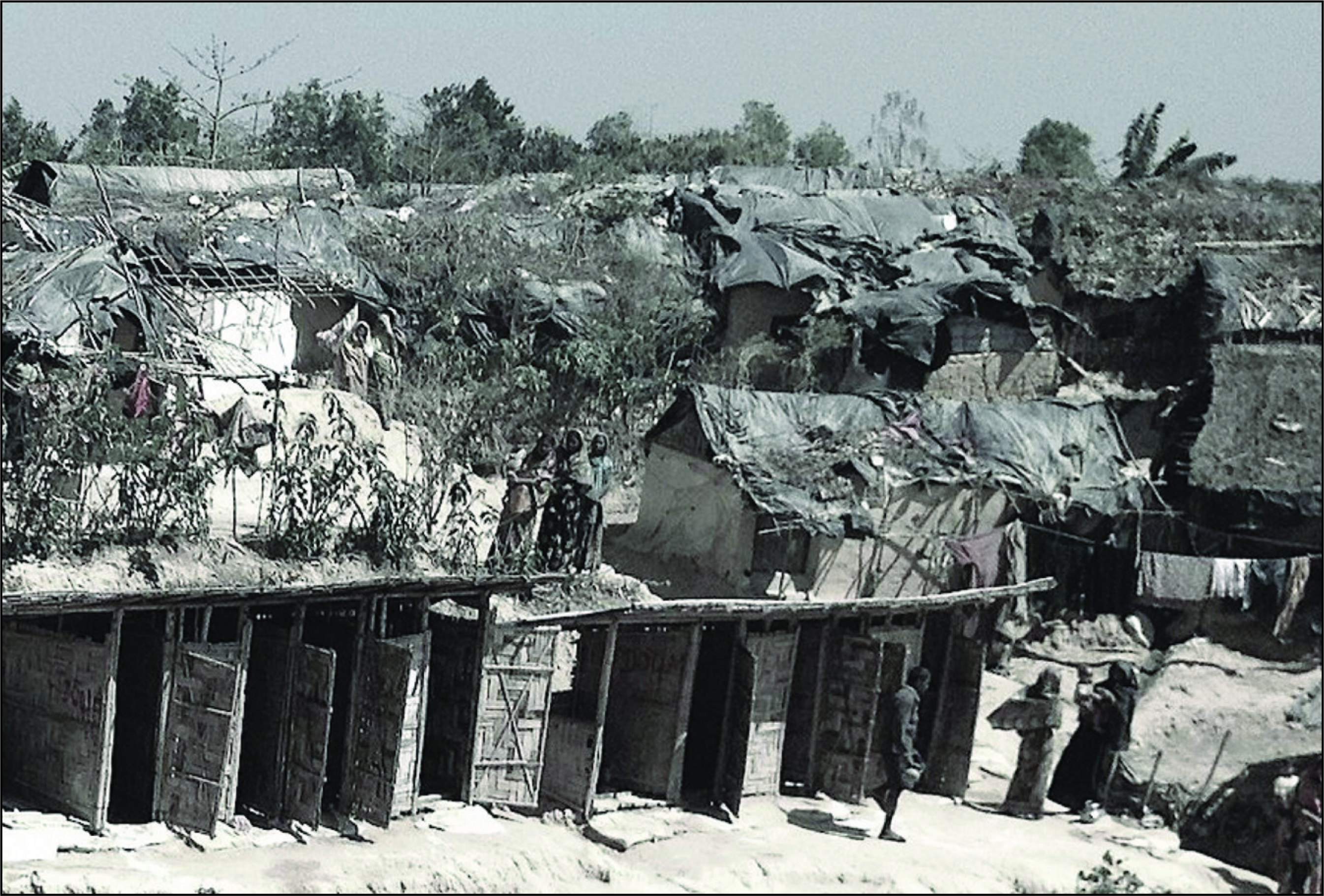
The main stakeholders—the Rohingya, the governments of Myanmar and Bangladesh, the United Nations, and the governments and NGOs of the various global and regional powers who are involved—have responded differently to this crisis. The government of Myanmar’s attitude makes it uncertain they will take the Rohingya refugees back (Kipgen, 2020), and many Rohingya refugees are scared to return to Myanmar (Gorlick, 2019). The GoB’s ongoing efforts to relocate Rohingya to a remote island called Bhasan Char have added further tension to the situation.
There is a wide-range of studies on the plight of the Rohingya (Ibrahim, 2018; MSF, 2018; OHCHR, 2017), the crimes and human rights violations committed against them in Myanmar (Ibrahim, 2018; Jones, 2017; UNHRC, 2018), and their need for support (ISCG, 2018; Holloway & Fan, 2018; Mahony, 2018). However, there is a clear gap in the current scholarship about the relationships between the aid donors and the main host country Bangladesh, which has the most Rohingya refugees. It is not clear who owns/controls the process of providing support to the Rohingya and how support matches up with the needs of the beneficiaries of this support—the Rohingya.
This article aims to help fill this gap in the existing body of knowledge and it is hoped that the observations reported in this article will offer helpful insights into how to improve future aid policies so that they effectively support the needs of the Rohingya. Providing effective aid to the vulnerable Rohingya is of paramount importance, particularly at a time when many of the donor countries are faced with reducing their aid budgets (Carson et al., 2021; Kobayashi et al., 2021; Rosser, 2020). It is also imperative that donor support be aligned with the needs, concerns and hopes of the host country—Bangladesh.
Development Policy Ownership and Aid Effectiveness
At the Second High Level Forum on Aid Effectiveness in 2005, it was recognized that international aid could, and should, be producing better impacts. Based on the experience of existing practices the forum aimed to establish what works and what does not work within aid practices. In an endeavor to make aid more effective the forum came up with five key recommendations, known as Paris Declaration on aid effectiveness. Those are: ownership, alignment, harmonization, managing for results, and mutual accountability (OECD, 2021). The dialogue continued in the third and fourth High Level Forum on Aid Effectiveness respectively known as Accra Agenda for Action (AAA), and Busan Partnership for Effective Development Co-operation.
Observations and recommendations of these forums reaffirm the commitment to the Paris Declaration and call for greater partnership between different parties working on aid and development. According to OCED (2005), the Paris Declaration is a practical, action-oriented roadmap to improve the quality of aid and its impact on development 1 . In 2008, the Accra Agenda for Action was designed to strengthen and deepen implementation of the Paris Declaration and took stock of progress in setting the agenda for accelerated advancement towards the Paris targets 3 (OECD, 2021). In 2011, the Busan Partnership for Effective Development Co-operation drew a similar approach to AAA towards aid effectiveness and improved partnership among the development partners 4 .
Whilst the aid effectiveness agenda in all these high level forums revolve around issues such as ownership, harmonization, alignment, results, inclusive development partnership, transparency and mutual accountability—ownership has been a common theme for the Paris Declaration (2005); Accra Agenda for Action (2008), and Busan Partnership for Effective Development Co-operation (2011). This article in evaluating the donor conference on supporting the Rohingya through the aid effectiveness lens also focus on the ownership of development agenda 2 . As can be seen, ownership has been identified as the key element of aid effectiveness where developing countries exercise effective leadership over their development policies, and strategies and coordinate development actions with the belief that partnerships for development can only succeed if development activities are led by developing countries and implementing approaches are tailored to country specific situations and needs (OECD, 2005, p. 5, 2011, p. 3). In this process, partner countries commit to exercise leadership of developing/aid-recipient countries in developing and implementing development strategies through broad consultative processes with various stakeholders and donors commit to respect developing countries’ leadership and help strengthen their capacity to exercise it (OECD, 2005, p. 5).
While ownership of development policies as outlined in the aid effectiveness agenda above sounds grand, the notion in the academic literature however receives a fair amount of skepticism. To illustrate, Buiter (2007) suggests that the term ownership of development policies has been used and abused in so many ways to gloss over uncomfortable realities. This was done mainly to create a pleasant buzz to distract the uninformed and unwary. Morten Jerve (2002) emphasizes that ownership of development is by no means straightforward. The term may be useful in publicly explaining the relationships as well as terms and conditions of business amongst the institutional partners in the aid relationship, such as the donor agency and the recipient organization, more specifically, the client governments. However, the relationships of aid are based on global power and various other interests (Eyben, 2006; Kaymusugulwa & Hilhorst, 2015).
Hence, at worst, ownership of development policy within extant aid practices is just a pipe dream foisted by the most powerful party. At best, this is a legitimating effort where the aid recipients have to publicly announce their endorsement as pre-conditions to obtain aid. Why does legitimacy matter though? Hurd (1999) points out that legitimacy is a very useful form of social control—one that is often less costly but more effective than coercion and more widely applicable than self-interest. Certain forms of legitimacy are more self-reflexive about their own conventionality than others. Legitimacy through the approval of aid recipient countries effectively depoliticizes the top-down nature of development. In other words, the promises (or rhetoric) of development ownership by the poor aid recipient countries offer the donor something to cover the hierarchical nature of development (Kamruzzaman, 2009, 2014). The concept of ownership suggests that for a development policy to work, it must be perceived as legitimate by those on the ground, who are responsible for implementing it. Ownership is, thus, not just about legitimacy, but about a particular kind of political legitimacy (Best, 2007) that exceeds the narrow understanding of the results made of aid money.
Coming back to the policy ownership and aid relationships, a critical question in this regard is to what extent the donors are willing to give up their ownership. There is a general perception that existing practices of international aid and development are mainly donor-driven rather than country-driven. Edgren (2003) found that donors have been ganging up together to exert greater power over recipient countries. From her own experiences as a head of a donor mission in Bolivia, Eyben (2007) reveals that donors used to meet behind closed doors to settle what was going to be agreed before attending official coordination meetings with their clients, the aid receiving countries. She explains that ownership has thus become a new orthodoxy that reinforces, on the grounds of efficiency, the tendency for donor bureaucracies to talk only with their counterparts in the recipient government. For Arensman et al. (2017), apparently innocuous emphasis on local ownership itself remains problematic with significant debate as to whether ownership is another condition of aid where, broadly speaking, many aid conditions can be included to fulfil the donors’ institutional requirements that otherwise have no meaningful bearing on aid effectiveness. In the contexts of Uganda and Ethiopia, Lie (2019) shows that discussions on local ownership of development allow donors to retain control where the donors frame the conditions for partnership under which recipient countries must operate.
The Views of the Intended Beneficiaries and the Aid Recipient Country
This section offers a brief account of the conference proceedings followed by the views of the two most important stakeholders (namely the intended beneficiaries and the aid recipient country—the Rohingya and Bangladesh respectively). The views of the Rohingya and the Government of Bangladesh will be contrasted with the views of the co-hosts and other donor countries further below. This will advance understanding of the extent to which the 2020 Rohingya donor conference was aligned/consistent with an aid effectiveness agenda and what kind of policy ownership prevails in this case.
The 2020 Rohingya aid conference took place virtually and ran over three hours (the video available on the conference webpage is around 182 minutes). This virtual conference was organized by the Secretary of State of the United States of America, the High Representative for Foreign Affairs and Security Policy and Vice-President of the European Commission, the Minister of State for South Asia and the Commonwealth of the United Kingdom of Great Britain and Northern Ireland and the United Nations High Commissioner for Refugees (UNHCR). In addition to these co-hosts, the conference was attended by the representatives of the governments of Australia, Bangladesh, Belgium, Canada, Denmark, Estonia, Finland, France, Germany, Indonesia, Ireland, Italy, Japan, Republic of Korea, Kuwait, Luxembourg, Malaysia, Malta, Netherlands, Norway, Philippines, Romania, Switzerland, Sweden, Thailand, Turkey, United Arab Emirates, and Vietnam. Written statements of the majority participants are available on the conference webpage and those are used in providing the narratives and analysis in this article 5 . However, statements from several countries are not available on the conference webpage (such as Denmark, Indonesia, Ireland, Italy, Japan 6 , Republic of Korea, Kuwait, Romania, Sweden, Turkey, and United Arab Emirates). Transcriptions of those statements are produced manually from the available conference video and used in this article. In all cases, only the designations of the speakers, as appropriate, have been used in offering their views.
The conference begun with the opening remarks from the Acting Assistant Secretary for the Bureau of Population, Refugees and Migration at the United States Department of State. She sets the tone of the conference by saying
we come together to underscore the international communities’ continued commitment to the humanitarian response and to comprehensive and sustainable solution for Rohingya refugees and host community members in Bangladesh and throughout the region as well as for those stateless and internally displaced in Rakhine state Myanmar.
The opening remarks were followed by the formal speeches of the co-hosts. More specifically in the following order: Deputy Secretary of State of the United States; the Minister of State for South Asia and the Commonwealth, United Kingdom of Great Britain and Northern Ireland; Commissioner for Crisis Management of the European Union; and United Nations High Commissioner for Refugees. After the statements from the co-hosts, there were opportunities for other participants to offer their views. Before allowing access to the representatives of other countries and organizations, the acting Assistant Secretary for the Bureau of Population, Refugees and Migration at the United States Department of State informs the conference that the conference will now “hear from the most important yet least heard voices—those of the Rohingya refugees themselves”. She further insists that the conference participants:
…must remember that each Rohingya like each of us, they have hopes and dreams, memories, fears, family and friends. It is imperative that we listen to their perspectives amplify them and respond to them in a way that recognizes their fundamental human dignity and desire to determine their own future.
In bringing forward the voices of the Rohingya the conference then plays a short video that was produced by Omar’s Film school
7
/Rohingya refugees in Cox’s Bazar Bangladesh. The video includes views from three Rohingya living in Cox’s Bazar (one of the co-founders of Omar’s Film School, and two community volunteers [one female and one male]), and one interpreter cum app developer living in Kuala Lumpur, Malaysia. The video starts with the gratitude from the co-founder of the film school saying:
I am very happy to introduce the video of my fellow Rohingya to you today. I am happy that you are listening to our thoughts and experiences as you begin this important conference. We may be living in different countries but we all share the same dream for our people to live a life of dignity and enjoy our human rights
The video asks two main questions to the Rohingya refugees. First, “what is your life like as a Rohingya refugee in Cox’s Bazar, Bangladesh?” and second: “what are your hopes for your future and that of the Rohingya people?” The female community volunteer responded to the first question by insisting
8
:
…we have received huge support and assistance from donors, UNHCR and WFP. We have received rice, oil and grains from WFP as well as soaps from Oxfam, etc. We have seen all these organizations helping us. We never knew about women’s rights in Burma. Here in Bangladesh, we have received many trainings. We have been able to work here [as volunteers] whereas we were not able to work in Burma. Another very important need in the camp is children’s education. We need proper schooling; it is really the most important. Without education, we cannot understand each other’s difficulties and suffering
In response to the second question, the interpreter and app developer in Kuala Lumpur, Malaysia insists
my hope for the future is to become a citizen of Myanmar. Actually, this is my only hope. But for now we are living in Malaysia. We just want to restore our citizenship. Also, we need education and some financial assistance and educational assistance for the Rohingya
The female community volunteer in Cox’s Bazar also heard adding her views to the second question as follows (as per the subtitle provided in the video): “each day feels very long to us…one year feels like 10 years…we want to go back home…how can we go back to our village, our homeland”. She further insists that “we hear the same thing from the community every time we visit and talk to them…everyone is hoping to go home and waiting to see how that will be done and who will do it”. The video ends with the claim that over a million Rohingya were forced to flee from their country and need support from the international community.
In critically looking at the donor conference on the Rohingya through the lens of the aid effectiveness agenda, and more specifically the ownership of the aid policies although very brief
9
the video provides a somewhat useful source for discerning the views of the “intended beneficiaries”, the Rohingya refugees. The aid effectiveness agenda also put significant importance on the aid recipient country with regards to ownership of development policies. As Bangladesh host around a million of Rohingya refugees (largest number of the Rohingya and almost 90% of displaced Rohingya who have fled Myanmar and registered under the UNHCR recording system—UNHCR 2020) it is important that Bangladesh’s views presented in this conference demand special attention before we contrast the views of the intended beneficiaries and aid recipient country with the views of the co-hosts and other donor countries in the next section of this article. Bangladesh’s State Minister for the Ministry of Foreign Affairs (MoFA) represented the country in this conference. A brief summary below highlights the points covered in his statement (emphasis added by the author)
10
:
Bangladesh is not in a position to continue to take this burden anymore. The Rohingya must return to their country of origin as soon as possible. The Rohingya themselves want to return to their homeland at the earliest opportunity. International community should sincerely work to create that opportunity for their return. Under the bilateral agreement signed between Bangladesh and Myanmar, the repatriation was to commence in January 2018 and Myanmar committed to create conducive environment for the repatriation of the Rohingya. Despite our sincere efforts, the commencement of repatriation still remains highly uncertain due to a lack of decisive action on the part of Myanmar. International community has a responsibility to work with Myanmar to resolve the crisis and relieve Bangladesh from the burden that Myanmar has created. While we appreciate the humanitarian assistance of the international community, we also call upon them to engage with Myanmar in a meaningful way to ensure the creation of a conducive environment in the Rakhine. Myanmar has a long history of persecuting and driving away its own people specially Rohingya from the country in the pretext of security operations. This must end and be rejected. Business as usual approach of the international community in relation to Myanmar is only emboldening Myanmar to maintain the status quo and inflict further atrocities on its minorities. Unfortunately, the appeasement policy that is being pursued globally vis-a-vis Myanmar through increased bilateral trade, investment and development assistance only encourages Myanmar to flout the decisions of international mechanisms and continue mass atrocities and repressive onslaughts on its very own population. This is very frustrating that in the name of appeasement to Myanmar, unreasonable pressures are being mounted on Bangladesh threatening its sovereignty and security.
What can be gathered from the views of the Rohingya and the Government of Bangladesh (GoB) is that there is a consensus for Rohingya to return home. There remain serious concerns that the condition in Rohingya’ place of origin, Myanmar was not conducive at the time of the conference. Both the Rohingya and the GoB were “urging” the donor and international community to take actions that will create and ensure a safe place and environment for dignified return of the Rohingya. In addition, the GoB statement has made clear that Bangladesh sees the issue as a major “burden” and seeks a resolution “as soon as possible”. The statement also mentions that despite the best efforts from their side meaningful progress did not occur due to “a lack of decisive action on the part of Myanmar”. While suggesting that the international community has a responsibility “to work with Myanmar to resolve the crisis and relieve Bangladesh from the burden that Myanmar has created”, the GoB statement went further suggesting that the international community’s business as usual approach through increased trade and investment is counter-productive against bringing justice to the historically persecuted Rohingya and enabling them to return home.
Analysis of the Donors’ Perspectives
In contrast to the above, this section explores the views of the co-hosts and other donor country representatives. In the context of ownership of development policies within the aid effectiveness agenda, the GoB made its intention clear in this conference, namely a quick resolution of the crisis, which they see as a burden unfairly imposed on Bangladesh. Based on the statements from most of the other participants a “quick resolution” of this crisis was not the objective of this “conference”. Nor was it the intention of the donor countries to use the event to “take decisive action”, to stop their “business as usual approach” with Myanmar or to “relieve Bangladesh from the burden that Myanmar has created”.
The remark from the Assistant Secretary for the Bureau of Population, Refugees and Migration in the United States Department of State about: “The international community’s continued commitment to a comprehensive and sustainable solution for the Rohingya refugees and host community in Bangladesh” appears to have been gobbledygook. However, the issue of return of the Rohingya refugees was mentioned by the majority of the donor countries, albeit many countries were more or less robotic in making this statement. In analyzing the conference to determine whether it was coherent in terms of the ownership of aid effectiveness and if the objectives reflected the views of the intended beneficiaries the rest of this section offers an analysis of the narratives presented by the donor countries about the return of the Rohingya refugees to their place of origin in Myanmar.
Except for the UNHCR, the other co-hosts of the conference seem to have been paying lip-service to the issue of the return or repatriation (used interchangeably by different countries attending the conference) of Rohingya refugees to Myanmar. To illustrate, the statements from the three main co-hosts such as the United States, the United Kingdom, and the European Union sounded like routine standard statements in this regard. While the issue was mentioned in their statements there were not enough teeth in those words. As can be seen in the statements below, they were tedious and lacked compassion:
The United States government’s efforts with all parties are to create conditions conducive to the voluntary, safe, dignified, and sustainable return of Rohingya to their homes in Myanmar. We recognize that the primary responsibility for creating these conditions rests with Myanmar and we will demand this of the government…Myanmar must grant unhindered and sustained humanitarian access to affected communities…more must be done to address the root causes of conflict in the Rakhine State—decades of violence have benefited no one (Deputy Secretary of State of the US) Keeping the Rohingya crisis on the international agenda remains absolutely vital. So too does finding a sustainable solution that enables the Rohingya community to return home safely, with dignity and voluntarily…we must strive to expedite the necessary conditions that will let the Rohingya return to Myanmar but they must do so voluntarily, with safety and security and with dignity (Minister of State for South Asia and the Commonwealth, the UK). Only a just and comprehensive solution, based on the recommendations of the Rakhine Advisory Commission (RAC), can address the Rakhine State crisis and end the suffering of the Rohingya people…we must seek a peaceful resolution, which facilitates the safe, voluntary, and dignified return of Rohingya refugees to their places of origin (Commissioner for Crisis Management, the European Union)
The above statements are not reflective of the standpoints of the GoB (Bangladesh) and the Rohingya themselves. However, Bangladesh and the Rohingya can take heart from the statements delivered by the representative of the UNHCR, another co-host of the conference. The following quotation at length includes some specific issues such as freedom of movement, citizenship, and inclusion of the Rohingya in the process of returning them to their homes:
The key solution remains return. Return home, of course. Voluntary, dignified and safe return, which is what refugees want as well…we make another plea to the Government of Myanmar to accelerate measures to create confidence in the process of return…we need freedom of movement for the Rohingya in Rakhine. We need clear pathways to citizenship to be established and in general clear progress on the implementation of the Rakhine Advisory Commission recommendations. All of this needs to be communicated more regularly and clearly to refugees so that they understand, they ask questions, and they eventually can make an informed decision regarding all these issues (the UN High Commissioner for Refugees, emphasis added to highlight the difference with other co-hosts)
Like the co-hosting countries, there has been a wider reluctance, nonchalance, and at times silence from some countries about the return/repatriation of the Rohingya refugees to Myanmar. Watching the event live on the video available on the conference webpage, one would be somewhat confused and mystified whether this was a conference on the Rohingya crisis or this was merely a fundraising event under the guise of a conference.
After watching the conference live and then viewing it back and forth several times (especially for transcribing the statements that were not available on the conference website), it was clear the event was a missed opportunity where so many countries came forward to participate but just read out pre-prepared statements and pledged some aid money instead of engaging in any meaningful dialogue about the crisis itself, let alone the return/repatriation of the victimized Rohingya as the most effective solution to this crisis. Representatives of most of the donor countries were allowed 2–3 minutes where they read out their statements in a tedious manner and pledged an amount of aid on behalf of their countries. The fact is not only were the donors not given space for meaningful dialogue and discussion but they also did not seem very keen on discussing the solution of the crisis or return of the Rohingya. It felt like the conference was an opportunity to absolve some sense of guilt through pledging some aid money or to show the world that they “care” for the Rohingya or both. Most countries took a very similar stance to that of the main co-hosts—the USA, UK, and EU. Most of the countries came up with remarkably similar suggestions that the ideal solution of the crisis would mean the safe, voluntary and dignified return of the Rohingya to Myanmar. But most failed to support or back up the claims/demands of Bangladesh, and some countries (e.g., Vietnam, Finland, Kuwait and Luxemburg) did not even acknowledge this ideal approach to resolving this refugee crisis (see Table 1).
Participating donor countries’ views on return of Rohingya refugees to Myanmar
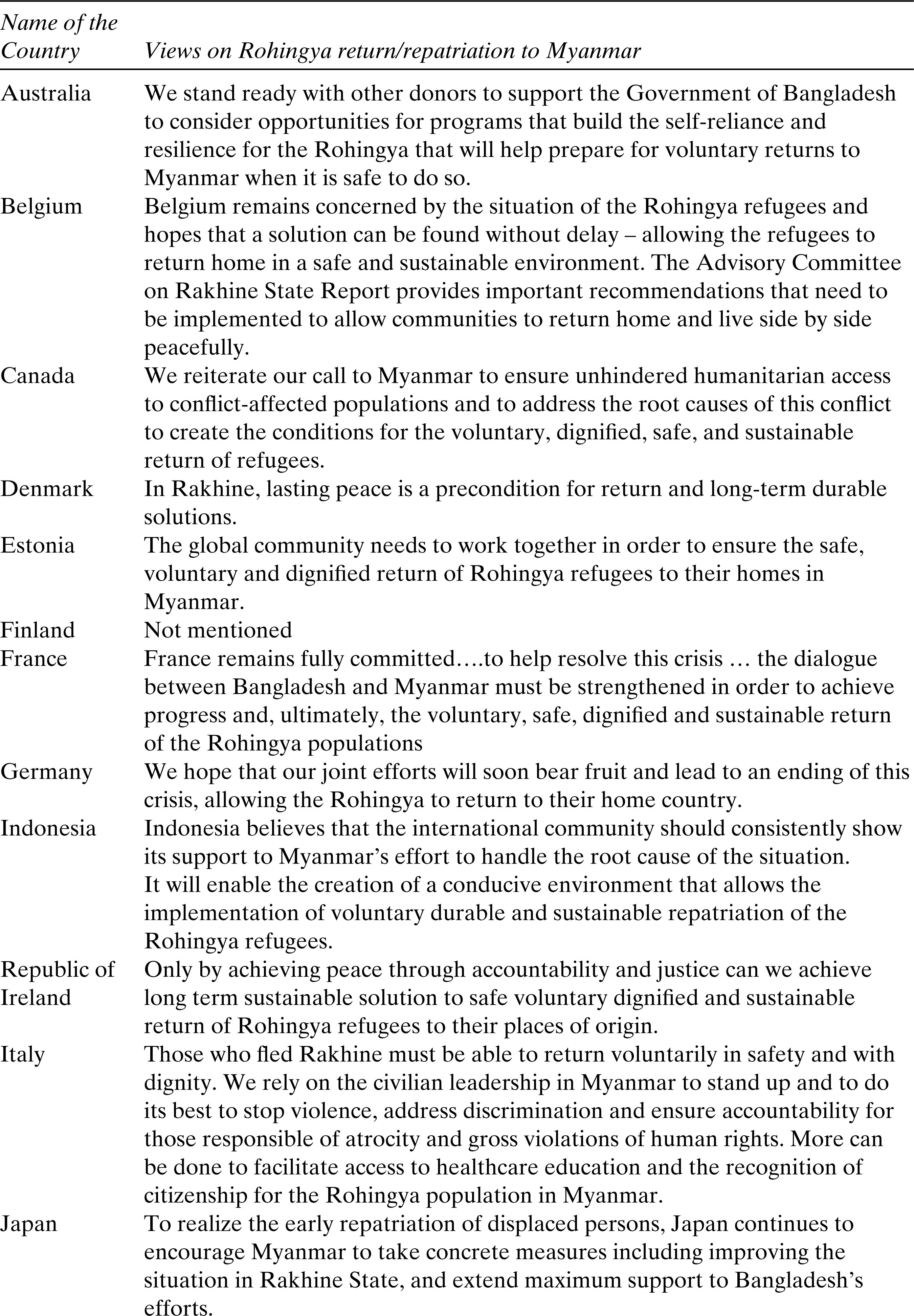
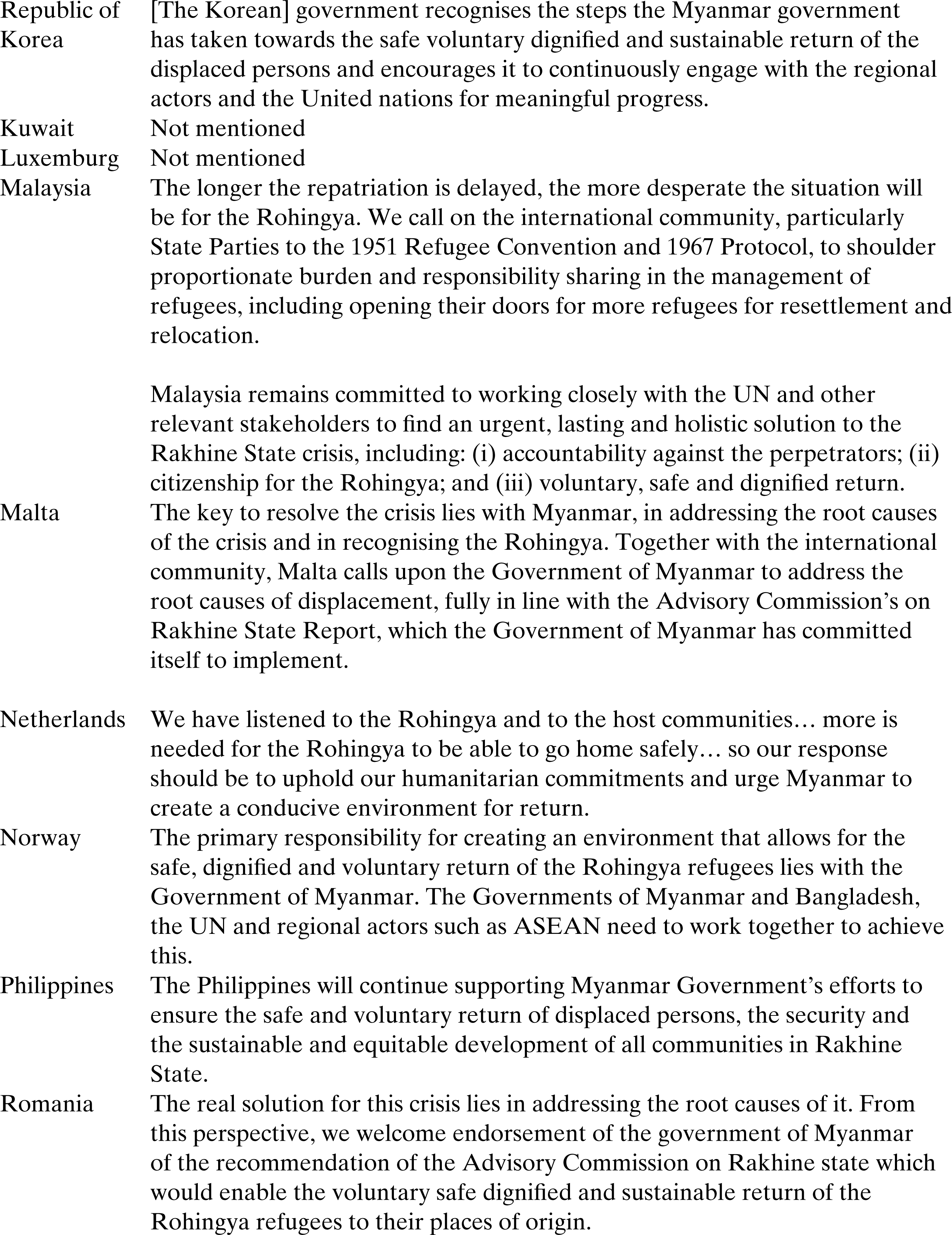
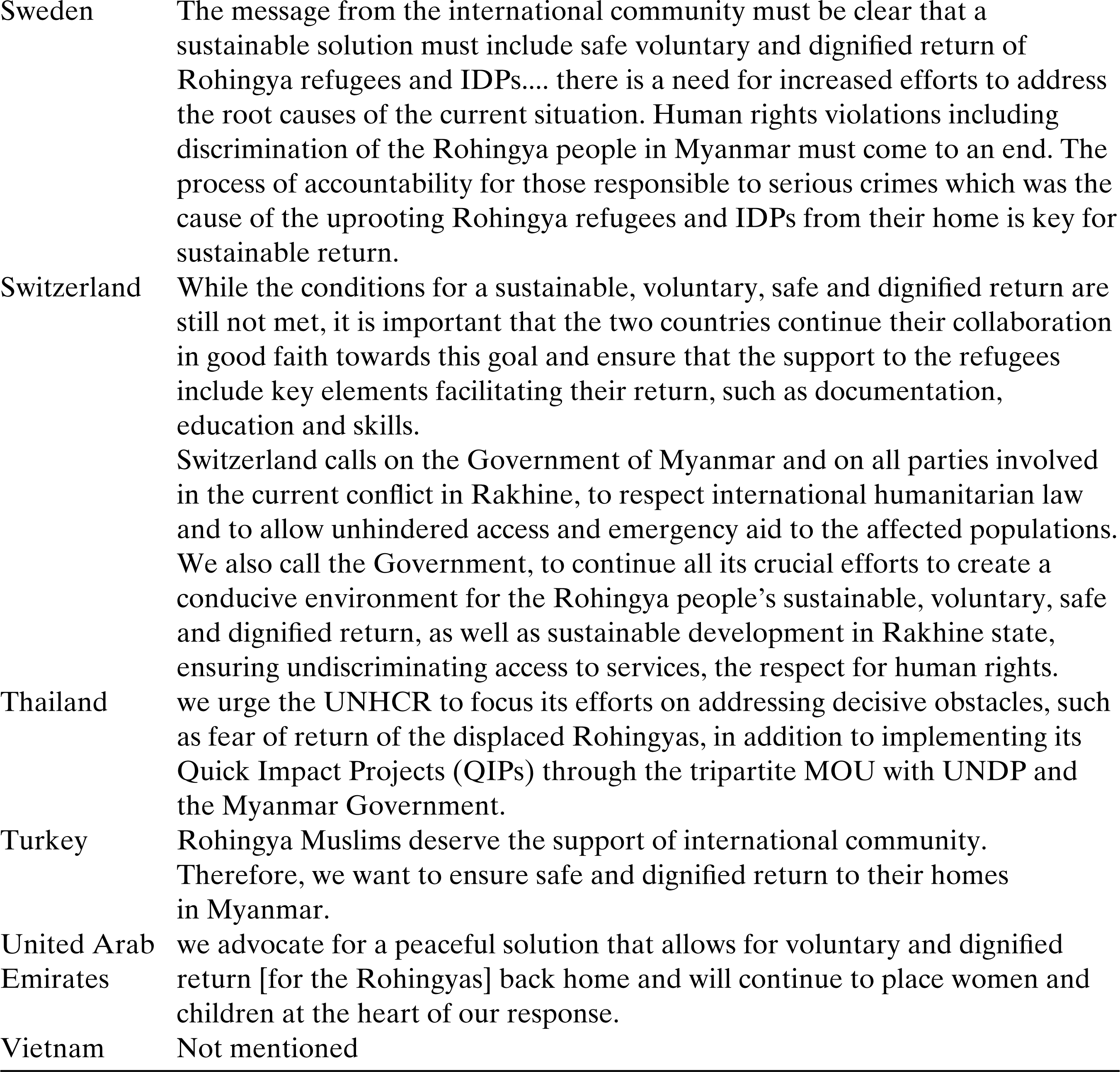
As stated above, the conference did not offer sufficient space for discussing meaningful solutions to the crisis and the aid-pledging countries were not interested in that regard. While this resulted in parroting the rhetoric of the “voluntary and dignified return of the Rohingya when it is safe to do so”, some countries (such as Indonesia, Malta, Canada, Sweden, Romania) did state that this solution requires looking at the “root causes” of the crisis. Noticeable among these countries apart from Canada, and to some extent Sweden, these countries are not conventionally treated as “donor countries” in the international development landscape. Nevertheless, in suggesting to look at the root causes of the Rohingya crisis for a sustainable solution, these countries managed to highlight the issues of past and ongoing violent conflicts in Rakhine state, recognition of Rohingya as citizens of Myanmar, human rights violations against the Rohingya people in Myanmar and accountability for those responsible for committing serious crimes and disregard of international law. These countries were also able to mention that the onus is on Myanmar for creating a conducive environment for the return of the Rohingya refugees.
A couple of other points are worth noting that were raised by other mainly non-conventional donor countries. For example, Malaysia insisted that the members of the international community should shoulder their proportionate burden and responsibility in managing the Rohingya crisis by opening the doors for Rohingya resettlement and relocation. Switzerland and Italy asked Myanmar to grant unhindered access to the Rakhine state to continue aid support including healthcare and education (this was also mentioned in the statement of the US government). While the majority of the countries suggested that it is Myanmar’s responsibility to create a supportive environment for safe and dignified return of the Rohingya refugees, some countries were somewhat neutral whereas a couple of countries such as the Philippines and the Republic of Korea explicitly indicated their gratification for the “measures” that have been taken by Myanmar.
Conclusion
The Bangladesh representatives clearly stated in the conference that the international community should relieve Bangladesh from the burden of hosting over a million Rohingya as soon as possible. There was a complete disregard in the conference regarding Bangladesh’s pleas such as “taking decisive action” to pressure Myanmar to create a safe and conducive environment for the dignified return of the Rohingya. The Bangladesh representatives were unambivalent in opposing a business-as-usual approach on the part of the international community with regard to continuing trade and investments in Myanmar since this does not help to resolve the Rohingya crisis. The lack of interest in Bangladesh’s concerns clearly demonstrates who controls the agenda for providing international support and aid for the Rohingya. While the conference successfully managed to fundraise around $600 million in international aid for the Rohingya in a rather flamboyant style, it set an example of disregarding the concerns of Bangladesh—the aid recipient country.
Bangladesh’s position on the Rohingya crisis is known by the international donor community. The statements of Bangladesh’s representative in the conference echoed the views of two GoB Ministers of Foreign Affairs and the Prime Minister. The former Bangladeshi foreign minister, Abul Hassan Mahmood Ali visited Myanmar in November 2017 and urged the repatriation of Rohingya refugees in a speedy manner, and he signed an initial agreement with Myanmar’s then de facto leader, Aung San Suu Kyi (Holmes, 2017; The Independent, 2017). The Minister for Foreign Affairs has also expressed Bangladesh’s intention to arrange a quick repatriation of the Rohingya in various international meetings, including his meeting with the Indian Prime Minister (Basu, 2019), and Australian High Commissioner to Bangladesh (The Daily Star, 2020). The Prime Minister of Bangladesh made her position clear during her meetings with other world leaders, diplomats, and UN officials in her speeches at the UN General Assembly. In September 2018 she said, “we are disappointed that despite our earnest efforts, we have not been able to begin Rohingya repatriation in a permanent and sustainable manner” (UN News, 2018). Regrettably, not a single Rohingya has been repatriated, and the Prime Minister has repeatedly said: “The problem was created by Myanmar, and its solution must be found in Myanmar. I request the international community to play a more effective role for a solution to the crisis” (UN News, 2020).
Most Rohingya refugees desire, dream and hope to go home. The 2020 conference (including the co-hosts and the majority of the donor country representatives) either failed to accept this or have not offered full support for this response. Some have called on Myanmar to stop human rights violations in Rakhine, hold those accountable who have committed crimes against humanity there, and pledged to share the burden in managing the crisis (see Table 1). For the most part, they are not the big donors, and do not wield great power in global or regional politics.
As this article has revealed, the 2020 donor conference on sustaining support for the Rohingya was predominately a donor driven event and largely ignored the hopes, desires and expectations of the aid recipient country (Bangladesh) and the intended beneficiaries (the Rohingya). From the title of the conference to the statements and actions of almost all the participants (except the Rohingya and Bangladesh) it is quite clear that this conference was pretty much a fundraising event and neither aid effectiveness nor a definitive resolution of the refugee crisis was in the agenda of the organizers and most of the participants. They failed to heed what the Bangladesh representative said at the conference:
Unhindered humanitarian assistance is undoubtedly important for the sustenance of the displaced people. However, helping the Rohingya return to their home in Myanmar would be the real and most valuable service to this persecuted community.
Like many other international aid projects, it is the poor and vulnerable, in this context the Rohingya, who will continue to pay the price of ineffective international aid (Kamruzzaman, 2019). Meanwhile, Bangladesh is continuing to relocate the Rohingya refugees to a remote island called Bhasan Char, despite serious objections from the major donors and most of the international community. Conceivably, this could be a strategic move on the part of the GoB to pressure the international community into recognizing Bangladesh’s concerns about how best to resolve the Rohingya crisis (Ejaz, 2021).
Footnotes
Declaration of Conflicting Interests
The author declared no potential conflicts of interest with respect to the research, authorship, and/or publication of this article.
Funding
The author received no financial support for the research, authorship, and/or publication of this article.