



Abstract
Background
Adolescents’ gender attitudes shape not only their personal identities and opportunities but also the wider social systems they enter as future workers, citizens, and decision-makers. Despite increasing academic attention, no comprehensive synthesis has examined how these attitudes have been studied quantitatively over the past two decades.
Objective
This review examines how adolescent gender attitudes have been studied using quantitative methods, focusing on the geographical scope, research aims, analytical strategies, and measurement practices.
Methods
A systematic review of 134 empirical studies published between 2000 and 2024 was conducted, based on searches in Web of Science and Scopus.
Results
Findings indicate a substantial increase in publication output, alongside pronounced regional imbalances in the English language quantitative literature. Studies are predominantly drawn from Asia, North America, and Europe, with fewer contributions from Global South contexts, where relevant research may be published in other languages or regional outlets. In addition, the field relies heavily on established measurement instruments and shows limited theoretical engagement, while school and intersectional contexts remain underexamined, limiting the ability of existing evidence to inform policy and systemic change.
Conclusions
Future research requires updated and context-sensitive measures, stronger theoretical grounding, and methodological innovation. Such advances are essential to support inclusive education, sustainable development, and effective management of gender equity in social systems.
Introduction
Despite the progress made worldwide to tackle gender inequality, gender disparities remain embedded in multiple societal dimensions1,2: wages,3,4 labour participation, higher education enrolment and completion, 5 domestic violence, 6 among others. These inequalities are not only matters of personal circumstance but also shape the functioning of wider human systems: they affect the distribution of opportunities, constrain social cohesion, and undermine sustainable development.
Previous research has suggested that traditional gender role attitudes are responsible for the persisting discrimination and gender inequality present in societies. 7 As indicated by West & Zimmerman (1987) and Kroska (2014), gender status and beliefs contribute to organisational policies and societal structures that perpetuate these inequalities.8,9 Notably, Brandt (2011) has shown that in contexts where there is a high level of sexism, there is also lower gender equality. 10 This suggests that gender attitudes extend beyond personal beliefs to become system-level resources or constraints that shape institutional practices and policy outcomes.
Attitudes toward gender equity refer to individuals’ dispositions regarding the positions men and women assume in society. 11 Drawing on Social Identity Theory from social psychology, we frame these attitudes not only as cognitive and evaluative judgments of these roles but also as part of normative and social dynamics based on social groups and shared identities.12,13 From a systems perspective, these attitudes operate through families, schools, peer groups, and media to influence long-term social and organisational outcomes.
Gender attitudes play an important role in shaping adolescents’ experiences and opportunities. It therefore becomes essential to understand how these attitudes have been studied, as the design of research directly influences what we know about them. Quantitative studies are widely used to analyse gender attitudes among adolescents, as they allow researchers to identify large-scale patterns, trends, and structural inequalities.14,15 However, the choice of research design, measurement tools, and analytical methods affects which aspects of gender attitudes are examined and whose experiences are captured or excluded. Understanding these approaches is necessary to critically assess existing evidence, recognise its limitations, and ensure that future research provides a more complete and nuanced understanding of gender attitudes.
Despite the breadth of research on gender attitudes among adolescents, prior reviews have either taken a broad methodological scope, encompassing both qualitative and quantitative studies, or focused on younger populations.16,17 As a result, there is a limited synthesis of how quantitative studies have specifically approached gender attitudes in adolescence, particularly in terms of research designs, measurement strategies, and the use of theory. Given the increasing reliance on quantitative data to inform education policy and programming, 18 it is essential to evaluate whether the existing body of research adequately captures the complexity of adolescent experiences and attitudes.
This review examines how quantitative research has approached the study of gender attitudes among adolescents over the past two decades. By mapping publication trends, geographical distribution, research objectives, theoretical frameworks, measurement strategies, and methodological choices, this review offers an updated account of the field’s evolution and identifies persistent blind spots. In addition to mapping the evidence base, the review identifies gaps that limit how research can inform education practice and broader social policy. In doing so, it contributes to discussions on how gender equity is conceptualised and measured within adolescent populations and calls for more theoretically engaged, contextually inclusive, and methodologically diverse research agendas.
Gender attitudes among adolescents
Adolescence is a crucial stage in human development, a phase during which young people become more capable of abstract thinking about social categories, such as gender, and start to develop a desire for peer acceptance.17,19 Therefore, it is a period during which young people define their gender norms and attitudes.17,20
Attitudes toward gender equity can significantly influence adolescents’ decisions and their self-definition during this period of identity formation. Previous research has suggested that reinforcing traditional gender stereotypes in adolescence results in attitudes that limit women’s career expectations, promote submissive roles, 17 and make men more likely to engage in risky behaviours. 21 Thus, gender norms and attitudes consolidated during this stage influence not only self-concept but also later educational and occupational choices.
It is critical to understand gender attitudes among adolescents because we can use this to inform education. Educational experiences are crucial for adolescents. 22 They experience family as a primary source of education and socialisation, where parents or caregivers communicate values, norms, opinions, and preferences. 23 Children, in particular, emulate and acknowledge individuals as pivotal in fulfilling their necessities, but this continues in adolescence.24,25 Additionally, families facilitate the intergenerational transmission of structural factors, such as class, race, and religion, which means the transmission of social identity and location within the social structure. 24
This transmission of social and demographic characteristics implies that family socialisation differs across society. Young people come from heterogeneous backgrounds where political norms and attitudes are not uniformly distributed, which means fewer opportunities to have, for instance, political discussions at home for those who have a lower socioeconomic background.25,26 Therefore, schools can provide opportunities to learn societal norms and desirable behaviours. 27 Some classroom practices, such as open discussions promoted by teachers, can be effective in promoting democratic and tolerant values. 28
The insight provided by previous research into understanding gender attitudes can help inform education about best practices in classrooms to enhance adherence to gender equality in societies where there seems to be a backlash. Sally Nuamah highlights the insufficient efforts by schools to provide equitable education for girls, often caused by discriminatory practices and the absence of safe learning environments. 29 Thus, understanding adolescents’ attitudes toward gender can help shape more inclusive educational approaches. Additionally, previous research can provide insights into the intergenerational transmission of these attitudes within families and explore how structural social factors, such as gender and race, influence them.
Understanding gender attitudes among adolescents: Qualitative and quantitative approaches
Quantitative and qualitative research approaches contribute to the understanding of gender attitudes among adolescents. Qualitative approaches enable the capture of the depth and meaning of individual or collective experiences. 30 Through interviews, focus groups, and ethnographic methods, researchers can explore how gender attitudes are formed, negotiated, and expressed in everyday educational settings.31–33
Quantitative approaches are particularly valuable for identifying broad patterns and trends. Through tools such as Likert scales, researchers can measure and compare attitudes towards gender roles across large populations. This measurement enables the assessment of how widely the population holds traditional or egalitarian gender views, and how these attitudes vary across different contexts, such as age, class, ethnicity, or geographical location.11,34,35 Such evidence underpins the design of policies and interventions in education, labour markets, and social development.
The quantitative analysis of attitudes towards gender equity involves assessing the level of agreement or disagreement between women’s and men’s positions in society, particularly concerning the private and public spheres.34,35 These positions pertain to individuals’ beliefs or perspectives regarding the societal roles that men and women should occupy. 11 Individuals who endorse a traditional division of labour between genders – where women are predominantly confined to domestic roles or play minor roles in the public sphere, while men assume prominent positions therein – are identified as adhering to traditional gender role attitudes. 11 Conversely, those who reject this division of roles and advocate for a more equitable distribution are regarded as having egalitarian attitudes toward gender roles. 11
By using quantitative methods, researchers can identify trends, test hypotheses on the dynamics of gender attitudes, and contribute to analysing social changes and intersections affecting gender attitudes. Studying publications using a quantitative approach will contribute to understanding patterns of analysis in gender attitudes.
Why is it important to know how quantitative studies look at gender attitudes among adolescents?
Understanding how quantitative research addresses gender attitudes among adolescents is important for several reasons. The primary value of quantitative research lies in its ability to provide a comprehensive view of the changes and variability in social phenomena. It enables the identification of patterns and trends, and the examination of factors associated with those patterns, making it well-suited to analysing gender attitudes across large populations and diverse contexts. 15 The use of quantitative data can complement an individual-focused understanding of discrimination, revealing systematic and structural inequities, and considering complex dimensions of gender inequality at structural levels. 36 Thus, identifying trends in gender attitudes enables researchers to assess gender equity among adolescents at the population level and to pinpoint areas requiring greater attention, particularly in education.37,38
The design of quantitative studies has crucial implications for the knowledge they produce. Research designs, theoretical frameworks, measurement tools, and analytical methods influence which dimensions of gender attitudes are studied, how they are measured, and whose experiences are represented. As D'Ignazio and Klein (2020) explain, data production always involves decisions about what to measure, how to measure it, and whose perspectives are included or excluded, meaning that these choices shape research outcomes. 39 Examining these aspects is essential to assess whether existing research adequately captures the complexity of gender attitudes, especially in relation to intersecting factors such as age, social class, ethnicity, or migration background.
The use of quantitative methods to study gender inequalities has been subject to debate within some strands of feminist scholarship. Nevertheless, as Scott (2010) notes, no serious researcher would claim that women’s experiences can be reduced to numbers (as the criticism raises). 14 Quantitative research has provided substantial evidence showing how gender inequalities have increased for women.14,36 As well, one of the advantages of quantitative research is that it is possible to deduce hypotheses from theoretical frameworks, and “see how data support or refute these expectations (p. 230). 14
Additionally, the quantitative approach offers the possibility of accounting for intersecting forms of inequality. 40 The ability to account for these multiple, intersecting forms of discrimination is critical for understanding how gender attitudes are shaped within broader systems of power. D’Ignazio and Klein (2023) argue that data science has the potential to reveal hidden patterns of inequality, but such approaches are still underutilised in this area.
Critically reflecting on how quantitative research approaches gender attitudes among adolescents is therefore valuable for the broader field. It provides insights into the assumptions embedded in existing research, helps to identify areas that remain underexplored, and encourages greater attention to methodological diversity and theoretical rigour. Such reflection is necessary to ensure that future research can better capture the complex social processes that shape adolescents’ gender attitudes and contribute to more comprehensive understandings of gender inequalities.
Existing studies of gender attitudes among adolescents
Previous reviews on gender attitudes are varied. Some reviews have examined the synthesis of life-course influences on the development of gender attitudes among men, drawing on cross-disciplinary work,41,42 non-restrictive or focused methodologies, or adolescence.
Two reviews were found that focused on adolescents and gender attitudes and gender stereotypes.
First, the study by Kågesten et al. (2016) examines the factors that are associated with gender attitudes in early adolescence (10 to 14 years old), incorporating articles from 1984 to 2014 into their analysis. 17 The key findings of this publication highlight the interpersonal, familial, and peer influences, as well as the lack of community-level factors (such as media), and the experiences that qualitative studies synthesise, including the clashing cultural messages that immigrant adolescents face. Kågesten and colleagues (2016) published their review 10 years ago, which included studies up to 2014, encompassing both quantitative and qualitative analyses. The questions addressed in this review are twofold: what factors are associated with gender attitudes in quantitative studies, and how adolescents acquire gender attitudes, as explored in the qualitative analyses.
Second, the study de Morais et al. (2024), the analysis examines various methodological strategies employed over the past decade in psychological studies, regarding gender stereotypes in children aged up to 12 years old. 16 According to the results of this study, publications adopted cross-sectional, descriptive or correlational designs, with few using standardised instruments. And stereotypes were assessed regarding activities, attributes and traits, occupations and STEM topics, focusing on the attitudes toward these areas, and mainly analysing girls between 3 and 8 years old. Notably, de Morais (2024) focuses on psychological studies, and the analysis does not focus on a particular methodology. The study is oriented to gender stereotypes, which is not precisely “attitudes”. Nevertheless, they have also encountered “attitudes” among the topics they analysed. This review has objectives rather than questions, focusing on methods, instruments, and domains of gender stereotypes in their selected publications.
Both of these reviews defined their scope based on a topic or concept, selecting publications accordingly, rather than requiring a specific outcome variable. This approach is partly due to their inclusion of both qualitative and quantitative studies. In qualitative research, the concept of a clearly defined outcome variable is generally not applicable.
The present study
The present work builds upon previous systematic literature analyses in several ways: (i) we have included several questions to identify what is known about gender attitudes in adolescents (considering geographical focus, objectives, methodologies, measurement, and theory); (ii) we are interested in pieces of research that focus on this concept as the primary interest variable (in other words, as the outcome or dependent variable); (iii) we are including publications that analyse adolescent populations (not just young adolescents); (iv) we offer an updated perspective that includes the last 24 years of research; and (v) we focus solely on quantitative analyses.
This review addresses the following questions: • Trends in academic interest: How has the volume of research on adolescents’ gender attitudes evolved between 2000 and 2024? • Geographical focus: In which countries or regions has this research predominantly been conducted, and where are the gaps? • Research foci: What are the main topics and objectives of these studies – for example, are they examining family influences, peer and school factors, media exposure, interventions, attitude change over time, etc.? • Theoretical frameworks: Do studies anchor their investigations in theory (and which theories are most commonly applied)? • Measurement: What is the origin of the scales used in the papers? Which type of scales do they use? • Methodological approaches: Which research designs and analytical methods are used to study adolescent gender attitudes (e.g. surveys, experiments, regression analyses, scale development).
In this review, we define gender attitudes as individuals’ evaluative orientations towards the socially constructed roles, responsibilities, rights, and expectations assigned to women and men in both private and public spheres. Drawing on sociological and social-psychological traditions, these attitudes capture beliefs about how gender relations are and how they should be, including views on the division of labour, access to education and work, political participation, authority, and caregiving responsibilities. Consistent with prior quantitative research, gender attitudes are conceptualised as a continuum ranging from traditional or restrictive orientations, which endorse a gender-differentiated social order, to egalitarian orientations, which support equal rights, opportunities, and responsibilities for women and men. Importantly, the review treats gender attitudes not as purely individual traits but as socially embedded dispositions shaped through family socialisation, schooling, peer interaction, and broader cultural contexts during adolescence.
Following the PRISMA guidelines,43,44 we developed a systematic literature review to answer the previous questions. We noted the publication year of the studies, their geographical locations, the objectives of analysing these attitudes, the underlying theories, the methods used, and the measurement of the outcome variables. We followed the definition of the World Health Organisation (WHO), considering adolescents to be those between the ages of 10 and 19 (World Health Organisation (WHO), 45 2024). Our search was also extended between 2000 and 2024, including, as mentioned above, only empirical analyses with a quantitative design. This focus implied the exclusion of qualitative studies that were more interested in addressing why questions. 46
By answering these questions, we aim to map the state of the art in this field and identify areas that require further exploration.
Methods
This work presents a systematic literature review conducted according to the Preferred Reporting Items for Systematic Reviews and Meta-Analyses (PRISMA) method,43,44 which enables systematic reviews to be conducted while controlling for bias (see Appendix 1). This section describes the search process, eligibility criteria, selection process, coding process, and data analysis procedure.
Search process
The systematic review was conducted using the Web of Science and Scopus databases, two central international and multidisciplinary databases. Web of Science contains high-quality papers published globally from 1900 to the present. Additionally, Scopus is the largest database of peer-reviewed literature,47,48 containing over 90.6 million records. 49
Search equations in Web of Science and Scopus.
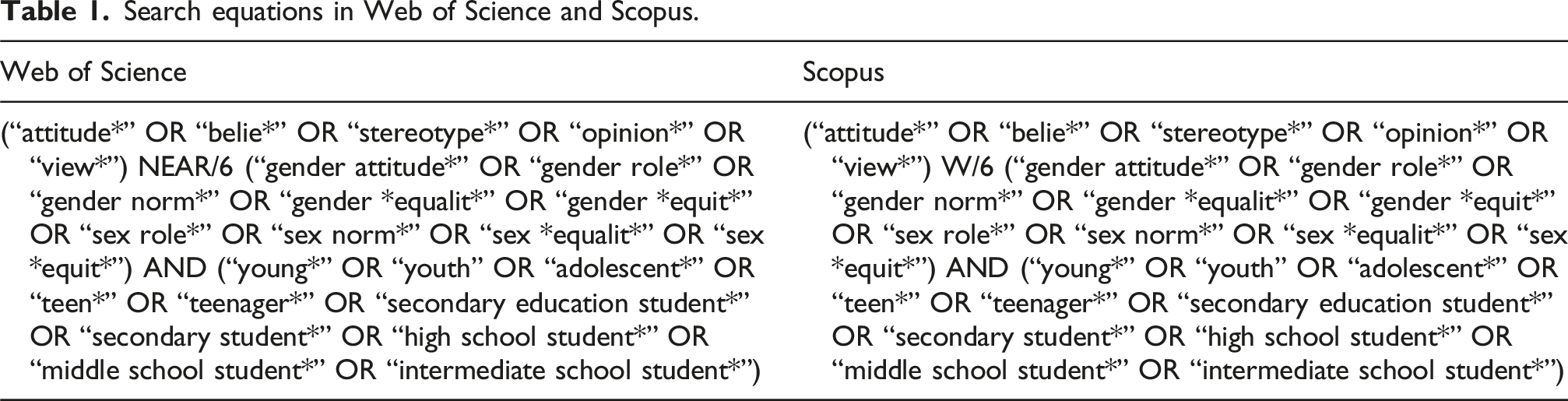
The search began in July 2023 and was completed in March 2025. The “topic” field was used for these searches, as it enables the retrieval of documents in which the search terms appear in the title, abstract, and keywords, thereby ensuring the inclusion of relevant papers. The filter applied to the searches was that articles had to be published between January 2000 and December 2024, a time interval that allowed for observation of the trend in academic interest in the topic.
Eligibility criteria
The criteria for including articles are consistent with the research objectives. ▪ Topic: Identification and measurement of gender attitudes in adolescents. ▪ Outcome variable: gender attitudes. ▪ Type of population: adolescents between 10 and 19 years old. That implies that more restricted ranges were included when they were inside the range. For instance, if the focus of a study was on adolescents from 12 to 16 or 10 to 14 years old, the study was considered. ▪ Type of study: empirical. ▪ Type of design: quantitative. ▪ Type of document: Journal articles. ▪ Language: English.
The inclusion criteria also informed the exclusion criteria that guided the screening process. ▪ Topic: Studies that did not focus on identifying and measuring attitudes towards gender roles in adolescents. We excluded articles focusing on gender roles or violence in the context of romantic relationships due to the topic’s specificity and particularities. ▪ Outcome variable: studies in which attitudes towards gender roles in adolescents were one of the independent variables (instead of a dependent variable) were excluded. ▪ Type of population: individuals who were not adolescents (less than 10 or more than 19 years old). ▪ Type of study: theoretical studies and systematic reviews. ▪ Type of design: qualitative or mixed. ▪ Type of document: documents published in a format different from scientific papers (for instance, book chapters or doctoral theses). ▪ Language: other than English.
Selection process
The selection process for the 2771 studies identified in the Scopus and Web of Science databases began with the removal of duplicates. This selection resulted in a set of 1676 unique records. Subsequently, we conducted a review of the titles and abstracts of the documents, applying the predefined inclusion and exclusion criteria. Two independent researchers performed a pilot screening of the initial 50 records to ensure the accuracy of the criteria’s application and to avoid bias. Following the pilot screening, the two researchers independently screened each of the remaining records. This process resulted in the exclusion of 1190 articles, while 486 articles were selected for further full-text retrieval, yielding an inter-rater agreement of 92.34%. Finally, examining the full texts yielded a final sample of 134 articles (see the complete list in Appendix 2). Figure 1 shows the screening process.
50
Flow diagram.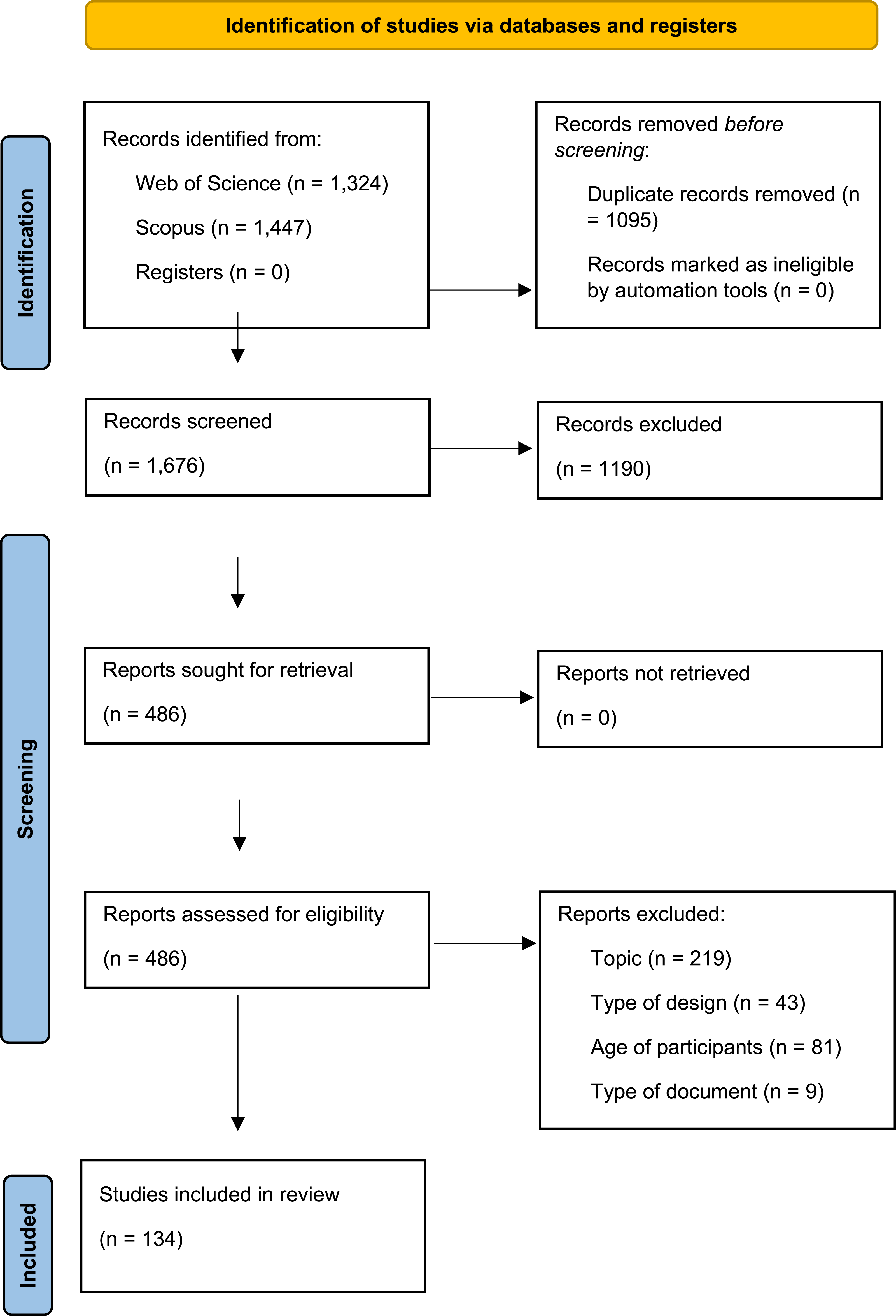
Operationalisation of gender attitudes in quantitative research
Across the studies included in this review, gender attitudes are operationalised as a latent or composite outcome variable measured through adolescents’ responses to standardised survey items. These items typically ask respondents to indicate their level of agreement, endorsement, or perceived appropriateness with statements about gender roles and norms.
Operationally, three core domains recur across measures: (1) Normative beliefs about gender roles, particularly regarding paid work, domestic labour, caregiving, leadership, and decision-making. (2) Evaluations of gender equality, including support for equal rights, educational and occupational opportunities, and participation in social and political life. (3) Expectations about appropriate behaviour, such as conformity to gendered traits, responsibilities, or authority structures.
Most studies rely on Likert-type response formats, allowing attitudes to be treated as continuous constructs where higher scores indicate stronger endorsement of gender equality, depending on coding direction. Other formats include task-allocation questions or scenario-based evaluations that indirectly capture normative judgments.
Although the substantive content of items and their analytical treatment vary across studies, gender attitudes are consistently positioned as the primary outcome of interest. Some studies operationalise gender attitudes as a unidimensional construct capturing a general orientation towards gender equality. In contrast, others distinguish multiple but related dimensions, such as beliefs about gender roles, support for equal rights, or expectations about appropriate behaviour. Regardless of whether the outcome is constructed as a composite scale, estimated as a latent trait, or used to derive attitudinal profiles, the dependent variable captures adolescents’ evaluative orientations towards gendered roles, norms, or inequalities. These differences reflect methodological and modelling choices rather than conceptual disagreement about the nature of the construct, which remains centred on adolescents’ assessments of gendered social arrangements and their endorsement of more egalitarian versus more traditional positions.
Coding of variables
We coded the information from the selected empirical articles using a data extraction sheet. The variables considered included the country, objective, theory, measurement scales, and methods of the selected papers. Specifically, we coded the following aspects: ▪ Publication year: We extracted the publication year from the papers’ metadata. ▪ Country: the countries considered in each article were coded. ▪ Objective: first, we identified the objectives of the articles in vivo. In a second round, the objectives were recoded based on 11 different topics: (1) intergenerational transmission, (2) changes through time, (3) interventions, (4) gender views, (5) scales, (6) exposure to media content, (7) comparisons based on being migrant, siblings, low SES, or practice sports, (8) schooling factors, (9) gender conformity, (10) classification of attitudes, (11) intersectional approach. More details about these objectives are provided in the results section. ▪ Measurement scales: The use of scales in each paper was analysed. We considered two dimensions: (1) the origin of the scale. Some papers mentioned that the scale used in their study was adapted or based on a previously established scale. Some secondary analyses used scales provided by the survey being analysed. Others created their indexes. (2) to the measurement itself, specifically, how the responses to questions were formulated (e.g. Likert scales). ▪ Theory: This was coded based on whether the paper made (1) explicit mention of a theory or theory-based model in the body of the text. In cases where they did, the (1.1), we coded the specific theory. ▪ Methods: We coded he analytical strategy in vivo. In a second round, we grouped the methods in 9 strategies: (1) descriptive statistics, (2) regressions, (3) factor analyses, (4) hierarchical analyses, (5) quasi-experimental and experimental models, (6) time models, (7) Latent Class Analysis (LCA) and Item Response Theory (IRT), (8) other analyses.
Data analysis
We descriptively analysed all dimensions of interest. This process involved observing the frequency and proportion of each aspect or its repetition in the selected studies. The analyses were primarily conducted in Excel to produce tables, graphs, and figures that were easily editable for publication.
When categorising objectives, we primarily highlighted the topics under analysis to understand gender attitudes. We also highlighted the type of analysis (e.g. interventions) when this was explicitly mentioned in the article’s objective. This categorisation implies that the objectives are not exclusive, as some publications fit into multiple categories.
The data file with the analysed categories can be found in this link: https://figshare.com/s/fdc005b49521dd1c4b18.
Results
This section presents the results of the analysis of the 134 papers in this review, which are consistent across six axes: publication trends in gender attitudes, geographical focus, primary objective, presence of theories, measurement, and methods used in the analyses.
Academic production through the years
Academic research on adolescents’ attitudes toward gender equity has increased significantly over the past 24 years, employing a quantitative approach. Between 2000 and 2014, the publication frequency maintained a trend of between one and four articles per year for this outcome. Nevertheless, the inflexion point seems to be in 2015, when the number of publications reached six articles. Then, as Figure 2 shows, the number of publications per year on this topic as an outcome variable, employing a quantitative methodology, achieves 10 articles in 2020 and a high peak of 23 articles in 2024. Publication trends in gender attitudes.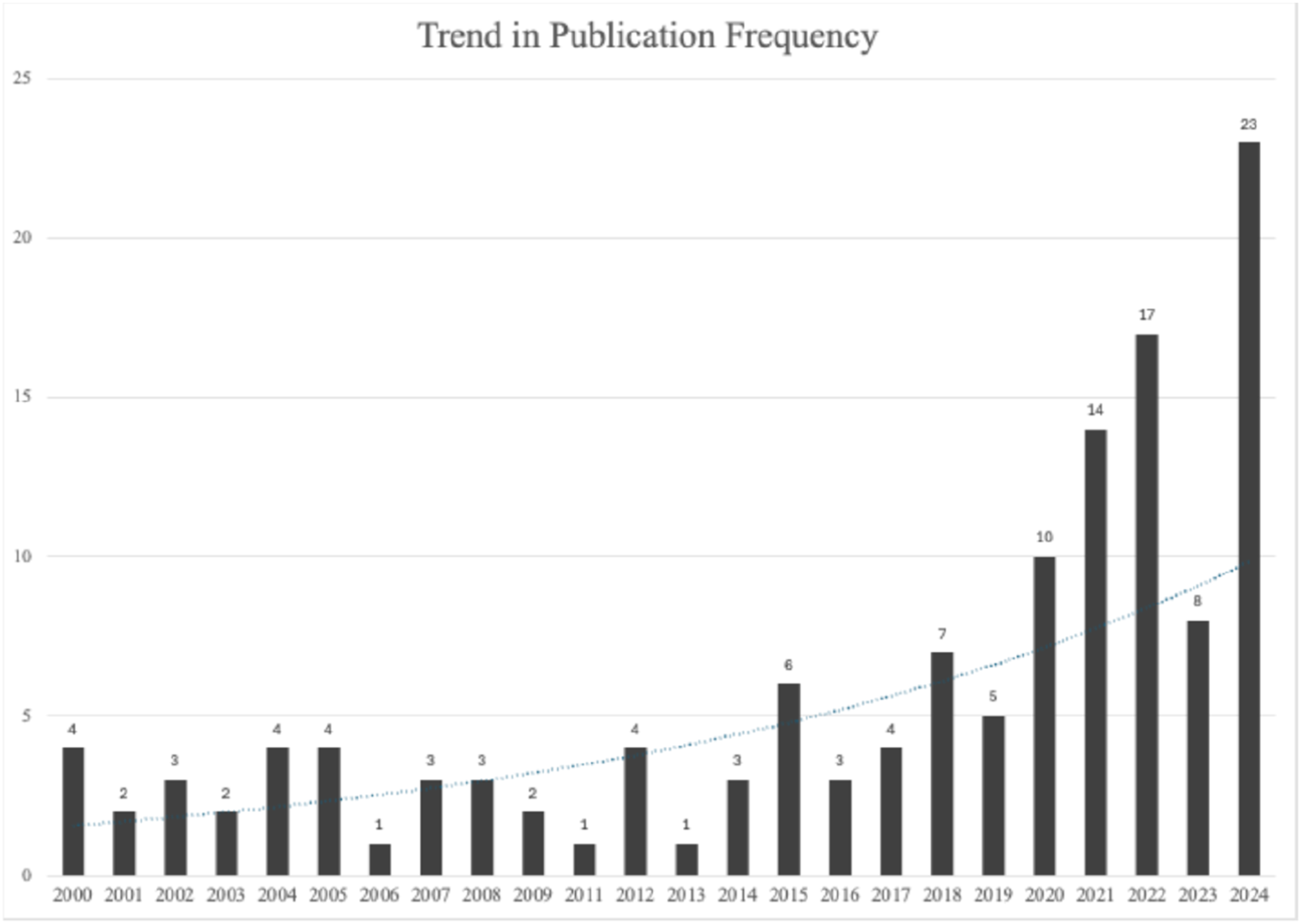
This trend may be associated with the increase in the number of existing academic journals over the past decade, a pattern supported by data showing annual growth rates of 3.5% to over 5% in recent years. 51
Journal frequency in our review and their coverage start (considering the last period of publications a ).
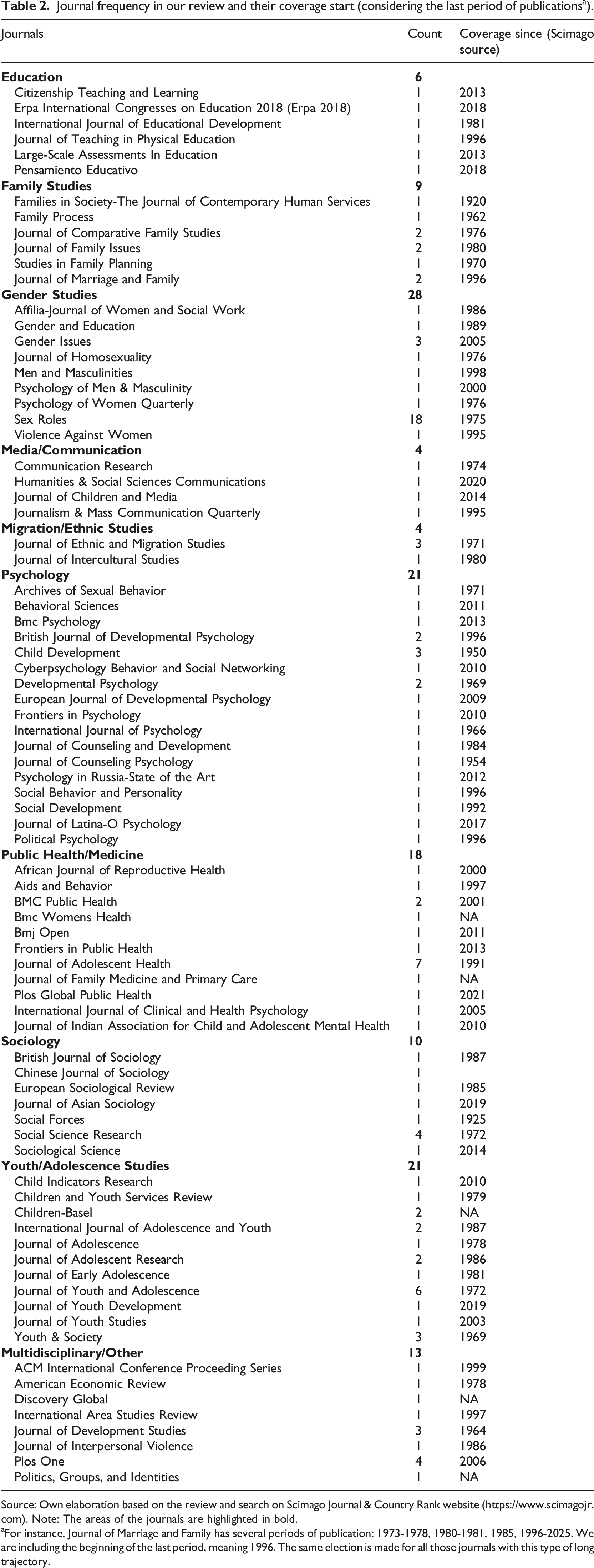
Source: Own elaboration based on the review and search on Scimago Journal & Country Rank website (https://www.scimagojr.com). Note: The areas of the journals are highlighted in bold.
aFor instance, Journal of Marriage and Family has several periods of publication: 1973-1978, 1980-1981, 1985, 1996-2025. We are including the beginning of the last period, meaning 1996. The same election is made for all those journals with this type of long trajectory.
As can be seen in Appendix 3, the journal that consistently publishes about gender attitudes is Sex Roles, which has published 18 papers with a quantitative perspective on gender attitudes between 2000 and 2024.
Geographic focus
Regarding the locations of interest in the analysed studies, we noted the countries or regions considered in each article.
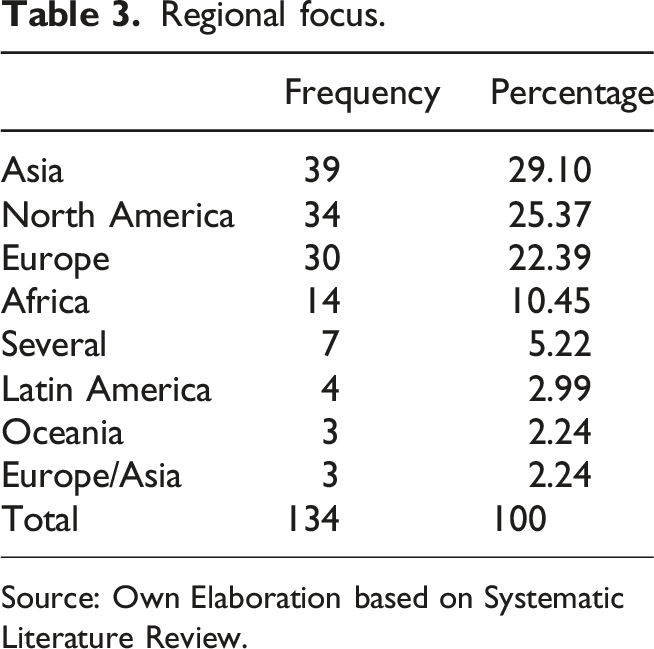
Regional focus.
Source: Own Elaboration based on Systematic Literature Review.
Considering how many times the countries were mentioned across the publications (except for article number 31, which did not specify the countries analysed), the studies presented analyses geographically concentrated (Figure 3): 13.79 % of the contexts mentioned in the publications indicated the US, followed by India with an 6.51%, 4.98% of the times was Germany, and 4.98 for the United Kingdom or England. Then, Sweden (4.6%), Israel (3.45%), China (3.07%), the Netherlands (3.07%), Belgium (2.68%), and Spain (2.68%) follow. It is interesting to note that Asia is in the lead among the regions analysed, with countries such as India being among the most frequently mentioned across the studies. Geographical focus. Source: Own elaboration based on systematic literature review. Numbers indicate frequency.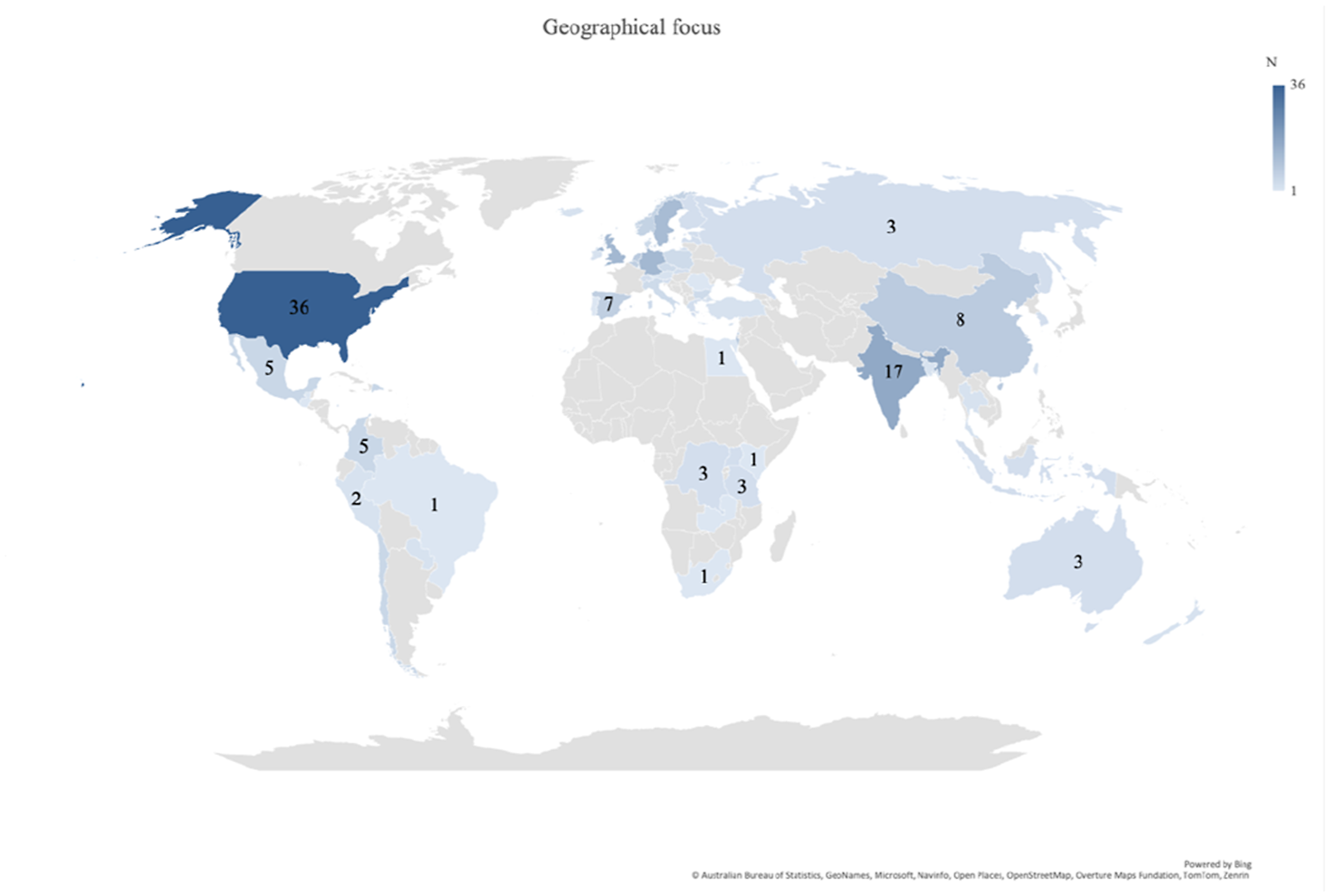
Although gender inequality is a salient issue in many Global South contexts, these regions are less visible in the English-language quantitative literature covered by this review. Latin America presents a worrying level of gender inequity,37,38,53 and the context is the focus of the publications, accounting for only 3%.
Main objective
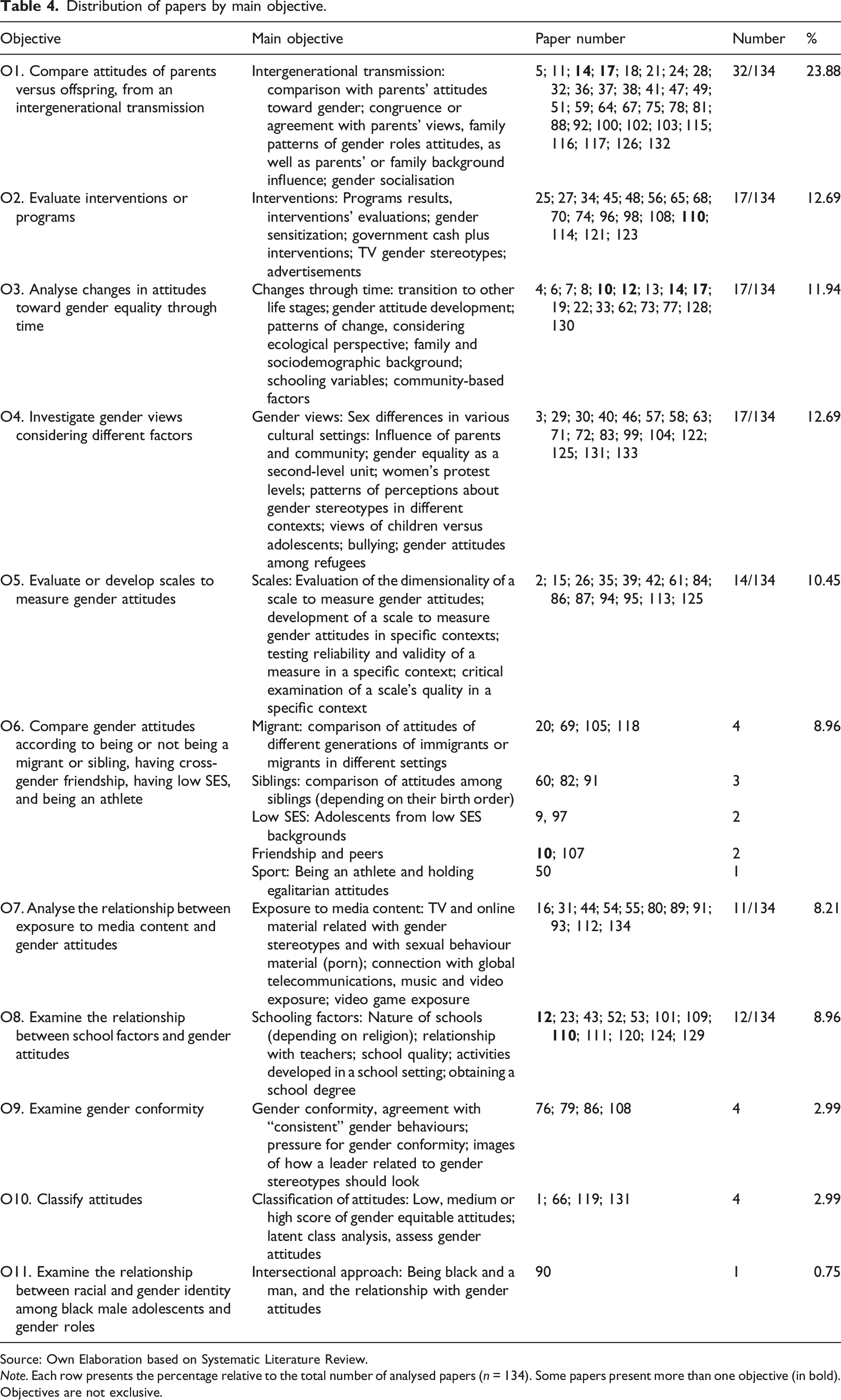
Distribution of papers by main objective.
Source: Own Elaboration based on Systematic Literature Review.
Note. Each row presents the percentage relative to the total number of analysed papers (n = 134). Some papers present more than one objective (in bold). Objectives are not exclusive.
Table 4 shows that 23.88% of the studies were interested in analysing the intergenerational transmission of patterns related to parents’ attitudes or the socialisation process of gender role attitudes in family environments or backgrounds, some of which compared the position of parents versus offspring (intergenerational transmission). 12.69% of the articles focused on analysing interventions or program results related to gender sensitisation or gender stereotypes (interventions).
Also, 11.94% of the publications were interested in seeing attitudes change over time, considering their development and, in some cases, background predictors (changes over time). Additionally, 12.69% focused on observing the differences in gender attitudes, considering various variables, primarily sex (gender views concerning sex differences).
From the total, 10.45% of the publications were interested in developing the evaluation of a scale to measure attitudes toward gender norms in specific settings (scales). 8.96% of the articles were interested in comparing gender attitudes, focusing on the presence of a condition: being a migrant, having siblings, having a low SES or being an athlete. We condensed these alternatives into one theme (being or not being a migrant, sibling, low SES, or athlete).
Another 8.21 % focused on exposure to media, TV, or online material, with some of them analysing the exposure to sexual material concerning the perpetration of gender stereotypes (exposure to media content).
Only 8.96% of the articles were interested in analysing school factors and their influence on gender attitudes (schooling factors). This result is an interesting input, considering that the socialisation process of children and adolescents does not occur only through family members but also through peers, school climates, and teacher interactions.
Finally, 2.99% of the publications were interested in observing associations regarding gender conformity and the trend toward traditional norms among adolescents (gender conformity). Notably, few publications focused on classifying attitudes into distinct profiles or levels (2.99%; classification of attitudes) or employed an intersectional approach to examine gender norms (0.75%; intersectional approach).
In summary, it is notable that most of the collected studies focus on the intergenerational transmission of gender attitudes. A few of them have as their primary objective to evaluate the association with schooling factors or the influence, even though schools are a space of socialisation and opportunities. 54 Few studies primarily focus on friendships, even when peer interaction becomes relevant in identity formation during this period of adolescence.17,19
Presence of theory by objectives
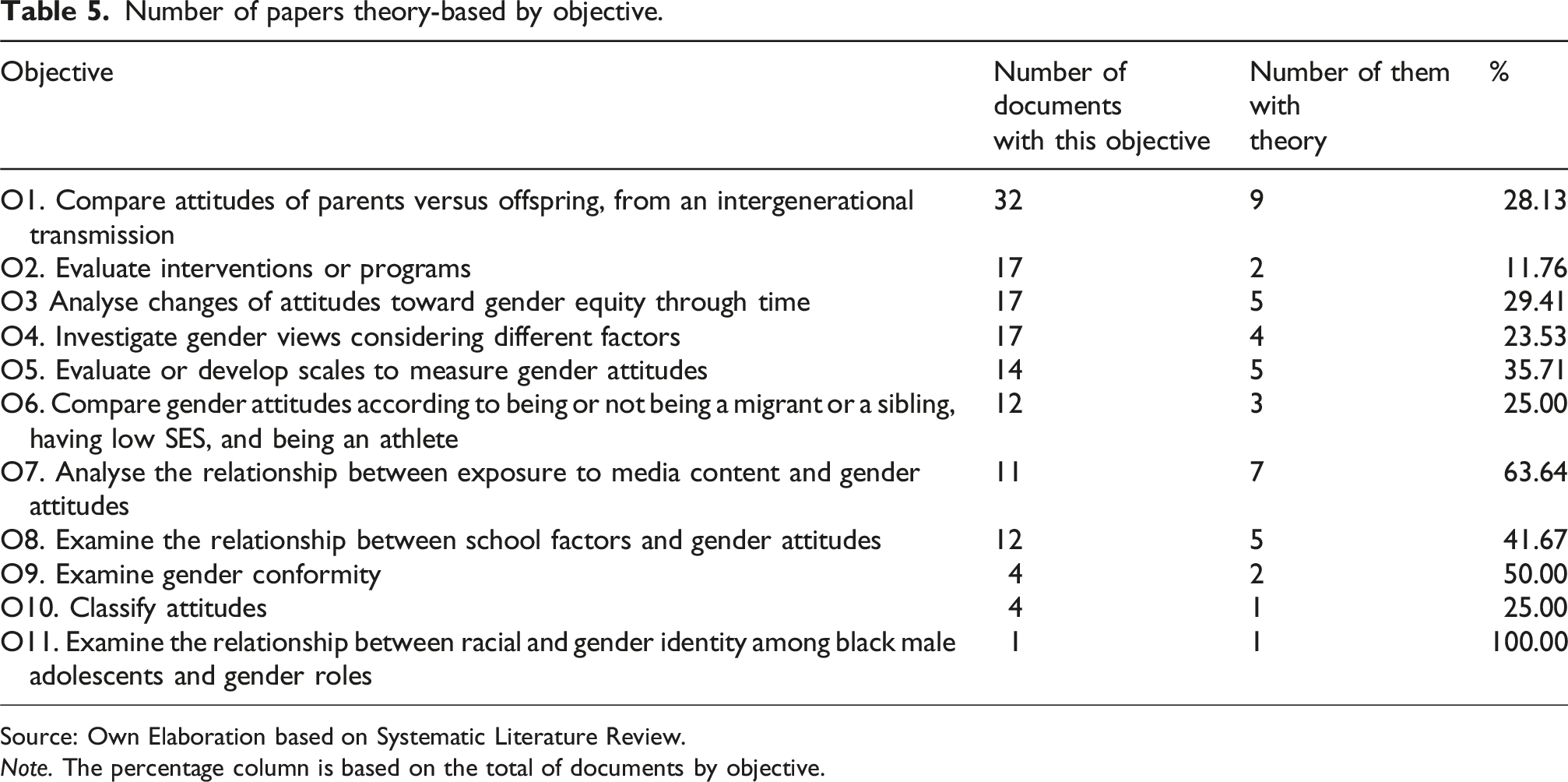
Forty-four of the 134 papers analysed in this work (32.84%) presented a theory or theory-based model. To quantify this aspect, we considered the explicit mention of a theory in the body of the text of each article.
Number of papers theory-based by objective.
Source: Own Elaboration based on Systematic Literature Review.
Note. The percentage column is based on the total of documents by objective.
The theories that appear among the reviewed articles are: Theory of Gender development (papers number 4, 6, 22), Socialization Theory, including sexual and gender socialisation (papers number 20, 23, 55, 67, 69, and 101), Sexism Theories (papers number 81 and 96), Masculinity theories (papers 58, 61, and 87), Social Learning Theory (papers number 20, 40, 60), Cognitive Theory (papers 4, 22, 83, 124, 126), Ecological Frameworks (papers number 4, 17 and 41), Identity theories (papers number 7, 10, and 85), Gender roles (papers number 20, 104), Social Construction Theory (papers number 93, 94), Cultivation Theory (papers number 16, 80, and 91), Gender Schema Theory (papers 49, 71, and 90), Adler’s Theories of Psychology (21, and 37), Assimilation Theory (69), Females Objectification and Identity (93), Gender egalitarianism (88), Marianism (86), Gender ideologies (84), Gender Conformity (79), Countervailing expectations (76), Time Constraints Theory (47), Social Exchange Theory (47), Model of Heterogeneous Development (31), Assertive Mating Theory (21), Gratification theory (16), Doing gender (120), Theory of Change (123), Stage-environmental fit theory (127).
These theories generally fall under the categories of psychology (developmental, cognitive, environmental, social, organisational, and individual psychology), sociology, gender studies, anthropology, political science, and cultural studies.
Gender attitudes measurement
Definition used to label gender attitudes and corresponding studies.
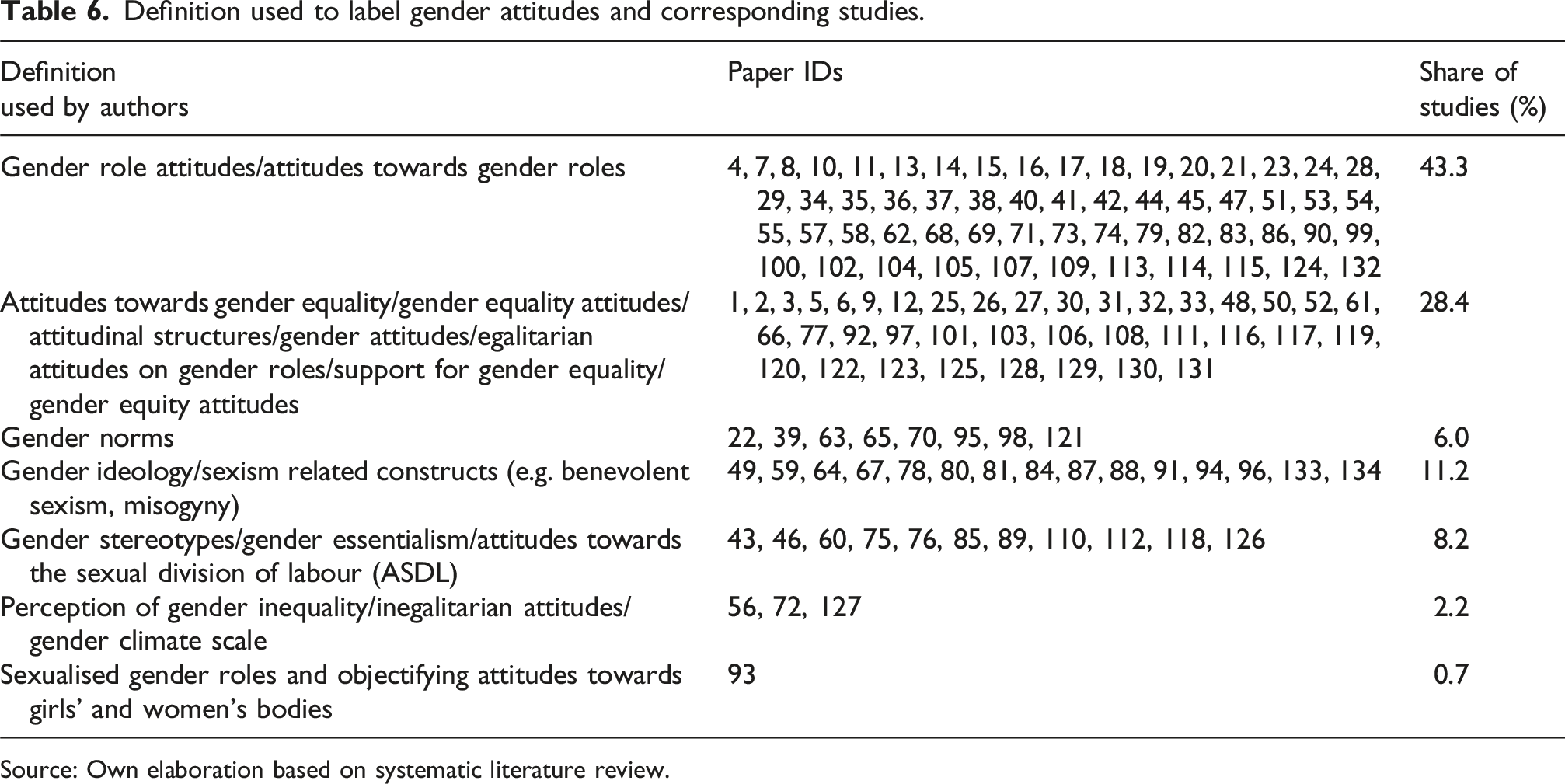
Source: Own elaboration based on systematic literature review.
Regarding the measurement of gender attitudes across the studies of this review, we have analysed two aspects (for more details, please check Appendix 4).
Scale origin
Around 40% of the papers (n = 53) adapted scales from other authors’ work. Papers number 4 (published in 2014), 13 (published in 2015), 17 (published in 2017), 47 (published in 2012), 73 (published in 2012) – for instance – have used or adapted a version of Hoffman and Kloskas’ scale of 1995. These authors have presented a scale with items assessing gender-role attitudes regarding child-rearing and marital roles statements (53). 55 Another example is the use of the Spence and Helmreich’ scale of attitudes toward gender roles or women, with scales work published in 1972 and 1978, cited by papers of the beginning of 2000s, such as the number 18 (published in 2005), 21 (published in 2009), 37 (published in 2004), and 51 (published in 2004).
It is interesting to observe that in this 40%, most of the scales were constructed before 2000s. In some cases the scales were validated by other authors afterwards, and used by the papers collected in this review such as paper number 41 (2021) that have used the Gender-role scale by Bem (from 1974) and revised by Liu et al. (2011); paper number 42 (published in 2018) that used Vermeersch et al.'s (2010), scale which was adapted from King and King (1997); paper number 82 (2015) employed the traditional gender role attitudes of Hoffman & Kloska, from 1995, validated recently for Mexican-Americans by Adams et al. in 2007; paper number 100 (2019) that used Sex Role Scale (Parent version), which was revised by Liu et al. in 2011 from the Bem Sex Role Inventory of 1981; and paper number 115 (2024) that employed the Gender-role scale of Liu et al. in 2011, which is a revised version of Bem’s gender-role inventory of 1974.
There is another 26.12% that have used the scales provided in the secondary data, which they are basing their analyses on. Papers 20, 69, 88, 107, 111, 117, 118, and 126 used the Children of Immigrants Longitudinal Survey in Four European Countries, which includes a set of questions related to gender division of labour in the domestic sphere. Six papers (numbers 3, 40, 77, 101, 119, and 129) in this group utilised the International Civic and Citizenship Education Study (ICCS), which includes a scale assessing students’ endorsement of Gender Equality.56,57 Other papers have utilised secondary data sources that contain related scales, such as the Global Early Adolescent Study survey (GEAS) or national studies.
Among the publications, 20.15% of the studies included questions about gender equity attitudes, where the author(s) have created indices or operationalised the scales based on other scales, generating statements about the outcome. They have included dimensions connected to behaviours, and dimensions (such as family, work, and social life).
In 11.94% of the studies, items or the complete set of questions from recognised or known scales were used. For instance, papers number 9, 27, 39, 95, 121, and 123 have used the Gender Equitable Men (GEM) scale. Or the Attitudes toward Women Scale for Adolescents (such as papers 2 and 58).
Finally, approximately 3% of the papers have adapted scales from existing programs or projects. For instance, papers 1 and 25 have utilised the Gender Equitable Measurement Scale, developed for the Gender Equity Movement in Schools program in Mumbai, India, by UNICEF, as part of its Evaluation of Empowering Young Girls and Women.
Measurement
Most of the reviewed publications use Likert-type scales to assess gender attitudes, typically capturing levels of agreement with various statements, reported frequency of behaviours, or perceptions of role consistency (e.g. papers 41, 115). Some studies adopt more child-friendly formats, such as “smiley face” responses to indicate agreement or preference (e.g. papers 112, 116).
Several papers include items that assess normative views on gendered divisions of labour. These often involve categorical responses such as “Mostly the man”, “Mostly the woman”, or “Both about the same” to indicate who should perform specific tasks, typically related to domestic or care work (e.g. papers 20, 69, 89, 117, 118). Other instruments probe attitudes toward work arrangements by asking respondents to evaluate different scenarios involving employment status and gender roles (e.g. papers 46, 57, 66). One example includes assessing comfort with arrangements such as: “husband works full time, wife does not work”, or “both work full time”.
In some cases, measurement focuses on reported behaviours rather than attitudes. For instance, adolescents are asked whether they perform household tasks (e.g. paper 103) or to estimate the time spent on different activities (e.g. paper 59). Other instruments examine perceptions of who should be involved in specific activities or tasks by asking who tends to be “in charge” in various domains, such as politics, business, or the home (e.g. paper 72).
The analytical treatment of these scales varies across studies. Some use the scale items as continuous variables, where higher scores typically indicate greater support for gender equity (or the opposite, depending on coding direction). Other studies employ techniques such as latent class analysis to identify underlying attitudinal profiles (e.g. paper 119).
Methods
Methods Frequency among the analysed papers.
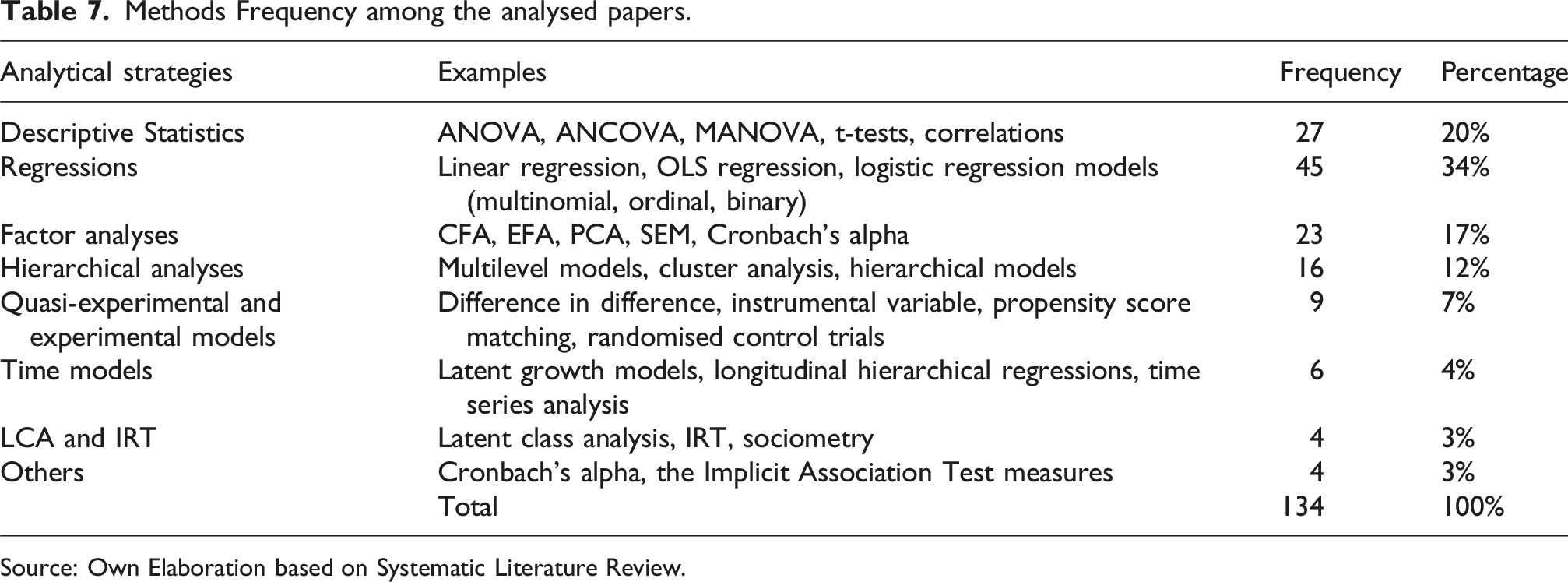
Source: Own Elaboration based on Systematic Literature Review.
Discussion
The results of this work present a picture of the state of the art regarding adolescents’ attitudes toward gender equity. Using the PRISMA approach, we analysed English-language articles published since 2000 that used a quantitative approach. The results provide critical insights into interest in gender attitudes, specifically regarding publication time trends, the geographical focus of research pieces, the goals of most quantitative analyses, the measurement of gender attitudes, the most commonly used methods, and the presence of an underlying theory depending on the objectives. These gaps not only restrict academic understanding but also limit the usefulness of findings for those designing education systems and social policies aimed at reducing inequality.
Even when there appears to be a decline in interest among the population regarding gender equity in various contexts, 58 the results show a growing interest in academic production that analyses this outcome using a quantitative approach. This is an important finding considering the connection between quantitative approaches and gender attitudes studies, a criticised approach to analyse this topic from some academic sectors (Scott, 2010), demonstrating the increasing importance of quantitative analyses in the field.
However, it is worth noting that this growth in publication output is geographically uneven within the English language quantitative literature. Despite gender equity being established as a global Sustainable Development Goal by the United Nations, 59 29.46% of the reviewed studies focused on Asia, 25.58% on North America, primarily the United States, and 24.03% on Europe. In contrast, Global South contexts are less visible in the literature captured by this review. For example, studies focusing on Latin America account for a small share of the reviewed publications, even though existing evidence suggests that adolescents in the region report lower levels of support for gender equity compared to international averages. 53 This pattern should be interpreted as reflecting the scope and language of the review rather than the overall state of research activity in Global South countries, where relevant work may be published in other languages or regional outlets. Nevertheless, the limited visibility of these contexts in the English-language literature highlights an important gap for future quantitative research, particularly in understanding the structural and contextual factors shaping adolescents’ gender attitudes.
Regarding the objectives of the papers analysed, the most frequently addressed was number 1, which relates to examining the intergenerational transmission of attitudes toward gender equity. This was followed by Objective 2, which pertained to evaluating interventions or programs. Fewer papers analyse school factors as an objective or consider an intersectional approach. This highlights an area requiring further investigation in future research. While the family is the primary source of socialisation and values, the school also appears as a critical space that can allow adolescents to learn democratic standards, even when they come from heterogeneous backgrounds. 54 The school has a role, although not exclusive, in forming citizens, especially in terms of moral and political socialisation, shaping perceptions and assessments on the exercise of power and the social dynamics surrounding it, including gender relations. 60 In addition, the lack of intersectional analyses limits the comprehension of inequalities that come from the conjunction of categories such as race, ethnicity, social class, and gender identity, among others. 61 Moreover, only a small proportion of studies explicitly focused on examining the connection between friendship and gender attitudes, even though peer relationships play a crucial role in the formation of attitudes during adolescence. 17
One of the advantages of quantitative research is the ability to test theories. Developing hypotheses based on theoretical frameworks provides a pathway to new knowledge. 62 However, only 32.84% of the studies reviewed explicitly referred to a theoretical framework. Whether this constitutes a limitation is a matter for discussion. While presenting background literature and some conceptualisation may suffice to construct a coherent argument, the explicit recognition of theoretical frameworks remains valuable. It clarifies the origins of concepts and situates them within broader structures or lines of thought, contributing to a more transparent and cumulative research process.
Across the reviewed studies, gender attitudes are most often conceptualised around a relatively small set of conceptual labels, most commonly gender role attitudes and attitudes towards gender equality. While this convergence supports comparability across studies, it also indicates a tendency to operationalise gender attitudes through similar conceptual lenses. At the same time, the review highlights considerable variation in how gender attitudes are measured across studies, which has implications for the comparability of findings in this field. A large proportion of the studies relied on established scales, many of which were originally developed several decades ago. While these instruments have been widely used and adapted, their continued prevalence raises questions about their suitability for capturing contemporary understandings of gender, especially among adolescents. Social attitudes towards gender have shifted significantly since these scales were first created, and there is a risk that older measures may not fully reflect the complexities of present-day gender relations.
Regarding the type of answers used to measure the scales, most studies use Likert-type scales to assess the level of agreement or consistency regarding gender attitudes or gender roles. Additionally, there are variations, including the use of smiley faces, questions to evaluate adolescents’ involvement in household tasks, or the time they spend on them. As a result, the apparent uniformity in response format masks substantial variation in how gender attitudes are conceptualised and operationalised across studies.
In contrast, some studies have relied on secondary datasets or have developed their own indices, often combining several dimensions of gender attitudes. Although these approaches allow for contextual adaptation, they also introduce a degree of inconsistency, making it difficult to compare results across studies. The widespread use of Likert-type scales suggests a certain degree of standardisation in measurement formats; however, differences in how these scales are operationalised and analysed may still affect the conclusions drawn.
Overall, these findings suggest that the field may benefit from greater reflection on measurement practices. There is a clear tension between the use of established, validated instruments – which support comparability – and the need to update and adapt measures to reflect changing social contexts. Future research could usefully engage more explicitly with questions of measurement, particularly by considering how theoretical frameworks inform the choice of scales and how these instruments align with current understandings of gender attitudes in adolescent populations.
Regarding the methods, there is a significant presence of regression analyses among the papers, followed by descriptive statistics and factor analyses as the primary analytical strategies. One of the criticisms against using quantitative approaches in analysing gender inequalities is the incapacity of capturing perceptions 14 of reality. Whilst quantitative analyses cannot provide a comprehensive picture of the experiences of people regarding a particular phenomenon, 46 it should be noted that methods, such as latent class analysis (which was not widely used in the analysed papers, representing only 3%), could examine the adherence levels to gender attitudes, including individual perspectives (based on the responses to different questions of equity). This method detects and delineates hidden clusters or types within a population, illustrating its diversity by relying on individuals’ reactions to indicators rather than variables. 63
Taken together, these findings call for the development of updated and context-sensitive instruments, stronger theoretical integration, and methodological innovation. Strengthening research in these areas would not only advance scholarship but also provide the kind of evidence needed to support more equitable education systems, guide institutional reform, and contribute to broader social development goals.
Conclusions
This review presents an updated and focused analysis of quantitative studies on gender attitudes among adolescents over 24 years, addressing key questions regarding publication trends, geographical focus, research objectives, measurement practices, methods, and the application of theory.
The findings highlight the increasing academic interest in this area, particularly in recent years. However, this growth has been uneven, with Global South contexts remaining less visible in the English-language quantitative literature reviewed here, despite evidence that these regions experience substantial gender inequalities. The concentration of studies in the Global North reflects broader asymmetries in the international research landscape and in the visibility of different contexts within indexed, English-language outlets. These patterns point to the value of increased investment in research that brings greater representation of Global South contexts into the international quantitative literature, to better capture the diversity of adolescents’ experiences and the structural conditions shaping gender attitudes.
In this sense, it is important as well to consider that geographic coverage should be interpreted in light of the review’s selection criteria. By focusing on peer-reviewed journal articles published in English and indexed in international databases, the review is more likely to capture research produced in contexts with stronger integration into these publication venues. As a result, regions where scholarly output is more frequently disseminated through local journals, non-English outlets, or alternative formats may be less visible in the reviewed literature.
Another key insight is the intense focus on intergenerational transmission and programme interventions, with fewer studies examining school factors or taking an intersectional approach. Given the central role of schools in adolescents’ socialisation and the importance of intersectionality in understanding inequalities, future research would benefit from a broader scope in these directions.
The review also raises concerns about the limited use of explicit theoretical frameworks and the continued reliance on outdated measurement scales. Both issues may hinder the development of a more cumulative, theoretically grounded understanding of adolescent gender attitudes.
While quantitative research has advanced in this field, many studies still rely on conventional methods such as regression and descriptive analyses. Greater methodological diversification, including approaches like latent class analysis, could provide deeper insights into variations in gender attitudes.
Finally, the measurement of gender attitudes seems to still rely on outdated scales, that were constructed before the 2000s and modified afterwards. When we refer about gender, the scales are still following a binary conception. Currently, the complexity of the conception of gender has evolved and get more complex. Nevertheless, depending on the context, the use of the scale that considers a broad set of options can create political tensions. More work is needed on this issue; currently, there is insufficient academic discussion about it. This debate is increasingly visible within International Large-Scale Assessments (ILSAs), where efforts to include broader measures often encounter constraints tied to cross-cultural sensitivities and differing national policies.64,65
While this systematic review was not registered with a public protocol database, we followed a well-defined and reproducible methodology, ensuring comprehensive coverage and critical appraisal of the relevant literature to avoid biases. The authors can be contacted with questions about the search process, data extraction, and analysis.
This review has some limitations, particularly its restriction to English-language publications and its focus on quantitative studies. Nonetheless, it offers a comprehensive overview of the field and identifies key areas where further research is both necessary and urgent.
Supplemental Material
Supplemental Material - Understanding gender attitudes among adolescents: A systematic review of international quantitative studies (2000–2024)
Supplemental Material for Understanding gender attitudes among adolescents: A systematic review of international quantitative studies (2000–2024) by Natalia López-Hornickel, Belén Gutiérrez-de-Rozas, Jesus Vidal Rojas, Andrés Sandoval-Hernández in Human Systems Management
Supplemental Material
Supplemental Material - Understanding gender attitudes among adolescents: A systematic review of international quantitative studies (2000–2024)
Supplemental Material for Understanding gender attitudes among adolescents: A systematic review of international quantitative studies (2000–2024) by Natalia López-Hornickel, Belén Gutiérrez-de-Rozas, Jesus Vidal Rojas, Andrés Sandoval-Hernández in Human Systems Management
Supplemental Material
Supplemental Material - Understanding gender attitudes among adolescents: A systematic review of international quantitative studies (2000–2024)
Supplemental Material for Understanding gender attitudes among adolescents: A systematic review of international quantitative studies (2000–2024) by Natalia López-Hornickel, Belén Gutiérrez-de-Rozas, Jesus Vidal Rojas, Andrés Sandoval-Hernández in Human Systems Management
Supplemental Material
Supplemental Material - Understanding gender attitudes among adolescents: A systematic review of international quantitative studies (2000–2024)
Supplemental Material for Understanding gender attitudes among adolescents: A systematic review of international quantitative studies (2000–2024) by Natalia López-Hornickel, Belén Gutiérrez-de-Rozas, Jesus Vidal Rojas, Andrés Sandoval-Hernández in Human Systems Management
Footnotes
Acknowledgements
We would like to thank Adam Coates for his valuable support in editing and refining the structure of our arguments. His insights contributed to improving the clarity and coherence of the manuscript.
ORCID iDs

Ethical Consideration
This Research does not involve Human Participants and/or Animals. Therefore, no informed consent was required.
Funding
The authors disclosed receipt of the following financial support for the research, authorship, and/or publication of this article: Natalia López-Hornickel wants to acknowledge the support of the Economic and Social Research Council South West Doctoral Training Partnership (SWDTP) in developing her research, including this article. Grant number: 2573257.
Declaration of conflicting interests
The authors declared no potential conflicts of interest with respect to the research, authorship, and/or publication of this article.
Supplemental Material
Supplemental material for this article is available online.
References
Supplementary Material
Please find the following supplemental material available below.
For Open Access articles published under a Creative Commons License, all supplemental material carries the same license as the article it is associated with.
For non-Open Access articles published, all supplemental material carries a non-exclusive license, and permission requests for re-use of supplemental material or any part of supplemental material shall be sent directly to the copyright owner as specified in the copyright notice associated with the article.
