



Abstract
Education for sustainable development (ESD) has been identified by the United Nations Educational, Scientific and Cultural Organization (UNESCO) as a core requirement for achieving success in the UN Sustainable Development Goals (SDGs). Research around data, information and people for achieving success in different SDGs shows how important ESD is. Research also shows that the library and information sector can contribute in many ways to achieve the UN SDGs. Therefore, it is crucial that a strategic approach is taken to embed the concepts of SDGs and their targets and indicators, and the corresponding data and information required to achieve those, within the information science curricula, so that the SDGs form the foundation of information science education, research and professional activities. This article aims to develop a research agenda for education and research in information sciences for promoting and achieving success in different SDGs. First, taking the approach of a metareview, this article shows the trends, as well as challenges, of research and development activities around information for sustainable development. This article demonstrates how the different activities of the LIS (Library and Information Science) sector can be mapped onto some specific targets and indicators of different SDGs, and based on this, it develops an agenda for education and research in information for sustainable development. The research agenda will lead to the development of new information sciences curricula to accommodate the SDGs for training and research in specific LIS activities. This article discusses how the research agenda will also lead to the development of trained professionals in information science for promoting the concepts, and achieving the targets, of the SDGs for a sustainable future.
1. Introduction
Worldwide, 320,000 public libraries and more than a million parliamentary, national, university, science and research, school and special libraries ensure that information and the skills to use it are available to everyone – making them critical institutions for all in the digital age [1]. The United Nations (UN) recommend that the library and information services (LIS) sector can contribute to the SDGs (Sustainable Development Goals) by: (1) promoting universal literacy, including media and information literacy, and digital literacy skills; (2) advancing digital inclusion through access to information and communications technology (ICT); (3) serving as the heart of the research and academic community and (4) preserving and providing access to the world’s culture and heritage (https://sdgs.un.org/partnerships/contribution-libraries-sdgs). Literacy drives sustainable development [2]. Consequently, education for sustainable development (ESD) has been identified by UNESCO as a core requirement for achieving success in the SDGs. However, ESD has not yet been embedded in the information sciences curricula, and the SDGs have not yet been included in the strategies of most library and information institutions around the world [3,4]. Similarly, research around data, information and people for achieving success in different SDGs has not yet been a focus in the information science discipline.
This article proposes an agenda, supported by a schematic diagram, to demonstrate how a strategic approach to education and research in information sciences can promote the promote knowledge of, and help to achieve success in, different SDGs. Based on the findings of a global survey [5], it is evident that many of terminologies and concepts, such as the definition and scope of the 17 SDGs, and their corresponding targets, indicators and metadata and so on., may not be familiar to the information science educators, professional and researchers. However, details of these terms and concepts are available in several open access resources, for example, on the UN SDG website (https://sdgs.un.org/goals), and in recent research output (see, for example, Chowdhury and Chowdhury [3]).
In order to set the background and provide the reader with an idea of the progress of research on the SDGs, this article takes the approach of a metareview to show the trends, as well as challenges, of research and development activities around data, information and the SDGs. This article then demonstrates how the different activities of the LIS sector can be mapped onto various SDGs and some of their specific targets, and based on that, it proposes a research agenda that can be used to develop specific education and research programmes in information for sustainable development. This research agenda will be helpful to develop: (1) a strategy and a roadmap for the LIS sector for measuring its contributions towards the SDGs; (2) information sciences curricula for training of future professionals and researchers in specific LIS activities around the SDGs and (3) an agenda for research in information sciences for promoting the concepts, and achieving the targets, of the SDGs, and thereby demonstrating how the LIS sector can play a key role in achieving sustainable development around the world.
1.1. The overall research landscape of the SDGs
An earlier review of literature appearing in the Web of Science database shows publications on health, and sustainability and ecosystems/biodiversity, appear on top of the list of research on the SDGs [6]. A research reviewing the growth of research on the SDGs in different parts of the world shows that [7]:
Europe has the largest contribution in SDG13 (climate action; 46.24%), followed by SDG12 (responsible production and consumption; 44.85%) and SDG15 (life on land; 44.28%);
America (North and South combined) has the largest contribution in SDG2 (zero hunger; 37.60%), followed by SDG5 (gender equality: 37.43%) and SDG3 (good health: 36.70%);
Highest amount of research on the SDGs in Africa has taken place on SDG5 (gender equality; 15.50%), SDG4 (quality education; 14.27%) and SDG11 (sustainable cities; 13.73%);
Highest amount of research on the SDGs in Asia has taken place on SDG17 (partnership for the goals; 13.97%), SDG4 (education; 13.33%) and SDG5 (gender equality; 13.31%) and
Highest amount of research on the SDGs in the Oceania has taken place on SDG13 (climate action; 8.47%), SDG12 (responsible production and consumption; 7.24%) and SDG15 (life on land; 6.81%).
Another research, that analysed research on SDGs available in the Scopus database, shows that 1511 scientific outputs were produced between 2017 and 2022, with 15,588 citation; the United States and the United Kingdom are the most productive countries [8]. Research also shows that the scholarly community can play a significant role for advancing sustainability through the SDG-related research [9], and universities can provide education that supports skills and mindsets required to solve complex societal and management decision-making problems associated with the SDGs [10]. Some researchers argue that:
Research on the SDGs can be used: as a reference for addressing the research impact in management [11], to address the enterprises’ strategies [12], to measure the impact and quality of academic research [13], to achieve the ambitions of the SDGs [14] and to demonstrate that open access publications have a unique role in serving diverse SDG stakeholders [8].
Studies with well-defined approaches are needed so that the results can be integrated to get a complete view of the state of the SDGs [15].
Sustainable development is an ingrained mindset that is practised in daily [16], but some sustainability managers do not react in the same way to a firm’s greenwashing [17], a term which relates to the act of misleading the public about the extent of an organisation’s operational sustainability, or undertaking tiny, almost useless actions to improve sustainability.
Collaborators of different backgrounds should work together and evaluate the suitability of participatory modelling methods for co-creating sustainability pathways [18] and follow a set of general principles [19].
Future research should focus on resolving the operational challenges that the underdeveloped and developing economies face [20].
Leadership and research funding opportunities are also the key requirements for SDG-related research, and as Lashitew [21] points out that the leadership of the European Union in crafting a complex regulatory regime to support a sustainable economy stands out as one of the most important developments.
Some recent research shows that despite the increasing interests, thus far ICT research for achieving the SDGs remains untapped [22]. Similar concerns have been expressed by other researchers, for example, the SDGs are still an insufficiently discussed field of application for digital technologies [23]. Wu et al. [24] comment that the research papers, available in the IEEE and ACM digital libraries, have discussed and recognised the importance of ICT for some specific SDGs, such as SDG3 (good health and wellbeing), SDG11 (sustainable cities and communities) and SDG13 (climate action); but some other goals, such as SDG5 (Gender equality), SDG10 (Reduced inequalities) and SDG16 (Peace, justice and strong institution) have not been addressed by the SDG research communities. This view is also supported by other researchers. For example, Figure 1 shows a visual representation of how the SDG research map onto the specific SDGs [25].
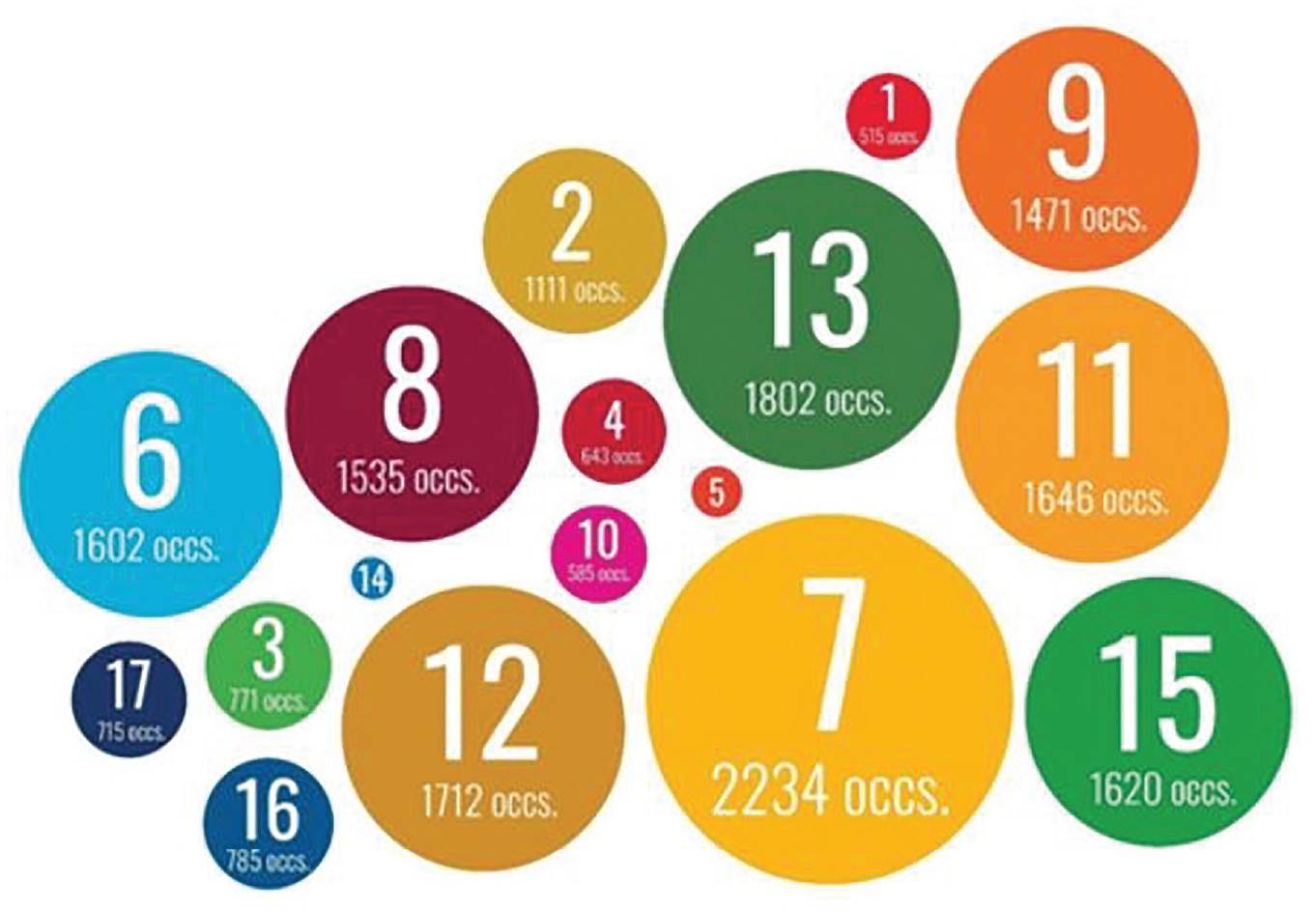
Occurrences of 2030 agenda goals-related keywords in all selected papers [25].
Achieving the targets of the SDGs requires a comprehensive roadmap that encloses all dimensions of data infrastructure, social, economic, environmental and governance ecosystems [26], and the awareness of the environmental sustainability and prioritisation that can lead to the responsible use of resources and processes [27]. There is also a need for strategic alignment between sustainability and information systems for higher education institutions [28]; the wider university strategy should embed sustainability knowledge and values in the curricula [29]. A significant amount of technology, policy and resources need to be mobilised to achieve the goal of an integrated information system for accessing and sharing indigenous information for achieving SDGs in different areas, especially in education and culture [30]. The Living Lab approach provides opportunities to help improving an institution’s environmental sustainability to train staff and students and foster the dissemination of good practice [31]. Molina et al. [32] discuss several examples of integrating the SDGs into higher education, primarily through courses, workshops and lectures on the topic.
Many researchers have shown the benefits of using artificial intelligence (AI) technologies for achieving the SDGs (see, for example, [33–36]). Similarly, deep learning techniques also have an impact towards achieving the SDGs (see, for example, [37–39]). Blockchain technology can also contribute to the SDGs, in particular, to enhance the environmental sustainability [40] and to transform governance and sustainability in integrated food supply chains [41].
1.2. Sustainable information versus information for sustainable development
The Library and Information Services (LIS) sector can contribute to the SDGs in two ways:
As sustainable institutions and a sustainable sector, and thereby contributing primarily to the SDG13 (climate action).
As a sustainable data and information service provider that can reach out almost every sector and every individual in society and prepare them to learn to think about the SDGs in every action and every decision they make.
1.2.1. Green and Sustainable Libraries
Research on sustainable libraries began in the late 1990s, and much of the early research focused on library buildings and infrastructure. A quick search on the Web of Science database using the search string (((SDG*) or (sustainability) or (sustainable development))) and (((data) or (information))) produced:
32,919 results in the research area of Computer Science, out of which there were 24,608 articles and 565 books and
8632 results within the discipline of Information and Library Science, out of which there were 8353 articles and 252 books.
Although this is not a comprehensive search on the topic, it gives a sense of the volume of research activities around the SDGs in the computer science and library and information science disciplines. Some researchers have conducted scientometric analysis on this topic showing the trends (see, for example, [42–46]). Li and Yang’s [45] study points out that the United States and China have published more papers than the other countries, and Gobinda Chowdhury from UK (the first author of this article) has the most output, ranking high in both author and paper citations.
Some systematic reviews grouped the research works on green and sustainable libraries under different broad themes:
Li and Yang [46] categorise green library research as: library construction, library management, green library awareness training and related policies and regulations.
Kamińska et al. [44] categorise research on green libraries as: (1) buildings; (2) information; (3) collections; (4) education; (5) culture and (6) others (research dealing with the overall picture of a library activity and practices).
Fedorowicz-Kruszewska [43] identifies eight thematic categories of research on green and sustainable libraries, viz. (1) strategies, plans and management; (2) building and its management; (3) equipment and products; (4) collections; (5) programmes, services, projects; (6) conduct and qualifications of librarians; (7) cooperation with the external environment and (8) the theory of green libraries.
Kamińska et al. [44] show the distribution of research on six thematic areas: (1) information and ICT (33%); (2) education (17%); (3) buildings (11%); (4) collections (7%); (5) culture (4%) and (6) others (28%).
Some of the key trends and challenges of research on green and sustainable libraries can be summarised as follows:
The role of librarians, their knowledge and environmental awareness are the key requirements for building green and sustainable libraries [47–51].
A green information system should reduce the emission of GHG (greenhouse gases) throughout its whole lifecycle – from content creation to distribution, access, use and disposal [52–56].
Debates and discussions around green library designs visibly intensified in 2007 [44], and consequently, researchers and professionals in the United States started paying close attention to the green library building standards, such as LEED (Leadership in Energy and Environmental Design; https://www.usgbc.org/leed) [45].
Some important areas of evaluation of green libraries have been identified as: the indoor environment, energy and prevention of environmental pollution and materials and resources areas [57].
Some key topics that are widely considered as a part of research and development in sustainable LIS are: access to information, information society, information and communication systems and information science in general [44].
The relationship between activities undertaken by libraries and the implementation of the SDGs have been discussed in some research (see, for example, [48,58,59]).
Reducing the carbon footprint of library collections has been identified as an important area of green and sustainable libraries [53,56,60–63].
There is a need for defining the standard terminology and indicators for green libraries [59,64–67].
Some recently published books discuss why sustainability matters to libraries and their user communities (see, for example, [68,69]); but researchers have emphasised the need for promoting green information behaviour [52,70,71] and green information literacy of users [47,72–74].
Defining a theoretical framework of the issues of green libraries is an important requirement for building sustainable libraries [67,75].
There is a lack of research on the evaluation of green libraries [43,65,67].
The research productivity of LIS scholars does not reflect the topic’s rising prominence in the general scientific community [76].
Generally speaking, sustainability and sustainable development concepts seem to interfuse each LIS topic [44].
Green library research is at a relatively nascent stage, the number of publications continues to be small and the research influence is not strong [46].
International cooperation among researchers on green and sustainable libraries is not common [46].
1.2.2. Energy and environmental costs of libraries
Earlier research focused on how to reduce the carbon emissions form LIS, especially comparing the carbon footprint of print versus digital collections (see, for example, [52,53,55,56,77]). Several libraries have focused on reducing their carbon footprint through green library buildings and energy-efficient infrastructure and facilities. For example, the British Library has reduced carbon emissions by 26.4% over the last 10 years, and it is working with sustainability consultants to start the journey towards a net zero commitment [78]. The Bodleian Library and the University of Oxford has taken an approach of working both a top-down green strategy and a more formalised bottom-up movement through a Green Impact scheme [79].
For the first time, the carbon footprint of public libraries has been calculated in a study, that took place in 2020 in the city of Helsinki in Finland, which noted that:
‘the average carbon footprint of the public libraries involved in the study ranged from 30–420 tonnes of CO2 equivalent depending on the size of the library’ [80] and
‘approximately two thirds of emissions by libraries are caused by heating the premises and electricity consumption, meaning that the carbon footprint is the larger the larger the library is. Libraries do not, however, have a say in what kind of energy they consume’. [80].
Also, or the first time in May 2023, the annual carbon footprint of a national library – the National Library of Finland – has been reported to be 1018 tonnes of CO2e. According to some estimates (https://climate.mit.edu/ask-mit/how-much-ton-carbon-dioxide), this is equivalent to about 1018 passengers flying London to New York and back; to compensate this, 50,900 trees (or a forest of ca. 51 hectares or 0.51 km2) must grow during the reporting year. However, the reported figure of carbon footprint ‘does not include emissions from the National Library’s own digital services and its digitisation efforts’ [81].
1.3. Information for sustainable development
While some institutions, associations, groups and individuals have focused on defining terms and developing policies and guidelines (see, for example, [52,53,55,59,64–67]), others have conducted specific projects to estimate the carbon footprint of library collections, buildings and infrastructure ([54,56,59,66,77]).
Sustainability was adopted as one of the core values of librarianship by the ALA (American Library Association) Council in 2019 [82]. The UK’s CILIP (Chartered Institute of Library and Information Professionals) created the Green Libraries Manifesto to build a set of common values and commitments to drive changes for sustainable development [83]. Similar initiatives have also been taken by other national library associations, like the ALIA (Australian Library and Information Association) Sustainable Libraries (ALIA Green) [84].
An OCLC study, that conducted three virtual focus-group interviews with 16 OCLC Global Council delegate participants, and a survey that was completed by 40 OCLC Global Council delegates [85], identified five SDGs where libraries can contribute, viz. SDG4 (quality education), SDG8 (decent work and economic growth), SDG10 (reduced inequalities), SDG16 (peace, justice and strong institutions) and SDG17 (partnerships for the goals). Findings of another OCLC survey indicate that fewer than a tenth (6%) of the total respondents have explicitly referenced the SDGs in their strategic plans, and 41% have not incorporated them at all [5].
The Council of Australian Academic Libraries (CAUL) strategy document notes that while other SDGs are relevant, four SDGs are highly relevant to the academic library sector, viz. SDG4 (quality education), SDG5 (gender equality), SDG9 (industry innovation and infrastructure) and SDG11 (sustainable cities and communities), and these can be achieved [86,87] by:
promoting literacy including digital, media and information literacy skills;
closing gaps in access to information and helping individuals in all aspects of their life to better understand and address their information needs;
communicating knowledge created in universities, especially around sustainability;
creating community knowledge by serving as the heart of the research and academic community;
building global partnerships and collaborations that provide greater access to digital collections and information capability programmes;
preserving and providing access to the world’s culture and heritage and
providing a network of delivery sites for government programmes and services.
The section on Environment, Sustainability and Libraries (ENSULIB) of the International Federation of Library Associations and Institutions (IFLA) recommends that a green and sustainable library should be characterised by: green buildings and equipment, green office principles, sustainable economy, sustainable library services, social sustainability, environmental management and commitment to general environmental goals and programmes that is guided by the SDGs, the Paris Climate Agreement and related environmental certificates and programmes [88].
The CILIP Green Libraries Manifesto mandates that libraries should [83]:
bring environmental sustainability to the heart of decision-making in libraries;
innovate and evolve environmental practices across core library functions and practices;
work with communities to learn and support local green initiatives;
use voice for more impact using the library’s unique reach and position of trust;
work in partnership with other organisations in the private, public and voluntary sectors;
grow and share knowledge by continually expanding environmental understanding, as individuals, teams and organisations and
support young people to be leaders in a green and just transition and to take action at home, at school, in communities and in the workplace.
The ALA Sustainability in Libraries briefing guidelines argue that libraries should aim for [89]:
climate mitigation although energy-efficient facilities; switching to renewable energy sources, electric vehicles, ethical carbon offsets; as well as
climate adaptation/climate justice by advancing food justice, advocating for transportation equity, upholding civil and human rights in emergency management and facilitating participatory democracy.
1.3.1. Lack of awareness and coordination
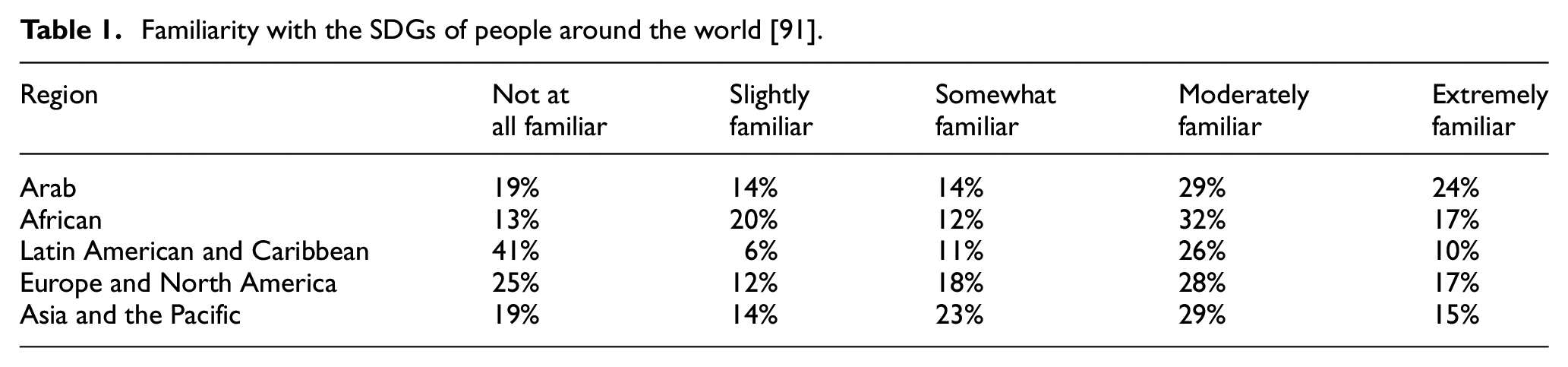
Although 8 years have passed since the SDGs, popularly known as The 2030 Agenda, were adopted in 2015, there is a lack of awareness of the various SDGs and their implications on everyday life of people and society. A World Economic Forum Survey, conducted by Ipsos Group, that asked almost 20,000 people aged between 16 and 74 years from 28 countries, about how familiar they were with the SDGs produced some interesting results about people’s familiarity [90]. The survey notes that the degree of people’s familiarity with the SDGs varies among specific countries, for example: Great Britain and Japan rank lowest in terms of familiarity, with 51% having never heard of them; 50% of respondents in the United States have never heard of the SDGs; in comparison, 92% of respondents in Turkey have heard of them. [90]
Table 1 shows familiarity of people with SDGs from different regions of the world, based on another global survey, conducted towards the end of 2019, that resulted in 2198 responses [91].
Familiarity with the SDGs of people around the world [91].
Although some such policies and guidelines are in place, progress in libraries’ actions and contributions to sustainability has been slow, even in the developed countries, because of a number of challenges. EBLIDA (European Bureau of Library, Information and Documentation Associations) report that ‘in general, the Agenda 2030 [the SDGs] was still considered an accessory objective, not pivotal in library activities’ [92]. Two recent transnational surveys – one at the global level conducted by OCLC, and another at the European level undertaken on behalf of EBLIDA – show that the awareness and understanding of the SDGs and their relevance for the sector vary significantly among the information professionals.
An OCLC survey noted that 63% of the responding LIS professionals are at least somewhat familiar with the SDGs [5]. Lack of awareness of the SDGs among information professionals is also common in other countries. For example, a survey among the staff of public libraries in South Korea noted a very low level of awareness of the SDGs in the context of library services: only 12.4% respondents knew about it, whereas 78.1% of the respondents said they were not aware of the SDGs [93]. However, Europe is somewhat ahead of the game. A June 2021 survey in Europe noted that: ‘84% of national library associations and/or library agencies state that there is a clear promotion of SDG-oriented schemes, with a selection of SDGs that are relevant at national level and the definition of well-established policies’ [94, p.10]. The survey also notes that ‘15 out of 17 SDGs are recognised as being relevant for ordinary library work’, but the priorities vary, for example, 95% of the respondents selected SD4 (quality education) as the pivotal SDG for libraries; 68% of the respondents felt that SDG11 (sustainable cities and communities) and 63% felt that SDG16 (peace, justice and strong institutions) are also strongly associated with library work, while other SDGs, such as SDG1 (no poverty), SDG6 (clean water and sanitation), SDG7 (affordable and clean energy), SDG8 (decent work and economic growth), SDG9 (industry, innovation and infrastructure), SDG15 (life on land) – are found to be less popular in libraries (receiving 10% to 30% of the answers) ([94], p. 10). The EBLIDA report also points out that: the progress of SDG implementation in European libraries is quite heterogeneous: in some countries, libraries are fully integrated into the national SDG policy; in others, SDG attainment in libraries is done in a practical way, with no involvement of national authorities. ([94], p. 24)
1.4. Towards a research agenda for the LIS sector
Although there is a growing level of awareness, discussions and activities within the LIS sector, as of date, there are no frameworks nor there are any agreed set of targets and indicators for measuring of, and reporting on, the sector’s contributions to various SDGs. A lack of understanding can cause delays in the development of a sector-wide strategy towards information for SDGs and can also lead to greenwashing [95]. A common framework will help individual libraries, and library networks, develop their own sustainability strategies and identify their potential and establish concrete goals [96], for example, changing behaviour around waste management [97] and addressing wider issues, such as racism and inequalities (95).
It is an established fact that one of the most effective ways of moving towards a sustainable society is reducing information poverty [98] and promoting education and literacy [2]. Hence, sustainability should also find its rightful place in LIS education [76]; the concepts of sustainable development in general should be embedded in every aspect of data and information management teaching and research in the information science and the allied disciplines [4].
A critical analysis of the 169 targets, and the associated indicators of the 17 SDGs, and mapping of the typical library activities and services can demonstrate the role the LIS sector can play in achieving success in every SDG.
1.4.1. Data and information services for achieving the SDGs
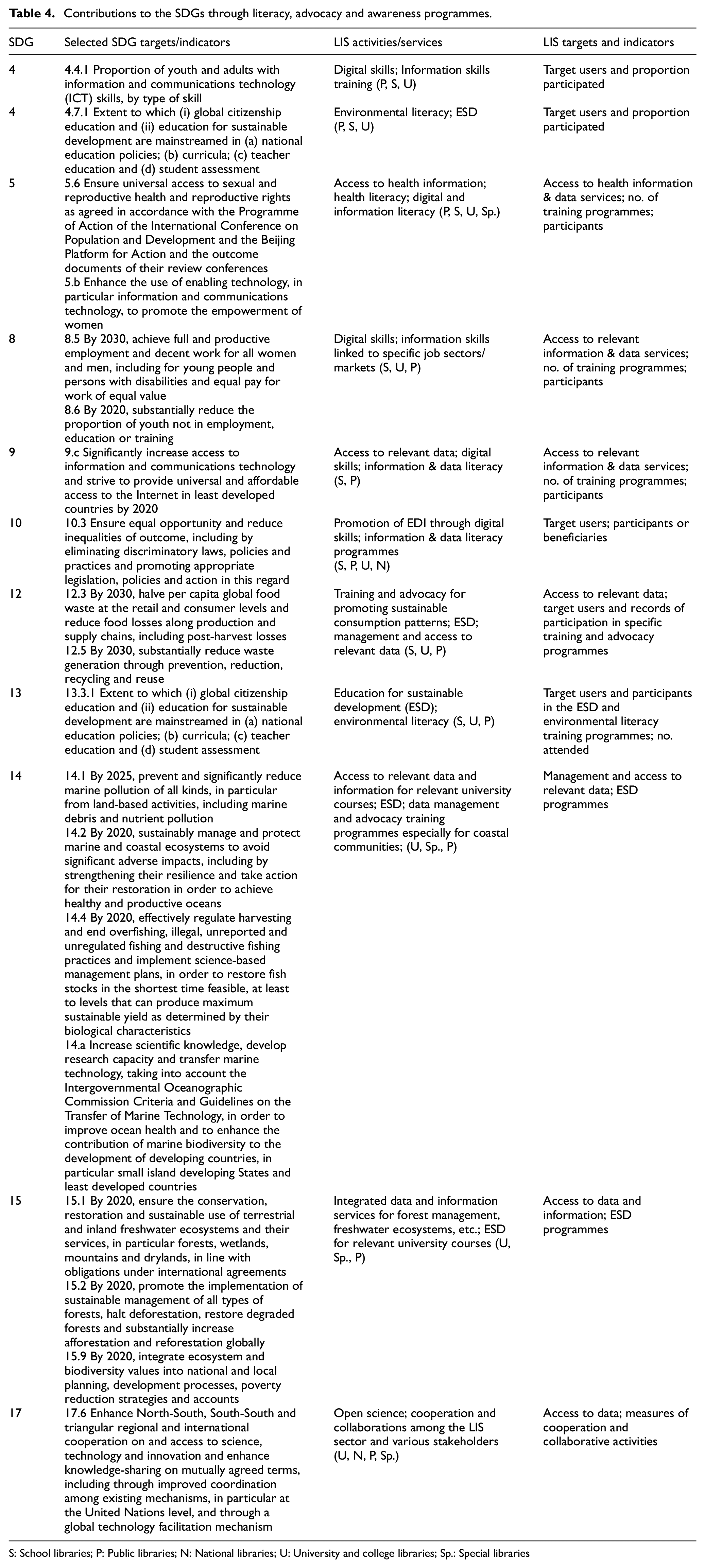
Access to information is a cross-cutting issue that supports all of the SDGs (https://sdgs.un.org/partnerships/contribution-libraries-sdgs), and therefore, the LIS sector can make significant contributions to improve the outcomes across all the SDGs. Tables 2–4 show how the different LIS services can contribute to the specific targets and indicators of a number of the SDGs. An indication of the specific type(s) of library that can offer the specific services, mentioned in Tables 2–4, is shown in column 3 (U = University and College libraries; S = School libraries; P = Public libraries; N = National libraries and Sp. = Special libraries). However, these should be taken as indicative only, and in fact, any library – depending on its remit and resources – can offer or introduce services that are relevant to any SDG. Similarly, the activities and services, shown as relevant for the specific SDG targets and indicators in Tables 2–4, are not mutually exclusive; a specific information service or activity can contribute to more than one SDG, and similarly more than one information services can contribute to the same SDG. The LIS activities and services shown in these three tables are separated just to demonstrate how they can contribute to several SDGs through specific resources and services, through ESD programmes and through information education and user training in different areas that have been identified as the key requirements for achieving specific targets of different SDGs.
Contributions to the SDGs through collections and access.
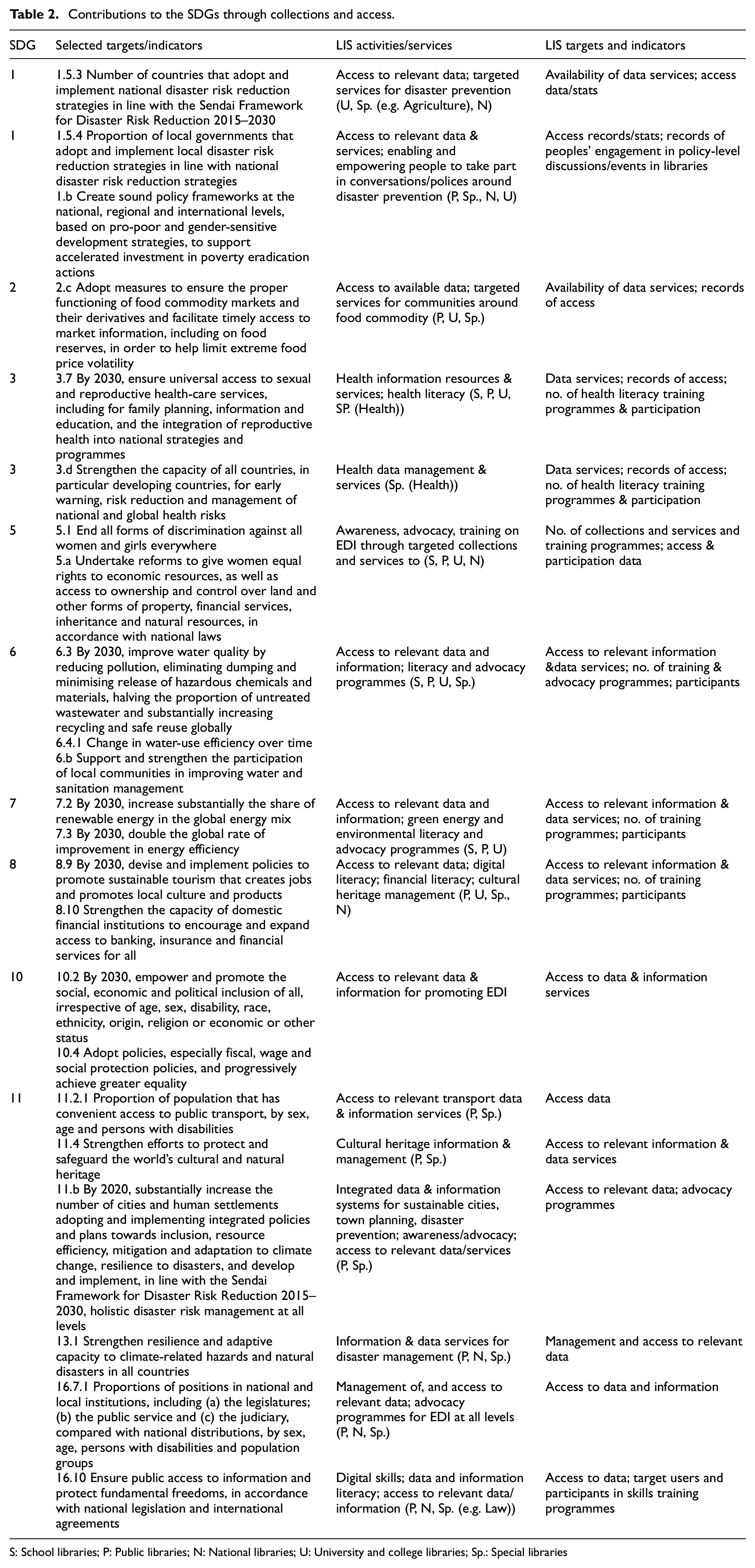
S: School libraries; P: Public libraries; N: National libraries; U: University and college libraries; Sp.: Special libraries
Contributions to the SDGs through ESD.
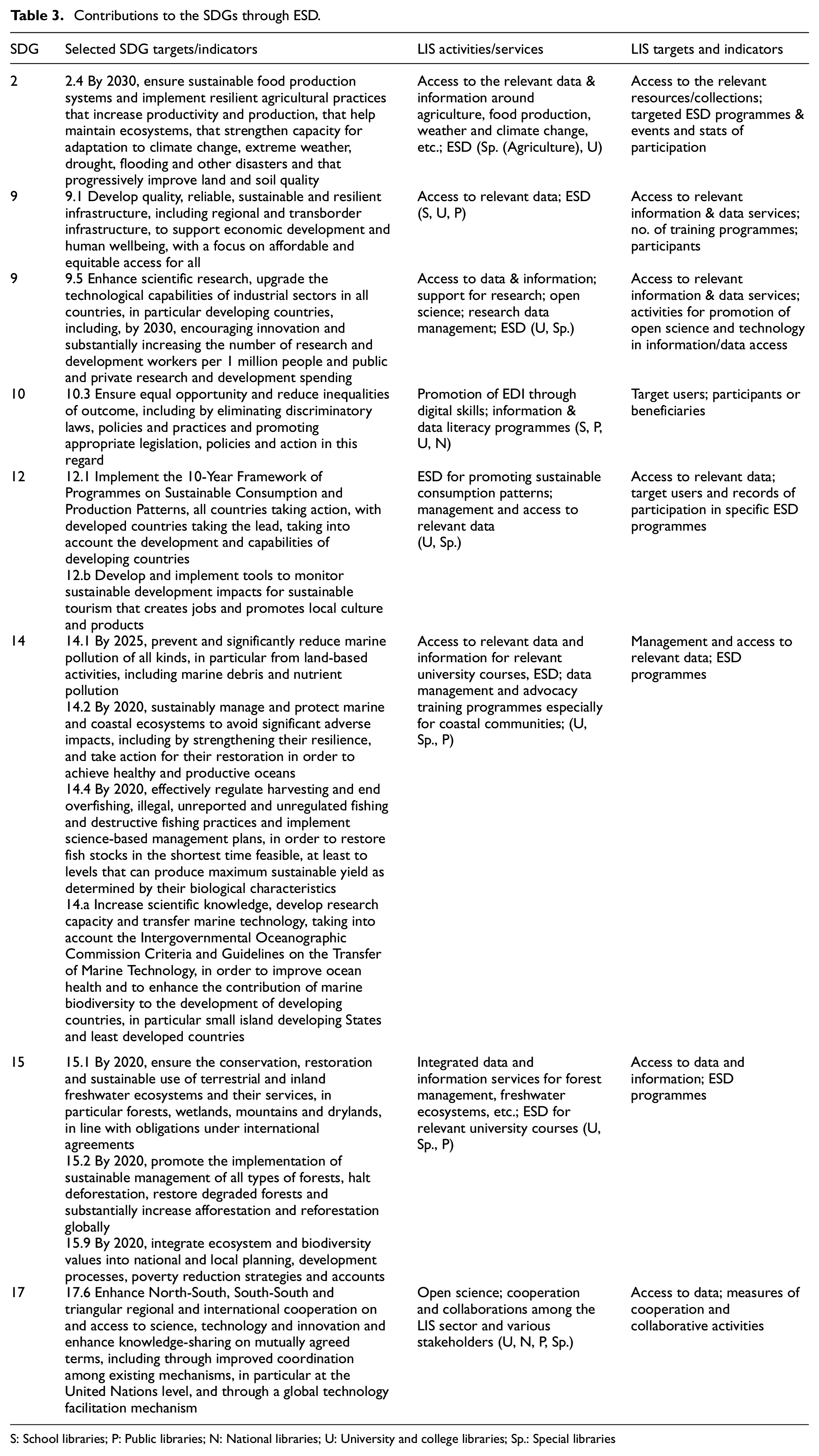
S: School libraries; P: Public libraries; N: National libraries; U: University and college libraries; Sp.: Special libraries
Contributions to the SDGs through literacy, advocacy and awareness programmes.
S: School libraries; P: Public libraries; N: National libraries; U: University and college libraries; Sp.: Special libraries
1.4.2. ESD
ESD ‘gives learners of all ages the knowledge, skills, values and agency to address interconnected global challenges including climate change, loss of biodiversity, unsustainable use of resources and inequality. It empowers learners of all ages to make informed decisions and take individual and collective action to change society and care for the planet’ (https://www.unesco.org/en/education-sustainable-development/need-know). As shown in Table 3, a number of targets of the SDGs call for ESD programmes, at formal and/or informal level, and these are mapped on to the specific library activities and services in Table 3.
1.4.3. Availability of data on the SDGs
While Tables 2 and 3 highlight some areas where the LIS education and research can contribute, one of the major challenges that stand in the way of progress in achieving is the availability of relevant data and information [3]. Although more than 8 years have passed since the adoption of the UN Resolution on the SDGs in 2015, data gaps remain a major challenge. For example, reports show that (https://unstats.un.org/sdgs/report/2021/The-Sustainable-Development-Goals-Report-2021.pdf; Sustainable Development Report 2022 (sdgindex.org)):
fewer than half of 193 countries, or areas, have internationally comparable data for 5 of the 17 SDGs;
the lack of country-level data is particularly worrisome for SDG13 (climate action), where, on average, only about 1 in 6 countries have the data available and
country-level data deficits are also significant in areas related to:
sustainable cities and communities (SDG11);
peace, justice and strong institutions (SDG16);
sustainable production and consumption (SDG12) and
gender equality (SDG5).
considerable gaps in official statistics remain in terms of country coverage and timeliness for many SDGs; in particular, SDG4 (quality education), SDG5 (gender equality), SDG12 (responsible consumption and production), SDG13 (climate action) and SDG14 (life below water).
Another UN report shows that ‘among countries surveyed, 39% had difficulties adequately collecting data on migrants, 27% had difficulties collecting data on older persons, and 27% had difficulties with data on persons with disabilities’ (Sustainable Development Goals Report 2022, 6 The-Sustainable-Development-Goals-Report-2022.pdf (un.org)).
These clearly shows a gap where the LIS sector can make significant contributions by educating and building the workforce in each country who have the requisite knowledge of various SDG indicators, and the corresponding metadata that need to be collected, processed and shared to measure the different SDG targets.
1.4.4. Digital, Information and Environmental Literacy
Environmental literacy plays an important part in promoting not only SDG13 (Climate change), but it also contributes to several other SDGs. Sustainable information literacy is situated at the intersection of three core elements of a higher education system, viz. research, curricula and library; this can be regarded as a new direction for teaching and research in the information field [44]. Furthermore, digital literacy, and media and information literacy, are the key requirements for achieving success in all the SDGs. So, by promoting media and information literacy, and closing the gaps in inclusive access to information, the LIS sector can make a huge contribution to all the SDGs. Also, the LIS sector can play a key role in promoting sustainability thinking [99] and sustainability literacy ‘that allow individuals to become deeply committed to building a sustainable future and assisting in making informed and effective decisions to this end’ [100].
Some encouraging activities have recently begun that could lead to the development of a strategy and a framework. For example, EBLIDA have recently introduced an interactive open access (OA) resource, called E-PANEMA on library and information–related projects in Europe that are related to the SDGs (EBLIDA.org), and IFLA [101] have created a storytelling manual to help libraries describe their activities in the context of the SDGs. Targets of the various SDGs that call for public education and literacy have been mapped on to the common library activities and services in Table 4.
Tables 2–4 show how the LIS sector can contribute to the SDGs by:
building user- and context-specific thematic collections and resources (data and information) around specific SDGs;
promoting timely access to relevant data and information, that directly contributes to SDG16.10, can also enable people in all sectors, for example, farmers, fishermen, artisans, professionals, lawyers, civil society workers and virtually people in every sector of business and economy, make useful and sustainable contributions to their specific areas of expertise and activities;
developing specific ESD and sustainability literacy programmes at all levels – schools, universities and colleges – can contribute, directly or indirectly, to all the SDGs and
research and professional practices for developing and promoting context-specific digital, information, health and environmental literacy programmes at all levels – schools, universities, informal and lifelong learning – can contribute to all the SDGs, and especially to SDG13, SDG7 and also SDG12 that can in turn contribute to SDG5, SDG6, SDG10, SDG11, SDG14 and SDG15.
Through improved access to relevant data and information, and ESD programmes, the LIS sector can also empower and enable people to engage in informed discussions and debates leading to a sustainable and inclusive society, promoting cooperation and resource sharing around a number of other SDGs.
As discussed in this article, and elsewhere in the research literature (see, for example, [3,4,102]), data and information form the foundation of education and research in information science. Hence, management of, access to data and information and various associated issues should be at the core of information science education and research for sustainable development. As shown in Figure 2, an information science education research agenda, founded on data and information, may include several inter-related facets, such as:
development of thematic resources, the required education and skills for management of information and data and activities and services around specific SDG targets and indicators, as discussed in Tables 2–4;
development of ESD programmes around the themes of specific SDGs and their targets, for example, sustainable health (SDG3), sustainable water and sanitation (SDG6), energy (SDG7), sustainable industries (SDG9), sustainable cities (SDG11), sustainable consumption (SDG12), climate action (SDG13), sustainable life under water (SDG14) (sustainable marine life) and over land – sustainable agriculture and forestry (SDG15), etc.;
development of various literacy and training activities aligned with the specific targets and indicators of different SDGs (e.g. LIS activities around information and digital skills for contributing to SDG4.7.1/12.8.1/13.3.1) that has the following target: ‘Extent to which (i) global citizenship education and (ii) education for sustainable development are mainstreamed in (a) national education policies; (b) curricula; (c) teacher education and (d) student assessment’ [101];
developing frameworks for measuring the contributions of research and professional information services to different SDGs in specific country, sector, industry and business contexts and
developing strategies and action plans for cooperation and collaborations within the LIS sector, and also with the external partners and stakeholders.
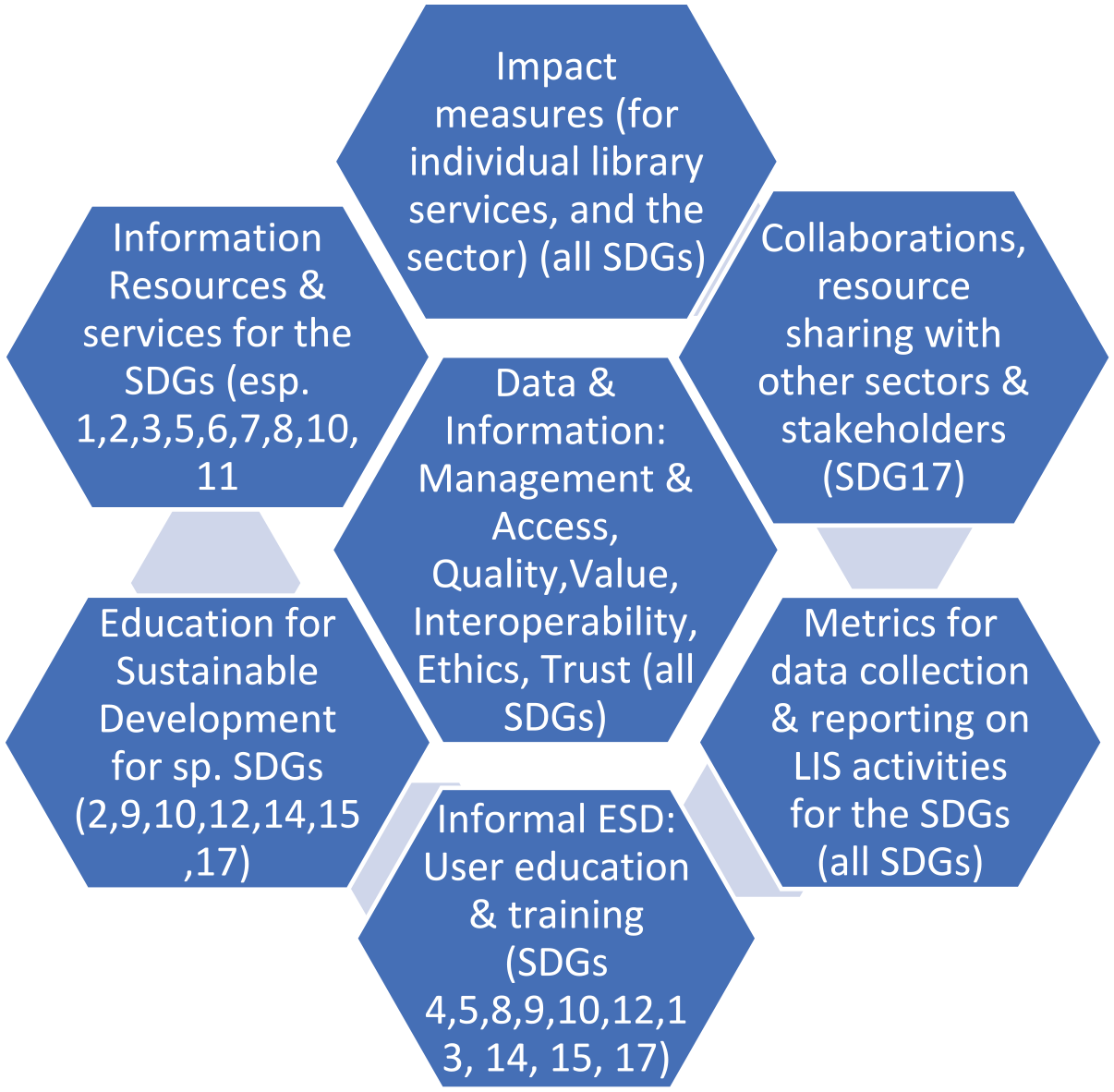
A schematic view of the topics for education and research in information for the SDGs.
2. Conclusion
Information education and research, aligned with the specific targets of different SDGs, can play a major role in contributing to the SDGs. Improved access to the relevant data and information can not only help the general public, but can also help professionals, researchers, decision makers, policy makers and so on, to play their roles for achieving the SDGs (see Figure 2). Overall, by building collections of thematic resources, targeted services and especially adopting the open access policies, the LIS sector can contribute in all the three dimensions of sustainable development – economic, social and environmental – for reducing poverty and hunger and improving health, education, and employment and side by side contributing to building sustainable water and sanitation systems, sustainable energy systems, sustainable industries and work, sustainable cities and sustainable climate and ecosystems – on land and under water through access to information.
IFLA has been actively advocating and providing information on how libraries can connect 4 billion people around the world in contributing to the achievements in the SDGs [93]. ‘There is no truly sustainable development without access to information and no meaningful, inclusive access to information without libraries’, remarked the former President of IFLA [103]. The IFLA Strategy (2019–2024) highlights IFLA’s commitment to the SDGs [104].
As shown in Tables 2–4 and Figure 2, strategically designed LIS activities can contribute to virtually all the SDGs. Once adopted within the strategy and various action plans around different library services, as pointed out in Tables 2–4, the LIS sector around the world will be able to reach out to billions of people enabling and empowering them to contribute to various SDGs. The mapping of LIS activities on to the specific SDGs (Tables 2–4), and systematic research on different activities of the LIS sector and their contributions to the various SDGs (shown in Figure 2), will also pave the way for developing future library and information science education and research programmes around the SDGs. A strategic approach to research will also enable universities, professional associations and major national, public, academic and research libraries around the world, to work together to embed all the 17 SDGs in the information science teaching and research programmes, which will lead to the creation of appropriately trained information systems and services workforce who can contribute to the SDGs through their sustainable thinking and sustainable professional practices.
Footnotes
Declaration of conflicting interests
The author(s) declared no potential conflicts of interest with respect to the research, authorship and/or publication of this article.
Funding
The author(s) received no financial support for the research, authorship and/or publication of this article.
