




Abstract
This study aims to provide insight into the overlap and distinctiveness of four forms of social rank (i.e., popularity, likeability, dominance, and prestige) that are frequently discussed across the social sciences. We do so by examining the associations of these self-reported social rank indicators with each other, and with observer-rated social behaviors (positive behavior, skillful leadership, negative behavior, dominant behavior, and behavioral influence) in emerging adults (n = 232, age: 18–25, 54% women) interacting in online cooperative and competitive group tasks. Results showed that the four social rank indicators were distinct, as evidenced by moderate correlations and unique profiles of behavioral correlates. After controlling for other social rank indicators, prestige emerged as the most robust and consistent predictor of observer-rated social behavior, including positive behavior, skillful leadership, and behavioral influence, across both contexts. Taken together, our results reveal that popularity, likeability, and prestige overlap most strongly and partially share behavioral profiles, whereas these three social rank indicators are distinct from dominance.
Social rank indicates one’s standing among others and is associated with well-being and adjustment (Parker & Asher, 1987). A number of distinctions between dual bases of social rank (Körner et al., 2025) have been proposed in various disciplines in the social sciences. This includes distinctions in psychology in general (e.g., power vs. status; Magee & Galinsky, 2008; resource-holding potential vs. social attention-holding power; Gilbert et al., 1995), developmental psychology (e.g., coercive vs. prosocial strategies; Hawley, 1999; popularity vs. likeability; Cillessen & Marks, 2011), evolutionary psychology (e.g., dominance vs. prestige; Henrich & Gil-White, 2001), as well as anthropology (e.g., force vs. persuasion; Krackle, 1978) and political science (e.g., hard vs. soft power; Wilson, 2008). From this vast literature on social rank, we focus on popularity, likeability, dominance, and prestige.
In developmental psychology, popularity and likeability describe the social rank of children and adolescents at school (Cillessen & Marks, 2011). Popularity is described as social prestige, influence, and visibility and refers to a youth’s reputation in the entire peer group. For likeability, positive affect is central, as it refers to a peer’s personal evaluation of a specific other. In evolutionary and social psychology, dominance and prestige describe the social rank (attainment) of adults. Henrich and Gil-White (2001) defined dominance in terms of control and power, obtained through force or intimidation of others, and prestige in terms of respect and admiration, granted by others rather than actively obtained.
These two social rank dichotomies may both be relevant in the transition period from adolescence to adulthood. On one hand, some emerging adults still spend a lot of time with peers in school environments similar to those of adolescents, where popularity and likeability are important. Therefore, popularity and likeability may continue to play a role after secondary school. Indeed, emerging adults still associate popularity with social behaviors and other attributes (Lansu et al., 2023; O’Mealey & Mayeux, 2022). Likeability may also remain a relevant rank indicator, as connectedness is a universal human need (Baumeister & Leary, 1995; Ryan & Deci, 2000).
On the other hand, dominance and prestige may be important indicators of social rank for emerging adults as well, as they transition to new social environments, such as the workplace. Taking on leadership roles may, for example, increase the relevance of dominance and prestige. These constructs may contribute to our understanding of why group members defer to some leaders, while avoiding and fearing others, as well as our understanding of related social-cognitive processes (for a review, see Henrich & Gil-White, 2001).
Although both social rank dichotomies may thus play a role in the social lives of emerging adults, empirical tests of the associations between these constructs are lacking. While popularity and likeability are often tied to youth in schools, and dominance and prestige are examined in adults at work, emerging adulthood may offer an opportunity to examine both social rank dichotomies, including their similarities and differences. Understanding popularity, likeability, dominance, and prestige among emerging adults contributes to the study of social rank and behavior in this unique developmental phase (Tanner & Arnett, 2016).
Conceptual Similarities and Differences
Popularity and likeability, versus dominance and prestige, could be considered as different labels for the same social rank indicators. Researchers have suggested that these two dichotomies reflect similar dimensions (Tackett et al., 2023; Volk et al., 2022). Indeed, popularity and dominance both reflect power and a component of being feared, while likeability and prestige both reflect positive affect and approval from others. (Cillessen & Marks, 2011; Henrich & Gil-White, 2001).
However, there are also conceptual differences, suggesting that popularity and dominance, and likeability and prestige, cannot be used interchangeably. Popularity is a peer-perceived reputation (i.e., being seen by many peers as “most popular”). In contrast, dominance is defined in terms of an individual’s behavior or characteristics (e.g., “I am willing to use aggressive tactics to get my way”). Likeability is defined by peer-reported affective ties (i.e., being named by many peers as “liked most”). In contrast, prestige is defined by respect or admiration induced by the competence of the prestigious individual (e.g., “Members of my peer group respect and admire me”). In turn, prestige shares this reputation of respect and admiration with popularity rather than likeability.
To summarize, popularity and dominance, and likeability and prestige, share some characteristics but also differ from one another. Therefore, in the current investigation, we first examined whether popularity and likeability capture similar forms of social rank as dominance and prestige by examining their associations.
Associations With Social Behavior
Behavioral Correlates
Prior work has consistently shown distinct behavioral profiles for popularity versus likeability (Lansu & Cillessen, 2012; van den Berg et al., 2015) and dominance versus prestige (Körner & Schütz, 2020; Witkower et al., 2020). There are some parallels in the behavioral correlates of popularity and dominance. Popularity and dominance are both associated with aggression (Johnson et al., 2007; Lansu & Cillessen, 2012; Reijntjes et al., 2013; Witkower et al., 2020). Moreover, they are both associated with social influence, for example, in group or individual decision-making situations with peers (Cheng et al., 2013; Cheng & Tracy, 2014; Gommans et al., 2017).
There are also parallels in the behavioral correlates of likeability and prestige. Likeability is associated with prosocial behavior (Lansu & Cillessen, 2012; O’Mealey & Mayeux, 2022; van den Berg et al., 2015). Prestige is also associated with prosocial traits (Cheng et al., 2010) and the encouragement of positive intergroup relationships (Case et al., 2018). Moreover, likeability is associated with social influence in individual decision-making situations, or with being perceived as influential (Cialdini & Goldstein, 2004; Gommans et al., 2017; Kwon & Lease, 2014), and prestige is associated with influence in a group decision-making situation (Cheng et al., 2013).
However, there are also differences in behavioral correlates between popularity and dominance, and between likeability and prestige. In addition to aggression and influence, popularity is associated with prosocial behavior (Findley & Ojanen, 2013), while dominance is not. The mixed behavioral profile associated with popularity (Cillessen & Rose, 2005; Lansu & Cillessen, 2012) is similar to Hawley’s (1999) concept of bi-strategic resource control (i.e., alternating between or combining coercive and prosocial resource control strategies). The behavioral profiles of popularity and dominance thus overlap partially, but not completely.
Similarly, the behavioral profiles of likeability and prestige overlap, but differ too. Prestige confers deference from others and thus has more direct links to leadership than likeability, which does not necessarily invite deference. Even if the behaviors of prestigious and well-liked individuals are similar, their intentions behind those behaviors may differ. The prosocial behavior of prestigious-minded individuals may be motivated by leadership ambitions (Suessenbach et al., 2019). The prosocial behavior of well-liked individuals may be driven by more intrinsic motives, such as altruism or the maintenance of social harmony (Findley-Van Nostrand & Ojanen, 2018).
Altogether, behavioral correlates do not fully clarify whether these social rank indicators tap into two similar dichotomies, or whether they are all unique. To further examine their overlap and distinctiveness, this study also examined the behavioral correlates (i.e., positive behavior, skillful leadership, negative behavior, dominant behavior, and behavioral influence) of popularity, likeability, dominance, and prestige in observed interactions among emerging adults.
Unique Predictive Value for Social Behavior
The bivariate associations among the four forms of social rank and social behaviors will provide interesting insights, as they indicate potential overlap. However, the unique contributions of each form of social rank in predicting social behavior will clarify their distinct effects, which is valuable from a practical point of view. This will help to determine which constructs are the most distinct from each other or which ones overlap in predicting social behavior, indicating that it may be less useful to consider them in combination. Therefore, we extended our insight into these associations by examining the unique contribution of each social rank indicator to the prediction of social behavior.
Contextual Differences in the Associations of Social Rank With Social Behavior
The associations of social behaviors with emerging adults’ perceptions of their overall social rank may depend on contextual factors (Li et al., 2016; Maner, 2017). For example, a context in which individuals must cooperate may elicit different behaviors than a context in which they compete. Prestigious or well-liked individuals may display their prosocial behavior or leadership skills more prominently when working together, helping or guiding their team toward their common goal. Dominant individuals may display the forceful behavior they are capable of more prominently when competing, as this can contribute to winning. Lansu et al. (2021) hypothesized that popular adolescents may show different behaviors depending on the context. In line with Hawley’s (1999) concept of bi-strategic resource control and the notion of functional flexibility (i.e., possessing a wide repertoire of social behaviors, and using them adaptively, deploying the strategy that is most effective given the situation; Paulhus & Martin, 1988), they may exhibit the behavior that best fits the current context, as their behavioral repertoire includes both forceful and prosocial strategies.
Thus, the behavioral expression of social rank may differ between cooperative and competitive contexts. The behaviors associated with each rank indicator may be more effective in one context than in another, and thus be more prominently displayed, leading to stronger associations between emerging adults’ perceptions of their social rank and behavior in a certain context. So far, rank-behavior associations in emerging adults have been examined predominantly in cooperative contexts, and the moderating role of context has been examined in other age groups (Lansu et al., 2021). Therefore, we examined whether emerging adults’ self-reported social rank was associated differently with behavior observed in a cooperative context than with behavior observed in a competitive context.
This Study
This study aimed to shed light on the overlap and distinctiveness of popularity, likeability, dominance, and prestige in emerging adulthood. To do so, we examined these dichotomies beyond the contexts in which they are typically studied. As popularity and likeability apply to specific peer groups, we assessed them with reference to either school or work as the primary peer contexts for emerging adults. We approached dominance and prestige as trait-like, without specifying a context. However, it is likely that these self-perceptions also depend on school or work as a primary peer context.
To examine the overlap among popularity, likeability, dominance, and prestige, we assessed their correlations with each other and with social behaviors. To assess their unique contributions to predicting social behavior, we examined the effects of all four social rank indicators simultaneously. Our examinations were exploratory, as we are unaware of any previous studies that address these questions among emerging adults. We observed a range of social behaviors during online video call sessions of four unacquainted emerging adults in a cooperative and a competitive task, including positive behavior, skillful leadership, negative behavior, dominant behavior, and behavioral influence. As indicated, we expected that the behavioral expression of social rank would differ between cooperative or competitive contexts. Therefore, we also examined whether the associations between social rank and behavior differed between the two contexts. Given that sex or gender differences can be expected in social behavior and its associations with social rank (Eagly, 2013; Kakkar, 2024; Mayeux & Kleiser, 2020; Rose et al., 2011), we controlled for differences in social behavior between men and women.
Method
Participants
Data of this study were collected as part of the Nijmegen Longitudinal Study on Infant and Child Development (NLS; van Bakel & Riksen-Walraven, 2002). Of the original sample (n = 129), 51 longitudinal participants (40%) were part of this study. In addition, 181 new participants were recruited through convenience sampling. Groups were scheduled to consist of four unacquainted same-sex participants of similar educational levels, including one longitudinal participant and three new participants. Due to participant cancelations, some groups (18%) had three participants, and some consisted of new participants only (8%).
The total sample consisted of 232 Dutch-speaking emerging adults (age: 18–25, M = 22.80, SD = 2.11, 54% female) from various educational levels (7% vocational [MBO], 31% professional college [HBO], 60% university) with complete data on all measures of this study. Fourteen participants were excluded because their recordings in the cooperative task (n = 4), competitive task (n = 3), or both (n = 7) were missing due to technical issues.
Procedure
Participants were invited to complete a questionnaire and take part in an online video call session. After providing written consent, participants received the questionnaire 2 weeks before their scheduled video call session. The total questionnaire took 45–60 min to complete for longitudinal participants and 30–45 min for new participants. The online video call session took 1.5–2 hr. The experimenter confirmed at the start of the group session that the participants were indeed unacquainted. Participants received a € 40 (new participants) or € 45 (longitudinal participants) gift card to thank them for their participation. This research has been evaluated by the ethics committee of Radboud University [ECSW-2021-091].
The video call session contained four tasks, including a “Lost on the Moon” survival task that involved cooperation (Bottger, 1984) and a competitive version of the same task. In the cooperative task, participants were first asked to individually rank 15 items in order of importance for survival after an imaginary plane crash. After compiling their individual list (5 min), participants were instructed to rank-order the items together as a group (10 min). To ensure the group focused on cooperation, they were instructed that there was no correct answer but that the emphasis was on making a group decision. In the competitive task, each participant received instructions for a “secret mission” after making their individual list and before starting the group task, to create conflicting goals among group members. Each secret mission consisted of three items, which varied between participants, that they should get the group to collectively endorse in the group’s top 5. Participants were instructed that the person who would best execute their secret mission would win the game. As a consequence, each group member was incentivized to convince the rest of the group to endorse their items as important for survival. Participants were not aware during the cooperative task that a competitive version of the same task would follow. The order of the tasks was not counterbalanced, as we expected that participants would suspect another twist in the cooperative version if it were done after the competitive version.
Video call sessions were recorded through participants’ webcams. An existing coding scheme for rating social behavior was adjusted for this study. During the development phase, independent observers watched video recordings together. They individually rated participants’ behavior and then compared their scores, discussing any discrepancies. If necessary, the coding scheme was further adjusted, or additional information defining the scale points was added. Development of the coding scheme continued until discrepancies in the interpretation of the social behavior items were solved.
For the rating phase, recordings of the online video call sessions were cut into separate fragments, such that each recording captured one version of the task. Two independent observers coded all participants in each version. They individually watched each recording four times, rating the behavior of one participant in one version of the task (cooperative or competitive) at a time. Recordings (either cooperative or competitive of one group) and participants within the recordings were rated in random order. Observers were not told whether they were coding a cooperative or competitive task. The two observers discussed their ratings together regularly to recalibrate.
Measures
Popularity and Likeability (Self-Reported)
Participants rated their own popularity (“I am popular”) and likeability (“I am well-liked”) on a 7-point Likert-type scale (1 = not at all; 7 = very much). These items were based on commonly used peer nomination questions (Cillessen & Marks, 2011). Participants were asked to rate their popularity and likeability either in their school environment in relation to other students or in their work environment in relation to their coworkers.
Dominance and Prestige (Self-Reported)
Participants completed a self-report version of the Dominance-Prestige scale (Cheng et al., 2010; Henrich & Gil-White, 2001), including eight items for dominance (e.g., “I enjoy having control over others”) and nine items for prestige (e.g., “Members of my peer group respect and admire me”) rated on a 7-point Likert-type scale (1 = not at all; 7 = very much). Item scores were averaged to create a score for each subscale. Internal consistency was acceptable for dominance (Cronbach’s α = .77) and prestige (Cronbach’s α = .73).
Social Behavior in Cooperative and Competitive Contexts (Observer-Rated)
Independent observers rated participants’ positive behavior, skillful leadership, negative behavior, dominant behavior, and behavioral influence, using a modified version of the Child-Friend Interaction Rating Scales (C-FIRS; Lansu & Cillessen, 2015; Peters et al., 2007) that was originally based on the Observed Friendship Quality Scale (OFQS; Flyr et al., 1995). The rating scales are presented in Supplemental Appendix A. Scores were averaged across the two observers.
Inter-rater reliability was assessed using absolute agreement as a direct measure of coder agreement. Krippendorff’s α was also reported, which adjusts for chance agreement and is appropriate for averaged ratings, including variables with a skewed distribution (Hayes & Krippendorff, 2007). Absolute agreement was moderate to high for positive behavior (0.62), skillful leadership (0.64), negative behavior (0.90), dominant behavior (0.94), and influence (0.57). When allowing a 1-point difference, there was near-perfect agreement for positive behavior (0.98), skillful leadership (0.97), negative behavior (0.99), dominant behavior (0.99), and influence (0.98). Krippendorff’s α was low to moderate for positive behavior (α = .56), skillful leadership (α = .69), negative behavior (α = .45), dominant behavior (α = .55), and influence (α = .50). The skew and low variance of the corresponding social behaviors may partially explain the lower values. Variance was especially low for negative and dominant behavior, due to the low prevalence of scores above 1 (12% for negative behavior; 8.2% for dominant behavior), reflecting that overtly unfriendly, angry, and dominant behaviors were uncommon. To address this in the analyses, we dichotomized negative and dominant behavior (0 = not at all; 1 = some or more).
Analyses
First, we computed the bivariate correlations among the four social rank indicators and social behaviors. Correlations were compared between contexts using the cocor package (Diedenhofen & Musch, 2015) in R (R Core Team, 2022). Second, mixed models were computed using the lmer or glmer function (dichotomous outcomes) of the lme4 package (Bates et al., 2015) to examine whether the associations of the four social rank indicators with each social behavior differed between cooperative and competitive contexts. As the two contexts were nested within participants, we modeled participant-level random intercepts. Participants were also nested in groups, but intraclass correlations indicated no group-level variance for skillful leadership (<0.01%), dominant behavior (<0.01%), and influence (<0.01%). For positive behavior (36.56%) and negative behavior (12.33%), we conducted additional analyses, modeling group-level random intercepts. For all mixed models, p-values were obtained through likelihood ratio tests using the mixed function of the afex package (Singmann et al., 2016). When the models showed a significant interaction of social rank with context, we computed linear regression models predicting social behavior from social rank in each context to interpret it.
Results
Correlations among all study variables are presented in Table 1. All associations among the four social rank indicators were positive, except for a negative association between dominance and likeability. All correlations were significantly different from 0, ranging from r = −.16 to r = .31. Popularity was associated with more skillful leadership in both contexts and with more influence in the cooperative context. Likeability was associated with more skillful leadership and less negative behavior in both contexts, more positive behavior and influence in the cooperative context, and less dominant behavior in the competitive context. Dominance was associated with more negative behavior in the cooperative context and more dominant behavior in the competitive context. Prestige was associated with more skillful leadership and influence in both contexts, as well as more positive behavior in the cooperative context. The association of likeability with influence was significantly stronger in the cooperative context than in the competitive context (Zou’s 95% confidence interval [CI] = [0.03, 0.26]).
Correlations, Means and Standard Deviations of All Social Rank Indicators With Observed Social Behaviors in Cooperative and Competitive Contexts.
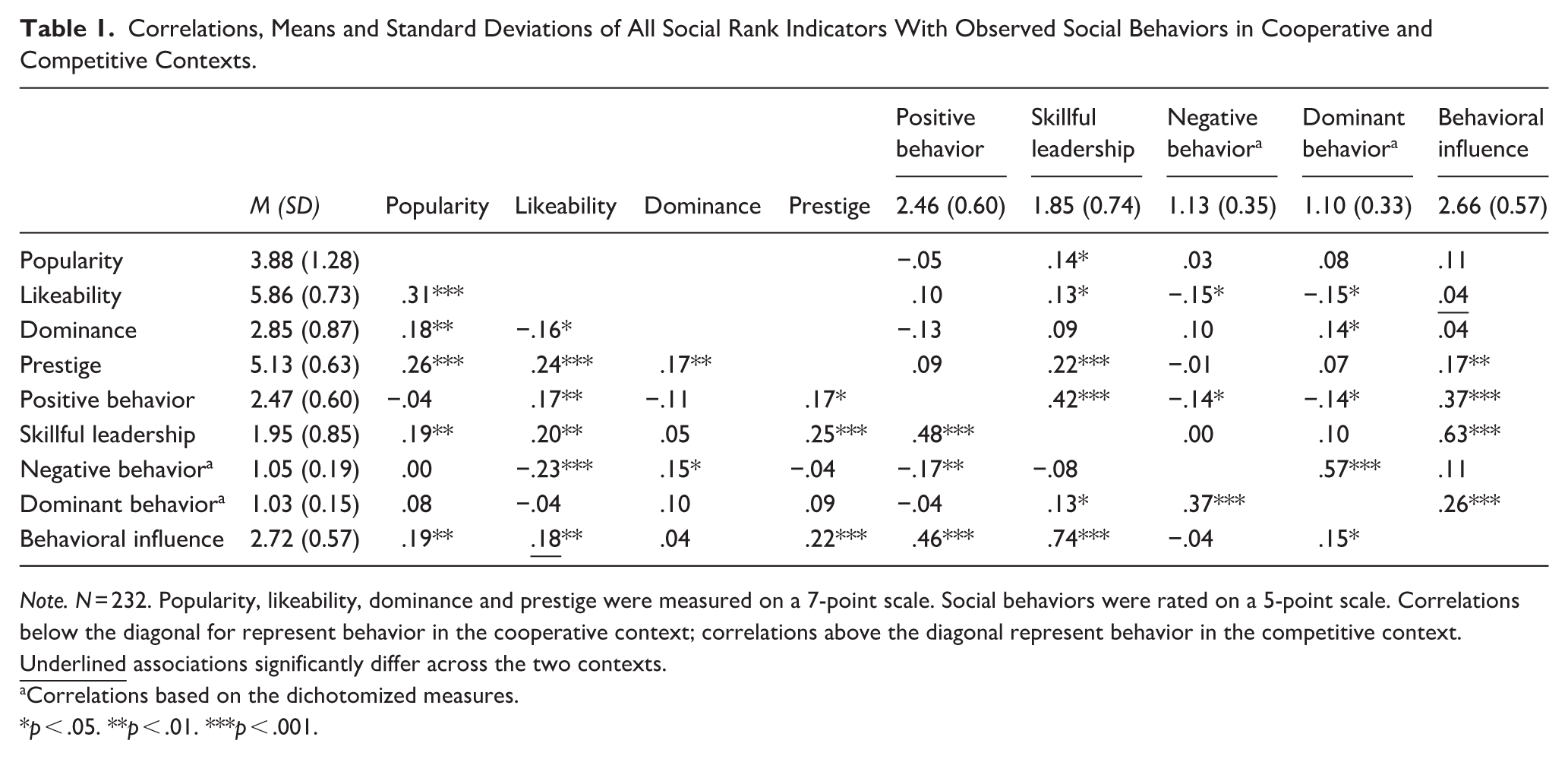
Note. N = 232. Popularity, likeability, dominance and prestige were measured on a 7-point scale. Social behaviors were rated on a 5-point scale. Correlations below the diagonal for represent behavior in the cooperative context; correlations above the diagonal represent behavior in the competitive context.
Correlations based on the dichotomized measures.
p < .05. **p < .01. ***p < .001.
Associations of Social Rank with Social Behavior Moderated by Context
Tables 2 to 6 display the results from mixed-effects models examining the unique explained variance by each social rank indicator, and whether context moderated their associations with each behavior. For positive behavior, there was a main effect of prestige and no moderation by context. When modeling group-level random intercepts for positive behavior, the effect of likeability reached significance.
Mixed Effects Model Predicting Positive Behavior From the Social Rank Indicators, Context, and Their Interactions.
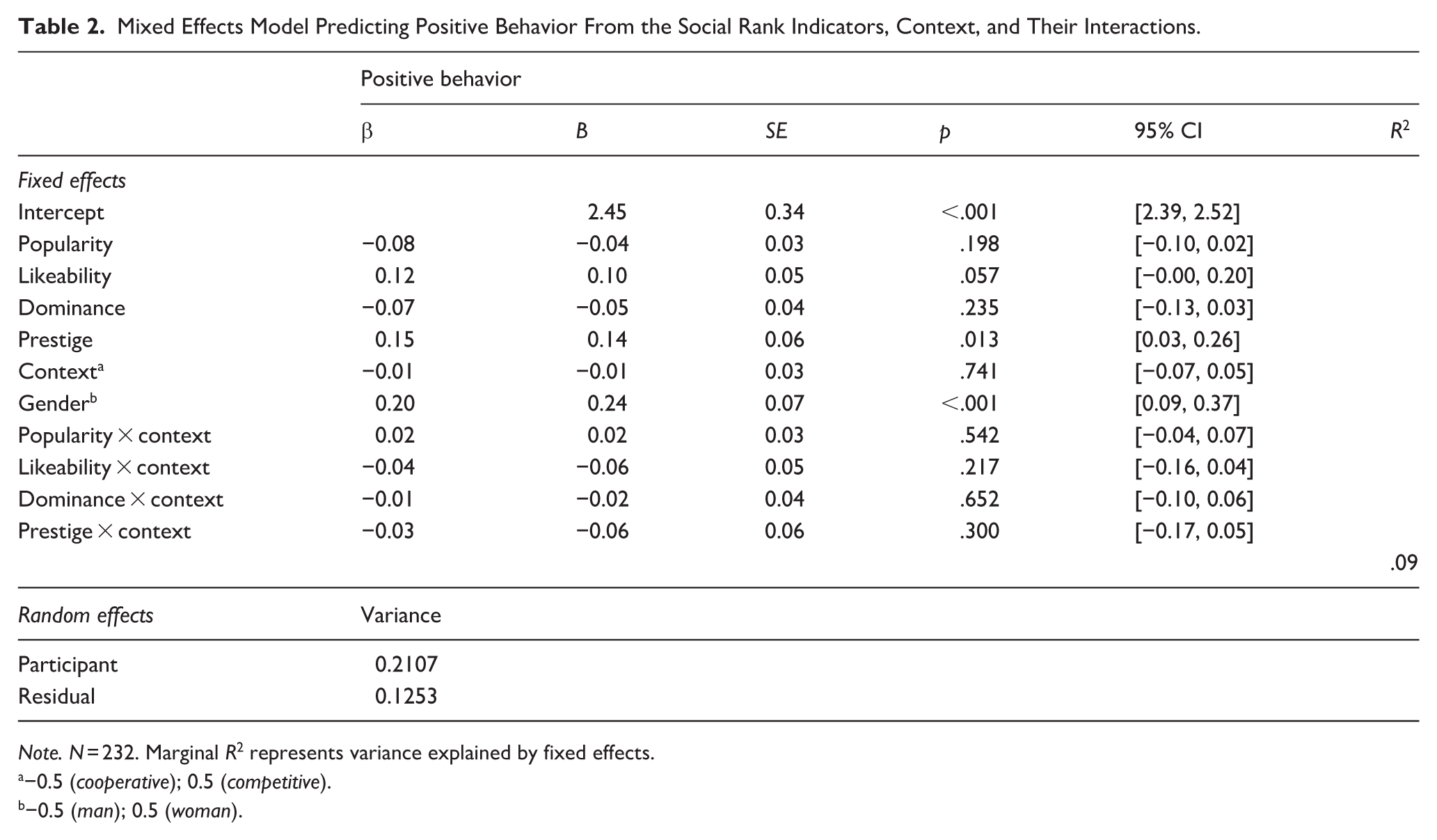
Note. N = 232. Marginal R2 represents variance explained by fixed effects.
−0.5 (cooperative); 0.5 (competitive).
−0.5 (man); 0.5 (woman).
Mixed Effects Model Predicting Skillful Leadership From the Social Rank Indicators, Context, and Their Interactions.
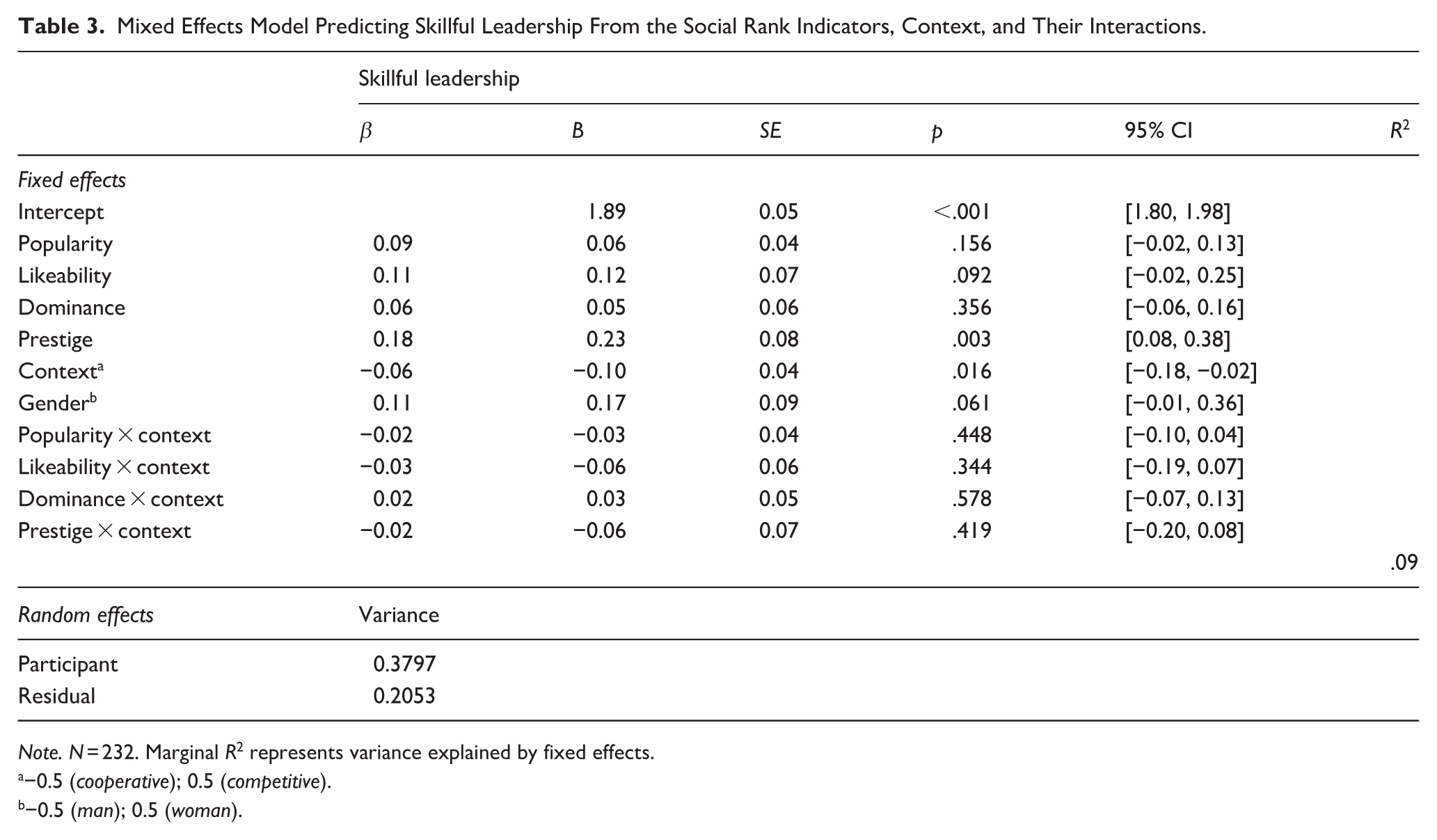
Note. N = 232. Marginal R2 represents variance explained by fixed effects.
−0.5 (cooperative); 0.5 (competitive).
−0.5 (man); 0.5 (woman).
Mixed Effects Model Predicting Negative Behavior From the Social Rank Indicators, Context, and Their Interactions.
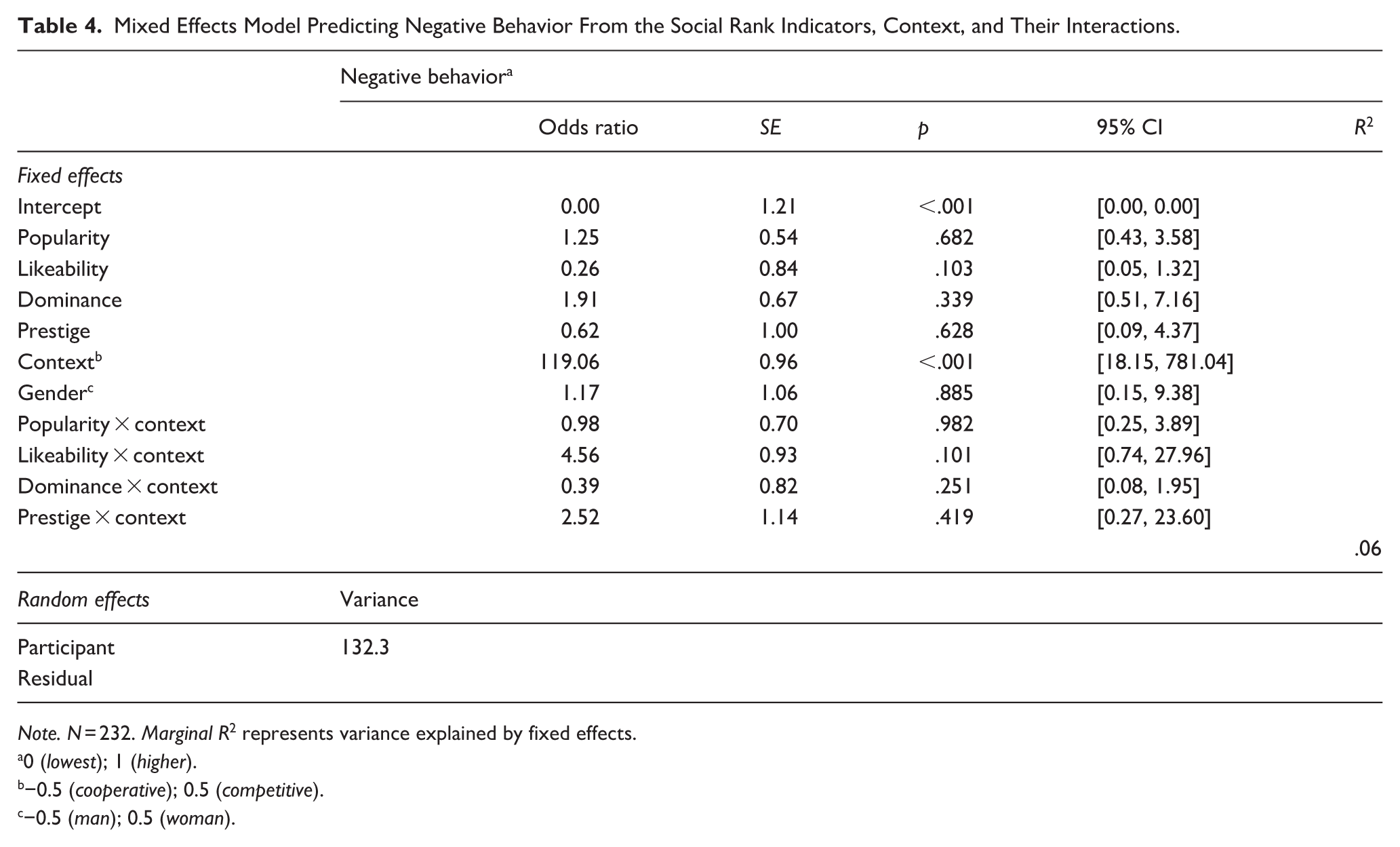
Note. N = 232. Marginal R2 represents variance explained by fixed effects.
0 (lowest); 1 (higher).
−0.5 (cooperative); 0.5 (competitive).
−0.5 (man); 0.5 (woman).
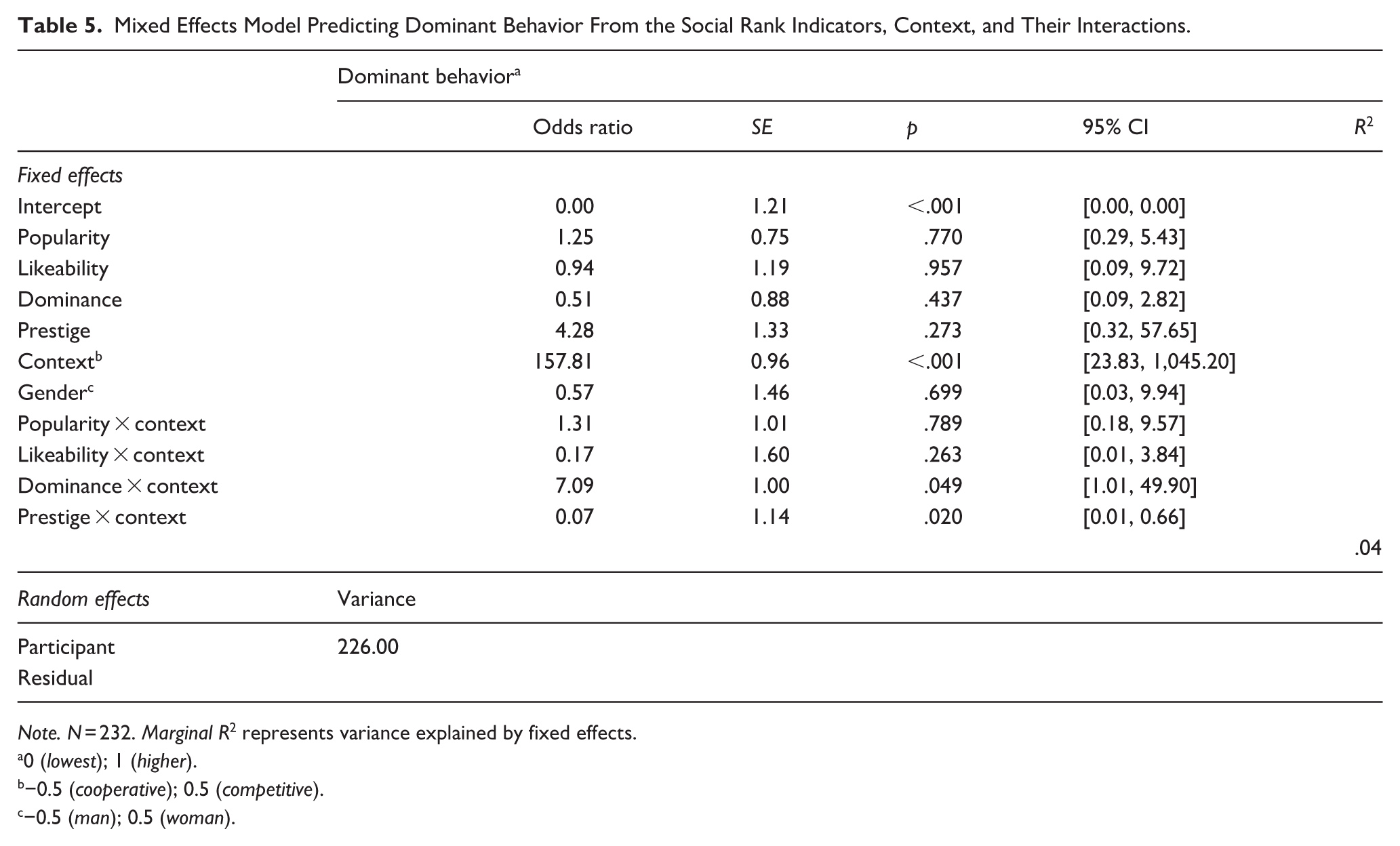
Mixed Effects Model Predicting Dominant Behavior From the Social Rank Indicators, Context, and Their Interactions.
Note. N = 232. Marginal R2 represents variance explained by fixed effects.
0 (lowest); 1 (higher).
−0.5 (cooperative); 0.5 (competitive).
−0.5 (man); 0.5 (woman).
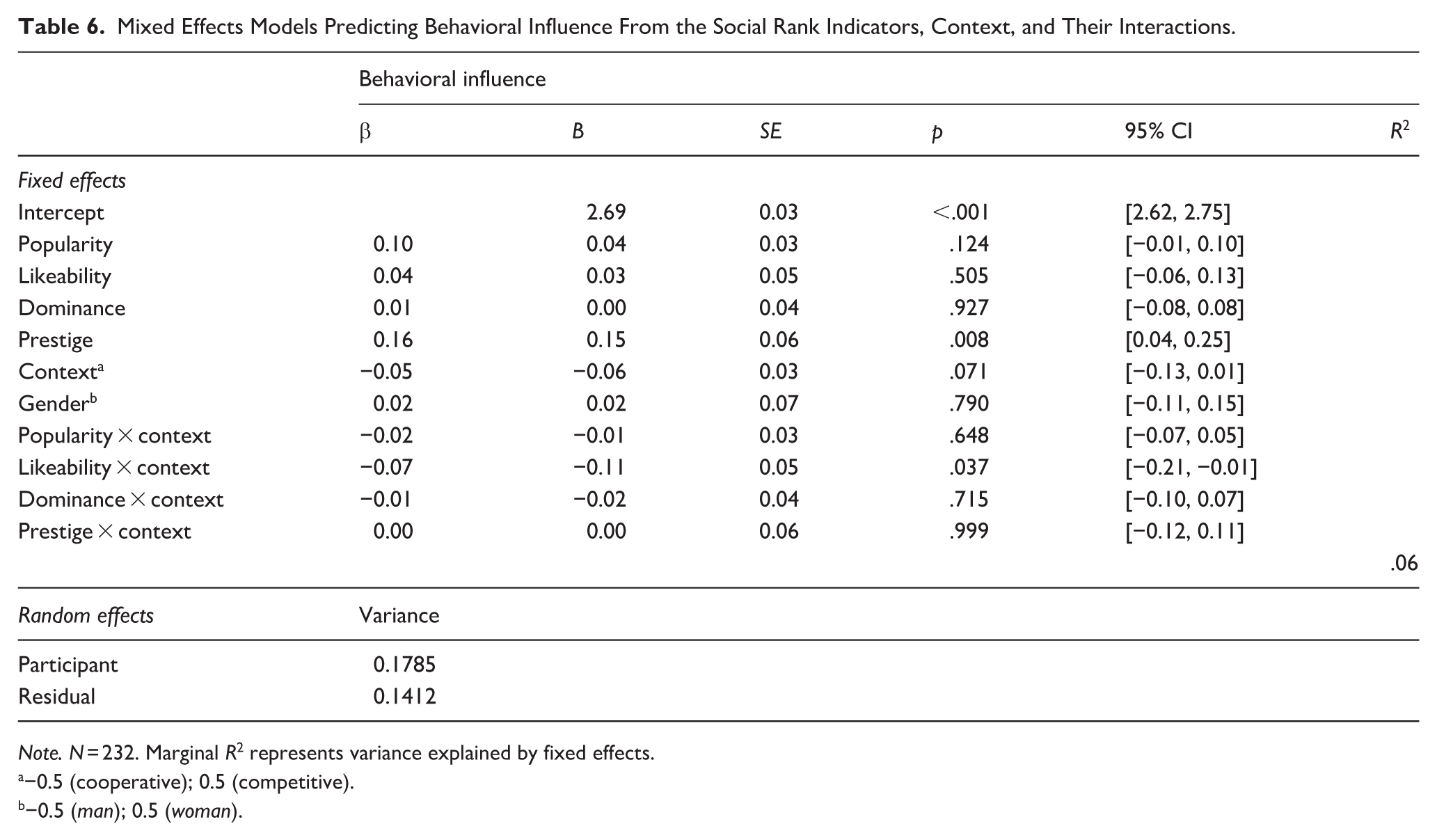
Mixed Effects Models Predicting Behavioral Influence From the Social Rank Indicators, Context, and Their Interactions.
Note. N = 232. Marginal R2 represents variance explained by fixed effects.
−0.5 (cooperative); 0.5 (competitive).
−0.5 (man); 0.5 (woman).
For skillful leadership, there was a main effect of prestige and no significant moderation by context. In this model, we also found a main effect of context, indicating less skillful leadership in the competitive context than in the cooperative context.
For negative behavior, there was a main effect of context, indicating more negative behavior in the competitive than in the cooperative context. When modeling group-level random intercepts for negative behavior, the effects were similar.
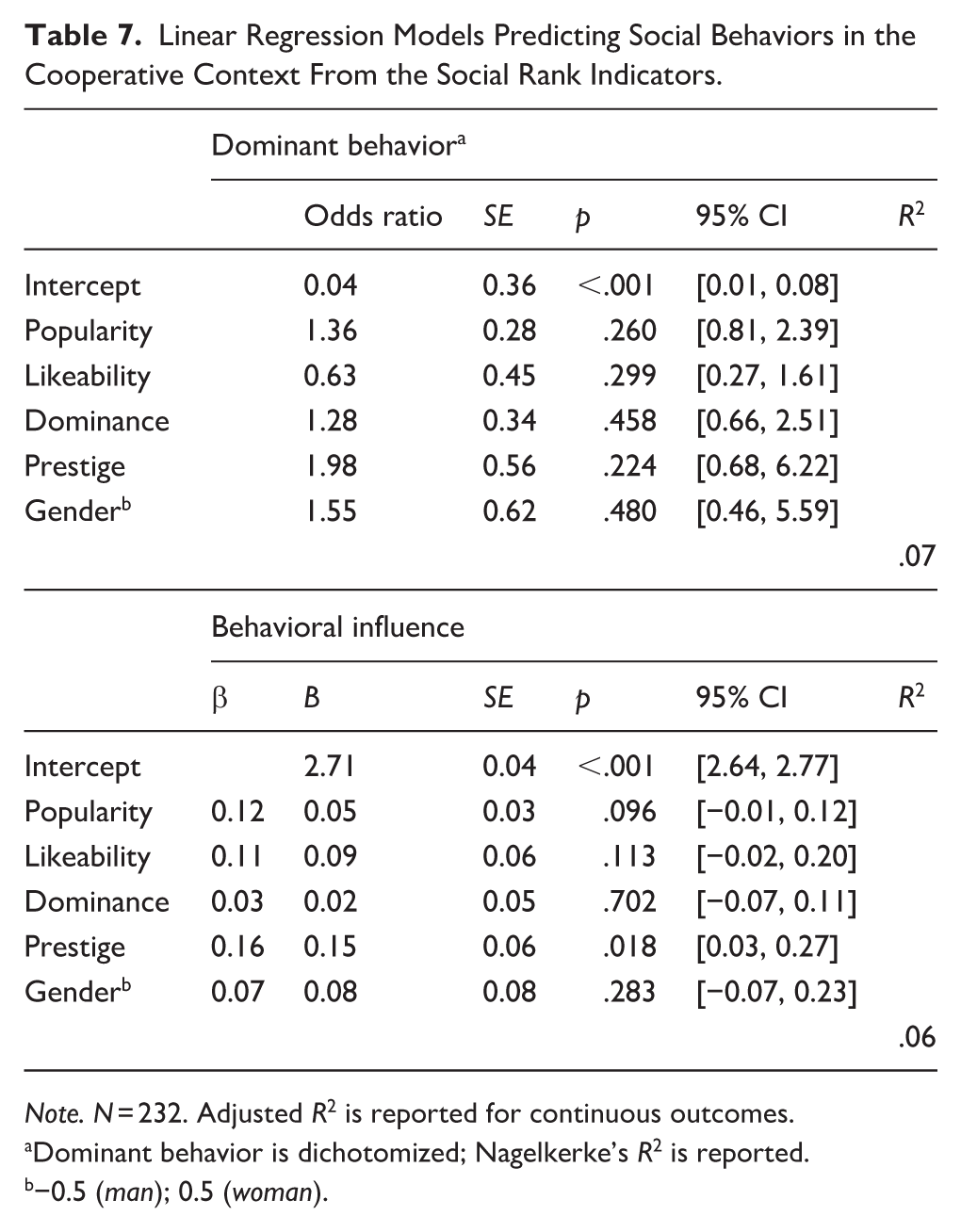
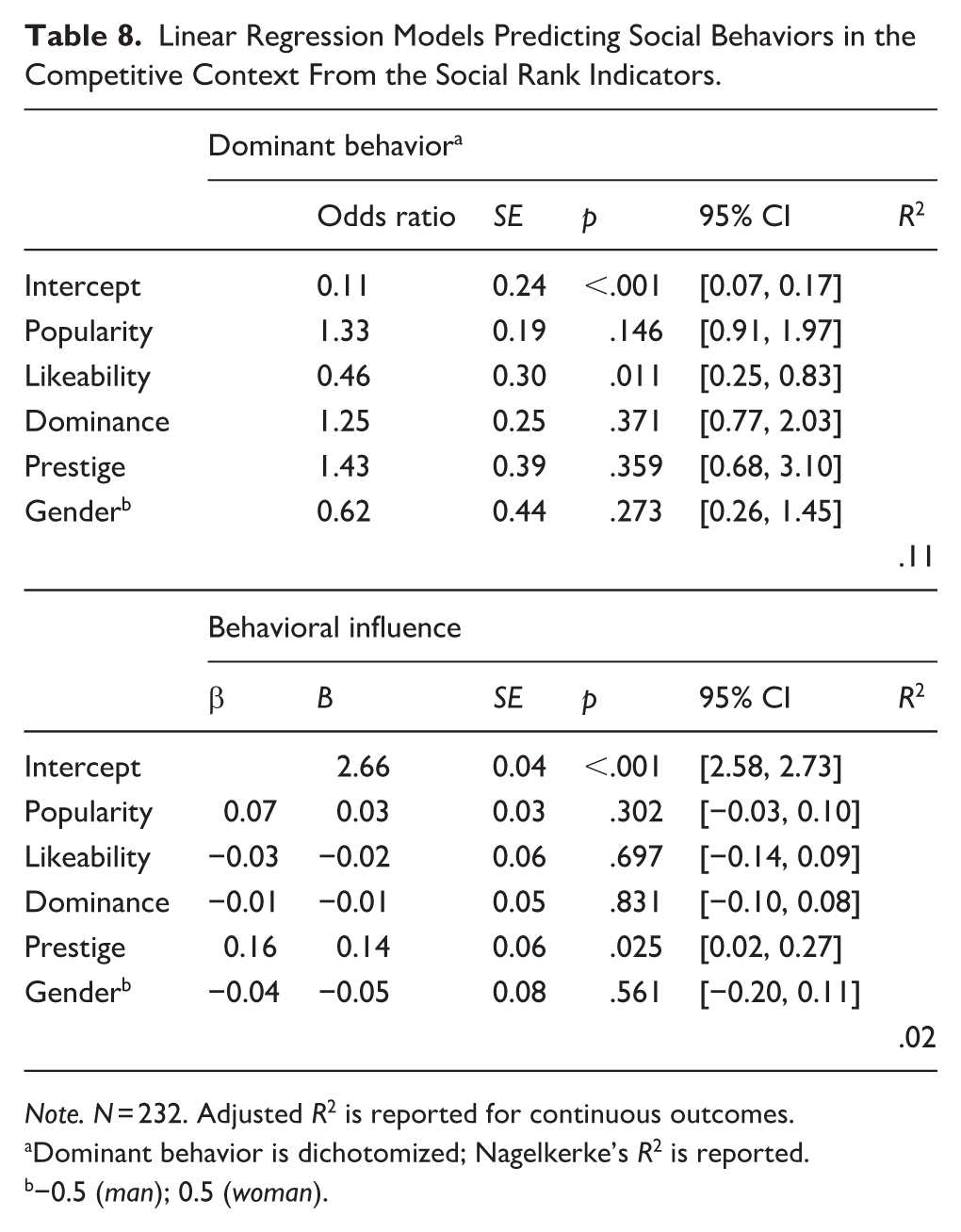
For dominant behavior, there was a main effect of context, indicating more dominant behavior in the competitive than in the cooperative context. There was a significant interaction between prestige and context, and between dominance and context, when predicting dominant behavior. However, when we examined the effects on dominant behavior separately for the cooperative (Table 7) and competitive (Table 8) context, the effects of prestige and dominance did not reach significance in either context. It should be noted that the prevalence of negative and dominant behavior was very low, which may have led to separation issues in the logistic regressions (see Mansournia et al., 2018). That is, context explained almost all the variance, leading to an overestimation of the effect of context and a reduction in the effects of other predictors.
Linear Regression Models Predicting Social Behaviors in the Cooperative Context From the Social Rank Indicators.
Note. N = 232. Adjusted R2 is reported for continuous outcomes.
Dominant behavior is dichotomized; Nagelkerke’s R2 is reported.
−0.5 (man); 0.5 (woman).
Linear Regression Models Predicting Social Behaviors in the Competitive Context From the Social Rank Indicators.
Note. N = 232. Adjusted R2 is reported for continuous outcomes.
Dominant behavior is dichotomized; Nagelkerke’s R2 is reported.
−0.5 (man); 0.5 (woman).
For influence, there was a main effect of prestige, but no prestige by context interaction. There was a significant interaction of likeability with context. However, when we examined the effects separately for each context (see Tables 7 and 8), the effect of likeability on influence was not significant in either context.
Discussion
The aim of this study was to examine the overlap and distinctiveness of popularity, likeability, dominance, and prestige—four social rank indicators that are prominent in disparate literatures—in emerging adults. We first explored how the four social rank indicators were related to each other and to observed social behaviors. Then, we examined the unique predictive effects of each social rank indicator on observed behavior and whether these predictions differed between cooperative and competitive contexts.
Correlations and Behavioral Correlates of Popularity, Likeability, Dominance, and Prestige
Based on conceptual similarities, one might expect positive correlations between the four social rank indicators, especially between popularity and dominance, and between likeability and prestige. The correlations were in the expected directions, but low to moderate in strength, indicating limited overlap. These associations were much weaker than expected given the shared method variance, suggesting that the four social rank indicators are independent constructs rather than indicators of a single underlying construct. This suggests that all four indicators are useful, separately or in combination, as measures of social rank in emerging adulthood.
The associations with observed social behavior further clarify the (dis)similarity of the four social rank indicators. We expected that both popularity and dominance would be positively associated with forceful behavior, but this was true only for dominance. Instead, popularity was associated with influence and skillful leadership. Likeability and prestige had similar associations with positive behavior. The behavioral profile of likeability indicated positive behavior, skillful leadership, and the absence of negative behavior. The profile of prestige also indicated positive behavior and skillful leadership and included influence.
Popularity, likeability, and prestige thus had relatively comparable behavioral correlates, especially in the cooperative context, in which all three were associated with skillful leadership and influence. However, what distinguished them from one another were their associations with positive and negative behavior. Likeability was associated with more positive behavior and less negative behavior. Prestige was associated with more positive behavior but was unrelated to negative behavior. Popularity was not associated with negative or positive behavior.
This pattern aligns with the conceptualization of the social rank indicators. That is, prestige and, especially, popularity indicate a reputation within the peer group, whereas likeability is a personal evaluation by each peer group member. Being a prosocial leader can be fitting for a popular individual, as it is a position of centrality and visibility in the peer group. Prestige is, to some extent, also characterized by visibility and centrality, but unlike popularity, this reputation is granted by peers based on the individual’s competence or contributions. Popularity is not necessarily rooted in above-average skills or competencies. An individual may be popular for various reasons, such as physical attractiveness, athleticism, or aggression (Lease et al., 2002; Vaillancourt & Hymel, 2006). Whereas prestige implies the absence of a bad temper or narcissism (Cheng et al., 2010) and can be diminished by unattractive behaviors such as arrogance (Henrich & Gil-White, 2001), popularity is not necessarily lessened by such attributes or behaviors. This could explain why prestige is associated with positive behavior while popularity is not. Likeability can also lead to increased visibility and centrality, but this is not its core defining element. Likeability is not a reputation, but a summary of individual preferences. The affective component is central to likeability but not, or less so, to the other social rank indicators. This explains why likeability is clearly associated with positive behaviors and the absence of negative behaviors.
The primarily prosocial behavioral profile of popularity is not entirely consistent with the mixed profile of prosocial and coercive behavior observed in other studies with emerging adults (Lansu & Cillessen, 2012). Whereas most studies on popularity are conducted in a naturalistic setting, in this study, unacquainted emerging adults interacted in an online video call session. Positive, prosocial behaviors are likely in this social situation because of social desirability. Popular emerging adults may have refrained from the negative or dominant behaviors that they might show in other settings.
A similar logic may explain why dominance was not associated with influence. Forceful behavior was minimal among our participants. Even if they attempted coercive strategies, they may have been minimally effective in this setting. Previous research on influence resulting from dominance has been conducted in offline, in-person settings (Cheng et al., 2013). Future work should, therefore, take into account that dominance strategies may be more effective in creating compliance when exercised in person rather than online. Another direction for future research is to examine the actual influence on the task outcome (e.g., quantifying influence through objective indicators of similarity between the group decision and each individual’s previous own decision), rather than how influential observers rated a person.
Although we describe each form of rank with a distinct behavioral profile, behaviors can be associated with multiple social rank indicators, which may also co-occur. A meta-analysis shows that popularity and likeability are positively correlated (van den Berg et al., 2020). Evidence for the distinctiveness of dominance and prestige is mixed, with some studies showing no correlation (Cheng et al., 2013, 2022; Redhead et al., 2019), and other studies showing low negative (Brand & Mesoudi, 2019) or positive (Garfield & Hagen, 2020; McClanahan et al., 2021) correlations. This pattern may reflect the fact that traits linked to dominance can also contribute to prestige when they benefit the group: when coercive traits generate collective benefits, the typically absent association between dominance and prestige becomes positive (Cheng et al., 2022). Given the positive correlations in our study, behaviors may contribute to more than one type of rank. Future work should further explore such co-occurrences.
To summarize, popularity, likeability, dominance, and prestige overlap less than expected, indicating that they are distinct yet related social rank indicators. Popularity, likeability, and prestige have partially overlapping behavioral profiles, but can be distinguished by the valence of their behaviors. Dominance was characterized by higher levels of negative behavior.
Unique Predictive Value of Popularity, Likeability, Dominance, and Prestige
To guide future work on social rank and behavior among emerging adults, another goal was to examine the unique predictive value of the four social rank indicators for behavior in online interactions with unacquainted peers. Overall, prestige was the best unique predictor of online social behaviors, predicting more positive behavior, skillful leadership, and influence. Popularity, dominance, and likeability did not uniquely predict social behavior in this setting.
The behavioral profile associated with prestige may be the best fit for our tasks, which required discussion among the participants. Even in a competitive task, arguing for certain decisions in a constructive, prosocial way may have led to the best outcome. Other social rank indicators may better predict behavior in settings that enable influence through coercion. For example, in groups that tolerate competition and coercive tactics, dominant individuals exercise greater influence (McClanahan et al., 2021). In contrast, they may have less influence in groups that emphasize individual autonomy and anti-dominance (Redhead et al., 2019).
Cooperative and Competitive Contexts
While few associations of social rank with behavior differed between cooperative and competitive contexts, the overall prevalence of certain behaviors did differ. Emerging adults exhibited less skillful leadership and more negative and dominant behavior in the competitive context than in the cooperative context. Therefore, context is important to consider when examining unacquainted emerging adults in an online setting. A competitive task triggers different behaviors than a cooperative task, irrespective of social rank.
Limitations and Future Directions
This research had some limitations. The low frequency of observed negative and dominant behaviors, likely stemming from the video-based interactions with strangers, means that the findings for these behaviors should be treated with caution and require further examination. The low prevalence of these behaviors may also be explained by the absence of a tangible incentive for winning the competitive version of the task; there may not have been sufficient benefits to engage in such behaviors. Future research should create a context that more effectively elicits negative and dominant behaviors to shed light on their associations with social rank.
Moreover, the setting of our study limits the generalizability of the findings to emerging adults interacting with strangers online. Our results do not inform us about online interactions with familiar peers or face-to-face settings such as school or work. The online setting may have made certain strategies, such as dominant behavior, less likely to occur. Many signals of dominance (Witkower et al., 2020, 2024), particularly nonverbal expressions that invoke fear, may not be recognized in video-mediated interactions. The body of prior research on which this study builds has been conducted predominantly in offline, in-person settings. Future research should investigate such settings to understand further how social rank influences social behavior across contexts in which emerging adults interact with peers.
Finally, the use of self-reports of social rank limits our conclusions to how emerging adults’ view of their social rank in their primary group affects their social behavior in new groups. What remains unknown is how actual rank in the primary group influences behavior and interactions in new groups. Peer reports of participants’ social rank in their primary peer group would be needed to examine how actual rank affects behavior in new groups, potentially as a result of taking on familiar roles or displaying typical behaviors. Future research should examine the agreement between self- and peer-reports of rank and determine which best predicts emerging adults’ behavior with peers: their self-perceptions of their social rank or their actual reputation among peers.
Conclusion
This study sought to bridge conceptualizations of social rank from developmental psychology with those from evolutionary and social psychology. The results demonstrated that popularity, likeability, dominance, and prestige are different measures of social rank in emerging adulthood, even when self-reported. Moreover, they were associated with distinct profiles of observed social behavior, further supporting their validity as constructs in emerging adulthood. Whereas behavioral correlates of popularity, likeability, and prestige were partially overlapping, dominance showed the most distinct associations with social behavior. When all social rank indicators were considered simultaneously, prestige was the best unique predictor of social behavior in the online group task with unacquainted peers. Although behaviors were generally consistently associated with social rank across contexts, a competitive context did elicit more (mild) negative, forceful behavior.
Supplemental Material
sj-doc-1-jbd-10.1177_01650254251414345 – Supplemental material for How different forms of social rank are expressed in social behavior: A study of emerging adults in cooperative and competitive contexts
Supplemental material, sj-doc-1-jbd-10.1177_01650254251414345 for How different forms of social rank are expressed in social behavior: A study of emerging adults in cooperative and competitive contexts by Nina S. Chmielowice-Szymanski, Joey T. Cheng, Mallory A. Millett, Antonius H. N. Cillessen and Tessa A. M. Lansu in International Journal of Behavioral Development
Footnotes
ORCID iDs

Ethical Considerations
This research was evaluated by the ethics committee of the Radboud University, Faculty of Social Sciences [ECSW-2021-091]. All participants provided active written consent prior to participating in this study.
Funding
The authors disclosed receipt of the following financial support for the research, authorship, and/or publication of this article: This work was supported by Open Competition Grant 406.18.GO.041 awarded to Antonius H. N. Cillessen.
Declaration of Conflicting Interests
The authors declared no potential conflicts of interest with respect to the research, authorship, and/or publication of this article.
Data Availability Statement
The data that support the findings of this study will be available upon request from the first author.
Supplemental Material
Supplemental material for this article is available online.
References
Supplementary Material
Please find the following supplemental material available below.
For Open Access articles published under a Creative Commons License, all supplemental material carries the same license as the article it is associated with.
For non-Open Access articles published, all supplemental material carries a non-exclusive license, and permission requests for re-use of supplemental material or any part of supplemental material shall be sent directly to the copyright owner as specified in the copyright notice associated with the article.
