




Abstract
By studying momentary parental cognitions and disciplinary responses in challenging parenting situations, we tested the prediction of Social Information Processing (SIP) models that how parents respond to challenging child behavior depends on within-person cognitive processes triggered by situational stimulus events. Mothers of 403 toddlers (M age = 36.17 months, SD = 6.83; 52.1% boys) were presented with 4 hypothetical challenging parenting situations and reported about their feelings of parental self-efficacy (PSE), dysfunctional attributions (child-responsible and parent-causal), and intended disciplinary response (positive and harsh discipline) if they were in that situation with their toddler. Data were analyzed using the principles of the random intercept cross-lagged panel models, which allowed to separate between-person variation (mean scores of parental measures across the four situations, that is, “general” cognitions and behavior) from within-person variation (momentary scores of parental cognitions and discipline). Within-person results supported SIP models: if in a particular situation a mother felt more efficacious than she generally did, she was less likely to make dysfunctional attributions and to respond with a disciplinary reaction. Different patterns of associations were found between momentary versus general parental cognitions and intended disciplinary responses, especially for positive discipline. Our findings highlight the importance to distinguish between momentary and general parental cognitions and behaviors and to use within-person analyses to understand the cognitive processes underlying parental disciplinary responses.
Introduction
Due to a growing need for autonomy and independence, toddlers become less likely to comply with parental requests and show more oppositional behavior (Alink et al., 2006; Verhoeven et al., 2019). Consequently, parent–child interactions during toddlerhood are often marked by disciplinary encounters. Such encounters form an important context for children to learn social rules and how to adapt their behavior accordingly. Children learn most from such encounters when their parents use inductive, authoritative discipline, for example by reminding their child of the existence and importance of rules (Choe et al., 2013; Hoffman, 2001; Verhoeven et al., 2019). In contrast, more harsh disciplinary responses (e.g., scolding, criticizing or slapping the child) elicit hostility or fear in the child, which might help to stop the child’s undesirable behavior at the moment, but may enhance child disobedience in the long run (e.g., Kim & Kochanska, 2015; Larzelere et al., 2018). Although most parents prefer a positive approach to a more harsh, coercive approach, they do not always succeed in showing positive rather than harsh disciplinary responses (Moses Passini et al., 2014). Understanding the processes that underlie momentary parental disciplinary responses to toddlers’ misbehavior is a crucial step in the development of prevention and intervention parenting programs.
Cognitive models, such as the Social Information Processing (SIP) model, emphasize that cognitions play an important role in shaping behavior. That is, a stimulus-event triggers different types of cognitions (e.g., expectations, attributions) which then work together in shaping the behavioral response in that particular event. For instance, the Social Information Processing model of mothering (Azar et al., 2008), suggests that both parental beliefs in their own capacities to parent successfully—referred to as Parental Self-Efficacy (PSE)—and parental attributions regarding the causes of child misbehaviors concurrently play a role in shaping parental responses toward child behaviors. There is indeed ample evidence that PSE and parental attributions are linked to parental disciplinary behaviors. Parents who feel more efficacious generally show more effective parenting when faced with child misbehavior, as these parents are motivated and inclined to put in effort and perseverance to succeed (for reviews, see Albanese et al., 2019; Jones & Prinz, 2005). In addition, parents who make dysfunctional attributions—that is, interpreting the child’s misbehaviors as stemming from negative intentions of the child (child-responsible attributions) or as a result of characteristics of their own parenting (parent-causal attributions; Snarr et al., 2009)—are more likely to react with harsh and overreactive parenting (e.g., Ateah & Durrant, 2005; Beckerman et al., 2017; Mouton et al., 2022; Snarr et al., 2009).
Insights into the relation between PSE, dysfunctional attributions, and parental discipline largely stem from studies that treated these parental cognitions and behaviors as relatively stable constructs. This approach typically involves assessing parents’ feelings, thoughts, or behaviors in general (without referring to a specific situation) or across situations to derive overall construct scores (e.g., Wittkowski et al., 2017), thereby providing information on average tendencies rather than momentary, situation-specific responses. Associations between those cognitions and behaviors thus reflect how differences between parents in their general parental cognitions are related to differences between parents in their general parental behavior. This approach, however, has two drawbacks when we want to understand the within-person process by which cognitions lead to behavior.
The first concerns the conceptualization of parental cognitions and behavior. Although parents have general tendencies to feel efficacious or to make certain attributions, these cognitions vary from situation to situation (i.e., parental momentary cognitions and behavior) within their own repertoire. For example, Schulz and colleagues (2019) observed that parents reported lower PSE in a challenging parenting situation designed to elicit toddler’s disruptive behavior (a clean-up task) than in a control situation (free play). Ritchie (1999) found that mothers reported more dysfunctional attributions and harsh discipline toward their toddler in repeated non-compliance (e.g., power bout) compared to single non-compliance situations. In addition, in their experimental studies Mouton and Roskam (2015) showed that PSE and dysfunctional attributions (2022) can be manipulated, underlining the flexibility of these parental cognitions. Such studies indicate that momentary parental cognitions and behavior depend on the specific situation and context at hand. The use of general parental measures (averaging scores across multiple situations) disregards that different situations can evoke different cognitions and behaviors, while it is exactly those specific situations (stimulus events) that SIP models see as the starting point of the cognitive processes that underlie behavioral responses.
A second drawback concerns the analytical approach used to examine the relation between parental cognitions and behavior. Previous studies mainly used between-person approaches, providing us knowledge on how between-person differences in parental cognitions are linked to between-person differences in parental behavior. This taught us that parents who are lower on PSE and are more prone to make dysfunctional attributions, are more likely to show harsh disciplinary responses compared to parents who have higher levels of PSE and lower levels of dysfunctional attributions. A limitation of this approach is that the natural within-person variation in cognitions between situations is treated as random error or “noise.” However, parents’ deviations from their own individual mean-level cognitions –i.e., parents’ momentary cognitions—may offer a more accurate understanding of the process with which parental cognitions are related to parenting behavior within situations. Such a within-person approach aligns more closely with SIP models that describe the mechanism by which cognitions influence behavior at the level of individuals rather than at the level of group averages.
Next to a need for research on momentary cognitions and behavior using a within-person approach, there is a need for research that focuses on multiple cognitions simultaneously. Cognitive models emphasize that different types of cognitions (e.g., expectations, attributions) work together in shaping behavioral responses, yet there are very few studies that examined PSE and dysfunctional parental attributions simultaneously. Exceptions to this are the studies by Cunningham and Renk (2018) and Mouton and colleagues (2022), in which a significant (negative) correlation between PSE and negative attributions was reported. This leaves us with little understanding of the process by which these two cognitions are linked to certain disciplinary responses. In his self-efficacy theory, Bandura (1986) argued that self-efficacy can be expected to be related to attributions and studies have indeed shown that individuals who feel more efficacious make more positive attributions regarding their own behavior than individuals who feel less efficacious (e.g., Graham, 2006; Silver et al., 1995). Extending these findings to parents, this would lead to the hypothesis that more PSE (i.e., self-efficacy regarding the parenting task) would go hand-in-hand with less dysfunctional parental attributions regarding their child’s (mis)behaviors.
The Current Study
To more adequately test the predictions of the SIP model that disciplinary responses depend on situational stimulus events, that trigger within-person cognitive processes, consisting of multiple types of cognitions, we focus on the relations between momentary PSE, dysfunctional attributions and intended maternal disciplinary behaviors in four hypothetical challenging parenting situations in which children show unwanted behavior. Using the principles of random intercept cross-lagged panel models (Hamaker et al., 2015), we will study within-person dynamics by partialling out between-person variance, so that associations between individual’s momentary deviations from their own mean level scores on PSE, dysfunctional attributions, and intended disciplinary response within the same situation can be examined. Based on previous between-person findings, we expect that a mother will be more intended to respond with more harsh and less positive discipline in situations where she feels less efficacious than she generally does, as well as in situations in which she makes more dysfunctional attributions than she would generally do. In addition, we expect that a mother will make less dysfunctional attributions when she feels more efficacious in that situation.
Materials and Methods
Procedure and Participants
Mothers with a child in the age-range of 24–48 months were invited to participate by e-mail through a large kindergarten organization in the central part of the Netherlands and by postings on online parent forums. The (non-personalized) invitations contained a link to an online survey. The data for this study were collected using the online survey administration tool Qualtrics. After clicking the link, mothers reached a page containing information about the study and were asked for their informed consent. Only parents who gave their consent were then presented with the full survey. To encourage participation, parents could enter a lottery to win amusement park tickets by providing their email address in a separate section of the questionnaire. Email addresses were stored separately from the questionnaire data to ensure participant anonymity. Procedures and measures were approved by the Ethics Committee of the Utrecht University (FETC16-003).
This recruitment procedure led to a community-based sample of 403 mothers raising a toddler (M age = 36.17 months, SD = 6.83; 52.1% boys). Mothers were aged between 23 and 51 years (M age = 34,86, SD = 4.40), mainly had a Dutch nationality (97.5%), a bachelor degree or higher (69.0%) and lived with a partner at the time of completing the survey (90.7%).
Measures
Hypothetical Situations of Child Misbehavior
To assess momentary maternal cognitions and behaviors in response to children’s unwanted behavior, we developed a computerized task which presented mothers with 4 short vignettes each describing a hypothetical situation occurring over the course of a fictitious day (see Supplemental Appendix 1). The vignettes were adapted from the Parental Attributions of Child behavior Task (PACT; Beckerman et al., 2017), a validated instrument designed to assess parental attributions in response to ambiguous child behavior. The original PACT situations were developed to reflect a variety of real-life scenarios that could be interpreted differently by parents, particularly in terms of whether a child’s misbehavior is perceived as intentional or accidental. From this set, we selected four situations that together could form a coherent narrative arc representing a single day in the life of a parent and toddler. Each vignette begins with a brief description of the immediate lead-up to the situation — such as an instruction given by the parent or an activity the parent was engaged in — to establish a realistic context for the observed child behavior. The vignettes were accompanied by an illustration 1 of the situation. The children in the illustrations were gender neutral and had no facial expressions, to prevent such features from influencing the interpretation of the behavior in the picture.
Mothers were asked to imagine themselves with their toddler in the situation. Following each situation, mothers were asked questions about their hypothetical cognitions and disciplinary response. The same order of questions was used to be able to test the sequence of the proposed mediation model (i.e., PSE > attribution > disciplinary response). Before moving to the next situation, a description of a (manipulated) child response was presented. To create more variation in parental cognitions and behaviors, we randomly assigned mothers to two conditions: a compliant condition (Condition A) in which we presented only positive child responses, and a noncompliant condition (Condition B) in which we presented only negative child responses. See Supplemental Appendix 1 for the illustrations, instructions and manipulated child responses.
Maternal Cognitions and Intended Disciplinary Response
PSE was assessed by two items based on the Me as a Parent-scale (Hamilton et al., 2015): “I am confident in dealing with this situation,” and “I have enough skills to deal with this situation.” Parental attributions were assessed using four items based on the Parent Cognition Scale (PCS: Snarr et al., 2009). Two items focused on child-responsible attributions (CRA): “My child did this on purpose,” and “My child is too young to know better (reverse coded).” The other two items focused on parent-causal attributions (PCA): “I should pay more attention to my child” and “I cannot pay attention to my child every second (reverse coded).” Finally, intended maternal disciplinary responses were assessed using four items derived from the Comprehensive Early Childhood Parenting Questionnaire (CECPAQ: Verhoeven et al., 2017). Two items focused on positive disciplinary responses (PDR): “I would explain why his behavior is not good” and “I would explain the consequences of his behavior.” The other two items focused on harsh disciplinary responses (HDR): “I would be angry and hold my child firmly” and “I would make sure that my child feels guilty.” For all items, mothers indicated on a 5-point Likert-type scale (1 = strongly disagree to 5 = strongly agree) to what extent the statements would apply to them. Cronbach’s alphas for these measures were calculated across the four situations (e.g., 2 items × 4 situations) and were acceptable to good: αPSE = .90, αCRA = .72, αPCA = .75, αPDR = .79, αHDR = .87. This indicates that the items across the four situations measured the same underlying constructs. For each situation we calculated the mean score of the relevant two items as a measure of respectively PSE, child-responsible attributions, parent-causal attributions, positive and harsh disciplinary responses.
Data Analyses
As the digital questionnaire was designed in such a way that items could not be skipped, we obtained a complete dataset without missing values. First, IBM SPSS Statistics, version 28 (IBM Corp., 2021), was used to run repeated measures analyses of variance (RM-ANOVA) to test whether the manipulated child responses (i.e., compliant and noncompliant condition) had an effect on (changes in) mean-levels of PSE, parental attributions, and disciplinary responses. Then, structural equation modeling (SEM) with MPlus, version 7.31 (Muthén & Múthen, 1998–2015) was used to examine the relationships between momentary parental cognitions and disciplinary responses. We used the principles of the Random Intercept Cross-Lagged Panel analysis (Hamaker et al., 2015), which allowed to separate between-subject variation (the rank-ordering of individuals) from within-subject variation (the extent to which individuals deviate from their own overall mean score). By separating the individual’s intercept (i.e., the individual’s overall mean score of a certain variable across situations) from their slope (i.e., the individual’s momentary deviations from their own overall mean score), it can be examined whether momentary deviations in one variable are related to momentary deviations in other variables. Translated to the current study, this model allowed us to examine if a mother who feels less (or more) efficacious in a certain situation than she generally does across the four situations, is more likely to make more (or less) child- and/or parent-causal attributions in that same situation than she would generally do, and becomes more (or less) intended to respond with positive and/or harsh discipline in that situation than she would generally do.
Four of these models were tested (Figures 1 to 4): two models for the associations between PSE, Harsh Disciplinary Responses (HDR), and either Child-Responsible (CRA: Model 1) or Parent-Causal Attributions (PCA: Model 2), and two similar models for the associations between PSE, Positive Disciplinary Responses (PDR), and either CRA (Model 3) or PCA (Model 4). Following the guidelines by Hamaker et al. (2015) random intercepts were created to capture the individual mean scores across the four situations for PSE, CRA/PCA, HDR/PDR by using observed scores as indicators, constraining each factor loading to 1. Latent factors representing the within-person deviation in each situation were created by regressing the mean scores (random intercepts) for PSE, CRA/PCA, HDR/PDR on their own factors, with factor loadings constrained to 1. Correlations between the random intercept factors reflect the extent to which between-person differences in PSE, CRA/PCA, and HDR/PDR are correlated. Autoregressive paths between the latent factors represent the amount of within-person carry-over effects: positive paths imply that when a mother scored higher than her overall mean score in one situation, she is also likely to score higher than her overall mean score in the following situation, and vice versa. As we are interested in the associations between parental cognitions and disciplinary responses within, rather than across, situations, we only included concurrent paths between PSE, parental attributions and intended disciplinary responses, and did not include cross-lagged paths (see Figures 1 to 4). These concurrent paths indicate the degree to which a deviation from an individuals’ overall mean score in one variable is related to a deviation in the individual’s overall mean score in another variable within the same situation.
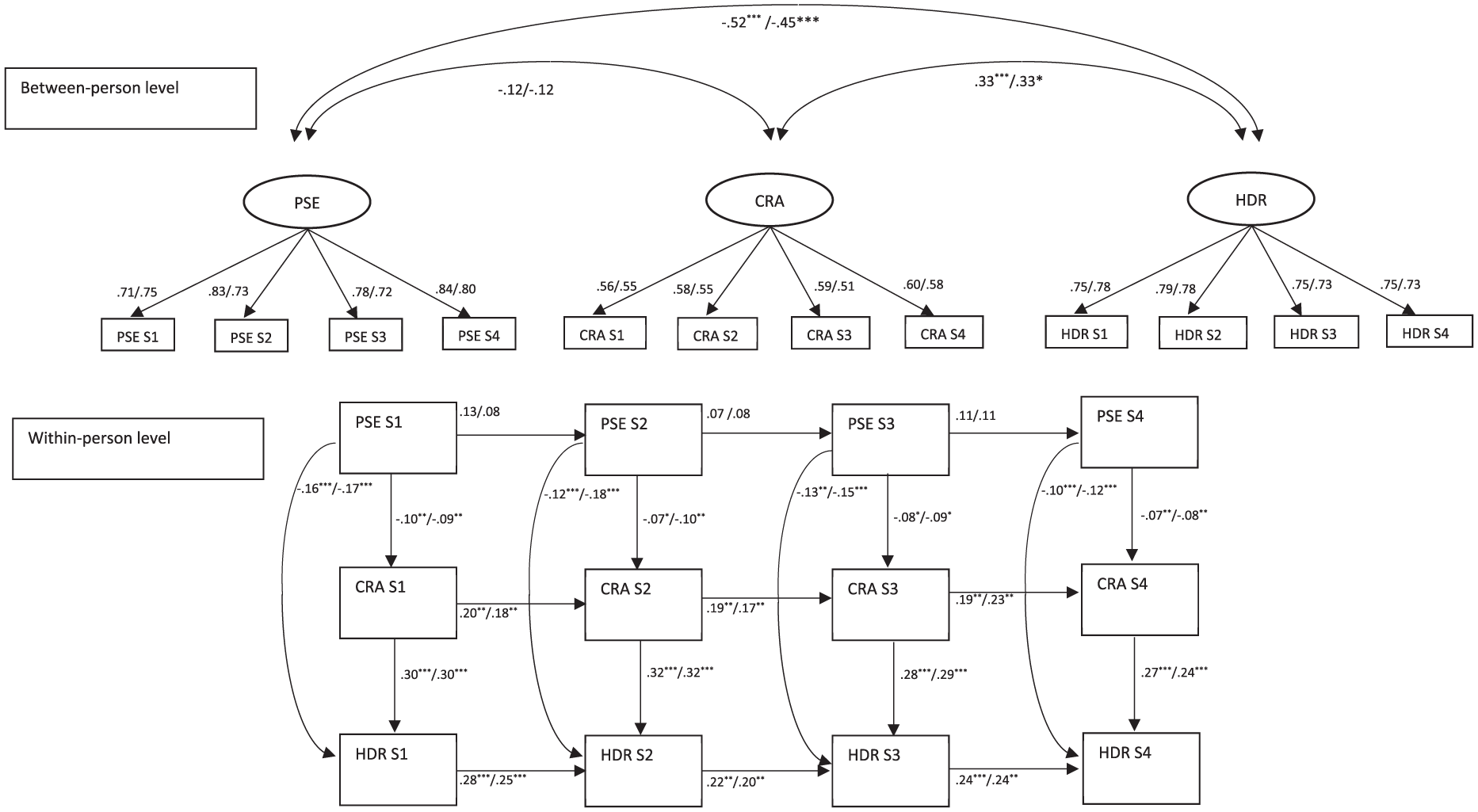
Random Intercept Lagged Panel Model Showing Relationships Between Parental Self-Efficacy (PSE), Child-Responsible Attributions (CRA) and Harsh Disciplinary Responses (HDR) Across Four Scenarios (S1 through S4). The model differentiates between interpersonal (between-person level) and intra-personal (within-person level) variance. Path coefficients are presented in standardized form for both Conditions (positive/negative). N = 403.
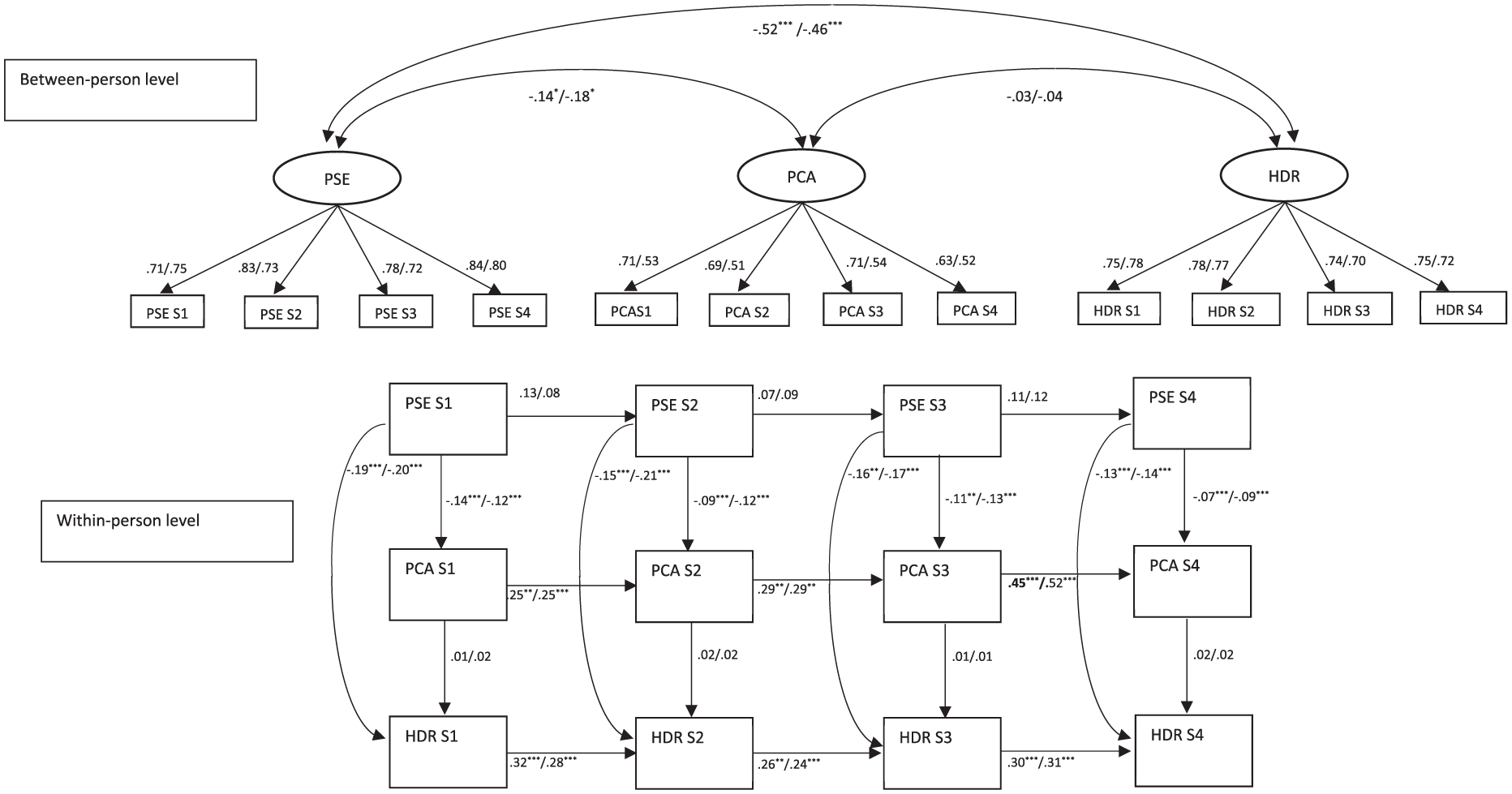
Random Intercept Lagged Panel Model Showing Relationships Between Parental Self-Efficacy (PSE), Parent-Causal Attributions (PCA) and Harsh Disciplinary Responses (HDR) Across Four Scenarios (S1 through S4). The model differentiates between interpersonal (between-person level) and intra-personal (within-person level) variance. Path coefficients are presented in standardized form for both Conditions (positive/negative). N = 403.
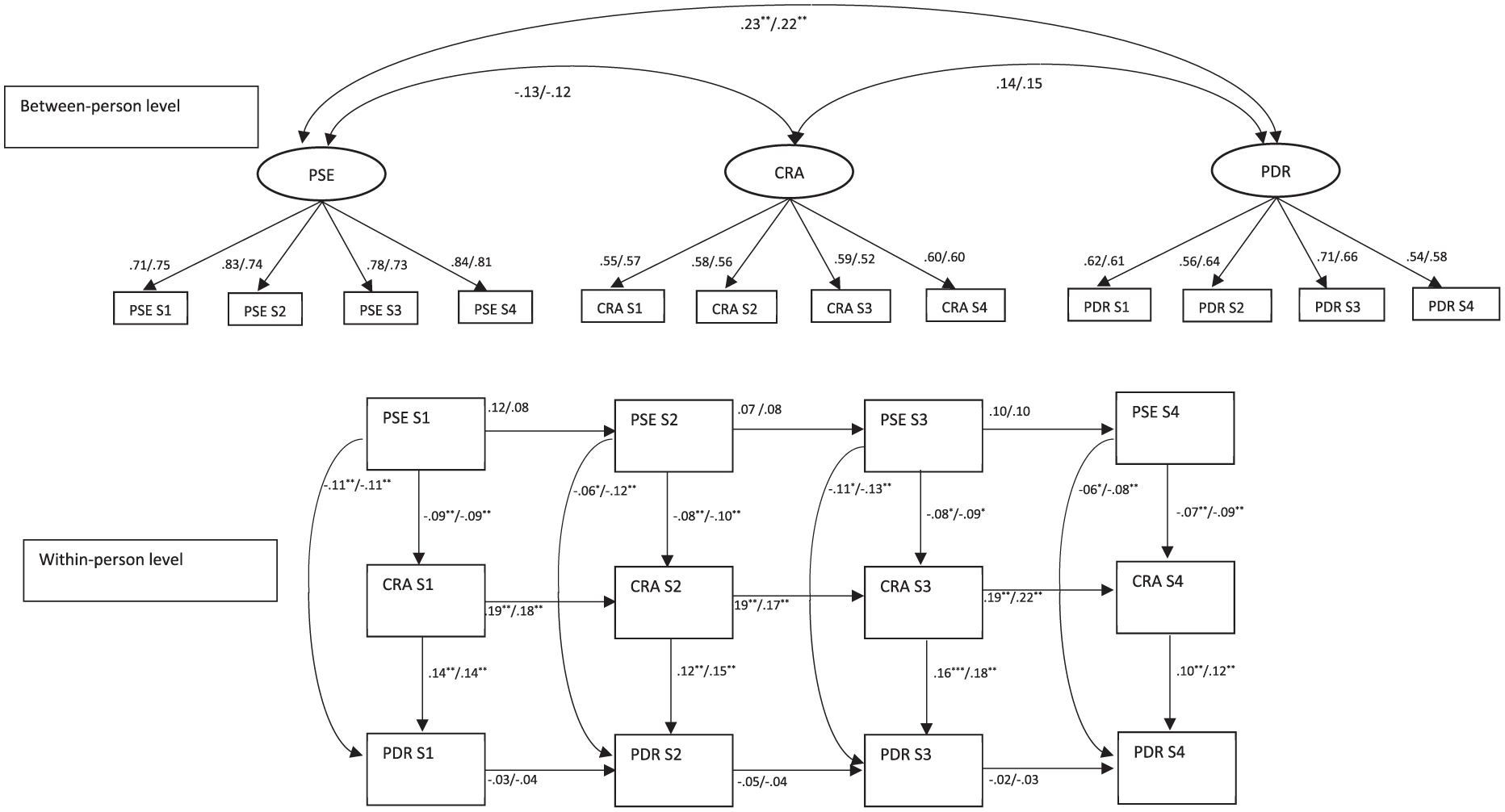
Random Intercept Lagged Panel Model Showing Relationships Between Parental Self-Efficacy (PSE), Child-Responsible Attributions (CRA) and Positive Disciplinary Responses (PDIS) Across Four Situations (S1 through S4). The model differentiates between interpersonal (between-person level) and intra-personal (within-person level) variance. Path coefficients are presented in standardized form for both Conditions (positive/negative). N = 403.
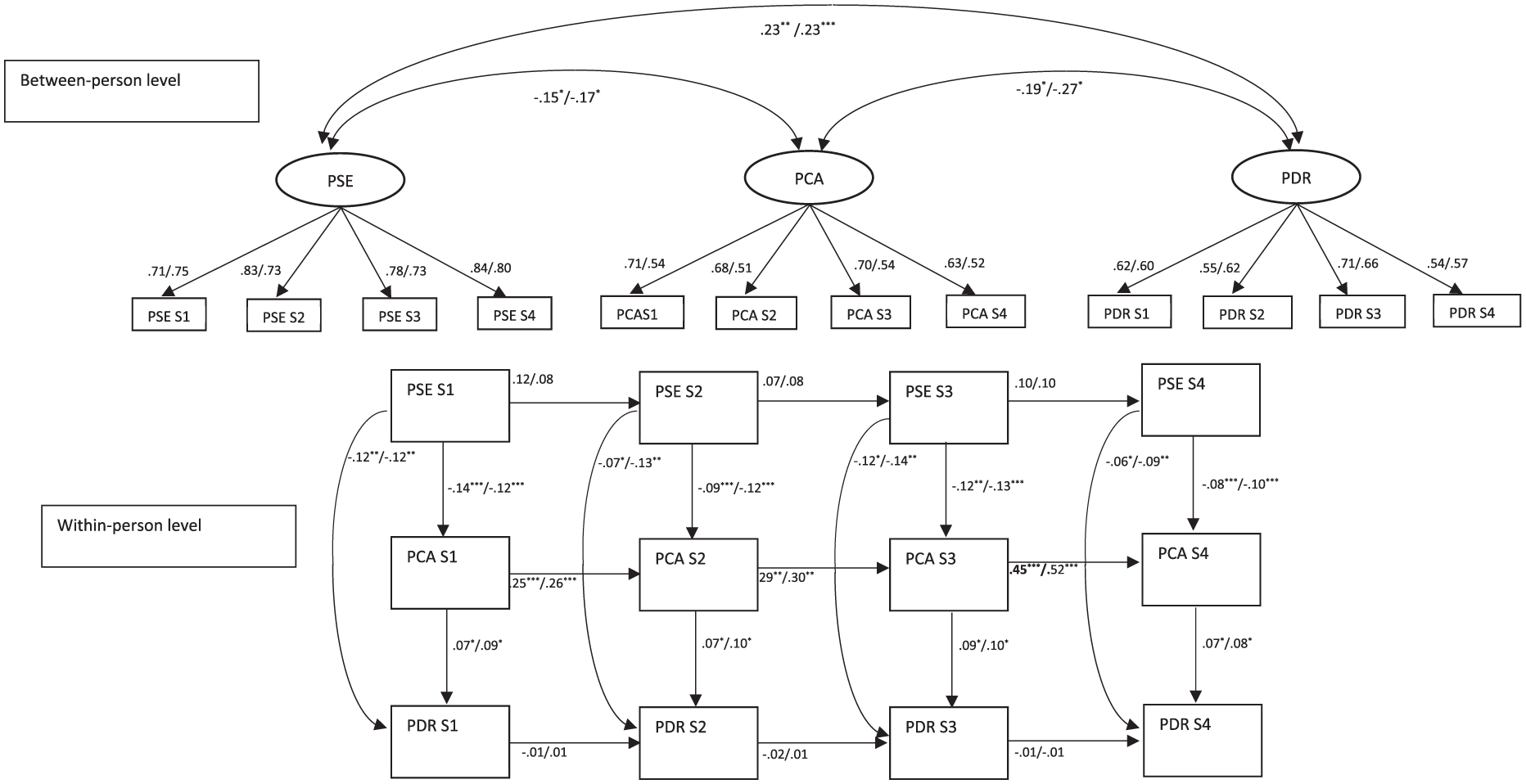
Random Intercept Lagged Panel Model Showing Relationships Between Parental Self-Efficacy (PSE), Parent-Causal Attributions (PCA) and Positive Disciplinary Responses (PDR) Across Four Situations (S1 through S4). The model differentiates between interpersonal (between-person level) and intra-personal (within-person level) variance. Path coefficients are presented in standardized form for both Conditions (positive/negative). N = 403.
As the variables in our study were only assessed by two items, the MLR (maximum likelihood parameter estimates) estimation method was used, as this method is robust for non-normality in the data (Savalei, 2014). Models with comparative fit index (CFI) values > .90 were considered to have acceptable fit and models with a CFI > .95 good fit, root mean square error of approximation (RMSEA) and Tucker–Lewis Index (TLI) values < .08 indicated acceptable fit and < .05 good fit (Hu & Bentler, 1998).
We used Multi-Group Analysis to test whether the manipulated child responses (compliance or non-compliance condition) affected the between- and within-person associations between PSE, parental attributions and intended disciplinary responses by comparing a constrained (i.e., all correlational [between-person associations], autoregressive and concurrent paths (within-person associations) are similar for the two conditions) with an unconstrained model. To examine whether the strength of the autoregressive and concurrent paths was similar across the situations (e.g., whether the strength of the associations in situation 1 are similar to those in the other 3 situations), we constrained all corresponding paths to be equal across the 4 situations and compared that to a model in which all paths were freely estimated. A non-significant Chi-square comparison would indicate that the manipulation did not affect the associations between parental cognitions and behavior and the strength of the paths were equal for the four situations.
Results
Preliminary Analysis
Descriptive statistics of the mean levels of all variables are summarized in Table 2. An ANOVA showed that there were no main effects of condition (compliance vs. non-compliance) on baseline levels (Situation 1) of PSE: F(1, 402) = 1.47, p = .226, CRA: F(1, 402) = 0.27, p = .604, PCA: F(1, 402) = 0.49, p = .484, HDR: F(1, 402) = 0.40, p = .529, or PDR: F(1, 402) = 0.08, p = .774. In other words, mothers in the compliance and the non-compliance condition did not differ significantly on any of the measures from the first situation, indicating that randomization was successful.
RM-ANOVAs tested whether maternal cognitions and intended disciplinary responses depended on Condition (child compliance vs. child non-compliance) and the Situation (1 to 4). Results are reported in Table 1. Significant main effects of Condition indicated that mothers in the Compliance Condition reported higher PSE and were less likely to make child-responsible attributions and less intended to use harsh disciplinary responses compared to mothers in the Non-compliance Condition. No such differences were found for parent-causal attributions or positive disciplinary responses. In addition, scores on all variables varied from situation to situation as indicated by a significant main effect of Situation. The Condition by Situation interaction was not significant, indicating that in both conditions mothers reported similar changes in their cognitions and behaviors from situation to situation.
Descriptive Statistics for Parental Self-Efficacy, Attributions and Disciplinary Responses (Total N = 403; n = 205 in Condition A and n = 198 in Condition B).
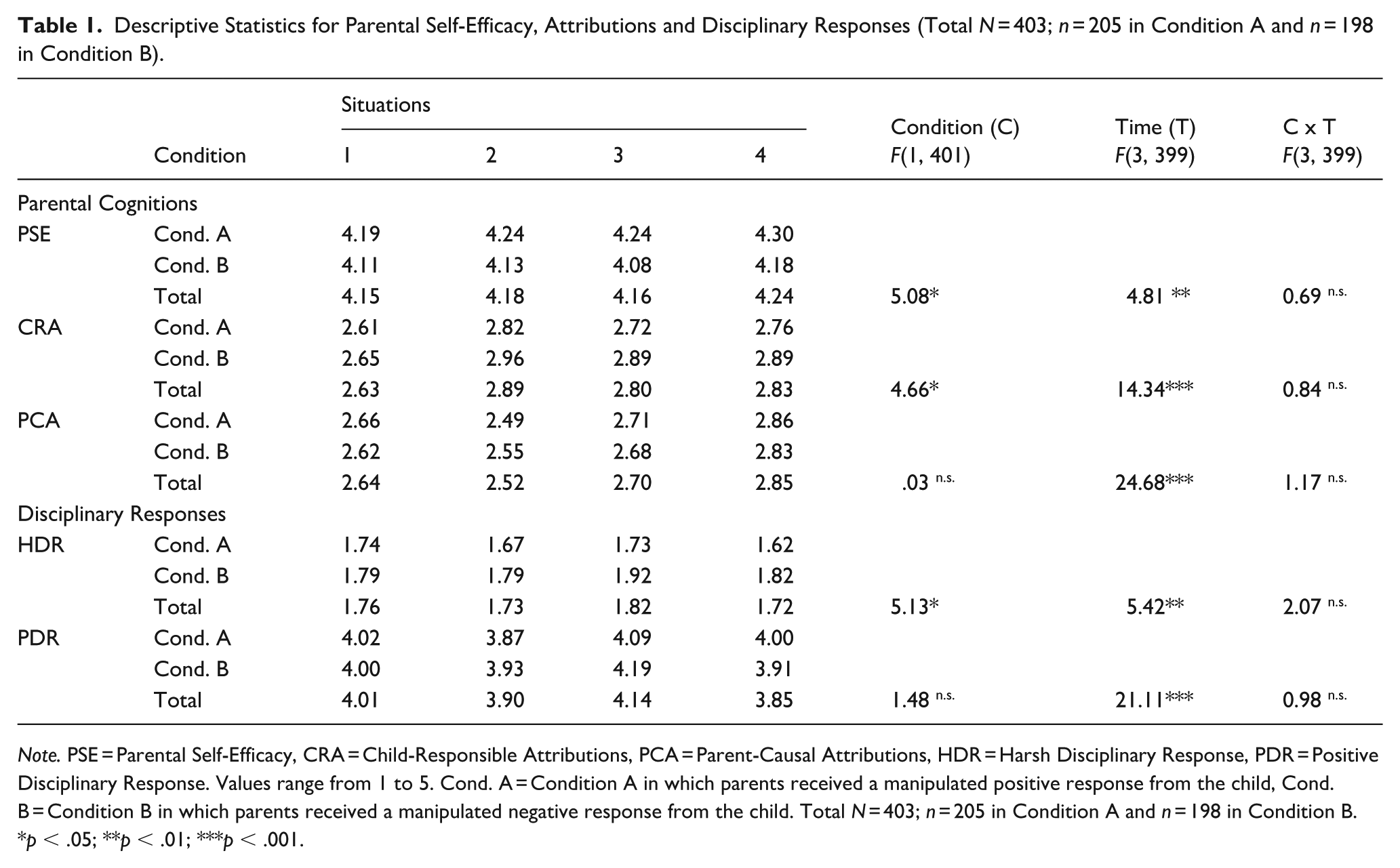
Note. PSE = Parental Self-Efficacy, CRA = Child-Responsible Attributions, PCA = Parent-Causal Attributions, HDR = Harsh Disciplinary Response, PDR = Positive Disciplinary Response. Values range from 1 to 5. Cond. A = Condition A in which parents received a manipulated positive response from the child, Cond. B = Condition B in which parents received a manipulated negative response from the child. Total N = 403; n = 205 in Condition A and n = 198 in Condition B.
p < .05; **p < .01; ***p < .001.
Random Intercept Panel Models
Four multi-group Random Intercept Panel Models were used to examine whether individual situation-specific deviations in PSE, attributions and intended disciplinary responses were associated. To come to more parsimonious models, we first examined whether corresponding paths could be constrained to be equal across the two conditions and across the four situations. Table 2 shows that for the models in which Child-Responsible Attributions were included (Model 1 and 3), all corresponding paths could be constrained to be equal across conditions and situations. For Model 2 and 4, in which Parent-Causal Attributions were included, constraints across situations led to significant changes in models’ fit indices. Modification Indices for those two models indicated that this reduction in model fit was caused by constraining the autoregressive path for Parent-Causal Attribution from situation 3 to situation 4. Freeing this constraint solved the problem (Table 2). The unstandardized autoregressive and concurrent paths for all 4 models are presented in Figures 1 to 4. As the paths do not differ statistically across the two conditions (non-compliance vs compliance), the results described below apply to both conditions.
Fit Indices of Unconstrained and Constrained Multigroup Random Intercept- Panel Model. (N = 403).
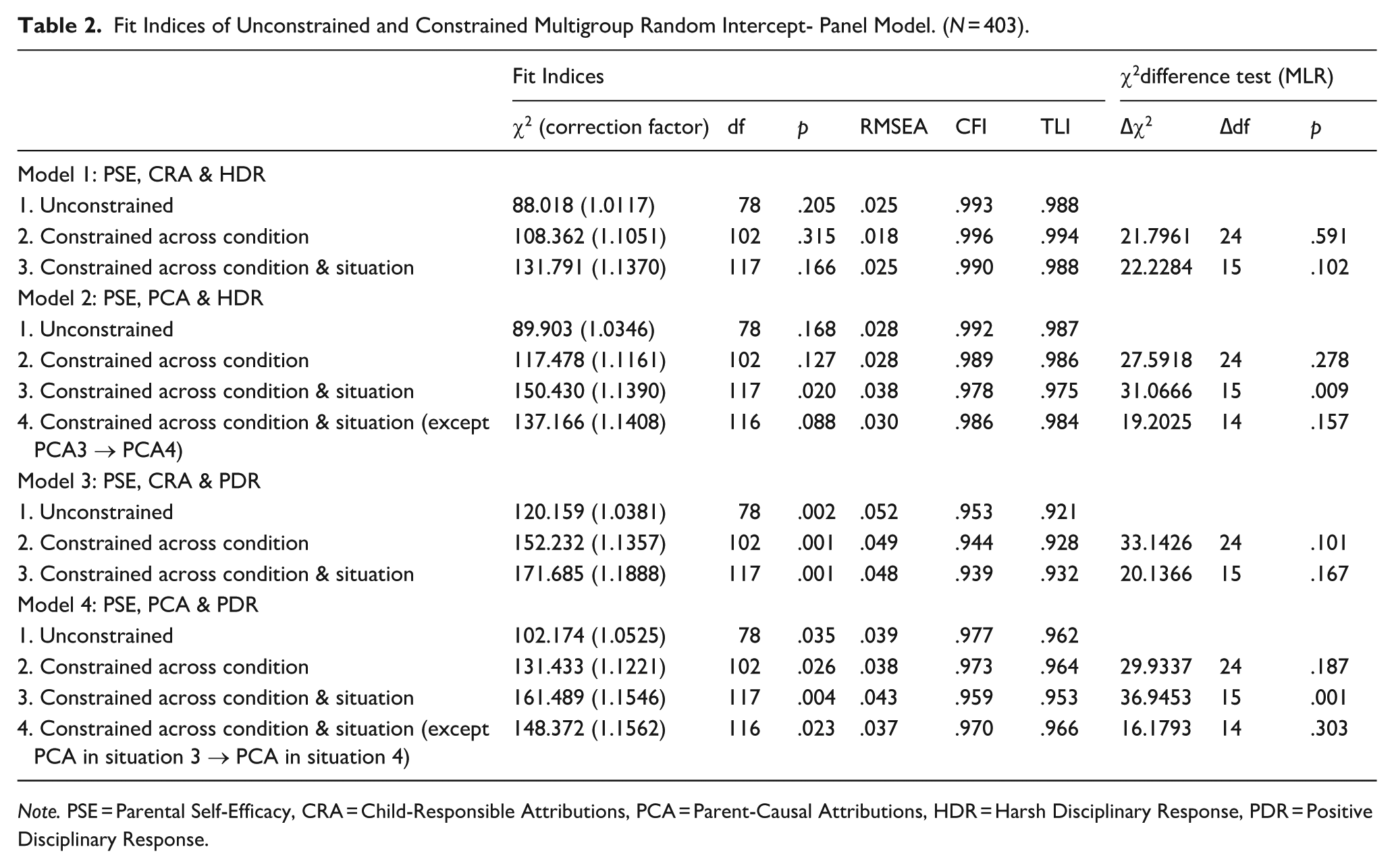
Note. PSE = Parental Self-Efficacy, CRA = Child-Responsible Attributions, PCA = Parent-Causal Attributions, HDR = Harsh Disciplinary Response, PDR = Positive Disciplinary Response.
Between-Person Associations
At the between-person level, the mean level of maternal PSE was significantly related to PCA (Figures 2 and 4), HDR (Figures 1 and 3) and PDR (Figures 3 and 4), such that mothers higher on PSE reported lower levels of parent-causal attributions and harsh disciplinary responses, and higher levels of positive disciplinary responses. No relation was found between PSE and child-responsible attributions. In addition, child-responsible attributions were related to higher levels of harsh disciplinary response (Figure 1), whereas parent-causal attributions were related to lower levels of positive disciplinary responses (Figure 4).
Within-Person Associations
Autoregressive paths. For PSE (Figures 1 to 4) and PDR (Figures 3 and 4) autoregressive paths were not statistically significant, indicating that for feelings of efficacy and for positive disciplinary responses there was no carry-over effect from one situation to the next. For CRA (Figures 1 and 3), PCA (Figures 2 and 4) and HDR (Figures 1 and 2), on the other hand, autoregressive paths were statistically significant. If a mother scored above her overall mean score on child-responsible attributions or harsh disciplinary responses in the previous situation, she was more likely to also score above her overall mean score on these variables in the next situation and vice versa. These autoregressive paths were equal in strength across all four situations, except for PCA, for which the autoregressive path was particularly strong from situation 3 to 4.
Concurrent paths. PSE was negatively associated with both child-responsible (Figures 1 and 3) and parent-causal attributions (Figures 2 and 4) and with harsh (Figures 1 and 2) and positive disciplinary responses (Figures 3 and 4). This indicates that in situations where mothers scored above their overall mean score on PSE (i.e., situation in which they felt more efficacious), they made less child-responsible and less parent-causal attributions than expected and were less intended to respond with harsh or positive discipline. In addition, child-responsible attributions were positively related to harsh (Figure 1) as well as positive disciplinary responses (Figure 3). This means that in situations where mothers made more child-responsible attributions than expected, they were more intended to respond with discipline, both harsh and positive forms. Parent-causal attributions were only related to positive disciplinary responses (Figure 4): in a situation where mothers made more parent-causal attributions, they were more intended to respond with positive—but not harsh—discipline.
Discussion
To gain insight into parental cognitive processes in relation to disciplinary responses, we assessed momentary parental cognitions and intended disciplinary responses across four hypothetical challenging parenting situations. Using the principles of random intercept cross-lagged panel models, we were able to 1) examine associations between the general levels of PSE, dysfunctional attributions and intended disciplinary responses across the four hypothetical situations at the between-person level, and 2) investigate associations between mother’s momentary cognitions and intended behavior within each situation at the within-person level. Our study suggests that parental self-efficacy and dysfunctional attributions are both linked to intended disciplinary responses to challenging child behavior — highlighting that these cognitive factors co-occur and may be relevant for parental disciplinary behavior simultaneously. The strength and direction of the relationships between PSE, dysfunctional attributions and intended disciplinary responses were different for the between-person and within-person levels and for child-responsible and parent-causal attributions. These findings highlight the importance of distinguishing between momentary and general parental cognitions and behaviors. Focusing on within-person level associations adds to our understanding of the cognitive processes underlying parental disciplinary responses.
Momentary Versus General Parental Cognitions and Behavior
For harsh discipline, associations with maternal PSE and dysfunctional attributions were similar at the between-person and within-person level. Mothers who generally felt less efficacious and were more inclined to make child-responsible attributions reported a stronger intention to respond with harsh discipline across the four situations compared to mothers who felt more efficacious and made less child-responsible attributions. So, the general tendency to feel efficacious and to make child-responsible attributions went together with a general tendency to show more harsh discipline. In addition to this general tendency, also at the within-level we found that -within their own repertoire—mothers were more likely to use harsh discipline when they were in a situation where they felt less efficacious and made more child-responsible attributions. These findings align with the notion that feelings of incompetence and attributions of responsibility toward the child can trigger parental irritability and hostility, leading to harsh reactions (Lorber & Smith Slep, 2005; Rueger et al., 2011).
For positive discipline, however, we found interesting differences between results at the between-person and within-person level. At the between-person level, mothers who generally felt more efficacious and made fewer parent-causal attributions reported to be more inclined to use positive discipline, compared to mothers who felt less efficacious and made more parent-causal attributions. This was in line with our hypothesis. Child-responsible attributions were unrelated to intended positive discipline at this between-person level. Surprisingly, at the within-person level, the opposite pattern emerged. In situations where a mother felt more competent and made fewer dysfunctional attributions (both child-responsible and parent-causal), she reported less intention to react with positive discipline. This suggests that momentary cognitions play a distinct role in parental disciplinary responses compared to general cognitions—at least for positive discipline. A confident mother, while generally favoring positive discipline, might deviate from this approach when she feels particularly efficacious in a specific situation.
Combining the within-person findings of intended positive and harsh discipline, we see that in situations where a mother feels more efficacious, she is less inclined to respond with a disciplinary action -either positive or harsh. It may be that in situations where mothers feel more efficacious—and therewith experience the situation as less challenging (Albanese et al., 2019)—they are less likely to interpret the child’s behavior as requiring discipline. This corresponds with our finding that within these situations, mothers were also less likely to hold someone—their child or themselves—responsible for the behavior displayed. Previous studies also found that dysfunctional attributions and disciplinary responses are less likely to be triggered in situations that are experienced by parents as less challenging (Beckerman et al., 2020; Dix & Reinhold, 1991). The question remains whether mothers feel more competent and make fewer dysfunctional attributions because they do not see the situation as a disciplinary encounter, or whether they do not make the situation a disciplinary encounter because they are confident that the situation will play out in a successful way. Altogether, our findings stress the importance of examining momentary cognitions at the within-person level if we are to understand why parents show certain behaviors toward their child.
Cognitions Working Simultaneously
By examining both PSE and dysfunctional attributions, we found evidence that within-person deviations in maternal self-efficacy, dysfunctional attributions, and intended disciplinary responses all co-occurred, suggesting that these factors are interrelated within the moment. In essence, when a mother experienced increased self-efficacy, she was less likely to attribute the child’s challenging behavior to either herself or her child, and less inclined to employ harsh or positive disciplinary responses. This aligns with SIP models, which propose that behavioral responses are shaped by multiple, interconnected cognitions (e.g., Azar et al., 2008).
Although our study shows that PSE and parental attributions are associated, it is important to note that we cannot draw conclusions regarding causality. In line with Bandura’s (1986) self-efficacy theory, the set-up of our study was that we first asked mothers how efficacious they felt and after that we posed questions regarding parental attributions. It could, however, very well be those dysfunctional attributions (i.e., blaming themselves for the child’s behavior or believing that the child is doing it on purpose) that cause the parent to feel less efficacious. Cunningham and Renk (2018), for example, found that PSE was a mediator in the relation between parental negative attributions and parenting competence. However, in their experimental study, Mouton and colleagues (2022) found that although they were able to manipulate situation-specific parent-causal and child-responsible attributions in parents of 3- to 5-year-old children, this did not affect parental self-efficacy. It is quite possible that -certainly within the moment—a continuous interaction takes place between feelings of efficacy and attributions, and that an order of causality cannot be established. Nevertheless, PSE appears to be related to momentary disciplinary responses both directly and indirectly through child-responsible attributions (both harsh and positive response) and parent-causal attributions (for positive disciplinary response only). This asks for more research examining different cognitions simultaneously.
Experiences From Previous Events: Child Response and Carry-Over Effects
Our exploration of momentary cognitions and behavioral intentions highlights the role of situational characteristics in triggering specific cognitions and disciplinary responses. The child’s response to maternal disciplinary behavior also plays a role: as a group, the mothers who were exposed to child disobedience reported lower PSE, more child-responsible attributions and higher tendencies toward harsh disciplinary responses compared to the mothers who were exposed to child obedience. This also fits with the SIP models’ notion that previous experiences affect cognitions and behaviors in similar future situations (child challenging behavior).
Also from the autoregressive paths, we learn that experiences from the previous situation are related to cognitions and behavioral intentions in the next situation. That is, when a mother made more (or less) child-responsible or parent-causal attributions in the previous situation than she generally did, this pattern tended to persist in the next situation. This also applied to harsh disciplinary responses: if a mother was more intended to respond with a harsh disciplinary response in the previous situation, she was also more inclined to show such a response in the next situation. It is intriguing that these autoregressive paths were similar in the disobedience and obedience conditions: if the child’s response to disciplinary behavior is seen by the mother as a form of feedback then at least in the disobedience condition -where the mother received the message that the disciplinary response was not successful—the chance of the mother showing the same disciplinary response in the next situation should be lower, not higher. For positive discipline, no carry-over effects were found. An explanation for these carry-over effects might lay in the fact that heightened stress and emotions can impair cognitive functions, increasing the likelihood of making dysfunctional attributions and displaying harsh discipline (e.g., Beckerman et al., 2020; Lorber & Smith Slep, 2005; Milner, 2003; Rueger et al., 2011). Our findings regarding these carry-over effects of negative attributions and harsh discipline show that mothers may end up in a negative spiral. To better understand momentary deviations in parental cognitions and behaviors, future studies would do well to also examine changes in parental emotions and executive functions in challenging parenting situations.
Strengths and Limitations
By simultaneously investigating the role of two types of parental cognitions (PSE and dysfunctional attributions) in intended disciplinary responses within different situations at both the between-person and within-person level, our study offers novel insights into how these cognitions jointly co-occur with parental behavior in the moment. Of course, the limitations of the study must be taken into consideration when interpreting the results. First, as stated before, we cannot draw conclusions regarding the causality of the associations we found. Second, because we used standardized, hypothetical vignettes to elicit parental cognitions and intended disciplinary responses, we cannot be certain to what extent these responses reflect real-life behavior. Although this design allowed us to compare within-person variation across identical situations, it may have limited ecological validity, as the situations and response options might not have fully captured parents’ typical experiences or disciplinary strategies. In addition, mothers may have gradually realized that the manipulated child response (obedient versus disobedient) was the same in each vignette, which potentially undermined the credibility of the vignettes. In other words, the validity of the vignettes and the forms of discipline offered need further investigation. Related to this issue, it is unclear whether specific characteristics of the individual situations influenced parental cognitions and intended disciplinary responses. Although the structural paths between momentary parental cognitions and intended disciplinary responses could be constrained to be equal across situations without a loss of model fit, suggesting that the underlying cognitive mechanism operates similarly, it would be interesting to explore whether specific features of parenting situations lead to distinct momentary shifts in cognitions and behavior. Third, PSE and parental attributions were measured by only 2 items in each situation. Although these two items were based on validated instruments to assess PSE and dysfunctional attributions, it may be that we did not capture the full concepts. Fourth, the current study concerned a community-based sample of highly educated, Dutch mothers: future studies are needed to examine whether the results are generalizable to clinical samples, to mothers with a different cultural and demographical background, and to fathers.
Conclusion
Overall, the current study found evidence suggesting that the principle of Social Information Processing models—that is, a stimulus-event triggers different types of cognitions (e.g., expectations, attributions) which then work together in shaping the behavioral response in that particular event—may also be applicable to parental disciplinary responses. In addition, general cognitions seem to play a different role in maternal intended behavior than momentary deviations in these cognitions. This indicates that the theoretical explanation of the associations between parental cognitions and parenting behavior is different at the between-person and within-person level and highlights the importance of distinguishing these levels in future research. The findings of this study are also of practical relevance: by gaining a better understanding of how momentary parental cognitions are related to disciplinary responses, parents may become more aware of their own thought processes and better understand the reasons behind their disciplinary responses in specific situations. This awareness might support parents to adjust their response in a timely manner. Such insights could also inform parenting support programs, offering guidance to help parents adopt more constructive and positive disciplinary strategies.
Supplemental Material
sj-docx-1-jbd-10.1177_01650254251404792 – Supplemental material for Maternal discipline in the moment: Within-person fluctuations in maternal self-efficacy, attributions, and intended disciplinary responses in the context of challenging toddler behavior
Supplemental material, sj-docx-1-jbd-10.1177_01650254251404792 for Maternal discipline in the moment: Within-person fluctuations in maternal self-efficacy, attributions, and intended disciplinary responses in the context of challenging toddler behavior by Marjolein Verhoeven and Jorg Huijding in International Journal of Behavioral Development
Footnotes

Funding
The authors received no financial support for the research, authorship, and/or publication of this article.
Declaration of Conflicting Interests
Portions of these findings were presented at the (online) Biennial meeting of the Society for Research in Child Development (SRCD) of 2021.
Data Availability Statement
Data used in this manuscript are available upon request.
Supplemental Material
Supplemental material for this article is available online.
Notes
References
Supplementary Material
Please find the following supplemental material available below.
For Open Access articles published under a Creative Commons License, all supplemental material carries the same license as the article it is associated with.
For non-Open Access articles published, all supplemental material carries a non-exclusive license, and permission requests for re-use of supplemental material or any part of supplemental material shall be sent directly to the copyright owner as specified in the copyright notice associated with the article.
