




Abstract
Empathy is a key sociocognitive skill that reflects the ability to perceive and experience others’ emotional states. In the present research, we aimed to validate the Adolescent Measure of Empathy and Sympathy (AMES) in a sample of 534 14- to 19-year-old Portuguese adolescents (207 boys, M = 16.22 years, SD = .92). Construct validity, reliability (internal consistency), measurement invariance, and convergent and known-groups validity were assessed. The original structure of three-related factors was confirmed (comparative fit index [CFI] = .99, Tucker–Lewis index [TLI] = .99, root mean square error of approximation [RMSEA] = .04, standardized root mean square residual [SRMR] = .05), with all factors showing acceptable internal consistency. Measurement invariance considering the sex and the school year of participants was supported. The AMES also revealed good convergent validity, having significantly positive associations with all subscales of the Basic Empathy Scale. Finally, girls showed higher cognitive and affective empathy and sympathy than boys, and 12th graders revealed higher cognitive and affective empathy and sympathy than 10th and 11th graders, thus attesting AMES known-groups validity. Overall, the Portuguese version of the AMES appears to be an adequate measure of empathy and sympathy for adolescents.
Introduction
Empathy is a multifaceted key construct of social cognition that involves the ability to perceive and be sensitive to the emotional states of others, playing an important role in social interactions (Decety, 2011; Gamble et al., 2024). This ability encompasses three interrelated components: affective sharing or affective empathy, perspective-taking or cognitive empathy, and empathic concern or sympathy (Decety, 2015). Affective empathy involves being able to experience others’ emotional states, and it can be triggered by direct observation of other people’s emotions and by imagining their emotions (Lamm et al., 2019). In turn, cognitive empathy reflects the ability to adopt and understand another person’s perspective, allowing for a better comprehension of their emotions. Finally, sympathy relates to an emotional response that results from feeling concern for others’ well-being (Decety, 2015; Tousignant et al., 2017).
Although empathy starts emerging at an early age, the adolescence stage assumes a crucial period for its development. During adolescence, individuals face important changes in their cognitive and regulatory processes and in emotional maturation, which are expected to impact their ability to experience the emotions of others as well as to adopt their perspectives (Gaspar & Esteves, 2022; Van der Graaff et al., 2014). It is thus of extreme relevance to continue exploring empathy development in this developmental stage, given its association with relevant dimensions, including emotion regulation and prosocial behavior (Laghi et al., 2018).
Several self-report questionnaires have been developed throughout the years to assess empathy, allowing for a fast and easy way to assess its experience (Reniers et al., 2011). A recent systematic review (Sesso et al., 2021) identified 16 validated questionnaires assessing this ability in children and adolescents, nine of which were validated in adolescents. Although widely used, some of these questionnaires present some limitations, including the measure of empathy as a single—and not multidimensional—construct, not allowing the distinction between the cognitive and affective components of empathy, and even combining related but distinct concepts (e.g., sympathy and empathy; Reniers et al., 2011; Vossen et al., 2015).
The Adolescent Measure of Empathy and Sympathy (AMES) is one of the scales created specifically for the adolescence period, attempting to distinguish between cognitive and affective empathy and sympathy, using clearer definitions (Vossen et al., 2015). So far, it has been adapted to the Turkish (Zengin et al., 2018) and Chinese (Li et al., 2019) populations and used in different countries (e.g., Czech Republic, Australia, and Indonesia; cf. Barata et al., 2024; Lacko et al., 2023; Marrington et al., 2023). Besides assessing the cognitive and affective aspects of empathy, the AMES integrates a sympathy subscale, providing a more complex understanding of the construct of empathy (Sesso et al., 2021). Sympathy is often confounded with the construct of empathy, and these terms are frequently used interchangeably and measured as similar dimensions (Marková, 2025). While they may be related, it is important to highlight that sympathy derives from a feeling of concern for others’ distress, and it does not necessarily imply a sharing of others’ emotions (Decety & Holvoet, 2021a). Therefore, clearly distinguishing between empathy and sympathy helps to reduce the misidentification of sympathy as empathy (Marková, 2025). By reaching a clearer conceptualization of both constructs, the research and therapeutic fields can better capture their functioning and the factors that shape them (Marková, 2025; Vossen et al., 2015).
Although this scale was first validated in 10- to 15-year-olds, its original authors suggest that it can be used in other age ranges (Vossen et al., 2015) and it has since been employed in different age groups of children and adolescents, including 12- to 19-year-olds (Meuthia et al., 2023) and 9- to 18-year-olds (Li et al., 2019). It is noteworthy that even if previous studies found adequate to good internal consistency in several countries and age ranges, it is important to proceed to further validation studies, which consider the potential influence of language and culture in the manner that adolescents interpret and respond to this scale.
In this line, this study aims to investigate the AMES psychometric properties and collect evidence regarding its validity in a sample of Portuguese adolescents, thus supporting the use of this self-report instrument to assess different dimensions of empathy and sympathy in Portuguese-speaking samples and allowing for future cross-cultural studies. We expect to reproduce the three-factor structure of the original AMES, as has been reported in previous studies that assessed the scale’s psychometric properties (Li et al., 2019; Zengin et al., 2018). We also intend to explore the AMES’ ability to distinguish between groups (according to sex and school year), allowing for further comparisons between them. We expect to find higher empathy and sympathy scores in girls, as shown in the literature (Ricon & Katz, 2024; Supervía et al., 2023). We also anticipate finding greater empathy and sympathy in 12th graders, compared with 10th and 11th graders, given that empathy and sympathy have been shown to increase throughout adolescence (Allemand et al., 2015; Li et al., 2019).
Method
Participants
Five hundred and fifty-one adolescents (214 boys, 38.9%) aged 14 to 19 years (M = 16.21, standard deviation [SD] = .92) were recruited from seven schools in the Centre region of Portugal between October 2024 and February 2025. Due to missing responses, 17 participants (3.09% of the complete sample) were excluded from further analyses. Data were available for 534 participants (207 boys, 38.8%), M = 16.22 years, SD = .92. Of these, 29.8% were in 10th grade, 36.3% were in 11th grade, and 33.9% were in 12th grade.
Measures
Sociodemographic Questionnaire
Participants provided demographic information about their sex, age, school year, city and district, number of siblings, and educational level of mother and father.
Adolescent Measure of Empathy and Sympathy
The AMES is a 12-item scale designed to assess empathy and sympathy in adolescents, answered in a 5-point Likert-type scale, ranging from 1 (never) to 5 (always; Vossen et al., 2015). It comprises three subscales, measuring cognitive empathy (Items 1, 3, 8, and 10), affective empathy (Items 5, 7, 9, and 12), and sympathy (Items 2, 4, 6, and 11). Scores are calculated by averaging the items from each subscale, with higher scores indicating greater levels of cognitive empathy, affective empathy, and sympathy. The original scale demonstrated good internal consistency in cognitive empathy, α = .86, and acceptable internal consistency in affective empathy, α = .75, and sympathy, α = .76 (Vossen et al., 2015).
Basic Empathy Scale
The Basic Empathy Scale (BES) is a 20-item measure focused on empathy (Jolliffe & Farrington, 2006) and answered on a 5-point Likert-type scale (1 = strongly disagree; 5 = strongly agree). The Portuguese version of the BES (Anastácio et al., 2016) consists of 16 items, assessing cognitive empathy (eight items) and affective empathy (eight items). Scores are obtained by summing the items from each subscale, with higher scores reflecting greater cognitive empathy and affective empathy. In the Portuguese validation study, good internal consistency was found for cognitive empathy, α = .85, and affective empathy, α = .80. In our study, we found an acceptable internal consistency in the cognitive empathy subscale, α = .79, and a good internal consistency in the affective empathy subscale, α = .80.
Procedures
This study was approved by the Ethics Committee for Research in Social and Human Sciences of the University of Minho (reference CEICSH 105/2023; approved on 11 July 2024). Data collection at schools was also authorized by the Portuguese Ministry of Education (reference 1478400001). A convenience sample of schools was contacted to explain the objectives and procedures of the study and be invited to collaborate. Fourteen school clusters in the North and Centre regions of Portugal were contacted, of which seven replied accepting our invitation to participate in data collection. A meeting with the school Director and/or with the Psychology team of the schools was scheduled to better detail the procedures and goals of the study and to provide informed consent forms for the legal guardians of the adolescents. The schools were responsible for distributing the consent forms among adolescents from classes that were randomly chosen by the schools. After the legal guardians gave their consent, data collection was scheduled and conducted in classrooms of high school establishments, using the Qualtrics platform.
In the beginning of the data collection session, the researcher responsible for data collection explained the objectives and procedures of the study, informing the adolescents that their participation was voluntary and that they could withdraw from the study at any time. Only three adolescents whose legal guardians had given their informed consent decided that they did not wish to participate. The ones who agreed to participate in the study were given a consent form, and after signing it, a QR code that gave access to the Qualtrics platform was provided. The latter created an anonymized and random code for each participant, ensuring the anonymity of their responses. Participants answered the scales using their mobile phones, with access to the school’s Internet connection or their mobile phone’s Internet. Every participant in the classrooms had their own mobile phone, except for one adolescent who did not own one—in this case, a mobile phone was lent by a teacher to allow the filling of the scales. No adolescent was excluded for not having the necessary means to participate. The researcher was available during the full session of data collection to provide any necessary help and to ensure that the participants did not influence one another’s responses. The average duration of the session of data collection was around 50–60 min, as adolescents responded to a larger assessment protocol, in which the two measures of this study were included. Given the extent of the full protocol and the total duration of the data collection session, we estimate that the filling of both scales of this study took approximately 7 to 8 min.
Translation of Items
The original items from the AMES were first translated into Portuguese by two independent researchers who compared their translations, creating a final version of the items. These items were then back-translated by a third independent researcher. The process of translation and back-translation did not change the sense of the items with respect to the original version; as such, the translated items are expected to be able to distinguish between the concept of empathy and sympathy, as in the original version. After back-translation, items were adjusted and administered to a group of 13 participants (aged between 15 and 17 years) who were part of the pilot study of the translation of the items. After filling in the scale, a short interview was carried out with each adolescent, so that they could provide their feedback on the comprehension of each item. No items were changed.
Statistical Analysis
Statistical analyses were conducted in the software IBM SPSS, version 28, and in RStudio version 2024.12.1, through the “Lavaan” package for latent variable modeling (Rosseel, 2012).
Before the onset of the analyses regarding the psychometric properties and validation of the AMES, missing data were checked. If participants had a missing value in at least one item of either measure (i.e., AMES or BES), their response would be omitted from the analysis. Missing values represented a small percentage of the complete sample—more precisely, 17 participants were omitted (3.09%).
Next, normality assumptions were verified using the kurtosis and skewness coefficients, as well as the Kolmogorov–Smirnov test. Kurtosis and skewness were considered acceptable to support normal distribution if they were between −2 and +2 (George & Mallery, 2010). The distribution of responses in each item was also analyzed. Descriptive statistics (frequencies, means, and SDs) were used to explore the proportion of girls and boys in the sample, their age range, mean and SD of age, and the distribution among the three school years (i.e., 10th, 11th, and 12th). The distribution (i.e., frequencies) of the items of the AMES in respect to the response options was also explored.
Given the ordinal nature (i.e., Likert-type) of the item response options, a confirmatory factor analysis (CFA) using Robust Diagonally Weighted Least Squares was performed (C. Li, 2016) to confirm the structure of the model proposed by the original authors. The model of the original authors showed an acceptable three-factor structure, root mean square error of approximation (RMSEA) = .07, comparative fit index (CFI) = .94, Tucker–Lewis index (TLI) = .92, consisting of 12 items divided in the factor “Cognitive empathy” (Items 1, 3, 8, and 10), “Affective empathy” (Items 5, 7, 9, and 12), and “Sympathy”(Items 2, 4, 6, and 11). Item loadings ranged from .66 to .78 for “Cognitive empathy”, .50 to .73 for “Affective empathy”, and .64 to .71 for “Sympathy” (Vossen et al., 2015).
CFA analyses considered the CFI and TLI > .95 (Byrne, 2016), the RMSEA < .6, and the standardized root mean square residual (SRMR) < .08 (Hu & Bentler, 1999). As the chi-square fit statistic may be affected by large sample sizes, the ratio of the chi-square statistic to its degree of freedom was considered (χ2/df), with a ratio between 1 and 3 being considered adequate (Kline, 2005; Wheaton et al., 1977).
Reliability analysis was measured for the total scale and for each subscale using the Cronbach’s alpha coefficient, and it was interpreted according to the following criteria: unacceptable (α < .50), poor (.50 ⩽ α < .60), questionable (.60 ⩽ α < .70), acceptable (.70 ⩽ α < .80), good (.80 ⩽ α < .90), and excellent (α ⩾ .90) (George & Mallery, 2010).
To assess measurement invariance considering the sex (male and female) and school year (10th, 11th, and 12th) of participants, measurement invariance was tested with multi-group confirmatory factor analysis using three levels (configural, scalar, and metric). Measurement invariance was not confirmed if ΔCFI ⩾ .010 and ΔRMSEA ⩾ .015 or if ΔCFI ⩾ .010 and ΔSRMR ⩾ .010 (Chen, 2007).
To test the convergent validity between the AMES and the BES, Pearson’s correlation was used, being interpreted as small (.10 ⩽ r < .30), medium (30 ⩽ r < .50), and large (r ⩾ .50; Cohen, 1988). Finally, general linear model (GLM) analyses were conducted to assess the ability of the AMES to distinguish between males and females, and between the three school years (10th–12th), allowing for the comparison of the means between groups. Effect sizes were assessed using the eta-squared partial (ηp2), considering the criteria: small (.01–.05), medium (.06–.13), and large (⩾.14; Cohen, 1988).
Results
Normality assumptions were not confirmed by the Kolmogorov–Smirnov test, Kolmogorov–Smirnov = .04, p = .02. However, skewness (ranging from −1.30 to .36) and kurtosis (−.46 to 1.68) values were considered acceptable to support normal distribution (Table 1). Furthermore, after analyzing the Q-Q plots for each item and given the large sample size and the central limit theorem (Field, 2009), we assumed the normality of the data.
Descriptive Analysis of the Items of the AMES.
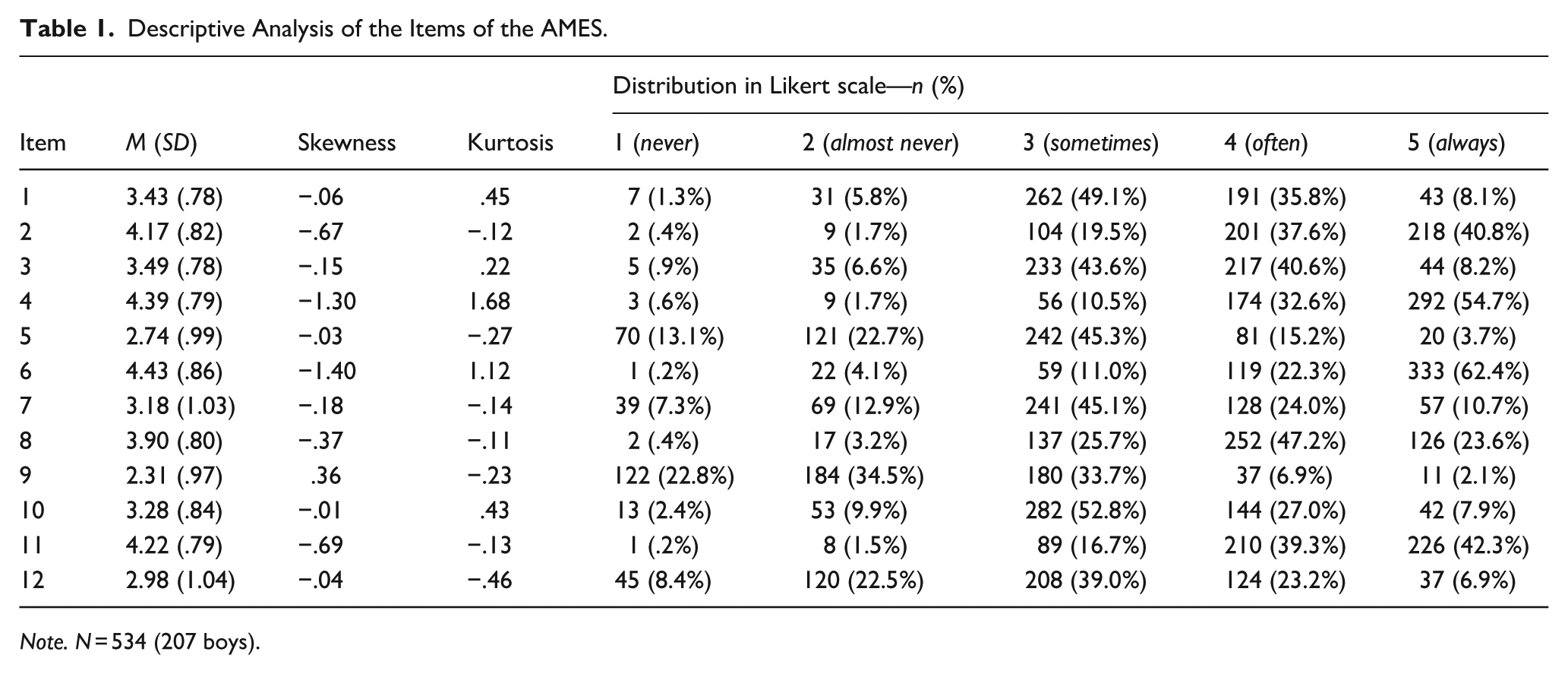
Note. N = 534 (207 boys).
Table 2 presents the intercorrelations among AMES items, which are all positive and, most of them, highly significant.
Inter-Item Correlations.
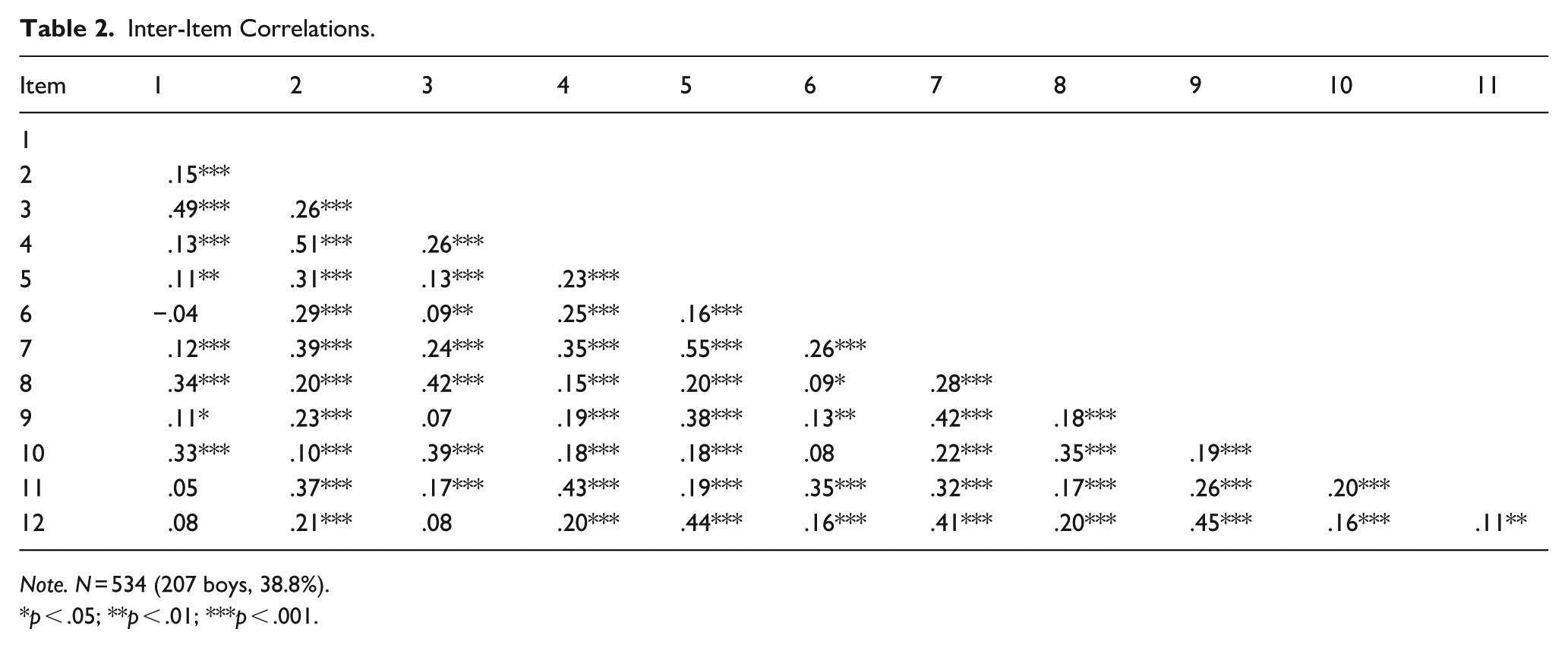
Note. N = 534 (207 boys, 38.8%).
p < .05; **p < .01; ***p < .001.
Confirmatory Factor Analysis
Confirmatory factor analysis was performed on the three-factor structure model proposed by the original scale’s authors (Vossen et al., 2015). Goodness-of-fit measures revealed a good adjustment of the model to the data. The model fit indices were as follows: χ2/df = 2.29, p < .001, RMSEA = .04, 90% CI = [.03–.05], CFI = .99, TLI = .99, and SRMR = .05 (Figure 1).
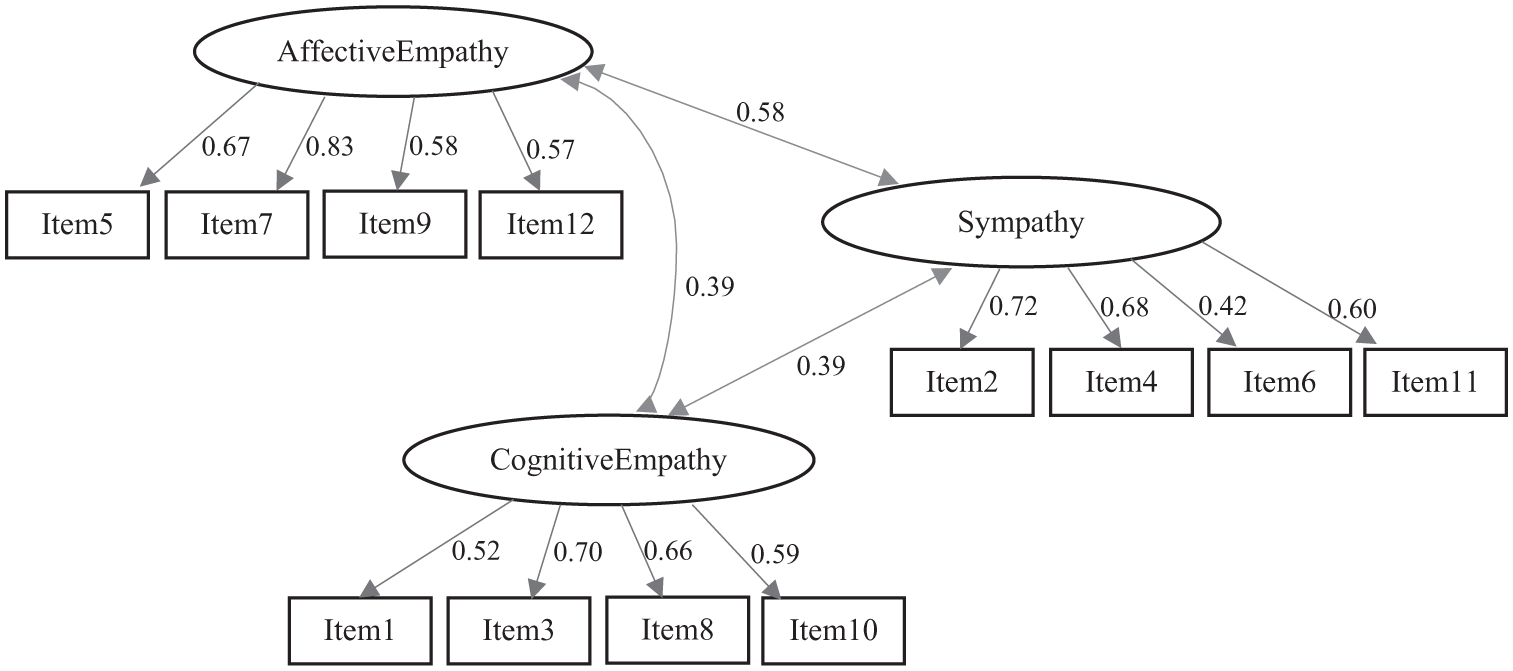
Structural Model of the Portuguese Version of the Adolescent Measure of Empathy and Sympathy, With Standardized Estimates.
Reliability
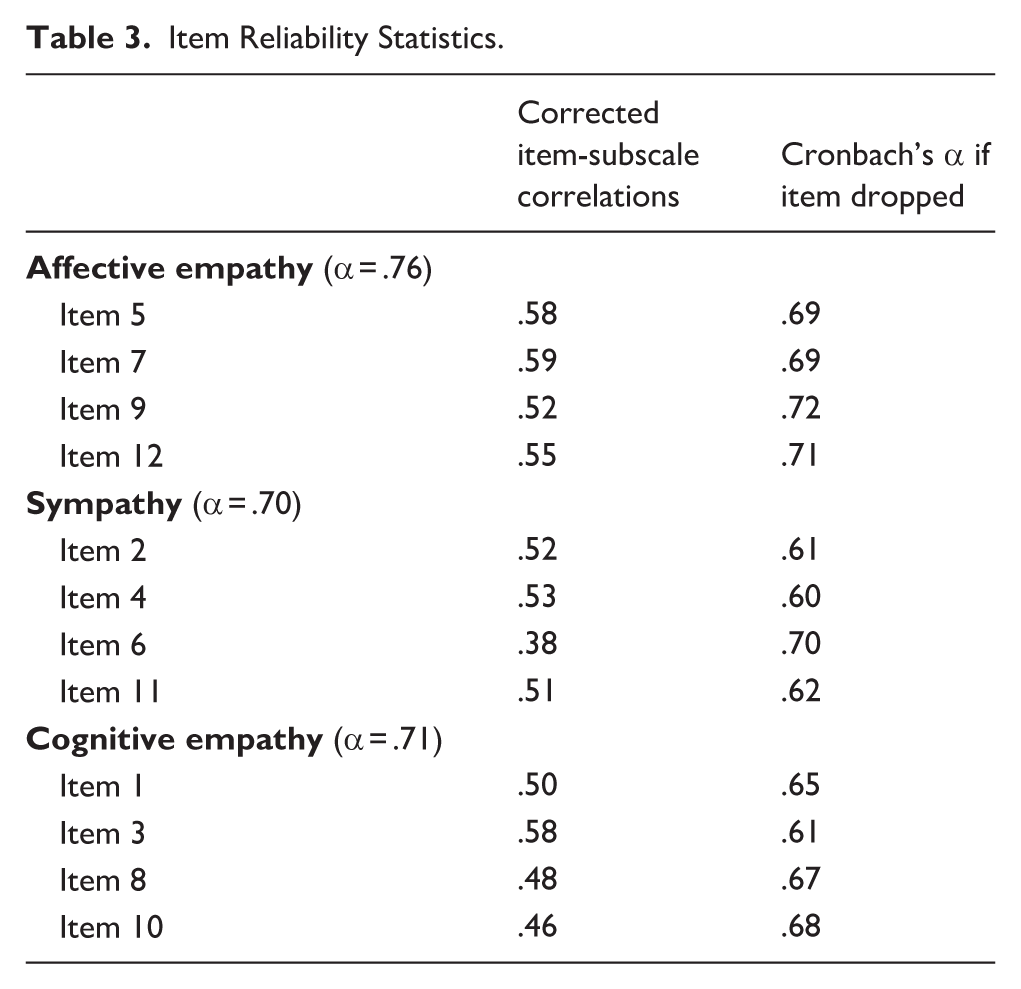
The AMES showed acceptable internal consistency in every subscale, and item reliability analyses revealed that items had a good correlation with the corresponding factor (Table 3).
Item Reliability Statistics.
Measurement Invariance
Sex Invariance
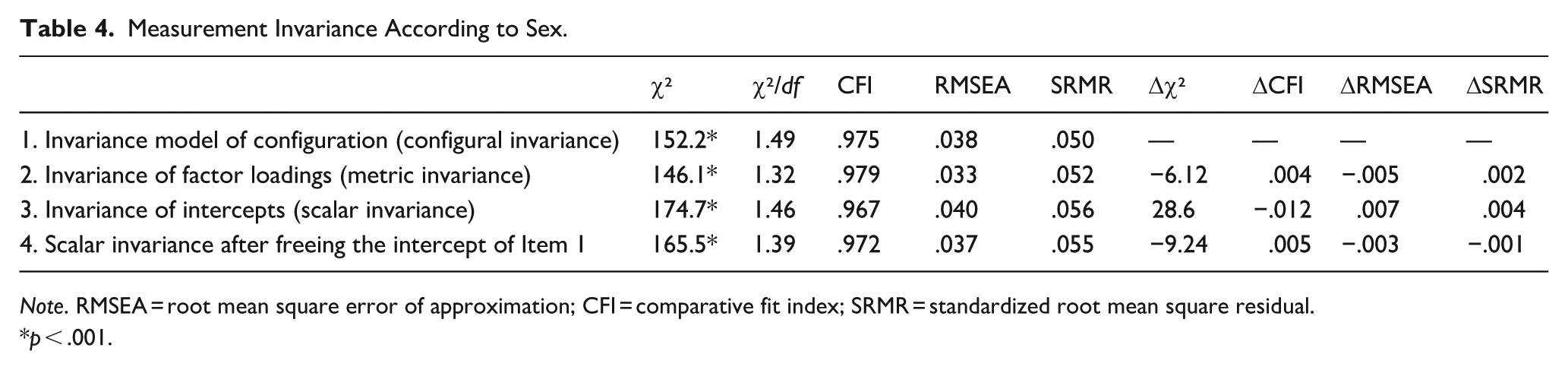
Table 4 presents the fit indices for each level of sex invariance assessment. The configural model revealed a good fit, χ2 = 152.2, df = 102, χ2/df = 1.49, p < .001, CFI = .975, RMSEA = .038, 90% CI = [.024–.050]. Metric invariance was supported after imposing metric constraints, ΔCFI = .004, ΔRMSEA = −.005, ΔSRMR = .002. On the contrary, although ΔRMSEA (.007) and ΔSRMR (.004) were below the cutoff defined for scalar invariance, ΔCFI (−.012) was above the cutoff recommendation of .010. A partial scalar invariance model was tested by freeing the intercept of Item 1, which showed evidence of non-invariance. This resulted in an acceptable fit, ΔCFI = −.005, ΔRMSEA = −.003, ΔSRMR = −.001.
Measurement Invariance According to Sex.
Note. RMSEA = root mean square error of approximation; CFI = comparative fit index; SRMR = standardized root mean square residual.
p < .001.
School Year Invariance
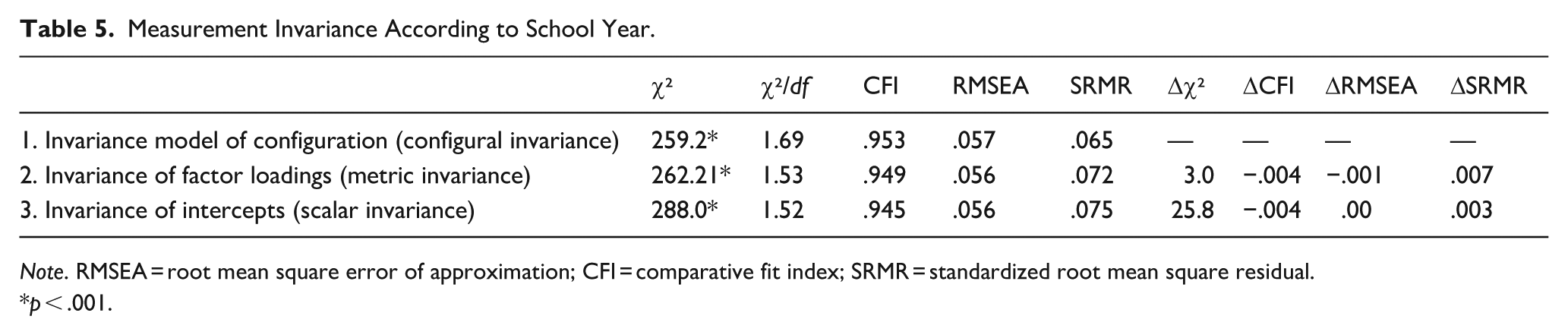
Considering measurement invariance according to school year, the configural model revealed a good fit, χ2 = 259.2, df = 153, χ2/df = 1.69, p < .001, CFI = .953, RMSEA = .057, 90% CI = [.045–.069]. Metric invariance was supported after imposing metric constraints, ΔCFI = −.004, ΔRMSEA = −.001, ΔSRMR = .007. Scalar invariance was also supported, ΔCFI = −.004, ΔRMSEA = .00, ΔSRMR = .003 (Table 5).
Measurement Invariance According to School Year.
Note. RMSEA = root mean square error of approximation; CFI = comparative fit index; SRMR = standardized root mean square residual.
p < .001.
Convergent Validity
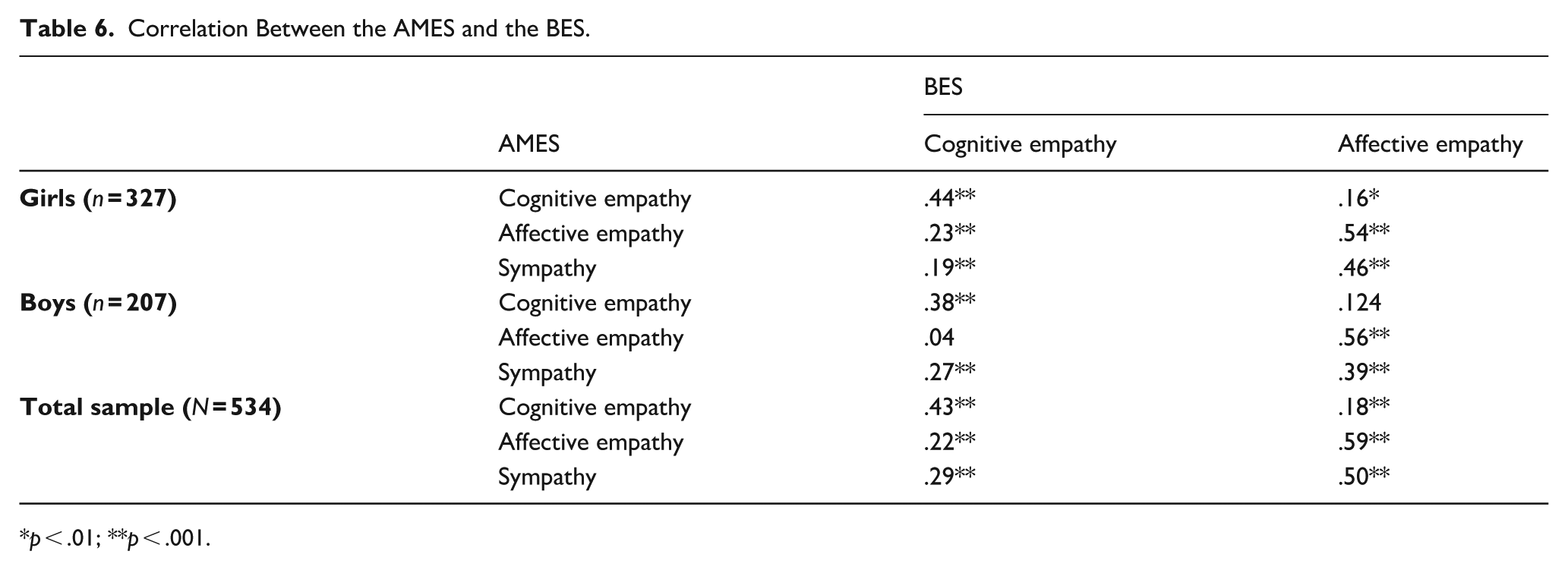
The cognitive empathy subscale of AMES showed a significant correlation with the cognitive empathy subscale of BES for the sample as a whole, r(532) = .43, p < .001. A significant correlation was also found for girls, r(532) = .44, p < .001, and for boys, r(532) = .38, p < .001.
The affective empathy subscale of AMES was positively correlated with the affective empathy subscale of BES, r(532) = .59, p < .001, and for girls, r(532) = .54, p < .001, and boys, r(532) = .56, p < .001.
Sympathy was correlated with both cognitive, r(532) = .29, p < .001, and affective empathy, r(532) = .50, p < .001, of BES, showing a higher correlation with the latter. In the female group, sympathy was also significantly correlated with cognitive, r(532) = .19, p < .001, and affective, r(532) = .46, p < .001. A significant correlation between sympathy and cognitive empathy, r(532) = .27, p < .001, and affective empathy, r(532) = .39, p < .001, of the BES was also found in boys (Table 6).
Correlation Between the AMES and the BES.
p < .01; **p < .001.
Known-Groups Validity
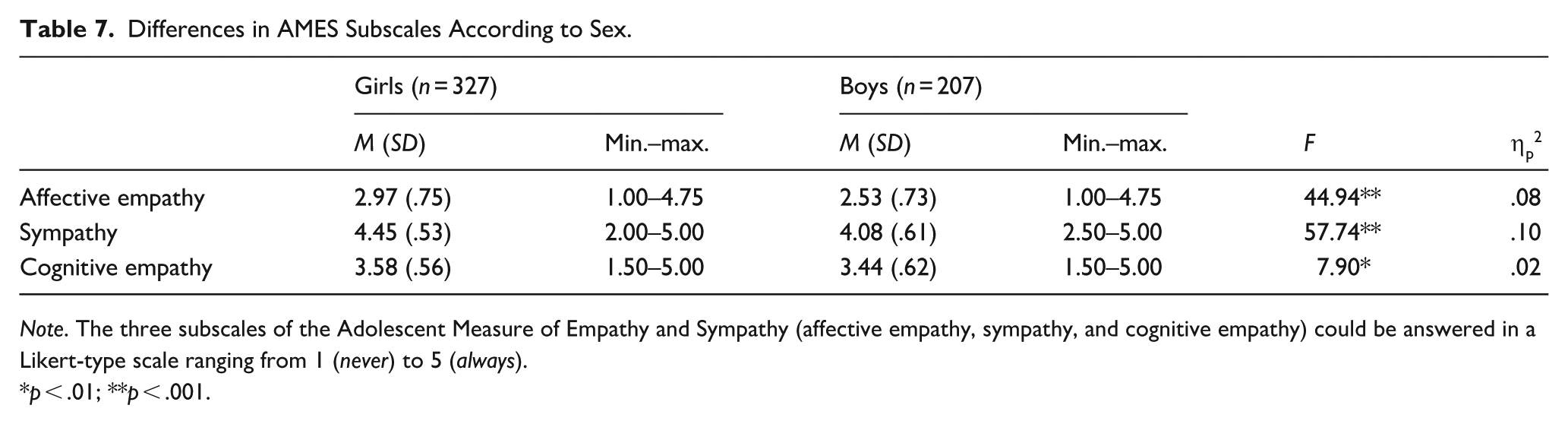
The results of the GLM analysis revealed a significant difference between girls and boys in affective empathy, F(1, 531) = 44.94, p < .001, ηp2 = .08; sympathy, F(1, 531) = 57.74, p < .001, ηp2 = .10; and cognitive empathy, F(1, 531) = 7.90, p = .005, ηp2 = .02, subscales of the AMES (Table 7).
Differences in AMES Subscales According to Sex.
Note. The three subscales of the Adolescent Measure of Empathy and Sympathy (affective empathy, sympathy, and cognitive empathy) could be answered in a Likert-type scale ranging from 1 (never) to 5 (always).
p < .01; **p < .001.
GLM analysis also showed significant differences in affective empathy, F(2, 531) = 14.40, p < .001, ηp2 = .05; sympathy, F(2, 531) = 7.99, p < .001, ηp2 = .03; and cognitive empathy, F(2, 531) = 4.34, p = .01, ηp2 = .02, according to the school year of participants. Tukey’s post hoc analysis showed that affective empathy was significantly different between 10th and 11th graders, and between 10th and 12th grades. Affective empathy was higher in 11th graders and in 12th graders, when compared to 10th graders. Both sympathy and cognitive empathy were significantly different between 10th graders and 12th graders, and between 11th graders and 12th graders, with 12th graders showing higher mean scores compared with both 10th and 11th graders (Table 8).
Differences in AMES Subscales According to School Year.
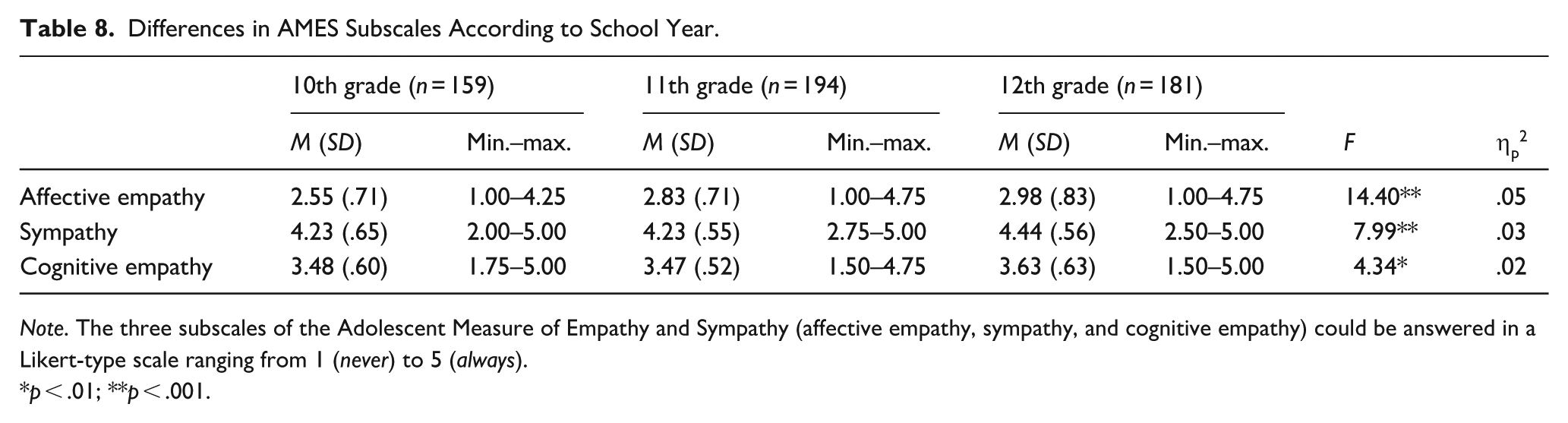
Note. The three subscales of the Adolescent Measure of Empathy and Sympathy (affective empathy, sympathy, and cognitive empathy) could be answered in a Likert-type scale ranging from 1 (never) to 5 (always).
p < .01; **p < .001.
Together, these results suggest that the AMES can distinguish between girls and boys and between the three school years.
Discussion
In this study, we aimed to validate a scale assessing empathy and sympathy in adolescents. Overall, the Portuguese version of the AMES revealed adequate structural validity with the three factors aligned with the structure of the AMES’ original version, capturing both cognitive and affective dimensions of empathy and sympathy as well. Internal consistency was acceptable for all subscales. Previous studies focused on the psychometric properties of the AMES have also reported this three-factor structure and acceptable (Zengin et al., 2018) to good internal consistency (Li et al., 2019).
Measurement invariance regarding the sex of participants was achieved at both configural and metric levels, suggesting that this scale can measure empathy and sympathy in a similar way in boys and girls. However, only partial scalar invariance was achieved by freeing the intercept of Item 1 of the cognitive empathy subscale of AMES. The establishment of partial invariance suggests that comparisons between girls and boys are still adequate (Chen, 2007), but should be conducted and interpreted with caution, as Item 1 seems to have a differential item functioning. This item assesses the adolescents’ perceptions of their ability to easily tell how others are feeling, and it may lead boys and girls to answer differently due to sociocultural gender norms. As girls are expected to be attentive to the emotions of others and boys are frequently expected to be more rational (Chaplin & Aldao, 2014), this may result in a different interpretation when trying to self-evaluate their ability to identify others’ emotions. It would be important for future studies to assess measurement invariance regarding sex, not only in Portuguese-speaking participants but also in other populations, to better understand possible problems with this item and try to establish full scalar invariance regarding sex.
In our sample, girls revealed higher cognitive and affective empathy and sympathy, which aligns with previous research (García-Senlle et al., 2024; Trentini et al., 2022), including in the study of Li et al. (2019), which analyzed the psychometric properties of AMES in the Chinese population. This may be explained by socialization and gender stereotypes, as girls tend to be more encouraged to exhibit emotional behaviors than boys (Van der Graaff et al., 2014).
Measurement invariance regarding the school year of the participants was also confirmed at configural, metric, and scalar levels, suggesting that the AMES allows the distinction of empathy and sympathy in the beginning (10th), middle (11th), and end (12th) of the secondary school education. Our results reveal that affective empathy was greater in 11th and 12th graders when compared to 10th graders. Cognitive empathy and sympathy were higher in 12th graders than in 10th and 11th graders. Given that 11th and 12th graders are typically older than 10th graders, these results may be explained by the greater social and emotional maturation that occurs throughout adolescence. Our findings support the idea of a positive development of empathy during adolescence, which has been reported in the literature (Eisenberg et al., 2009), suggesting that older adolescents display greater empathic abilities.
Empathy and sympathy seem to emerge during the second year of life (Decety & Holvoet, 2021b), but it is not clear if the pathway of their development is similar. For instance, previous studies suggest that empathy complexifies during childhood and adolescence, continuing to develop throughout the lifespan (Allemand et al., 2015; Jarvis et al., 2024). One study found a general increase in empathy across all age groups, from 11 to 55 years (Gaspar & Esteves, 2022). On the contrary, Van der Graaff et al. (2014) reported an increase in cognitive empathy but a stabilization in affective empathy from 13- to 18-year-old girls and a slight decrease in 13- to 16-year-old boys. Regarding sympathy, an increase during childhood (from 5 to 7 years) has been reported (Kienbaum, 2014), although others have found a stabilization in sympathy in these age ranges (Hastings et al., 2000). Another longitudinal study found that sympathy increased from 9 to 12 years, but it remained stable from 12 to 18 years (Grütter & Buchmann, 2021). Conversely, Bechtiger et al. (2021) found an increase in sympathy from 15 to 21 years.
In respect to the convergent validity, every subscale of the AMES was significantly associated with the subscales of the BES, providing evidence that the AMES is capturing the construct of empathy in a consistent way as another validated scale.
Although this study provides evidence of an adequate measure of empathy and sympathy for adolescents, it is important to acknowledge some limitations. Given that we included 14- to 19-year-olds, it could also be relevant to consider younger participants to allow the assessment of empathy in early adolescence. Another limitation is related to the fact that our participants were part of a convenience sample from one district of Portugal, which potentially impacts the generalizability of our results. Still, several secondary schools were involved, thus increasing the diversity of students. Future research should assess the reliability and validity of the AMES encompassing participants of a wider area across Portugal and conduct psychometric studies in different contexts as well, such as clinical (e.g., with participants with specific clinical conditions) and other educational settings. Considering the cultural aspect of countries, it would also be relevant to study the psychometric properties of the AMES in other Portuguese-speaking countries, understanding whether the dimensions of the scale are consistent across diverse cultural contexts.
In sum, the Portuguese version of AMES appears to be a useful and reliable instrument to assess empathy and sympathy with adolescents ranging from 14 to 19 years of age. The validation of this self-report instrument contributes to both research and practical contexts by offering a Portuguese version of a scale that assesses different dimensions of empathy and sympathy, that can be used in interventions aiming at assessing and promoting empathy in adolescents and in clinical contexts, supporting clinicians in the assessment of their clients’ types of empathy and sympathy (Bloom & Lambie, 2019). It could also promote the conducting of cross-cultural studies focused on empathy and sympathy, enabling the comprehension of possible communalities and differences between countries and the role of cultural factors in their development.
The continuation of the study of empathy and sympathy in adolescents, using reliable instruments, is of extreme relevance, as both empathy and sympathy are linked to positive youth development and negatively related to aggressive behavior, prejudice, and hate (Khatod, 2024). Adolescence is a unique period, marked by changes in sociocognitive and emotional abilities, in which empathy and sympathy have been considered essential to social and moral development (Grütter et al., 2017; Sesso et al., 2021). As such, it may be beneficial to implement school interventions focused on the promotion of these abilities, aiming at increasing prosocial behavior and emotional self-efficacy (Silke et al., 2024).
Footnotes
Acknowledgements
The authors are very grateful to Dr. Liliana Capitão who collaborated in the translation process. Special thanks go to the students who participated in this study and to the teachers and schools’ psychologists, who collaborated in the organization of data collection sessions.

Ethical Considerations
This study was approved by the Ethics Committee for Research in Social and Human Sciences of the University of Minho (ref. CEICSH 105/2023). Data collection at schools was also authorized by the Portuguese Ministry of Education (ref. 1478400001).
Author Contributions
Carolina Aparício Araújo: conceptualization, writing (original draft), formal analysis
Jean-Louis Nandrino: conceptualization, writing (review and editing), formal analysis, project administration, supervision, validation
Carla Martins: conceptualization, writing (review and editing), formal analysis, project administration, supervision, validation
Funding
The authors disclosed receipt of the following financial support for the research, authorship, and/or publication of this article: This article is part of a PhD project supported by the Foundation for Science and Technology, under the reference UI/BD/154761/2023. This work was (partially) conducted at CIPsi, School of Psychology, University of Minho, supported by the Portuguese Foundation for Science and Technology (FCT; UID/01662: Centro de Investigação em Psicologia) through national funds.
Declaration of Conflicting Interests
The authors declared no potential conflicts of interest with respect to the research, authorship, and/or publication of this article.
Data Availability Statement
The data that support the findings of this study are available from the corresponding author, C.M., upon reasonable request.