




Abstract
Changing schools tends to be more frequent among victimized students and is sometimes used as a means to put an end to persistent bullying. However, whether these changes benefit victimized students remains unclear, as bullying victimization often persists across different contexts. This mixed-methods study (n = 58,799 and n = 68 for quantitative and qualitative data, respectively) conducted in Finland examines the role of victimization history in the association between newcomer status and victimization in the new school among elementary school students (fourth to sixth graders, that is, 10–12 years old) and middle school students (seventh to ninth graders, that is, 12–15 years old). The findings showed that elementary school newcomers with most frequent victimization history seemed to benefit from the school change compared to established students with similar victimization histories. A corresponding, albeit much weaker, effect was observed among middle schoolers. Previously victimized students had initially been more willing to change schools than non-victimized students. The qualitative content analysis showed a more complex reality—some of the previously victimized newcomers had strong aspirations for a better future, while others experienced fears and losses of established friendships. Eventually, the school change can bring both disappointments and rewards, depending on the newcomers’ ability to make new friends and escape bullying.
Youth who are victimized by their peers at school end up changing classrooms and schools more often than their non-victimized peers (Carson et al., 2013), suggesting that such a change of context is sometimes motivated by victimization. In other words, when other attempts have failed, changing schools may be the last resort to end victimization. Yet, a recent study suggested that being a newcomer in a classroom or school is associated with a heightened risk of victimization compared to established students, particularly when the move is prompted by previous victimization experiences (Tenhunen et al., 2024). However, in these cases, the increased likelihood of experiencing victimization in the new context might be linked to individual characteristics that contributed to victimization in both the previous and current school: the role of school change thus remains unknown. The present study addresses the question of whether and how previous victimization history moderates the effect of school change on subsequent victimization, and how students with and without victimization history perceive the change.
Normative and Non-Normative School Changes and Their Association With Peer Victimization
While this study focuses on non-normative school changes, it is essential to acknowledge the broader context of school transitions within the educational setting. Normative transitions, such as those occurring between middle and high school or due to the merging of schools, represent typical stages in students’ academic journeys. Even these anticipated transitions can impact negatively the stability of friendships (Ng-Knight et al., 2019) and place children into new peer groups. Despite the possible loss of friendships, a reduction in peer victimization was reported among students experiencing middle school transitions, compared to those attending schools without such transitions (Farmer et al., 2011). In another study, normative middle school transitions were found to decrease victimization among girls (Wang et al., 2016). According to study by Felmlee et al. (2018), students undergoing high school transitions faced additional challenges post-transition, including changes in friendship nominations and increased isolation. Multi-school transitions, where students move into one school from several feeder schools, initially disrupt existing friendships (Temkin et al., 2018) but often lead to the emergence of new ones by the end of the post-transition year (Newcomb & Bagwell, 1995).
The current study focuses on non-normative school changes, where a child changes schools and enters as a newcomer in already established peer groups. We examine how such school changes are associated with peer victimization in the new school among students with varying victimization histories. According to a study by Carson and colleagues (2013), peer victimization declines after changing schools, while two studies (Tenhunen et al., 2024; Vernberg, 1990) found that newcomers in classrooms tend to experience more peer victimization than established students. Two other studies (Rambaran et al., 2020; Vandell et al., 2021) did not find a statistically significant effect of newcomer status on victimization, but the direction of the association was toward increasing victimization. However, none of these studies considered students’ prior victimization history. Investigating the initial reasons for students’ mobility, Tenhunen et al. (2024) found that victimization in the new school was most likely among students who had switched schools because they were victimized in the previous school. Nevertheless, they did not compare current victimization among previously victimized students who had versus had not changed schools and therefore failed to uncover whether previously victimized newcomers experienced more or less victimization than they would have faced in their previous schools.
Gaps in Research on School Change and Victimization
Despite the growing body of literature on school mobility and victimization, some notable gaps remain. First, there is a shortage of research examining whether victimization experiences tend to decrease, increase, or persist at similar levels when previously victimized students are transferred (vs not) to a new school. Investigating whether school mobility provides relief from victimization or leads to continuing misery in new environments is essential for understanding the dynamics of bullying and the effectiveness of school change in putting an end to peer victimization. Second, no studies have investigated how previously victimized children perceive non-normative school changes. One qualitative study by Messiou and Jones (2015) brought to light the experiences of children who had recently changed schools by interviewing them after the change. The concerns children brought up during the interviews were often linked to losing and finding friends or becoming a target of bullying (Messiou & Jones, 2015). While these were thoughts raised by newcomers whose victimization history was mostly unknown (except for two children who mentioned their victimization history), it is not known how previously victimized newcomers perceive school change. This is of particular importance because anecdotal evidence suggests that transferring a victimized student to a new school is a relatively common—albeit much debated—practice in handling persistent bullying cases. Hearing the perspectives of previously victimized newcomers can provide valuable insights into their psychosocial adjustment, thereby contributing to the development of more precise and effective strategies to ease their integration in the new peer group.
The Impact of School Change on Previously Victimized Students: Potential Benefits and Risks
We propose that children who have experienced frequent victimization in previous schools may benefit from school change. Specifically, those with a history of frequent victimization might report lower levels of peer victimization during their first year in a new school compared to students with similar victimization histories who remain with their previous classmates. Despite the heightened initial risk associated with newcomer status, it is possible that victimization decreases or becomes less intense in the new context. In the previous classroom, gradual cognitive changes among peers might have led to a worsening perception of the victimized child over time (Olweus, 1978). While a victim’s reputation may persist and continue to negatively influence perceptions among these same peers (Schuster, 2001), new peers in the new school, unburdened by entrenched biases, might initially perceive the victimized child differently, potentially resulting in decreased victimization. On the other hand, we also know that peer victimization tends to persist in new settings likely due to vulnerabilities of previously victimized students (e.g., being insecure and frightened about what will happen in the new classroom), which make them an easy target to persistent bullying (Salmivalli et al., 1998). In addition, newcomers generally experience higher levels of peer victimization compared to established students (Tenhunen et al., 2024). Thus, it is also conceivable that previously victimized children continue to experience high levels of victimization after the school change, comparable to or even exceeding those experienced by students with similar victimization histories who remain in the same school.
Moreover, student mobility can lead to broader interpersonal consequences beyond victimization. Research indicates that school changes often result in fewer friends, smaller friendship networks, less central positions in social networks, and increased social isolation (Haynie & South, 2005; South & Haynie, 2004; Vernberg et al., 2006). Thus, it is crucial to thoroughly understand the effects of non-promotional school changes on peer victimization, particularly among previously victimized students.
Current Study
The existing literature provides valuable insights into several key areas: the potential negative effects of being a newcomer in a classroom or school (Tenhunen et al., 2024; Vernberg, 1990), the high frequency of school changes among victimized students (Carson et al., 2013), and the impact of the initial reasons for mobility on newcomers’ peer victimization (Tenhunen et al., 2024). However, previous studies did not consider the possibility that both previous victimization experiences and changing schools are likely to affect subsequent victimization, and importantly, school change may have different implications for students with varying victimization histories. Another aspect largely missing from the literature is the perspective of students who changed schools.
The present mixed-methods study aims to fill these gaps by addressing the following questions: first, we explore how positively or negatively students in general, and students with different victimization histories in particular, perceived the change of schools, both at the time it occurred and after they start attending the new school. Second, we investigate the unique and interactive effects of previous victimization and school change on subsequent victimization in the new context. We hypothesize that both students’ previous victimization and the change of schools are independently associated with a higher risk of victimization, although we do not have a directional hypothesis regarding the interaction effect between these factors. Finally, we examine how newcomers with a constant victimization history (CVH) describe their experiences regarding school change and identify the factors in their previous or new school that are related to these experiences. This exploratory question is addressed through a qualitative content analysis of the experiences of previously victimized newcomers regarding school change, including aversive and attractive factors related to their former and current schools.
Materials and Methods
Study Design
We utilize mixed methods, with a quantitative analysis complemented by qualitative content analysis. By doing so, we can capture both the measurable phenomenon and deeper contextual insights (Creswell & Plano Clark, 2018). This approach improves the validity of our findings and enables a comprehensive examination of victimized students’ school change, uncovering nuances that may be difficult to detect with one method alone.
Participants and Procedures
Data concerning victimization experiences in previous and current school years were collected in March 2022 in the context of an annual student survey in Finnish schools implementing KiVa antibullying program. In Finland, active parental consent is not required for large-scale surveys that are integrated into the school’s regular activities. Therefore, no institutional review board (IRB) approval was needed for this study. Both parents and students have been informed that students’ anonymous responses may be utilized for research purposes. In 2022, questions regarding student mobility and victimization history were included in the survey for students in Grades 4–9 (ages 10–15). A total of 58,936 students across 498 comprehensive schools participated in the survey. Due to missing data across all variables, 137 cases were omitted, resulting in a final sample of 58,799 participants. Among them, 56.91% were in elementary school (Grades 4–6), 43.09% were in middle school (Grades 7–9), and 4.59% were newcomers to their schools. In the qualitative part of the study, 94 newcomers with CVH were surveyed with open questions. Responses that were found to be tongue-in-cheek and did not answer the questions were excluded, resulting in a final sample of 68 students.
Measures
Grade level (4–9, that is, 10–15 years) was reported by the participants at the beginning of the survey.
Newcomer status was measured with the following question: Have you transferred to this school from another school during the current school year (i.e., after last summer break)? (1) No. I’m in the same school as in the previous year; (2) Yes. Only I changed schools, not the other classmates; (3) Yes, because most (or all) of the students of my age transferred to this school last autumn; and (4) Yes, most (or all) of the students transferred to a new school, but I transferred to a different school than others. In this study, individuals who selected option 2 or 4 were classified as newcomers. Given that data collection took place during the spring semester (in March), these newcomers had been in their current classroom for a period ranging from 0 to 7 months.
Current peer victimization was assessed by four items covering different forms of peer victimization (name-calling, social exclusion, physical victimization, and rumor-spreading). The students were asked: “How often have you been bullied like this during the last two months?” followed by the items: I was called names, mocked, or teased in a hurtful way; The other students ignored me completely or excluded me from the group; I was hit, kicked, or pushed; and The other students spread mean or offending stories about me. The responses were given on a scale from 1 to 5: 1 = not at all; 2 = once or twice; 3 = 2–3 times a month; 4 = once a week; 5 = several times a week. Responses were averaged across items to create a score representing overall peer victimization (α = .79).
Peer victimization history was assessed with two retrospective questions. First, students were asked to think about previous school years, and whether they were victimized then. Those answering “No” received a score of 0 on victimization history. Those who answered “Yes” were given a follow-up question: How frequently did bullying occur? with response options 1 = Single occasions; 2 = Quite often; 3 = Almost constantly; 4 = Constantly. Thus, peer victimization history ranged from 0 to 4.
Thoughts about the school change were assessed with two questions: (1) What did you think about changing schools at the time it happened? and (2) What do you think about it now? Responses were given on a scale of 1–5. For the first question, the options were: 1 = I really didn’t want to; 2 = I didn’t want to; 3 = It didn’t matter to me; 4 = I thought it was quite nice; and 5 = I really wanted to change schools; and for the second question: 1 = It was a bad thing; 2 = It was a pretty bad thing; 3 = It was neither a good nor a bad thing; 4 = It was a pretty good thing; and 5 = It was a good thing. Both of the above questions were followed by a simple open question: Why? The answers to these open questions constituted the qualitative data for the study. Despite the irrelevant responses being excluded (see Participants and Procedures), the data reached saturation point (i.e., participants started to give similar responses), indicating the sample size was sufficient for content analysis.
Analytic Plan
The thoughts about the school change at the time and after the event were first examined using analysis of variance (ANOVA), comparing students with varying levels of previous victimization. Thereafter, multivariate analyses were conducted using two-level random intercept models to account for the nested data structure (students nested within schools). We used chained equation multiple imputation with 10 draws to handle missing data and employed maximum likelihood estimation for the mixed effects models. Although the intraclass correlation coefficient (ICC) of victimization was only 0.01 between schools, this approach mitigated the risk of inaccurate standard errors and biased estimates. The dataset had few missing values (missingness on study variables <1%), and Little’s MCAR test indicated that data were not missing completely at random (MCAR) but may be missing at random (MAR), which is required for multiple imputations. To get closer to the assumption, we introduced measures of loneliness, global victimization, and global bullying as auxiliary variables. The auxiliary variables were selected based on their correlations (r ⩾ .3) with missingness and/or the outcome variable. All quantitative analyses were conducted using Stata/MP 16.1.
To delve deeper into the CVH newcomers’ thoughts about the school change, we employed qualitative content analysis by coding, grouping, categorization, and abstraction (Elo & Kyngäs, 2008). We wrote headings and notes for each student’s responses during the open coding, using the whole sentences as analytic units. Following this, we summarized the meanings and experiences (i.e., grouping). Furthermore, we searched for similarities and disparities, ending up with broader categories. Finally, the constituents were abstracted to a higher logical level, resulting in a classification that addresses our research questions.
Results
Descriptives
Descriptive statistics and pairwise correlations are displayed in Table 1. Victimization history was associated with current victimization (r = .44, p < .001). Newcomer status had a positive, albeit very weak, correlation with victimization history (r = .07, p < .00) as well as with current victimization (r = .06, p < .001). The more a child had been victimized in their previous school, the more positively they had thought about the school change at the time it happened (r = .09, p < .00). Victimization history was unrelated to how children thought about the school change now. As indicated by the mean scores, students were overall quite positive about the school change, especially now that they were already in the new school.
Descriptive Statistics and Correlation Matrix of the Study Variables.
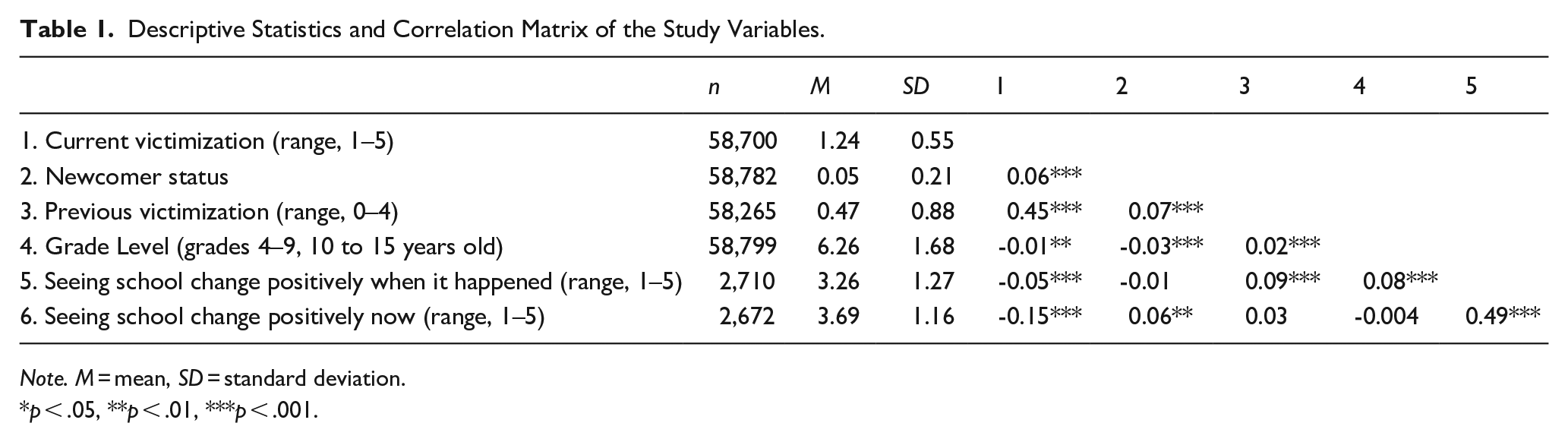
Note. M = mean, SD = standard deviation.
p < .05, **p < .01, ***p < .001.
School Change Among Students With Different Victimization Histories
We compared newcomers with different victimization histories regarding their thoughts concerning the school change using one-way ANOVA. We found that the thoughts about the transition at the time it occurred varied across different victimization history categories, F (4, 53.84) = 13.46, p < .001, η2 = .01. In line with the correlations reported above, those with no victimization history perceived the school change most negatively at the time it happened. In this respect, they differed significantly from those with an almost constant history of victimization, according to the Tukey’s post hoc test (mean difference = 0.58, p < .001). However, the difference in negative thoughts between non-victimized newcomers and those with a constant history of victimization did not reach statistical significance (mean difference = 0.26, p > .05). Groups with varying victimization histories did not differ in their current thoughts regarding the school change.
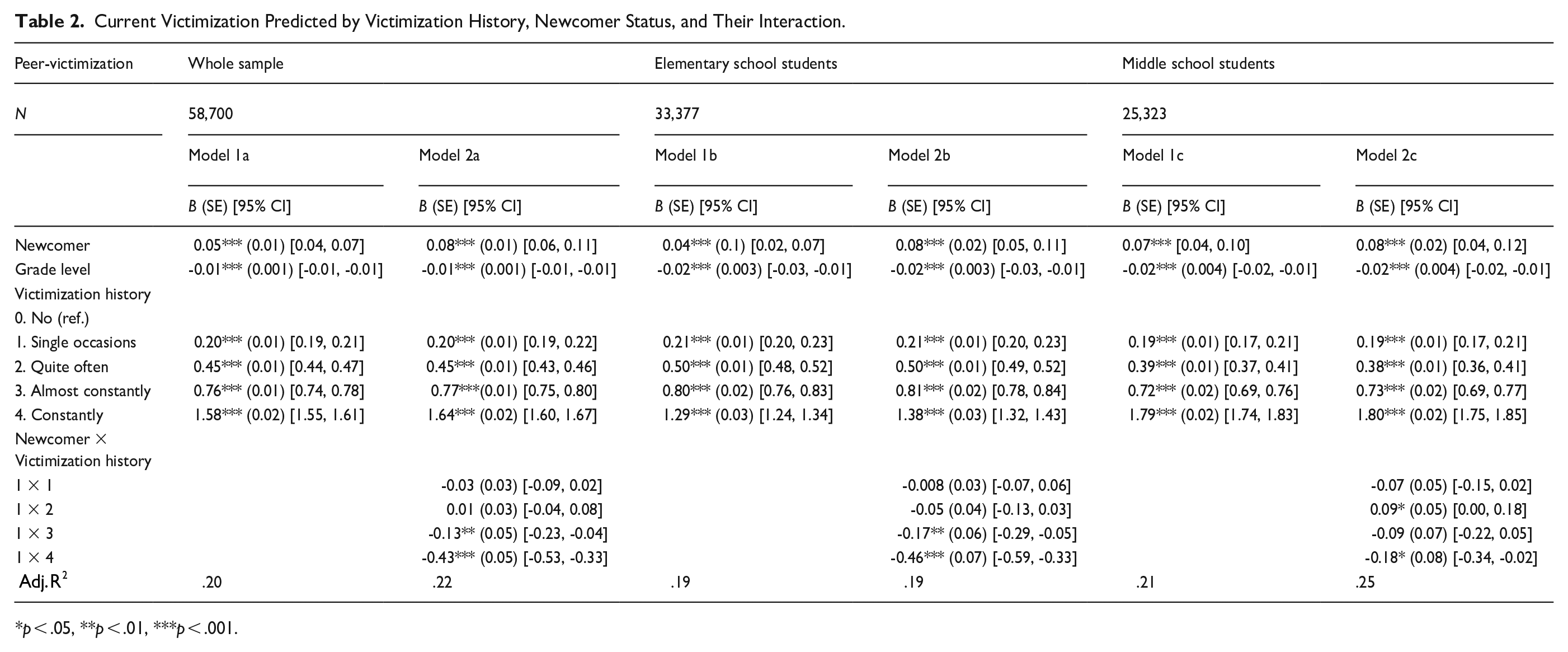
To test the unique and interactive effects of previous victimization and school change on current victimization, we ran two-level models (students nested within schools) (Table 2). The main effects model (Model 1a) showed that newcomer status (B = 0.05, p < .001) and victimization history (i.e., constantly victimized students: B = 1.58, p < .001) had unique positive associations with current victimization. In Model 2a, we tested whether the association between newcomer status and current victimization was moderated by victimization history. The newcomers who had been constantly (B = −0.43, p < .001) or almost constantly (B = −0.13, p < .01) victimized in the past reported significantly lower peer victimization than established students with similar victimization histories. Newcomers without victimization history, on the other hand, reported slightly higher (B = 0.04, p < .05) peer victimization in new settings compared to established students without victimization history (Figure 1).
Current Victimization Predicted by Victimization History, Newcomer Status, and Their Interaction.
*p < .05, **p < .01, ***p < .001.
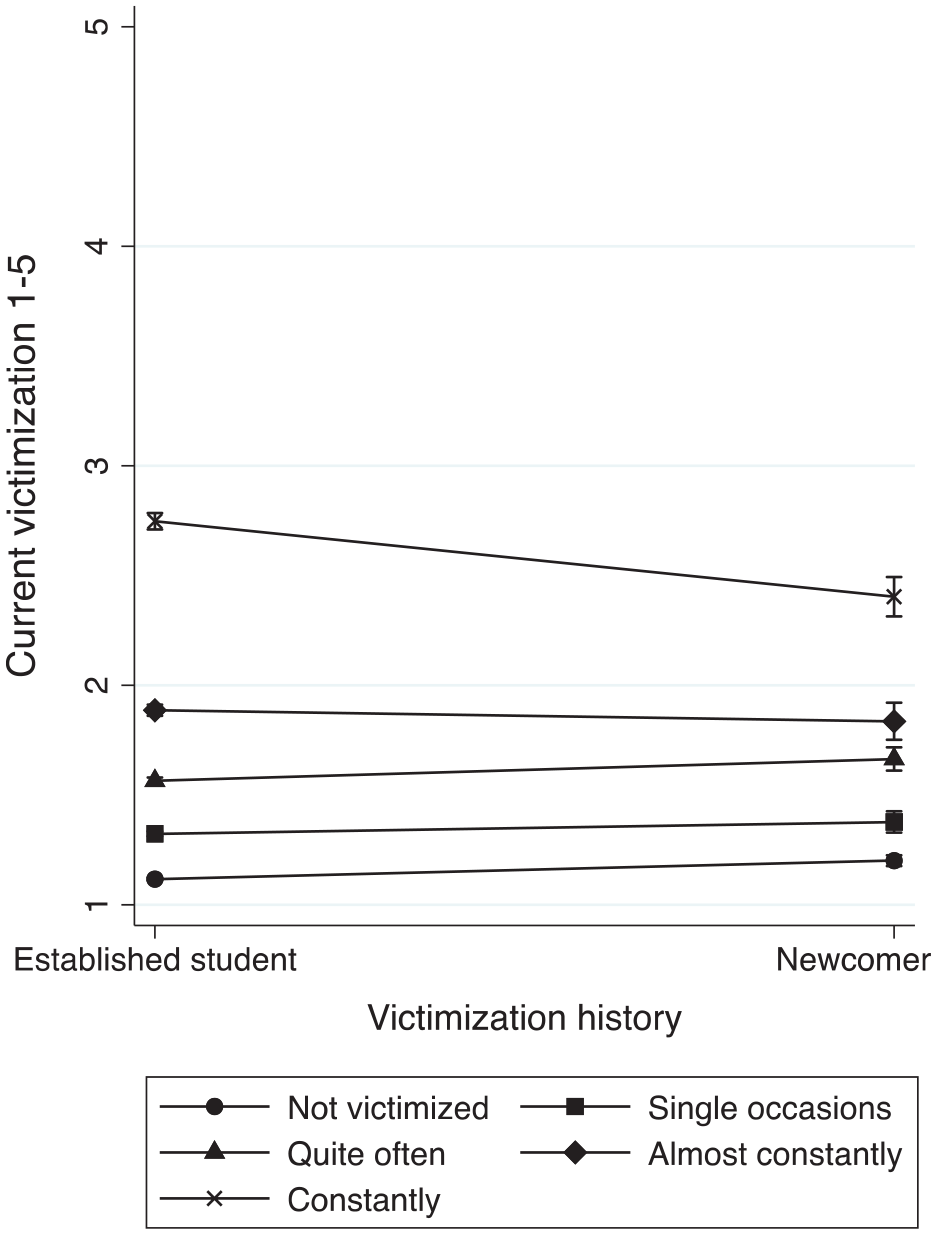
The Moderating Effect of Victimization History on the Association Between Newcomer Status and Current Victimization (Scale 1–5) Among Fourth to Ninth Graders (n = 58,700).
The same models were run separately for elementary (Models 1b and 2b) and middle school students (Models 1c and 2c) to address potential age group differences (Table 2). It turned out that the school change was more beneficial for elementary school students who had been constantly (B = −0.46, p < .001) or almost constantly (B = −0.17, p < .01) victimized in the past (Figure 2). In contrast, the effect was weaker among middle schoolers and significant only among those who had been previously constantly (B = −0.18, p < .05) victimized. Among middle school students who had been victimized to a lesser extent (“quite often”), school change increased the risk for victimization (B = 0.09, p < .05) (Figure 3).
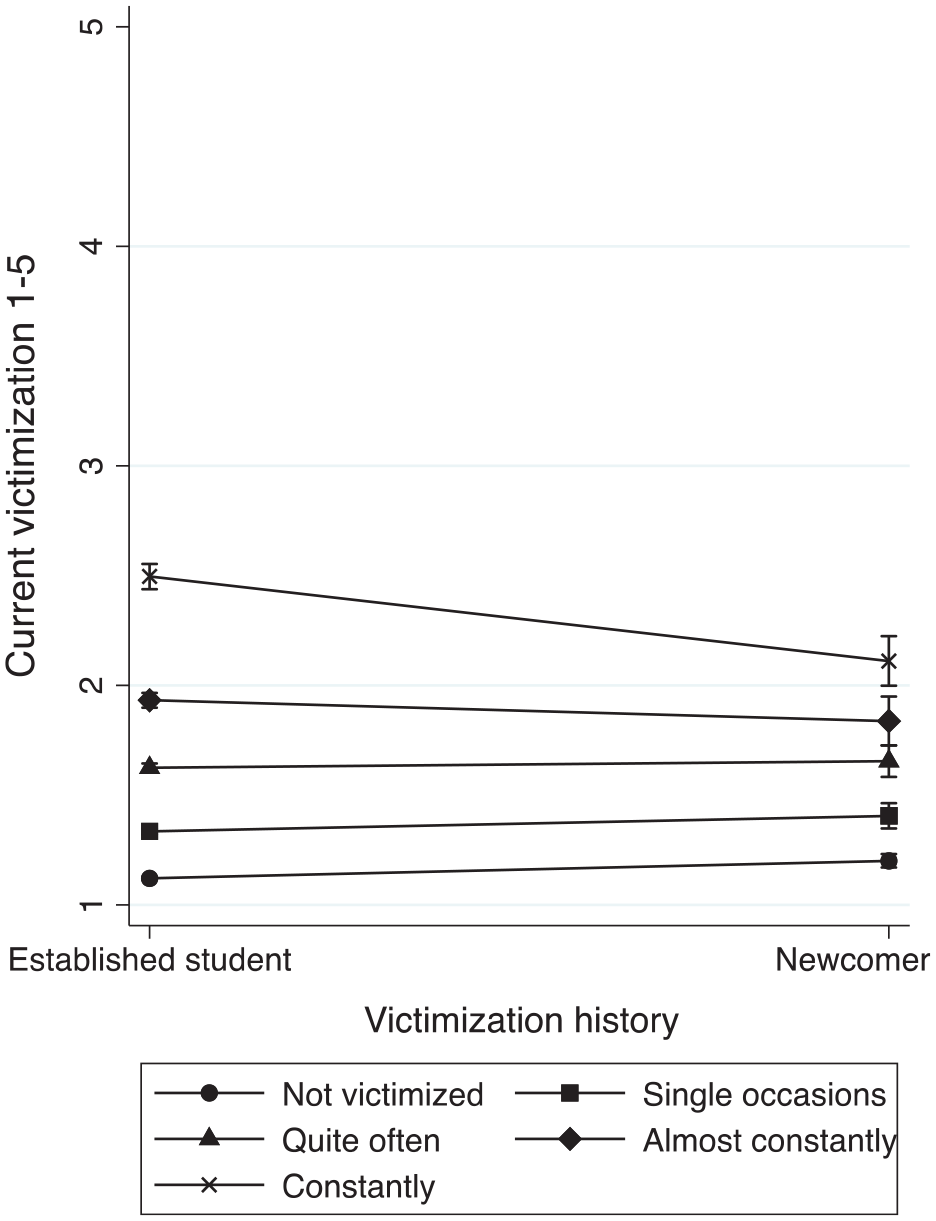
The Moderating Effect of Victimization History on the Association Between Newcomer Status and Current Victimization (Scale 1–5) Among Fourth to Sixth Graders (i.e., 10–12 Years Old) (n = 33,377).
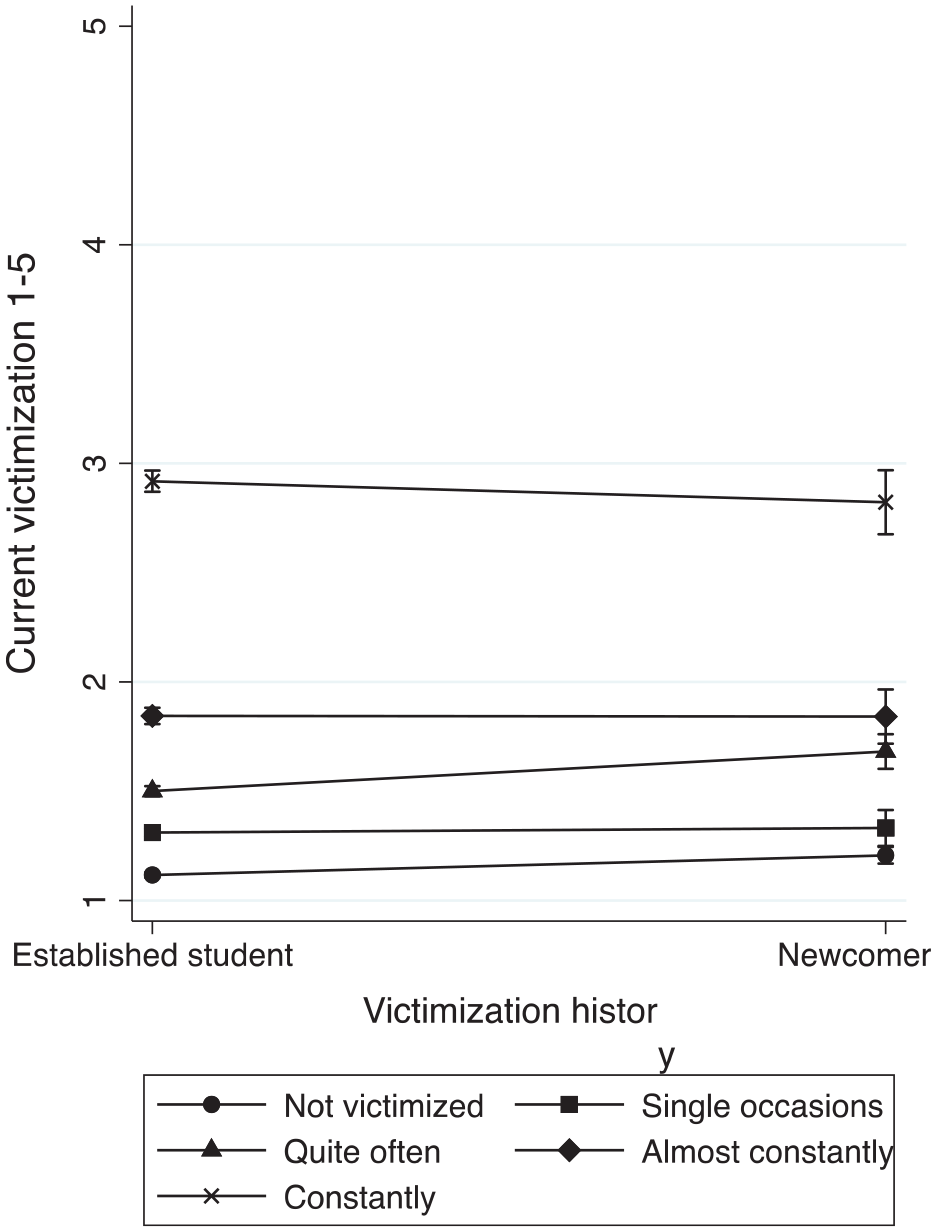
The Moderating Effect of Victimization History on the Association Between Newcomer Status and Current Victimization (Scale 1–5) Among Seventh to Ninth Graders (i.e., 13–15 Years Old) (n = 25,323).
Experiences of Previously Victimized Students
The qualitative analysis provides a nuanced understanding of previously victimized students’ attitudes toward changing schools, revealing a spectrum of emotions and experiences. This section delves into the contrasting perspectives of those who were reluctant versus those who were eager to make a school change.
Aversive and Attractive Thoughts About Previous and New School
First, some students were unwilling to change schools, even though they had experienced constant victimization in their previous school. Some of these students expressed fear related to school change, for example, Student 1 stated: “[I really didn’t want to change schools because] I was afraid I wouldn’t make friends, but fortunately, I was wrong.” Sometimes, they emphasized the attractive aspects of their previous school while highlighting the aversive factors associated with the new school. These students often had established friendships in the previous school and losing them in the school change added complexity to the situation. One student described their positive thoughts about their old school by saying (Student 2): “[I really didn’t want to change schools] because I had made really good friends over there and I hadn’t done that in a while” and then continued with a description of negative thoughts about their new school: “[It was a pretty bad thing to change schools because] I have maybe few friends, and a ton of other people either dislike me or just hate me.” By writing this, the student emphasizes the understandable disappointment they faced in the school change; they had lost good friends and encountered challenges in peer relations.
On the other hand, some students were eager to make a school change. They tended to focus on the attractive elements of the new school and the aversive factors of their previous institution. For instance, this student expressed their desire to transfer by emphasizing their negative experiences at their former school (Student 3): “[I really wanted to change schools] because I had been bullied for three years in the old school. I was already so tired of defending myself.” Subsequently, they brought up a positive aspect of the new school: “[It was a good thing to change schools] because I’m not bullied anymore.” A common thread that runs through in these types of students’ answers is the aspiration for a brighter future and a sincere hope for finding friends. The students had experienced frequent victimization which they managed to escape by changing schools, allowing them to start anew and make friends. Having versus not having friends or aspiration to find new friends may be the most critical factors differentiating CVH newcomers who were initially willing versus unwilling to change schools. Having a strong social network in the previous school may discourage victimized students from pursuing a school change, while feelings of isolation and a lack of social support serve as motivations for considering a transfer to a new school, as there is nothing worthy to lose.
School Change Impacts All—But Not All the Same
Experiences in students’ friendships were divided between those who were satisfied, having found new friends, such as Student 4, who wrote: “[It was a good thing to change schools because] I like this school much more, and I have friends” and those who were dissatisfied due to their inability to establish new friendships, for example, Student 5: “[It was neither good nor bad thing to change schools] I haven’t really found suitable friends for me.”
The experiences with victimization varied, with some students reporting a reduction or complete finish of bullying victimization. For example, Student 6 first explained why they wanted to change schools in the first place: “[I really wanted to change schools because] I was hit, hurt, and called names, and because of that, I couldn’t go to school. I was scared there, and I became depressed.” Subsequently, the same student wrote about a complete turnaround resulting from changing schools: “[It was a good thing to change schools because] I made friends, I’m not bullied or hurt, and I’m glad.” Also Student 7 described a positive turnaround by writing: “[It was a good thing to change schools because] I haven’t been bullied here, and I’ve been able to attend school normally.” While these students experienced less victimization in the new school, there were still students who had not been able to escape their plight by changing to another school. For example, Student 8 wrote about their tedious experience: “[I wanted to change schools] because I thought I didn’t have to endure bullying anymore, but it continued in the new school.”
Some CVH newcomers expressed gratitude for better school facilities, such as the school’s closer distance from home or better learning opportunities. The latter was expressed by Student 9: “[It was a good thing to change schools because] there are a lot of new friends here and an expressive arts class.” There were no negative responses directly linked to the school facilities.
Feelings of belongingness in the new school were occasionally enhanced by satisfaction with the classroom (or school) climate or hindered by general challenges with fitting in. For example, one student described their school and class positively, although they first hesitated with the decision, Student 10: “[I really didn’t want to change schools because] the new school was scary.”After the school change, the same student changed their mind: “[It was a pretty good thing to change schools because] students are cared about more, and teachers are also friendlier.” The statement reflects feelings of belongingness and successful integration. In contrast, those students who may have had difficulties fitting in responded with opposing views for example, Student 11: “[It was a bad thing to change schools because] I should have gone to [X school]” and Student 12: “[It was a bad thing to change schools because] I hate this school.” Since these responses did not clarify the reason behind the expressed feelings of alienation, we also checked these students’ current victimization scores. It revealed that overall (with one exception), the CVH newcomers who reported challenges in fitting in also scored high on current peer victimization, although they did not mention it in their open answers.
Based on the content analysis, we can conclude that CVH newcomers’ thoughts about the previous and new schools were positioned on a spectrum ranging from aversiveness to attraction as follows: the aversive factors of the previous school, the attractive factors of the previous school, the aversive factors of the new school, and the attractive factors of the new school. Attractive factors toward the new school included the hope for the better future, including new friends, fresh start without peer victimization and willingness to join into weighted curriculum teaching. Aversive thoughts about the new school sometimes stem from the fear of the school change. Students mentioned fears about not finding a friend, the persistence of victimization, not liking the school as well as moving to a new place. Similarly, attractive factors related to the old school emphasized the familiarity of the old school as well as the people and the memories made there. Aversive factors related to the old school were mostly related to peer victimization experiences, loneliness, and mental health problems, which were linked to adverse experiences with peers.
Newcomers described their experiences regarding the school change, detailing its impact on friendships, victimization experiences, school facilities, and belongingness. Some newcomers missed their old friends while some had found new friends. A few newcomers reported finding friends which they had not had before. Newcomers’ experiences with peer victimization also varied: some newcomers reported that victimization continued in the new school, while others experienced a decrease or complete finishing of victimization. School facilities were mentioned favorably, such that the newcomers were happy with the new school’s location and educational opportunities. Belongingness was expressed by being grateful for the new classmates and nice teachers. Negative experiences of not belonging were difficult to define, but some students were generally unhappy with the new school which may indicate their feeling of alienation, that is, not belonging.
Discussion
This study first examined newcomers’ perspectives on school change, both at the time it happened and after the change, and compared these views across five different victimization history categories (i.e., not victimized, single occasions of victimization, quite often victimized, almost constantly victimized, and constantly victimized in the past). Second, we tested whether the relationship between newcomer status and current victimization was moderated by victimization history. These quantitative analyses were complemented by a qualitative analysis exploring the experiences of newcomers with a history of constant victimization (CVH).
Overall, newcomers had relatively positive thoughts about their school change. Students without victimization history anticipated the school change more negatively (probably having more to lose), while those who had been victimized in the past tended to view the change more positively at the time it occurred. The qualitative analysis revealed the varying experiences of CVH newcomers. Some students had pursued school change and identified aversive thoughts about their former school (i.e., peer victimization and loneliness) and attractive thoughts (i.e., hope for the better future, new friends, finishing of peer victimization) about the new school. Others, however, reported the opposite. Since all of these students had a history of constant victimization, there must be other factors explaining the heterogeneity in their responses. Instead, the content analysis identified three higher-level classes aside from peer victimization: friendships, school facilities, and belongingness. Some of the CVH students had friends in their former school, while the others described their past as friendless. Thus, having friends adds complexity to the school change and makes it less desirable, even though a student is constantly victimized. Feelings of belongingness or alienation, home-to-school distance, and new learning opportunities were also mentioned among thoughts regarding the school change.
The multilevel analysis showed that CVH newcomers may benefit from school change when compared to equally victimized students continuing within the same schools. This interactive effect between school change and previous victimization was significant among the whole sample, but when the analysis was done separately for elementary and middle schools, it was found to be stronger among elementary school students. In middle schools, the benefit for those who said they had been constantly victimized in their previous school was only marginal. Thus, elementary school students with victimization history can benefit from changing schools, whereas such a benefit is negligible among middle school students.
The lower likelihood of victimization among newcomers who reported constant (in both age groups) or almost constant (in elementary school) victimization history, in comparison to established students with similar victimization histories, may be explained by their escape from the context where classmates have developed a shared negative perception of them (Olweus, 1978; Schuster, 2001) and where they have a reputation as victims. Such a reputation can result in fewer friendship opportunities (Boulton, 2013), further exacerbating victimization. This victim reputation is not as strong among those less frequently victimized, so changing schools primarily benefits those who are most frequently victimized.
However, changing schools decreases victimization only marginally among middle schoolers. The overall effect among CVH newcomers was −0.43, with a split effect of −0.46 for elementary school students and −0.18 (41%) for middle school students. This difference is likely due to the main effects of victimization history and newcomer status on current victimization. These predictions are stronger among middle schoolers compared to elementary schoolers, explaining why the interaction effect is lower. Long-lasting victimization may result in behaviors or characteristics that expose the student to victimization even in a new context (Salmivalli et al., 1998). Such behaviors could include acting against group norms or struggling to fit in with the new peer group (e.g., Huitsing et al., 2012; Wright et al., 1986). Due to their developmental stage, middle schoolers may be more adept at recognizing non-normative behaviors due to the stronger influence of peers and the greater emphasis on peer group compatibility at that age (Laursen & Veenstra, 2021), which could explain why they more readily target CVH newcomers compared to elementary schoolers.
The quantitative and qualitative results provide a complementary picture of school change. In the quantitative analysis, we found that CVH newcomers reported less peer victimization in new schools compared to students with similar victimization histories who stayed in the same school. In line with this, none of the CVH newcomers reported an increase in victimization experiences in their new school in the open-ended answers analyzed qualitatively. They did tell about persisting, decreasing, and complete ending of victimization, as well as changes in friendships, school facilities, and belongingness. Many CVH newcomers told about having found friends in the new school, which is also known to protect from peer victimization in a new context (Tenhunen et al., 2024). However, integrating results based on both methods challenges a simplistic interpretation of the data. The quantitative analysis suggests student mobility is a complex event in which CVH newcomers may benefit, but the less often victimized or non-victimized newcomers may not experience the same benefits—they could even encounter negative consequences. In addition, the qualitative responses unveil even a more nuanced reality. It becomes evident that, despite the benefits observed among CVH newcomers, some students do not experience the anticipated advantages of school change. Thus, based on the results, we can conclude that changing schools does not seem to exacerbate peer victimization among CVH students; however, the possibility of its persistence at the same level must be acknowledged. Also, something to consider is the potential consequences if CVH students are exposed to victimization again in the new classroom—would it be even worse for one’s mental health if they are not accepted in the new group either?
Our findings partly align with those of Carson et al. (2013), who observed a decline in peer victimization following a school change. However, our results also reveal that newcomers who were not frequently victimized in their previous school do not always experience a reduction in victimization after the school change. This contradicts the notion that a school change is universally beneficial and suggests that the impact may depend on the individual’s victimization history—a variable not considered by Carson et al. Moreover, our study adds depth to the findings of Vernberg (1990) and Tenhunen et al. (2024) by demonstrating that while some newcomers face increased victimization, others, particularly those frequently victimized in the past, may benefit from school change.
Our research also expands on the findings of South and Haynie (2004) and Haynie and South (2005), who highlighted the broader social impacts of school change, such as smaller friendship networks and increased isolation. We observed that while some CVH newcomers found new friends, others continued to experience social challenges, indicating that the impact of school change on social networks is complex and may be influenced by individual histories of victimization. We also found that the student’s thoughts about the school change were similar to those described in a study by Messiou and Jones (2015). For example, concerns related to finding friends, being victimized, and fitting in were highly emphasized in both qualitative samples.
Future research should continue to explore the nuanced experiences of CVH newcomers, with a focus on long-term outcomes beyond the initial school change period. In addition, investigating the role of school environment, teacher support, and peer relationships in shaping the experiences of mobile students would provide a more comprehensive understanding of the factors contributing to successful school change. Research should also consider the mental health implications for students who face renewed victimization in their new schools and develop strategies to support these vulnerable populations effectively. By shedding light on these yet unanswered questions and building on existing research, we can better understand and support the needs of victimized students undergoing school mobility, ultimately contributing to more effective and compassionate support strategies.
Strengths and Limitations
This study has several strengths: the large sample size enabled us to investigate peer victimization and school change within a small proportion of newcomers, comprising only 4.6% of students. The large sample improves the generalizability of the findings, strengthening its external validity within Finland but also among same-aged student populations in other countries. Also, utilizing a two-level model to take into account, the nested data structure decreases the likelihood of inflated parameters and type 1 error. In addition, the mixed-methods design contributes to a more nuanced and fuller picture of CVH newcomers’ situation. Solely utilizing one method may have led us to an overly simplistic interpretation of the results.
However, certain limitations must be acknowledged when interpreting the results. First, the data were cross-sectional, restricting our ability to predict whether victimization will continue in the future. In addition, the scale used to measure victimization history was neither optimal nor based on any existing scale. The questions regarding victimization history and school mobility were asked retrospectively, potentially leading to recall bias. Moreover, the study relied solely on self-reports, which may lead to under- or overreporting of victimization and, more generally, to shared method bias.
In addition, the exact timing of the transition was unclear. The newcomers entered the classroom during the ongoing school year of data collection, but it is uncertain whether this happened at the beginning of the autumn semester or later, potentially influencing the estimates to some degree. However, school mobility tends to be more common at the start of the autumn semester. Further research should investigate the longitudinal impact of school changes on previously victimized students to ascertain whether the benefits endure over time.
Conclusion
This study sheds light on victimized newcomers’ experiences of school change and produces valuable information that has not been reported before. CVH newcomers, despite their similar experiences with victimization, may have diverse sentiments regarding the school change. Some hesitate to change schools due to their established friendships in their former school, the fear of not making new friends, or the potential of facing persistent victimization. Others are eager to move to a new school as they aspire to make new friends, escape their bullies, have a fresh start, or attend weighted education. CVH newcomers described their school change with experiences related to friendships, peer victimization, school facilities, and belongingness.
Those who had been constantly victimized in their past benefited from school change compared to those with similar victimization histories but stayed in the same school. This result was evident among elementary, but less so among middle school students. This is not to say that we recommend school transfer as a solution to victimization problems. Rather, the problem should be first and foremost solved where it has emerged, with evidence-based methods utilized by school professionals. Only when—for one reason or another—the interventions have failed to put an end to bullying, school transfer might be considered or, at least, this possibility should not be precluded.
Footnotes
Data Availability Statement
The study at hand was not pre-registered, but the anonymized data and analysis code can be obtained from the first author upon a reasonable request.
Declaration of Conflicting Interests
The author(s) declared no potential conflicts of interest with respect to the research, authorship, and/or publication of this article.
Funding
The author(s) disclosed receipt of the following financial support for the research, authorship, and/or publication of this article: This study was supported by the Academy of Finland Flagship Programme (decision number: 320162), the Academy of Finland Research Fellow grant (decision number 350798), and The Finnish Cultural Foundation grant (decision number: 00221027).
Ethical Consideration
The survey adhered to the ethical standards of the University of Turku Ethics Committee for Human Sciences, the Finnish National Board of Research Integrity (TENK, National Advisory Board on Research Ethics, 2009), and the Finnish Personal Data Act (523/1999). The data collection procedure complied with Finnish regulations for the protection of human subjects and aligned with the ethical guidelines outlined in the 1964 Helsinki Declaration and its subsequent amendments.
