




Abstract
This study investigated the interactive effects of maternal and paternal warmth as well as behavioral control on adolescents’ anxiety in Ghana and whether these linkages varied between adolescents in rural and urban contexts. Participants were 211 junior high school students (61% girls; 39% boys; Mage = 13.43; SDage = 2.03) who completed measures of parenting behaviors and experiences of anxiety. Results revealed significant two-way interaction effects such that higher levels of maternal warmth in conjunction with lower levels of paternal warmth were associated with higher levels of adolescents’ anxiety. In addition, higher levels of paternal (but not maternal) warmth predicted lower anxiety in urban families, but not rural families. Moreover, higher maternal behavioral control combined with higher paternal behavioral control predicted lower anxiety, although this association was only observed for a small subset of the sample. Findings highlight the complementary roles of both mothers and fathers in influencing adolescents’ anxiety and the importance of family context in shaping parenting influence. Interventions targeting positive parenting behaviors should focus on both mothers and fathers.
Increase in adolescents’ emotional problems such as anxiety can lead to later adjustment problems (Woodward & Fergusson, 2001). Previous research in Western cultures indicates that parental warmth and behavioral control are associated with lower anxiety in adolescents (Vazsonyi & Belliston, 2006). While emerging literature extends this work beyond Western contexts (Rothenberg et al., 2020), including Ghana (Salaam & Mounts, 2016), studies have focused more on independent roles of mothers and/or fathers parenting rather than their interaction. Furthermore, despite the potential influence of sociocultural-context (urban or rural setting), studies have predominantly relied on urban adolescents. According to the ecological system framework, adjustment is influenced by various factors, including the immediate parenting environment (mothers and fathers) and the broader community context (Bronfenbrenner, 1994). This study fills these gaps by examining the interaction between maternal and paternal parenting in predicting adolescents’ anxiety in Ghana, and whether the interactive linkages differ between rural and urban families. Focusing on Ghanaian adolescents is crucial for several reasons. First, Ghanaian adolescents’ socialization experiences are largely based on generalizations from Western adolescents. Second, the adolescence period in Ghana is often associated with lower risk than other developmental periods (Sommer, 2011), and as a result, research has not prioritized emotional wellbeing of adolescents. However, recent evidence suggests adolescents face significant emotional difficulties. For instance, research shows that most Ghanaian adolescents experience elevated levels of anxiety (Salaam & Mounts, 2016). Considering the detrimental effects of anxiety, further examination of factors contributing to anxiety in Ghanaian adolescents is necessary.
Parental Warmth and Behavioral Control as Predictors of Adolescents’ Anxiety
During adolescence, the peer context becomes crucial, but parental socialization behaviors also play a critical role in shaping adolescents’ outcomes. Parenting can be organized around warmth (acceptance, emotional support, responsiveness) and behavioral control (monitoring, limit-setting, structure), and these dimensions have been identified in Ghana (Deater-Deckard et al., 2011; Salaam & Mounts, 2016). Warmth is consistently linked to lower adolescents’ anxiety (Beckmann, 2021; Quach et al., 2015), as it strengthens parent-adolescent attachment and regulates behavioral systems that reduce negative emotions such as anxiety (El-Sheikh & Elmore-Staton, 2004). Behavioral control, like warmth, is associated with lower adolescents’ anxiety (Rothenberg et al., 2020; Salaam & Mounts, 2016). Structured settings associated with behavioral control enhance adjustment by reducing negative experiences and emphasizing appropriate behaviors (Grolnick & Pomerantz, 2009). A nation-wide survey indicated that 30% of Ghanaian parents showed warmth, and 34% had knowledge of adolescents’ activities (Owusu, 2012). In addition to the prevalence, Ghanaian mothers and fathers may differ in the qualitative expression of warmth and control. For instance, mothers may show warmth through physical touch and affection, while fathers may use play and instrumental support. Mothers may enforce control through strictness and limit-setting, while fathers may use shared activities and sternness to communicate expectations and disapproval.
Paternal involvement in adolescents’ socialization in Western societies uniquely contributes to reducing adolescent anxiety (Vazsonyi & Belliston, 2006). In one study for instance, the association between parenting and children’s anxiety was stronger for fathers than for mothers (Möller et al., 2016). In particular, it is unclear how maternal and paternal parenting relate to adolescents’ anxiety. Studies involving American adolescents showed that the combination of higher maternal and paternal authoritative parenting predicted the lowest levels of adolescents’ anxiety (McKinney & Renk, 2008), while among adolescents experiencing triangulation, inconsistencies in levels of maternal and paternal warmth exacerbated their behavior problems (Etkin et al., 2014). Taken together, adolescents often have distinct relations with each parent, and maternal and paternal parenting behaviors may interact to influence adolescent development. One of the main theories explaining these interactive linkages is the ecological systems model (Bronfenbrenner, 1994). The model emphasizes the importance of close family bonds of different socializing figures in shaping adolescent’s development. In Ghana, cultural processes, such as the emphasis on holistic development through coordinated parental socialization, can be viewed as an integral mechanism within the broader ecological model. The coordinated socialization by parents reflects a cohesive family unit, establishing a harmonious mesosystem exemplified by connections and interactions between family members. This predictable pattern of shared socialization has beneficial effects for adolescents (Del Barrio et al., 2016). Consistent parenting indicates a stable environment and strong family engagement, benefiting adolescents. Inconsistencies signal dysfunctional parenting processes and increase anxiety due to heightened feelings of stress associated with threats to attachment security (Del Barrio et al., 2016; Lippold et al., 2021). Thus, consistent high levels of warmth or behavioral control may amplify protective associations, while inconsistencies may increase the risk of adolescents’ anxiety.
The Cultural Context of Urban and Rural Ghana
Ghana is a country with a diverse population of over 80 ethnic groups, each with its own customs and languages (Afrifa et al., 2019). Rural communities make up approximately 43% of the population (Ghana Statistical Service, 2021), and their cultural practices differ from those of urban areas. In Ghanaian society, warmth is expressed through nurturance and guidance, while control is rooted in maintaining discipline and preserving values associated with respect for authority, collectivism, and interdependence (Marbell & Grolnick, 2013). Given that the setting in which the family is embedded shapes socialization goals and parenting (Chen & Li, 2012), the interactive associations between maternal and paternal parenting and anxiety may depend on the sociocultural setting. For instance, traditional gender roles influence parenting behaviors in Ghana (Huang et al., 2018), with mothers often responsible for emotional support and fathers viewed as responsible for control (Nyarko, 2014). This division of parental labor is likely to be prevalent among rural families, while urban families are more likely to experience significant changes in parenting dynamics as both parents may demonstrate egalitarian roles in providing warmth and control. Co-parental support, which involves affirming the parenting competence and decisions of other parent, enhances the impact of parenting on children’s outcomes (Feinberg & Kan, 2008). As a result of this reinforcing dynamic, urban families are likely to affirm each other’s parenting decisions, reduce stress within family relationships, promote positive parent-adolescent interactions, and strengthen the overall impact of their parenting behaviors. In contrast, rural families may be more prone to undermining the other parent’s decisions, ultimately weakening their parenting behaviors if inconsistent with traditional gender roles.
In addition, urban families are more technologically advanced and more exposed to Western culture (e.g., individualism), while rural families maintain traditional values of extended family and communal living (Danquah & Miller, 2007). These cultural differences may impact parenting approaches and potentially affect the link between parenting and anxiety. For example, urban parents may better appreciate the developmental needs of adolescents due to information exposure, whereas rural parents may feel overwhelmed by caregiving roles due to responsibility toward extended family members (Danquah & Miller, 2007). Relatedly, considering that rural Ghanaian families experience concentrated poverty, unlike their urban counterparts (World Bank, 2020), such pervasive economic difficulties could weaken optimal parenting efforts in most rural families and likely have detrimental effects on the quality of parent-adolescent relationship (Reijneveld et al., 2010). Thus, the present investigation examines whether the family context further moderates the interactive associations between maternal and paternal parenting and adolescents’ anxiety.
Present Study
The study examines interactive effects of maternal and paternal parenting on adolescents’ anxiety in Ghana and whether the interactive linkages differ between adolescents in rural and urban families. The study predicts that higher maternal warmth in conjunction with higher paternal warmth and higher maternal behavioral control in conjunction with higher paternal behavioral control will be associated with lower adolescent’s anxiety. Lower levels or inconsistencies in the levels, however, would lead to increased anxiety in adolescents. The study also predicts that the interaction of maternal and paternal parenting behaviors and adolescent’s anxiety will differ for adolescents in rural and urban families.
Method
Participants
Data for this cross-sectional study were obtained from 211 adolescents (129 girls; 82 boys) with ages ranging from 11 to 17 years (M = 13.43; SD = 2.03) attending a private junior high school located in the urban community of the capital city of Accra and a public junior high school situated in a rural community in the Mampong area of the Ashanti region. In the urban area, six classes had around 35 students each, while in the rural area, three classes had about 45 students each. All three rural and four urban classes participated in the study. Using G*Power 3.1 (Faul et al., 2009), power analysis indicated that the sample size achieved 95% power (1 - β) to detect a moderate three-way interaction effect, Cohen’s f²= .15, t(202) = 3.95, p < .01. According to Ghana Statistical Service, families in this urban area have higher socioeconomic status than the families in the rural area. Junior high school education spans 3 years, generally for students aged from 12 to 15 years. Junior high school typically signifies the adolescent phase, as students often enroll in grades lower than their actual age. Rural participants (M = 15.36, SD = 1.20) were older than urban participants (M = 11.84, SD = 0.90), t(210) = 23.30, p < .01. They also had more siblings: rural (M = 4.32, SD = 1.91) compared to urban (M = 2.73, SD = 1.36), t(210) = 6.97, p < .01. The majority of participants (73%), reported living with both parents.
Procedure
Purposive sampling was used to recruit an ethnically diverse sample of adolescents from rural and urban junior high schools. School principals were contacted after identifying potential schools. Three urban and two rural principals agreed to have their schools participate. One urban and one rural school were selected based on availability, time, and resources. To recruit participants, a letter describing the study, parent consent, and student assent forms were sent home with prospective participants. Students who returned the signed consent and assent forms completed the hard copies of the questionnaire at school under supervision from research assistants. Students did not receive compensation. As English is the official language used in schools, the measures were administered in English. The recruitment process yielded 97 rural and 114 urban participants. Approval for the study was obtained from an Institutional Review Board of Northern Illinois University (Protocol# HS20-0158).
Measures
The measures used in this study have been shown to be reliable and valid with adolescents in Ghana (Salaam & Mounts, 2016).
Maternal and Paternal Warmth
Adolescents’ ratings of maternal and paternal warmth were assessed using a sub-scale from the Child Report of Parent Behavior Inventory (CRPBI; Schaefer, 1965). The warmth scale consists of 24 items. A sample item is “My mother/father is able to make me feel better when I am upset.” Adolescents responded to each item, using a three-point scale response format ranging from 1 = “not at all like,” 2 = “a little like,” to 3 = “just like,” completed separately for mothers and fathers. Responses to the items were averaged to obtain a mean score, with higher scores indicating greater maternal and paternal warmth. Cronbach’s alpha for maternal warmth was .93, and paternal warmth was .93.
Maternal and Paternal Behavioral Control
Adolescents’ ratings of maternal and paternal behavioral control were assessed using a sub-scale from CRPBI (Schaefer, 1965). The scale consists of a 16-item measure and a sample item is “My mother/father usually doesn’t find out about my misbehavior.” All items on this scale were reverse-coded. Adolescents responded to each item, using a three-point scale response format ranging from 1 = “not at all like,” 2 = “a little like,” to 3 = “just like,” completed separately for each parent. Responses to the items were averaged to obtain a mean score, with higher scores indicating greater maternal or paternal behavioral control. The Cronbach’s alpha for maternal behavioral control was .79 and .83 for paternal behavioral control.
Anxiety
Adolescents’ ratings of their anxiety symptoms were assessed using the 38 items from the Spence Children’s Anxiety Scale (Spence, 1998). Six items representing the obsessive-compulsive sub-scale were removed to reflect the revisions made in Diagnostic and Statistical Manual of Mental Disorders, Fifth Edition, (DSM-5). A sample item on this scale is “I worry that something awful will happen to someone in my family.” Adolescents responded to each item using a four-point scale ranging from 0 = “never” to 3 = “always.” Responses to items were summed to generate an overall score, with higher scores indicating greater adolescents’ anxiety (32 items; α = .89).
Analyses
Preliminary analyses used descriptive statistics and multivariate analysis of variance (MANOVA) to determine differences among variables, while primary analyses used regression. Assumption tests (multivariate normality, homoscedasticity, multicollinearity, linearity) were generally met prior to conducting the inferential tests.
Results
Preliminary Analyses
Means, standard deviations, and intercorrelations (i.e., phi coefficient, point biserial correlation, correlation coefficient) among variables are presented in Table 1. Community type (coded as 0 = urban families; 1 = rural families) was negatively correlated with maternal behavioral control and paternal behavioral control. Paternal warmth was negatively correlated with anxiety. A 2 (community type) by 2 (gender) MANOVA test was conducted to examine mean differences in study variables. There was a significant main effect for community type, Wilks’ Lambda = .880, F(5, 204) = 5.57, p < .05, such that adolescents in urban families scored higher on paternal warmth and maternal and paternal behavioral control than adolescents in rural families. There was a significant main effect of gender, Wilks’ Lambda = .914, F(5, 204) = 3.82, p < .05, such that adolescent girls scored significantly higher on anxiety than boys. Given the gender differences, gender was controlled for in the primary analyses. Parenting differences indicate that urban and rural communities vary in parenting levels, suggesting community type as a potential moderator.
Means, Standard Deviations, and Intercorrelations Among Study Variables.
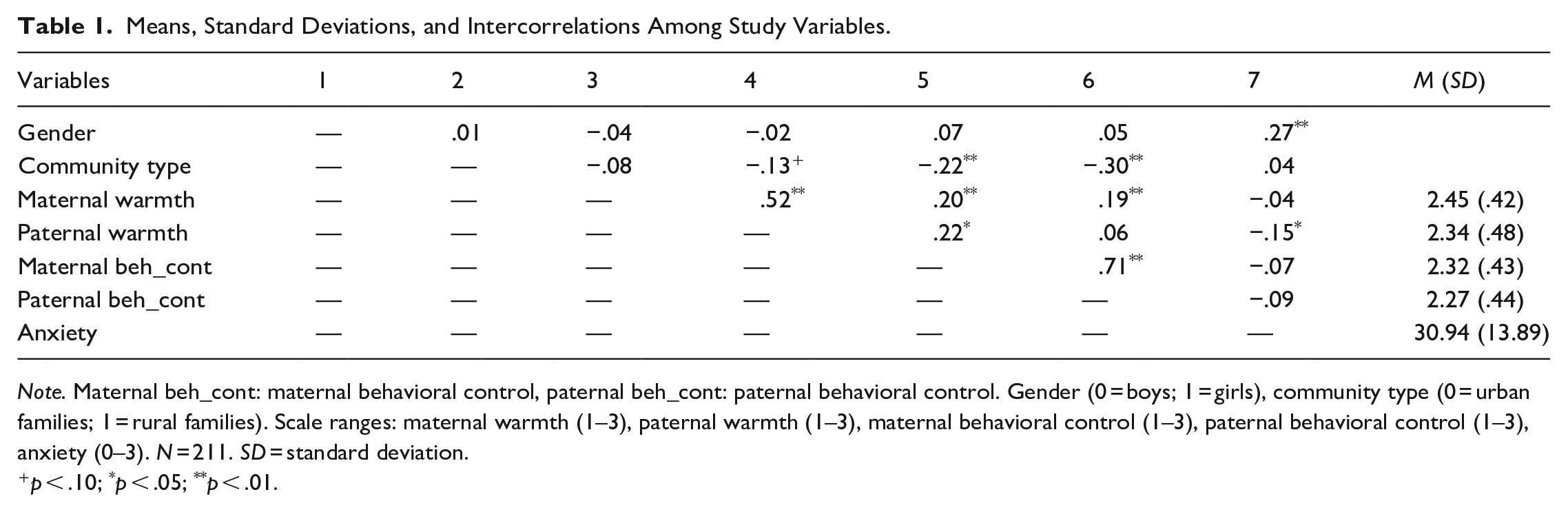
Note. Maternal beh_cont: maternal behavioral control, paternal beh_cont: paternal behavioral control. Gender (0 = boys; 1 = girls), community type (0 = urban families; 1 = rural families). Scale ranges: maternal warmth (1–3), paternal warmth (1–3), maternal behavioral control (1–3), paternal behavioral control (1–3), anxiety (0–3). N = 211. SD = standard deviation.
p < .10; *p < .05; **p < .01.
Primary Analyses
To test whether interactive associations between maternal and maternal parenting differed by community type, two sets of moderated moderation regression analyses were conducted using SPSS PROCESS macro Version 4.0 (Hayes, 2018). The first model examined whether the interaction between maternal warmth and paternal warmth is moderated by community type, and the second model examined whether the interaction between maternal behavioral control and paternal behavioral control is moderated by community type. Prior to analyses, warmth and behavioral control were mean-centered to aid interpretation, and significant interactions were followed with simple slope tests using the Johnson-Neyman (J-N) technique (PROCESS; Hayes, 2018).
Interactive Associations of Maternal and Paternal Parenting and Community Type on Adolescents’ Anxiety
Table 2 presents results of the moderated moderation of maternal and paternal warmth by community type. Adolescent girls reported greater levels of anxiety than boys. There was a main effect of paternal warmth on anxiety such that higher levels of paternal warmth were related to lower anxiety. There was a significant two-way interaction between maternal warmth and paternal warmth. Simple slope tests (Figure 1) showed that higher levels of maternal warmth were related to higher levels of adolescents’ anxiety at lower levels of paternal warmth (B = 14.02, SE = 5.16, 95% CI [3.84, 24.21], p = .007). The J-N technique was used to identify regions of significance within the range of paternal warmth scores where the association between maternal warmth and anxiety was significant. The J-N region of significance was 2.23, indicating that greater maternal warmth was linked to anxiety when paternal warmth scores were below 2.23 on the 1 to 3 scale.
Regression Analyses Showing the Interaction of Maternal and Paternal Warmth and Community Type to Predict Adolescents’ Anxiety.
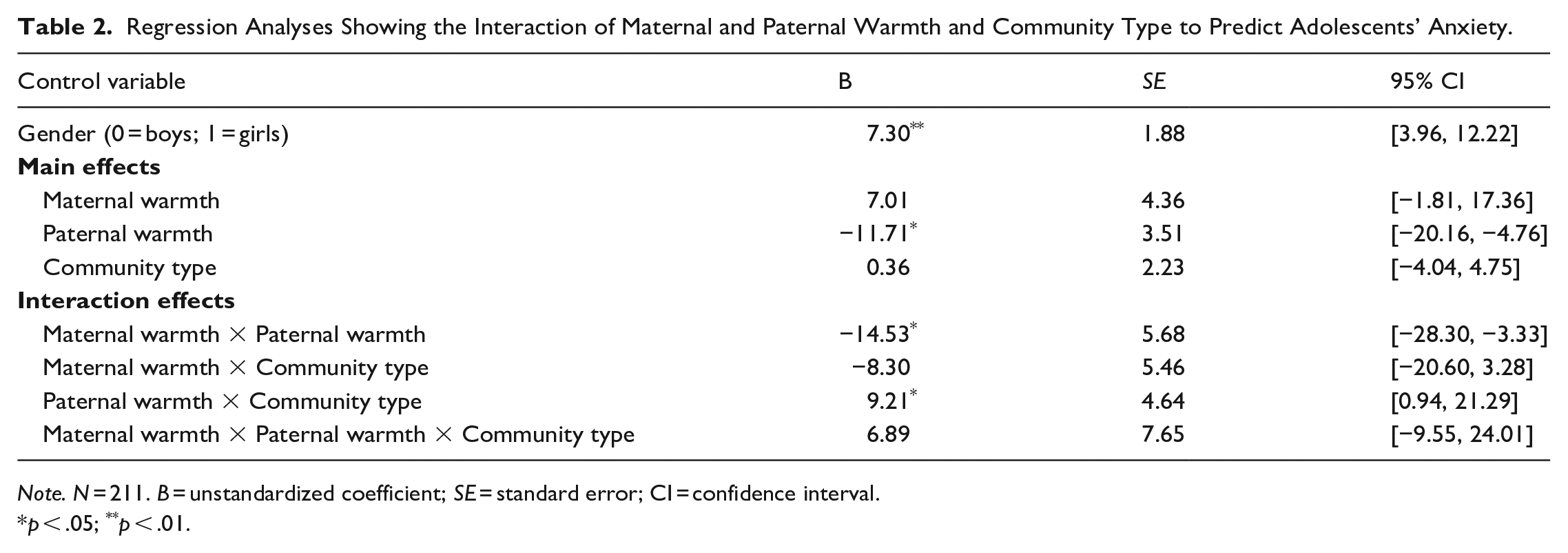
Note. N = 211. B = unstandardized coefficient; SE = standard error; CI = confidence interval.
p < .05; **p < .01.
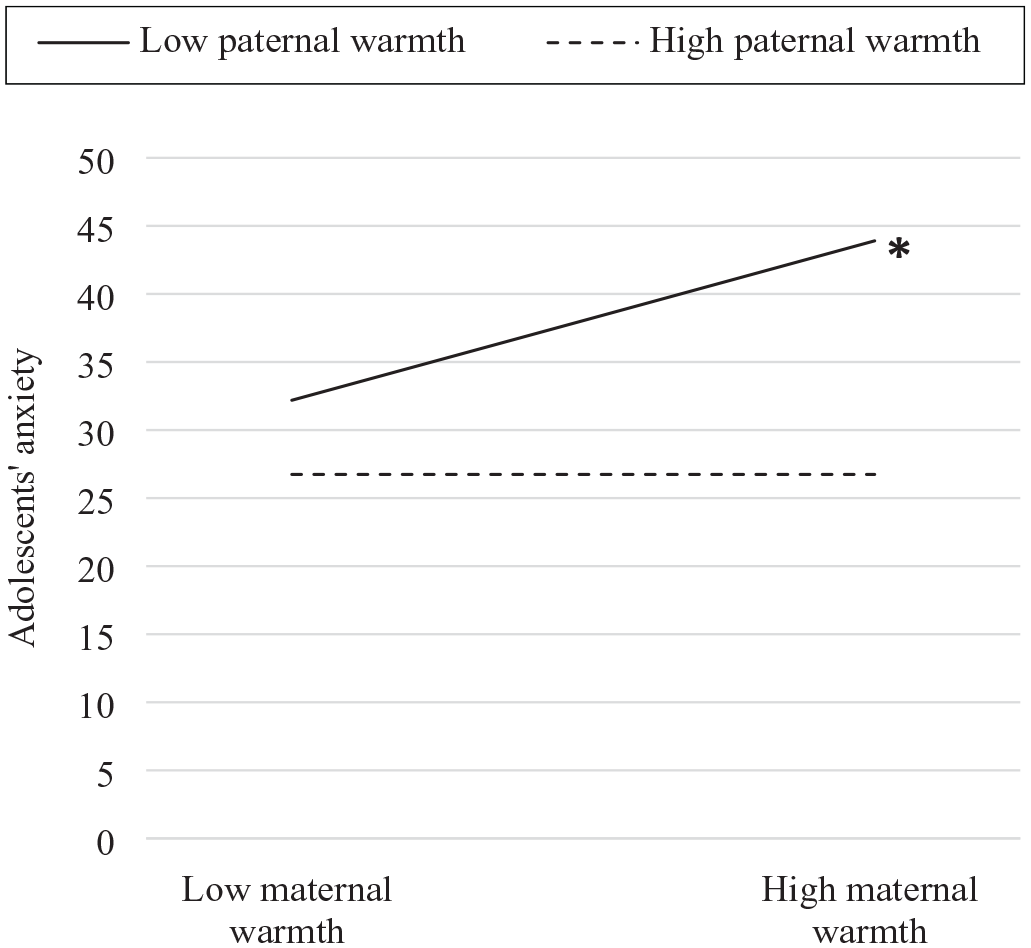
Interaction Between Maternal Warmth and Paternal Warmth to Predict Adolescents’ Anxiety.
There is also a significant two-way interaction effect between paternal warmth and community type. Simple slope tests (see Figure 2) indicate that higher levels of paternal warmth were associated with lower levels of anxiety among adolescents in urban families (B = −11.60, SE = 3.50, 95% CI [−18.49, −4.70], p = .001), but not in rural families (B = −2.44, SE = 3.03, 95% CI [−8.41, 3.54], p = .42).
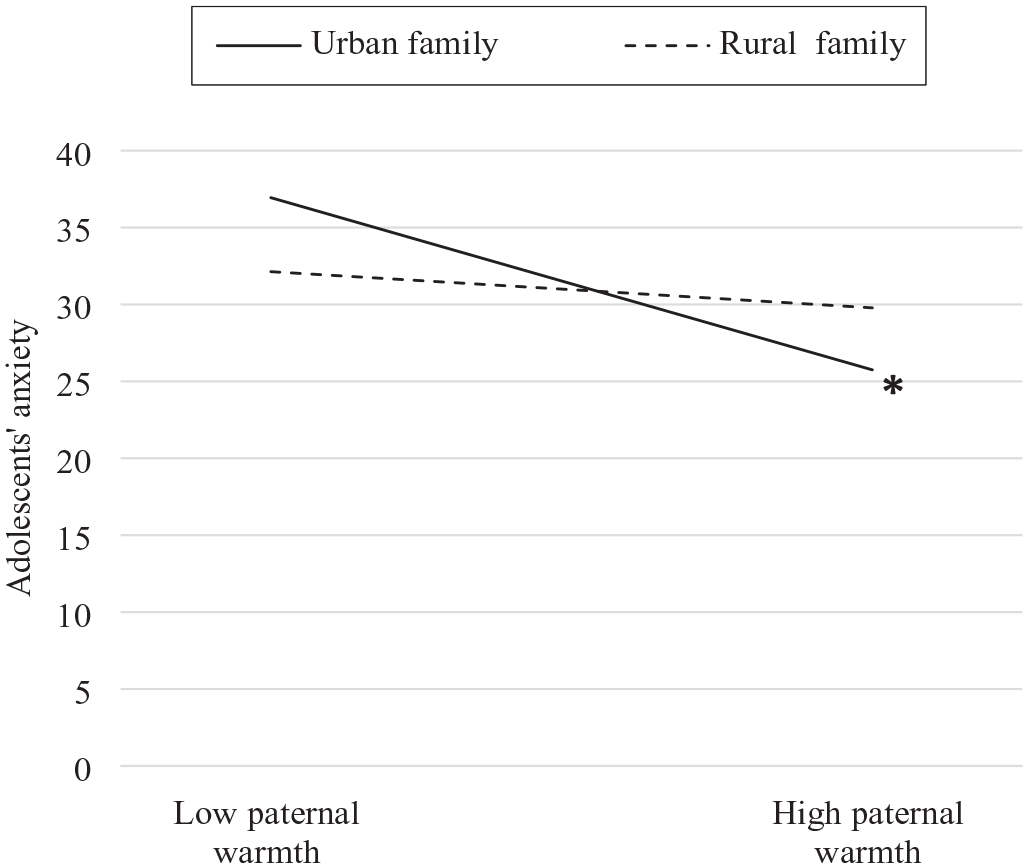
Interaction Between Paternal Warmth and Community Type to Predict Adolescents’ Anxiety.
Table 3 presents results of the moderated moderation of maternal and paternal behavioral control by community type. There is a significant two-way interaction effect between maternal behavioral control and paternal behavioral control. However, simple slope tests showed that at both lower (B = 3.68, SE = 4.92, 95% CI [−6.02, 13.39], p = .45) and higher levels (B = −9.44, SE = 5.00, 95% CI [−19.29, 0.41], p = .06), the moderator was non-significant. Using the J-N technique, the region of significance was 2.77, showing that higher maternal behavioral control was linked to lower anxiety when paternal behavioral control values were above 2.77 on the 1 to 3 scale (see Figure 3), representing a small proportion of the sample (16% of participants).
Regression Analyses Showing the Interaction of Maternal and Paternal Behavioral Control and Community Type to Predict Adolescents’ Anxiety.
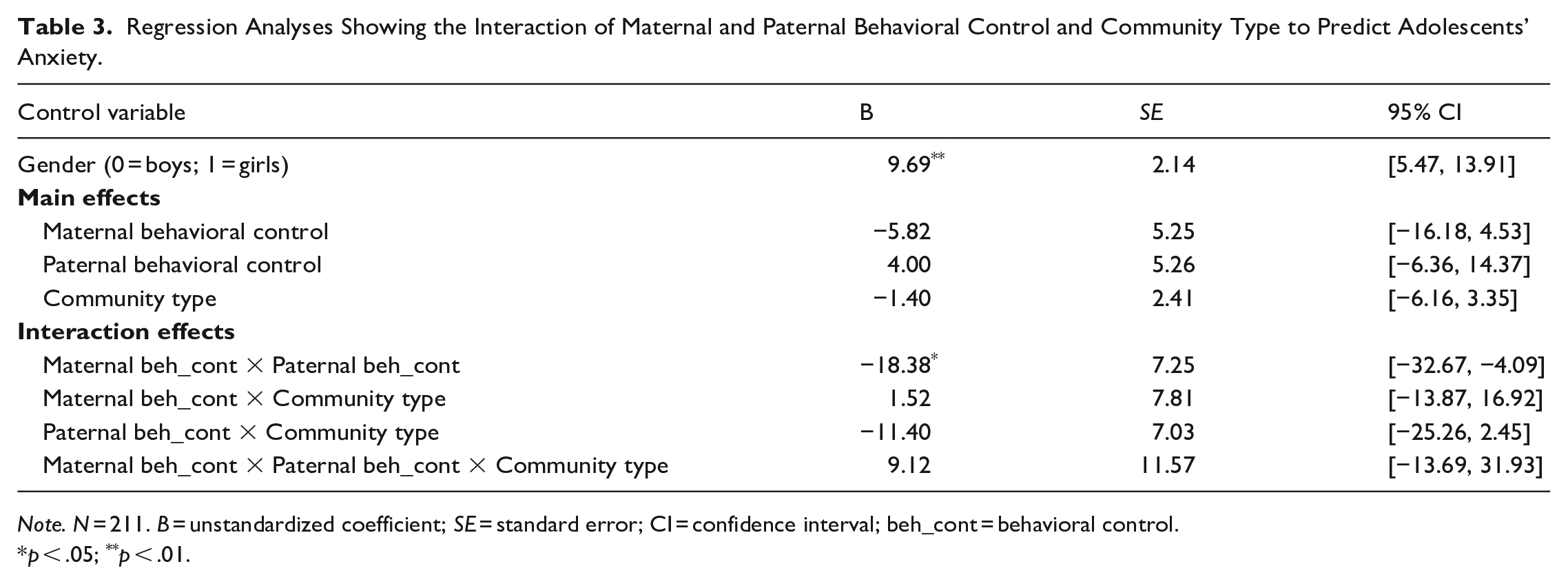
Note. N = 211. B = unstandardized coefficient; SE = standard error; CI = confidence interval; beh_cont = behavioral control.
p < .05; **p < .01.
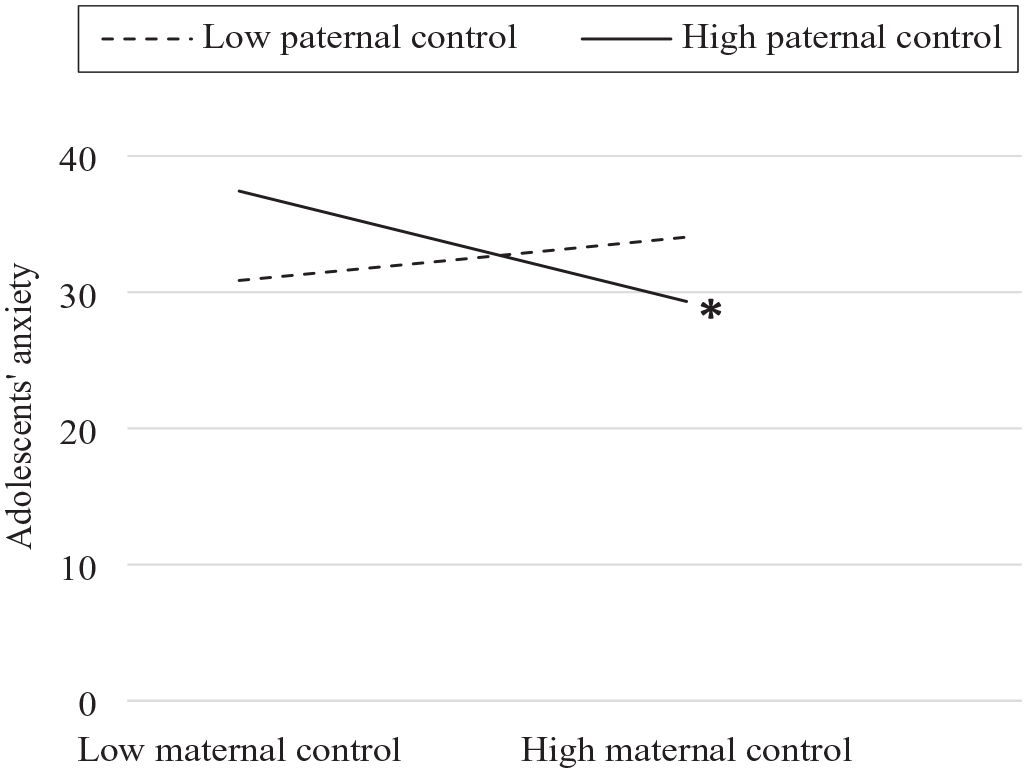
Interaction Between Maternal and Paternal Behavioral Control to Predict Adolescents’ Anxiety.
Discussion
The study investigated the interactive associations of maternal and paternal parenting on Ghanaian adolescents’ anxiety and whether the sociocultural context further influences the interactive associations. The hypotheses were generally supported. Higher maternal warmth in conjunction with lower paternal warmth was associated with higher adolescents’ anxiety. Paternal warmth predicted lower adolescents’ anxiety in urban but not in rural families. In addition, higher maternal behavioral control combined with higher paternal behavioral control predicted lower adolescents’ anxiety although this interaction only applied to 16% of the sample. Overall, these interactive associations indicate that inconsistencies in parents’ behaviors may exacerbate adolescents’ anxiety. Close emotional bonds from parents are key to adolescents’ emotional development (Bronfenbrenner, 1994). Consistencies in positive parent behaviors reflect similarities in socialization values (Wang & Kenny, 2014), whereas inconsistencies represent a dysfunctional parenting process that increases feelings of insecurity and stress, resulting in heightened anxiety (Reijneveld et al., 2010). This is consistent with the Ghanaian culture where both mothers and fathers are crucial in socializing adolescents, reflecting the recognition of their unique qualities and the need for a holistic upbringing that fosters intergenerational transmission of cultural values. Moreover, Ghana has a paternalistic cultural system where fathers hold major roles in child upbringing (Huang et al., 2018). In such a system, low paternal warmth may be perceived as parental neglect by adolescents, contributing to increased stress levels. The association between higher paternal warmth and lower adolescents’ anxiety in urban families is consistent with the existing literature demonstrating the protective role of warmth in reducing anxiety among urban adolescents (Vazsonyi & Belliston, 2006). Given the exposure to information, it is possible fathers in urban families are more likely than their rural counterparts to connect the role of their parenting to adolescents’ developmental needs. Also, urban families, typically economically advantaged (World Bank, 2020), may foster greater warmth in fathers and increase the protective effect. In addition, urban families tend to hold more egalitarian parenting views, with mothers affirming fathers’ parenting decisions, which can enhance warmth in urban fathers. It is unclear why maternal parenting did not predict anxiety in either urban or rural families. It may be that in patriarchal society, the clear and defined roles for fathers in adolescents’ upbringing may result in more effective parenting, compared to mothers who may have diffuse and less specific caregiving responsibilities. Preliminary results showed that urban families scored higher on paternal warmth and maternal and paternal behavioral control than rural families. It could be that the continued maintenance of the extended family system especially in rural areas may lead parents to invest more time maintaining extended family networks at the expense of their parenting responsibilities. Moreover, in rural areas, adolescents are often socialized by extended family, leading to different parenting approaches compared to urban families. The varying affection and control beliefs of extended family may send conflicting messages to rural adolescents, undermining the warmth and control provided by the parents. In addition, girls, compared to boys, experienced higher anxiety levels, and this could be due to widespread gender inequality, which imposes additional expectations on girls, such as household chores and caring for younger siblings.
Despite the current research’s contributions, notable limitations exist. Generalizing findings to all Ghanaian adolescents is cautioned as the study focused on only two communities. It solely assessed adolescents’ experiences of maternal and paternal parenting, necessitating for future studies with parents reporting their own parenting. The sample consisted of school-going adolescents; thus, studies involving non-school-going adolescents would provide a broader perspective. Despite adequate power, detecting three-way interaction effects in smaller sample sizes remains concerning. Replicating this study with larger samples is recommended to determine whether the nonsignificant effects reflect the lack of meaningful interactions or is merely a consequence of the study’s limited sample size.
Conclusion
The findings emphasized the role of inconsistent positive parenting in predisposing adolescents to anxiety and further highlighted how the effect of parenting depends on whether adolescents are embedded in rural or urban family contexts. Overall, these findings underscore the significance of involving both mothers and fathers in intervention efforts aimed at enhancing warmth and behavioral control.
Footnotes
Declaration of Conflicting Interests
The author(s) declared no potential conflicts of interest with respect to the research, authorship, and/or publication of this article.
Funding
The author(s) received no financial support for the research, authorship, and/or publication of this article.
