




Abstract
Haiti is among the most climate-vulnerable nations in the world, and Haitian youth face disproportionate risks to their health and well-being. Yet, to date, few studies have partnered with young people to position them as agents of change addressing climate change impacts in their communities, particularly in Global South contexts. As a step toward addressing this important gap, the present study used in-depth interviews (N = 6) to explore the multi-faceted behavioral developmental impacts on Haitian students (ages 20–30 years) who took part in a participatory environmental education program focused on access to clean water in Jacmel, a coastal city in Southern Haiti. The program combined hydrology and ecosystem education with youth-led water quality testing, community surveys, and data mapping—enabling students to collect, analyze, and visualize locally-meaningful data with real-world significance. Thematic analysis (TA) of post-program interviews conducted with program staff (n = 2) and students (n = 4) resulted in three major themes describing program-based developmental impacts equipping youth to address climate-driven threats in their community: (1) learning and skills development: Youth gained a deeper knowledge of hydrological and ecological systems, as well as research, digital, and technology skills; (2) health and environmental behaviors: Youth were experiencing and advocating behavioral shifts associated with preventing waterborne illnesses and protecting local ecosystems; and (3) civic engagement: Youth were developing a critical mindset regarding power relations and social change and were simultaneously motivated to disseminate local data to raise community awareness and engage with local authorities to improve environmental conditions. Findings shed light on the transformative potential of environmental and civic science education to engage young people as key actors in building adaptive capacity and reducing climate vulnerability. Implications for developmental science are discussed.
By many estimates, Haiti is the most climate-vulnerable country in the Western Hemisphere, and young Haitians face disproportionate risks to climate-driven hazards (United Nations Development Programme [UNDP], 2021; United Nations International Children’s Emergency Fund [UNICEF], 2021). According to the most recent official data collected in 2012, most Haitians (58.5%) live in poverty, making it the poorest country in the Latin American and Caribbean region (United States Agency for International Development [USAID], 2022a). Recent years have beset Haitian citizens with heightened political instability, consequent social unrest, and numerous natural disasters, including climate-fueled extreme storms and hurricanes (UNDP, 2022). Rapid deforestation over recent decades has left the country with only 3% forest cover, and 25 of Haiti’s 30 watersheds are “completely deforested,” elevating flooding and landslide risk in a country where 70% of the terrain is mountainous (UNDP, 2022). Due to these and other factors (e.g., high population density; limited infrastructure), Haitian citizens face numerous risks to their health and well-being in the context of climate change, with multi-faceted implications for human development. Compared to the volume of research examining the implications of climate change for Haitians’ physical health (e.g., Balthazard-Accou et al., 2021; Louis et al., 2021; Rise et al., 2022), limited empirical research has explored how climate change may impact human development in a Haitian context. There is a particular need for research at the intersections of climate change and development for children and young people who, compared with adults, face greater risks to their health and well-being due to heightened present-day physiological vulnerability as well as prolonged lifetime exposure to climate-driven instability over the decades to come.
Human development has been defined as “continuity and change in the biopsychological characteristics of human beings, both as individuals and as groups” (Bronfenbrenner & Morris, 2007, p. 793). How climate change impacts human development can be understood in terms of direct and indirect impacts. Residents of Haiti face direct exposure to climate-fueled hurricanes, storm surges, and more intense and frequent rainfall, as well as, in the dry months, extreme heat, unpredictable rainfall, and periods of more intense and frequent drought (USAID, 2022b). Considering these factors, exposure to extreme weather and climate-driven deprivation in Haiti affects not only physical health (e.g., disease, injury) but also a range of psychological processes and outcomes (e.g., post-traumatic stress [PTS]), each with wide-ranging consequences for human development (e.g., disease-driven physical disabilities; PTS-driven relationship dysfunction). Furthermore, given youths’ heightened vulnerability, the direct impacts of climate change on human development can have lifetime consequences, as when, for example, childhood exposure to climate-fueled air pollution increases the likelihood of respiratory disease, differential brain development, and mental illness (Perera et al., 2019).
Beyond direct impacts, Haitian citizens face an even wider array of potential indirect impacts of climate change on their development. To understand how wide-ranging these indirect impacts may be, it is useful to consider climate change as a macrosystem phenomenon that filters through other layered systems within which individuals are embedded, such as health, education, mass media, local governance systems, schools, peer networks, families, and communities (Boon et al., 2012; Bronfenbrenner, 2005). As such, the indirect impacts of climate change on human development may include limited access to health care, disrupted schooling, economic precarity, and chronic stress. Compared to Global North countries, Haiti faces greater climate change vulnerability (Thomas et al., 2019; UNDP, 2022), and within Haiti, young people face elevated risks (UNICEF, 2021). As the country with the youngest population in the Caribbean (USAID, 2022a), youth in Haiti have a particular stake in averting the most catastrophic effects of climate change. Yet, to date, few studies have drawn on developmental science to explore how young people can be equipped to act as agents of change in their communities toward addressing climate threats, particularly in Global South contexts such as Haiti.
Within and beyond the Haitian context, interdisciplinary research examining young people’s climate change engagement has produced a variety of key findings with implications for developmental scientists (Sanson et al., 2019). For example, in a recent multi-country survey study conducted with young people (ages 16–25 years), 59% were very or extremely worried about climate change, and 45% reported that their climate change emotions (e.g., sadness, anxiety, anger, powerlessness) negatively impacted their everyday life and ability to function (Hickman et al., 2021). In response to climate-related stressors, studies have found that young people engage in a variety of coping behaviors, such as problem-focused, emotion-focused, and meaning-focused coping (Ojala, 2012a, 2012b). In this literature, educational settings are often cited as a key entry point for youth-focused interventions to strengthen learners’ knowledge and cultivate hope, as well as to promote meaningful action and youths’ sense of personal and collective agency (e.g., Karsgaard & Davidson, 2023; Sanson et al., 2022; Trott, 2019).
Although most published research on climate change education has taken place in Global North countries and formal school settings (Monroe et al., 2019), our own past research in partnership with a community arts center in Southern Haiti has shown that youth derive a sense of agency and personal empowerment from knowing about, disseminating, and taking action on climate-related issues in their communities (Trott et al., 2020a, 2020b). Specifically, through a series of classes offering integrated art-science educational programming, Haitian youth (ages 8–18 years) used water testing and digital photography to collect, analyze, and share local information on water quality, pollution, and deforestation, while advocating for change through community events and short documentary films to disseminate findings and raise community awareness (Trott et al., 2020a). Post-program interviews found that program activities “empower[ed] individual youth by supporting their critical awareness of environmental problems, their capacity to communicate with adults—including decision-makers—and by encouraging their active participation in transforming their communities” (Trott et al., 2020b, p. 48). Providing young people with skills and opportunities to aid in addressing climate change, for example, collaborating with youth on community-based projects to build local resilience, is emerging as one among the chief strategies to prepare young people to cope with climate change realities (Baldwin et al., 2022; Cutter-Mackenzie & Rousell, 2019; Haynes & Tanner, 2015; MacKay et al., 2020; Rousell & Cutter-Mackenzie-Knowles, 2020; Tayne et al., 2021). However, few studies to date have explored how educational programs can support youths’ behavioral development toward addressing climate-driven environmental threats in Global South contexts, including Haiti (Briggs et al., 2018).
Toward addressing these important gaps, the present study explored the impact of an environmental education program on youths’ behavioral development in Jacmel, Haiti, a coastal community in the Southeast region of the country. Behavioral development, a dimension of human development, attends to the ways people act and interact and how this changes over the lifespan. In particular, we were interested in how this educational intervention equipped learners to understand and address climate-driven threats in their community.
When considering the direct and indirect impacts of climate change on developmental processes, it is easy to focus exclusively on negative outcomes, as we have so far in setting the backdrop for this research. Indeed, most research on the direct and indirect impacts of climate change on human development understandably focuses on the many and varied negative impacts of climate change. However, it is important to consider that vulnerability to climate change, rather than being a fixed characteristic, is best understood as a “multidimensional process affected by social, political, and economic forces interacting from local to international scales” (Thomas et al., 2019, p. 2). Indeed, research has found that education can play a pivotal role in building adaptive capacity and reducing vulnerability (e.g., Pichler & Striessnig, 2013).
In this research, we attempt to engage in an epistemological shift away from “damage-centered” research and toward “desire-based” inquiry (Tuck, 2009), framing climate change as a context that sets into motion a cascade of possibilities across bioecological system scales for improving the health and well-being of youth and their communities. Like deficit models—which highlight what youth, families, or communities are lacking to explain their misfortune—damage-centered research has been defined as “research that operates, even benevolently, from a theory of change that establishes harm or injury in order to achieve reparation” (Tuck, 2009, p. 413). An antidote to damage narratives: . . . desire-based research frameworks are concerned with understanding complexity, contradiction, and the self-determination of lived lives . . . by documenting not only the painful elements of social realities but also the wisdom and hope. (Tuck, 2009, p. 416)
Toward employing a desire-centered and strengths-based approach, we consider the impacts of youth-focused educational programming as an array of locally-meaningful (and potentially beneficial) indirect effects of the climate crisis on human development. Specifically, our analyses of interview data were guided by the question, “How did this educational intervention impact youths’ behavioral development toward addressing climate-driven environmental threats in their community?”
Method
Context and Programming
Climate change—as a macrosystem phenomenon within which we, as co-authors, are embedded—created the conditions that led U.S. researchers to partner with a local community arts center in Jacmel, Haiti, to develop and deliver youth-centered environmental education programming focusing primarily on climate-driven threats to the region. Our ongoing partnership began in 2017, fueled by a shared desire to integrate the arts and sciences in educational interventions for youth, particularly toward positioning young people as agents of change in their communities. The program that is the focus of the present research builds upon previously offered courses (see also Trott et al., 2020a, 2020b) and is part of an ongoing multi-phase cycle of participatory research in which U.S. researchers together with arts center staff and students participate as collaborators and co-creators of innovative educational programming with relevance to local environmental issues in Jacmel, Haiti.
The name of the community arts center, “Jakmel Ekspresyon” (JE), translated from Haitian Creole into English, means “the expression of Jacmel,” and in its 12 years of existence, it has become a hub for arts-based, technology-focused, and science-integrative educational programming that responds to the interests and needs of the local community. At every level, JE’s programs and processes are community-driven. Beyond JE’s co-founder and Executive Director (third author), all JE staff are former students, including JE’s Assistant Director (fourth author). Having invested staff who have grown with the organization allows JE to deliver programming that is continually responsive to the needs of the youth. All staff take the time to talk to JE students in defining the curriculum, an informal system that relies on JE’s receptivity and openness to working with the community and prioritizing their needs and desires in program design and implementation. The culture of JE is one that welcomes youth members’ ideas for projects, clubs, and classes, ensuring that youth members know they have a role in the center and feel empowered to use JE’s facilities and resources to create change in the community. Relatedly, recruitment for JE courses is an organic process driven by the students who often bring friends to the space to learn about what JE offers. This process ensures that students who enroll in JE courses are motivated to be there and, importantly, attend voluntarily rather than as a result of outside pressure (e.g., from parents). Due to the success of this recruitment approach, JE does very little active advertising to bring in new students.
As a “space of non-discrimination,” JE does not limit the age range of Jacmelians who may enroll in their programming, although most classes are attended by youth and young adults. Definitions of “youth” vary widely around the world—often corresponding with the level of responsibility individuals have toward family and community—and in Haiti, the age range associated with youth aligns with the chronology employed by the African Union, which defines youth as persons between the ages of 15 and 35 years (USAID, 2013). Of particular significance to developmental scholars, how “youth” is defined and constructed—in Haiti and elsewhere—is a function of general living conditions and the social, economic, and political contexts within which they are situated. By co-developing programming with Haitian youth (arts center staff and students), the present intergenerational partnership runs counter to present-day societal norms in Haiti where young people are often “prevented from taking part effectively in public life and, generally, are not considered as stakeholders who should be consulted in developing programs or policies” (Faedi Duramy, 2015, p. 448).
Dating back to the first co-developed arts center course implemented in 2018, the focus has been on access to clean water in Haiti—a specific interest of arts center youth. While past iterations of the course have integrated digital photography into environmental education focused on water pollution and deforestation (Trott et al., 2020a, 2020b), the present research centers on a third iteration, which combined hydrology and ecosystem education with water testing, community surveys, and data mapping. This programming was developed in response to two educational needs identified by JE’s youth leadership: (1) Local education focuses almost exclusively on theory over practical experience due to institutional financial constraints and lack of facilities (e.g., labs); and (2) local schools emphasize rote memorization over critical thinking until university-level education. It is worth noting that, rather than being “imported” from the United States, the impetus for STEAM education (i.e., science, technology, engineering, and math [STEM] combined with the arts) grew organically at JE in response to local needs. In this context, addressing local needs involved combining experiential, hands-on science education with arts-based critical thinking through the map-making process. Recruitment for this course took place through conversations at JE with current students and members, outreach to students who had enrolled in similar JE courses in the past, and student-led outreach to friends who may be interested in the course. Many students were motivated to enroll in the course due to their interest in water security. Beyond driving the initial focus of the course, youth members of JE were also involved in early discussions about course design. For example, students provided feedback on course planning and co-developed the approach to community data collection.
Educational program content focused primarily on water systems, as well as the numerous ways in which climate change threatens access to clean water. For example, climate change disrupts seasonal weather patterns, increases the intensity of droughts when they occur, and, during extreme rainfall events, can lead to direct contamination of surface water resources through erosion or the mobilization of contaminants in the environment (UNDP, 2022). Water, perhaps more than any other resource, forms the basis of youths’ vulnerabilities and capacities as they face future climate changes, and access to clean water is at the forefront as youth navigate their daily lives. In short, there is arguably no more important factor dictating youths’ health and well-being in the context of climate change than clean water access, to say nothing of its impacts on local economies and the livelihoods of local Haitians (USAID, 2022b).
Data Collection and Analysis
To collect local environmental data for use in the data-mapping portion of the course, five JE students traveled to 16 sites in and around Jacmel to collect samples from known water sources in the region (see Figure 1). In the process, JE students used the Fulcrum survey app to collect GPS location data and survey community residents to (1) understand how local water sources were used and (2) explore local sources of possible contamination. The structured survey was administered with two to three community residents per site (N = 41) and consisted of questions such as “Is this where everyone in the area gets water?”; “How do you use the water?”; “Is the water clean?”; and “How do you treat the water?” Water samples were then tested at JE for 20 contaminants to compile a data set for the data-mapping portion of the course. In total, 17 students of ages 20–40 years (14 male; 3 female) participated in the data-mapping component of the JE course aimed at visualizing the water quality data. In addition to building on previous courses from the present collaboration, the water-mapping course also built upon a previously offered social data-mapping course developed and implemented with Bard University. Due to political unrest in Haiti in 2019 and the COVID-19 pandemic in 2020 prohibiting international travel, the U.S. researchers who intended to facilitate the program and conduct interview data collection in-person (first and fifth authors) were faced with the necessity to redevelop the course for virtual delivery and make arrangements for JE staff to conduct student interviews. Despite these interruptions to planned program delivery and data collection, a strength emerging from this shift was that JE collaborators were more central in educational and research processes. This study obtained institutional review board approval from the University of Cincinnati in October of 2019 (IRB #2019-0777) and aligns with Haitian legal requirements pertaining to the international partnership. Participation in this research was entirely voluntary for students and staff.
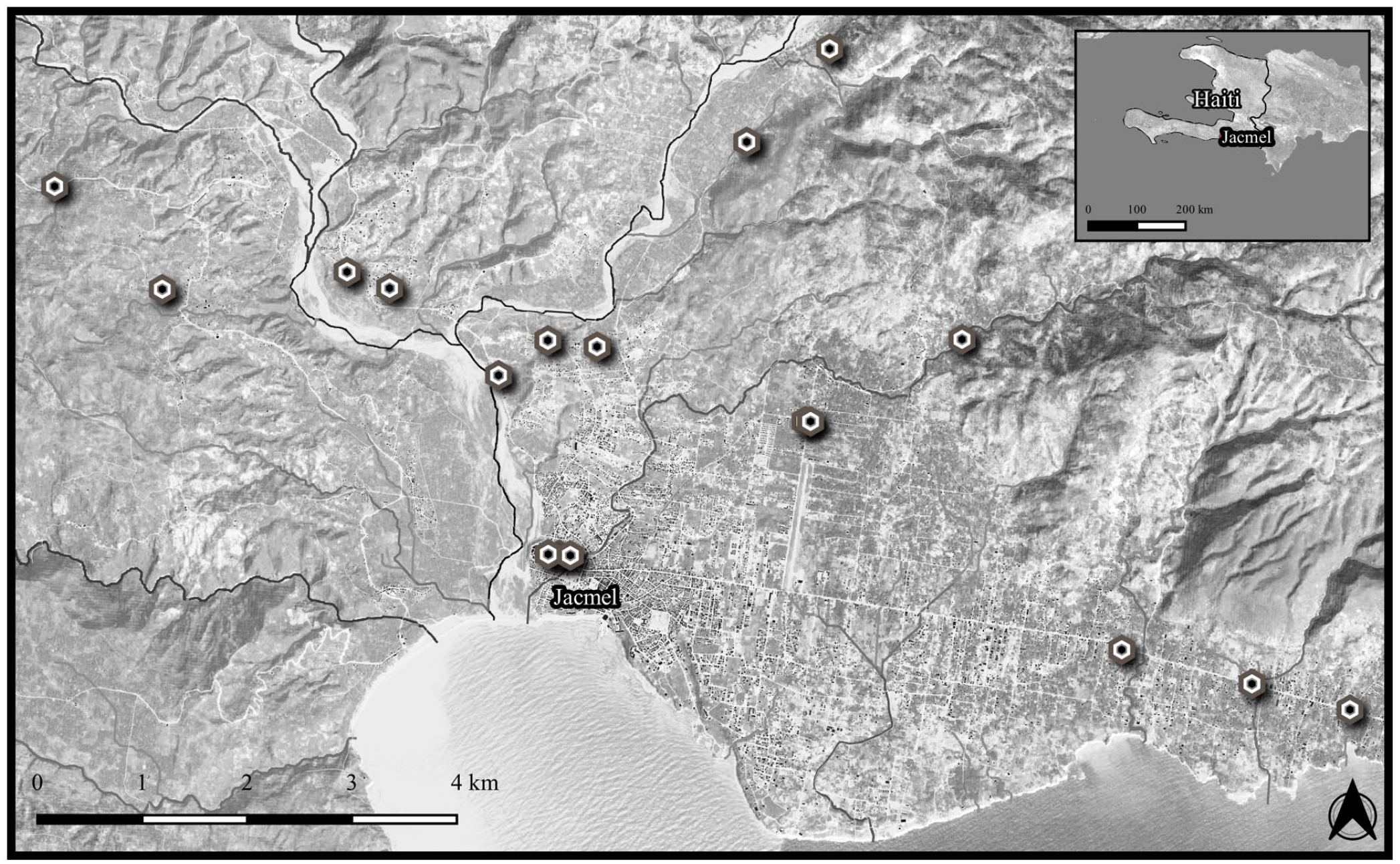
Map of Water-Testing Sites: Student Data Collection.
To understand how this educational intervention impacted youths’ behavioral development toward addressing climate-driven environmental threats, we report on six interviews conducted with JE staff and students. Two interviews were conducted in English by the first author with two members of the JE staff—the Executive Director who is responsible for overseeing all JE programming and the Assistant Director who, for this course, provided technical assistance and real-time translation services in the classroom. An additional four interviews were conducted by JE staff (third and fourth authors) with four male students (given pseudonyms) who took part in various components of the course: (1) Louis (age 30 years) who participated in the data-mapping course and had no prior familiarity with mapping; (2) Frantz (age 28 years) who participated in the data-mapping course and had gained some familiarity with data-mapping from previous coursework; (3) Jacques (age 25 years) who participated in both data-mapping courses and conducted water-testing and community interviews prior to data visualization; and (4) Auguste (age 20 years) who had no prior familiarity with mapping. Although women comprise approximately half of all enrollments in most JE courses, with some variation based on the specific focus of the course, interview participants for this study were more or less representative of students enrolled in the data-mapping course (i.e., older youth; mostly male). In addition, although JE serves students across a wide age range (typically early-teens to mid-forties), the data-mapping course was designed for university-level students to address a need for technical skill development and higher-level computer courses (e.g., using QGIS) not offered in area schools.
Interviews were semi-structured and explored three main focal areas: (1) staff and student backgrounds and expectations for the course (e.g., “Can you introduce yourself?”; “What were you hoping to get out of the course?”); (2) roles and experiences in the course (e.g., “Tell me about your participation in the course”; “Did anything unexpected happen in the course?”; “What challenges did you experience?”); and (3) program impacts (“Did the course change your perspective?”; “Did the course change how you think about water? [Your capabilities? Your community?] How so?”; “In your view, what was the most important part of the course?”). Student interviews were conducted in Haitian Creole and translated into English for analysis. In this study, all six interviews were audio-recorded, transcribed verbatim, and edited for accuracy prior to analysis.
Although additional student interviews were originally planned as part of this research, small sample sizes such as ours are common in qualitative research where guidelines recommend studying “a few individuals,” with aims not to generalize findings but to “elucidate the particular, the specific” (Creswell & Poth, 2018, p. 158). Rather than attempting to explain patterns in human behavior that may generalize to broader populations, the purpose of the present research was to describe the patterns and complexities of human experience that are situated within a particular place and time. Case studies are especially appropriate when the focus of an investigation cannot be separated from its context. As such, the aims and value of the present research, and qualitative research more generally, are the “understanding of how individuals, through their narratives, perceive and experience their lives, constructing meanings within their social and cultural contexts” (Carminati, 2018, p. 2096). In sustainability research, qualitative case studies may also generate insight into the context-specific opportunities and challenges of novel methods and practices.
To identify and describe shared patterns of meaning in staff and students’ perspectives on the program’s process and outcomes, the first and second authors collaborated on thematically analyzing the interviews (Braun & Clarke, 2006, 2022). Rather than a singular approach, TA is a flexible, multi-phase process often involving a combination of the following: “(1) data familiarisation and writing familiarisation notes; (2) systematic data coding; (3) generating initial themes from coded and collated data; (4) developing and reviewing themes; (5) refining, defining and naming themes; and (6) writing the report” (Braun & Clarke, 2021, p. 331). In the present research, we engaged in a process similar to what Braun and Clarke (2021) refer to as “codebook” TA. Specifically, each author first reviewed all six transcripts to gain familiarity with the full data set, while noting textual segments of relevance to this study’s main research question. We then co-generated initial thematic categories describing a range of specific domains within which processes of behavioral development were occurring. We then proceeded to code each transcript with labels denoting concepts of interest within each initial thematic category. During this process, we iteratively renamed and redefined thematic categories to better describe findings, while highlighting notable examples for the report-writing process.
Results
Analysis of post-program interview data sought to address the following question: “How did this educational intervention impact youths’ behavioral development towards addressing climate-driven environmental threats in their community?” The following sections correspond with major themes, and illustrative quotes (with pseudonyms) are provided to further elucidate findings.
Learning and Skills Development
Learning new skills can bolster one’s sense of personal control and heighten self-efficacy, two factors that can attenuate the negative impacts of climate change on development (Sanson et al., 2019). Louis, a fourth-year university-level science and technology student, had his interest in the course piqued by the opportunity to learn advanced computer and technology skills beyond those offered in his degree program. Digital competency, a broadly applicable skill that “can be used in all fields” (Jacques), is “something people don’t get much in classical school” (Louis). Responding to an expressed community need for technology skills, JE acquired resources and built this program around the intersecting needs of improving water quality and enhancing technology skills. In Haiti, informal educational programs open to all ages have been identified as critical to promoting climate resilience (Bazin & Saintis, 2021).
Developing skills such as data mapping can promote problem-focused and meaning-focused coping as it simultaneously offers students tools for their active engagement as well as their capacity to derive meaning from their personal involvement in addressing a problem that “cannot be solved all at once” (Ojala, 2012a, p. 540). Frantz, an agronomy student in his fifth year at a Haitian university, envisioned how mapping techniques could be used to understand and mitigate other types of environmental risks, including in the context of his own dissertation research that used soil analysis to locate cultivatable agricultural zones. Similarly, Auguste, a high school graduate planning to attend university, saw map-making as an invaluable skill relevant to his professional aspirations as a journalist. These maps, he noted, could be distributed and used by communities. In the context of climate change, meaning-focused coping, through positive reappraisal and positive emotions, can become a platform for problem-focused coping and is positively associated with subjective well-being in young people (Ojala, 2012b).
Technical scientific knowledge about ecological and hydrologic systems was a focus of some lessons. The specific aim was to raise awareness of the interconnected relationship between the surface and groundwater, particularly how surface contamination can infiltrate groundwater and aquifer systems that span vast areas. Understanding this interconnectedness is an important precursor to remediation. Frantz said, “They showed how water is polluted in the environment, all that makes the waters polluted . . . they showed us several zones, the rivers, they talked about water cycle. . . They showed us the courses of water [systems]. That was very important.” Data collection offered an opportunity to learn new skills. Jacques described “a great experience of discovery” going to remote water sources where they did not know how the water was used and where the quality of the water was unknown. Reflecting on collecting, analyzing, and mapping water quality data, Jacques described his experience of knowledge production and “materializing what we learned.”
Beyond skills for collecting water and assessing its quality, Jacques learned social science data collection techniques and considered the ethics of such research during the process of conducting interviews. Jacques went to 5–6 different water sources, several of which were very remote. He noted interviewees’ initial hesitance and acknowledged a pervasive mistrust of researchers, a consequence of a long history of institutions conducting extractive research without a subsequent follow-up or community benefit. Jacques reflected on how, as societal actors working on solutions, they were likely perceived by residents. He described layered contextually- and culturally-relevant trust-building strategies including allowing for anonymity by not asking for identifying information, engaging in “convivial” conversation before asking interview questions, and respecting the Haitian cultural tradition that “faces have a lot of importance, [so] when you are taking a picture allow them to keep their face hidden.” Furthermore, he considered how to explain the research and assure community members that they would “tell them if the water is good or not, and what activity they can use this water for” (Jacques). Beyond these ethical considerations, Jacques described increased awareness of challenges encountered when coupling social science research with water sampling, particularly the travel expenses and the time-consuming nature of interview data collection.
Skills-development outcomes can lead to opportunity creation and capacity-building within the JE program and across communities. Students themselves made the leap from discrete skills and knowledge that might otherwise be understood in individualistic terms to the direct community contributions that could emerge from applying these skills. For example, Frantz discussed the potential for education programs like those at JE to improve opportunities as they show “youth how to work so they do not become people’s domestic,” to chart their own path and earn a livable wage. Both Louis and Auguste mentioned the potential for technical skills to build capacity within the community and empower youth to use data for social change around other issues determined to be important by members of JE. The Executive Director reinforced this idea of community capacity-building as she described JE as a unique place to create resources, share information, and hone skills, saying, “Everyone who has taken a class here can come back to practice,” juxtaposing this to professional schools where “after it is over, it is over. You cannot return.” Layered onto this is the commitment to empower youth using “creativity as a platform” through non-discrimination and representation and aims of “keep[ing] a [Haitian] identity in the organization, elevating the voices of the common Haitians.”
Health and Environmental Behaviors
Not only did the course raise awareness about clean water consumption, but it also prompted students to consider how to promote health behaviors in their own communities, where, Louis noted, individuals “do not pay attention to [the] water they consume.” Data could equip individuals with the knowledge to make informed health decisions about “which zone has good type of water and which has bad water you can’t consume” (Louis). The focus on water attracted Frantz to the course, driven by his concern for the health behaviors of those in the wider community where people “are still drinking water from [polluted] water sources. And there are some water sources that have trash near them.” Louis described his conflicted feelings about water, how it can be both good as a necessity for life and also bad as a source of anxiety since it “can be polluted with chemical substances according to where the water comes from.” Auguste summarized the interconnectedness of water with health and environmental behaviors, saying, “The more you treat water well, the better it will be for you.” Therefore, participation in the program could help individuals, including those like Frantz, to “locate the water [sources] that are good that people can consume, and water that is not good.” These findings have key implications for the impact of environmental education on behavioral development and local climate change adaptation. Specifically, students’ knowledge gains can equip them to engage in pro-social and environmental action aimed to protect the health of their communities, which in turn contributes to local climate resilience. According to Caribbean scholar Therese Ferguson (2020), climate change education is a “must for the regional populace,” particularly educational approaches that respond to the inequities that exist within the region (p. 765).
Students coming out of the program believed that they gained useful knowledge that should be disseminated to promote health behaviors. Louis discovered a better vision for his community as he realized that water mapping could equip community members with the knowledge to “take precautions to protect your life against disease.” He explained his desire to offset the misperceptions of those who believe that “microbes do not kill Haitians” but rather “make your immune system stronger” by equipping them with information to make informed choices and help mitigate risks. Frantz built on his prior knowledge of environmental contamination from his agriculture-focused dissertation research and expanded his understanding to include health behaviors—both those related to water consumption and its use in food production, saying, “Because I know water, I test the water and see chemical substances that are not good for people.”
The JE course supported students to develop self-awareness and self-efficacy related to environmental behaviors. It changed how they think about the broad implications of behaviors on water quality. The relationship of each student to water was unique. Some drew on their own direct experiences and observations of water contamination, while others’ experiences with water were more removed. For example, Jacques described “a moment of discovery, a moment to join the people and understand their reality” when he went into rural zones to collect water samples. Jacques lives in a city where treated water is purchased and used for all household needs. Frantz, on the other hand, had firsthand knowledge of water contamination and was accustomed to a single water source serving the needs of an entire community—for washing and cleaning (e.g., cars), a shelter and water source for wildlife and domesticated animals, as well as for household drinking and cooking. He observed surface pollution along the riverbanks and said of the river near his house, “I do not put even a toe in it because I know all the pollution it has.” Before the course, Frantz felt ill-equipped to do more than “criticize the water situation” but believed mapping offers a path toward promoting broad as well as specific pro-environmental behaviors.
A critical element in educational programming that can promote climate change mitigation and adaptation is its capacity to enable learners to “make decisions about, solve problems of, and creatively address” local climate-fueled threats (Ferguson, 2020, p. 765). Through the course, students developed a deeper understanding of the implications of environmental behaviors on the water system. Responsibly disposing of waste in receptacles—and better waste management infrastructure—is needed as “plastic wastes do not degrade easily, so when they go to the sea and disturb the fishes’ niches, they kill the fish, and some migrate very far” (Frantz). Beyond solid waste, students’ enhanced understanding of the hydrologic cycle left them considering how to mitigate contamination through behaviors such as limiting fertilizer use, because, as Frantz explains, “when it rains, the fertilizer is washed away to waters and pollutes them.”
Civic Engagement
A primary goal of JE is to provide resources for community needs and to promote locally driven initiatives. Map-making was an avenue for exploring power and subjectivities embedded in the map-making process (i.e., “Who has historically held the power to make maps?”; “What decisions go into the map-making process?”). Supporting the development of critical mindsets was a foundational component of the course, a precursor to meaningful civic engagement. This was the most “captivating moment” of the course for Jacques, who explained, “Before when I saw a map, I did not know how it was conceived. It had a mysterious aspect behind it.” Both he and Auguste explained new revelations about the power of analyzing motivations for organizing or presenting data in a particular way, acknowledging that sometimes “how they represent the map is not really how it truly is” (Jacques). Frantz reflected on maps as strategic representations of both space and power, describing the potential of understanding mapping as “a representation of a space” where reference points are strategically chosen and placed. According to Bogard (2016), in nations such as Haiti beset by histories of colonial exploitation, community schools—village or neighborhood-level places of flexible and forward-looking learning—can be key sites for engaging with critical history and exploring oppressive structures, setting the stage for promoting civic empowerment and climate change adaptation.
Indeed, students expressed strong inclinations toward broader civic engagement, which can lay the groundwork for other positive developmental outcomes at individual and community levels (Fisher et al., 2012). Specifically, students described two types of civic engagement to improve local conditions: vertical engagement and horizontal engagement. Vertical engagement includes sharing information with authorities and using data to make persuasive arguments and demands. Louis expressed the desire to “make a communiqué to figures of authority in the zone so they can share the map with the people.” Frantz expressed having a prior interest in civic engagement but felt unequipped, explaining, “We talk to people, but we haven’t been able to do anything because we do not have the means to do anything.” Similarly, demystified mapping was empowering for Jacques, who explained the moment he realized “once you have data, you have information” and juxtaposed this with his previous belief that the power of knowledge generation was exclusively for those “linked to a university study” rather than something that could be accomplished by individuals like themselves. For these students, the water tests and data were seen as currency for advocacy within and beyond their communities. For instance, beyond sharing information directly with governmental authorities, Frantz considered the potential to leverage the resources and networks of local organizations, specifically those with existing infrastructure for disseminating information within and across the country’s zones or regions to share valuable knowledge. The Executive Director positions students as change agents in these instances, supporting students to serve as a liaison with other community organizations to ensure the power stays with the students.
Students also reflected on horizontal engagement, describing aims of sharing data and findings with community members so they could make informed decisions. Louis envisioned how mapped data could be shared with communities, describing how it would be shared differently with those living near water sources compared to sharing with authorities. Specifically, they would distribute maps in the markets, presumably to ensure accessibility since, as previously mentioned, digital competency is limited as is access to the technology needed for viewing digital maps. The Executive Director shared a vision for this locally-relevant knowledge creation to be a community resource with ongoing mapping “year after year, [to] see how those different sites are changing.” This passion for horizontal engagement was greater for those students who went to the water sites and conducted interviews. The Assistant Director described a “clarity in the message that’s being kind of driven home about pollution and water security . . . because it’s not just data anymore. They are talking to somebody [who is affected]. It’s not just a little test vial.” This kind of engagement with water samples alongside community interviews “changed how they felt about some of these issues surrounding water. I think made them more motivated to do something about it” (Assistant Director). This was also evident to those like Louis who did not participate in the data collection and reflected on his desire to “visit and visualize the reality” on his own. In these ways, the JE program was not just fulfilling the traditional purpose of education in society—enhancing students’ knowledge, skills, and capacities (i.e., human capital)—but it was also growing social networks for joint participation with the potential to shift community-level norms and expectations (i.e., social capital), thus building capacity for broader social change and reducing climate change vulnerability (Bogard, 2016).
Discussion
Using in-depth interviews with students and staff, the present study explored how an environmental education program impacted youths’ behavioral development in ways that enable them to address climate-driven threats in Jacmel, Haiti. Consistent with previous literature conducted largely in Global North contexts (Rousell & Cutter-Mackenzie-Knowles, 2020), findings suggest that educational programs can provide young people with opportunities to learn locally-relevant climate change information, develop multi-faceted skills that serve to build adaptive capacity, engage in and promote behavioral shifts that mitigate environmental and health risks, and participate in civic engagement activities (e.g., raising community awareness; engaging local authorities) to improve local conditions. These findings have important implications for developmental scholars interested in supporting youth as agents of change working to address the impacts of climate change in their communities.
Centering Desire: Youth-Driven Education for Youth-Led Change
The educational program designed for this study was driven by the interests of Haitian youth who have consistently expressed a desire to learn about, engage with, and improve local water conditions in Jacmel. Previous research has found that young people in Haiti are “sensitive to their environment and social context, . . . [and] they want to help and be part of their communities. They are asking to participate in decision-making, which will affect their future as citizens” (Faedi Duramy, 2015, p. 446). By centering, acting on, and documenting young people’s desires, this research attempts to move beyond damage-centered research that risks “singularly defin[ing]” communities by their oppressive circumstances (Tuck, 2009, p. 413). This is especially important in Haiti where damage narratives predominate and often obscure the complex reality of lived experience (Bogard, 2016).
Providing opportunities to learn about local environmental problems and mitigate climate-fueled risks can be a personally empowering experience for young people as it allows them to critically engage with present realities and advocate for necessary changes (Trott et al., 2020b). In the present study, students gained knowledge and developed skills that positioned them as potential agents of change in their communities by acting on and sharing locally-meaningful water quality data. In these ways, the present study adds emphasis to previous research noting that educational programs can be an important source of youths’ problem-focused and meaning-focused coping strategies, the latter of which can be a bridge to the former and is positively associated with pro-environmental behavior and subjective well-being (Ojala, 2013, 2022) Future research should seek to expand upon the present study’s findings through close examination of the developmental impacts of youth-driven climate change education—particularly those employing desire-based and participatory frameworks—on the mental health and well-being of young people in Global South contexts, particularly in the Caribbean region (Briggs et al., 2018).
The educational approach and impacts documented in the present research align well with the burgeoning literature on civic science (Bäckstrand, 2003) and civic science education (Levy et al., 2021). Civic science has been defined as “an approach to science learning and action in which youth determine issues of concern in their communities and use science, technology, engineering, and math (STEM) knowledge and methods to address them” (Flanagan et al., 2022, p. 223). Importantly, civic science differs from elite approaches to citizen science in terms of who sets the agenda, analyzes the data, and acts on findings: While, in citizen science, experts typically drive the research process by defining the problem and inviting the public to contribute as mere data-collectors, civic science has the potential to support science learning and civic engagement by meaningfully involving “community members (including children and adolescents) [to] determine issues, collect data, and interpret and act based on the results” (Flanagan et al., 2022, p. 224; Levy et al., 2021). In the present study, JE youth were involved from the very beginning—from determining the problem focus (i.e., water security) and research methods used (i.e., community surveys) through processes of collecting and analyzing the data, as well as acting on findings. During interviews, youth were committed to using the information generated through the program (i.e., via community surveys; data-mapping) for the public good by engaging with local authorities and community members. As an example of civic science, JE’s programming invited youth to draw on their place-based knowledge of community water sources as well as cultural considerations in data collection to generate locally-relevant and meaningful data that can be used to guide decision-making to protect residents’ health and the environment (Flanagan et al., 2022).
Changing Conditions: Community-Level Impacts and Cultural Considerations
Beyond positive developmental outcomes for individual youth, findings from the present study have implications for the wider communities of which youth are a part. Specifically, this study found that youth conveyed a strong political impulse to share water quality data with others—including community members and local authorities—to improve local conditions. With community members, this meant raising awareness of environmental health risks and protective behaviors; with local authorities, this meant advocating for change. Previous research has found that climate change can be a source of political socialization among young people (Ojala, 2022), which can confer psychological benefits. For example, a recent study found that among 18- to 35-year-olds, the relationship between climate change anxiety and symptoms of general depression was mitigated by engaging in collective action addressing climate change (Schwartz et al., 2022). Moreover, at the community level, youths’ collective engagement can serve to build local adaptive capacity through actions that mitigate risks. Climate change vulnerability is a dynamic social process shaped by resource access, governance, culture, and knowledge (Thomas et al., 2019). While culture frames “how individuals perceive and explain their environments and affects who is sensitive and exposed to environmental change” (p. 3), knowledge transmission can shape “how people understand, perceive, and act on information” (p. 10). In the present study, students were motivated to shift cultural awareness and disseminate locally-meaningful knowledge to minimize climate-driven harms—in other words, to reduce local climate vulnerabilities (Ferguson, 2020). Aligning with the aims of civic science, a key finding of the present research was that youth began to see themselves as capable of collecting and analyzing data, interpreting findings and sharing insights with affected residents, and taking action on behalf of and alongside fellow community members (Flanagan et al., 2022). This is a noteworthy finding because it represents a perspective shift among JE students that challenges multi-layered, dominant cultural messages that limit the role of youth in public life (Faedi Duramy, 2015), frame science as an elite enterprise (Bäckstrand, 2003), and marginalize youth from minoritized backgrounds in STEM (Flanagan et al., 2022).
Taking action to address climate change, even on a small scale, can build young people’s sense of self-efficacy and agency that they can make a difference and contribute to necessary change (Trott et al., 2020b). This is especially important for older youth and emerging adults who, based on research conducted in Global North settings, are exploring their independence while developing connections to broader societal issues (Ojala, 2022). Still, definitions of youth—and associated developmental trajectories—vary widely across cultures. In Haiti, developmental milestones that constitute markers of adulthood (e.g., school completion, see Bazin & Saintis, 2021) emerge later in life compared to dominant U.S. frameworks (e.g., Arnett, 2000). Additional research by interdisciplinary developmental scholars is needed that carefully attends to such cultural variations and their implications for human development in the context of climate change, particularly in Global South contexts (Briggs et al., 2018).
Limitations
This research was limited in several ways. As noted, due to travel restrictions, student data collection was performed by JE staff who were in a position of authority during the program, and this may have affected how students responded to interview questions. A strength of this shift, however, was that student interviews took place entirely in Haitian Creole (rather than through on-site translation) and were conducted by “insiders” (i.e., known others) rather than “outsiders” (i.e., U.S. researchers), which may have improved data quality. Another limitation is that the educational program and associated research project faced numerous obstacles due to political unrest in Haiti and the global COVID-19 pandemic, resulting in virtual rather than face-to-face instruction, as well as fewer student interviews than originally planned—all of which took place with male students. Consequently, this study’s analyses do not account for the specific views and experiences of female students. Still, small samples such as ours are not uncommon in qualitative research where the aims are to explore and describe processes and outcomes rather than to produce generalizable findings (Creswell & Poth, 2018, p. 158). Specifically, by providing an in-depth analysis of contextualized human experience, the present study contributes valuable insight into community-driven efforts to address real-world, climate-fueled environmental problems at the local level and from the underrepresented perspective of Global South educators and youth.
Conclusions
The present research adds to the growing body of literature exploring the key role of young people in spearheading much-needed change in local settings in the context of climate change. Specifically, this study explored the developmental impacts of an environmental education program that was driven by youths’ desire to engage with issues of clean water access in Jacmel, Haiti, and found that students gained knowledge, skills, and behaviors that equipped them to think critically about, act on, and spread locally-meaningful information regarding environmental and health hazards in the context of climate change. Programs such as the one documented in this study—which invite youth to have a critical role in decision-making, learning, and action—can serve as a model for other programs aiming to equip learners to actively contribute to climate change mitigation and adaptation in their communities. Furthermore, in an attempt to move beyond damage-centered research (Tuck, 2009), the present study represents a critical step toward centering the voices and perspectives of Haitian youth who are committed to improving local conditions. As this study found, by providing youth-driven, locally-relevant, agency-building opportunities, environmental education—strengthened by the transformative potential of civic science—can support youths’ behavioral development in ways that build capacity to effectively respond to today’s environmental threats.
Footnotes
Declaration of Conflicting Interests
The author(s) declared no potential conflicts of interest with respect to the research, authorship, and/or publication of this article.
Funding
The author(s) disclosed receipt of the following financial support for the research, authorship, and/or publication of this article: This research was funded by the University of Cincinnati Office of Research.
