




Abstract
The goal of this study was to examine the prospective associations of prosocial behavior and aggression with social preference in classrooms and whether these associations were moderated by classroom levels of peer-perceived liking and disliking by the teacher. Participants were 2900 fourth-to sixth-grade students in South Korea (Mage = 10.02 years, SD = 0.84, 48.6% girls) who completed peer nominations at the beginning (Time 1) and end (Time 2) of their school year. The peer nominations included who they liked most and liked least in their classroom, who they saw as prosocial and aggressive, and who they thought was liked and disliked by their teacher. Nominations received were calculated for all individual students. To indicate the classroom levels of peer-perceived liking and disliking by the teacher, we calculated the total number of nominations given in the classroom and divided it by the maximum possible nominations. Multilevel analyses were conducted. At the level of the individual, social preference at Time 2 was positively predicted by prosocial behavior and negatively by aggression at Time 1, controlling for social preference at Time 1. These associations were moderated by the peer reputation as liked and disliked by the teacher. At the level of the classroom, social preference at Time 2 tended to increase over time in classrooms with high levels of peer-perceived liking by the teacher but decreased in classrooms with high levels of peer-perceived disliking by the teacher. Classroom levels of peer-perceived liking by the teacher moderated the positive association of prosocial behavior at Time 1 with preference at Time 2: this association was stronger in classrooms with higher levels of peer-perceived liking by the teacher. Thus, classroom levels of peer-perceived liking by the teacher had positive effects for individual students and the classroom as a whole. Future studies should address how teacher–student relationships can contribute to a positive classroom context that facilitates students’ well-being, learning, and development.
Peer relationships have a broad impact on children’s development, including school adjustment and academic achievement (Bagwell & Bukowski, 2018; Wentzel & Caldwell, 1997). One important indicator of successful peer relationships is social preference, which has been studied extensively (see, for example, Peters et al., 2010; van den Berg et al., 2020). Preferred youth have positive peer relationships and better social-emotional functioning than less preferred peers (Hughes et al., 2001; Mercer & DeRosier, 2008).
Previous research has shown that, in the school context, social preference is positively associated with prosocial behavior and negatively with aggression (see, for reviews, Dirks et al., 2018; McDonald & Asher, 2018). The associations of social preference with social behavior are mostly consistent across cultures (see, for example, Kim & Cillessen, 2022; Tseng et al., 2013). This consistent finding may be explained by the fact that prosocial and aggressive behaviors may be indicators of more general differences in social competence in interactions with peers that determine likeability.
Despite these general patterns, the link between social behavior and social status can be affected by other individual and contextual factors. For example, youth’s reputation of being liked or disliked by their teacher can affect the associations between social behavior and social status in the classroom (Farmer et al., 2018). In previous research, children’s nominations as liked or disliked by their teacher were associated with behavior and status. Children’s reputation as liked by their teacher was associated with prosocial behavior and peer preference; children’s reputation as disliked by their teacher was associated with aggressive behavior and peer rejection (Demol et al., 2020; Leflot et al., 2011).
In addition to an impact at the individual level, the extent to which youths see their classmates as liked or disliked by their teacher can also have an impact at the level of the classroom (Hughes & Im, 2016). Teacher–student relationships serve as a model for peer relationships in the classroom by modeling positive or negative interactions (Endedijk et al., 2022). Indeed, in one previous study classroom levels of peer-perceived liking and disliking by teachers were associated with peer relationships and norms for behavior norms among the students (Hendrickx et al., 2016). In this study, in classrooms with higher levels of peer-perceived disliking by the teacher, aggression was more likely to be the norm and students liked each other less. In classrooms with higher levels of peer-perceived liking by the teacher, prosocial behavior was more likely to be the norm and students liked each other more.
In this research, classroom levels of peer-perceived liking and disliking by the teacher were related to social behaviors and patterns of liking and disliking among the students themselves (see also Hendrickx et al., 2017). However, it is not clear whether classroom-level peer-perceptions of liking and disliking by the teacher can also have an impact on the associations between social behaviors and peer preferences in the classroom. For example, if students have a generally favorable view of their teacher’s relationship with them, does this imply that prosocial behaviors primarily determine the peer relationships in the classrooms? Conversely, if students have a generally unfavorable view of their teacher’s relationship with them, does this imply that aggressive behaviors primarily determine the peer relationships in the classroom? Therefore, the goal of this study was to investigate whether classroom levels of peer-perceived liking and disliking by the teacher moderated the associations of prosocial behavior and aggression with preference. In addition, most previous research on peer-perceived liking and disliking by the teacher was conducted in Western samples (Chang, 2003). An additional goal of this study was to examine these associations in a non-Western sample.
Prospective Associations Between Social Behavior on Social Preference
There are many studies on the cross-sectional associations between social behavior and social status. Fewer studies have examined these associations prospectively (see, for a review, McDonald & Asher, 2018). Prospective designs are necessary to understand the effects of social behavior on subsequent social preference. The studies that have examined prospective associations typically have examined them over a relatively long timeframe (e.g., 1 year; De Laet et al., 2014). Yet, the effects of students’ social behavior on their peer relationships may occur on a shorter time frame, especially at the beginning of the school year. Examining the effect of social behaviors on peer relationships at the beginning of the school year is important because norms for behavior and relationships with peers and teachers are formed during this time of the school year (Laninga-Wijnen et al., 2019).
The Peer Reputation as Liked and Disliked by the Teacher at the Individual Level
The peer reputation as liked and disliked by the teacher may predict how social behavior is associated with social status in the classroom (Hughes & Im, 2016). In the classroom, teachers act as role models for social behavior and set expectations. Similarly, a teacher’s affective response to a student can affect how the other classmates evaluate that student. In previous research, students who were seen as liked by the teacher were also liked by the classmates. Students who were seen as disliked by the teacher scored low in peer preference (Hughes & Cao, 2018). Negative teacher–student interactions resulted in a higher chance of peer rejection in subsequent grades in mid-childhood (De Laet et al., 2014). Thus, indicators of liking and disliking by the teacher serve as an affective filter for students to evaluate a peer (Hughes et al., 2001). The underlying process has been described as social referencing, that is, the teacher is used as a reference point for the evaluation of a peer.
The next question is whether the teacher’s reference can also influence the effect of a student’s behavior. Prosocial behavior leads to peer liking. Is this effect stronger when a student is seen as liked by the teacher than when a student is seen as disliked by the teacher? Similarly, aggression leads to peer disliking. Is this effect stronger when a student is seen as disliked by the teacher than when a student is seen as liked by the teacher. Thus, do the teacher’s reference and the individual student’s own behavior work together in interaction to determine peer evaluation? Previous research suggests this might indeed be the case concurrently. The concurrent association between prosocial behavior and peer liking was stronger when students were perceived by their peers as liked by their teacher (Hendrickx et al., 2017).
Peer-Perceived Liking and Disliking by the Teacher at the Classroom Level
Classmates’ perceptions of liking and disliking by the teacher can also be studied at the classroom level. At the classroom level, such perceptions can be seen as an indicator of the degree to which the interactions between the teacher and the students are positive or negative (Mainhard et al., 2011). That is, if students in general perceive high levels of liking by the teacher, this may result from frequent positive interactions of the teacher with many of the students. Conversely, if students in general perceive high levels of disliking by the teacher, this may be a reflection of frequent negative interactions between the teacher and the students.
Teachers play a vital role in how behaviors are valued in the classroom (Mikami et al., 2010). Teachers have an important impact on the social climate of the classroom as they model how to interact with others and what behaviors are the norm (Hughes et al., 2001; Mikami et al., 2012). Teachers who are perceived as liking many students may model positive interpersonal behaviors and relationships and thereby indicate that these are valued. Teachers who are perceived as disliking many students may set the standard for negative interactions and relationships.
At the level of the individual student, the reputation as liked or disliked by the teacher can be seen as reflecting the degree to which the interactions between the teacher and that student are positive or negative. Classmates form impressions of the dyadic teacher–student interactions they observe daily (Endedijk et al., 2022). At the aggregate level of the classroom, the degree to which students perceive their teacher as liking or disliking students can be an indicator of overall classroom climate—resulting from teachers’ positive or negative interactions with students in general. The number of positive and negative teacher–student interactions in a classroom can be a proxy for positive or negative classroom climate.
By defining classroom climate, teachers may also impact the behavioral basis for liking and disliking among the students. In one study, the associations between behaviors and social preference among students indeed were influenced by norms and emotional aspects of the teacher–student relationships (Endedijk et al., 2022). In another study also, classroom levels of peer-perceived liking and disliking by the teacher influenced the associations between behaviors and social preference (Hendrickx et al., 2017). In this study specifically, the link between aggression and peer rejection was weaker in classrooms with higher levels of peer-perceived liking by the teacher. This indeed suggests that how students perceive teacher–student interactions in the classroom has an impact on how they respond to each other’s behaviors.
Role of Culture in Teacher–Student Interaction
Culture influences how behaviors and roles are valued in teacher–student relationships (Chen & French, 2008). In individualistic cultures, independence and intimacy are emphasized in the teacher–student relationship. In collectivistic cultures, the teacher–student interaction may be closely associated with ascribed roles in the group.
In Korea, teachers are viewed as a leader and authority of the class group and are expected to establish a clear and consistent goal for the group. Further demonstrating the hierarchical nature of the teacher–student relationship in South Korea, students are required to use honorific Korean to address their teacher to show explicit respect. In the Korean educational system, children ages 7 to 11 are educated in a self-contained classroom, with changes in their classmates at the beginning of the new school year (March). The class teacher in primary school is responsible for most subjects and classroom management, and exerts a major influence on the behaviors, peer interactions, and learning activities. Considering teachers’ hierarchical and authoritative role in Korea, we postulate that the impact of the teacher on students’ peer relationships would be evident at both the student and classroom levels. This impact has been demonstrated in Western studies; it has not yet been demonstrated that this impact also occurs in an Asian culture such as South Korea, but given the strong hierarchical and authoritative nature of the teacher–student relationship in South Korea, such impact is also expected.
Methodological Considerations
To examine students’ evaluations of each other, we used social preference as it is the most used and reported composite score derived from liked most and liked least nominations in the peer relations literature (e.g., van den Berg et al., 2020). However, on the teachers’ side, liking and disliking were used separately. In the child’s mind, whom the teacher likes or does not like are noticeable aspects of daily classroom interactions (Endedijk et al., 2022). We do not yet know how or whether children weight these observations into one composite perception that is comparable with social preference among peers. This research on liking and disliking by the teacher is relatively new; therefore, we kept these scores separately in this study. The results from this study may help determine whether a composite score for teacher perceptions may also be feasible or desirable in future studies.
Current Study
Research has shown that individual and classroom levels of liking and disliking by the teacher can impact the concurrent association between behaviors and peer status (Hendrickx et al., 2017). This study examined how individual and classroom levels of liking and disliking by the teacher predicted social preference over time and moderated the prospective associations of prosocial behavior and aggression with social preference. By examining these associations over the course of one semester, we can gain an understanding of how two aspects of teacher–student interaction influence peer relationships over time, both at the student and at the classroom level.
At the individual level, we expected that the peer reputation as liked and disliked by the teacher would moderate the prospective associations of social behavior with social preference. We also expected that classroom levels of peer-perceived liking and disliking by the teacher would impact social preference over the course of a semester. Classroom levels of peer-perceived liking by the teacher at T1 would positively predict social preference at T2, while disliking by the teacher would negatively predict social preference at T2. We also expected the moderation effect between social behavior at the beginning of the semester and social preference at the end of the semester. Specifically, we expected that higher classroom levels of peer-perceived liking by the teacher would strengthen the positive association between prosocial behavior and social preference over the course of one semester, while disliking by the teacher would hinder the positive association between prosocial behavior at T1 and social preference at T2. We conducted this study in primary schools in South Korea, a society and culture in which collective norms are highly influential.
Method
Participants and Procedure
The data were collected at the beginning and end of the first semester of the academic year in South Korea (March to July). The data were collected online during regular school hours in a computer lab. Research assistants provided instructions to the children and the teachers and were available for support during the data collection. Participants were assured that their answers would remain confidential. The study was approved by the institutional research board at Konkuk University on March 29, 2016.
The total sample included 2900 fourth- to sixth-grade students (1409 girls, 48.6%) in 109 classrooms from six elementary schools in Seoul, Gyeonggi, and Sejong in South Korea (four schools in rural areas, two in urban areas). There were 2873 participants at Wave 1 (48.5% girls) and 2883 participants at Wave 2 (48.6% girls). The final sample included students who participated in both waves (2856 participants; 48.5% girls). The number of participants differed at each wave because some students moved to a new school and some new students joined the schools.
Students and parents received consent letters with a description of the study prior to data collection. Parental consent and child assent were obtained from all participants. Participation ranged from 94% to 100% across classrooms. Students who were absent on the day of data collection or did not have consent to participate as nominators could still receive nominations from their classmates and thus were included in the sample.
Measures
Social Preference
Social preference was measured at the beginning (Time 1) and end (Time 2) of the first semester of the academic year. Children were asked to nominate classmates they liked most and liked least; nominations were unlimited. For each peer nomination item, a proportion score was computed for each student by dividing the number of nominations received by the total number of nominators in the classroom. Social preference was computed by taking the difference between the liked most and liked least proportion scores (range = −.85 to .71).
Prosocial Behavior
Prosocial behavior was measured with two peer nomination items. Children were asked to nominate classmates who “help others,” and “cooperate well.” Proportion scores were again computed for each item and averaged to a composite score (Cronbach’s α = .86).
Aggression
Aggression was measured with six peer nominations, three for overt aggression (“start a fight,” “push,” and “make fun of a friend”) and three for relational aggression (“spread rumors,” “say mean things,” and “exclude peers”). Proportion scores were computed for each item. Composite scores were computed for each type of aggression by averaging the proportion scores for the three items. Cronbach’s alpha was .91 for overt aggression, .91 for relational aggression, and .88 for aggression overall (all six items).
The Peer Reputation of Liking and Disliking by the Teacher
To measure the peer reputation as liked and disliked by the teacher, we used two nominations: “Which classmates are liked by the teacher?” and “Which classmates are disliked by the teacher?” Again, for each item a proportion score was computed for each student by dividing the number of nominations received by the number of nominators in the classrooms. The proportion scores for these two constructs ranged from 0 to .93.
Classroom Levels of Peer-Perceived Liking and Disliking by the Teacher
To assess classroom levels of peer-perceived liking and disliking by the teacher, the density of each construct (i.e., the total number of given nominations distributed in the classroom) was divided by the maximum possible nominations in a classroom, using the R sna package. This operationalization is consistent with previous research (Hendrickx et al., 2017). Classroom levels of peer-perceived liking and disliking by the teacher are seen as an indicator of the positive and negative interactions between the teacher and the students in the classroom. Because the number of participants was involved in the computation of density, it was included as a control variable in the analyses.
Analytic Strategy
To examine the direct and moderating effects of classroom levels of peer-perceived liking and disliking by the teacher, multilevel analysis was performed using Mplus 7 (Muthén & Muthén, 1998–2012). The models had two levels, with students at Level 1 and classrooms at Level 2.
At Level 1, individual students’ prosocial behavior and aggression were the predictors and social preference at Time 2 was the outcome. The individual-level scores as liked and disliked by the teacher were included as moderators of the behavior–preference associations. This was done by including the individual-level interactions between liked by the teacher and prosocial behavior and disliked by the teacher and aggression. In addition, social preference at Time 1 and gender (boys = 0, girls = 1) were included. Level 1 variables (except gender) were centered at the classroom mean.
At Level 2, the classroom-level scores of peer-perceived liking and disliking by the teacher were included as predictors and moderators at the classroom level. This means that the cross-level interactions between peer-perceived liking/disliking by the teacher at T1 and prosocial behavior, in predicting social preference at T2 were included. At the classroom level, grade and number of participants in the classroom were included as control variables. The two Level 2 variables (classroom score for liking by the teacher, classroom score for disliking by the teacher) were grand-mean centered (across the 109 classrooms).
To perform multilevel analysis, sufficient variance at the classroom level is required (Hox & Kreft, 1994). To examine the variance of social preference at Time 2 across classrooms, we ran a model with the dependent variable only (null model). The intraclass correlation coefficient (ICC) indicated that 13.3% of the variance of social preference was at the classroom level. This provided sufficient justification for the multilevel analysis.
A sequence of three models was run to examine the student- and class-level effects on social preference at Time 2. We evaluated the model fit of these multilevel models using the Satorra–Bentler difference test (see the last row of Table 2). Model 1 contained the student-level variables and had a better fit than the null model. Model 2 kept the individual-level student variables and added the classroom-level predictors (classroom scores for liking and disliking by the teacher) and control variables (grade and number of participants). We examined whether there was sufficient classroom variability in the associations between social behavior at T1 and social preference at T2 by allowing the slopes for the effects of social behavior at T1 (prosocial behavior and aggression) on social preference at T2 to vary. The slope of prosocial behavior and social preference was significant (Est = .098, p < .01). The classroom variability of aggression and social preference associations was not sufficient. Therefore, we only tested the moderating effect of classroom levels of peer-perceived liking and disliking by the teacher in the prospective association between prosocial behavior and preference (but not aggression and preference). The TRd difference between Model 1 and Model 2 was significant and indicated better fit for Model 2. In Model 3, the four cross-level interactions between the two behaviors and the classroom scores for liking and disliking by the teacher were added. This model also showed better fit based on a TRd difference test and hence was chosen as the final model (Table 2).
Results
Preliminary Analyses
We checked whether there was sufficient variability in classroom levels of peer-perceived liking and disliking by the teacher at the classroom level. Classroom levels of peer-perceived liking by the teacher varied from .03 to .33 (M = .10, SD = .05). Classroom levels of peer-perceived disliking by the teacher varied from .01 to .13 (M = .06, SD = .02). Thus, there was a reasonable amount of variation in both constructs (slightly more for peer-perceived liking by the teacher than disliking by the teacher), to proceed with the analyses of classroom levels of peer-perceived liking and disliking by the teacher as moderators at the classroom level.
To examine the gender and grade differences in social preference, a 2 (Gender) × 3 (Grade) analysis of variance (ANOVA) was conducted on social preference at Time 2. There was a significant effect of gender, F(1, 2877) = 8.04, p < .01. Girls (M = .12, SD = .18) scored significantly higher on social preference at Time 2 than boys did (M = .10, SD = .21). There was also a significant effect of grade, F(2, 2877) = 6.13, p < .001. A post hoc comparison (Tukey HSD) indicated that social preference was significantly lower in Grade 4 than in Grades 5 and 6.
Correlations Among Main Study Variables
The upper panel of Table 1 shows the correlations among the student-level variables. Girls scored significantly higher than boys on social preference and prosocial behavior, and significantly lower on aggression. The stability of social preference from Time 1 to Time 2 was r = .75 (p < .001). Social preference at Time 2 correlated positively with prosocial behavior at Time 1 (r = .48, p < .001) and negatively with aggression at Time 1 (r = −.35, p < .001). Liked by the teacher correlated positively with prosocial behavior (r = .70, p < .001) and negatively with aggression at T1. Disliked by the teacher correlated positively with the aggression (r = .70, p < .001) and negatively with liked by the teacher. The lower panel of Table 1 shows the correlations among the classroom-level variables. Peer-perceived liking and disliking by the teacher at the classroom level correlated negatively with each other (r = −.14, p < .001). Peer-perceived disliking by the teacher at the classroom level correlated negatively with grade (r = −.26, p < .001), meaning that there was less peer-perceived disliking by the teacher at the classroom level in the older grades than in the younger grades.
Means, Standard Deviations, and Correlations of Main Study Variables (N = 2900).
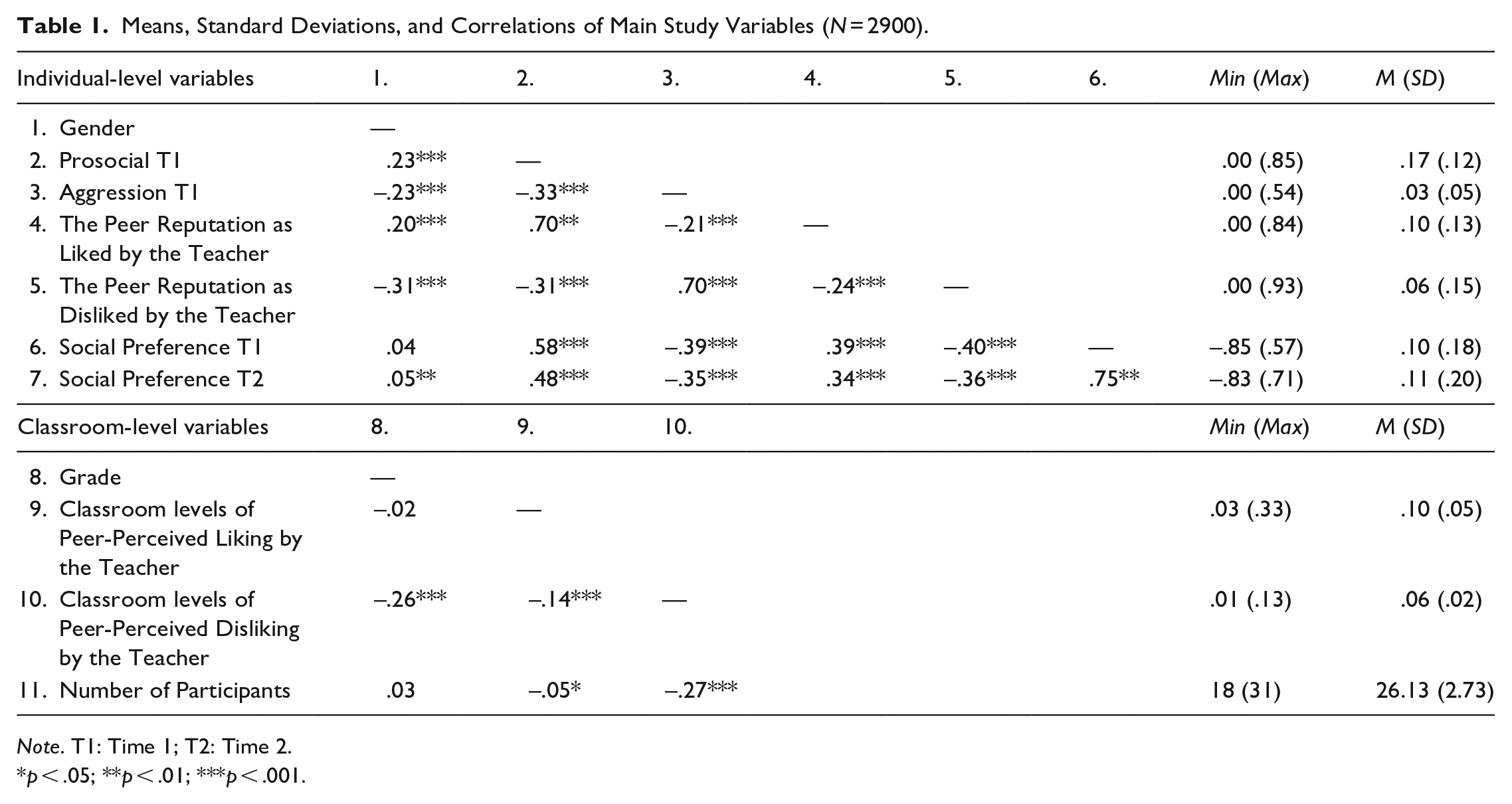
Note. T1: Time 1; T2: Time 2.
p < .05; **p < .01; ***p < .001.
Multilevel Analyses
Student-Level Effects
The results of the multilevel analysis are shown in Table 2. At the student level, social preference was stable over time (γ = 0.789, p < .001). Prosocial behavior positively predicted social preference over time (γ = 0.141, p < .01), whereas the effect of aggression was negative and significant (γ = −0.264, p < .01). Peer reputation as disliked by the teacher at T1 was negatively associated with social preference at T2 (γ = −0.077, p < .05). Gender moderated the association between prosocial behavior at T1 and preference at T2 (γ = −0.113, p < .05). The positive association between prosocial behavior at T1 and preference at T2 was stronger for girls than for boys (see Figure 1).
Results From Multilevel Models Predicting Social Preference at T2 From Social Behavior and Classroom Levels of Peer-Perceived Liking and Disliking by the Teacher at T1 (N = 2900).
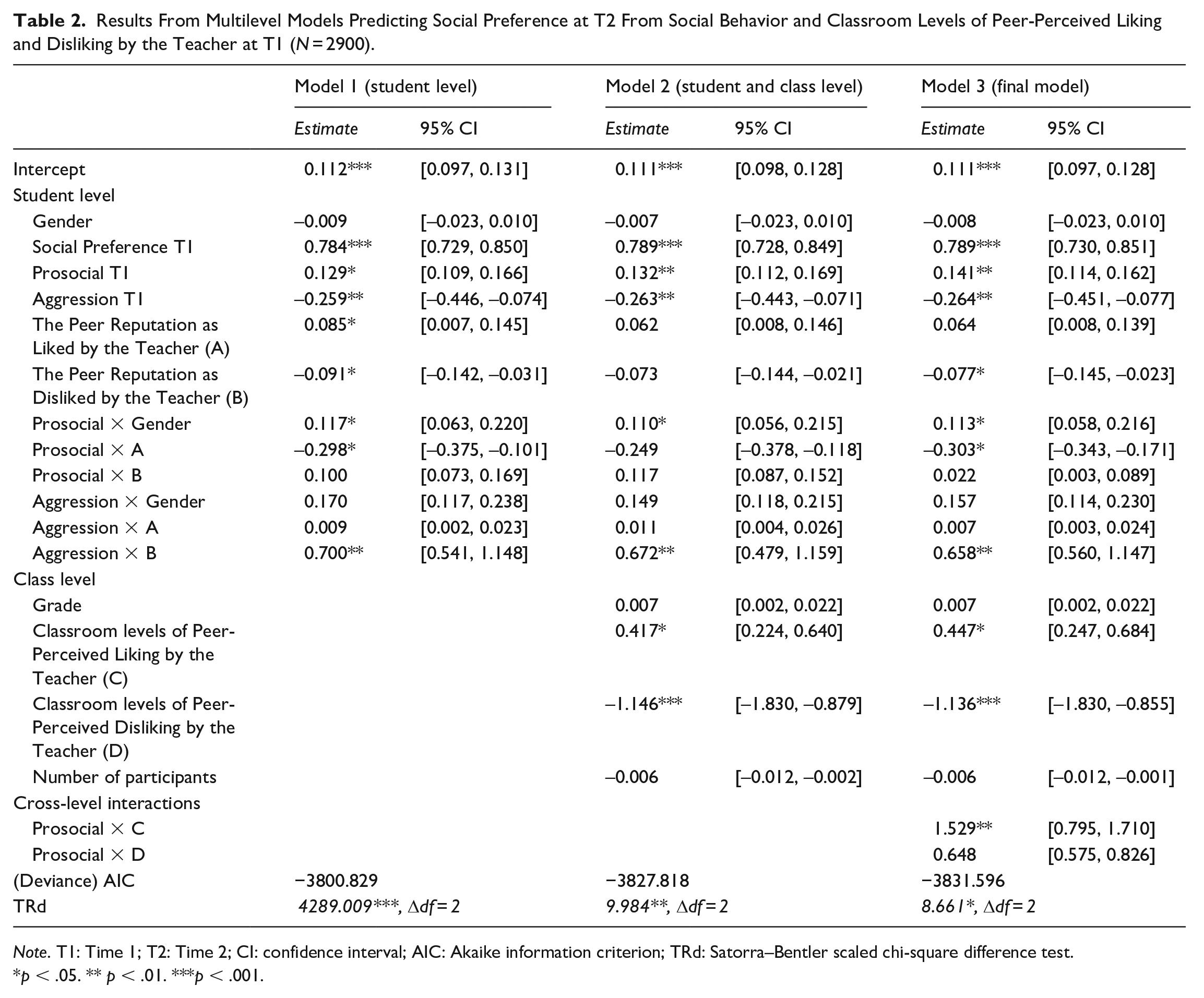
Note. T1: Time 1; T2: Time 2; CI: confidence interval; AIC: Akaike information criterion; TRd: Satorra–Bentler scaled chi-square difference test.
p < .05. ** p < .01. ***p < .001.
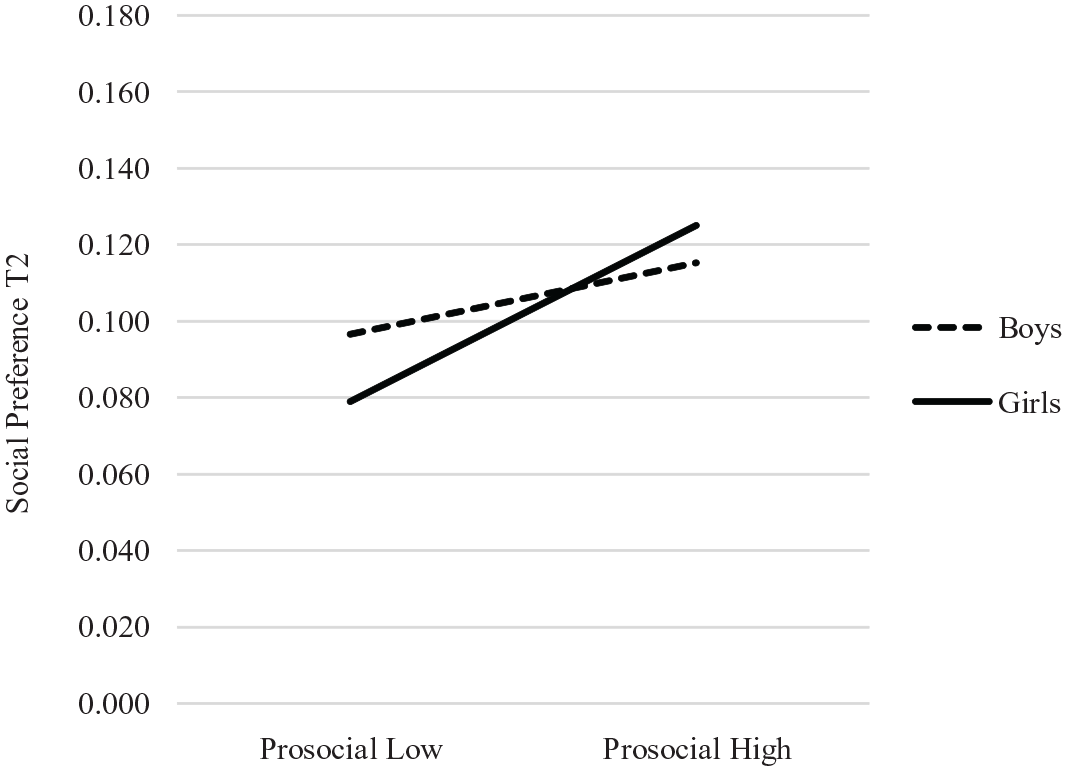
Gender Moderates the Association Between Prosocial Behavior at T1 and Social Preference at T2 (N = 2900). T1: Time 1; T2: Time 2.
Peer reputation as liked by the teacher moderated the association between prosocial behavior at T1 and social preference at T2 (γ = −0.303, p < .05). As can be seen in Figure 2, students who scored low on prosocial behavior but were perceived by peers as liked by the teacher were more preferred than students who scored low on prosocial behavior but were not perceived by peers as liked by the teacher.
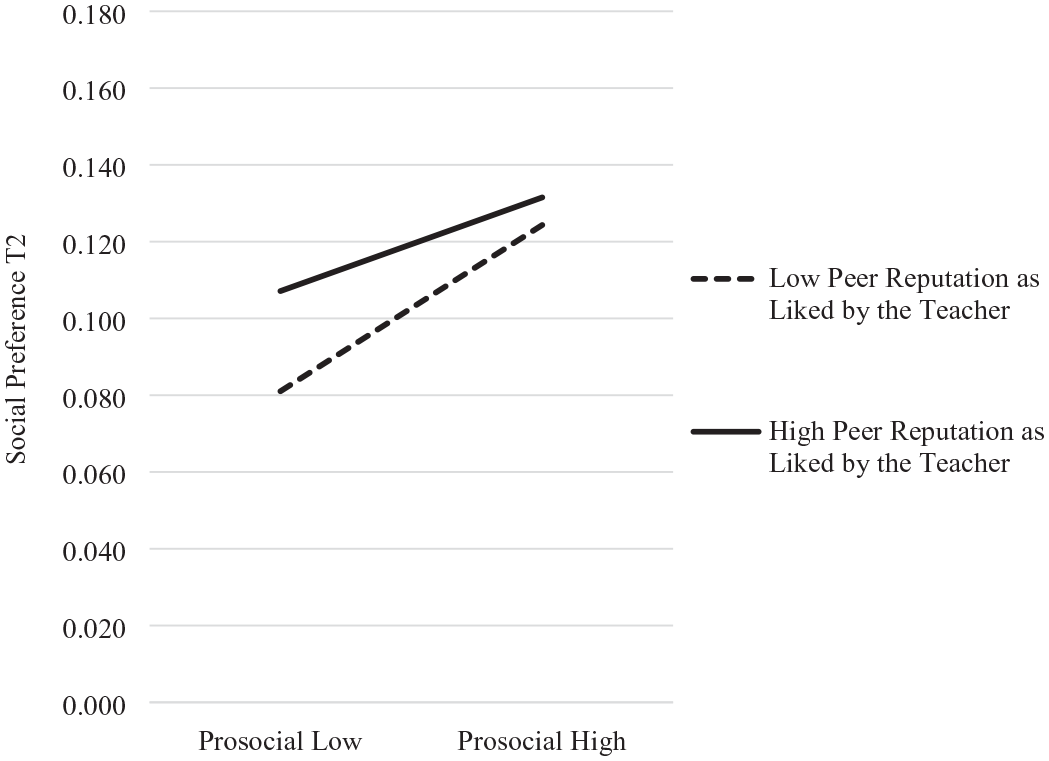
The Peer Reputation as Liked and Disliked by the Teacher Moderates the Association Between Prosocial Behavior at T1 and Social Preference at T2 (N = 2900). T1: Time 1; T2: Time 2.
Peer reputation as disliked by the teacher also moderated the association between aggression at T1 and social preference at T2 (γ = 0.658, p < .01; see Figure 3). Students who scored low on aggression but were perceived by peers as disliked by the teacher were less preferred than students who scored low on aggression but were not perceived by peers as disliked by the teacher.
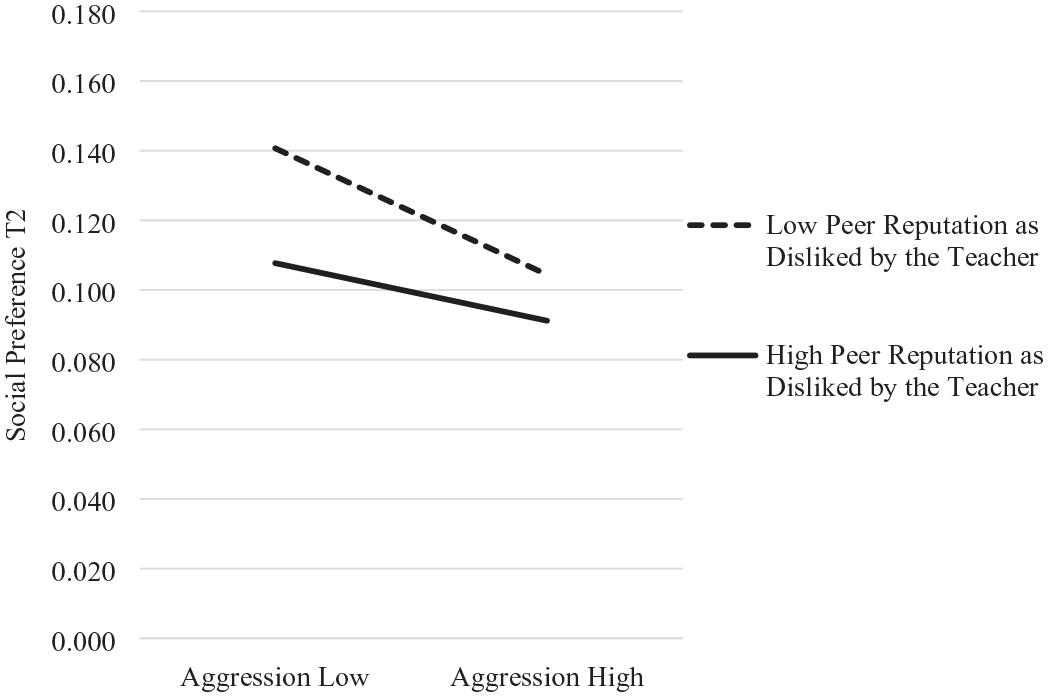
The Peer Reputation as Disliked by the Teacher Moderates the Association Between Aggression at T1 and Social Preference at T2 (N = 2900). T1: Time 1; T2: Time 2.
Classroom-Level Effects
Classroom levels of peer-perceived liking by the teacher at Time 1 positively predicted social preference at Time 2 (γ = 0.447, p < .05). Classroom levels of peer-perceived disliking by the teacher at Time 1 negatively predicted social preference at Time 2 (γ = −1.136, p < .001), controlling for gender, grade, and social preference at Time 1. There were no significant effects of grade and number of participants. The explained variance in the random slope by class-level predictors was 20%.
The association between prosocial behavior at Time 1 and social preference at Time 2 was moderated by classroom levels of peer-perceived liking by the teacher (γ = 1.529, p < .01). This effect is shown in Figure 4. In classes with high levels of peer-perceived liking by the teacher, prosocial behavior at Time 1 positively predicted social preference at Time 2 (γ = 0.217, p < .001). In classes with low levels of peer-perceived liking by the teacher, prosocial behavior at Time 1 did not significantly predict social preference at Time 2 (γ = 0.065, p = .261). The cross-level interaction effect of classroom peer-perceived liking by the teacher explained 30% of class-level variability between prosocial behavior at T1 and social preference at T2.
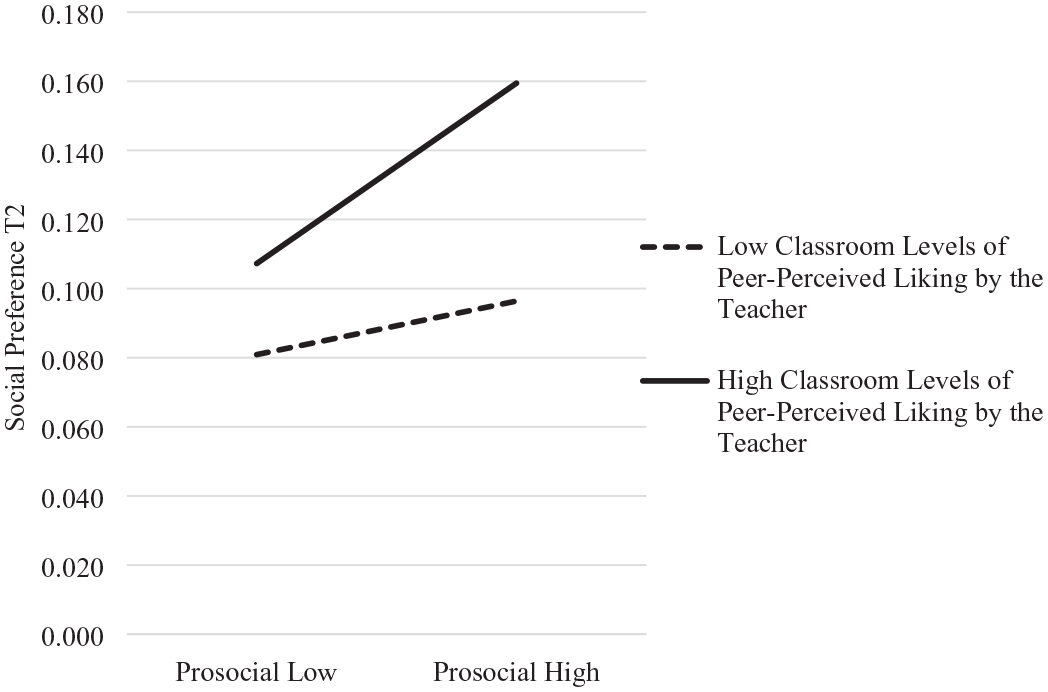
Classroom Levels of Peer-Perceived Liking by the Teacher Moderate the Association Between Prosocial Behavior at T1 and Social Preference at T2 (N = 2900). T1: Time 1; T2: Time 2.
To examine whether grades affected the associations between prosocial behavior and social preference, we tested the moderating effect of grades (see Supplementary Table 2). We compared the contrast between Grade 4 and the combined Grades 5 and 6, as well as between Grade 6 and the combined Grades 4 and 5. To code these grade levels, we assigned a code of 1 to Grade 4 and a code of 0 to the combined Grades 5 and 6, and a code of 1 to Grade 6 and a code of 0 to Grades 4 and 5 combined. There were no significant moderating effects of grade level. These findings in the models with the moderators were largely identical to the final statistical model (see Table 2), except for the effect of prosocial behavior at Time 1 on social preference at Time 2. This effect disappeared in the analysis when examining the moderating effect of two grade contrasts: Grade 4 versus Grades 5 and 6 combined, and Grade 6 versus Grades 4 and 5.
Discussion
The goal of this study was to investigate the effect of classroom levels of peer-perceived liking and disliking by the teacher on social preference and their moderating effect on the associations of prosocial behavior and aggression with social preference, within one semester in school. By focusing on the two aspects of teacher–student interactions separately, we investigated how classroom levels of peer-perceived liking and disliking by the teacher uniquely affected the effects of prosocial behavior and aggression on preference. At the individual level, prosocial youth were more preferred and aggressive youth were less preferred at the end of the semester. The classroom level of peer-perceived liking and disliking by the teacher predicted social preference at the end of the semester. Prosocial behavior was more strongly associated with peer preference in classrooms with higher levels of peer-perceived liking by the teacher.
Prospective Associations of Behavior and Preference
Prosocial behavior at the beginning of the semester positively, and aggression negatively, predicted preference at the end of the semester. Gender moderated the prospective association of behavior and preference. These findings are consistent with a large literature on the associations between social behavior and social status (see, for example, Jackson et al., 2015; McDonald & Asher, 2018). Prosocial behavior predicts liking by peers, whereas aggression predicts disliking by peers. In this study, these prospective associations were replicated with new classroom peers during one semester. At the beginning of the academic year, Korean primary schools have a new classroom composition, which is changed on a yearly basis.
Interestingly, the positive associations between prosocial behavior at T1 and preference at T2 were stronger among girls than boys. This is in line with previous studies indicating more prosocial behavior (Rose & Smith, 2009) and supportive relationship with teachers (McCormick & O’Connor, 2015) among girls.
The Peer Reputation as Liked and Disliked by the Teacher
Consistent with previous research (Chang, 2003; Hendrickx et al., 2017), the peer reputation as liked or disliked by the teacher moderated the prospective associations between social behavior and preference. Prosocial students were more preferred by peers over the course of a semester when they were seen as liked by the teacher, indicative of positive teacher–student interactions. Aggressive students were less preferred by peers at the end of the school semester when they were seen as disliked by their teacher. These findings are in line with research showing that the reputation as liked or disliked by the teacher can function as an affective filter that influences how classmates evaluate each other. We expanded this knowledge of the social referencing process by examining it over time. We found that both aspects of teacher–student interactions influenced how prosocial behavior and aggression were evaluated.
Classroom Levels of Peer-Perceived Liking and Disliking by the Teacher
Classroom levels of peer-perceived liking and disliking by the teacher had a direct effect on social preference at the end of the semester. Youth were generally more preferred at the end of the semester in classes in which peer-perceived liking by the teacher was high at the beginning of the semester. Youth were less preferred at the end of the school year in classes in which peer-perceived disliking by the teacher was high. Both aspects of the teacher–student interaction at the beginning of the semester may influence the number of positive relationships among classmates at the end of the semester.
These results extend previous findings that teacher–student interactions can also influence peer status via social modeling and emotional support at the classroom level (Hendrickx et al., 2016, 2017) On one hand, teacher–student interactions signal a behavioral norm to students. In this respect, positive interactions between teachers and students may be imitated and extended to positive peer interactions. On the other hand, high classroom levels of peer-perceived disliking by the teacher may signal a norm of coercive or conflicted behavior, which may then reduce interpersonal liking among peers. The social climate of the classroom may work as an emotional secure zone for students. Youths are more likely to initiate positive peer interactions when they perceive the classroom as a safe and secure environment (Pianta et al., 1995). Supportive relationships between teachers and students provide a secure and stable environment for positive socialization. Youths are less likely to befriend peers in a classroom that they perceive as hostile and insecure (Myers & Pianta, 2008). A high level of peer-perceived liking by the teacher in the classroom may foster a positive climate for youth to be socially engaging. Future studies need to further investigate how classroom levels of peer-perceived liking and disliking by the teacher influence peer relationships in various domains such as popularity, academic adjustment, and friendship networks.
The associations between prosocial behavior and social preference within a semester depended on the level of peer-perceived liking and disliking by the teacher in the classroom. Prosocial behavior was associated with higher levels of preference over time in classes where teachers tended to be perceived as liking more students than in classes where teachers were perceived as liking fewer students. In other words, prosocial behavior had a higher reward value (in terms of social preference) in classes with peer-perceived liking by the teacher.
These findings indicate that classroom levels of peer-perceived liking and disliking by the teacher serve unique roles in influencing students’ behaviors and peer relations. This study was conducted in a collectivistic culture. In previous research with Western samples (Hendrickx et al., 2017), classroom levels of peer-perceived liking by the teacher moderated the concurrent association between aggressive behavior and preference. In the Korean sample of this study, classroom levels of peer-perceived liking by the teacher affected the prospective association between prosocial behavior and later preference, but not the link between aggression and preference. In this study, the effects of aggression did not depend on classroom context, but the effects of prosocial behavior did. It is possible that prosocial behavior is more likely to be affected in a relatively collectivistic culture than in a relatively individualistic culture. Such cultural differences are an interesting avenue for further research.
Strengths, Limitations, and Future Directions
This study used a large sample in South Korea, reliable peer assessments, and was longitudinal. We conducted state-of-the-art multilevel analyses and found that the link between individual-level prosocial behavior and preference over time was moderated by classroom-level characteristics. Despite these strengths, this study also had some limitations.
First, although preference is related to how aggressive and prosocial youth are accepted in the group, popularity is also closely associated with the extent to which behavior is salient and influential in classrooms (Dijkstra et al., 2008; Laninga-Wijnen et al., 2020). The associations of behaviors with popularity are also more varied across contexts than their associations with preference (Garandeau et al., 2011), suggesting that classroom factors may play an important role. Although this study was not able to examine the associations with popularity, future studies should examine whether classroom levels of peer-perceived liking and disliking by the teacher have different effects on preference and popularity.
Second, the current findings may be specific to the primary school context. Elementary school classrooms typically have one teacher who teaches most subjects and is responsible for classroom management. Teachers generally have much impact on their students. In contrast, middle school students are taught by multiple teachers who share in the social management of the classroom. Moreover, adolescents exert more peer influence on each other as they spend more time in peer groups (Sumter et al., 2009). Future studies need to investigate how teachers’ influence on class climate is different in various developmental stages and school systems.
Third, we interpreted the unique moderating effects of classroom levels of peer-perceived liking by the teacher from a cross-cultural perspective. Contrary to Western studies, classroom levels of peer-perceived liking by the teacher moderated how prosocial behavior was associated with social preference. However, our interpretation of cross-cultural differences is inferred from an indirect comparison of cultures. A cross-cultural study that includes multiple cultures makes it possible to directly compare the predictive coefficients and mean-level differences between cultures (Schneider et al., 2006). Future studies could include diverse samples from individualistic and collectivistic cultures. Examining cross-cultural differences empirically will help to further advance our understanding of the teacher’s role as a socializing agent.
Fourth, the scores for the peer reputation as liked and disliked by the teacher were derived from peer nominations. Peer nominations capture a shared perception or reputation in the peer group. However, individual students might differ in their own subjective perception of their relationship with their teacher. In future studies, we need to examine whether different results are found for peer versus self-reports of teacher–student relationships.
Fifth and finally, the use of social preference, based on the difference between peer liking and disliking, may have created a discrepancy with the peer reports of liked and disliked by the teacher, which were measured separately. We recognize that this lack of parallel framing is a limitation and may have affected the results. In future studies, it may be helpful to compare the effects of peer liking and disliking separately in association with the peer reputation as liked and disliked by the teacher.
Conclusion
This study adds to existing knowledge of the role of teachers in peer relationships. Like the metaphor of the “invisible hand,” the role of the teacher as a socializing agent in the classroom was found at both the student and classroom level. Classroom levels of peer-perceived liking and disliking by the teacher appeared to foster positive peer relationships and behavior in classrooms. Classroom levels of peer-perceived liking and disliking by the teacher were associated with the development of social preference in the first semester of the school year. In addition, prosocial behavior was more valued over time in classrooms with higher levels of peer-perceived liking by the teacher and lower levels of peer-perceived disliking by the teacher. Thus, teachers can facilitate positive peer interactions by creating a positive interpersonal climate with students and by minimizing negative teacher–student interaction.
Supplemental Material
sj-docx-1-jbd-10.1177_01650254231186327 – Supplemental material for Prospective associations of prosocial behavior and aggression with social preference: Moderation by classroom levels of peer-perceived liking and disliking by the teacher
Supplemental material, sj-docx-1-jbd-10.1177_01650254231186327 for Prospective associations of prosocial behavior and aggression with social preference: Moderation by classroom levels of peer-perceived liking and disliking by the teacher by Jingu Kim and Antonius H. N. Cillessen in International Journal of Behavioral Development
Footnotes
Acknowledgements
This project was made possible by a Radboud Excellence fellowship from Radboud University awarded to the first author.
Declaration of Conflicting Interests
The author(s) declared no potential conflicts of interest with respect to the research, authorship, and/or publication of this article.
Funding
The author(s) received no financial support for the research, authorship, and/or publication of this article.

Supplemental Material
Supplemental material for this article is available online.
References
Supplementary Material
Please find the following supplemental material available below.
For Open Access articles published under a Creative Commons License, all supplemental material carries the same license as the article it is associated with.
For non-Open Access articles published, all supplemental material carries a non-exclusive license, and permission requests for re-use of supplemental material or any part of supplemental material shall be sent directly to the copyright owner as specified in the copyright notice associated with the article.
