




Abstract
Stimulus over-selectivity is said to have occurred when only a limited subset of the total number of stimuli present during discrimination learning controls behavior, thus, restricting learning about the range, breadth, or all features of a stimulus. The current study investigated over-selectivity of 100 typically developing children, aged 3–7 (mean = 65.50 ± 17.31 SD months), using a visual discrimination task. Developmental trends in over-selectivity and their relationship to some cognitive variables (i.e., selective attention, sustained attention, and cognitive flexibility) were the target. Over-selectivity decreased with age, but this effect was mediated by the development of cognitive flexibility. Over-selectivity increased when a distractor task was introduced, which was not mediated by the other cognitive variables under investigation. The current results assist in the establishment of the theoretical underpinnings of over-selectivity by offering evidence of its underlying determinants and relating these to developmental trends.
Stimulus over-selectivity is said to have occurred when only a limited subset of the total number of stimuli present during discrimination learning controls behavior, thus, restricting learning about the range, breadth, or all features of a stimulus (Lovaas et al., 1971). Despite the considerable body of over-selectivity research conducted with those with autism spectrum disorder and other clinical conditions (Ploog, 2010), Reed et al. (2013) suggest that stimulus over-selectivity should be understood as a product of general development. Given that only a limited number of studies have directly examined stimulus over-selectivity in typically developing individuals, little is known about the phenomenon in this population, and less about developmental trends, or any psychological correlates of over-selective responding, which may illuminate its theoretical underpinnings.
The actual age at which over-selective responding diminishes is not yet known. Bickel et al. (1984) examined over-selectivity in preschoolers and found that 70% of participants were over-selective. Eimas (1969) examined over-selectivity in children under 10 years old and found that the number of cues learned about increased with both chronological age and mental age. Hale and Morgan (1973) tested 4- and 8-year old typically developing participants and found that the younger group responded primarily to single components of the stimulus complex during acquisition of the discrimination and that the older group displayed less over-selective responding.
Reed et al. (2013) investigated over-selective responding trends for children aged 19–50 months and found that the children did not reliably respond to simultaneous multiple cues until after 36 months. Similarly, Moreno et al. (2014) found that, for children aged 27–53 months, those aged up to 47 months demonstrated restricted stimulus control.
Although there is some evidence that over-selectivity decreases with increasing chronological age during childhood, it is unclear which of the many cognitive abilities that also develop during this period, may be, at least in part, responsible for this effect. It is well known that several aspects of cognitive functioning that appear impaired in those with the clinical conditions, and which are potentially associated with over-selectivity, develop with age. Examples of cognitive variables indicative of cognitive functioning are cognitive flexibility (Buttelmann & Karbach, 2017), selective attention (Downing et al., 2015), and working memory capacity (Bunge & Wright, 2007). All of these abilities have been suggested as underlying over-selectivity (Dube, 2009), and, consequently, their development may be responsible for reductions in over-selectivity as children grow older.
Stimulus over-selectivity may reflect the degree of distraction; whereby, increased pressure on a person’s information-processing capacity limits the number of cues that control behavior. Previous research investigating over-selectivity in typically developing adults has demonstrated that adding a distractor can induce higher levels of over-selective responding (Reed et al., 2012). However, Reed et al. (2012) have suggested that different mechanisms may operate to produce over-selectivity under conditions of impaired cognitive ability or in the presence of a concurrent distractor task (Reed & Gibson, 2005), but there have been no studies of the impact of this degree of distraction in younger children.
The aims of the current study were to clarify the underlying determinants of over-selective responding and to relate these to developmental trends in typically developing children. Specifically, this study explored whether (i) over-selectivity would decrease with increasing age, (ii) any age-related trends are mediated by the development of particular cognitive abilities (selective attention, sustained attention, and cognitive flexibility), and (iii) the addition of a distractor task would impact over-selective responding in younger children and change the relationship between the cognitive variables and over-selectivity.
Method
Participants
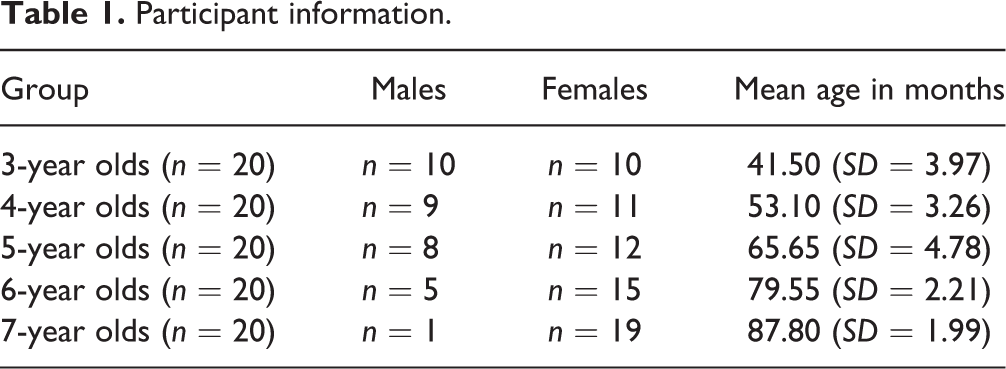
One hundred typically developing, Caucasian, Irish children between the chronological ages of 3 and 7 years were recruited (Table 1). According to school records, none of the 100 participants had an official developmental, intellectual, or clinical diagnosis.
Participant information.
Materials
Stimulus over-selectivity
The stimulus over-selectivity visual discrimination task was the same as used by Kelly et al. (2016) and consisted of laminated stimulus cards, measuring 12 × 10 cm. These cards contained one black stimulus (Figure 1(b)) or two black stimuli on a white background (Figure 1(a)). The stimuli were characters obtained from fonts (symbol, wingdings, and wingdings 2) available in Microsoft 2003, similar to McHugh and Reed (2007).
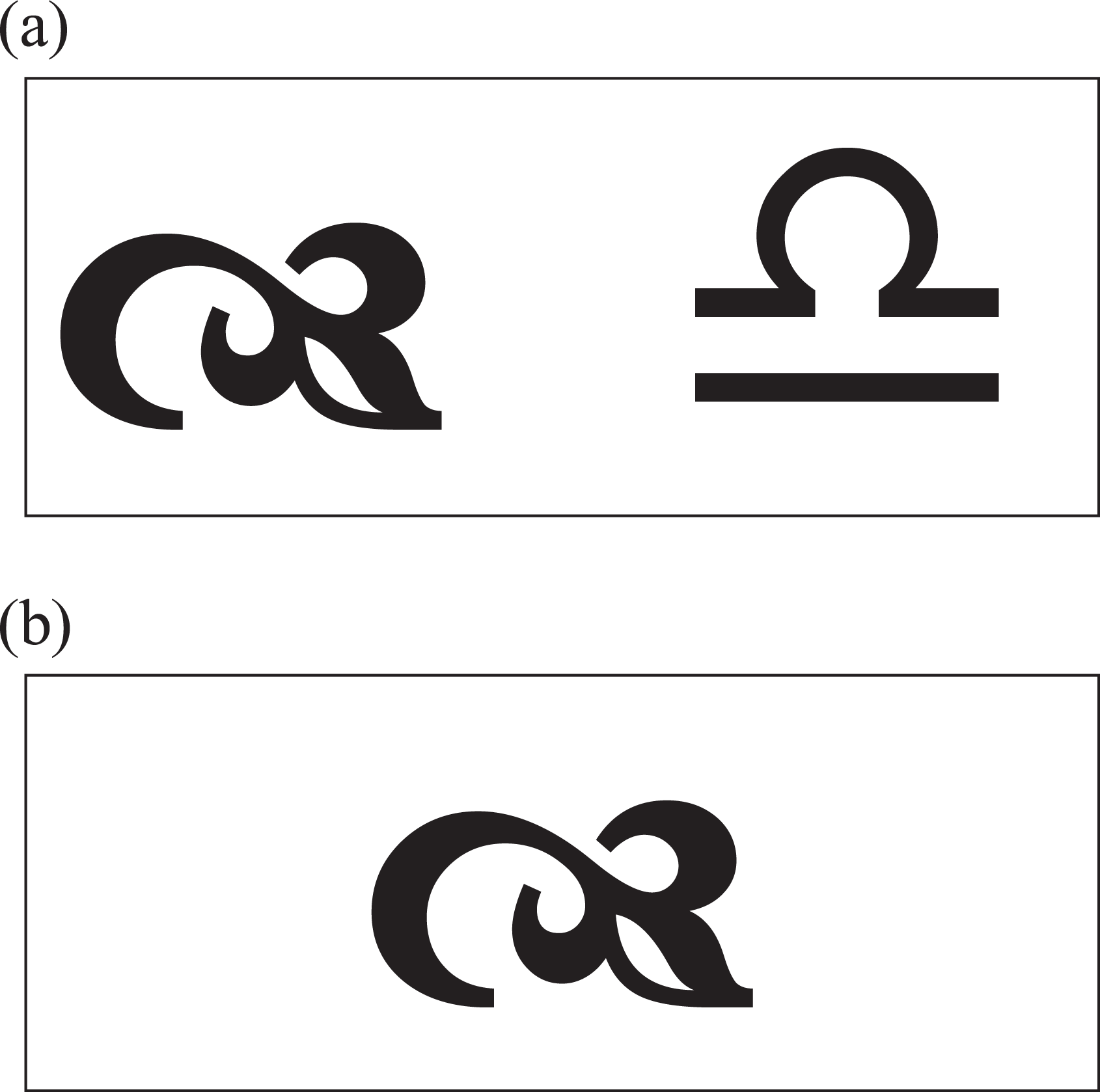
Examples of visual stimuli.
The Test of Everyday Attention for Children
This is a normed and standardized battery of nine subtests measuring attention in children and adolescents (Manly et al., 1999). Two subtests of the Test of Everyday Attention for Children (TEA-Ch) were administered to all participants: (i) Sky Search, a subtest that measures selective attention (Figure 2(a)); and (ii) Map Mission, a subtest that measures sustained attention (Figure 2(b)).
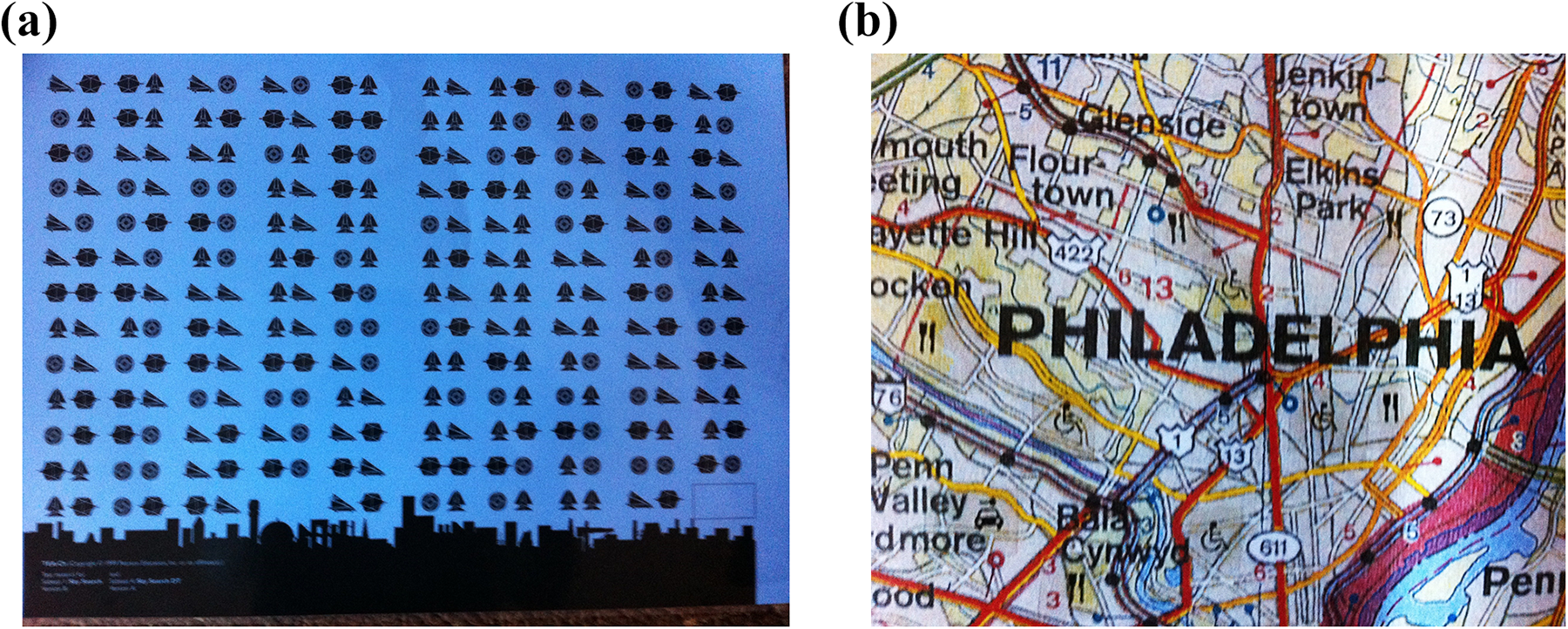
TEA-Ch subtests.
Intra-Extra Dimensional Shift Test
The Intra-Extra Dimensional Shift Test (IED) is a computer-based cognitive assessment that tests for rule acquisition and reversal (Cambridge Cognition, 2011). This test has nine blocks of trials with a set criterion of learning at each stage of six consecutive correct responses (Cambridge Cognition, 2019 for a demonstration of the assessment). To measure cognitive flexibility in the current study, the number of adjusted errors was employed as the dependent variable.
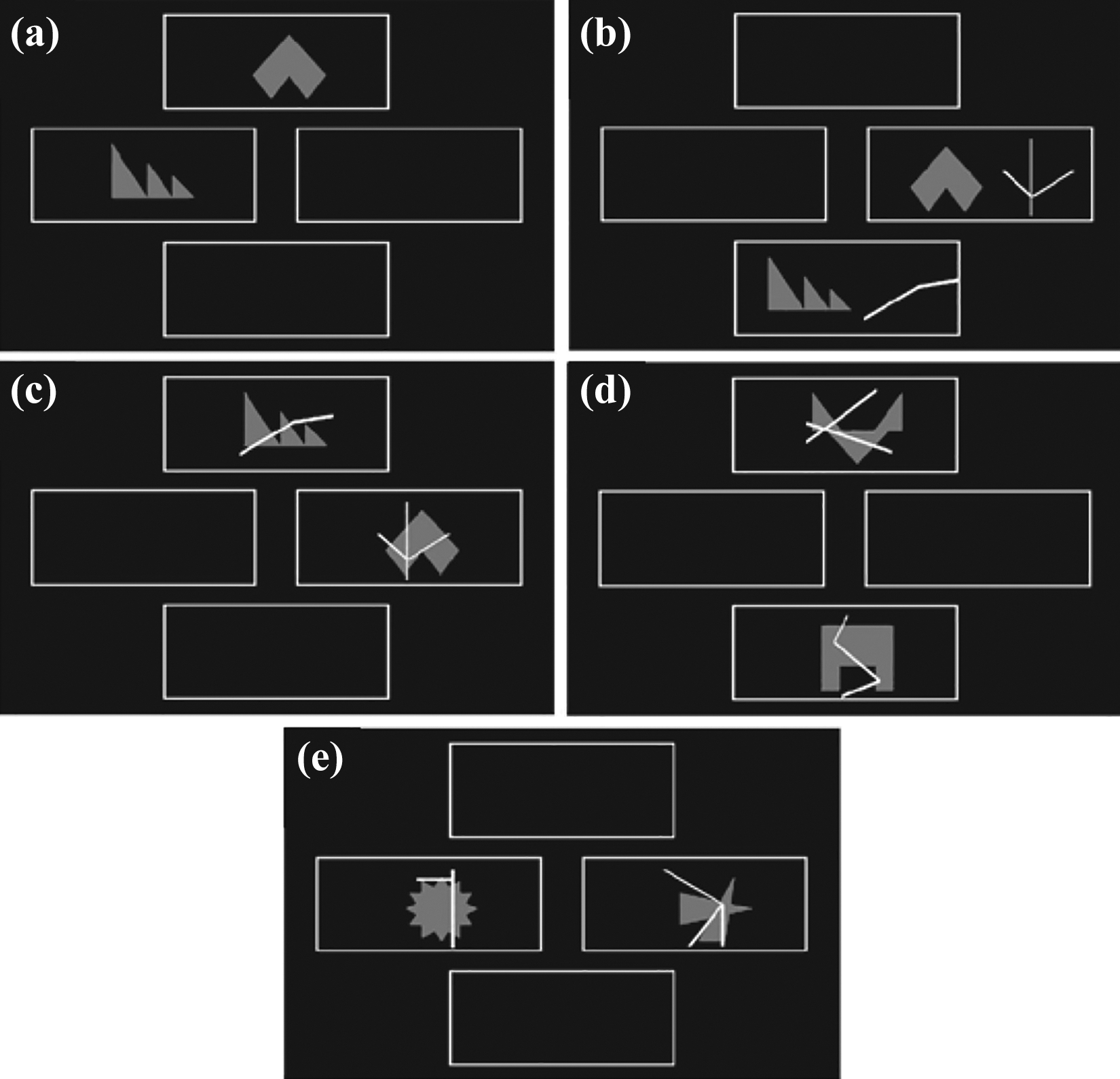
Stages of the IED.
Procedure
Research ethics committee approval was obtained for the current study. Assessments measuring cognitive flexibility, attention, and over-selectivity were conducted, with the participant and experimenter sitting across from each other at a table, in a quiet classroom free from distraction, in the participant’s own learning environment. After these tests, the participants were given the over-selectivity visual discrimination task under two conditions; 50% of the participants in each age group completed the no-distractor condition first, and the other 50% completed the distractor condition first.
No-distractor condition
In the training phase, the stimuli were placed on the center of the desk half-way between the participant and the experimenter. Participants were presented with two white cards simultaneously. Each card contained two black stimulus components (Figure 1(a)). Pointing at, for example, the card with the complex stimulus containing the components A and B (S+) was reinforced, whereas pointing to the complex stimulus containing the components C and D was extinguished (S−). The combination of components on the S+ (e.g., AB, AC, BC, or BD) was predetermined and randomized across participants. This was a control measure to avoid any potential confounding variables of some stimuli being intrinsically more salient than others. Participants reached criterion in the training phase once they chose the S+ 10 times consecutively.
For each trial, participants were presented with two compound stimuli (e.g., “AB” and “CD”). Each was given the same vocal instruction before the first discrimination was made: Please point to a card without touching it. The experimenter waited for the participant to point to one of the cards. If the participant pointed to the predetermined reinforced compound, the S+ (e.g., AB), they received positive feedback from the experimenter, who said yes, enthusiastically, with a smile. If the participant pointed to the other card, the S− (e.g., “CD”), they received no feedback from the experimenter. The vocal instruction was not provided for the remaining discriminations.
The positions of the cards were randomized, so that 50% of the time the correct card was presented on the right, and 50% of the time on the left. During the training phase, the AB S+ was always presented with the CD S−. Once participants reached criterion (i.e., 10 consecutive correct responses within 200 discrimination trials) in the training phase, they were moved onto the test phase. If a participant failed to reach criterion, they were excluded from further participation. Testing consisted of the simultaneous presentation of two cards, just as under training, but the stimuli consisted of only one stimulus element. This yielded four combinations of S+ and S− components: AvC, AvD, BvC, and BvD. Each combination was presented five times, thus yielding 20 test trials.
In the test phase, participants were presented with two cards simultaneously, each one comprising of just one picture from the compound stimulus (Figure 1(b)). The pictures were paired so that the participants had a choice of S+ and S−. There were five trials for each combination of S+ and S− components of the compound stimuli (i.e., AvC, AvD, BvC, and BvD) giving a total of 20 trials. No feedback was provided by the experimenter to the student during test trials.
Distractor condition
The training phase consisted of the same procedure as in the no-distractor condition. A concurrent distractor task was given to each participant in this condition. Each participant was given the vocal instruction: At the same time as pointing to a card, you must try your best to keep counting from 1 to 10 out loud over and over again like this. The experimenter then demonstrated counting forwards 1 to 10 repeatedly aloud.
Results
Table 2 lists the mean (and standard deviation) scores for selective attention (TEA-Ch, Subtest 1), sustained attention score (TEA-Ch, Subtest 5), and cognitive flexibility (IED, adjusted errors), along with the Pearson correlations between these scores. There was a strong positive correlation between age and sustained attention, and a strong negative correlation between age and the number of errors made on the cognitive-flexibility task. Sustained attention and cognitive-flexibility errors were also strongly negatively related.
Descriptive statistics and correlations for study variables.
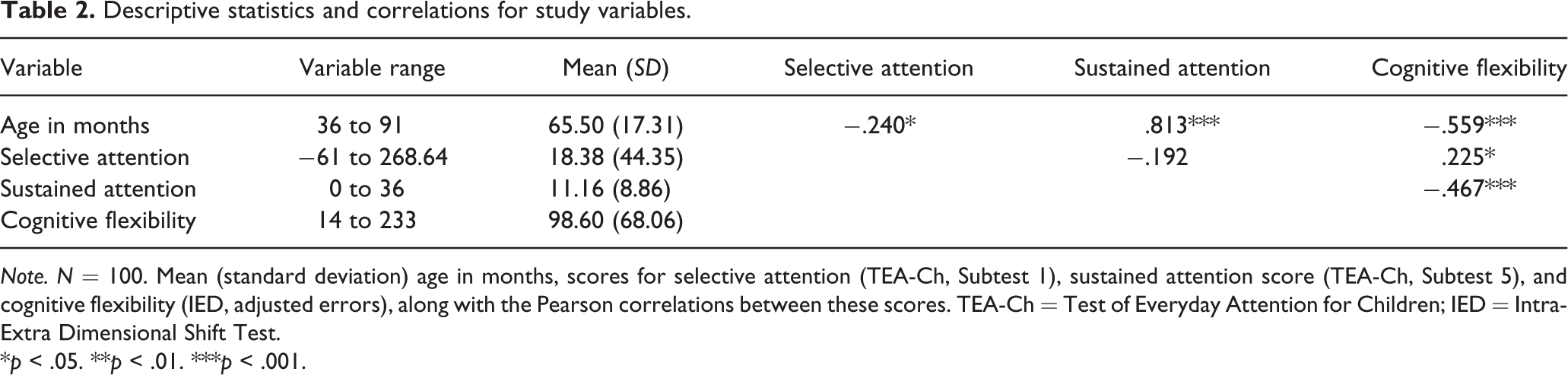
Note. N = 100. Mean (standard deviation) age in months, scores for selective attention (TEA-Ch, Subtest 1), sustained attention score (TEA-Ch, Subtest 5), and cognitive flexibility (IED, adjusted errors), along with the Pearson correlations between these scores. TEA-Ch = Test of Everyday Attention for Children; IED = Intra-Extra Dimensional Shift Test.
*p < .05. **p < .01. ***p < .001.
Training Phase
Two participants in the 3-year old group did not pass the training phase. All other participants (n = 98) successfully completed the training phase. The mean numbers of trials to criterion (including the 10 consecutive correct trials) are shown in Table 3. Inspection of these data reveals that more trials were taken to reach criterion in the Distractor condition compared to the No-Distractor condition, t(99) = 3.02, p = .003, d = .30. Age and all of the cognitive variables were significantly related to the time taken to reach criterion, in both conditions; with being younger and having less sustained attention being associated with taking longer to learn the task, and having greater selective attention and cognitive flexibility being associated with faster learning of the task.
Trials to criterion and correlation data.

Note. N = 98. Mean (standard deviation) numbers of trials to criterion (including the 10 consecutive correct trials), along with the correlations with age and the cognitive variables (selective attention, sustained attention, and cognitive flexibility).
*p < .05. **p < .01. ***p < .001.
To analyze whether the effect of age of the participant’s ability to acquire the task was mediated by any of the cognitive variables under investigation, and whether this differed in the absence or presence of a distractor task, two mediation analyses were conducted—one for each of the two conditions (No-Distractor and Distractor). Each of these mediation analyses was conducted using trials to criterion as the target, age in months as the predictor, and selective attention (TEA-Ch, Subtest 1), sustained attention (TEA-Ch, Subtest 5), and cognitive flexibility (IED adjusted errors), as potential mediators.
Regression analysis investigated whether selective attention, sustained attention, or cognitive flexibility mediated the effect of age on acquisition was conducted using the PROCESS macro version 3.3 (Hayes, 2018). Results indicated that age was significantly related to cognitive flexibility, β = −2.198, SE = .329, p < .001, selective attention, β = −0.615, SE = .251, p = .016, and sustained attention, β = 0.416, SE = .030, p < .001. Cognitive flexibility, β = 0.156, SE = .054, p = .005, and selective attention, β = 0.144, SE = .072, p = .046, but not sustained attention, β = −0.144, SE = .594, p > .30, were significant predictors of acquisition. The results supported the mediational hypothesis in that age was not a significant predictor of acquisition after controlling for the mediators, β = −0.442, SE = .356, p = .178. Approximately 31% of the variance in acquisition was accounted for by the predictors (R 2 = .305). The indirect effects were tested using a bootstrap estimation approach with 5,000 samples. These results indicated the indirect coefficient for cognitive flexibility was significant, β = −0.344, SE = .157, 95% CI = −.689 to −.070, but the indirect effects of selective attention, β = −0.089, SE = .145, 95% CI = −.437 to .131, and sustained attention, β = −0.056, SE = .150, 95% CI = −.350 to .246, were not significant. The results suggest that under conditions of no cognitive load, cognitive flexibility mediates the relationship between age and speed of learning, meaning that the relationship between age and speed of learning was not present when taking account of cognitive flexibility.
For the Distractor condition, age was significantly related to cognitive flexibility, β = −2.198, SE = .329, p < .001, selective attention, β = −0.615, SE = .251, p = .016, and sustained attention, β = 0.416, SE = .030, p < .001. Cognitive flexibility, β = 0.154, SE = .062, p = .020, but not selective attention, β = 0.091, SE = .085, p = .291, or sustained attention, β = −0.208, SE = .709, p > .30, was a significant predictor of acquisition. The results supported the mediational hypothesis in that age was not a significant predictor of acquisition after controlling for the mediators, β = −0.406, SE = .389, p = .299. Approximately 21% of the variance in acquisition was accounted for by the predictors (R 2 = .209). The indirect effects were tested using a bootstrap estimation approach with 5,000 samples. These results indicated the indirect coefficient for cognitive flexibility was significant, β = −0.338, SE = .186, 95% CI = −.740 to −.014, but the indirect effects of selective attention, β = −0.056, SE = .146, 95% CI = −.411 to .172, and sustained attention, β = −0.087, SE = .185, 95% CI = −.448 to .292, were not significant. The results suggest that under conditions of cognitive load, cognitive flexibility mediates the relationship between age and speed of learning, meaning that the relationship between age and speed of learning was not present when taking account of cognitive flexibility.
Over-Selectivity
The data were organized into the percentage time that the most selected stimulus (irrespective of its physical attributes, A or B) or the least selected stimulus (irrespective of its physical attributes, A or B) was chosen by each participant. The mean number of times that each of the components was selected during test is shown in Figure 4. Comparison between the most and least selected stimuli will always produce a difference (as that is the way the data are generated). To test for the presence of over-selectivity, the difference in the percentage times the most and least selected stimuli were chosen is compared to that which would be expected by chance (Reynolds & Reed, 2011b).
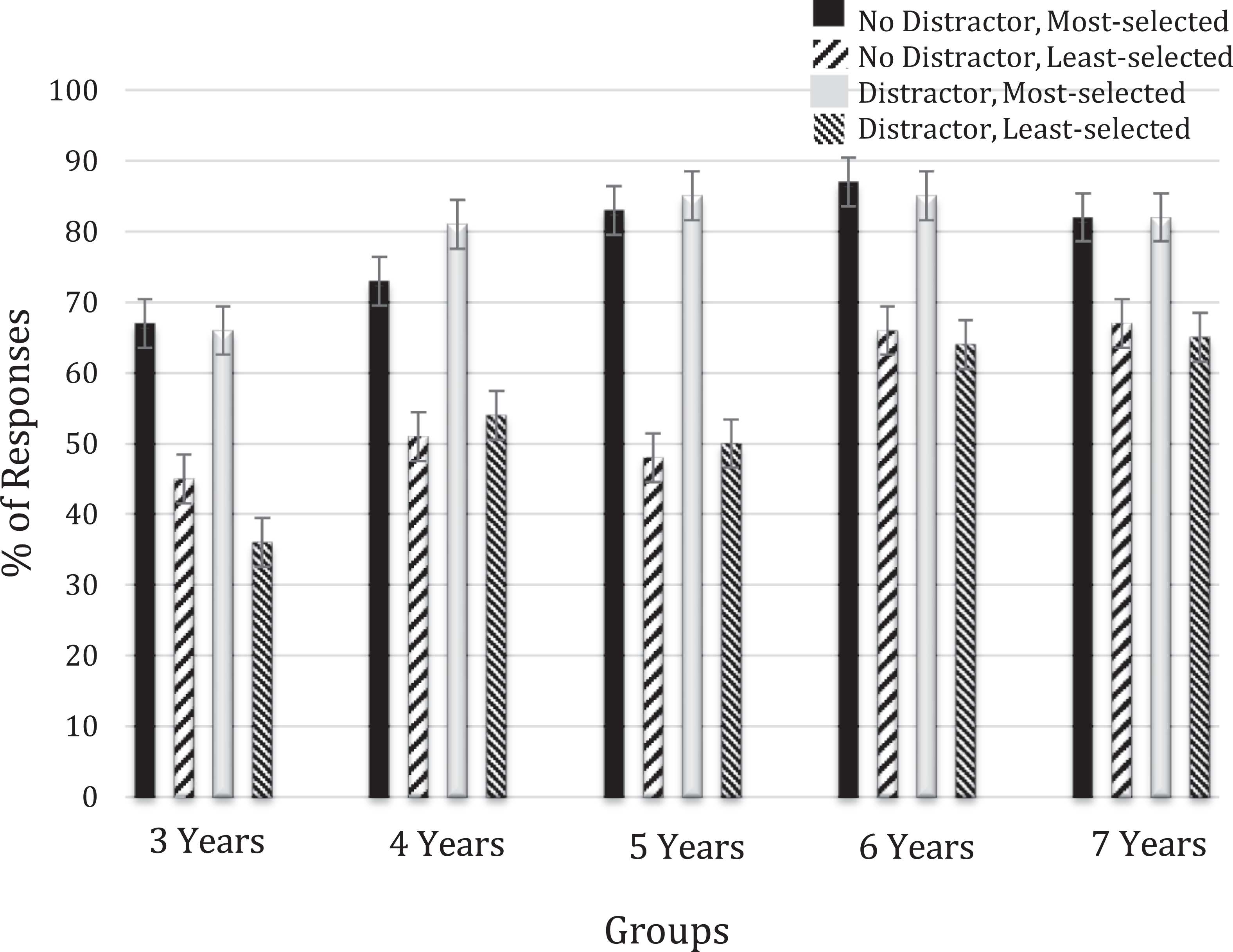
Results of the most-selected and least-selected stimulus components in the Distractor and No-Distractor conditions.
Given the above considerations, further analysis of the data was undertaken, based on binomial theory, to determine whether the deviation in the times that the most-selected and least-selected stimuli were chosen was statistically greater than would be expected by random chance around an average probability of selection of the two stimuli (Reynolds & Reed, 2011a). This analysis was undertaken to indicate whether the difference from the level of choice that would be expected if both stimuli had the same probability of being chosen was statistically significant.
In the absence of any a priori method of determining the probability of choosing a stimulus, the mean probability of choosing A and B was first calculated. Given this probability, the binomial equation was used to obtain the probability of choosing all possible combinations of A and B over C or D on the choice trials. The probability of choosing a reinforced compound stimulus was set at the mean probability of choosing A and B stimuli in a particular condition. Then, the probability of obtaining 10A, and zero to 10B; the probability of obtaining 9A, and zero to 10B; and so on were calculated, and put in a 10 × 10 contingency table. The contents of this table were then multiplied by a 10 × 10 table that contained the absolute A minus B difference score for each combination. The resulting 10 × 10 table contained the expected frequency of obtaining each possible A minus B difference resulting from all possible combinations of A and B frequencies. The sum of the values in this table (multiplied by 10) provided an estimate of the most minus least selected difference, in percentage terms, expected by random variation of selection of A and B stimuli. Paired t-tests were then used to test this sum against the obtained data, in order to investigate whether significant over-selectivity occurred.
The criterion level of difference between the most and least stimuli selection for over-selectivity, using the Reynolds/Reed method, for the No-Distractor condition was 14 (Table 4), and a paired t-test between the actual differences and this criterion value revealed statistically significant difference from chance, t(97) = 4.10, p < .001, d = .45. The criterion level for over-selectivity in the Distractor condition was 16 (Table 4), and this differed significantly from this chance, t(97) = 5.49, p < .001, d = .56.
Difference scores and correlation data.

Note. N = 98. Mean (standard deviation) difference between the most and least selected items for the No-Distractor and Distractor conditions, along with the correlation with age and the cognitive variables (selective attention, sustained attention, and cognitive flexibility).
*p < .05.
Table 4 shows the mean difference between the most and least selected items for the No-Distractor and Distractor conditions. Inspection of these data reveals no significant difference between the level of over-selectivity between the conditions, t(97) = 1.23, p = .221, d = .12. The correlations between age and the cognitive variables and the level of over-selectivity are shown for both conditions. There were no significant correlations between the variables and over-selectivity for the No-Distractor condition, but being younger, having less sustained attention and less cognitive flexibility were associated with greater over-selectivity with a Distractor.
To analyze whether the effect of age of the participant’s ability to acquire the task was mediated by any of the executive functions studied, and whether this differed in the absence or presence of a distractor, two mediation analyses were conducted—one for each of the two conditions (No-Distractor and Distractor). Each of these mediation analyses was conducted using over-selectivity (most vs. least difference), age in months as the predictor, and selective attention (TEA-Ch, Subtest 1), sustained attention (TEA-Ch, Subtest 5), and cognitive flexibility (IED adjusted errors), as potential mediators.
Regression analysis investigated whether selective attention, sustained attention, or cognitive flexibility mediated the effect of age on over-selectivity acquisition using the PROCESS macro version 3.3 (Hayes, 2018). Results indicated that age was significantly related to cognitive flexibility, β = −2.062, SE = .335, p < .001, sustained attention, β = 0.419, SE = .031, p < .001, but not selective attention, β = −0.387, SE = .200, p = .057. Cognitive flexibility, β = −0.082, SE = .036, p = .024, but not selective attention, β = −0.035, SE = .060, p > .30, or sustained attention, β = −0.154, SE = .386, p > .30, was a significant predictor of over-selectivity. The results supported the mediational hypothesis in that age was not a significant predictor of acquisition after controlling for the mediators, β = −0.252, SE = .212, p = .237. Approximately 7% of the variance in over-selectivity was accounted for by the predictors (R 2 = .072). The indirect effects were tested using a bootstrap estimation approach with 5,000 samples. These results indicated that the indirect coefficient for cognitive flexibility was significant, β = 0.170, SE = .076, 95% CI = .030 to .328, but the indirect effects of selective attention, β = 0.013, SE = .028, 95% CI = −.041 to .071, and sustained attention, β = −0.065, SE = .182, 95% CI = −.424 to .286, were not significant. The results suggest that, under conditions of no cognitive load, cognitive flexibility mediates the relationship between age and over-selectivity, meaning that the relationship between age and over-selectivity was not present when taking account of cognitive flexibility.
For the Distractor condition, age was significantly related to cognitive flexibility, β = −2.062, SE = .335, p < .001, sustained attention, β = 0.419, SE = .031, p < .001, but not selective attention, β = −0.387, SE = .200, p = .057. None of the mediators were related to over-selectivity: cognitive flexibility, β = 0.028, SE = .032, p > .30, selective attention, β = 0.019, SE = .054, p > .30, sustained attention, β = −0.182, SE = .344, p > .30. The results supported the mediational hypothesis in that age was not a significant predictor of acquisition after controlling for the mediators, β = −0.252, SE = .212, p = .237. The direct effect of age on over-selectivity was not significant, β = −0.102, SE = .198, p > .30. The results suggest that, under conditions of cognitive load, none of the cognitive variables mediate the relationship between age and over-selectivity.
Discussion
The aim of this study was to investigate developmental trends in over-selective responding in typically developing children, to explore which of a number of developmentally sensitive cognitive functions may be associated with such changes, and discover whether these relationships were altered by the introduction of a distractor task. The data showed a positive relationship between age and speed of learning a discrimination task (irrespective of whether a distractor was present), but that this relationship was mediated by cognitive flexibility.
In terms of over-selectivity, there was a decrease in over-selectivity with age, but only when a distractor was present, and this relationship was mediated by cognitive flexibility. Thus, although the current results demonstrated a small developmental trend in over-selectivity, in line with several previous demonstrations (Kelly et al., 2016; Reed et al., 2013), examination of a range of cognitive variables, suggested that cognitive flexibility predicted participants’ ability to learn the discrimination, and mediated the relationship between age and over-selectivity.
Deficits in a number of such developmentally sensitive aspects of executive functioning have been postulated as being important in establishing over-selectivity in clinical populations. These include selective attention (Dube, 2009) and cognitive flexibility (Ploog, 2010). The results from the current study suggest that only the development of cognitive flexibility is associated with the reduction in over-selectivity. This suggests that, in populations showing over-selectivity, this latter aspect of functioning may be critical in over-selective responding. It may be that cognitive flexibility is a more central cognitive ability in complex discriminations than simple attention. Cognitive flexibility may be related to higher-order, or more complex, processes of executive function than simple attention, suggesting more cognitively demanding processes are implicated in the development of over-selectivity. Further studies are needed to address this issue, and further discussion at this stage would be speculative.
The results showed that adding a distractor task caused an increase in the average number of trials taken to reach criterion in the training phase. However, the introduction of such a task altered the relationship between the cognitive variables and over-selectivity. In this condition, age, but none of the currently measured variables, predicted over-selective responding. This suggests that different mechanisms may underlie over-selective responding in those with lower and higher cognitive capacities. In fact, Reed et al. (2013) have suggested that, in those with lower cognitive capacities, simply failing to attend to all of the cues present during initial learning may predict over-selective responding rather than any more complex cognitive process (Dube, 2009). The current results would be in line with such a suggestion.
Several limitations exist in the current study. Although Kelly et al. (2016) previously employed the visual discrimination task used in the current study, it has not been validated and thus, future research should investigate the validity of such an assessment of stimulus over-selectivity. The current analyses did not include distractor as a moderator for the mediation analysis. This was due to the adverse effects on power that this would have entailed given the present sample size. Future studies could address this by increasing the size of the sample. Cross-sectional data are used to conclude on developmental trends. The findings from future analyses would be strengthened by using longitudinal data. There is a confounding of age and gender in the sample with 50% females in the youngest, 3-year-old group and 95% females in the oldest 7-year-old group. This is a limitation given that the literature suggests that the developmental trajectory of cognitive flexibility may differ for boys and girls (Memisevic & Biscevic, 2018). Given that a continuous schedule of reinforcement was used during training but no reinforcement was provided during testing (similar to Kelly et al., 2015, 2016, 2020), it is possible that this change of contingencies may have changed the behavior under testing. Future research should consider the schedules of reinforcement implemented during both the training and test phases. Finally, future studies should further control for other important cognitive factors such as inhibition and processing speed, a fundamental age-related cognition.
Whatever the eventual resolution of these theoretical issues, the current study noted that over-selectivity decreased with age, but this effect was mediated by the development of cognitive flexibility. Over-selectivity increased when a concurrent task was introduced, which was not mediated by the other cognitive variables.
Supplemental material
JBD949702_supplementary_materials - Age effects on the development of stimulus over-selectivity are mediated by cognitive flexibility and selective attention
JBD949702_supplementary_materials for Age effects on the development of stimulus over-selectivity are mediated by cognitive flexibility and selective attention by Michelle P. Kelly and Phil Reed in International Journal of Behavioral Development
Footnotes
Funding
The author(s) declared receipt of the following financial support for the research, authorship, and/or publication of this article: Funding was received for this research from the Galway Doctoral Research Fellowship Scheme of the College of Arts, Social Sciences, and Celtic Studies, National University of Ireland, Galway.

Supplemental material
Supplemental material for this article is available online.
References
Supplementary Material
Please find the following supplemental material available below.
For Open Access articles published under a Creative Commons License, all supplemental material carries the same license as the article it is associated with.
For non-Open Access articles published, all supplemental material carries a non-exclusive license, and permission requests for re-use of supplemental material or any part of supplemental material shall be sent directly to the copyright owner as specified in the copyright notice associated with the article.
