



Abstract
The current study shifts the focus of research on media’s role in facilitating and inhibiting self-stereotyping among the members of stigmatized groups. More specifically, this study proposes and tests a conceptual model explaining (un)intentional effects of a real-world anti-ageism social media campaign among stereotyped targets: Older workers. Drawing on an experiment among older Dutch adults (N = 649), we test the effects of two message strategies for reducing prejudice: the media-literacy and the counter stereotypical information strategy. The results show that exposure to content warnings as well as strong counter-stereotypical message (i.e., consisting of positive exemplars and the negation of generic age stereotypes) is powerful in inhibiting implicit stereotype endorsement, ultimately boosting favourable employability perceptions of older workers. By integrating insights from the parasocial content hypothesis and stereotype threat indications, we provide a nuanced understanding of how anti-bias campaigns impact stigmatized targets, and isolate reasons for the varied effectiveness of such interventions.
Interventions targeting older members of the labor force are crucial due to the presence of negative stereotypes about this demographic. Importantly, stereotypes about older individuals play a decisive role in determining older individuals’ self-perceived employability, work engagement, and job search-efficacy (Chiesa et al., 2019; De Vos et al., 2017; Eby et al., 2003; Rothwell & Arnold, 2007; Weiss & Perry, 2019). Pervasive misperceptions and prejudiced beliefs about older workers consequently place this social group at a significant disadvantage in the labour market (Abrams et al., 2016; Statistics Netherlands, 2020; Stypińska & Nikander, 2018).
Recognizing this problem, over the past years diverse institutions and organizations have started to develop (social) media campaigns meant to target and erase (potential) negative attitudes about aging and ‘old age’ in the workplace (Becker et al., 2022; Doncel-García et al., 2022; Officer & De La Fuente-Núñez, 2018). Examples include the 50+ projects initiated by the Dutch Ministry of Social Affairs and Employment, Greyrebels.nu, and outreach programs initiated by municipalities or organizations such as the U.S.-based AARP (American Association of Retired Persons). As empirical evidence on how to craft effective messages to be used in an anti-ageism campaign is limited (cf. Doncel-García et al., 2022), available campaigns often build on practical insights. Yet, setting up effective prejudice-reduction media campaigns is by no means easy, nor without risk. Research shows that (media) campaigns instructing individuals to suppress prejudiced thoughts about specific social groups may paradoxically lead to backlash effects, amplifying—rather than decreasing—prejudice (Legault et al., 2011; Monteith et al., 1998; Ramasubramanian & Oliver, 2007).
When crafting messages for prejudice-reduction campaigns, it is important to be mindful of potential backlash effects. These encompass negative reactions or adverse consequences, especially among the targets of negative stereotypes (e.g., members of ‘older workers’). Stereotypical primes are known to be most powerful when perceived as self-relevant (Bennett & Gaines, 2010). By explicitly warning against wide-spread ageist beliefs, ageism-reduction media campaigns run the risk of unintentionally inducing stereotype threat among older workers, causing them to ruminate about negative societal beliefs about their age group (Von Hippel et al., 2019). Being aware of, and contemplating, ageist stereotypes may lead employees to internalize such beliefs into their consideration of employability opportunities and abilities—ultimately hampering perceptions of the employability of their age group (Harris et al., 2018; Russo et al., 2020).
The current study investigates why different media messages aimed at reducing ageist stereotypes may enhance or deteriorate employability perceptions among older members of the labor force. More specifically, the study sheds light on the mediating role of stereotype threat indicators (implicit, explicit, and anxiety-related) in the relationship between exposure to media literacy and counter-stereotypical information strategies (Ramasubramanian, 2007; Ramasubramanian & Oliver, 2007) and employability perceptions. Implicit stereotype threat indicators encompass automatic associations between attributes and stereotyped targets, explicit indicators involve consciously endorsed stereotypes, and anxiety-related indicators entail the fear of confirming negative stereotypes, thereby providing insight into the nuanced effects of media exposure on employability perceptions. As part of the media literacy strategy, audience members are warned against ageist media content. The counter-stereotypical information strategy, on the other hand, aims to indirectly sway audience members by promoting counter-stereotypical exemplars and information. An example of a counter-stereotypical exemplar challenging negative associations about older adults and the workforce could be a tech-savvy older professional, debunking stereotypes of technological incompetence (Chopik & Giasson, 2017). In the current study, we compare a ‘light’ (portraying a counter-stereotypical exemplar) with a ‘heavy’ (pairing a counter-stereotypical exemplar with the negation of ageist stereotypes) message.
We contribute to the literature in the following ways. Our study sheds light on the mediating role of stereotype threat indicators (implicit, explicit, and anxiety-related) in the relationship between exposure to media literacy and counter-stereotypical information strategies (Ramasubramanian, 2007; Ramasubramanian & Oliver, 2007) and employability perceptions. Empirical attention to how message features affect implicit stereotype inhibition or activation has been limited and has primarily focused on effects on outgroup members. Our study aims to fill this gap by focusing on how message features affect stereotyped members themselves, namely older workers. Parasocial contact through (counter) stereotypical media messages may subtly influence perceptions of social groups beyond conscious awareness (Bond, 2021; Wong et al., 2022). Given that implicit stereotypes play a crucial role in explaining outcomes of stereotype threat (Franceschini et al., 2014), acknowledging implicit measures in models explaining the effects of media content among targets of negative stereotypes is important. Additionally, our study sheds light on the key antecedents of employability perceptions among older workers. We argue that anti-ageism campaigns may inadvertently trigger stereotype threat by reminding individuals of societal stereotypes, reinforcing the belief that they are less employable than younger counterparts. It is crucial for older workers to feel supported and believe in their continued employability (Russo et al., 2020).
Stereotype Threat, Parasocial Contact Hypothesis, and Older Workers
Empirical evidence originating from diverse cultural and geographical settings confirms that, when compared to their younger co-workers, older workers are often thought of as having less productive value, and are evaluated more negatively when it comes to a set of so-called ‘hard skills’: productivity, physical stamina, work pace, and new technology skills (Van Dalen & Henkens, 2017). Despite that empirical evidence rejects such negative relations between age and performance (Ng & Feldman, 2008, 2012), news media has been shown to resonate such commonly held misperceptions about older workers, depicting this group as lacking competence. Such ageist portrayals and beliefs are significant barriers to older workers’ employment, training opportunities, and career developments (see for reviews, e.g., Dordoni & Argentero, 2015; Weber et al., 2019)—which is considered especially problematic and costly in the current era of population aging (e.g., Becker et al., 2022).
Older workers likely learn about positive and negative beliefs about their age cohort through interpersonal communication and the media (Kroon et al., 2018, 2019). Encounters with negative beliefs about one’s social group have been shown to elicit stereotype threat. Stereotype threat is defined as the fear of confirming or being reduced to a negative stereotype (Steele & Aronson, 1995). The mere concern of being stereotyped is enough to activate stereotype threat, with far-reaching consequences for older adults’ functional and cognitive well-being (Bennett & Gaines, 2010). In an organizational setting, stereotype threat may lead older workers to ruminate about and internalize prejudiced beliefs, which in turn may foster disengagement, reduced well-being, and intentions to quit (Von Hippel et al., 2019).
Anti-ageism campaigns may remind targets of social stereotypes about them, and trigger stereotype threat (e.g., see Von Hippel et al., 2019). Specifically, ‘threat events’—in the form of campaign messages that warn audience members for unrealistic media depictions of older adults as less competent and productive, may set in motion a process of negative thinking and threat in older workers. This, in turn, may reinforce the belief that older workers are less worthy of employment compared to younger workers.
An alternative framework that can enhance our understanding of the outcomes of anti-ageism campaigns is found in the Parasocial Contact Hypothesis (Schiappa et al., 2005). This framework extends the Intergroup Contact Hypothesis (Allport et al., 1954), initially developed, and primarily tested in face-to-face intergroup contact settings. It posits that positive interpersonal engagement with members of social groups can effectively reduce prejudice (Lagacé et al., 2023). Subsequent research has indicated that similar mechanisms are applicable in mediated contexts (Horton & Richard Wohl, 1956). Hence, exposure to positive portrayals in the media operates similarly and can effectively diminish stereotypes (Park, 2012; Wong et al., 2022).
The main argument is that audiences establish one-sided, socio-emotional bonds with media characters, potentially leading to a reduction in prejudice. This Parasocial Contact Hypothesis (Schiappa et al., 2005) has been tested and supported in several domains and for several groups (Bond, 2021; Lissitsa & Kushnirovich, 2021; Schiappa et al., 2006), and proved crucial for understanding how exposure to media representations can either reinforce or weaken (self) stereotypes. Consequently, it may play a key role in mitigating or offsetting the adverse effects of stereotype threat.
Informed by the literature on stereotype threat and literature on the Parasocial Contact Hypothesis, the current study disentangles three mediators in the interplay of exposure between anti-ageism campaigns and employability perceptions; Figure 1 presents the conceptual model of the study. First, we focus on explicit stereotype endorsement. Previous research indicates that explicit acceptance of gender stereotypes among women worsens performance outcomes and self-perceptions (Schmader et al., 2004). Other studies, however, did not replicate these findings (Beaton et al., 2007; Leyens et al., 2000). Still, and mainly for comparative reasons, the current study includes explicit stereotype endorsement as a mediator in the process between campaign exposure and employability perceptions. The stereotype threat indicators mediation model of media campaign effects on perceived employability.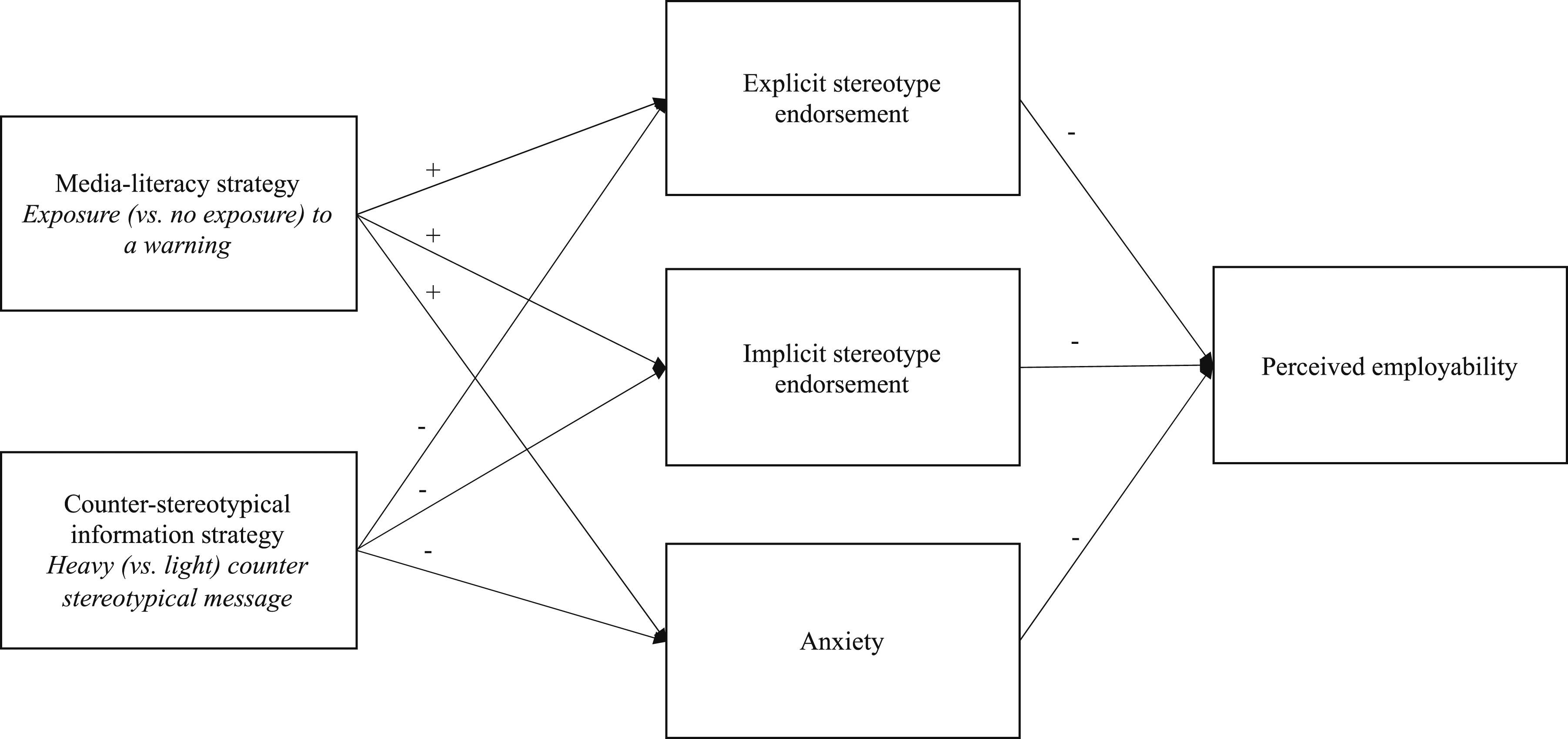
Second, we focus on implicit stereotype endorsement. Previous research indicates that situational cues—such as exposure to stereotype portrayals in media messages—may increase the activation of automatic associations between specific attributes (e.g., low competence) and stereotyped targets (e.g., older workers) (Kroon et al., 2016). These automatic associations have been argued to explain the effects of (counter) stereotypical stimuli on performance outcomes. A study among children demonstrated that girls’ math performance decreased after exposure to stereotype-consistent (vs. inconsistent) stimuli, and that this effect could be explained by automatic associations. Importantly, stereotype-consistent associations did not surface on the explicit level (Galdi et al., 2014).
Last, we focus on anxiety. As stereotype-threat is conceptualized as evoking fear to confirm negative stereotypes, it is often proposed as a mediator in models explaining the consequences of threat cues. Focusing on anxiety might be especially helpful in uncovering affective responses to incongenial media messages that highlight prejudiced societal beliefs about old age, with potential consequences for employability perceptions.
Media Literacy Strategy
One way to reduce stereotypical thinking induced by media content is offered by the so-called media literacy strategy (Potter, 2018; Ramasubramanian, 2007). Often through a form of media literacy training or warning message, audience members are warned against stereotypical media content and/or on instructed how to counteract the negative effects of media content. For example, for some of its classic films, now Disney has included a content warning regarding harmful negative stereotypes (Disney Updates Content Warning for Racism in Classic Films, 2020).
In this study, we specifically focus on the effect of exposure to a message warning against age stereotypes in media content. Such types of announcements have been shown to successfully sway audience members towards more favorable beliefs about out-group members. It’s noteworthy that clear instructions to counteract racial stereotypes have been shown to effectively reduce implicit racial stereotypes (Ramasubramanian, 2007). Yet, other studies have failed to replicate such findings, and demonstrate unfavorable or no effects of media literacy messages on stigma reduction (Nathanson, 2002; Steinke et al., 2007). Even more so, empirical evidence shows that explicit instructions to negate or suppress harmful stereotypes may—paradoxically—result in backlash effects (i.e., may increase stereotypes). When individuals are asked to suppress or ignore stereotypical thoughts, this may backfire and result in amplified, rather than decreased, prejudice (Macrae et al., 1994; Monteith et al., 1998).
Together, the results of previous research have been mixed. In the current study, we trace the consequences of exposure to a literacy message that warns audience members of the widespread existence of ageist portrayals in media messages and instructs on how to inhibit such harmful effects. We argue that the danger of evoking unintended effects is especially profound in stereotyped targets (here: older adults), as explicit warnings for the widespread nature of ageist portrayals may convey the message that ageist beliefs are the social norm. This, in turn, may cause older adults to feel at risk of conforming to such negative stereotypes, and thus evoke stereotype threat, activating explicit and implicit stereotypes and anxiety. This, in turn, will likely harm employability perceptions. We postulate the following hypotheses:
(a) Explicit stereotypes, (b) implicit stereotypes, and (c) anxiety will be higher after exposure (vs. no exposure) to a content warning about the widespread nature of ageist portrayals in media.
Stereotype threat indicators (a. explicit stereotypes, b. implicit stereotypes, and c. anxiety) mediate the negative relationship between exposure (vs. no exposure) to a literacy message (warning audience members for the widespread nature of ageist portrayals in media) and employability perceptions.
Counter-Stereotypical Information Strategy
A different message strategy to reducing bias relies on counter-stereotypical information or exemplars (Ramasubramanian, 2007); rather than instructing audience members explicitly to resist effects of negative media portrayals, this strategy aims to indirectly sway towards more favorable intergroup attitudes by exposure to counter-stereotypical exemplars and/or negating stereotypical information that negates dominant stereotypes. The aim here is to expose audience members to counter-stereotypical information. This can be done by showing counter-stereotypical exemplars and/or by describing the generic age stereotype and negating its truth. In this study, we define the ‘light’ counter-stereotypical message as merely containing a counter-stereotypical exemplar, while the ‘heavy’ version combines a counter-stereotypical exemplar with the negation of stereotype content.
Exemplar-based models of social judgments suggest that beliefs about social groups are the partial outcome of specific individual group members (i.e., exemplars) who are most salient in the mind of the audience (Smith & Zárate, 1992). Exposure to a counter-stereotypical exemplar—such as a technology-savvy older worker—may heighten the salience of that specific individual in audience members’ memory, with the potential to subsequently spill over to general attitudes regarding the social group the exemplar belongs to. Media play an important role in determining which specific exemplars are cognitively available and accessible. By presenting the audience with numerous positive exemplars, prior negative exemplars could become diluted or substituted, ultimately improving outgroup attitudes (Zillmann & Brosius, 2000).
Empirical evidence documents that exposure to counter-stereotypical (vs. stereotypical) media exemplars effectively reduces prejudiced beliefs among outgroup members (Goldman & Hopkins, 2019; Mastro & Tukachinsky, 2011; Ramasubramanian, 2007; Ramasubramanian & Oliver, 2007). By the same token, it can be expected that exposure to counter stereotypical exemplars of one’s age group may successfully foster positive appraisals of one’s social category. More specifically, it may be anticipated that older adults may feel less anxious and comply less with negative age stereotypes after exposure to a strong counter-stereotypical media exemplar.
In sum, the literature on media exemplars suggests that exemplars offer a promising device in reducing prejudice, particularly among ingroup members by inhibiting the negative mechanisms set in motion by stereotype threat. We expect that:
Exposure to a heavy (vs. light) counter stereotypical message decreases (a) explicit stereotypes, (b) implicit stereotypes, and (c) anxiety.
Stereotype threat indicators (a. explicit stereotypes, b. implicit stereotypes, and c. anxiety) mediate the positive relationship between exposure to a heavy (vs. light) counter stereotypical message and employability perceptions.
By concentrating on the aforementioned hypotheses, our goal is to contribute insights into how media messages can either amplify or counteract self-stereotyping, which can be seen as a manifestation of internalized ageism. In particular, we aim to add to our understanding of what media strategy helps reduce prejudice amongst members of a targeted group themselves.
Method
Sample
Prior to data analysis, hypotheses, design, and analysis strategy have been preregistered. 1 A sample of Dutch citizens was recruited by a Dutch panel company between 22 October and 07 November 2020. We targeted individuals above the age of 50, as from this age on it becomes increasingly difficult to re-enter the labor market after dismissal in the Netherlands and beyond (OECD, 2019). A power analysis was conducted prior to the experiment to guide the target sample size, given that effects on implicit measures are typically small (Hsueh et al., 2015) (power of .95, alpha = .05, estimated effect size d = .10). 1227 participants started the experiment, while 684 participants met the inclusion criteria (>= 50 years of age) and completed the experiment (completion rate 55.7%). The significant drop-out rates can be primarily attributed to the Implicit Association Test (IAT) (Greenwald et al., 2003), administered at the beginning of the study. The IAT may be perceived as cognitively demanding, prompting some participants to discontinue their involvement, especially when administered voluntarily in online survey settings, as was the case in the current study. Additionally, participants were presented with two attention check questions, aimed at verifying their attentiveness and ensuring data reliability. Participants that failed both of two attention check questions (n = 35) were removed from the sample, making the final sample size N = 649, with a mean age of 64.02 (SD = 8.88). 46.8% were female (n = 304). 470 (72.4%) participants completed secondary vocational education or higher and 358 (55.1%) were unemployed.
Design and Procedure
We used a between-subjects factorial design. Upon entering the online survey, participants were randomly assigned to one of the four experimental conditions (factor 1, media-literacy strategy: exposure vs. no exposure to the content warning, factor 2, counter-stereotypical information strategy: light counter-stereotypical message vs. heavy counter-stereotypical message). Subsequently, participants were redirected to an external online environment where the Implicit Association Test (IAT) was registered. Participants in the control group proceeded to the IAT directly. Afterwards, participants responded to items measuring outcome variables, covariates, and, finally, demographic variables.
Stimulus Materials
Media-Literacy Strategy: Exposure to a Content Warning
In the warning condition, participants were exposed to a literacy message stating that “conscious and unconscious prejudices about age are widespread” and that “the flow of messages that reach us daily via the internet, television, newspaper and social media has a strong influence on the image of young and older people.” Subsequently, the message highlights the problematic influence of media on prejudiced beliefs regarding different age groups and instructs participants to be aware hereof.
No Exposure to a Content Warning
In this condition, participants were not exposed to a warning message.
Counter-Stereotypical Information Strategy
The stimulus material used for the counter-stereotypical information strategy was based on a message that was part of the real-world campaign “Hoe werkt Nederland?” (How does the Netherlands work?) from the ministry of social affairs and employment from the Dutch government (see Appendix A).
Light Counter-Stereotypical Message
The light version consists of a 1.22-min video, portraying a counter-stereotypical image of a competent, confident, and experienced older employee. In this specific video, an older (60 years of age) female employee is interviewed about her job as a Human Resource (HR) manager at a car company. The interviewee talks passionately about her career, and the fact that she, late in her career, switched jobs several times. She continues to discuss her professional activities and ambitions in her current job as an HR professional.
Heavy Counter Stereotypical Message
The heavy version consists of a 1.54-min video, based on different fragments from the same interview as the ‘light’ version. The ‘heavy’ video is identifiable to the ‘light’ version in terms of the central interviewee and composition, but differs in terms of the quotes made by the interviewee. In this condition, the counter-stereotypical image of a competent and ambitious older employee is paired with the negation of stereotypical information. More specifically, the interviewee explicitly mentions dominant prejudiced beliefs regarding older workers (“…that they are more often sick, more expensive, less flexible…”) and explicitly rejects those beliefs (“I’ve never experienced that to be true”), and she expresses appreciation for the older workers employed in her company and stresses the value that older staff brings to the table. She continues to discuss positive assets of older workers. In sum, this condition pairs the counter-stereotypical exemplar of a competent older worker with the negation of stereotypical information.
Manipulation Checks
A pilot test conducted separately from the final study with 87 participants (49.4% female) between 40-83 years of age (M = 63.93, SD = 8.32) confirmed the success of the manipulations (Appendix B). Participants were asked to answer a set of questions measured on a 7-point Likert scale (1 = disagree completely, 7 = agree completely). Participants indicated that the content warning informed them of the detrimental effects of media messages on age stereotyping (M = 5.45, SD = 1.38), and made them aware of the general influence of media messages on prejudice (M = 5.33, SD = 1.37). Regarding the counter-stereotypical information strategy, participants agreed that both the light (M = 6.07, SD = 1.10) and heavy (M = 6.08, SD = 1.09) counter-stereotypical message portrayed an image of a strong, competent employee (F(1,86) = 0.02, p = .88). Also, they agreed that the negation of stereotypes about older workers was more apparent in the heavy (M = 6.03, SD = 1.45) compared to the light (M = 4.41, SD = 1.76) counter stereotypical message (F(1,86) = 42.86, p < .001).
Measures
Implicit negative Stereotype Endorsement
The strength of implicit associations between the “older workers” and “low competence” was administered using an IAT (Cuddy et al., 2005; Kroon et al., 2016). Following the procedure put forward by (Greenwald et al., 2003), the IAT consisted of seven blocks, presented in a fully randomized order. Participants were asked to classify faces and words appearing in the center of the screen into four combinations of targets and attributes: targets consisted of a selection of faces from four older individuals (two males, two females), and four younger individuals (two males, two females). Attributes consisted of four negative words (unproductive, unskilful, inefficient, incapable), four positive words (productive, skillful, efficient, capable). Using response latency, the IAT administers whether response time is faster by pairing a target with a congruent attribute (i.e., “older worker” + “incompetent”, “younger worker” + “competent”) versus incongruent attribute (i.e. “older worker” + “competent”, “younger worker” + “incompetent”). The data was analyzed consistent with the standard IAT scoring algorithm (Greenwald et al., 2003).
Explicit Negative Stereotype Endorsement
To measure explicit negative stereotypes about older workers’ competence, we asked participants to indicate to which extent they believed the following characteristics applied to, respectively, older and younger workers: capable, efficient, competent, intelligent, skillful (1 = disagree fully, 7 = fully agree) (Cuddy et al., 2005). Items measuring explicit competence beliefs about older workers formed a reliable scale (Cronbach’s alpha = .92). Likewise, items measuring explicit competence beliefs about younger workers formed a reliable scale (Cronbach’s alpha = .93). For final analysis, we made beliefs about older workers relative to beliefs about younger workers—similar to the IAT scoring. Higher scores indicate stronger negative beliefs about older (vs. younger) workers’ competence.
Work-Related Anxiety
we measured work-related anxiety with five items ranging from 1 (strongly disagree) to 7 (strongly agree) (adopted from Muschalla et al., 2010; Dimension E: Work related worries – subscale E14 Worries about job security and the future) 2 . Participants were asked questions like: “I believe it is realistic that nowadays one is easily fired because of times of absence”. In addition to perceived employability of older workers, we measured perceived self-employability with two questions (adapted from Janssens et al., 2003), such as: “In case I’m dismissed, I’ll immediately find a job of equal value” (1 = disagree strongly, 7 = agree strongly).
Employment Status
Whether participants are employed (1) or not (0) is included as a control variable.
Analyses
We tested the effects of the media literacy and counter-stereotypical information strategy on the dependent variables separately using series of one-way ANOVA’s. To test the indirect pathways, we rely on a partially latent structural equation model with work-related anxiety and self-perceived employability perceptions as latent constructs. To optimize power, all conditions were included. The analyses were conducted in r, using Lavaan (0.6–3) and maximum likelihood (ML) estimation. A non-significant chi-square ratio, root mean square of error approximation (RMSEA) values less than .05, standardized root mean square residual (SRMR) values below .08, and Comparative Fit Index (CFI) and Tucker-Lewis index (TLI) values greater than .95, generally indicating adequate model fit (Bentler & Bonett, 1980; Byrne, 2001; Hu & Bentler, 1999; Kline, 2011). When estimating the model, we allowed the error terms of the stereotype threat indicators and main outcome variables to covary. Bootstrapping (using 10,000 samples) was used to derive 95% confidence intervals of the indirect pathways.
Results
Media-Literacy Strategy
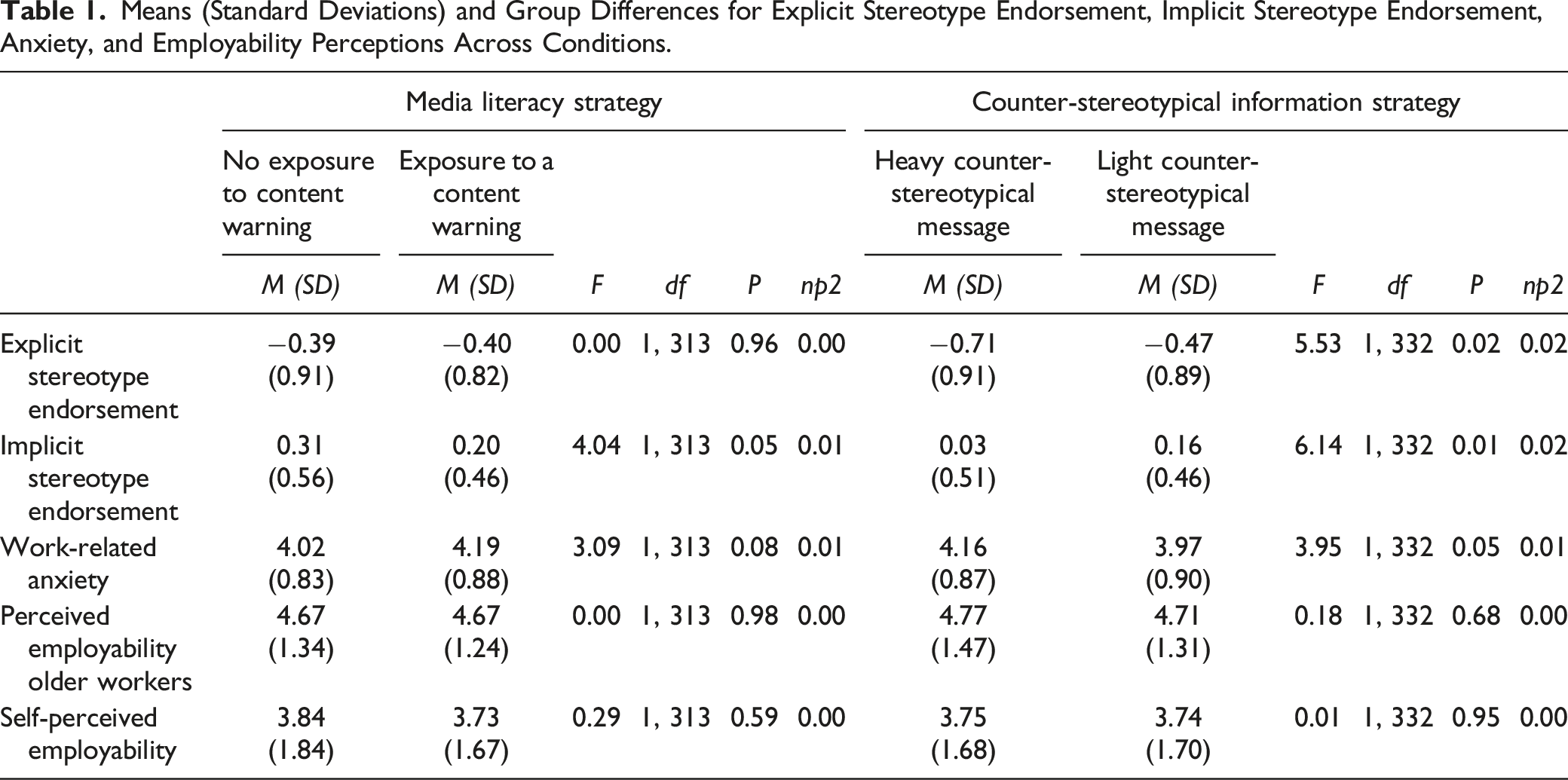
Means (Standard Deviations) and Group Differences for Explicit Stereotype Endorsement, Implicit Stereotype Endorsement, Anxiety, and Employability Perceptions Across Conditions.
Parameter Estimates for the Partially Latent Structural Regression Model Predicting Employability Perceptions About Older Workers and Self-Perceived Employability.
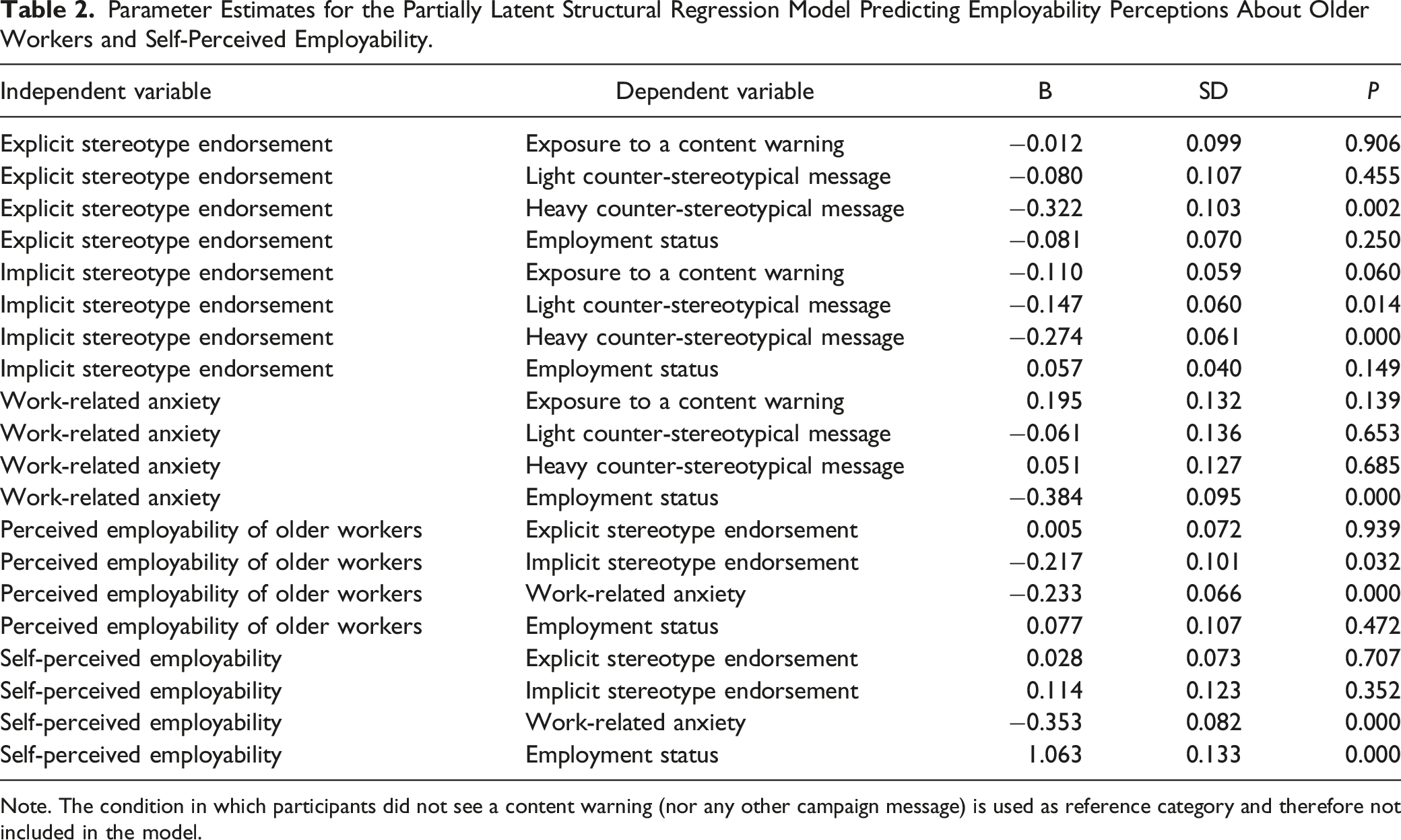
Note. The condition in which participants did not see a content warning (nor any other campaign message) is used as reference category and therefore not included in the model.
To test whether perceived employability of older workers and perceived self-employability are negatively affected by exposure to a content warning through a. explicit, b. implicit stereotype endorsement and c. anxiety (H2), the corresponding 95% bias-corrected 10,000 bootstraps intervals were inspected. Contrary to what was hypothesized, we find that exposure to a content warning (vs. no warning) increases favorable employability perceptions about older workers by restraining implicit stereotype endorsement: B = 0.02, SE = 0.02, 95% CI [0.0004–0.0758]. Exposure to a warning thus boosts (rather than decreases) favourable perceived employability of older workers in general (but not regarding self-perceived employability). The confidence intervals of the paths via explicit stereotype endorsement and anxiety contain zero, implying that the paths are not significant. We must, therefore, reject H2abc.
Counter-Stereotypical Information Strategy
We expected that exposure to a heavy (vs. light) counter stereotypical message would decrease a. explicit, b. implicit stereotype endorsement, and c. anxiety (H3). As can be seen in Table 2, we find that both explicit and implicit stereotype endorsement is lower in the group that saw the heavy rather than the light counter-stereotypical video. Levels of work-related anxiety do not differ across groups. We accept H3ab, we reject H3c.
Finally, we anticipated that the stereotype threat indicators would explain the positive relationship between exposure to the heavy (vs. the light) counter-stereotypical message and employability perceptions (H4abc). We estimate the hypothesized model using the light counter-stereotypical message as reference category (see Appendix C). The results indicate that exposure to the heavy (vs. light) counter-stereotypical message significantly boosts employability perceptions of older workers (but not regarding the self) via reduced implicit stereotypes (B = 0.03, SD = 0.02, 95% CI [0.002–0.077]). This indicates that the heavy counter-stereotypical is, as expected, more powerful in boosting employability perceptions of older workers when compared to the light version. We accept H4b and reject H4ac.
Discussion
The current study was set out to investigate the mediating role of stereotype threat indicators in the relationship between exposure to media-literacy and counter-stereotypical information strategies and employability perceptions. We found both strategies to be successful: first, results show that exposure to a content warning decreased implicit stereotype endorsement, and subsequently leads to more favorable employability perceptions about older workers in general. Second, we find that both the heavy and light counter-stereotypical video message are effective in boosting employability perceptions of older workers, whereby the heavy counter-stereotypical video proved more powerful. Perceived self-employability remained unaffected by both types of strategies.
Together, the results indicate that both exposure strategies inhibit implicit stereotype endorsement. This inhibition, subsequently, boosts perceived employability of older workers. The results therefore suggest that anti-prejudice campaigns using content warnings or strong counter-stereotypical messages may, therefore, target anti-ageist prejudice without harming the targets of such campaigns (i.e., older adults). The results also confirm the importance of visible positive media role models.
We failed to find effects of either strategy on perceived self-employability. As the focus of both strategies was on the social category of older workers, individuals might not have directly attributed the message to their individual employability. Earlier qualitative research showed that individual older employees vary considerably in how they view the older worker stereotype to be true to themselves, ranging from denying or avoiding the stereotype to reducing or accepting (AUTHORS). In future research it would be interesting to see how these different views on the older worker stereotype among older workers themselves, relate to a promotion or prevention focus respectively as explained in the regulatory fit theory. Barber and Mather (2013) showed that stereotype threat can lead to a better performance in older people who hold a prevention focus. Consequently, it might be worthwhile to investigate the impact on self-stereotyping in older workers of counter-stereotypical messages that promote a prevention focus by showcasing older role models who emphasize avoiding mistakes rather than pursuing new challenges.
Our study sheds light on nuanced differences between implicit and explicit stereotype threat indicators. We observed that exposure to content warnings primarily affected implicit stereotype endorsement, implying a reduction in automatic associations, while explicit stereotype endorsement and anxiety remained unaffected. Similarly, the intensity of counter-stereotypical messages influenced both explicit and implicit stereotype endorsement, with no significant differences in anxiety levels. These results resonate with existing literature that underscores the nuanced impact of factors like exposure to stereotype cues on implicit, but not explicit associations (Galdi et al., 2014). Together, our findings emphasize the significant role of implicit stereotype endorsement in mediating the effects of anti-ageism campaigns on employability perceptions, stressing the importance of considering especially implicit, but also explicit indicators in such interventions.
The current study focused on older individuals as targets of anti-ageism campaigns, as this group will likely be exposed to anti-ageism media campaigns—even if intended to be delivered at prospective employers of younger workers. To avoid unintentional negative effects on older adults’ self-perceptions, it is important to carefully design campaigns based on empirical evidence. The current study suggests that campaign designers are wisest to choose for counter-stereotypical information strategies, presenting audience members with strong counter-stereotypical exemplars and the negation of stereotypical beliefs. This approach is consistent with previous research indicating that positive representations of older adults can effectively improve their self-concept (Levy & Banaji, 2002). Furthermore, aligning with the Parasocial Contact Hypothesis, which posits that exposure to positive media representations can shape attitudes and perceptions, our study underscores the importance of positive media portrayals to combat ageist stereotypes and enhance the self-perceptions of older adults (see e.g., Park, 2012; Wong et al., 2022).
Limitations and Future Research
To start, it should be acknowledged that the current study only investigated two specific features of two campaign types targeting age-related bias: media literacy and counter-stereotypical information strategies. This leaves room for examining the (additional) effects of other message features, such as narrative versus non-narrative message formats in future research.
In addition, having established the effects on older adults, it remains an open question how effective these strategies are in swaying younger audience members, employers, HR professionals, and recruitment agents towards more favourable attitudes regarding the old. Future research should incorporate employers as the primary target audience for changing stereotypes. Current research investigating the challenges faced by managers and employers in supporting the employability of older workers has highlighted stereotypes as a notable obstacle influencing organizational decisions, from providing internal employability support within organizations—such as offering educational opportunities—to considerations related to hiring older job seekers (Dordoni & Argentero, 2015; Weber et al., 2019). Nevertheless, empirical research on the elements of designing media campaigns that can effectively eliminate these barriers has been scarce (cf. Okun & Ayalon, 2022).
Furthermore, the current study has primarily focused on prevailing stereotypes of older workers in binary terms, such as unproductive versus productive or unreliable versus reliable. However, it is crucial to acknowledge that the intersectionality of age with factors like gender, race, and education introduces layers of complexity to these assumptions. This complexity poses a challenge for media campaign designers aiming to address stereotypes among employers and employees. Questions arise about how employers can maintain awareness of their assumptions when evaluating candidates and how social media interventions can avoid reinforcing a simplistic ‘exception to the rule’ narrative or inadvertently replacing one set of negative assumptions with unrealistic positive stereotypes, which may trigger negative outcomes such as internalized anti-outgroup sentiments (Chou & Feagin, 2015; Ramasubramanian, 2011; Ramasubramanian et al., 2020; Ramasubramanian & Oliver, 2007). Nevertheless, considering the dominant stereotypical portrayals of older workers in media environments, we expect that a more diverse and realistic representation of the wide heterogeneity of older workers’ characteristics in media environment can help break down dominant stereotypes. Here, media campaigns can play an important role.
Finally, while recognizing the role of self-confidence for unemployed older adults, it is important to contextualize the impact of stereotype threat relative to other influential factors in the labor market. The negative effects of age-based stereotype threat and age discrimination are well-documented, indicating a small-to-medium impact on memory and cognitive performance (Lamont et al., 2015). Additionally, these effects extend to long-term sickness, lower work engagement, and an earlier intended retirement age (Becker et al., 2022; Dordoni & Argentero, 2015). However, the question arises about the relative importance of stereotype threat compared to other determinants, such as educational background, caregiving demands, and physical health (see also Becker et al., 2022). Additionally, considering the multi-faceted nature of this issue, it is essential to explore whether addressing stereotype threat through social media campaigns is sufficient or whether a more comprehensive approach, incorporating elements such as workforce training opportunities, would be more effective.
In conclusion, this study has helped to understand the mechanisms through which anti-bias campaigns affect stigmatized targets and isolated reasons for the varied effectiveness of such interventions. The findings suggest that content warnings and counter-stereotypical information strategies, presenting audience members with strong counter-stereotypical exemplars and information, offer a fruitful strategy to boost older workers’ implicit age stereotypes and self-perceptions, with likely positive consequences for their sustainable participation on the labor market.
Supplemental Material
Supplemental Material - Good Intentions Aside: Stereotype Threat in the Face of Media Strategies to Counter Age Bias
Supplemental Material for Good Intentions Aside: Stereotype Threat in the Face of Media Strategies to Counter Age Bias by Anne C. Kroon, and Martine van Selm in Research on Aging
Footnotes
Declaration of Conflicting Interests
The author(s) declared no potential conflicts of interest with respect to the research, authorship, and/or publication of this article.
Funding
The author(s) received no financial support for the research, authorship, and/or publication of this article.

Supplemental Material
Supplemental material for this article is available online.
Notes
Author Biographies
References
Supplementary Material
Please find the following supplemental material available below.
For Open Access articles published under a Creative Commons License, all supplemental material carries the same license as the article it is associated with.
For non-Open Access articles published, all supplemental material carries a non-exclusive license, and permission requests for re-use of supplemental material or any part of supplemental material shall be sent directly to the copyright owner as specified in the copyright notice associated with the article.
