




Abstract
SOC-strategies (selection, optimization, and compensation) are crucial for well-being and adaptation throughout the life course. The workforce is aging rapidly, thus the age-conditional premises of SOC theory require attention. This study explored (1) whether older employees used SOC strategies more often (compared to younger employees), and (2) whether older employees benefited more from SOC strategies in relation to occupational well-being (job burnout, work engagement). The study was based on follow-up data including three occupational subsamples of different age (N = 1,020). There were no significant age-conditional differences in the take-up of SOC strategies. However, older (white-collar) employees benefited more from compensation and elective selection in relation to occupational well-being. Moreover, older employees also benefited more from using all SOC strategies concerning occupational well-being. Strengthening older employees’ SOC strategies needs more attention as the workforce is aging.
Keywords
Selecting, optimizing, and compensating strategies (SOC strategies) are important self-regulative resources predicting well-being, health, and stress adaptation across life domains and age groups (e.g., Lopez Ulloa et al., 2013; Moghimi et al., 2017; Ouwenhand et al., 2007; Rudolph, 2016). SOC strategies form the core of the SOC model, which was originally developed to explain the psychological mechanisms involved in the interplay between successful aging, adaptation, and well-being (Baltes & Baltes, 1990; Freund, 2008; Freund & Baltes, 1998).
The SOC model and its four self-regulative strategies have recently also attracted more attention in work contexts (Moghimi et al., 2017; Rudolph, 2016; Venz & Sonnentag, 2015; Yeung & Fung, 2009). This is a very welcome extension because the working population in industrialized countries is aging rapidly (Rudolph, 2016; Rudolph & McGonagle, 2019; Weber et al., 2019). Accordingly, we need to learn about the resources contributing to older workers’ occupational well-being in order to maintain their work ability and prevent early retirement (Weber et al., 2018; Weigl et al., 2013). The SOC model is a very good candidate in this regard, particularly because the model approaches individuals’ adaptation, development, and well-being from a life-course perspective making it possible to test age-conditional assumptions (Baltes & Dickson, 2001; Rudolph & McGonagle, 2019; Weigl et al., 2013).
The present study therefore explores whether employees use SOC strategies (selection, optimization, compensation) differently at different ages and, more importantly, whether the relationship between SOC strategies and occupational well-being (job burnout, work engagement) is age-conditional, that is, whether age moderates the relationships between SOC strategies and well-being. We are particularly interested in aging workers and seek to establish whether they use and benefit more than younger employees from certain SOC strategies (Müller & Weigl, 2017; Teshale & Lachman, 2016; Weigl et al., 2013). This study is based on a one-year follow-up design including three dissimilar occupational subsamples of different aged blue-collar workers (n = 279, lower white-collar workers (n = 234), and upper white-collar workers (n = 507). The present study contributes to SOC research conducted in working life settings, which has so far been mostly cross-sectional and based on small (convenience) samples (Moghimi et al., 2017; Rudolph, 2016). Furthermore, work-related studies have previously often neglected the original age-conditional assumptions of the SOC model. Consequently, our assumption is that the SOC model and its theoretical predictions concerning age-specificity also hold at work, a presumption of which will be tested empirically here. Findings can be utilized in planning and implementing age-tailored interventions in occupational settings.
SOC Strategies and Their Age-Conditional Use
The SOC model was developed to understand psychological aspects of successful aging and human adjustment to physical and mental losses which typically occur with aging (Baltes & Baltes, 1990, Baltes & Dickson, 2001; Freund, 2008; Freund & Baltes, 1998, 2002). The model includes four specific self-regulative strategies. Goal-setting occurs primarily via elective selection (goal setting, goal choices and goal prioritizing), and loss-based selection (giving up unachievable goals, selecting new goals, and reorganizing goal priorities). Goal pursuit manifests best in optimizing, referring to actions and processes enabling individuals to optimize their resources (e.g., effort, time, knowledge) in order to achieve selected goals. Finally, goal maintaining and successful adjustment to resource losses occur typically through compensation, describing actions that allow resource losses to be compensated. To cope with losses, people need to muster and use new internal or external resources because previously used resources may no longer be available. The original developers of the SOC model emphasize that all four strategies are important for adaptation, development, and well-being (Freund, 2008). Accordingly, it has been argued that SOC strategies operate best in tandem; using strategies flexibly across situational demands is often emphasized (Baltes & Baltes, 1990; Freund, 2008; Freund & Baltes, 1998, 2002; Teshale & Lachman, 2016; Weigl et al., 2013).
The SOC model includes age-conditional assumptions, which are crucial in our study (Baltes & Baltes, 1990; Freund & Baltes, 1998; Müller & Weigl, 2017; Ouwenhand et al., 2007; Weigl et al., 2013). These assumptions concern mostly the four SOC strategies defined above. Developmental theories on successful aging propose that elective selection is more common among younger adults as their physical and mental resources are not limited and they can therefore pursue many different goals (Freund, 2008; Freund & Baltes, 1998; 2002; 2002; Ouwenhand et al., 2007; Teshale & Lacham, 2016). Similarly, optimizing should be likewise be more common among younger adults as their resources are not limited and optimizing consists of resource gathering and application (i.e., using various means and resources to achieve different goals). These same theories suggest that loss-based selection would become more common in late adulthood (with aging), when individuals start to experience certain losses in their lives and they also start to realize that maybe not all goals are achievable, forcing them to engage in goal reappraisal and prioritization (Freund, 2008; Freund & Baltes, 2000, 2002; Müller & Weigl, 2017; Ouwenhand et al., 2007; Teshale & Lacham, 2016). Compensation can also be presumed to be more common in late adulthood (with aging), when individuals experience decline in loss of their resources and realize that it is not realistic to try to achieve all goals during a lifetime (Freund, 2008; Freund & Baltes, 2000; 2002; Müller & Weigl, 2017; Ouwenhand et al., 2007; Teshale & Lacham, 2016). According to these theories, to ensure one’s adjustment, loss-based selection and compensation as a form of “goal crafting” are needed more when aging.
However, the research evidence on age differences concerning the uptake of SOC strategies is not consistent. For instance, there are results showing that elective selection increases and compensation decreases with aging (Freund & Baltes, 2002), the findings of which are inconsistent with the original SOC model and its above-presented premises on age-specificity. Accordingly, researchers have proposed gathering more empirical evidence on age differences in the use of SOC strategies (Ouwenhand et al., 2007; Rudolph & McGonagle, 2019), which will be the first goal of this study. On the basis of theoretical premises on the age-specificity of the SOC model (Baltes & Baltes, 1990; Freund, 2008; Freund & Baltes, 1998, 2002; Müller & Weigl, 2017; Ouwenhand et al., 2007; Rudolph, 2016), we build the following hypotheses on age differences in the prevalence of using SOC strategies: H1: Older employees use more loss-based selection and compensation than younger employees at both time points. H2: Younger employees use more elective selection and optimizing than older employees at both time points.
Older Individuals May Benefit More From SOC Strategy Use: Moderator Findings
There is already convincing evidence, also longitudinal, that SOC strategies contribute positively to individuals’ well-being/health, performance, and adaptation (Lopez Ulloa et al., 2013; Mauno et al., 2020; Moghimi et al., 2017; Ouwenhand et al., 2007; Rudolph, 2016), signifying that the outcomes of applying SOC strategies are positive and functional. Above-described age-conditional theoretical assumptions of the SOC model (Baltes & Baltes, 1990; Freund, 2008; Freund & Baltes, 1998, 2002) have inspired research on whether the outcomes of SOC strategies use are also age-conditional (Rudolph, 2016). Altogether, these studies have indicated that certain SOC strategies, e.g., compensation, benefit older adults more, implying that compensation may not be only more common among older adults, but may also contribute more to their well-being (Rudolph & McGonagle, 2019; Weber et al., 2018).
Specifically, Abraham and Hansson (1995) showed that compensating, but also optimizing, had a stronger positive relationship with goal attainment (outcome studied) among older individuals. Chou and Chi (2002) showed that older (Chinese) individuals who more frequently used compensating, and also optimizing, suffered less from economic hardship in relation to life satisfaction than did those who used these SOC strategies less frequently. Teshale and Lacham (2016) found that frequent utilization of (all) SOC strategies had a stronger relationship with happiness among older than among younger individuals. Studies conducted in work contexts have also shown than older employees benefit more from using certain SOC strategies (Weigl et al., 2013; Zacher & Frese, 2011). For instance, Müller and Weigl (2017) showed that compensation and loss-based selection benefited older employees more than younger employees in relation to job performance (see also Yeung & Fung, 2009). These findings are also consonant with the idea of accommodative coping (a person accommodates his/her actions and goals in response to situational demands), which becomes more common and beneficial in later adulthood (Rudolph, 2016). Altogether, these results but, more importantly, the age-conditional theoretical premises of the SOC model (Baltes & Baltes, 1990; Freund, 2008; Freund & Baltes, 1998, 2002; Rudolph, 2016; Weigl et al., 2013; Zacher & Frese, 2011), directed us to set the following hypotheses on the prospective moderator effects: H3: Loss-based selection and compensation contribute more to older than to younger employees’ occupational well-being (burnout, engagement) over time. H4: Elective selection and optimizing contribute more to younger than to older employees’ occupational well-being (burnout, engagement) over time.
There is also compelling evidence that SOC strategies affect occupational well-being irrespective of age, implying that these self-regulative strategies benefit all individuals at different ages (Lopez Ulloa et al., 2013; Mauno et al., 2020; Moghimi et al., 2017; Ouwenhand et al., 2007; Rudolph, 2016). Therefore, we also deemed it important to explore these relationships prospectively as well-being indicators constitute an important criterion of SOC effectiveness. A recent meta-analysis in work contexts reported that overall SOC strategies were associated with positive work-related outcomes, yet there was also a notable variation in the strength of the relationships across studies (Moghimi et al., 2017), in SOC subdimensions as well as in the criteria (outcomes) used (Schmitt et al., 2012; Yeung & Fung, 2009; Zacher et al., 2015). The associations between SOC strategies and work engagement (rc = .380) were found to be stronger than those between SOC strategies and strain-related outcomes (rc = .008), which included also job burnout (Moghimi et al., 2017). Considering these findings and, but more importantly, the basic (non-age-specific) premises of the SOC model, i.e., SOC strategies have a positive effect on well-being (Baltes & Baltes, 1990; Freund & Baltes, 1998; Ouwenhand et al., 2007), we set the last hypothesis: H5: SOC strategies relate positively to employees’ occupational well-being over time, implying less burnout and more engagement irrespective of age.
This last hypothesis also fits the SOC model, proposing that selecting, optimizing, and compensating work best “in tandem” and that using all strategies frequently would be effective and conducive to adaptation (Baltes & Baltes, 1990; Freund, 2008; Freund & Baltes, 2002; Mauno et al., 2020; Teshale & Lachman, 2016). Thus, all SOC strategies should benefit occupational well-being across subsamples and age groups.
Method
Participants and Procedure
The data sets were collected in a large research project in Finland. The project was complied with the American Psychological Association Code of Ethics. Accordingly, informed consent was obtained from each participant and participation was voluntary throughout the research project. We recruited the participants via four trade unions as Finnish employees are generally well-unionized (64.5% in 2013; Ahtiainen, 2015). An online survey was targeted at members of the Trade Union of the Private Services (services), Industrial Union (industrial workers), the Trade Union Pro (trained professionals), and the Trade Union of Education in Finland (teachers). These union members were invited to participate as we wanted to include both white- and blue-collar workers in data, and we were not able to collect data via nationally representative data sources.
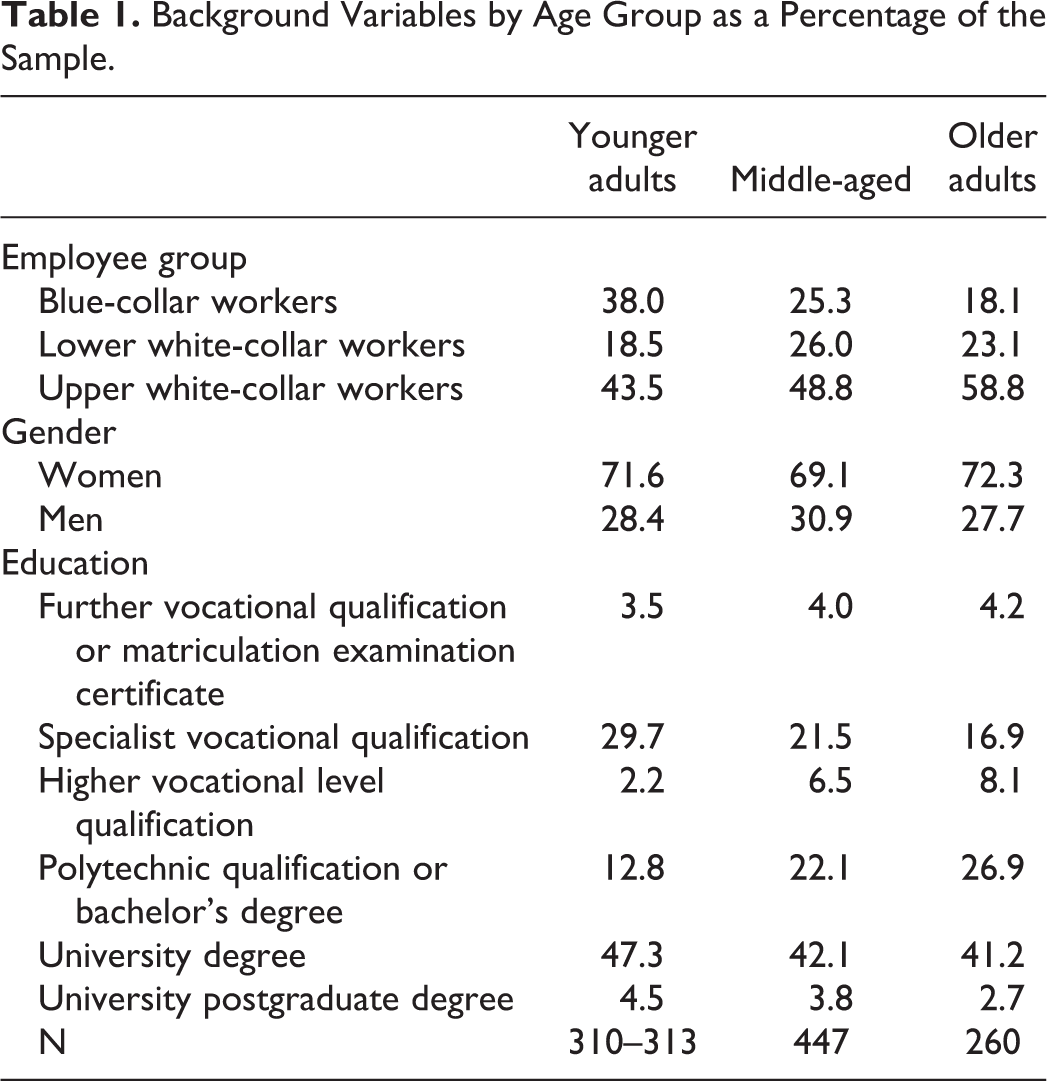
Altogether, 5,076 invitations were sent in 2018 and the final sample size was 2,434, yielding a response rate of 23.9% (detailed rates across the trade unions available from the authors). The majority of the sample were female (79.2%), the mean age was 49.2 (SD = 11.0) years, 82.1 percent had a permanent employment contract, and 12.2 percent worked in managerial positions. The majority (66.9%) had a master’s degree or bachelor’s degree (20.7%). A follow-up survey was sent 12 months later, in 2019, to those participants who had agreed to participate in the follow-up phase. Of those 1,877 individuals who had given their consent, 1,020 responded, resulting a response rate of 54 percent in the follow-up. In this follow-up data (at Time 2, T2), respondents were mostly female (70.7%) and the mean age was 45.3 years (SD = 10.9). Respondents had typically a permanent employment contract (85.6%) and 11.8% worked in managerial positions. Most of the respondents had a university degree (43.4%), specialist vocational qualification (22.8%) or polytechnic qualification or bachelor’s degree (20.5%). Background factors by age group are presented in Table 1.
Background Variables by Age Group as a Percentage of the Sample.
Sample Attrition Analysis
Altogether 1,020 responses were collected at Time 2 (T2). The attrition analysis for the longitudinal sample showed no systematic attrition related to education, type of employment contract, or managerial position. However, more women continued in the study at T2 (71%) than at T1 (64%) and participants at T2 were younger (M = 45.3, SD = 11.0) than those who only participated in the study at T1 (M = 48.5, SD = 11.3; t(2,235) = 6.888, p < .001). At T2, fewer older adults participated in the study (39.7%) than at T1 (54.8%).
Measures
SOC Strategies were measured with the 12-item scale initially developed by Baltes et al. (1999) and adapted to the work context by Zacher and Frese (2011). All items were rated on a 5-point scale ranging from 1 (completely agree) to 5 (completely disagree). A total score for each subscale (elective selection, loss-based selection, optimization, and compensation) was used, each containing three items. Cronbach’s αs for these at T1/T2 were .80/.81, .67/.70, .73/.74, and .54/60.
Occupational well-being was operationalized via two commonly used indicators (job burnout, work engagement) that have been used in SOC studies conducted in work contexts (e.g., Moghimi et al., 2017; Venz & Sonnentag, 2015; Zacher et al., 2015). Job burnout is one of the health impairments and refers to a psychological syndrome in response to chronic job stressors (Maslach et al., 2001). Burnout was measured with six items from the Bergen Burnout Indicator (Salmela-Aro et al., 2011) and its subdimension of exhaustion and cynicism (each measured with three items). All the items were assessed on a 6-point scale ranging from 1 (completely disagree) to 6 (completely agree). Cronbach’s α for the burnout scale was .84 at T1 and .83 at T2.
Work engagement describes positive motivational states at work (vigor, dedication, and absorption; see e.g., Schaufeli et al., 2019). Engagement was measured by the Utrecht Work Environment Scale (UWES)-Short Form (Schaufeli et al., 2019), including three subdimensions of engagement (vigor, dedication, and absorption were measured with one item per subscale; altogether three items). All items were rated on a 7-point scale ranging from 1 (never) to 7 (every day). Cronbach’s α for the work engagement scale was .84 at T1 and .87 at T2.
Age was a fixed factor in mean comparison analyses (described below) including three categories; 18–38 years = young workers, 39–54 years = middle-aged workers, and 55–69 years = older workers. In the regression analyses (described below), age was used as a continuous variable in order to maximize its variance. Control variables in the statistical analyses included gender (female/ male) and education (continuous variable from 1 = Further vocational qualification or matriculation examination certificate…6 = university degree). These background variables were identical in three subsamples used in this study.
Statistical Analysis
To explore mean differences in SOC strategies over time, we ran a general linear model (GLM) for repeated measures. The groups of service and industry workers were merged to represent blue-collar workers, whereas the group of trained professionals represented lower white-collar workers as this group consisted of clerical employees, experts, supervisory and managerial staff. Teachers, in turn, represented upper white-collar workers as they typically have university degree. In these models, age (3 groups; see groups above) and occupation (3 groups) served as fixed factors and four SOC strategies at T1 and T2 as dependent factors. Specifically, we analyzed Time (2) × Age (3) × Occupation (3) interaction effects (a three-way interaction), and also lower-level interactions (two-way interactions; Time × Age; Time × Occupation) as well as three main effects (Time, Age, Occupation). We started interpretation on higher-level (interaction) effects and proceeded to lower-level (main) effects. Gender and education served as control variables (also in the regression analyses described below). GLM tested H1 and H2, which proposed age differences in SOC strategies use.
Next, we tested H3–H5, relating to the prospective interaction and direct effects of age and SOC strategies on occupational well-being (job burnout, work engagement). These hypotheses were tested by estimating regression models (method Enter) with interaction terms. Predictors were always derived from the T1 measurements and the outcomes from T2. In the first step, the baseline of the dependent variable (job burnout/work engagement) was controlled for followed by the background factors (gender, education) in the second step. In the third step, age was entered into the model (as a continuous variable in order to maximize its variance) followed by four SOC strategies in the fourth step. In the final step, Age × SOC interaction terms (i.e., Age × Elective Selection, Age × Loss-Based Selection, Age × Optimization, and Age × Compensation) were entered to the regression equations. Both age and SOC variables were standardized before computing the interaction terms. Significant interaction effects were graphically inspected including standardized β-coefficients for moderator (age), independent variable (SOC), and interaction term into the same figure.
Before running the regression analyses, we also explored the correlations and noticed that they often differed between subsamples regarding the key relationships (see Online Appendix). For this reason, we ran separate regression models for three subsamples, the results of which would also show whether the effects are generalizable across occupational groups. Note that in reporting the results of regression analyses we interpret only those effects (standardized β-values) which were in line with the respective correlation coefficient (r). Result reporting below will follow the order of the hypotheses.
Results
Mean Comparisons of SOC Strategies by Age, Occupation, and Time
Interaction effects: GLM for repeated measures (Tests of Multivariate Effects) indicated that a three-way interaction effect of Time (2) × Age (3) × Occupation (3) was non-significant for SOC strategies (F [16, 2618] = 1.38, p = .144. Furthermore, two-way interaction effects of Time (2) × Age (3) (F [8, 1714] = 1.10, p = .361) and Time (2) × Occupation (3) (F [8, 1714] = 0.93, p = .493) were both non-significant. As the Tests of Multivariate Effects were non-significant, we did not explore subsequent Tests of Between-Subject Effects for these interactions. Altogether, these mean comparison results signify that there were no changes over time in SOC strategies use differing by age groups or occupational groups.
Main effects: We found that the main effect of time (Time × 2) was non-significant (F [4, 857] = 0.94, p = .440), meaning that there were no mean changes in SOC strategies use over time in a similar direction across the data. Main effect of age (Age × 3) was marginally significant in the Tests of Multivariate Effects (F [8, 1714] = 2.23, p = .023) but subsequent Tests of Between-Subject Effects were non-significant for the (age) effect and we did not explore this further.
A main effect of occupation (Occupation × 3) was significant (F [8, 1714] = 8.74, p < .000). Tests of Between-Subjects Effects showed statistically significant effects in elective selection (F [2,860] = 12.48, p < .000), loss-based selection (F [2,860] = 5.01, p = .007), and optimization (F [2,860] = 7.72, p < .000). We next ran a pairwise comparison (Bonferroni test) to inspect further mean variations on these sub-dimensions of SOC (for group means, see Appendix). Blue-collar workers used more often elective selection than did upper (T1, p < .000; T2, p < .000) and lower white-collar workers (T2, p = .007). Similarly, blue-collar workers used optimizing more often than did upper white-collar workers (T1, p = .026; T2 p < .000). Moreover, lower white-collar workers reported higher optimizing than upper white-collar workers (T2, p < .001). However, the effect was different for loss-based selection as upper white-collar workers used loss-based selection more often than did blue-collar (T1, p = .033; T2, p = .024) and lower white-collar workers (T2, p = .004). No paired comparison was significant for the subdimension of compensation, a result which is consistent with the Tests of Between-Subjects Effects reported above. As there were differences in uptake of SOC strategies by occupational groups, it was reasonable also to perform regression analyses separately for occupational groups taking additionally into account that correlations between the key variables also differed by occupational group (see Online Appendix).
Predicting Occupational Well-being by SOC Strategies and Age × SOC Interactions
None of the lagged interaction effects (Age × SOC) was consistent with the subsamples or with the SOC strategies, or in terms of the outcomes (see Table 3). Indeed, we found no prospective interaction effect in the blue-collar sample or concerning Age × Optimizing and Age × Loss-Based Selection interactions.
However, in the lower and upper white-collar samples the prospective interaction effect of Age × Compensation was significant for burnout (lower white-collar workers β = −.21, p = .002) and engagement (lower white-collar workers β = .14, p = .041; upper white-collar workers β = .12, p = .004). The respective figures (1, 2, 3) indicate that older employees benefited more from using compensation over time; their occupational well-being was improved when using compensation more frequently than those older employees who used compensation less frequently (or those younger employees who used compensation frequently). It is noteworthy that the figures also show that frequent use of compensation implied impaired well-being over time among younger employees and the opposite among older employees.
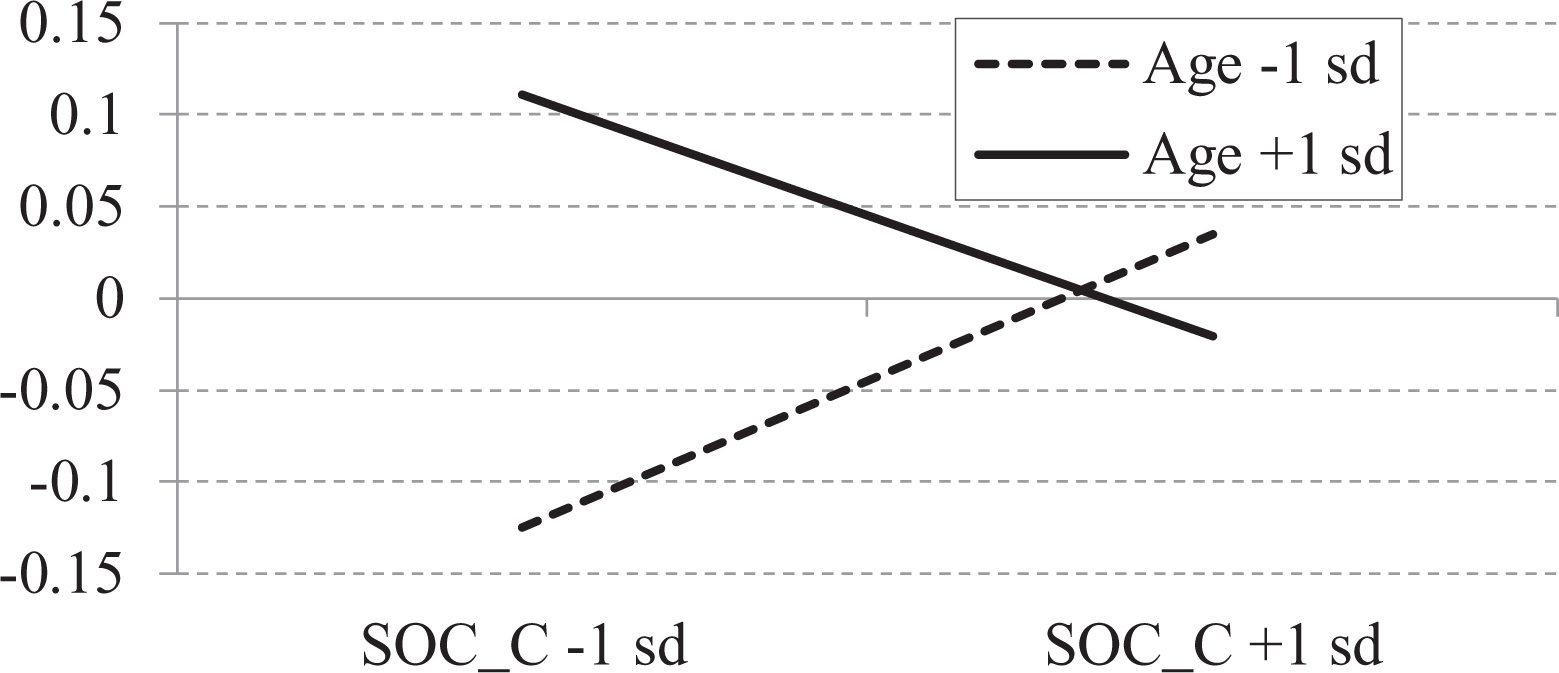
Interaction effect of age and compensating (SOC_C) on job burnout among lower white-collar workers. Note. The figure includes standardized estimates. SD = standard deviation.
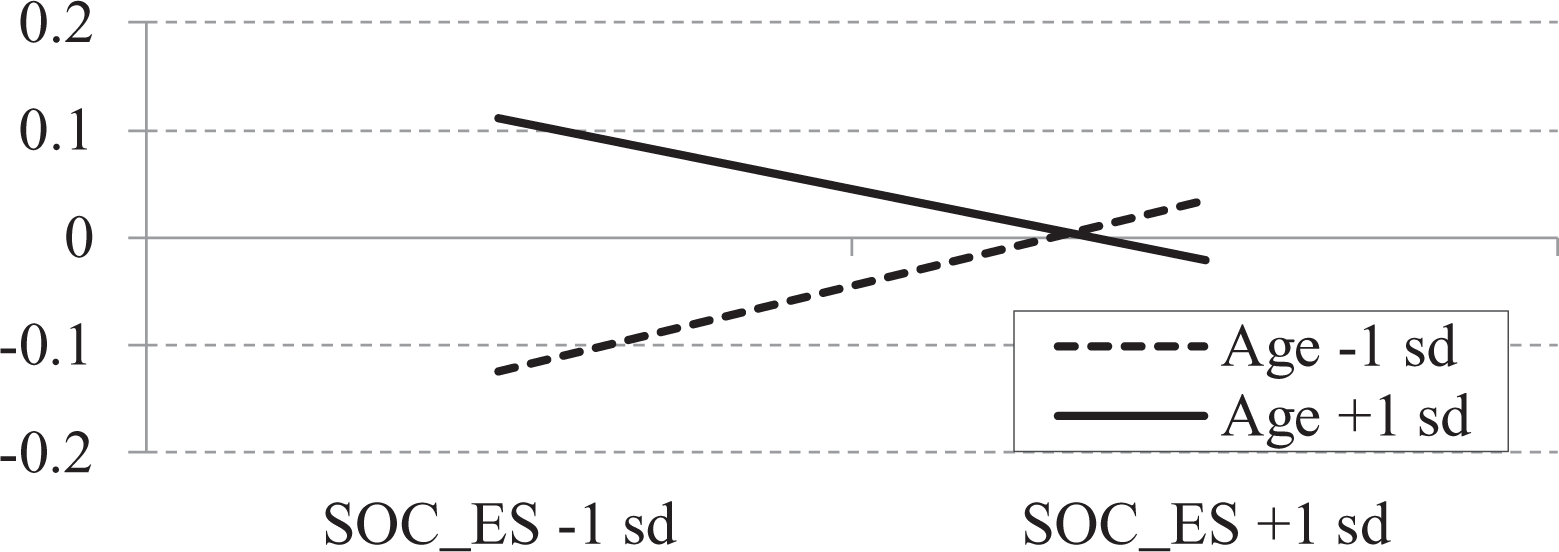
Interaction effect of age and elective selection (SOC_ES) on job burnout among upper white-collar workers. Note. The figure includes standardized estimates. SD = standard deviation.
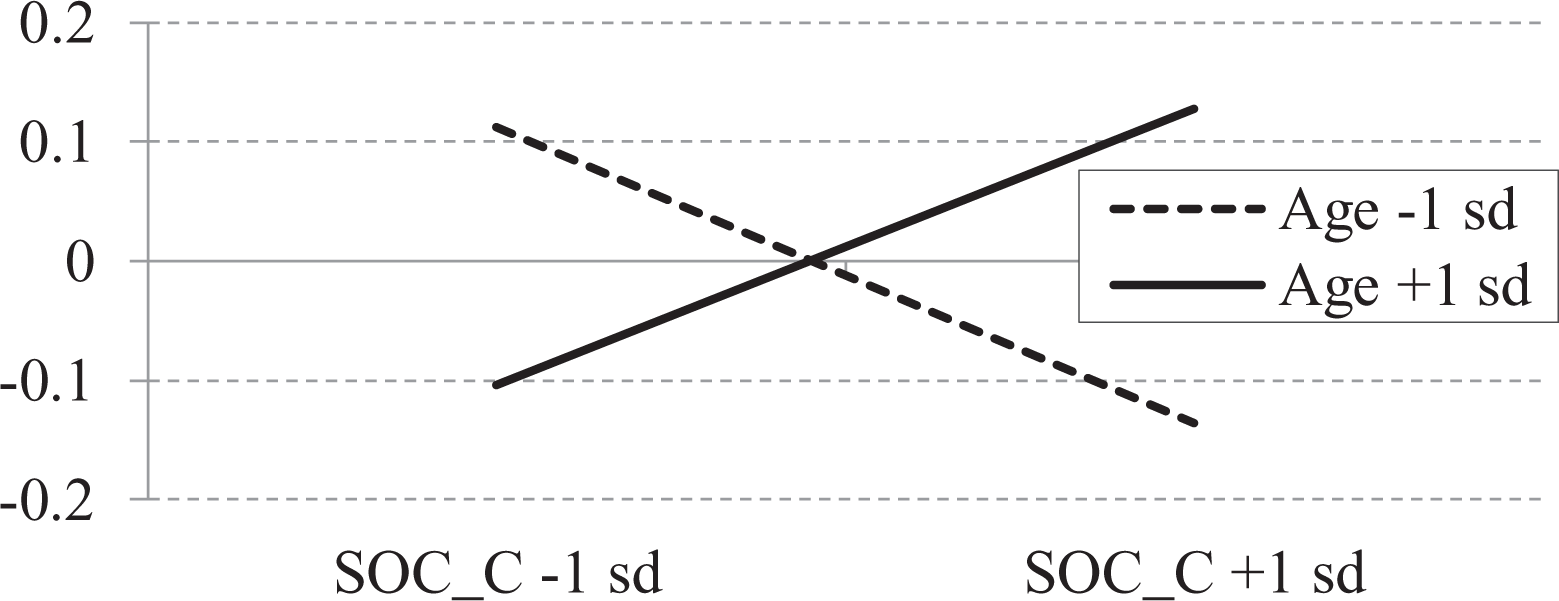
Interaction effect of age and compensating (SOC_C) on work engagement among lower white-collar workers. Note. The figure includes standardized estimates. SD = standard deviation.
Two prospectively significant interaction effects concerned Age × Elective Selection in the upper white-collar worker sample regarding burnout (β = −.07, p = .045) and engagement (β = .10, p = .015). Figures 4 and 5 show that older employees benefited more from using elective selection over time; their occupational well-being was improved when using elective selection more frequently than those older employees who used this SOC strategy less frequently (or those younger employees who used elective selection more frequently).
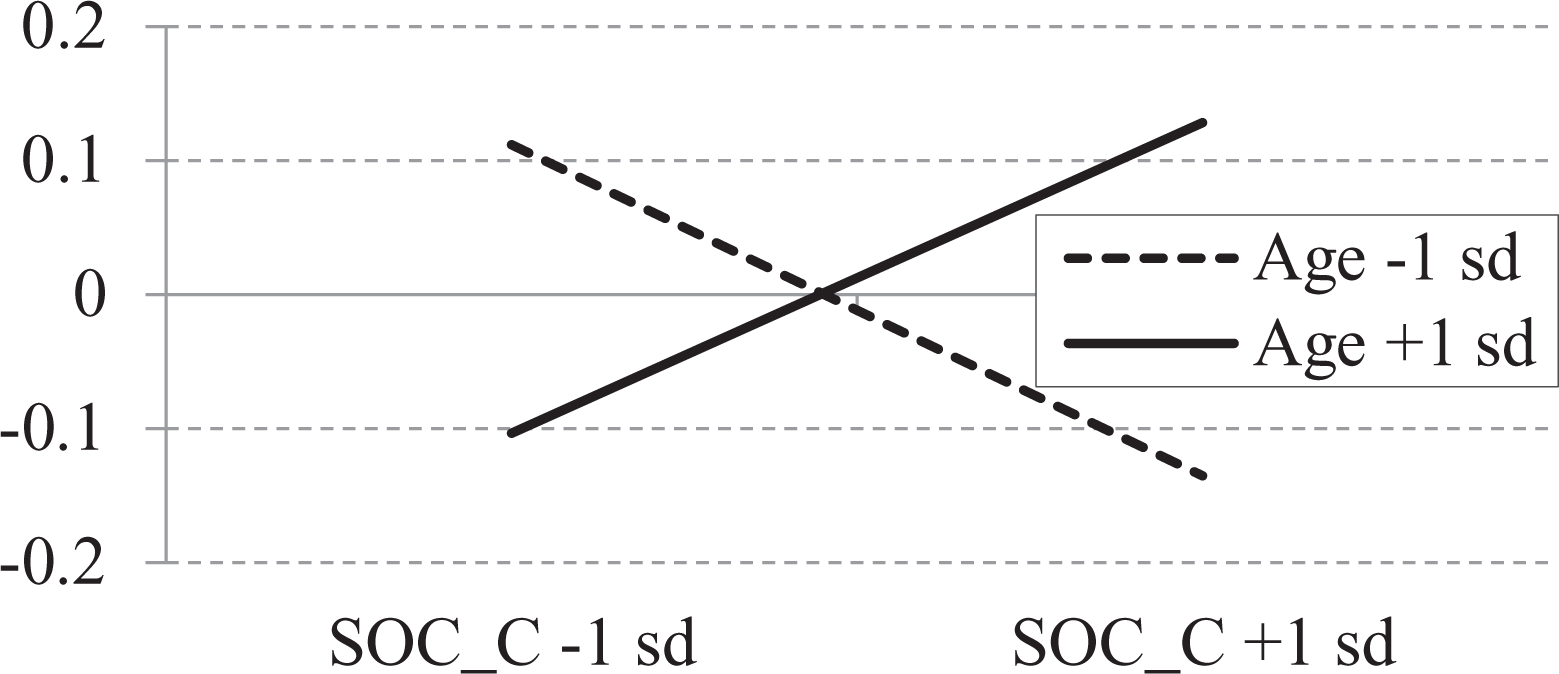
Interaction effect of age and compensating (SOC_C) on work engagement among upper white-collar workers. Note. The figure includes standardized estimates. SD = standard deviation.
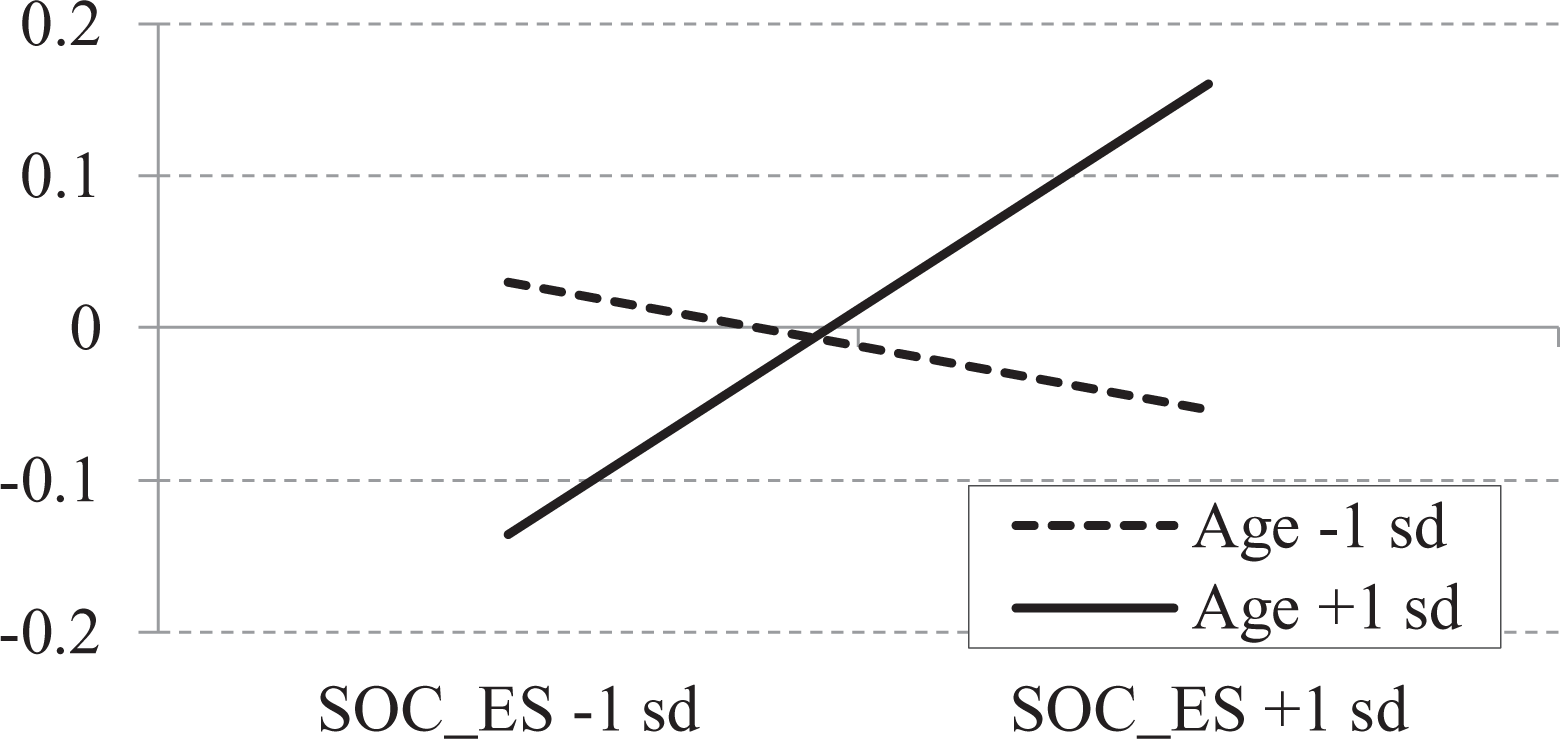
Interaction effect of age and elective selection (SOC_ES) on work engagement among upper white-collar workers. Note. The figure includes standardized estimates. SD = standard deviation.
The prospective main effects of SOC strategies on occupational well-being were modest after controlling for the baseline of occupational well-being at T1 (burnout/engagement). We found that elective selection contributed to burnout among lower-white collar workers; the more elective selection was used by lower white-collar workers, the lower was their burnout over time (see Table 2). Moreover, more frequent use of optimizing was positively related to engagement over time, again among lower white-collar employees (see Table 3).
Predictors of Job Burnout by Subsample over Time.
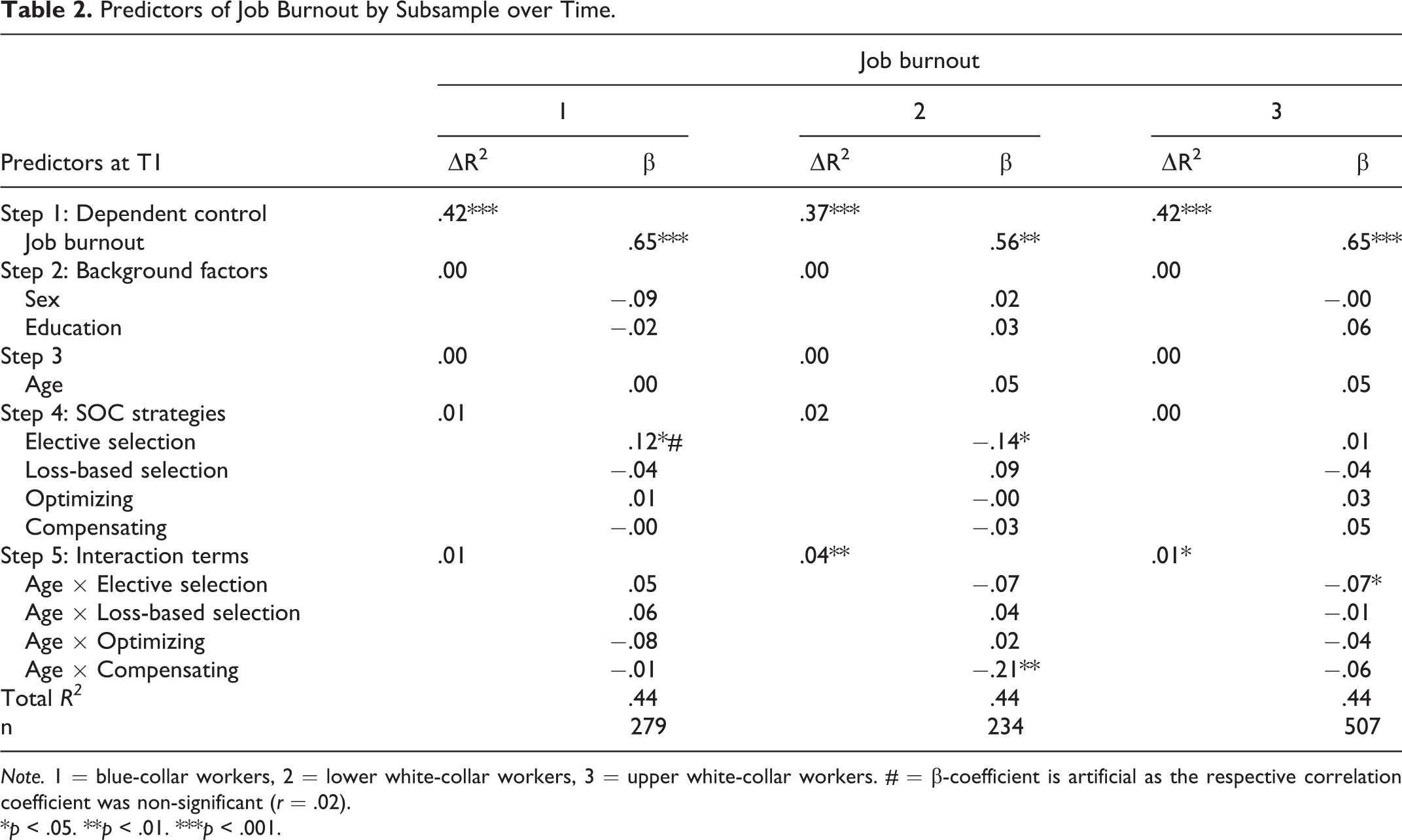
Note. 1 = blue-collar workers, 2 = lower white-collar workers, 3 = upper white-collar workers. # = β-coefficient is artificial as the respective correlation coefficient was non-significant (r = .02).
*p < .05. **p < .01. ***p < .001.
Predictors of Work Engagement by Subsample over Time.
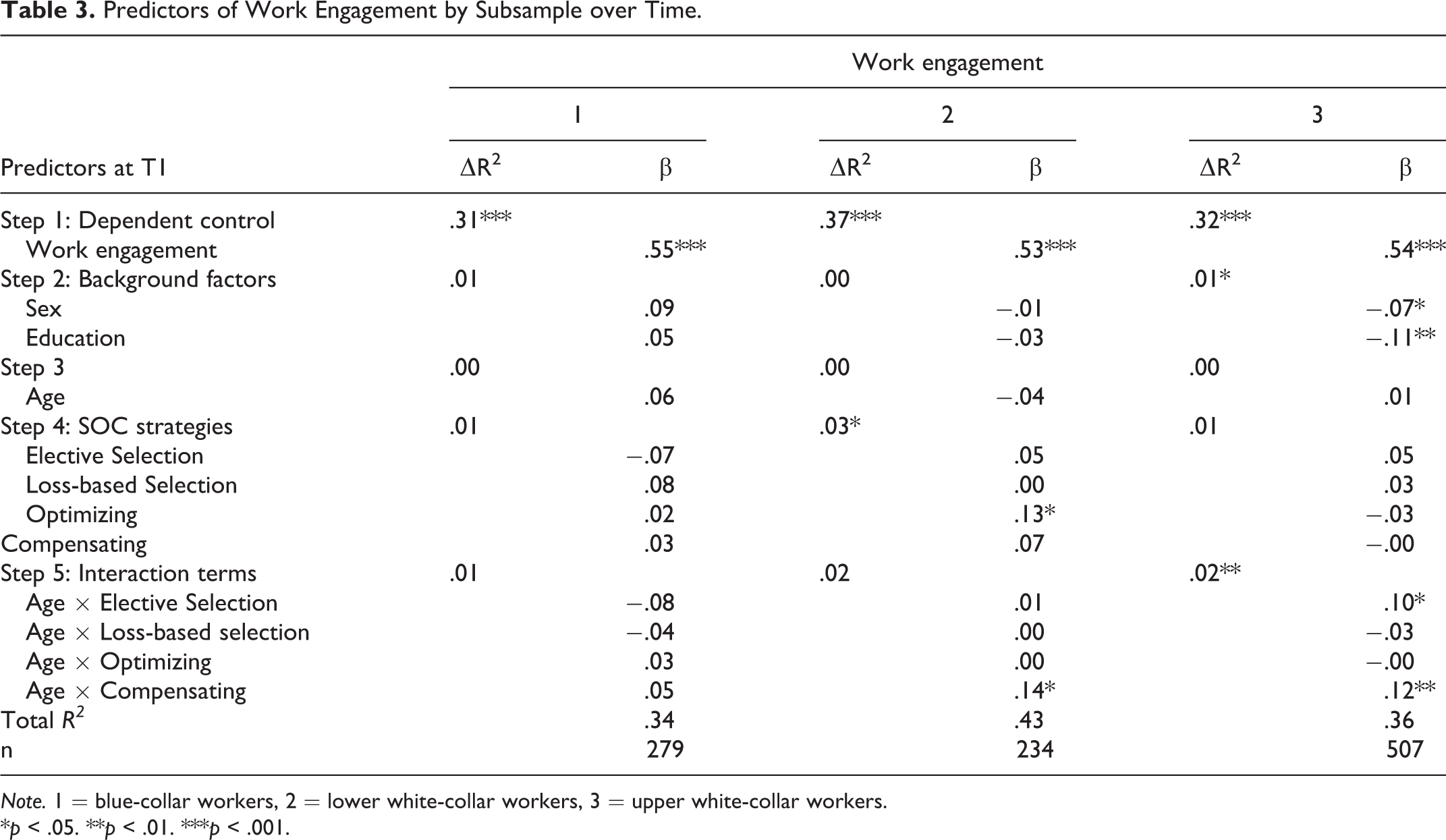
Note. 1 = blue-collar workers, 2 = lower white-collar workers, 3 = upper white-collar workers.
*p < .05. **p < .01. ***p < .001.
As there is also evidence that SOC strategies work best “in tandem” (e.g., Freund, 2008; Teshale & Lachman, 2016), finally, as post hoc-analyses, we ran the regression models described above using the total SOC score (Steps 1–3 were as reported above) instead of subdimensions of SOC. None of the prospective interaction effects of Age × SOC-Total Score or the prospective main effects of SOC total score on well-being was significant among the blue-collar workers. Concerning burnout, we found a significant Age × SOC-Total Score interaction effect in lower (β = −.17, p = .002, r = −.19, p < .000, ΔR2 = .03, p = .002) and upper (β = −.11, p = .001, r = −.10, p = .015, ΔR2 = .01, p = .001) white-collar samples. Furthermore, regarding engagement, a significant Age × SOC-Total Score interaction effect emerged in lower (β = .11, p = .035, r = .10, p = .050, ΔR2 = .01, p = .035) and upper (β = .11, p = .002, r = .11, p = .007, ΔR2 = .01, p = .002) white-collar samples. Graphical inspection of these prospective interaction effects showed that older employees benefited more than younger employees from using SOC strategies by showing decreased burnout and increased engagement if these strategies were used more frequently (Figures 6–9 available from the authors upon request due to space limitations). These findings are consistent with the prospective interaction effects on age and subdimensions of SOC reported already; older (white-collar) employees benefited more from certain SOC strategies using occupational well-being as a criterion of SOC effectiveness.
Discussion
This prospective study explored whether employees at different ages (young adults, middle-aged, and older adults) used SOC strategies differently and whether their SOC strategy use predicted occupational well-being in an age-dependent manner. We were particularly interested in the experiences of aging employees as the workforce is rapidly aging (Rudolph & McGonagle, 2019; Rudolph, 2016; Weber et al., 2019). Such age-dependent findings would also have implications for older employees’ occupational well-being and work ability (Weber et al., 2018, 2019; Weigl et al., 2013). This is the first study to focus on the prospective relationships between aging, SOC strategies and occupational well-being in a Nordic context based on diverse occupational samples and allowing an exploration of the generalizability of the relationships across occupations. As shown below, our findings provided mixed support for the SOC model (Baltes & Baltes, 1990; Baltes & Dickson, 2001; Freund & Baltes, 1998, 2002) and the hypotheses tested (H1–H5).
SOC Strategies Use Did Not Vary by Age but by Occupational Group
On the basis of the SOC model (e.g., Baltes & Baltes, 1990; Baltes & Dickson, 2001; Freund & Baltes, 1998, 2002), we hypothesized that older employees would use more compensation and loss-based selection (H1), whereas younger employees would use more elective selection and optimization than older employees (H2). These hypotheses were not supported as we found no age differences in SOC strategies use neither over time nor cross-sectionally. However, the hypotheses were reasonable in light of previous empirical studies on age-conditional differences in SOC strategies use (Freund & Baltes, 2002; Müller & Weigl, 2017; Ouwenhand et al., 2007) and the SOC model itself (Baltes & Baltes, 1990; Freund, 2008; Freund & Baltes, 1998, 2002). Nevertheless, it should be recalled that the empirical findings so far on age differences in SOC strategy use are not entirely consistent and vary across studies (e.g., Ouwenhand et al., 2007; Weber et al., 2018, 2019). We measured SOC strategies use using a work-tailored scale (Zacher & Frese, 2011; Zacher et al., 2015), which may be less sensitive in detecting age differences than the global SOC scale, which was not developed for a particular context. Because our criterion variables described occupational well-being, SOC strategies were operationalized work-specifically.
Even though the age groups did not differ in SOC strategies use, the occupational groups did. The general pattern we found was that blue-collar workers used more often elective selection and optimization than did white-collar workers (at both time points), who, again, used loss-based selection more frequently than did blue-collar workers (again at both time points). It may be that elective selection and optimization are easier to use in less cognitively demanding work environments, e.g., in blue-collar work. When working environment, e.g., job demands, becomes more cognitively complex, e.g., in white-collar work, such SOC strategies may no longer be effective or even applicable and therefore loss-based selection (focusing on goal reappraisal and goal prioritizing) needs to be activated. Previous findings in work contexts actually indicate that SOC strategies use interacts with job resources and that ultimately the outcomes and the effectiveness of SOC use depend on a complex interplay between job demands and job resources (Weber et al., 2019; Weigl et al., 2013; Yeung & Fung, 2009; Zacher et al., 2015). As we did not operationalize job demands or resources in our study, future research should focus on such interplay (Moghimi et al., 2017; Rudolph, 2016; Weber et al., 2019; Weigl et al., 2013), preferably also taking into account the age-conditional assumptions of SOC strategies as well as long-term effects.
Some SOC Strategies Benefited Older Employees’ Occupational Well-Being over Time
Although we found no age differences in SOC strategies use, their benefits were age-conditional concerning occupational well-being as a criterion. Compensation was more beneficial over time among older employees, a result of which is consistent with H3 as well as with earlier findings (Müller & Weigl, 2017; Rudolph, 2016; Weber et al., 2018; Weigl et al., 2013; Yeung & Fung, 2009; Zacher & Frese, 2011) and the initial SOC model (Baltes & Baltes, 1990; Freund, 2008; Freund & Baltes, 1998, 2002). The “big picture” was that older (white-collar) employees benefited prospectively more from using compensation, but also elective selection, as their occupational well-being was improved if they used these SOC strategies more frequently (compared to younger employees). Moreover, post hoc analyses, in which we analyzed SOC variables as a total score (Freund & Baltes, 2002; Robinson et al., 2016; Teshale & Lachman, 2016) supported this finding by showing that using all SOC strategies more frequently benefited particularly older employees’ occupational well-being over time. Thus, using SOC strategies in an “orchestrated manner” also mattered (Freund, 2008; Mauno et al., 2020; Moghimi et al., 2017; Robinson et al., 2016; Teshale & Lachman, 2016). Altogether, these findings are consistent with the notion that overall goal flexibility and goal crafting, which SOC strategies ultimately describe, are valuable resources in aging (see Rudolph, 2016).
However, it has to be recalled that none of the prospective Age × SOC interaction effects were significant among blue-collar workers, nor did they concern optimizing or loss-based selection (when exploring SOC subdimensions). In this respect, our hypotheses (H3, H4) were only partially supported as we predicted that compensation and loss-based selection would benefit more older (H3 partially supported in relation to compensation), and elective selection and optimization more younger employees (H4; not supported) over time. However, we did not expect occupational variations in these hypotheses as there was no theoretical justifications for such differences.
As discussed above, the occupational context may well determine whether and which SOC strategies are useful and health-promoting resources (Moghimi et al., 2017; Weigl et al., 2013; Yeung & Fung, 2009; Zacher et al., 2015). Even though blue-collar workers used elective selection and optimization more often and upper white-collar workers used loss-based selection more often, adopting these particular SOC strategies did not contribute to respondents’ well-being age-conditionally. It may be that beneficial well-being effects occur only if SOC strategy use co-emerges with appropriate and well-fitting job resources, e.g., job control, social support (Moghimi et al., 2017; Weber et al., 2019; Weigl et al., 2013). Furthermore, more research evidence should be gathered in order to explain why SOC strategies seem to benefit less (aging) blue-collar workers’ occupational well-being.
Altogether, our findings are interesting as they indicate that using certain SOC strategies more frequently does not necessarily guarantee either their positive or age-conditional impacts on occupational well-being. This realization calls for more research on the complicated interplay between age, aging, SOC strategies use, and job characteristics, as already noted (Rudolph & McGonagle, 2019; Weber et al., 2018, 2019; Yeung & Fung, 2009).
Our final hypothesis (H5) predicted that SOC strategies contribute to occupational well-being over time across subsamples irrespective of age/aging as they are action regulation strategies that ensure adaptation and well-being over the life course (Baltes & Baltes, 1990; Baltes & Dickson, 2001; Freund, 2008; Moghimi et al., 2017; Schmitt et al., 2012; Zacher et al., 2015). However, after controlling for the baseline of well-being in regression models, H5 was weakly supported. Furthermore, these prospective relationships were again occupation-specific. Optimization showed a prospective positive effect on engagement, but only among lower white-collar workers. Elective selection, in turn, predicted lower burnout only among lower white-collar workers over time. It should be recalled that the strength of these prospective effects was small, and they should be replicated in follow-up studies. Other relevant contextual resources, e.g., job control, social support, may be more important predictors of occupational well-being or operate in collaboration with SOC strategies, as discussed above (see Moghimi et al., 2017; Weber et al., 2019; Weigl et al., 2013).
Limitations and Implications
There are noteworthy limitations in this study. First, our samples, even though dissimilar, did not cover all types of work, and its needs to be pointed out that the response rates were low (except among upper white-collar workers). Thus, the results may not be fully generalizable. Furthermore, our follow-up sample included a preponderance of women and younger employees compared to the baseline sample. Second, all data were collected via self-reports, which may also bias the findings (causing common method variance bias), although a follow-up design should mitigate this bias. However, adults’ self-regulative (cognitive and behavioral) strategies would be difficult to assess otherwise than using self-reports, whereas occupational well-being could more easily be assessed via non-self-reports, e.g., by sickness absence records. Third, we did not examine reverse/reciprocal causality suggesting that the level of occupational well-being determines SOC strategies use rather than vice versa (healthy worker effect). However, our hypotheses were based on the original SOC model and its age-specific premises, and thus theoretically sound (Baltes & Baltes, 1990; Freund & Baltes, 1998, 2002). Fourth, the follow-up period was one year, which admittedly is too short to capture (age-conditional) changes in SOC strategies use across time, given that ultimately the SOC model is a life-span theory. Fifth, we cannot rule out the possibility that age-conditional effects are not solely cohort effects, and in this respect, much longer follow-ups of the same individuals would be needed (over the career span). Sixth, the reliability coefficient was low for one subdimension of SOC (compensation) but low SOC reliabilities have been reported also previously (e.g., Müller & Weigl, 2017; Rudolph, 2016). However, the age-specific results found here for compensation were consistent with earlier findings (Müller & Weigl, 2017; Rudolph, 2016; Weber et al., 2018; Weigl et al., 2013; Yeung & Fung, 2009; Zacher & Frese, 2011), providing more confidence for our results despite lower reliability of this subscale.
Concerning practical implications, we propose that aging employees’ occupational well-being could be enhanced via strengthening their SOC strategies, particularly compensation and elective selection, but not forgetting loss-based selection or optimization either, as using all four SOC strategies “in tandem” was also beneficial for older (white-collar) employees’ well-being. Consequently, older employees might be encouraged and trained to adopt actions, behaviors, and mental strategies that enable them to compensate resource losses and unattainable goals by seeking and applying other resources, e.g., social support and job control. Advancing also older employees’ engagement in goal reappraisal, e.g., re-evaluating one’s work-related goals and demands to match one’s resources, would also be useful. Flexible goal crafting across a life span is in the heart of SOC model and occurs best via using all SOC strategies flexibly, also among aging workers.
Supplemental Material
Supplemental Material, Appendix - Do Aging Employees Benefit from Self-Regulative Strategies? A Follow-Up Study
Supplemental Material, Appendix for Do Aging Employees Benefit from Self-Regulative Strategies? A Follow-Up Study by Saija Mauno and Jaana Minkkinen in Research on Aging
Footnotes
Declaration of Conflicting Interests
The author(s) declared no potential conflicts of interest with respect to the research, authorship, and/or publication of this article.
Funding
The author(s) disclosed receipt of the following financial support for the research, authorship, and/or publication of this article: This research was supported by Academy of Finland under Grant 308334.

Supplemental Material
The supplemental material for this article is available online.
Author Biographies
References
Supplementary Material
Please find the following supplemental material available below.
For Open Access articles published under a Creative Commons License, all supplemental material carries the same license as the article it is associated with.
For non-Open Access articles published, all supplemental material carries a non-exclusive license, and permission requests for re-use of supplemental material or any part of supplemental material shall be sent directly to the copyright owner as specified in the copyright notice associated with the article.
