




Abstract
Turkey has received consistent criticism from international media for having many naturalized athletes in its national squad, both in the Olympic Games and other major international sporting events. Similar criticisms have also been a feature of debates for a long time in domestic media, varying in views toward these athletes. This research focuses on media representations of naturalized athletes in Turkey between 2008 and 2020. We investigated the sentiments of news items from four major Turkish newspapers (Milliyet, Cumhuriyet, Sabah and Fanatik) on their stances toward naturalized athletes over the timespan of 2008–2020. Beside analyzing the sentiment of the media content both cumulatively and fragmentedly, we also identified the yearly trends and most featured sports in this context, combining qualitative and quantitative techniques. Our findings showed that sentiments in Turkish media toward naturalized athletes are mostly neutral and negative as well as with differences varying on the basis of the newspapers and news item types. The most criticism underlined pursuing “shortcut” success with naturalized athletes representing Turkey in the international arena. Among the featured sports, basketball, football, and track and field have been the most discussed ones in the naturalization context.
Keywords
Introduction
International sports events such as the Olympics and World Championships are the seminal platforms for the representation of nationality on a global scale. Such events carry a symbolic weight for all aspiring nations worldwide and provide a stage on which each nation can present themselves to the world and to their own domestic audience. Significantly, however, when this representation is perceived to be conveyed by “outsiders” (Elias and Scotson, 1994; Jansen and Skey, 2020; Poulton and Maguire, 2012), some degree of discontent may arise. The absence of a “genuine” link (Jansen, 2019; Shachar, 2011) between the athlete and the State can make the representation controversial, sparking debates both nationally and internationally. Not only in sport studies, naturalized athletes have also captured the attention of various research areas such as citizenship (Jansen et al., 2018; Oonk, 2020, 2021; Reiche and Tinaz, 2019), law and migration (Shachar, 2011; Shachar and Hirschl, 2013; van Campenhout et al., 2019; Wollmann et al., 2015), and media studies and sociology (Chiba et al., 2001; Chiu, 2021; Jansen, 2019; Jansen and Skey, 2020; Shin et al., 2022; Shor and Yonay, 2010; Yung et al., 2021). Crucially, this interaction has inspired more interdisciplinary approaches to the phenomenon.
National media outlets generally provide a base for nationality transfers in sports discussions. Recent work on naturalized athletes’ media coverage has primarily focused on the discourses created in the national media toward naturalized sportspeople. For example, naturalized athletes have been labeled as “plastic Brits” by sections of the media in the United Kingdom. The term “plastic Brit” was coined by the right-leaning English newspaper The Daily Mail, which is known for its conservative values and pronounced hostility toward multiculturalism and immigration (Poulton and Maguire, 2012: 4). This pejorative term was directed toward athletes who acquired British citizenship by being dual nationals, serving the minimum residence period, or through marriage to a British citizen (Poulton and Maguire, 2012: 4). Similarly, naturalized athletes have been called “devshirme” (devşirme) in Turkey. However, in the Turkish case, the root of this label does not come from a media source. It dates back to the Ottoman Empire’s talent cultivation system from non-Muslim youth, but today it is used to signify an “imported person (based on sporting talent)” in sports context (Istif Inci, 2020). Unlike the usage of plastic Brit in the United Kingdom, for example, the word devshirme is not always used pejoratively to judge naturalized athletes.
Mainly following the European Athletics Championship in 2016 in Amsterdam, Turkey and its naturalized athletes were criticized by international media and portrayed as a “disgraceful farce and joke” (Bloom, 2016; Tremblay, 2016) that was “importing talent” (Dogan, 2018; Rowbottom, 2016). Turkey’s participation in that championship with athletes of “non-European origin” has also been debated by other fellow track and field athletes (Bailey, 2016; Cahill, 2016). In Amsterdam, Turkey won 12 medals (4 gold, 5 silver, 3 bronze) with a team consisting of athletes of Kenyan, Jamaican, Ethiopian, Cuban, South African, Azerbaijani, and Ukrainian origins.
Turkey has lately been labeled next to Qatar and Bahrain in terms of the percentage of naturalized athletes in their national squad (Reiche and Tinaz, 2019). Having also been discussed critically by the Western media, there is a shortage of literature focusing on the framing of naturalized athletes in Turkish media. Indeed, the national media in Turkey has long debated the matter of naturalized athletes on a variety of grounds. Therefore, this research focuses on Turkish media documents from various newspapers to reflect these different perspectives. We attribute more emphasis to the sentimental polarity of these frames in media documents, since “the tone of a text may be as influential as its substantive content” (Young and Soroka, 2012: 205).
In this light, this article aims to answer the following interrelated questions:
Research question 1: How are the sentiments framed in Turkish print media (newspapers) toward naturalized athletes? Do these sentiments differ depending on the news source?
Research question 2: What are the differences in sentiment depending on the types of news item (columns, interviews, news articles)?
Research question 3:Do these sentiments change throughout the period covered (2008–2020) and if so, how?
Research question 4: Which sports feature more often in the news about naturalized athletes and what are the dominant sentiments in this context?
To answer these questions, we first explore the sentiment polarities of news items framed toward naturalized athletes and categorize them according to the news source, news item type (news article, column, interview), and yearly trends. Following this categorization, the sports that feature more often in the news about naturalized athletes are identified and analyzed. Finally, the overall trends are discussed, and some further research suggestions are made in the concluding section.
Theoretical background and related work
News framing theory in media studies
News framing theory dates to Goffman’s frame analysis, which explains the relations of meaning and how situations are defined (Goffman, 1974). Over time, it has been used in media studies to analyze a range of topics and social phenomena. According to de Vreese (2005: 51), framing is related to the communication sources that present and define a problem by giving guidance for the investigation of the media content. D’Angelo and Kuypers (2009: 1) discuss framing in relation to the word “use.” They argue that the core of framing with its two meanings: “a conduit of information” and “a manipulated channel for information dissemination.” These definitions draw attention both to the sources that frame topics to make information interesting for journalists, and to journalists who make use of these frames and add their own frames before they serve information to the public.
Taking all these definitions into consideration, we start from the point that framing is a mechanism to understand the relationship between presented issues in various outlets and the public perceptions of such presentation (de Vreese and Boomgaarden, 2003: 363). Therefore, we investigate this relationship depending on the negative, positive, or neutral tendency or valence of the news item (de Vreese and Boomgaarden, 2003; Schuck and Feinholdt, 2015). An example of sentiment analysis (as well as cluster analysis) within news framing has been employed jointly in the work of Burscher et al. (2016), where they analyzed the news discourse around nuclear power. Similarly, in our study, we analyze negative, positive, or neutral polarities in the sentiments of the news items in order to classify and identify the views and trends about naturalized athletes.
Media studies toward naturalized athletes
Studies related to the media coverage of naturalized athletes approach the issue from various perspectives and methodological backgrounds. While early studies relied on sociological analyses derived from qualitative findings on relatively small-scale data, more recent work has investigated the relationship on a larger scale. Country-specific case studies explored the dynamics of a certain country or specific sports. An earlier study in the field, Chiba et al.’s (2001) work, examined the Japanese identity narratives constructed around naturalized ice hockey players of Canadian origin and a soccer player of Brazilian origin in Japan. Their work underlined that the naturalized athletes in Japan were generally approached positively by the Japanese media, with some players even dubbed “more Japanese than the Japanese” (Chiba et al., 2001: 215). Also, Shor and Yonay’s (2010) study investigated the media coverage of foreign and naturalized athletes in Israel between 2002 and 2006, focusing on discourses of citizenship and nationalist sentiments. Poulton and Maguire (2012) qualitatively analyzed the narratives of so-called “plastic Brit” athletes in the English daily newspapers before and during the 2012 Olympic Games, using the established-outsider theory of Elias and Scotson (1994). On a broader timespan, national belonging contestations of so-called “plastic Brits” in British newspapers from 2011 to 2017 were examined by Jansen and Skey (2020), covering 441 newspaper articles. Their findings showed that the “plastic Brits” debate in the media has criticized, scrutinized, and marginalized these athletes. Jansen (2019) analyzed the English-speaking media’s opinions toward nationality transfers in sports using machine-learning techniques on 1534 news articles from 1978 up to 2017, where he analyzed discourses of citizenship and nationhood within the frames of conflict, economy, and morality. Shin et al.’s (2022) study focused on the media discourses of naturalized athletes in the South Korean national ice hockey team. Similar to the findings of Chiba et al. (2001), these athletes were perceived as valuable contributors to South Korean ice hockey, and their new national identities of adapting to being Korean were highlighted positively in the media.
While previous studies analyzed the media coverage of naturalized athletes cumulatively, we approach the media in Turkey both cumulatively and fragmentedly, since each media source might approach the issue from a different perspective. Taking this point into consideration, we analyzed sentimental polarity differences toward naturalized athletes separately for each media source but identified yearly changes in sentiments and the sports that feature more often cumulatively. Additionally, we explored which sports feature more often in the news, along with their sentiment polarities.
Media in Turkey
The media in Turkey is a competitive field that includes local and foreign periodicals in which different views are expressed. As a result of the liberalization steps taken in the 1980s, the press has become a crucial tool, not just for political actors, but also for corporate owners. Furman et al. (2019) divide ownership structures in Turkey into three principal categories: corporate, private, and nonprofit. They noted a significant correlation between specific categories of ownership and the political affiliation of the publication. Today, the range of views in Turkish media is extremely limited as media ownership is concentrated in the hands of a few large private groups, which are often part of conglomerates controlled by wealthy individuals close to the current government (Justice and Development Party).
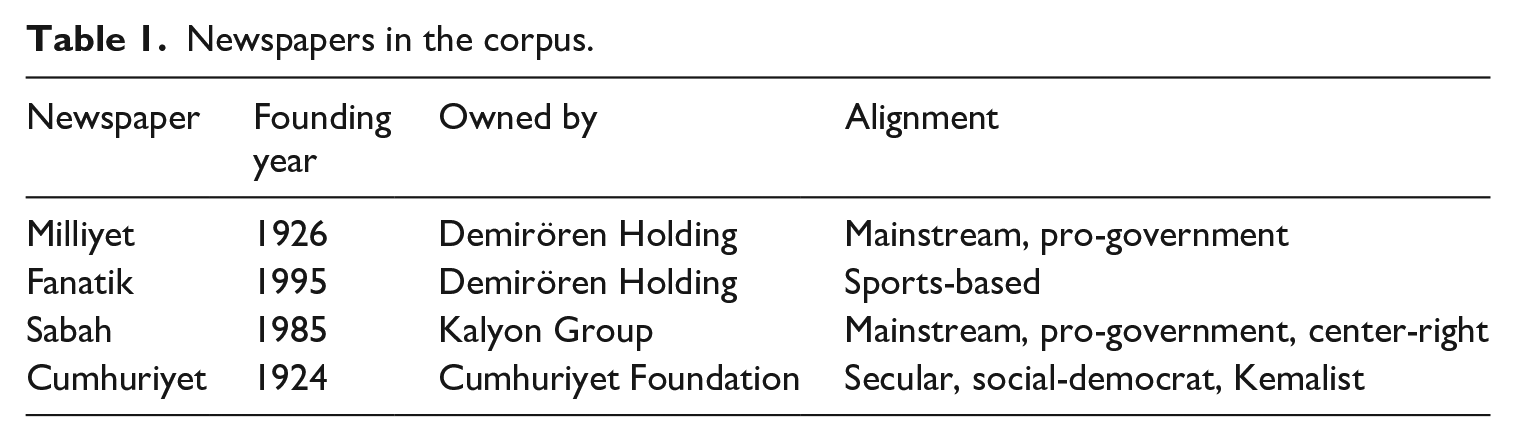
The selected newspapers for this study are Milliyet (Nationality), Cumhuriyet (Republic), Sabah (Morning), and Fanatik (Fanatic). Milliyet was previously published by the Doğan Group, but was sold to DK Gazetecilik, owned by the Karacan-Demirören families, in early 2011 (Furman et al., 2019). With the transfer of the shares of the Karacan family in 2012, it became the property of DK Gazetecilik, (of Demirören Holding). Due to this history of transferred ownership, Milliyet’s stance has shifted from a center-left mainstream news source to a pro-government one (Furman et al., 2019). The pro-government stance in Turkey (Justice and Development Party since 2002) represents center-right and conservative values (Kaya and Çakmur, 2010). Demirören Holding also bought Doğan Group’s sport newspaper Fanatik in 2018. Fanatik, one of the most popular sport media outlets in Turkey, takes its place in our sample as the only sport newspaper that is also the only Turkish member of the European Sports Media (ESM, 2020) association. Despite being in the pro-government cluster compared to Milliyet, Sabah has more center-right tendencies. Although being founded by businessperson Dinç Bilgin in 1985, in 2007, ownership of Sabah was given to the Savings Deposit Insurance Fund of Turkey and then sold to the Turkuvaz Media Group. Since this sale, the newspaper has taken a pro-government line. In 2013, the Kalyon Group, which has close ties with the governing Justice and Development Party (AKP) (BBC, 2013), took over the newspaper (Hürriyet, 2013).
Our final source is Cumhuriyet, Turkey’s oldest daily broadsheet, having been established in 1924 by Cumhuriyet Foundation, which is an independent association. The newspaper defines itself as “the most important independent public interest newspaper in contemporary Turkey” (Right Livelihood, 2016). Cumhuriyet, known as a Kemalist journal adhering to the principles of the founder of the Turkish Republic Mustafa Kemal Atatürk, represents a secular and social-democratic perspective in the Turkish media.
All the newspapers in our corpus are listed with their identifying information in Table 1.
Newspapers in the corpus.
Regarding the circulation results of these newspapers, a timeline search was retrieved from 01.01.2015 to 31.12.2020. The results showed 284,413 for Sabah, 134,886 for Milliyet, 95,242 for Fanatik, and 39,375 for Cumhuriyet (Speed Medya, n.d.).
Methodology
Data collection
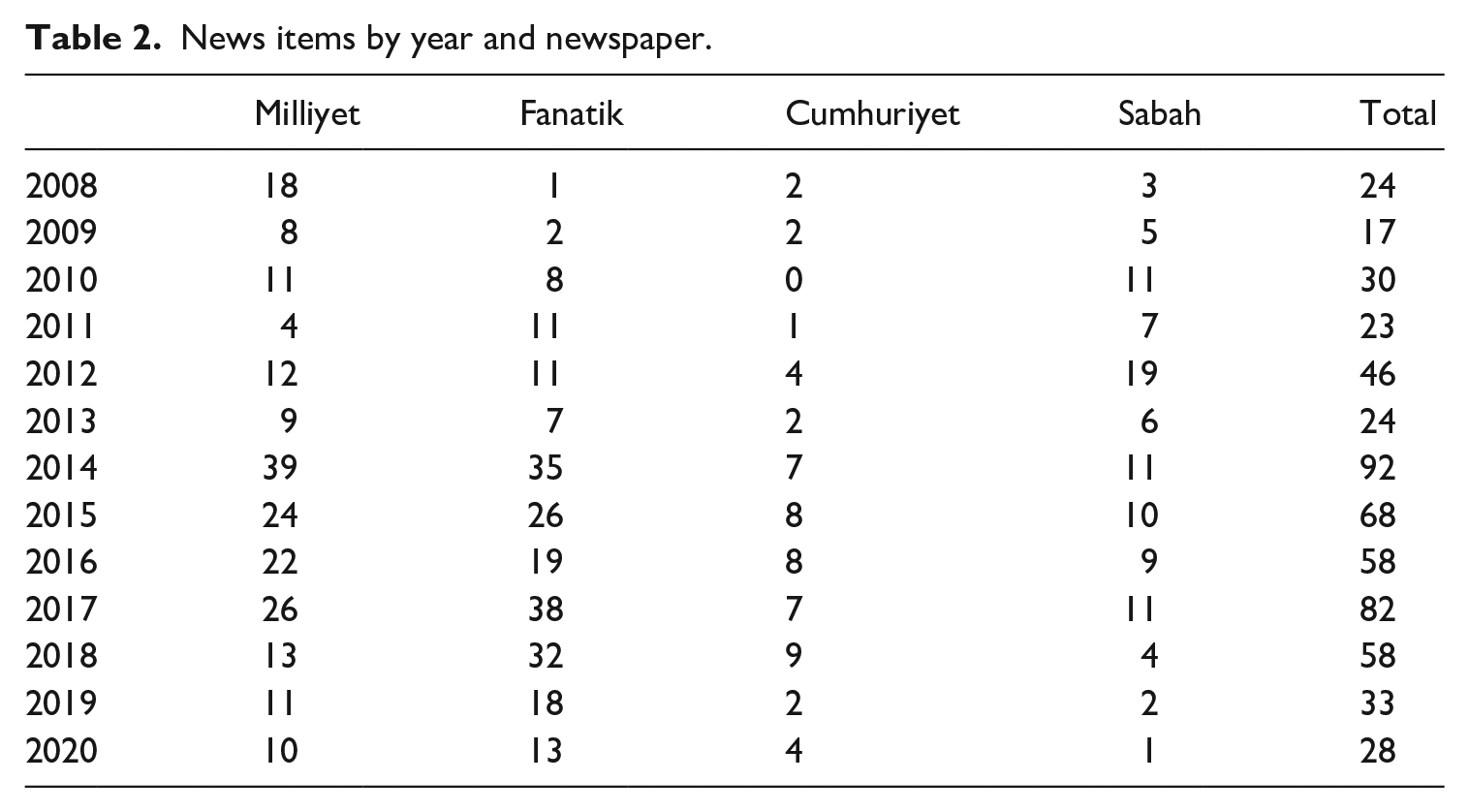
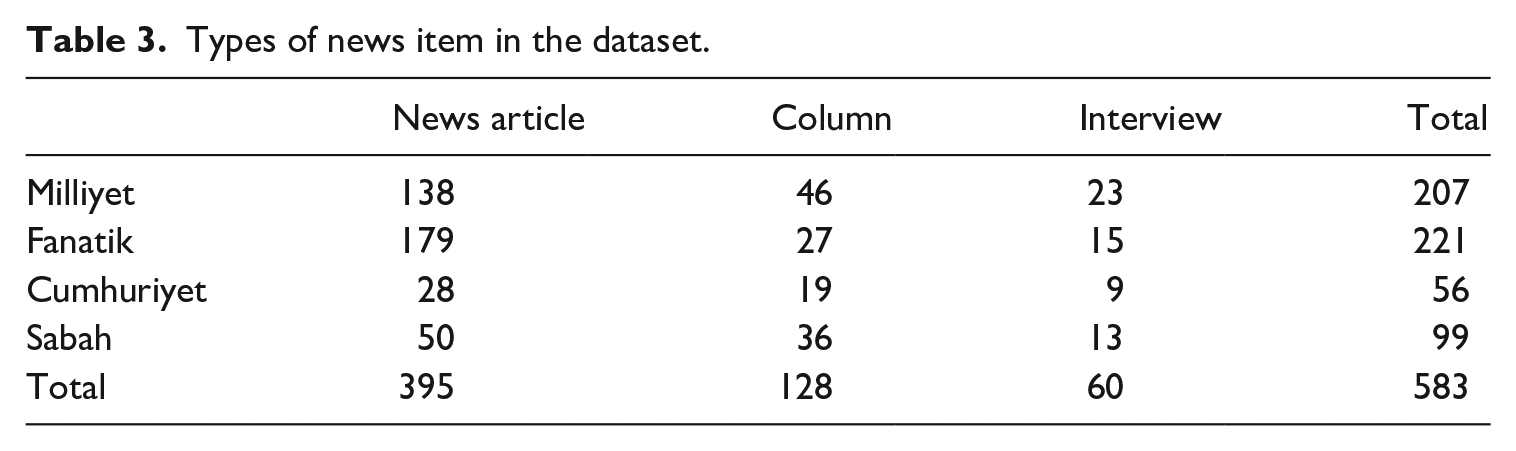
This research has been conducted in a dataset consisting of news items from four Turkish newspapers (Milliyet, Cumhuriyet, Sabah, Fanatik). For gathering the initial data, digital archives of these newspapers between the dates 1 January 2008 and 31 December 2020 are scanned with the search term “devşir*” 1 (the root of devshirme). This period is selected both because it encompasses three Olympic Games but also due to constraints in data availability. Relevant results consisting of 583 news items were categorized according to the news source, year (Table 2) and news item type (Table 3), to be later used in the analysis for identifying differences among these types.
News items by year and newspaper.
Types of news item in the dataset.
Data analysis
Sentiment analysis, also known as opinion mining, is a method that analyzes opinions, sentiments, evaluations, attitudes, and emotions in a text (Danneman and Heimann, 2014; Oueslati et al., 2020). It has been used in media studies to investigate a broad spectrum of issues from war coverage (Aday, 2010), violence (Martins et al., 2013), gender perspectives (Rodgers and Thorson, 2003) to the portrayal of religious groups (Bleich and van der Veen, 2021). This method can be applied both manually or computationally, depending on the language and content of the text. In their discussion of computational approaches, Young and Soroka (2012: 208) note that not all types of text are suitable for certain types of automated analysis to “interpret semantic patterns.” On the other hand, manually annotated sentiments in a document generally provide more accurate results compared to computational algorithms (Becker et al., 2016). Therefore, for this research, having considered the nature of the news items, the structure of the Turkish language, and our sample size we opted for the manual sentiment polarity rating. The news items in our corpus often involve sarcasm, irony, and statements that a computer algorithm would not detect very well in a Turkish or any other text. In the first step of the analysis, the four authors independently read and rated the sentiment polarity (negative/positive/neutral) of each news item according to its tone. The purpose of the polarity rating is to classify the text whether it is positive, negative, or neutral (Oueslati et al., 2020: 409), which is determined by the semantic meaning of each news item in the corpus of this research. The authors conducted the polarity rating of each news item by assessing and interpreting the whole text content, rather than merely counting the words (Gaspar et al., 2016). To illustrate, an annotated excerpt of polarity rating from our corpus is given in Table 4.
An example excerpt of polarity rating.
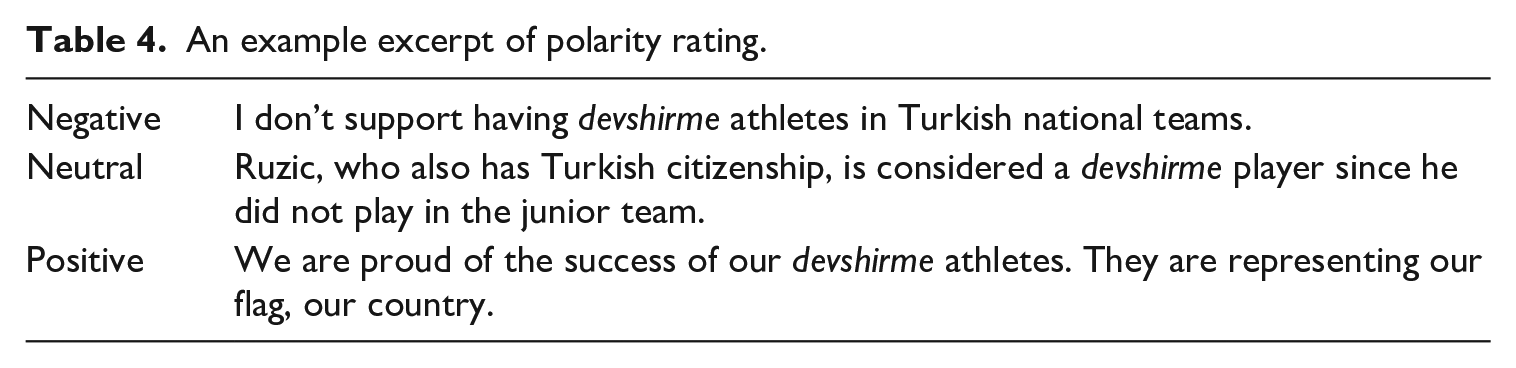
In short form, negativity, positivity, and neutrality are represented by N, P, and 0 respectively in our study (see Figure 1). The majority rating among the authors was established as the final rating of a news item. In case of a tie in the rating, the decision was made by discussion and mutual agreement.
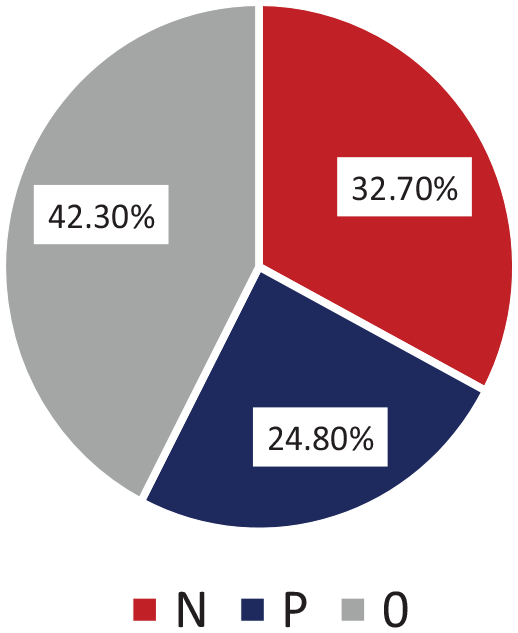
Total sentiments of all newspapers in the corpus.
As the authors manually rated the sentiments of the news items, inter-rater reliability (IRR) was also measured to check the level of agreement and consistency amongst the research group (Hallgren, 2012). Cohen’s Kappa coefficient is a statistical measurement for assessing IRR in categorical items between individual raters (McHugh, 2012). McHugh’s (2012) suggestion as to how Cohen’s Kappa coefficient result should be interpreted is as follows: values ⩽0.20 as no agreement, 0.21–0.39 as minimal, 0.40–0,59 as weak, 0.60–0.79 as moderate, 0.80–0.90 as strong, and above 0.90 as almost perfect agreement. Kappa coefficients in our study were calculated as 0.647 for Milliyet, 0.676 for Sabah, 0.713 for Cumhuriyet, and 0.657 for Fanatik. These values show that there was moderate agreement between the individual raters for all newspapers.
While the manual rating of the polarity helped us to categorize, measure, and compare the sentiment polarities, calculating the number of documents that contain sport names – what is termed the document frequency (Manning et al., 2008: 7) – showed how often certain sports were discussed in this context. For this purpose, a computational tool (the Java programming language) was used to map the distribution of sports in the news items. Some documents had multi-labels due to having more than one sport in their text. In cases where the sport is alluded to simply via reference to teams, players, leagues, etc. – instead of direct mention of the name of the sport – the computational tool could not match these news items to sports and give labels to them. Therefore, in cases where documents did not include the names of the sports, the authors manually entered the sport (label) of each document by interpreting it from the context – which amounted to 10% of the corpus.
Results
General sentiments of the media
Media coverage in Turkey of naturalized athletes mostly involved neutral (42%) and negative (32%) sentiments (Figure 1). News items with positive sentiments were the least featured in this distribution with 24%. This ratio indicates that the print media in Turkey represented in our corpus generally tend to approach naturalized athletes largely from a critical or indifferent perspective.
To analyze the differences more elaborately, newspapers in the corpus are also analyzed comparatively. However, despite the majority of neutral sentiments, when each sport in news items is investigated, it appears that most neutrality comes from news items that have a single sport: basketball. Its specific dynamics regarding the conventional structure of nationality transfers are explained in detail later in the article.
Sentiment variations among newspapers
The results of the sentiment rating of news items in each newspaper showed that each newspaper has a different stance toward naturalized athletes. This difference has also been supported by chi-square test results, which reveal that there is a significant difference between the sentiments of each newspaper (
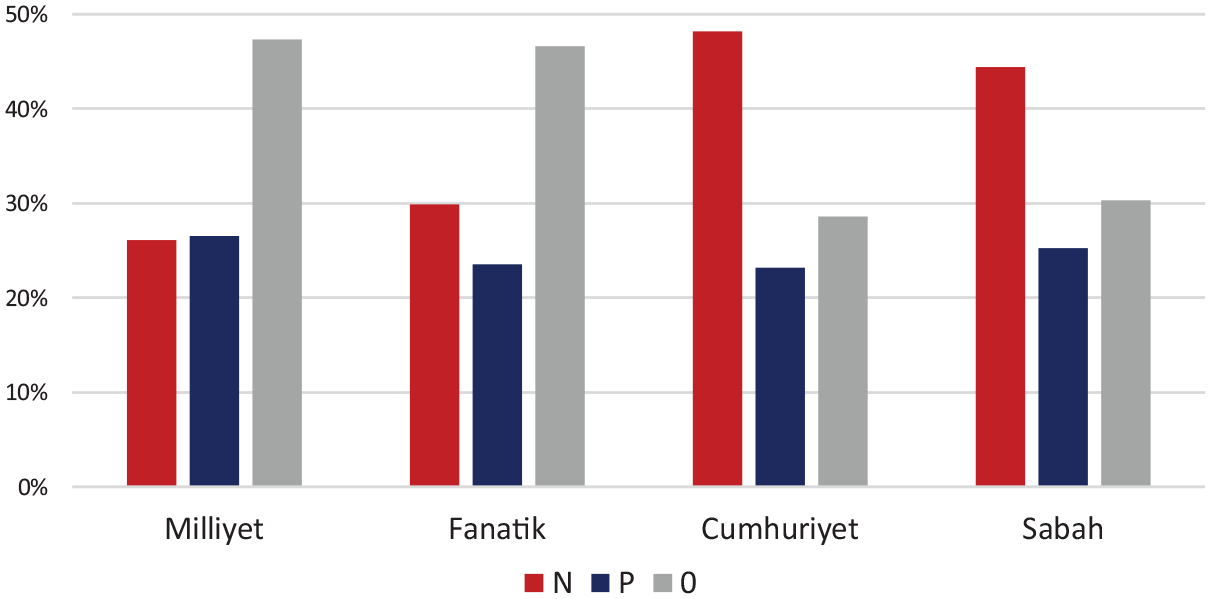
Sentiment results of newspapers (based on percentage).
Cumhuriyet has the most critical stance toward the representation of Turkey on the part of naturalized athletes. Its criticism largely targets the government’s sport policy. Cumhuriyet’s perspective also coincides with the Republican People’s Party 2 (Cumhuriyet Halk Partisi (CHP), the main opposition party in Turkey) as CHP parliamentarians’ views often feature in Cumhuriyet. This relationship has also been noted in other studies, as Cumhuriyet quotes more statements from CHP politicians compared to other party politicians, while correspondingly pro-government newspapers quote fewer statements from opposition party politicians (Çarkoğlu et al., 2014).
CHP leader Kemal Kılıçdaroğlu: Devshirme athletes prevent the progression of the athletes trained in Turkey in every branch of sports. Especially because of devshirme athletes in the athletics branch, the children of the country are neglected. (Cumhuriyet, 01.04.2017) CHP parliamentarian Erdoğan Toprak: Success in sports will come not with devshirme athletes, but when we discover our own talented youth. (Cumhuriyet, 23.07.2019)
Similar to Cumhuriyet, Sabah has more negative sentiments toward naturalized athletes compared to Milliyet and Fanatik. It also gives more space to the statements of sportspeople who are against naturalized athletes.
President of the Turkish Sailing Federation: “We are trying to establish the core team of 2020. I am against naturalized athletes for having success by saving the day. I trust our youth in our country which is surrounded by the sea on three sides.” (Sabah, 07.07.2014) Track and field athlete Kemal Koyuncu: “I am against the devshirme athletes. We live in a country of about 80 million people. We do not need devshirme athletes. There is a large population of young people here. Devshirme athletes are not a solution, on the contrary, they harm Turkish athletics. In sum, devshirme athletes do nothing but save the day.” (Sabah, 15.10.2011)
Fanatik, on the other hand, tends to frame naturalized players in basketball and football neutrally. Its focus tends to be on performance-based results and narratives. Notably, while naturalized athletes are also mentioned in doping scandals together with Turkish-born players, no extra emphasis is placed on naturalized athletes’ culpability.
In the last 10 years, in the (doping) cases that started with Süreyya Ayhan Kop, as well as Nevin Yanıt, Binnaz Uslu and Eşref Apak, devshirme athletes Alemitu Bekele Degfa and Karin Melis Mey were also associated with doping. (Fanatik, 30.03.2017) Now arrows of criticism point at Elvan.
3
What about the athletics management of the club she competes for? What about the doctor who forced her to do this? What about the Athletics Federation officials of that period? Is the athlete the only guilty one here? It is official and clear that Elvan is involved in doping. But is she the only culprit? (Fanatik, 31.05.2018)
Finally, Milliyet has the most moderate sentiments toward naturalized athletes, by which we mean having fewer negative and more neutral sentiments. Milliyet’s news items generally supported naturalized athletes in Turkey and appreciated their contribution to Turkish sports.
23 athletes from all over the world who obtained Turkish citizenship, like Alisa Agafonova, who won the silver medal in Ice Dance with her partner Alper Uçar at the University Winter Games, are sweating for the success of the crescent and star.
4
(Milliyet, 09.02.2011) Elvan Abeylegesse, a national athlete of Ethiopian origin who made dreams come true in the history of Turkish athletics, achieved great success on the tracks, gifted Turkey with world records and Olympic medals, but could not get rid of the “devshirme athlete” title. When she left the race due to a problem with her Achilles tendon, she became the target of criticism. (Milliyet, 17.08.2009)
Overall, all newspapers share a similar ratio of positive news items. Nonetheless, the difference sharpens in negativity and neutrality, which can lead to the conclusion that the overall approach from the Turkish print media to the issue of naturalization in sports is of hostility and disapproval.
Sentiment variations in columns, news articles, and interviews
In terms of the type of news items, we also compared the sentiment polarity of columns (editorials), news articles, and interviews of each newspaper (Figure 3). This comparison showed that the difference between newspapers becomes more evident (
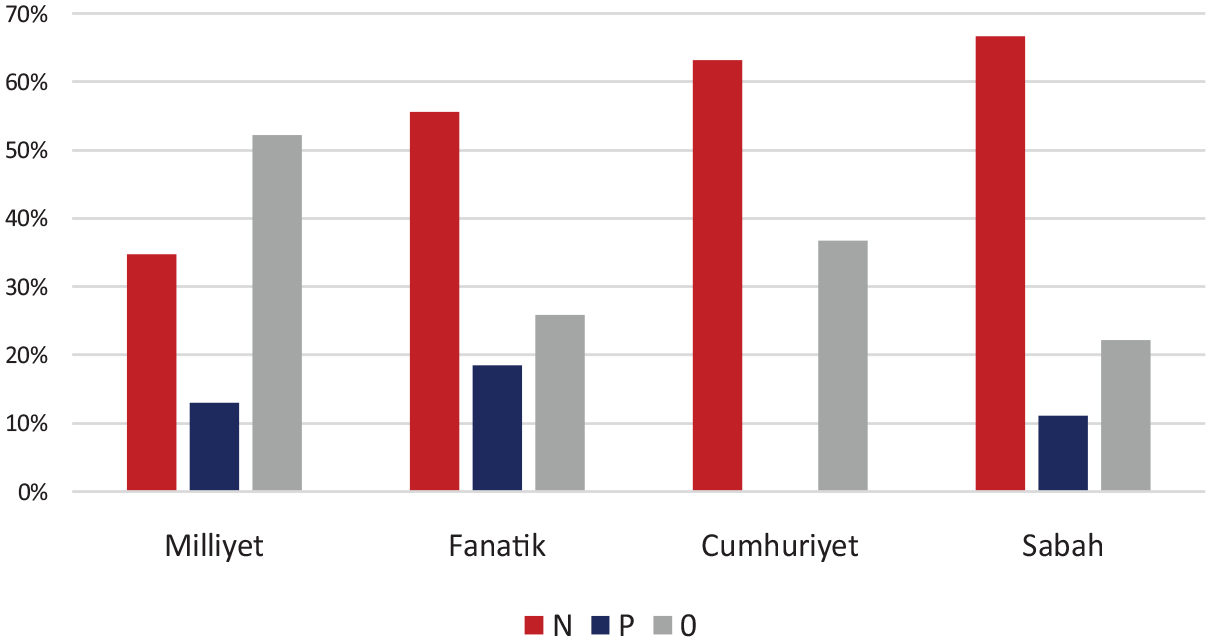
Sentiment differences in columns (based on percentage).
Cumhuriyet’s negative columns mostly criticize the elite sport policy of the government and policymaking based on naturalized athletes. They generally tend to consider the success that comes with naturalized athletes as “a shortcut solution” for Turkish sports.
The current political power is responsible for the success and failure of sports. In sports, unfortunately, shortcut and wrong policies are followed. Two features that draw attention are the widespread use of doping and the devshirme athlete policy, which is a shortcut and wrong solution. (Cumhuriyet, 18.03.2015)
Turkey’s high young population (below age 25) (according to TurkStat (2021) data, more than 35% of the total population) is also highlighted in the columns of Cumhuriyet and it has been associated with the decision of the country’s federations and management leaning on naturalized athletes.
We cannot find a solution to the sports-related problems of this country, which is mostly a young populated country, with short-term approaches and discussions, with devshirme athletes. There is a need for new policies and approaches that break outdated understandings and change the game. (Cumhuriyet, 15.08.2012) While we have 20 million young people in the age group of athletes, we are still looking for devshirme athletes to gain some more medals. (Cumhuriyet, 29.08.2013)
On the other hand, Sabah’s more negative expressions toward naturalized athletes tend to depend on the sport being discussed – for the most part, track, and field. They also claim that local (Turkish-born) athletes receive less attention and support compared to the investment allocated for naturalized athletes.
Even if there is no chance for a medal, Turks should participate! Why does a country of 80 million, and with half of its population young need devshirme athletes? (Sabah, 10.07.2012) Turkish people will be happier to win medals with local athletes in the long run, instead of achieving temporary successes by shortcuts with devshirme athletes. (Sabah, 11.08.2017)
Fanatik’s negativity in columns rather focuses on what they see as “wrong policy decisions” with naturalized athletes. It emphasizes that medals won by naturalized players do not reflect Turkey’s sporting success. Returning to the theme of Turkey’s large youth population, they accuse sport policymakers and managers of sport federations of preferring the route of naturalizing athletes instead of raising local talents.
Instead of solving structural problems, we save the day by hunting medals with devshirme models. (Fanatik, 03.05.2012)
Also, on some occasions, the accusations are pointed at sport federations because of their use of easier means in achieving sporting success, rather than applying sustainable and continuous strategies for sport development, despite the provision of government support and initiatives.
Foreign coaches, devshirme athletes, some plans and visionary projects have been tried for years and are still being tried; but all in a hurry to save the day. There is a really bleeding wound, there are those who have only been covering it for years, trying to convince everyone that the wound has healed. (Fanatik, 11.04.2017)
The tone when focusing on winning medals with naturalized athletes is often one of irony and sarcasm, as further evidenced in the statements below.
Is winning a medal everything? (Fanatik, 11.04.2017) March only for the medal, Turkey, naturalize more athletes! (Fanatik, 02.09.2016)
At the same time, they also come up with some suggestions for sport policies that would focus on the nurturing of local athletes, such as by employing foreign trainers to coach domestic talent and improve their development, rather than naturalizing athletes: Let’s entrust our young people to expert foreign teachers instead of recruiting devshirme athletes. You will see, our athletes will do better in the international arena. (Fanatik, 05.10.2016)
In general, most of the columns of each newspaper address the lack of attention paid to Turkey’s youth in the cultivation of a successful athletic environment in comparison to opting for naturalized athletes by aiming to achieve “shortcut” success.
Trends depending on years
We compared the distribution of negative, positive, and neutral news in all newspapers to see yearly changes in the number of news items about naturalized athletes. Between 2008 and 2020, a total of 583 news articles involved discussions about naturalized athletes (Figure 4). Throughout the years 2008 and 2009, the overall sentiments in the news were almost equal. Negativity increased in 2012 and after 2013 until 2018 there has been a continuous increase. In 2012 and 2015, the difference between positive and negative news was at its greatest, with more negative news being in the majority. In 2017, the number of negative, positive, and neutral news were equal for the first time since 2010. The total number of news items on the topic started to decrease from 2017 on, and in 2019 (Figure 4). This decrease can be linked to the atmosphere of the social dynamics and the participation of naturalized athletes in the international tournaments.
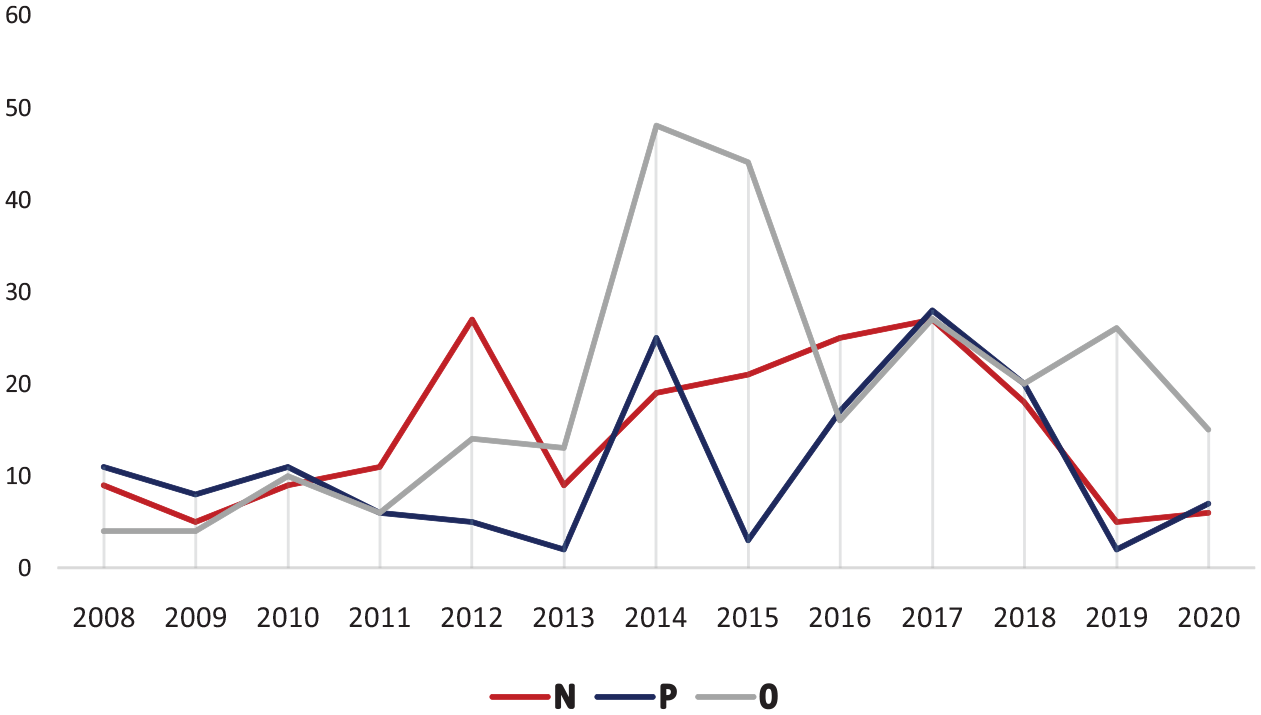
Overall yearly trends based on total (n = 583) news items.
In detail, the high degree of neutrality in 2014 and 2015 is related to basketball news and the major international events of the FIBA World Championship for Women and the European Basketball Championships. Also, the neutral news was mainly related to the Euroleague (the top-tier basketball league in Europe) and the scores of naturalized players of Turkish sport clubs during a period of great success for these teams.
Another peak of negative news was in 2016, in this case related to the 2016 Olympics Games and the European Athletics Championships 2016. Participation of Turkey with naturalized athletes of mostly African (Kenyan and Ethiopian) origins was largely criticized in the domestic press. At the World Athletics Championships in 2017, Turkey won one gold and one silver medal with naturalized athletes, namely Ramil Guliyev (of Azerbaijani origin) and Yasmani Copello Escobar (of Cuban origin). Their success took wide coverage in the national and international press.
Attention on naturalized athletes occupies greater coverage in the media, most specifically during international tournaments where their successes can boost the overall performance of the nation they compete for.
Trends among sports
To investigate how sports feature in the news as well as their related sentiments, we calculated the most discussed sports in our dataset (Figure 5). In general, football is the most popular sport in Turkey, followed by basketball (Tinaz et al., 2018). In terms of the naturalized players debate, basketball was actually the most discussed sport in the news items we explored, with a considerable degree of neutral sentiment. This is due to the Turkish Basketball League’s regulations, which limit the number of foreign players in the squad. According to the Turkish Basketball Federation’s (2018) Management Principles Instructions, a maximum of five foreign players can participate in any club’s squad. Therefore, bigger clubs such as Fenerbahçe or Galatasaray tend to pursue naturalization options for their foreign players to increase their chances of having more foreign players in the squad. With the intense competition between clubs, there is a huge impetus to naturalize their players. According to FIBA (International Basketball Federation) eligibility rules (FIBA Internal Regulations, 2021), national teams can include only one naturalized player in their roster. In the vast majority of the news, these players’ selection and performances are discussed in Turkey.
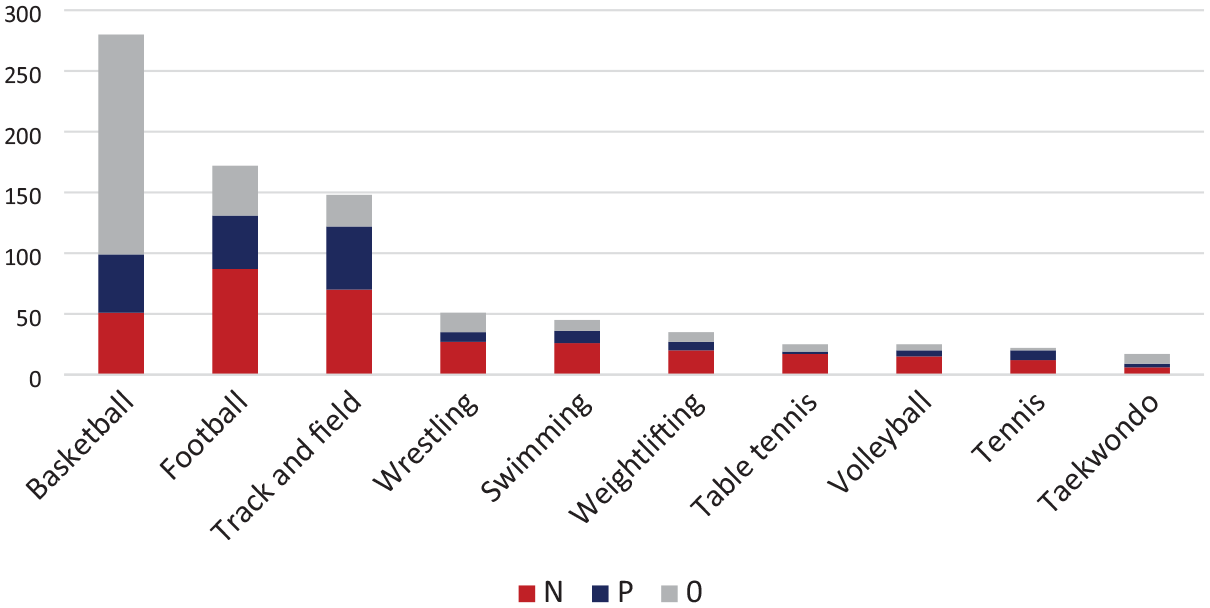
Sentiments relating to the top 10 most discussed sports (based on number of news items).
In football, the issue of naturalized athletes is also mainly discussed in relation to Turkey’s national squad. Here the majority of the news is negative in sentiment. The common issue in these items is around the naturalization of football players in a nation with a population of 80 million, with more than 30 million people under 25 years of age as of 2020 (TurkStat, 2021). Another issue centers on the thriving of the Turkish originated football players in Europe (such as Mesut Özil and İlkay Gündoğan) as they are seen as the success of the sport development systems of the other nations, when compared with Turkey’s deficiencies in sport development and youth sports policy. The positive and neutral sentiments, on the other hand, are mainly related to the performance of naturalized football players. Despite their limited number, these names are frequently mentioned due to football’s general popularity. For example, after receiving Turkish citizenship in 2006, Mehmet (previously Marco) Aurelio of Brazilian origin became the first naturalized player in the Turkish national football team, going on to play for the team until 2011.
Track and field follows basketball and football with a majority of negative sentiments. The total frequency of news items on track and field is almost as high as football, mainly due to Turkey’s naturalized athletes of African origin competing in international sports events. Most specifically, in 2016 Turkey achieved a historical success by winning 12 medals in the European Athletics Championships in Amsterdam (NTV Spor, 2016). Despite such success, the acquisition of this achievement by naturalized athletes of Kenyan, Jamaican, Ethiopian, Cuban, South African, Azerbaijani, and Ukrainian origins has been criticized in the Turkish media. In parallel with the criticism in domestic coverage, naturalized athletes in the Turkish track and field roster have also received attention and criticism from international media (Bloom, 2016; Rowbottom, 2016; Tremblay, 2016). In addition, naturalized athletes of Russian origin in the Turkish wrestling team have also been criticized since wrestling is known as the “ancestor” sport of Turkey and in which the country has won its most Olympic medals.
Findings and discussion
Our study shows that Turkish media is largely critical toward naturalized athletes. The ratio of sentiment polarities also shows that this tends to fluctuate depending on the newspaper. Among the various outlets studied, Cumhuriyet, as a social democrat source, presented the most rigid criticism, criticizing the preference of naturalized athletes over investing for talent cultivation in Turkey. Sabah, as a center-right newspaper, also regularly expressed an antagonistic position toward naturalized athletes and policies oriented toward naturalization in sports. Despite being owned by the same media family, sport newspaper Fanatik demonstrated more negativity and hence criticism toward naturalized athletes compared to Milliyet, whereas Milliyet has shown the mildest sentiments. On the other hand, columns have shown more noticeable differences in comparison among newspapers. Aside from Milliyet, all of the newspapers in our corpus had predominantly negative sentiments in their columns, with Cumhuriyet being the most severe. The most salient issues in criticism over Turkey’s choice of naturalized athletes addressed the lack of attention paid to Turkey’s youth population and pursuing “shortcut” success with naturalized athletes in the international arena. Positive sentiments supported naturalized athletes in Turkey and appraised their contributions to the nation.
Unsurprisingly, the trends depend on years, tending to appear in parallel with the occurrence of major international sports events. Turkey’s 2008 Olympic squad was made up of 23.9% naturalized athletes, then dropped to 15.2% in 2012, and rose to 32% in 2016 (Istif Inci, 2020). On the other hand, in 2012, Turkey hosted the World Athletics Indoor Championships and participated with a national squad that consisted of 15% naturalized athletes. This was the time when the number of negative news items reached its peak as criticism arose.
Basketball, football, and track and field have been the most discussed sports in the context of naturalized players of Turkey. As a distinguishing factor in football and basketball, head coaches decide who to naturalize, as they openly express their motives and reasons for their selections on naturalized players in the media. In addition, when the decision to select an athlete to naturalize is from those who already play at a Turkish club, its name and the sport featured more in the news items. Regarding the sentiment frames, football and track and field had the most negative sentiments. Particularly in football, the criticism over naturalized athletes has mostly been associated with the lack of efficient talent identification and development despite the high young population of Turkey.
Overall, Turkish newspapers’ coverage of naturalizing athletes is influenced by a variety of elements, including political ideology, sports coverage, the athlete’s country of origin, the historical setting, and public opinion. Regardless of sporting success, some newspapers may support naturalizing athletes, while others may oppose it as a threat to local talent cultivation. Turkish newspapers’ coverage of the story also vary depending on the origin country of the naturalized athlete. For instance, an athlete from a country with strong cultural or historical ties to Turkey (e.g., Azerbaijan) might receive more favorable coverage from a newspaper than an athlete from a nation with weaker ties.
Apart from the findings of the main research questions, the tendency of the general discussion shares both similarities and differences with international examples (e.g., the case of the “plastic Brits”). The debate of “buying sporting success,” as in Jansen’s (2019) study, is similarly observed in the news items we studied. On the other hand, while the “plastic Brit” debate in the United Kingdom involved accusations toward naturalized athletes based on their “alleged (ab)use of team GB to fulfill their Olympic dreams” (Samuel, 2011), such criticism is not pointed at naturalized athletes in the Turkish media. Nationalist accusations and criticisms raised against naturalized athletes in the United Kingdom such as that seen in the case of Tiffany Porter 5 (Bull, 2012) have not been observed in the Turkish media. Further research might compare different country examples on the basis of media reflections.
Conclusion
Nationality transfers in sports are always contested and subject to heated debate in media reports (Jansen, 2019: 972). Countries whose national squads are composed of a higher number of naturalized athletes tend, therefore, to be criticized in both national and international discussions, with Turkey having frequently been the focus of attention in this discourse. To this end, this study has analyzed how Turkish media framed naturalized athletes between the years 2008 and 2020, based on the data from four major national newspapers.
The majority of frames from our newspaper dataset expressed neutral and negative sentiments. The newspaper-based differences in comparison also showed different sentiment frames and trends for each newspaper, and the columns have been the platforms for the heated debate. The yearly comparison of news items addressed that the frequency of news about naturalized athletes in Turkish media mostly occurred during and after major international tournaments as athletes receive more media attention with their performance. Regarding the distribution of sports in the news items, basketball, football, and track and field have been most discussed in the context of naturalized athletes in Turkey, considering their popularity and the regulations that allow naturalized athletes in the national squad.
The newspapers approach the topic of naturalized athletes differently depending on their perspectives, biases, and values. Having naturalized athletes in national teams may give rise to charges of opportunism and systemic exploitation as observed in the news excerpts. This research shows that the perspectives on a certain issue highly depend on the ideological differences in the Turkish media. Not only in the case of naturalized athletes, but in other issues, such as the media coverage of the Gulf Crisis in Turkish newspapers (Furman et al., 2019) also differed according to the ownership of the media source. Therefore, while most research studying the media coverage of sport-related issues in Turkey (e.g., Arslan and Koca, 2007) approach the media cumulatively, a fragmented perspective on news sources can offer more advantages for analyzing the role they play. The cumulative perspective, on the other hand, has the potential to reveal a greater picture of the issue, which is also significant to generalize about how an issue is portrayed. In this regard, we opted for analyzing our media sources by taking both perspectives into account. Another dimension of this study was approaching the types of news items separately where columns appeared to be the most distinguishable in views about naturalized athletes.
One limitation of this study concerns the lack of a far-right or far left-wing newspaper in our corpus from which to compare data. Further research might aim to add more yearly data and a more nuanced selection of newspapers from a wider spectrum of perspectives.
Footnotes
Declaration of conflicting interests
The author(s) declared no potential conflicts of interest with respect to the research, authorship, and/or publication of this article.
Funding
The author(s) received no financial support for the research, authorship, and/or publication of this article.
