




Abstract
Digital technology in primary education can both be distracting and increase attentiveness. Many students with Special Educational Needs (SEN) have difficulties with skills that address attention, and teachers are expected to provide support. Such skills are referred to as Executive Function (EF) in neuroscience, relating to self-regulation, attention shifting, and inhibition of behavior. This systematic literature review outlines research on primary education during 2000–2022 that relates students’ EF and digital technology through empirical data and suggested SEN-inclusive educational interventions. 288 full-text journal articles were assessed, and 26 were included for analysis. Findings include common game-based solutions for EF and SEN support, enabling explicit goals, short teaching activities, and recorded outcomes. Other examples include EF skills training and classroom management with digital monitoring devices. A substantially increased research interest during 2021–2022 was observed. Aspects needing further research are discussed, such as more special education views with cost-effective behavioral approaches.
Keywords
Introduction
Primary school students’ interests related to digital technology (e.g., communicative devices and ubiquitous software) often serve as a beneficial exploratory medium for learning, but other times it can lead to distracting, stressful, and overwhelming outcomes (Meltzer, 2018; Palalas, 2018). Such outcomes may affect students with Special Educational Needs (SEN) to a greater extent. For example, diagnostic criteria nowadays commonly employed with Attention Deficit Hyperactivity Disorder (ADHD) and Autism Spectrum Disorder (ASD) directly relate to students’ difficulties with attentiveness (Bishara & Kaplan, 2022; Meltzer, 2018; Strosnider & Sharpe, 2019). The indicated risks of adverse outcomes on students’ skills are in several studies related to short attention span for educational activities and smartphone addiction dysphoria (Lindell & Hrastinski, 2018; Moebert et al., 2015; Palalas, 2018). With the increased prevalence of diagnosed students with ADHD and ASD, teachers are expected to address SEN for a general inclusive education to a greater extent than before (Tegtmejer et al., 2022).
In medicinal and developmental cognitive brain research, a propensity for distraction has been attributed to neurological pathways related to Executive Function (EF) skills, a term encompassing self-regulation and inhibition of behavior to meet learning goals (Bishara & Kaplan, 2022). EF also relates to the students’ shifting ability, which directs attention and focuses between separate but related aspects of a given task, which many students with SEN also have difficulties with (Bishara & Kaplan, 2022; Strosnider & Sharpe, 2019). While EF skills are, as Bernstein and Waber (2018) point out, domain-general and therefore hard to reliably parse, many batteries of standardized medicinal tests have been constructed to determine typically affected areas according to neuropsychological measures that often inform special education practitioners about their students’ difficulties.
While digital technology may encompass risks, many primary education practices nowadays rely on digital technology and have also found ways to increase students’ attention and participatory capacity (Gunnars, 2021). For example, assistive support from digital technology regularly used in special education practice appears to improve the performance and participation of students with SEN (Basham et al., 2020). Such trends relate to an increasingly powerful interconnectedness between mobile ubiquitous technologies and personalized pedagogies that have emerged since the start of the 21st century (Crompton, 2013). The development of such personalized pedagogies has ties with digital technology adoption in special education practice, such as alternative and augmented communication that help students with SEN to communicate in the educational process, especially students with ASD (Sigafoos et al., 2016). Further, to many students with ADHD, digital technology that assists EF difficulties are essential aid in managing daily tasks (Lewandowski et al., 2016). Massive adoption of digital technology does generally not seem to slow down either, as the complex and powerful iterations “will continue to manifest in future classrooms” (Papa & Jackson, 2021, p. 154).
Reinforcement of EF has been determined as crucial in the early years of students’ education, with longitudinal links established to educational performance as they grow older (Strosnider & Sharpe, 2019). As many students with SEN have EF difficulties, special education researchers such as Daley and Rose (2018) argue that the general curriculum often disables achievement opportunities for students with SEN due to a lack of inclusive assistance and support. However, Dietrichson et al. (2022), on the other hand, claim that the positive causal evidence presented in several literature reviews between EF and educational performance is small and not strong. As such, educational interventions that relate to digital technology and students’ attentiveness present challenges for in-service teachers that manage a classroom, as it may not always be clear when the risks of interventions outweigh the benefits. For example, other large-scale inclusive national initiatives for educational interventions in countries such as the U.S. have not increased students’ performance in primary education as much as intended, in part due to poor implementations and underestimation of challenges (Algozzine et al., 2021).
A weak evidence base for EF interventions complicates special education practice that is highly dependent on reliable evidence of what works and what does not (Bryer & Beamish, 2019; Butcher & Jameson, 2016). While the causal indication between EF and educational performance seems clear and intuitive despite size and strength, more examination of the literature could be helpful when considering how educational interventions relate to EF. Such examination would also be useful for special education practice and especially for the general inclusion of students with SEN.
Therefore, this systematic review aims to highlight the research on digital technology that emphasizes students’ executive functions and supportive special educational teaching interventions in primary education classrooms.
Assistive Technology in Primary Education as Essential Aids for Special Educational Needs
Just as teaching with digital technology in primary education encompasses risks, assistive interventions, in contrast, can support or even improve attention and participatory capacity for curriculum activities (Gunnars, 2021). For example, digital technology is commonly emphasized in special education research to provide assistive interventions for disabilities, such as enabling independence in movement, controlling technology in the environment through small motor responses, and translating messages across multisensory feeds (Keifer-Boyd & Knochel D, 2019; Stasolla et al., 2016). Such research relates to including students with SEN in mainstream education systems, which involve “a never-ending process of breaking down barriers to participation” (Bellour et al., 2017, p. 11). Assistive interventions with digital technology are expected to not only drastically improve performance and participation for all but especially for individuals with SEN, spanning decades of “long-standing concern in special education (e.g., role of assistive technology)” (Basham et al., 2020, p. 41). For example, software applications that address EF are, to many students with ADHD, a real need and “essentially aids that attempt to make life management more efficient” (Lewandowski et al., 2016, p. 67). As such, examining the relationship between EF and digital technology in primary education may be relevant for including students with SEN.
Teaching Examples, Messy Practices, and Inclusive Human Rights for Students with Special Educational Needs
While relatively new in an educational context, EF has increased research frequency in the 21st century, expecting to improve school-based interventions that aim for learning outcomes (Jacob & Parkinson, 2015). However, EF support in primary education still needs to be highlighted in specific ways, with policy documents instead focusing on general descriptions of SEN and inclusive human rights for all (Wermke et al., 2020). In line with such policy developments, an international increase in psychiatric diagnoses has consequences for primary education classrooms as they are now expected to address SEN to a noticeably larger extent than before (Tegtmejer et al., 2022). Teachers aiming to provide supportive and inclusive assistance may not be sufficiently guided with the required contingency for teaching interventions due to “a disconnect between neatly formulated policy documents and ‘messy’ practices” (Wermke et al., 2020, p. 1). In effect, general curriculum policy formulations may disable students with SEN and EF challenges due to the difficulties in determining appropriate supporting interventions with digital technology to standardize (Daley & Rose, 2018).
In contrast to such policy documents, special education research may provide outlines of teaching examples with digital technology for SEN (Butcher & Jameson, 2016). Such outlines include interventions that support EF through digital assistive technology (such as extensive descriptions and examples of specific software (“Apps”), websites, and tablet devices) and multisensory methods in primary education (e.g., Strosnider & Sharpe, 2019). Further, peer-reviewed researchers may be required to emphasize empirical data related to thought-through interventions to a greater extent than policy-makers. According to Sutton et al. (2019), such a requirement is suitable to highlight in systematics reviews. Highlighting the rigor of empirical data is also relevant when two disciplines with different methodological foundations emphasize the same topic. This is the case with special education research on EF in primary education, as it comprises both medicinal and developmental cognitive brain research and educational research in the learning sciences.
Supporting Attentiveness with Digital Technology through Simpler Behavioral Sequences
While there is a great deal of assistive digital technology for students with SEN, simply giving students access to digital devices may have unintended consequences (Tesolin & Tsinakos, 2018), such as increasing EF demand for students. Instead, it is crucial to provide explicit and systematic behavioral instruction when supporting students with SEN, as it is often required to meet particular “difficulties generalizing learned behaviors across people, contexts and materials” that difficulties with EF may entail (Charlop et al., 2018, p. 108). These behavioral instructions and reinforcements are separated into sequences of more minor educational activities with various representations, a process also referred to as modeling, commonly used to support students with ASD (Charlop et al., 2018). Such educational methods with behavioral sequences are also often generally applied for students with SEN as they “have responded well to instruction when task analysis has been used to break down teaching activities into manageable chunks and thus to present lesson content in a simpler structure and sequence” (Bryer & Beamish, 2019, p. 7).
Thus, students with SEN benefit by learning to prioritize and plan tasks through EF skills training teaching methods with multiple representations allowing for multisensory input to “help students access their outline, rough draft, notes from resources, and citations quickly and easily” (Strosnider & Sharpe, 2019, p. 71). In addition to behavioral instruction, digital technology has been highlighted as especially suitable for teaching methods that relate to multiple representations (Gunnars, 2021). As these methods often are emphasized in special education research (Bryer & Beamish, 2019), they might relate to EF support interventions for the inclusion of students with SEN in primary education. This also relates to methodological differences in practice across primary education, special education, and medicine, which in addition to the EF support intervention focus, also will be examined in this systematic literature review through the following research questions:
How are students’ executive functions emphasized by the empirical data in research that relate digital technology to primary education classroom teaching?
What special educational interventions for executive functions support related to digital technology are described in research of primary education classroom teaching?
Method
This systematic review follows the recommended steps outlined in the PRISMA-P model for screening of papers (Kitchenham, 2004; Moher et al., 2015). Further, this review aligns itself with a common systematic review emphasis on the comprehensive synthesis of research evidence, in addition to adhering to general guidelines (Sutton et al., 2019). Finally, a qualitative inductive analysis outlining research trends (Thomas, 2006) was related to the empirical evidence synthesis according to the aim and research questions.
Search Terms
The scope of this article relates to three parts: the first part relates to learning in primary education, the second part relates to digital technology, and the third part relates to executive function. All parts were assumed as relevant for special education research, albeit most pronounced in the third. Scopus was chosen as, according to Visser et al. (2021), it includes article results at a substantially higher level than other popular search engines, thus assumed to include the most relevant results of educational research. PubMed was assumed to encompass medicinal and developmental cognitive brain research to a large extent. Both of these search engines are assumed to supply special education research. Search terms in the SCOPUS and PubMed database for title, abstract, and keywords were, after careful experimentation for relevant words, executed as follows:
(primary AND (school OR education* OR learning) AND (digital OR technology)) AND (“executive function” OR “self-regula*” OR “inhibition” OR inhibitory OR shifting).
Considering the impact of ubiquitous learner-centered innovations enabled by mobile consumer-available digital technology at the end of the 20th century (Crompton, 2013), the full texts had to be published from the full years of 2000–2022. Only articles published in journals were selected due to the high rigor of the peer-review process, in addition to being written in English. Further, for the PubMed search, filters were used for human as species, and child: 6–12 years as of age.
The search yielded 340 results. The low result number can be explained by the EF term being relatively new, in addition to direct neurological links rather than educational and special educational ones.
Screening
During the screening, it became evident that the abstracts did not always specify if executive function was related to learning in a given primary school classroom. Thus, a systematic full-text selection process was warranted to comprehensively exclude any article not discussing related phenomena, which was made possible due to the low amount of search results. The entire screening process described below has been evaluated by a research team of colleagues, with 99% interrater-reliability.
The inclusion criteria for paper selection follow the aim outlined above, applied to full-text documents: • The first inclusion criteria require articles to include data from in-service teachers or students in primary education. • The second inclusion criteria require articles to relate digital technology to learning in primary education. • The final inclusion criteria require articles to discuss support for executive function in primary education.
For further details of paper selection criteria, see the included Online Appendix A. Of the 340 results, 288 had accessible English full texts and were unique. Exclusion of these documents was performed in the following order: 228 as they did not relate primary education in-service teachers or students to learning, 11 as they lacked any research evidence or were reviews, 13 as they related methods without digital technology and, 10 as they did not discuss executive function. Finally, 26 were included for analysis. For full titles, publication date, and estimated empirical work of each article, see the table in included Online Appendix B. See Figure 1 for PRISMA flowchart detailing the selection process. PRISMA flowchart of the paper selection process.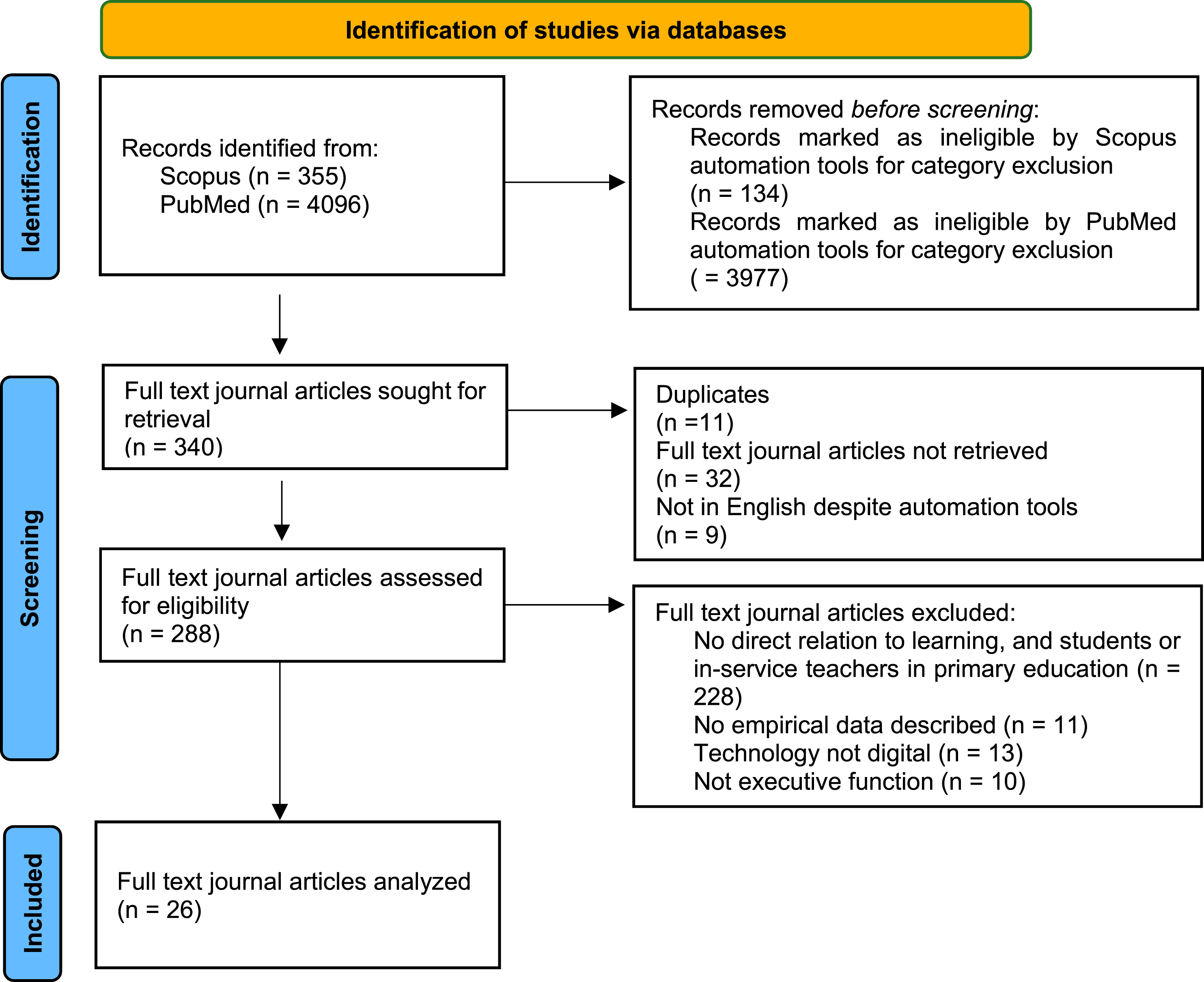
Findings
Over half of the included articles were published after 2020, confirming claims that executive function research is new in the primary education context. No specific journal is overrepresented. Educational journals were much more common than medicinal journals. There were no inclusions before 2008, which may relate to discussion of personalized teaching strategies alongside mobile ubiquitous technologies as not fully coming to fruition until then. See Figure 2 for publication year frequency. Publication year frequency of included articles.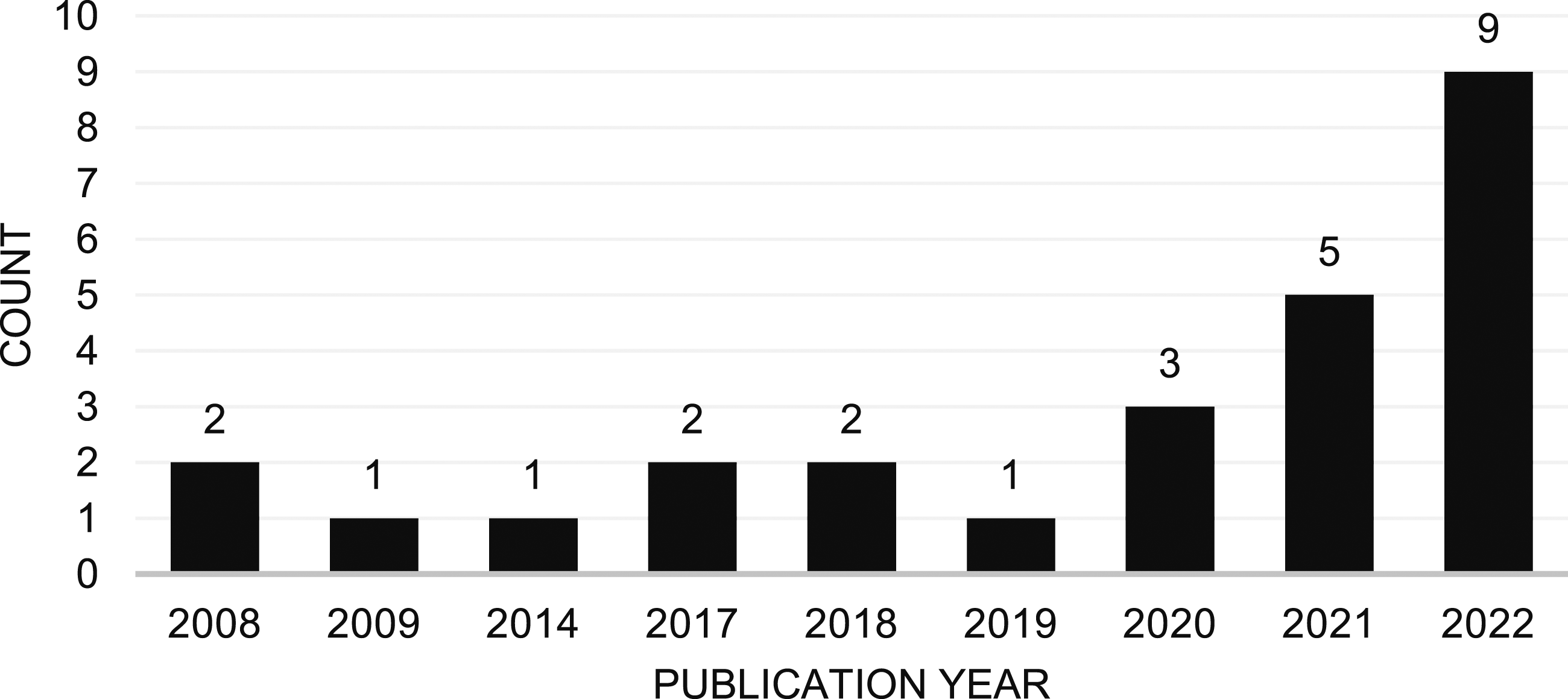
Notably, the included articles published before 2017 formulated the related topics to EF with digital technology as an emphasis on personalized teaching strategies: “differentiated curricular-based instructional lines and corresponding learning procedures” (Mooij, 2009, p. 15). Personalized teaching strategies in these articles include concepts such as “p-Learning”, encompassing “curriculum and learning support to meet the needs and aspirations of individual learners irrespective of ability, culture or social status” (Underwood & Banyard, 2008, p. 236). While the personalized teaching p-Learning concept described above from articles in 2008–2009 may have gone out of style, the recommendations for teacher practitioners share many similarities with recent EF research that relates digital technology or are at times even identical. This also includes special education research outlining assistive technology.
Relating Data Collection Methods to Executive Function
Students’ EF in primary school classrooms may be emphasized differently according to the empirical evidence included in the article. For example, suppose the findings were based solely on teacher self-reports, such as interviews or surveys. In that case, an analysis could emphasize a change in teacher beliefs or acceptance that would increase intervention frequency for digital technology with EF support, thus indirectly addressing students’ EF and SEN inclusion. However, as EF is inherently related to as a skill of an individual, such an analysis may be considered as lacking in rigor due to the indirect emphasis. This is evident in over half of the included articles, which directly analyzed students’ behavior data to discuss EF-related topics. The article by Chan et al. (2022) stands out regarding solid rigor, with many pre- and post-intervention data collection test methods emphasizing EF evaluation for language and reading. In contrast, 7 articles relied solely on teacher self-reports to emphasize students’ EF. No articles discussed teacher executive functions.
Data Collection Methods and Region of Included Articles, Where Each of the 26 Rows Represent a Unique Article Entry.
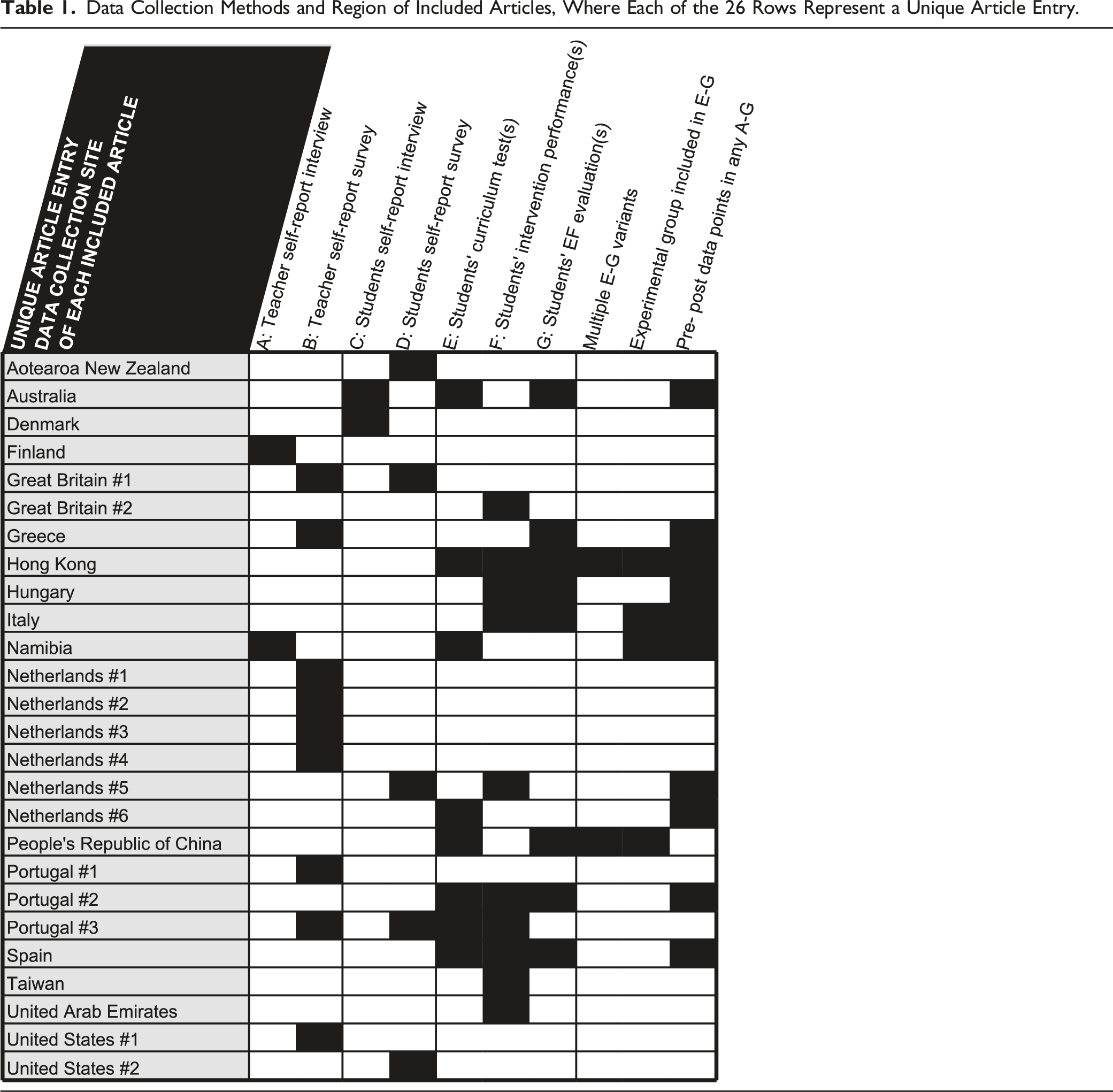
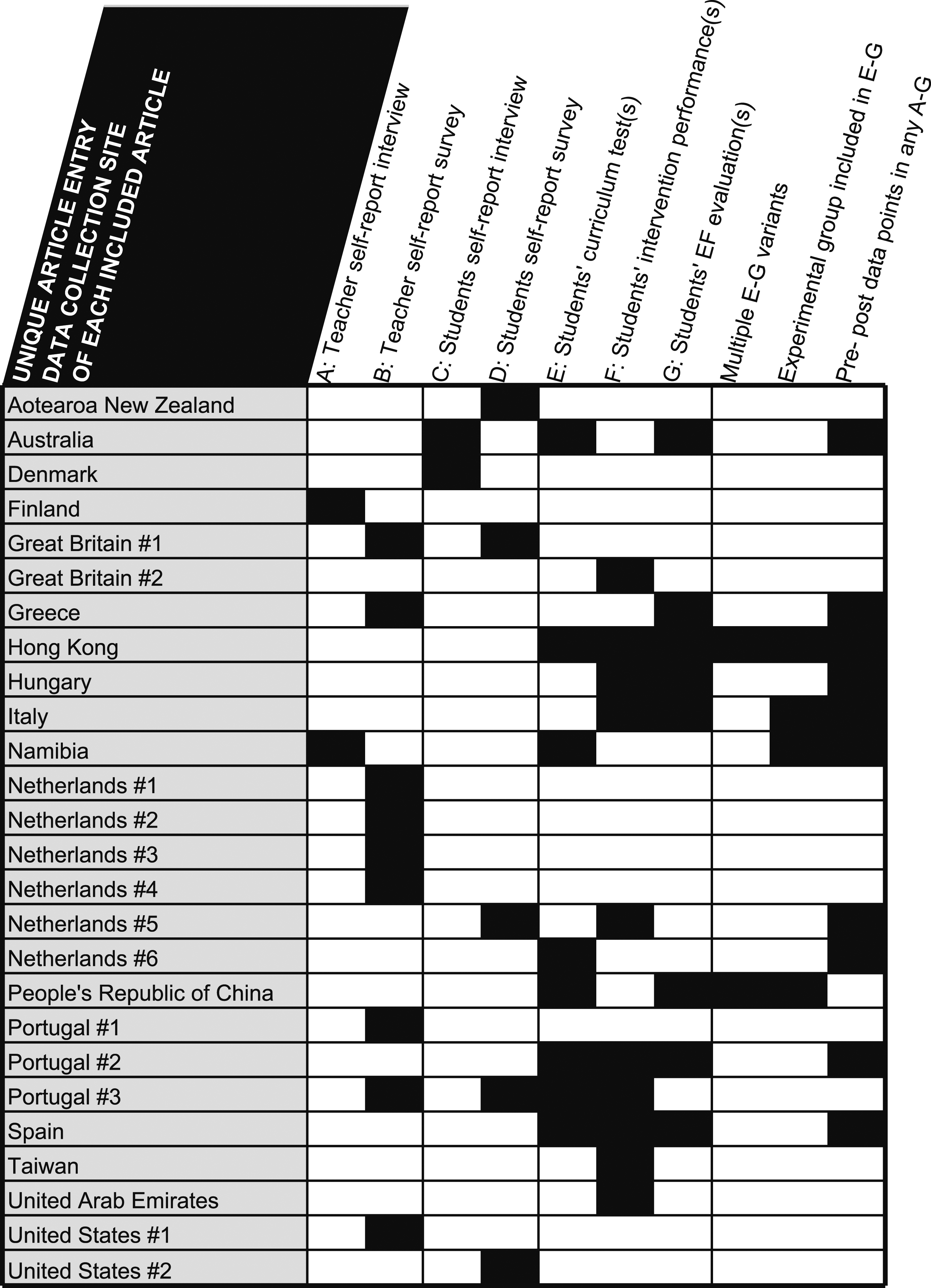
One interesting finding relating to the various methodologies in the included articles is the different approaches to performing EF evaluation pre- and post-intervention tests according to medicinal practice or focusing solely on curriculum-based tests. While some studies synthesized both of these test types, it should be noted that the attributed rigor and preferred test may depend on foundational methodology according to either discipline. For example, the EF evaluations may strengthen the rigor of a proposed intervention related to supporting and assisting students’ EF, and the curriculum tests may empirically relate to the suitability for teaching methods in primary education classrooms or special education practice.
Eye Movement EF Evaluation Data and Executive Function
By scanning students with magnetic resonance imaging as they performed school curriculum reading tasks, Zhou et al. (2021) mapped out and monitored structural and functional connectivity patterns enhanced digitally through brain connectomics, in addition to a comparison between adults performing similar tasks during scanning. In all children, and additionally adults with poor language comprehension, they observed a tendency to rely on strategies with sound: “phonology-related brain circuits played important roles in children’s reading before they develop into fluent readers” (Zhou et al., 2021, p. 6). In contrast, reading-abled adults relied on vision-related strategies for full words rather than individual text, enabled by processing automaticity (Zhou et al., 2021). Further brain analysis showed an interregional correlation when subjects’ low automaticity in text reading increased the demand for the dorsolateral prefrontal cortex, which is associated with EF (Zhou et al., 2021). With a similar basis for eye movement emphasis, Chan et al. (2022) approached students’ EF evaluation through eye movement control and consequently, suggest and confirm positive EF skills training improving effects of proposed supporting interventions for eye movement, in part to reinforce students’ visual strategies.
School Performance Curriculum Test Evaluation Data and Executive Function
Several studies highlighted identifiable learning progress as crucial for students’ EF skills training. For example, Molenaar et al. (2019) compared students’ self-reports of goal attainment with actual performance and observed typical over- and underestimations of their own performance, indicative of difficulties with EF. Further, consequences of incorrect goal attainment evaluations include “a reinforcing effect that may induce an erroneous regulation of effort”, effectively disturbing decisions regarding correct time spent practicing toward learning goals (Molenaar et al., 2019, p. 10). Intending to prevent such detrimental effects, another article by the same first and second author emphasized adaptive learning technology that assisted both students and teachers with real-time feedback of performance, such as visual graphs that show probable associated learning gain by moment-by-moment learning curves with automated scripts as related to performance and behavior (Molenaar et al., 2021). In such a scenario where instructional material is altered, part of the natural EF “control and monitoring loop is taken over by the technology” through assistive activity support (Molenaar et al., 2021, p. 2).
Lack of Critical Special Education Approaches
As background to the aims of this article, students with SEN are related to EF. While all the included articles may be relevant for an inclusive special education purpose, only 11 explicitly discussed students with SEN. This finding was unexpected, as assistive digital technology presents many opportunities for this kind of support.
Another finding lacking prevalence is critical views. Emphasizing a critical view, such as the adverse effects of digital technology in primary education classrooms on students with and without SEN, was very uncommon. Relating a similar theme of distraction and smartphone addiction outlined in the background of this article, Schilhab (2017), as a notable exception, discusses the detrimental social effects of tablet distribution among students. In the article, alarming tendencies for the students’ social lives were lifted next to their EF, but no concrete intervention was discussed. Another article also emphasized EF-related adverse social effects in non-digital contexts, such as detrimental “impulsogenic forces for self-control and self-regulation” as a result of students’ “heavy (>2 hr/day) internet use”, but highlighted the social skills in digital context as an equally counterbalancing benefit (McNaughton et al., 2022, p. 238). One thing to note about the lacking critical views is that studies in the neuroscientific research field may already incorporate the detrimental educational effects of heavier digital technology use but omit the primary education context due to disciplinary scope. Similarly, parts of special education research conducted for contexts other than primary school could reveal critical aspects left out in these findings.
Proposed Interventions and Related Curriculum Topics
Of the included articles, 19 proposed and performed some special educational intervention scalable to inclusive curriculum teaching in primary education classrooms. As discussed previously, one example of such intervention is eye movement training. Other, more common examples are described below.
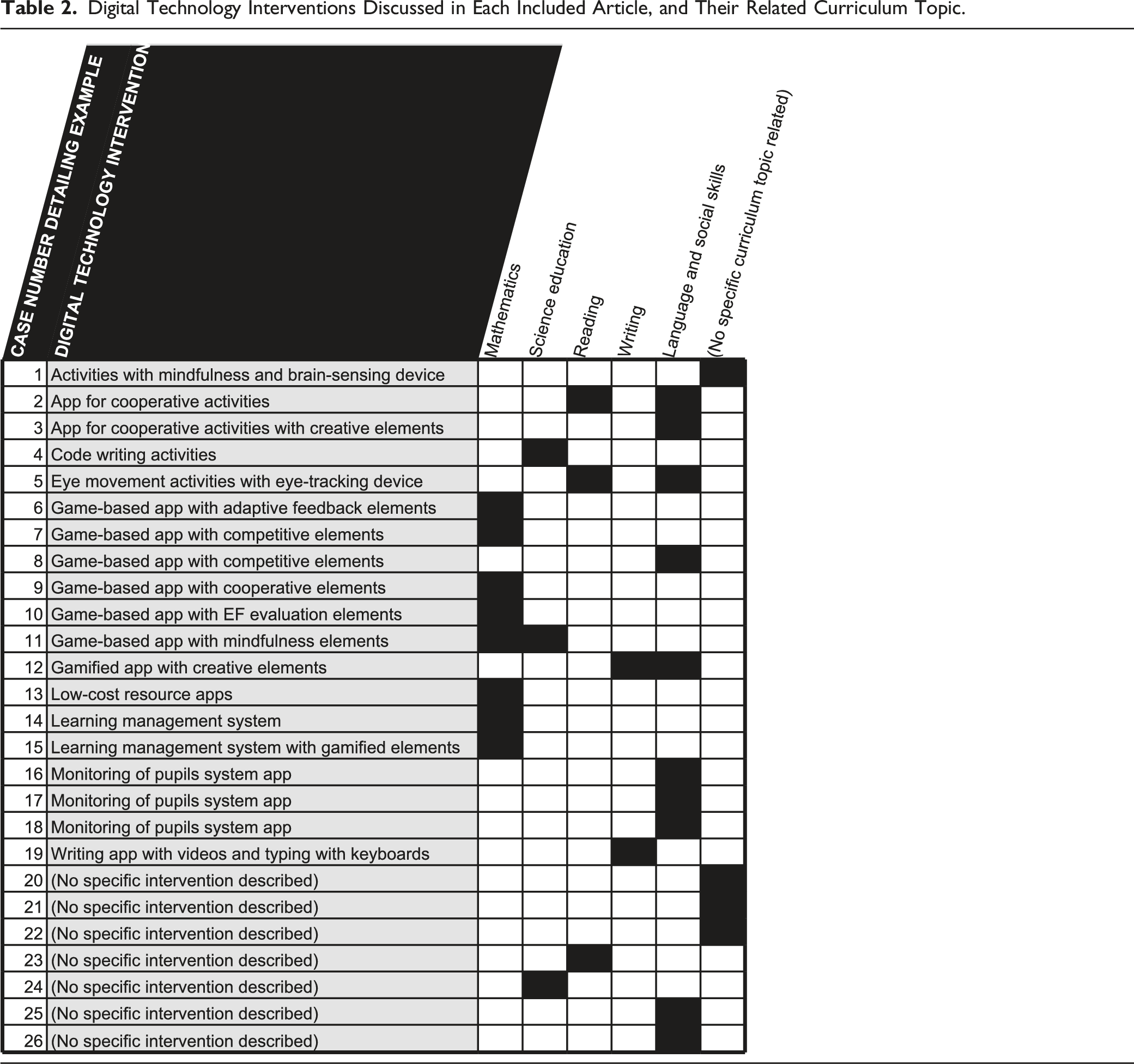
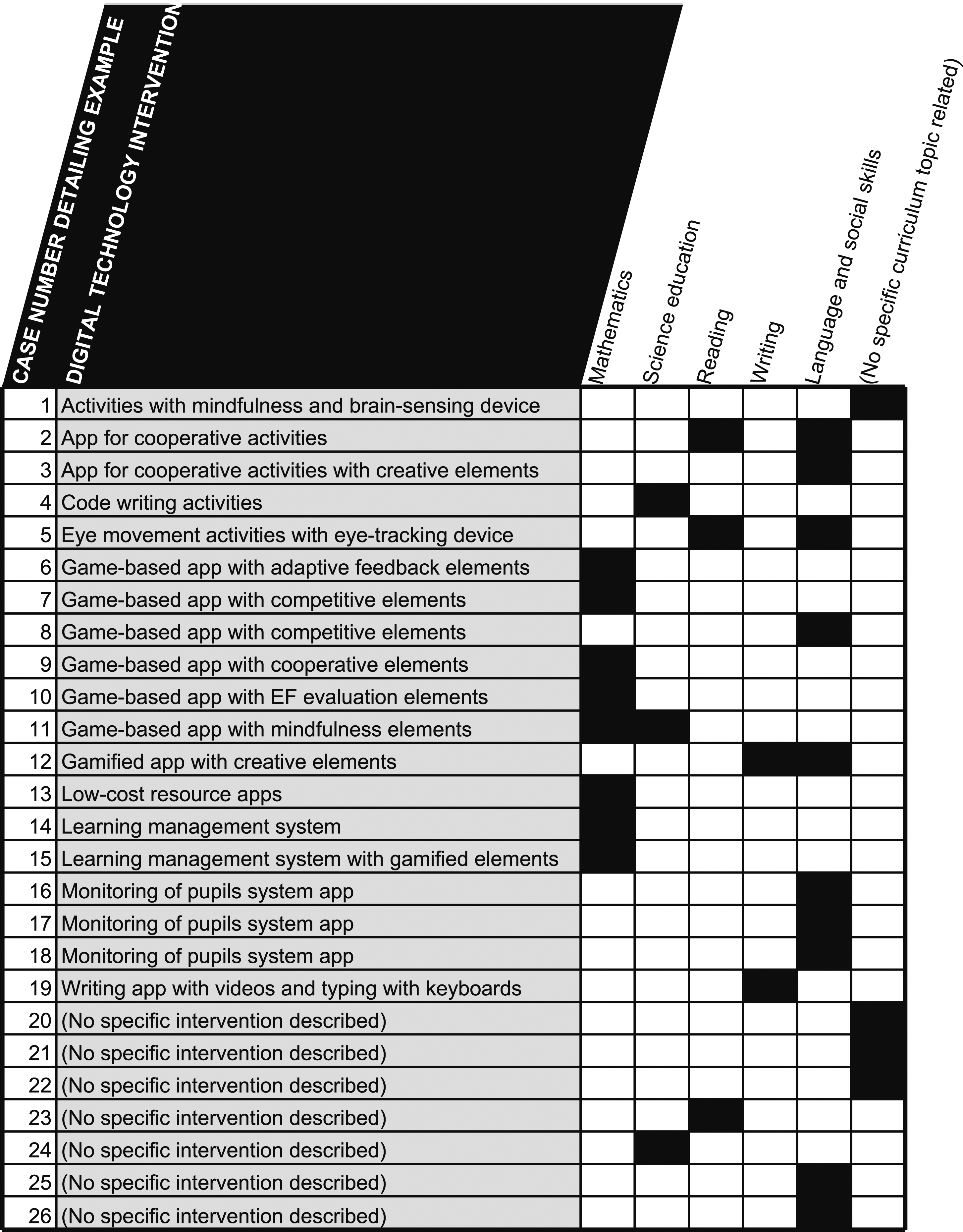
Digital Technology Interventions Discussed in Each Included Article, and Their Related Curriculum Topic.
Game-Based Apps
The most common classroom intervention proposed in the articles relates to stand-alone apps that are game-based, i.e., have sequences of specific, simple educational activities with recorded behavioral outcomes, often installed on tablet devices. One example of an article discussing a game-based intervention with educational puzzle activities includes Molenaar et al. (2019), as described above, concerning students’ self-evaluated goal-attainment. The popularity of these apps may be attributable to their easy implementation in mathematics teaching, which most of them were, as mathematic tasks are often split into sequences with shorter segments and have clear solutions for curriculum assessment that computer scripts can automate for the teacher or special education practitioner.
Gamified Apps
Two articles proposed interventions that include stand-alone apps for devices that are gamified. These apps are distinct from game-based apps in their general application and consist of explicit and manageable short and long-term goals with a dynamic reward system, enhanced feedback, and recorded outcomes. One example of an article discussing a gamified intervention is Qushem et al. (2022), analyzing a classroom management intervention for mathematics teaching that aid the teacher through an automated system reporting students’ time on task and further compared and analyzed optimal length for time on task in relation to various effects on students’ motivation might have had on the performance data.
Executive Function Skills Training
Other proposed interventions include various educational and special educational teaching activities with digital monitoring devices or software related to EF evaluation or EF skills training, such as apps for cooperative activities and apps with “mindfulness” emphasis, i.e., reflective, resting, or recovery activity without goals. The article by Vekety et al. (2022) emphasized mindfulness training as the main focus for EF skills training interventions by including a brain-sensing device for various school activities. Cooperation apps supporting cooperative abilities were assumed to support EF as social abilities, such as turn-taking and role enactment, as these social abilities share similarities with EF. Both the resting recovery aspect of mindfulness and role enactment for cooperation training are of special note regarding special educational relevancy for students with EF difficulties, as very common consequences of such difficulties are burnout, depression, and lonely isolation as a result of constant hyperactivity and high social variability.
Generally, other studies also related specific curriculum subjects or school curricula to EF skills training in different ways, which will be discussed below. As discussed earlier, the studies related the EF of the students’ differently (see Table 2). To conclude the analysis of this review, the general themes of the included articles according to curriculum topic, proposed intervention, and EF relations will now be summarized.
General Thematic Relation to Executive Function
Four themes that outline how articles relate to curriculum topic, proposed interventions, and empirical data emerged and were accounted for in each article if they emphasized it strongly. 5 articles contained two of these strong theme emphasis, and the rest focused primarily on a single theme. See Figure 3 for a thematic distribution pie chart. Thematic distribution of article themes.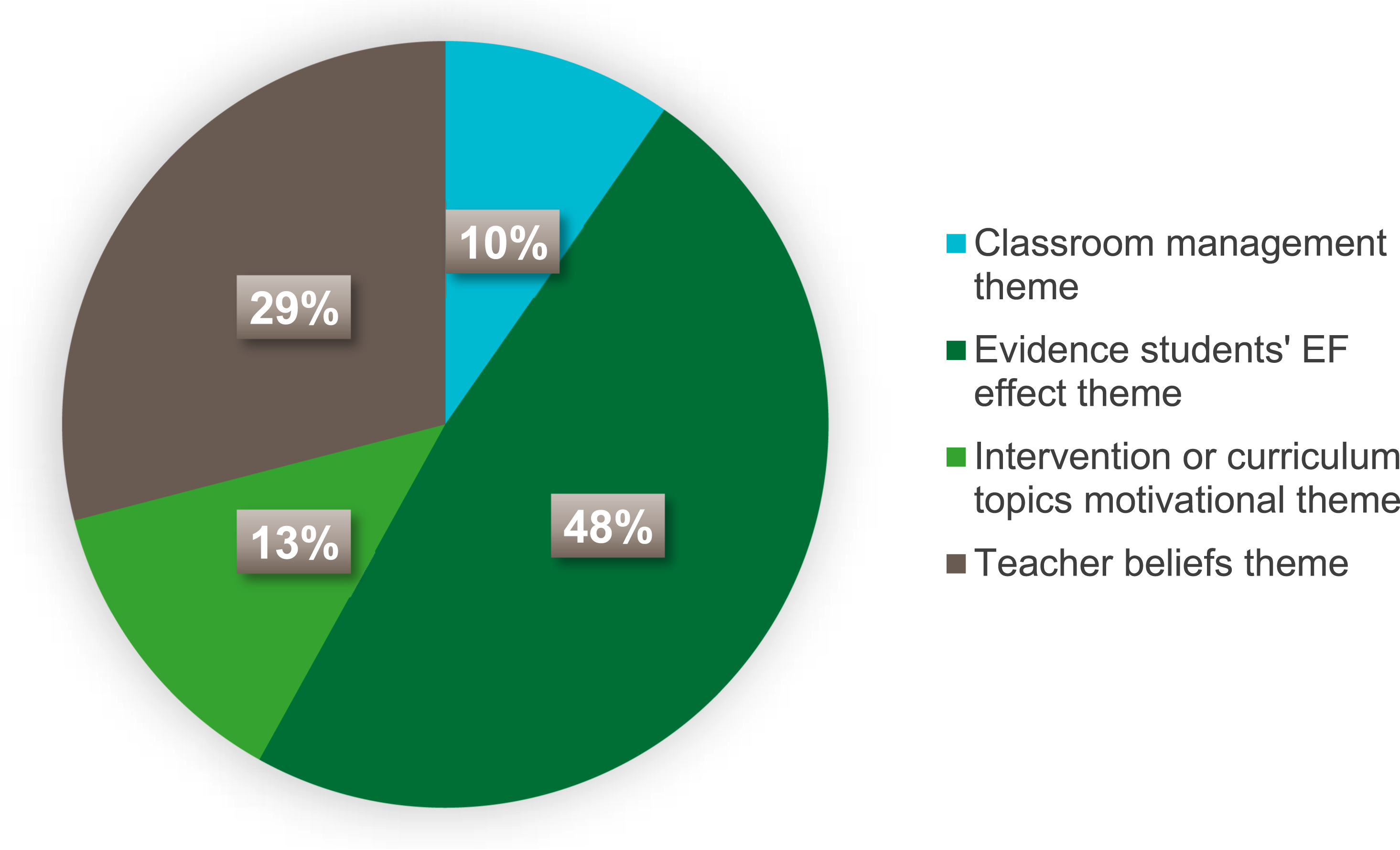
One theme related to teacher beliefs (29% of included articles) in that they were assumed to indirectly affect support for students’ EF and SEN, such as self-regulation of behavior. For example, Mooij (2009, p. 16) exemplifies strategies for teachers that provide instructional supported tasks that enable “more self-regulated learning processes and outcomes”. This theme comprised 9 articles, where 6 did not relate to any specific intervention but instead discussed technology use alongside school curriculum and students’ motivation tendencies in general.
Another theme related to how the proposed intervention or curriculum topic was having an increased effect on students’ motivation (13% of included articles), which was assumed to relate to EF. For example, Mooij (2008, p. 13) emphasize students’ feeling of confidence: “as a pupil exerts more control over his or her own learning processes, the degree of ‘self-regulated learning competence’ increases, which motivates realisation of the next learning tasks ”. The 7 articles that had this emphasis were all but one connected to language-related curriculum topics, such as writing and reading.
The final two themes related to students’ EF either by presenting evidence for proposed intervention, or curriculum topic as having effects upon students’ EF (48% of included articles), or direct relation to teacher aid for classroom management (10% of included articles). With their practical and evidence-based focus, these two themes may be regarded as highly relevant for special education. The two themes consist of 17 studies, where mathematics, coding or science education as related curriculum topics was observed in half of them. For example, Arfé et al. (2020, p. 6) emphasize the suitability of computational thinking for the students’ development of cognitive control, with coding tasks performed by the students analyzed according to “measures of executive functioning”. Similarly, Ferreira et al. (2022, p. 13) discuss mathematics tasks based on measures relating to EF, stating that “improving math performance may actually lead to improvements in executive functions and vice versa”.
Discussion
This review has outlined research that related special educational EF support interventions with digital technology in primary education, which is new in the educational context with notable frequency during 2021–2022 compared to 2000–2018. The first included publication year of the articles as 2008 may be explained by ultra-mobile personal computers introduced on the market in 2006 alongside a research trend for personalized teaching strategies (Crompton, 2013), which mirror parts of the EF theme in this article and thus continue to this day. Trends of empirical data across world regions were observed, such as behavioral pre- and post intervention tests in Asia. Many optimistic indications for supporting students’ attention with digital technology were presented in the included research outlining educational primary school classroom interventions, also relevant for special education practice as EF challenges are common characteristics in diagnosing disorders such as ADHD and ASD (Bishara & Kaplan, 2022; Strosnider & Sharpe, 2019).
The neurological EF term comprises self-regulation and inhibition of behavior and attention to meet learning goals, such as a focus between separate but related aspects of a given curricular activity (Bishara & Kaplan, 2022; Strosnider & Sharpe, 2019). As EF skills training activities benefits from multisensory approaches commonly emphasized in special education (Bishara & Kaplan, 2022; Keifer-Boyd & Knochel D, 2019), they might relate to inherent qualities of digital technology (Gunnars, 2021), and relate to different curriculum topics, seen in the included articles.
There are many indications that EF is important to educational performance (Meltzer, 2018; Strosnider & Sharpe, 2019), which many of the articles emphasized with positive connections. Specifically, intervention examples with strategies to extend time on tasks through methods such as mindfulness training, adaptive learning technologies, and exercises for eye movement training seemed to affect EF support positively (Chan et al., 2022; Molenaar et al., 2019; Qushem et al., 2022; Vekety et al., 2022; Zhou et al., 2021). Generally, mathematics and language were the most commonly studied curriculum topics and were sometimes discussed as directly improving EF (e.g., Ferreira et al., 2022). Thus, such methods and curriculum topics may also considered as appropriate to emphasize in special education. While the literature that investigates the causal connection between EF and educational performance establishes positive connections, a low amount of search results from the screening process in this review confirm previous indications by Dietrichson et al. (2022), stating that the connections currently need to be stronger and need further research. However, a notable rigorous exception to such broad literature assessment includes the large study outlined by Chan et al. (2022), which act as a clear counter-argument.
Implications
Many proposed EF interventions that include digital game-based and gamified adaptive elements were outlined as effective teaching methods which may connect to the benefits of systematic sequences of behavioral instruction as manageable chunks for curricular activities or modeling commonly employed in special education (Bryer & Beamish, 2019; Charlop et al., 2018; Gunnars, 2021). Using well-established modeling methods to target specific EF-related foundational abilities may be a key component for the educational and special educational interventions that train EF skills described in this review. One example of such foundational EF-related ability explored by Chan et al. (2022) and Zhou et al. (2021) is to inhibit eye movement, as the “ability to inhibit a dominant reaction starts developing in infancy, beginning with inhibitory control of eye movement” (Bishara & Kaplan, 2022, p. 870). In addition to direct EF skills training through mindfulness or eye movement training, the proposed interventions with digital technology outlined in the literature may be suitable for teachers to implement in their teaching methods or special education practice in general, thus having the potential to directly impact practice (Chan et al., 2022; Palalas, 2018; Vekety et al., 2022).
With the caveat that the empirical support may be considered weak, an established positive connection in the literature of EF in primary education classrooms with digital technology use further indicate that a greater focus on mathematics, language, and coding activities are suitable and beneficial for students with EF difficulties, as these curriculum subjects have empirically based positive effects on EF. Further related to these subjects, many assistive apps seem to be effective in managing primary students’ tendency to be distracted by activity assistance, such as control and monitoring of goal attainment (Molenaar et al., 2021), rather than training. Such special educational assistive methods are valuable, especially in cases where EF skills training only has limited effect. As generally shown by the increased publication rate during 2021–2022, research of this scope is currently sought after.
Notably, included articles indicated a need for more critical views. One way to interpret the lack of critical views of the included articles in this review can be related to a desire for interventions with empirical data emphasis. For teachers or special education practitioners that seek effective teaching methods with digital technology that support EF, descriptions of interventions may be more useful than complex critical analysis. Such a focus on effective teaching methods may still be considered highly sought after despite their overrepresentation. However, potentially alarming and adverse social effects of digital technology on EF also need further investigation (Schilhab, 2017), with rigorous research methods in addition to including students with SEN in an analysis. Such investigation of adverse social effects may be of notable relevance for special education, considering the relation between challenges with EF and cooperative skills. While critical views that outline messy practices may not address the process for teachers to acquire the necessary contingency for the calibration of their teaching methods (Wermke et al., 2020), such research could highlight dangers with respect to potential risks of digital technology on students’ EF and prevent policy-makers and stakeholders from implementing suboptimal solutions.
Limitations
This review has some limitations, partly attributable to a scope that intersects two distinct research disciplines. For example, all of the included articles that performed EF evaluations according to medicinal practice had to do so in near, or similar- to the primary education school classrooms, as purely experimental laboratory tests for students’ EF skills training may have been excluded during screening. This diminished medicinal and developmental cognitive brain research articles that might have had indirectly relevant findings for the primary education classroom or special education practice. As such, more research from medicinal disciplines may contribute valuable insights for interventions omitted in this review.
There were additional limitations related to the narrow classroom criteria scope. As Strosnider and Sharpe (2019) mentions, EF skills have longitudinal effects. However, longitudinal studies may require different experiment designs to include larger population sizes. As shown by the lack of inclusion of any longitudinal studies in this review, they were most likely excluded during screening for this reason. Thus, further investigations of the effects of the proposed interventions exemplified in this review may require a broader scope and additional empirical research efforts.
Further Research
A stronger empirical basis in further research emphasizing EF and digital technology in primary education could contribute to an educational goal with inclusive teaching methods and interventions. Such methods may be considered as stepping stones to breaking down barriers to participation for students with SEN in primary school classrooms (Bellour et al., 2017). Part of this systematic literature review focused on evaluating the empirical data of included articles, which is common to the particular review type and serve as rigor to the recommendation of stronger empirical basis in further research (Sutton et al., 2019). In addition to having strong empirical support, effective educational interventions for SEN-inclusion also need to be implemented correctly, which needs further investigation (Algozzine et al., 2021). These studies may further connect to what Papa and Jackson (2021) refer to as an increasingly important investigation detailing how learners learn alongside increasingly powerful digital technology.
The scope of this review is complex, as it intersects two research disciplines with various methodologies, which may have had low search results as a consequence. As such, further research is needed that combines rigorous EF tests according to medicinal and developmental cognitive brain research and relates these tests and behavioral data to educational and special educational teaching methods with digital technology in primary education curriculum activities. However, such studies are resource intensive, which may prevent researchers from conducting them. For example, critical views that include classroom data in such research are almost nonexistent. Further, the positive connections of proposed interventions are, with few exceptions, small and not strong.
As the medicinal tests may require extensive resources, cost-effective solutions for primary education research methodologies would also benefit research on this topic in general by lowering the requirements for researchers to perform behavioral data collection. Such studies in further research have the potential to improve teachers’ work conditions, and expand the educational experiences of students with EF difficulties, including many students with SEN.
Supplemental Material
Supplemental Material - A Systematic Review of Special Educational Interventions for Student Attention: Executive Function and Digital Technology in Primary School
Supplemental Material for A Systematic Review of Special Educational Interventions for Student Attention: Executive Function and Digital Technology in Primary School by Fabian Gunnars in Journal of Special Education Technology
Footnotes
Acknowledgments
The screening process of this review has been evaluated by colleagues Jimmy Jaldemark and Ulrika Gidlund.
Declaration of Conflicting Interests
The author(s) declared no potential conflicts of interest with respect to the research, authorship, and/or publication of this article.
Funding
The author(s) received no financial support for the research, authorship, and/or publication of this article.

Supplemental Material
Supplemental material for this article is available online.
Author Biography
References
Supplementary Material
Please find the following supplemental material available below.
For Open Access articles published under a Creative Commons License, all supplemental material carries the same license as the article it is associated with.
For non-Open Access articles published, all supplemental material carries a non-exclusive license, and permission requests for re-use of supplemental material or any part of supplemental material shall be sent directly to the copyright owner as specified in the copyright notice associated with the article.
