



Abstract
The article expands upon care theory in Science and Technology Studies by attending to marine spaces and practices for conservation of marine and coastal ecosystems. Examining the case of efforts to protect the Mediterranean-endemic seagrass Posidonia oceanica, which the European Union declared a priority habitat in 1992, the article evaluates the concrete impact of a 2018 decree from the Government of the Balearic Islands intended to protect the species in the Balearic Sea. In contrast to the strictly established boundaries that predominate in area-based approaches for marine governance, I analyze two care configurations around Posidonia which allow us to rethink the territorialization of marine space: care “blocks” characterize occasions in which the species-specific emphasis keeps attention away from other systems or species, while care “overflows” denote care spilling over to other systems and species. By thinking these concepts in relation to area-based and species-centered approaches to marine conservation, the article contributes to develop care scholarship, enriching its conceptual repertoire and providing tools to better understand the effects of species-centric environmental policies.
Introduction
In recent decades, care theory has become increasingly prominent in Science and Technology Studies (STS). While its initial focus emphasized the role of care in medical and healthcare contexts (Mol, Moser, and Pols 2010), there has been a growing interest in its potential to understand the relation between humans and nonhuman organisms: wild birds (Van Dooren 2015), companion animals (Haraway 2003), farm animals (Cañada, Sariola, and Butcher 2022), plants (Lawrence 2022), or microbes (Rest 2021) are some examples. However, the growing awareness about the climate crisis and a greater will to restore damaged ecosystems have led people to engage in practices of care oriented toward environmental ecologies too (Martin 2022). Arguably the most impactful effort to draw attention to environmental care in recent years is the publication of the widely referenced Matters of Care by María Puig de la Bellacasa (2017), which brought the care perspective to soil relations. In this article, I complement these works by discussing marine environments, which have not received as much attention to date.
Care-based approaches to understanding initiatives for environmental conservation and restoration stem from feminist approaches to ethics, which have called to step away from universalist frameworks for decision-making. Feminist ethics of care bring emphasis to women's experience of caretaking as a key contributor to moral decision making. Contemporary articulations of care extend emphasis directly to nonhuman actors, especially in the realm of feminist science studies (Puig de la Bellacasa 2017; Martin 2022). Care-based research diverges from other endeavors of STS work focusing on human–environment relations in that it delves into how knowledge-making tied in with the environment is embodied, affective, and situated. Analyzing human–environment relations from care perspectives affords a significant departure from considering relations between human and nonhuman animals alone. The environment, as a site that contains interconnected living webs (Puig de la Bellacasa 2017), offers vast opportunities for care practices to affect wider networks. Thus, the environment becomes an expansive site with blurry boundaries: ecosystems and habitats overlap and may merge, as mobile species enter and leave the space, making their mark via regular engagement with less mobile species (plants and sessile animals, alongside others) in the course of their travels. These many rich webs take on new meanings in marine spaces—as Lehman (2021) has argued, the variable, unpredictable, and often hard-to-capture character of marine flows is pivotal to producing knowledge about the sea.
My analysis addresses marine environments as spaces formed by interconnected living webs that can be territorialized, deterritorialized, and reterritorialized (Deleuze and Guattari 2006; Wiber and Barnett 2021) through governmental and care practices. Considering care and territorialization is especially pertinent in light of the prevalence of area-based approaches to marine governance, with marine protected areas (MPAs) as the most prominent form of regulation (Chmara-Huff 2014; Melvin, Acton, and Campbell 2023). These approaches set forth rationales for protection, conservation, and restoration of marine ecosystems around the establishment of boundaries that dictate which areas, habitats, and species receive care. However, such boundary-making is constantly challenged by the unruly character of marine flows and the respective movements of the species inhabiting a given ecosystem. These boundaries, which act as a form of territorialization on paper, show a sharp contrast with management in practice which encounters a fluidity that requires a more situated and adaptive approach. Often, reterritorialization and deterritorialization—that is, the challenging and reconsideration of bounded space for marine protection—takes place because of that fluidity (Fairbanks et al. 2018).
To understand the relations between the spatial territorialization that characterizes marine governance and the practices of care toward marine species and ecosystems, I examined initiatives to protect the marine plant species Posidonia oceanica (popularly known simply as Posidonia), a seagrass endemic to the Mediterranean. Seabed areas occupied by Posidonia were declared a priority habitat by the European Union (EU) in 1992 (see Díaz-Almela and Duarte 2008), and a 2018 decree in the Balearic Islands was issued to protect this species within the Balearic Sea. My research delved into the concrete impact of the initiatives generated around that decree and explored how they can be thought of in terms of marine environmental care. I conclude that studying marine environments in general, and Posidonia in particular, contributes to expanding notions of care in STS. This is accomplished by highlighting the role that marine flows play in the protection of a given species, which requires mobilizing protection and care practices across multiple spaces. Analyzing care practices connected with Posidonia proves to be useful because it exposes the diverse affordances and hurdles related to area-based and species-centered approaches to marine conservation. Articulating the flows of care, along with the spaces that such care cannot access, through the concepts of care “blocks” and “overflows” aids in visualizing deterritorialization and reterritorialization processes, problematizing the use of territorialization to prioritize the protection of particular spaces over others.
I begin the article by introducing the case of Posidonia and the methods used to follow initiatives for regulating protection of the species. Then, I introduce care theory, with special attention to its environmental application and to the specific challenges it faces in marine environments. With that groundwork laid, the discussion elucidates the relation between care flows and marine spaces by analyzing situations where care is deployed. Through the notions of “block” and “overflow,” the analysis helps to visualize how centering environmental care on a given species can have a double effect of: (a) care not reaching other important species or habitats; and (b) helping to address neglected ecosystems. The article then examines Posidonia care practices and flows in relation to the territorialization of marine space, and expands on the apparent opposition between area- and species-based approaches to marine conservation. Considering care as a flow reveals contrasts between the two approaches and, even though my analysis focuses on marine conservation, these differences exist within other areas of environmental care and conservation.
The Case of Posidonia
Teasing apart the care dynamics around Posidonia in the Balearic Islands requires briefly introducing the surrounding historical, political, economic, and technoscientific context. The archipelago, which comprises four major islands (Mallorca, Menorca, Eivissa, and Formentera) and smaller land masses in the Mediterranean Sea, is constituted as an “autonomous community,” a designation that gives this decentralized administrative division a certain level of autonomy from the Spanish national government, including over some environmental matters, species protection among them. Since the 1960s, the Balearic Islands have become one of Europe's busiest tourist destinations, with an international image articulated around warm weather, sandy beaches, and crystal-clear waters. Local economic dependence on the mass-tourism industry (Garcia and Servera 2003) has precipitated uncontrolled growth in visitor numbers, manifested in record-breaking figures nearly every year (Valdivielso and Moranta 2019) and unfettered construction of tourism infrastructure along the coastline (Horrach Estarellas 2009).
The pressure imposed on the islands by the tourism industry has a strong impact on the environment and its regeneration capacity. While concerns about these dynamics historically cohered around land use, the effects of uncontrolled construction on local landscapes (Horrach Estarellas 2009), and regulation of urban/rural territory (Valdivielso and Moranta 2019), the last two decades have seen rising awareness of the industry's impact on coastal and marine ecosystems. Among the most visible efforts in this regard has been the work to protect Posidonia, which grew out of recognizing Posidonia meadows as a priority habitat due to its key role in marine ecosystems: contributing to oxygen production and carbon removal, offering refuge to marine animals, and helping regenerate sandy portions of the coast, thus safeguarding against erosion (Díaz-Almela and Duarte 2008). Although the species is ubiquitous throughout the Mediterranean, its future is a source of concern because of its slow growth, and the generalized trend toward meadow regression resulting from anthropogenic impacts (Marbà, Díaz-Almela, and Duarte 2014). The meadows are especially sensitive to construction of harbor structures, trawling and anchoring, pressures from invasive species (which alter local habitats and act as competitors for limited substratum, light, and other resources), and discharge of substances that affect water composition, such as sewerage or brine from desalination plants (Álvarez et al. 2015). Some of these pressures are linked to excessive urbanization of the coastline, wrought by visitors and residents alike. Associated growth in water-based recreation activities, built coastal infrastructure, and presence of treatment plants will likely affect marine ecosystems into the future (Ruiz, Ramos Segura, and Otero 2015).
Concerns about these pressures and the future of Posidonia began mounting in the 1990s. Starting with a series of multi-sector efforts to ensure its protection, continuous work over the intervening years has turned Posidonia into what several informants in my research described as an emblematic species, given the part played by Posidonia in Balearic imaginaries about marine environments. Through multimillion-euro EU-funded projects for monitoring, mapping, basic research, policy development, and other initiatives; public-awareness campaigns to educate locals and tourists; and the ensuing emergence of a sub-sector of civil society focused on marine issues, awareness of Posidonia today stands in contrast with the general population's lack of knowledge not that long ago, when this species often was confused for an alga (Roig-Munar, Comas, and Martín Prieto 2004).
Thanks to its centrality to local marine ecologies’ long-term sustainability, coupled with the economic importance of marine areas for tourism, Posidonia is not just an ecologically relevant species but also vital to the future of Balearic society and economy. The resulting transformation in understanding prompted the Balearic Islands to issue Spain's first regulation on the matter, popularly known as the Posidonia decree (Govern de les Illes Balears 2018). This ad hoc regional instrument declares that Posidonia, notwithstanding recognition as a priority habitat at EU level and inclusion on the list of protected wild species at national level, faces exceptional pressures in the Balearics, which necessitate further regulation. The 2018 decree established monitoring, surveillance, and mapping initiatives; a ban on anchoring in Posidonia meadows; regulations for management of dead Posidonia leaves reaching the coast; rules addressing construction of coastal infrastructure; campaigns to promote public awareness; a committee of experts to monitor compliance with the decree; and a “Posidonia fund” to support related activities. While the regulatory scheme for Natura 2000 1 MPAs already covered some Balearic meadows, the decree's provisions add a further layer of care. Difficulty in securing stable human and financial resources for ongoing, effective implementation of the Posidonia decree has inspired hybrid modes of collaboration, which often rely on scientists, public entities, civil society, the private sector, and citizens to guarantee the fulfilment of certain goals set in the decree (Cañada 2024). Such joint efforts, mostly not addressed in the decree, sometimes involve unpaid labor or rely on voluntary support from the private sector, civil entities, and individual citizens. The next section delves into some of those relations to illustrate care practices’ integration into the implementation of the decree, and describe the context in which care for Posidonia may flow (or not) toward other species and ecosystems.
Throughout the paper, the examples are drawn from a project on multiple-sector co-operative endeavors for marine conservation centered on protecting Posidonia in the Balearics. Ethics clearance for that work, which placed emphasis on knowledge production, policy development, and implementation, was given by the Research Ethics Committee of the University of Exeter. The project included three months of ethnographic fieldwork in the Balearics in March–June 2022, to follow work on Posidonia in academia, public administration, and civil society. I visited coastal areas and attended seminars, policy meetings, and public events (related to ecologism, environmentalism, and marine conservation), documenting these experiences in a 72-page field diary, and conducting 27 interviews with experts (variously affiliated to relevant institutions, based on input from two local contacts, with later snowballing from earlier interviews). This was complemented by analysis of 58 public documents—a corpus of regulations, guidance documents, briefs, reports, and awareness-campaign materials—that resulted from searching the official websites of fieldwork actors mapped and followed throughout the whole project. Qualitative analysis of all material, using ATLAS.ti to inductively code prominent themes, helped me to discern the centrality of care, affect, and ecosystem dynamics in how Balearic scientists, policymakers, and civil society articulated the protection of Posidonia as species and in habitat terms. Most interactions during the fieldwork took place in either Catalan or Spanish, and excerpts presented in this article were translated by the author.
The topic of care was manifest in several ways in the material. Firstly, the word itself featured explicitly in the public administration's awareness-raising work, with the slogan “we take care of posidonia” (Conselleria de Medi Ambient i Territori and Institut Balear de la Natura 2023). 2 Also, civic organizations stressed emotion-based education approaches to promote residents’ affective attachment to marine environments (Cañada 2024). Corresponding emergence of care, affect, and attachment to marine environments also were woven into the personal and motivational histories used by my informants to explain their commitment toward marine conservation. These are part of a wider discourse about identity, territory, and conservation, which relies on notions of affective attachment to the land (Valdivielso 2010), opposing a notion of “care” to the environmental destruction associated with touristic growth (Valdivielso and Moranta 2019). The configuration of Posidonia as an object of care in the material analyzed here—and in relation to earlier literature on land-based discourses—are what make this instance of species protection an excellent case to inform an STS discussion of environmental care.
Care, Policy and Marine Environments
Care practices play a key role in initiatives for knowledge and protection of Posidonia, sometimes compensating for insufficient economic, human, and material resources to fully implement the Posidonia decree. Posidonia-related scientific and monitoring efforts often hinge on unpaid or otherwise precarious labor done by researchers, civil actors, and citizens. In terms of enforcement, the surveillance fleet for anchoring of commercial and recreational vessels cannot cover the entire Balearic Sea, motivating the development of an informal distributed surveillance network that engages citizens in caring for Posidonia. Beachgoers and recreational divers often call out, report, and publicly expose in social media boats whose anchoring disturbs Posidonia. Furthermore, care manifested as restoration (Martin 2022) emerges in the form of experimental techniques to replant Posidonia. This more technical form of care involves the delicate practice of nursing Posidonia seedlings in attempts to recover lost meadows. Besides well-funded programs carried out by private–public ventures such as Marine Forest (Castejón-Silvo, Álvarez, and Terrados 2018), the technique is applied by local civic organizations, which picked up on the practice and for a time invited anyone to “adopt Posidonia” (see Figure 1). The opportunity to donate to transplantation efforts evokes the creation of an attachment between the donor and the plant. These practices attest to Posidonia's establishment as an object of care. I explore this phenomenon in depth elsewhere (Cañada 2024), with the discussion here focusing on governance as care practice and the impact that such care has beyond Posidonia, in surrounding species and ecosystems.
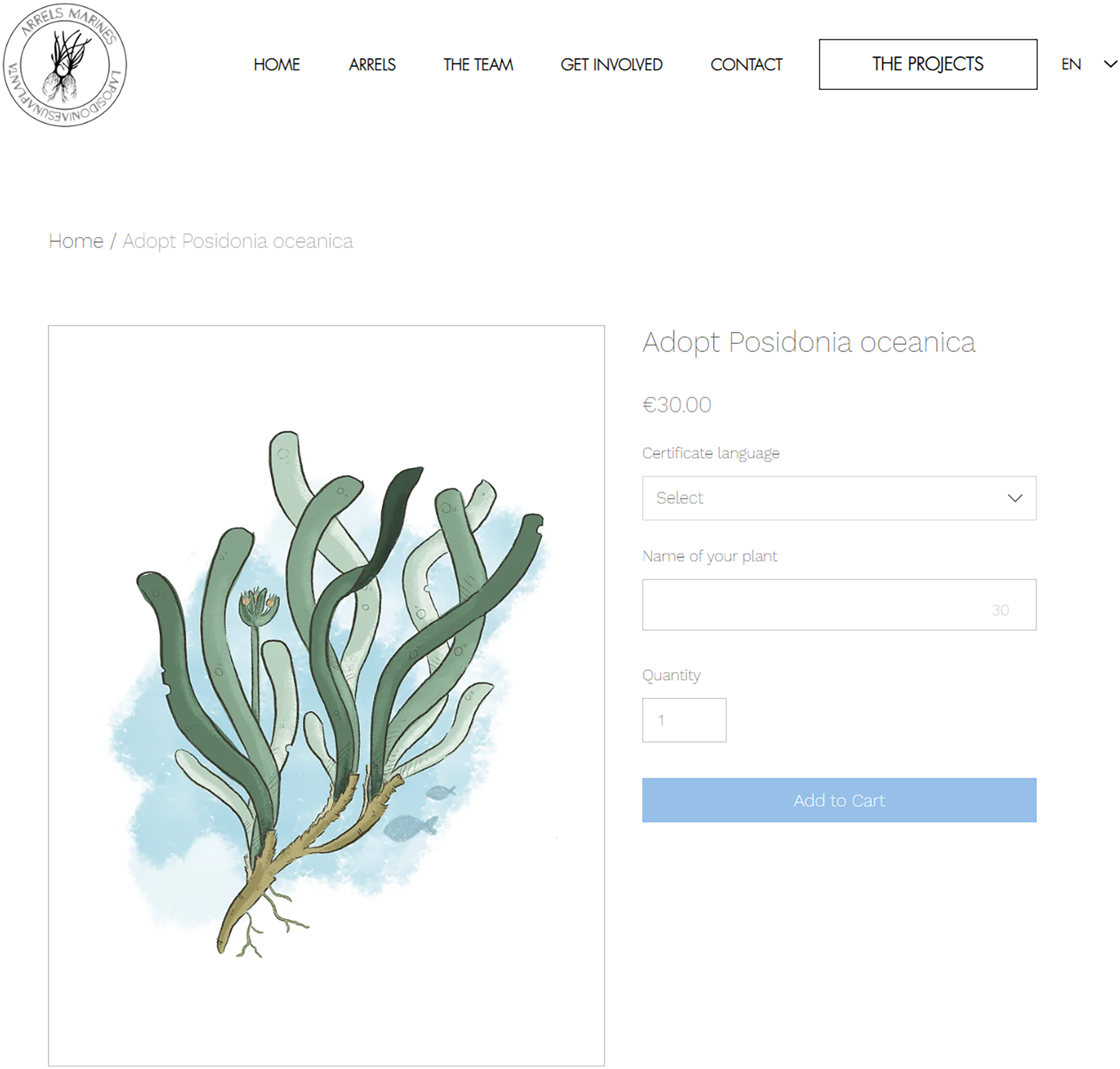
A screenshot capturing a campaign in which Majorcan marine conservation association Arrels Marines gave site visitors an opportunity to “adopt Posidonia” and thereby fund restoration initiatives. https://en.arrelsmarines.org/product-page/posidonia-oceanica Accessed June 9, 2023.
To understand the contribution of care in the latter context, it is important to frame care in environmental settings and define it in relation to established literature. Indeed, as the editors of this journal commented with regard to an earlier version of this manuscript, care is a generative concept, but it can also be a slippery one. In approaching care as a “species activity that includes everything that we do to maintain, continue, and repair our world so that we can live in it as well as possible” (Fisher and Tronto 1990, 40), my work follows a classic definition that ties in with more recent articulations of how humans engage ethicopolitically with more-than-human others and the environment (Puig de la Bellacasa 2017). The Posidonia-focused hybrid collaborative endeavors described above constitute a form of “governance as care.” In the introduction to a Special Issue on care and policy practices, Gill, Singleton, and Waterton (2017, 6) discussed the general assumption under which policy provides “general statements, protocols and directives, measurable outcomes, targets and indicators” able to control practices, which faces problems only in cases of ineffective implementation. For them, policy is not far from how STS conceives of care, wherein it can be defined as “persistent tinkering in a world full of complex ambivalence and tension” (Mol, Moser, and Pols 2010, 14). According to Gill, Singleton, and Waterton (2017), while care often emerges from below, it still can be guided by policy. Irrespective of the normative, top-down, and prescriptive dimensions of policy as a form of knowledge, policy implementation gets enacted in situated spaces by specific actors. It becomes a creative and experimental practice that supports actors’ tinkering. Illustrating this, the development and implementation of Posidonia regulation has been anything but straightforward. Rather, it is driven by political and scientific interests specific to the actors involved. Regulation is not just a series of clear rules dictated from above, but a set of open-ended practices carried out in particular settings by particular actors, who can demonstrate care in the way they collaboratively participate in implementation, contributing to transforming governance into an act of care.
Conceptualizing governance implementation as a form of care in technoscientifically informed work on environmental issues fits with some authors’ thinking on the peculiarities of spatial planning in marine governance (Boucquey et al. 2019). While the dominance of area-based approaches to marine governance establishes supposedly static boundaries (Peters 2020), delimiting the areas to be cared for/about, Posidonia's movements through water flows and the various forms of people's attachment to the species produce forms of care that disrupt available representations of plant mobility and marine space. By expressing the dynamic character of marine environments, this setting illustrates the challenges inherent to defining the object of care and ascertaining the practical impacts that such care has on other beings and their ecosystems, something that several authors have described as “exclusion” (Puig de la Bellacasa 2017, 78), “damage or neglect” (Martin 2022, 13), and even “violence” (Van Dooren 2015).
In that line, below I describe how negative impacts became visible throughout the material studied for this project: the centrality of Posidonia exposed the relative scarcity of regulatory attention to other species and seabed types. I describe this with the concept of care block to emphasize the techno-legal character of policy and regulation. I also consider its flipside, the notion of care overflows, a more novel contribution to care scholarship in STS. This captures the positive effect that caring for a species can have on surrounding ecosystems through the efforts of multi-sector collaboration. Gaining leverage from Posidonia leaves’ interplay with coastal erosion (see below), those involved in preparing the Posidonia decree tinkered with the situated development and implementation of the policy to help protect, with partial success, a historically neglected and sensitive coastal ecosystem in the Balearics: the beach-dune ecosystem. Blocks and overflows as conceptualized here are not necessarily opposites, nor do they cancel each other out. Instead, they aid in revealing how policy enables care practices while it exposes limitations in the development and implementation of environmental policy in general, and marine conservation in particular.
Care Blocks and Other(ed) Species
The prominence of Posidonia as an emblematic species can be understood as something that potentially leads to the exclusion of other species and types of seabed from protection mechanisms, elevating one species and not others. This stems from the species-centered character of the Posidonia decree. However, my analysis simultaneously identified dynamics connected more strongly with the technical and legal aspects of developing regulation that could be practically enforced. To attend to the techno-legal complexity of granting a given species centrality, I choose to speak of care blocks rather than of excluding or neglecting other(ed) species, which are not explicitly disregarded or declared unimportant—quite often the opposite. In my informants’ narratives of the process leading up to the 2018 decree, Posidonia acted as a sort of magnet for resources and attention—largely due to its greater presence and strong visibility as a result of awareness work by public bodies and scientists over two decades. More recently, this position has prompted civil initiatives capitalizing on public awareness to attract funds. Posidonia receives center stage in their campaigns because of how recognizable it is (see Figure 1).
The technical and practical reasons behind the focus on a single species in this case have their roots in the difficulties of legally enforcing regulation that deals with habitats. The EU guidelines for the management of Posidonia beds as a priority habitat within the Natura 2000 network address this: Unfortunately, most legal texts and conventions are too often eluded. The legal protection of P. oceanica as a species, has proven more effective and restrictive than its protection as an habitat, in [the] face of the strong pressures often made by local authorities on national and European environmental laws….This is because the minimal meadow surface to be considered an habitat worth protecting is not clear, and this is used as [a] way to elude the law, while with the legal protection of the meadow-forming species, there is no minimal size to be formally protected. (Díaz-Almela and Duarte 2008, 17)
The species-centered approach of the region's decree primarily emphasizes the individuality of the seagrass Posidonia over the habitat's multi-species and more-than-human connections. This approach has critical implications for conservation efforts because easy circumvention of legal regulations reduces their impact. Regulating protection at the level of one or more named species makes the limits and restrictions much clearer, thereby facilitating implementation and enforcement. While there are clearly positive aspects of species-centered regulation, they are accompanied by a risk of negative effects on other species or ecosystems, which may not receive the same amount of attention and, potentially, care.
Evidence of the negative effects surfaced regularly in interviews and communication with researchers working with marine conservation in the Balearics, especially in relation to how local environmental debates handle other seagrasses and habitats. Posidonia has garnered plentiful attention relative to other ecologically relevant seagrasses, such as Cymodocea nodosa or Zostera noltii. I became aware of this early on, when I told prospective interviewees that my study would examine Posidonia-related knowledge-making practices and regulation: they urged me to consider the way other seagrasses are brought into conservation discourses and practices. Their urging informed my treatment of the issue by sharpening my eye, such that the document analysis uncovered multiple examples of the othering of non-Posidonia species in the process of drafting the decree.
For example, drafting the decree included a consultation period when interested parties could participate. A submission by the ecologist group GEN-GOB (2017, 1), the entity most active in advocacy for Posidonia conservation on Eivissa, called for broader regulation not focused exclusively on Posidonia but encompassing other species and habitats: The decree refers to the protection of the meadows of Posidonia oceanica. We understand that in the Second Additional Provision—Protected Natural Areas and Natura Network—it would also be necessary to include the meadows of Cymodocea nodosa, the maërl seabeds and other sensitive habitats with the same consideration, since these habitats are included in Annex II of the Habitats Directive, 92/43/EEC.
It is important to note that other species and habitats have not gone unprotected or wholly neglected. Marine protection mechanisms such as the Natura 2000 network and the establishment of national parks and fishing/nature reserves may well include C. nodosa meadows or maërl seabeds, among others. Yet their official protection is restricted to the specific areas of the park or reserve, so these other(ed) species and habitats do not enjoy all the layers of legal protection and visibility that Posidonia does. They are, as one interviewee stressed, “often forgotten but no less important.”
Although it is clear that no interested party or policy explicitly disregards other(ed) species, in practice overlooking them becomes inevitable. From a care perspective, we can identify individualistic and ecocentric vantage points, with emphasis on opposite ends of the continuum, whereas a holistic view would permit assigning value “both to composite groups such as species or ecosystems and to individuals” (Von Negenborn 2022, 62). In the case of seagrasses, the individual-based (non-collective) level seems bounded by the species or, at its most extensive, the edges of the meadow. However, as the case of Posidonia—especially its regulation—illustrates, prioritizing decision-making exclusively in relation to the ecosystem or habitat is impractical, as the EU guidance for the Habitats Directive itself explains (Díaz-Almela and Duarte 2008). This trait, relevant to many habitats in addition to Posidonia seabeds, serves as a valuable example of care dynamics in marine conservation. Again, thinking in terms of blocking instead of neglect offers benefits, helping to stress the flow of knowledge and resources while affirming that other(ed) species and the habitat clearly represent matters not of neglect but of care, even if the care is less prominent among some interested parties, sometimes for the strategic reasons mentioned earlier (Díaz-Almela and Duarte 2008). For example, a municipal environmental manager from the island of Eivissa explains why he focuses on Posidonia when asked about the quality of coastal waters in their municipality: We have very oligotrophic waters, very poor in nutrients, which gives them that transparency that many people envy, but they are also waters where it is difficult for biodiversity to develop well. They are not like ocean waters, which are very rich in nutrients, with suspended matter…. So, they are nutrient-poor waters. Posidonia does very well in this scenario, because it has few competitors, but now we are finding that….I talk about posidonia because it is our main ecosystem or habitat, it is a priority for the European Union. We have others, we have rocky habitats, we have coralligenous, we have maërl, we have sandy bottoms, with cymodocea. (Interview with environmental manager in Eivissa; emphasis added)
As this interview, the EU management guidelines, and the process of developing the Posidonia decree show, Posidonia's centering is a result of its prominence rather than neglect. The regulation and efforts to protect Posidonia represent a type of speciesism (i.e., a form of discrimination based on species membership); however, it is important to note that speciesism is not necessarily wrong and that the notion can serve a purely descriptive function (Jaquet 2019). The prominence of Posidonia appears consistent with the situated, relational, and ambivalence-sensitive frame provided by care theory, a frame that I conclude accounts well for the environmental duty that Balearic society has established with regard to Posidonia as one of its most emblematic species. Ascertaining whether the species-centrism evident in this case is ethical/unethical is tricky. The material attests to said complexity: for some informants, granting priority to Posidonia had to do with how relevant the species is in the Balearics, where it has a far more extensive presence than other seagrasses or types of seabed, while others stressed that initiatives should cover additional species alongside Posidonia. Furthermore, EU guidelines for the management of Posidonia seabeds center Posidonia as a practical matter (Díaz-Almela and Duarte 2008). I argue that describing these care dynamics as blocks helps to capture the technical character of the regulations enabling and promoting care practices in the Balearic Islands. It is easier to express how the practical and technical difficulties of habitat-wide regulation seem to have played against non-Posidonia species and habitats when regarded as matters of care rather than neglect. Avoiding negative language helps explore these other(ed) species as less cared-for elements of Balearic marine environments.
Care Overflows and Policy Tinkering
While the species-centered character of the regulation entails some care blocks for cohabiting species, it also affords care and attention beyond the typical boundaries of marine governance. This travel of care is made possible by Spain's national legislation on species protection, which covers all parts of the protected species, including dead specimens (Gobierno de España 2007). In the case of plants such as Posidonia, fruits and detached leaves released into the water can be dealt with away from the meadow and, therefore, away from the seabed habitats declared a priority in 1992. These conditions facilitate a care overflow whereby the care and attention garnered by Posidonia are put to work by stakeholders wishing to ensure protection of surrounding ecosystems.
The role of Posidonia in beach-dune ecosystems, which occupy much of the Balearic littoral environment, is crucial to this example. Although the decree puts the protection of Posidonia at its center, the regulation also provides for the management of dead leaves based on existing national legislation for species protection. The interest in regulating Posidonia leaves comes from their role in preventing coastal erosion, which is central to the regeneration of beach-dune ecosystems (Martín-Prieto et al. 2007). Posidonia meadows act as wave breakers in submerged coastal areas, but the species’ most visible effect is through its detached leaves accumulating on the shore in the form of berms, which prevent seawater from washing away sand, especially during storms. Furthermore, its living submerged leaves gradually become covered by epiphytic communities that ultimately become sedimentation on shore. These contribute to sand regeneration and give Balearic beaches the characteristic white color so vital to the tourism campaigns that attract millions of visitors each year.
Historically, leaves have been collected for traditional uses such as insulation and packing, cattle bedding, filling material, and therapeutic applications (Cocozza et al. 2011), but these uses have diminished over time. In contrast, with the rise of sun-and-beach tourism in the last century, berms began to be described as waste, dirt, or litter. Use of these terms persists to the present day, and one can find numerous scientific studies and projects focused on finding uses for detached Posidonia leaves on the assumption that they represent a problem from environmental, economic, social, hygiene, and waste-management perspectives (e.g., Cocozza et al. 2011). In spheres from energy production to farming and composting, practitioners seek uses for a resource that modern life has cast into landfills, most of the time for incineration. However well-intentioned, these endeavors are not consistent with the Posidonia decree or the efforts of environmental managers concerned about beach erosion, who see Posidonia leaves not as dirt but as an important agent for beach regeneration (see Figures 2 and 3).
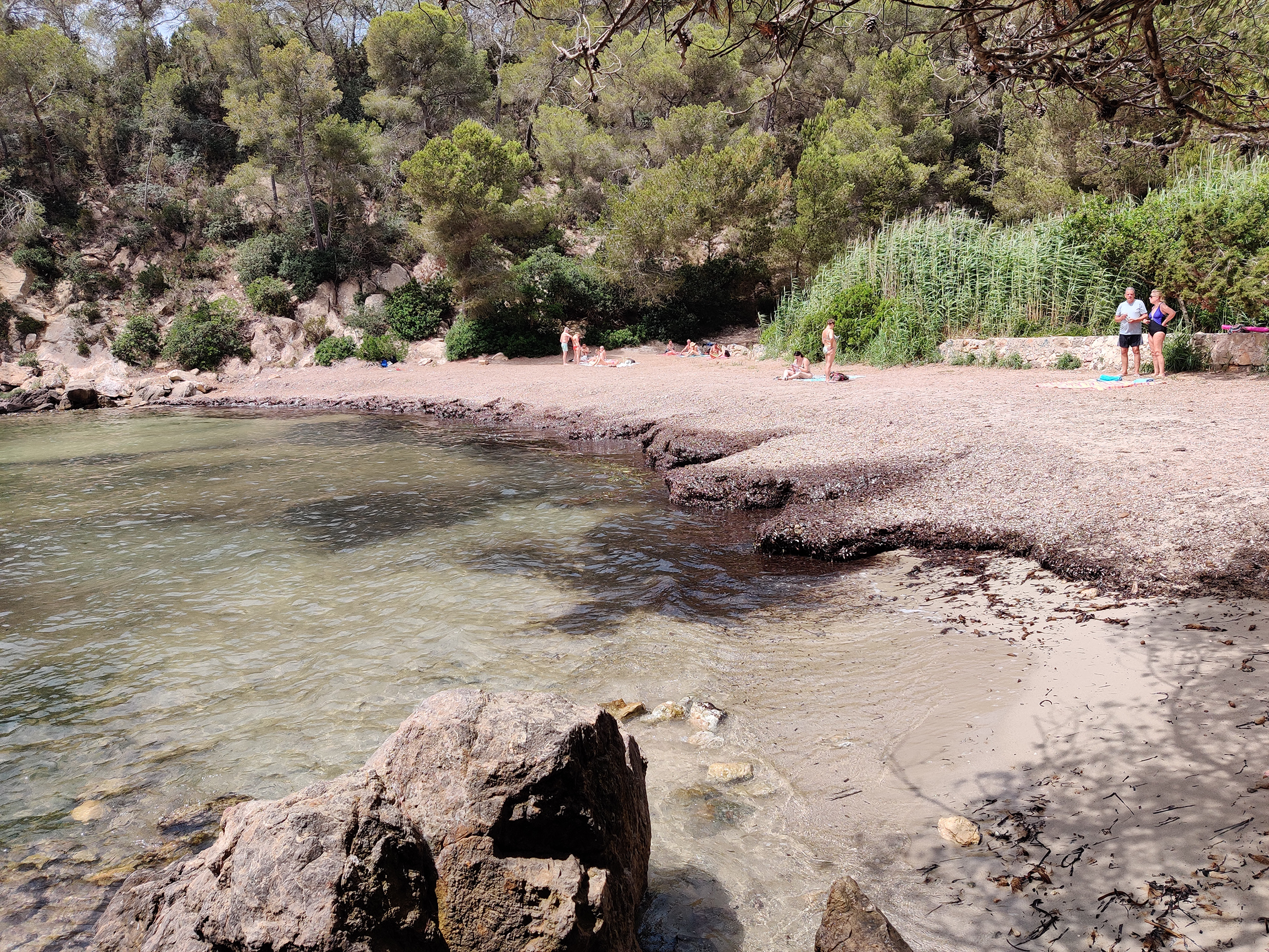
Cala Mastella, a now-regenerated beach in Santa Eulària des Riu, on Eivissa, fully covered by detached Posidonia leaves. This formerly calcified beach was revitalized after removal of Posidonia from its shores ceased completely. Photo by Jose A. Cañada, 2022.
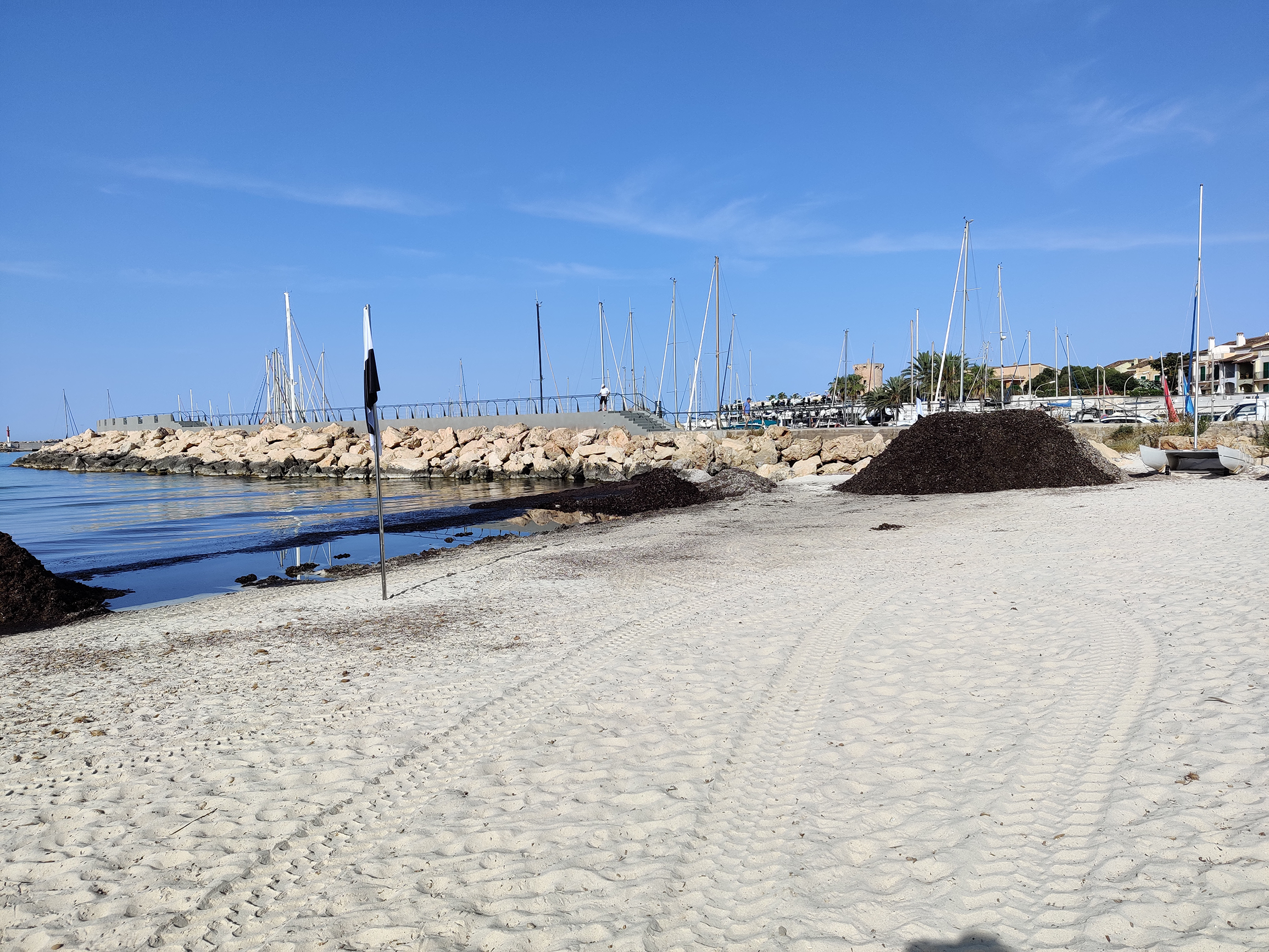
Sa Rápita, an area in Mallorca’s Es Trenc nature park where Posidonia is managed for optimal beach regeneration and to satisfy the tourism industry. The photography shows how some of the detached leaves are left on the shore while others are accumulated for later storage. Photo by Jose A. Cañada, 2022.
Along those lines, researchers, environmentalists, and some municipal managers have long demanded better shoreline leaf management. Beach regression (beaches’ narrowing in response to an interruption of natural regeneration dynamics) has affected the major urban and serviced beaches most (Garcia and Servera 2003). An important factor in that regression has been the “cleaning” of Posidonia leaves, which were perceived to spoil the “virgin” white sandy beaches of the Balearic Islands (Roig-Munar, Comas, and Martín Prieto 2004). In the 1990s, artificial regeneration became commonplace. This often involved transporting sediment from other parts of the islands, which substantially altered the sediment composition on the beaches, eventually worsening the situation and even causing sediment calcification, as the environmental manager of Santa Eulària des Riu—a municipality on Eivissa which includes the Northeast Coast of the Ibiza-Tagomago Marine Reserve—explained to me (see Figure 2). Another common practice involved taking sand from the bottom of the sea to replace that lost to erosion. That sand was often mined from areas containing Posidonia meadows, not only damaging them but also impairing future formation of berms on the beach (Martín-Prieto et al. 2007).
The 2000s brought some changes to removal practices as geomorphology research started to highlight the impact on erosion and regeneration dynamics from Posidonia berms removal (Martín-Prieto et al. 2007). According to informants with experience in beach management across the Balearics, these shifts in management approach—away from a logic of cleaning to one of managing—originated in Menorca in the early 2000s and expanded to some municipalities on Eivissa in the second half of the decade. According to personnel at the Balearic Species Protection Service (Servei de Protecció d’Espècies under the authority of the Balearic Government's Directorate General of Natural Environment), the central principle embraced is that the beaches need not be cleaned of a natural element such as Posidonia for the sake of reproducing an ideal for tourists and locals that never truly existed. The shift involved reconceptualizing the beach-dune ecosystem as a dynamic system that reacts quickly to the weather and, indeed, any intervention. The presence of Posidonia and quantities of sand can change considerably in mere days following storms or large gatherings of beachgoers. Managing Posidonia in this dynamic setting requires regular observation and knowledge updates about the state of local beaches, because the weather (currents, winds, etc.) and number of visitors (who involuntarily carry sand away on their skin, towels, and beach equipment) play an important role in how each beach regresses and regenerates, exposing the simultaneous resilience and fragility of beach ecosystems (Pilkey and Cooper 2014).
Although protecting the beach-dune ecosystem is not strictly protecting Posidonia, the species-centered character of the decree has facilitated the management of dead leaves, creating an overflow benefit. The decree states that leaves shall not be removed during the winter season and specifies minimal-impact ways of removing Posidonia at different times of the year, noting that municipalities need removal permits from the Species Protection Service. Permits are subject to submission of an annual report informing of removal windows, cubic meters removed, location, beach type, and whether any amount has been repurposed for traditional uses. Though partly a side-effect, this overflow is not purely an unintended consequence of Posidonia care; rather, it demonstrates how policy as a form of care gets developed and implemented in situated spaces, by specific actors who creatively tinker and experiment with regulation and implementation (Gill, Singleton, and Waterton 2017). That is, while the regulation of other pressures—anchoring, waste discharge, building of coastal infrastructure, etc.—is inherently central to the protection of this seagrass, the regulation of what happens with its dead leaves once detached is an opportunity exploited by policy-developers and pressure groups to address the environmental issue of coastal erosion. The momentum and attention toward establishing Posidonia as a matter of care aids in attracting attention to a historically neglected ecosystem.
While the decree brought crucial advances in the regulation of leaf removal, some environmental managers I spoke with clarified that it does not create mechanisms to deal with the dynamic character of the beach-dune ecosystems. Interviews with specialists in beach-dune ecosystems indicate instead that the adaptive management of Posidonia leaves was up to individual environmental managers in each municipality: each one decides, within the decree's parameters, whether to attend to the dynamic character of the beaches. In practice, such attention requires regular on-site monitoring, which ensures up-to-date information on the state of the beach such that one can act accordingly, assisted by adaptive protocols. This direct form of engagement echoes the notion of “touch,” as “a metaphor of intensified relation,” that Puig de la Bellacasa (2017, 95–96) presents as a key element in her more-than-human account of ethical care. For her, direct interaction with the object of care enables adapting to how one incorporates that object into the multiple ecosystem relations in which it is embedded. Touch is a matter not of proximity so much as attentive engagement with the object of care.
Dynamics similar to those of touch emerge in environmental management settings that require a close relation with beach-dune ecosystems, to account for their dynamism. In such situations, research, monitoring, and management do not suffice, and knowledge that comes from long-term relations with a specific place is essential (Whitney 2019). For example, some of the environmental managers I spoke with had grown up in direct contact with the beaches they managed. Their lifelong witnessing of coastal regression was a key source of knowledge that informed their understanding of what is at stake while also identifying areas where leaf management required more careful intervention. This direct and sustained engagement with the specific sites of intervention was not “a promise of enhanced contact with ‘reality,’ but rather a chance for participating in re-doing it” (Puig de la Bellacasa 2009, 310). Touch offers a lens for addressing the direct and situated character of beach erosion as opposed to the detached general formulation of leaf management in the decree.
This example shows how policy tinkering emerged as a form of care in the drafting of the regulation and then in the specific ways of implementing it across municipalities. These practices in policy development and implementation illustrate that care practices oriented toward the same object can be situated at different scales, sometimes with complementary effects. Thereby, they contribute to a less-neglected treatment of beach-dune ecosystems. Nevertheless, it is important to note that care practices realized through policy implementation are conditioned on the work done by situated actors invested in protecting a given ecosystem—in this case, beaches in the Balearic Islands susceptible to erosion.
Territorialization of Marine Space Through Care
The emergence of multiple care practices associated with Posidonia but in different spaces warrants reflecting on the connection between care flows and territorialization. Protecting Posidonia as a species poses challenges to area-based approaches, which, although widely applied in the Balearics, leave out most of the coastal areas (see Figure 4). The movement of Posidonia leaves with water flows contributes to deterritorializing marine space here: care for a marine plant species goes beyond the limits of the meadow and ends up affecting a terrestrial ecosystem beyond the boundary between land and sea. It also presents a contrast against the attention received by other species of seagrass and types of seabed, whose stated relevance remains constrained to the limits formed by MPAs. Posidonia receives care and protection bound specifically to its meadow locations, which is supplemented by species-centered regulation and the inclusion of dead leaves that enter water flows once they have become detached and mobile. This configuration is crucial because it requires enforcement that attends to marine areas defined not by territorialized space but by the presence of Posidonia itself. Hence, it encompasses areas of high anthropogenic impact such as bays with harbors, tourist beaches, and marine areas with heavy boat traffic.
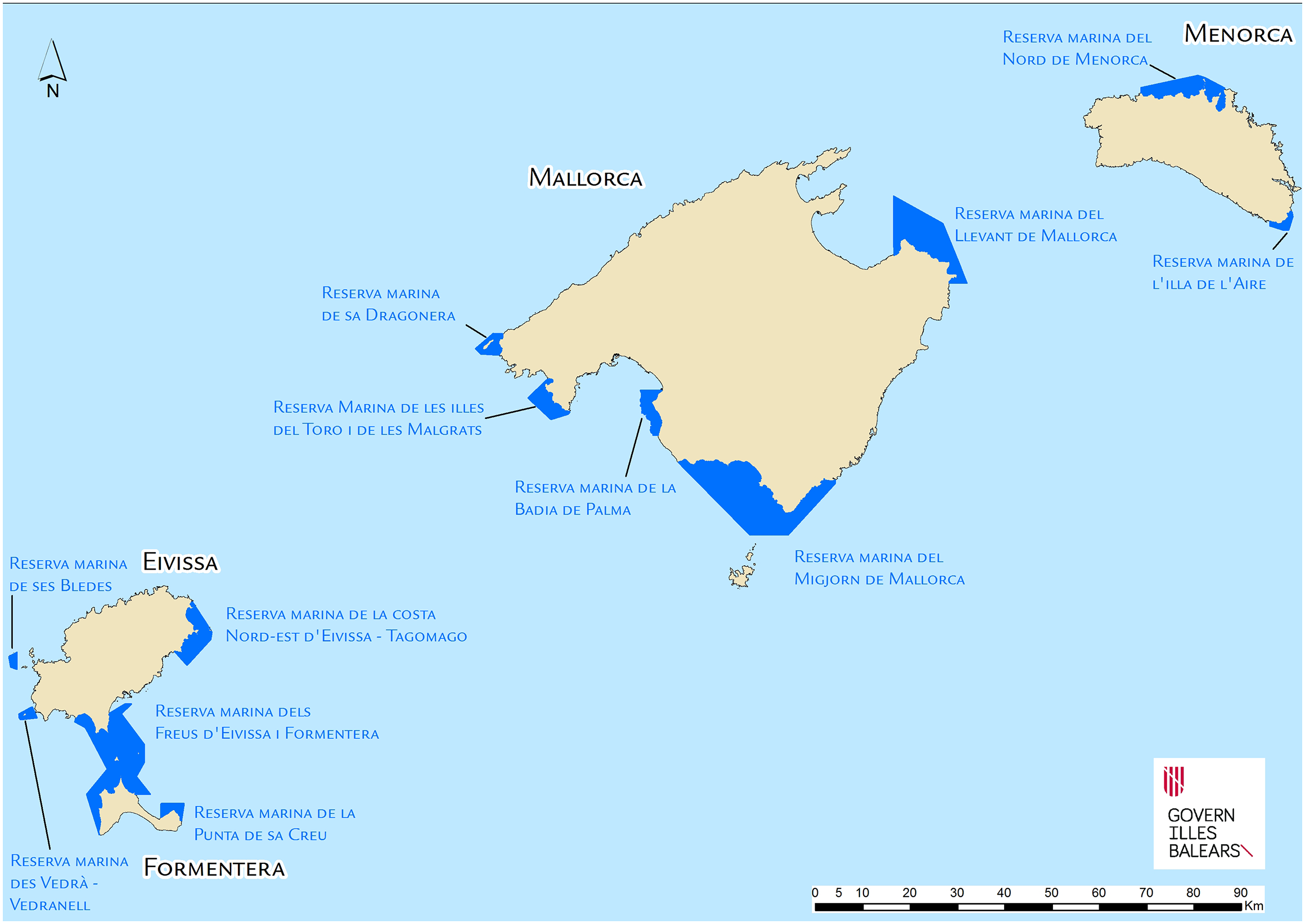
A government map of the marine reserves in the Balearic Islands illustrating how most coastal areas in the archipelago are not under area-based strategies for conservation. Available at https://www.caib.es/sites/reservesmarines/es/las_reservas_marinas_en_las_illes_balears-850/ Accessed February 8, 2024.
This expansion of marine areas subject to surveillance requirements presents challenges. For example, the decree articulates a need for rethinking the design of both planned and existing infrastructure that directly impinges on Posidonia meadows, whether harbor structures, electrical networks, or desalination plants. When asked about the impact of coastal infrastructure, one of the environmental managers I interviewed clarified the complexity of the endeavor: We do impact assessment on a case-by-case basis. Then it depends. It depends on the project. For example, if they ask you to put up an underwater pipeline [for a water-treatment plant], you have no choice. Because what is the alternative? To not treat the water? To not approve it? And then where is this wastewater thrown away? So, it is about asking them to optimize water treatment, as much as possible, and sometimes…measures are taken, for example, to lengthen the pipeline…so it comes outside the meadow.…But if a project in the public interest comes along, you can’t do anything. For example, electrical interconnections, since many of them pass over the meadows. (Interview with Balearic Natura 2000 network manager)
In practice, existing infrastructure cannot be relocated or redesigned easily. Furthermore, authority to approve new structures may not rest with the regional government in cases my informants described as public-interest infrastructure. In this instance, care for Posidonia is blocked by a higher-level power deciding that certain infrastructure likely to destroy meadows should be prioritized over seagrass conservation. This type of care block territorializes marine space by imposing a no-protection zone, where protection of Posidonia is prevented, something that stems not from attention to other species, but to prioritizing economic over environmental rationales.
Yet in some cases the conflict arising from Posidonia's presence in areas of high anthropogenic impact (e.g., small inlets with significant boat traffic) is resolved in the other direction: care engagements are activated that can overcome the difficulties of fulfilling the decree's terms. This circumvention illustrates another aspect of implementation-level tinkering, exemplified by informal distributed surveillance as a means of grappling with the thinly spread fleet tasked with enforcing the anchoring ban, in contrast with the ubiquitous presence of Posidonia in the Balearic Sea. When a surveillance vessel was not nearby, beachgoers, recreational divers, and other citizens took on the task of informing boat crews of illegal anchoring, often also contacting the authorities if the vessel owners refused to comply with the regulation. While their work is not of a technical nature, it still supports the enforcement of precise rules that proceed from scientifically justified mechanisms for protecting the environment, which requires the public to hold sufficient knowledge of relevant processes. Alongside such knowledge, this form of citizen engagement demands vigilance by local residents, achieved through awareness campaigns cultivating relations of care toward the seagrass. The general population bears “witness,” or “with-ness” (Kilpisjärvi Collective 2021) to the pressures on Posidonia. When the decree was passed and the surveillance fleet established, citizens started using Spain's emergency-services number, 112, to report cases of boats anchored on top of Posidonia, which has been illegal since 2018. The pandemic prompted a revision of this practice when the general emergency line became saturated with COVID-related calls. In this context, the Species Protection Service undertook its redesign, making available a dedicated telephone number, a WhatsApp channel, and an e-mail address people could use to participate in surveillance work. Thanks to Posidonia's wide presence throughout the islands, new actors become engaged, not in response to a legal obligation but by deciding to take responsibility, articulated through the care they profess for the island they inhabit and its associated species. The policy becomes performative, enacting a reality that, in turn, shapes engagement opportunities available to citizens (Gill, Singleton, and Waterton 2017). In the case of Balearic Posidonia, any area experiencing strong anthropogenic pressure holds potential to become a matter of care because of the plant's presence, coupled with existing care rhetoric and practices discussed above.
Attending to the limitations of the decree—in terms of its limited authority relative to higher-level regulation, as well as society-wide responses to the limited resources for its implementation—helps illustrate further how Posidonia care interacts with marine territorialization. The two examples in this section support the argument that area-based approaches and species-centered models of marine protection express different logics and differ in their consequences for how care practices emerge and flow. Spatial approaches set static boundaries “that fail to account for the dynamism and mobility of ocean resources” (Melvin, Acton, and Campbell 2023, 1664); their rigidity limits care and protection initiatives to specific areas. This prevailing approach establishes a blueprint for ocean governance so powerful that it is rarely questioned (Peters 2020), rendering corresponding legal mechanisms unresponsive to threats outside MPAs (Sridhar and Shanker 2007). Analyzing species-centered instruments such as the Posidonia decree helps pinpoint the specific limitations encountered by area-based approaches in the face of marine environment fluidity. The case study of Posidonia care sheds light on how movement (here, leaves that follow water flows) expands the emergent care network around a species (extending it toward coastal beach-dune systems in this case) and can even force stakeholders to consider economically sensitive, complex areas showing extensive anthropogenic impacts (with the ubiquity of Posidonia meadows directing attention toward spaces where sailing, beach tourism, and building of coastal infrastructure occur). While an MPA might well cover and protect any portion of the coast, protecting Posidonia as a species ensures a further layer of protection anywhere Posidonia or its leaves are present. This additional safeguard encompasses coastal areas under anthropogenic pressure that typically prove hard to include in MPA agreements because of potential backlash from social actors (such as businesses opting to prioritize economic activity over environmental protection).
Conclusion
I began this article with the objective of expanding care theory in STS by enriching scholarly attention to environmental care, with a focus on what marine ecosystems and seagrass care can contribute to this perspective. By exploring the relevance of the species-centered character of Posidonia regulation and the stark contrast against the area-based approaches that dominate marine governance, the paper expands the conceptual repertoire available to think about the impact of environmental care practices on other species, habitats, and ecosystems. The examples analyzed here are drawn from marine conservation, yet these concepts can explain similar contrasts and dynamics in other areas of environmental care. While water flows are specific to marine environments, similar dynamics of movement can be appreciated in conversations about species reintroduction (Crowley, Hinchliffe, and McDonald 2017) or species migration (Van Dooren 2014), among others.
The case of Posidonia illustrates that marine flows affect how care is distributed across species and habitats. While Posidonia's taxonomic status as a plant may suggest it is fixed to a specific area (a meadow), the pattern by which its detached leaves enter water flows and are carried to shore opens the possibility for care to reach beach-dune ecosystems too. However, the care moving along this flow could not take place without Spain's national legal framework for species protection, which extends to any part of the plant and, thereby, includes those leaves that wash up onto the beaches. Thus, this care overflow is possible only by means of the tinkering involved in policy development and implementation (Gill, Singleton, and Waterton 2017), through which interested policymakers and other stakeholders capitalize on the technical, legal, and ecological components of Posidonia protection to address an adjacent ecosystem that had been historically neglected in the Balearics. At the same time, attempts by scientific and civil groups to incorporate other seagrass species and seabed types into the regulations held potential to dilute the species-centered character of the Posidonia decree. Conceptualizing this situation in terms of care blocks captures the technical character of environmental care, in that those other species and habitats do receive care, albeit only when they are included in an MPA. It bears stressing that such speciesism has ambivalent results: cohabiting species and adjacent ecosystems can be either protected or excluded. The result hinges on the constellation of tinkering practices around policy development and implementation.
This contrast between the protection of Posidonia present throughout the Balearic Sea, and the less extensive protection of species and habitats circumscribed by MPAs, inspired me to delve into the distinct character of the predominant area-based approach to marine governance vs. species-centered forms of regulation. My argument is not that species-centered conservation is preferable to area-based approaches. Instead, I add nuance to criticisms that argue that MPAs, despite their prevalence, are unable to attend to the dynamic character of marine ecosystems (Allison, Lubchenco, and Carr 1998), illustrating the potential of species-centered approaches for addressing some of the limitations of MPAs. As the block/overflow conceptualization elucidates, centering a given species is not a panacea, and Posidonia care is not without its shortcomings. The costs of following species beyond strictly defined coordinates may be prohibitive for some administrative entities, making collaborative and voluntary care initiatives key to the success of activities such as surveillance, which in the case of Posidonia relies on engaged citizens (see Cañada 2024 for another example related to monitoring). Indeed, relatively low start-up costs (Chmara-Huff 2014) is a good reason why MPAs have become a widespread mechanism. Therefore, it is best to avoid dichotomous debate about area-based vs. species-centered mechanisms. The case of Posidonia shows the potential complementarity between the two approaches, and the need for considering both dimensions.
This article demonstrates how the specific conditions of marine protection are reflected in the way care flows emerge in particular locations, engaging specific actors who take part in the implementation of regulations and policy through acts of “tinkering.” Paying attention to care flows—more specifically in the form of blocks or overflows—also holds analytical promise for other areas of environmental care and conservation, as long as enough attention is paid to the specific conditions and locations in which such flows emerge. As initiatives intended to tackle the ongoing ecological crisis wrestle with the challenge of engaging collectives likely to be opposed (Marres 2023), following care flows can help both scholars and practitioners to understand vital collaborative efforts in society, emerging conflicts, and the effects of species hierarchies.
Footnotes
Acknowledgements
The author would like to thank Mike Michael, the EGENIS Research Exchange, the Marine stsing seminar, and the Ocean Crimes seminar for comments on earlier versions of this manuscript, the Anthro Co-Write group for constant support, and all project informants for their time and expertise.
Declaration of Conflicting Interests
The author declared no potential conflicts of interest with respect to the research, authorship, and/or publication of this article.
Funding
The author disclosed receipt of the following financial support for the research, authorship, and/or publication of this article: This work was supported by the H2020 Marie Skłodowska-Curie Actions (grant number 885794).
