




Abstract
We surveyed and interviewed oil refinery workers who lost their jobs when a refinery in California shutdown in October 2020 to document post-layoff employment outcomes. Workers experienced post-layoff median hourly wage losses of 24 percent, a 26 percent unemployment rate, and reported frustrating job search experiences marked by a difficulty to convey skills to new employers. Our study harbingers future transition experiences of fossil workers and identifies social insurance responses that could inhere within climate change policies to shield workers from economic risk. Workers identified a need for third-party certification of their skills, benefits negotiators, and wage supports.
Achieving the decarbonization goals of climate action plans and policies will spur significant transitions within energy markets, leading to the decline of fossil fuel extraction and refining operations with implications for fossil fuel workers. Simply put, decarbonization will render today's fossil fuel workers tomorrow's displaced workers. The past experiences of displaced workers and the attendant scholarship on displacement effects offer an apt lens through which to analyze and anticipate the probable impacts of decarbonization initiatives on fossil fuel workers. Yet few studies within the industrial relations field have examined labor market transitions and displacement propelled by decarbonization initiatives. By contrast, research addressing issues of “just transition” highlights the fate of workers as a significant aspect of the energy transition, a perspective often missing in the broader energy transition scholarship. Our study contributes to the just transition and energy transition literatures with a systematic analysis of the post-layoff experiences of workers impacted by a refinery shutdown, situating tangible experiences of transition by fossil fuel workers at the intersection of analyses on displaced workers and the economic effects of the clean energy transition.
We surveyed and interviewed refinery workers who lost their jobs when an oil refinery in Northern California shutdown in October 2020. Our survey and interview questions focused on displaced workers’ post-layoff job search, employment status, wages, and financial security. We surveyed and interviewed workers 14–17 months after layoff. Retrospective survey and interview questions allowed us to capture the immediate, short-, and medium-term impacts of layoff as well as the job search process and employment outcomes over this time period.
Our findings confirm the expected labor market outcomes of displaced workers, including spells of unemployment and lower post-layoff wages. Yet we know far less about how displaced workers experience and navigate displacement, job search, and post-displacement employment from displaced worker studies based on large administrative data sets. Our extensive survey instrument and qualitative interviews provide granular detail about how workers searched for and found post-layoff jobs, revealing how workers encountered and experienced the skill-information gap between what evidence they had to show employers and how employers responded. These qualitative findings augment labor economic research on displaced workers by shedding light on how workers and firms struggle to assess, and ultimately, “match” skills through the social process of job search and hiring, particularly for skills developed on the job and rewarded through internal labor market structures.
We argue that the experience of the workers in our study harbingers future transition experiences of fossil fuel workers. An informed understanding of these experiences can assist policy makers, workforce development agencies, unions, and other labor market intermediaries in designing policies and programs that effectively support workers through periods of economic transition. Our study makes a unique and significant contribution to this endeavor, notably because its findings are based on a systematic and timely survey of fossil fuel workers’ actual experiences of job loss within a policy and political context of decarbonization. Further, we focus on workers’ post-layoff job search experiences given the policy emphasis on skill-matching as a technical mechanism through which to achieve an efficient transition of fossil fuel workers into new jobs.
Drawing upon our findings and worker responses, we identify social insurance protections that could inhere within climate change policies to shield workers from economic risk. We present worker recommendations for how policy might smooth the job transition process for workers by capturing and translating on-the-job skills and internal labor market gains to new employers, including third-party skills certification and wage supports.
Just Transition from a Displaced Worker Perspective
For the past decade, research in the policy and advocacy domain on how the energy transition will impact workers has outpaced academic inquiry.
1
Much of this work falls under the “just transition” rubric, a concept that originates with labor leader Tony Mazzochi's call for a “Superfund for Workers” in the early 1990s (Mazzochi 1993–94). A lifelong member of the Oil, Chemical, and Atomic Workers (OCAW) union, Mazzochi envisioned financial support, or transition assistance, for workers and communities negatively impacted economically by environmental policies. Mazzochi's rationale for a just transition was straightforward: Paying people to make the transition from one kind of economy—from one kind of job—to another economy or another job is not welfare. Those who work with toxic materials on a daily basis, who face the ever-present threat of death from explosions and fires, in order to provide the world with the energy and the materials it needs, deserve a helping hand to make a new start in life (1993–94, 41).
Alongside an evolving political debate about the substantive meaning of a “just transition,” the term serves as a moniker for the issue area that considers the equity impact of climate decarbonization policies on workers’ livelihoods (Cha 2017; McCauley and Heffron 2018; Vachon 2021).
Academic scholarship on how climate policies impact workers is emerging. The majority of studies address labor's political position or focus on European energy workers (Gärdebo 2023; Flanagan and Goods 2022; Hampton 2018; Lempinen and Vainio 2023; Räthzel and Uzzell 2011; Snell 2020; Stevis and Felli 2015). To-date, most research on U.S. workers have been carried out by scholars in the fields of energy science and “transition management” (Sicotte, Joyce, and Hesse 2022) with a small but growing number of scholars in labor studies and economics (Cha et al. 2022; Pollin 2021; Pollin and Callaci 2019; Vachon 2023).
Studies on U.S. workers and the energy transition generally take one of three approaches: conceptualizing a just transition, assessing workers’ perceptions of the energy transition, or predicting future employment shifts triggered by transition. Studies that take a conceptual approach expand upon research on the energy transition more broadly (McCauley and Heffron 2018; Wang and Lo 2021) by arguing for the significance of labor and the need to address the fate of fossil fuel workers particularly (Cha 2017; Healy and Barry 2017). This research often directly engages the just transition debate in the advocacy and policy sphere.
Studies on worker perceptions examine workers’ attitudes about the clean energy transition and workers’ employment aspirations in anticipation of a transition away from fossil fuels. Cha et al. (2022) analyze oral history interview data drawn from an advocacy-convened “listening session” project that identified participants (residents and workers) from “communities in transition.” Interviews were structured to elicit responses from participants “most relevant to understanding their experience with transitions” (Cha et al. 2022, 4). The researchers report a broad range of concerns expressed by participants, particularly redress of immediate economic and social needs, such as income loss and health care coverage. Sicotte, Joyce, and Hesse (2022) interviewed 48 energy workers about their perceptions of climate change and “concerns” about transition. The researchers report that workers recognized the need for a low-carbon transition, but that workers’ views on what transition meant for their own employment prospects depended upon whether workers felt their skills were a good match for jobs in the renewable energy sector.
A third approach in the literature estimates employment changes associated with sectoral shifts in energy production to predict total job losses in the carbon energy sector and gains in renewable energy sectors (Pollin 2021; Pollin and Callaci 2019; Pollin, Lala, and Chakraborty 2022). Pollin and Callaci (2019) estimate that 83 percent of job losses in the carbon energy sector would be covered by retirement, rendering approximately 17 percent of the current fossil fuel workforce displaced. Pollin, Lala, and Chakraborty (2022) analyze job creation resulting from the climate, energy, and environmental provisions of the Inflation Reduction Act of 2022. They estimate that the act would create 912,000 jobs annually through public and private investment, softening the displacement impact of decarbonization efforts.
To our knowledge, no current study evaluates the individual-level effects of displacement on fossil fuel workers—those most directly impacted by a clean energy transition. This empirical perspective is critical to inform debates about disproportionate impact, “just” outcomes, and decarbonization plans and policy. The large industrial relations literature on displaced workers offers an apt lens through which to analyze and anticipate the probable impacts of decarbonization initiatives on fossil fuel workers. This literature examines the effects of a displacement beyond the control of the worker, such as a policy-initiated clean energy transition.
The findings of this literature are, in general terms, unambiguous. Studies in labor economics unilaterally find that displaced workers incur short- and long-term wage penalties after displacement, reductions in lifelong earnings, and setbacks in retirement earnings (Kletzer 1998). Earnings losses are so well established that the substantive debate within the literature is over the size and duration of these losses. In a set of studies summarized by Couch and Placzek (2010), earnings losses within a year of displacement ranged from 14 to 50 percent. Longer term (more than 1 year) earnings losses are attenuated but persist, ranging between 7 and 16 percent. Losses are greater during times of high unemployment (Jacobson, LaLonde, and Sullivan 1993a; Jacobson, LaLonde and Sullivan1993b).
Losses are also greater for union than non-union workers, usually a result of union workers moving into non-union, post-layoff jobs. Kuhn and Sweetman (1998) found large earnings losses of displaced union workers with long job tenure in Canada. Kulkarni and Hirsch (2021), using the Bureau of Labor Statistics’ 1994–2018 biennial Displaced Worker Survey, found large wage losses among workers displaced from a union job to a current non-union job. In line with Raphael (2000), they found that these losses are greater than are gains from transitions from non-union to union jobs. On average, Kulkarni and Hirsch (2021) report union wage effects of 15 percent over the study period.
Of particular relevance to our study focus, displaced workers experience smaller wage losses when re-employed in the same sector (Neal 1995), and workers who switch industries experience systematically larger earnings losses (Carrington 1993). Specifically, Neal (1995) finds that workers who are re-employed in the same sector retain some of the returns to tenure they had accrued at their previous job. The dilemma for fossil fuel workers is that decarbonization initiatives necessitate that workers transition into new industries. What happens to the value of returns to tenure when an entire industry disappears?
Job loss for fossil fuel workers portends a transition not only into new jobs, but a transition into a new set of employment relations—a transition out of jobs governed by internal labor markets and other regulatory practices into jobs in the external market largely devoid of such institutional standards and practices (Brown and Medoff 2001; Doeringer and Piore 1971; Gordon, Edwards, and Reich 1982; Osterman 1984). Against broader labor market trends of eroding internal labor markets and other regulatory protections (Bernhardt et al. 2008; Stone 2004), fossil fuel workers in the U.S. generally have been shielded from these trends due to high levels of unionization, long-standing vertical integration of production, and attendant industrial organizational practices (Osterman 2024; Stone 1974). Our study documents how workers experience and navigate a transition out of a sector characterized not only by a production process, but by a set of labor market institutions.
Our aim is to bring the just transition and displaced worker literatures into conversation by contributing a systematic yet qualitatively robust worker-centered account of job loss and transition to both. Our study adds a rigorous assessment of worker-level displacement effects to the extant just transition research. Similarly, our study identifies the clean energy transition as a new focus for research on displaced workers and contributes new insight into workers’ decision-making in the wake of layoff. Whereas labor economic research that draws upon large administrative data effectively captures discrete post-layoff outcomes such as employment status and wages, it does not reveal the processes that lead to these outcomes.
To our knowledge, very few in-depth academic surveys of displaced workers were carried out during the waves of plant closures during the 1980s, or since. Survey instruments that allow for more granular or qualitative evaluation remain few and far between. We know less about how displaced workers experience and navigate displacement, job search, and post-displacement employment. What does the process of job matching look like for the recently displaced worker? How does he or she transition their skill set in the labor market? Our study takes a step toward answering these questions.
Without doubt, the broader literature on plant closures and mass layoffs enumerates the vast, ricocheting effects of these events on workers, families, and communities, including long-term financial loss, stress-related illness, depression, drug- and alcohol addiction, and death (Blueston and Harrison 1984; Case and Deaton 2020; Leopold 2024; Wanberg 2012). These critical social and public health issues provide a sobering backdrop to our research examining workers’ shorter term post-layoff employment experiences.
Data and Methods
On October 30, 2020, the Marathon Oil Corporation shut down its Bay Area oil refinery in Martinez, California, laying off approximately 700 workers, including 345 union refinery workers and nearly as many management and contract employees. Marathon Oil announced that it planned to convert the refinery to a renewable diesel biofuels plant (phased-in production began in 2023) to align with the State of “California's Low Carbon Fuel Standards objectives and MPC's [Marathon Petroleum Corporation] greenhouse gas reduction targets” (Tom Lu, email to all Martinez refinery employees, July 31, 2020). As a closed union shop, all permanent positions at the refinery were unionized and represented by the United Steelworkers Local 5.
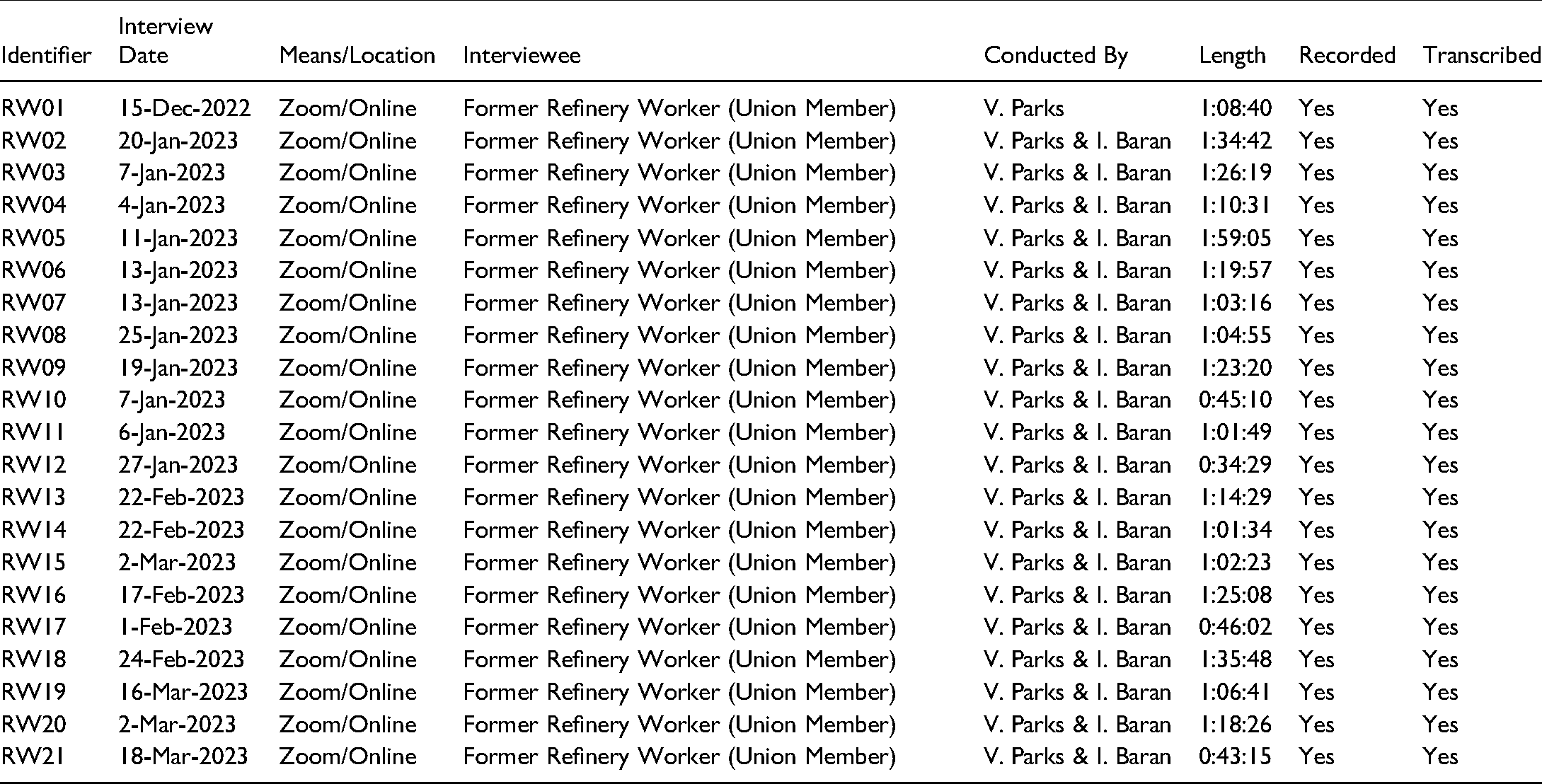
This study's findings are drawn from a survey of the 345 laid-off permanent refinery workers and semi-structured interviews with a subset of survey respondents carried out between December 2021 and March 2022 (14–17 months after layoff). The survey response rate was 41% (n = 140). The survey was administered primarily online (88% of completed surveys). Workers who did not complete the online survey after the first two requests were mailed a paper survey (12% of completed surveys). Twenty-one workers participated in follow-up Zoom or telephone interviews (median length = 69 min; Appendix A).
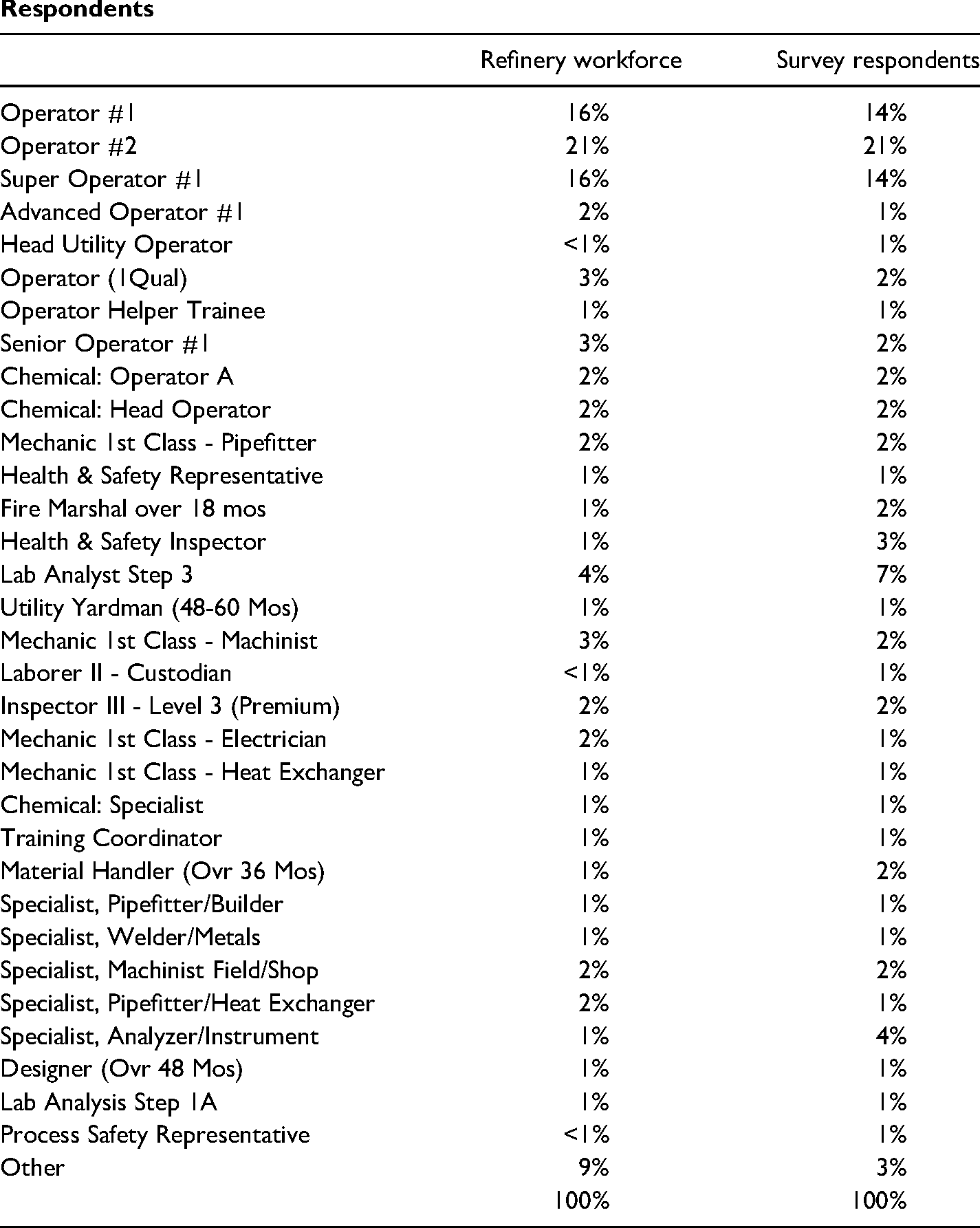
Each of the 345 permanent workers who had been employed at the refinery in August 2020 (when the plant shutdown was announced) was contacted by the union on the researchers’ behalf in December 2021 by email or mail with information about the online survey. Workers were given a unique identifying code, ensuring that only eligible workers could access the survey. The last survey question asked respondents if they were interested in participating in a follow-up interview via Zoom or over the phone. Respondents were given a grocery gift card for completing the survey and a second gift card if interviewed. Paper surveys were mailed in February 2022; survey collection continued through March 2022. Interviews were carried out over the same period on a rolling basis. Researchers periodically reviewed completed surveys to identify potential interview participants. Researchers selected cases for interviews that were generally representative of survey responses (e.g., by age, gender, occupation, employment status) as well as cases for which an interview could provide more detailed information (e.g., the job search experience of unemployed workers). Interviews were transcribed and coded. All survey responses were de-identified and interview responses anonymized. The union provided detailed occupational codes for the 345 workers. Our sample responses match this breakdown closely, one indicator of representativeness (Appendix B).
The survey was designed to verify two key displacement outcomes: employment status and post-layoff wages. We drew upon questions included in the Bureau of Labor Statistics’ biennial displaced worker supplement to the Current Population Survey when scripting our own survey questions, some verbatim, to allow general comparisons across our survey sample to the BLS biennial survey (we are mindful of the single-firm nature of our sample). Through a set of targeted survey and interview questions, we sought to obtain qualitative information about the skill matching process by asking how workers documented their skills and how employers responded. 2
Our study differs from other research on U.S. fossil fuel workers in the transition literature in research design, sampling, and timing. Our design utilizes both a comprehensive survey instrument and qualitative interviews with workers. We had access to contact information for every unionized worker employed at the refinery at the time of layoff, allowing us to focus explicitly on fossil fuel workers and to survey the entire laid-off unionized workforce. The timing of our research is significant: we were able to design and implement a survey 14 months after a refinery shutdown, including securing an agreement with the union and gaining university IRB approval. 3 This allowed us to not only systematically measure workers’ post-layoff labor market outcomes as a group but also to gather information about workers’ employment experiences during the 14- to 17-month period following layoff, including a comprehensive assessment of their job search, hires, quits, and working conditions. The clearest, most unequivocal information about how workers will fare during a transition—and what decisions they will make or are forced to make—comes from analyzing behavior, decisions, and outcomes during an actual economic transition.
Findings
The Marathon refinery, located in Martinez, California, in Contra Costa County, first began operating in 1913 as the Avon Refinery. Acquired by the Marathon Oil Corporation in 2018, the Martinez facility was one of five major refineries in the region: Phillips 66 Rodeo San Francisco Refinery, Chevron Richmond Refinery 841, PBF Refinery/Martinez Refining Company (bought from Shell in 2020), and Valero Benicia Refinery. At maximum capacity, the Marathon refinery processed 160,000 barrels of crude oil per day. Workers described its unique capacity to refine the “dirtiest crude” among area refineries.
In 2020, shortly after the onset of the pandemic, Marathon Oil idled refinery operations but kept workers on. Several months later, in August 2020, Marathon Oil announced the Martinez refinery's shutdown and plans to convert the facility to a renewable diesel processing plant. Emergency effects bargaining with the refinery's union, the United Steelworkers Local 5, began immediately. The union secured severance pay packages based on seniority and extension of health, vision, and dental benefits for six months following the layoff. The severance pay package provided a maximum of two weeks of severance for each year of service with a maximum of 62 weeks of pay. Workers with less than two years of service received one week of pay for each $10,000 of annual base pay.
Despite not securing straight seniority re-hire provisions in the contract for the few dozen future jobs at the renewable diesel facility, the union did negotiate a recall hiring process based on seniority plus qualifications. The company refused bridge-to-retirement provisions and the agreement included a one-year “no-hire” clause that barred workers from applying for jobs at other Marathon facilities and with their contractors. 4 (We interviewed one worker who encountered this no-hire policy when he applied to an out-of-state Marathon refinery within a year after layoff.)
Workers described few other resources at their disposal beyond severance pay, which all noted as essential to their economic survival. Unemployment insurance payments were too low to cover household expenses (one worker noted that it took three weeks of UI checks to cover a monthly mortgage payment), and many encountered extreme bureaucratic challenges when filing for UI, enough that several stopped applying. The only other government job assistance workers described was access to a job search data base. A few recalled a union-run resume workshop.
Jobs at the Martinez refinery were highly paid, unionized jobs. Job benefits included robust retirement plans, family health benefits, and several weeks of paid vacation. Shift schedules were grueling but came with both overtime and multiple days off between shifts. The union facilitated a worker-to-worker model of formal and informal training across a broad scope of refinery operations, including basic protocol, health and safety, and emergency response. Highly specialized training opportunities included the fire brigade's annual participation in an industrial firefighting exercise at Texas A&M University. In short, workers could start a position with few skills and little knowledge about refinery operations but develop a highly specialized skill set over time. Workers could “bid” for job openings to advance and were guaranteed pay increases for job tenure and job advancement. As a result, workers made lifetime careers at the refinery. Median tenure at the Martinez refinery was 10 years, 8 months at the time of shutdown. The most senior worker surveyed had worked at the refinery for 43 years; the most recently hired worker (and youngest) for 8 months.
Workforce Demographics
Workers at the Martinez refinery tend to be older than the regional workforce at large, reflecting conditions of stable employment in the unionized refinery sector that translate to long-term employment among workers. The median age of survey respondents was 43 years old with a range of 22 to 69. Nearly three-quarters (74%) had children under the age of 18 living with them. Workers tend to be white and male. Among our survey respondents, 73 percent identify as White, 12 percent as Asian/Pacific Islander, 9 percent as Latino/a, and 7 percent as African American/Black. Reflective of the male-dominated industry at large, 92 percent of respondents identify as male, 7 percent as female, and 1 percent as non-binary.
A majority of the surveyed workers have educational experience beyond high school. More than half (52%) have some college experience but no degree (the largest educational attainment group). Twelve percent have an associate degree, and 17 percent are college graduates with a bachelor's degree. Eighteen percent are high school graduates with either a diploma or GED. Two percent hold a graduate degree. The youngest workers (age 20 to 29) have the highest levels of educational attainment: 29 percent have bachelor's or graduate degrees.
Post-Layoff Employment
Two-thirds of laid-off refinery workers were employed at the time of the survey (14–17 months after layoff). Ten percent had retired. Excluding retirees, 74 percent of workers had found new jobs after the layoff (Table 1). Nineteen percent of workers responded that they were not employed but looking for a job. Four percent were not employed but not looking for a job. The remaining 2 percent were temporarily laid off from their current job. Applying the standard definition of unemployment (actively searching for work and temporarily laid off divided by total workers active in the labor market), the post-layoff unemployment rate among former refinery workers was 22.5 percent. The employment rate was 77.5 percent.
Post-Layoff Employment Status, Excluding Retirees.
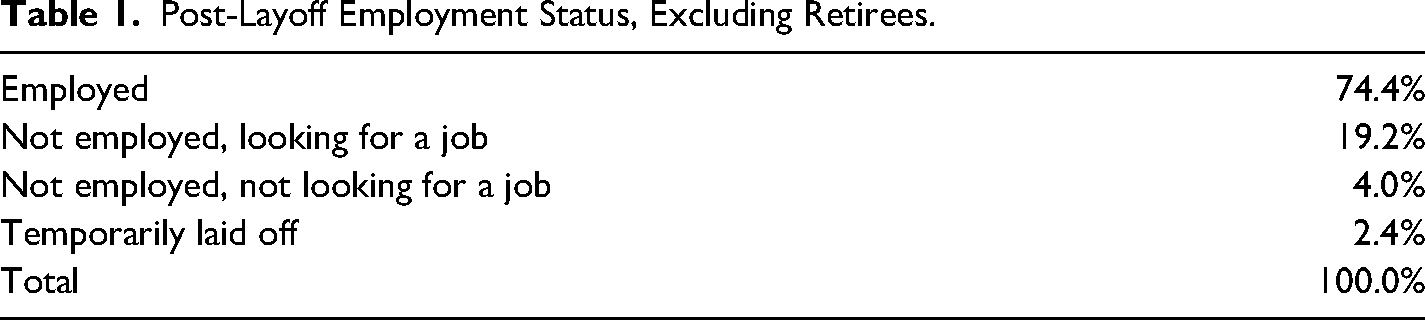
However, we gleaned information from interviews that at least some workers desired to work who were not actively job searching, defining them as discouraged workers. Including these workers in unemployment calculations drives the unemployment rate higher. If all non-retired laid-off workers not actively looking for a job were discouraged workers, then the unemployment rate among the former Martinez refinery workers was 26 percent at the time of the survey. The corresponding employment rate was 74 percent.
The relatively high post-layoff employment rate among workers likely reflects their competitive position in local hiring queues. Refinery workers are highly skilled industrial workers with experience working in highly regulated, complex, and dynamic industrial environments. These workers also possess a broad array of substantive and tacit skills, ranging from safety protocols to mechanical know-how. Despite initial low levels of hiring among employers due to COVID-19 shortly after the refinery layoff, workers likely benefited from the tight labor conditions that came to characterize the labor market in 2021.
Yet getting a job meant taking a worse job. Post-layoff jobs did not compare in pay or working conditions to jobs at the Martinez refinery. Workers took a 24 percent cut in median hourly earnings. The median hourly wage at the Martinez refinery was $50, compared to a post-layoff median of $38. A striking level of wage inequality defines workers’ post-layoff wages. At the Martinez refinery, hourly pay ranged between $30 to $68. The post-layoff range extends as low as $14 per hour to a high of $69. By and large, workers reported post-layoff benefits packages comparable to their pre-layoff benefits.
Workers found post-layoff jobs in a range of sectors (Table 2). The oil and gas sector was the modal sector of re-employment, accounting for 28 percent of all re-employed workers. With four other refineries in the Bay Area, workers were able to vie successfully for open positions that were nearly perfect matches to their skill set. A few workers moved out of state to take refinery jobs. The utility sector (electrical power, natural gas, wastewater management, steam) was the second most common sector of re-employment. Interviews revealed that jobs in this sector were highly sought after by workers, especially jobs in the regional unionized gas and electric utility company, and a good match to worker skills and experience. We include wastewater management in this sector. Workers described how their skills as a refinery operator readily transferred to wastewater and other water processing tasks. One worker explained, “We are skilled process operators. Doesn’t matter if it's crude oil, wastewater, or beer. It's all about operating processing equipment and monitoring a conversion process” (interview RW03). The third most common re-employment sector was chemical treatment, particularly in plants producing agricultural chemical products.
Post-Layoff Employment Sector and Wages.
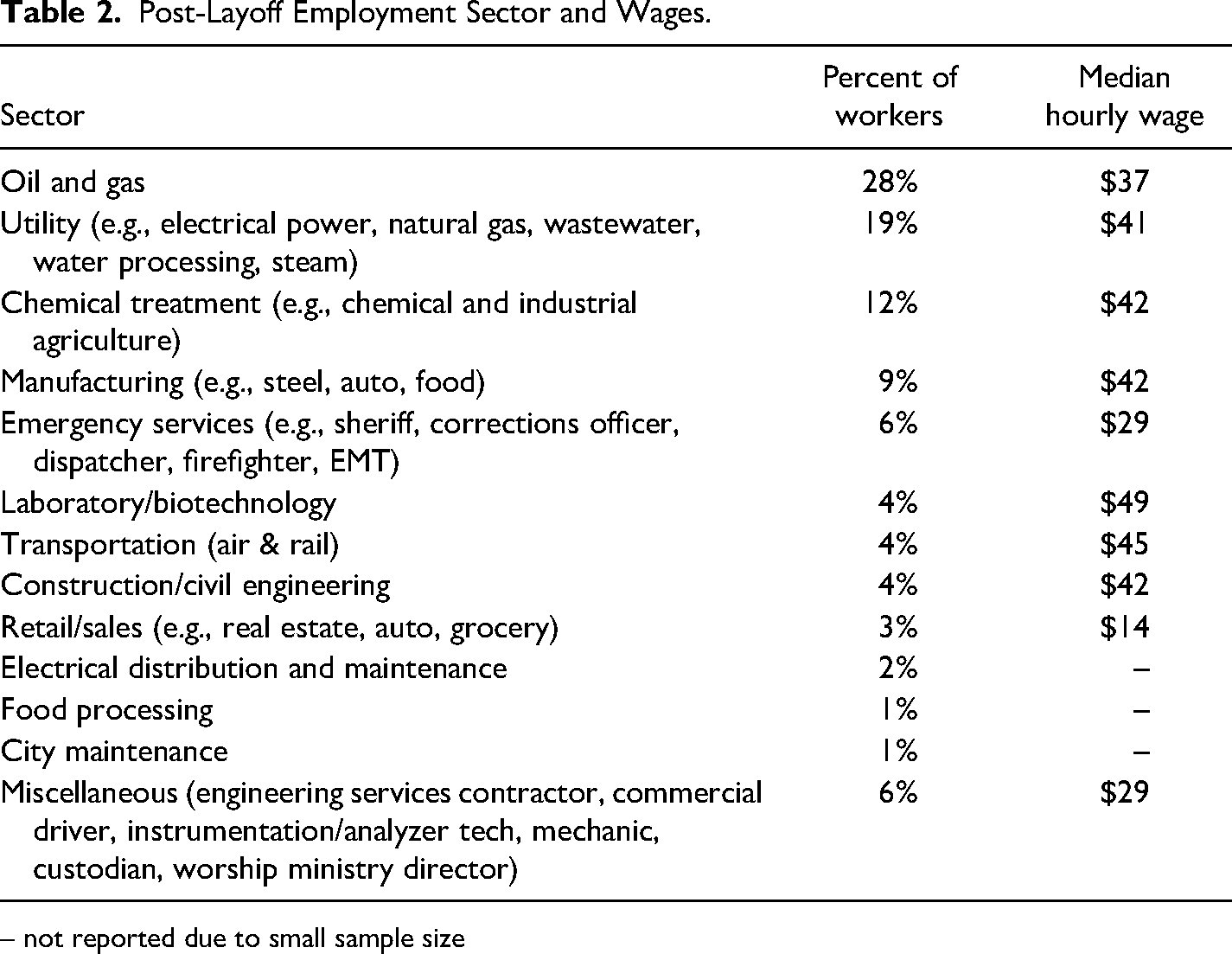
– not reported due to small sample size
But with many workers chasing the same job openings, workers outnumbered jobs. Laid-off refinery workers then sought jobs in other, more tangentially related, sectors. Some workers leveraged their experience on the refinery fire crew and safety response teams to secure work emergency services (one as a firefighter, one as an EMT). Others were successfully hired into public safety jobs with the Sheriff's office or as a corrections officer; these workers referenced the security of unionized, public-sector employment. The remaining sectors of employment were diverse, representing matches in aptitude, prior work experience (e.g., construction, food services, air mechanic), or convenience. Among interviewees employed in these sectors, many expressed ambivalence about their new jobs. Several described taking jobs far down their preference list, unable to find work in the refinery sector or in a field better aligned with their skills (e.g., one worker who had served on the refinery fire brigade has been unable to get a job in emergency services). No workers surveyed reported employment in the renewable energy sector during the survey period.
Wages and Unionization by Sector
Workers who returned to the oil and gas sector for employment did so at lower rates of pay: median hourly wages were 26 percent less than at the Martinez refinery (a post-layoff median wage of $37 compared to $50 at the refinery). Drawing from interviews, these lower rates of pay may stem from loss of seniority and non-union employment, along with compositional effects (e.g., younger workers). One interviewee recounted, “I know a bunch of people that went to [Refinery X] in [City A]. Also, [Refinery Y] in [City B], and yeah they're starting off at the bottom. And so, these are like 20-, 25-year people that have to start off at the bottom. I’m still kind of fortunate that I was able to sort of pick up where I left off” (interview RW02). However, this worker was earning less than their pre-layoff wage.
Workers employed in manufacturing and the utility sector fared better, earning a median hourly wage of $42 and $41, respectively. Median wages were highest for workers in the laboratory/biotechnology, transportation, construction, and chemical sectors, with the caveat that small numbers of survey respondents in these sectors guard against generalizations (e.g., higher wages may be due to random factors other than sectoral differences). Larger sample sizes in oil and gas, manufacturing, and the utility sectors allow for more robust comparisons between sectors.
Lastly, median hourly wages were lowest for workers in service sector jobs (e.g., retail, sales, food service), with the lowest in retail at $14. Workers in emergency services fared better with a median hourly wage of $29, but well below their counterparts in the above-mentioned higher paying sectors.
The rate of unionization fell from 100 percent pre-layoff to 43 percent post-layoff. Workers found union jobs primarily in the oil and gas sector, accounting for 53 percent of those with post-layoff union jobs. Most of these workers landed new jobs as refinery operators. The next largest concentration of union jobs was in the utility sector: 24 percent of workers who found union jobs were employed in this sector. Lastly, 13 percent of workers who got union jobs were employed in the public sector and 11 percent in construction. Workers employed in union jobs earn $3.50 more per hour than their non-union counterparts.
Job Search Experience
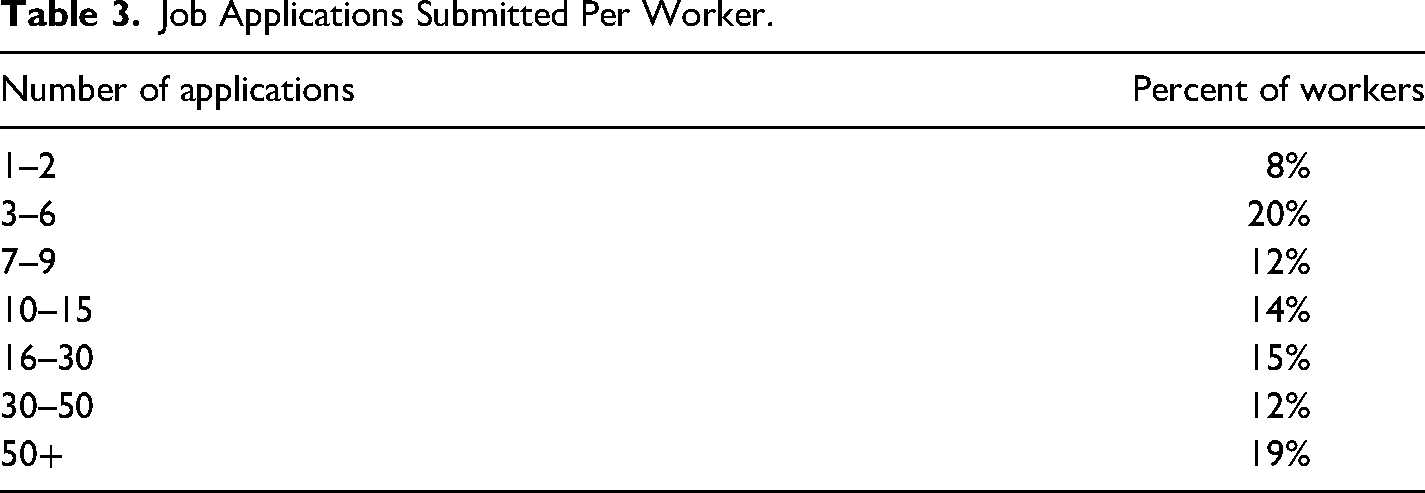
Workers described their post-layoff job search as challenging, frustrating, and opaque. Search durations varied. All workers, including those who found new jobs quickly, described feeling unprepared, unsupported, and ultimately alone in navigating the process. Many interviewees remarked on the radically changed process of job searching since the last time they looked for work (a decade or more), particularly the dominant role of online search platforms. Yet workers adapted quickly, collectively applying for hundreds of jobs in the first year after layoff. Sixty percent of survey respondents applied for 10 or more jobs; 31 percent applied for 30 or more jobs; and 19 percent applied for over 50 jobs (Table 3).
Job Applications Submitted Per Worker.
In survey responses and interviews, workers highlighted two unexpected frustrations: 1) employers’ lack of knowledge about refinery work and refinery workers’ skills and 2) workers’ inability to prove their skill or experience through certifications or a verification process. These themes emerged again and again, often raised in angry disbelief or exasperation. A few write-in survey responses emphasized these concerns with all capitals or underlining. Workers clearly were not expecting to grapple with these challenges in addition to the many other unknowns inherent within the job search process.
In part, workers’ anger stemmed from a belief that these problems should have had a relatively straightforward, structural solution. During interviews, workers posed the following questions to researchers: Why couldn’t an outside entity, such as the union or the state, vouch for their skills? Or the refinery company? Why couldn’t workers direct employers to a website that described their skills and range of tasks carried out at the refinery? Why couldn’t workers apply for a certification for their job class at the refinery, issued by the employer, the union, or the state?
Workers were outraged that Marathon Oil refused to verify their employment for their full tenure at the refinery. Many workers emphasized this point in both survey responses and interviews. The company had taken ownership of the refinery in 2018 and would only verify employment back to this date. Workers with more than two years of employment at the refinery (the vast majority of the workforce) were forced to find old paystubs or tax returns to prove to new employers their years of service at the refinery. Many employers did require this degree of verification, as we discovered through both write-in survey comments and interviews.
Describing and explaining their specific skills and procedural expertise (e.g., collaborative workflow, emergency response, troubleshooting) to new employers was a shared challenge. Workers repeatedly found themselves explaining for employers the range of complex tasks they had carried out at the refinery or the complexity of the decisions they made, many with lives at stake. Sometimes their explanations were met with disbelief or incomprehension. One worker reported that an employer accused him of lying, not believing the worker's description of the size of the boilers and the number of pressure gauges he monitored and adjusted at the refinery. The employer was a food processor.
Two interviewees contrasted their lack of skill verification with the apprenticeship and journeyman certification of the building trades, despite carrying out the same jobs on the shopfloor, e.g., pipefitting. One expressed frustration at the fact that the refinery received certifications based on the skill level, preparedness, and knowledge of the workforce, yet no corresponding certifications were transferred to individual workers. Several workers noted that the certifications they did have—all health and safety certifications such as CPR or HAZMAT—were about to expire or had recently expired. These, too, were offered at the refinery and required on-the-job hours.
Workers who felt their new employers understood their skills described employers who had previously hired former refinery workers. Others described their active role in educating potential employers. One worker described a lengthy job interview with an employer who asked detailed questions about tasks at the refinery. The worker noted that the employer was willing to engage him in this series of questions, but also explained that he had been practicing his description of refinery tasks and skills over the course of several job interviews: “I was simply getting better at explaining my refinery job” (interview RW19).
Certification of already-acquired skills was the single most common response to our question, “What would have helped you most during your job search?” Workers are open to new job training, but they are most interested in finding a way to document their current skills in a way that is transparent, meaningful, and verifiable to future employers. In one worker's words: So that's the real, what I found to be, the tragic aspect of this, is everything that I did in the refinery, whether it was manipulating 600-pound steam boilers, level A HAZMAT suit work, the confined space, the high point rescue… I could do it in the refinery. I have no certifications from them, I have no… Tell you the truth, we have no records, we were provided nothing at the end (interview RW09).
This worker has found new employment, but not the emergency services job he had hoped. He expressed resignation but also disbelief that the fire-rescue and emergency response skills he had acquired over years at the refinery had no currency in the open labor market for jobs requiring the exact same skills.
For all refinery workers except the most recently hired, the job search process was initially daunting. Many commented on the new environment of online job searching, and many had never used LinkedIn or Indeed previously (survey responses identified these as the most common online job sites used by workers). Word-of-mouth traveled quickly among laid-off workers, with workers sharing tips about different search engines and sharing job posts on a FaceBook page created by Martinez refinery workers. Workers were unsure how to prepare their resumes, what to include in cover letters, or how to describe their skills. When asked about a union resume workshop offered shortly after layoff, the vast majority of workers were unaware that it had been offered. Only one worker recounted attending the online workshop and found it unhelpful—too general with no opportunity to get individualized feedback.
Workers expressed great dissatisfaction with the State of California's employment services job search engine, noting its clunky nature. One worker provided highly specific feedback: they noted that the search engine did not support searching for a compound term such as “refinery operator” or “process operator” only “operator.” After wading through numerous job postings for “forklift operator,” this worker quickly discerned that this search engine would uncover few, if any, relevant job posts—“not useful for my skill set” (interview RW20).
Workers expressed frustration with a lack of information about possible job matches to their refinery skills, especially operators. They had anticipated using this information as a starting point, expecting that the state unemployment office might offer such a resource, or the union. Most identified possible job matches simply through their own knowledge of industrial facilities located near Martinez in the Contra Costa County region (many mentioned the steel mill, the chemical fertilizer facility, PG&E, and Anheuser Busch) or through personal networks. They also scoured job search engines for industrial jobs broadly, as well as jobs they thought may interest them, e.g., emergency services. A few spent hours online researching probable job options, “googling job after job” to learn more about the nature of the work and skill requirements (RW08).
Job Quits and Turnover
In response to unsatisfactory wages and working conditions in post-layoff employment, workers quit jobs and found new ones in an attempt to improve their individual employment situations. Of workers who worked at least one job since layoff (a time period of approximately 14 months), 54 percent worked two or more jobs (Table 4). Nearly one in six (16%) worked three or more jobs. Five respondents reported working five jobs since layoff. Job turnover surfaced as a topic in many interviews. Workers were dissatisfied with their lower wages, but emphasized working conditions as the primary reason for quitting. Workers expressed frustration at discovering limited opportunities to advance in their new jobs, particularly opportunities to advance to a position better matched to their skill and experience. Those at jobs with opportunities for advancement, albeit limited, expressed dismay when they realized how long they must wait for a promotion opportunity (one worker mentioned a years-long wait). Workers also referenced increased pace of work, increased scope of responsibilities (especially at their new lower wage rate), and non-union employment practices including lack of pay transparency, training, and/or grievance processes. In short, workers found they were doing more at their new jobs for less pay under more difficult, sometimes hazardous, conditions. Quitting became the most efficient individual strategy for raising job standards.
Number of Jobs Worked Since Layoff.
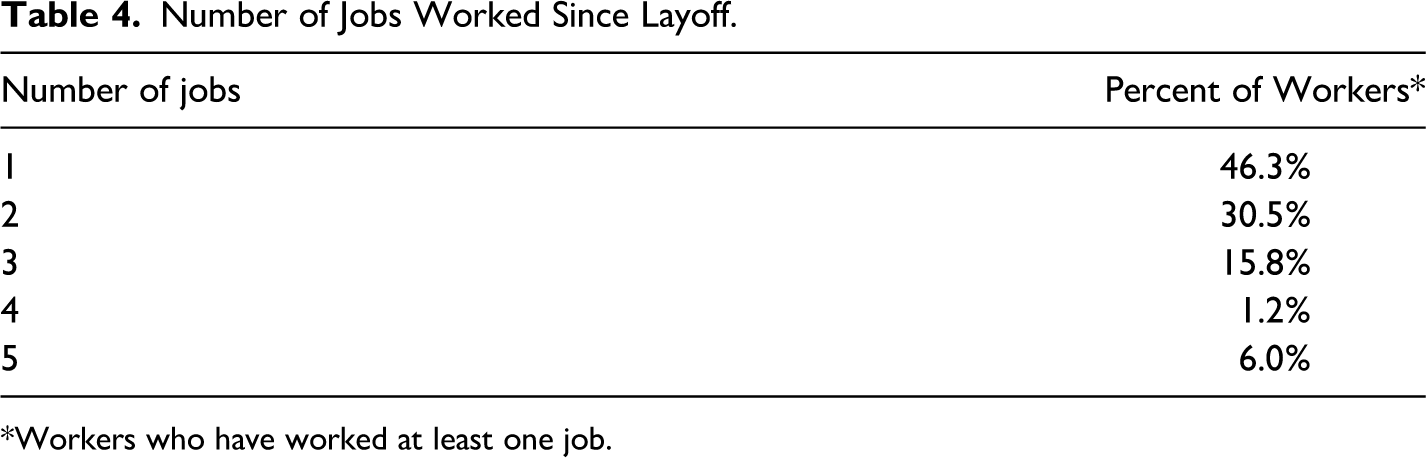
*Workers who have worked at least one job.
Above all other complaints, safety concerns were paramount in workers’ stories. Numerous workers raised safety concerns when we asked why they had quit a post-layoff job. Others raised safety concerns about the jobs they were currently working, concerns that were frequently shared unprompted by interviewers. Workers described a “union safety culture” that was lacking at their current non-union workplaces. They detailed unsafe working conditions they had experienced at their new jobs, contrasting those to the practices at the Martinez refinery. One worker described frustration with a new workplace where co-workers did not follow safety protocols: No matter what processing plant you’re at, if you don’t feel safe you don’t do the job. There's been several times where I’m like, ‘Hey man, I don’t feel safe doing that. I am not going to do that. I’m sorry, but the information I got from the trainer said that we’re not supposed to do it that way, but if you’re going to do it that way, that's fine. But I’m not going to let you train me to do it that way because I don’t feel safe doing that.’ I’ve had to say that a lot more in the nine months that I’ve been there than I ever did in thirteen and a half years at Marathon (RW16).
Nearly every interviewee commented on and credited the union and the direct involvement of rank-and-file workers in crafting and implementing a culture of safety that was heeded day-in, day-out at the Martinez refinery.
We spoke with more than one worker who quit a job after only one week. One did so because of safety concerns, another because of an overly fast and stressful pace of work. More frequently, workers left a job after one month. A couple of workers left after one year and after securing a job they were confident was an improvement over their current position.
One worker described how the experience of layoff increased the importance of job satisfaction in terms of life-work balance: So I think it's a mentality for everybody that's definitely changed. Like I said, company and loyalty, you know you’re replaceable. You can be thrown out anytime. So there's no more, ‘Oh, I owe this company.’ Because they're not gonna owe me anything and it's kind of our mentality, for at least the ones [co-workers] that I know, that has changed a lot because big companies are not going to care about you very much. I put a quote on my Facebook, it was: ‘When you die, they'll replace you within a week. But you're not replaceable at home.’ So don't kill yourself for a job that's going to replace you within a week (RW13).
Several other workers echoed this sentiment when describing their experience of job search and turnover.
Discussion
Two dominant themes emerged from workers’ accounts of their transition experience: 1) legibility of worker skills during job search, or the skills matching process and 2) loss of internal labor market returns-to-skills for transitioning workers. These findings make visible specific challenges faced by transitioning workers for which corresponding policy and program interventions can be devised.
Survey and interview data revealed workers’ acute frustration with the illegibility of their skills to potential employers. How to assess workers’ skills—or their potential productivity—is an age-old dilemma for labor market actors and scholars. Neoclassical economics argues that employers rank job applicants in terms of potential productivity. Yet the costliness and difficulty of assessing workers’ potential productivity leads employers to use proxies, such as education or experience (Becker 1964). Screening, signaling, and statistical discrimination also rely on these proxies in addition to characteristics such as race and sex; all are assumed to yield efficient predictions of productivity (Spence 1973; Aigner and Cain 1977; Holzer 1987). Yet employers’ information is partial at best. Both employers and workers make use of a range of strategies to fill the information gap, including tests, interviews, and tapping workers’ networks—all with varying levels of success of matching workers’ skills to the tasks required of the job (Thurow 1969; Holzer 1987; Reskin and Roos 1990; Waldinger 1996). Often these proxies are poor indicators of potential productivity, or skills, and drivers of inequality.
Our research identified the lived experience of this dilemma for displaced workers with high levels of firm-specific, on-the-job skills during their job search. In a sector with few formal certifications and strong internal labor markets, workers faced a double bind: they lacked formal verification of skills for jobs in a sector where education functions as a weak, at best, proxy and employers lacked reference knowledge to discern refinery worker skills—particularly how these would transfer to the skill requirements of their open positions. Although our study provides partial information on this front, the reports from workers who engaged with employers directly in job interviews are striking: employers’ ignorance of the day-to-day tasks carried out by refinery workers was so thorough that, in one case, it rendered disbelief. In this context, the information void relative to workers’ skills was expansive, providing little traction for the utilization of typical proxies to facilitate skills matching. Even work experience as a proxy for workers’ skills proved limited, scuttled by bureaucratic intransigence. Marathon Oil, i.e., the refinery workers’ prior employer, refused to verify workers’ employment in the years before it took ownership of the refinery in 2018, a mere two years before shutdown.
The illegibility of skills gained through internal labor markets illustrates differences in the structural relationship between skills, the labor supply, and certification across different union traditions. In unionized jobs, labor organizations seek to vouch for workers’ skills by controlling the pipeline through their own training programs (e.g., apprenticeships in the building trades) or demanding a role in providing on-the-job training. In the former case, workers carry a certification of skill provided by the union. In the latter, workers often do not acquire formal certification; their skill level is reflected in experience and rewarded through pay and/or and advancement within an internal labor market governed by collective bargaining. This illustrates the classic dilemma of on-the-job-training: employers are hesitant to invest in training that is not firm-specific, lest more general training facilitates workers leaving for other job prospects. But the dilemma is also great for workers: their skills are held hostage by the firm. Workers may be rewarded through higher pay that reflects their higher level of productivity, but that token of skill recognition is legible only as a specific payrate at a specific firm.
Unlike their counterparts in the building trades, the industrial refinery workers in our study did not undergo a formal apprenticeship that yielded a formal certification of skill and experience such as journeyman status. Several interviewed workers made this comparison, absent interviewer prompting. These workers believed strongly that a union certification would have improved their job search experience, pointing out that several contract positions within the refinery had been carried out by workers in the building trades with skills not unlike their own. These workers expressed that not only the value of their skills, but the very existence of their skills, was held hostage by the refinery. One noted that a refinery acquires operating certifications from outside entities, such as the state, and these rely upon the expertise and skills of the workforce. Yet individual workers do not share in this credentialing.
Workers, as well as employers, proactively negotiate the information void of the skills matching process. Our findings identify two primary tactics deployed by workers to find the best match between their skills and jobs: job queues and quits. First, workers attempted to influence the skills matching process through the ordering of their job queue: they ranked jobs more highly that they believed best matched their qualifications. After refinery jobs, workers ranked public sector utility jobs highly. But these jobs were few and far between, forcing workers to apply for jobs further down their job queue. Workers shifted their job ranking preferences as they became more aware of the shape of their queues impacted by the number of competing workers relative to available job opportunities (Thurow 1969; Reskin and Roos 1990, 31).
Workers ranked jobs on an ad hoc, iterative basis. Workers did not have access to a data-driven skills-matching instrument with sufficient complexity and nuance to effectively identify optimal matches to new jobs beyond those in the refinery sector. As reported in the findings, workers expressed nearly universal dissatisfaction with the online job search tool provided by the state workforce development agency. The program lacked advanced search functions and discrete skills assessment to differentiate between “refinery operators” and “forklift operators” jobs. Workers, then, were left to their own devices and fell back on their own contextual knowledge of jobs in the region, generic internet searches, and online job posting platforms such as Indeed to learn about new job opportunities. Just as employers knew little about the skills profile of displaced refinery workers, these workers knew little about the skills profile of job opportunities outside of the refining sector.
Second, workers quit jobs and took new ones as a tactic to better match their skills, increase their wages, and improve their working conditions. Through quits, workers closed the information gap completely: they took a job to learn first-hand what skills the job required and what wage rates it actually paid. When the match was suboptimal, they quit and searched again. This trial-and-error approach to the skills matching problem yielded improved outcomes for workers, but at a high cost for both workers and firms. This finding captures the jarring disjuncture workers experienced between internal labor market processes of skill development and returns-to-skills practices and the more flexible practices of external labor markets. Workers with longer tenures at the refinery tended to have the highest quit rates.
Quits were a particularly effective strategy for workers to improve working conditions and, sometimes, wages. At the time of the survey, nearly all workers held jobs at lower rates of pay than their pre-layoff wages, including at jobs within the refining sector (however, we do not model the degree to which these losses are attenuated by tenure in this paper). Yet workers reported greater frustration with degraded working conditions in their new jobs. Although workers were highly motivated to find new post-quit jobs at higher wages, they reported that the primary motivation to quit came from experiencing unsafe working conditions at their post-layoff jobs. The threat of injury pushed workers to quit, sometimes before they had begun a new search process.
Our findings reveal the hazards workers can face when they transfer and demonstrate skills developed at one workplace to another, specifically safety skills. Workers commented frequently in interviews about the Martinez refinery's “union safety culture,” in contrast to their new, more dangerous worksites. Several workers provided similar write-in comments in the survey. Workers described how their own safety skills inhered within a collective approach to safety—a social process embedded within the firm and its internal labor market. In hindsight and to their dismay, workers developed a new understanding of this dynamic. Although they had understood that safety at the refinery was a collective effort, they did not anticipate that their individual safety skills and knowledge would lose value outside of the refinery. For some, their safety skills exacted a penalty. When workers raised safety concerns at their new workplaces, they were often ignored by other workers and/or supervisors. A few reported being labeled as opinionated or troublesome by supervisors due to their attempts to enact safe work practices.
As opposed to safety skills providing a pathway to career development (Iskander and Lowe 2021), safety skills proved hazardous to workers’ prospects, at least in the short-term. Workers learned firsthand that the effectiveness and recognition of their skills depended upon a receptive workplace context, a context in which they could actualize their skills. Workers were frustrated and perplexed that skills they had thought were most general and transferable—safety skills (especially for workers with OSHA certifications)—were little valued by new employers. On the other hand, safety concerns were cited as the deciding factor by many workers for quitting a job. If workers found better employment opportunities following quits, particularly if these better matched workers’ safety expectations, then safety skills could be generating higher returns, or higher job satisfaction, for workers over the longer term.
Several limitations of our study should be noted. First, the Marathon refinery shut down in a region with other operational refineries, facilitating a perfect skills-to-job match for some workers who found jobs in these other refineries. Second, the local regional economy is diversified and not solely dependent on oil and gas. This allowed workers to find new jobs in a range of industries beyond the fossil fuel energy sector. Third, the shutdown occurred during the pandemic. Although the labor market began to tighten as the pandemic wore on, these unusual conditions bear upon our respondents’ experiences. Lastly, our sample consists solely of unionized, industrial workers. Their experience of job search and post-layoff employment reflects their experience and expectations of work, skills, and employment relations manifested within a particular set of labor market institutions and production processes.
Conclusion
Our study contributes robust and timely evidence documenting the economic impacts of decarbonization initiatives on workers. Conceptually, our study aims to connect academic research in the just transition and displaced worker literatures. The latter provides a fitting empirical analog to the concerns of the former: the impacts of involuntary job loss, or displacement, are well documented, and a clean energy transition will exact large-scale displacement of fossil fuel workers. In line with this research, our study found that more than one-fifth of the workforce experienced continued unemployment. Workers who found jobs suffered median hourly wage losses of 24 percent. Our interview data revealed frustrating job search experiences: refinery workers found it difficult to convey their skills and competencies to new employers.
Refinery workers lost jobs governed by a set of internal labor market practices linked to a long history of unionization and robust collective bargaining. Workers accrued gains through these internal labor market mechanisms beyond wages, including advancement opportunities, training, and safety conditions. When workers lost their refinery jobs, they lost these job standards as well. This outcome poses a key challenge for policy: how might policy interventions externalize the gains bestowed by internal labor market practices for transitioning workers?
Workers’ skills acquired on-the-job represent knowledge and competencies that individual workers retain after layoff. When they lose their jobs, they do not lose their skills. However, the recognition, actualization, and economic rewards of these skills did not follow workers; these largely inhered within the collective internal labor market practices of the refinery. Whereas economists have identified workers recouping some of these gains when they are re-employed within the same industry, fossil-fuel workers face the dilemma of a disappearing industry.
This finding bolsters the argument for wage support as a social insurance component of climate decarbonization policies. When a collective policy decision results in the elimination of jobs, displaced workers should be compensated for bearing the costs of decarbonization. Above all, workers cited the necessity of income support to buffer the economic impact of employment transition. Severance pay was critical for fell short for many, especially those with fewer years of seniority and smaller severance packages.
Our findings bear directly on the transition policy discourse that emphasizes job placement and skills matching. One of the goals of workforce development initiatives is to match individual workers—and their skills—to jobs. Skills-matching algorithms or matrices are a favored technical response in policy discussions about the clean energy transition. Our study problematizes the logic underlying this policy objective by highlighting the challenges laid-off refinery workers had translating their skills to potential employers outside of the fossil fuel energy sector. Refinery workers’ skills acquired within highly developed internal labor markets were largely illegible to these employers. Ultimately, employers hire, not algorithms.
To partly address this challenge, workers recommended third-party certification of their skills. Like a degree or program certification, workers described the need for a certification that was uniform, verifiable, and carried legitimacy with future employers. Workers also recommended access to knowledgeable benefits negotiators, or case workers, who could assist them with navigating transition benefits, programs, and job search. Beyond negotiators, workers identified the need to embed skill matching information within a network of actors attuned to their unique transition challenges, augmented by detailed descriptions of refinery tasks and refinery worker skills. Ideally, skills-matching information would be utilized by multiple parties in devising transition strategies: individual workers would be informed about opportunities in new industries, local economic development entities could target “destination” sectors and jobs, and workforce development agencies could better counsel displaced workers about suitable job openings.
Lastly, our study signals a need for nuanced policy proposals that identify renewable energy as the primary job destination for fossil fuel workers. The conversion of the Martinez oil refinery to a biofuels diesel facility took three years, during which time only a handful of laid-off workers were called back to work. At full production capacity, the renewables plant employs fewer than 50 workers, far fewer than the nearly 350 employed at the oil refinery. We raise this point to underscore the need for empirically responsible and geographically honest estimates of new employment growth. We also caution against policy proposals that exclusively target the renewable energy sector as a transition destination for fossil fuel workers. Our findings, in line with other just transition studies (Cha et al. 2022), show that workers desire, first and foremost, good jobs that pay decent wages, provide safe working conditions, and support a voice at work, regardless of sector. These outcomes, across all jobs and sectors, should drive transition planning for workers.
In the State of California, the experience of the displaced refinery workers surveyed in this study directly influenced the funding parameters of the state's Displaced Oil and Gas Workers Pilot Program, a one-time fund intended to support oil and gas workers displaced by the state's efforts to transition to renewable energy. 5 Funding requirements were released in the fall of 2023 that included training and certification initiatives as well as general support and counseling services (e.g., benefits negotiators). In February 2024, $26.7 million was awarded from this funding program to workforce development agencies, training organizations, and labor unions, including $10 million to the United Steelworkers Charitable Trust (Employment Development Department 2024). At the time of writing, programming is in the development stage. Future research will be needed to evaluate the extent to which these funded programs propel workers into new jobs that limit, or blunt, the negative economic impact of displacement.
Footnotes
Acknowledgements
Kathleen Lara and Megan Quyuh-Nhu Do, graduate students in the Master of Urban and Regional Planning Program at UC Irvine, assisted with the research. We are grateful for the assistance provided by United Steel Workers Local 5 in facilitating the research team's outreach to the survey respondent pool, i.e., laid-off refinery workers. IRB Protocol #1260, UC Irvine.
Declaration of Conflicting Interests
The authors declared no potential conflicts of interest with respect to the research, authorship, and/or publication of this article.
Funding
The authors disclosed receipt of the following financial support for the research, authorship, and/or publication of this article: Funding was received from the State of California Workforce Development Board as part of the Contra Costa Refinery Transition Partnership project. Sub-award from UC Berkeley Labor Center.
Notes
Author Biographies
| Identifier | Interview Date | Means/Location | Interviewee | Conducted By | Length | Recorded | Transcribed |
|---|---|---|---|---|---|---|---|
| RW01 | 15-Dec-2022 | Zoom/Online | Former Refinery Worker (Union Member) | V. Parks | 1:08:40 | Yes | Yes |
| RW02 | 20-Jan-2023 | Zoom/Online | Former Refinery Worker (Union Member) | V. Parks & I. Baran | 1:34:42 | Yes | Yes |
| RW03 | 7-Jan-2023 | Zoom/Online | Former Refinery Worker (Union Member) | V. Parks & I. Baran | 1:26:19 | Yes | Yes |
| RW04 | 4-Jan-2023 | Zoom/Online | Former Refinery Worker (Union Member) | V. Parks & I. Baran | 1:10:31 | Yes | Yes |
| RW05 | 11-Jan-2023 | Zoom/Online | Former Refinery Worker (Union Member) | V. Parks & I. Baran | 1:59:05 | Yes | Yes |
| RW06 | 13-Jan-2023 | Zoom/Online | Former Refinery Worker (Union Member) | V. Parks & I. Baran | 1:19:57 | Yes | Yes |
| RW07 | 13-Jan-2023 | Zoom/Online | Former Refinery Worker (Union Member) | V. Parks & I. Baran | 1:03:16 | Yes | Yes |
| RW08 | 25-Jan-2023 | Zoom/Online | Former Refinery Worker (Union Member) | V. Parks & I. Baran | 1:04:55 | Yes | Yes |
| RW09 | 19-Jan-2023 | Zoom/Online | Former Refinery Worker (Union Member) | V. Parks & I. Baran | 1:23:20 | Yes | Yes |
| RW10 | 7-Jan-2023 | Zoom/Online | Former Refinery Worker (Union Member) | V. Parks & I. Baran | 0:45:10 | Yes | Yes |
| RW11 | 6-Jan-2023 | Zoom/Online | Former Refinery Worker (Union Member) | V. Parks & I. Baran | 1:01:49 | Yes | Yes |
| RW12 | 27-Jan-2023 | Zoom/Online | Former Refinery Worker (Union Member) | V. Parks & I. Baran | 0:34:29 | Yes | Yes |
| RW13 | 22-Feb-2023 | Zoom/Online | Former Refinery Worker (Union Member) | V. Parks & I. Baran | 1:14:29 | Yes | Yes |
| RW14 | 22-Feb-2023 | Zoom/Online | Former Refinery Worker (Union Member) | V. Parks & I. Baran | 1:01:34 | Yes | Yes |
| RW15 | 2-Mar-2023 | Zoom/Online | Former Refinery Worker (Union Member) | V. Parks & I. Baran | 1:02:23 | Yes | Yes |
| RW16 | 17-Feb-2023 | Zoom/Online | Former Refinery Worker (Union Member) | V. Parks & I. Baran | 1:25:08 | Yes | Yes |
| RW17 | 1-Feb-2023 | Zoom/Online | Former Refinery Worker (Union Member) | V. Parks & I. Baran | 0:46:02 | Yes | Yes |
| RW18 | 24-Feb-2023 | Zoom/Online | Former Refinery Worker (Union Member) | V. Parks & I. Baran | 1:35:48 | Yes | Yes |
| RW19 | 16-Mar-2023 | Zoom/Online | Former Refinery Worker (Union Member) | V. Parks & I. Baran | 1:06:41 | Yes | Yes |
| RW20 | 2-Mar-2023 | Zoom/Online | Former Refinery Worker (Union Member) | V. Parks & I. Baran | 1:18:26 | Yes | Yes |
| RW21 | 18-Mar-2023 | Zoom/Online | Former Refinery Worker (Union Member) | V. Parks & I. Baran | 0:43:15 | Yes | Yes |
| Refinery workforce | Survey respondents | |
|---|---|---|
| Operator #1 | 16% | 14% |
| Operator #2 | 21% | 21% |
| Super Operator #1 | 16% | 14% |
| Advanced Operator #1 | 2% | 1% |
| Head Utility Operator | <1% | 1% |
| Operator (1Qual) | 3% | 2% |
| Operator Helper Trainee | 1% | 1% |
| Senior Operator #1 | 3% | 2% |
| Chemical: Operator A | 2% | 2% |
| Chemical: Head Operator | 2% | 2% |
| Mechanic 1st Class - Pipefitter | 2% | 2% |
| Health & Safety Representative | 1% | 1% |
| Fire Marshal over 18 mos | 1% | 2% |
| Health & Safety Inspector | 1% | 3% |
| Lab Analyst Step 3 | 4% | 7% |
| Utility Yardman (48-60 Mos) | 1% | 1% |
| Mechanic 1st Class - Machinist | 3% | 2% |
| Laborer II - Custodian | <1% | 1% |
| Inspector III - Level 3 (Premium) | 2% | 2% |
| Mechanic 1st Class - Electrician | 2% | 1% |
| Mechanic 1st Class - Heat Exchanger | 1% | 1% |
| Chemical: Specialist | 1% | 1% |
| Training Coordinator | 1% | 1% |
| Material Handler (Ovr 36 Mos) | 1% | 2% |
| Specialist, Pipefitter/Builder | 1% | 1% |
| Specialist, Welder/Metals | 1% | 1% |
| Specialist, Machinist Field/Shop | 2% | 2% |
| Specialist, Pipefitter/Heat Exchanger | 2% | 1% |
| Specialist, Analyzer/Instrument | 1% | 4% |
| Designer (Ovr 48 Mos) | 1% | 1% |
| Lab Analysis Step 1A | 1% | 1% |
| Process Safety Representative | <1% | 1% |
| Other | 9% | 3% |
| 100% | 100% |