




Abstract
This article explores how small municipalities in Czechia adapted to the COVID-19 pandemic and Ukrainian refugee crisis, and thus contributed to governance robustness. Through 24 semi-structured interviews with mayors, we examine local challenges and responses, revealing how these crises exposed weaknesses in public administration, particularly in decision-making, coordination, and communication at the outset. Mayors played key roles, making swift, independent decisions to meet urgent needs, often bypassing standard municipal procedures. Community engagement such as volunteer networks and collaboration with local organizations proved essential in managing both crises, and horizontal cooperation with neighboring municipalities and regional authorities bolstered their response capacity. The findings underscore the importance of strong local leadership, adaptability, and multi-level governance in handling complex crises while highlighting systemic challenges in national-level crisis coordination. This research emphasizes the critical role of small municipalities in maintaining the robustness of local governance during large-scale crises, especially in their beginnings.
Introduction
Crises impact and change public administration and governance systems (Christensen, Lægreid, and Rykkja 2016; Špaček, Navrátil, and Špalková 2023). In recent years, many countries have faced incredibly demanding crises that have transcended administrative levels, sectors, and ministerial areas with increased turbulence, prompting research to focus more on resilience thinking and preparedness for future crises (Duit 2016; Shaw 2012), as well as coping with a polycrisis (Trondal, Riddervold, and Newsome 2022) and the concept of robustness. According to Ansell, Sørensen, and Torfing (2021, 2023), robustness emphasizes the need for agile adaptation in the face of turbulence, and they regard governance as robust when it is able to ensure the formulation and implementation of effective and legitimate public value solutions in response to heightened turbulence by adapting and innovating on public policy, regulation, and service production. However, they also note that research addressing the challenges of robust governance in the face of turbulence remains in its early stages. Additionally, as Lindholst et al. (2023) note, the existing literature offers limited empirical insights across different types of crises, governance models, and institutional contexts; it has primarily focused on central-level responses to the COVID-19 pandemic, and there is a paucity of research on the experiences of small municipalities in dealing with crises.
We thus aim to contribute to the literature with this paper by seeking to answer the question of how small municipalities contribute to governance robustness. In this effort, we examined the experiences of mayors from small Czech municipalities as they coped with the COVID-19 crisis and Ukrainian refugee crisis following Russia’s invasion. Czechia has a population of 10 million across 6,258 municipalities, almost 90% of which have fewer than 2,000 inhabitants, and one-third of the population resides in small municipalities (CZSO 2023). It was one of the most affected countries in Europe during the COVID-19 pandemic, with more than 43,000 COVID-19-related deaths (Mathieu et al. 2024). It has been the third most impacted country (after Germany and Poland; European Council 2024) by the migration from Ukraine—by April 2023, almost 326,000 Ukrainian people with temporary protections were registered and staying in the country, according to the Ministry of the Interior (2023). These two large recent crises offered us the opportunity to explore how small municipalities have coped with the crises and, in so doing, contributed to robust governance. In the following, we provide a concise literature review on governance robustness and the role of municipalities—particularly small municipalities—in achieving robust governance before outlining our findings from the interviews and providing our concluding remarks.
Crises, Governance Robustness, Municipalities, and Small Municipalities
Among political scientists and public administration and management researchers, there is a growing interest in the concept of robustness (Ansell, Sørensen, and Torfing 2023; Sørensen and Ansell 2023). For example, the ROBUST Project (2024) states that researchers are examining whether the ability to respond robustly to crises is determined by interactivity in multi-level governance, hybridity in governance, democracy and law, the negotiability of societal intelligence, or a combination thereof. In their work, Ansell, Sørensen, and Torfing (2021, 2023) explain that “although not necessarily part of its definition, robustness tends to point to the ability to uphold basic systemic functions (stability) through continuous transformations (change) that are supported by particular institutional infrastructure (stability)” (Ansell, Sørensen, and Torfing 2023, 8–9). Since they argue that foresight, protection, and resilience are insufficient in turbulent situations, they adopted the concept of robust governance for use as a new paradigm. Within this paradigm, robustness relies on adaptation and may adjust political and administrative institutions, regulatory processes, and policy instruments to meet new and emerging conditions.
Lindholst et al. (2023) note that crisis response and resilience vary greatly based on governance structures and a country’s specific cultural and institutional contexts. In this regard, Duit and Galaz (2008) highlighted that robust governance’s high adaptability, which stems from the synergy of different governance systems, makes it well-suited to handle complex processes (such as disturbances) and, in turn, an ideal governance model in various settings. By contrast, rigid governance prioritizes stability but lacks adaptability, flexible governance excels in innovation but struggles to apply its findings effectively, and real-world governance often involves combinations of these types at various levels, affecting governance capacity (Duit and Galaz 2008).
Researchers have already emphasized the role of local governments in multi-level governance as well as in coping with crises and building resilience. Local governments are pivotal in multi-level governance systems due to their localized provision of services to individuals and communities. Local government is intimately linked to disasters and crises due to its role in providing an immediate on-the-ground response through first responders. The literature suggests that municipalities have become a crucial platform for coping with crises (including the COVID-19 pandemic and the migration crisis), collaborating between various stakeholders, and building a more robust community (e.g., Carabine and Wilkinson 2016; Cohen et al. 2017; Dzigbede, Gehl, and Willoughby 2020; Imperiale and Vanclay 2016; Kuhlmann and Franzke 2022; Lindholst et al. 2023; Morris, McNamara, and Belcher 2019; Rijavec and Pevcin 2021; Salvador and Sancho 2023; Shaw 2012). Among this literature, Dzigbede, Gehl, and Willoughby (2020) found that past disaster management experiences can enhance the ability of local officials to respond to future crises; for example, relationships with regional, state, and federal agencies, cooperative agreements, and communications frameworks across jurisdictions can save time when (future) disaster hits.
Researchers have also explored inter-municipal collaboration (IMC) in crisis management, noting its importance in cross-border crises such as pandemics. For example, Elston and Bel (2023) state that IMC can improve resilience by sharing scarce resources, information, and skills, although it may impede rapid and flexible decision-making. The literature also suggests that the scope and intensity of cooperation during crises depend on the needs and collaborative history of local governments, and those with solid collaborative traditions have used their IMC structures for crisis management (Wayenberg et al. 2022). However, the effect of crises on IMC and its evolution remains underexplored.
The literature on crises offers only few cases from countries with highly fragmented local governments—those with a rather small median municipal size—even though this fragmentation may have crucial impacts on the robustness of governance and how governments cope with crises. In this regard, Kuhlmann et al. (2021) hypothesize that in highly decentralized administrative settings, crisis management may be less streamlined and more dependent on voluntary local and regional compliance, negotiations, and coordinative efforts across levels, which may result in less coherent and more scattered solutions; however, they acknowledge that problem-solving might be adapted to regional contingencies and local needs.
A number of countries in the EU—Austria, Czechia, France, Germany, Hungary, Slovakia, and Spain—have a high number of municipalities and a relatively small median municipal size of fewer than 1,750 inhabitants (OECD 2021). The available literature shows that these countries have dealt with the COVID-19 pandemic in diverse ways, but only a partial picture emerges from the papers published thus far, as small municipalities, their activities, and the impacts crises have on them are usually not researched or evaluated separately. Regarding Czechia in specific, Plaček, Špaček, and Ochrana (2021) noted that the high degree of political decentralization in policy responses to the COVID-19 pandemic in the country became problematic, particularly because they made it difficult for local mayors to coordinate effectively with local stakeholders. However, their research focused on relatively large municipalities (with about 30,000 inhabitants).
Furthermore, Jüptner and Klimovský (2022) found that small municipalities in Czechia were not consulted when the national bodies adopted restrictive measures (i.e., although they were directly involved in their implementation, such municipalities had limited opportunities to apply their own measures) and identified some independent initiatives of active mayors who were dissatisfied with the state’s poor supply of information and sluggish provision of protective equipment. Jelínková et al. (2023) briefly summarized how Czech municipalities coped with Ukrainian refugees and concluded that municipalities largely dealt with the refugee crisis independently without the benefit of well-developed stakeholder collaboration; however, they do not explain this further. Although Jelínková et al. (2023) focused on small municipalities and their survey sample was larger than in previous studies, they did not structure their findings according to municipality size.
Methods and Data
We conducted twenty-four semi-structured interviews to examine how small Czech municipalities adapted during the two recent significant crises and explore how they can contribute to crisis governance robustness.
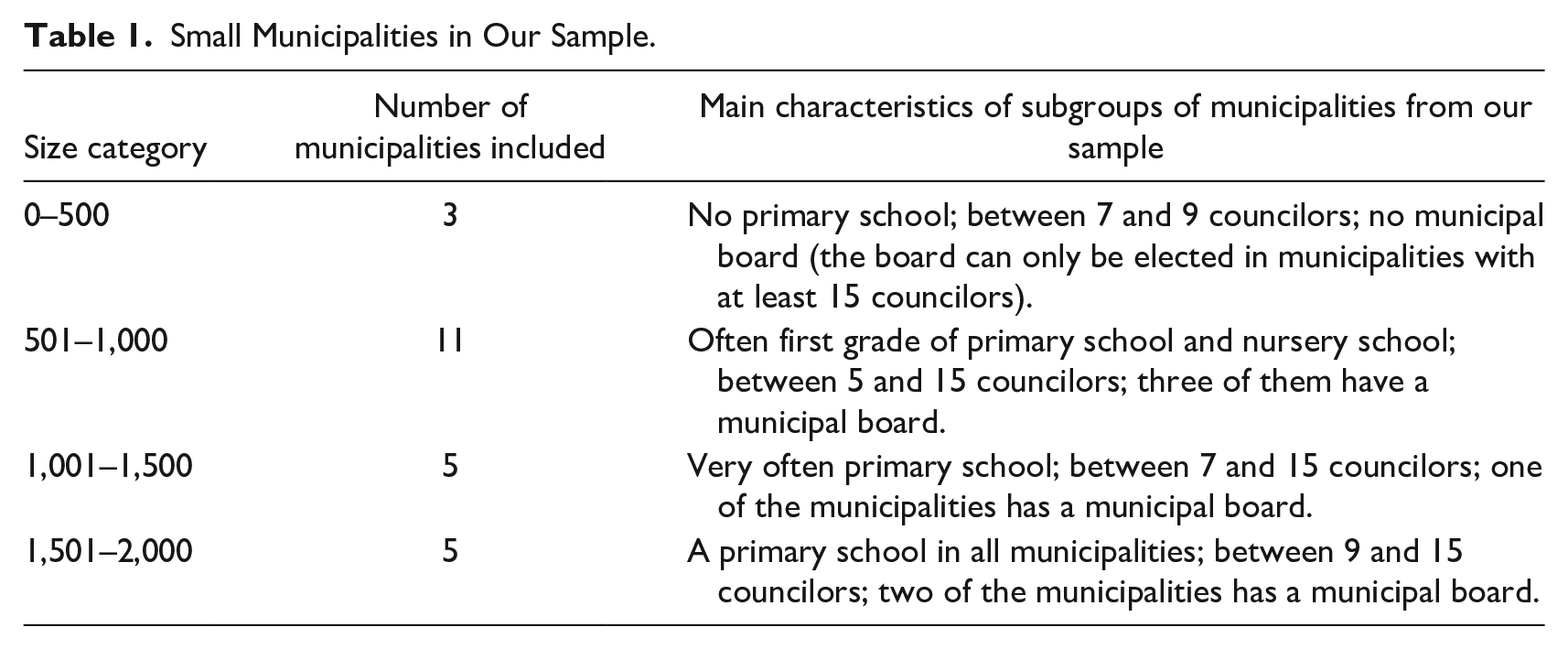
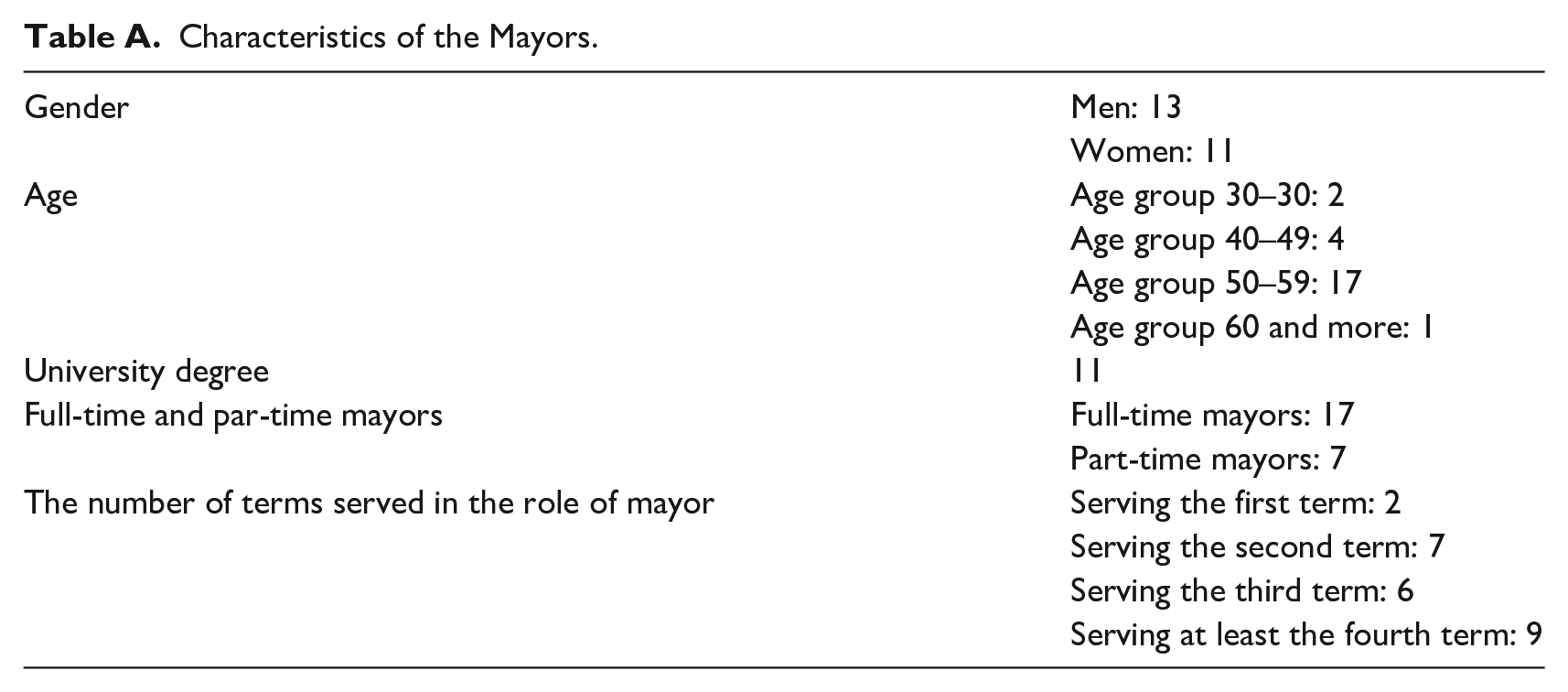
Our sample of municipalities included various types of small municipalities, as outlined in Table 1. In identifying municipalities for interviews, we especially considered those with high shares of COVID-19 patients using data from the Ministry of Health (onemocneni-aktualne.mzcr.cz) and those with high shares of migrants from Ukraine using data published by the Ministry of Interior on migrant numbers by municipality (i.e., data on the number of migrants by the end of March 2022, the end of September 2022, and the end of March 2023). The selected municipalities are located in several regions and vary in size from 153 to 2,000 inhabitants; in our sample, the share of migrants in these small municipalities varied from 1.1% to 22% (averaging 10.6%). All interviewed mayors had extensive experience in coping with the recent crises. Most mayors in the municipalities performed their duties full-time (and are referred to as “freed” from their previous job positions); only two mayors (from municipalities with more than 1,000 inhabitants) served part-time while maintaining a regular job. Almost all the mayors were in office during the pandemic and migration crisis; in one case, the current mayor was the deputy mayor during the COVID-19 pandemic (additional characteristics of the mayors can be found in Table A of the Appendix).
Small Municipalities in Our Sample.
In small municipalities in Czechia, the main governing bodies usually include a mayor and a vice-mayor, as well as a municipal council and a secretary who handles calls, communication, and other administrative tasks, but they do not possess the additional administrative capacities of larger municipalities (see, e.g., Bureš et al. 2004; Voda 2022). In our initial interviews with a few vice-mayors, they often redirected us to the mayors, explaining that the mayors were primarily responsible for managing the crises. Therefore, we ultimately chose to interview only the mayors of the selected municipalities.
Although the interviews revealed that each municipality took a particular approach to coping with the crises, we followed saturation recommendations (Saunders et al. 2018) and opted not to interview additional mayors once the interviews showed no new emergent insights, making further data collection redundant. The interviews were conducted by three researchers in Czech and either in person (face-to-face and recorded) or online using MS Teams and using the same interview protocol. As the researchers were Czech, the interviews were done in the native language of the interviewees and the interviewers. All interviews were transcribed, and the transcriptions were subjected to qualitative content analysis (Kohlbacher 2006; Mayring 2014) using MAXQDA software.
In the coding process, two researchers initially worked independently to develop a coding scheme based on a sample of three transcripts. After comparing their initial codes, they refined the scheme and proceeded to code all interviews (see Table with Code List and Absolute and Relative Frequencies in the Supplemental Material). Throughout this process, they continuously compared their results to ensure consistency and accuracy and considered the definitions and components of robustness suggested in the literature. The researchers specifically looked for adaptations made by local governments of small municipalities to cope with the two crises (including related emergencies and needs) while maintaining their functioning during the crises. The researchers also examined the reasons for these adaptations, considering factors such as the nature of coordination and collaboration with other municipalities, the upper tiers of the Czech administrative system (regional and national), and collaboration with other stakeholders (i.e., factors related especially to the following determinants of robustness: multi-level governance and hybridity).
Main Findings
Adaptive Strategies of Small Municipalities
More Autonomous Mayoral Decision-making
The findings from the interviews clearly support that small municipalities in Czechia developed a range of adaptive strategies to manage both the COVID-19 crisis and the influx of Ukrainian refugees. The absence of a pre-existing frameworks for managing crises of this scale and the lack of experiences with them on all governmental levels forced local governments to improvise solutions, and the urgency of the pandemic compelled many mayors to make quick, often unilateral decisions, bypassing the usual collective decision-making processes of municipal councils. Regular council meetings were severely restricted due to national social distancing measures, and while new legislation allowed for online meetings, most mayors preferred in-person gatherings in large spaces or deferred decisions until in-person meetings could be held. Also, due to the quick speed of measures adopted by the national government during the initial COVID-19 wave, mayors represented the key body of municipalities, since it was not possible to call councilors together and organize a formal council meeting because related requirements of law could not be met in practice (e.g., it is required by the Czech Act on municipalities, that council meetings should be announced at least seven days in advance). We also asked few vice-mayors for interview and the key role of mayors during the crises is clear from their answers—they often redirected us to the mayors, explaining that the mayors were key persons involved in managing both the crises. The interviews suggest that mayors often consulted other councilors during both the crises (mayors and vice-mayors are elected by the municipal council from among the councilors). As one mayor summarized, “Sometimes, the information was either absent or overwhelming, leading one to rely on rational judgment. Despite attempting to use available information, there was often a need to navigate independently, aiming to do one’s utmost while acknowledging the solutions weren’t always perfect” (Mayor 23). This need for rapid decision-making under pressure often resulted in mayors taking on a more central role in local governance and making decisions independently when necessary.
During the Ukraine refugee crisis, small municipalities also had to quickly adapt to the sudden arrival of large numbers of refugees, usually by repurposing local facilities to provide immediate accommodation and support services. Again, leadership of mayors mattered. In collaboration with various local actors, and often through volunteer support, mayors often coordinated and helped with transforming community centers or unused public buildings into temporary shelters. Mayors, often in collaboration with some councilors or municipality personnel, often coordinated with local companies and organizations to ensure that refugees had access to necessary resources, such as food, clothing, and medical care.
In the later stages of the crises, in addition to their autonomous efforts, cooperation with other administrative tiers played an increasingly significant role in supporting local strategies. Quite often, regional bodies could provide crucial guidance and resources, acting as intermediaries between national directives and local implementation. Regions and their bodies were assigned more roles later in the COVID-19 pandemic (they were responsible for regional vaccination strategies and their implementation). They were also key coordinators of help for refugees from the Ukraine; regional assistant centers were established, their functioning relied especially on cooperation between cities, regions and NGOs, later, since April 2023, they were taken over by the Ministry of the Interior). Still, the interviews suggest that collaboration with other administrative tiers was determined by past experiences. Mayors of municipalities that had pre-existing strong ties with other municipalities, including their municipality with extended powers (ORPs 1 ) and bodies of regions, assessed intergovernmental collaboration during the crises more positively and indicated that they were better positioned to access timely information and resources, which were essential for effective crisis management during the initial phase of the crisis.
The interviews also suggest that experience of managing the two crises has had a lasting impact on local governance. The necessity of making quick, autonomous decisions has led many mayors to develop a more proactive approach to crisis management where they rely on their knowledge of local needs and resources to guide their actions.
Communication With Citizens and Managing Local Dynamics
Effective communication with citizens was essential during both crises but posed significant challenges. During the pandemic, mayors used various channels to disseminate information to residents, including SMS, social media, local media or simply instructions written on leaflets. Given the rapidly changing nature of the situation and the complexity of the (national) measures being implemented, mayors often found themselves serving as the primary source of information for residents. This role was particularly important in small municipalities, where residents often had direct access to mayors and relied on them for timely and accurate information. As one mayor noted, this role positioned them as both an information broker and a representative of state authority.
The influx of Ukrainian refugees also required effective communication to manage the practical and social implications of the situation. In many cases, the arrival of refugees placed additional pressure on local resources, such as shops and public services, which required careful management to avoid tension between residents and refugees. Mayor 14 recounted, “Suddenly, out of nowhere, there was a higher demand, so I just don’t know, at half-past eight in the morning, there was no bread in the store, but our citizens, generally, they took this very badly.” Managing these dynamics required clear, consistent communication from local authorities to ensure that residents understood the situation and were reassured that their needs would continue to be met.
During both crises, the mayor’s role as a communicator and mediator was vital. The ability of a mayor to effectively convey information, manage expectations, and address concerns helped maintain social cohesion and ensured that the community could navigate the crises together, all of which was particularly important in small municipalities, where the close-knit nature of the community meant that any tensions or misunderstandings could have significant consequences. By maintaining open lines of communication and actively engaging with residents, mayors could foster a sense of solidarity and shared purpose, each essential for managing the challenges posed by these crises.
Community Engagement and Strong Local Leadership
The interviews indicate that in small municipalities, community engagement was pivotal in the response to both crises, and mayors’ experiences with collaboration during the COVID-19 pandemic were also put into practice during the migration crisis. Many municipalities relied on volunteers and community groups to help manage the crises, particularly in delivering essential services like food or medical supplies to vulnerable residents or migrants. As resources of small municipalities were often limited, these community-led initiatives were vital. The crucial role of the volunteer fire brigades was also noted, and many mayors confirmed the following statement: “Without a doubt, our firefighters were exceptional individuals who went above and beyond, assisting us in every possible way, truly the backbone of our community” (Mayor 20). Local schools often helped during the refugee crises since they offered their premises (like gymnasiums) for temporary accommodation of refugees. But mayors were closely cooperating with schools also during the COVID-19 pandemic—they needed to adapt to national measures on school closures which came out of blue in the beginning of the COVID-19 crisis and were rather chaotic during the COVID-19 pandemic.
During both crises, but especially during the migration crisis, municipalities collaborated closely with local companies that employed and accommodated foreigners. As Mayor 6 noted: “The local company took it upon themselves in such a way that they allocated money, people, spaces for these refugees, they really put a lot of money, a lot of their energy into it.” This community-driven response, supported by local associations and networks, was crucial in sustaining community resilience and helping municipalities manage crisis, particularly when formal support from higher authorities was slow to materialize. According to the mayors, these networks often had deep roots in the community and were thus able to mobilize quickly and effectively, providing a range of services that complemented the efforts of local governments. Whether it was organizing food banks during the pandemic or setting up temporary shelters for refugees, these community-led initiatives were instrumental in ensuring that small municipalities could manage the challenges they faced. As this finding illustrates, the strong sense of community that characterizes many small municipalities was a significant asset in these communities by enabling a coordinated, compassionate response to challenges.
Multi-level Governance—Issues in National Coordination and Communication
In addition, the interviews indicated that small municipalities faced significant hurdles in navigating national coordination and communication efforts during the COVID-19 pandemic and the refugee crisis. The mayors described the early days of the pandemic as chaotic, with inconsistent and delayed information flow from higher authorities: “At the beginning, almost no one knew anything; it was very chaotic, and the media provided most of the information for us. So, when there was a press conference about what is being restricted, what is being adjusted, the media immediately sat down and immediately provided the information. The state administration officially got the information to us only two days later” (Mayor 5). This lack of timely communication often left municipalities and their residents learning about new restrictions and guidelines from the media rather than official channels, leading to frustration and uncertainty. It also encouraged them to act independently.
The slow and initially ineffective national response was also apparent in the interviews with the mayors of small municipalities that were significantly affected by the influx of Ukrainian refugees. The municipality of one mayor interviewed in this study already had a Ukrainian community before the war, so many migrants to this municipality were heading to their relatives and acquaintances in the town. According to this mayor, “While the newspapers were writing that there might be a wave of refugees, we already had 300 new people in the village, and no one could help us. . . . So, we simply had to help ourselves, not alone, but together.”
One of the critical challenges in both crises was the lack of clarity or consistency in the information provided to municipalities from higher government levels. The interviews indicated that during the pandemic, legal jargon and overlapping directives from various authorities hindered the efforts of local leaders to understand and implement measures effectively. As one mayor recounted, “. . . Like on a Sunday afternoon, I approached four mayors—later, ten fellow mayors—whom I simply approached, [telling them] that there was some regulation which sometimes came three times a day [and is] written in a language that no one understands, and there was some change. And we didn’t understand at all, like what the document says, [so] then we threw it into the group of mayors, where we discussed [how] none of us knows what it means, . . . And I spent three hours, maybe, to find out what the regulation is telling me, [only] to conclude that it doesn’t affect us in any way . . .” (Mayor 23). Similarly, during the refugee crisis, small municipalities struggled with a lack of accurate data on the number of refugees in their territories, complicating efforts to plan and allocate resources appropriately. Some municipalities have thus taken it upon themselves to determine the number of refugees within their communities. Overall, this inconsistency in communication was a recurring theme and highlights the need for more streamlined, accessible channels of information between national and local authorities.
The interviews also indicated that during the two crises, national bodies dealt with municipalities as though all possessed equal resources and oversight, despite the vast differences in their numbers of elected officials, council members, civil servants, and other municipal employees and their resource availability. As such, the mayors’ experiences during the two crises provide us the opportunity to compare the effectiveness of intergovernmental communication strategies. While each crisis revealed significant gaps, some municipalities reported improved communication and cooperation with state administrative bodies and other municipalities over time, particularly as the pandemic progressed. This underscores the importance of learning from experiences to improve future crisis management and communication strategies, especially in the dissemination of critical information. In addition, the mayors of small municipalities identified communication as one of the main challenges in better managing future crises. They asserted that national measures should be communicated in an understandable and timely manner to municipalities and citizens; if not, such communication may increase the administrative burden (in small municipalities, citizens usually ask their mayors, not central bodies). Finally, when preparing any national measures or solutions, municipalities must also be differentiated according to size, as each type has specific needs and resources.
Concluding Remarks
In this paper, we have examined how small municipalities in Czechia responded to the two recent large and unprecedented crises, focusing on their contribution to governance robustness. Our findings confirm the point made by Ansell, Sørensen, and Torfing (2021, 2023) and Salvador and Sancho (2023): Dynamic and unpredictable crises require agile responses. Moreover, our findings align with previous research highlighting the role of local governments in crisis management and resilience building (e.g., Dzigbede, Gehl, and Willoughby 2020; Kuhlmann and Franzke 2022; Shaw 2012). The interview findings also demonstrate that during the two large crises in Czechia, the maintenance of basic systemic functions relied heavily on local governments in small municipalities.
Salvador and Sancho (2023) assume that one of the main challenges faced by local governments when dealing with crises is adapting quickly to changing circumstances. Our results suggest that rapid adaptation is not a challenge, but often a common practice in small municipalities. As outlined in our paper, small Czech municipalities simultaneously were required to adapt to heightened turbulence, handle the crises, and maintain their functioning, and the interviews demonstrated these municipalities’ agility in coping with the two crises by fulfilling each of these functions while also dealing with limited resources and support. The previously discussed experiences of mayors suggest that small municipalities had to respond immediately because the crises impacted them first, and they had to utilize all resources available to them at that moment or relatively quickly. When they lacked a clear framework and policy guidance from higher government levels, they realized that they needed to act, so they acted according to their own judgment and based their decisions on previous experiences. At the beginning of a crisis, the robustness of the crisis governance in Czechia largely relied on municipalities, including small municipalities.
Our research supports the crucial role of local leadership in governance. The experiences of small-municipality mayors in coping with the two large crises emphasize the importance of local adaptability and strong local leadership. In small municipalities, the latter was supported by a shift toward more autonomous mayoral decision-making based on their intimate knowledge of local conditions and available resources. Mayors of small municipalities were also the figures to whom people customarily turned for problem-solving and communication.
Our findings do not confirm conclusions of Jelínková et al. (2023) that Czech municipalities largely dealt with the refugee crisis independently without the benefit of well-developed stakeholder collaboration. Due to amounts of refugees, some municipalities had to rely on stakeholder collaboration and our interviews suggest that collaboration established during the COVID-19 pandemic (e.g., in the case of services for elderly people) was reactivated during the refugee crisis.
In addition, the interviews indicate the importance of horizontal networks and IMC based on familiarity and trust and support, which is in line with Wayenberg et al.’s (2022) argument that pre-existing collaborative traditions strengthen resilience during crises. Mayors who had established strong ties with other municipalities and higher administrative bodies, such as municipalities with extended powers (ORPs) or regional governments, were better positioned to access crucial information and resources, similar to Duit and Galaz’s (2008) conclusion that robust governance requires adaptability and collaboration across governance systems to manage disturbances effectively.
Our data indicate that both crises revealed systemic problems within Czech public administration, particularly in intergovernmental crisis coordination and communication, especially at the beginning of the crises. The inconsistency in top-down communication reported by the mayors indicates the need for more streamlined and accessible channels of information between national and subnational governments and for shifts on the national government level to a culture of continuous improvement and learning. Indeed, governments should constantly evaluate their response to crises and identifying areas for improvement (Yigitcanlar et al. 2021).
Supplemental Material
sj-docx-1-slg-10.1177_0160323X251320135 – Supplemental material for How Small Municipalities Contribute to Robust Crisis Governance—Experiences From Two Recent Large-scale Crises in Czechia
Supplemental material, sj-docx-1-slg-10.1177_0160323X251320135 for How Small Municipalities Contribute to Robust Crisis Governance—Experiences From Two Recent Large-scale Crises in Czechia by Daniel Čermák, Renáta Mikešová and David Špaček in State and Local Government Review
Footnotes
Appendix
Characteristics of the Mayors.
| Gender | Men: 13 |
| Women: 11 | |
| Age | Age group 30–30: 2 |
| Age group 40–49: 4 | |
| Age group 50–59: 17 | |
| Age group 60 and more: 1 | |
| University degree | 11 |
| Full-time and par-time mayors | Full-time mayors: 17 |
| Part-time mayors: 7 | |
| The number of terms served in the role of mayor | Serving the first term: 2 |
| Serving the second term: 7 | |
| Serving the third term: 6 | |
| Serving at least the fourth term: 9 |
Data Availability Statement
Data sharing not applicable to this article as no datasets were generated or analyzed during the current study.
Declaration of Conflicting Interests
The author(s) declared no potential conflicts of interest with respect to the research, authorship, and/or publication of this article.
Funding
The author(s) disclosed receipt of the following financial support for the research, authorship, and/or publication of this article: This work was supported by the NPO “Systemic Risk Institute” number LX22NPO5101, funded by European Union—Next Generation EU (Ministry of Education, Youth and Sports, NPO: EXCELES). This project has received funding from the European Union’s Horizon Europe research and innovation programme under grant agreement No 101061104. The funding body had no role in the study design, data collection, data analysis, interpretation of data, in writing of the manuscript, or the decision to submit the paper for publication.
Ethics Statement
Research among representatives of small municipalities in Czechia was reviewed and approved by the Research Ethics Committee of the Institute of Sociology of the Czech Academy of Sciences (Ref. SOÚ-523/2023) and was recognized as the one fulfilling principles of ethical research. Informed consent was obtained from all participants.

Supplemental Material
Supplemental material for this article is available online.
Notes
Author Biographies
References
Supplementary Material
Please find the following supplemental material available below.
For Open Access articles published under a Creative Commons License, all supplemental material carries the same license as the article it is associated with.
For non-Open Access articles published, all supplemental material carries a non-exclusive license, and permission requests for re-use of supplemental material or any part of supplemental material shall be sent directly to the copyright owner as specified in the copyright notice associated with the article.
