



Abstract
ICRU has published Report 95 jointly with ICRP in 2020 proposing new operational quantities. This will impact dosimetry in radiological protection especially for the dosimeters’ performance of energy and angular dependence. To test the performance in detail, it is important to establish radiation reference fields corresponding to the new quantities. The Facility of Radiation Standards (FRS) of the Japan Atomic Energy Agency is a comprehensive Secondary Standard Dosimetry Laboratory in Japan equipped with various reference fields for x-, gamma-, beta-, and neutron radiations. We evaluated the conversion coefficients in terms of the new quantities in the FRS fields and demonstrated type-testing of commercial dosimeters based on the new quantities, which made it possible to conduct the performance tests of the dosimeters in terms of the new quantities at the FRS. Significant differences between the conversion coefficients for new and existing operational quantities were found for some FRS fields, especially for x-ray fields with low energies and large angles, beta-ray fields on the operational quantities for eye lens monitoring, and neutron radiation fields. The H* and Hp responses of the dosimeters were found to be affected at low-energy photon region accordingly.
INTRODUCTION
Dosimetry for external radiation protection is accomplished by using dosimeters designed and calibrated to measure operational quantities. Calibration and performance tests of dosimeters for radiation protection purposes are conducted by calibration laboratories. The Facility of Radiation Standards (FRS) of the Japan Atomic Energy Agency (JAEA) is such a calibration laboratory equipped with various radiation reference fields. For over four decades, the FRS has served as a comprehensive Secondary Standard Dosimetry Laboratory (SSDL) in Japan, providing calibration and type-testing services for dosimeters.
In 2020, ICRU/ICRP published a joint report, Report 95 (ICRU, 2020), which proposed a new definition of the operational quantities. The change of operational quantities will impact the dosimeter performances, especially energy and angular dependences. Therefore, type-testing of the dosimeters in terms of radiation energy and angle of incidence is particularly important to consider how to cope with this change. However, no reference field to test the dosimeters in terms of the new quantities was available in Japan prior to this study.
This study aims to enable the performance testing of the dosimeters in terms of the new quantities at the FRS and to investigate the impact of the new quantities on the FRS reference fields.
METHODOLOGY
The calibration and type-testing procedures for the dosimeters such as calibration phantoms remain unchanged by the introduction of the new quantities as stated in the ICRU report (ICRU, 2020) except for the values of the conversion coefficients from measurement standard to the new quantities. The conversion coefficients must be determined for each calibration field, taking into account the different energy distributions in each field. The conversion coefficients regarding the new quantities have not yet been evaluated for the Japanese calibration fields including the FRS. To evaluate the impact of the new quantities, this study established the FRS reference fields corresponding to the new quantities in the following two steps: (1) evaluating the conversion coefficients in terms of the new quantities for the FRS reference fields and (2) demonstrating the conduct of performance tests of commercial dosimeters in terms of the new quantities.
JAEA-FRS
Various reference radiation fields equipped at the FRS are traceable to the national primary standard of the National Metrology Institute of Japan, the National Institute of Advanced Industrial Science and Technology (NMIJ/AIST). The FRS is also accredited as an exclusive JIS (Japan Industrial Standards) testing laboratory for radiation protection monitoring instruments based on ISO/IEC 17025 (ISO/IEC, 2017). The reference fields selected to evaluate the conversion coefficients in this study are summarised in Table 1.
The FRS reference fields used in this study.
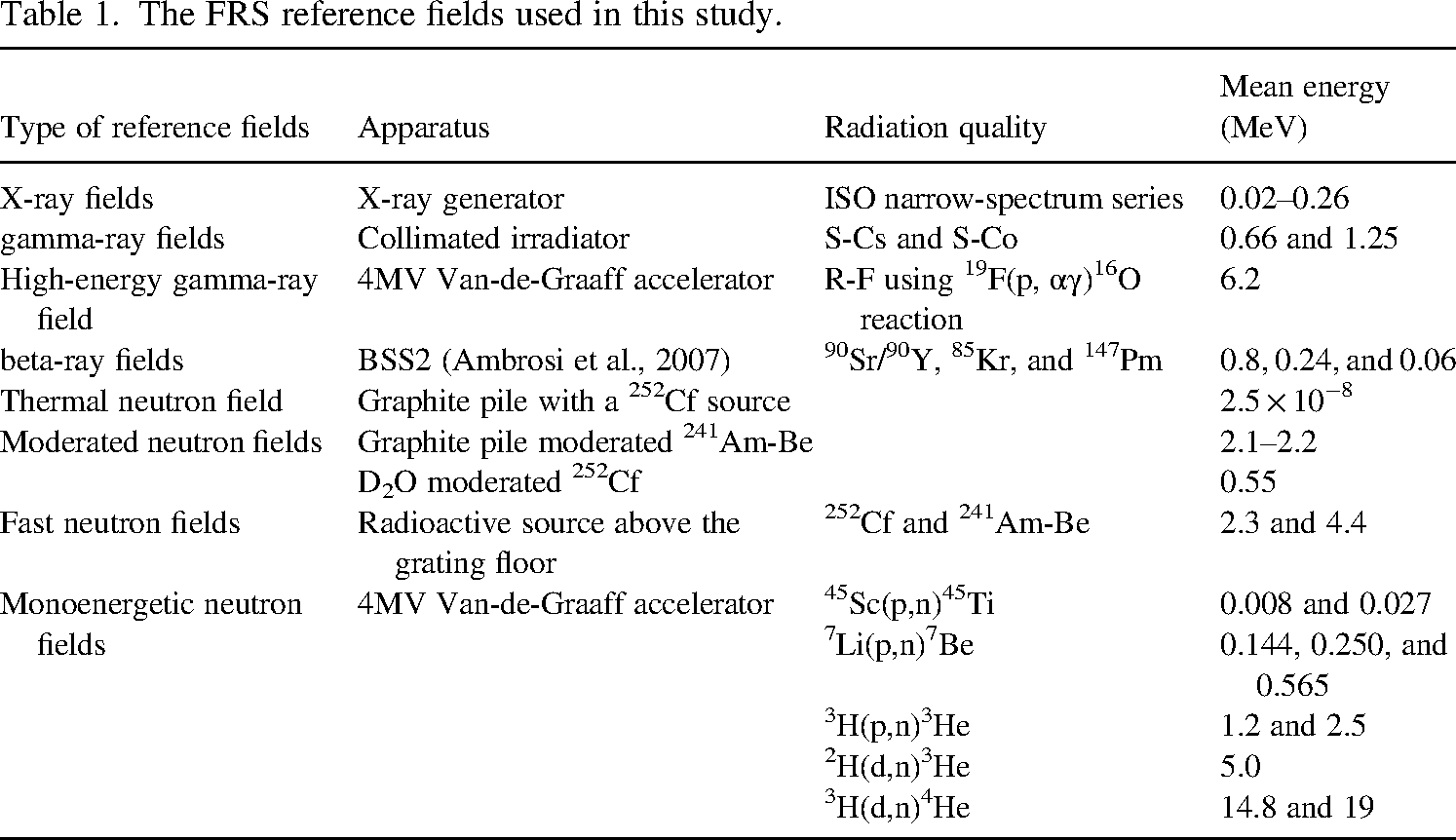
The FRS reference fields used in this study.
The ICRU report (ICRU, 2020) presented a new set of operational quantities, i.e., H* and Hp for whole-body monitoring, D´lens and Dp lens for eye lens monitoring, and D′local skin and Dp local skin for skin monitoring, providing conversion coefficients
The conversion coefficients 
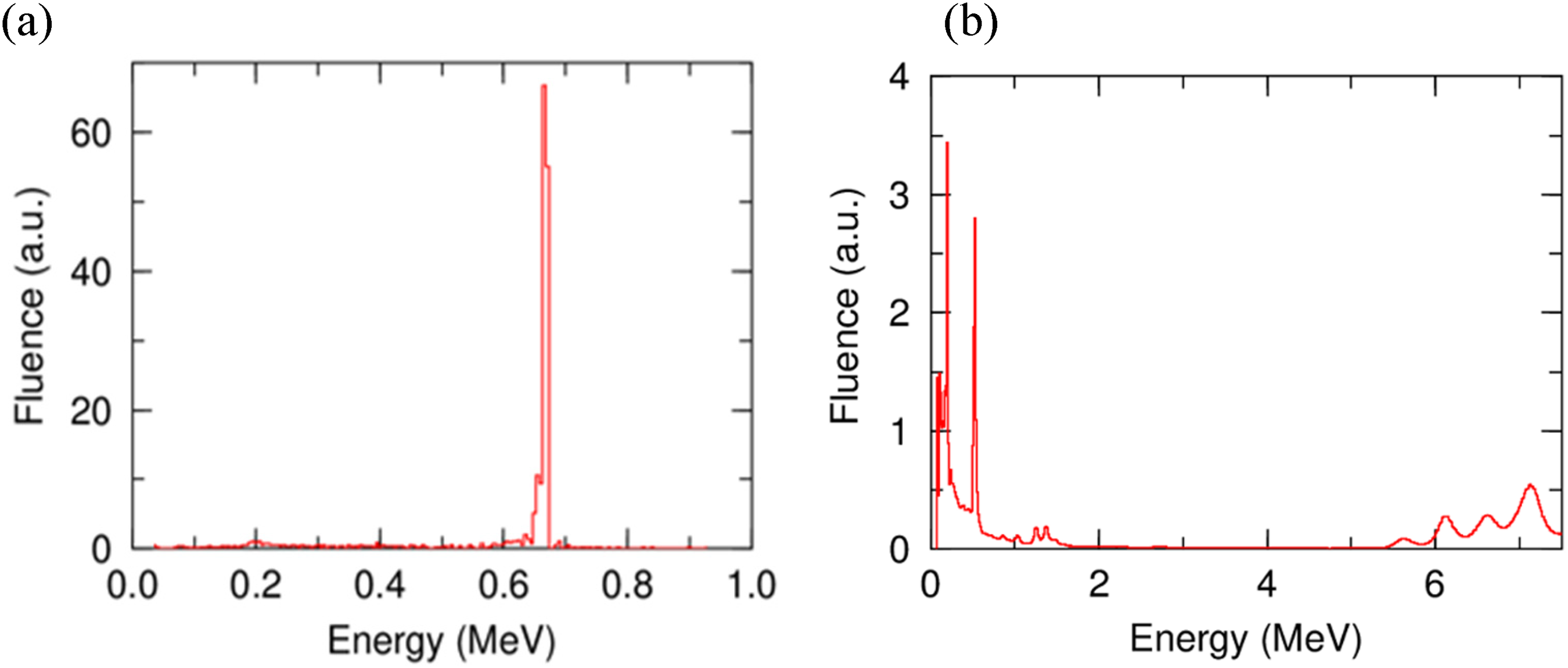
Examples of the unfolded photon fluence spectra. (a) S-Cs field, (b) R-F field.
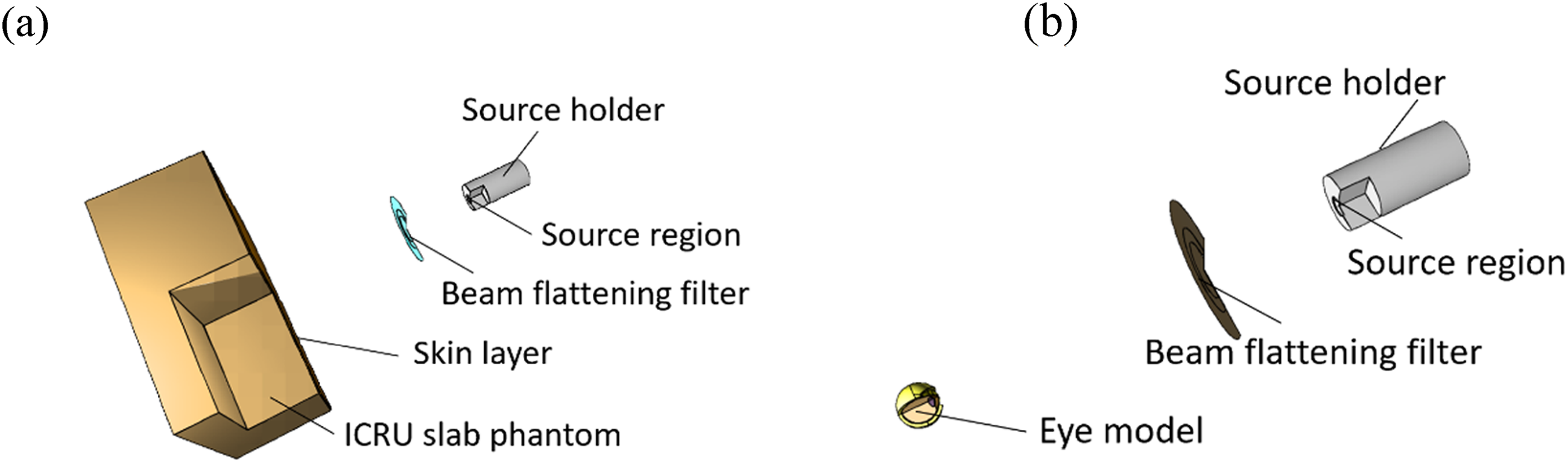
Calculation geometries for beta-ray reference fields. (a) Dlocalskin, (b) Dlens.
The ionisation chamber (IC) survey metre (AE-133B, Applied Engineering Inc.) and optically stimulated luminescence (OSL) personal dosimeter (Nagase Landauer Inc.) were type-tested in terms of the new quantities using the aforementioned photon fields. The detector of the IC survey metre is a parallel plate-type ionisation chamber with a volume of 60 cm3. It is capable of measuring not only H*(10) but also H´(3) and H´(0.07) with or without additional caps in front of the detector. The OSL dosimeter consists of four elements, which are mainly composed of Al2O3:C with different filter combinations, and Hp(10) and Hp(0.07) can be measured using a dose calculation algorithm.
RESULTS AND DISCUSSION
Conversion coefficients
The conversion coefficients for the FRS photon fields (N-40, N-60, N-80, N-100, N-120, N-150, N-200, N-250, N-300, S-Cs, S-Co, and R-F) were evaluated. The differences from those reported by Behrens and Otto (2020) were observed, with variances of up to 3%. The obtained conversion coefficients were then compared with those for the present quantities (ICRU, 1985, 1993) as shown in Fig. 3. The observed divergence from the unity has indicated the larger impact at lower energies especially for Hp. Additionally, the differences tended to increase at large angles of radiation incidence. These could lead to an unacceptable over- or under-response of a dosimeter especially in the low-energy region. To mitigate the impact, the following solutions can be considered: recalibration with an appropriate radiation quality, changes to the dose calculation algorithm or G(E) function (Moriuchi and Miyanaga, 1966), changes to the filter, and redesign of the dosimeter. Because there is no dosimeter with a perfect response, a case-by-case approach will be necessary. To determine which of the above methods is practically best for a dosimeter, it is important to obtain the dosimeter's response using these established fields.
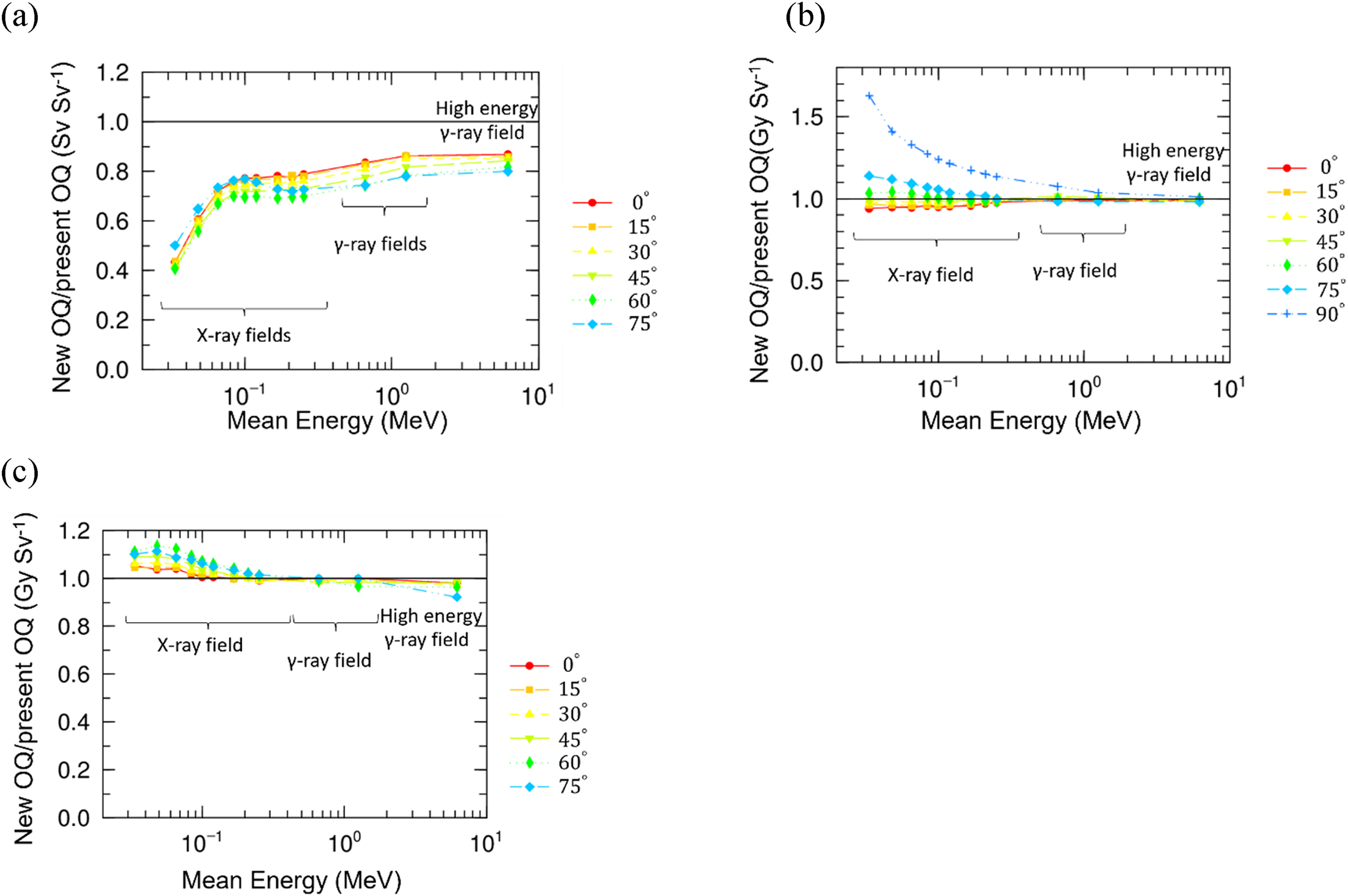
The ratios of conversion coefficients to the new operational quantities (OQs) to those of the corresponding present OQs for the FRS photon fields. (a) Hp/Hp(10), (b) Dp lens/Hp(3), (c) Dp local skin/Hp(0.07).
The conversion coefficients for the FRS beta-ray fields of 90Sr/90Y, 85Kr, and 147Pm were evaluated. The differences from those reported by Behrens (2021) were mostly within 5%, but larger discrepancies were observed for Dlocal skin(85Kr;
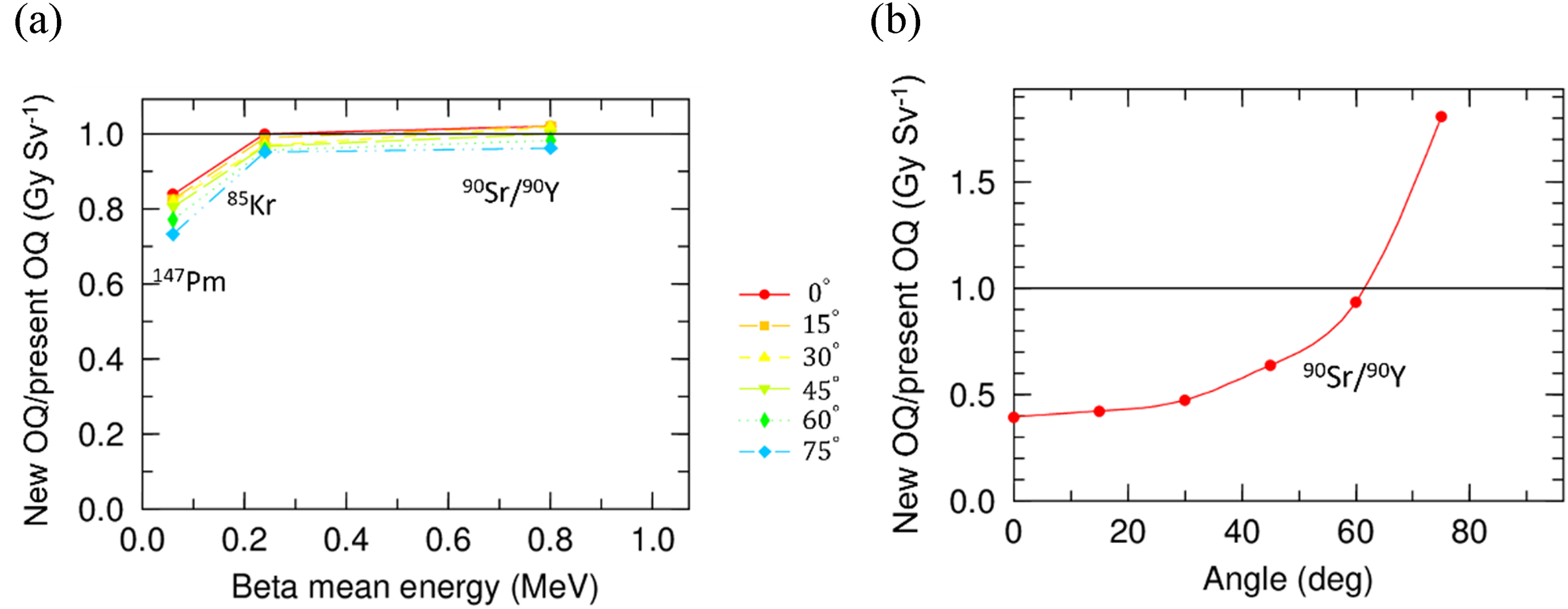
The ratio of conversion coefficients to the new OQs to the present OQs for the FRS beta-ray fields. (a) Dp local skin/Hp(0.07), (b) Angular dependence of Dp lens/Hp(3) for 90Sr/90Y field.
The conversion coefficients for the FRS neutron fields listed in Table 1 were evaluated and then compared with those for the present quantities. As shown in Fig. 5, the conversion coefficients were largely changed over the entire region in neutron energy. In addition, the values of the new quantity were smaller than those of the present quantity by around 60% for 144 and 250 keV at 0°, while the values of the new quantity were larger than those of the present quantity by 18% for 5 MeV at 0°. It should be noted that angular dependence was also affected especially below the 100 keV region.
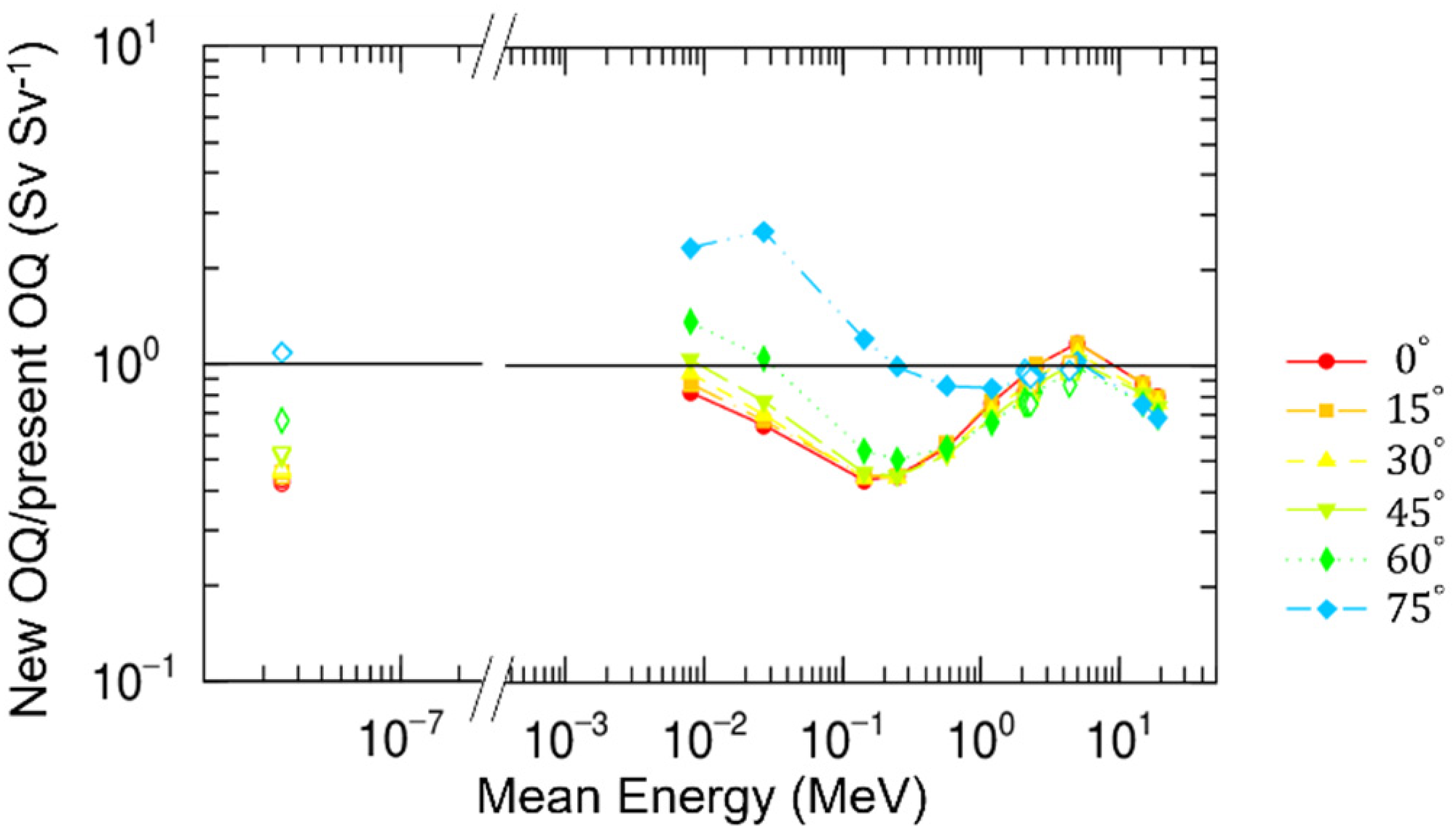
The ratio of conversion coefficients to the new OQs to the present OQs for the FRS neutron fields.
The response characteristics of the IC survey metre and OSL personal dosimeters were investigated using the above fields. The IC survey metre was over-responded for photons in terms of H* below 40 keV, whereas the D´lens and D´local skin responses remained unchanged compared to the corresponding responses for the present quantities over a range from 30 keV to 6 MeV and for incident angles from 0° up to 60° as shown in the Fig. 6. As for the OSL dosimeter, Hp response for photons increased at lower energy and higher angle of radiation incidence, while Dp local skin response was not affected (Fig. 7).
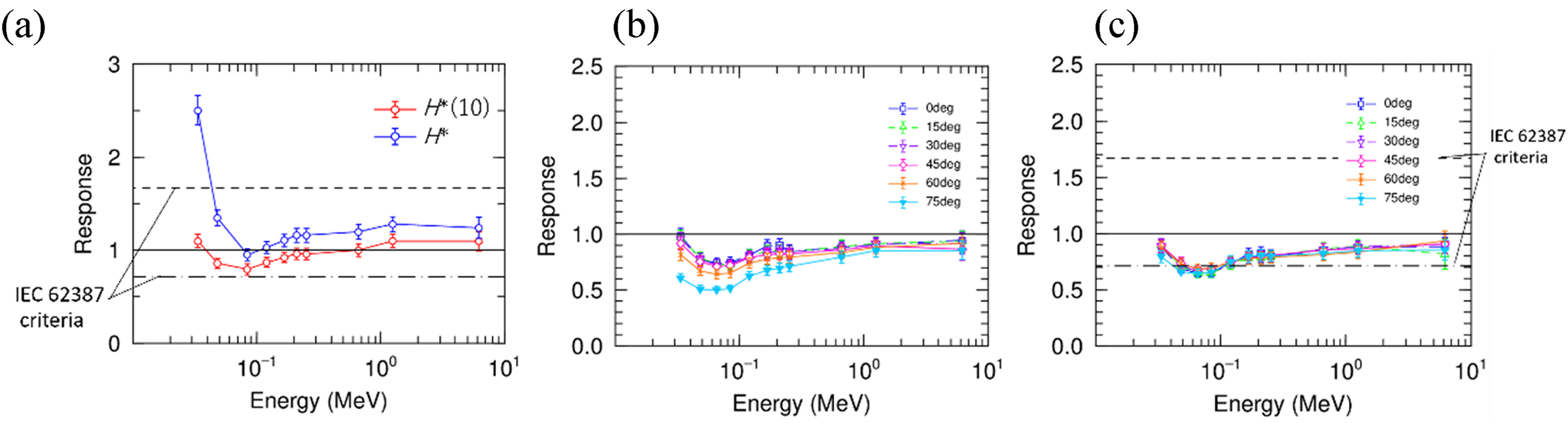
Energy and angular responses of the IC survey metre. (a) H* response, (b) D'lens response, (c) D'local skin response.
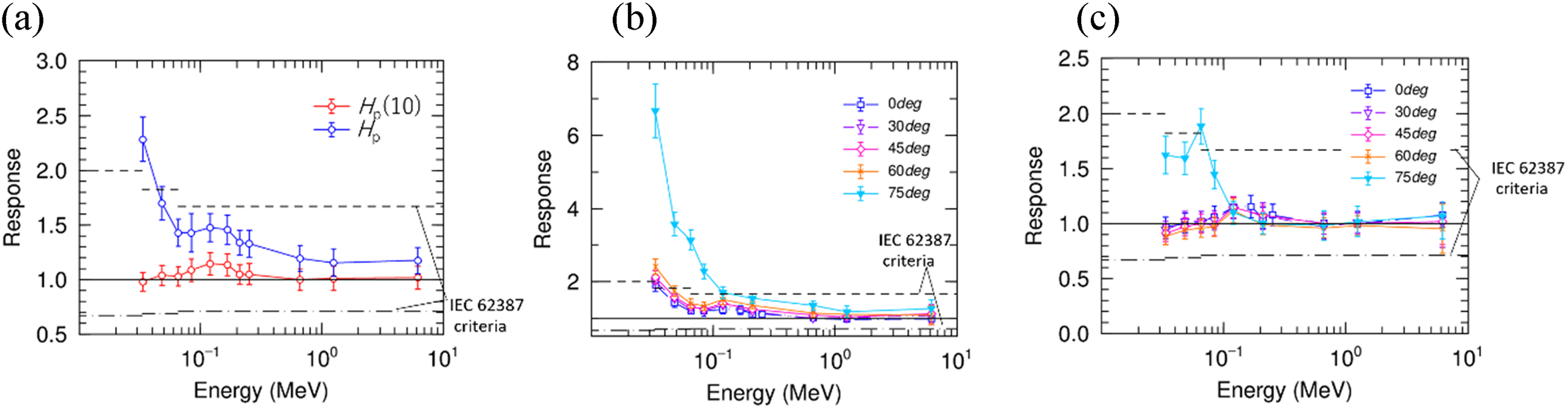
Energy and angular responses of the OSL dosimeter. (a) Hp energy response, (b) Hp angular response, (c) Dp local skin response.
In summary, the conversion coefficients regarding the new operational quantities were evaluated for a wide variety of reference fields with different radiation types and energies at the FRS. This enables testing the dosimeters’ characteristics in terms of the new quantities. To investigate the impact on the new quantities, performance tests were demonstrated for commercial photon dosimeters widely used in Japan using established FRS fields. This indicated the H* and Hp responses below 40 keV, and the Hp response at lower energy and higher angle of radiation incidence for the tested dosimeters would need some improvements.
Footnotes
ACKNOWLEDGEMENTS
This study was supported by a grant from the Nuclear Regulation Authority, Japan.