




Abstract
Ireland does not have any nuclear installations, but a nuclear accident at a site elsewhere, particularly in Europe, could result in widespread but low-level contamination of the Irish environment. Ireland’s National Emergency Plan for Nuclear Accidents was established, following the Chernobyl accident, for the national response to a nuclear accident abroad affecting Ireland. It has since been extended to also cover domestic radiological emergencies for which a national-level input is required to support the local response. This paper describes the approach taken to developing and maintaining arrangements for a nuclear accident abroad. The use of hazard assessments to prioritise resource use and planned protective actions, and the specifics of Ireland’s situation in terms of location, governance, economy, and available resources have heavily influenced the preparedness arrangements. In particular, the importance of the ingestion pathway to projected doses, together with the significance of agricultural exports to the Irish economy, has had a key influence on the arrangements in place.
1. Context of irish nuclear emergEncy preparedness
As a country with the nearest nuclear installation at a distance of 110 km, Ireland’s planning for nuclear accidents relates to the response to a nuclear accident abroad. The National Emergency Plan for Nuclear Accidents (NEPNA) was first prepared following the Chernobyl nuclear accident in 1986, and since then the plan has developed along with an evolving understanding of the potential impacts on Ireland of a nuclear accident, and in line with developments in emergency planning and management in Ireland. The plan was developed to cater for a radiation emergency or crisis such as that arising from a major accident at a nuclear installation abroad, resulting in radioactive contamination reaching Ireland.
Other important factors that have influenced planning are the fact that Ireland is a small island nation (population of less than five million), is a European Union (EU) Member State, that the agri-food industry and tourism are significant components of Ireland’s economy, and, as a non-nuclear country with no research reactors, there is limited access to radiological and nuclear expertise and equipment.
1.1. Systems approach to emergency management
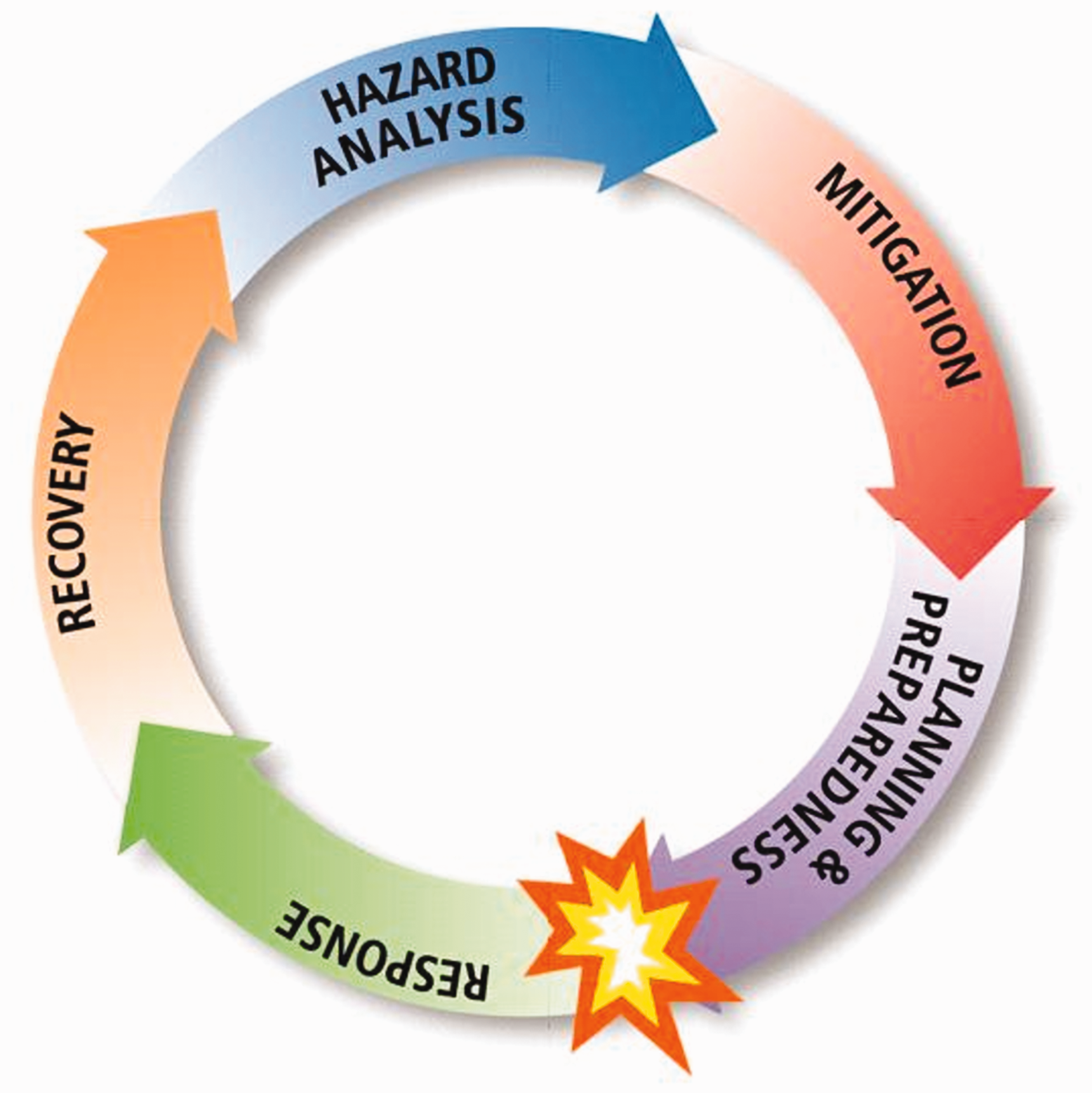
Emergency planning in Ireland uses the systems approach to emergency management. The principal elements of the systems approach are based on a five-step cycle (see Fig. 1), as follows.
Hazard analysis/risk assessment is a process by which the hazards are identified and analysed/assessed in terms of the threat/risk that they pose. Mitigation/risk management includes all actions taken to eliminate or reduce the risk to people, infrastructure, property, and the environment from the hazards that threaten them. Planning and preparedness are the actions undertaken before an emergency occurs and include:
– preparation of emergency plans; – development of preparedness and response arrangements and the building of capacity for assigned functions, considering the risks faced; – education, training, and development of staff who will be required to respond to an emergency; – exercising and testing of systems, plans, and procedures; – the procurement of resources necessary to underpin preparedness; – the maintenance of any necessary facilities; and – the audit/assessment of preparedness. Coordinated response takes place immediately before, during, and directly after an emergency, and includes activities such as public information, public protective actions, assessment of radioactivity concentrations and doses, agricultural and food response actions, and all associated support activities, as well as the coordination and management of these activities. Recovery and review is generally regarded as occurring in two phases – immediate recovery and long-term recovery. For nuclear emergencies, criteria for declaration of the end of the emergency phase (and transition to long-term recovery) have been developed as part of the latest NEPNA. The recovery stage also includes the review process and identifying lessons that should be fed into the earlier stages of the cycle, as it is repeated. Five-step emergency management paradigm adopted in Ireland.
1.2. Lead government department
In Ireland, each government department is responsible for emergency planning within the sectors under its remit. When an emergency/crisis occurs within a sector, it is that department’s responsibility to coordinate and lead the state’s response to the emergency/crisis. Nuclear and radiological emergencies are currently assigned to the Department of Housing, Planning and Local Government (National Directorate of Fire and Emergency Management).
Most emergencies/crises will involve cross-departmental issues, and each government department (and the agencies under their remit) remains responsible for their own functions in the emergency/crisis situation. They are also required to support the lead government department, to participate in the national coordination structures, and to exercise their functions in light of the objectives and decisions of the National Emergency Coordination Group.
1.2.1. Government Task Force on Emergency Planning
The Government Task Force on Emergency Planning is the structure established to coordinate emergency planning (as distinct from emergency response) across all departments and agencies. The task force is chaired by the Minister for Defence and meets routinely, approximately every 6–8 weeks, to discuss emergency planning issues, establish protocols, share experiences from emergency exercises and real events, and develop the mode of response to national emergencies. This task force supports the aim of using an all-hazards approach to emergency planning, and enables lessons to be identified from all emergency types. For example, many elements of the planned response to food contamination from nuclear accidents have come from the experiences of dealing with a dioxin crisis in 2008 (Casey et al., 2010). In addition to using these meetings for planning, it is hoped that regular meetings of emergency planning personnel from government departments and technical experts from public agencies will help build and maintain strong relationships and trust between the individuals and organisations that would be responding in an emergency, with members of the task force also serving on relevant national emergency coordination groups. The task force reports annually to the Irish Government on the various emergency planning functions.
1.2.2. National Emergency Coordination Group
Quarantelli (1997) noted the importance of the multi-agency Emergency Operations Centre (EOC) as a function, a location, and a structure in effective emergency management. Quarantelli described the EOC as a social system that requires knowledgeable personnel who possess decision-making capabilities mandated by their own organisations. In Ireland, this EOC concept exists in the combination of the National Emergency Coordination Group operating from the National Emergency Coordination Centre.
The roles of the National Emergency Coordination Group are to coordinate and manage the national-level response to an emergency/crisis. It functions as a coordinating structure (coordinating government departments and specialist response agencies) that tracks the response and provides support to responding agencies, both in terms of coordinating shared resources and ensuring that a strategy is in place to deal with national and international issues. One of the drivers for this structure is that it provides links to the local/regional level and a gateway for specialist organisations into the ‘whole-of-government approach’ to emergency management, and allows for a clearer understanding of complex situations through having expert opinion available at central level. Indeed, in a 2010 study of the role of the national coordination group in response to national emergencies, many interviewees noted that having expert opinion available at central level led to a clearer understanding of complex issues (Leonard, 2010).
The lead government department, in cooperation with the Government Press Secretary, the Government Information Service, and other members of the National Emergency Coordination Group, will ensure that the public is updated and kept advised as the emergency evolves. The lead government department is responsible for coordinating the ongoing dissemination of accurate, up-to-date information to the public/media via news releases, press briefings, and internet/social media updates in accordance with the public information strategy developed by the group. Other departments/agencies are required to participate in arranged press briefings as well as to maintain their own individual efforts in the public information sphere, coordinated through a subgroup of the National Emergency Coordination Group.
2. Nuclear hazard assessments
One of the principal elements of the systems approach to emergency management is a risk or hazard assessment. Ireland has completed a number of key hazard assessments that considered the risks to Ireland from local radiological incidents, and from nuclear accidents at the Sellafield nuclear reprocessing site and at nuclear power plants (RPII, 2013; EPA, 2016).
These assessments looked at the potential radiological impacts on Ireland from a range of postulated severe nuclear accidents at the closest nuclear installations to Ireland. Accident scenarios were based on those published in the US Nuclear Regulatory Commission’s SOARCA study (NRC, 2012) and from the 2012 Sellafield probabilistic risk assessment commissioned by the Irish Government (DCCAE, 2012), combined with an analysis of weather conditions prevailing in Ireland and the UK over the past 21 years. The consequences of large accidental releases of radioactivity to the Irish Sea, including one equivalent in size to the marine release from the Fukushima accident, were also examined.
In addition to these assessments of radiological consequences, the Irish Government commissioned the Economic and Social Research Institute to carry out a study to assess the potential economic impact on Ireland of a nuclear incident in north-western Europe (Curtis et al., 2016).
These assessments have all shown that ingestion of foodstuffs containing elevated levels of radionuclides is likely to be the most significant radiation dose pathway to the Irish population following a large-scale nuclear incident that results in contamination of a wide area of the country (typically approximately 90% of the overall dose, see Fig. 2). In addition, the agri-food sector is a key component of the Irish economy, and therefore widespread radioactive contamination of the environment would have devastating and long-lasting economic consequences (with estimates of losses/costs to the Irish economy of between €4 billion and €161 billion depending on the extent and perception of contamination). Based on these findings, strategies have been developed to enhance the Irish emergency preparedness and consequence management capability, with the objective of implementing a range of effective controls and measures as early as possible in the crisis, in a coordinated manner, with a view to protecting the health of the general population, preserving the quality of foodstuffs, and maintaining food distribution and trade activities (domestic and international).
Typical contributions of different pathways to the overall dose in 1 year following a nuclear accident affecting Ireland (green sector is ingestion of contaminated food).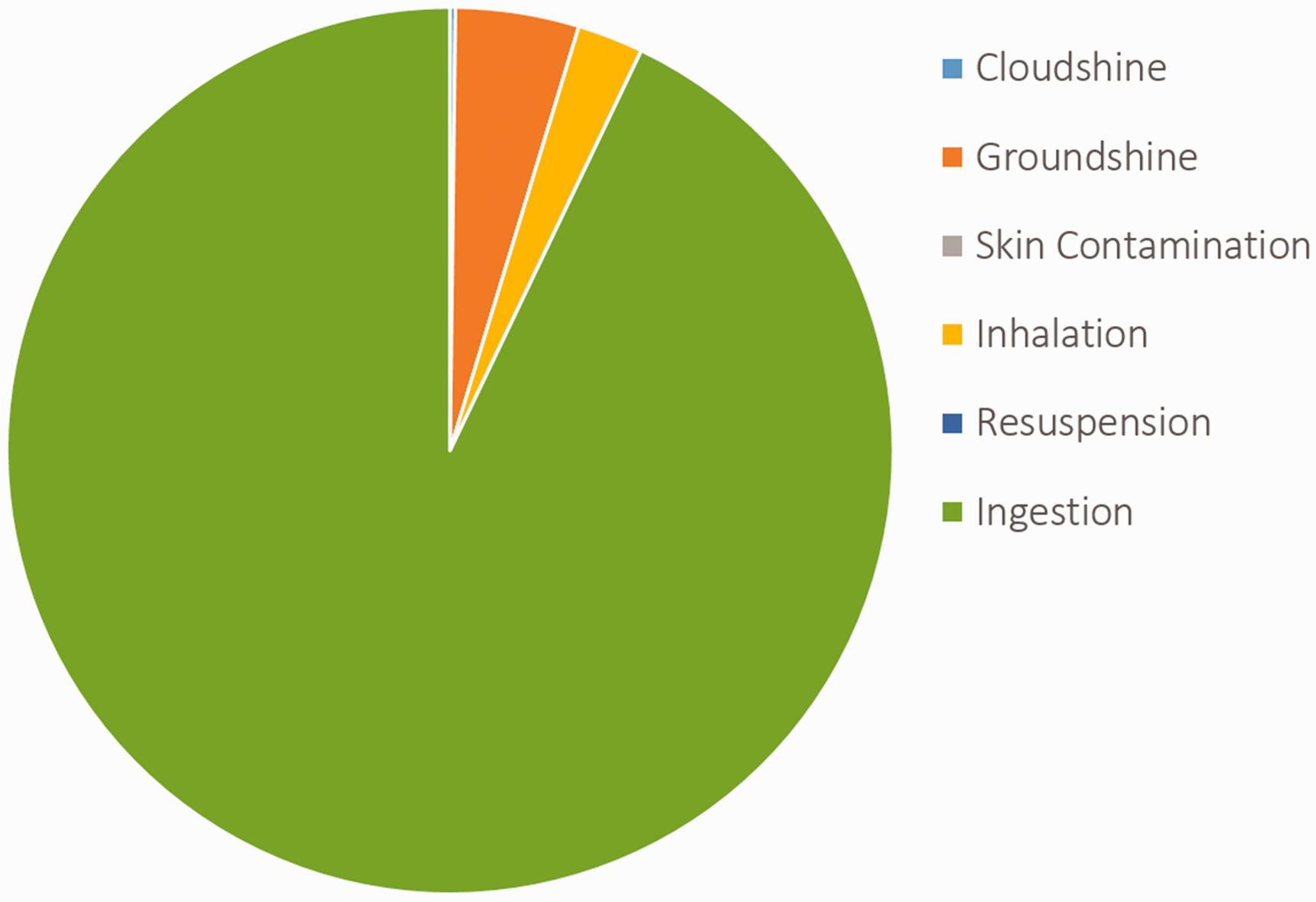
3. Ireland’s National Emergency Plan for Nuclear Accidents
3.1. Overview of the national plan
NEPNA sets out a framework for a coordinated national response to an event where the response is assumed to be beyond the resources or capabilities of any individual government department or public authority and, as such, requires the political and strategic involvement of the Irish Government. It is one of several complementary national and local authority plans designed to cater for different types of emergency. The main elements of NEPNA cover:
mechanisms for raising the alarm; roles of government ministers, government departments, and other public authorities/agencies; procedures for mobilisation of resources and expertise from across the country; coordination at both political and official levels; and arrangements for communication with the public.
As described previously, response to a nuclear emergency would entail a whole-of-government response. This response would be coordinated by the National Emergency Coordination Group, which for a nuclear or radiological emergency includes: Department of Housing, Planning and Local Government; Department of Communications; Climate Action and Environment; Environmental Protection Agency; Met Éireann (Irish meteorological service); Department of Agriculture, Food and the Marine; Department of Health; Health Service Executive; Food Safety Authority of Ireland; Department of the Taoiseach (Prime Minster); Department of Defence; defence forces; civil defence; An Garda Síochána (national police service); Department of Foreign Affairs and Trade; and Customs and Excise.
3.2. Technical preparedness for food contamination issues
Many considerations influence the decision-making process in an emergency. For example, in the case of agriculture, these include: how long it would take to reach the maximum permitted levels in food/feed; the type and amount of radionuclides deposited; which radionuclides are the most important; and the time of year when contamination occurs.
At the end of 2008, a food and agriculture multi-agency expert group was set up with a mandate to develop a food handbook, primarily focused on the early phase of an emergency. The group was chaired by the Department of Agriculture, Food and the Marine with experts from the following areas: dairy sector; horticulture and plant health; animal feed and crops; meat sector/veterinary science; animal by-products; and food safety. Other government agencies represented in the group were: the Sea Fisheries Protection Authority; the Food Safety Authority of Ireland; the Environmental Protection Agency; and the Radiological Protection Institute of Ireland (now part of the Environmental Protection Agency). This group undertook a customisation of the EURANOS handbook (Nisbet et al., 2009) for food production systems (Organo and Darcy, 2014).
In the early stage of an emergency, the response will rely on predictive modelling (McGinnity et al., 2009). Large uncertainties in the modelling results will be expected as very little information is anticipated to be available in the prerelease/release phases, in particular around source term determination. The results of the modelling would be used to prioritise deployment of monitoring resources and to supplement monitoring results. From a food production point of view, the objective will be to determine the extent of contamination in different food-producing regions, and when and how much contamination can be expected. Decision making will be aimed at ensuring that ‘clean’ food is produced, and at minimising the volume of food considered unfit for consumption. Tables of actions have been developed for each agricultural sector and season, and each table contains foreseen actions required by farmers, food processors, and the competent authority.
3.3. Stakeholder engagement on food contamination issues
Membership of the Irish Food and Agriculture Stakeholder Panel.
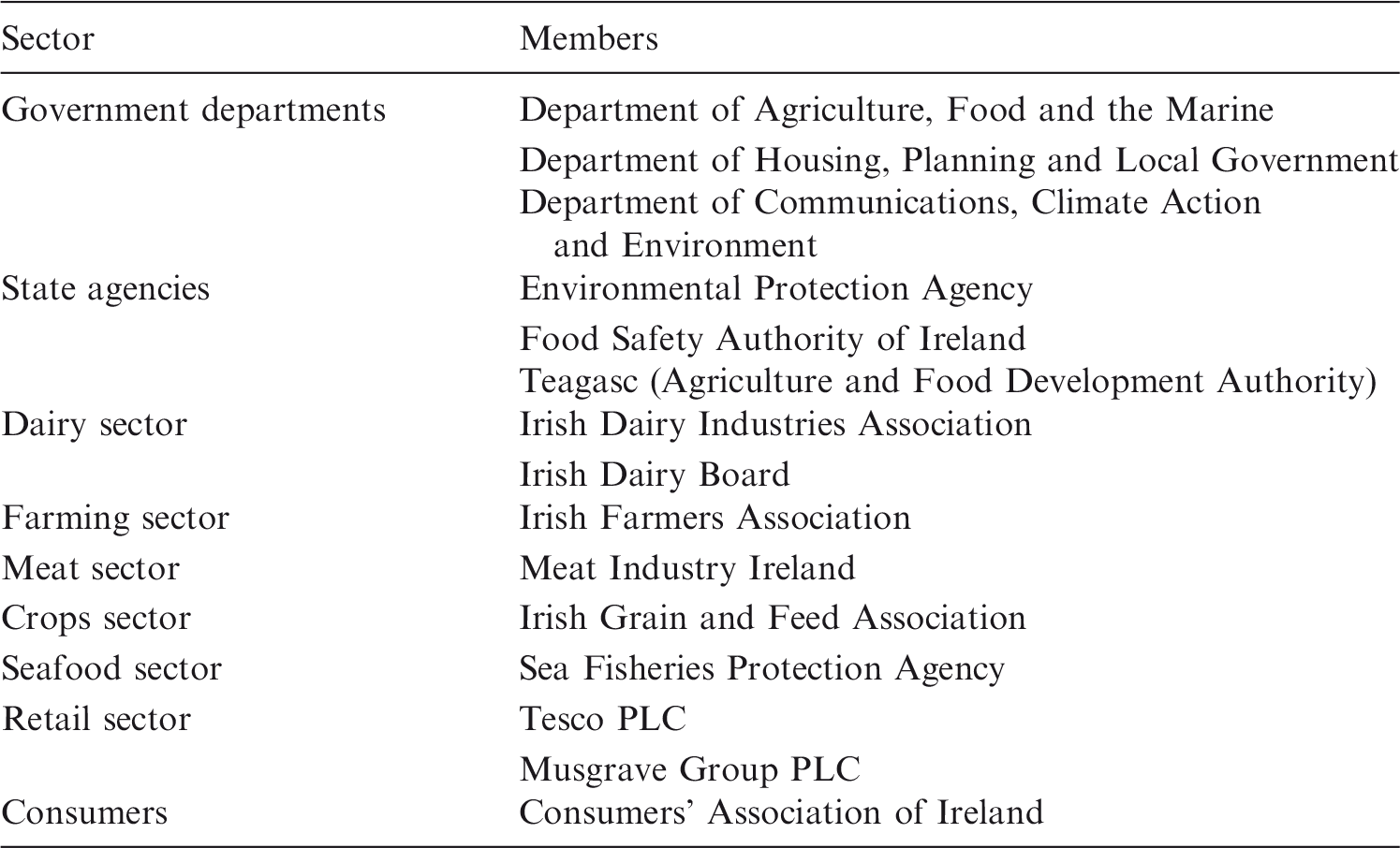
In addition to providing views on which proposed agricultural measures are acceptable, one of the key issues that arose in panel discussions was around communication. Following a nuclear accident, it is critical that communication paths are clear to avoid confusion, and to ensure that the public and industry are not receiving mixed messages. Key stakeholders in the food industry must be notified directly so that they do not receive their information from the media. It is important that they receive this information quickly. Communication between industries is also very important (e.g. between supplies and processors). Therefore, key stakeholders in the food industry must be involved in the communications plan.
The development of preprepared key messages as part of the emergency plan was seen as very beneficial. In addition, careful consideration should be given when selecting the organisations/individuals who will deliver the communication, as the public are more likely to trust independent health and scientific experts than politicians or those with vested interests in the food industry. Also, it was highlighted that the language used should be non-technical, and the risks should be explained by comparison with everyday examples and familiar concepts.
Regarding the introduction and cessation of agricultural protective actions, the communications plan must be very clear on who will communicate instructions to farmers, and where farmers can seek further information and support. It would be useful to provide farmers with examples of where these protective actions have been implemented in the past, and their success rates.
3.4. Public communication
Public confidence that an emergency is being managed effectively is constantly emphasised in emergency management literature as a key priority for crisis managers (e.g. Coombs, 2011). Thus, the public communication plan is a central component to any emergency response. In Ireland, public information for nuclear emergencies, in both content and arrangements, has been heavily influenced by the results of market research surveys and focus groups (e.g. RPII, 2014). Key questions addressed to the public have included what information should be provided on emergency plans, who people would trust to provide information on radiation matters, and what they would do in the event of an emergency. Findings from these studies have been used to guide the communications plan for an emergency, such as including the Chief Medical Officer as a key spokesperson, as well as using known (and trusted) weather forecasters in delivery of information in the early phase. The public information arrangements for NEPNA include establishment of a media/information subgroup of the National Emergency Coordination Group to ensure coordination of messaging across government and public agencies.
As part of a public information campaign on emergency planning, a handbook was sent to all households in Ireland. The handbook gave basic information on what individual householders can do to improve their own emergency preparedness, as well as information on emergency plans in place (including NEPNA). The handbook also gave guidance on where more detailed information can be obtained. It was printed in a bilingual format (English and Irish), and is available in CD format, in large print, in braille, and as an easy-to-read version. It is also available electronically in Polish, Chinese, and Russian, and is available for download from the website (www.emergencyplanning.ie). Each year, as part of a ‘Winter Ready Campaign’, there is an information campaign that reminds the public where they can get information on emergency planning.
3.5. Emergency exercises
National exercises are carried out regularly. These are used to test and develop arrangements, and to train staff and raise awareness of the key issues amongst staff who do not work routinely in the nuclear/radiological emergency area. It is recognised that international cooperation on exercises is essential. Irish authorities participate regularly in international exercises, such as those in the Organisation for Economic Co-operation and Development–Nuclear Energy Agency’s INEX series, the ConvEx exercises coordinated by the International Atomic Energy Agency, and the ECURIE Level 3 exercises coordinated by the European Commission.
4. Conclusions
The use of a comprehensive hazard assessment as a first step in planning for nuclear and radiological emergencies has allowed the prioritisation of limited resources. Based on the results of the assessment, it has been possible to focus planning efforts on those actions that would have the greatest impact in terms of dose reduction as well as socio-economic effects. For Ireland, this is the contamination of food products. The importance of communications with the public and key stakeholders in the event of an emergency is also of key importance in Ireland’s approach to preparedness, and the approach to this is guided by market surveys and work with an agri-food stakeholder panel.