




Abstract
The residents of Suetsugi in Fukushima Prefecture measured ambient dose rates and radiocaesium concentrations in the soil after the accident at Fukushima Daiichi nuclear power plant in an attempt to maintain living conditions in the region. The measurements were colour plotted into maps to visualise the contamination. Through the receipt of external support, a number of radioactivity-related initiatives were implemented for the residents. Studies were also undertaken regarding the impact of radiocaesium contamination on rice farming in Suetsugi following the Great East Japan Earthquake and the accident at Fukushima Daiichi nuclear power plant.
1. INTRODUCTION
1.1. Suetsugi
Suetsugi is in Hisanohama-machi district on the northern side of Iwaki city, at the southern tip of Hamadori. It is a small hamlet facing the sea and surrounded by mountains, next to Hirono-machi in Futaba-gun. Before the Great East Japan Earthquake in 2011, there were 120 households and approximately 500 people living in Suetsugi. At this time, Suetsugi was similar to any other hamlet, with residents growing vegetables in their fields for their own consumption. Following the disaster, the ocean side of Suetsugi was devastated by the tsunami, and many people left the hamlet as a result. Today, 5 years after the disaster, restoration of the embankment is still not complete. Azaleas have been planted at Suetsugi station and along the rail tracks, and hydrangeas grow in the area surrounding the station and the national highway. These flowers are in full bloom in spring and summer every year (Fig. 1).
Suetsugi [azaleas (left), hydrangeas (right)].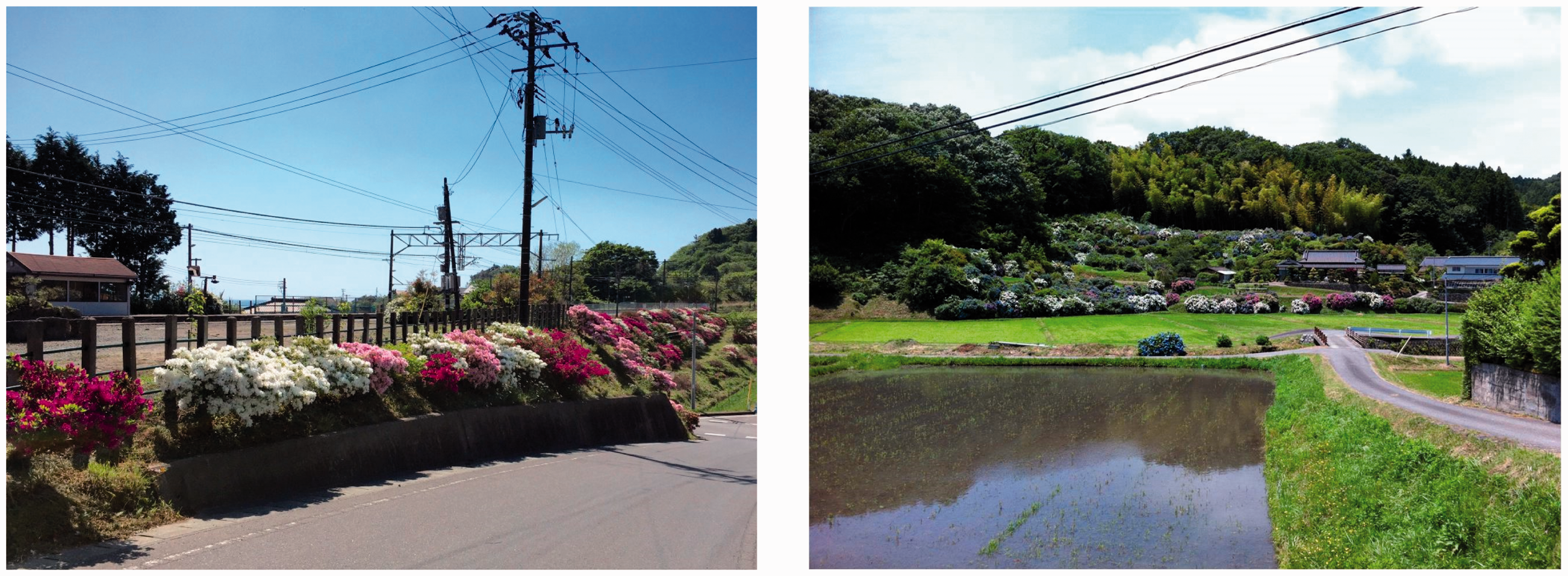
1.2. The accident at Fukushima Daiichi nuclear power plant
Suetsugi is situated 27 km from Fukushima Daiichi nuclear power plant, and was therefore included in the 30-km radius zone, designated the ‘indoor evaculation zone’. We evacuated to a relative’s house in Saitama Prefecture immediately after the accident on 11 March 2011 that followed the Great East Japan Earthquake and tsunami. I subsequently learned that all the residents who did not evacuate in the immediate wake of the accident were evacuated on order of the city government on 13 March 2011. Some of the residents returned when the indoor evacuation order was lifted on 22 April 2011. Approximately 100 households have now returned to Suetsugi, but 30–40% of those of my generation with small children have not returned.
2. CONFRONTING RADIOCAESIUM
2.1. Measuring ambient dose rates in Suetsugi
As residents of Suetsugi, we wanted to know the situation we were facing in terms of radioactivity, so we decided to measure ambient dose rates for every house in the hamlet. In January 2012, approximately 10 months after the disaster, a total of 40 residents participated in this task for 2 days. Groups of two to three people were formed, and each group read the measurements on the dosimeters, recorded the measured results on data sheets, and recorded the date of measurement. Five measurements were taken at points 10 cm and 1 m above the ground. All four sides of buildings were measured, as were areas considered to have high ambient dose rates, such as where rainwater might accumulate (Fig. 2).
Measuring ambient dose rates around the residences.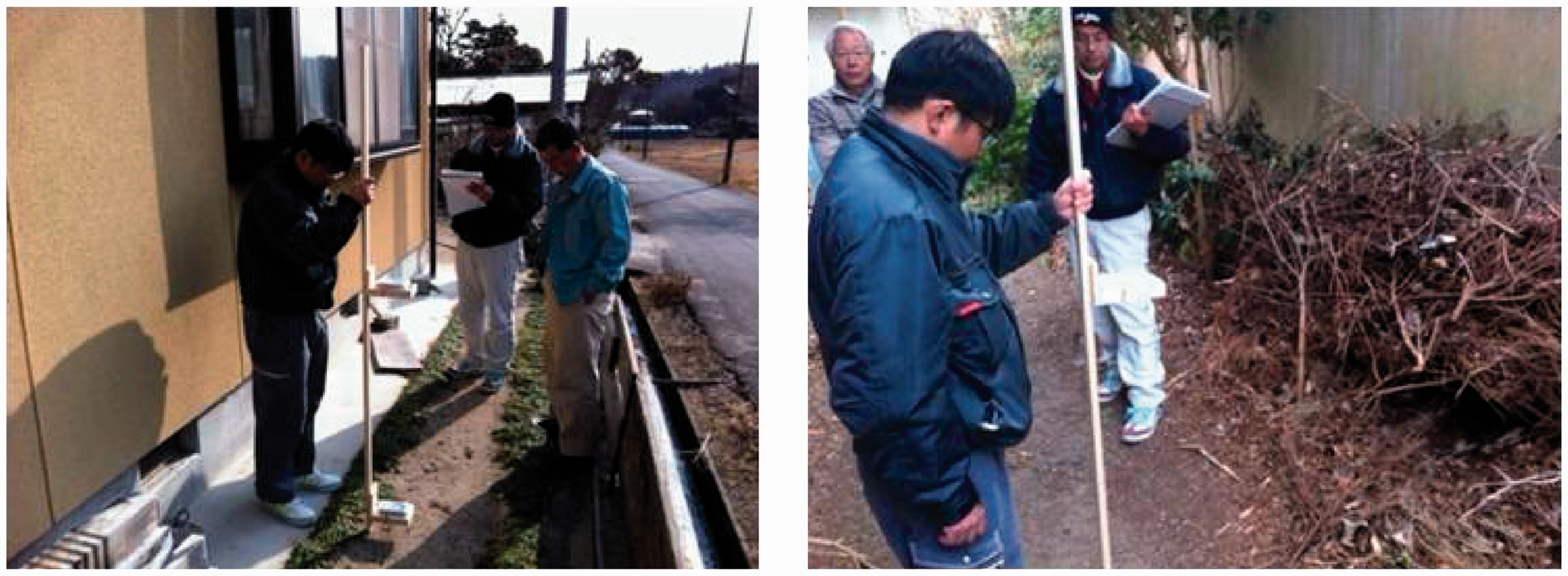
2.2. Measuring radiocaesium concentration in rice paddy fields
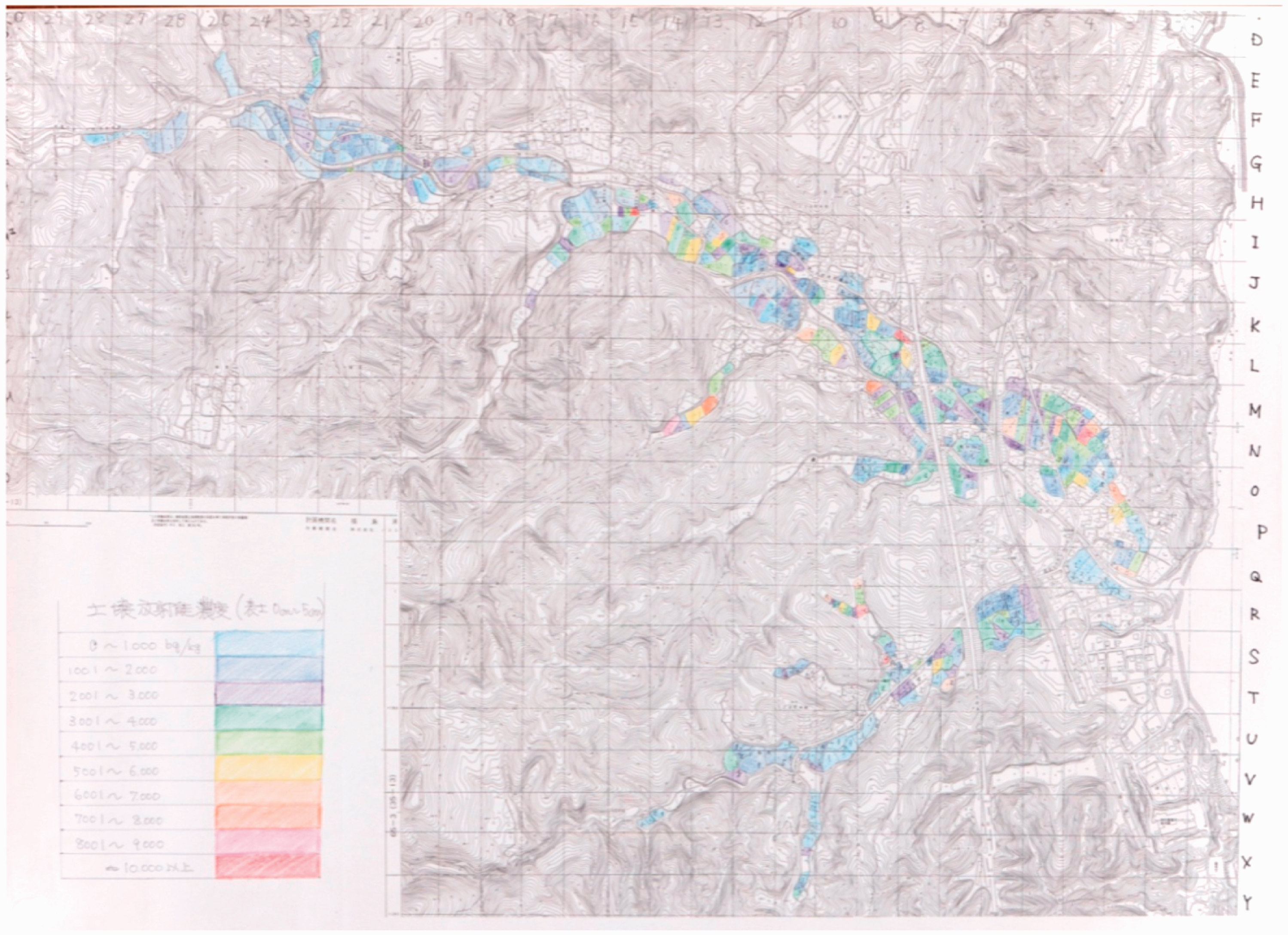
After measuring the ambient dose rate, the radiocaesium concentration in soil was also measured to determine whether or not rice farming could be resumed. The ambient dose rate was also measured while soil samples were collected (Fig. 3). Soil samples were collected from depths of 0–5 cm and 5–10 cm from each of the 440 rice paddy fields in the region. Soil samples were also collected from a few fields and forest areas. In total, 1000 soil samples were collected and taken to a local company for analysis. It was agreed that we would collect the soil samples, allocate numbers to them, and indicate their origin on a map, and that the company would perform the analysis at a cost of 100 Japanese yen per sample. The total cost was approximately one million yen, paid for by Tokyo Electric Power Company (TEPCO).
Collecting soil samples and measuring ambient dose.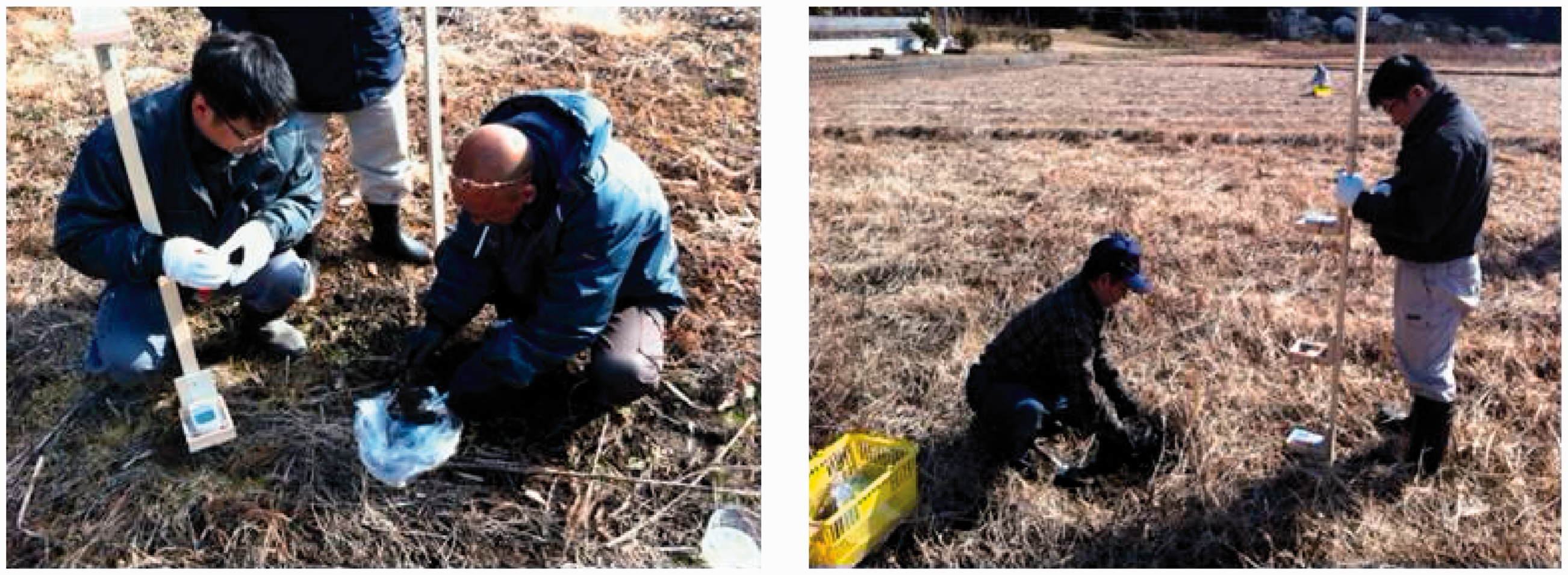
2.3. Drawing radiation maps
Maps were drawn to show ambient dose rates and radiocaesium concentrations in the soil, using colours to clearly illustrate the radiological situation in the region (Figs 4 and 5). An expert who visited Suetsugi told us that ‘radioactivity is an invisible ghost’, but we made the measurement results visible so that everyone in the region was able to understand the situation. The maps were located in the local assembly hall so that everyone was able to see the data from the environmental measurements as well as their personal dose rates whenever they wished. Although it took time for the local authorities to take action, we, as residents, were able to achieve our initial goal by taking charge of our own living environment.
Map of ambient dose rate in Suetsugi. Map of radiocaesium concentration in rice paddy fields in Suetsugi.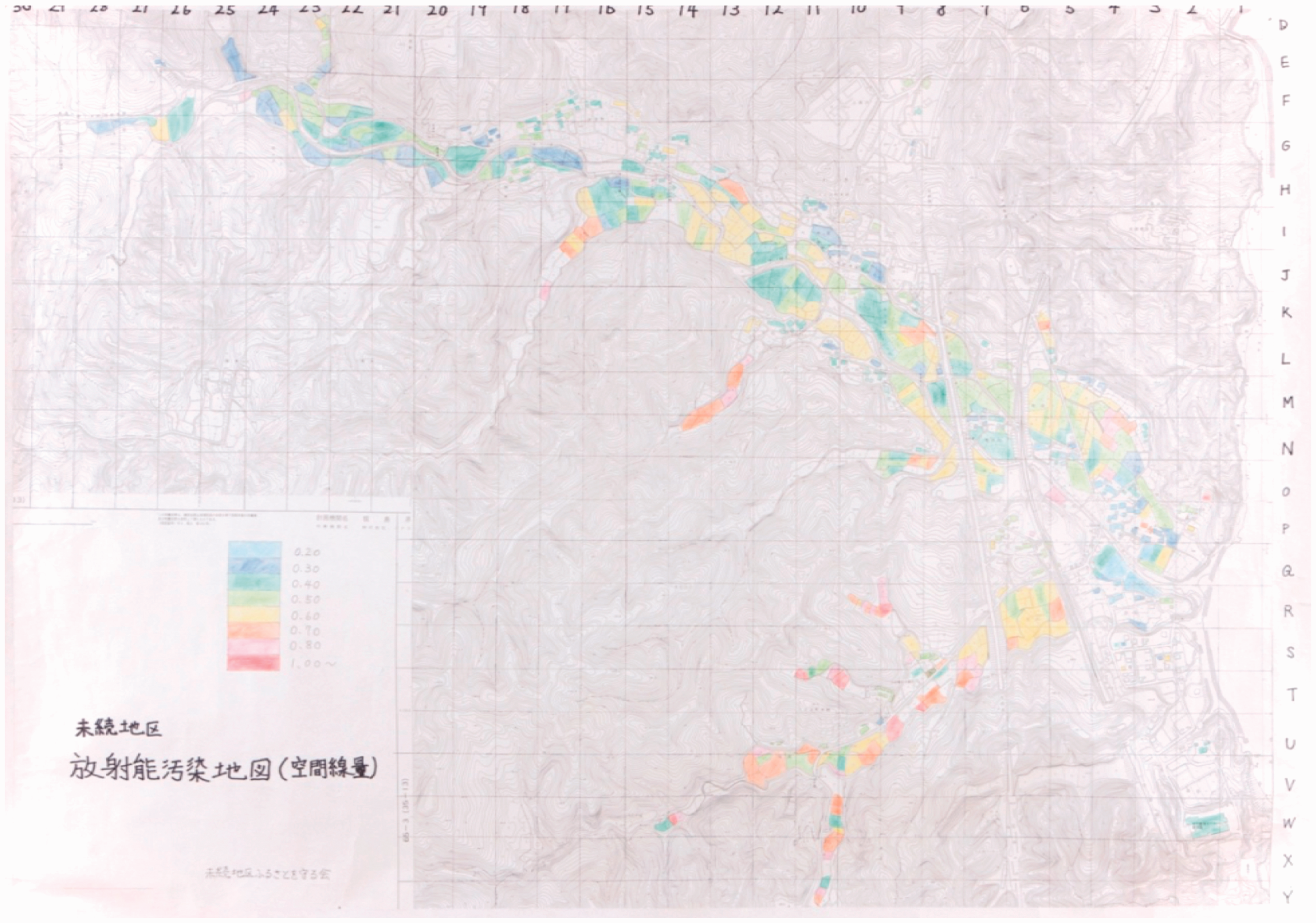
2.4. Support given to Suetsugi
In the wake of the accident at Fukushima Daiichi nuclear power plant, we initially worked with the so-called ‘anti-nuclear people’. However, as time went on, we started to realise that these people only talked and took no action. At this point, I consulted one of my acquaintances in Suetsugi, and I was introduced to Ms. Ryoko Ando of Ethos in Fukushima who was providing support in the region through a study group that she had founded after the disaster. Subsequently, with the support of Ethos in Fukushima, we were able to hold study sessions and dialogues to measure internal exposure with whole-body counters, and measure radiocaesium concentrations in foodstuffs with the experts (Fig. 6). We also measured cumulative external exposure with dosimeters that we borrowed from other volunteer organisations. However, the batteries of these dosimeters needed to be changed every day, and it was not easy to keep records of daily activities. These factors made it difficult to communicate and explain the measurement results to the residents. Later, we were able to acquire dosimeters with a longer battery life that could record hourly cumulative doses. One hundred residents carried these improved dosimeters, and we were able to share the data and the opinions of experts regarding the measurement results. Although the number of dosimeters in use is now declining, I feel that people should continue to do so if this helps to put their minds at rest. Having drawn up our maps, I realised the importance and the effectiveness of our experience of recording and visualising the data. We received a great deal of external support, and I feel that the opportunities to meet with many experts and volunteers were very valuable encounters for Suetsugi and for myself.
Briefing sessions by experts (left). Dialogue sessions (right).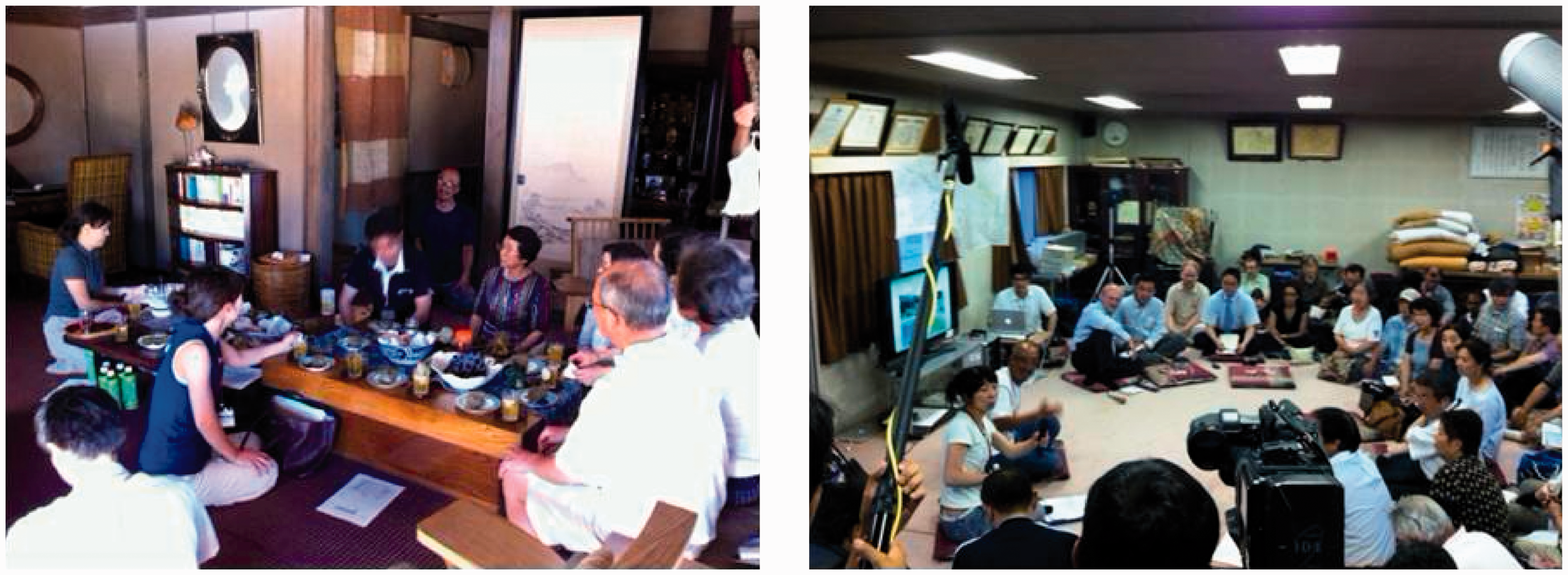
3. RICE FARMING AFTER THE DISASTER
After the accident at Fukushima Daiichi nuclear power plant, we were told not to grow rice. However, as I wanted to confirm the reality of the situation, I planted rice in a single paddy field in 2011, knowing that I would not be able to sell the rice. The first harvest after the accident was analysed by a local company.
Results of the measurements of radiocaesium concentrations of rice harvested in 2011.
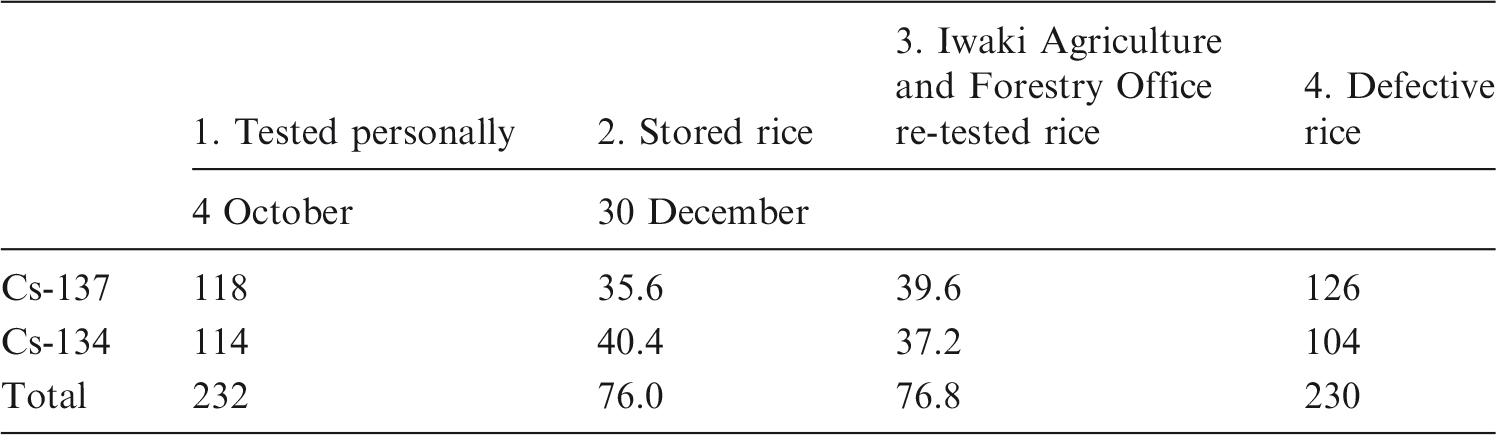
1. Harvested rice tested by the author – 232 Bqkg−1 total radiocaesium.
2. Iwaki Agriculture and Forestry Office testing of stored rice detected 76 Bqkg−1 total radiocaesium. The stored rice means the abortive kernel which does not satisfy the size for delivery.
3. Re-testing of the stored rice (different bag of rice).
4. Defective rice tested to highlight the difference in results for 1, 2, and 3.
Amount of harvested rice = on average eight straw bags from a 1 tan field [10 a (31.5 m x 31.5 m)]: about 300 tsubos
4. MOTIVATION FOR OUR ACTIVITIES
Drawing maps and continuing to grow rice stem from my own curiosity to know the truth. After the disaster in 2011, there were days and days of nothing but complaining. If I had been asked at the time what I wanted to do, the truth is that I did not feel like doing anything. After the disaster, the municipal government and TEPCO did nothing to restore the living environment in this small hamlet. I felt that it was unjustifiable that people who were in responsible positions to take leadership were doing nothing. Therefore, I decided that we ourselves would do whatever we could until the authorities and TEPCO started to act. The motivation was that unless we took action ourselves, we would lose everything that we treasured. With this determination to take the first step, my feelings also changed. My strongest motivation was that I did not wish my son, aged 3 years at the time of the accident, to grow up seeing a cowardly father. I wanted him to grow up ready to face any difficulties, with the attitude that he would never give up. Meeting Mr. Jacques Lochard at the International Commission on Radiological Protection dialogue seminars was another motivation. In one of the seminars, I remember being very strongly impressed by his words. To the question from a resident, ‘Can we return home in the future?’ Mr. Lochard answered, ‘It’s you, not I, who make that decision.’ He was different from all the other experts I had met before. Other experts gave answers that sounded good and tried to make people feel better, but Mr. Lochard was different. He was sincere. Even today, Mr. Lochard never forgets to visit us, as he promised then, every time he is in Japan. I am grateful to all the people I have met and who have supported us, whom I would never have met if the disaster had not taken place. I would be happy to return their kindness, however and whenever I can. Suetsugi is what it is today thanks to all those who have contributed. It is what we wished for and is what we have achieved.
5. CONCLUSION
Suetsugi has settled down considerably since the disaster. I feel so grateful that there are still opportunities to talk and discuss the results of our work, which we have continued since the accident at Fukushima Daiichi nuclear power plant. I would be more than happy to share my experiences with other regions if this would be of assistance.