




Abstract
How do people form cross-race relationships in everyday life, and do people vary from each other in this process? Answering these questions can yield useful insights for scholars interested in encouraging cross-race contact. We investigated how people (N = 1,156 Bay Area adults) met their different-race (vs. same-race) contacts, the roles that different-race contacts occupied in their personal networks, and the content and quality of their relationships with their different-race contacts. We found that different-race contacts were, on average, “around but not close.” They were met in less intimate settings; they occupied less intimate roles; and they were felt less close to. Importantly, processes varied across people. People who formed cross-race kin relationships were the most likely to have stable cross-race contact, and people who engaged in “high effort” activities with their different-race contacts (e.g., confiding in) had closer relationships with them. We highlight insights of these results for encouraging cross-race contact.
Cross-race relationships signal cross-race cooperation at the societal level, as manifested in the lives of individuals (Page-Gould et al., 2022). As such, psychologists are interested in encouraging the formation of cross-race relationships. A useful way to understand how to form these relationships is to study how they form in everyday life. Knowing the everyday processes through which people make and maintain cross-race relationships can identify already-existing levers for psychologists to use in their efforts to encourage the formation of cross-race relationships.
In the present research, we study everyday processes through which people make and maintain cross-race relationships. We ask: How do people meet their different- and same-race contacts (e.g., at work, school, in the neighborhood)? What roles do different- and same-race contacts occupy in people’s networks (e.g., family, friends, coworkers)? And what is the content and quality of people’s relationships with their different- and same-race contacts (e.g., do people confide in them, feel close to them, find them difficult)? Answering these questions illuminates the typical social settings, relational contexts, and psychological content and quality of people’s cross-race relationships, helping to identify existing levers for encouraging these relationships.
In the present research, we also take an individual differences approach to studying cross-race contact. Psychologists studying cross-race contact have become increasingly interested in individual differences approaches as recognition has grown that people vary from each other in how they engage with people from different racial backgrounds (Antonoplis & John, 2022; Bracegirdle et al., 2022; Kauff et al., 2021; LaCosse & Plant, 2020; Page-Gould et al., 2008; Paolini et al., 2018; Sengupta et al., 2023; Shelton et al., 2005). In the current research, such an approach offers insight into the social and behavioral processes that aid people who already engage in more (or less) cross-race contact to continue engaging in more (or less) cross-race contact. We thus examine individual differences in how people meet different- and same-race contacts in different social settings, in the roles that these contacts occupy in their networks, and in the psychological content and quality of their relationships with these contacts.
Importantly, our work is focused on the U.S. context and uses a sample of adults living in the San Francisco Bay Area. The Bay Area is an ideal place to study cross-race contact because of its high level of racial diversity (Olson, 2014) and because of its supportive norms for and commitment to diversity (e.g., the City of Oakland has a Department of Race and Equity).
We anticipate that different-race contacts are “around but not close.” By this we mean that different-race contacts will have relationships with participants but will have been met in less intimate settings, be in less close roles, and receive fewer feelings of closeness than their same-race counterparts. We had no expected results for the individual differences portion, as we were not aware of any past work that had addressed the particular questions addressed here. Below, we review the empirical literature we drew upon to arrive at this general expectation.
What is Known About the Process of Cross-Race Contact?
In terms of meeting places, several social processes make it unlikely that more intimate settings like the family or early-life neighborhood are places where different-race contacts were met. First, segregation has kept people from different racial groups separated in neighborhoods, schools, churches, and elsewhere, making meetings less likely (Williams & Emamdjomeh, 2018). Second, parents and families have traditionally pressed children to date, marry, socialize, and befriend within their racial group (Rosenfeld & Kim, 2005), although these pressures have weakened in recent decades (Hout, 2022). For example, White parents often structure their children’s lives to avoid exposure to cross-race contact (e.g., choice of neighborhood; Hagerman, 2018). Finally, even when opportunities for cross-race interactions exist, social norms may discourage people from engaging in cross-race interactions (Kunst et al., 2022; Pew Research Center, 2017).
Some empirical results are in line with these arguments. Rosenfeld and Kim (2005) found that different-race spouses were more likely to have been met in big cities (e.g., urban vs. suburban or rural) that were not the city where at least one partner had been born. This pattern of cross-race affiliation via geographic mobility to urban centers away from the hometown might also hold for less intimate roles (e.g., friends, acquaintances), given that spouses typically start out in less intimate roles. Consistent with this idea, Antonoplis and John (2022) found that college students had more cross-race friends and acquaintances at college than they had had in their community before coming to college. Thus, different-race contacts may be more likely to have been met in contexts more distant from people’s family of origin.
In terms of roles in personal networks, some social contexts may be more likely to allow for meeting, despite the barriers described above, and thus different-race contacts met within those contexts fill the role(s) defined within those contexts. Psychological forces, however, might work against different-race contacts moving into more intimate roles. On the social side, the outlawing of racial discrimination in hiring (Civil Rights Act, 1964) may make coworkers more likely to be different-race contacts. Similarly, schools might be relatively more likely to encourage the integration of classmates and roommates (Brown v. Board of Education, 1954). On the psychological side, psychological forces related to closeness and norm violations might make more intimate relationships (especially kinship) less likely to be racially heterophilous. First, majority–minority interactions can be stressful and, thus, potentially less pleasant (Richeson & Trawalter, 2008; Shelton et al., 2005; Stephan & Stephan, 1985), whereas same-race interactions can entail shared reality and, thus, be potentially more pleasant and close (Kao & Joyner, 2004; McGill et al., 2012; McPherson et al., 2001; Tatum, 2017). Second, although laws banning interracial marriage have been illegal in the United States for several decades (Loving v. Virginia, 1967), negative attitudes toward cross-race intimacy linger (Pew Research Center, 2017). For example, developing more intimate relationships with different-race contacts may bring worries about membership in one’s own group, given common beliefs that ingroup members with outgroup friends belong less to the ingroup (e.g., for Black and White Americans; Kunst et al., 2022).
Some empirical results are in line with these arguments. Many studies have found that dating partners and spouses are less likely to be different-race contacts (Anderson et al., 2014; Kao et al., 2019; Rosenfeld & Kim, 2005). In addition, in samples of college students, Antonoplis and John (2022) found that different-race contacts were more likely to be new acquaintances met in the previous year than to be friends, but this result did not hold in a sample of adults aged 30 to 60 living across the United States.
In terms of the psychological content and quality of relationships, there are both social and psychological reasons that different-race contacts are unlikely to become as close as same-race contacts. On the social side, as Page-Gould et al. (2022) and Antonoplis and John (2022) suggested, future interactions with different-race contacts wherein these relationships could be deepened may be less likely if people use their current friends to organize these interactions and their friends’ networks are racially homophilous. If a person’s friends and the friends of the person’s friends are all more likely to be the same race as the person, it is more difficult to come into casual, future contact with any different-race contacts a person does meet. On the psychological side, within majority–minority relationships, ignorance of racism by majority-group members (White Americans) may make them poorer sources of emotion regulation for minority-group contacts when they experience racism-related stressors (Sanchez et al., 2022; Tatum, 2017). This missed opportunity for self-disclosure and emotional bonding can prevent closeness in the relationship (Collins & Miller, 1994; Gullett & West, 2016; Laurenceau et al., 1998).
Some empirical results are in line with these arguments. Two longitudinal studies of college roommates found that cross-race relationships decreased more strongly in closeness over time (Trail et al., 2009; West et al., 2009). Another set of studies of college students found that different-race close contacts were felt less close to than same-race close contacts (Debrosse et al., 2022). And a third set of studies of college students found that different-race contacts had been known for less time than same-race contacts (Antonoplis & John, 2022).
Two caveats to the above arguments are worth considering. First, despite the barriers theorized above, different-race contacts do exist in long-term, personal networks (Currarini et al., 2010). Building these sorts of networks requires repeated interaction with contacts (Borgatti et al., 2009; Moreno, 1934). If different-race contacts can enter personal networks despite barriers to their entry, the relationships they form may be especially close and closer than those of same-race contacts (for similar arguments see Fischer, 1982). For example, in a recent study of randomly assigned college roommates who had lived together for an entire academic year, Albuja et al. (2024) found no differences in relationship quality between same-race and cross-race roommate pairs.
Second, the above arguments describe only processes common across people; some people may be more likely to form certain bonds with or become closer to different-race contacts. Research on cross-race contact is increasingly taking an individual differences approach. For example, the personality motivations underlying cross-race friendship have been studied (Anderson et al., 2014; Antonoplis & John, 2022; Laakasuo et al., 2017). Individual differences in the emotional and stress-related experience during cross-race interactions have been studied (Page-Gould et al., 2008; Richeson et al., 2005; Shelton et al., 2014). And, the mutual impact on each other of individual differences in attitudes toward racial outgroups and individual differences in contact with racial outgroups have been studied (Bracegirdle et al., 2022; Friehs et al., 2024; Sengupta et al., 2023). Thus, we examine individual differences in processes of cross-race contact to contribute to the growing literature on individual differences in cross-race contact and to complement our analysis of common processes.
Method
Participants
UCNets (https://ucnets.berkeley.edu) is a longitudinal egocentric network survey on personal relationships, life events, and well-being. In 2015, it drew participants from two distinct age groups in the greater six-county San Francisco Bay Area: 21- to 30-year olds (N = 484) and 50- to 70-year olds (N = 672; total N = 1,156 in Wave 1). The study focused on these two cohorts in order to maximize the number and variety of life events respondents would likely experience between survey waves. Participants and their social networks were assessed at three waves. We pooled data across all three waves, treating each wave and its associated social network as a repeated measure within participants so that our primary unit of analysis is the individual member of a social network, rather than participants developing across waves. On average, participants reported 28 network members across all three waves, making the total sample size closer to 28 times the total number of participants, 1,156; specifically, the total sample size was 32,872 individual network members across all waves. One major advantage of using a sample of adults from across the lifespan is that it potentially increases the generalizability across the lifespan of the results of our analyses; most prior studies of cross-race contact have focused on samples of students and young adults.
To recruit participants, researchers randomly drew households from 30 randomly selected Bay Area census tracts. Solicitation letters invited a qualified member of the household to join the multi-year panel (for pay). Assessing the yield rate is difficult because—in addition to the resistance to polling in the current era (National Research Council, 2013)—UCNets required would-be panelists to reach out to its fieldwork center, enroll for three waves, and in most cases arrange an in-person interview. About 5% of potential older panelists contacted the field office and in the end about 3% of them completed the entire survey. This “cumulative completion rate” for a panel uptake is comparable to or higher than the yields of other contemporary panel studies (e.g., the Pew panel; see also Callegaro & DiSogra, 2008; MacInnis et al., 2018). Household sampling sufficed to fill the 50-to-70 subsample, but not the younger one. The study added a few dozen 21-to-30 year-olds by referral from existing panelists and 290 more through targeted Facebook advertisements. Thus, the 21-to-30 panel combines a probability sample and an opt-in sample of Facebook users. 1 Analysis indicates few differences between the young sample recruited in the household sample and those recruited through Facebook (Lawton & Wilson, 2018).
Table 1 provides a full description of respondents’ demographic characteristics across waves (weighted to be representative of the Bay Area), including gender, age, race, nationality, education, and labor force status. Worth noting is that White and Asian participants comprised the two largest racial groups; there were more older than younger adults; more women than men; and most participants (81%) were born in the United States.
Demographic Characteristics of Participants.
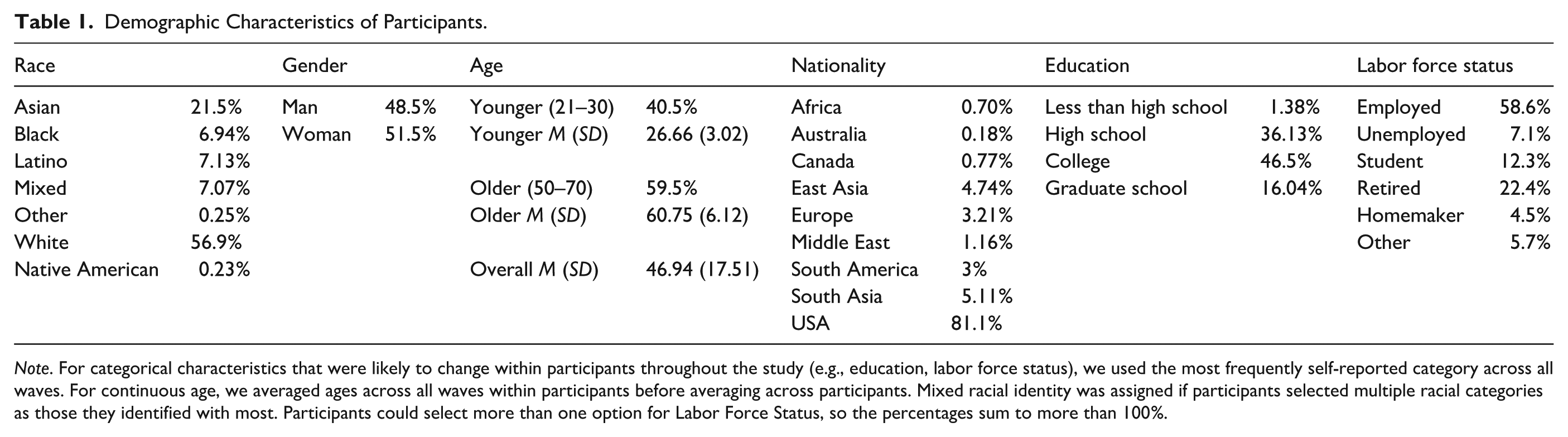
Note. For categorical characteristics that were likely to change within participants throughout the study (e.g., education, labor force status), we used the most frequently self-reported category across all waves. For continuous age, we averaged ages across all waves within participants before averaging across participants. Mixed racial identity was assigned if participants selected multiple racial categories as those they identified with most. Participants could select more than one option for Labor Force Status, so the percentages sum to more than 100%.
Measures
Name Elicitation
UCNets used an extended name-eliciting method to draw a detailed map of participants’ current personal networks and collect information about their social contacts. The instrument presented respondents with nine different ways in which they could be connected with people (e.g., social companion, advisor) and asked respondents to name six to nine people to whom they were currently connected for each of these ways. Named individuals did not have to be unique across each of the forms of connection (e.g., individuals named as social companions could also be named as advisors). Research shows that assessing multiple kinds of connections yields a more accurate picture of people’s personal networks than do methods that focus on one or a few kinds of connections (e.g., asking about only social companions; Bernard et al., 1990; Marin & Hampton, 2007). Seven of the nine forms of connection focused on socializing, emotional support, and material support. They included social companions, confidants, advisors, providers of practical help, providers of help for health and injury, recipients of help, and difficult people. The final two forms of connection were participants’ spouse or partner and anyone who lived in the same residence as the participant (see Appendix/Supplement of Fischer & Offer, 2020, for full text). Once social contacts had been named, the instrument asked participants to describe different attributes of each contact and their relationship to the participant, including roles, felt closeness, geographic proximity, and similarity in race (More details appear in Fischer & Bayham, 2019). The survey also measured participants’ demographic, socioeconomic, and health characteristics. The primary advantage of eliciting contacts in this way is that it focuses on longer-term, more mature social relationships of participants, increasing the likelihood that our analyses identify stable, real-world dynamics.
Participants named about 10 contacts, on average, within each wave; aggregated across waves, this yielded 32,872 contact-waves in the dataset. The median participant named 28 contacts across all three waves, of whom 17 were unique contacts across all three waves (IQR = 12–32 unique contacts). The Wave 2 survey (conducted in 2017) was identical to the Wave 1 survey with two exceptions. When identical repetition of items did not make sense (e.g., participants’ country of origin), items were omitted in later waves. The Wave 2 survey also included questions about what happened to each contact from Wave 1 whom participants did not name in Wave 2. The Wave 3 survey (conducted in 2018) was identical to the Wave 2 survey for the purposes of the present research. Below, we detail the descriptions participants were asked to give about their social contacts that were relevant to the present analyses.
How Contacts Were Met
A subsample of up to five contacts were selected for further questions, including how the participant had met them (N = 11,195 contacts). These contacts could not be any kin or spouse who lived in the participant’s household; all other contacts could qualify. Participants were asked to select which option best described how they first met each contact (e.g., same family by birth, same family by marriage, grew up in the same neighborhood, met in college, met at work; Figure 1 lists all possible meeting places).
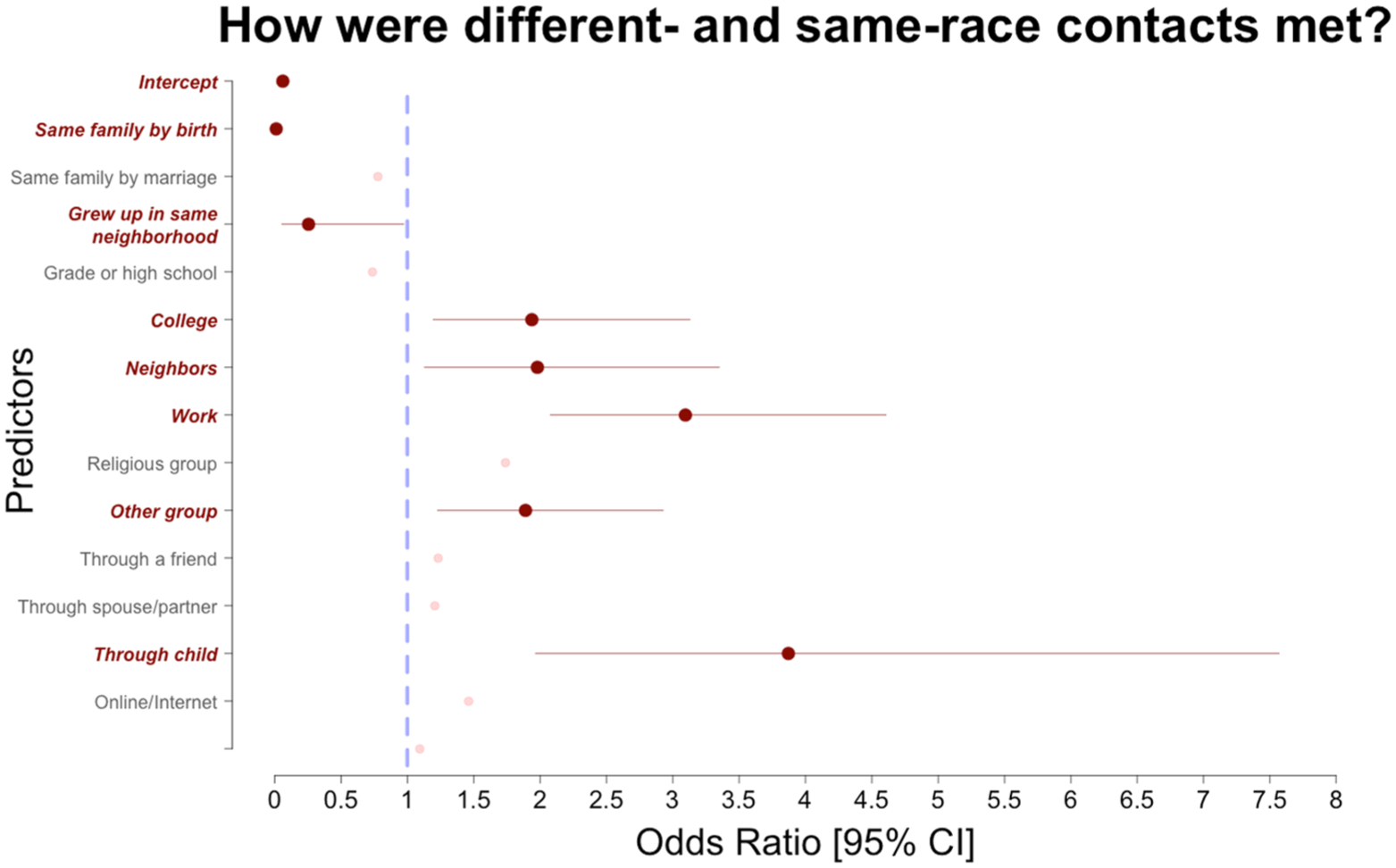
Odds ratios and 95% credibility intervals for predictors of whether a contact was different-race in the whole network. Predictors with 95% CI’s including zero are printed in black font, with odds ratios faded and credibility intervals omitted, for visual clarity. The 95% CI for “Same family by birth” is not easily visible because it so narrow that the dot representing the point estimate largely occludes the line representing the 95% CI. This is also true for the “Intercept.” Full numerical estimates with credibility intervals are available in Supplemental Table S1.
Current Roles of Contacts in Personal Network
Participants were asked to describe how they were connected to all contacts whom they named in the name-eliciting section (N = 32,872 contacts). Participants could select multiple roles or forms of connection for each contact (e.g., spouse/partner, parent, child, housemate, know at work, know at school, friend; Figure 2 lists all possible roles).
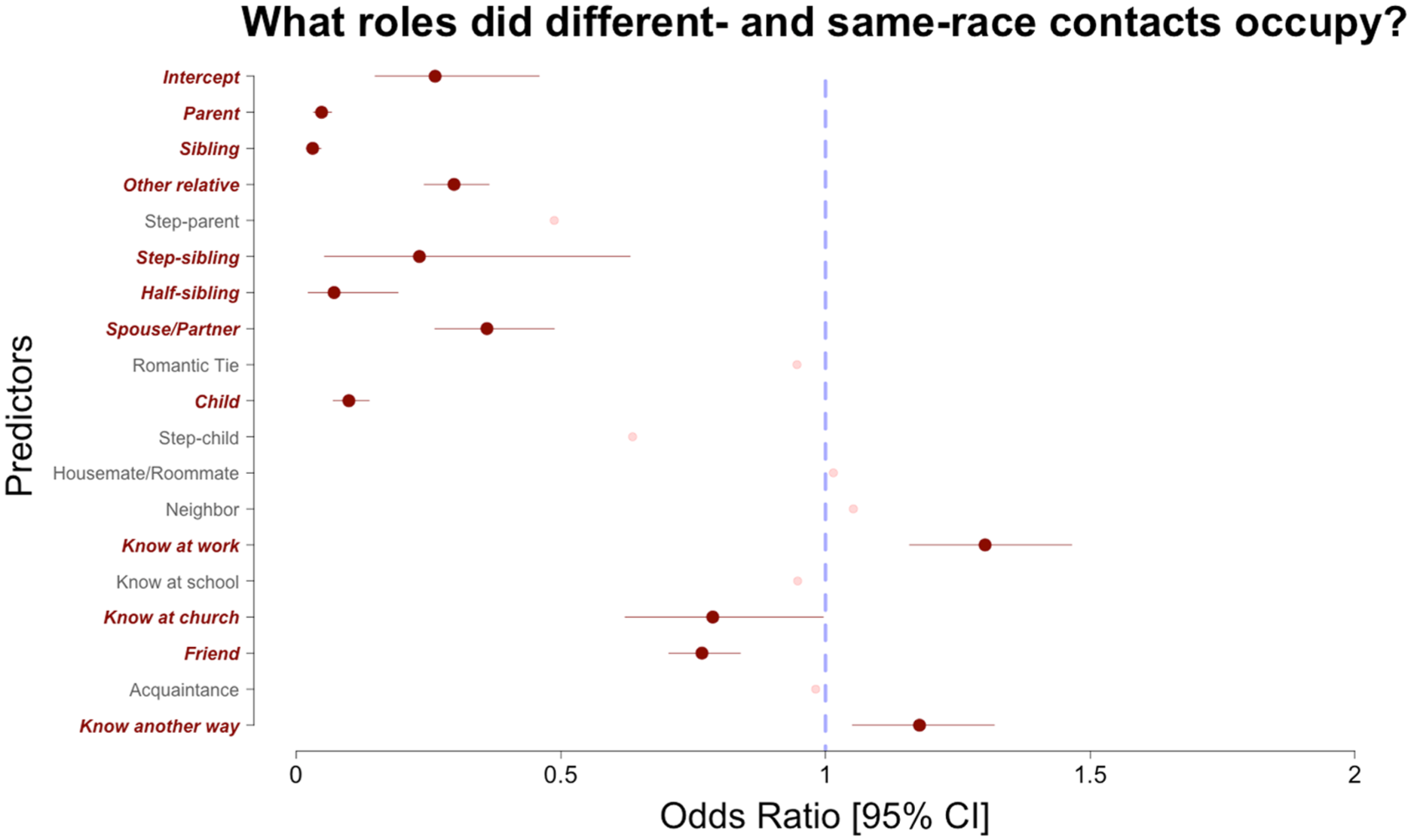
Odds ratios and 95% credibility intervals for focal predictors of whether a contact was different-race in the whole network. Predictors with 95% CI’s including zero are printed in black font, with odds ratios faded and credibility intervals omitted, for visual clarity. Full numerical estimates with credibility intervals are available in Supplemental Table S2.
Psychological Content and Quality of Relationships With Contacts
We assessed the content and quality of relationships in a few ways. Not all questions were asked for all contacts. Where indicated by a relatively smaller sample size (<30,000 contacts), questions were asked for only the same subset of contacts as the question about how contacts were met. Participants described whether contacts were met in the last year (N = 32,867), were felt especially close to (N = 32,868), lived within a 5-min drive (N = 32,870), lived over an hour away (N = 32,868), were regularly seen in-person (N = 11,149), were regularly talked with on the phone (N = 11,154), were regularly emailed (N = 11,158), elicited feelings of obligation to help (N = 4,037), were perceived as likely to ask for help (N = 4,034), were a social companion (N = 32,872), were a confidant (N = 32,873), were an advisor (N = 32,873), were a house helper (N = 32,873), were an injury helper (N = 32,873), were a person whom the participant helps (N = 32,873), were a source of difficulty (N = 32,873), and how long the contact had been known (N = 11,168).
Different-Race Status
Interviewers (or, in the web version of the survey, the software program) showed respondents a list of the contacts whom they had named and asked “Which of the people on this list are from the same racial or ethnic background as you are? (However you define your race or ethnicity for yourself.)” Alters named in response were coded as same race/ethnicity. 2 Those not named were coded, by implication, as different race/ethnicity. This question was asked for all contacts.
Analytic Strategy
We used Bayesian multilevel models to account for the nesting of contact-level outcomes within participants and to permit simultaneous examination of effects of attributes of the contact’s relationship with the participant (e.g., roles) and participant attributes (i.e., age, race; Rabe-Hesketh & Skrondal, 2012). We used a Bayesian framework to compute these models in order to aid convergence. Equation 1 below provides the general form of our models:
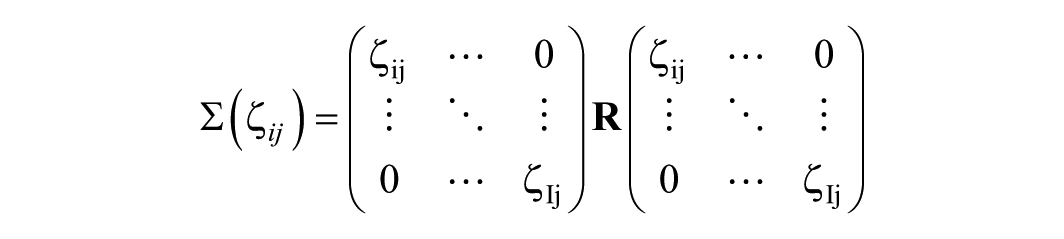

ζij ~ Exponential (1)

B0 ~ N(0,2)
(
Attributes (Y) of a specific contact (i) of a specific participant (j) were modeled as a function of a participant-specific intercept (B0 + ζ0j), a matrix of contact attributes (
Except for when specified, all models controlled for participants’ race and age group (older vs. younger) and the assessment wave of the study (effect-coded with Waves 2 and 3 as comparison groups) in order to account for base rates of racial group membership (Blau, 1977), differences in life stage and generational demographic changes (Carstensen, 1992; Frey, 2018), how the sample was generated with respect to participant age, and any changes in level of cross-race contact the participants experienced throughout the study. All models used weights for Wave 3 that adjusted for combinations of gender, age, race, Latino ethnicity, marital status, and education to match the corresponding age-specific population of the region and in that way accounting for the modest attrition.
All analyses were conducted in RStudio (RStudio Team, 2022) using R version 4.2.1 (R Core Team, 2022) and the packages psych (Revelle, 2019), Hmisc (Harrell, 2019), dplyr (Wickham et al., 2022), brms (Bürkner, 2017), tidybayes (Kay, 2022), job (Lindeløv, 2021), igraph (Csardi & Nepusz, 2006), pollster (Johnson, 2020), and TAM (Robitzsch et al., 2022).
Results
Where Were Different- and Same-Race Contacts Originally Met?
Figure 1 displays the odds ratios and 95% credibility intervals for the predictors of whether a contact met in a particular context was a different race from a participant. The only predictors in this model were the contexts where contacts were met. Odds ratios less than one indicate that a contact met in a particular context was less likely to be a different-race contact compared to the unweighted grand mean probability of being a different-race contact and controlling for all other meeting contexts. Odds ratios greater than one indicate that a contact who was met in particular context was more likely to be a different-race contact compared to the unweighted grand mean probability of being a different-race contact and controlling for all other meeting contexts. Contacts met in smaller, more intimate settings associated with participants’ family of origin—like same family by birth and growing up in the same neighborhood—were less likely to be different-race contacts. In contrast, contacts met in larger meetings places less associated with participants’ family of origin—like college, work, and other groups—were more likely to be different-race contacts. Contacts met in current neighborhoods were more likely to be different-race contacts, and contacts met through one’s children were more likely to be different-race contacts. 3
Individual Differences in Network Structure
Next, we inspected correlations between random effects of contact meeting places (see Supplemental Table S8 for full matrix of correlations). These correlations indicate, for instance, that participants who were more likely to have met different-race contacts at work were more likely to have met different-race contacts in college. Most correlations were not reliably different from zero (97%, 116 out of 120 correlations), as indicated by their credibility intervals including zero. Those that were reliably different from zero revealed that participants who were more likely to have met different-race contacts through their same family by birth were less likely to have different-race contacts overall (r = −.22, 95% CI [−0.40, −0.04]), that participants who were more likely to have met different-race contacts through college were less likely to have different-race contacts overall (r = −.27 [−0.54, −0.01]), that participants who were more likely to have met different-race contacts through their family by marriage were less likely to have different-race contacts through work (r = −.29 [−0.55, −0.004]), and that participants who were more likely to have a higher rate of cross-race contact in Wave 2 were more likely to have a lower rate of cross-race contact in Wave 3 (r = −.27 [−0.47, −0.08]). These findings suggest that meeting places that promoted or inhibited cross-race contact functioned relatively independently across participants. 4
What Roles Did Different- and Same-Race Contacts Currently Occupy?
Figure 2 displays the odds ratios and 95% credibility intervals for the predictors of whether a contact in a particular role was a different race from a participant. The predictors in this model are the current role occupied by contacts and participants’ race and age group. Odds ratios less than one indicate that a contact who occupied a particular role was less likely to be a different-race contact compared to the unweighted grand mean probability of being a different-race contact and controlling for all other roles and control variables. Odds ratios greater than one indicate that a contact who occupied a role was more likely to be a different-race contact compared to the unweighted grand mean probability of being a different-race contact and controlling for all other roles and control variables. Contacts in closer, more intimate roles—like spouses, friends, and various kin—were less likely to be different-race contacts. In contrast, contacts in more distal roles—like coworkers and people known “some other way”—were more likely to be different-race contacts. 5
Individual Differences in Network Structure
Next, we inspected correlations between random effects of contact attributes (see Supplemental Table S9 for full matrix of correlations). These correlations indicate, for instance, that a participant who was more likely to have different-race friends was more likely to have different-race acquaintances. Most correlations were not reliably different from zero (96%, 201 out of 210 correlations), as indicated by their credibility intervals including zero. Those that were reliably different from zero revealed a distinct “cluster” of individual differences.
The “cluster” included consistency amongst kin roles in a way that was consistent with the operations of conventional family structure. People who were more likely to have different-race parents were more likely to have different-race siblings (r = .35, 95% CI [0.10, 0.59]) and different-race other relatives (e.g., aunts, uncles, cousins; r = .29 [0.05, 0.52]). People who were more likely to have a spouse who was different-race were more likely to have a romantic partner who was different-race (e.g., the same person undergoing a role change; r = .28 [0.03, 0.55]), other relatives who were different-race (e.g., in-laws; r = .38 [0.23, 0.55]), and children who were different-race (r = .34 [0.13, 0.50]). Similarly, people who were more likely to have children who were different-race were more likely to have other relatives who were different-race (e.g., in-laws, nieces, nephews; r = .33 [0.13, 0.52]). Important to note is that most correlations amongst kin were not reliably different from zero (87%, 39 out of 45 correlations).
Interestingly, we found no reliable consistency amongst non-kin roles (100%, 28 out of 28 correlations). Although credibility intervals for several correlations came close to excluding zero (e.g., friend–acquaintance: r = .23, 95% CI [−0.06, 0.51]; housemate–schoolmate: r = .19 [−0.08, 0.46]), all 95% credibility intervals included zero. Thus, individual differences in the probability of having different-race non-kin did not show similar “knock-on” effects as individual differences in the probability of having different-race kin. Notably, there was no reliable consistency between kin and non-kin roles; of the 80 correlations between kin and non-kin roles, all credibility intervals included zero (r’s from −.21–.22, Median = 0.00).
How did kin and non-kin roles correlate with who was more likely to have different-race contacts overall? Only consistencies in the probability of having kin who were different-race correlated with being more likely to have different-race contacts overall across waves. And this was true for primarily kin not from participants’ family of origin. The participants who were more likely overall to have different-race contacts were those participants who were more likely to have a spouse (r = .55, 95% CI [0.42, 0.67]), a romantic partner (r = .36 [0.15, 0.55]), or other relatives (r = .16 [0.02, 0.29]) who were different-race. Kin are more likely to stay in personal networks over time than non-kin (Fischer & Offer, 2020), so the people who start families with different-race people maintain a higher likelihood of having different-race contacts over time. In contrast, people who were more likely to have various non-kin who were different-race were not systematically more likely to have more different-race contacts overall (r’s from −.16–.19, Median = 0.06), likely due to the fact that non-kin are more likely to be “dropped” from personal networks over time (Fischer & Offer, 2020). These results highlight how both taste (choosing a spouse, starting a family) and structure (conventional family structure) contribute to cross-race contact. 6
What was the Content and Quality of Different- and Same-Race Relationships?
Finally, to examine the content and quality of different- and same-race relationships, we predicted a variety of contents and qualities of relationships (e.g., companionship, closeness, recency of meeting, how often seen) from whether contacts were a different race from participants, controlling for the aforementioned contact roles and participant race and age group. Thus, these analyses indicate whether relationships with different- versus same-race contacts hold the same qualities after accounting for the differences in the roles held by the contacts. More precisely, these results indicate whether a contact who was a different race from the participant was also a contact who was viewed as emotionally close, for example. Figure 3 displays the odds ratios and 95% credibility intervals (top panel) and coefficients and 95% credibility intervals (bottom panel) for each outcome as predicted by whether a contact was different-race (with sample sizes for outcomes detailed in the note to the figure).
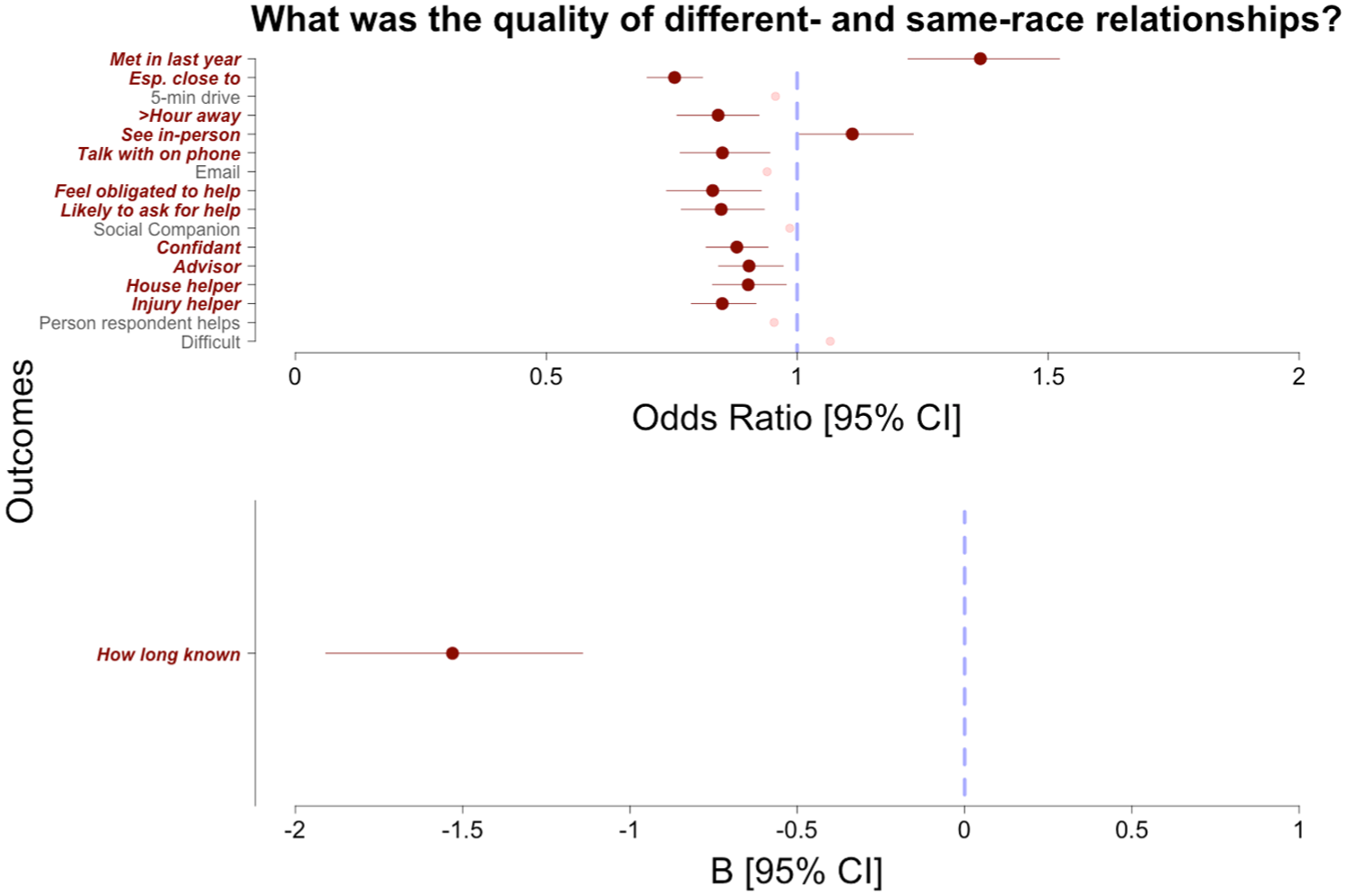
The top panel displays the odds ratios and 95% credibility intervals for binary and ordinal outcomes as predicted by whether a contact was different-race (vs. same-race). The bottom panel displays B’s and 95% confidence intervals for continuous outcomes as predicted by whether a contact was different-race (vs. same-race). N for “Met in last year” was 32,867; for “Esp. close to,” 32,868; for “5-min drive,” 32,870; for “>Hour away,” 32,868; for “See in-person,” 11,149; for “Talk with on phone,” 11,154; for “Email,” 11,158; for “Feel obligated to help,” 4,037; for “Likely to ask for help,” 4,034; for “Social Companion,” 32,872; for “Confidant,” 32,873; for “Advisor,” 32,873; for “House helper,” 32,873; for “Injury helper,” 32,873; for “Person respondent helps,” 32,873; for “Difficult,” 32,873; and for “How long known,” 11,168. Outcomes with 95% CI’s including zero are printed in black font, with odds ratios faded and confidence intervals omitted, for visual clarity. Full numerical estimates with credibility intervals are available in Supplemental Table S3.
Compared to same-race contacts, different-race contacts were less likely to be felt especially close to, to live over an hour away, to be talked with on the phone, to be felt obligated to help, and to be perceived as likely to ask for help. They were also less likely to be confidants, to be advisors, to help at participants’ homes, and to help participants with injuries. Different-race contacts were more likely to have been met in the last year and to be seen in person. Finally, different-race contacts had been known for less time, about 1.5 years less.
Individual Differences in Network Structure
Next, we inspected correlations between individual differences amongst participants in the effect of a contact being a different-race on the psychological content and quality of the relationship with the contact (see Supplemental Table S10 for the full matrix of correlations). The individual differences in these analyses are differences between participants in the strength of the effect of a contact being different-race on a quality or content of the relationship with that contact. For example, on average across participants, different-race contacts were less likely to be felt close to, but some participants felt especially close to their different-race contacts and some felt even less close than the average effect. Correlations between these individual differences indicate, for instance, that a participant who was more likely to see their different-race contacts in-person was also more likely to feel especially close to their different-race contacts. In terms of the number of significant correlations and the absolute size of the correlations, these correlations mapped somewhat neatly onto a continuum from what can be labeled “low quality or low effort” content (e.g., different-race contacts more likely to have been met in last year, to be social companion, or to not be found difficult) to “high quality or high effort” content (e.g., different-race contacts more likely to be seen in-person, felt especially close to, talked with on phone). Below, we summarize the main trends in these correlations.
More “low effort” content were those that correlated with few other variables, tended to have smaller correlations with other variables, and tended to be negatively correlated with higher effort variables. They were psychological content and quality of a relationship that are not very hard to achieve but do not suggest much closeness between people. For example, participants who were more likely to have different-race contacts as social companions were less likely to see their different-race contacts in-person (r = −.23, p < .001), less likely to talk to them on the phone (r = −.12, p = .001) or over email (r = −.08, p = .004), more likely to live within a 5-min drive of them (r = .09, p = .001), and less likely to find them difficult (r = −.13, p < .001). Similarly, participants who were more likely to have met their different-race contacts in the last year were less likely to see their different-race contacts in-person (r = −.06, p = .029), less likely to feel especially close to them (r = −.16, p < .001), less likely to consider them advisors (r = −.10, p = .001) or confidants (r = −.08, p = .007), but more likely to talk to them on the phone (r = .10, p < .001).
More “high effort” variables were those that correlated with most other variables, tended to have relatively larger correlations with other variables, and tended to correlate positively with higher effort variables and to correlate negatively with lower effort variables. They were psychological content and quality that are harder to achieve and that suggest high closeness between people. For example, participants who were more likely to have different-race contacts to whom they felt especially close were more likely to see their different-race contacts in-person (r = .12, p < .001), more likely to view their different-race contacts as advisors (r = .32, p < .001) and confidants (r = .37, p < .001), more likely to help them (r = .15, p < .001) and to receive help with injuries from them (r = .17, p < .001), and less likely to have met them in the last year (r = −.16, p < .001) or to live within a 5-min drive (r = −.06, p = .028). Similarly, participants who were more likely to have different-race contacts whom they considered advisors were more likely to see their different-race contacts in-person (r = .13, p < .001), more likely to feel especially close to them (r = .32, p < .001), more likely to see them as confidants (r = .33, p < .001), more likely to help them (r = .16, p < .001) and to receive help with injuries from them (r = .09, p = .002), and less likely to have met them in the last year (r = −.10, p = .001).
Finally, more “medium effort” variables were those that resembled more “high effort” variables but had a less consistent pattern of relationships to other variables. They were psychological content and quality that are somewhat more involved to achieve but that do not necessarily convey closeness between people. For example, participants who had known their different-race contacts for more time were more likely to see their different-race contacts in-person (r = .19, p < .001), more likely to feel especially close to them (r = .12, p < .001), less likely to receive help with injuries from them (r = −.06, p = .046), and more likely to find them difficult (r = .07, p = .012). Similarly, participants who were more likely to communicate with their different-race contacts via email were more likely to talk with them on the phone (r = .41, p < .001), more likely to see them in-person (r = .17, p < .001), less likely to feel especially close to them (r = −.16, p < .001), less likely to view them as advisors (r = −.10, p = .001) or confidants (r = −.14, p < .001), and less likely to view them as a social companion (r = −.08, p = .004).
Discussion
In everyday life, how do people meet different-race contacts, form relationships with them, and maintain those relationships? Answering these questions can provide psychologists with important levers for encouraging the formation of positive cross-race relationships. Thus, we investigated how different- and same-race contacts were originally met, what roles they currently occupied, and what the psychological content and quality of their relationships were. We found that contacts met in larger, group-based contexts less associated with the family of origin (e.g., college, work, other groups) were more likely to be different-race contacts. Similarly, contacts in non-kin roles (e.g., coworkers) were more likely to be different-race compared to the sample average, whereas those in kin roles were less likely to be different-race compared to the sample average. Finally, even after accounting for differences in roles, different-race contacts had been known for less time, were felt less close to, and were less likely to do activities involving trust and emotional closeness (e.g., confidant, advisor). Importantly, although these results showed the normative distancing of different-race contacts in personal networks, they were not totalizing. Systematic individual differences in these patterns emerged, highlighting social and behavioral processes that helped increase (or decrease) the quantity and quality of cross-race contact in which participants engaged.
Participants who were more likely to build a family that included different-race contacts experienced knock-on effects from these efforts that made them more likely to have more different-race contacts overall across waves. The same was not true for participants who were more likely to have various non-kin different-race contacts, in part because there was no reliable consistency in participants’ probabilities of forming non-kin cross-race relationships and because non-kin, such as friends, acquaintances, and coworkers, are more likely than kin to be dropped as contacts over time (Fischer & Offer, 2020). In addition, some participants had closer relationships with their different-race contacts than other participants. These participants tended to be those who engaged with their different-race contacts as advisors and confidants, formed mutually helpful relationships with their different-race contacts, and communicated with them in-person or over the phone. Participants with less close relationships with their different-race contacts tended to be those who had met their different-race contacts only within the last year, engaged with their different-race contacts as social companions, and lived a short distance (i.e., 5 min) from their different-race contacts. Interestingly, we found no correlations between participants’ use of different places to meet contacts and only two correlations between participants’ use of places to meet contacts and their overall probability of having different-race contacts. This first result suggests that meeting places that promoted or inhibited cross-race contact functioned relatively independently across participants. For example, though contacts met in both college and at work were more likely to be different-race, participants more likely to use one of these contexts were not reliably more likely to use the other (r = .13, 95% CI [−0.19, 0.45]). The second result suggests that, in general, participants who relied more strongly on a particular context to meet their different-race contacts were not more or less likely to have different-race contacts. The two exceptions to this were participants who were more likely to have met their different-race contacts through their family of origin or college, both of whom were less likely to have different-race contacts overall.
These results offer several insights for psychologists studying cross-race relationships and interactions. First, theorists have argued that a context’s norms for contact modify the psychological impact of cross-race contact within the context (Page-Gould et al., 2022). Thus, it is helpful to identify existing contexts that have relatively more positive norms for contact. Of course, it is important to note that it is not the case that contexts that are currently ineffective at encouraging cross-race contact must stay that way, and concentrated efforts by practitioners could transform some of these contexts (e.g., grade school, childhood neighborhood). That said, we found that different-race contacts were more likely to have been met outside of the family of origin in places like work, school, and participants’ current neighborhood. These locations may be contexts in which cross-race contact is more likely to have a beneficial psychological impact. Indeed, some past research has found that school (Albuja et al., 2024) and work (Darling-Hammond et al., 2021; Frymer & Grumbach, 2021) are effective sites for encouraging cross-race contact. Why might these contexts be effective sits for encouraging cross-race contact? In addition to the positive norms theorized by Page-Gould et al. (2022), these contexts are likely to provide a common set of interests and goals for people, which Allport (1954) theorized was an important criterion for successful intergroup interaction. Coworkers need to complete tasks and projects together; schoolmates study and learn together; and neighbors tend to want a safe, welcoming neighborhood. Of course, equal power within these interactions is not a given and is important to ensure (Korte & Milgram, 1970), especially given the probability of higher power groups mistreating lower power groups (Anicich et al., 2021; Keltner et al., 2003). One potential downside of these contexts is that relationships formed within them may be relatively easy to end under certain conditions. For example, Fischer and Offer (2020) found that people who had recently moved were more likely to drop relationships. Since non-kin are more likely to be dropped and different-race contacts are more likely to be non-kin, are different-race contacts more likely to be dropped as contacts when people move? Importantly, Fischer and Offer (2020) found that stopping a job or starting a new job was not associated with dropping contacts; given the current results, this suggests that the workplace may be a source of durable cross-race contact, which is consistent with recent work on prejudice reduction from cross-race contact at work (Darling-Hammond et al., 2021; Frymer & Grumbach, 2021). The finding that participants’ current neighborhood was a source of cross-race contact could be specific to our sample living in the Bay Area, which is more racially diverse than other parts of the United States (Olson, 2014), so future research will need to replicate this finding. Another insight from these results is that efforts to create cross-race relationships might be more effective by being diffuse across effective contexts rather than concentrated in a single effective context (e.g., school). We found that participants who were more likely to have met different-race contacts in one generally effective context (e.g., work) were not more likely to have met different-race contacts in a second generally effective context (e.g., current neighborhood). These result suggest that researchers can try a variety of contexts (e.g., work, school, current neighborhood) as places from which to increase cross-race contact without worrying that effects observed in one context are likely to be concentrated amongst people who might have benefited from efforts in other contexts.
A second insight is that the role of different-race contacts in personal networks is ill-defined and potentially idiosyncratic. We found that only coworkers and contacts known “some other way” were more likely to be different-race contacts. In contrast, nearly all kin were less likely to be different-race contacts. This finding could speak to the cognitive schema that people have for cross-race interactions. To the extent that people’s thoughts about how they should engage in cross-race interactions are informed by their engagement in these interactions, then these results could suggest that different-race contacts are thought of as, on average, “not family members” and as “coworkers” but not as anything else systematically. This schema could help explain why people with close cross-race relationships, such as friendships and romantic relationships, are viewed suspiciously, on average (Field et al., 2013; Iankilevitch & Chasteen, 2024; Kille & Tse, 2017; Kunst et al., 2022; Lewandowski & Jackson, 2001). Interestingly, this theory implies that people with more prior cross-race contact would have more expansive schema for how they can interact with different-race people. Consistent with this hypothesis, past research has found that prior non-romantic cross-race contact (e.g., friendships, having meals together) predicts receptivity to cross-race romantic relationships (Brooks & Neville, 2017; Coley et al., 2008; Thai et al., 2022). One key to getting people to have more expansive schema about how they interact with different-race people may be simply getting them to have these interactions in the first place. Consistent with this proposition, studies of randomly assigned different-race college roommates find that these cross-race roommate relationships increase participants’ future engagement in cross-race interactions and relationships compared to their peers with same-race roommates (Albuja et al., 2024; Boisjoly et al., 2006; Burns et al., 2015; Camargo et al., 2010). For practitioners seeking to encourage cross-race contact, this perspective suggests that an important step may be providing participants with a schema for cross-race contact. This schema might include content known to predict seeking out intergroup contact (Kauff et al., 2021; Paolini et al., 2018), including micro factors (e.g., self-expansion motives and open-mindedness, self-efficacy for contact), meso factors (e.g., history of groups’ interactions, intragroup judgments and processes), and macro factors (e.g., societal norms and shared goals). Future research might also investigate who is more likely to start a family and kin network that includes different-race contacts. Recent work highlights curiosity and open-mindedness, and their correlate liberalism (Jost et al., 2003), as important psychological processes in the formation of cross-race relationships (Anderson et al., 2014; Antonoplis & John, 2022; Laakasuo et al., 2017).
A third insight is that some behaviors and qualities of relationships are more likely to be associated with closeness in cross-race relationships than others. We found that, on average, different-race contacts were perceived as less close than same-race contacts, even when they were statistically put into equivalent roles. Consistent with the individual-differences perspective on cross-race contact, this trend was not true for everyone. Participants who felt closer to their different-race contacts were those who saw them as advisors and had mutually beneficial and longer-lasting relationships with their different-race contacts. In contrast, participants whose cross-race relationships involved more “low effort” content and qualities, like being social companions or having recently met, were less likely to exhibit the “high effort” content and qualities that characterized closer cross-race relationships. These “high effort” content and qualities were important to identify because theorists have proposed that only emotionally close cross-race contact is effective at reducing prejudice (Allport, 1954), and some empirical evidence is consistent with this claim. Specifically, the study designs reported in Paluck et al. (2018) that were the most effective at reducing prejudice via cross-race contact were those that induced long-lasting relationships that required cooperation and that had space for advising and mutual benefit (e.g., college roommates, multi-week intensive summer camps, semester-long meetings; Boisjoly et al., 2006; Burns et al., 2015; Camargo et al., 2010; Furuto & Furuto, 1983; Green & Wong, 2009; Sayler, 1969; Sorensen, 2010). In contrast, the designs that were less effective at reducing prejudice were those that studied brief relationships or relationships that did not necessarily require cooperation (e.g., only a few interactions, living in the same college dormitory; Katz & Zalk, 1978; Marmaros & Sacerdote, 2006; Page-Gould et al., 2008). Identifying strategies for promoting closeness in cross-race relationships (e.g., showing respect, shared ingroup identity; LaCosse & Plant, 2020; West et al., 2009) is, thus, an important direction for future research, especially in non-kin relationships, which were the most common form of cross-race contact in people’s lives. As the current results highlight, studying the patterns used by individuals who are already successful at obtaining closeness in their cross-race relationships (e.g., emotional disclosure, effortful interactions such as in-person meetings) may be one helpful route to identifying such strategies.
This study has some limitations, too. In terms of recruitment, our sample is limited to adults living in the Bay Area. Although the Bay Area is a useful “best-case scenario” location to study cross-race contact insofar as it is more racially diverse than much of the United States (Olson, 2014) and has supportive norms for diversity, these factors may limit how well the present results generalize across the United States. Thus, future research ought to test the generalizability of the present results across the United States. In terms of study design, three assessment points were sufficient to estimate our models, but more assessments would have aided the precision of the common within-person effects and especially of the random between-person effects. In virtually all research designs, more assessments per person increase the precision of estimates, and this is true for the present research, too. It is possible that some of the individual difference correlations we estimated would have been reliably different from 0 if we had had more data from participants. In the future, it would help to follow participants for longer periods of time and assess their personal network more often. Finally, although we did not aim to make causal claims based on our results, it is important to note that the kind of within-person variance decomposition we used does not usually support causal inferences. More advanced econometric models, such as fixed effects models (Huntington-Klein, 2025), could be used to hone in on potential causal effects suggested by some of our results (e.g., beginning work or college).
Overall, the present results provide an important look into the everyday processes through which people form cross-race relationships. We found that people typically met their different-race contacts in places like work, school, and their current neighborhood. We found that different-race contacts tended to occupy ill-defined non-kin roles in personal networks, such as “know another way.” We also found that different-race contacts were considered less close than their same-race peers. Finally, and critically, we found individual differences in all of these processes. Despite a normative distancing of different-race contacts in personal networks, some people formed and maintained close cross-race relationships that involved cooperation and mutual benefit.
Supplemental Material
sj-docx-1-psp-10.1177_01461672261427565 – Supplemental material for Around But Not Close? Mapping Normative Trends in Cross-Race Contact During Adulthood
Supplemental material, sj-docx-1-psp-10.1177_01461672261427565 for Around But Not Close? Mapping Normative Trends in Cross-Race Contact During Adulthood by Stephen Antonoplis and Claude S. Fischer in Personality and Social Psychology Bulletin
Footnotes
Acknowledgements
We thank Serena Chen, My Dao, Rodolfo Mendoza-Denton, Oliver P. John, Gabrielle N. Pfund, Kiara L. Sanchez, and Tabea Springstein for their helpful comments on this research and earlier drafts of this manuscript. Parts of this manuscript were presented at the 2021 Sunbelt/Network Science joint conference, the 2024 Society for Personality and Social Psychology annual conference, and the 2024 Association for Psychological Science annual conference.
Author Contributions
S.A. conceived the project with input from C.S.F. C.S.F. collected the data, which S.A. analyzed with feedback from C.S.F. S.A. drafted the manuscript, with critical feedback from C.S.F.
Funding
The authors disclosed receipt of the following financial support for the research, authorship, and/or publication of this article: S.A. was supported by a National Science Foundation Graduate Research Fellowship, Grant Number DGE 1752814, and was also supported by grants from the National Institute on Aging (R01-AG018436, R01-AG067622, and R01-AG064006), and the Claude D. Pepper Older Americans Independence Center (OAIC) at Northwestern University (P30AG059988).
Declaration of Conflicting Interests
The authors declared no potential conflicts of interest with respect to the research, authorship, and/or publication of this article.
Data Availability Statement
Data and materials are available on ICPSR at https://www.icpsr.umich.edu/web/ICPSR/studies/36975, as well as on the study website https://ucnets.berkeley.edu/researcher-resources/data-documentation/. Code may be accessed at  .
.
Supplemental Material
Supplemental material is available online with this article.
Notes
References
Supplementary Material
Please find the following supplemental material available below.
For Open Access articles published under a Creative Commons License, all supplemental material carries the same license as the article it is associated with.
For non-Open Access articles published, all supplemental material carries a non-exclusive license, and permission requests for re-use of supplemental material or any part of supplemental material shall be sent directly to the copyright owner as specified in the copyright notice associated with the article.
