




Abstract
What do laypeople think causes conspiracy beliefs? In six correlational studies (N = 2,024) and a qualitative study (N = 190), we examined laypeople’s attributions of others’ conspiracy beliefs and how these attributions predict their intentions to correct conspiracy believers. Attribution research suggests that dispositional (vs. situational) attributions should dominate lay beliefs and negatively predict correction intentions. Dispositional attributions of conspiracy beliefs were indeed more prevalent than attributions to situational causes, with two exceptions: Conspiracy beliefs were attributed most strongly to influence from social media and misinformation. Attributing another person’s conspiracy beliefs more strongly to social media or misinformation also predicted intentions to correct this person, more so than other attributions. Our results suggest that (a) assessing attributions at a more detailed level than is often done can help uncover yet unobserved nuance in laypeople’s attributions and (b) encouraging certain attributions of conspiracy beliefs could help foster their interpersonal correction.
Keywords
Introduction
Beliefs about actors secretly engaging in malevolent actions that contradict widely accepted interpretations of events and often facts – commonly referred to as conspiracy beliefs – have received ample attention in public discourse and psychological research in recent years (Douglas & Sutton, 2023). Conspiracy beliefs have various negative consequences: They can make individuals less likely to behave in ways that benefit societies (e.g. to get vaccinated or engage in pro-environmental behaviour, Jolley & Douglas, 2014; Mang et al., 2024), can foster behavioural tendencies that are detrimental to societies (e.g. support for violence, Çakmak et al., 2025; Obaidi et al., 2022), threaten the epistemic health of societies (e.g. by fostering science scepticism, Lewandowsky et al., 2013), and negatively affect the well-being of individuals holding them (Liekefett et al., 2023). In investigating how these issues could be tackled, psychological research has primarily focused on the individuals who might fall prey to, or already hold, these beliefs, while neglecting other (lay) individuals’ interactions with them (cf. Douglas et al., 2024). Similarly, while it has been established that conspiracy beliefs are predicted by both dispositional factors (Stasielowicz, 2022) and situational factors (Jetten et al., 2022), it remains unclear which causes laypeople attribute others’ conspiracy beliefs to. Some research has examined general impressions and social representations of conspiracy believers (Green et al., 2023; Leveaux et al., 2022). However, to date, no research has been conducted on what laypeople think causes conspiracy beliefs and whether these causal attributions matter for a potential antidote to the spread of conspiracy beliefs: The active correction of a target’s conspiracy beliefs by an observer. The present research is a first investigation into these lay attributions and how they might predict people’s intentions to correct others’ conspiracy beliefs. Specifically, we examined the extent to which laypeople, who do not hold conspiracy beliefs themselves, attribute others’ conspiracy beliefs to dispositional and situational causes and how these attributions predict their intentions to correct conspiracy believers in interpersonal settings.
The Prevalence of Dispositional Versus Situational Attributions
Individuals tend to explain others’ behaviours and attitudes in terms of one of two sources: dispositional causes or situational causes (Heider, 1958). To date, it remains unclear which dispositional and situational causes are particularly prevalent in individuals’ lay beliefs about what causes others’ conspiracy beliefs. Various, relatively stable individual-level characteristics could be characterised as dispositional predictors of conspiracy beliefs, such as individual differences in thinking styles (e.g. reflective thinking; Yelbuz et al., 2022), deeply-rooted values (e.g. cultural values; Adam-Troian et al., 2021), or generalised, stable attitudes (e.g. conspiracy mentality; Imhoff & Bruder, 2014). Situational factors predicting conspiracy beliefs include media-related ones, such as (frequent) social media use (Allington et al., 2021; Valenzuela et al., 2024), and exposure to some traditional media outlets (Gil de Zúñiga et al., 2023). Interpersonal situational factors, such as relying on friends and family as information sources (Allington et al., 2021), and discussing conspiracy theories with friends and close others, also predict conspiracy beliefs (Albarracin et al., 2021, Chapter 7).
How strongly laypeople attribute others’ conspiracy beliefs to a specific cause could be influenced by numerous factors, such as public discourse about, and media coverage of, the respective cause. Social psychological research on attribution, however, allows for predictions about the prevalence of attributions of conspiracy beliefs to a specific cause based on a single factor, namely, whether it is a primarily dispositional or situational cause. Across various contexts, individuals are more likely to attribute others’ behaviours more strongly to dispositional than situational causes, even when the behaviours are clearly constrained by the social environment (Bauman & Skitka, 2010). This correspondence bias can result from overestimating the impact of dispositional causes of behaviours and underestimating the role of situational ones (Gawronski, 2004). We therefore predicted that laypeople would attribute others’ conspiracy beliefs more strongly to dispositional than situational causes. It should be noted, however, that the dichotomy between dispositional and situational attributions may be overly simplistic. Conspiracy beliefs may be attributed to causes comprising both dispositional and situational components. We therefore also explored whether the structure of laypeople’s causal models of what causes conspiracy beliefs may be more complex than the aforementioned dichotomy, potentially involving an interplay between both dispositional and situational factors.
The Relationship Between Attributions and Correction Intentions
Misguided beliefs (e.g. belief in misinformation) can, under certain circumstances, be effectively reduced by corrections (Chan & Albarracín, 2023; Xu & Petty, 2025). Corrections by laypeople and their antecedents have been studied primarily in the context of correcting misinformation that is encountered online (e.g. sharing fact-checks; Amazeen et al., 2019). However, what makes laypeople correct others’ conspiracy beliefs remains understudied. Furthermore, interpersonal corrections of others’ conspiracy beliefs could not only help tackle unfounded beliefs but also benefit relationships (Heiss et al., 2023). Identifying antecedents of such interpersonal correction could provide a first step towards encouraging correction behaviour that could result in these positive outcomes.
People tend to view others they disagree with more negatively than others with similar views, which could negatively affect interpersonal interactions (Byrne, 1961; Chu & Lowery, 2023). For instance, people tend to avoid discussing their political opinions with others they disagree with because they anticipate these interactions to be rather negative (Wald et al., 2024). This suggests that laypeople’s intentions to correct conspiracy believers should be relatively low when they disagree with the focal conspiracy beliefs. Conversely, Heider’s (1958) balance theory posits that such disagreements cause an aversive experience individuals want to resolve by, for example, trying to change the conspiracy believer’s views – in other words, correction intentions should be relatively high (cf. Hillman et al., 2023). Whether laypeople are more or less likely to correct conspiracy believers may depend on what laypeople think caused the conspiracy beliefs, as we outline hereafter.
Attributing a phenomenon to a cause informs individuals about how to change or bring about stability in the phenomenon (Kelley, 1973). For example, in interpersonal contexts, an individual’s attribution of another person’s actions to a cause can shape how the individual reacts to the other person (Heider, 1958). Hence, if a layperson is interested in changing the conspiracy beliefs shared by another person in an interpersonal interaction, the layperson may derive information about how to achieve this goal from what they think caused these beliefs (i.e. from their attributions). In other words, laypeople’s attributions of others’ conspiracy beliefs may predict their intentions to correct conspiracy believers. However, given that different attributions carry different information, not all attributions of conspiracy beliefs should predict such correction intentions equally, as we outline hereafter.
Being unwilling to correct conspiracy believers may be associated with dispositional attributions of conspiracy beliefs. The tendency to make strong dispositional attributions for others’ attitudes and behaviours can have negative consequences in interpersonal contexts. For example, when laypeople attribute the negative characteristics (e.g. homelessness) of other individuals to dispositional, rather than situational, causes, they are more likely to see these individuals in a negative light and are less likely to help them (Tausen & Fossum, 2024). Laypeople might be unwilling to help because they expect attempts to change outcomes they believe to be stable (e.g. due to their dispositional causes) to be futile (cf. Weiner, 1985). We therefore expected laypeople who attribute another person’s conspiracy beliefs more strongly to dispositional causes to be less likely to correct this person.
Attributing conspiracy beliefs to situational causes, on the other hand, could be more positively associated with laypeople’s intentions to correct conspiracy believers. There is a prevalent lay belief that outcomes caused by malleable (e.g. situational) factors are less likely to occur in the future than those caused by stable, dispositional factors (Chun & North, 2025; Weiner, 1985). Thus, correcting a conspiracy believer might be perceived as more fruitful when one thinks that their conspiracy beliefs are caused by situational, rather than dispositional, factors. We therefore predicted that laypeople’s attributions of another person’s conspiracy beliefs to situational causes would be more positively associated with their intentions to correct them than dispositional attributions.
Different processes (i.e. mediators) could be involved in the interpersonal correction of conspiracy beliefs, and these processes may depend on laypeople’s attributions of conspiracy beliefs. First, the nature of interpersonal corrections of conspiracy beliefs attributed to different causes could be explained by the psychological processes driving these associations. Attributions of conspiracy beliefs to situational causes may carry more information about how to change conspiracy beliefs than dispositional attributions, and could therefore motivate more effective interpersonal corrections. This could be reflected in corrections driven by situational (vs. dispositional) attributions being characterised more strongly by epistemic processes (e.g. certainty about the causes of conspiracy beliefs; Clatterbuck, 1979; Lee & Ng, 2024) and motivated to a lesser degree by relational, evaluative processes, such as the desire to publicly distance oneself from the conspiracy believer (cf. Agadullina et al., 2018; Roberts et al., 2017). Second, dissecting the processes by which situational and dispositional attributions of conspiracy beliefs drive correction intentions could provide more insight into the lay causal model individuals have of conspiracy beliefs. For example, attributions of conspiracy beliefs to clearly situational and clearly dispositional causes may predict attributions to causes that comprise both situational and dispositional aspects, which may in turn predict correction intentions. This would suggest a more complex lay causal model of conspiracy beliefs than the simplistic situational-dispositional distinction that dominates much attribution research.
Research Overview
The present research provides a first investigation into what laypeople, who do not hold conspiracy beliefs themselves, think causes others’ conspiracy beliefs and how these attributions relate to their intentions to correct conspiracy believers. We aimed to test the preregistered predictions that laypeople would attribute others’ conspiracy beliefs more strongly to dispositional than situational factors, and that situational attributions would predict intentions to correct conspiracy believers more strongly than dispositional attributions. We conducted five correlational studies (Studies 1a–1e) as an initial test of these predictions, focusing on attributions of conspiracy beliefs to a select range of actual predictors of conspiracy beliefs. Additionally, these studies provide insight into psychological processes that could explain the nature of interpersonal corrections. Specifically, we tested the preregistered prediction that individuals’ distancing desire would play a stronger role in mediating the dispositional attribution-correction relationship than attributional certainty (and vice versa for the situational attribution-correction relationship). In Study 2, we assessed lay beliefs about the causes of conspiracy beliefs qualitatively, identifying attributions to a wide range of causes and gauging their prevalence. Finally, in Study 3, we quantitatively assessed the prevalence of conspiracy belief attributions to the causes identified in Study 2, and whether these attributions predict intentions to correct conspiracy believers, while additionally ruling out that specific methodological choices have driven the main results of Studies 1a–1e. Additionally, Study 3 provided exploratory evidence for lay causal models of conspiracy beliefs that involve both situational and dispositional causes, and how this predicts correction intentions.
The hypotheses, methods, and analysis plans were preregistered prior to data collection (Studies 1a–1d: https://aspredicted.org/w3jv-mvqg.pdf; Study 1e: https://aspredicted.org/gzjz-2xjz.pdf; Study 2: https://aspredicted.org/82sj77.pdf; Study 3: https://aspredicted.org/v48dw8.pdf). There were minor deviations from the preregistrations. All study materials, data, and analysis scripts, as well as additional analyses, details about preregistration deviations not reported in the main text, and data collection dates can be found in the Supplemental Materials (https://osf.io/8g9h7). This research was determined exempt by the institutional review board of the Faculty of Economics and Business at the University of Groningen (research and data management plan IDs: FEB-20240515-14927 [Studies 1a–1d], FEB-20250107-15476 [Study 1e], FEB-20251023-01614 [Study 2], FEB-20251023-01615 [Study 3]).
Studies 1a–1e
In Studies 1a–1e, we assessed a limited range of potential causes conspiracy beliefs can be attributed to, which were selected by the researchers based on the literature on actual predictors of conspiracy beliefs. We tested whether conspiracy beliefs are (1) attributed more strongly to dispositional (vs. situational) causes, (2) whether situational attributions are more positively associated with correction intentions than dispositional attributions, and (3) to what extent different psychological processes mediate the associations between attributions to different causes and correction intentions.
Method
Studies 1a–1e followed the same procedure, which is outlined hereafter. The topic of conspiracy theories differed between studies and only Studies 1c–1e included measures of individuals’ attributional certainty and/or their distancing desire as mediators. Studies 1a–1d were part of a series of studies that were jointly preregistered, and Study 1e was preregistered separately. Additional methodological details are reported in the Supplemental Materials.
Participants
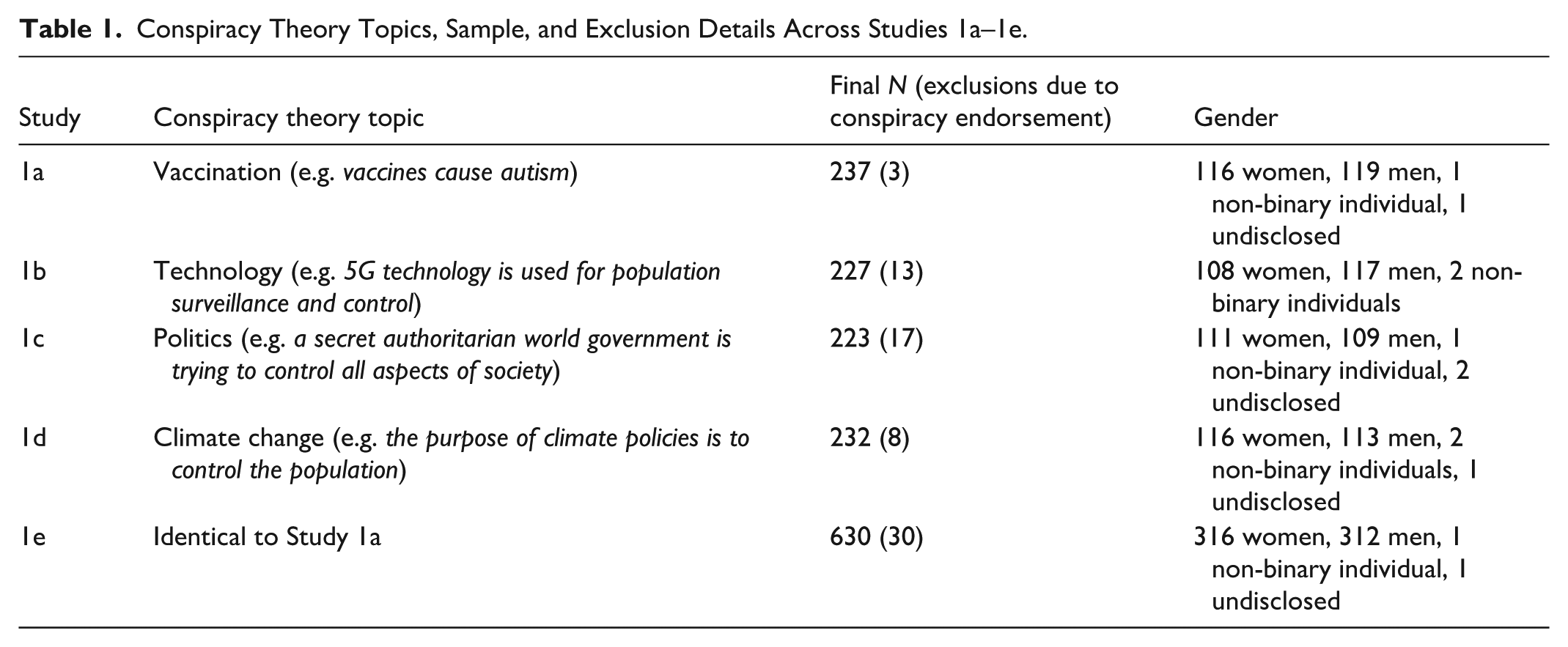
For Studies 1a–1d, an a priori power analysis using the R pwr package (Rosario, 2015/2025) indicated a minimum required sample size of 199 participants to detect small differences between dispositional and situational attribution scores (Cohen’s d = 0.20) using paired-samples t-tests with 80% power. For these studies, between May and November 2024, we collected 240 responses each from U.K. Prolific workers to account for potential exclusions. For Study 1e, a simulation-based a priori power analysis based on Donnelly et al. (2022) indicated a minimum required sample size of 555 to detect all total and indirect effects in parallel mediation models, whereby the effects of different types of attributions on correction intentions are mediated by both distancing desire and attributional certainty, with at least 80% power. As preregistered, we recruited 660 responses from U.K. Prolific workers for Study 1e in January 2025. In all studies, participants who indicated to endorse the presented conspiracy theories were excluded from all analyses. An overview of conspiracy theory topics, as well as sample and exclusion details can be found in Table 1.
Conspiracy Theory Topics, Sample, and Exclusion Details Across Studies 1a–1e.
Procedure
In all studies, participants were asked to imagine a scenario about attending a social event with a new co-worker who engages them and other co-workers in a conversation about a topic that differed by study (see Table 1), and shared their belief in conspiracy theories about the topic (see Supplemental Materials for full study materials).
Participants then indicated to what extent three dispositional factors of their co-worker (character and personality, deeply-rooted core beliefs, the type of person they are) and three situational factors (influence from traditional media, influence from their friends and family, influence from social media) contributed to their co-worker sharing their conspiracy beliefs on slider scales ranging from 0 (did not contribute at all) to 100 (contributed very strongly), with both sets of factors being presented in counterbalanced order. Items measuring dispositional attributions were averaged (scale reliabilities are reported in Table 2) and items measuring attributions of conspiracy beliefs to situational factors are used individually due to low inter-item correlations (see Supplemental Materials). This was followed by a single bipolar item with the same instructions and scale format, ranging from only characteristics of the situation to only characteristics of the person (based on Storms, 1973), with the order of scale endpoints being counterbalanced and coded such that higher scores indicate stronger attributions to situational characteristics. Participants were then asked to indicate their intentions to correct their co-worker (3 items: e.g. Tell them that their views are not correct [i.e. not supported by evidence]). To tap into the aforementioned motives to correct conspiracy believers, Studies 1c–1e additionally included a distancing desire measure (3 items, e.g. I want to distance myself publicly from this person), and Studies 1d and 1e an attributional certainty measure (3 items, e.g. How certain are you about what caused your co-worker’s views?; based on Clatterbuck, 1979), measured on 7-point scales to reduce common method bias. An overview of the measures included in each study, including reliabilities and descriptives can be found in Table 2. Some studies included additional variables for purposes unrelated to this study that are not reported here (see Supplemental Materials).
Measures and Descriptives Across Studies 1a–1e.
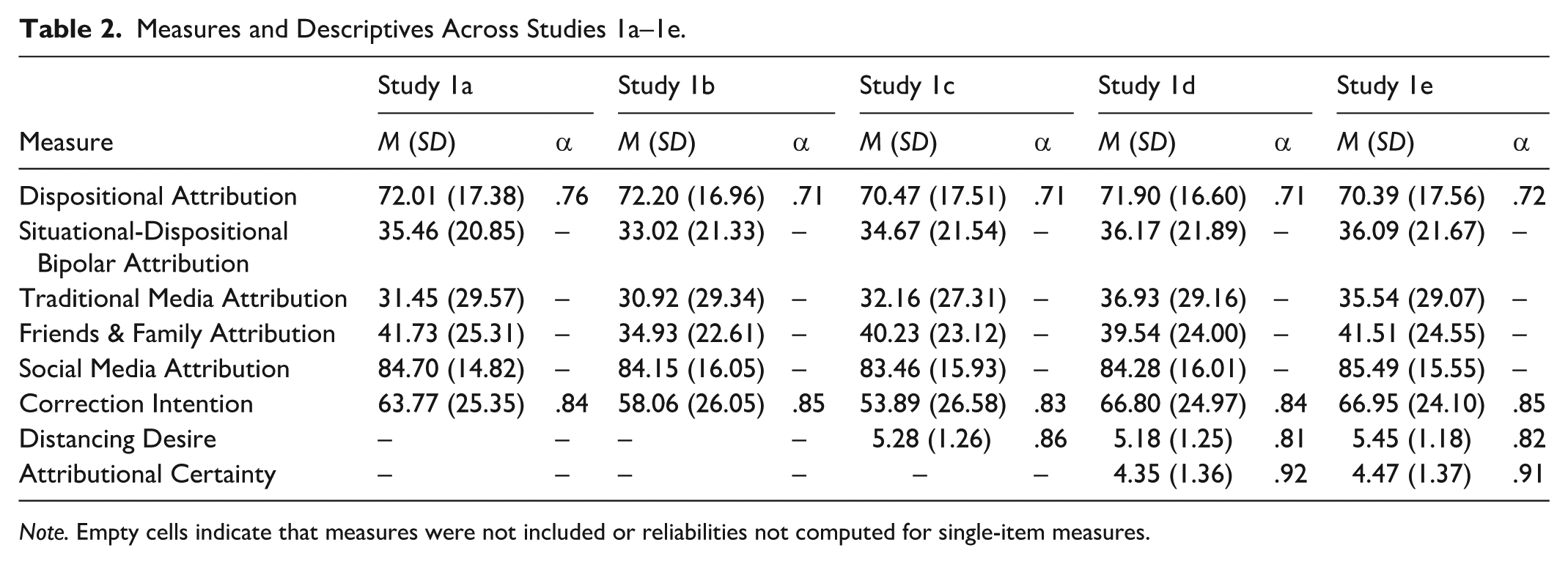
Note. Empty cells indicate that measures were not included or reliabilities not computed for single-item measures.
Results
Below, we report the results from analyses testing our main predictions. Additional results and details about preregistration deviations can be found in the Supplemental Materials.
Prevalence of Attributions
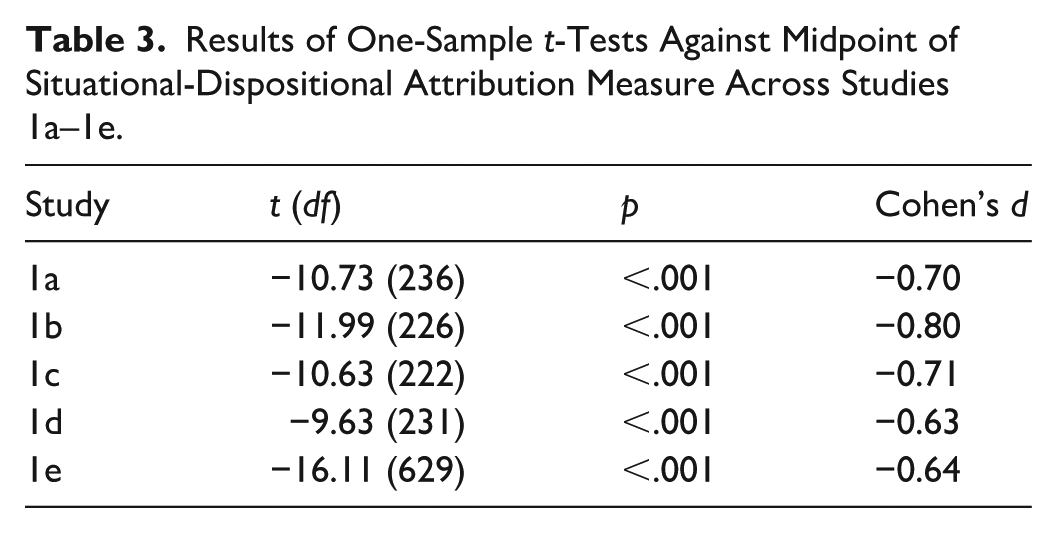
We conducted one-sample t-tests to compare the mean scores on the bipolar situational-dispositional attribution measure in each study (see Table 2 for mean scores) to the midpoint of the scale. As can be seen from the distributions (see Figure 1) and results of the t-tests (see Table 3), this measure suggests that individuals attribute conspiracy beliefs more strongly to dispositional than situational causes across topics, with moderate to large effect sizes (in terms of Cohen’s d computed for one-sample t-tests).
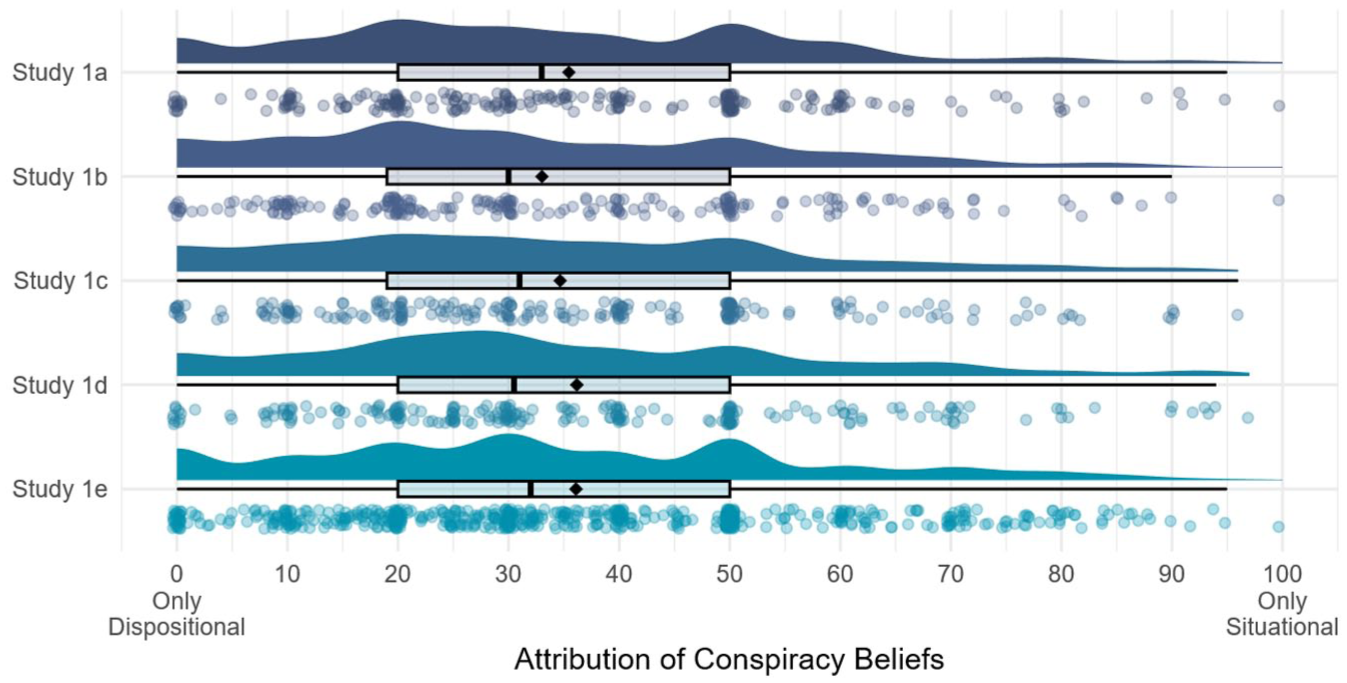
Distributions of situational-dispositional attribution scores in studies 1a–1e.
Results of One-Sample t-Tests Against Midpoint of Situational-Dispositional Attribution Measure Across Studies 1a–1e.
We additionally examined if the results of this bipolar measure, which requires a trade-off between attribution to situational and dispositional factors, align with those obtained using more detailed attribution measures that allow for parallel situational and dispositional attributions. We conducted paired-samples t-tests comparing mean scores of the dispositional attribution measure to the mean scores of the three situational attribution items. The prevalence of the attributions we examined and the detailed results of the paired-samples t-tests we conducted are presented in Figure 2 and Table 4. Means and standard deviations can be found in Table 1.
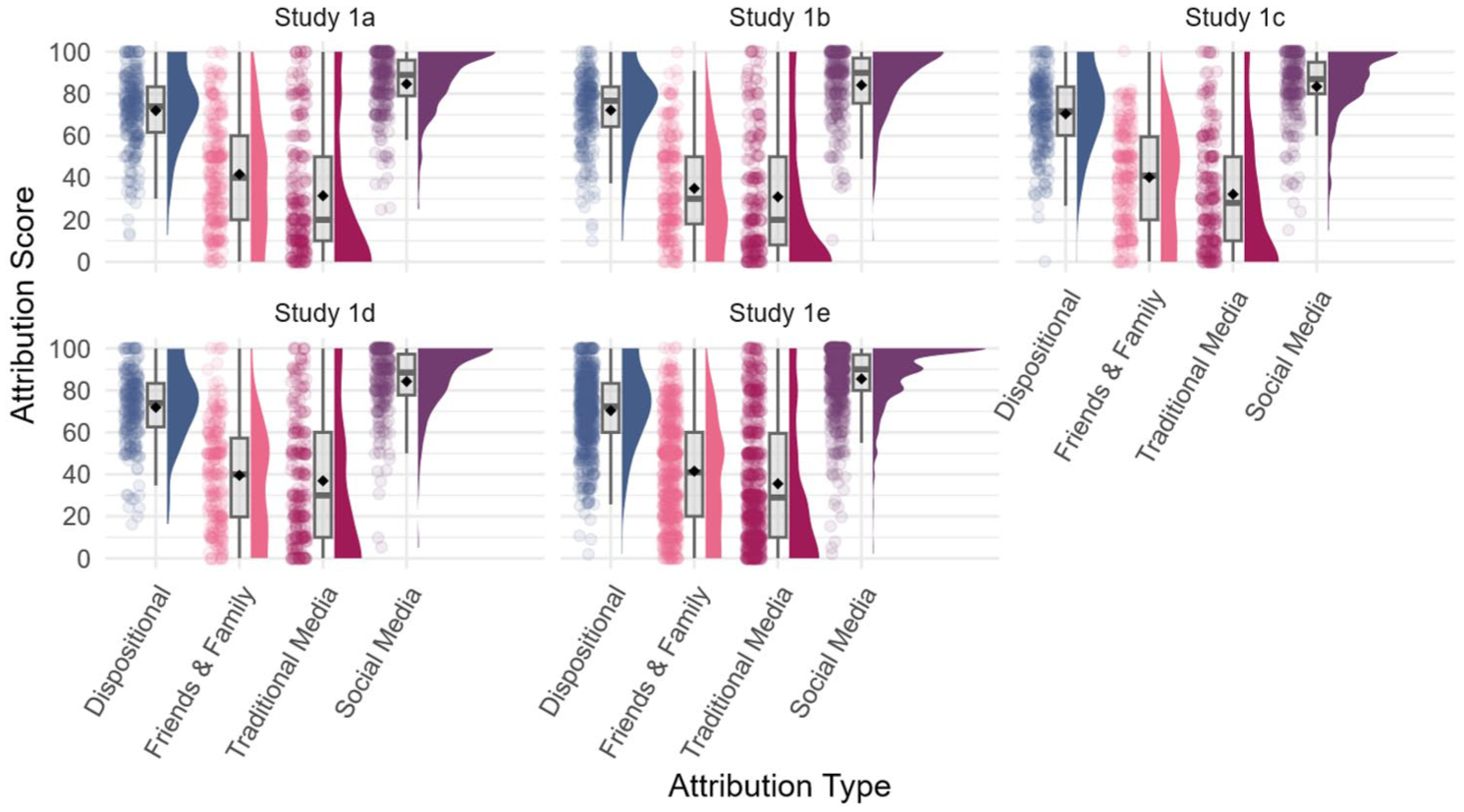
Distributions of detailed attribution measures in studies 1a–1e.
Paired-Samples t-Tests Comparing Dispositional Attribution Scores to Other Attributions in Studies 1a–1e.
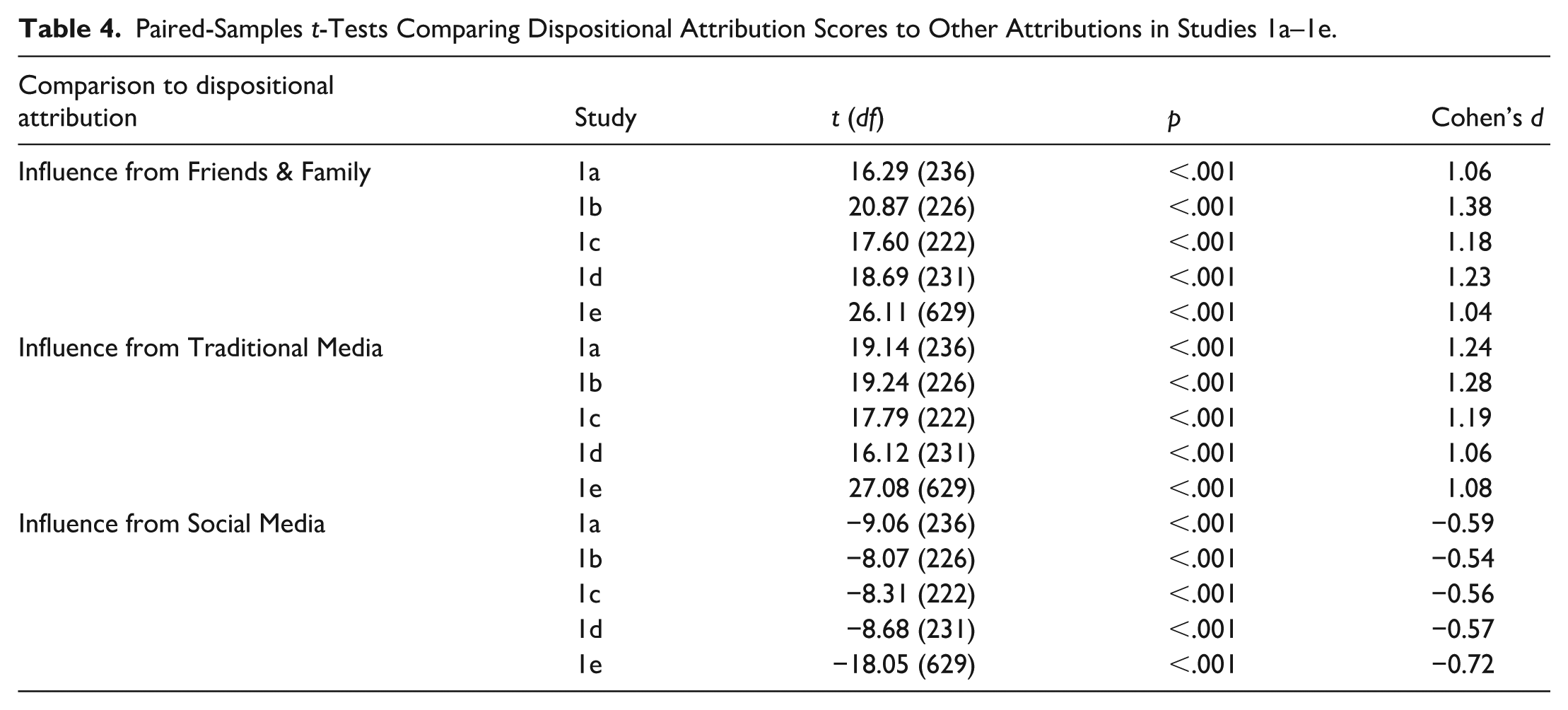
As can be seen from Figure 2, dispositional attribution scores are substantially higher than mean scores for attributions to both influence from friends and family as well as influence from traditional media (large mean differences in terms of Cohen’s d computed for paired-samples t-tests; see Table 4), but lower than mean scores for attributions to social media influence (moderate mean differences). This suggests that, at least in the context of conspiracy beliefs, individuals may not make attributions in a trade-off manner. Instead, they appear to attribute others’ conspiracy beliefs strongly to dispositional factors and a situational factor, namely influence from social media, with the latter attributions being the strongest.
Associations of Attributions With Correction Intentions
To assess associations between the attributions we measured and individuals’ correction intentions, we fit a linear model to the data from each study, predicting correction intentions from both the dispositional attribution score and the individual situational attribution items. The results are presented in Figure 3 and Table 5.
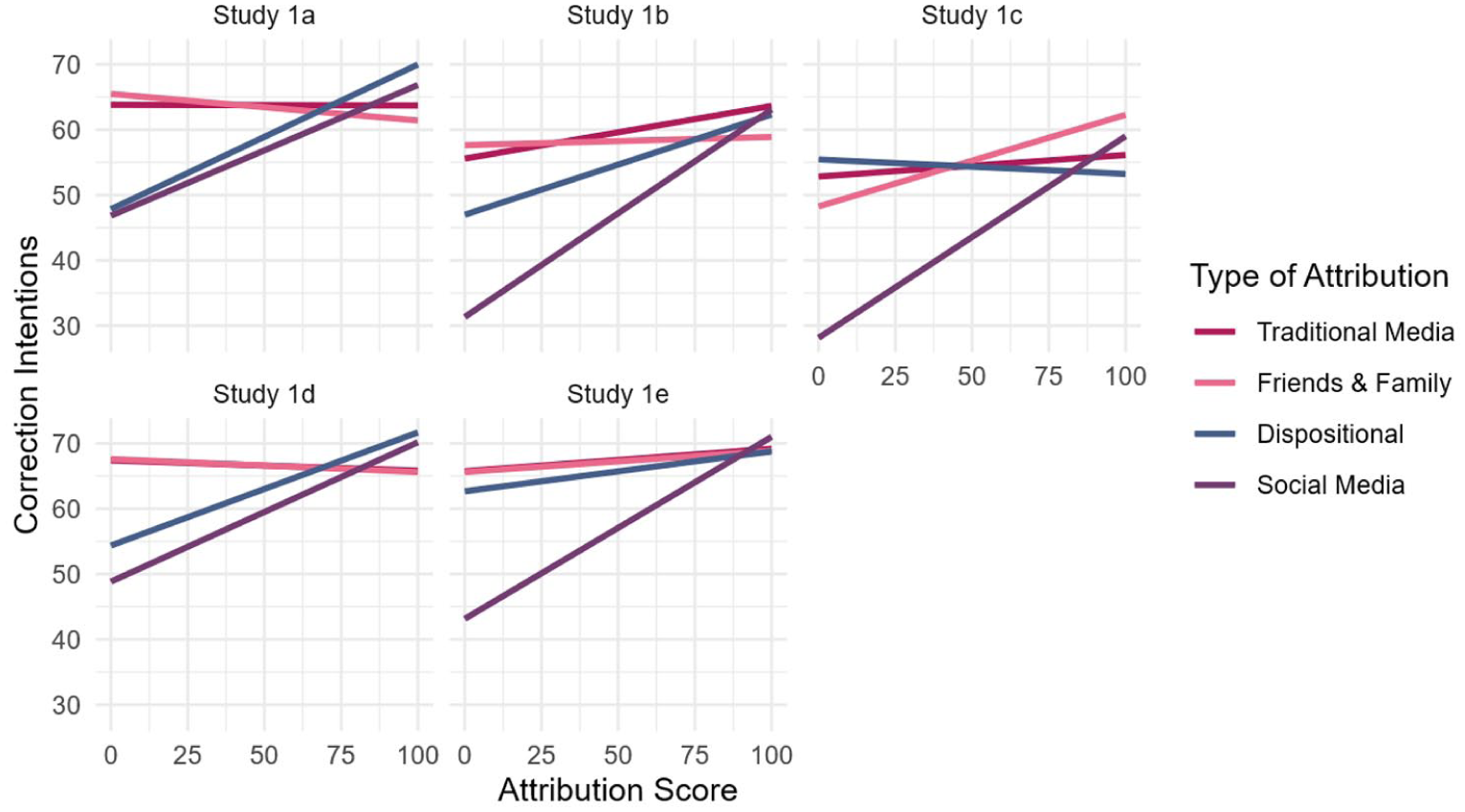
Plot of linear models predicting correction intentions from attribution scores in studies 1a–1e.
Results From Linear Models Predicting Correction Intentions From Attribution Scores in Studies 1a–1e.
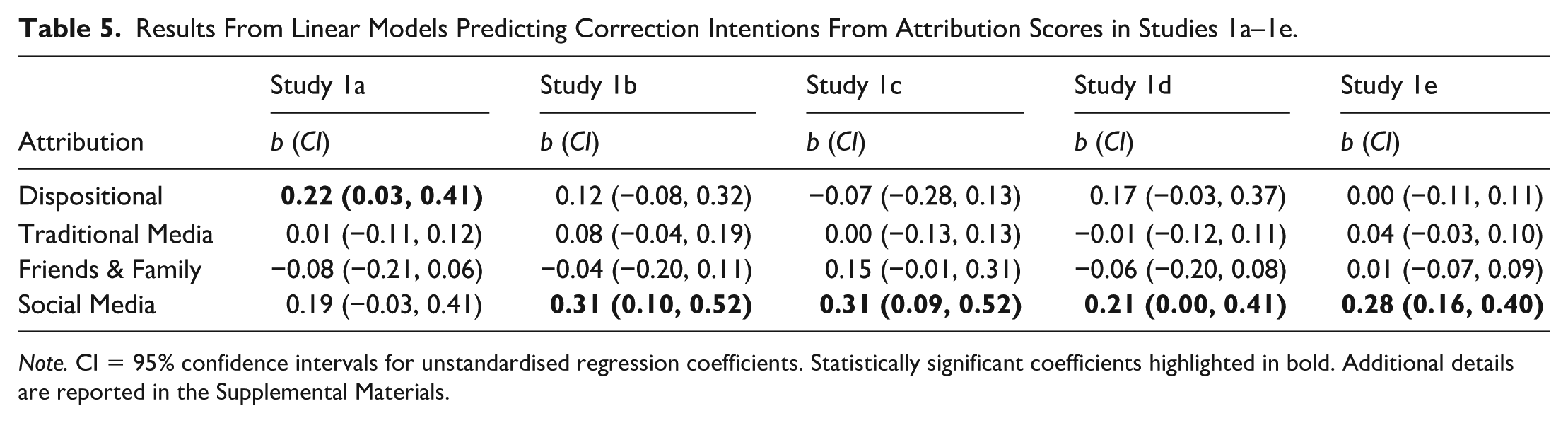
Note. CI = 95% confidence intervals for unstandardised regression coefficients. Statistically significant coefficients highlighted in bold. Additional details are reported in the Supplemental Materials.
Contrasting our predictions, dispositional attributions were not consistently negatively associated with correction intentions (see Table 5). By contrast, they appear to be largely inconsequential in predicting correction intentions, with some results even suggesting positive, albeit largely inconsistent and non-significant, associations. However, in most studies, we found a statistically significant positive relationship between attributions to social media influence and correction intentions.
To synthesise the results from the linear models and resolve some of the inconsistencies across studies, we conducted preregistered internal meta-analyses 1 for the two associations that appear to be the strongest, namely the relationships between dispositional attributions and correction intentions and between attributions to social media influence and correction intentions. We extracted the respective regression coefficients and their standard errors from the linear models presented above and conducted inverse-variance method fixed- and random-effects meta-analyses on the aforementioned associations using the meta R package (Schwarzer, 2025). The focal effect size estimates of these meta-analyses are visualised in Figure 4 (see Supplemental Materials for detailed results).
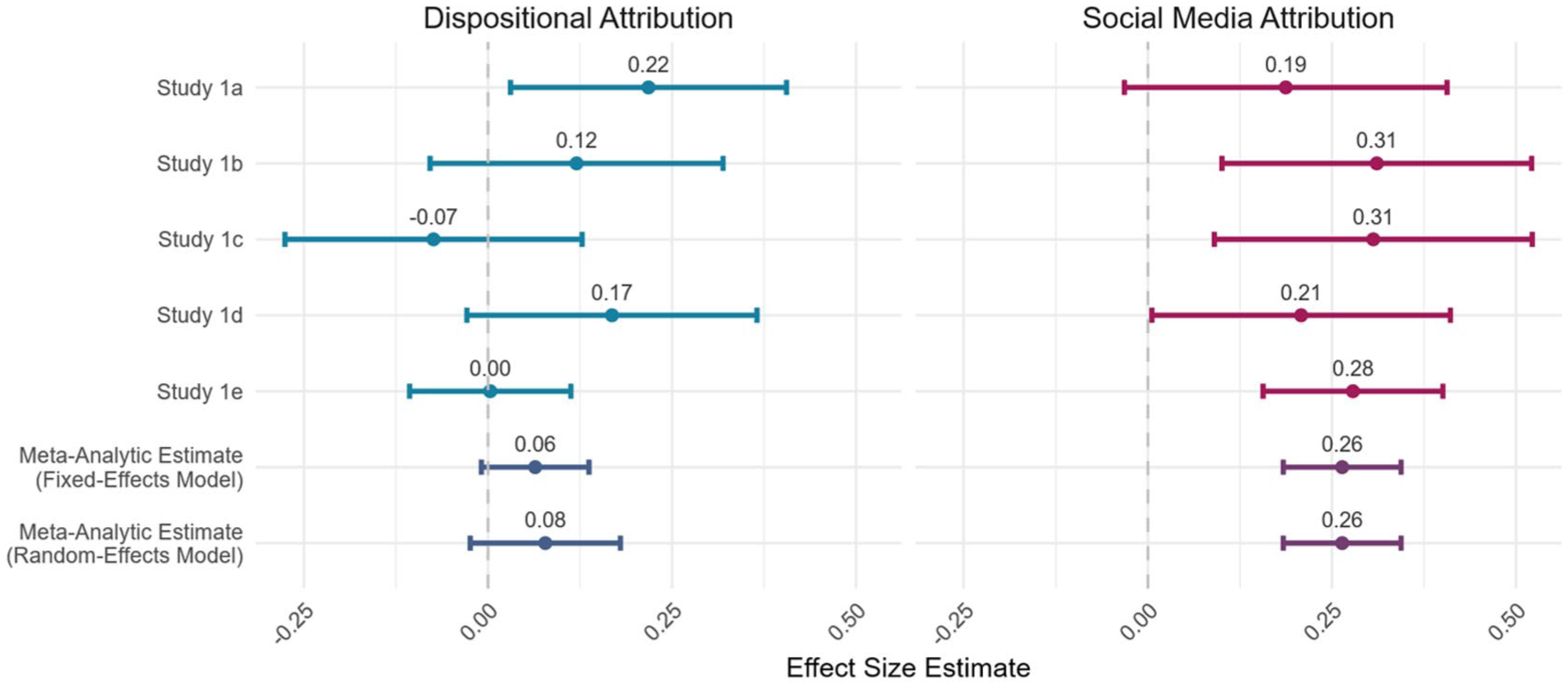
Meta-analyses of associations between dispositional and social media attributions and correction intentions in studies 1a–1e.
As can be seen in Figure 4, the meta-analytic estimates suggest a small positive, albeit not statistically significant and rather heterogeneous, association between dispositional attributions and correction intentions. For the association between attributions of conspiracy beliefs to social media and correction intentions, however, meta-analytic estimates provide evidence for a rather consistent positive relationship.
Since social media attribution scores were the only statistically significant predictors of correction intentions in Studies 1c–1e, which included the mediator measures, we only report mediation results for this relationship here. In Study 1c, only distancing desire was measured, which did not significantly mediate the association between attributions of conspiracy beliefs to social media influence and correction intentions (indirect effect: β = .03, SE = 0.02, 95% CI [−0.01, 0.08]). In Studies 1d and 1e, the indirect effects of social media attributions on correction intentions via individuals’ distancing desire were significant (Study 1d: β = .03, SE = 0.02, [0.0001, 0.06]; Study 1e: β = .01, SE = 0.01, [0.003, 0.03]), but weaker than the indirect effects via attributional certainty (Study 1d: β = .05, SE = 0.02, [0.01, 0.11]; Study 1e: β = .05, SE = 0.01, [0.02, 0.08]). Note that the difference in size between the indirect effects via attributional certainty and those via distancing desire was only statistically significant in Study 1e, which had higher statistical power than Study 1d. This suggests that attributional certainty indeed played a stronger role in the association between social media attribution scores and correction intentions than individuals’ distancing desire. For the indirect-only associations between dispositional attribution scores and correction intentions, results from Study 1d align with our prediction that distancing desire would play a greater role than attributional certainty, but results from Study 1e do not. Detailed mediation results, including indirect-only mediation of the associations between dispositional attributions and correction intentions are reported in the Supplemental Materials.
Discussion
Across five correlational studies, laypeople indeed attributed conspiracy beliefs more strongly to dispositional than to situational causes, except for influence from social media, to which others’ conspiracy beliefs were attributed most strongly. Contrasting expectations, there was no consistent negative association between dispositional attributions of conspiracy beliefs and intentions to correct conspiracy believers. In some studies, there was even a small positive association. However, as predicted, attributing conspiracy beliefs to a situational cause, namely influence from social media, was positively associated with correction intentions. We found evidence for this association to be mediated by both attributional certainty, an epistemic process, and distancing desire, a relational, evaluative one, with the former playing a stronger role.
One of the main limitations of Studies 1a–1e was the selection of potential causes of conspiracy beliefs we assessed. We only assessed a relatively narrow range of potential causes, which were selected based on prior research assessing predictors of conspiracy beliefs, rather than lay beliefs about their causes. Hence, the causes we assessed, while reflecting actual predictors of conspiracy beliefs, may not reflect laypeople’s beliefs about what causes conspiracy beliefs. Furthermore, we used the same scenario (i.e. a co-worker sharing their conspiracy beliefs at a work-related event) throughout these studies, limiting the generalisability of our findings to other settings. Additionally, presenting the detailed dispositional attribution items, which formed a more coherent construct than the detailed situational attribution items, before the general situational-dispositional bipolar attribution measure could have artificially inflated dispositional attribution scores for the general bipolar item. Finally, we asked participants to what extent they believed the presented factors to have caused the conspiracy believer sharing their conspiracy beliefs, which may differ from lay beliefs about the reasons for holding conspiracy beliefs. We addressed these limitations in Studies 2 and 3. To identify causes that laypeople attribute conspiracy beliefs to that may not have been accounted for in previous studies, Study 2 assessed lay attributions of conspiracy beliefs using qualitative data from open-ended questions. In Study 3, we then quantitatively assessed the prevalence of the wide range of attributions identified in Study 2 and their associations with correction intentions, while addressing the other methodological limitations of Studies 1a–1e.
Study 2
In Study 2, we took a qualitative approach to assess which causes of conspiracy beliefs are prevalent in laypeople’s minds when no potential causes are mentioned. Furthermore, in this study, we specifically focused on causes for holding rather than sharing conspiracy beliefs in a different setting (i.e. a neighbour rather than a co-worker holding conspiracy beliefs).
Methods
Participants
As preregistered, in November 2025, we recruited 200 U.K. Prolific workers for Study 2. In addition to the recruitment and pre-screening criteria employed in the previous studies, we employed several data quality checks to detect bots and other inauthentic responses, but none were removed based on the preregistered data quality screening criteria. As preregistered, responses from 10 participants who indicated to agree with the focal conspiracy beliefs were removed from the data for all analyses, resulting in a final sample size of 190 (98 women, 89 men, 1 non-binary individual, 2 undisclosed gender; MAge = 45.28, SDAge = 14.21).
Procedure
Participants were first asked to read a scenario adapted from Study 1b. The topic of the focal conspiracy theory was identical to Study 1b (5G technology), but instead of a co-worker sharing their conspiracy beliefs at a social event with colleagues, participants were asked to imagine that a new neighbour shares these beliefs at a neighbourhood event at a local community centre (see Supplemental Materials for full study materials). Then, participants were asked whether they agree with the focal beliefs, before writing down the two main reasons for why they thought the person holds these beliefs in a few keywords in two separate open text fields. For both reasons they stated, participants were then asked whether it is a characteristic of Robin or a characteristic of the situation and the social environment on a slider ranging from 0 to 100 (endpoints were counterbalanced). Due to unforeseen inconsistencies in these ratings, we did not analyse these ratings in the present study, deviating from our preregistration. Finally, participants indicated their age and gender.
Results
One of the authors read all responses and created a codebook for categorising responses into categories of attributions in this process. For responses that mentioned several causes of conspiracy beliefs, only the first reason was recorded. All responses were then assigned to a category and the codebook was adapted where needed. Then, using API calls, an LLM (Mistral Large 2411) categorised each individual response separately based on the codebook. After manually correcting errors in the LLM-generated output, there was sufficient agreement between the categorisations of the human rater and the LLM (Cohen’s κ = .84). Finally, the human rater resolved all disagreements manually and labelled all final categories of attributions as situational or dispositional based on the responses within the categories. Table 6 provides an overview of the 12 identified categories, the corresponding criteria from the codebook (see Supplemental Materials for full codebook and LLM prompt), and selected examples. We omitted the Other category, which contained responses that were not interpretable on their own (e.g. single words), ones that did not clearly answer the focal question, and those that could not be assigned to any of the other categories (51 responses), as well as an Ulterior Motive category (6 responses), which could not be unambiguously labelled dispositional or situational based on the responses falling into this category, from all analyses.
Attribution Categories, Criteria, & Examples.
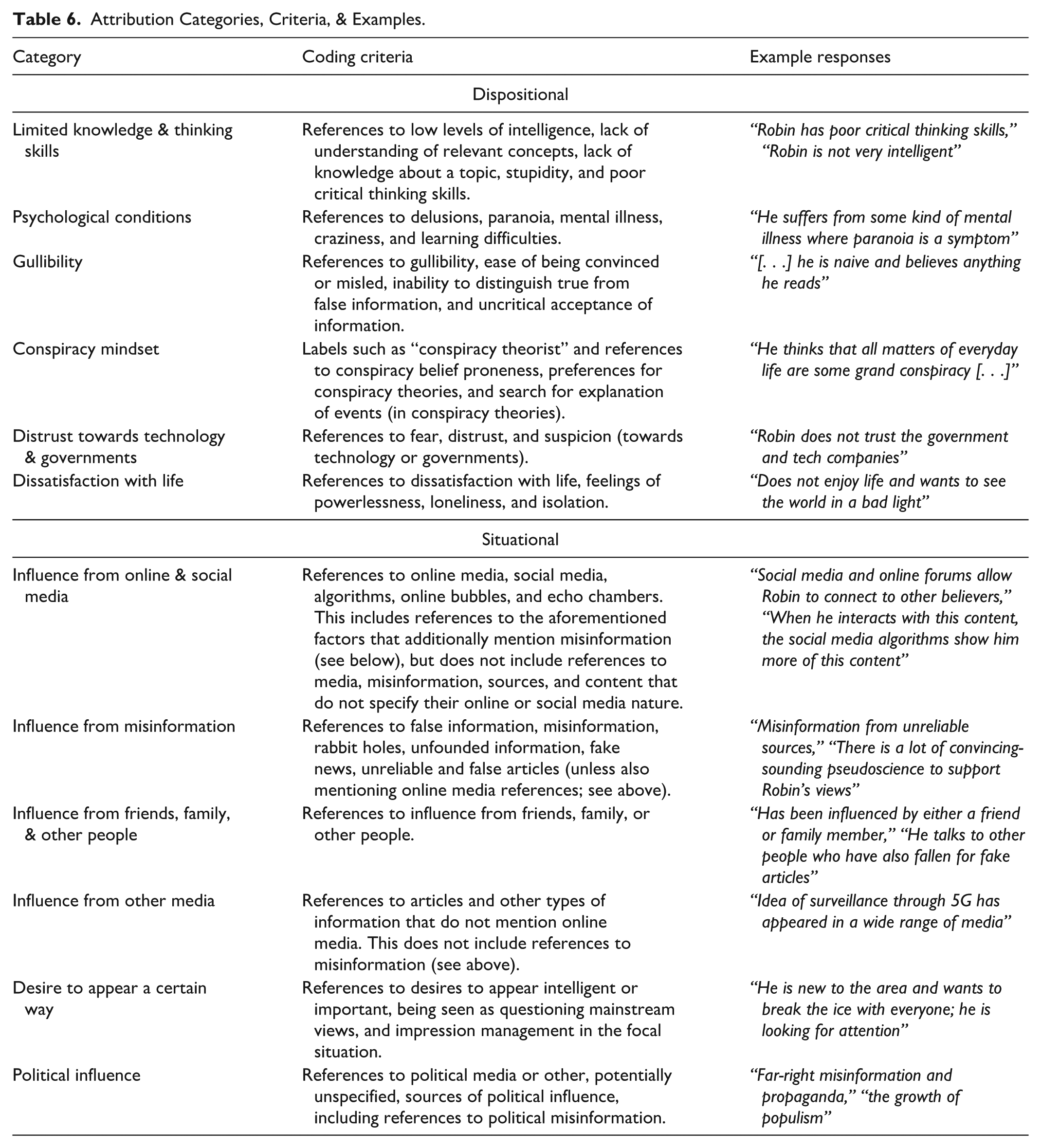
Figure 5 visualises the total counts of responses in each of the attribution categories. Attributions of conspiracy beliefs to influence from online and social media are mentioned most frequently. However, in total, dispositional causes of conspiracy beliefs are mentioned more frequently (total count = 176) than situational causes (total count = 147).
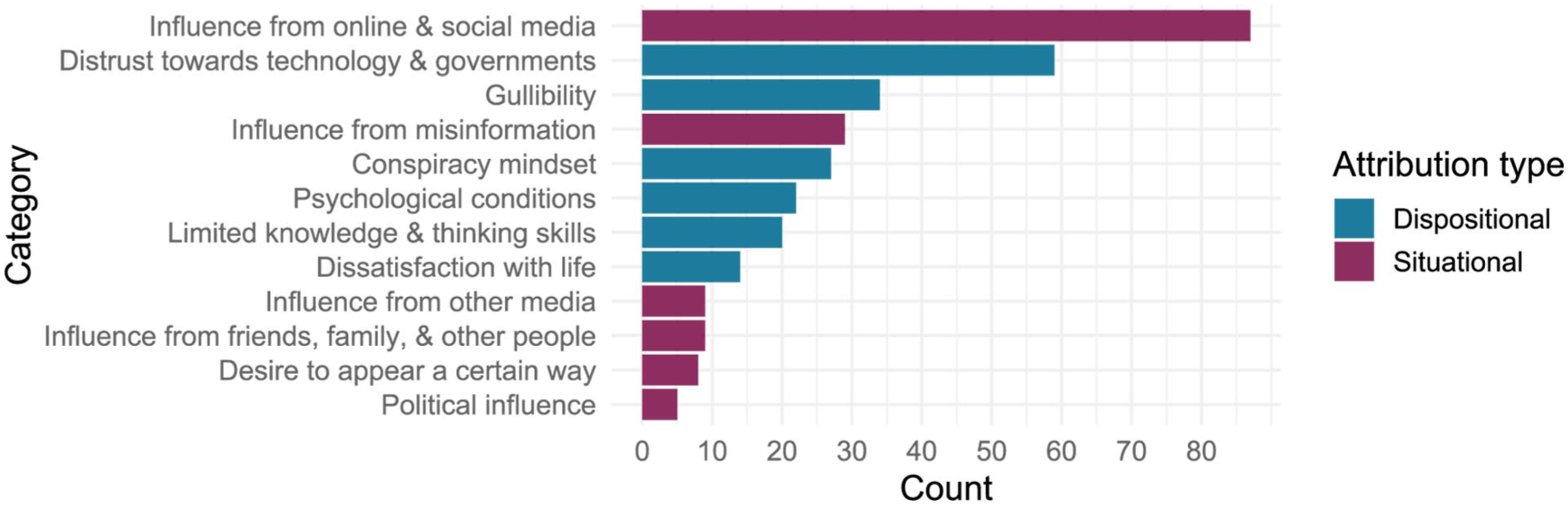
Total numbers of responses within attribution categories.
Additionally, we exploratorily examined the total prevalence of dispositional and situational attributions in the first and second causes that were mentioned by participants. As can be seen in Figure 6, the prevalence of situational attributions is much stronger for the first reason participants mentioned than for the second one, for which this pattern is reversed. A Chi-squared test suggests that this difference is statistically significant: Χ2 (1, N = 323) = 28.22, p < .001. While dispositional attributions are more prevalent in total, the first cause of conspiracy beliefs that is mentioned is predominantly situational, which is primarily driven by attributions to online and social media influence (see also additional analyses in the Supplemental Materials). These patterns could suggest that situational causes, specifically influence from online and social media, are among the most salient, if not the most salient, causes of conspiracy beliefs in laypeople’s minds.
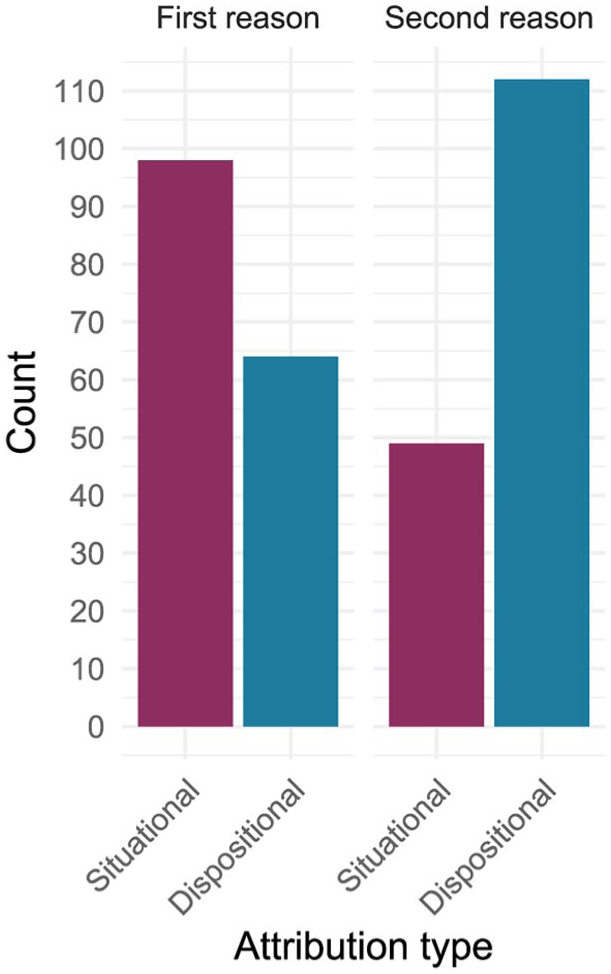
Number of dispositional and situational attributions by the first and second mentioned reasons.
Discussion
Study 2 provided detailed insight into a wide range of common lay attributions of conspiracy beliefs. Most person-level causes of conspiracy beliefs participants mentioned are mostly dispositional in nature (e.g. conspiracy mindset, psychological conditions), but some are less clearly dispositional, as they also entail situational aspects (e.g. dissatisfaction with life). Most situational causes can be considered social influence variables (e.g. influence from online and social media, misinformation, other media, friends, family, and other people, political influence), yet there are ones that partly overlap with person-level factors, such as the desire to appear a certain way in the focal situation, which pertains both to person-level image concerns and influence of the situation. 2
While situational attributions were overall less common in participants’ responses, two social influence variables were highly prevalent: Influence from online and social media, as well as influence from misinformation. As also reported in additional analyses in the Supplemental Materials, the fact that the first reason mentioned by participants was primarily situational is mainly driven by attributions to online and social media, followed by misinformation. Both of these findings suggest that while dispositional attributions of conspiracy beliefs are, on average, more prevalent than situational ones, attributions to online and social media appear to be the most prevalent and salient. In contrast to the prevalence of these social influence variables, situational constraints, which pose the dominant situational factor in attribution research (Gawronski, 2004), are rarely mentioned in our data.
Study 3
In Study 3, we quantitatively assessed the prevalence of the attributions identified in Study 2, and the extent to which they predict participants’ intentions to correct conspiracy believers. We additionally tackled several limitations of Studies 1a–1e. We employed a different scenario than the one used previously and assessed attributions for holding rather than sharing conspiracy beliefs to increase the generalisability of our findings. We furthermore assessed to what extent the presentation of the detailed attribution items before the general dispositional-situational bipolar item in previous studies may have affected scores on the latter. Additionally, we exploratorily assessed whether attributions to a cause that comprises both situational and dispositional aspects (i.e. misinformation influence) mediates the associations between attributions to dispositional causes and social media influence and correction intentions, thereby providing more granular insight into the lay causal model individuals have of conspiracy beliefs.
Methods
Study 3 employed the same design as Study 1b, except for the detailed attribution items that were used, the order of the detailed and general attribution items, and parts of the scenario participants read. Methodological differences to Study 1b are reported below.
Participants
Based on the results from Studies 1a–1e, we conducted a custom simulation-based power analysis. The power analysis indicated a minimum required sample size of 410 to detect an association between attributions of conspiracy beliefs to social media and correction intentions with 95% statistical power (see Supplemental Materials for details). To account for potential exclusions, we preregistered a final sample of valid responses from 490 U.K. Prolific workers who previously indicated to be fluent in English, had an approval rate of at least 95%, and did not participate in similar studies previously conducted by the authors. We removed 16 responses from the sample of 491 responses we collected in November 2025 from participants who indicated to agree with the focal conspiracy beliefs, resulting in a final sample size of 475 (236 women, 234 men, 2 non-binary individuals, 3 undisclosed gender; MAge = 45.34, SDAge = 12.33).
Procedure
The procedure was identical to that of Study 1b, with a few differences outlined hereafter. The scenario participants were asked to imagine was identical to that presented in Study 2. Instead of the detailed attribution items used in Studies 1a–1e, we used items based on the 12 causes of conspiracy beliefs we identified in Study 2, whereby some category names were slightly adapted for ease of interpretation and comparability with results from previous studies. More specifically, we assessed attributions to six dispositional causes (Mental issues, Poor knowledge & thinking skills, Gullibility, Conspiracy-prone thinking, Distrust of technology & governments, Dissatisfaction with life) and six detailed situational causes (Influence from traditional media, Influence from friends, family, & other people, Influence from online & social media, Desire to be seen a certain way, Influence from misinformation, Influence from political messages). The dispositional and situational attribution items were presented in separate blocks, the order of which was randomised. The order in which the detailed attribution items and the general bipolar attribution item were presented was counterbalanced. For all attribution items, participants were asked about the extent to which the presented factors contributed to the person holding, rather than sharing, their conspiracy beliefs. Descriptives for all measures are reported throughout the next section.
Results
Prevalence of Attributions
As preregistered, we conducted a one-sample t-test to compare the average score on the general bipolar attribution measure (M = 35.65, SD = 20.81) against the neutral scale midpoint between dispositional attributions (coded as 0) and situational attributions (coded as 100). As in Studies 1a–1e, the average score on this measure was significantly below the scale midpoint, suggesting that attributions were on average more dispositional than situational when assessed with this general measure: t(474) = −15.03, p < .001, Cohen’s d = −0.69. This pattern was stronger when the general attribution item was presented before (vs. after) the detailed items, but statistically significant regardless of this order (see additional analyses in the Supplemental Materials).
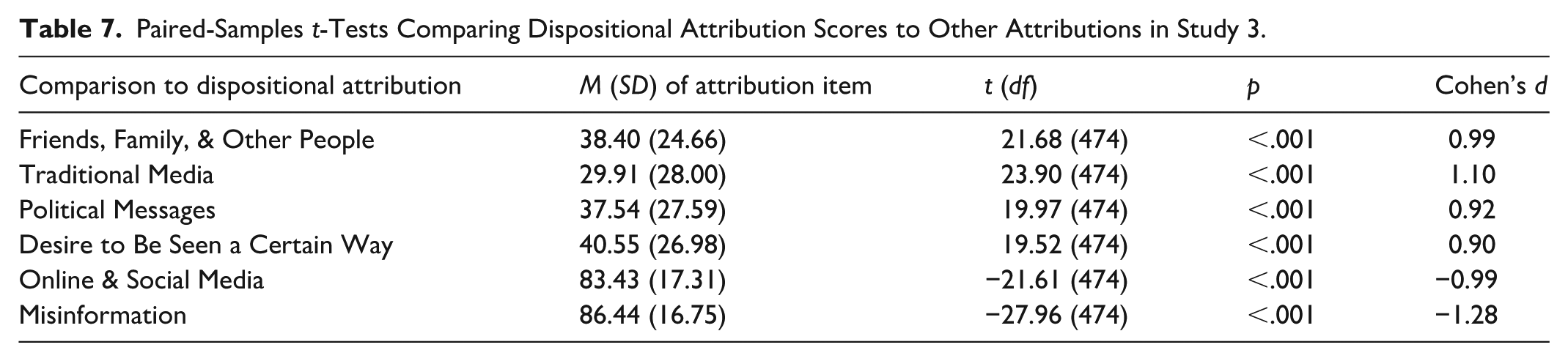
Before assessing the prevalence of the detailed attribution items, we conducted separate exploratory factor analyses for the detailed dispositional and situational attribution items to identify items that could be combined if conceptually meaningful, as preregistered (see Supplemental Materials). A scree plot and a factor analysis using varimax rotation for the dispositional attribution items suggested a solution whereby all items load onto a single factor. Therefore, we averaged all detailed dispositional attribution items for use in all analyses, as in the previous studies (M = 64.25, SD = 15.95; Cronbach’s α = .74). Exploratory factor analyses using oblimin rotation yielded low factor loadings of most situational attribution items for one-, two-, and three-factor solutions. Hence, as in Studies 1a–1e, all detailed situational attribution items were used separately for all analyses. We then conducted a series of paired-samples t-tests whereby we compared the mean scores of the aggregated dispositional attribution items (M = 64.25, SD = 15.95) to the scores of all detailed situational attribution items. As can be seen in Table 7 and Figure 7, mean dispositional attribution scores were significantly higher than those of situational attribution items, with two exceptions. Average scores for attributions of conspiracy beliefs to online and social media as well as misinformation are significantly higher than those for dispositional attributions.
Paired-Samples t-Tests Comparing Dispositional Attribution Scores to Other Attributions in Study 3.
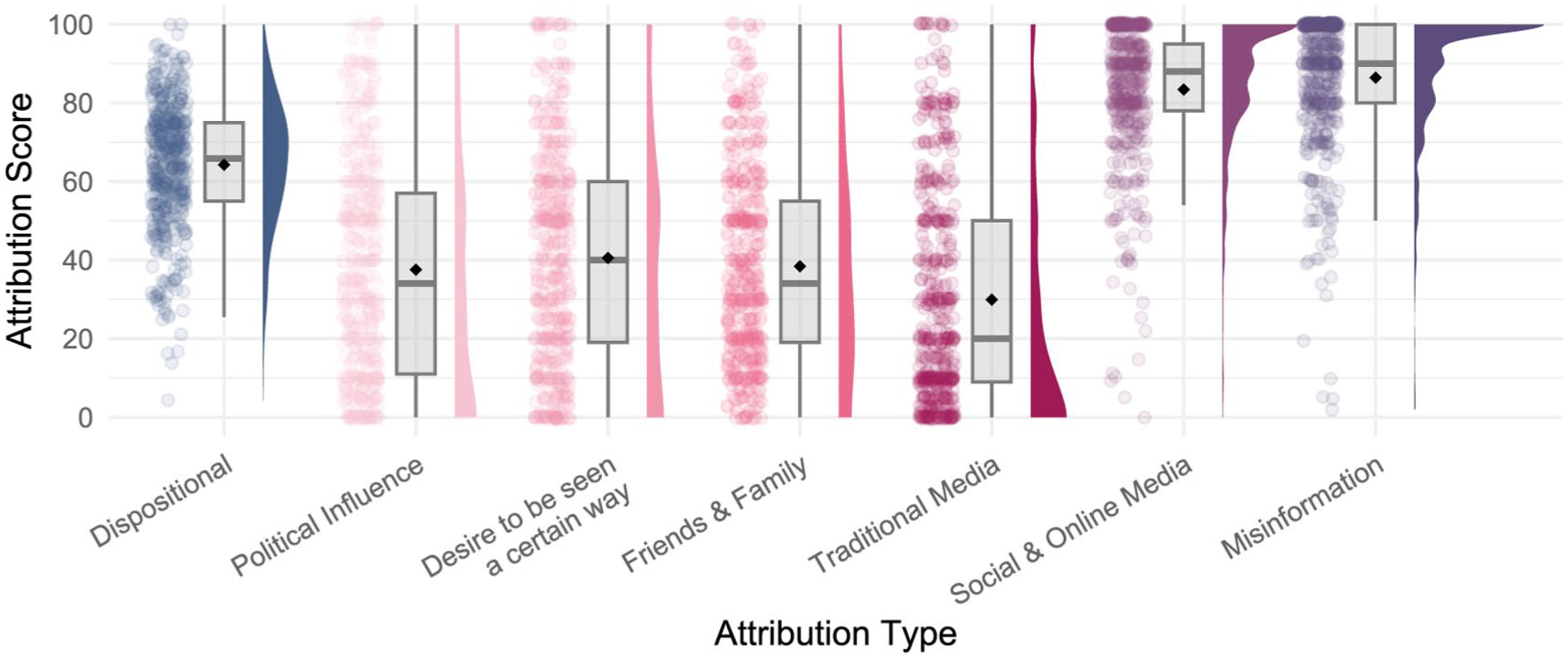
Distributions of detailed attribution measures in study 3.
Additionally, we compared the average scores of attributions to online and social media and those of attributions to misinformation using a paired-samples t-test. There was a small but statistically significant difference, indicating that mean scores for attributions to influence from misinformation were higher than those for attributions to influence from online and social media: t(474) = −4.13, p < .001, Cohen’s d = 0.19 (M and SD reported above).
Associations of Attributions With Correction Intentions
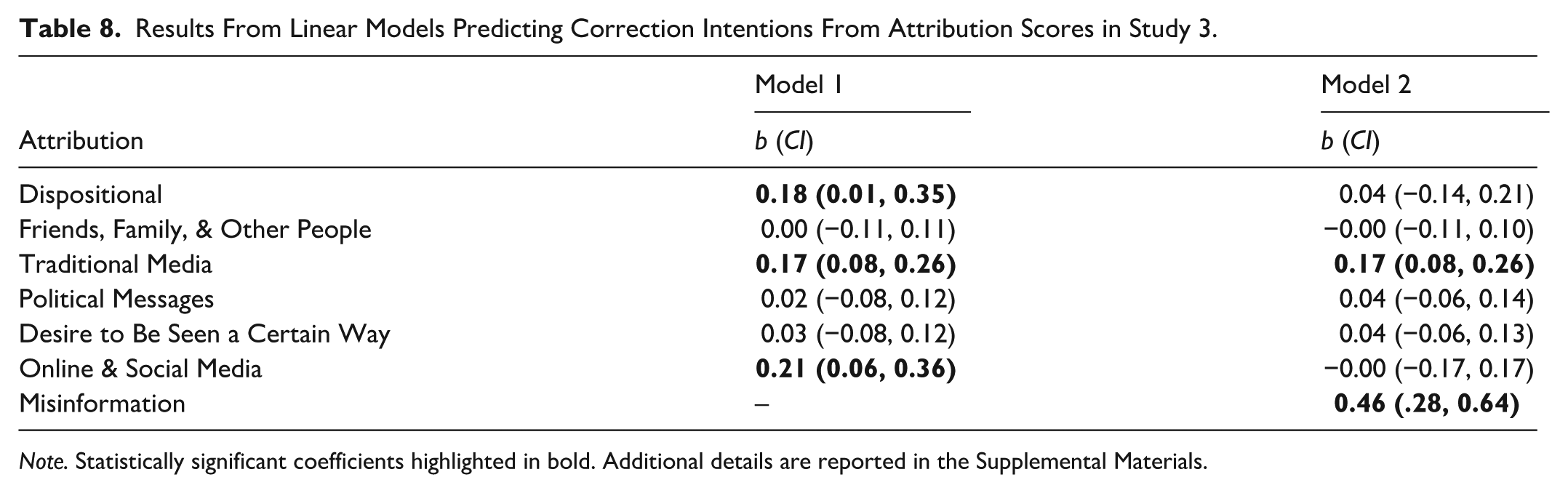
We preregistered to fit a linear regression model to the data, predicting participants’ correction intentions from all (aggregates of) the detailed attribution items. Because of relatively strong correlations between attributions to influence from misinformation with both attributions to influence from online and social media (r = .57, p < .001), and the aggregate dispositional attribution construct (r = .44, p < .001), we also exploratorily fit the same model, but omitting misinformation attributions as a predictor. Table 8 summarises the main results (see Supplemental Materials for detailed statistics) for the linear regression models predicting correction intentions from all detailed attribution variables excluding the misinformation attribution item (Model 1) and including this item (Model 2).
Results From Linear Models Predicting Correction Intentions From Attribution Scores in Study 3.
Note. Statistically significant coefficients highlighted in bold. Additional details are reported in the Supplemental Materials.
In Model 1, correction intentions are significantly predicted by attributions to online and social media, in line with most prior studies, by dispositional attributions, in line with (partly non-significant) patterns in three prior studies (Studies 1a, 1b, 1d), and by attributions to traditional media, which aligns only with a non-significant pattern in the only other study investigating the same conspiracy topic as this study (i.e. 5G technology; Study 1b). Attributions to online and social media yielded the strongest regression coefficient, indicating that participants who attributed conspiracy beliefs more strongly to influence from online and social media were more likely to report stronger intentions to correct the conspiracy believer, in line with our previous findings and predictions. Interestingly, in Model 2, these associations (except the one with attributions to traditional media) disappear entirely and instead, a stronger positive association between attributions to influence from misinformation and correction intentions emerges. In other words, when laypeople think conspiracy beliefs are caused by misinformation, they are more likely to correct conspiracy believers. Based on this result and the aforementioned associations between misinformation attributions and attributions to both dispositional factors and influence from online and social media, we exploratorily tested whether the associations between dispositional attributions and correction intentions and between attributions to online and social media and correction intentions are mediated by attributions to misinformation influence. We find that both of these associations are fully mediated by misinformation attributions (indirect effect online and social media attributions: β = .16, SE = 0.04, 95% CI [0.09, 0.25]; indirect effect dispositional attributions: β = .12, SE = 0.03, [0.06, 0.19]; see Supplemental Materials for detailed results).
Discussion
In Study 3, patterns of conspiracy belief attributions were similar to those in Studies 1a–1e. Using the general dispositional-situational bipolar attribution measure, participants attribute conspiracy beliefs more strongly to dispositional than situational causes, a pattern that is more pronounced when this general item is presented prior to (vs. after) the detailed attribution measures. This suggests that this finding holds (albeit differing in size) when changing the order of measures. As in the previous studies, participants’ attributions to dispositional causes were stronger than those to specific situational causes, except for attributions to influence from online and social media, which were even stronger. In addition, we found that participants attributed conspiracy beliefs most strongly to influence from misinformation.
When not accounting for attributions to influence from misinformation, the main findings regarding the associations between attributions of conspiracy beliefs to different causes and intentions to correct conspiracy believers were also mostly similar to the previous studies. Specifically, participants who attributed conspiracy beliefs more strongly to influence from online and social media and, to a lesser extent, to dispositional causes, indicated stronger correction intentions. However, accounting for attributions of conspiracy beliefs to misinformation changes these associations: They correlate with attributions to online and social media as well as dispositional factors and explain most of the variance in correction intentions that is otherwise explained by these variables. This could suggest that attributions of conspiracy beliefs to misinformation comprise (i.e. are driven by) a dispositional component (misinformation susceptibility) and a situational component (misinformation exposure). We report exploratory mediation results in line with this conceptualisation, whereby the associations between online and social media attributions and correction intentions and between dispositional attributions and correction intentions are fully mediated by attributions of conspiracy beliefs to influence from misinformation. In other words, both attributions of conspiracy beliefs to dispositional causes and to influence from online and social media separately predict attributions to misinformation influence, which in turn predict intentions to correct conspiracy believers. This provides additional insight not only into the prevalence of conspiracy belief attributions to different causes and their associations with intentions to correct conspiracy believers, but also into the interplay between different types of attributions in these associations. For example, these findings would suggest that laypeople’s causal models of others’ conspiracy beliefs might be more complex than the situational-dispositional dichotomy suggests, as attributions to misinformation seem to comprise both situational and dispositional characteristics. The finding that attributions of conspiracy beliefs to misinformation predict intentions to correct conspiracy believers aligns with prior misinformation research showing that a key driver of user correction of misinformation is efficacy to detect the focal misinformation in the first place (Huber et al., 2021). In other words, recognising that someone’s conspiracy beliefs are caused by false or misleading information may increase the likelihood of interpersonal correction.
We furthermore found a positive association between attributions of conspiracy beliefs to influence from traditional media and correction intentions. While not statistically significant, a similar pattern was found in Study 1b, the only other study that examined conspiracy beliefs about 5G technology. This could suggest that this association is unique to the focal conspiracy topic. Interestingly, responses in the qualitative text data from Study 2 specifically mention that the focal topic (i.e. the ostensible dangers of 5G technology) has “appeared in a wide range of media.” Hence, there may be a lay belief that traditional media may have contributed to conspiracy beliefs about this topic and that this influence needs to be corrected. However, this is speculative and additional research is needed to shed more light on this association.
Finally, contrasting the previous quantitative studies in which we asked participants about the reasons why their conversation partner shares their conspiracy beliefs, we asked participants about the reasons why they hold these beliefs. Additionally, both the conversation partner (i.e. neighbour instead of co-worker) and the setting (i.e. a local community centre instead of a bar) of the hypothetical scenario were changed. Given that the main findings of the previous studies nevertheless held in Study 3, aside from changes caused by introducing the highly prevalent misinformation attribution measure, this suggests that these findings are not methodological artefacts.
General Discussion
Across various conspiracy theories, laypeople reported stronger dispositional than situational attributions of a fictional person’s conspiracy beliefs when restricted to report attributions on a dispositional-situational continuum, in line with a large body of literature on the prevalence of dispositional attributions (Bauman & Skitka, 2010; Gawronski, 2004). However, when using measures that disentangle attributions to different situational causes and do not involve a trade-off between dispositional and situational social attributions, attributions of conspiracy beliefs to situational factors, namely influence from online and social media as well as misinformation, emerged as the most prevalent lay attributions of conspiracy beliefs, providing yet unobserved nuance to said literature. This suggests that assessing lay attributions at a very general level (e.g. examining merely two dimensions of attributions, such as situational and dispositional; Lieberman et al., 2005) can obscure the presence of very prevalent situational attributions, which seem to emerge only when measuring attributions at a more fine-grained level. Additionally, our data suggests that more fine-grained and nuanced categories of causes may be needed when assessing lay attributions, particularly when it comes to situational ones. The detailed dispositional attribution items we used showed relatively consistent correlations among themselves and with the bipolar situational-dispositional attribution item (see Supplemental Materials), suggesting that the individual dispositional causes we assessed may indeed be part of a broader category of dispositional attributions. However, for situational attributions, the correlations among the detailed items, as well as between the detailed items and the bipolar one were relatively inconsistent and weak. This suggests that there may be meaningful differences between attributions to general situational factors (as assessed using the bipolar item) and specific situational factors (as assessed using the detailed items). Most specific situational causes we assessed (e.g. influence from traditional media, social media, friends and family, misinformation) may represent a very heterogeneous category of social influence causes that is related to, but distinct from, the general situational constraints commonly assessed in attribution research. Furthermore, the fact that attributions of conspiracy beliefs to some causes correlate with attributions to both dispositional and situational causes suggests that laypeople’s causal models of what causes conspiracy theories could be more complex than the situational-dispositional distinction that dominates the literature, potentially involving an interplay between attributions to both factors. Relatedly, attributions to situational constraints, which are frequently investigated in other domains of attribution research (Gawronski, 2004), are not very prevalent in our data. We suggest that in the context of conspiracy beliefs and beyond, moving beyond very general categorisations of lay attributions can yield relevant insights, such as the uncovering of highly prevalent attributions that might otherwise be overlooked.
The higher prevalence of attributions to social media influence and misinformation compared to dispositional causes could be explained by the flexible correction model, which posits that the prevalence of dispositional or situational attributions depends on how salient these factors are in a context (Wegener & Petty, 1997). Situational factors have relatively low salience in many contexts, leading to the general prevalence of dispositional attributions (cf. Gawronski, 2004). However, in the context of conspiracy beliefs, social media influence might be particularly salient due to widespread concern about the prevalence of misinformation on social media (Auxier, 2020), potentially driving the pervasive lay belief that influence from both social media and misinformation causes conspiracy beliefs, potentially in a serial manner (i.e. social media use causes misinformation exposure, resulting in conspiracy beliefs).
Contrasting prior literature and our own predictions, we did not find evidence for a negative association between attributions of conspiracy beliefs to dispositional causes and individuals’ intentions to correct conspiracy believers. By contrast, there may even be a weak, albeit rather inconsistent, positive association. The attributions that predicted correction intentions most strongly were also the most prevalent attributions across studies: Influence from social media and misinformation. The more strongly participants attributed another person’s conspiracy beliefs to influence from social media or misinformation, or, albeit only in some studies, dispositional causes, the stronger their intentions to correct the person. Both social media and dispositional factors may be seen by laypeople as antecedents of misinformation influence, contributing to misinformation susceptibility and misinformation exposure, respectively. As mentioned above, this suggests that laypeople may have more complex causal models of what causes conspiracy beliefs than a simple situational-dispositional distinction would suggest. For example, laypeople may see conspiracy beliefs as resulting from a communicative act. Any communicative act can be described by answering five questions: “Who (1) says what (2) in which channel (3) to whom (4) with what effect? (5)” (Lasswell, 1948, p. 216; numbers added). In the case of conspiracy theories, unspecified sources (1) communicate misinformation (2) via social media (3) to a target predisposed to conspiracy thinking, (4) resulting in conspiracy beliefs (5). Accounting for this complexity by considering multiple, specific attributions also helps predict intentions to correct conspiracy believers.
The association between attributions of conspiracy beliefs to social media and correction intentions is partially driven by evaluative, relational motives to publicly signal one’s disagreement with the focal conspiracy beliefs and, more strongly, by the perceived adequacy of attributional information to predict behaviours and views (i.e. attributional certainty; Clatterbuck, 1979). Corrections driven more strongly by attributional certainty than by the motive to publicly signal disagreement (e.g. attributions to social media) might be less confrontational, which could make them more effective (Douglas et al., 2024). Future research could test if interventions fostering these attributions by, for instance, educating laypeople about the associations between social media use (Valenzuela et al., 2024), or misinformation influence (Enders et al., 2022), and conspiracy beliefs, can encourage laypeople to correct conspiracy believers, ideally in a non-confrontational way, thereby potentially curbing the spread of conspiracy beliefs.
The present findings offer several directions for future research. For instance, assessing attributions at a more granular level than general attributions to situational constraints, which are often focused on in attribution research, could provide insights into lay beliefs about specific sources of social influence, which appear to be the most salient situational causes of conspiracy beliefs for laypeople. Testing the effects of experimentally induced social media or misinformation attributions on correction intentions could help establish causality and could provide insight into whether fostering such attributions could help curb the spread of conspiracy theories. Future research could also explore individual and cultural differences as moderators of the effects we present. For instance, the nature of attributions and their effects could vary as a function of individuals’ own endorsement of conspiracy theories, as laypeople’s own conspiracy beliefs can shape their representations of conspiracy believers (Leveaux et al., 2022). Furthermore, individuals from individualist cultures, which we focused on, tend to invoke dispositional factors more readily in their attributions and see them as less malleable than individuals from more collectivist cultures (Choi et al., 1999; Gawronski, 2004). Hence, both the prevalence of lay (dispositional) attributions and how they relate to correction intentions might differ as a function of laypeople’s cultural background. Lastly, a fruitful extension of our findings would be to examine how additional characteristics of another person’s conspiracy beliefs shape laypeople’s attributions and resulting correction intentions. For example, whether a conspiracy belief is more or less common in the general population and whether it is stable over time could affect laypeople’s attributions of what caused it and thereby shape their intentions to correct conspiracy believers (cf. Kelley, 1973).
Footnotes
Ethical Considerations
This research was determined exempt by the institutional review board of the Faculty of Economics and Business at the University of Groningen (research and data management plan IDs: FEB-20240515-14927 [Studies 1a–1d], FEB-20250107-15476 [Study 1e], FEB-20251023-01614 [Study 2], FEB-20251023-01615 [Study 3]).
Consent to Participate
Participants in all studies provided written informed consent prior to participation.
Author Contributions
Valentin Mang: Conceptualisation, Methodology, Data Curation, Investigation, Formal Analysis, Visualisation, Writing – original draft, Writing – review & editing, Project administration; Kai Epstude: Funding acquisition, Conceptualisation, Writing – review & editing; Bob M. Fennis: Funding acquisition, Conceptualisation, Writing – review & editing.
Funding
The authors disclosed receipt of the following financial support for the research, authorship, and/or publication of this article: The present research was funded by a grant from the Dutch Research Council (NWO) for the project 406.20.EB.010 awarded to the third author.
Declaration of Conflicting Interests
The authors declared no potential conflicts of interest with respect to the research, authorship, and/or publication of this article.
Data Availability Statement
The hypotheses, methods, and analysis plans were preregistered prior to data collection (Studies 1a–1d: https://aspredicted.org/w3jv-mvqg.pdf; Study 1e: https://aspredicted.org/gzjz-2xjz.pdf; Study 2: https://aspredicted.org/82sj77.pdf; Study 3: https://aspredicted.org/v48dw8.pdf). All study materials, data, and analysis scripts are publicly available here: 
Supplemental Material
Supplemental material is available online with this article.