




Abstract
There is evidence that people with higher self-esteem tend to have more satisfying sexual relationships, but little is known about how changes in people’s self-esteem and sexual experiences are related over time. Several theories predict reciprocal effects between self-esteem and sexual experiences. The present study tested these theories using 12-wave longitudinal data from more than 11,000 participants of a representative sample in Germany. Data were analyzed using Random Intercept Cross-lagged Panel Models. Results indicated significant between-person associations between stable levels of self-esteem and both the frequency and the quality of sexual experiences. Moreover, we found reciprocal within-person transactions between self-esteem and sexual satisfaction but not sexual frequency. Overall, the present pattern of results provides evidence for theories that consider self-esteem as both a source and consequence of intimate sexual relationships.
Keywords
Introduction
Self-esteem reflects people’s subjective evaluations of their own personal worth and adequacy (Donnellan et al., 2011; Orth & Robins, 2014) and is closely tied to the quality of their social and intimate relationships as evidenced by a large body of cross-sectional research (see Cameron & Granger, 2019; Erol & Orth, 2017, for reviews; Denissen et al., 2008; Sciangula & Morry, 2009; Tackett et al., 2013; Whisman et al., 2006). Moreover, longitudinal studies have repeatedly linked higher levels of self-esteem with better qualitative and quantitative aspects of social and intimate relationships, such as higher social support and network size (Marshall et al., 2014), lower conflict frequency in intimate relationships (Richter & Finn, 2021), and higher intimate relationship satisfaction (Mund et al., 2015).
Two important dimensions of people’s sexual experiences are the frequency of sexual intercourse, defined as the absolute number of intercourse per predefined time period, as well as the satisfaction with one’s sexual experiences, defined as the subjective rating of the extent to which one’s sexual desires are met (Kislev, 2020; Offman & Matheson, 2005; Schmiedeberg et al., 2017). Similar to self-esteem, people’s sexual experiences are closely linked with their subjective well-being (e.g., Muise, Schimmack, Impett, 2016; Schmiedeberg et al., 2017; Stephenson & Meston, 2015), relationship satisfaction (Heiman et al., 2011; Muise, Schimmack, Impett, 2016), and the degree of perceived intimacy in their romantic relationships (Witherow et al., 2016).
Despite an abundance of research connecting self-esteem and sexual experiences to the quality and functioning of social and intimate relationships, we know surprisingly little about the empirical ties between people’s self-esteem and their sexual experiences. For example, it remains an open question whether people’s level of self-esteem predicts how frequently they engage in sexual experiences or feel sexually satisfied. Similarly, we know little about whether people’s sexual experiences influence their self-esteem, especially over time. Answering these questions is of immense importance because the benefits of satisfactory sexual experiences notwithstanding, large parts of the population endure different types of sexual problems or dysfunctions (DeRogatis & Burnett, 2008; Træen & Stigum, 2010). Unfortunately, correlates of sexual problems have long been neglected by sexual and reproductive health services, resulting in a failure to develop adequate guidelines. Similarly, low self-esteem has even been meaningfully linked with mental health problems, such as depression and anxiety (Sowislo & Orth, 2013) or bulimia (Vohs et al., 2001), making it a central issue in research on individual and public health.
The purpose of the present study was to longitudinally examine the empirical associations between self-esteem and sexual experiences in multivariate multi-wave data from the nationwide German Panel Analysis of Intimate Relationships and Family Dynamics (Pairfam) study (e.g., Wetzel et al., 2021). We aimed to go beyond cross-sectional research by analyzing both the average between-person associations and reciprocal within-person dynamics between self-esteem and two aspects of people’s sexual experiences (sexual frequency and sexual satisfaction) across 12 annual assessments in more than 11,000 individuals. Combined with addressing meaningful moderators, the results will generate knowledge about the extent to which change in self-esteem may longitudinally enhance sexual experiences and help tailor recommendations and guidelines for interventions to prevent sexual impediments and cultivate positive sexual experiences. Moreover, our findings may help identify relevant psychological mechanisms underlying positive self-esteem and identity development. Thus, the proposed study has the potential to advance theory and research on the development of both self-esteem and sexuality in intimate relationships.
Self-Esteem and Sexual Experiences
Cross-sectional and some longitudinal research indicated that the frequency of sexual experiences and sexual satisfaction are correlated yet distinct constructs, revealing positive correlations in the range of r = .3 and r = .5 between both measures (Cheung et al., 2008; McNulty et al., 2016). Researchers generally agree that the sheer frequency of sex is not uniquely determinative of peoples’ sexual satisfaction, and both constructs may differentially relate to other factors such as partners’ displays of affection or hostility (Schoenfeld et al., 2017). Another important correlate of people’s sexual experiences is global self-esteem (Choi et al., 2011; Higgins et al., 2011). However, the extent to which both the frequency of and the satisfaction with one’s sexual experiences are longitudinally and reciprocally related to self-esteem has not been addressed in previous research. To formalize empirical hypotheses about the directionality of links between self-esteem and sexual experiences, we drew from interpersonal theory (Sullivan, 1953), sociometer theory (e.g., Leary & Baumeister, 2000) and the model of relationship risk regulation (Murray et al., 2006, 2008). These frameworks converge on the proposition that sexual experiences are linked with self-esteem but differ in their emphasis on the directionality of the effects of sexual experiences on self-esteem and vice versa.
Do Sexual Experiences Predict Self-Esteem?
Several theories, including sociometer theory and interpersonal theory, consider self-esteem as an important indicator of the quality of a person’s interpersonal relationships. According to sociometer theory (e.g., Leary & Baumeister, 2000), self-esteem is conceptualized as a gauge or sociometer of people’s perceived relationship quality and is supposed to reflect an individual’s perceptions of their own value in relation to others. That is, people are thought to continuously evaluate their social interactions to gain feedback about the degree to which their behavior is socially acceptable, which ultimately feeds into their self-esteem (Kirkpatrick & Ellis, 2006; Leary & Baumeister, 2000). The interpretation of others’ reactions toward the self may influence an individual’s self-esteem in two ways: self-esteem may either suffer because of negative feedback from interaction partners or increase as a consequence of positive feedback. Similarly, Sullivan has described personality as the “[. . .] relatively enduring pattern of recurrent interpersonal situations which characterize a human life.” (Sullivan, 1953, pp. 110–111) within the context of interpersonal theory. That is, the quality of people’s interactions with other people, particularly significant others encompassing sexual partners, should determine people’s sense of security and, importantly, sense of self. Thus, we suggest that the perceived quality and frequency of sexual experiences may be important antecedents of self-esteem to the degree that sexual experiences are indicative of the quality of one’s interpersonal interactions. For example, a lower sexual frequency than people would expect per their own standards may be regarded as undesirable and involve a recalibration of their sociometer, negatively impacting their self-esteem.
Critically, these associations should manifest at both the between-person and the within-person level (Denissen et al., 2008; Willms et al., 2023). Consistent with this perspective, we examined the role of sexual experiences as a critical indicator of people’s intimate relationship quality. Specifically, a lower frequency of sexual experiences and lower sexual satisfaction compared with other people or people’s own expectations may be viewed as a symptom of dysfunction in people’s intimate relationships and thus impede their self-esteem (e.g., Choi et al., 2011; Shackelford, 2001). In contrast, a higher frequency of sexual experiences and higher sexual satisfaction might be linked with higher self-esteem, both at the between-person and within-person level. Although it is possible that people’s sexual frequency and satisfaction are differentially associated with self-esteem, we have no specific hypotheses about the extent to which these associations differ.
Does Self-Esteem Predict Sexual Experiences?
The model of relationship risk-regulation (Murray et al., 2006, 2008) emphasizes the importance of equilibrating the goal of seeking intimacy with an intimate partner against the goal of protecting oneself from rejection by one’s partner. Central to this account is the premise that feeling confident about oneself and the partner’s ability to permit closeness and caring behavior allows people to safely seek intimacy in their relationships. More specifically, self-esteem may influence people’s perception of and behavior toward their relationship partners to the extent that they feel worthy of being loved and accepted by these partners (Murray et al., 2001). People with high levels of self-esteem should hold positive beliefs about their worthiness of being loved and be less likely to expect rejection by their intimate partners, enabling them to more easily share intimacy and closeness with others than people with low self-esteem (Murray et al., 2001, 2008). This may allow people high in self-esteem to seek and obtain frequent and satisfying sexual experiences more confidently than individuals low in self-esteem (Mund et al., 2015).
Indeed, research has documented that both dating and married people high in self-esteem hold more generous beliefs about being positively regarded by their partners (Murray et al., 2001). Although the model of risk regulation is relationship-specific, previous studies have shown that regardless of the relationship status, people low in self-esteem are more vigilant for signs of rejection (Cameron et al., 2010) and engage in less self-disclosure and intimacy-building than people high in self-esteem, which might eventually engender interpersonal rejection using a self-fulfilling prophecy (Forest et al., 2023; Murray et al., 2001; Wood & Forest, 2016). Regarding the sexual domain, Kim and colleagues (2020) have shown that perceiving romantic partners as reassuring after sexual rejection (e.g., partners demonstrating love and care) positively relates to sexual satisfaction, whereas perceiving rejection as hostile (e.g., partner acting hurtful when rejecting sex) negatively impacts upon sexual satisfaction, and these associations might be magnified as a function of self-esteem.
Based on this evidence, we predicted that higher levels of self-esteem positively predict more frequent and more satisfying sexual experiences, whereas lower levels of self-esteem should be associated with less frequent and less satisfying sexual experiences. Likewise, we predicted that within-person changes in self-esteem predict intraindividual changes in people’s sexual experiences over time. We had no specific hypothesis about the extent to which these associations differ for sexual frequency and satisfaction.
Empirical Links Between Self-Esteem and Sexual Experiences
Existing cross-sectional research has documented positive links between self-esteem and sexual experiences. For example, Choi and colleagues (2011) observed significantly higher self-esteem levels in 156 elderly Korean spouses who felt more satisfied with their sex life compared with less satisfied spouses. They also found that spouses who maintained a sexually active life and kept engaging in sexual intercourse showed higher levels of self-esteem than spouses refraining from sex. In a large cross-sectional study including 2,168 undergraduates, Higgins et al. (2011) identified a meaningful link between self-esteem and both physical and emotional sexual satisfaction. Moreover, Shackelford (2001) observed that the self-esteem of male, but not female, newlywed spouses aged 18 to 36 was negatively correlated with the perception that their partner was sexually withholding, that is, not wanting to engage in sex. The authors concluded that the self-esteem of men compared with women may be more vulnerable to feeling less sexually desired by their partner, that is, not being able to initiate sex as frequently as expected or anticipated.
In contrast to the fair amount of cross-sectional evidence for links between sexual experience and self-esteem, longitudinal research has been scarce and typically restricted to small samples and two-wave designs. For example, J. H. Larson and colleagues (1998) found some evidence in support of the model of relationship risk-regulation in a two-wave study of 109 engaged couples aged 17 to 48 years. In this sample, women with higher baseline levels of self-esteem reported being more sexually satisfied 1 year later than women with lower baseline levels of self-esteem. The authors concluded that women with higher levels of self-esteem tended to be more confident about their sexual desires and thus more likely to get what they desired. This may include initiating sexual encounters as frequently as desired as well as acting proactively to satisfy one’s sexual needs. Notably, the authors refrained from testing these effects in the opposite direction, that is, whether sexual experiences predicted women’s self-esteem 1 year later.
In summary, there is some cross-sectional but little longitudinal evidence for positive links between sexual experiences and self-esteem. Existing findings are consistent with self-esteem theories that emphasize the role of social and intimate relationships. However, previous studies were not suited to disentangle the predictions by sociometer perspectives and interpersonal as well as relationship regulation theory. A critical test of these predictions would require an analysis of the within-person transactions between sexual experiences and self-esteem. Do changes in self-esteem precede changes in sexual experiences or vice versa?
The present study sets out to answer this question using random intercept cross-lagged panel models (RI-CLPM; Hamaker et al., 2015). RI-CLPMs allow researchers to model random intercepts as latent variables representing stable, trait-like between-person differences in a set of measures. The correlation between these random intercepts captures the links between relatively stable individual differences in self-esteem and sexual experiences relative to other people. In addition, RI-CLPMs also include reciprocal within-person coupling, or cross-lagged, effects based on people’s occasion-specific deviations from the random intercepts, reflecting the extent to which intraindividual change in one measure predicts intraindividual change in the other measure over time, and vice versa. Using RI-CLPMs will thus allow us to test whether within-person changes in self-esteem precede within-person changes in sexual experiences or vice versa, providing critical insights into the validity of different self-esteem theories.
Moderating Influences on the Links Between Self-Esteem and Sexual Experiences
Existing research (Choi et al., 2011; Shackelford, 2001) indicated that people differ in the links between self-esteem and sexual experiences, raising questions about the moderating variables underlying these differences. In the present study, we focused on the moderating effects of gender, age, and relationship history.
First, several studies have documented gender differences in sexual experiences and self-esteem as well as their empirical associations, with men reporting higher sexual frequency and satisfaction (Petersen & Hyde, 2010) and higher self-esteem than women across different cultures (Bleidorn et al., 2016). Consistent with the claim of gender differences in the link between self-esteem and sexual experiences, Shackelford (2001) found male self-esteem to be more strongly tied to sexually withholding behaviors than female self-esteem, which might indicate that the experience of less frequent and/or satisfying sexual experiences than expected is more detrimental for male than female self-esteem. Based on this evidence, we expected both the between-person and the within-person links between self-esteem and sexual experiences to be stronger in men than in women.
Second, several studies indicated age-graded decreases in sexual frequency, but not satisfaction across adulthood (Gray et al., 2019; Gray & Garcia, 2012; Schmiedeberg & Schröder, 2016; Watson et al., 2017). Although global self-esteem is relatively rank-order stable, it is also characterized by significant mean-level changes across the lifespan (Orth & Robins, 2014; Robins & Trzesniewski, 2005; Wagner et al., 2013; Weber et al., 2023). Developmental changes in self-esteem may be attributable to a range of factors, such as universal biological influences or developmental life tasks (Bleidorn et al., 2016, 2018; Orth et al., 2010) and people’s self-esteem might be less vulnerable to decreases in their sexual activity with advancing age. In line with developmental theories (e.g., Havighurst, 1972), expectations about sexual and romantic behavior may also change with age, which may gradually attenuate associations between sexual experiences and self-esteem. For example, if people’s expected sexual frequency normatively declines across adulthood, having less sexual intercourse compared with younger people or oneself at a younger age might become less of a threat to self-esteem with increasing age. Thus, the strength of both between- and within-person links between self-esteem and sexual experiences might be attenuated with increasing age.
Third, evidence suggests that both aspects of sexual experience tend to decline with advancing relationship history (McNulty et al., 2016; Schmiedeberg & Schröder, 2016). Similar to age, people may have normatively distinct sexual standards at different stages of intimate relationships, and normative declines in sexual experiences may attenuate associations with self-esteem. For example, a decrease in people’s sexual standards and practices might pose less of a threat to their self-esteem if such decline was in line with normative age or relationship trajectories and hence to be expected with advancing relationship duration. Thus, between- and within-person links between self-esteem and sexual experiences may be attenuated with advancing relationship history.
Robustness Checks
As a robustness check, we tested whether the results of our RI-CLPMs held when controlling for changes in relationship satisfaction and attachment orientations. There is strong evidence for positive links between the quality of romantic relationships and self-esteem, both cross-sectionally (Cameron & Granger, 2019; Erol & Orth, 2017; Lewandowski et al., 2010) and longitudinally (Harris & Orth, 2020; Mund et al., 2015; Richter & Finn, 2021; van Scheppingen et al., 2018). Also, McNulty et al. (2016) observed that higher levels of marital satisfaction predicted more positive changes in sexual satisfaction over respective time intervals of 6 to 8 months and vice versa in two 8-wave longitudinal studies with 207 newlywed couples. We thus included intraindividual changes in relationship quality as a covariate to rule out that the links between self-esteem and sexual experiences are fully accounted for by inter- and intraindividual differences in relationship quality.
Likewise, research has linked lower levels of attachment-related anxiety and avoidance with more positive feelings during sex (Birnbaum et al., 2006) and higher sexual satisfaction (Butzer & Campbell, 2008). Anxiously attached people may engage in frequent sex to increase intimacy, whereas avoidant individuals may engage in less frequent sex to reduce closeness and intimacy (Brassard et al., 2007; Impett et al., 2008). Moreover, self-esteem relates to lower attachment-related anxiety and avoidance (Erol & Orth, 2017; Mickelson et al., 1997; Srivastava & Beer, 2005). People low in self-esteem may struggle to permit and thus avoid close attachment or be more anxious about getting rejected and stick closely to their partners. Based on this evidence, low self-esteem may motivate anxiously attached people to seek more frequent and satisfying sexual experiences, and avoidant people to reduce sexual closeness and intimacy. To account for potential confounding effects of inter- and intraindividual changes in attachment orientation, we included measures of attachment-related anxiety and avoidance as time-varying covariates.
The Present Study
Existing research on self-esteem and sexual experience has relied on cross-sectional data, often collected from relatively small convenience samples. These studies provided evidence for links between measures of self-esteem and sexual experiences at the between-person level; however, they provided no insights into the directionality of these links at the within-person level. The purpose of the present study was to advance our understanding of the links between self-esteem and sexual experiences at the between- and within-person level using 12-wave longitudinal data from a nationally representative sample of Germans. Importantly, examining the between-person links between self-esteem and sexual experiences offers valuable insights into the extent to which relatively stable individual differences (relative to other people) in self-esteem and sexual experiences are linked over time. This may serve as a meaningful starting point to subsequently disentangle the reciprocal intraindividual within-person relationship of these constructs.
Consistent with theory and existing research, we expected significant associations between measures of self-esteem and sexual experiences over time. Specifically, we expected that higher self-reported frequency of sexual intercourse and higher satisfaction with one’s sexual life relative to others is linked with higher self-esteem relative to others at the between-person level.
Based on the propositions of interpersonal (Sullivan, 1953) and sociometer theory (e.g., Leary & Baumeister, 2000), we hypothesized that higher frequency of sexual intercourse and higher sexual satisfaction relative to one’s own expected score predict higher self-esteem relative to one’s own expected score at the next measurement occasion. In line with the model of relationship risk-regulation (Murray et al., 2006, 2008), we additionally hypothesized positive within-person coupling effects of self-esteem on sexual frequency and sexual satisfaction over time. That is, we expected that higher self-esteem relative to one’s own expected score predicts a higher frequency of sexual intercourse and sexual satisfaction relative to one’s own expected score at the next measurement occasion.
In addition to examining the average effects between and within people, we also examined the potential influence of a set of theoretically relevant moderator variables (age, gender, relationship history) and checked the robustness of the results when including three time-varying covariates (relationship satisfaction, attachment anxiety, and attachment avoidance).
Method
Transparency and Openness
This study used data from the German Family Panel (pairfam), release 12.0 (Brüderl et al., 2021). A detailed description of the study can be found in Huinink et al. (2011). Pairfam is a publicly available, de-identified dataset that is exempt from Institutional Review Board approval and has been used by several other studies (see https://www.pairfam.de/publikationen/bibliografie/). No previous research has used these data to examine the longitudinal links between sexual experiences and self-esteem. All hypotheses and analyses for this study were preregistered prior to analyzing the data at Open Science Framework (URL: https://osf.io/kda3c/?view_only=257109637661486493e9eee24bc084b6). In addition, we present all code and supplementary material as well as a list of deviations from the pre-registration.
Participants and Procedure
We used 12 waves of data from Pairfam. Survey data were collected annually from a nationally representative sample of over 12,000 randomly selected respondents (termed anchors; Huinink et al., 2011) from four birth cohorts (1971-1973, 1981-1983, 1991-1993, and 2001-2003). Data were collected via face-to-face interviews and self-administered questionnaires. Anchors included in Pairfam did not have to be involved in romantic partnerships at the time of the assessments, and Pairfam includes data from single persons. Additional data were sampled from romantic partners of anchors involved in romantic partnerships at the time of Pairfam assessments. We included all available data (i.e., from Wave 1 through Wave 12; 2008-2019) from all anchors. We included data from all anchors who participated in at least two waves of Pairfam assessments, which resulted in a total sample of 11,054 participants. Participants reported a mean age of 26.1 years (SD = 8.3; range = 15-37 years) at the first measurement wave; 52 % of participants were female. Across the study period, 12 % of all participants reported not being in a relationship at any measurement point, 10 % reported being in one single stable relationship, and 78 % of all participants reported changing or terminating relationships. In Wave 1, 30 % of participants reported being currently enrolled in school or vocational training, and participants had completed an average of 9 years of education (SD = 6.3; range = 8-20 years). Participants completed an average of 7 assessment waves.
Measures
Sexual Experience
We assessed two indicators of participants’ sexual experience: sexual satisfaction and sexual frequency. Sexual satisfaction was measured annually from Waves 1 through 12 with a single-item measure that has been used in previous research on sexual satisfaction (Kislev, 2020; Mark et al., 2014; Schmiedeberg et al., 2017). Anchors provided self-report answers to the question “How satisfied are you with your sex life?” on an 11-point Likert-type scale ranging from 0 = “very dissatisfied” to 10 = “very satisfied.”
Sexual frequency was measured annually from Waves 2 through 12 as the number of times respondents self-reported having sexual intercourse in the 3 months preceding the survey (“How often have you had sexual intercourse on average during the past three months?,” seven-point Likert-type scale ranging from 1 = “Not in the past 3 months” to 7 = “daily”).
Self-Esteem
Self-esteem was measured using three items from the Rosenberg Self-esteem Scale (RSES; Rosenberg, 1965): “Sometimes I believe that I’m worthless” (reverse-scored), “I like myself just the way I am,” and “All in all, I am pleased with myself.” Participants rated these items annually (wave 1 through 12) on a scale from 1 = “not at all” to 5 = “absolutely.” Cronbach’s alpha ranged between α = .70 at wave 1 to α = .81 at wave 12; Omega ω = .71 at wave 1 to ω = .81 at wave 10 to 12.
Moderators and Covariates
We examined the moderating influence of three time-invariant variables (age, gender, and relationship history) and controlled for the potential effects of three time-varying variables (relationship satisfaction, attachment anxiety, and avoidance). Participants’ gender was introduced as a binary variable coded 0 for male and 1 for female participants. Age was scaled in years and later dichotomized per median-split into two groups coded as 0 = “participants born before or in 1983,” and 1 = “participants born after 1983.” Relationship history was included as a categorial variable encompassing three different relationship status groups: The first group included all participants who were continuously single (i.e., unpartnered) across the study period (0 = “no reported relationships”), the second group pertained to participants reporting changing or terminating relationships (1 = “changing or terminating relationships”), and the third group encompassed all participants with one single stable relationship across the study period (2 = “one single stable relationship”).
With respect to the time-varying variables, relationship satisfaction was measured with one item from the German version of the Relationship Assessment Scale ([RAS]; Hendrick, 1988; German version: Sander & Böcker, 1993) asking: “All in all, how satisfied are you with your relationship?” on a scale from 0 = “very dissatisfied” to 10 = “very satisfied.”
Attachment orientations were measured in terms of attachment-related anxiety and avoidance annually from waves 1 through 3 and measured biannually thereafter. We included waves 1 to 3 in our analysis. All items were adapted in abbreviated form from the “Munich Individuation Test of Adolescence” (MITA; Walper, 1997; Walper et al., 1996). Prior research reported reliability and validity evidence for these measures of attachment (Kimmes et al., 2015; Park et al., 2019). Attachment-related anxiety was measured with two scales, “Ambivalence” (2 items) as well as “Fear of love withdrawal” (3 items), each on a scale from 1 = “not at all” to 5 = “absolutely.” Higher scores represented higher attachment-related anxiety. We used all 5 items as indicators of attachment anxiety (α = .72-.76; ω = .72-.76). Attachment-related avoidance was measured with the 2-item scale “Engulfment anxiety” scaled from 1 = “not at all” to 5 = “absolutely.” Both items correlated at r = .39 at wave 1, r = .44 at wave 2, and r = .45 at wave 3.
Data Analysis
We used random-intercept cross-lagged panel models (RI-CLPM; Hamaker et al., 2015) to test our hypotheses. RI-CLPMs permit the estimation of stable, trait-like between-person differences (i.e., between-person variance) in our measures of self-esteem and sexual experiences (termed random intercepts). By allowing these random intercepts to correlate, we estimated stable between-person differences in the links between self-esteem and sexual experiences. Moreover, RI-CLPMs permit separately estimating people’s time-specific deviations from their own mean over time. We specified reciprocal (i.e., bidirectional) within-person cross-lagged effects (termed coupling effects) between self-esteem and sexual experiences (Mulder & Hamaker, 2021). The coupling effects in the RI-CLPM indicate whether time-specific deviations from individuals’ average levels of self-esteem predict subsequent time-specific deviations from their average levels of sexual experiences, and vice versa. Anchors’ self-reported sexual satisfaction and frequency were included as indicators of sexual experience. Figure 1 presents an illustration of the RI-CLPM for sexual experiences and self-esteem.
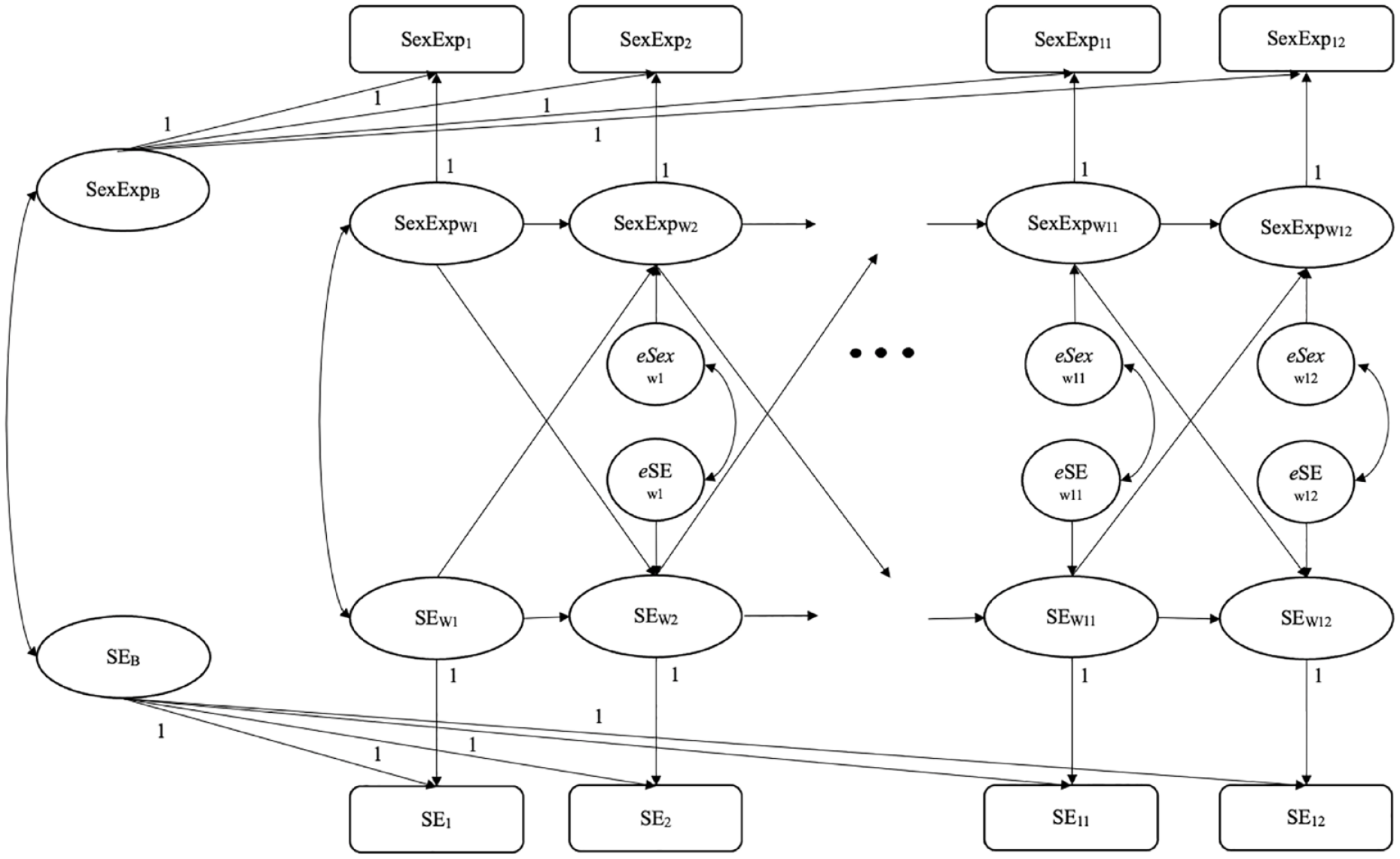
Exemplary RI-CLPM of Self-Esteem and Sexual Experience.
We built two separate baseline RI-CLPMs to test our hypotheses. Model 1 tested the links between anchors’ self-reported sexual frequency and self-esteem using data from Waves 2 to 12. Model 2 tested the links between anchors’ self-reported sexual satisfaction and self-esteem using data from Waves 1 to 12. Random intercepts were allowed to correlate to estimate stable between-person links between self-esteem and sexual experiences. Respective time-lagged within-person coupling effects from sexual experiences to self-esteem and vice versa were constrained to equality over time (i.e., all cross-lagged paths between two consecutive waves were specified to be equal in size across all measurement points). Specifically, within-person coupling effects from sexual experiences to self-esteem were constrained to equality, and within-person coupling effects from self-esteem to sexual experiences were constrained to equality.
We initially planned to estimate local structural equation models (LSEM; Hildebrandt et al., 2016) to examine the moderating effects of age, relationship history, relationship satisfaction, and attachment orientations as continuous moderator variables. However, as in previous studies (e.g., Lenhausen et al., 2023), local structural equation models failed to converge. Thus, we categorized the age and relationship history variables and ran multiple-group analyses using χ2 -model comparison tests (see, Mulder & Hamaker, 2021, for more details).
First, we allowed all parameters (random intercept correlations and within-person coupling effects) to differ between groups (e.g., between men and women) by estimating these parameters freely across groups (unconstrained models). Next, we specified RI-CLPMs in which the random intercept correlations were constrained to equality across groups (constrained models). We then specified RI-CLPMs in which the within-person coupling effects were constrained to equality across groups. We tested whether sequentially imposing these equality constraints on intercept correlations and coupling effects resulted in a significant decrease in model fit as indicated by significant χ2-comparison tests. Moreover, we compared constrained and unconstrained models by evaluation of the Akaike information Criteria (AIC) and the Bayesian Estimation Criteria (BIC). The minimum AIC and BIC allude to the best-fitting model (e.g., Schermelleh-Engel et al., 2003; Vrieze, 2012).
To control for the time-varying third variables (relationship satisfaction, attachment anxiety and avoidance), we ran trivariate RI-CLPMs separately for each of these variables (see Supplemental Figure S1 for an illustration of a trivariate model including self-esteem, sexual satisfaction, and relationship satisfaction). Due to the biannual measurement, the trivariate RI-CLPMs including the attachment orientation measures only contained data from Wave 1 to Wave 3. We modeled random intercept correlations as well as within-person coupling effects between time-varying variables and self-esteem as well as sexual experiences, respectively. We controlled for the influence of these variables by testing whether our main effects of interest, i.e., the correlation between random intercepts and within-person coupling effects, from baseline Model 1 and 2 changed meaningfully in effect size or effect direction (e.g., whether a previously significantly positive coupling-effect became insignificant or negative after including time-varying moderator).
All RI-CLPMs were computed using the lavaan package (Rosseel, 2012) in R (R Core Team, 2022). We set the alpha level to p < .05 and used Bonferroni correction to account for multiple comparisons based on 15 statistical tests, that is, three predictors (self-esteem, sexual frequency, and sexual satisfaction) * five moderators (age, gender, relationship history, relationship satisfaction, attachment orientation). This resulted in a p value of .003. We used established fit indices and cut-offs to examine model fit including the likelihood ratio chi-square associated with maximum likelihood estimation, root mean square error of approximation (RMSEA), the Comparative Fit Index (CFI), standardized root mean square residual (SRMR), and the Tucker–Lewis Index (TLI). We considered values of CFI and TLI >.95, SRMR <.08, and RMSEA ≤.05 a good fit (Hu & Bentler, 1999; MacCallum et al., 1996). We included all available data and made use of full information maximum likelihood (FIML) estimation to account for missing data and maximize statistical power (Allison, 2003; Schafer & Graham, 2002).
Results
Descriptives
Demographic information is presented in Table 1. Table 2 shows the means, standard deviations, and correlations of all study variables at wave 2. Self-esteem was positively related to both measures of sexual experiences and relationship satisfaction but negatively correlated with attachment orientations, age, and gender (i.e., women reported significantly less self-esteem). We found a positive correlation between sexual satisfaction and frequency (r = .52) as well as relationship satisfaction but negative correlations with all other variables except relationship history. Sexual frequency was positively associated with relationship satisfaction, age, gender (i.e., women reporting higher frequency), and relationship history (i.e., people in stable relationships reporting the highest frequency).
Demographic Information.
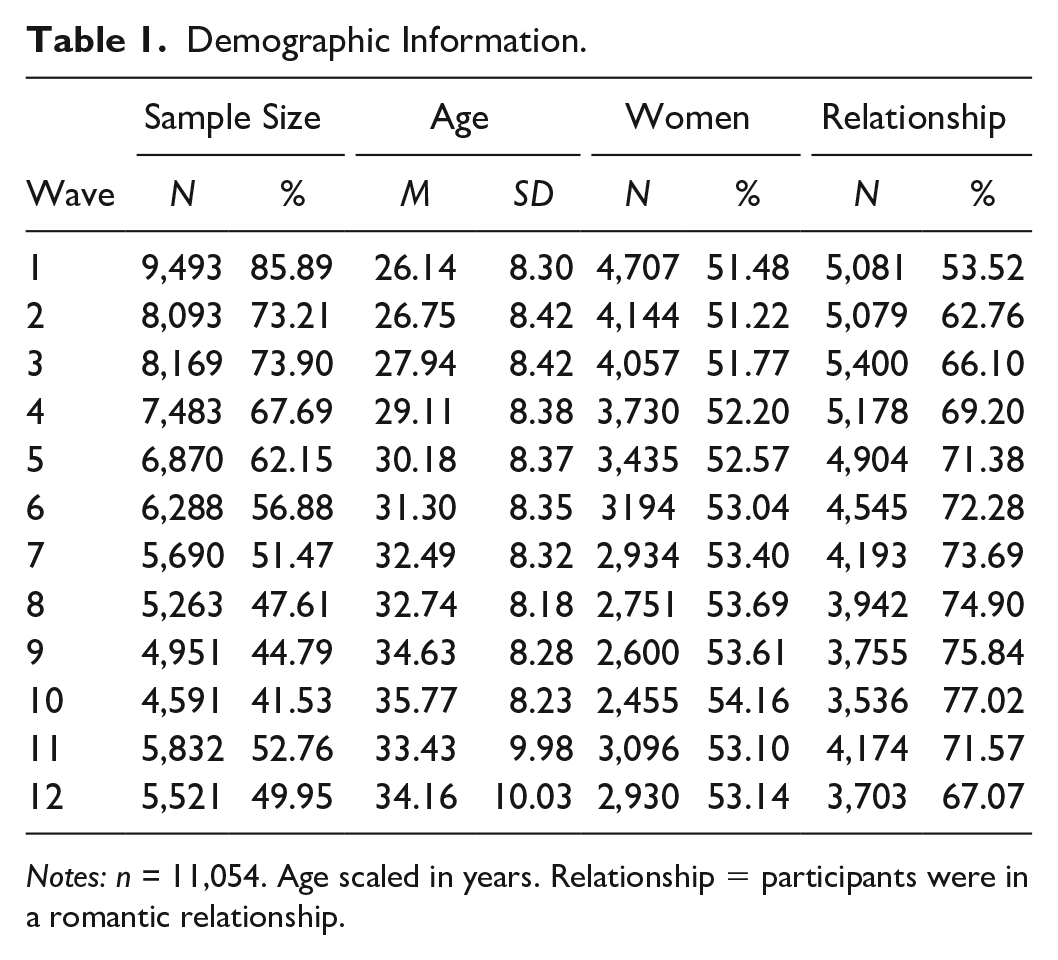
Notes: n = 11,054. Age scaled in years. Relationship = participants were in a romantic relationship.
Means, Standard Deviations, and Correlations of Study Variables at Wave 2.
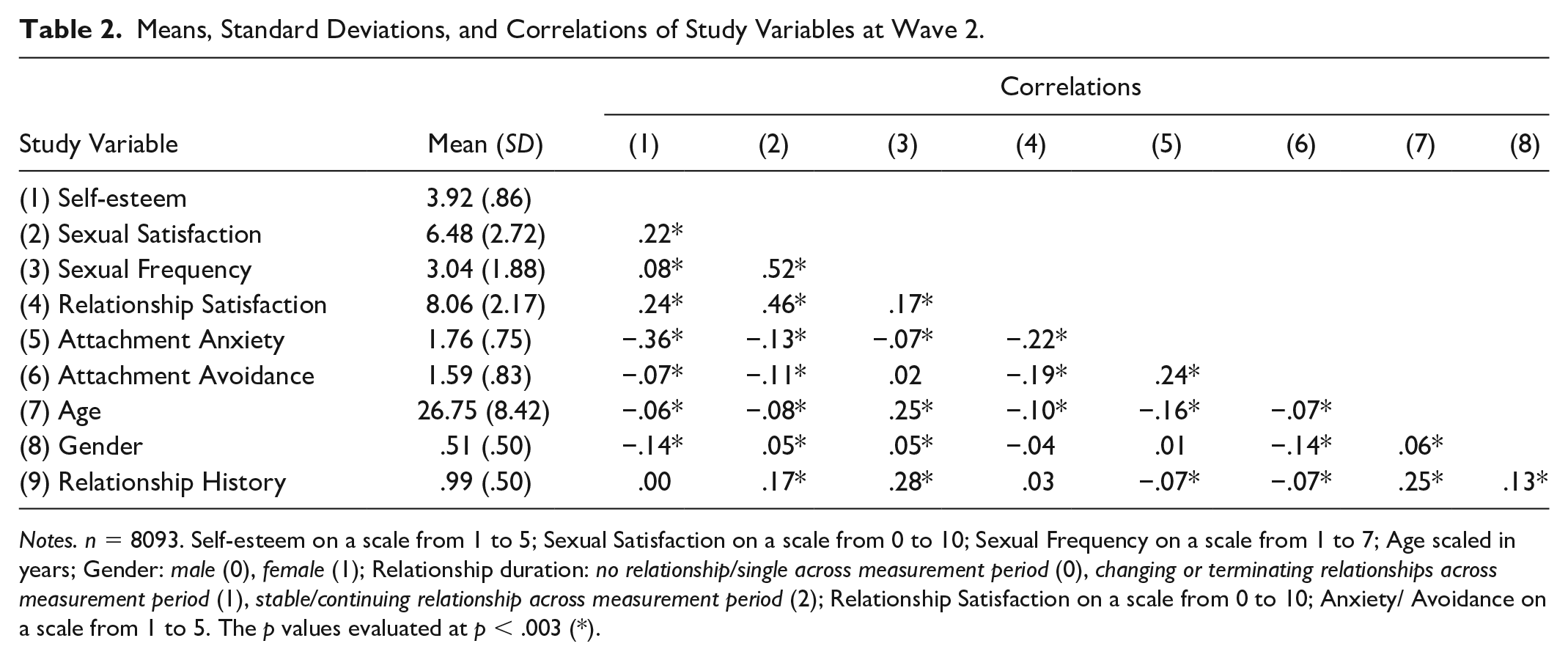
Notes. n = 8093. Self-esteem on a scale from 1 to 5; Sexual Satisfaction on a scale from 0 to 10; Sexual Frequency on a scale from 1 to 7; Age scaled in years; Gender: male (0), female (1); Relationship duration: no relationship/single across measurement period (0), changing or terminating relationships across measurement period (1), stable/continuing relationship across measurement period (2); Relationship Satisfaction on a scale from 0 to 10; Anxiety/ Avoidance on a scale from 1 to 5. The p values evaluated at p < .003 (*).
Self-Esteem and Sexual Frequency
The upper rows of Table 3 show the results of the RI-CLPM for sexual frequency and self-esteem (Model 1). This model had a good fit to the data with comparative fit index (CFI) = .981, Tucker–Lewis index (TLI) = .979, root mean square error of approximation (RMSEA) = .021, standardized root mean square residual (SRMR) = .037 and χ2 = 1,281.587 (df = 213; p <.001). The correlation of the random intercepts of sexual frequency and self-esteem was significantly positive, r = .18 (cov = .10; p < .001; 95% confidence interval [CI]: [.08; .12]), supporting the hypothesis that people with higher sexual frequency than others tended to have higher self-esteem than others. In contrast, the within-person coupling associations between sexual frequency and self-esteem were not significant, suggesting no intraindividual links between sexual frequency on self-esteem.
Results of RI-CLPMs for Self-Esteem and Sexual Frequency (Model 1) and Self-Esteem and Sexual Satisfaction (Model 2).
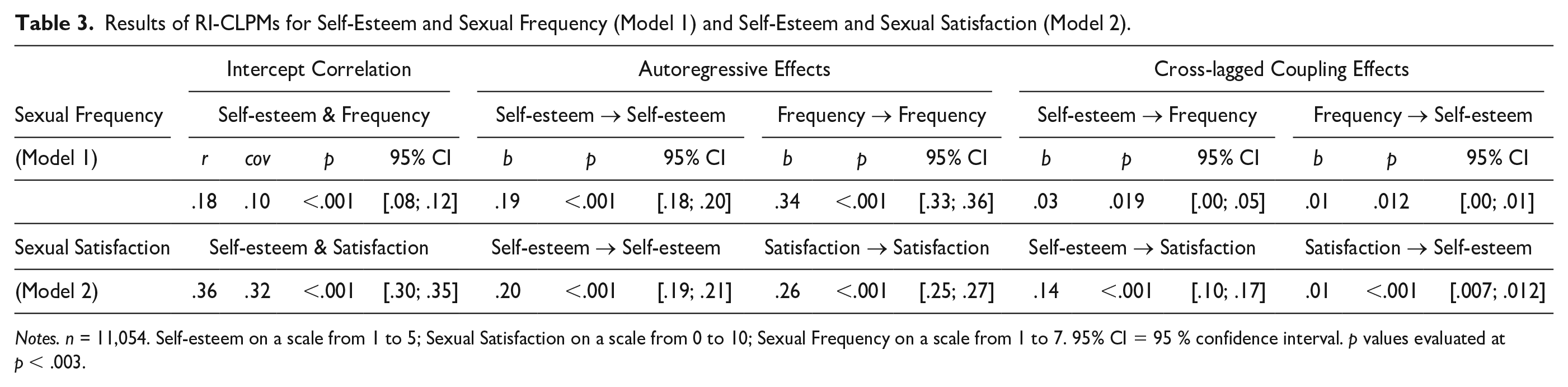
Notes. n = 11,054. Self-esteem on a scale from 1 to 5; Sexual Satisfaction on a scale from 0 to 10; Sexual Frequency on a scale from 1 to 7. 95% CI = 95 % confidence interval. p values evaluated at p < .003.
Self-Esteem and Sexual Satisfaction
The lower rows of Table 3 show the results of the RI-CLPM for self-esteem and sexual satisfaction (Model 2). This model had a good fit to the data with CFI = .970, TLI = .968, RMSEA= .025, SRMR = .051 and χ2 = 2,069.585 (df = 257; p <.001). The correlation of the random intercepts of sexual satisfaction and self-esteem was significantly positive, r = .36 (cov = .32; p < .001; 95% CI: [.30; .35]), supporting the hypothesis that people with higher sexual satisfaction than others were likely to report higher self-esteem than others as well.
Moreover, both within-person coupling effects from sexual satisfaction to self-esteem and vice versa were significant, suggesting that higher sexual satisfaction relative to people’s own expected score predicted higher self-esteem relative to their own expected score at the subsequent assessment wave (b = .01; p < .001; 95% CI: [.007; .012]) and higher self-esteem relative to people’ own expected score predicted higher sexual satisfaction relative to their own expected score at the next measurement occasion (b = .14; p < .001; 95% CI: [.10; .17]).
Moderator Analyses
The model fit indices for the RI-CLPMs with time-invariant moderators are presented in Table S1 in the supplemental materials. The results of all time-invariant moderator tests are presented in Table 4.
Results of Multiple-Group RI-CLPMs With Time-Invariant Moderators.
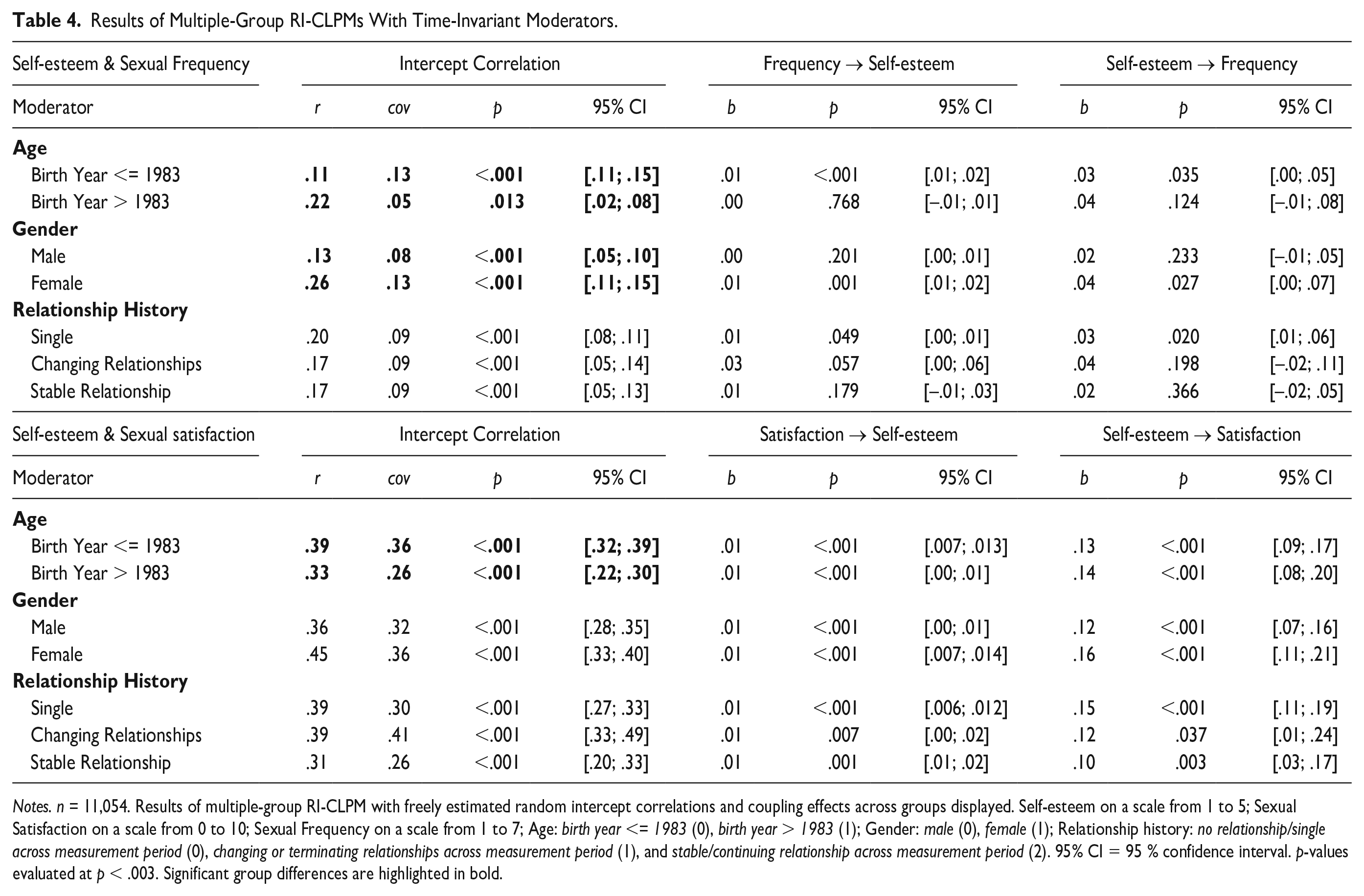
Notes. n = 11,054. Results of multiple-group RI-CLPM with freely estimated random intercept correlations and coupling effects across groups displayed. Self-esteem on a scale from 1 to 5; Sexual Satisfaction on a scale from 0 to 10; Sexual Frequency on a scale from 1 to 7; Age: birth year <= 1983 (0), birth year > 1983 (1); Gender: male (0), female (1); Relationship history: no relationship/single across measurement period (0), changing or terminating relationships across measurement period (1), and stable/continuing relationship across measurement period (2). 95% CI = 95 % confidence interval. p-values evaluated at p < .003. Significant group differences are highlighted in bold.
Gender
The multiple-group comparison of the RI-CLPM between self-esteem and sexual frequency with moderation of the random intercepts by gender resulted in a better fit for the free model (CFI = .979, TLI = .977, RMSEA= .022, SRMR = .041, AIC = 319877, BIC = 320750, χ2 = 1,554.349, df = 430; χ2—difference = 10.524, p =.001) compared to the constrained model (CFI = .979, TLI = .977, RMSEA= .022, SRMR = .043, AIC = 319886, BIC = 320752, χ2 = 1,564.873, df = 431), suggesting moderation of the random intercepts by gender. Specifically, there was a higher correlation between the random intercepts of sexual frequency and self-esteem in women (r = .26; cov = .13; p < .001; 95% CI: [.11; .15]) than in men (r = .13; cov = .08; p < .001; 95% CI: [.05; .10]). Constraining coupling effects to be equal across gender did not decrease model fit, indicating no significant gender differences in the within-person associations between sexual frequency and self-esteem.
Constraining the intercept correlations between sexual satisfaction and self-esteem across genders did not worsen the model fit, indicating no meaningful differences across men and women. Model comparisons also indicated no gender differences in coupling effects.
Age
The multiple-group comparison of the RI-CLPM between self-esteem and sexual frequency with moderation of the random intercepts by age resulted in a better fit for the free model (CFI = .978, TLI = .977, RMSEA= .023, SRMR = .040, AIC = 317709, BIC = 318583, χ2 = 1,628.432, df = 430; χ2—difference = 18.272, p <.001) compared to the constrained model (CFI = .978, TLI = .977, RMSEA= .023, SRMR = .043, AIC = 317726, BIC = 318592, χ2 = 1,646.704, df = 431), suggesting moderation of the random intercept correlation by age. We found a higher correlation of the random intercepts between self-esteem and sexual frequency for older (r = .22, cov = .13; p < .001; 95% CI: [.11; .15]) than younger participants (r = .11, cov = .05; p = .013; 95% CI: [.02; .08]). Constraining the coupling effects between sexual frequency and self-esteem across younger and older participants did not result in a significantly worse model fit.
There was a significant χ2 –difference between the constrained (CFI = .966, TLI = .964, RMSEA= .027, SRMR = .057, AIC = 462841, BIC = 463780, χ2 = 2,498.341, df = 519) and freely (CFI = .967, TLI = .964, RMSEA= .027, SRMR = .053, AIC = 462829, BIC = 463776, χ2 = 2,484.932, df = 518) estimated RI-CLPMs of self-esteem and sexual satisfaction for younger and older adults (χ2—difference = 13.41, df-difference = 1, p < .001), suggesting a higher correlation between the random intercepts of self-esteem and sexual satisfaction in older than younger people (younger: r = .33; cov = .26; p < .001; 95% CI: [.22; .30] versus older: r = .39; cov = .36; p < .001; 95% CI: [.32; .39]).
Constraining coupling effects to be equal across age groups did not decrease model fit, indicating no significant age differences in the within-person associations between self-esteem and sexual satisfaction.
Relationship History
Constraining intercept correlations and coupling effects across the three relationship history groups did not result in a worse model fit, indicating no moderating effects of relationship history on both intercept correlations and coupling effects between self-esteem and sexual frequency respectively satisfaction.
Robustness Checks
Table 5 compares our main parameters of interest, i.e., random intercept correlations and coupling effects of baseline Models 1 and 2, against the findings of the RI-CLPMs including time-varying covariates. Supplemental Table S2 shows all additional results of RI-CLPMs with time-varying covariates (e.g., random intercept correlations and coupling effects between self-esteem/sexual experiences and time-varying covariates). Although there were significant between-person and within-person associations between relationship satisfaction, self-esteem, and sexual experiences (Supplemental Table S2), the trivariate RI-CLPMs including relationship satisfaction indicated no meaningful changes in the effect sizes of either the correlation between the random intercepts or the coupling effects of self-esteem and sexual satisfaction / sexual frequency (Table 5). Results revealed significant between-person and within-person associations between attachment orientations, self-esteem, and sexual satisfaction (Supplemental Table S2), yet no meaningful change in random intercept correlations and coupling effects between self-esteem and sexual satisfaction (Table 5). RI-CLPMs of self-esteem and sexual frequency including attachment anxiety and avoidance failed to converge. The results of these models indicate that our baseline findings were robust to these covariates and held when controlling for inter- and intraindividual differences in relationship quality and attachment orientation.
Main Results of RI-CLPMs With Time-Varying Covariates—Comparison of Random Intercept Correlations and Coupling Effects (Robustness Checks).
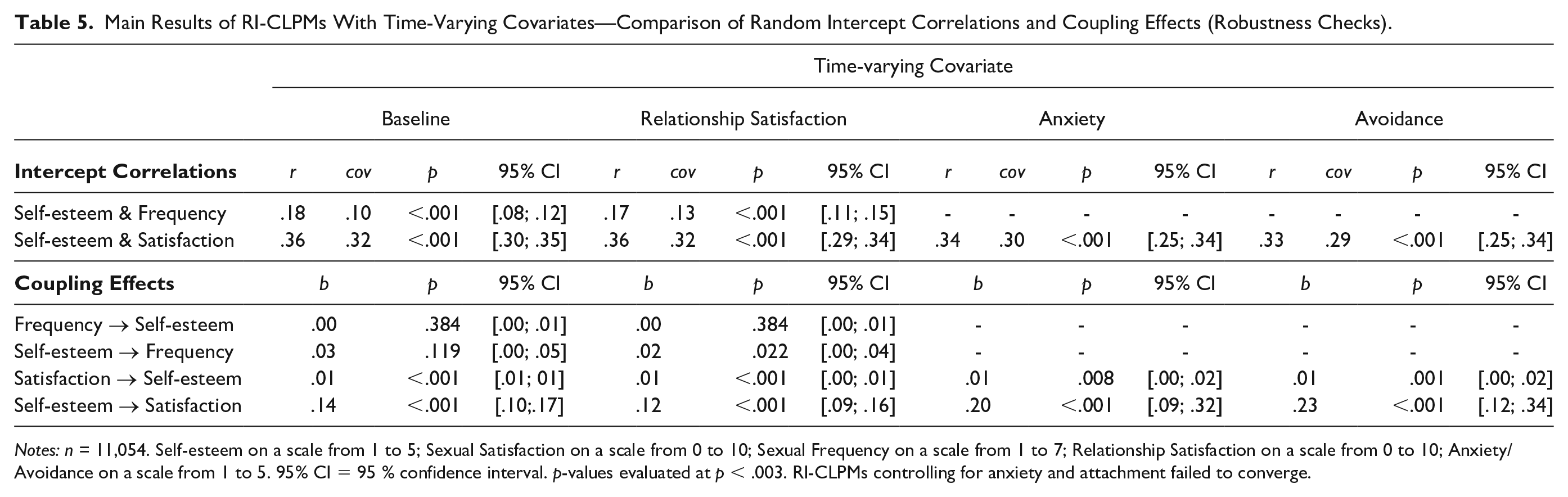
Notes: n = 11,054. Self-esteem on a scale from 1 to 5; Sexual Satisfaction on a scale from 0 to 10; Sexual Frequency on a scale from 1 to 7; Relationship Satisfaction on a scale from 0 to 10; Anxiety/ Avoidance on a scale from 1 to 5. 95% CI = 95 % confidence interval. p-values evaluated at p < .003. RI-CLPMs controlling for anxiety and attachment failed to converge.
Discussion
The present study examined the longitudinal associations between self-esteem and two indicators of sexual experience in 12-wave longitudinal data from a nationally representative sample of over 11,000 German adults. Using RI-CLPMs (Mulder & Hamaker, 2021), we examined both the between-person associations and the within-person links between self-esteem and sexual experiences over time, and explored a set of theoretically derived moderators and covariates. Four findings stand out.
First, consistent with previous cross-sectional research (Choi et al., 2011; Shackelford, 2001), we found modest to strong between-person links between self-esteem and the frequency of (r = .18) and satisfaction (r = .36) with people’s sexual experiences, indicating stable and trait-like interindividual differences in these associations. Second, consistent with theoretical accounts of self-esteem, we found dynamic and reciprocal within-person coupling effects between self-esteem and sexual satisfaction, suggesting that higher self-esteem relative to people’s own average predicted higher sexual satisfaction relative to people’s own average at the next measurement occasion, and vice versa. Third, contrary to our predictions, we found no coupling effects between self-esteem and the frequency of people’s sexual experiences. Fourth, age and gender emerged as robust moderators of the between-person association between self-esteem and the frequency of and satisfaction with people’s sexual experiences, while there was little evidence for moderating effects of relationship history, nor were these links dependent on people’s relationship satisfaction or attachment styles. We next discuss the implications of these results for theory and future research on self-esteem and sexual experience.
Between-Person Links Between Self-Esteem and Sexual Experiences
The modest to strong links between the stable interindividual differences in self-esteem and sexual experiences are consistent with previous cross-sectional research and the premises of theoretical accounts that highlight the importance of satisfying social relationships for people’s self-esteem and vice versa (Leary & Baumeister, 2000; Murray et al., 2006; Sullivan, 1953). On average, individuals who report frequent and satisfying sexual experiences may feel both sexually and socially accepted, which appears to be linked with higher levels of self-esteem. It should be noted, however, that third factors not anticipated by the theories mentioned above might also explain the between-person correlations. For example, it might be that people perceived as highly physically attractive have higher self-esteem and henceforth more frequent and satisfying sexual experiences. Such additional factors possibly explaining between-person links between self-esteem and sexual experiences should be addressed in future research on this topic.
The finding of stable between-person associations provides important insights into the psychological role of sexual experiences for people’s self-esteem and well-being more generally. Sexual frequency might be a more objective measure, whereas sexual satisfaction might be a more subjective indicator of people’s sexual experiences. The association between sexual satisfaction and self-esteem was considerably stronger than the link between sexual frequency and self-esteem, implying that the subjective experience of sexual satisfaction may be more closely connected to a person’s self-esteem than the objective rating of having frequent sex. This suggests that the extent to which one’s sexual desires are subjectively met may be more relevant to a person’s self-acceptance than the frequency with which people engage in sex (e.g., Muise, Stanton, et al., 2016; Schmiedeberg et al., 2017; Stephenson & Meston, 2015). A possible alternative explanation for this finding is that our measure of sexual satisfaction was more reliable, thereby yielding a more consistent association with self-esteem than our measure of sexual frequency.
Within-Person Coupling Effects Between Self-Esteem and Sexual Experiences
As with previous cross-sectional findings, the stable between-person links provide no insights about the temporal or even causal nature of the relationship between sexual experiences and self-esteem. Moreover, and as stated above, third factors might explain these associations. To understand the temporal and potentially reciprocal links between these variables, we need to zoom in on the dynamic within-person coupling effects between self-esteem and sexual experiences over time.
Self-Esteem and Sexual Frequency
Contrary to our expectations, the between-person link between self-esteem and sexual frequency did not translate to the within-person level, which highlights the relevance of separating between-person from within-person effects. In other words, intraindividual changes in self-esteem did not predict intraindividual changes in sexual frequency, and vice versa. Together with our finding of relatively lower between-person associations, this result suggests that sexual frequency and satisfaction play different roles in regulating people’s self-evaluations in the long term. Furthermore, sexual frequency may be a less significant indicator of people’s sexual intimacy and happiness than the subjective quality of sexual experiences in terms of sexual satisfaction. That is, people may differ in their desired frequency or feel sexually satisfied independent of the actual frequency, while decreases in sexual frequency over time can have very objective reasons that are unrelated to self-esteem and relationship quality.
Notably, other factors beyond people’s self-evaluations might have limited the strength of associations between self-esteem and sexual frequency. As stated, people might deliberately choose or be forced to engage in less frequent sex than usual due to multiple reasons unrelated to their experience of intimacy and social acceptance. For example, environmental changes such as changes in people’s work hours or time spent with children may limit the amount of time that can be spent on being sexually intimate (Twenge et al., 2017). Also, changes in people’s well-being and happiness may beget intraindividual change in their sexual frequency, and vice versa (Muise, Schimmack, Impett, 2016). Importantly, not all factors related to intraindividual change in sexual frequency may be subjectively perceived as negative and thus detrimental to people’s self-evaluations. As a consequence, people’s desired frequency of sexual experiences, or the discrepancy between people’s desired and actual frequency, may be better predictors of their self-esteem than the absolute frequency with which they engage in sex. Future studies incorporating changes in peoples’ desired sexual frequency may shed further light on the role of sexual frequency for changes in self-esteem.
Self-Esteem and Sexual Satisfaction
Consistent with our hypotheses, we found reciprocal within-person coupling effects between self-esteem and sexual satisfaction, indicating that intraindividual deviations from self-esteem positively predicted subsequent intraindividual deviations in sexual satisfaction, and vice versa. That is, people who reported a higher self-esteem level relative to their own average level reported a higher level of sexual satisfaction relative to their own average level at the next measurement occasion.
These within-person effects between self-esteem and sexual satisfaction might be reflective of a transactional process between both constructs. At times when people’s self-esteem is higher than average or than expected, they might feel more confident in permitting intimacy, as well as disclosing and pursuing their sexual needs and desires (Mund et al., 2015). For example, people may find it easier to act proactively to see their sexual needs satisfied, thereby experiencing more satisfying sexual encounters than at times of low self-esteem. This effect is in line with previous research (Larson et al., 1998) and would support the model of relationship risk-regulation (Murray et al., 2006, 2008). In turn, enhanced levels of sexual satisfaction compared to people’s average level of sexual satisfaction might boost their own value in relation to others and lead to an increase in self-esteem, as predicted by sociometer theory (Kirkpatrick & Ellis, 2006; Leary & Baumeister, 2000). Likewise, positive relational experiences such as satisfactory sexual experiences should enhance people’s sense of security and self-esteem as predicted by interpersonal theory (Sullivan, 1953).
An open question for future research is which of both coupling effects, that is, from self-esteem to sexual satisfaction or vice versa, holds causal primacy in these processes. The confidence intervals pertaining to these effects suggest that the effect of self-esteem on sexual satisfaction is larger than vice versa. Moreover, research has shown that longitudinal change in self-esteem likely originates from multiple causes (see, e.g., Bleidorn et al., 2016; Orth & Robins, 2014; van Scheppingen et al., 2018; Wagner et al., 2013) such that increments in sexual satisfaction can be assumed to represent just one source among various others. However, statistical differences in both coupling parameters remain to be replicated in future studies.
Moderating and Confounding Influences on the Links Between Self-Esteem and Sexual Experiences
Our third aim was to examine the moderating effects of gender, age, and relationship history on the between- and within-person links between self-esteem and sexual experiences, as well as evaluating the robustness of our baseline findings when controlling for relationship satisfaction and attachment orientations. Findings revealed a stronger association between the random intercepts of self-esteem and sexual frequency in female (r = .26) than male participants (r = .13), as well as older (r = .22) than younger (r = .11) participants. Moreover, we found a stronger link between self-esteem and sexual satisfaction at the between-person level in older (r = .39) than younger participants (r = .33).
Contrary to our expectations, the between-person association of self-esteem and sexual frequency was stronger for female than male participants. This finding is noteworthy given empirical evidence that male self-esteem might be more strongly affected by sexual experiences than female self-esteem (Shackelford, 2001). One possible explanation for this finding is that high self-esteem might be more predictive of how often women initiate and engage in sex compared with men, especially outside of the marital context, whereas seeking frequent sex might be more conventionally expected and less dependent on self-esteem for the average male. For example, men tend to be more conventionally allowed to show promiscuous behavior and change their sexual partners than women (Kreager & Staff, 2009; Sagebin Bordini & Sperb, 2013; see, e.g., Oliver & Hyde, 1993, for overview) or behave in a sexually assertive manner in terms of initiating and taking the lead in sexual interactions (see, Impett & Peplau, 2003; Peplau, 2003, for reviews). Women, on the contrary, are more consistently judged for the same behavior due to gendered expectations and social conventions (Kreager & Staff, 2009; Sagebin Bordini & Sperb, 2013; see, e.g., Oliver & Hyde, 1993, for an overview), and higher self-esteem may better enable women to defy social expectations and behave consistently with their own sexual desires. We found no gender moderation of the between-person link between self-esteem and sexual satisfaction. It is possible that sexual satisfaction captures aspects of sexual experiences that are hard to attain and thus require high self-esteem for men and women alike, such as the ability to permit intimacy-building behaviors beyond the act of sexual behaviors or to communicate effectively about satisfying sexual behaviors (Babin, 2013; Oattes & Offman, 2007). Notably, there were no gender differences in the moderation of the within-person coupling effects between self-esteem and sexual satisfaction, indicating that the dynamic and reciprocal links between these constructs are similar for men and women.
Age moderated the between-person link between self-esteem and both indicators of sexual experiences. Specifically, there was a stronger association between individual differences in self-esteem and sexual frequency, as well as self-esteem and sexual satisfaction in older than younger participants. Whereas younger age has commonly been characterized by a predominance of intense psychological and physiological longing for the partner and higher sexual activity (Bookwala, 2012), previous studies have documented a normative decline in people’s frequency of sexual intercourse across adulthood (DeLamater & Moorman, 2007; Herbenick et al., 2010). This decline is likely due to multiple causes, for example, time restraints due to work and parenting duties (e.g., Maas et al., 2018). Against our expectations, individual differences in self-esteem might moderate declining sexual activity more strongly in older than younger participants, to the extent that defying a decrease in one’s sexual frequency becomes more closely related to high self-esteem in older participants. Moreover, prior research has shown that both men and women focus more on sharing emotional closeness, tenderness, and intimacy in sexual relations with increasing age, which are potential indicators of sexual satisfaction (Træen et al., 2019). The goal of experiencing a more mature kind of sexual satisfaction may thus gain more importance when people grow older and gradually get to know their sexual needs and desires better. Thus, individual differences in sexual satisfaction might be more closely linked to individual differences in self-esteem in older people. Notably, there were no age differences in the within-person coupling effects between self-esteem and sexual frequency or satisfaction, indicating that the dynamic and reciprocal links between these constructs remain stable across adulthood.
Although prior research suggests that sexual experiences may vary between single (i.e., unpartnered) and partnered individuals (e.g., Park & MacDonald, 2022), we found no moderation of the links between self-esteem and sexual experiences by relationship history. Both partnered and unpartnered individuals may show similar reactions following changes in these constructs over time, and the assumptions of relationship risk theory may generalize across distinct relationship history/status groups. For example, regardless of relationship history, people low in self-esteem may be more sensitive toward signs of rejection (Cameron et al., 2010) and engage in less intimacy-building than people high in self-esteem (Forest et al., 2023; Wood & Forest, 2016), negatively affecting their sexual experiences. We failed to detect confounding effects by relationship satisfaction or attachment orientations on either between- and within-person links between self-esteem and sexual experiences. The lack of third-variable effects pertaining to these moderators signifies that the link between self-esteem and sexual experiences is robust to changes in people’s relationship satisfaction and attachment orientations. Other factors such as the ability to effectively communicate sexual desires (Oattes & Offman, 2007) might be more relevant regarding heterogeneity in these links.
Limitations
The present study is not without limitations. First, although our data were nationally representative of German residents, our findings may not generalize across other sociocultural and religious backgrounds. For example, religious beliefs and practices strongly penalize any sexual act outside or before marriage in a large number of Middle Eastern and Northern African countries (El-Kak, 2013). Other factors than self-esteem might play a more important role in determining the extent to which people in these countries are able to act out their sexual needs, and future research would benefit from examining the links between self-esteem and sexual experiences in samples from more diverse sociocultural and religious backgrounds.
Second, we used a multifaceted approach to measure the longitudinal links between self-esteem and two dimensions of sexual experiences. Although we included two self-report measures on the quantity and quality of people’s sexual behavior, future research may benefit from including a broader range of measures, such as people’s sexual desires and attitudes (e.g., DeLamater & Sill, 2005; Lodge & Umberson, 2012; Oliver & Hyde, 1993). Our single-item measures of sexual frequency and satisfaction have been used in prior research (Kislev, 2020; Schmiedeberg et al., 2017). However, reliability estimates are not available. Future research may replicate our findings based on multi-item scales to gain a more nuanced understanding of links between sexual experiences and self-esteem. Likewise, our findings pertain to global self-esteem reflecting people’s subjective feelings about themselves (Robins et al., 2001; see, e.g., Weber et al., 2023), and cannot be generalized across domain-specific assessments of people’s self-esteem within particular contexts, such as people’s physical or sexual self-esteem. Future studies should address these measures to derive a broader understanding of the links between sexual experiences and multiple aspects of the self.
Third, our sample was relatively young (15 to 38 years at the first wave), leaving it open as to whether these results generalize to older populations. Future research should take on an age-comparative approach and test the links between self-esteem and sexual experiences in older age groups.
Fourth, coupling processes and possible causal mechanisms might be more easily detectable within shorter time periods. As such, an important task for future research is to examine the longitudinal linkage of self-esteem and sexual satisfaction in everyday life, for example, based on experience sampling data (e.g., R. Larson & Csikszentmihalyi, 2014).
Fifth, the inclusion of continuous moderators and covariates, especially time-varying variables, proved difficult. Categorizing age by median split and relationship history in terms of people’s relationship status across the study period, as well as applying multiple group modeling to test their moderating influence, might have led to a loss of information due to insufficiently nuanced differentiation between participants. Future research investigating age and relationship history as continuous moderators may uncover more nuanced interindividual differences in the between- and within-person associations between self-esteem and sexual experiences. Finally, attachment orientations were only assessed in Waves 1 to 3, limiting our ability to test their effects throughout the entire study period. Moreover, RI-CLPMs of the sexual frequency with moderation by attachment anxiety and avoidance failed to converge, likely due to power issues. More powerful samples based on longer assessment periods are needed to examine links between attachment orientations, self-esteem and sexual experiences in future studies.
Conclusion
The present study found that self-esteem and the frequency and satisfaction with people’s sexual experiences are linked over a period of 12 years. First, our findings revealed stable interindividual differences in the links between self-esteem and sexual frequency and satisfaction, as indicated by the modest to strong between-person links between these constructs. Second, we observed dynamic and reciprocal within-person coupling effects between self-esteem and sexual satisfaction over time but no coupling effects between self-esteem and the frequency of sexual experiences. Third, age and gender were significant moderators of the between-person links between self-esteem and sexual experiences. In summary, our findings support the hypothesis that self-esteem and sexual experiences are meaningfully intertwined over time, thereby providing a significant bedrock for theory and future research on self-esteem and the frequency of and satisfaction with people’s sexual experiences.
Supplemental Material
sj-docx-1-psp-10.1177_01461672241257355 – Supplemental material for Self-Esteem and Sexual Experiences
Supplemental material, sj-docx-1-psp-10.1177_01461672241257355 for Self-Esteem and Sexual Experiences by Elisa Weber, Christopher J. Hopwood, Jaap J. A. Denissen and Wiebke Bleidorn in Personality and Social Psychology Bulletin
Footnotes
Acknowledgements
This article uses data from the German Family Panel pairfam, coordinated by Josef Brüderl, Sonja Drobnič, Karsten Hank, Franz J. Neyer, and Sabine Walper. pairfam is funded as long-term project by the German Research Foundation (DFG).
Declaration of Conflicting Interests
The author(s) declared no potential conflicts of interest with respect to the research, authorship, and/or publication of this article.
Funding
The author(s) received no financial support for the research, authorship, and/or publication of this article.

Supplemental Material
Supplemental material for this article is available online.
References
Supplementary Material
Please find the following supplemental material available below.
For Open Access articles published under a Creative Commons License, all supplemental material carries the same license as the article it is associated with.
For non-Open Access articles published, all supplemental material carries a non-exclusive license, and permission requests for re-use of supplemental material or any part of supplemental material shall be sent directly to the copyright owner as specified in the copyright notice associated with the article.
